Nejat Society
  • Home
  • Articles
  • Media
    • Cartoons
    • NewsPics
    • Photo Gallery
    • Videos
  • Publications
    • Books
    • Nejat NewsLetter
    • Pars Brief
  • About Us
  • Contact us
  • Editions
    • عربي
    • فارسی
    • Shqip
Nejat Society
Nejat Society
  • Home
  • Articles
  • Media
    • Cartoons
    • NewsPics
    • Photo Gallery
    • Videos
  • Publications
    • Books
    • Nejat NewsLetter
    • Pars Brief
  • About Us
  • Contact us
  • Editions
    • عربي
    • فارسی
    • Shqip
© 2003 - 2024 NEJAT Society. nejatngo.org
Iraq

Iraqi government bound to expel MKO

The Iraqi government is legally bound to expel Mojahedin Khalq Organization members from the country, the political advisor to the Islamic Supreme Council of Iraq Chairman Seyyed Abdul Aziz al-Hakim, said.

There are two reasons why MKO group cannot stay in Iraq: from the legal point of view these persons are terrorists and the Iraqi government does not have the right to let them stay in Iraq, and the political reason is that the MKO members have perpetrated criminal acts against the Iraqi nation, Mohsen Hakim told the Mehr News Agency on Tuesday.

The MKO began a campaign of assassinations and bombings in Iran shortly after the victory of the Islamic Revolution in 1979.

The group moved to Iraq in the early 1980s and it fought Iran from there until the United States invaded in 2003 and until recently the MKO members were guarded by U.S. troops in their base of Camp Ashraf, northeast of Baghdad.

Hakim also said that the Iraqi government has changed Camp Ashraf’s name to Camp of New Iraq.

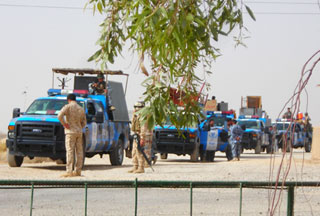
On July 29 Iraqi security forces stormed Camp of New Iraq that housed MKO and took control of it.

Not only is it the legal right of the Iraqi government but it is the government’s duty to exercise sovereignty over its territory, he explained.

Mohsen Hakim said Iraqi forces were in charge of the camp according to a security deal between the U.S. and Iraq but when the Iraqi forces entered the camp to set up checkpoints they were violently attacked by the group.

“The Iraqi government and nation condemn such actions and will never tolerate the presence of these terrorists in their territory,” he added.

Except for 98 MKO members who have been blacklisted by Iran, the Islamic Republic has declared an amnesty for other members and said they can return to Iran just like 500 members of the group did in the recent years, he added.

Commenting on reports that the senior MKO members have said they will not leave the Iraqi soil, he said the MKO members are neither Iraqi citizens nor defectors, and the Iraqi government will never grant them asylum because they are terrorists, Hakim stated.

The executed Iraqi dictator Saddam Hussein used the heavily armed group during his decade-long war with Iran in the 80s, and it also played a role in Saddam”s bloody suppression of Shia and Kurdish uprisings after the Persian Gulf War in 1991.

The MKO was founded in Iran in the 1960s, but its top leadership and members fled the country in the 1980s after carrying out a series of assassinations and bombings inside the country.
The group is especially notorious in Iran because they allied with former Iraqi dictator Saddam Hussein during the 1980-1988 Iran-Iraq war.

The United States, Canada, Iraq, and Iran have all designated the MKO as a terrorist organization.

The European Union had also designated the MKO as a terrorist organization but inexplicably removed it from the EU terror list in January 2009.
August 15, 2009 0 comments
FacebookTwitterPinterestWhatsappTelegramSkypeEmail
USA

The So-called Imperialism: Maryam Rajavi’s last Resort

Maryam Rajavi once again resorts to her ex-enemy to survive. Following the raid by Iraqi police to Camp Ashraf, Maryam Rajavi asked her new God-father and her former Imperialist enemy, the United States for help. According to THE HOFFINGTON POST:

The People's Mujahedeen of Iran wants the United States to re-establish temporary control over Camp Ashraf, where some 3,500 of its members have been confined since being disarmed by U.S. forces after the 2003 invasion of Iraq, said Maryam Rajavi, leader of the National Council of Resistance of Iran – an umbrella group that includes the People's Mujahedeen.The People’s Mujahedeen of Iran wants the United States to re-establish temporary control over Camp Ashraf, where some 3,500 of its members have been confined since being disarmed by U.S. forces after the 2003 invasion of Iraq, said Maryam Rajavi, leader of the National Council of Resistance of Iran – an umbrella group that includes the People’s Mujahedeen.
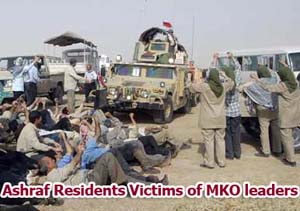
Iraqi authorities raided the camp on July 29 with the aim of setting up a police station inside, according to officials in Baghdad. They said six people were killed and 35 people were detained after the exiles resisted the effort and provoked a riot.
The National Council, however, accused the Iraqis of staging the raid at Tehran’s request, and said nine people were killed and some 500 injured, while 36 people were detained. It also alleged the Iraqis were denying medical help to seven people seriously injured, and blocking food and medical supplies to the camp.
Iraqi forces took over the camp’s security from the U.S. military on Feb. 20 as part of a security pact. The U.S. military had pledged that the camp’s residents would be treated as "protected persons" under the Geneva Conventions.
The People’s Mujahedeen of Iran, which is committed to toppling Iran’s regime, is considered a terrorist organization by the United States.


Mrs. Rajavi perhaps remembers their anti America slogans:”American! Get lost! “.Today she does not hesitate to declare her ideological shift:

Rajavi urged the United States to take control of the camp, and asked that the United Nations set up a long-term mission there.
Rajavi also called on Washington to prevent any camp members from being extradited to Iran – as the U.S. military had assured.
"The international community and Western countries must react immediately," Rajavi told The Associated Press after holding a news conference in Paris.
August 12, 2009 0 comments
FacebookTwitterPinterestWhatsappTelegramSkypeEmail
Missions of Nejat Society

Nejat NGO urges Iraq to let MKO members reunite with their families

Nelat Society has urged Iraqi Prime Minister, Nouri al-Maleki, to provide chance for those members of the terrorist Mojahedeen Khalq Organization (MKO), who are residing in Ashraf Camp, to reunite with their families in Iran.

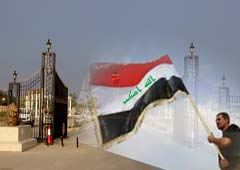
In a letter to al-Maleki, the Nejat Society hailed the brave decision of Iraqi government in opening the gates of Ashraf Camp to the public.

It said the premier’s move gave the opportunity to the families of those, who had been imprisoned in the camp by the terrorist MKO ringleaders, to see the place their loved ones were kept after six years of waiting.

Nejat NGO further asked the prime minister to separate the ringleaders from members to give the residents of the camp the chance to make decisions for their own future.

It also urged the Iraqi government to keep up with efforts to clarify the situation of their loved ones.
Describing the members of the terrorist organization, who are living in the camp, as people, who have been deceived and misled by the MKO ringleaders, Nejat Society urged the Iraqi government to arrest and try the terrorist MKO top leadersDescribing the members of the terrorist organization, who are living in the camp, as people, who have been deceived and misled by the MKO ringleaders, Nejat Society urged the Iraqi government to arrest and try the terrorist MKO top leaders.
The letter further stressed that the families of the deceived MKO members were ready to travel to Iraq to assist the Iraqi government in persuading the Ashraf Camp members to detach themselves from the MKO’s terrorist ringleaders.

Copies of the letter have been sent to Iraq Embassy in Tehran, the International Committee of Red Cross’s (ICRC) representative office in Tehran, the UN representative office in Tehran, and Swiss Embassy in Tehran, which serves as the US interest section in Iran.

August 12, 2009 0 comments
FacebookTwitterPinterestWhatsappTelegramSkypeEmail
USA

Washington wants to write off the Mujahedin-e Khalq

On 28 and 29 July 2009, more than 3000 members of the Mujahedin-e Khalq (MEK) were forcibly evicted by the Iraqi police from their Ashraf base in Iraq. The armed confrontation left 13 people dead, 36 missing and countless wounded.

Adressing the western media, the Mujahedin office in Paris alleged that the operation was carried out by the government of Shia Prime Minister Nouri al-Maliki at Iran’s behest.

Furthermore, the organization accused the International Red Cross of passive complicity with both the Iraqi and Iranian authorities.

The truth of the matter is that the decision to sever ties with the MEK was taken by Washington following a study undertaken by the Rand Corporation, which established, on the one hand, the criminal character of the organization (cracking down on Kurdish and Shia dissidents on behalf of Saddam Hussein) and, on the other hand, its sectarian set-up (the religious cult of the Rajavi couple and the sequestration of their members). In particular, the study shows that the Mujahedin – highly adept at spinning – managed to hoodwink the Department of Defence and to obtain Donald Rumsfeld’s direct protection on the basis of false allegations.

A public version of this report titled "The Mujahedin-e Khalq in Iraq. A Policy Conundrum" has been put out by the Rand Corporation. It is undoubtedly the best reference work on the subject.
Voltaire Network was unable to obtain the classified version of the document. It contains, in addition, an account of the false intelligence transmitted by the MEK since 2003 to the Department of Defence regarding the so-called Iranian nuclear military program. Such intelligence, on which the neo-conservatives used to feast, was subsequently verified and totally discredited by the Director of National Intelligence, Admiral Mike McConnell.

It would appear that Washington’s decision was prompted by the failure of the « green revolution ». This operation was in fact orchestrated with the participation of the Mujahedin-e Khalq who staged various attacks during the presidential campaign and organized bloody provocations during the demonstrations. Considering the fiasco, it was preferable to part company with such incompetent collaborators and to erase any trace of that collaboration.

Voltairnet

August 12, 2009 0 comments
FacebookTwitterPinterestWhatsappTelegramSkypeEmail
Iraq

Hundreds in Diyala, Iraq staged rally against the MKO

Baghdad – hundreds of people of Diyala province staged rally in protest against MKO on Monday in "Al -Khalis" 90 km Northeast of Baghdad where the MKO headquarters, Camp Ashraf is located.
Hundreds in Diyala, Iraq staged rally against the MKO
As IRNA correspondent reports, the demonstrators included tribal leaders, intellectuals and students from different regions. The protestors chanted slogans against terrorist Mujahedin Khalq Organization and asked for their immediate expulsion from the Iraq territory.

Demonstrators also condemned U.S. military support of this terrorist group .Through placards held they asked for the release of Iraqi citizens who are banned, instead of supporting MKO terrorists.

Diyala people also condemned the recent acts of MKO members against the Iraqi Police and Army forces and considered it as violating the law and national sovereignty of Iraq.
The demonstrators also asked the Iraqi Prime Minister Nouri al-Maliki to expel this group from Iraqi soil as soon as possible.

Several Local and foreign Media, covered the widespread rally of Diyali People against MKO.
This is the first spontaneous rally of Diyali People after the incidents occurred two weeks ago and in protest to MKO acts against Iraqi forces in “Camp of New Iraq” (formerly called Camp Ashraf) .

August 11, 2009 0 comments
FacebookTwitterPinterestWhatsappTelegramSkypeEmail
Mujahedin Khalq Organization

The raid to Ashraf could leave Iran cheering

Iran-Iraq Alliance?
Yesterday, Iraqi troops stormed a camp of Iranian exiles. The Daily Beast’s Reza Aslan on why the raid could signal Iraq’s shift away from the U.S.—and toward its former enemy.

Reports out of Iraq say government troops have raided the camp of an Iranian exile group, the Mujahedeen-e Khalq. Though the MEK has long been recognized as a terrorist organization by the U.S. State Department, its members housed in Camp Ashraf just north of Baghdad had been placed under U.S. protection since the Iraq invasion in 2003.

Iraqi troops stormed a camp of Iranian exiles

U.S. military officials, including Gen. Ray Odierno, commanding general of the U.S.-led Multi-National Force in Iraq, insist the raid was carried out without their knowledge. Considering that the Iranian government has been clamoring for years to have the camp disbanded and the MEK members extradited to Iran to stand trial on terrorism charges, the action by the Iraqi government may indicate a shift in Iraqi policy away from Washington and toward friendlier relations with Tehran.

The MEK’s support for Saddam Hussein during the horrific eight-year war with Iran has made it perhaps the group Iranians detest .

A Marxist paramilitary organization formed in Iran in the 1960s, the MEK was an integral part of the anti-imperialist coalition that overthrew the regime of Mohammad Reza Shah in 1979. Its guerrilla tactics, which killed dozens of the shah’s supporters as well as a number of American soldiers and civilian contractors working in Iran at the time, were instrumental to the revolution’s success. After the formation of the Islamic republic, however, the MEK lost favor with the clerical regime and was promptly outlawed. Its members were forced to flee to Iraq, where they were provided protection from Saddam Hussein in exchange for their assistance during the eight-year war between Iran and Iraq.

After the American invasion of Iraq, members of the MEK were rounded up at Camp Ashraf and detained, as negotiators in Iran and the United States began mulling over a prisoner exchange. The Iranians had dozens of captured Taliban and al Qaeda fighters that they were willing to hand over to the U.S. in return for members of the MEK who had been charged with terrorist activities in Iran.

The interim Iraqi government encouraged the prisoner exchange. Indeed, it wanted all of the MEK members expelled from Iraq and prosecuted for the active role they took in assisting with Hussein’s massacre of the Kurds and Shiites after the first Gulf War. But as negotiations were under way, the Bush administration suddenly changed course and granted the MEK protected status under the Geneva Conventions—something it had yet to grant Iraqi prisoners of the war.

There was, at the time, a simple reason for the shift in policy, as the conservative commentator (and professional Islamophobe) Daniel Pipes wrote in 2003. The MEK, Pipes claimed, offered the Bush Administration “an excellent way to intimidate and gain leverage over Tehran.”

Put another way, the MEK may have been a terrorist organization with what the State Department insists is “the capacity and will to commit terrorist acts in Europe, the Middle East, the United States, Canada, and beyond.” But with the proper assistance it could become our terrorist organization.

Since then, the MEK and its Paris-based political wing The National Council on Resistance in Iran has been increasingly viewed as the most viable alternative to Iran’s clerical regime: the Iranian equivalent of Ahmed Chalabi’s Iraqi National Congress. That explains why the MEK/NCRI is the only internationally recognized terrorist organization with offices in D.C. and an open line to some extremely influential people within the federal government. Indeed, the group has been championed by more than a few powerful personalities on Capitol Hill, as well as by neocon avatars like Pipes and Richard Perle.

Rep. Bob Filner, a Democrat of California, has called the MEK “our best hope to counter the [Iranian] regime.” Last month, Filner, who is chairman of the House Veterans’ Affairs Committee, along with his fellow California Democrat, Rep. Dana Rohrabacher, called on the Obama administration to actively assist the MEK/NCRI in its attempts to bring down the Iranian regime. (In 2002, more than 150 members of Congress signed a letter to the State Department demanding that the MEK be removed from its terrorist list; this year the European Union caved to pressure and removed the group from its own terror watch list.)

Senator Sam Brownback, a Republican of Kansas, echoes Filner. When I spoke to him a few years ago for a related story, Brownback told me: “There are serious questions to be raised about [the MEK’s] terrorist designation, particularly in light of the intelligence they have provided on Iran’s nuclear program.”

The MEK/NCRI has indeed provided both Israel and the United States with a trove of intelligence about Iran. Unfortunately, as was the case with the Iraqi National Congress, a great deal of that intelligence is not only uncorroborated but unquestionably tainted by the organization’s own personal interests.

Even some of the most ardent opponents of the Islamic Republic are wary of the MEK’s influence in the U.S. government. Michael Ledeen, founder of the Coalition for Democracy in Iran and one of the most vocal supporters of regime change in Iran, bluntly dismisses the possibility of cooperating with MEK.

“I do not think we should have anything to do with the MEK,” Ledeen once confided to me. “They are a terrorist organization despised by most Iranians.”

Ledeen is right. The MEK’s support for Saddam Hussein during the horrific eight-year war with Iran has made it perhaps the group Iranians detest. 

Yet for a great many of the group’s detractors, it is not so much its terrorist designation that is of concern but rather the bizarre devotion its members have for their husband and wife leaders, Maryam and Massoud Rajavi. Scholars and human-rights activists have long accused the organization of functioning like a religious cult, employing brainwashing techniques, ideological cleansings, forced celibacy (except when it comes to the Rajavis themselves), and even torture to condition its members to absolute obedience.

When French authorities arrested Maryam Rajavi—whom the group considers Iran’s president in exile—in 2002 for her alleged involvement in terrorist activities, several of her followers immolated themselves on the streets of Paris in protest. According to Human Rights Watch, members who have criticized the Rajavis or their organization have been detained against their will—and some have committed suicide to escape. Those who refuse to be rehabilitated were sometimes forced to make videotaped confessions of their disloyalty, then handed over to Saddam Hussein as Iranian spies to be tortured.

None of this fazes supporters like Filner, who has declared that since an invasion of Iran is not a viable option at the moment, the U.S. should just “get out of the way” and let the MEK do the job for us.

“We should not stand in their way of trying to get rid of the present regime,” Filner said.
In other words, the enemy of my enemy…

It is difficult to know how to read the sudden decision by the Iraqi government to raid and disband the MEK camp. Does the move imply increased tensions between the Iraqi and U.S. military? Is Iraq betting that, with American troops soon departing, warmer relations with Iran—which, after all, is not going anywhere—may serve its interests better than relations with the U.S.?

Thus far, it seems that no decision has been made about what to do with the MEK members rounded up in the raid. Will they be extradited to Iran, where they will surely face execution? Would that not drive a wedge between the U.S. and Iraq?
Stay tuned.

Reza Aslan, a contributor to The Daily Beast, is assistant professor of creative writing at the University of California, Riverside and senior fellow at the Orfalea Center on Global and International Studies at UC Santa Barbara. He is the author of the bestseller No god but God and How to Win a Cosmic War.

August 11, 2009 0 comments
FacebookTwitterPinterestWhatsappTelegramSkypeEmail
Jordan

Is Jordan the next option for MKO settlement?

Iran – following the collapse of the camp Ashraf, which was based for many years in Iraq to bring members of the "People’s Mojahedin Organization" (hypocrites) together, the leaders of the terrorist organization, are thinking of transition from Iraq to another Arab country.
MKO Begged Jordan to accept it !
"The People’s Mojahedin Organization", which was the active intelligence and operational arm of the defunct regime of Saddam, during the eight-year war imposed by Saddam against Iran, after the fall of the Baathist regime in Iraq were rounded up at camp Ashraf near Baghdad. Although the U.S. supported this terrorist organization as a means of exerting pressure on Iran, the Iraqi government, which accuses members of the terrorist organization guilty of criminal practices against Iraqi citizens have always been willing to get rid of the armed terrorist organization on its territory until the recent clashes that took place at Camp Ashraf where this terrorist base received a fatal blow, and now the leaders of the organization know very well that Iraq cannot be a safe place for their unsecure presence.

Consequently, Maryam Rajavi has recently traveled to Jordan to take permission from the Jordanian authorities and demand the officials of the country to accept the members of the MKO in Jordan.

Although there is no information on the details of the talks and Jordanians’ response to the terrorists, some political observers believe that the United States does not seem unwilling to transfer the headquarters of the MKO from Iraq to Jordan, because under the current circumstances, the United States itself and the European countries and the States bordering Persian Gulf do not want to move the headquarters into their territory, but Jordanian government, which remained loyal to Saddam until the last moments of his life as well as its absolute obedience to the United States, is the appropriate option to receive the members of this terrorist organization in its territory.

One of the concessions made by the MKO to the Jordanian authorities, is that this organization has a great operational and intelligence experience so it is able to assist the government and the security services in case of intensive presence of the Palestinians in Jordan (something that authorities of Jordan are not pleased with);it could act when it is necessary like the role it played in suppression of the Iraqi people uprising in 1991. Besides, considering the rapprochement between Jordan and Israel MKOwould serve them with its intelligence on Iran.

This point was noted last year by a group of MKO members during a meeting with a U.S. general in Iraq and the terrorist organization announced that if the United States was able to convince the government of Jordan to receive the organization’s members, they would not hesitate to cooperate with Israel to have paid the cost of their move to Jordan .

As MKO is despised by the people of Iran and isolated in Camp Ashraf and has lost of many of its troops, of course, will not be able to carry out such practices, but seeks to show itself as strong to convince Jordanians that it could be useful for them.

On the other hand, to stay safe from the reach of Iran and the Iraqi government – because it is accused by the two countries to carry out terrorist operations –MKO needs to gain Jordan’s support after the death of its former supporter and Jordan is betting on them as a political and intelligence tool.

Of course, in the light of the dwindling force of this failed terrorist organization, if the Jordanians, commit a terrible mistake and accept MKO members, they will not receive any benefit and but the ground of "insecurity" in their country will increase significantly.

After months of the arrival of the government of Nuri al-Maliki in Iraq, a number of Iraqi tribal leaders visited him and discussing various issues they raised the case of MKO existence in Iraq and noted that the organization is in charge of direct and indirect killing of a large number of both clans in an uprising in 1991 or what happened afterwards.

At this meeting, one of the tribal leaders said:” We want revenge for our dear ones and justice for the killers, but we consider that your Government is our Government, we will not intervene in the issue directly, we invite you to either of these options : to expel them from Iraq in order not to bear the responsibility their fate. We bust our order with them anywhere in the world, in addition to our enemies that we will know with the new host is found to the murderers of our children.

Now the choice for Jordanian government may be to accept existence of the terrorist organization to strain relations with Iran and the high ground where the lack of security, or will it act with tact and work like the rest of the Arab countries in order to avoid engaging in these dangerous and costly game.

August 11, 2009 0 comments
FacebookTwitterPinterestWhatsappTelegramSkypeEmail
Massoud Rajavi

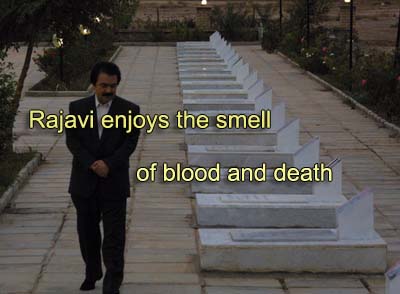
Rajavi enjoys the smell of blood and death

The clash between the members of MKO settled in Camp Ashraf and the Iraqi police on July 28-29 that left remarkable casualties is a proven indication of Rajavi’s earlier serious forewarnings to convert Ashraf residents to human shields to resist any threat. His never ceasing insistence on the possible occurrence of a human tragedy in Ashraf following the Iraqi government determination to expel the group and close the camp was considered to be a token of concerns about forced repatriation of members to Iran. In contrast, he really meant what he said about human tragedy by lining members before Iraqi forces as human shields and to resist against the lawful execution of a government’s decision. Once, when surrendering arms to the coalition forces, Rajavi had said he preferred ‘arms carriers to the arms themselves’. He knew well how his forces were potential, trained under his ideological instructions, to become formidable barriers to pass over even when disarmed.

The strategy of preferring ‘arms carriers to the arms’ is the continuation of a theory adopted from the very beginning of the organization’s formation known as the theory of crossing the death, a strategy enabling the organization to have the upper hand in its struggle with the Pahlavi’s notorious security forces. Of course, the theory has since undergone a fundamental change in the course of Rajavi’s egocentric authority over the organization but the impressive consequences of such a theory can never be overlooked. In fact, when Rajavi consented to surrender arms to American forces, he was anticipating a future when the arms carriers needed no arms to be more effective than any arms. And he did his well to educate them as well as he could to take the leading role in a propaganda and psychological war to attract all international attention the organization needed. Having such an ideal in prospect, Rajavi’s ideological apparatus inaugurated a new fashion of training armless combatants to be exploited as walking weapons who instead of targeting the enemy stood as targets themselves to show another side of an innate brutality.

It makes no difference for Rajavi to sacrifice from any side; the emphasis is on the applied brutality to lead on. What he needs is some victims; by provoking the forces of the challenging side, he is sure that the outcome would be nothing less than some bodies from the both sides rolling in their blood. To what degree the other side can take self-control and tolerate the provocation is of no significance since he knows how he can easily break their tolerance and incite them to engage in an inevitably harsh react. What has happened in Camp Ashraf is in fact some aspect of the long adopted theory of crossing the death, an inspired, invisible strategy that takes advantage of vulnerabilities of armed forces when coming to confront armless forces.

Rajavi’s adversaries have been regarded remarkably helpful themselves and forthcoming in the scene of potential emerging threats that happen to threaten the organization. For him, political struggle and survival are two sides of a coin; when prevailing over adversaries, the highest possible amount of lives fall victim to its brutality and, again, when it feels entrapped and overcome by the antagonist side, it is victims of the suicide and self-immolation operations that piles bodies on bodies. The novel form of the latter is formation of human shield that sends members to their death under the pretention of defending Ashraf. The objective in all these is death and well plotted scenarios to send individuals to their death.

In all past years what has helped Rajavi to maintain his organization and the stability and effectiveness of his leadership as well as propelling his failed tactics is the blood of victims from the within and without. He has recurrently reiterated that his antagonists have to either stay for or against him. His exploited approach against the opposite front is use of lethal arms to take victims or turning those staying with him to lethal arms themselves to be sacrificed to the last one. And Ashraf is a depot of such lethal weapons.

Unlike the past that the innocent people were coerced by their captors into lining as the human walls and human shields against the opposite forces, here in Rajavi’s cult it is through ideological instillations and brainwashing that the insiders volunteer to stand vulnerable to any threat as human shields. Even beyond that, they can turn into aggressive beings that capitalize on the opposite front’s humane manner and incite them to react in a harsh manner. Now it is blood that is shed and spilled with the consequent cries that insiders have been tyrannized, the human rights violated and a tragedy taken place. And behind this entire bloodbath, regardless of all those leading rankings having the control of Ashraf in their hands, stands Rajavi who enjoys the smell of blood and death.

August 11, 2009 0 comments
FacebookTwitterPinterestWhatsappTelegramSkypeEmail
The MEK and Jundullah

Jundullah Threatens to Attack Iraqi Gov’t in Support of MKO

The Jundullah terrorist group warned Baghdad government that it would retaliate against the closure of a main camp of the anti-Iran terrorist Mojahedin-e Khalq Organization (MKO) by theThe Jundullah terrorist group warned Baghdad government that it would retaliate against the closure of a main camp of the anti-Iran terrorist Mojahedin-e Khalq Organization Iraqi forces.

"…the Iraqi government should know that its hostile measures against the residents of Camp Ashraf who are Iranian immigrants in this city are not and will not be in the interest of the Iraqi government," Jundullah said in statement.

The MKO, whose main stronghold is in Iraq, has been in the country’s Diyala province since the 1980s.

Six years after toppling Saddam government in 2003, the country’s security forces took control of the training base of the MKO at Camp Ashraf – about 60km (37 miles) north of Baghdad recently and detained dozens of the members of the terrorist group.

The Iraqi authority also changed the name of the military center from Camp Ashraf to the Camp of New Iraq.

Jundullah also in its statement urged the international organizations and opposition groups to stand against the measure and act for the urgent stop of the assaults on Camp Ashraf.
The ringleader of the Jundullah terrorist gang Abdulmalik Rigi on June 2 admitted receiving assistance from the MKO.

In a significant admission, Rigi told a US-based satellite TV station, that "They (MKO) have had good intelligence collaborations with us and have provided us with much information about the activities of the Iranian regime."

"They (MKO) inform us about the regime’s activities in our areas of operations and let us know of the regime’s forces in these districts and send us most of the intelligence of our interest by email and messages," Rigi told the station.

Rigi, a well-known gang leader whose group has already staged several terrorist operations in southeastern Iran, has long been chased by Iranian troops. In one of the worst cases, his group killed 22 citizens and abducted 7 more in Tasouki region on a road linking Zahedan – the capital city of the southeastern province of Sistan and Balouchestan – to another provincial town.

Rigi, who like his fellow al-Qaeda fanatics, has a penchant for videotaped decapitation of hostages, boasted in the interview, "We have treaties of friendship with all groups who act against Iran, and, among these, the MKO can do some things for us and we too can transit their members. But, I guess that they have certain limitations and are in countries where they cannot carry out their intended actions the way they want."

The MKO is behind a slew of assassinations and bombings inside Iran, a number of EU parliamentarians said in a recent letter in which they slammed a British court decision to remove the MKO from the British terror list. The EU officials also added that the group has no public support within Iran because of their role in helping Saddam Hussein in the Iraqi imposed war on Iran (1980-1988).

The group, founded in the 1960s, blended elements of Islamism and Stalinism and participated in the overthrow of the US-backed Shah of Iran in 1979. Ahead of the revolution, the MKO conducted attacks and assassinations against both Iranian and Western targets.

The group started assassination of the citizens and officials after the revolution in a bid to take control of the newly established Islamic Republic. It killed several of Iran’s new leaders in the early years after the revolution, including the then President, Mohammad Ali Rajayee, Prime Minister, Mohammad Javad Bahonar and the Judiciary Chief, Mohammad Hossein Beheshti who were killed in bomb attacks by MKO members in 1981.

The group fled to Iraq in 1986, where it was protected by Saddam Hussein and where it helped the Iraqi dictator suppress Shiite and Kurd uprisings in the country.

August 11, 2009 0 comments
FacebookTwitterPinterestWhatsappTelegramSkypeEmail
Mujahedin Khalq as an Opposition Group

Rioters Underline MKO’s Leading Role in Iran’s Recent Unrests

TEHRAN (FNA)- A rioter arrested during Iran’s post-election unrests confessed that he had received trainings in the Camp Ashraf of the anti-Iran terrorist group Mojahedin-e Khalq Organization (MKO) in Iraq to conduct sabotage and terror operations in Iran.

Nasser Abdul-Hosseini, alias Behrouz, who was detained for his major role in post-election unrests made the confessions to a court hearing in Tehran on Saturday. Abdul-Hosseni admitted all charges raised against him in the indictment.

"I went there (the camp) after crossing Iran-Iraq border at Qashr-e Shirin illegally and I was trained by a person named Siyavash in a bid to stage operations in Tehran," Hosseini said during the court hearing.

About the details of his training program, the detainee confessed that he had been trained to spark unrests in peaceful demonstrations, take photographs of any empty polling station and send them to MKO headquarters and raise pictures of MKO leaders at Iranian universities.

He further confessed that after June 12 presidential election he learned how to make Cocktail Molotov and received trainings from a woman named Zohreh, a London-based MKO member, to set buses and mosques on fire.

Hosseini added that he was arrested by Iranian security forces before fulfilling his mission.
The 100 culprits that are put to trail at these series of hearing sessions are categorized in three groups, namely the "plotters, intriguers, and planners of the riots", "the antagonists and those affiliated to foreign services", and "the opportunists, hooligans, and hoodlums who set ablaze, or destroyed private and public properties, and those that have had hands in disturbing public security."

The first hearing session of this kind was held on Saturday August 1st, in which big shot culprits, including the head of former President Seyed Mohammad Khatami’s Presidential Office Hojjatoleslam Mohammad Ali Abtahi and renowned reformist journalist Mohammad Atrianfar presented their defense.

August 9, 2009 0 comments
FacebookTwitterPinterestWhatsappTelegramSkypeEmail
Newer Posts
Older Posts

Recent Posts

  • Various Aspects of Massoud Rajavi’s Disappearance

    October 20, 2026
  • MEK agents near schools in Tirana, Albania

    October 17, 2026
  • Expectations of human rights bodies regarding censorship within the MEK

    October 13, 2026
  • The Jamalis’ Plea for Help: Save Our Brother from the MEK!

    October 11, 2026
  • Testimonies of Participants in the MEK’s Staged Propaganda Stunt in Karaj

    October 7, 2026
  • Facebook
  • Twitter
  • Instagram
  • Youtube

© 2003 - 2025 NEJAT Society . All Rights Reserved. NejatNGO.org


Back To Top
Nejat Society
  • Home
  • Articles
  • Media
    • Cartoons
    • NewsPics
    • Photo Gallery
    • Videos
  • Publications
    • Books
    • Nejat NewsLetter
    • Pars Brief
  • About Us
  • Contact us
  • Editions
    • عربي
    • فارسی
    • Shqip