Nejat Society
  • Home
  • Articles
  • Media
    • Cartoons
    • NewsPics
    • Photo Gallery
    • Videos
  • Publications
    • Books
    • Nejat NewsLetter
    • Pars Brief
  • About Us
  • Contact us
  • Editions
    • عربي
    • فارسی
    • Shqip
Nejat Society
Nejat Society
  • Home
  • Articles
  • Media
    • Cartoons
    • NewsPics
    • Photo Gallery
    • Videos
  • Publications
    • Books
    • Nejat NewsLetter
    • Pars Brief
  • About Us
  • Contact us
  • Editions
    • عربي
    • فارسی
    • Shqip
© 2003 - 2024 NEJAT Society. nejatngo.org
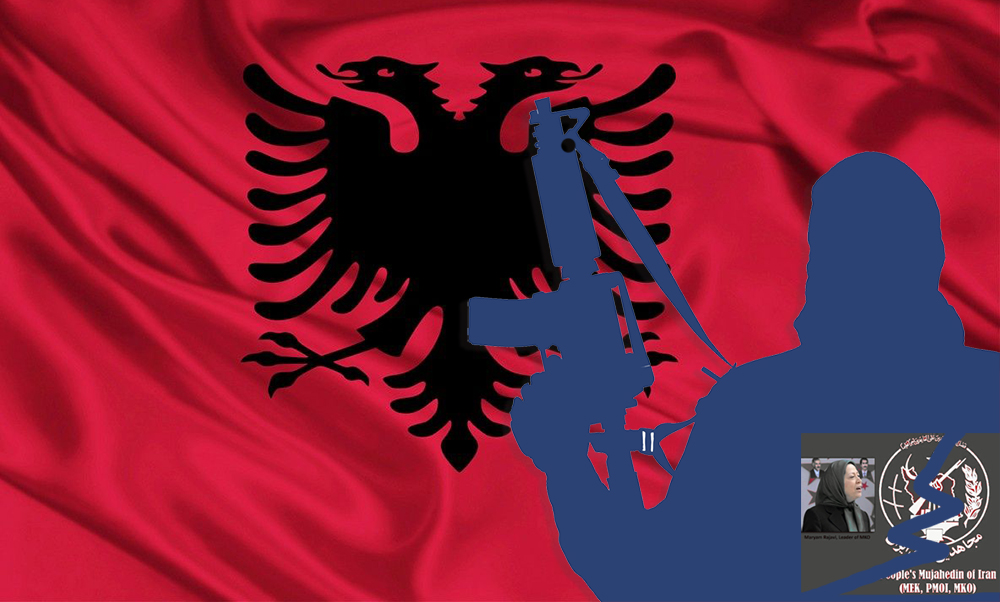
Albania - MEK - Ashraf 3
Mujahedin Khalq; A proxy force

The MEK; useful and good terrorists Albania must host

Could hosting a banned Iranian dissident group compromise Albania’s security?

Some 30 kilometres west from Albania’s capital Tirana, nestled between a mountain range and the Adriatic Sea, lies the town of Manëz.

With a population of roughly 7,000 and picturesque views in every direction, it is a typical Albanian town, save for one fact: it hosts Camp Ashraf-3, the base of Iranian dissident group known as the People’s Mujahedin of Iran.

Going by its Farsi acronym of MEK, the group has had a presence in Albania since at least 2013. In its heyday, it was one of the main groups struggling against the imperial regime in Iran, playing a major role in the 1979 revolution before falling out with the newly-established Islamic Republic led by Ayatollah Khomeini.

Over time, the group’s significance diminished.

Camp Ashraf 3 in Albania

Camp Ashraf 3 in Albania

Currently, roughly 3,000 members of MEK are estimated to live in Camp Ashraf-3, a heavily fortified compound. The camp’s perimeter is lined with Iranian flags and guarded by Albanian private security.

And although the group gets little mainstream attention, it has actively been courted by powers hostile to Iran, primarily the United States. MEK’s leader, Maryam Rajavi (wife of one of the group’s founders, Massoud Rajavi, presumed dead since 2003) has met with prominent US politicians such as Rudy Giuliani, John Bolton and the late John McCain. An annual conference hosted by the MEK in Paris regularly draws visitors from various right-wing European political parties.

Despite this support, the group has next to no credibility in Iran, according to Houchang Chahabi, an Iranian-born professor of international relations at Boston University.

“They have been politically irrelevant in Iran since at least the mid-1980s, and have little to no domestic support,” says Professor Chahabi.

This raises the question of why Albania of all countries would drag itself into one of the world’s most tense geopolitical standoffs, between the United States and Iran, by agreeing to host a tiny, fanatical armed group, which until 2012 was designated as a terrorist group by the United States and most of the European Union.

Now described by various sources as a cult, a cartel, a dangerous extremist group, the group’s presence may even represent a threat to Albanians.
From revolutionaries to cult

MEK was founded in the 1960s by radical students opposed to Shah Reza Pahlavi. With an ideology combining Shia Islamism with Marxism, throughout the 1970s the group staged dozens of often suicidal attacks on security forces, as well as targeting western-owned hotels, airlines and oil companies.

During the 1979 revolution, they were crucial in the final gun battles against the Shah’s police. However, it did not take long for things to sour between the various factions involved in the revolution. The Ayatollah Khomeini-led Islamist faction ended up seizing most of the political power.

Following massive street protests organised by the MEK, the Islamic Republic cracked down hard on the group, executing thousands of supporters and driving many to flee across the border to Iraq, where they were hosted and armed by Saddam Hussein.

Tens of thousands MEK members participated in the Iran-Iraq War, fighting alongside the Iraqi military which was indiscriminately bombing Iranian cities and using banned chemical weapons. This caused what credibility they had left in Iran – and clearly they used to have a lot, as evidenced by their massive support during the revolution and the post-revolutionary period – to dissipate.

An attempted incursion into Iran in 1988 by an 8,000-strong mechanised MEK force, at the closing stages of the Iran-Iraq War, ended in crushing defeat. The group began resembling more of a cult than a political party – the 1988 defeat was partially blamed on members being too distracted by “trivialities” like love, friendship and parenthood to be zealous enough fighters.

Throughout the 1990s, MEK helped Saddam Hussein brutally quell uprisings in the aftermath of the first Gulf War, implicating themselves in some horrendous atrocities, particularly against Kurds.

Following the toppling of Saddam Hussein in 2003, the MEK began piquing the interest of US hawks. It had toppled hostile regimes in Iraq and Afghanistan with ease, and the insurgencies which would end up bogging it down had yet to fully take off. It was widely believed that Iran would be the next country on the list – and the MEK looked like convenient on-the-ground partners.

However, events in Iraq took an unanticipated turn. The country’s post-Saddam government forged closer ties with Iran, particularly under the leadership of Nouri al-Maliki. Between 2009 and 2013, Iraqi security forces raided MEK compounds multiple times, killing over 100 members.

This alarmed the MEK’s western sponsors which began looking for alternative countries to base the group in. They reached out to several of their Eastern European partners, with Romania identified as an ideal location. However, only one country responded to the request positively: Albania.

MEK officially renounced violence and between 2013 and 2016, between three and five thousand members were relocated to Albania, with the help of the United Nations High Commission for Refugees (UNHCR), overseen by the governments of Sali Berisha and Edi Rama.
Violation of sovereignty?

Few even within Albania know of MEK’s existence. Those that do have asked questions about the implications of hosting such a group: fears were raised that the presence of the MEK forces Albania to inherit a decades-long struggle between a major regional power in the Middle East and a terrorist group with cult-like characteristics, at the behest of the United States.

However, Professor Olsi Jazexhi, an Albanian historian and lecturer at the International Islamic University of Malaysia, believes that there is little immediate security threat to Albania as a result of the group’s presence.

“Iran has attacked MEK terrorists in the past in Iraq, however at present it cannot do anything against MEK in Albania. Albania is a NATO member country and its security is guaranteed by the Americans,” he says.

Dr Zijad Bećirović, director of the International Institute for Middle Eastern and Balkan Studies in Ljubljana agrees with this view.

“Iran does not attach much importance to this group. Albania is a member of NATO and Iran would not want to risk a confrontation,” Dr Bećirović tells Emerging Europe.

This may be particularly true in light of how MEK renounced violence as a precondition of its relocation to Albania. Now, according to interviews conducted by The Guardian with MEK defectors, members spend most of their time posting propaganda comments on online forums demonising the Iranian government.

Furthermore, the group appears to have fallen far from its heyday as one of the trailblazers of the Iranian revolution to becoming something not unlike a cult.

Members are forced to divorce their spouses upon joining. Celibacy is strictly enforced, and daily, members have to confess their sexual urges in front of their peers. Dozens of women have allegedly been sterilised by the group’s doctors under false pretences, presumably to sever them from “distractions” such as raising children.

Dr Bećirović believes that the US clearly played a major role in bringing the group to Albania.

“Albania is a reliable ally of the United States. This was also shown in how Albania hosted prisoners of war from Afghanistan captured by the United States. It is quite certain that the MEK would not have come to Albania without the mediation or role of the United States.”

However, despite this, Bećirović acknowledges that Albania also has its own interests in hosting the MEK. “In this way, Albania strengthens its role in the region and international relations and its position with the United States and western allies.”

—
‘The US runs Albania’

Others, like Olsi Jazexhi, see the whole situation as evidence of American hegemony over Albania.

“Albania today is ruled by the US embassy in Tirana. The embassy vets our politicians – like the Guardian Council in Iran – and it decides which politicians enter parliament or not. The hosting of MEK in Albania is not an Albanian affair, but an American-Israeli affair.”

However, lately, the MEK has been back on the Iranian government’s radar. In November 2020, Mohsen Fakhrizadeh, a senior official in Iran’s controversial nuclear programme, was assassinated. Some local news reports indicated that over 60 people were involved in the assassination.

Iranian government sources blamed the assassination on MEK, acting in conjunction with Israeli intelligence agency Mossad. The unconfirmed reports of there being several dozen people involved in the operation indicate a high level of collusion between locals and the architects of the assassination. MEK has demonstrated its members’ zeal, fanaticism, and willingness to collaborate with enemies of Iran – it would not be preposterous to suggest that they may have played a part in the killing.

The incident also echoed how during a string of assassinations of Iranian nuclear scientists from the late 2000s to the early 2010s, the Iranian government persistently claimed the involvement of MEK sleeper cells.

Regardless of whether or not the MEK were involved in the assassinations, it is clear that they have been identified as the United States’ partner in Iran, should anything happen between the two countries.

This, however you slice it, means that the group is actively collaborating with a country that has been persistently hostile to Iran for over four decades.

And that means that as long as tensions remain between the US and Iran, MEK will continue to be useful to its patrons – meaning Albania will continue hosting them.

“Albania will continue to host the MEK paramilitary base on its soil for as long as the Americans need them to,” says Olsi Jazexhi.

“If one day the United States makes peace with Iran, MEK will be forgotten, dismantled, de-radicalised and its remaining members will finally live a peaceful civilian life. But for the time being they are useful and good terrorists which Albania must host.”

August 11, 2021
Christian Mamo

Albania and Iran’s dissident MEK: A marriage made in the US

October 25, 2022 0 comments
FacebookTwitterPinterestWhatsappTelegramSkypeEmail
Israel ambassador Galit Peleg and Maryam Rajavi
Mujahedin Khalq; A proxy force

Albanian media: Israeli ambassador meets with MEK terror group head

Albanian media reveals that a public and official meeting took place between the Israeli occupation’s ambassador and the head of the MEK terror organization, Maryam Rajavi.

Albanian media outlets reported on Tuesday that a public meeting took place between the Israeli occupation’s ambassador to Albania and the Head of the anti-Iran MEK terror group, Maryam Rajavi.

Tiranaweb.al revealed that the Israeli ambassador to Albania, Galit Peleg, met with Rajavi during the former’s trip to southern Albania. During the meeting, the two discussed how to develop cooperation between the Israeli occupation and the MEK.

Israel ambassador Galit Peleg and Maryam Rajavi

a public meeting took place between the Israeli occupation’s ambassador to Albania and the Head of the anti-Iran MEK terror group, Maryam Rajavi.

The Israeli ambassador’s meeting with Rajavi, according to the report, was in response to the latter’s presence at the Israeli Embassy at the Jewish New Year celebration on Monday, September 27.

Earlier in September, Albania’s Prime Minister Edi Rama accused Iran of directing an alleged cyberattack against Albanian institutions on July 15 in a bid to “paralyze public services and hack data and electronic communications from the government systems.”

The US vowed support to Albania in the aftermath and sanctioned Iran’s Ministry of Intelligence, as well as the intelligence minister, while “Israel” offered Albania its assistance against the alleged cyber attacks.

Albania hosting MEK terrorist group

It is noteworthy that for years, Tirana has been hosting the People’s Mujahedeen of Iran (MEK), which Iran considers a terrorist group.

Albania agreed in 2013 to take in members of the group at the request of Washington and the United Nations.

The MEK regularly hosts summits in Albania that have long attracted support from conservative US Republicans, including former Vice President Mike Pence who delivered a keynote address at an event in June.

Albania has expelled a string of Iranian diplomats from the Balkan country over the years, including Tehran’s ambassador to the country in December 2018.

By Al Mayadeen English

October 22, 2022 0 comments
FacebookTwitterPinterestWhatsappTelegramSkypeEmail
Iran International
Mujahedin Khalq; A proxy forceSaudi Arabia

Saudi Arabia funds Iran International TV

Since the beginning of Al Salman’s reign over Saudi Arabia in 2015, the country has been seeking to establish media networks to hurt countries opposing its policies in the region.

Saudi Arabia which sees Iran as the key factor in its failures in the region from Syria and Iraq to Yemen has been using all tools to hurt Iran since 2015, according to Iranian official newspaper “Iran”.

Therefore, various media outlets and news networks with a fully anti-Iran approach were launched in different countries after 2016, from which Iran International is an example.

Iran International

Iran International TV

Iran International is a network formed by Saudi Arabia in 2017 in London and adopts a completely anti-Iran approach.

Owner of Volant Media Ltd which runs Iran International is a Saudi man, named Adel Al-Abdulkarim.

Al-Abdulkarim has a long record of cooperation with individuals and companies in Saudi media and newspapers.

One of the staff members of Iran International has revealed that the network’s stories are influenced by some anonymous investors.

According to the British newspaper The Guardian, Saudi Arabia has provided a 250-million-dollar fund for Iran International in 2018.

The British weekly The Economist revealed that the investors of Iran International are Saudi nationals.

Also, the American newspaper the Wall Street Journal reported that individuals in Saudi Arabia have established and funded Iran International in order to compete against Iran’s influence in the region.

The Guardian says that former royal advisor Saud al-Qahtani who was fired after the 2018 murder of the Saudi journalist Jamal Khashoggi is one of the under-the-curtain financial supporters of Iran International.

“… Saudi Arabia shows zero tolerance for criticism of its absolute monarchy, as underlined by Khashoggi’s murder, it is setting up media organizations in other languages promoting free speech, particularly about Iran,” the Guardian has reported.

Massoud Khodabandeh, former member of Mujahedin-e-Khalq Organization (MKO), disclosed some issues about the anti-Iran news network in an interview about two months ago.

According to Khodabandeh, Iran International is not an unknown network because its owner and its company had already been broadcasting the MKO programs.

Iran International has been established to be the MKO language, he noted, adding that the MKO session was covered live through Iran International two years ago.

For years ago, Iran International gave its tribune as an amateur move to the terrorist group who killed people in southwestern Iranian city of Ahvaz in September 2018.

Although Iran International claims that it has no links with Saudis, its financial resources reveal that Saudi Arabia financially supports the network to follow Saudi regional policies.

October 22, 2022 0 comments
FacebookTwitterPinterestWhatsappTelegramSkypeEmail
MEK self immolation
The cult of Rajavi

Fanatical to the Point of Suicide; Mujahedin-e Khalq

The day after the police operation against the People’s Mojahedin in the Paris suburbs, European and world public opinion were shocked to discover individuals voluntarily turning themes into human torches.
What level of fanaticism could push seemingly sane and healthy people to such extremes? Moreover, some of the “spectators” tried lock the access of rescue services which could have saved the victims’ lives. The French judicial system could only note the facts prevent any repetition.

‘Two Iranians suspected of preventing the intervention of rescuers while a woman was immolating herself in front of DST headquarters in Paris on Wednesday will be brought before an instructional magistrate for their a criminal investigation, judicial sources made known on Friday.

self immolation

The prosecutor’s office stated that very day a criminal enquiry possible ‘obstruction of rescue services’ and ‘provocation to suicide’. It will soon demand an arrest warrant. The crime of obstructing rescue efforts can be punished with up to 7 years in prison.

The two prisoners bought 8 litres of petrol in a service station in rue Nelaton, near the DST HQ. They then provided it to an Iranian woman who died yesterday in the specialized military hospital for burns, Percy, in Clamart (Hauts-de-Seine), the same source added. One of them was an obstacle to rescue workers when they tried save the 44 year old victim, while the other was in possession of the victim’s blouse and papers, judicial sources emphasized.

The two Iranians were questioned by police Tuesday morning during the operation against the People’s Mojahedin Organization of Iran. They were released during the evening, the judicial sources said.
One Iranian woman, arrested and questioned on Wednesday was in possession of gasoline-filled bottles and a letter explaining her intention to commit suicide. She was freed, she stated”.

MEK members self immoation

photo: The raid of the MEK’s Paris compound in 2003, which prompted acts of self-immolation by some of its members.

This is the point to begin asking some difficult questions. For many years, specialists on international terrorism, like the experts on post-revolutionary Iran, have been aware of the sectarian and violent nature of the People’s Mojahedin Organization of Iran. Numerous journalists have had a bone to pick with their propaganda. Those who gave space to the Movement’s “deserters” or who expressed the slightest criticism were violently denounced as agents of Teheran, bought by the regime. But, in that Summer of 2003, reality hit.
Tom Heneghan of the British press agency, Reuters, asked himself if he was watching a sect in full collapse:
“The images of men and women spraying themselves with petrol before setting themselves on fire in the streets of several European capitals, has shed dramatic light on the last days of the main armed opposition to the Teheran regime.

Since Tuesday, several supporters of the People’s Mojahedin Organization of Iran (PMOI) have tried to immolate themselves in Paris, London, Rome and Berne.
A woman in her forties has succumbed to her wounds Thursday night in the Paris region after immolating herself the previous day to denounce the intervention of French police against Maryam Rajavi — the person whom the Iranian opposition want one day to become President of Iran.

Successive student demonstrations in the streets of Teheran and the growing pressure of the American authorities on the Iranian regime, summoned to explain its nuclear programme, could have led the Mojahedin to believe that the time had come to overthrow the authorities they have been fighting for thirty years.
However in just a few weeks, the organization has seen its military installations dismantled in Iraq, its arsenal seized by the Americans and its HIQ in Auvers-sur- Oise, North of Paris, searched and closed down by the French police.

For many specialists on Iran, these images of men and women in flames, writhing in pain have shown the true nature of the PMOI: a sect based on the cult of personality of Maryam Rajavi and her husband, Massoud, one of the movement’s founders.

‘It’s a sect,’ says Ali Ansari, expert on Iranian affairs at Britain’s Durham University.
‘Their militants are strangely, passionately loyal to this couple. The now realise who they are,’ he adds.
‘My only hope, is that, in the event of a revolution, we won’t have the People’s Mojahedin in their place,’ confides a young Iranian interviewed in Teheran: ‘They’re worse than the mullahs’.

From the book: Autopsy of an ideological drift

October 19, 2022 0 comments
FacebookTwitterPinterestWhatsappTelegramSkypeEmail
MEK troll farm in Albania
The cult of Rajavi

Maryam Rajavi keeps her cyber army under systematic monitoring

Since the disarmament of the Mujahedin Khalq Organization by the US military in 2003, the group has been focused on a cyber warfare against the Iranian government. The war includes cyber attacks on computer systems and a disinformation campaign based on fake accounts in social media. The rank and file of Maryam Rajavi are actually soldiers of the cyber army that once was the actual army of Rajavi to launch terrorist acts. In the cult-like structure of Rajavi’s army, members are always under supervision by different layers of the hierarchy.

In 2013, when the group was relocated in Albania, it started building its headquarters in Manez, North of Tirana. The group leaders built equipped halls with hundreds of computer systems connected to the Internet in order to launch fake news. In April, 2021, Facebook removed hundreds of fake accounts linked to the MEK’s “troll farm” in Albania. According to the Associated Press, “the accounts posted content critical of Iran’s government and supportive of Mujahedeen-e-Khalq, a dissident group known as MEK. In many cases, the Facebook and Instagram accounts used fake profile names and photos.”

MEK troll farm in Albania

MEK members working in the ‘Twitter troll factory’ in Manez Camp, Albania

However, the computer halls of the MEK’s troll farm are potential places to motivate members to defect the group regarding that members of the MEK are not allowed to have any access to the outside world. Mostafa Beheshti a recently defected member of the group speaks of the amplified monitoring on busy work days, like these days that protests go on in the streets of Iran and MEK agents are more active to launch misinformation about the actual protests high jacking the true demand of Iranian protesters.

“Large screens are hung on the wall of each computer hall,” Mostafa Beheshti told in interview with the Association for the Support of Iranian Living in Albania (ASILA). “The screens are connected to each persons’ computer. Commanders in the command room, security room and the room of top command of security of Camp Ashraf are able to monitor each member’s activities on his or her PC.”

Mostafa Beheshti interviews by Hassan Heyrani

Mostafa Beheshti in an interview with ASILA head

According to the testimonies of Mostafa, whenever there is an increase in the protests in Iran, security check and monitoring over members are eventually increased. “They are afraid that members use an opportunity and contact their families outside the camp. They are also afraid of any penetration in their group. They do not want any one from the outside world to know about their internal affairs.” However, there are always dissidents in the group who use various tricks to bypass the commanders’ monitoring system. cellphones do not have SIM cards
“At the time of protests, when connections rise, commanders confiscate members’ tablets or cellphones although their cellphones do not have any SIM cards,” Mostafa recounts. He states that the MEK’s rank and file are not allowed to use smartphones. He witnessed that the group supervisors would destroy the SIM card tray to prevent members from using it.

“The MEK leaders are obsessed with power in Iran but they are never representative of Iranians’ aspirations,” he told.

October 17, 2022 0 comments
FacebookTwitterPinterestWhatsappTelegramSkypeEmail
David Miller
Mujahedin Khalq Organization as a terrorist group

British sociologist sees hands of foreign terrorists in Iran unrest

The recent unrest in Iran has its roots in foreign terrorist organizations’ attempt to provoke people to pursue their own agenda, which is overthrowing the political establishment, a British sociologist believes.

David Miller told IRNA on Monday that some foreign elements who pursue their own geopolitical agendas fanned the flame of the recent protests in Iran to pursue a regime change policy.

“The first key thing is that the premise for the protests such as they are, has been a false story about the cause of death of a young Kurdish woman Mahsa Amini,” he said, adding, “It was said by certain sources that she was killed or murdered by the police, which isn’t the cause for death.”

David Miller

British sociologist; David Miller

As to the scenario made by foreign forces to wreak havoc in Iran, Miller noted that it was invented by sources who had a reason to invent such things, which is that they are connected to entities with specific geopolitical interests, especially the US, the Zionists, and the Mujahedin-e Khalq (MKO).

According to the expert, the reason that sparked the situation was a “deception,” which was invented because of geopolitical objectives.

You can see that some of the people are agents of foreign powers and agencies like the foundation of George Soros, which is dedicated to regime change in Iran, he noted.

The British thinker also stipulated, “If these were women’s rights demonstrations simply over the question of the compulsory hijab or similar issues; then, we would not have been seeing immediate attacks, including killings of police officers and Basiji, we would not have seen the systematic attempt to target ambulances, which of course are not for woman’s rights in Iran.”

He also referred to “the attacks on IRGC personnel,” adding, “That is not the act of a woman’s rights demonstration, that is the act of a foreign terrorist organization.”

“This is a clear sign, this is not a kind of internal opposition,” he said, arguing that “the internal opposition is not allowed to carry gun” and “engage in armed attacks on state personnel.”

Comparing the incident in Iran with the case of Chris Caba, 24-year-old, who was shot dead by armed police in Streatham Hill, the UK, Miller said that the African-British citizen’s death sparked protests, but mainstream media tried to introduce the protests as participation in mourning for Queen Elizabeth, while they were demanding justice for the murder case.

“There is a desperate need for Russia, for China, for Iran, and other countries to develop their own social media infrastructure,” he said, arguing that the existing social media platforms are instruments for Western appearance.

October 15, 2022 0 comments
FacebookTwitterPinterestWhatsappTelegramSkypeEmail
MEK violence
Mujahedin Khalq Organization as a terrorist group

Ask the MEK, how to make a violent insurgent out of a normal protester

Civil protests in Iran often ends with the arrest of some MEK-affiliated insurgents who have committed acts of violence in the scenes of peaceful protests. In recent protests in Iran that was sparked by the death of Mahsa Amini, a number of arrested ones turned out to have been manipulated by the troll farm of the Mujahedin Khalq. The insurgents were arrested under the accusation of spreading propaganda to incite riots and providing incendiary material to demonstrators, following orders from members of the group in Camp Ashraf 3, Manza, Albania.

The MEK’s online manipulation operation runs in the Persian-language social networks. Mohammad Atabay who defected the MEK last month was one of the soldiers of the MEK’s cyber army. He recounts his experience of working on social media to recruit insurgents. The recruited insurgents would be those who eventually set government or religious buildings, banks and traffic lights on fire, in Iran.

According to Atabay, the MEK’s on-line manipulation agents have a detailed instruction to hunt their young victims in social media. They have fake IDs, usually as young as their victims. “I was always 30 years old in the social media,” says Atabay who is 55 right now and worked in the MEK troll farm from 2016 until summer of 2022.

Hamid Atabay interviewed by Hassan Heyrani

Hamid Atabay; the MEK former member interviewed by the head of ASILA

The MEK recruiter on the Internet never reveals that he is a member of the People’s Mujahedin of Iran. He knows that the group is widely detested in Iran. Instead, he tries to text him in private offering sympathy to him for his problems inside Iran. He keeps on socializing until he wins the victim’s trust.
“The next step is sending a news of MEK-led activities in Iran, published in the MEK’s TV channel,” Atabay explains. “This phase was significant because you could find out the person would say ‘yes’ or ‘no’.”
Based on testimonies of this recently defected member of the Cult of Rajavi, most people did not know the MEK and its TV. “Very few people would welcome the MEK-made video,” he says. “The majority of people would say ‘no’ after they came to know who the MEK are.”

During his six years of working in the MEK’s troll farm, Atabay could only win the trust of one person who was “naive” enough to get in to the trap of the MEK. The next phases of the recruitment process are managed by the commanders who have been previously aware of what was going on each and every PC of the rank and file working in the on-line army.

Atabay recalls that the recruited person would be asked to hang the photos of the MEK leaders in the streets of the cities in Iran, take a video and send it to the recruiter in exchange for a small amount of money. These manipulated insurgents would be charged with higher fees if they set a building or the pictures of Iranian authorities on fire.

As a former soldier of the MEK’s cyber army, Hamid Atabay asks Iranian youth and teenagers to be careful about the group fraudulent recruiters in social media. He addresses the Iranian protesters: “I recognize your right to protest but I warn you about the threat of the Cult of Rajavi. The MEK is never a patriot entity. Rajavi does not belong to Iran.”

October 11, 2022 0 comments
FacebookTwitterPinterestWhatsappTelegramSkypeEmail
Abbas Sadeghinejad
Human Rights Abuse in the MEK

Parviz Ahmadi tortured to death in the MEK prison, Eyewitness

Abbas Sadeghinejad who escaped the Camp Ashraf on June 20, 2002, was one of the first defectors of the Mujahedin Khalq Organization to testify about the murder of group members under torture and violence by the leaders. He witnessed the death of Parviz Ahmadi and Ghorban Ali Torabi during the weeks he was jailed in the prison of Camp Ashraf, Iraq.

Leaders of the MEK are accused of committing violence against their members. According to the rulings of the group, the rank and file have to obey the absolute power of the leaders, Massoud and Maryam Rajavi. Disobedience to leaders, criticizing their approaches and expressing your willingness to leave the Cult of Rajavi qualifies you for this label: “spy of Iranian regime” and therefore you deserve the most horrific punishments.

https://dlb.nejatngo.org/Media/Interview/Sadeghinejad-Ahmadi-1.mp4

To download the video file click here

During the 1994 to 1995, hundreds of members who had been deceived by MEK recruiters or simply did not agree with the group’s ideology any more, expressed their dissent. The Cult of Rajavi reacted with a process of suppression called “security clearance”.

A large number of defectors of the MEK have so far testified about what they endured in the MEK’s prisons in Camp Ashraf during security clearances. They also gave testimonies on what they witnessed in the interrogation rooms, prison cells and solitary confinements. In March 2005, Human Rights Watch published a report on the MEK titled “No Exit, Human Rights Abuses Inside the MKO Camps”. The report was based on various interviews with former members of the group.

Human Rights Watch interviewed four witnesses who were detained during the security clearances of 1994-1995 because “they were suspected by the MKO of harboring dissident views”. Based on the HRW’s report, page 16 and 17, “Ali Ghasghavi, Alireza Mir Asgari, Ali Akbari, and Abbas Sadeghinejad were severely tortured, subjected to harsh interrogation techniques and forced to sign false confessions stating their links to Iranian intelligence agents.”

According to the reports, Abbas Sadeghinejad, Ali Ghashghavi, and Alireza Mir Asgari witnessed the death of Parviz Ahmadi in February 1995 inside an internal MKO prison in Iraq. The three shared a prison cell during the security clearance arrests in February 1995. Parviz Ahmadi was a dissident member who was held in the same cell.
Abbas Sadeghinezhad, who was also present in the cell, was interviewed by HRW by telephone, on February 14, 2005. He recalled the final moments of Parviz Ahmadi’s life: “The prison door opened, and a prisoner was thrown into the cell. He fell on his face. At first, we didn’t recognize him. He was beaten up severely. We turned him around; it was Parviz Ahmadi taken for interrogations just a few hours before. Ahmadi was a unit commander. His bones were broken all over, his legs were inflamed; he was falling into a coma. We tried to help him but after only ten minutes he died as I was holding his head on my lap. The prison guard opened the door and pulled Ahmadi’s lifeless body out.”

Sadeghinejad also shared his testimony in a documentary made by another ex-member, Milad Aryaiee, in 2007. He recounts the moments of Parviz Ahmadi’s passing away in the MEK’s prison after he was brought to the cell with a bruised swollen body.

Abbas Sadeghinejad told Human Rights Watch that he had earlier witnessed the death of another prisoner, Ghorbanali Torabi, after Torabi was returned from an interrogation session to a prison cell.

October 10, 2022 0 comments
FacebookTwitterPinterestWhatsappTelegramSkypeEmail
the Italian newspaper Marx21
The cult of Rajavi

IRAN. Behind the protests of the veil, the terrorism of the Mojahedin-e Khalq

The death of the young Kurdish girl Mahsa Amini, after being arrested for not wearing the veil correctly, sparked protests, demonstrations and exploitation. I do not want to discuss the legitimacy of these protests but I am struck by the news of October 1: The Iranian Ministry of Intelligence has presented a report according to which terrorist groups have incited the protests. According to news agency reports, 49 members of the Mojahedin-e-Khalq group, considered terrorist by Tehran and other states, were arrested, spreading propaganda to incite riots and providing incendiary material to demonstrators, following orders from members of the group in Albania.

the Italian newspaper Marx21

The Italian Website Marx21: IRAN. Behind the protests of the veil, the terrorism of the Mojahedin-e Khalq

The Mojahedin-e Khalq (or Mojahedin of the Iranian People or Iranian National Liberation Army – PMOI, MEK, MKO) is accused of murdering about 12,000 Iranians in the last 40 years. The organization, founded in the 1960s by a group of radical students who profess Marxism and Islam, waged the first armed struggle against Shah Reza Pahlavi. After the Khomeinist revolution of 1979, the leader of the MEK, Masoud Rajavi, fights the fledgling Islamic Republic of Iran. In 1981, an attack by the MEK wipes out the leaders of the Islamic Republic: 70 officers killed, including President Mohammad-Ali Rajayee, Prime Minister Mohammad-Javad Bahonar and Chief Justice Hossein Beheshti. The Supreme Guide, Ali Khamenei, is seriously injured and loses the use of his right arm.

Later, the MEK summits took refuge in Paris, where they found their “political umbrella”, the National Council of Iranian Resistance (NCRI). In 1986, when President Mitterrand initiated a dialogue with Iran to release the French hostages held in Beirut, France expelled Masoud Rajavi. Meanwhile, the group – already deployed alongside the Iraqi army during the War against Iran (1980-1988) – flees to Iraq, supporting Saddam Hussein in suppressing the country’s Shiite and Kurdish communities.

MEK women

Women at the MEK Camp Ashraf

Elizabeth Rubin of the New York Times in 2003 visits Camp Ashraf in Iraq (Diyala province) and is able to offer a description of the military base, organization and sectarian characteristics of the group. Rubin says she has seen “an artificial world of worker bees” – about half of the Mojahedin are women – and all, dressed in khaki uniforms and scarlet veils, practice the use of weapons, drive pick-ups and military vehicles. Since the 1980s, MEK adherents have had to take a vow of eternal celibacy, those who are married must divorce, those who are not must swear not to and cannot have children. Over the years the organization, although born from a Marxist-Islamist ideology, assumes the characteristics of a sect centered on the female role and the cult of the personality of the leader Maryam Rajavi (wife of Masoud): girls are taught that joining the sect is “A journey towards self-empowerment and the enlightenment of martyrdom inspired by the light and wisdom of Maryam Rajavi”. Thinking about the Ismaili sect of the Assassins is not really a coincidence!.

Since the 2003 US invasion of Iraq, the US neo-conservative-backed MEK has received training from the Joint Special Operation Command (JSOC) in the Nevada desert (communication techniques, cryptography, assault and guerrilla techniques, etc.). In 2012, testimony from two Obama administration officials denounced that the murders of five Iranian nuclear scientists (in 2007) were allegedly committed by the MEK in collaboration with Mossad and US intelligence support.

The US in September 2012 removed the MEK from the list of terrorist organizations – a list in which they were registered in 1997 by Secretary of State Madeleine Albright as an opening towards the reformist Iranian president Khatami -. The removal from the terrorist list is supported by Secretary of State Hillary Clinton who sends Congress a confidential communication on the matter, allowing the group to do business and activities under US jurisdiction. Since September 2012, the Mojahedin have left Camp Ashraf, their training and training center in Iraq, and are routed to Albania and Europe.

With the Trump administration and the appointment of senior officials such as Mike Pompeo and John Bolton, a new attempt is being made to destabilize Iran. This strategy envisages accreditation in Washington of the MEK group as a “legitimate opposition” to the Islamic Republic of Iran. There are several US political figures who seem “won over” to the cause of the MEK: the former mayor of New York, Rudy Giuliani during the annual MEK conference in Paris (June 2018) openly calls for regime change in Tehran; National Security Advisor John Bolton regularly attends their conventions. Moreover, lobbying efforts are well known in US politics.

Today the MEK publicly profess values of secularism and democracy in Iran, cheerfully exhibit a pro-free-market philosophy, preach women’s emancipation. However, within them they hide a contradictory truth, considering that the members of the group do not have access to newspapers, radio or television and that no one can criticize the leader. They also intend to overthrow the Iranian regime and create a government headed by Maryam Rajavi, already appointed by them as future president. Members are periodically subjected to self-criticism sessions in which they are filmed admitting to having behaved contrary to the laws of the group (the films can later be used against them).

Human Rights organizations have extensively documented abuses within the group, and the Iranian population itself does not recognize any legitimacy, indeed there is a profound hostility towards the MEK for the support provided to Saddam during the Iran-Iraq war.

Veil or not, it is difficult for Iranians and Iranians to forget the trail of blood left by the MEK.

By Marco Pondrelli, Marx21 – Translated by Nejat Society

October 8, 2022 0 comments
FacebookTwitterPinterestWhatsappTelegramSkypeEmail
MEK women
The cult of Rajavi

Stop Outrage against women including the ones in the MEK

While there is no sympathizer of the Mujahedin Khalq (MEK) among Iranian protesters, the group’s leaders broadcast messages for the so-called Khalq (people) one after the other, on their propaganda machine. “Stop outrage! Iranian women do not deserve it,” Maryam Rajavi addressed her fictional audience. She should be asked what about the Mujahed women? Do they deserve outrage?

As an Iranian living in Iran who has access to the media inside and outside the country, I can testify that the majority of Iranian protesters never hear the so-called messages of Maryam and Massoud Rajavi. In fact, the group is so detested by the Iranian public that its very few supporters do not dare to chant slogans on behalf of the MEK and its leaders. They are sure that if they are recognized as MEK supporters, they will be definitely excluded by other protesters because Iranians regard the MEK as traitors and terrorists who has the blood of their own fellow Iranians on their hands. Thus, messages of MEK leaders launched by the group’s media is almost only reached by the group’s insiders, those who are confined in Camp Ashraf 3, in north of Tirana, Albania.

Camp Ashraf 3 in Albania

around a thousand members work in the so-called”computer division,”allegedly using fake accounts to post pro-organization propaganda on Twitter and Facebook

Consider an elderly female member of the MEK who gets the massage of her leader, Maryam Rajavi, while she is sitting in front of a desktop system. Her daily routine is to share the leaders’ messages and other manufactured news of the MEK propaganda in social media. She has to like and share the same contents that are shared by her comrades in the same room, at Ashraf troll farm. She works like a robot but who knows? Mind is the most powerful tool in the world. She might hesitate for a second thinking of her own situation as a female member in the MEK Camp.

The token woman has no husband. She got married about forty years ago but her husband might have been killed in one of the MEK’s terrorist act or more probably he must have divorced from her under the order of the group’s guru, Massoud Rajavi. She has no child. Her children were smuggled to somewhere in Europe or North America in 1991 and since then, she has had no news of them. Maybe, the children have been brought back to the group as a child soldier. She might be allowed to visit her child once a year for new year’s celebration although they live in the same camp, regardless that the child might have defected or might have been killed in past years. She has no news of her family outside the group. No phone call or other means of communication are allowed.

The token might have been endured a hysterectomy surgery as about one hundred MEK women endured when the group was located in Camp Ashraf, Iraq. The surgery made them ready for what Massoud Rajavi would call “Ideal Summit”, the position that made the female members prepared for a sexual relation with him. Thus, the woman of this story might have been coerced to become one of Massoud’s numerous sex partners.

MEK Cult women in Albania

MEK Cult women in Albania

She is wearing a gray or khaki uniform and head scarf. She has no choice to select the color of her clothes. She has to cover her hair, and the whole body. If she does not obey the group’s regulations for clothing, she will be punished. Talking of anything except routine tasks is not allowed. She must always take distance from male comrades. Any contact with the opposite sex is considered a crime and makes her the subject of suppression, verbal abuse, torture and even murder. Read about the fate Mehri Moosavi here.

This woman has been manipulated to abandon her sexuality and her individuality. She should be proud of her situation according to the leaders. She has to admit that the cause of the group is more important that any personal choice in her life. But, where is the cause of the group? What have been these women struggling for? Where is their voice in the streets of Iran? How can Maryam Rajavi call for freedom of Iranian women while her own female followers are deprived from their most basic rights? Outrage and discrimination must be stopped against all women including women of the Cult of Rajavi.

By Mazda Parsi

October 4, 2022 0 comments
FacebookTwitterPinterestWhatsappTelegramSkypeEmail
Newer Posts
Older Posts

Recent Posts

  • Rebranding, too Difficult for the MEK

    December 27, 2025
  • The black box of the torture camps of the MEK

    December 24, 2025
  • Pregnancy was taboo in the MEK

    December 22, 2025
  • MEPs who lack awareness about the MEK’s nature

    December 20, 2025
  • Why did Massoud Rajavi enforce divorces in the MEK?

    December 15, 2025
  • Facebook
  • Twitter
  • Instagram
  • Youtube

© 2003 - 2025 NEJAT Society . All Rights Reserved. NejatNGO.org


Back To Top
Nejat Society
  • Home
  • Articles
  • Media
    • Cartoons
    • NewsPics
    • Photo Gallery
    • Videos
  • Publications
    • Books
    • Nejat NewsLetter
    • Pars Brief
  • About Us
  • Contact us
  • Editions
    • عربي
    • فارسی
    • Shqip