Nejat Society
  • Home
  • Articles
  • Media
    • Cartoons
    • NewsPics
    • Photo Gallery
    • Videos
  • Publications
    • Books
    • Nejat NewsLetter
    • Pars Brief
  • About Us
  • Contact us
  • Editions
    • عربي
    • فارسی
    • Shqip
Nejat Society
Nejat Society
  • Home
  • Articles
  • Media
    • Cartoons
    • NewsPics
    • Photo Gallery
    • Videos
  • Publications
    • Books
    • Nejat NewsLetter
    • Pars Brief
  • About Us
  • Contact us
  • Editions
    • عربي
    • فارسی
    • Shqip
© 2003 - 2024 NEJAT Society. nejatngo.org
Mujahedin Khalq; A proxy force

Is Iran’s MEK a Threat to the Islamist Regime?

The People’s Mujahideen of Iran (PMOI), more commonly known as the Mujahideen-e-Khalq (“people’s mujahideen”; MEK), is one of the most organized and controversial Iranian opposition groups. Although it maintains an armed wing—known as the National Liberation Army (NLA)—and numerous front organizations, it derives its greatest strength from the slick lobbying and propaganda machine it operates in the United States and Europe. The MEK also boasts extensive support within U.S. government and policy circles, including many of the most vocal advocates of a U.S. invasion of Iran [1].

 The MEK remains on the list of banned terrorist organizations in the United States and European Union (EU). Both parties have indicated no intention of reconsidering their positions. The May 7 decision by the United Kingdom’s Court of Appeal to overrule the British government’s inclusion of the MEK on its list of banned terrorist organizations, however, may pave the way for both the United States and EU to reassess their positions regarding the MEK down the line. Given the MEK’s history of violence and its willingness to act as a proxy force against Iran, such a move would represent a major escalation in hostilities between the United States and Iran, with consequences in Iraq and beyond.


Ideology

The MEK is an obscure organization with a long history of violence and opposition activities. It emerged in the 1960s, composed of college students and leftist intellectuals loyal to Prime Minister Mohammad Mossadeq; the popular leftist nationalist prime minister was deposed by a U.S.- and U.K.-backed coup in 1953 that restored Mohammad Reza Shah to power. Its revolutionary zeal combined aspects of Marxist and Islamist ideologies in pursuit of its goal to overthrow the U.S.-backed shah through armed resistance and terrorism. Its primary targets in the 1970s included ranking officials and symbols of the shah’s regime, both within and outside of Iran. The regime responded in kind with brutal repression through SAVAK, the shah’s notorious domestic intelligence apparatus. Thousands of members and associates of MEK were killed, tortured and jailed during this period. Consequently, like many Iranians at the time, the MEK viewed the Islamist opposition as a positive force for change. The MEK supported the revolutionary forces and the 1979 seizure of the U.S. Embassy and subsequent hostage crisis led by student activists in Tehran. The group’s unique brand of Marxism and Islamism, however, would bring it into conflict with the rigid Shiite Islamism espoused by the post-revolutionary government. The failure of a June 1981 coup attempt intended to oust Ayatollah Khomeini elicited a massive crackdown by the regime against the MEK, forcing the group’s leaders and thousands of members into exile in Europe. When France ousted operational elements of the group in 1986, many made their way to Iraq, where they joined Saddam Hussein’s war effort against Iran and enjoyed a safe haven [2].

Massoud and Maryam Rajavi, a charismatic husband and wife team that fled into exile in Europe, lead the MEK. From her base in France, Maryam Rajavi currently holds the position of “President-Elect of the National Council of Resistance of Iran (NCRI)” after her husband’s disappearance sometime in 2003. He is presumed to be in hiding [3]. The Rajavis enjoy a fanatical cult-like following among MEK members and supporters [4]. The group’s cult-like character was displayed when 16 followers of the Rajavis staged dramatic public acts of self-immolation over a period of three days in June 2003 across major European and Canadian cities. The protests followed the arrest of Maryam Rajavi and 160 of her followers after a French court ruled that the MEK and its numerous front groups constituted a terrorist organization. According to former members of the group, the MEK’s “human torches” are a testament to the stranglehold the Rajavis have over their followers and the extent to which members are brainwashed and manipulated psychologically into blindly following them. The MEK is reported to maintain a list of volunteers ready and willing to perform acts of self-immolation on the orders of the leadership [5]. Like other cults, MEK members are often separated from their children and families and discouraged from maintaining contact with individuals outside of the group. Former members who defected from the MEK describe the Rajavis as autocrats who demand unquestioned loyalty from their followers (pars-iran.com, January 30, 2006).

Women make up a significant contingent of the MEK’s ranks, especially in its armed wing. In addition to its Marxist and Islamist pedigrees, the rise of the Rajavis to the group’s leadership led to the introduction of feminist ideologies into the group’s discourse. This aspect of the MEK’s ideology indicates their attempt to tap into local grievances and international sympathy regarding the position of women in the Islamic Republic [6]. In this regard, the MEK presents itself as a liberal and democratic alternative to the rigid brand of Islamism espoused by the ruling clerics, an image it has cultivated in U.S. and Western policy circles to great effect [7]. The U.K. court based its ruling on the premise that the MEK has renounced violence and terrorism, and that it currently maintains no operational capability to execute future acts of violence.


Violence and Terrorism

The MEK’s long history of violence and terrorism includes the abduction and assassination of ranking Iranian political and military officials under the shah in the 1970s, as well as attacks against the clerical establishment throughout the 1980s. Foreign-based MEK operatives also targeted Iranian embassies abroad in a series of attacks. MEK militants struck diplomatic officials and foreign business interests in Iran under both the shah and the Islamists in an effort to undermine investor confidence and regime stability. Furthermore, the MEK targeted and killed Americans living and working in Iran in the 1970s, namely U.S. military and civilian contractors working on defense-related projects in Tehran (mkowatch.com). The group has never been known to target civilians directly, though its use of tactics such as mortar barrages and ambushes in busy areas have often resulted in civilian casualties.

In addition, the MEK’s repertoire of operations includes suicide bombings, airline hijackings, ambushes, cross-border raids, RPG attacks, and artillery and tank barrages. Saddam Hussein exploited the MEK’s fervor during the Iran-Iraq war. In addition to providing the group with a sanctuary on Iraqi soil, Saddam supplied the MEK with weapons, tanks and armored vehicles, logistical support, and training at the group’s Camp Ashraf in Diyala Province near the Iranian border and other camps across Iraqi territory. In a sign of the group’s appreciation for Saddam’s generous hospitality and largesse, the MEK cooperated with Iraqi security forces in the brutal repression of uprisings led by Shiite Arabs, Kurds and Turkmens in 1991 [8]. MEK members also served alongside Iraq’s internal security forces and assisted in rooting out domestic opponents of the regime and other threats to Baathist rule.

Despite its history of high-profile attacks, the MEK never posed a serious threat to the Iranian regime. The group never enjoyed popular domestic support, despite its claims to the contrary. Many Iranians actively oppose the clerical regime and sympathize with segments of the opposition. At the same time, most Iranians also regard the MEK as traitorous for joining the Iraqi war effort against Iran and resent its use of violence and terrorism against Iranians at home and abroad (mkowatch.com).

Approximately 3,500 members of the MEK remain in Camp Ashraf. Following an agreement with U.S.-led Coalition forces, MEK units allowed Coalition forces to disarm the group. Decommissioned MEK units are currently under surveillance in Camp Ashraf. Their future status, however, remains a point of controversy. Despite their demobilization, Iran believes that the United States is holding on to the group as leverage in any future confrontation with the Islamic Republic (see Terrorism Monitor, February 9, 2006).


Political Activism

Although it has been disarmed, the MEK retains the capacity to remobilize, especially if it gains a state sponsor. Nevertheless, it is the MEK’s lobbying and propaganda machine in the United States and Europe that enables it to remain a relevant force in Middle East politics and a key factor in U.S.-Iranian tensions. The MEK’s political activism falls under the auspices of the National Council of Resistance of Iran (NCRI)—an MEK political front organization that also serves as an umbrella movement representing various Iranian dissident groups. These efforts persist despite the fact that U.S. authorities ordered NCRI offices in Washington to shut down in 2003 (New York Observer, June 5, 2007).

From Iran’s perspective, the U.S. position on MEK is both ambiguous and at times hypocritical. On the one hand, the MEK remains on the U.S. State Department’s list of banned terrorist organizations, yet the group remains on Iraqi soil, albeit disarmed and under surveillance by Coalition forces. The MEK has cultivated a loyal following among an outspoken network of U.S. politicians, former and active government officials, members of the defense establishment, journalists and academics advocating violent regime change in Tehran. The MEK is even credited in some of these circles for disclosing aspects of the Iranian nuclear program [9]. At the same time, it is accused of fabricating intelligence information to boost its profile in the United States (Asia Times, March 4). With their call for regime change in Iran and pleas for international support, media-savvy MEK representatives based in the United States appear regularly on the cable news show circuit and other forums in Washington, DC in a campaign reminiscent of the one led by Ahmed Chalabi and the network of Iraqi exiles who mustered American support for the Iraq war [10]. The MEK has also gained legitimacy as a liberal and democratic force for positive change in Iran, despite evidence to the contrary.


Conclusion

The MEK will continue to capitalize on the ongoing tensions between the United States and Iran by enlisting the support of elements in Washington seeking a bargaining chip against Tehran. It is important, however, to see this bizarre organization for what it is; that is, to see through the façade of liberalism, democracy and human rights that it purports to represent through its propaganda. The well-documented experiences of scores of former MEK members are reason enough to consider this group and any of its claims with a healthy dose of skepticism.


Notes

1. See “U.S. Policy Options for Iran,” prepared by the Iran Policy Committee (IPC), February 10, 2005 at www.nci.org/05nci/02/IranPolicyCommittee.pdf.

2. For a historical narrative of the MEK’s formative years, see Ervand Abrahamian, The Iranian Mojahidin, (New Haven: Yale University Press, 1992). For an insider’s perspective on the history of the MEK from a former member, see the website of Massoud Khodabandeh at www.khodabandeh.org/.

3. See “Cult of the Chameleon,” an al-Jazeera documentary on the MEK (broadcast October 17, 2007) at www.iran-interlink.org/?mod=view&id=3384. For an insider’s perspective on the cult-like character of the MEK, see the website of the Dissociated Members of the People’s Mojahedin Organization of Iran at pars-iran.com.

4. For an overview of the events of 2003, including graphic photographs of the acts of self-immolation, see “MKO Human Torches” at www.mojahedin.ws/art_pdfs/MKO-HUMAN-TORCHES.pdf.

5. For an overview of the MEK’s position on women, see Shahin Torabi, “Women in the Cult of Mojahdin,” March 5, 2003 at mojahedin.ws/article/show_en.php?id=653 and Sattar Orangi, “The Strives [sic] for the Freedom of Women,” March 13, 2008 at mojahedin.ws/news/text_news_en.php?id=1601.

6. A. Afshar, “The Positive Force of Terrorism,” October 10, 2006 at mojahedin.ws/news/text_news_en.php?id=842.

7. See “MKO and Massacre of Kurd and Turkmen Iraqis,” April 19, 2006 at pars-iran.com/en/?mod=view&id=664.

By: Chris Zambelis

http://www.jamestown.org/single/?no_cache=1&tx_ttnews%5Btt_news%5D=4950

March 7, 2009 0 comments
FacebookTwitterPinterestWhatsappTelegramSkypeEmail
Iran

MKO still being monitored by Germany

Iran: Boroujerdi warns EU of downplaying MKO and Pejak terror threats

The Chairman of the Foreign Policy and National Security Commission of Majlis Boroujerdi warns EU of downplaying MKO and Pejak terror threatsAlaeddin Boroujerdi warned the European Union of downplaying the terror threat of group like MKO and Pejak.

Meeting with Klaus-Dieter Fritsche, the top intelligence coordinator of the German chancellery in Berlin on Thursday, Boroujerdi said Germany and the EU had to have a realistic approach towards terrorist groups like MKO and Pejak.

Although the EU has removed the name of MKO from its terror list, the notorious MKO terror group is still being monitored by Germany’s domestic Verfassungsschutz intelligence agency, a high-level German government official, requesting anonymity told IRNA recently in Berlin.

“Just because the EU has lifted the ban, it does not mean that we don’t have our own national security considerations,”the official said.

“For instance, parts of the German Left party are being subjected to surveillance by the Verfassungsschutz although they are not blacklisted by the EU,”he added.

The official made clear that Germany’s federal secret service and its state branches will continue the MKO observation.

Each German state has also its own Verfassungsschutz intelligence apparatus.

The MKO has been involved in the mass murders of thousands of innocent Iranians over the past 30 years.

Furthermore, the Israeli-backed MKO terror group has also collaborated with the former Saddam regime, in brutally massacring tens of thousands of Iraq Kurds and Shias.

March 7, 2009 0 comments
FacebookTwitterPinterestWhatsappTelegramSkypeEmail
Mujahedin Khalq; A proxy force

Is Israel next option for MKO?

The People Mujahedin of Iran has a long history of treason and shifting in its The main supporters of MKO in the US government including Raymond Tanter are the leading promoters of the Israeli lobby, AIPACbelief so the settlement of MKO forces in Israel soil is not an unexpected option. There are many reasons for such a move. As in the cult of Rajavi the goal has always justified the means, the above-mentioned option could be an alternative for MEK remaining forces after their expulsion from Iraq.
Anyone who has studied the MKO’s background would also have found out that in the early years of its foundation, the MKO members were sent to Palestine to receive military training from the Palestinian armed groups such as PLO. Regarding this fact, one many think its too bizarre that the MKO takes refugee in a nation to which they have once been hostile but the truth is that shifting the believes to an opposite one is far from new in the history of MKO cult.
There are so many other examples like these: The very MKO organization that has assassinated American military personnel and civilians in the 1970’s, is now lobbying to gain the American congress support. It’s a common contradiction in MKO that the so-called former imperialism is now their savior.
The similar approach is headed by MKO towards Israel. The main supporters of MKO in the US government including Raymond Tanter are the leading promoters of the Israeli lobby, AIPAC which is the strongest lobby in the American administration and the best option to advocate MEK’s cause in US. Therefore, the former enemy of America and Israel has transferred to an ally that is the enemy of their enemy and so their friend.
MKO claims to have denounced the alleged intelligence on the Iranian nuclear program, and AliReza Jaafarzade uses it as a pretext to advocate MKO support in his shows on FoxNews, but according to various sources their intelligence had basically come from the Israelis and MKO was only a loud speaker! In case of MEK’s expulsion from Iraq and the shut down of Camp Ashraf their new safe heaven could be Israeli since no third country has accepted to grant refugee to the MKO terrorists. However, the serious violation of human rights in Camp Ashraf and the cult-like manipulation practices of MEK leaders would surely end with the defection of a large number of members. After the fall of Saddam many (about 600) members used the very small overture in the gates of Ashraf and escaped out of the bars of the cult. Thus, there won’t be a lot of people to go to the safe heaven of Israel, following the closure of Ashraf, for it will be an opportunity for those who have long been threatened and forced to stay in the cult under the physical and mental pressure of cult leaders.
By Mazda Parsi

March 5, 2009 0 comments
FacebookTwitterPinterestWhatsappTelegramSkypeEmail
Mujahedin Khalq Organization as a terrorist group

MKO; Iran Exile Group in Line for Huge Cash Windfall

US-Protected Iran Exile Group in Line for Huge Cash Windfall

"The MEK can use some of that cash to pay legal settlements with former members that they tortured, as well as the families of Iranians they killed when they fought on the side of Saddam against Iran."

The controversial Iranian exile organization MEK, which the United States calls a terrorist group, could soon see a windfall of tens of millions of dollars as the result of the European Union’s decision Monday to take it off its list of terroristCQ Politics organizations.

If so, it will mark dramatic turnaround the group’s fortunes.

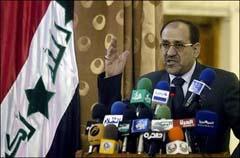
The MEK, shorthand for the Mujahedin-e Khalq, and also known as the People’s Mujahideen Organisation of Iran, looked like it was on the ropes only days ago, when Iraqi Prime Minister Nouri al-Maliki said he wanted its U.S.-protected military base near the Iranian border closed within two months.

The MEK can use some of that cash to pay legal settlements with former members that they tortured, as well as the families of Iranians they killed when they fought on the side of Saddam against Iran.But the E.U.’s Jan. 26 decision not only unlocks untold millions of dollars frozen in European banks, it allows the militant anti-Iran organization to go public with appeals for millions more, perhaps catapulting it into a leading role in the Iranian opposition abroad.

The MEK could claim $9 million held in France alone, along with "tens of millions of dollars" worth of assets locked away in other EU countries, its spokesman told Radio Free Europe/Radio Liberty.

What will it do with the windfall?

"Set off car bombs around Iran," jibed former CIA operative Robert Baer, whose pursuit was dramatized by George Clooney in the 2005 movie "Syriana."

The group says it has renounced violence, but the MEK has carried out dozens of terrorist attacks and assassinations against Iranian targets both inside and outside of the country. Some of those were launched from its base in Saddam Hussein’s Iraq, before the 2003 U.S. invasion.

MEK leader Maryam Rajavi said the unfrozen millions "will be used to increase our political activities … including to further disclose the mullah regime’s secret nuclear weapons sites."

Since Hussein’s overthrow, the 3,000 MEK fighters in Camp Ashraf, as it’s called, have been under the "protection" of U.S. troops, even though they’re still officially labeled terrorists by the State Department.

The seeming anomaly can be at least party explained by frequent reports that the MEK has been secretly helping the CIA run operations against the Islamic regime from its base in southeastern Iraq. 

Its terrorist label was earned before the 1979 Iranian Islamic revolution, when the group, which bills itself as Marxist-Islamist, targeted Americans working in Iran. Indeed, 30 years ago this month the group helped overthrow the U.S.-backed shah and take 52 American hostages.

But eventually it turned against the religious regime. In 2001 its sustained opposition to Iran, its supposed renunciation of violence, and its portrayal of itself as a "progressive" political force won it admirers in the Bush administration and pro-democracy groups in Europe.  Of no small note, it has also played a major role in exposing Iran’s nuclear activities.

Walid Phares, a scholar on terrorism and American of Lebanese descent, called the closing of Camp Ashraf "a significant Iranian victory."

"Ashraf was the only base for the MEK against Iran’s regime," he said by e-mail. "If it is shut down, they will lose the only base they have."

"More than a military base of the opposition against Tehran," he added, "Ashraf was a political base for broadcast and political outreach to the opposition in the inside."

On the other hand, the E.U.’s decision will conceivably allow MEK fighters entry into Europe, at least temporarily solving the problem of what to do with them once Ashraf is closed.

That, and the new money, can only add to the MEK’s political clout, which was put on display last year when the group drew 85,000 people to an anti-Iran protest outside Paris.

To date, exile communities have been divided over the MEK because of its attacks on Iranian troops from Iraqi soil during the two nations’ 10-year war. Some call the organization a puritanistic "cult,” because of its iron-fist leadership by a husband and wife team who have been accused of violating the human rights of their own followers.

But the E.U.’s decision could give the MEK a big boost over its rivals, Phares suggests.

"Once they are decertified [as a terrorist group] they will act as an international NGO [non-governmental organization] and will most likely receive even more donations from Iranian exiles," said Phares, a senior fellow at the hawkish Foundation for the Defense of Democracies in Washington.

"De-certification by itself will strengthen the group within the Iranian diaspora," he continued. "Will they access to frozen funds in EU banks? This is another issue and will have to be negotiated. But certainly they will have a legal base. They will spend it to widen their base, and on strategic communications regarding Iran."   

All things considered, it’s not hard to suspect a hidden American hand in the E.U. decision, or at least acquiescence in it, since it so neatly finesses the eviction notice served on Camp Ashraf by Prime Minister Maliki.

In any event, it keeps MEK alive — and more — despite the threatened closing of its longtime base in Iraq.

The Iranian regime reacted sharply to the E.U. move, accusing the union of a "double standard" on terrorism. It also said it was drafting a plan to put MEK members on trial, "either in the Islamic Republic or outside the country,” according to Press TV, an Iranian news service.

CQ Politics By Jeff Stein

March 4, 2009 0 comments
FacebookTwitterPinterestWhatsappTelegramSkypeEmail
Iraq

Iraq wants Iranian opposition out

BAGHDAD, Xinhua – Iraqi President Jalal Talabani said on Monday that Iraq wanted to expel the Iranian rebel Mujahideen Khalq Organization (MKO) that opposes the Islamic regime.

Talabani made the remarks in a joint news conference with Iran’s former president and current Expediency Council head Ali Akbar Hashemi who arrived here earlier in the day for a visit.

Speaking to the reporters, Talabani accused the MKO, also known as the PMOI (People’s Mujahedeen Organization of Iran) of supporting former Saddam Hussein regime and Iraq wants Iranian opposition camp outcommitting crimes against Iraqis.

"We here in Iraq, our constitution prohibit the presence of any foreign armed group in Iraq and the Iraqi people know that this organization is terrorist one," said the Iraqi president, adding "the Iraqi people want them out from Iraq."

MKO, a main militant group which was founded in 1981 with an aim to establish "a democratic and secular government" in Iran, bases in Iraq’s Diyala province in a camp named Camp Ashraf, which contains more than 3,000 Iranians opponents and their families.

The Shiite-dominated Iraqi government repeatedly demands MKO members to be removed from the country.

After the U.S.-led invasion, the U.S. troops disarmed the MKO fighters and since then, the camp became under the U.S. military police protection for five years before the Iraqi government partially took over security responsibility in the camp.

This is Rafsanjani’s first visit to Iraq since Iran’s Islamic revolution in 1979.

Talabani met with the former Iranian president in his residence at the edge of the heavily fortified Green Zone in central Baghdad that houses the Iraqi government offices and some foreign embassies, including the U.S. one.

Rafsanjani is also expected to meet with Iraqi Prime Minister Nuri al-Maliki and other top Iraqi officials before touring holy cities in Iraq.

At the news conference, Rafsanjani said that his country "is entirely ready to support and cooperate with the Iraqi brotherly people."

Iraq and Iran fought a bloody eight-year war in 1980s, resulting in the loss of one million lives. The relation, however, has been picking up since the Saddam Hussein regime was toppled in2003 and the Shiite came into power.

Editor: Mu Xuequan 

http://news.xinhuanet.com/english/2009-03/03/content_10930887.htm

March 3, 2009 0 comments
FacebookTwitterPinterestWhatsappTelegramSkypeEmail
The MEK Expulsion from Iraq

Iran pushes Iraq to close MKO camp

Pressure is growing on Iran’s main opposition group to leave Iraqi territory after living under US military protection in a camp north of Baghdad since 2003. Some 3,400 militants of the Mujahideen- e Khalq (known by the acronyms MKO or MEK) face eviction by the government of Iraq, which has tired of a group that once fielded its own army under the tutelage of Saddam Hussein and remains on Washington’s list of terrorist groups. On Saturday, Iran’s supreme religious leader, Ayatollah Sayed Ali Khamenei, encouraged Iraqi President Jalal Talabani to follow through with Baghdad’s longstanding desire to disband Camp Ashraf, which came under Iraqi control on Jan. 1. "We await the implementation of our agreement regarding the expulsion of the hypocrites," Ayatollah Khamenei told Iraq’s visiting president, referring to the MKO by the term often used by the Islamic Republic. Mr. Talabani was quoted as saying that the MKO "have committed many crimes against the Iraqis, and the Iraqi government is determined to expel them and will go forward with its decision." His words echo those of Iraq’s national security adviser, Muwafaq al-Rubaie. "The only choices open to members of this group are to return to Iran or to choose another country," Mr. Rubaie said in Tehran last January. "Over 3,000 inhabitants of Camp Ashraf have to leave Iraq, and the camp will be part of history within two months," said Rubaie, adding that more than 900 are dual nationals and that he would be holding talks with officials of 12 countries. Those options are limited for the controversial cultlike group, whose armed wing came under Pentagon control after the fall of Mr. Hussein. Despised in Iran for bomb attacks and the killing of government officials and civilians in the first years after the 1979 Islamic revolution – and later for fighting alongside Iraqi troops against Iran during the Iran-Iraq War of the 1980s -the MKO was disarmed in 2003 but kept intact as a possible tool for use by the US against Tehran.


Terrorist list status


In January, the group toasted its removal from the European Union terrorist list. But it was delisted for legal reasons – using its removal from the British terrorism list in 2008 as part of its case. The decision has been appealed by France, and the group remains on the terror lists of some individual member states. The delisting, though, may enable some militants to be accepted in Europe. Many fear returning to Iran, though more than 300 "quitters" – as the MKO calls those who leave the organization – have gone home with little incident. "This is the end of the terrorist label," says Alireza Jafarzadeh, the group’s spokesman in Washington until 2003, when the MKO, with its several arms and variety of names, was closed down in the US. Removal from the EU list is a "major victory for the MEK and the resistance movement overall," he says. Mr. Jafarzadeh says the EU decision "strengthens" those at Camp Ashraf who refuse either to return to Iran or to leave the camp for Europe. "Any justification to expel them [from Iraq], which has been always coming from Tehran, is now gone," he says.


Still, Baghdad announced that it planned to close the camp last December, the same month the US reaffirmed the MKO’s "terrorist" status. Last year, the State Department’s global terrorism report noted the group had "planned and executed terrorist operations against the Iranian regime for nearly three decades;" had killed several Americans in Iran in the 1970s; and "displayed cultlike characteristics," such as vows of "eternal divorce" [to avoid competing loyalties] and weekly "ideological cleansings." For years, Tehran has offered amnesty to members who voluntarily return to Iran, facilitated by the International Committee of the Red Cross (ICRC). Returns have almost stopped in the past year, as Iran now wants Iraq to first screen potential returnees. "For those who wish to come back to Iran, we hope the Iranian government would give again this green light," says Peter Stocker, the head of the ICRC delegation in Tehran. Concerns in Camp Ashraf that returnees could be mistreated in Iran have not proved true in cases the ICRC has handled. "It is important to know that if anything happened to them, I don’t think it could remain hidden," says Mr. Stocker. US officials say Iran wants to prosecute 50 top MKO leaders, and has provided a list, but that perhaps only 20 are at Camp Ashraf. Returning to Iran is "absolutely not" an option, says Jafarzadeh, now an Iran commentator for Fox, contacted in Washington. "These people who are staying at Camp Ashraf are the people who are determined to oppose the Iranian regime."


Lenient treatment for returnee


Still, at least one high-ranking MKO member forced back to Iran received prison time but relatively lenient treatment. Ebrahim Khodabandeh, a British passport holder, was arrested by Syria while facilitating the exit of MKO leaders to Europe from Iraq after the fall of Baghdad in 2003. The Syrians told him he was being taken to London, but then flew him to Tehran. If he had had a cyanide pill, he says today, he would have committed suicide. "The first time I was in Evin prison, I told them: ‘My bones, my blood, my flesh is all made with the name Rajavi, so the best you can do is execute me,’" says Mr. Khodabandeh, referring to the surname of the husband and wife leaders of the MKO. "It took me two years to come to the point of realizing the MKO was a cult and I had been manipulated." He was driven around Tehran by his case officers, who wanted to show him how the capital had changed in the decades he had been away – and to show how different it was from the world described by the MKO.. Khodabandeh says Iranian intelligence understands the need to avoid the death or abuse of MKO members who return, to avoid creating martyrs. "This was very much to the benefit of the Islamic Republic," he says, now free in Tehran. "If I were executed, I would be a martyr and have my picture in the newspapers. The problem for the organization is they haven’t had a martyr for many years."

Scott Peterson Staff writer of The Christian Science Monitor

March 3, 2009 0 comments
FacebookTwitterPinterestWhatsappTelegramSkypeEmail
The Ideology of the MEK

Ethics defined by the cult of Mojahedin

One of the prevalent issues in studies on cultic relations of MKO is to determine to what extent the group acknowledges application of ethics in its internal as well as external relations. A review of the manifesto and publications of the organization and their ontological viewpoints indicate that MKO tend to equate ethics with their political feelings and ambitions. On the other hand, for MKO ethical standards are defined as whatever they relatively accept as the right and essential to the ultimate ends. It may give us a better understanding of the correspondence between MKO ethical standards and that of Machiavellianism as well as Marxism that incorporate a belief of “ends justify means”. In Machiavellian viewpoints, the application of levers including pressure, deception, breach of promise, betrayal, fabrication and all possible means for achieving and preserving political power is legitimate. Furthermore, in contrast to some contemporary thinkers who make an attempt to interpret ethics as a relative issue by means of complicated and equivocal philosophical discussions and theories, Machiavelli and his followers are outspoken in disregarding ethical principles.

However, the ideology and methodology of Mojahedin is based on the former policy. They managed to integrate philosophy and science to find a way of expressing their Machiavellian ideas in a novel form. As Machiavelli justifies using all means for achieving and maintaining political power, Mojahedin grab at  ontological issues and the ultimate goal of creation. They feel much attachment to philosophical terms like dispensing of existence and absolute truth by which they try to justify their philosophical, political, social, and historical dogmatism. Here, the main viewpoints of Mojahedin on ethics as reflected in their pamphlets and organizational principles are to be reviewed.

Mojahedin distinguish between good and evil with regard to the factor of achieving objectives. In other words, they do not believe in substantive status of ethical values rather define them based on the extent to which they succeed to make the ground for attaining objectives. According to theoretical principles and doctrine of Mojahedin “Good and evil are always determined with regard to the objective”. 1

But what is the objective meant by Mojahedin? As it was mentioned before, Mojahedin believe in absolute good and absolute evil in their worldview yet on the other hand, recognize the legitimacy of using all possible means for achieving that absolute truth. In addition, they maintain the universality of material world and consider evolution as a general law governing all phenomena including man and the society. Consequently, all activities aiming at achieving absolute truth are considered an ethical issue and in contrast, all activities hindering the attainment of that absolute truth are regarded unethical. They define absolute truth and ethical values as follows: 

The process that moves the society toward retaining the most dominant humanistic features, (unlimited to a certain time and place), is known as the absolute truth. Absolute good is those actions done for the achievement of absolute truth in any circumstance. 2

Therefore, according to Mojahedin, absolute truth and its opposite are two sides of a coin and there is no third option:

Non-truth is all actions done against truth as a barrier in its way unlimited to a certain time and place. 3

Also, absolute evil has been defined in the theoretical sources of Mojahedin as:

Absolute evil are all actions correspondent to non-truth unlimited to any certain form, time and place. 4

From this viewpoint, ethical standards have no value in themselves and it is only social and political conditions that determine their values. Consequently, in such a context individuals follow their own demands which may make them recoil from doing what is right and thus, they are frequently deviated from what is ethical. As a result, the concept of truth is metamorphosized into a relative issue, too, and is defined according to predetermined objectives as posed by Mojahedin. According to Mojahedin:


Based on circumstances, truth takes various forms. In other words, it is likely that a procedure in a certain time and place is considered as truth because of its furthering us in achieving our objective, yet in other circumstances it is considered false since it fails to help us and rather hinders the achievement of our objectives. 5

Undoubtedly, the terms “good” and “evil” have their roots in all acts that are accordingly evaluated and defined. It has to be pointed out that the terms objective, evolution, and truth are used as equivalence and complementary whenever needed. Mojahedin have elaborated on the integration of these concepts and their function, stating:

Truth is a practice moving parallel to evolution and all actions carried out in this regard are good. Non-truth is a practice done in opposite direction that is in the direction of decadency hence all actions done in the way of untruth are considered evil. 6

Coming to political power is the first step of achieving the stated objective, evolution, and truth. From this viewpoint, all actions are evaluated based on the extent to which they lead to getting the objective, evolution or truth:

All actions needed for achieving the final objective are evidently essential and necessary. 7

In a nutshell, positive ethical concepts like honesty, sincerity, … in contrast to negative ones like crime, absolutism, dishonesty, and betrayal cannot be evaluated and defined separate from conditions and their relation to the intended objectives rather they are defined according to external issues.


References:

1. Evolution, Second book of ideology. Theoretical sources of MKO, Mojahed publication, Tehran, 1979, p.97.

2. ibid, p.93

3. ibid.

4. ibid

5. ibid

6. ibid

7. ibid, p.96.

March 2, 2009 0 comments
FacebookTwitterPinterestWhatsappTelegramSkypeEmail
Mujahedin Khalq Organization as a terrorist group

Should the MEK Stay or Should it Go?

This is what Maryam Rajavi – head of the People’s Mujaheddin of Iran (PMOI, or MEK, or MKO) stated in Brussels on January 27, 2009 while standing in front of Should the MEK Stay or Should it Go?her many supporters, right after the decision of the ECJ (European Court of Justice) to put her movement off the list of terrorist groups:

"My fellow compatriots, Friends of the Resistance,

The MEK is still on the list of terrorist groups of the United States, because its fundamental values are anti-western and violentThe obstacle of the terrorist allegation has crumbled. The spell has at last been broken. With perseverance and determination, you courageously rose above the flames of injustice and rendered law and justice victorious…This marks a decisive turning point on the course of democratic change in Iran."

Although, the US State Department’s report on terrorist organizations states the following:

"The MEK advocates the violent overthrow of the Iranian regime and was responsible for the assassination of several U.S. military personnel and civilians in the 1970’s. MEK leadership and members across the world maintain the capacity and will to commit terrorist acts in Europe, the Middle East, the United States, Canada, and beyond.

The MEK emerged in the 1960s as one of the more violent political movements opposed to the Pahlavi dynasty and its close relationship with the United States. MEK ideology has gone through several iterations and blends elements of Marxism, Islam, and feminism".

Funny, cause if you head your browser toward the official website of Maryam Rajavi, each time you’ll read a sentence like this one: "Our aim is not to attain power at all costs. Our aim is to guarantee freedom and democracy at all costs, even at the cost of sacrificing our own existence." It all sounds much more like a Ghandi’s statement that the one of a terrorist inspired by Marxism, Islamism and Feminism.

Who’s right?

The MEK is still on the list of terrorist groups of the United States, because its fundamental values are anti-western and violent. The group took part in the 1979 revolution against Reza Palahvi’s the pro-western government, helping the present Iranian government to take power in Iran. Although, once the main target has been hit (French revolution anyone?), the winning coalition starts an internal power struggle, with which the real leader will be chosen. This is what happened to MEK, at odds with Islamic Republic. The leadership of the PMOI attempted to overthrow the newly formed IRP (Islamic Republic of Iran) but failed. Ayatollah Khomeini, in response, started a crackdown on the MEK militia and the group was forced to move to France.

In "The Persian Puzzle", Kenneth Pollack describes these events as following:

"…the MEK had made itself a primary target of the IRP. It decided that the best defense was a good offensive and tried to decapitate the IRP leadership in the hope of either toppling the regime or forcing a compromise. On June 28, 1981, a massive explosion inside the IRP headquarters succeeded in killing much of the party’s top leadership. …

…Two days later, a bomb narrowly missed killing Hojjat-ol Islam ‘Ali Khamene’i as he delivered the Friday sermon in Tehran. Sensing that this was their last chance to survive (let alone take power), the Feda’iyan-e Khalq, the Communists, and other leftist groups also joined in the bloody campaign. Thereafter, the MEK and its leftist allies launched a sustained terror campaign that assassinated roughly two hundred government officials by the end of August. Then, on August 30, the MEK pulled off another dramatic coup, smuggling a bomb into the prime minister’s offices and killing President Raja’i (who had succeeded Bani Sadr in blatantly rigged elections), Prime Minister Mohammad Javad Bahonar (who had in turn taken Raja’i’s old office), and three other senior officials. 23 Naturally, the regime reacted with concomitant ferocity. …"

Are we talking about holy water or the devil itself? The Council on Foreign Relations has a detailed description of the MEK:

"…Experts say that MEK has increasingly come to resemble a cult that is devoted to Massoud Rajavi’s secular interpretation of the Koran and is prone to sudden, dramatic ideological shifts."

The MEK, in fact, also has a political arm, called The National Council of Resistance of Iran headed by Maryam Rajavi’s husband, Massoud. No one really knows where Massoud Rajavi is living now, but an interview to a former MEK member appeared (briefly) online on February 2, 2009. If you google for the words "mek" + cult the interview will come out.

Only, if you click on it, you’ll be redirected to some other piece of news not related to the subject. The only thing you can read is the title of the article – Ex-member says MEK, ‘is like a cult’ – and a few other words.

Of course, the fact that the EU removed the MEK from the list of terrorist organizations sparked the reaction of Tehran’s government: "The European Union must realize that a political approach to terrorism, which threatens the lives and security of people around the world, is totally unacceptable for the global public opinion." Iran’s permanent envoy to the United Nations, Mohammad Khazaei, wrote to the UN Secretary General Ban Ki-moon.

"The EU’s politically motivated decision will not change the terrorist nature of the group. It will not ‘turn the page’ of history on the cult’s terrorist activities and massacre of innocent civilians, nor will it cleanse the terrorist group of its criminal past," he added.

It sounds like a power struggle between the EU and the IRP (of course there’s also a war going on between Teheran and the MEK itself). And it seems as if the MEK is being used as a leverage tool here. But this is just a superficial analysis. The truth is far from being exposed, and this could easily be a question of money. Several well informed sources claimed that the MEK leadership has been paying some major politicians and judges to get the sentence they wanted: their group out of that European black list as soon as possible. Of course this is just an assumption and there is no legal evidence to support the thesis of corruption.

On the contrary, it seems unlikely that the European Union could be so easily corrupted, even though they say that the MEK has a lot of money to spend. The fact that Saddam handed over the money he got from the "Oil for food" program to the PMOI, for example, is common knowledge.

Anyhow, the People Mujaheddin of Iran (this is the extended version of the name) may not be considered a terrorist group in the EU but it is still considered a terrorist organization in the US, should it stay there? According to Paulo Casaca, no: "I think this issue has several angles – he told us – all of them quite important. First: it raises the question of the rules, principles, methods and proceedings of terrorist lists. This is a very important question that I addressed in conferences and books; Second: it shows that only after four strong sentences the Council decided to act ‘better late than never’, but the lack of respect of the Court by the Council is scaring for all of those who believe in a "State of Law"; Third: the EU, as the US, are fully engaged in an appeasement policy that did not and will not work, .."

Casaca is a member of the European Parliament for Portugal’s Socialist Party and a supporter of the MEK. A very well informed journalist (anti-MEK), who has researched and written on the matter, told us that she cannot confirm allegations of corruption that have been made in the media. In her opinion, though, the real problem now is the MKO’s Ashraf camp in Iraq. The camp must be closed in two-three months from now.

"The Iraqi government has every right to send these people [the MKO members that are in the camp Ashraf] out, now the question is, where are they going? It will be easier to return to their country in Europe, now that the ECJ ruled them out from the list of the terrorist groups. They are more or less 2.000 brainwashed people, it will be a humanitarian crisis!"

The Iraqi National Security advisor, Muwafaq al-Rubaie, told the press that "the only choices open to members of this group are to return to Iran or to choose another country… Some of the MKO members have expressed interest to return to Iran and we are making the arrangements for this….We are acting under international humanitarian regulations and international laws. These people will themselves choose where they want to go."

So, someone thinks that the MEK (or MKO or PMOI) is a blood-thirsty terrorist cult that only wants to put its paws on Iran, whatever it takes. Someone else thinks that this group is the only democratic and legal alternative to the radical anti-western and corrupted Islamic Republic of Iran. It is very hard to give an answer here, but there are some good questions at least: what will the Obama administration do about the Ashraf camp and the MEK? Will the US State Department remove the group from the black list? Is the MEK going to play a  role in the future of Iran?

hudsonny.org By Andrea Loquenzi – Italian Journalist and Research Fellow, The Magna Charta Foundation

March 2, 2009 0 comments
FacebookTwitterPinterestWhatsappTelegramSkypeEmail
Iran

EU should revise approach to MKO

Prosecutor-General: EU should revise approach to MKO

Prosecutor-General Qorban-Ali Dorri Najafabadi on Saturday advised the European Union to revise its decision to remove MKO from its list of terrorist groups. Those who have de-proscribed MKO are accountable to the international community as well as the Iranian nation

Those who have de-proscribed MKO are accountable to the international community as well as the Iranian nation, he said.

It should be clarified whether the EU has ignored the crimes of the group in the past or they have viewed the case through political considerations, he pointed out.

The so-called advocates of human rights have closed their eyes on assassination of thousands of innocent people by the group and therefore they should be accountable to their families of victims and millions of Iranian citizens, Dorri Najafabadi said.

The group spared no efforts to assassinate many Iranian civilians through bombing, violence and looting, he said.

The group also targeted a number of high ranking Iranian officials and politicians to attain their sinister goals, said the prosecutor-general.

Those who have not committed any crime can be pardoned by Islam, he said.

The prosecutor-general called on the EU to revise its illogical approach which runs counter to international norms and avoid bothering the Iranian nation and instead help the Islamic Republic of Iran bring the culprits to justice.

March 2, 2009 0 comments
FacebookTwitterPinterestWhatsappTelegramSkypeEmail
Mujahedin Khalq Organization as a terrorist group

MKO: Past, Present, Future

Iran Today Program on MKO

Press TV’s programme Iran Today talking about the MKO, past, present and future

This TV documentary reviews on the terrorist MKO’s past atrocious history, its collaboration with the Iraqi ousted dictator and its present situation in Camp Ashraf in Iraq. Following the Iraqi government’s decision to close Camp Ashraf the group is facing an unclear future. 


Press TV, Iran Today, February 10, 2009

Download MKO: Past, Present, Future

March 1, 2009 0 comments
FacebookTwitterPinterestWhatsappTelegramSkypeEmail
Newer Posts
Older Posts

Recent Posts

  • The black box of the torture camps of the MEK

    December 24, 2025
  • Pregnancy was taboo in the MEK

    December 22, 2025
  • MEPs who lack awareness about the MEK’s nature

    December 20, 2025
  • Why did Massoud Rajavi enforce divorces in the MEK?

    December 15, 2025
  • Massoud Rajavi and widespread sexual abuse of female members

    December 10, 2025
  • Facebook
  • Twitter
  • Instagram
  • Youtube

© 2003 - 2025 NEJAT Society . All Rights Reserved. NejatNGO.org


Back To Top
Nejat Society
  • Home
  • Articles
  • Media
    • Cartoons
    • NewsPics
    • Photo Gallery
    • Videos
  • Publications
    • Books
    • Nejat NewsLetter
    • Pars Brief
  • About Us
  • Contact us
  • Editions
    • عربي
    • فارسی
    • Shqip