Nejat Society
  • Home
  • Articles
  • Media
    • Cartoons
    • NewsPics
    • Photo Gallery
    • Videos
  • Publications
    • Books
    • Nejat NewsLetter
    • Pars Brief
  • About Us
  • Contact us
  • Editions
    • عربي
    • فارسی
    • Shqip
Nejat Society
Nejat Society
  • Home
  • Articles
  • Media
    • Cartoons
    • NewsPics
    • Photo Gallery
    • Videos
  • Publications
    • Books
    • Nejat NewsLetter
    • Pars Brief
  • About Us
  • Contact us
  • Editions
    • عربي
    • فارسی
    • Shqip
© 2003 - 2024 NEJAT Society. nejatngo.org
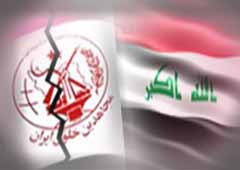
The MEK Expulsion from Iraq

Anti-Iran Group Seeks Base in Egypt

An anti-Iranian organization is seeking to base its new headquarters in Egypt, a move that could further sour relations between Tehran and Cairo.

The People’s Mujahidin of Iran, also known as the Mujahidin Khalq Organization (MKO), is an Iranian opposition movement outlawed in Iran.

The movement has had camps in Iraq since the early 1980s and sided with former Iraqi dictator Saddam Hussein during the Iran-Iraq war. Its leaders fled to France during the 1980s.

Today, Baghdad seeks to expel MKO members from the country and MKO leaders are looking for alternative bases in the region.

Egypt recently agreed to accommodate the MKO on its soil, Iraq sources told the Iranian Mehr news organization.

Last month, European states removed the organization from its list of banned terrorist groups. However, the United States State Department still designates the MKO a foreign terrorist organization.  

If Egypt accepts the MKO on its territory, this would strain already tense relations between Egypt and Tehran.  

Iran cut its diplomatic relations with Egypt following the late president Anwar Sadat’s signing of the Camp David peace agreement with Israel in 1979.

Sadat’s welcoming of the shah of Iran following the collapse of his regime in 1979 sharpened the tensions between the two countries.

This was compounded when Iran named a street after Khalid Al-Islambouli, the man who assassinated Sadat in 1981.  

More recently, Egypt and Iran have expressed willingness to restore diplomatic ties.  

Analysts say any thaw in these relations would be subtle rather than drastic, so as not to jeopardize Egypt’s delicate relations with the United States.  

Tension recently surged between Iran and Egypt over the latter’s involvement in the Gaza crisis.

If Egypt indeed agreed to host the MKO on its soil, this would signal the end of any reconciliation efforts between the two countries, said Walid Kazziha, a professor of political science at the American University in Cairo.  

“This is a militia that has been antagonizing the regime in Iran since its inception,” Kazziha told The Media Line. “I imagine Egypt will not allow them as an armed band because Egyptians are very sensitive about this. But if they allow them political refuge here, the result will be eternal enmity with the Iranian regime and the question is whether this is in Egypt’s national interest.”

Written by The Media Line Staff
February 23, 2009 0 comments
FacebookTwitterPinterestWhatsappTelegramSkypeEmail
Mujahedin Khalq Organization's Propaganda System

Mojahedin, Iraqi government and the future

There are some issues that have attracted the attention of the world toward MKO. The settlement of Mojahedin in Iraqi soil and recently the recent statements made by Nouri Al-Maliki claiming that the Iraqi government refrains to deliver organization members to the Iranian government and seeks their transfer to a third country is another issue. The world is also encountering propaganda blitz of the organization on the position taking of the US in keeping on its control over Camp Ashraf and also the MKO’s petitioning the world to hew to international conventions concerning individual rights of MKO members. The focus Mojahedin put on these issues in their sites on the one hand and their recent claim of calling their present situation a remarkable victory on the other hand seems contradictory and calls for a deep study on the overall issue and the concerned parties, i.e. MKO, Iraq, Iran, and the US. In this regard, position of Iran, Iraq, and the US toward MKO has to be reviewed to make us find an appropriate answer to the question; what are Mojahedin after by means of their present considerable propaganda blitz?

1. US position toward MKO

As acknowledged by Mojahedin, US officials consider MKO as a terrorist group; however, they insist on keeping them in Iraqi soil according to international conventions as long as its members will have been settled in a second country; yet the US considers the Iraqi government responsible for controlling Camp but recognizes its rights of deciding to keep or expel the organization from its soil. The US is after all trying to find a solution to prevent the transfer of MKO members to Iran. 

2. Iraq positions toward MKO

Up to now, Iraqi officials have desisted to make any statement on their decision to deliver MKO members to the Iranian government; on the contrary, their statements imply that they will never do it. Nevertheless, Iraqi officials believe that national constitution of Iraq necessitates it to expel Mojahedin from Iraqi soil due to their committing terrorist activities therein and has let them free to decide whether relocate their camp to another country or return to Iran. It has to be noted that Iranian officials have repeatedly declared their disinclination to admit MKO members and leaders who have taken part in numerous terrorist attacks inside Iran and even have reveled a prepared list of them in advance. Therefore, there is no possibility that Iraq and the US transfer MKO members to Iran. 

3. Iran position toward MKO

Although the Iranian government asked for the transfer of a number of MKO leaders as terrorist criminals to Iran after the fall of Saddam, the fact is that despite a great number of MKO detached members have returned to Iran deliberately, it is a long time when Iranian officials have declared their unwillingness to accept MKO members or even the deliberately detached members. It has to be pointed out that Iranian officials have repeatedly asserted that they have allowed MKO detached members to enter Iran due to humanistic causes and with no political motivation. However, the coming events may prove or disapprove the honesty of Iran in its claims. It is likely that the US-Iran conflict has its roots partly in the approach followed by the US toward MKO and the fact that it defends a notorious organization whose name is in its terrorist list.

  ***

Despite the clear position of the three parties mentioned, Mojahedin insist on pursuing their common approach of perverting and fabricating Iraqi and Iranian officials’ statements. In this regard, they make an attempt to inculcate their European advocators with the idea that Iraq has decided to deliver them to Iran in an act of breaking international conventions and human rights. However, the fact is that due to the crises and tensions posed to the organization during years of exile, Mojahedin cannot solve their problems legally and rationally and are used to resort to illegal shortcuts. The tactics grabbed at by Mojahedin reveal that they have always held grab to putting pressure on their dissidents to further their interests and achieve their objectives. Likewise, they are to put Iraqi government in a position to make inappropriate reactions favored by Mojahedin.

In this way, they resort to heavy propaganda blitz and illegal activities like making contact to Iraqi terrorists, intensifying the tensions inside Iraqi soil, etc. Their hostile position toward Iraqi government and their relation with problematic groups therein implies the fact that they rely much on these relations to further their interests in Iraq and also one of their pretexts for refraining to deliver the control of camp Ashraf to Iraqi government is to pave the way for their misusing of the present conditions for making contact to Iraqi problematic groups. Therefore, the Iraqi government has to concentrate its efforts on preventing Mojahedin to misuse the tensions occurred inside Iraq and also be careful not to give them any subterfuge to get their own way. However, does it mean Mojahedin are to be let free to make contact to problematic and insurgent Iraqi trends?

The fact is that perversing tactics of Mojahedin has put the winning card in their hands. The legal measures taken by Iraqi government against MKO may increase the chance of their unexpected reactions and also pave the way for their petitioning the world, yet any negligence of Mojahedin’s illegal activities may result in Mojahedin’s favored condition in furthering their illegal interests in Iraqi soil. Taking this viewpoint into consideration, whatever the course of events in the future, Mojahedin would be the winner. Furthermore, the experience shows that Mojahedin easily take advantage of suicide operations when encountering any impasse to win over, like the self-immolation of a number of MKO members in June 17th 2003 in France. However, it suffices not to take preventive measures against these activities since Mojahedin have proved that they are masters of plotting unexpected activities. In fact, they are like time bombs that despite their high destructive potentials can be deactivated if detected in time. What is of importance at the time being is that the world has to believe the destructive potentiality of MKO leaders and members.


 What is to be done?

Now, this question arises: what is to be done? Evidently, the one-sided decision making of Iraq on MKO’s destiny is a risky and problematic action since, as it was experienced in global scene, Mojahedin may resort to defensive measures to foil Iraqi governments’ efforts by means of fabricating false information, suppressing the truth, initiating psychological and propaganda war, poisoning atmosphere in their own favor, and presenting themselves as the victimized party in the existing crises. In this regard and taking the strong support the US offers to Mojahedin and Mojahedin’s inclination to receive the support of the US as well as  other international bodies like the ICRC, Red Crescent, and human rights activists into consideration,  the cooperation of the US and international organizations with the Iraqi government may prevent MKO’s misusing the critical situation.

Therefore, the collaboration of the US as a mediator to control the overall process, the internationally recognized bodies and the Iraqi government seems necessary to arrive at a general consensus. The necessity of the presence of the US and international bodies is due to the fact that Mojahedin have proven that they have a big hand in changing their strategy and position taking in a blink of an eye and it is likely that they may accuse the Iraqi government of engaging in plots against the group as it has already spread fabrications over explosion of water pipes of camp Ashraf, missile attacks to camp Ashraf, hijacking some MKO members, and terror of Mojahedin leaders. However, the presence of the US and international bodies may put a stop to such fabrications. Also it is necessary to exercise full security control over Camp Ashraf, Mojahedin have to be totally disarmed and the cyanide capsules as well as explosives located therein be detected and collected.

In the second phase and after the formation of the council consisting of Iraq, the US and a number of concerned international organs, MKO’s high rankings should be separated from its rank-and-files so that the latter may find the opportunity of making free contacts to their families. It has to be noted that Rajavis’ refusal to separate top officials from rank-and-files implies the fact that there is a high possibility of plotting terrorist attacks regardless of the cost and form.

Also, it is necessary to declare the names of Ashraf residents openly since there are some families that are unaware of the presence of their relatives therein. Second, Ashraf residents are to interact with the outside world freely. Providing internet, satellite, journals, newspapers, and books for them is necessary in this regard. Third, they should be let free to choose their own destiny and decide for their future.

Another responsibility on international organizations in this regard is to identify those volunteer to separate MKO, and according to their will, make the ground for their transfer to Iran or other countries that may let them in. It may convince Iraqi government to allow the settlement of Mojahedin in Iraq until the time when a country consents to provide MKO members with asylum. As it was mentioned before, this solution and the interference of the US and international bodies in Iraq-Mojahedin conflict may put an end to it and prevent any possible misuse on the part of the concerned parties.

February 23, 2009 0 comments
FacebookTwitterPinterestWhatsappTelegramSkypeEmail
USA

Washington may court moderates WITHIN Iran

Washington may court moderates within Iran rather than outside opposition
The change in tone from Washington toward Tehran is complicated not only by historic acrimony but also by a complex relationship with Iranian oppositionUPI movements.
U.S. officials have made it clear that the Obama administration represents a possible opening for Iran.
"With respect to Iran, there is a clear opportunity for the Iranians … to demonstrate some willingness to engage meaningfully with the international community," in the words of Secretary of State Hillary Clinton.
This is in stark contrast to the previous administration and its policy of isolation. Gary Sick, a top White House aide on Iran during the Iranian hostageWashington may court moderates within Iran rather than outside opposition crisis and now senior research scholar at Columbia University, says though the administration of George W. Bush had hoped for a better relationship with Iran in the wake of the conflict in Afghanistan, that policy was largely abandoned when the United States invaded Iraq in 2003.

Ali Safavi, a member of the Foreign Affairs Committee of the National Council of Resistance of Iran — a Paris -based group calling itself the Iranian Parliament in exile — said the approach to the Iranian regime, as well as its opposition, would be a litmus test for the Obama administration.
"There has been no shortage of goodwill gestures from the Americans toward Iran with the goal of moderation, but so far this course has failed," he said.
The NCRI, which includes members of the People’s Mujahedin of Iran, a dissident group based in Iraq’s Diyala province, has lobbied the international community to back a 16-point plan for regime change in Iran. It led a successful campaign in January to remove the PMOI from the terrorist list adopted by the European Union.
Maryam Rajavi, the controversial leader of the NCRI, hailed the decision as a victory for the Iranian resistance, saying the move paved the way for democratic change in Iran.
But the group’s image as a cult with a storied history of terrorist activity, both in Iran and across the globe, makes courting the opposition as a viable avenue for regime change in Iran tenuous at best.
The PMOI and the NCRI are both listed by the United States as terrorist organizations for their links to violent opposition to the Iranian regime.
President Bill Clinton in 1997 included the PMOI on the U.S. State Department’s list of Foreign Terrorist Organizations following the election of Iranian President Mohammad Khatami. Sick says that effort was part of a broader policy of appeasement toward the moderate Khatami, adding the State FTO list is a reflection of who Washington likes as much as who it doesn’t.
The PMOI arrived on the scene in the 1960s as a movement opposing the Western-backed Mohammad Reza Pahlavi, the shah of Iran, and supporting the Iranian Revolution in 1979 that brought Ayatollah Khomeini to power. The ideology of the PMOI, centered on Marxism, was in contradiction to the Revolution, however, and the group was exiled to Paris in 1981.
With France recognizing the Iranian regime in 1986, however, the group established itself in various camps throughout Iraq from which it ran a campaign of violence against Tehran. Though largely targeting Iranian government officials, its killing of American contractors in Tehran in the 1970s, participation alongside Saddam Hussein’s forces in suppressing Kurdish and Shiite rebellions in Iraq in 1991 and its later attacks on Iranian embassies in 1992 earned it a spot on the terrorist lists of several nations.
Its reputation for militancy, however, was not supported by recognition as a major fighting force. The PMOI surrendered its tanks and heavy artillery to U.S. forces following the 2003 invasion. Its members are now considered protected persons in Iraq under the Fourth Geneva Convention and claim to have abandoned their militant agenda in favor of peaceful opposition.
The PMOI, and its representatives in the NCRI, claim to hold valuable intelligence on Iranian operations, including Iran’s controversial nuclear program. The group often touts its unveiling of the nuclear program at the Natanz weapons facility in Iran, though several analysts note developments at Natanz were all but flaunted by the Iranian regime.
Massoud Khodabandeh, a former member of the PMOI, said those claims, and the intelligence value of reports from the NCRI/PMOI in general, are at best questionable, at worst useless.
"It is widely believed that intelligence given out by the PMOI about Iran’s nuclear facilities was given to them by Western intelligence contacts," he said.
Meanwhile, allegations have mounted that the U.S. intelligence community has funneled money to the PMOI for operations against the Iranian regime. An article in The New Yorker magazine in 2008 suggested the Bush administration had set aside some $400 million for covert operations against Iran, with a portion going to the PMOI.
The NCRI’s Safavi, however, called those allegations "completely bogus," and U.S. intelligence officers contacted for this story said there was no evidence to support those claims, though the official, speaking on the condition of anonymity, said he "wouldn’t be surprised if the allegation turned out to be true."
Meanwhile, with Iraq emerging from U.S. occupation with a shaky democracy, the relationship between Baghdad and the PMOI remains tense.
With the PMOI widely reviled in Iraq for supporting the violent suppression of the Shiite and Kurdish rebellions, and in Iran for its historic assassination policy, the group has few friends outside its groups of supporters in Europe and the United States.
Though Iraq does not have an extradition treaty with Iran, several top Iraqi officials, including Prime Minister Nouri al-Maliki, have said the group is no longer welcome in Iraq.
Both the NCRI and PMOI, through persuasive and astute campaigns aimed at generating sympathy both in the media and among world leaders, including those in the United States, have pushed for a delisting campaign with an effort to sever its ties to its terrorist past.
International lawyers in Washington, D.C., representing the PMOI filed a petition in July with the U.S. State Department seeking removal from the FTO list there, but U.S. officials say the FTO designation is appropriate.
Speaking to reporters following the Jan. 26 EU delisting, State Department deputy spokesman Robert A. Wood said "nothing has changed from our standpoint" concerning either group.
Meanwhile, the outcome of the January provincial elections in Iraq may indicate a subtle shift in Iraqi relations with Iran as the pro-Tehran Supreme Islamic Iraqi Council was trounced in the elections, largely by Maliki’s more secular State of Law slate.
Former Iranian President Khatami — widely seen as a moderate — has announced plans to run for president again in June, and though an appeal in the PMOI FTO listing case is expected to reach the U.S. Court of Appeals for the D.C. Circuit this summer, with U.S. policy currently leaning toward courting moderates within Iran, rather than outside opposition groups, little seems likely to change in the future.

By DANIEL GRAEBER, UPI Correspondent,
http://www.upi.com/Emerging_Threats/2009/02/20/
Washington_may_court_moderates_within_Iran_rather_
than_outside_opposition/UPI-42961235157864/

February 23, 2009 0 comments
FacebookTwitterPinterestWhatsappTelegramSkypeEmail
Mujahedin Khalq 's Function

MEK; Controversial freedom fighters

The Iranian resistance group “mujahedin khalq” as fifth column against Tehran during the Iran-Iraq war

Since the end of the Saddam era, it plays a very ambiguous role.

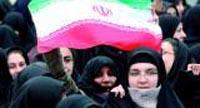
Behnam Sanati (name changed by the author) could have had a quiet life in Paris, where his parents after the Islamic revolution in Iran, emigrated in 1979.  But in the mid-90s, he made the mistake of his life.  He fell in love with a young Iranian girl who convinced him, to join “mujahedin khaq” (the word means “holy warriors”),and  then become a militant for Iraqi ex-dictator Saddam Hussein who supported Tehran in January 2009: Iranian women demonstrate against the recent decision of the EU, which removed mujahedin khalq from the list of terrorist organizations. Photo: EPA / Abedin Taherkenarehthe group formed to overthrow the regime in Tehran.

In 1998, the MEK sent him to Ashraf Camp in Iraq, 100 kilometers from the Iranian border. Later he was supposed to launch  an attack on a senior military officer in Tehran.  “The mission was not successful,” says Sanati cool and emotionless.  But the failure of the action

meant that he eventually swallowed a cyanide capsule and then – because the poison had not killed him – he blew up a hand grenade in the air.  Here he lost his left hand, but he was received in an Iranian military hospital and survived.  He followed five years in prison.

Today he is stunned sitting in a small Parisian bistro and shaking his head.  Last week was in fact the struggle time

for the status of mujahedin khalq, a three-year dispute to an end: the group was removed by the EU, like the British model, from the terror list.  And last December, Europe tipped the Supreme Court for the EU’s decision on dismissal of the organization’s assets freezing. “This is hopefully not the last word in this matter. Just because the ruling of European Court against the successful listing as a terrorist organization in the European Union has sued, does not alter their crimes in the past,” says Behnam angrily.

Divided opinions

He is right.  The contradiction continues, because the EU states are divided in the assessment of the Iranian opposition movement.  France wants to appeal the decision of the EU’s Court of appeal.  States such as Austria, Ireland, Denmark and Luxembourg, however, argue that the Iranian opposition group after the decision of the EU judges could not stay on the terrorist list.

This list, via a unanimous decision made by all 27 EU member states is renewed every six months.  Benham hopes that soon MEK will be on the list again. “mujahedin was founded in 1965 and acted against Shah mohammad Reza Pahlavi who was supported by the west the until the Islamic revolution in 1979. In their worldview, the first supporters demanded an obscure mixture of revolutionary Marxism, guerrilla struggle ethos à la Ho Chi Minh and Shiite Islam, as the protest movement against class exploitation and state violence. The armed struggle from the outset was MEK’s favorite tool to its anti-American and anti-monarchist propaganda with the necessary efficiency to lend, “he explains.

Behnam knows the history of the movement by heart: “MEK planned their first major attack in 1971, when the 2500th anniversary of the Persian monarchy was celebrated. They wanted to blow up E-factory in the capital Tehran what Pahlavi’s security forces prevented. Waves of arrests were the result, Rajavi who now leads the MEK authoritarian was imprisoned. After the Islamic revolution the MEK broke out with the Iranian regime that had originally supported and consequently Rajavi fled to France. MEK led the remaining members in home launch bombings, murders, and attacks on Iranian interests.

Exile in Iraq

The emigrants were not only in the West, where a large number of Iranians live in exile, but also in neighboring Iraq. In 2003 the US-led military coalition toppled dictator Saddam Hussein and made mujahedin disappointed because he had granted them shelter since 1980’s as mercenaries in the first Gulf and war against Iran.  Also in the repression of Kurdish and Shiite uprisings, they were involved, what finally shattered the support of the Iranian people of their mother country, “said Behnam. He continued:” This sect has perpetrated attacks on Iranians!  How can you shoot to your own compatriots?  How could I just join? ”

Behnam takes out a photo from his pocket and shows it to us.  “They are from Austria but then they are interested in here,” he says.  It shows the ex-Mujaheddin fighters Golzar Farid (name changed by the author).  ” In 1984, Farid  graduated from the University of Vienna began in 1985 in Austria by the Mujahedin recruited. He flew with Austrian Airlines to Baghdad and came first in a warehouse to Kurdistan. During the Iran-Iraq war, he fought mainly against pro-Iranian Kurdish units. Shortly before the end of the war, the leader of the MEK, Massud Rajavi, moved a tactic to change his group as an army into battle against Iran. As in the UN Resolution 598, July 1987 peace plan that ended the Iran-Iraq war was decided, Rajavi was before his group and stated that their credibility was under question if they would not hit. On July 18th, shortly after Iran signed the ceasefire agreement 7000 MEK fighters began the operation “Eternal Light” for the disastrous failure: at least 1315 fighters were killed.

The organization now shifted its activities to terrorist attacks inside Iran: In 2001, Farid Golzar with antitank missiles and a Kalashnikov sent to Tehran in order to execute an attack.  “He was arrested and sentenced to nine years in prison. In 2005, he was released from prison,” says Behnam.  “Why there were no death sentences, why he came and Golzar released too early? ’’, We want to know. “Iran’s government began to change in the era of President Mohammad Khatami its policy towards the MEK. With mild penalties and the possibility of reintegration, the 4000 fighters who are still in Camp Ashraf could be, to be convinced to return to Iran,” Behnam said.

 Dissatisfied with the news about the MEK is also an employee of the Iranian Center for Strategic Studies: The 35-year-old complains about the unwillingness of the United States, to hand over the camp in Iraq to Iraqi government. “That’s a double morality of the West. How they claim to fight against terror, while they remove a terrorist group from the list,” he asks angrily.

 Maryam Rajavi, leader of the National Resistance of Iran (NCRI), provides as legal representative of the exiled opposition group that is completely different.  “The decision is a valuable beginning. Now, the U.S. should follow the European example and delete MEK from the list too” she asks.  Although they proclaim that their organization for several years has had no longer militant operations, it should be considered as serious that  they can not deny that the role of the  political orphans of mujahedin in the eventful history of the Middle East.


Joker militant U.S.

After the fall of Saddam there is no use from the cult-like militia, the U.S. is wary of them, because even killings of U.S. soldiers during the Shah’s time go to their account.  The hawks in the Pentagon, would still like to be militant Joker against Iran. It was this group that in 2002 uncovered the existence of the uranium enrichment plant at Natanz and the heavy water reactor in Arak, is regarded as evidence of their importance.

On the other hand, the former weapons inspector Scott Ritter says, Israel’s secret service had been the source.  For “PR reasons” – Israel itself has nuclear weapons and refuses to acknowledge the NPT to sign – he did the group fed with information.  Iraq wants the fighters to get rid of any event and suspected them to cooperate with extremists.

Before Behnam goes, he raises the finger warningly and says: “I will only find my peace when all can live Mujaheddin in the Iranian society, and none of them longer is forced to live in camps where violence and dictatorship prevail.”

Wiener Zeitungat By Arian Faal, born 1977, lives as a journalist and university lecturer in Vienna and Paris.

February 22, 2009 0 comments
FacebookTwitterPinterestWhatsappTelegramSkypeEmail
Nejat Publications

Pars Brief – Issue No.44

·         Arrest warrants for 14 top MKO terrorist Leaders

·         Mojahedin Khalq (MKO, MEK, Rajavi cult) Suicide operative arrested in Iraq

·         France files appeal against "Mujahedin Khalq Organization" terrorists

·         Protests in Tehran against EU removing PMOI group from terror list

·         Mojahedin Khalq Organisation still designated a FTO in USA

·         The report of Federal Office for the Protection of the Constitution of Germany on MKO

·         Belgian MP: "PMOI is a sect"

·         Canada refuses to take Iranian group off terror list

·         Iranian Militant MeK Group Losing Fight to Stay in Iraq

Download Pars Brief – Issue No.44

February 22, 2009 0 comments
FacebookTwitterPinterestWhatsappTelegramSkypeEmail
Nejat Publications

Nejat NewsLetter NO.26

Inside this issue:

1.    Happy New Year!

2.    Nejat Society in London

3.    Modern Slavery in the cult of Rajavi

4.    German Greens say no to MKO

5.    An Interview with MKO former members

6.    Lord Malloch Brown: Camp Ashraf handover to Iraqi government imminent

7.    Tobias PFluger : Iran – MKO are No Freedom Fighters

8.    Iraq Threatens to Expel Rebels

9.    Iranian opposition exiles must leave

10. Is PMOI a democratic organization?

11. Maryam Garrison: center for MKO crimes

12. Nejat: Let ailing MKO members out

13. Nejat delegation met Shadow Minister for Sport

14. Nejat Society Asks UK to Support Iraqi Government

15. Meeting with Baroness Neville-Jones

16. UN denies sending letter in support of MKO

17. Cult survivors visit Iraqi embassy

Download Nejat NewsLetter ISSUE NO.26

February 22, 2009 0 comments
FacebookTwitterPinterestWhatsappTelegramSkypeEmail
UK

UK sees MKO as terrorists despite court ruling

Downing Street still considers the anti-Iran Mujahedin Khalq Organization (MKO) as a terrorist group, says the British justice secretary. Downing Street still considers the anti-Iran Mujahedin Khalq Organization (MKO) as a terrorist group
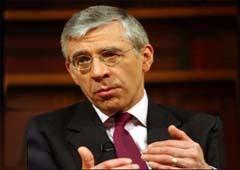
British Secretary of State for Justice Jack Straw said on Wednesday that his country firmly believes in the terrorist nature of the MKO group, despite a controversial decision last year to remove the dissidents from the UK terror list.
Straw said he sorely regrets the British court ruling which de-proscribed the grouplet from the country’s terror blacklist.
"When I was the home secretary, I said it was a terrorist group and the parliament agreed. The difficulty is that there is an independent kind of court which can make the final decisions out of the law. And it decided that the evidence do not support what the government was saying," Straw told IRNA in an exclusive interview.
Following a UK court ruling in 2008, the British parliament lifted the terror ban on MKO — irrespective of the abundance of evidence pointing to the group’s 40-year history of performing terrorist operations in Iran.
The group masterminded a slew of assassinations and bombings inside Iran, one of which was the 1981 bombing of the offices of the Islamic Republic Party, in which more than 72 Iranian officials were killed, including then Judiciary chief Ayatollah Mohammad Beheshti.
Earlier in January, the European Union decided to follow in Britain’s footsteps and moved to redefine the group as a non-terrorist organization, annulling its previous decision to freeze MKO funds.
The Mujahedin Khalq Organization, which blended elements of Islamism and Stalinism, was founded in Iran in the 1960s but was exiled some twenty years later for performing acts of terrorism in the country.
A 2007 German intelligence report from the Federal Office for the Protection of the Constitution has identified the MKO as a "repressive, sect-like and Stalinist authoritarian organization which centers around the personality cult of [MKO leaders] Maryam and Masoud Rajavi".
High-ranking MKO members have camped-out in most of Europe’s parliaments for the past two years and have managed to gain scattered support from various high-ranking circles in the West.
Anne Singleton, an expert on the MKO and author of ‘Saddam’s Private Army’ explains that the West aims to keep the group afloat in order to use it in efforts to stage a regime change in Iran.
"With a new Administration in the White House a pre-emptive strike on Iran looks unlikely. Instead the MKO’s backers have put together a coalition of small irritant groups, the known minority and separatist groups, along with the MKO. These groups will be garrisoned around the border with Iran and their task is to launch terrorist attacks into Iran over the next few years to keep the fire hot," she explains.
"The role of the MKO is to train and manage these groups using the expertise they acquired from Saddam’s Republican Guard," Singleton added.

February 21, 2009 0 comments
FacebookTwitterPinterestWhatsappTelegramSkypeEmail
Massoud Rajavi

Inter-organizational defiance of a cult leader

As already elaborated on, irreparable damages to Mojahedin Khalq Organization (MKO) under Rajavi’s lead had their roots mainly in his flaws and characteristics like his arrogance, egotism, ambitiousness, narcissism, etc. They are so inherentlyirreparable damages to Mojahedin Khalq Organization (MKO) under Rajavi’s lead had their roots mainly in his flaws and characteristics rooted in him that even organizational instructions and indoctrinations succeeded not in changing his attitude and to convince him take a different approach.
Here the aim is to review his ambition to submit members and as he calls it exploit organizational hierarchy that turned to a principle in his initiated ideological revolution and gave him the pretext to make internal purges. The open-minded and impartial readers may raise the question why, despite the existence of more experienced members who were more intimately related to MKO founders, Rajavi assumed power while he was less qualified and had revealed signs of weakness in some phases like the interrogations conducted by SAVAK (Pahlavi’s notorious security agency) in prison. There is no doubt that Rajavi had some qualifications and enjoyed an open and active mind and was good in lectures and theoretical discussions; however, they made MKO founders more concerned rather than pleased. In addition to factors referred to at which Rajavi grabbed to attain a high rank in the organization, there are other factors contributing to his organizational promotion.
In fact, if we consider the ideological revolution of Rajavi as an instrument at his hands to fulfill his ambitious objectives, we have to take his role as an MKO member into consideration to find out how he managed to usurp the leadership of Mojahedin after the mass arrests of 1971 despite the presence of more qualified cadres. This is a question posed by many remnants of MKO answered in different ways with regard to various factors. According to an MKO former member: 
There is a point to be noted: Rajavi was one of those not to go a long way in the organization recruitment. MKO leaders were affected by his youth and foray and soon entered him in the central cadre. I think he was the youngest member of the central cadre of the organization in 1971. 1 
As his intimates state, Rajavi lost his popularity in a phase of his imprisonment due to his anti-revolutionary and anti-value characteristics and activities. Taking a look at the events of 1971 and mass arrests reveals that he used all possible means to eliminate more qualified cadres. In addition, he made an attempt to indoctrinate founders and leaders with the idea that he had the required potentiality to shoulder major responsibilities. From a professional point of view, he was rightful in competing with others to prove his qualifications; however, in a revolutionary organization, blowing the organization for achieving personal ambitions is considered an anti-value phenomenon.  
There are many evidences that Rajavi was always after questioning and criticizing cadres and leaders to make them passive and give them a feeling of inferiority to obtain organizational rise. Even in some cases he openly declared his objective in competing against other cadres and eliminating them from the organization scene. In a condition that his activities can affect MKO founders like Asqar Badizadagan, its influence on lower cadres seems inevitable. As Meisami puts into words: 
Masoud [Rajavi] acted in a way that made all cadres including Asqar [Badizadegan] subject to inferiority. As Behrooz stated, he acted in a way that Asqar [Badizadegan] even left teaching chemistry and function of explosives. 2 
Or when the organization decides to make contact with Al-Fatah (a Palestinian organization) to exchange experience and military training, Rajavi considers himself the most qualified member, even more qualified than the organization founder, Hanifnejad, and says: 
I have the qualification to write a letter to Palestinians. 3 
Lotfollah Meisami refers to the same event in more details and writes: 
Rajavi went to Palestine as a translator and refrained to pass the instructional phase and there made all cadres (Badizadegan, Bakeri, and Torab Haqshenas) feel inferiority. When members decided to write an article for Palestinians, Rajavi said he is the one who could write it and made other members passive. Asqar [Badizadegan] who was a chemical engineer left teaching the formula of explosives to members under the influence of Rajavi. 4 
It has to be pointed out that Rajavi pursued his egocentric activities in a condition when the organization founders and Hanifnejad in particular put a great deal of significance on ethical principles and considered anti-value features of members destructive. The reasons why they blinked at Rajavi’s violations may constitute the subject of other articles.
 
References: 
1. The memoirs of Dr. Mohammad Mehdi Jafari: MKO from inside, Negah-e Emruz publication, 2002, p.48.
 2. The memoirs of Lotfollah Meisami, vol. 2, 2002, Tehran, p.75.
 3. ibid.
 4. Meisami, Lotfollah, Degeneration of a Mojahed, No. 32.

February 21, 2009 0 comments
FacebookTwitterPinterestWhatsappTelegramSkypeEmail
Bulgaria

Bulgaria Terms MKO Terrorist

Bulgarian Deputy Foreign Minister Urdan Popov Wednesday called the anti-Iran group, Mojahedin-e-Khalq Organization, a terrorist group despite European Union’s recent decision to strike the MKO off its terror list.
“According to the existing laws MKO is a terrorist group,” Popov said in a meeting with Chairman of the Iranian parliament’s National Security and Foreign Policy Commission Alaoddin Boroujerdi.
The remark by popov whose country is an EU member came after a controversial decision by the 27- nation bloc’s foreign ministers in Brussels to drop the MKO from the blacklist. The MKO had been blacklisted as a terror organization by the EU since 2002.
Regarding Iran-Bulgaria bilateral relation, Popov noted that there are no obstacles on expansion of mutual cooperation.
“Properties and capabilities of the two countries, particularly in energy, require new initiatives for the promotion and expansion of bilateral cooperation,” he went on saying.
Alaoddin Boroujerdi, for his part, expressed satisfaction over expansion of bilateral ties and stressed boosting bilateral consultations and cooperation between Iran and Bulgaria.
Elsewhere, Boroujerdi referred to the sensitive conditions in the Middle-East, Iraq and Afghanistan in particular, and said, “The policy of the Islamic Republic is based on establishment of durable and long-term calm and stability in the region.”
He also criticized West’s double-standard approach towards campaign against drugs and terrorism and solution of the crisis in Palestine.

February 21, 2009 0 comments
FacebookTwitterPinterestWhatsappTelegramSkypeEmail
UK

UK Justice Secretary: MKO remains terrorist

London-Jack Straw, the British Justice Secretary, says the outlawed Mojahedin Khalq Organization (MKO) is a terrorist group from the viewpoint of his government. the British Justice Secretary, says the outlawed Mojahedin Khalq Organization (MKO) is a terrorist group from the viewpoint of his government
Straw told IRNA the MKO is a terrorist organisation and the British government is at the same position that the government of the Islamic Republic is.
“When I was the home secretary, I said it was a terrorist group and the parliament agreed. The difficulty is that there is an independent kind of court which can make the final decisions out of the law. And it decided that the evidence do not support what the government was saying,” he said.
Following a court ruling in 2008, the British parliament de-proscribed the MKO from its list of terrorist organizations despite the abundance of evidence proving the MKO has conducted hundreds of terrorist operations against the Islamic Republic of Iran and Iraq, including the murder of Kurdish minority during Saddam Hussein’s reign over Iraq.
Straw said it is regrettable that the court removed the terrorist MKO from the country’s terror list.
Earlier a British Foreign Office Spokesman told IRNA that the British government continues to believe that the MKO is responsible for “vile acts of terrorism over a long period”.
Barry Marston added there is no dispute about the group’s terrorist activities and that the “British government is not satisfied the MKO has done enough to distance itself from its past”.
Asked about the fate of Nosratollah Tajik, the Iranian national who was arrested in Britain on charges of trying to smuggle night vision goggles to Iran, Straw said Tajik is now free on bail.
Tajik, 55, a former Iranian ambassador to Jordan stands accused of being the British link in a conspiracy to supply goggles to Iran.
He was allegedly secretly filmed discussing the three million dollar deal in a London office by men he thought would supply the equipment. They were in fact US agents. The US government now wants to extradite Tajik to face trial for his role in the alleged plot. Tajik denies the charges, saying he has been fit up by the CIA.
“Tajik is still in the country. He is free to move around. His case remains under consideration by the Home Secretary. I am not directly involved,” Straw said.

February 21, 2009 0 comments
FacebookTwitterPinterestWhatsappTelegramSkypeEmail
Newer Posts
Older Posts

Recent Posts

  • Various Aspects of Massoud Rajavi’s Disappearance

    October 20, 2026
  • MEK agents near schools in Tirana, Albania

    October 17, 2026
  • Expectations of human rights bodies regarding censorship within the MEK

    October 13, 2026
  • The Jamalis’ Plea for Help: Save Our Brother from the MEK!

    October 11, 2026
  • Testimonies of Participants in the MEK’s Staged Propaganda Stunt in Karaj

    October 7, 2026
  • Facebook
  • Twitter
  • Instagram
  • Youtube

© 2003 - 2025 NEJAT Society . All Rights Reserved. NejatNGO.org


Back To Top
Nejat Society
  • Home
  • Articles
  • Media
    • Cartoons
    • NewsPics
    • Photo Gallery
    • Videos
  • Publications
    • Books
    • Nejat NewsLetter
    • Pars Brief
  • About Us
  • Contact us
  • Editions
    • عربي
    • فارسی
    • Shqip