Nejat Society
  • Home
  • Articles
  • Media
    • Cartoons
    • NewsPics
    • Photo Gallery
    • Videos
  • Publications
    • Books
    • Nejat NewsLetter
    • Pars Brief
  • About Us
  • Contact us
  • Editions
    • عربي
    • فارسی
    • Shqip
Nejat Society
Nejat Society
  • Home
  • Articles
  • Media
    • Cartoons
    • NewsPics
    • Photo Gallery
    • Videos
  • Publications
    • Books
    • Nejat NewsLetter
    • Pars Brief
  • About Us
  • Contact us
  • Editions
    • عربي
    • فارسی
    • Shqip
© 2003 - 2024 NEJAT Society. nejatngo.org
Albania
Albania

MeK to Pose Security Threats in Albania: Iranian Terror Victims

Regarding the recent developments between the Iranian and Albanian governments concerning the Mojahedin-e  Khalq Organization’s activities in Albania, The Family of Iranian Victims of Terrorism has written a letter to the Albanian people emphasizing on the role of the MeK terrorist group in disrupting the relation between the two nations and the security threats that would impose on the Albanian civilians if this group continues to operate in their country.

Albania

Albania

The letter reads as follows:

Dear people of Albania

Almost 10 years have passed since the secret deal between the United States and Albanian governments to accept members of the Mojahedin- e Khalq Organization (MeK) in your country.

At a time when the Iraqi government was under growing pressure by its people to expel the MeK members from its soil and no country, even the United States, was willing to accept the members of this infamous group in its territory due to security concerns and legal ramifications, it was the Tirana authorities who finally were forced to accept them. The regretful fact is that the Albanian officials decided to give asylum to more than 2000 members of a terrorist group in exchange for 20 million dollars while they were aware of how dangerous this decision could be and what consequences it would bring to their people.

Contrary to the commitment made by the Albanian Foreign Minister during his visit to Tehran in December 2016, the MeK, from the very beginning of its arrival in your country, began its malicious actions making Albania a center for anti-Iranian activities. An obvious example of these anti-Iranian activities, which Tirana knowingly prepared the ground for it, is planning the actions of the MeK’s terror cells inside Iran called “Rebel centers”.

Albanian authorities, from parliament members to political parties’ leaders and even the president, continuously meet with leader of this terrorist group inside the Durres camp, an action that is considered an obvious interference in Iran’s internal affairs and violation of their initial commitments. This volume of relations, besides raising speculations about financial transactions between the MeK and Albanian officials, proves that Tirana has placed itself among our country’s enemies regardless of Iran’s possible response.

Anti-Iranian measures including multiple attendance of Albanian authorities at the MeK’s rallies inside and abroad Albania, such as the presence of the former Prime Minister Pandeli Majko and the leader of the Republican Party Fatmir Mediu in the MeK’s rally in Paris in July 2018; multiple meetings between US officials and MeK leaders in Tirana, the most recent of them the presence of the former Secretary of State Mike Pompeo and Trump’s vice president Mike Pence in the MeK’s camp in Durres in May and June 2022; the expulsion of the Iranian ambassador in December 2018; multiple appearance of Albanian authorities at the MeK’s camp including the presence of President Ilir Meta and his National Security Advisor in September 2019; the anti-Iranian speech by the Albanian Prime Minister Edi Rama at the United Nations General Assembly in September 2019, in which he made support for the MEK; the statement released by the former Albanian Prime Minister Sali Berisha in support of the assassination of the Iranian Major General Qasem Soleimani in January 2020 by Trump administration; the expulsion of two Iranian diplomats from Tirana in January 2020; and Edi Rama’s pro-MeK speech in January 2020 prove why the Iranian people accuse the Albanian government for conscious action on the path of enmity with Iran.

These suspicious meetings and communications were coordinated with the rise of cyber-attacks against Iran and sabotage and terrorist activities of the MeK’s terror cells called Rebel Centers inside our country. If only a small part of these conspiracies and hostile interventions were carried out by Iran against Albania, what would Tirana’s reaction be?

In the case of Albanian Government’s decision to cut diplomatic ties with Iran, which we consider it a continuation of foreign governments’ pressure on Rama’s administration in support for the MeK terrorists, we believe that political authorities of your country are rapidly turning Albania into a center of security crisis for the Balkans and the whole of Europe. They seem to have forgotten that they are supporting a terrorist group that has assassinated more than 12,000 Iranian citizens.

Dear Albanian friends

Our effort is that our painful experience of the presence of a terrorist group and its bloody actions against the security and citizens of our country will not be repeated for you. The astonishing claims made by your authorities of hosting “a number of Iranian dissidents” is in fact a deception of public opinion to justify accepting a militant terrorist group. We suggest you to refer to historical documents and international reports about the MeK as well as memories and statements of the group’s detached members to see how a group, which has assassinated thousands of Iranian and Iraqi citizens during the 80s and 90s and had been part of the military and security arm of the former Iraqi dictator Saddam Hussein, was imposed on your country.

We, the family of terror victims in Iran, as a part of the community of victims of terrorism in the world, expect you to be aware of the threats and consequences caused by the presence of terrorists in your country. No country in the world should become a dumping ground for terrorists. Terrorists must be limited so that they can be prosecuted to create peace and security in the world.

Yours Sincerely,
Habilian Association (The Family of Iranian Victims of Terrorism)

September 18, 2022 0 comments
FacebookTwitterPinterestWhatsappTelegramSkypeEmail
USA influence in Albania
Mujahedin Khalq; A proxy force

How is the US involved in the Iran-Albanian political crisis?

Tehran claims Tirana has become the victim of a plot by Washington to further tarnish already-strained diplomatic relations.
Albania cut diplomatic relations with Iran and expelled its diplomats over a cyberattack it accused Tehran of launching, and the United States has backed the Balkan state.
Iran told Albania and the United Nations it was not involved, but a restoration of ties that were already strained because of Albania’s hosting of a group that Tehran considers to be “terrorist” appears unlikely at least in the foreseeable future.
Meanwhile, Tehran has accused Washington of fanning the flames of conflict.

Here is everything you need to know about the cyberattack and everyone involved.

USA influence in Albania

After Albania joined NATO in 2009, American influence was cemented there

How did the cyberattack affect Albania?

The cyberattack happened on July 15, temporarily shutting down numerous Albanian government digital services and websites.
Albanian Prime Minister Edi Rama said earlier this month the Eastern European nation determined through “undeniable evidence” it was a “state aggression” by four groups orchestrated by Iran.
The Albanian government formally gave the Iranian embassy staff in Tirana, including diplomatic and security personnel, 24 hours to leave the country.

How did the US support Albania?

The US government was quick to back NATO ally Albania with words and actions.
In addition to condemning the cyberattack, Washington on Friday imposed sanctions on Iran’s intelligence ministry, in addition to intelligence minister Esmail Khatib, for what it called “malign cyber activities”.
The sanctions are symbolic since Khatib and the ministry are not thought to hold assets in the US that can be frozen, and have no plans to conduct direct business with American citizens. Both were also sanctioned under different designations before.
A day earlier, Washington also blacklisted several companies it accused of producing and transporting Iranian drones to Russia, which the US claims are to be used in the Ukraine war.
This comes amid Tehran and Washington’s efforts since April 2021 to restore their 2015 nuclear deal, abandoned in 2018 by the US and followed by the imposition of all-encompassing sanctions.

How did Iran respond?

Iran’s mission to the UN and its foreign ministry denied what it called “baseless” claims, saying Tehran has been falsely accused of mounting the cyberattack.
In a letter to the Albanian mission and UN chief Antonio Guterres, Iran’s mission said Albanian police forcefully entered the Iranian embassy in Tirana, a move Tehran said violated international law and consular relations.
The Iranian foreign ministry on Saturday went one step further, saying Albania has become “the victim of a scenario designed by Washington against the Islamic Republic of Iran”.
The foreign ministry said the US has supported, and cyber-trained and equipped a “terrorist” group, which acts “as a US tool in implementing terrorist acts, cyberattacks and psychological war against the government and nation of Iran”.

MEK lobby

MKO Terrorist Group Hires Top US Lobbying Firm BGR

Who is the ‘terrorist’ group involved?

Iran’s claim about the US involvement relates to a group known as the Mojahedin-e Khalq (MEK), which Tehran considers a “terrorist” organisation for a string of bombings, assassinations and armed assaults on Iranian soil during the Iran-Iraq War in the 1980s.
Iran says MEK is responsible for the deaths of 17,000 Iranians, many of them women and children, and has also blacklisted dozens of US officials for supporting the group that calls for the forceful overthrow of the current Iranian establishment.
With US support and coordination, MEK is mainly based in Albania, in addition to several other European nations, a presence that has for years contributed to tarnished relations between Iran and the host nations.
MEK was also designated a “terrorist” group by the US and the European Union, but was delisted more than a decade ago after renouncing violence.

By Maziar Motamedi – Jazeera

September 14, 2022 0 comments
FacebookTwitterPinterestWhatsappTelegramSkypeEmail
Exit news on Albania Cyber-attack
Albania

Albania-Iran Political Crisis Intensifies After Second Cyberattack

The Albanian border management information system (TIMS) was back online on Sunday, and Prime Minister Edi Rama confirmed there was no serious data breach after it was subject to a second cyberattack over the weekend.

The latest attack comes just days after Rama accused Iran of being behind a 15 July cyberattack that brought all government websites and digital citizens’ services offline. He ordered all Iranian diplomats to leave the country within 24 hours, severing all diplomatic ties with Tehran.

“Another cyber attack by the same aggressors, already exposed and condemned by Albania’s friendly and allied countries, was recorded last night on the TIMS system! Meanwhile, we continue to work around the clock with our allies to make our digital systems impenetrable,” Rama wrote on Twitter on Saturday.

Exit news on Albania Cyber-attack

Exit news on Albania Cyber-attack

But on Sunday, he confirmed the system was back up and running, and the aggressors had not achieved their goal.

“Beyond the heavy feeling created by the penetration into these systems, just like when they break into a house and steal, the fact is that the aggression has not achieved its goal at all, no disappearance or serious data leak!” Rama wrote on Twitter.

Those trying to use the TIMS system, which records every person who enters and exits the country, were confronted by a message stating, “Albania is still paying for the terrorist acts of the MEK cult in Durres; this game will continue.”

Albania is home to the MEK group (People’s Mojahedin Organisation of Iran), who were transferred to Albania from an Iraqi refugee camp in 2016.

The group was founded in 1965 and engaged in militant action against the Iranian government for decades before forging an alliance with Iraq and siding with them during the Iraq-Iran war.

MEK was previously designated as a terrorist organisation by the EU, Canada, US and Japan, but this was repealed. They were given protection in 2004 by the US government under the Geneva Convention.

They aim to overthrow the Iranian government, and some 1000 members live in a closed, heavily guarded compound 40km outside Tirana.

However, some analysts say it is not just due to MEK that Albania is being targeted. Albania is staunchly pro-American, a member of NATO and is home to a NATO airbase and, potentially, a future, a NATO naval base.

Lawyer and politician Kreshnik Spahiu warned that the government should be vigilant against attacks.

“The Albanian government should be alert because it is in a direct war with Iran. Albania must be very prepared militarily, even with the intelligence services, but also as a society in terms of other attacks that in the future will no longer be on the Internet and social networks, but we will have consequences and physical victims”, he said.

The US National Security Council has reacted to the latest news of the attack, stating it supports Albania’s recovery efforts.

“The United States condemns the September 9th cyberattack against our NATO Ally, Albania. This malicious activity against Albania follows the July 15 cyberattack conducted by the Government of Iran. The U.S. government is supporting Albania’s efforts to mitigate and recover.” a statement on Twitter reads.

The Director of the Civil Aviation Authority, Maksim Et’hemaj said the attack was sabotage and called for the establishment of a Crisis Coordination Committee.

“In civil aviation, what happened with the TIMS system is classified by the definition, sabotage.In such cases, in cases of sabotage, the civil aviation asks the local authorities to set up what is called the Crisis Coordination Committee. We are talking about an abnormal, unusual situation,” he told Euronews Albania.

But it is not just Albania that has witnessed such attacks. Digital services in Kosovo and North Macedonia have also been targeted over the last few days, although it is not yet known who is behind them.

Meanwhile, the MEK, in March 2021, was accused by Facebook of running a troll farm out of their base in Albania.

In a statement published on their website, Facebook said they had investigated and disrupted a “long-running operation from Albania that targeted primarily Iran.”

“The network violated our policy against foreign interference, which is coordinated inauthentic behaviour on behalf of a foreign entity,” they wrote in their in-depth report.

The National Council for Resistance in Iran, an organisation including MEK, issued a statement to the media denying any accounts affiliated with MEK have been removed. They also denied that there was a troll farm in Albania affiliated with them in any way.

Meanwhile, security expert Ergys Muzhaqi said the country should brace for more attacks in the future, including from Serbia and Russia.

“We must be very clear that further attacks will be expected. We have Russian hackers who are just as famous, although Iranians are more dangerous. We have Serbian hackers, we have hackers who would like to participate in such a situation. Albania has no time to lose to take its measures”, he told the media.

Exit.al

September 14, 2022 0 comments
FacebookTwitterPinterestWhatsappTelegramSkypeEmail
Iran Flag
Iran

Iran strongly condemns US sanctions over Albania hacking

Iran has condemned new US sanctions on the Islamic Republic’s intelligence ministry for an alleged cyberattack on Albania earlier this year

Iran on Saturday strongly condemned a US decision to impose sanctions on its intelligence ministry, blamed for a major cyber-attack on NATO ally Albania. Albania severed diplomatic ties with Iran on Wednesday after accusing it of the July 15 cyber-attack that sought, but failed, to paralyse public services and access data and government communications systems.

In response on Friday, the United States slapped sanctions on Iran’s intelligence ministry and its minister Esmail Khatib, saying the attack “disregards norms of responsible peacetime state behaviour in cyberspace”.
On Saturday, Iran’s foreign ministry spokesman Nasser Kanani said: “The ministry of foreign affairs strongly condemns the action of the US treasury department in repeatedly sanctioning the ministry of intelligence of the Islamic republic.

USA double standards on terrorists

US-Delisted MEK Terrorists Still Openly Committed to Violence

“America’s immediate support for the false accusation of the Albanian government… shows that the designer of this scenario is not the latter, but the American government,” he added in a statement.

Kanani accused the US of “giving full support to a terrorist sect”, referring to the opposition People’s Mujahedeen of Iran, or Mujahedeen-e-Khalq (MEK), members of which are hosted by Albania.
Albania agreed in 2013 to take in members of the MEK from Iraq at the request of Washington and the United Nations, with thousands settling in the Balkan country over the years. “This criminal organisation continues to play a role as one of America’s tools in perpetrating terrorist acts, cyber-attacks” against Iran, the statement added.

The MEK backed Ayatollah Ruhollah Khomeini in the 1979 revolution that ousted the shah but rapidly fell out with the new Islamic authorities and embarked on a campaign to overthrow the regime.
The MEK then sided with Iraq under Saddam Hussein in the 1980-1988 Iran-Iraq war.

English Alaraby,

September 13, 2022 0 comments
FacebookTwitterPinterestWhatsappTelegramSkypeEmail
MEK defectors to visit Bektashi supreme Dervish
Former members of the MEK

MEK defectors to visit Bektashi supreme Dervish

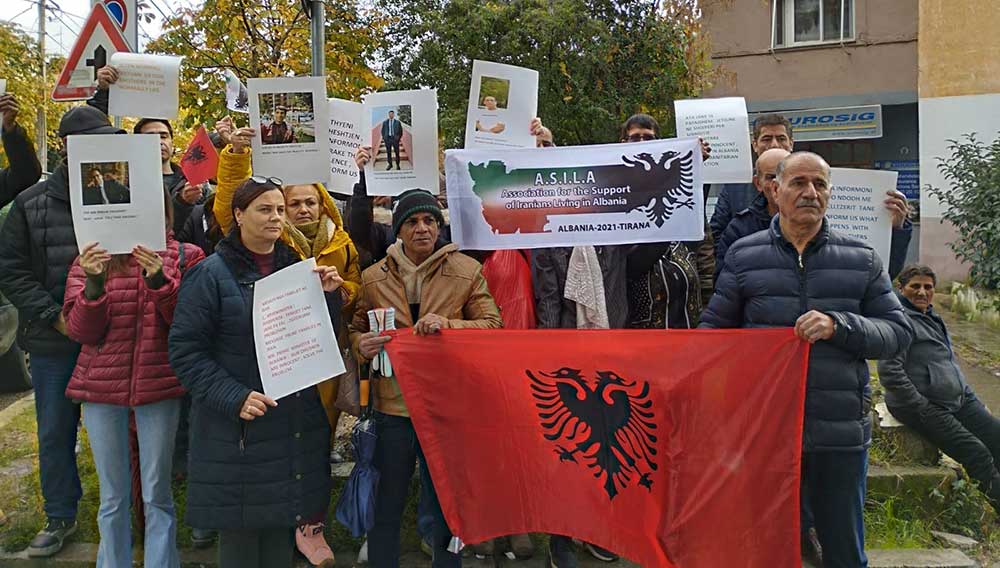
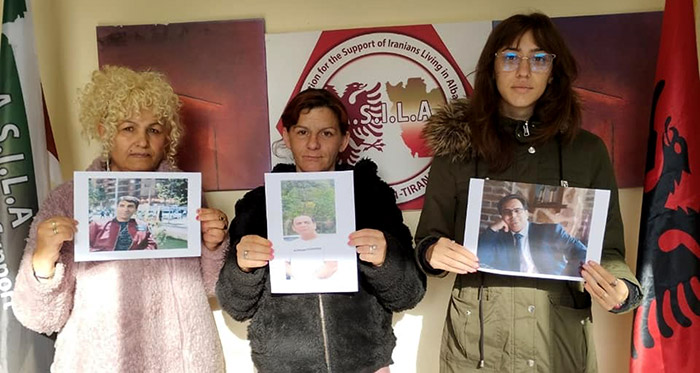
Members of the Association for the Support of Iranians living in Albania (ASILA), visited the Bektashi supreme Dervish in Korçë, a city in eastern Albania. As several members of ASILA are Muslim Iranians who defected the Mujahedin-e Khalq Organization (MEK), visiting the leader of an Islamic movement is considered an act towards closer religious and cultural interactions between Iranian and Albanian nations.

Iranian founders and members of ASILA who are former members of the MEK are dedicated to support defectors of the group in order to live a normal life in the Albanian society. In order to accomplish their mission, they are supposed to build cultural relationships with the Albanian society. Respecting the culture of the host society including Bektashism, as a Shia Islamic Sufi Order in Albania, leads to more efficient and effective efforts of the activists of ASILA.

https://dla.nejatngo.org/Media/Report/Albania/ASILA-Korcha-202209.mp4

to view the video file click here

September 13, 2022 0 comments
FacebookTwitterPinterestWhatsappTelegramSkypeEmail
Edi Rama & Ebrahim Khodabandeh
Albania

Open letter of the CEO of Nejat Society to the Prime Minister of Albania

His Excellency Mr. Edi Rama
Honorable Prime Minister of the Republic of Albania
Greetings and respect

I, Ebrahim Khodabandeh, the CEO of Nejat Society in Iran, on behalf of the families of the members of the Mojahedin-e Khalq Organization (MEK, MKO) based in the isolated and remote camp of this organization in Albania, would like to present to you some information that I believe can be useful to be considered from the point of view of the national interests of Albania.

I know that you are relatively familiar with the activities of the families who are members of the Nejat Society in Iran, as well as myself as the CEO and representative of these families. Nejat Society is a non-governmental human rights organization and our goal is to dismantle cultic relations within the MEK and to end the gross and repeated violation of the most basic human rights of the members.

Although our goal is to fulfill a completely human rights request, but in the current situation, we cannot be indifferent to the changes and political tensions in Albania, which have caused the families to worry. The process of affairs in Albania does not seem very favorable from the point of view of political and national security.

The story of tensions started when the presence of a destructive mind-control cult called the MEK was imposed on Albania, and these tensions intensified when this organization directed subversive and terrorist activities inside Iran from the territory of Albania, and took responsibility for them officially and publicly.

One of the latest cases of this type is stated on the official website of the MEK, which claims that the rebel centers (terror cells) of the MEK inside the country attacked the judiciary building on September 2 this year and blew it up. Regardless of whether this claim is true or false, the acceptance of responsibility for a terrorist and sabotage attack directed from Albanian soil by the MEK has criminal consequences for the host government supporting that organization. The Albanian government is definitely responsible for such actions in recent months, including the cyber-attacks in Iran, which the MEK has officially accepted and propagated.

My questions are whether such measures were included in the agreements, when the MEK were apparently accepted in Albania for humanitarian reasons. Was Albania seeking a conflict with the Islamic Republic of Iran from the beginning by accepting the MEK in its territory and allowing this cult to do the mentioned actions? Does Albania, which desires to enter the European Union, want to host a terrorist cult with medieval ties in its territory?

If the answer to the above questions is negative, then action must be taken so that no one has a different opinion. The first step, we believe, can be the dismantling of cultic relations inside the camp of the MEK and the observance of human rights in this camp, and the connection of the members with the outside world, especially their families, which has always been the wish of the Nejat Society.

Sincerely
Ebrahim Khodabandeh
CEO of Najat Society

Copy to:
Bajram Begaj, President of the Republic
Bledar Cuci, Minister of Interior
Nasip Naco, Head of the National Security Commission of the Parliament

Sunday, September 11, 2022

September 12, 2022 0 comments
FacebookTwitterPinterestWhatsappTelegramSkypeEmail
Olsi Jazexhi and Gjergji Thanasi
Albania

Open Letter to Microsoft Security Threat Intelligence

Microsoft Security Threat Intelligence,

On September 8, 2022, in an article entitled:

Microsoft investigates Iranian attacks against the Albanian government

Your anonymous analyst has alluded that the latest cyber attack against Albania was carried out by Iran. While we are not cyber experts, in your analysis we were impressed by your sentence where you say that:
“The attackers were observed operating outside Iran”

After your allusion that the attackers of the Albanian government websites operated outside Iran, you suggest that:

“This string of events suggests there may have been a whole-of-government Iranian effort to counter the MEK from Iran’s Ministry of Foreign Affairs, to intelligence agencies, to official press outlets.”

Thanks to your suggestions and allegations, on September 7, 2022, the Prime Minister of Albania, Edi Rama, performed an unprecedented act in the modern history of Albania. He broke the diplomatic relations with Iran, expelled the diplomats of the Iranian embassy from Albania, violated the Vienna Convention, violated the Iranian embassy headquarters in Tirana and used the counterterrorism police to abuse and mistreat the diplomatic staff of a foreign country.

As you might know, since 2016 Albania has become a base for a former terrorist organization, the People’s Mojahedin of Iran (also known as the National Council of Resistance of Iran), an organization which as mentioned in your report, carries out cyber attacks against Iran, and according to the Iranian government it does terrorist attacks as well. After hosting the Mojahedin, Albania has become like Afghanistan during the era of the Taliban and al-Qaeda. Maryam Rajavi, the head of the Mojahedin cult is the new Osama bin Laden of Europe. As a result of this, Albania has entered into a political-military conflict with Iran, becoming a proxy country for Israel’s war against Islam and Iran, a war which the Albanians have no interest to join!

In your report in the section: “Parallel information operations and amplification” you step outside your field of cyber expertise and pretend to play the expert on espionage. You claim that before the cyber attack, a group of Albanian and Iranian citizens were promoting the thesis of the “Homeland Justice” hacker group. You mentioned the Nejat Non-Governmental Organization from Iran, its president Ebrahim Khodabandeh, the Association for the Support of Iranians Living in Albania (ASILA) and its members: Gjergji Thanasi, Dashamir Mersuli, and Vladimir Veis.

You also mentioned a letter that Olsi Jazexhi and Gjergji Thanasi sent to President Ilir Meta and Albania’s National Security Council on July 23, 2022. In this letter we have asked our government to clarify to the public “whether Albania has entered into a cyber and military conflict with the Islamic Republic of Iran.” Our public letter was related to the concern that we have about the cyber-attacks that the Mojahedin army carries from Albania against Iran – something which is criminal and punishable under the Albanian Penal Code – and the cyber attack that happened to Albania by hackers that the Mojahedin friendly Albanian media, Top Channel claimed to be Iranians.

By mention our name you allude that we, Olsi Jazexhi and Gjergji Thanasi are part of the operation to amplify the message of the hackers (which you claim are Iranian). This claim is criminal and unacceptable. We are used to hearing such allegations from the Iranian Mojahedin who have a long history of smearing, character assassination, beating, attacking, detaining and mistreating local and foreign journalists.

Olsi Jazexhi and Gjergji Thanasi

Olsi Jazexhi and Gjergji Thanasi

We, Olsi Jazexhi and Gjergji Thanasi, would like to reiterate that we are two investigative journalists who have been investigating the criminal presence of the Mojahedin cult in Albania since 2016. We have investigated and have been interviewed by Western and Iranian media such as: The Guardian, the Independent, Al-Jazeera, Channel 4, New York Times, BBC, Press TV, TRT World, etc. We have also given our testimony about the Mojahedin threat to the European Parliament. We have witnessed the mistreatment, human rights abuses, the blackmail against media, threats against businessmen and Albanian state officials that the Mojahedin command has committed in years. We have denounced their criminal activity and will continue to do so even in the future.

If the hackers of Homeland Justice are indeed Iranians, and not some third country actors, and they have propagated our reports, this has nothing to do with us and our investigative work which starts since 2016. Our reports and findings are cited by many Western and Iranian media and we are proud for our investigative work.
We have done and will do our patriotic duty to our homeland, Albania, and to the Albanians for investigating the Mojahedin criminal activity in Albania. We will continue our investigative work against the MEK cult and will expose the human rights abuses that MEK does against its hostages and slave soldiers in its paramilitary camp of Manza.

We strongly reject any attempt to tarnish our image and work by your organization, the Mojahedin cult or any other party.

We are not affiliated with any Iranian security organization or Homeland Justice hackers. We condemn with contempt the criminal allegations that you have made against us and we will pursue our case in court if the need arises!

Disgusted,

Olsi Jazexhi and Gjergji Thanasi

September 9, 2022

For the attention of:
Bajram Begaj, President of Albania
Edi Rama, Prime Minister
Bledar Cuci, Minister of the Interior
Nasip Naco, Chairman of the National Security Commission at the Parliament

September 11, 2022 0 comments
FacebookTwitterPinterestWhatsappTelegramSkypeEmail
Olsi
Albania

Aljazeera interview Olsi Jazexhi on the MEK terror group in Albania

Following the Albanian government’s decision to sever diplomatic ties with Tehran, Aljazeera TV channel interviewed Dr. OLsi Jazexhi, the Albanian historian and university professor on the MEk’s presence in Albania.

Dr. Jazexhi confirmed that the decision of the Albanian prime minister is not actually related to the alleged cyberattack. Based on his evidences, since the Albanian government hosted the Mujahedin Kahlq terrorist organization in 2013, the group has carried out cyber-attacks and even terrorist attacks against the Islamic Republic of Iran.

According to Dr. Jazexhi, as a paramilitary organization the MEK should be treated as a Daesh or other terrorist extremist groups but the Albanian government has not did so. Instead, the terrorist of the MEK have been hosted by the Albanian government under the support of the US government.

As he explains, the Albanian government have no access to inside the MEK camp which keeps its members behind its bar.

https://dlb.nejatngo.org/Media/Interview/al-Jazeera-202209.mp4

to download the video file click here.

September 11, 2022 0 comments
FacebookTwitterPinterestWhatsappTelegramSkypeEmail
Hamid Atabay
Former members of the MEK

First call after 35 years of imprisonment in the Cult of Rajavi

Hamid Mohammad Atabay contacted his family after 35 years of imprisonment in the Mujahedin-e Khalq Organization (aka the Cult of Rajavi). Atabay has recently escaped the group’s camp in north of Tirana, Albania. He had been taken as a hostage by the MEK’s agents in Iran-Iraq war when he was a young soldier.

The recently defected member of the MEK cult could manage to break through the bars of the cult which are highly guarded by its security forces. The MEK’s camp Ashraf 3 in Manza, a village located in 30 kilometers north of Tirana, is notoriously known as a cult container of which members are not allowed to get out. They can only get out of the camp under the supervision of their commanders and peers who spy them. To his family’s surprise he contacted them immediately after he found himself free in the outside world.

Atabay Family

The family of Hamid Mohammad Atabay contact him after 35 years

Hamid Mohammad Atabay joined the association for the support of Iranian Living in Albania (ASILA) immediately after he left the Cult of Rajavi. ASILA is supposed to help MEK defectors deradicalized aiding them to build a normal life in the Albanian society.

September 10, 2022 0 comments
FacebookTwitterPinterestWhatsappTelegramSkypeEmail
self immolation of MEK memebrs
The cult of Rajavi

Mohammad Reza Babakhanloo set himself on fire under MEK’s cult-like pressure

Mohammad Reza Babakhanloo is a name which has been listed as a victim of the Mujahedin-e Khalq by numerous former members of the group. The most recent testimony on the heartbreaking death of Mohammad Reza was given by a defector of the group Jaber Taee Semiromi (nicknamed Arash).

Arash was interviewed by Siamak Naderi an MEK ex-member who makes contents to denounce the group in order to illuminate the Iranian diaspora. During the recent interview, Arash testifies about various cases of human rights violations that the MEK leaders committed against him and other rank and file of the group. He was an eye-witness of the self-immolation of Mohammad Reza Babakhanloo.

Jaber Taee Semiromi and siamak Naderi

Jaber Taee Semiromi and siamak Naderi

Mohammad Reza and Arash both joined the MEK in Iraq in 1997 but not in the same way. Arash was an ardent 19-year-old supporter of the group’s cause and was dedicated to fight the Iranian government while Mohammad Reza was a 16-year-old teenager who had no idea about the Mujahedin and their cause. He was just a poor peasant who was looking for a job to make a living and to treat his sick father.

According to Arash, Mohammad Reza had been recruited by an MEK commander, named Mahmood Zarif. He had promised Mohammad Reza to grant him job and payment in order to provide his parents and in particular his father’s treatment. In contrast, Mohammad Reza was forced to wear military uniform and receive military trainings at Camp Ashraf.

He was kept in the entrance section of the camp and was coerced to attend brainwashing and self-criticism sessions. “I recall that day, he had been beaten by Zabeti and Zarif (his commanders),” Arash says. “I saw him rushing to the commanders’ office with a gallon of oil. He set himself on fire. Nasser Kiomarsian was crying, Hassan Nazari was trying to put out the fire.”

Arash believes that the MEK leaders did not give enough medical care to the burned boy and he simply passed away. “Mahvash Sepehri just announced his death as saying he died and we buried him!”, Arash recalls.

September 7, 2022 0 comments
FacebookTwitterPinterestWhatsappTelegramSkypeEmail
Newer Posts
Older Posts

Recent Posts

  • Rebranding, too Difficult for the MEK

    December 27, 2025
  • The black box of the torture camps of the MEK

    December 24, 2025
  • Pregnancy was taboo in the MEK

    December 22, 2025
  • MEPs who lack awareness about the MEK’s nature

    December 20, 2025
  • Why did Massoud Rajavi enforce divorces in the MEK?

    December 15, 2025
  • Facebook
  • Twitter
  • Instagram
  • Youtube

© 2003 - 2025 NEJAT Society . All Rights Reserved. NejatNGO.org


Back To Top
Nejat Society
  • Home
  • Articles
  • Media
    • Cartoons
    • NewsPics
    • Photo Gallery
    • Videos
  • Publications
    • Books
    • Nejat NewsLetter
    • Pars Brief
  • About Us
  • Contact us
  • Editions
    • عربي
    • فارسی
    • Shqip