Nejat Society
  • Home
  • Articles
  • Media
    • Cartoons
    • NewsPics
    • Photo Gallery
    • Videos
  • Publications
    • Books
    • Nejat NewsLetter
    • Pars Brief
  • About Us
  • Contact us
  • Editions
    • عربي
    • فارسی
    • Shqip
Nejat Society
Nejat Society
  • Home
  • Articles
  • Media
    • Cartoons
    • NewsPics
    • Photo Gallery
    • Videos
  • Publications
    • Books
    • Nejat NewsLetter
    • Pars Brief
  • About Us
  • Contact us
  • Editions
    • عربي
    • فارسی
    • Shqip
© 2003 - 2024 NEJAT Society. nejatngo.org
Nejat Publications

Nejat NewsLetter NO.22

Inside this issue:Nejat News Letter

1.    List of Designated Terrorist Organizations

2.    18 million Iraqis want MKO expelled

3.    UNHCR deplores refugee expulsions

4.    An extract of interview with Ryan Crocker

5.    Report on the first series of survivors of MKO arrive in France

6.    Efforts to return exiles to Iran problematic

7.    Protected Iranian Exiles in Limbo in Iraq

8.    Repatriating after being paid by MKO

9.    Camp Ashraf Count down

10. Group of MKO defectors arrived in France

11. The use of proscribed MKO by CIA and Pentagon

Download Nejat NewsLetter Issue No.22

June 21, 2008 0 comments
FacebookTwitterPinterestWhatsappTelegramSkypeEmail
Mujahedin Khalq Organization as a terrorist group

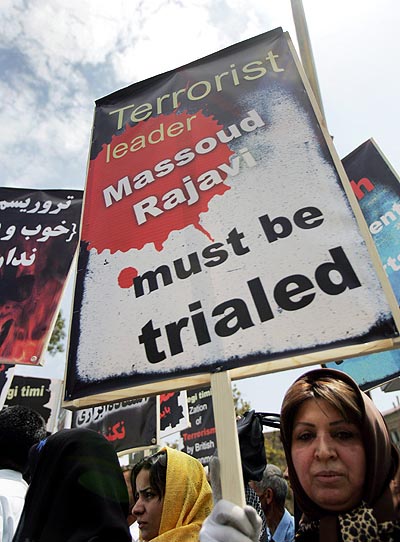
Mojahedin Khalq Leader on trial in USA

In a largely overlooked case that has outraged some, Iranian widow faces terror charges in US

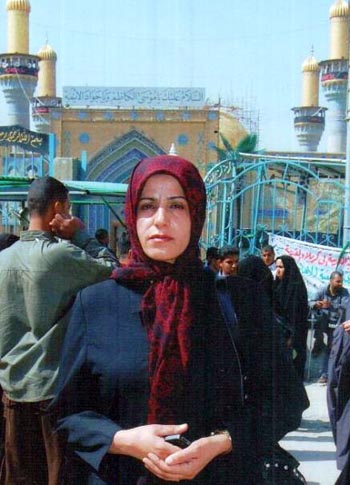
NEW YORK (AP) – In March 2003, Zeinab Taleb-Jedi was a middle-aged widow who found herself trapped in a cold, dusty bunker in Iraq as invading U.S. forces began blowing up buildings and inflicting casualties all around her.

"The noise was overwhelming and frightening," the Iran-born U.S. citizen said in a statement recounting the air raids around Camp Ashraf, a stronghold for Iranian exiles about 60 miles (96 kilometers) north of Baghdad. "The attacks terrified me."

Taleb-Jedi, 52, escaped serious harm. But more than five years later, she remains stuck in legal limbo in New York, facing federal terrorism charges labeling her a leader of a militant group advocating the violent overthrow of the Iranian government.

Her largely overlooked arrest and protracted prosecution has outraged civil rights advocates, who accuse federal authorities of trampling free speech by overzealously enforcing laws against providing material support to terrorist groups.

Defense attorney Justine Harris has questioned why "the government would want to put this woman in jail for associating with a group whose goal is regime change in Iran, arguably a central tenant of our own foreign policy."

Neinab Taleb Jedi Linked to the terrorist group of MKOTaleb-Jedi has been linked to the People’s Mujahedeen Organization of Iran, a group designated a terrorist organization by the State Department in 1997. Prosecutors say she became an English teacher in 1999 at the organization’s Iraq headquarters, Camp Ashraf, and that two informants have since identified her as a member of a leadership council.

In a pending motion to dismiss the case, Harris claims the government has never specified how her client purportedly supported terrorism, "other than teaching English — itself an entirely innocuous act."

Prosecutors counter that "teaching English to other terrorists is not protected First Amendment activity."

A federal judge in Brooklyn has said he will soon decide whether to let the case go forward. If convicted, Taleb-Jedi faces up to 15 years in prison.

Meanwhile, Taleb-Jedi is free on $500,000 bond and living in a homeless shelter in Manhattan.

Originally a Marxist-Islamist group, the People’s Mujahedeen formed in the mid-1960s to oppose the U.S.-backed dictatorship of the late Shah Mohammad Reza Pahlavi. During the 1970s, it killed U.S. citizens working in Tehran, supported the 1979 takeover of the American Embassy there and participated in Iran’s Islamic Revolution, according to the State Department.

After a falling out with the ruling clerics, the group launched a campaign of assassinations and bombings in an attempt to topple them. The group moved to Iraq in the early 1980s to fight Iran’s rulers from there.

The group insists it no longer engages in armed struggle, and it won a court decision last year in Britain removing it from that government’s terror list. It also won the support of some U.S. lawmakers by providing intelligence on Tehran’s disputed nuclear program.

Prosecutors in Los Angeles, who sought the indictment against Taleb-Jedi amid a broader investigation of the People’s Mujahedeen, had no comment.

A frail-looking Taleb-Jedi declined to talk about her case when she left a recent court hearing.

"Life has been very difficult for her," her lawyer said.

FBI reports about interviews with Taleb-Jedi in 2004 — questioning her lawyer claims was done under duress — and the widow’s own sworn statement tell a story more sorrowful than sinister.

Born in Tehran, Taleb-Jedi came to the United States on a student visa in 1978 and earned a master’s degree in political science. Around the same time, her first marriage fell apart because her husband was "very cruel" and "became a Khomeini supporter," FBI agents said she told them.

She said she was granted political asylum in the mid-1980s, the FBI said. She remarried and moved to New York City with her husband in 1983.

Her second husband left the U.S. a few years later to join the People’s Mujahedeen at Camp Ashraf. She stayed behind to work odd jobs and raise the couple’s son.

According to the FBI reports, Taleb-Jedi said she visited her husband at Camp Ashraf in 1987. Records show that year she also became a registered press officer for the group.

The FBI claims she told them that she knew that the group had been designated as a terrorist organization and considered the decision "unconstitutional and unfair."

In 1996, Taleb-Jedi became a U.S. citizen. A year later, she learned her husband had died in a bus bombing on a road between Camp Ashraf and Baghdad.

Taleb-Jedi "described herself as being extremely distraught about her husband’s assassination," the FBI reports said. "Because she wanted to be close to his grave, she decided to come to Camp Ashraf."

She told agents she taught English in the camp and believed in the group’s cause, but never became an official member.

U.S. officials say that at Camp Ashraf they seized tanks, anti-aircraft weapons, rocket-propelled grenade launchers and more than 420,000 pounds of plastic explosives. Despite the stockpile, no one there was expected to be charged, according to news accounts in 2004.

That changed for Taleb-Jedi in March 2006 when, after waiting for more than a year to receive a renewed U.S. passport, she flew from Jordan to New York to see her adult son and seek medical treatment for malnutrition and other ailments, her lawyer said.

FBI agents who were waiting at John F. Kennedy International Airport arrested her.

By TOM HAYS,

June 19, 2008 0 comments
FacebookTwitterPinterestWhatsappTelegramSkypeEmail
Iraqi Authorities' stance on the MEK

Iraqis demand US hands over control of MKO terrorist base

Shaykh Jalal-al-Din al-Saghir, Iraqi MP for the IISC: "…we call upon the United States to send a message of assurance to the Iraqi people, telling them that it respects Iraqi sovereignty, and that it seeks to ensure respect for Iraqi sovereignty by handing over control of Camp Ashraf to the government troops, particularly since law has been enforced in all governorates."

Iraq’s IISC leaders discuss US agreement

Within its evening programming on 19 June, Baghdad Al-Iraqiyah Television in Arabic highlighted a news conference held by Iraqi Islamic Supreme Council [IISC] leaders following "an ordinary periodic meeting" of its General Commission, during which they expressed opposition to the presence of the Mojahedin-e Khalq Organization [MKO] on Iraqi territory and discussed the proposed US-Iraqi long-term agreement, as well as "the proceedings of a trial session of the defendants charged in connection with the case of suppressing the Sha’ban Uprising of 1991," which was carried live during the period 1321-1500 gmt on 19 June. Part of the IISC leaders’ news conference was also carried live by the TV channel.

Within its 1200 gmt newscast on 19 June, Baghdad Al-Iraqiyah Television in Arabic carries the following reports:

– "National Security Minister Shirwan al-Wa’ili has affirmed the solidity of the security situation in the city of Samarra. He made this statement when he toured the city streets. During this tour, he inspected the reconstruction of the mausoleums of the Two Al-Askari Imams there."

Then, Al-Wa’ili is shown saying: "As a matter of fact, the visit is meant to obtain assurances about the security situation, both in the city of Samarra and on the roads leading to Samarra. God be praised, our troops are deployed. Security prevails in the area and on the roads leading to this city."

Al-Iraqiyah TV correspondent Amjad Tali says: "Those in charge of the reconstruction effort have said that they are not facing any security or financial problems in the course of the shrine reconstruction effort, as the Prime Ministry allocated $50 million [for this purpose]. Meanwhile, it allocated $25 million to the Samarra District to rebuild its infrastructure, particularly schools and hospitals."

Tali adds: "The talk in Samarra is not confined to the reconstruction and security files. The residents of Samarra are gearing up for opening the political file through creating political entities to compete in the upcoming elections. Official and popular gatherings have seen talk of the Samarra residents’ intention to run in the elections given the stability the city has seen."

– "Brigadier General Ra’d Isma’il, commander of the Two Al-Askari Imams Brigade, has confirmed that Samarra and its environs are free of terrorist cliques now that they have been purged of these elements. He indicated that the city is witnessing a state of stability. Meanwhile, citizens have continued to join the ranks of security services there."

Then, Brig Gen Ra’d Isma’il is shown saying: "Normalcy has been fully and completely restored in Samarra. Two days ago, the city of Samarra saw an influx of volunteers who offered to join the ranks of security services, particularly the National Police. Crowds poured in from all Iraqi governorates, even from the cities of Basra, Karbala, Mosul, Al-Sharqat, and Bayji, and other Iraqi cities."

Afterward, an unidentified Iraqi citizen is shown saying: "God be praised, the security situation in Samarra is stable thanks to the presence of the awakening forces men, the commandos, and policemen."

– "Citizens in Dhi Qar today reiterated their support for the government of Prime Minister Nuri al-Maliki, and also for security services in the governorate. They also renewed their willingness to thwart any attempt to create a divide in the national ranks there."

– "The Basra tribes today renewed their willingness to fight terrorist cliques in the governorate. At a meeting held there, they reiterated their support for law enforcement operations in Iraq."

Then, an unidentified bearded man is shown saying: "This gathering announced its support for the well-guided religious authority. Likewise, it declared its support for law, and its willingness to fight those who break the law, highway robbers, and those who rebel against government personnel and the government."

– "Al-Najaf Deputy Governor Abd-al-Husayn Abtan has announced the results of the [Al-Najaf] airport checks, which showed that the airport meets the relevant international standards. This came at a news conference held at the governorate premises during which he confirmed that the airport can receive giant planes."

– "The Iraqi Supreme Criminal Court has continued its sessions in Baghdad to look into the crime of suppressing the Sha’ban uprising of 1991. At yesterday’s session, the defendants, henchmen of the defunct regime, made their testimonies."

Within its 1700 gmt newscast on 19 June, Baghdad Al-Iraqiyah Television in Arabic carries the following reports:

– "The IISC has held an ordinary periodic meeting. During the meeting, the conferees discussed a host of Iraqi issues. His Eminence Sayyid Abd-al-Aziz al-Hakim underlined that the presence of the MKO in Iraq violates both the Constitution and international law. He added that the presence of this organization was supported by the Multinational Force."

Then, Al-Hakim is shown saying: "As is known, during the days of the Governing Council in 2003, a decision was made to eject them [the MKO personnel] by early 2004. This decision was unanimously made by the Governing Council. But, then things were controlled by Mr Bremer, Ambassador Bremer, representative of the occupation force, who did not implement this decision under the pretext that these people enjoy protection. The issue remained unresolved and was mentioned in the Constitution, as the Iraqi Constitution stipulated the inadmissibility of the presence in Iraq of terrorist organizations that operate against other states. Nonetheless, the Multinational Force headed by the US troops continued to provide protection for this organization, which was given freedom of movement, which does not happen in any world state."

The TV report adds: "Regarding the Iraqi-US agreement, Vice President Dr Adil Abd-al-Mahdi said that the two sides disagree over some articles of the agreement."

Then, Abd-al-Mahdi is shown saying: "Several issues regarding the entry and exit of troops, immunities, arrests, and basic sovereignty-related issues were raised before the Political Council [for National Security]. Hence, we said that substantive authority should be returned to Iraq. These are the points. At any rate, we have not reached agreement on any specific issue. Proposals were submitted. The Iraqi side has expressed specific, clear, and frank views towards these issues."

Immediately afterward, Shaykh Jalal-al-Din al-Saghir, Iraqi MP for the IISC, is interviewed live by phone.

Asked on the presence of the MKO in Iraq, Al-Saghir says: "With regard to this organization, the Iraqi Government has not made any decision offering this organization political asylum, humanitarian refugee status, or anything that could render its presence on Iraqi territory acceptable from the purely legal point of view. Besides, during the previous period, the days of the criminal regime, this organization committed criminal actions. It was one of the repressive organizations that aided the criminal regime. It wreaked immense havoc within the ranks of the Iraqi people and Iraqi society, as is known to our brothers, the people of Kirkuk and the Diyala Governorate, not to mention the people of Basra and Baghdad. This organization did not make do with these actions, but also opposed the ongoing political process and interfered in Iraqi domestic affairs. This interference was manifested in aiding terrorism in terms of funding, training, and practice. Our brothers, the people of the Kirkuk and Al-Uzaym areas, vividly recall the checkpoints set up by these criminals, who undermined the security of average Iraqis."

Al-Saghir adds: Hence, the Council of Representatives had no choice but to stand firmly, as demonstrated at its previous session; and the Iraqi Government had no choice but to take this noble stand which it adopted. We call for the swift implementation of this stand. Likewise, we call upon the United States to send a message of assurance to the Iraqi people, telling them that it respects Iraqi sovereignty, and that it seeks to ensure respect for Iraqi sovereignty by handing over control of Camp Ashraf to the government troops, particularly since law has been enforced in all governorates."

When queried on the progress of the Iraqi-US negotiations on the long-term agreement, particularly since Iraqi Foreign Minister Zebari announced that the agreement will be signed by the end of July, Al-Saghir says: "As far as we are concerned, we might not be bound by a specific deadline, because it is the substance of the agreement and its articles which will determine whether or not the agreement will be signed. However, I can say that the draft submitted recently by the US negotiators reflected US moves that are favourable to the Iraqi people’s interests. But, we do not think that this is enough to settle the process. The issue is still being negotiated by the Iraqi and US negotiators. I advise observers not to dwell on this or that draft, because negotiations, by their nature, entail swift changes, alterations, amendments, drops, and additions. This is the nature of negotiations."

– "Deputy Prime Minister Dr Barham Salih has chaired a meeting that brought together several ministers and government officials. During this meeting, the conferees affirmed that the next three months will see the completion of most projects in Al-Sadr City."

– "Maysan Police Chief Brigadier General Sa’d Ali has affirmed that life will stay normal in the governorate, noting that the relevant agencies will continue their effort to ensure the smooth flow of services, and that school students will continue to sit to their examinations without impediments despite the start of Operation Heralds of Peace there. The police chief in the governorate stressed that the operation is not targeted against any specific trend, party, or segment, but rather against outlaws. He underscored the government’s eagerness to safeguard citizens’ security and safety in Maysan."

– "The tribal chieftains of Maysan have affirmed their absolute support for Operation Heralds of Peace, which kicked off in the governorate today to consolidate security and stability there. This came at an expanded conference they held in the governorate to discuss the means and mechanisms of backing and supporting the security services that are implementing the said operation."

– "Major General Qasim Ata, spokesman for the Law Enforcement Plan, has said that the security services implemented a new plan in Baghdad. He noted that the plan aims to prevent wanted persons from moving from one area to another in the city."

June 19, 2008 0 comments
FacebookTwitterPinterestWhatsappTelegramSkypeEmail
Mujahedin Khalq; A proxy force

U.K., U.S. and Israel have a duty to grant safe haven to Mojahedin-e Khalq

The Iraqi administration issued a statement on June 17, 2008 designating the Mojahedin-e Khalq as a terrorist organization and calling on the U.S. to stop supporting the militant group.

June 19, Al Alam television aired a discussion on the issue on its ‘Iraq Today’ programme. The programme titled ‘Mojahedin-e Khalq terrorists and American support’ was presented by Ali Al Sadi.

The participants were:

Sheikh Mazen Al Saedi, Managing director of the Sadr office in Baghdad.

Mr. Ali Al Alagh, Member of Parliament.

Mr. Ebrahim Khodabandeh, Terrorism and Cult expert from Tehran, Iran.

Excerpts:

Ebrahim Khodabandeh said, “It is important to recognise that these people have been working against the Iranian and Iraqi people for the last three decades in line with the interests of the U.K., U.S. and Israel – during Saddam’s war against Iran and against his own people. Although the organisation is a terrorist entity by nature, many retired individuals need to be rescued by those who have used them. It is not the duty of Iran or Iraq to help these people but the U.K., U.S. and Israel should grant safe haven and retirement opportunities for their cohorts.”

Sheikh Mazen Al Saedi condemned the support of America, Israel and Britain for MKO terrorists and said, “this is a clear indication of enmity against the people of Iran and Iraq”.

Mr. Ali Al Alagh, MP was asked “now that parliament has asked the government to deport these people, is it going to be a legal requirement for the government to do so?” He responded, “it did not need parliament to pass a new law as the presence of terrorists has been banned by our constitution and it is a normal government responsibility to make sure they don’t stay in Iraq.”

Full discussion can be viewed in Arabic at the following link:

http://www.alalam.ir/site/mokhtarat/iraqalyom0.htm

June 19, 2008 0 comments
FacebookTwitterPinterestWhatsappTelegramSkypeEmail
The MEK Expulsion from Iraq

Iraq set to expel Mojahedin Khalq Orgainsation

TEHRAN, June 18 (MNA) – Iraq is seeking to expel the Mujahedeen Khalq Organization, the largest armed Iranian dissident group for interfering in Iraq’s domestic affairs and inciting terror acts against the Iraqi nation.

“Baghdad regards the MKO as Saddam’s accomplice” and is opposed to its presence in Iraq, an informed official who requested anonymity told the ISNA news agency.

The MKO was set up in the mid-1960s to oppose the U.S.-backed dictatorship of the late Shah Mohammad Reza Pahlavi. It participated in the country’s revolution but soon launched a campaign of assassinations and bombings in Iran.

The group, supported by Saddam Hussein’s regime, moved to Iraq in the early 1980s where it fought Iran’s new ruling system until the U.S.-led invasion against Iraq in 2003.

“The Iranian government has repeatedly called on Iraq to prevent the activities of Iranian dissident groups and the MKO is among them,” said the official.

“The MKO has also got tired of the so-called U.S. supports and is seeking to leave Iraq… its case is now being pursued by the UN High Commissioner for Refugees,” he added.

The Iraqi administration on Tuesday issued a statement designating the MKO as a terrorist organization and calling on the U.S. to stop supporting the militant group, London-based al-Sharq al-Awsat newspaper quoted government spokesman Ali al-Dabbagh as saying.

“The cabinet decided to ban any dealings with this organization by any Iraqi or foreign individual, organization or party,” the statement said on Tuesday.

It also warned that those who violate the order will face charges under the anti-terror law.

Baghdad is determined to fully monitor the MKO’s activities until its full expulsion from the country, al-Dabbagh added.

Mehr News, June 18, 2008

http://mehrnews.com/en/NewsDetail.aspx?NewsID=702005

June 19, 2008 0 comments
FacebookTwitterPinterestWhatsappTelegramSkypeEmail
Iraq

Iraq bans any deal with the members of Mujahedin

Iraq bans any deal with the members of the Mujahedeen Khalq Organization (MKO), calling on the US to stop supporting the terrorist group.

"The Cabinet decided to ban any dealings with this organization by any Iraqi or foreign individual, organization or party,” a statement said on Tuesday.

In the statement, the government of Prime Minister Nouri al-Maliki said the Mujahedeen Khalq Organization is meddling in the country’s internal affairs and supporting anti-government activities.

The statement warned that those who violate the order will face charges under the anti-terror law.

Earlier today, Iraq’s main political blocs in the parliament demanded the expulsion of the MKO members from the country.

Before the US-led invasion in 2003, the Mujahedeen Khalq Organization had enjoyed Saddam Hussein’s support.

After the US-led invasion of the country the US put the group’s members under protection in a northern part of Iraq amid reports that they had been used for by Washington for espionage and violence-related activities.

June 19, 2008 0 comments
FacebookTwitterPinterestWhatsappTelegramSkypeEmail
Maryam Rajavi

The leadership Catalyst in MKO

Leadership is the most pivotal position that preserves a cult. A fact that cannot be gainsaid is that cults are authoritarian in structure but the guru needs assistants who may help him in administering the members and making the most of them. So, together with his selected aids, the leader forms a hierarchical structure of leadership that is of great significance in handling the cult. For a better understanding of leadership structure in a cult Singer describes it in this form:

For a simple visual portrayal of a cult, imagine an inverted T. The leader is alone at the top, and the followers are all at the bottom. The leader is regarded as the supreme authority although he may delegate certain power to a few subordinates for the purpose of seeing that members adhere to his wishes and rules. There is no appeal outside of the leader’s system to greater systems of justice. 1

Singer’s described T can also be drawn as a triangle which forms a dynamical harmony which turns into a total disorder in case of angles disarray. The leadership at the top establishes a hierarchical cohesion with other appointed subordinates who in turn guarantee his authority. An investigation into the cult of Mojahedin’s fundamental leadership change, especially after the forced internal ideological revolution in 1985, signifies that Mojahedin’s long maintained democratic centralism, simply meaning obedience to the central leader, was abolished only to pave the path for Rajavi’s hegemony. Now appointing himself at the top, Rajavi needed to establish a different structure with devoted and trustful assistants to work as binding links between him and other ranks and to transcend his status analogous to that of a god. 

The role of Maryam Rajavi, his wife, in this revolution was the same as a catalyst. Appointed second in rank to Rajavi, she was evolved as the archetype for other members to achieve her status of being unquestionably devoted to Rajavi’s ideological leadership. She was the catalyst between the unattainable at the top and lower ranks. Thus, Maryam being closely attached to Rajavi, recognition of him was only possible through attachment to her. She plays the role of a qualified subordinate for the purpose of seeing that other members adhere to her husband’s wishes and rules:

Maryam was held up as an example to the women in the organisation. It was claimed that women could free themselves from their oppression as women, only by following her example. But although the move was a pretext for freeing the energy of the women in the organisation, it had the very real value of being able to exploit the women members’ devotion, and keeping the men in a state of permanent confusion over their role. 2

In the same way that the personality of Maryam is made so tangible and immediate that it can act as a catalyst to help lower ranks transcend, her attachment to Rajavi and his ideological adulation increases her transcendental advancement.  Expounding on the recognition of Maryam as a pivotal catalyst, Bijan Nyabati observes:

First, Maryam has to be turn into a value in Mojahedin’s mind whatever the cost might be; otherwise no other valuable alternative can possibly be substituted. 3

That is where Maryam’s unconventional divorce and remarriage is gauged an ideological value and an example of absolute devotion for others to follow. She is much described as a rebel against the tradition and the norms conventionally adhered to in Iranian culture:

Here, Maryam becomes an anti-traditionalist and family iconoclast! She aims at the foundations of the long-lasted social traditions and divorces her man. Again, she is the one who picks her man and weds herself to him. 4

It was a move that totally questioned traditionally and religiously adopted laws and rituals and hardly anybody could comprehend what the couple was weaving as a revolutionary ideology. Of course, in the same way that nobody could understand and grasp the devised revolution, they failed to gain the necessary competence to get close to leader’s ideological sanctum. Unlike them, Maryam due to her rebellious move gained the essential competence to allow her to hold the position of co-leader:

The third phase of Mojahedin’s internal ideological revolution exposed Massoud’s factual status, tangible only for Mojahedin’s heads, for the lower ranks. Hereon, Massoud is beyond the reach of Mojahedin. He is unachievable unless through a catalyst who is Maryam for certain. Massoud is inaccessible unless those in his quest are melted in Maryam. To understand it in the words, all the members one by one have to follow Maryam as an example. 5

But the real purpose of the phase was to strengthen Rajavi’s hegemonic leadership. He intended to make a sanctuary that no rival could penetrate it. As explained by Anne Singleton:

The real purpose of this phase was to guarantee that there would be no leadership challenge. Rajavi had now removed himself from the ordinary level of leader and elevated himself beyond the normal leader’s role to that of link with God. An unassailable position. 6

Accordingly, any leadership challenge could mean criticising God’s vicegerent which would be considered an unforgivable sin. Besides, any challenge could only be aimed at Maryam and, consequently, left his status untouched. He demanded members total devotion and his hallowed position had to be instilled into the members through chosen apostles who necessarily formed the base angle of the leadership triangle:

What Rajavi was asking everyone in the Mojahedin to do was to give him total obedience. He implied to them (through the mouths of Maryam and Fahimeh) that he had links with God and therefore knew things that ordinary members couldn’t be expected to understand. This meant that anyone who rejected him was blaspheming against God. The members were mostly willing to allow themselves to be indoctrinated with this new concept. 7

Maryam’s credibility could best be instituted by Rajavi himself. Through a variety of illustrated allegories, Rajavi in his internal meetings frequently referred to Maryam’s highly elevated status and her angel-like salvation power. In fact, he meant appreciation and recognition of his own transcendent and god-like position. Imparted in the memoirs of an ex-member quoting Rajavi we read:

In one of his meetings Rajavi said: actually you are in a grave. Is there anything worse than it? With a stone covering it. We send Maryam to push it away so you could see a shining light. It is the light coming from Massoud. See how you are distanced? She becomes light while you are sleeping in your graves with a stone over them. Who has made self-sacrifice to save you? Maryam, for sure. Then, if you intend to come out and reach me, you have to take advantage of Maryam’s aid. You cannot possibly reach the source of light but you have to be thankful of being extricated from your graves. You will come to understand little by little. 8

Hardly will you encounter people other than Massoud and Maryam with highly elevated position as leading cadre in the cult of Mojahedin. Other ranks get their legitimacy from the couple. While Rajavi is holding hegemonic control of the cult, his wife, Maryam, is granted the legitimacy of a catalyst to mobilize members’ devotion and heightens their vision of an urgent commitment to justify destructive cult-like activities that not only threatens the world peace but also jeopardizes the insiders’ life as human beings. 

References:

1.    Thaler Singer, Margaret; Cults in Our Midst: The Continuing Fight Against Their Hidden Menace, p. 9.

2.    Iran-Interlink; Anne Singleton’s Saddam Private Army.

3.    Niyabati, Bijan; A Different Look at the Ideological Revolution within MKO, Khavaran Publication.

4.    Ibid.

5.    Ibid.

6.    Iran-Interlink; Anne Singleton’s Saddam Private Army.

7.    Ibid.

8.    [7]. Soliloquies in solitude, a collection; interview with an ex-member of MKO.

June 19, 2008 0 comments
FacebookTwitterPinterestWhatsappTelegramSkypeEmail
Mujahedin Khalq Organization as a terrorist group

Atlas of Radical Islam

The following is extracted of the book:”Atlas of Radical Islam” which was written under the supervision of Mr. Khavier Raufer.  The book was published by Cnrs edistion, in Paris, in 2007. According to the author, the objective ofMr. Xavier Rauf the publication of the book is to represent a useful solution to the lack of information on radical Islam. The book includes descriptions on all Islamic extremist and terrorist groups such as Al-Qaida and Mujahidin Khalq. There is also analysis on radical Islamic groups whether Sunnite or Shiite, their doctrine or theory, their networks and supporters and their history and activities.

In pages 335 to 340, a short report on MKO’s activities, background and ideology is presented so as a lot of realities are not told about the group.

Martial Condition

Muajhedin—e-Khalq organization was one of the most known opposition groups which fought Shah of Iran and had an eight-year experience in armed struggle against the regime. It could penetrate the government system and play an important part in overthrowing the monarchist government using the modern propaganda techniques.

Atlas of Radical IslamFollowing the February, 1979, Masud Rajavi asked his hundreds of young, passionate supporters to stop their manifestations and enter the governmental structure of Islamic regime in a covered way. Therefore, after the dismissal of Bani Sadr from presidential position, on June 20th,1981,Mujahedin set out for armed struggle once more, entering a new phase of struggle.

Muajhedin-e-Khalq Organization launched deadly attacks against Islamic Republic in less than a week. But it couldn’t take any advantage of such an action.  Later Mr. Rafsanjani confessed that after the attempt against Ayatollah Khomeini on June 27th1981 in Mosque Abuzar, Tehran, the regime was totally wondering for a  few days. The following day, on June 28th,1981, a bomb exploded in the office of Islamic Republic Party that ended with the death of 10 ministers and  vice-ministers, 20 parliament members and 44 other people of high-ranking officials. Mujahedin had really pretended in the high political  gathering so as two months later ,they could easily take a baggage to the administration building ,to burn up Muhammad Javad Bahonar-Prime Minister- and Mohammad Ali Rajaiee, the President. 

–        April 23rd 2001, they attached the headquarters of police in Shemiran, North of Tehran, while the commandants of the region were having a meeting on the recent attacks of MKO. There is no available estimate on  the measures of damages.

–        September 11th, 2001, MKO didn’t announce any statement on its performed operations in order not to be condemned of terrorism.

Meanwhile, the organization asked its supporters to get in the streets for protest, then they filmed them to use the films in the propaganda. At the same time some groups were investigating the mental and psychological conditions of MKO members and supporters to select those who were ready to launch suicide operations and then to prepare them with complicated trainings. For launching a terrorist operation the members should be so skillful that they can manage everything up to the end. 

Thus, the group started astonishing actions to create a psychological warfare within the Regime; for instance it could penetrate the closest supporters of the leader and could find out that a clandestine council had been founded to choose a successor for the leader that if he was killed in a terrorist operation, another person could be replaced. A number of young guys launched the suicide operations tying explosives around their waist and body. When the Intelligence Service became stronger, MKO made the 15-16 year-old girls involved in the operations.


Suicide Operations

Three months before the suicide operation in Beirut, MKO launched the first suicide operation of the Middle East, in Tabriz, against ayatollah Madani – the spiritual leader of Tabriz-on September 11th 1981. Later, the organization launched an attack against Abdul Hussein Dastgheib – the spiritual leader of Shiraz- on December. 11th,1981. And on July 2nd,1982, MKO  operated  another suicide and assassinated ayatollah Sadughi in Yazd and also on October  15th 1992,they had a terrorist operation to kill Ayatollah Ashrafi Isfahani- the spiritual leader and the supreme leader’s representative – in Kermanshah.

The Mujahedin-e-Khalq Organization did the series of operations through the years and finally in February 2006, it decided to give up armed struggle. The Islamic Republic didn’t ignore their activities and executed thousands of MKO members including Musa Khiabani who was executed on February   8th, 1982 along with 22 other leaders of the organization.

In 1983, while the zenith of Iran-Iraq war, MKO set out for cooperation with Saddam Hussein’s regime.

Masud Rajavi who had been expelled from France, joined Iraq on June 7th 1996. MKO was equipped with all kinds of arms by the help of Saddam Hussein and thus the National Liberation Army was established.

In July 1988,three days after the end of Iran-Iraq war, the executive council of MKO started the “ Eternal Light” operation “ to liberate Iran” but the NLA, under the command of Mahin Rezaiee, Ali Zarkesh, Mohamamd Maasumi, Asghar ZamanVaziri, Mohsen Tadayoni and Reza Pourgel, passed a few Kurdish villages in its way and  was stopped  and could never reach Tehran. A few days later the army was totally demolished and nothing survived.

The confrontations between Iran and MKO lasted 13 more years but the more they lasted, the more MKO was discredited. The European countries realized how dangerous MKO is, having found out its terrorist and cult-like behavior and they do not believe MKO’s statements of victory any more. Since 1991, MKO has held various press conferences in European capitals in order to present the news on Iran and also to “denounce”, trying to interpret any thing for its own benefit. MKO has been designated as a terrorist organization by the US, since 1997.In 2001 the other front organizations attached to MKO were also listed. In 2003, the group was forced to give up its military camp in Iraq and at the present time it is seriously controlled by most of the European governments. Therefore the organization does its best to use its information to take advantages from western governments. The “denunciation” made by MKO was not considered as important until 2002 when other reports told of tormenting advancement of Iranian nuclear program and the presence of a clandestine nuclear site in Natanz.

In fact, Iran’s nuclear program has never been clandestine or secret. The program, originally started in 1973 when the oil income of the country increased five times as before and some questions formed in the minds of the authorities, on the future of their nation after the oil sources would be finished.

Thus in 1974 the Iranian government commanded three companies: Framatome, Alsthome, spie-batignolle, to build two nuclear sites. Then the French Prime Minister Jacque Chirac who had been in Iran for a three –day visit, signed the related contracts and a number of Iranian experts then nuclear scientists went to France.

The Iranian nuclear program was restarted while the Iran-Iraq war and the presidential era of Sayed Ali Khameneie.

When the problem of the purchase of ground to ground missiles was presented in the Iranian administration, naturally the problem of the fuel of the missiles was also crucial and the case of nuclear fuel was mentioned.

These efforts ,after 15 years ,on July 22nd 1998, were ended with launching of Shahab 3 missile which boarded 1300 kms. Since that time, the military engineers of the Revolutionary Guard promoted the power of the missile and its board is now 2000 km.

A number of terrorist operations of MKO’s military branch:

-June 27th 1981, Hojatol Eslam Ali Husseini Khameneiee who was the leader’s representative in the Supreme Council of Defense, was the objective of a terrorist attempt while addressing in Abuzar Mosque and his right hand became disabled. The bomb had been put in a tape recorder.

– June 28th   1981, a bomb exploded in the meeting of Islamic Republic Party where Beheshti and 73 other people including 4 ministers, 6 vice-ministers and 20 parliament members were assassinated. There were some other people who were killed in the bombing like; Muhammad Montazeri, the son of  Ayatollah Montazeri, Abbas Ali  Nateq Nouri, Sadeq Eslami, Ali Darakhshan, Dr. Abbas pour and Sarhaddi

– August 30th,1981, a bomb exploded in a bag that ended with the death of the president Muhammad Ali Rajaiee and the Prime Minister  Muhammad Javad Bahonar, Colonel Vahid Dastjerdi and a number of the Cabinet                  members.

– Septebmer 5th1981 a terrorist operation was launched against Ali Qodusi, Tehran Attorney General and Brigador General Dastjerdi the general commandant  of gendarmerie.

September 11th1981, a terrorist operation was  launched against Ayatollah Sayed Asad Allah Madani, the spiritual leader of Tabriz ,he got the title “ First Martyr of Altar”

–        September 29th 1981, a terror operation was launched against Hojatol Eslam Abdul Karim Hasheminezhad, Ayatollah Khomeini’s deputy in Mashad.

–        October 5th,1981, terror of Hasan Ayat, one of the leaders of Republic Party and former member of Iran’s Labour Party.

–        December 11th 1981, a terror suicide operation against ayatollah Abdul Hassan Dastgheib, the spiritual leader and Leaders’ representative in Shiraz, they called him “the second Martyr of Altar”.

–        July 2nd1982 a terror operation against Ayatollah Saduqi, Leader’s representative and spiritual leader in Yazd, he was then called “The Third Martyr of Altar.”

–        August 12th,1982, three revolutionary  guards were assassinated .

–        October 15th,1982 a terrorist operation was launched against  ayatollah Ashrafi Isfahani, the leader’s deputy and the spiritual leader of Kermanshah, he got the title of” The Fourth Martyr of Altar”

–        April 1992, MKO’s operations against 13 Iranian Embassies.

–        1993 operations against oil pipelines near Abadan.

–        1993,bombing in the Shrine of Imam  Reza.

–        June 2nd,1998,the deadly operation was launched against  Haj Hassan Salehi, one of the founders of Sepah Pasdaran, who then started  working at the Revolution  Court  and was involved in the execution of hundreds of MKO members in the summer of 1988. In this operation that happened by a bomb explosion in a baggage that was put at the office of Attorney general of Revolution Court in Tehran, three other people,an Armenian and two kids were killed and 22 people were wounded. In 2000, Hojat Zamani who was accused of launching this operation, was arrested. His two brothers were also executed in 2001 and a few months later his father died but he fled to Turkey where he was arrested by the police. And submitted to Iranian government. On July 17th,2004 he was sentenced to death and on February 7th,2006 the ruling was executed in Gohardasht Prison.

–        June 2nd,1998 , a number of mortar attacks were launched at Sepah headquarters in Shemiran. A base in Vanak and also the Defense Industrial Centre in the North of Tehran were the objectives of mortar attacks. There is no available information on the casualties. Rafsanjani told IRNA: “if the Americans do really believe in condemning terrorism, they should restrict MKO’s activities in their territory.”

–        The following day, the American administration issued a statement and condemned the attack. On July 15, the Canadian foreign affairs Minister condemned terrorism in any form and also condemned MKO’s act declaring that the known members of the group were not allowed to enter Canadian soil.

–        August 23 rd, 1998, Asad Allah Lajvardi, Asghar Esmaielie and two other anonymous employees of Defense Ministry  were assassinated.

–        September 13,1998, the unsuccessful attempt against Mohsen Rafiq Dust the former commandant of Sepah and the director of “ Mustazafan Foundation”. The bullet was shot from the hill across from his office.

–        January 6th1999, the unsuccessful terror of Ali Razini, who has had various responsibilities in Revolution Court. Due to the attack, one passenger was killed and 4 other were wounded. The reformist newspaper of Tehran had accused him of taking 100 million dollars from the governmental accounts and settled in his personal account to spend for Ansar Hezbollah and their journal “Shalamche”.

–        January 6th1999, the terror of Ali Sayad Shirazi

–        , a high ranking commandant of the Army and the leader’s military advisor. He was killed by the shot of a MKO’s commando while he was taking his son to school. The commando was disguised as a sanitation worker. The operation which was called “ Dawn” was launched in order to revenge the death of six NLA’s commandants in the operation “ Eternal Light”

–        February 15th,2000, a number of mortars was shot towards Presidential Palace at 14:30’ . Khatami was not in his office, but a worker and 5 other people were killed.

–        March 13th, several mortars were launched against Sepah’s headquarters in the northern part of Vanak Square. Apparently ,Safavi, Sepah’s  commandants, and  Zolqadr, his successor, who was responsible for the cross border operations against MKO, were the objectives of this operation. Some of the bullets hit the residential complex of Nour. The quantity of casualties is not bases of Sepah 120 times, since last year.

–        March 14th,2000, a  number of mortars were launched against the common headquarters  of armed forces, Ashura base and Baqeri base in Dushan Tappe’. The casualties are not known.

–        April 21st 2001,the unsuccessful attempt on the life of Farhad Nazari, the former commandant  of the police in the Great Tehran.   Mr. Khavier Raufer

Download Atlas of Radical Islam

June 19, 2008 0 comments
FacebookTwitterPinterestWhatsappTelegramSkypeEmail
Europe

Spy-Agents of An EP Intergroup

As the co-chair of the Friends of a Free Iran Intergroup of the European Parliament, Struan Stevenson along with his colleagues have discovered that the terrorist Mojahedin-e Khalq Organization (MKO/PMOI/MEK) backs exactly the same objectives of restoration of democracy, rule of law, human rights, women’s rights, and the abolition of the death penalty and nuclear weapons in Iran. How they have come to such a glorious conclusion requires a discussion of its own.

But one thing is for certain and that they endorse the group is fighting a war, or carrying out terrorist attacks depending how they might view it, against Iran’s regime to bring it down. Does it really have anything to do with the goals they seek to accomplish for Iranian people? Furthermore, who has appointed them as the advocates of another nation to befriend the enemies of that nation?

Mr. Stevenson broadly boasts that his meetings with Maryam Rajavi, the self-elected leader of a cult of personality, has been a success but criticizes press articles that accuse him and his colleagues of being "friends of terrorists". What should really people call those who are in accomplice with globally proscribed terrorists? Not only people like Struan Stevenson are interfering in the internal affairs of another country which is in absolute contradiction to principles of democracy, but also exploiting terrorists as tools in a variety of ways for political interests. Here is Mr. Stevenson’s approbation of utilizing MKO as spy agents to collect intelligence against Iran:

I recently received detailed information from the Transatlantic Institute proving that major European companies are working with the Iranian Revolutionary Guards Corps (IRGC) inside Iran. I then asked the PMOI to verify this information from their sources within Iran.

Last week they delivered the answer; a major Italian company is supplying dual-use equipment, while a leading German company is supplying a mass of sophisticated tunnelling machinery. Pictures given to me clearly show the emblems of IRGC, which is on the US list of nuclear proliferators, above the tunnels.

Based on Struan Stevenson’s The west stands in the way of a democratic Iran released by THE HERALED.


June 19, 2008 0 comments
FacebookTwitterPinterestWhatsappTelegramSkypeEmail
France

Anniversary of Raid on a Sect called MKO

France says Iran sect are ‘fanatical’

In Paris on Sunday 15 June [2003], a judge ordered detention of the leader of MKO and a number of her followers to face trial for possible links with terrorism. The following is what the Observer reported of the French police raid to arrest the suspects and the aftermath. 

Anniversery of Raid on a Sect

‘ font-size: 10pt”>The leafy rue des Gords in this little market town north of Paris hardly lives up to its reputation as a new world capital of terrorism.

‘ font-size: 10pt”>It was here that hundreds of police smashed open the doors of suburban houses in a dawn raid which the French claimed had pre-empted worldwide strikes by the militant Iranian opposition group, the People’s Mujahideen.

‘ font-size: 10pt”>About 20 members of the organisation were on hunger strike on the pavement this weekend, watched by riot police and comforted by neighbours who had lived alongside the exiled Mujahideen for 22 years. The operation, involving 1,300 police, concentrated on 21 rue des Gords, home of Maryam Radjavi, the most visible leader of what has been dismissed as a violent Marxist-Islamic sect.

The suicide attempts by fire in Paris, London, Rome and Berne Around the building a permanent encampment for followers had been set up. But police blocked attempts by residents – all political refugees – to return and collect their belongings as they continued to search cellars and attics.

The suicide attempts by fire in Paris, London, Rome and Berne focused attention on the movement without clarifying why France chose last week to turn on the Mujahideen, given refuge here after falling out with Tehran’s Islamic leadership.

‘ font-size: 10pt”>Labelled as Maoist when it was founded in 1965, the Mujahideen worked alongside Ayotallah Khomeini when he planned the overthrow of the Shah in 1979. But the allies soon fell out and thousands of Mujahideen refugees sought sanctuary in France in 1981. They campaigned against oppression in Tehran, where their members were tortured and hanged in public.

‘ font-size: 10pt”>
Radjavi was still being held by police among more than 160 people taken into custody. The DST, the French equivalent of MI5, claimed that she and her husband, Massoud, were ready to turn Auvers into their terrorist headquarters.

‘ font-size: 10pt”>Referring to allegations by Iran that the Mujahideen were responsible for at least 500 murderous attacks inside the country, Pierre de Bousquet, the DST’s director, said the organisation could no longer claim that its aim was to defend human rights and bring about democracy.

‘ font-size: 10pt”>’The attempts at self-immolation to protest against the arrest of Madame Radjavi are proof of a new fanaticism,’ he said. ‘Auvers was to become the Mujahideen’s world headquarters after the loss of bases in Iraq.’  

June 19, 2008 0 comments
FacebookTwitterPinterestWhatsappTelegramSkypeEmail
Newer Posts
Older Posts

Recent Posts

  • Why did Massoud Rajavi enforce divorces in the MEK?

    December 15, 2025
  • Massoud Rajavi and widespread sexual abuse of female members

    December 10, 2025
  • Farman Shafabin, MEK member who committed suicide

    December 3, 2025
  • Nejat Newsletter No.131

    December 3, 2025
  • Israeli Hayom: The case for redesignating the MEK, Learning from history

    November 29, 2025
  • Facebook
  • Twitter
  • Instagram
  • Youtube

© 2003 - 2025 NEJAT Society . All Rights Reserved. NejatNGO.org


Back To Top
Nejat Society
  • Home
  • Articles
  • Media
    • Cartoons
    • NewsPics
    • Photo Gallery
    • Videos
  • Publications
    • Books
    • Nejat NewsLetter
    • Pars Brief
  • About Us
  • Contact us
  • Editions
    • عربي
    • فارسی
    • Shqip