
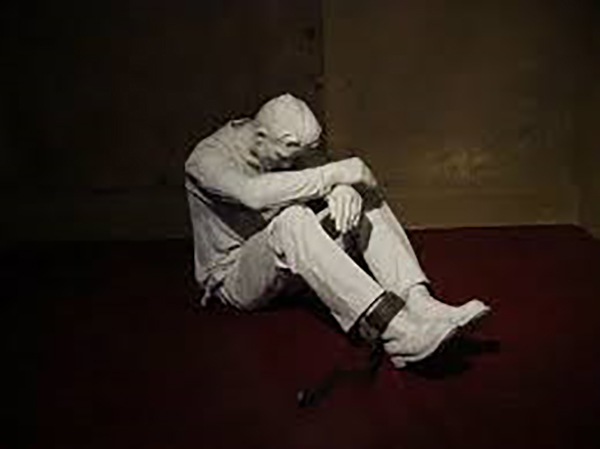
Farman Shafabin was a member of the Mujahedin-e Khalq (MEK) who committed self-immolation in 1999. Farman had been recruited by the MEK from one of the Kurdish families who resided in the Ramadi Camp, Iraq.
During Saddam Hussein’s rule, some Iranian Kurdish families resided in the Ramadi Camp in Iraq primarily due to the Iran-Iraq War and the subsequent unrest in Kurdistan, which led to their forced replacement across the border into Iraq. The Baathist government of Iraq relocated these Iranian Kurds to a camp in Ramadi, west of Baghdad in 1981. The location was specifically called Tash, a camp near the city of Ramadi.
MEK recruited forces from refugee camps
The MEK used to recruit forces from within the residents of Camp Tash, in particular from families suffering from poor life and economic conditions. They faced numerous interconnected challenges affecting them and their children’s health, education, housing, and overall well-being. Camp Tash housed Iranian Kurdish refugees until its closure. Due to a deteriorating security situation, including water shortages and violence, the camp’s population was relocated to safer areas in northern Iraq, particularly near Sulaymaniyah, in the mid-2000s.

Mahvash Sepehri a torturer of the MKO
Due to the harsh living conditions, lack of facilities, and uncertain future, refugee camps could have been a suitable breeding ground for groups such as the MEK. Individuals in these camps, especially young people and teenagers, may have been looking for a way to improve their situation or to find a purpose in life.
Mehri Aligholi
The MEK’s need for forces
The MEK attempted to recruit Iranian refugees in Iraq using propaganda and promises such as fighting for Iran’s freedom, a better life, and social status. These promises could have appealed to vulnerable families and young people in the camps. Farman and his sisters, Shokrieh and Sabrieh were among these victims.
During and after the Iran-Iraq War, the MEK, which was based in Iraq, sought to recruit forces to strengthen its military and political organization. Iranian refugees in Iraq, including the residents of the small city of Ramadi, were considered a potential source of recruitment.
There are numerous reports, documents, and testimonies that indicate MEK’s recruitments from among Iranian refugees in Iraq. Farman, Shokrieh and Sabrieh were recruited as child soldiers of the MEK’s so-called National Liberation Army (NLA).
Who was Farman Shafabin?
At least three former members of the MEK, Siamk Naderi, Mirbagher Sedaghi, and Maryam Sanjabi recounted the heart-breaking story of Farman Shafabin who joined the MEK in 1997 from Camp Tash.
Farman Shafabin was a young man without knowledge of the history and nature of the Cult of Rajavi, and thought that he could leave the group whenever he changed his mind. After a year or so, when he realized that the group has no exit door, he asked to leave, but like other ill-fated members who faced great hardship when they asked to leave, he was met with a flood of insults and slander. He was labeled as “traitor” by the MEK commanders and a traitor was not allowed to leave the MEK.
Farman’s only demand was to return to his family. He tried for a year to be freed, and during this time he was constantly under pressure. Manipulation meetings were organized for him to force him to back down from his demands and stay in the camp.
Farman did not know Persian because he grew up in Iraq. He spoke Kurdish. So, he was always criticized for not speaking Persian in the MEK’s headquarters, Camp Ashraf. In the last large criticism meeting that Mehri Ali Qoli, a female commander, had organized for him on this issue, she shouted at him, “Farman!… Who are you? Do you remember that your father sold your sisters in Ramadi to feed your stomach!? Now you have become a thorn in our side, and you do not obey to speak Persian?”
After this meeting, Farman went outside and poured oil on his body. He returned to the hall, lit a lighter and set himself on fire. Other comrades tried to put him out. Then, he was sent to a hospital in Baghdad but died two days later.
Following the death of Farman, a high-ranking commander held a meeting to convince other members about Farman’s fate. Mahvash Sepehri (Nasrin), the then top commander of Camp Ashraf, criticized Farman’s comrades for his death, saying, “You were not harsh enough against Farman (meaning you didn’t criticize sharply). If you had slammed him, Farman wouldn’t have spoiled himself!”
There is no information about the fate of Farman’s sisters.