Nejat Society
  • Home
  • Articles
  • Media
    • Cartoons
    • NewsPics
    • Photo Gallery
    • Videos
  • Publications
    • Books
    • Nejat NewsLetter
    • Pars Brief
  • About Us
  • Contact us
  • Editions
    • عربي
    • فارسی
    • Shqip
Nejat Society
Nejat Society
  • Home
  • Articles
  • Media
    • Cartoons
    • NewsPics
    • Photo Gallery
    • Videos
  • Publications
    • Books
    • Nejat NewsLetter
    • Pars Brief
  • About Us
  • Contact us
  • Editions
    • عربي
    • فارسی
    • Shqip
© 2003 - 2024 NEJAT Society. nejatngo.org
Mujahedin Khalq Organization as a terrorist group

The Collapse within NCR (5)

The ever-increasing political and military crises within Mojahedin due to the wrongly adopted policy in the period subsequent to the failed rallies of June 20, 1981 had devastating internal as well as external impacts on MKO relations with other opposition groups in general and the National Council of Resistance (NCR) in particular. The formation of NCR in 1981 at the peak of terrorist perpetrations of MKO, referred to as strategic strokes by Rajavi, expanded the illusion of an abrupt overthrow of the regime among Mojahedin allies. The quantitative growth of such allies implied the fact that the opposition groups, regardless of political, ideological and strategic disparities, were unanimous to wed all their potentials under the leadership of MKO to bring down the regime. The promises made by Rajavi as well as the encouraging supports by some Westerners made the majority of NCR members yield to the hegemony of Mojahedin. As such, all joined parties and factions had to endorse the essentiality of armed warfare as the cornerstone of the struggle to accomplish the cause despite they were critical of the plans and the drafted charter of NCR. In fact, by submitting to the political hegemony of Mojahedin, all members of NCR entrusted the leadership of armed struggle to Mojahedin.

Many believed that repetitive conduction of bloody, terrorist feats was a grand opportunity for MKO to swagger of big achievements since a number of political and religious figures of the Islamic Republic were the victims of these operations. Rejoiced at committing atrocities for which the group hardly faced condemnation, some Westerners began to cultivate hope in MKO as an appropriate alternative for Iranian clerical government. However, soon MKO’s terrorist activities inside Iran were controlled but Mojahedin and their supporters were the sole losers and MKO could not escape the negative consequence of being stigmatizes as a terrorist organization.

Interestingly, even in such critical conditions Mojahedin’s leadership made an attempt not only to keep integrity of his hegemony on the council but also to expand its dimension. Simultaneous with increasing tensions within NCR, the Iranian regime was overcoming the internal crises. Desperate to find a solution, Rajavi met with Tariq Aziz in 1981; it disappointed all NCR allies who had trusted his leadership. Within one year after Rajavi’s meeting with Iraqi officials, the Kurdistan Democratic Party, one of the largest and weighty allies of Mojahedin, left the council. Soon after, the leftist party, led by Mehdi Khanbaba Tehrani, and also Bani-sadr, the ousted Iranian president, detached from NCR. Subsequently, a number of NCR members got separated due to a variety of organizational as well as personal reasons. The heavy avalanche of defectors challenged the legitimacy of NCR to lead the opposition, and above all, Rajavi failed in recruiting new allies. Niyabati, although a left member of the council, well illustrates the critical phase. He elaborates on the internal crises of Mojahedin and the failure of armed warfare and their grave influence on NCR:

It was even worse in political stage.The failure of Mojahedin in the short-time overthrowing of the regime as well as the failure of NCRI, considered as the sole democratic alternative, in recruiting all the anti-Shah and anti-sheikh political forces made Mojahedin subject to intolerable pressure both from inside and outside of NCRI. Evidently, the main target of all pressures in the first place was Massoud Rajavi. (1)

He also analyses the effects of the big claim of the overthrow on Mojahedin’s allies in the council and the process in which the council turned from an ally to a critical opponent that challenged Mojahedin:

Out of the council, an increasing process of antagonism against Mojahedin that had emerged through 1982 and had reached its peak in 1983, formed into an overwhelming confrontation with Mojahedin in 1984. This remarkable skirmish with an organization fully involved in a bloody war against a regime which logically was the basic enemy of all opposition groups has been, if not rare, a unique occurrence in the contemporary history of Iran. (2)

Opposed to such statements aiming at legitimizing the reactions of Mojahedin to their critics, Mehdi KhanbabaTehrani, a former member of NCR, draws a different picture of the relations of Mojahedin leadership with NCR members. He says:

At the end of the year 1983, when [MKO’s] political failure was proved, impatience, lack of self-control, hegemony, and excluding all non-Mojahedin political groups, under the pretext of keeping ideological principles of the organization, replaced the previous policies. From now on, any criticism on the part of anybody is considered as a ‘satanic’ plot and has to be counterplotted completely (3).

The statements made by another ex-member imply that Rajavi, despite his claims negating the influence of Mojahedin on NCR, resorted to the factor of ideology in his relations with dissident members of NCR. In this regard he writes:

MKO addressed all the NCR members and said ‘First, you should not take any position against our ideology. First you confirm our ideology and then we will answer your strategic questions. We will give no answer to those denying our ideology’. And finally due to the lack of democracy and totalitarian nature of relations within Mojahedin, NCR members left it one after another. Consequently, since 1984 NCR was undervalued and became another wing of MKO active in political and diplomatic affairs of Mojahedin. (4)

The critical circumstances necessitated controlling of the escalated internal crises within NCR as well as justifying MKO’s political and military failures. Niyabati in his review of the ideological revolution refers to the double effects of the challenges met by Mojahedin due to the internal crises of MKO as well as that of NCR and justifies the necessity of an ideological revolution to curb them:

To confront such complicated conditions as a prerequisite for the next phases, while the lack of an internal and international equilibrium in favor of armed warfare was apparent, Mojahedin’s leader had to take for a decisive and crucial decision. (5)

And finally, Niyabati focusing on the necessity of the organization’s turn from a pseudo-democratic organization to an ideological one, considers the pyramidal ideological revolution as the sole solution for responding to the challenges of the critics. He acknowledges that the change could strongly influence the relations of Mojahedin and also guarantee the integrity of NCR:

The sum of internal and international pressures and their political impacts on the National Council of Resistance, the strategic failure of armed struggle and its organizational impacts on MKO, the lack of public support in its real concept, and most important of all, an urging need to take advantage of the Iraqi soil followed by a shift from the strategy of micro to macro, which despite the Mojahedin’s claim to be promoting their previous strategy was an acknowledgement of the failure of their old strategy, necessitated MKO to turn into a full pyramidal organization that had to be absolutely ideological. (6)

In a nutshell, beside the factors mentioned as the reasons for the start of the ideological revolution, the internal tensions within NCR played a key role, too. For Rajavi, the situation of NCR due to its external consequences was as important as controlling the internal relations of MKO. Rajavi’s appeal to the quantitative growth of NCR by means of a foolish order, resignation of MKO members and their registration in NCR, implies the awareness of Mojahedin leader and his western sympathizers of the importance of the collapse within NCR. The next significant issue for Rajavi was the fact that he had to initiate the same ideological revolution within NCR in order to control any kind of opposition or dissidence.


References

1. Niyabati, B. A different look at the internal ideological revolution within MKO, Khavaran publication, p.14

2. ibid, p.18

3. An inside look at the leftist movements in Iran: a collection of some interviews with Mehdi KhanbabaTehrani. (1987). 17th interview.

4. Rezvani, N. Neo-scholastics in Rajavi’s cult. (1966).

5. Niyabati, B. A different look at the internal ideological revolution within MKO, Khavaran publication, p.18

6. ibid, p.19


Bahar Irani,Mojahedin.ws,January 21, 2008
January 28, 2008 0 comments
FacebookTwitterPinterestWhatsappTelegramSkypeEmail
Mujahedin Khalq Organization as a terrorist group

Proscribing terrorists – good or bad politics?

If there are people, notably among parliamentarians, who believe that restraining the threats of the potential adversaries of a nation is ‘bad politics’, then, the good politics would be espousing a terrorist opposition against that nation. Besides, if a country like the UK proscribes an organization, under legislated laws, as terrorist to protect the nation against its threats, it is alleged to be a task of incentive done for political interests rather than for the security of the nation. That is what Roger Gale, a British MP and the former Vice Chairman of Conservative party, strongly advocates.

In an article released by Global Politician, Mr. Gale claims that blacklisting Mojahedin-e Khalq Organization (MKO/MEK) as a terrorist organisation first by the US in 1997, which was followed by the UK in 2001 and the EU in 2002, was a task to appease Iranian regime. I doubt that Mr. Gale has failed to have access to published reasons by the mentioned countries for proscribing MKO. Or he might have been kept in the dark about the group’s long, bloody, terrorist activities perpetrated against Iranian people.

Following the Iranian revolution, with Massoud Rajavi leading the group, the MKO declared an overall violent armed struggle to topple the ruling power and assume power instead. Iranian history will never forget this bloody chapter which the MKO drafted, and its collaboration with Saddam. The group failed in its violent strategy and taking shelter behind another alias, NCRI, led by husband-imposed leader, started a pro-democratic struggle for the same cause. Never has MKO been concerned about the nation itself but about gaining power regardless of who may pay the price.

The countries that proscribed the MKO were well acquainted with its dual nature and hideous terrorist threat it exposed not only to its own people but wherever it settled to set up a base. In fact, the MKO has turned into a grave problem many countries try to deal with. Redesignation of the MKO in spite of two courts’ ruling indicates that no country trusts the group’s democratic masquerade whether people like Mr. Gale like it or not. The group might have few supporters among parliamentarians outside Iran, but, to assure Mr. Gale, the MKO is short of an iota of publicity inside Iran and lacks the political weight to make any change

Sattar Orangi, Mojahedin.ws, January 21, 2008

January 28, 2008 0 comments
FacebookTwitterPinterestWhatsappTelegramSkypeEmail
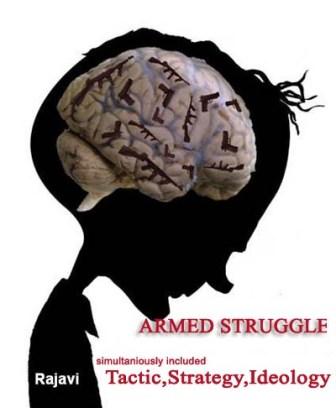
The MEK to launch Armed Struggle

Armed Struggle

Armed Struggle

Armed Struggle

January 27, 2008 0 comments
FacebookTwitterPinterestWhatsappTelegramSkypeEmail
European Union

Mojahedin Khalq action opens floodgate for other terrorist groups

13 months ago in December 2006, the European Court of First Instance annulled an EU move to keep Iranian Mojahedin-e Khalq Organisation (MKO) on its terror blacklist, ruling it had not given the group a fair hearing or adequate reasons. However, the EU disputed the ruling and kept the organization on a new version of its list. On December 22, 2007 the European Union published its official Journal in which it updated the Common Position 2001/931/CFSP on the application of specific measures to combat terrorism and repeated Common Position 2007/448/CFSP.

But the move by MKO to challenge the EU and lodge an appeal against the EU’s decision seems to have encouraged other blacklisted persons to make a try. Reported by the International Herald Tribune, Yasin al-Qadi, head of the Saudi-based Muwafaq Foundation, is trying to appeal the freezing of his assets by the 27-nation bloc under a U.N. order filed after the Sept. 11. The US Treasury officials allege al-Qadi’s organization is an al-Qaida front used to funnel millions of dollars (euros) to the global terror organization. Al-Qadi was one of four plaintiffs whose case was dismissed by the EU court in 2005 after they were added to the EU’s terror blacklist.

It is said that the EU’s high court has also recently overturned a decision to freeze the assets of an exiled Philippine rebel leader and the Netherlands-based Al-Aqsa foundation because they were not informed why their assets were frozen.

Mojahedin.ws, January 18, 2008,

January 22, 2008 0 comments
FacebookTwitterPinterestWhatsappTelegramSkypeEmail
Mujahedin Khalq Organization as a terrorist group

On Rajavi’s Canadian Hostage

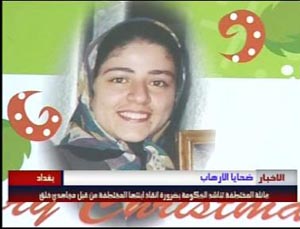
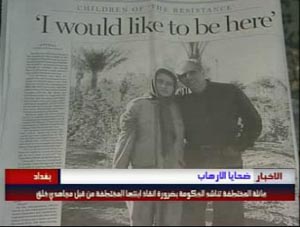
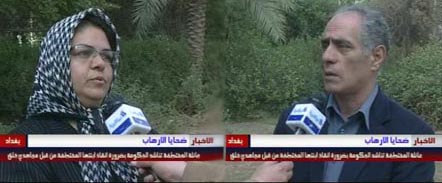
Al-Araghiya TV documnetary on Rajavi’s Canadian Hostage Alaraghiay TV broadcasted a documentary about two Canadian sitizens, Mostafa and Mahboobeh Mohammady, who have gone to Iraq in an attempt to rescue their daughter from Mojahedin Khalq Organisation terrorist cult currently under protection of US army in Ashraf camp North of Baghdad.

The full translation of this film will be posted shortly.

Somaye Mohammady;Rajavi's Canadian Hostage

Mostafa and Mahboobeh Mohammady, who have gone to Iraq in an attempt to rescue their daughter from Mojahedin Khalq Organisation 

Download Al-Araghiah TV documentary on Rajavi’s Canadian Hostage

January 22, 2008 0 comments
FacebookTwitterPinterestWhatsappTelegramSkypeEmail
Massoud Rajavi

Masud Rajavi and the Paranoia of Power

Self-delusion is most apparent in those politicians who least consider their supporters and their people in the policies and strategies which they pursue. These are the kind of leaders who do not see the fear in the faces of the people under their autocracy. Rather they relate all such signs of disfavour to the external enemy. When they do find their internal opponents standing opposed to them, they become astonished and fail to analyse the situation realistically.

Self-delusion is the scourge of power that has no popular support. Self-delusion is the illness of those who are unable to evaluate their power and do not understand their true position in either the international or internal political scene. This inability means there is always a vast divergence between the minds of such politicians and real life. On the one hand they are arrogant of their growing power, and on the other hand pass their lives in fear of their enemies; and finally they become the victims of their own phobia. Their self-delusion directs them to only refer to their self-created fantasy. Disaster occurs when the realities of the outside world threaten to destroy their misinterpretation.

Massoud Rajavi, the leader of the Mojahedin-e Khalq Organisation (MKO) of Iran, is an example of an idealistic leader whose absolute power over his followers in the organisation has both shattered his ideals and increased his self-delusion. As Rajavi discovered his power over the organisation to be unlimited, he distanced himself from the realities of life in both his sayings and in his actions. To this end the picture of the social and political life of the people of Iran today is totally different from what he sees or talks about. He is miles away from today’s world.

Massoud Rajavi is so certain about the outcome of the manipulation of the members of his organisation with his ideas that he does not see the rows of people tired of his "ideological revolution" and those who are trying to escape the boundaries of Camp Ashraf in Iraq. He is, of course, not worried about the increasing critics and opponents to his policies and ideas. According to his so-called revolutionary criteria, those who leave him or turn against him are traitors who will sooner or later destroy themselves by their own hands.

Rajavi is a charismatic leader who enjoys the natural supremacy of all such leaders over his followers. He has managed to instil his own fear and paranoia in the minds of his followers so that they are also unable to see the truth of the outside world. Currently the world is deeply concerned about the outbreak of further wars and conflict here and there, and people are working hard everywhere to prevent this. But living in his own self-deluded world Massoud Rajavi is strongly disturbed that there is no war and that the US does not quickly launch a militarily attack on Iran.

Today Massoud Rajavi has gone into hiding and does not give public appearances – apparently for reasons of security. But he is in fact living in his own dream world of self-delusion and the nightmare of fear as all totalitarians of his kind must do.


Ebrahim Khodabandeh, 15 November 2007

ebrahim_khodabandeh_2006@yahoo.com

January 22, 2008 0 comments
FacebookTwitterPinterestWhatsappTelegramSkypeEmail
European Union

Al- Qaeda front appeals to unfreeze assets

13 months ago in December 2006, the European Court of First Instance annulled an EU move to keep Iranian Mojahedin-e Khalq Organisation (MKO) on its terror blacklist, ruling it had not given the group a fair hearing or adequate reasons. However, the EU disputed the ruling and kept the organization on a new version of its list. On December 22, 2007 the European Union published its official Journal in which it updated the Common Position 2001/931/CFSP on the application of specific measures to combat terrorism and repeated Common Position 2007/448/CFSP.

But the move by MKO to challenge the EU and lodge an appeal against the EU’s decision seems to have encouraged other blacklisted persons to make a try. Reported by the International Herald Tribune, Yasin al-Qadi, head of the Saudi-based Muwafaq Foundation, is trying to appeal the freezing of his assets by the 27-nation bloc under a U.N. order filed after the Sept. 11. The US Treasury officials allege al-Qadi’s organization is an al-Qaida front used to funnel millions of dollars (euros) to the global terror organization. Al-Qadi was one of four plaintiffs whose case was dismissed by the EU court in 2005 after they were added to the EU’s terror blacklist.

It is said that the EU’s high court has also recently overturned a decision to freeze the assets of an exiled Philippine rebel leader and the Netherlands-based Al-Aqsa foundation because they were not informed why their assets were frozen

Mojahedin.ws,January 18, 2008

January 20, 2008 0 comments
FacebookTwitterPinterestWhatsappTelegramSkypeEmail
Mujahedin Khalq Organization as a terrorist group

Mojahedin Khalq threatens to kill an author

In the same way that a leopard cannot change its spots, MKO fail to give up violence and terrorism not only in its struggle conduct but also in the literature of criticizing its opponents. Bad-mouthing the critics and threatening them to death is the characteristic of criminal gangs and terrorist groups that advocate violence and atrocity as the sole working apparatus to achieve the ends. For instance, in an angry backlash against a series of articles by Bahar Irani published in Mojahedin.ws, the last of which was Arab countries, Latin America or Africa, where will MKO settle after Iraq? one of MKO’s penman, Sasan Mahmoudi, in an article entitled Mojahedin’s station in the world released by MKO-run iran-efshagari originally in Parsian, threatened the author of the articles to a lethal reaction from the group’s agents. In the ending part of his article he writes:

There will be a group, for sure from Mojahedin, that turns the mills by splitting the blood of the cleric-fed villains even if you make attempts to escape.

It is only a report to let advocates of MKO know that the group proves to be a great disappointment if anybody tries to trust it as a pro-democratic resistance as it claims.

January 17, 2008

January 20, 2008 0 comments
FacebookTwitterPinterestWhatsappTelegramSkypeEmail
The MEK Expulsion from Iraq

Arab countries, Latin America or Africa, where will MKO settle after Iraq?

Encampment of MKO, after its expulsion from Iraq, in France and other European countries as well as the United State of America for the reasons discussed is out of the question. The next option, then, might be the region Arab countries, Latin America and the continent Africa.

Jordan, because of its strategically geographical location, seems to be of undeniable priority for MKO; Iraq is the sole country that separates Jordan from Iran. Naturally an opportunist group, MKO made attempts to establish close relations with Jordan prefiguring it as the alternate option after Iraq and Rajavi had repetitive meeting with King Hussein of Jordan. Even before Rajavi’s flight to Iraq, he met with King Hussein when he was on a visit in France. The meeting was said to have been arranged by Saddam. Although King Hussein was a figure of disrepute among the left groups and MKO in particular, it was so important a matter for Rajavi to establish relations with him as a prospective patron since King Hussein and Saddam were close alliances. However, all these expectations and anticipations have proved to be fruitless since Jordan has utterly rejected to grant asylum to members of MKO.

Jordan and Iran restored diplomatic ties in the early 1990s after the two states severed their relations in 1980 following the outbreak of the eight-year Iran-Iraq war and the King Abdullah paid an historic visit to Tehran in September 2003. In September 2007 some news reports broke that Jordan had granted asylum to members of MKO. Immediately, Nasser Judeh, the Jordanian government Spokesperson, acted in response that the Kingdom did not receive any leader or member of Mujahedin-e Khalq, and does not allow the organization to operate on Jordanian soil”. He reiterated that His Majesty King Abdullah was determined to build brotherly relations between the two countries based on mutual respect and understanding and that, Jordan never consented to grant asylum to a terrorist group which was harbored by the former Iraqi regime and was designated as a terrorist organization by the US, Canada and the EU.

Syria, maintaining a long, friendly relationship with Iran even in the course of Iran-Iraq war, is already an impossible option. The case of two MKO members, Ebrahim Khodabandeh and Jamil Bassam, who were arrested and returned to Iran from Syria in 2003, well indicates that the country is in no way a safe haven for members of MKO.

In respect to other Gulf region countries, Bahrain, Qatar, they prefer not to be engaged in the issues that might generate further tension between them and Iran. Besides, Iran’s sovereignty over the Persian Gulf actually paralyzes any move by the group’s so-called liberation army in the embryo.

At the first look, Latin America, because of a variety of scattered active militia and guerrilla groups, might seem an appropriate option. But it should be noted that a number of Latin countries have come to enjoy periods of peace and tranquility after long periods of various revolutions and opposition conflicts. They need peace to reconstruct their countries and avoid whatever might lead to the escalation of any tension. Latin America is politically divided into two groups of countries and territories; ruled under dictatorial militarism and independant revolutionaries. The former countries absolutely disapprove military and terrorist groups since the presence of any alien opposition that might collaborate with the internal opposition builds up a potential threat against the ruling power. Significantly, MKO has long been under the influence of the Latin theoreticians of the urban and rural guerrilla warfare. Besides, MKO’s natural potentiality to enter any illegal and underground trade in union with other active professional smugglers and gangs worsens the problem these countries can hardly overcome at the present.

The second group of countries are stabilized through revolutions and have developed close political and economic ties with Iran. Regardless of their ties with Iran, traumatic effects of revolutions need peace and tranquility to be healed and consequently, any equivocal move is under severe surveillance. For sure, an alien group that is a globally blacklisted terrorist organization can never be trusted to be granted asylum by these countries; a number of these countries are already facing allegations of harboring terrorism and of course, any sign of favor shown for MKO works as evidences against them.

The next only option, then, is Africa. The settlement of the organization in Africa, provided that any country there let it in, is equal to absolute political isolation. Relocation of MKO to any African country means political suicide of an organization that considers itself as the vanguard of a democratic move to liberate not only Iranian people but the mankind in general. The abject misery of being expelled to African countries, after living seemingly glorious days in European countries, is too much for MKO to endure and the group never consents to encamp in African countries.

Considering that there is no option for MKO after Iraq, the question is what is the appropriate solution for Mojahedin to save their organizational structure and entity? No doubt, Mojahedin necessarily have to change their tune and before anything, they need to have another internal revolution in all aspects of organizational structure, ideology, strategy, and leadership. The first rational move will be reconsideration of two alternative options; either dissolve the organization and let the members free or reorganize a logically democratic struggle. The options have to be discussed in detail.


  Bahar Irani, Mojahedin.ws, January 15, 2008


January 20, 2008 0 comments
FacebookTwitterPinterestWhatsappTelegramSkypeEmail
MEK Camp Ashraf

Camp Ashraf – Mojahedin Khalq corralled by US Army in Iraq now killing own members

While the Mojahedin-e Khalq (MKO) in Europe has latched itself onto the neoconservative Iran agenda, and involved itself in diversionary propaganda over its inclusion in the terrorist lists in Europe, the real victims of this military cult have slipped further from world attention as reports emerged today that twenty-four members have recently been killed by the MKO in Iraq.

Since May 2003, up to 3,800 Iranian terrorist MKO combatants have been ostensibly disarmed and confined to Camp Ashraf by US Military Police, aided by a Bulgarian unit. In this time a Temporary International Presence Facility (TIPF) was also established alongside Camp Ashraf to house those who wanted to leave the MKO. Around 800 have since been processed through the TIPF, of whom around 500 have successfully accepted voluntary repatriation to Iran with the help of the ICRC and Iraqi Human Rights agencies. Over 200 Iranian individuals remained in the TIPF who do not wish to return to Iran. These individuals have UNHCR refugee status. Inside Camp Ashraf the MKO leadership continues to maintain control through its harsh cult methodology which denies all MKO members their basic human rights.

Both the residents of Camp Ashraf and the TIPF are guarded by US Military Police to protect them from revenge attacks by Kurdish and other Iraqis whose knowledge of the MKO is as part of Saddam Hussein’s repressive apparatus. Initially granted protected persons status under the Fourth Geneva Convention, this no longer applies and all of these Iranian individuals are now the responsibility of the sovereign government of Iraq.

During 2007 events have evolved which will affect the Iranians in both Camp Ashraf and TIPF.

Conditions inside Camp Ashraf continued to deteriorate during 2007. The Head of Military Intelligence of Bulgaria was quoted by Fars News as saying that during 2007 the Bulgarian unit has had to deal with fourteen serious clashes in Camp Ashraf, describing them as "due to the unrest of the detainees over the years" while stressing that there was no threat to the Bulgarian soldiers.

Reports continued of low level harassment by US MPs of the individuals in TIPF who were demanding that they be given refuge in third countries. It is understood that loyal MKO members have infiltrated the TIPF in order to report on the activities of the former members and to control the atmosphere in the camp. (This in the main is aimed at discouraging anyone from returning to Iran.)

In addition the MKO is holding around 200 disaffected members inside Camp Ashraf whom it has persuaded not to go to the TIPF. Instead the MKO has promised to remove them to third countries itself. This is clearly not going to happen.

In December 2007 the US Army released about 150 people out of the 200 who were in TIPF. The ex-MKO members were taken to a nearby highway and abandoned. Five have arrived in Turkey where they reported that some of those who were released have been captured by various groups in Kurdistan, and the fate of the others is yet unknown. Today Jahan news agency in Iraq reported that twenty-four MKO members have been killed by the group in northern Iraq. Clearly the lives of these people are in serious jeopardy.

It is known that in spite of being ‘confined’ to Camp Ashraf, the MKO have been able to gain a foothold of control along the route between TIPF and Turkey and are paying local people to apprehend any Iranians (who will almost certainly be from TIPF).

On December 6, 2007 Mostafa and Mahbobeh Mohammady arrived in Iraq from Canada to make another attempt to secure their daughter Somayeh’s freedom from the MKO cult. Mostafa Mohammady had meetings with the Iraqi Deputy Prime Minister and the Deputy Head of the Judiciary. An attempted abduction by the MKO led him to file a complain against the group with the Iraqi judiciary. By January 12, Canadian Government officials warned that the Mohammadys lives cannot be guaranteed in Iraq because of the threat posed by loose MKO personnel.

On January 10 Mostafa Mohammadi was interviewed on Alaraghieh TV. In that programme an Iraqi official was quoted saying that the original owner of the land on which Camp Ashraf has been constructed has been granted permission by an Iraqi court to re-possess his land

“Which had originally been illegally confiscated by Saddam Hussein and gifted to the MKO. The owner has been told that his land will be returned to him in six months. This means that both the TIPF and the whole of Camp Ashraf must be evacuated of personnel “ whether American, Bulgarian or Iranian – within the next six months.

US Military Police have also told visitors to TIPF that a deadline of 6 months has been given to disperse the remaining individuals in both camps. Five years after its disarmament the MKO is regarded as dismantled. The six month deadline will not be used to dismantle the organisation but to find a place of refuge for the individuals contained there. It had been rumored that the TIPF would be moved to Mosel in Kurdistan, but this did not happen. Instead the US Army has simply removed as many as possible from TIPF.

The deadline for evacuation of the camps and the increasingly insurgent behaviour of the MKO renders the situation highly volatile and humanitarian intervention is urgently needed to prevent further bloodshed.

ENDS


Contact

Anne Singleton, Iran-Interlink

editor@iran-interlink.org

www.iran-interlink.org


.

Iran-Interlink

PO Box 148

Leeds LS16 5YJ

UK


Iran Interlink Brief, January 2008

January 20, 2008 0 comments
FacebookTwitterPinterestWhatsappTelegramSkypeEmail
Newer Posts
Older Posts

Recent Posts

  • Tactical Links Between the MEK and Separatist Groups in Iran

    October 26, 2026
  • Echoes in an Empty Room: MEK Propaganda, Western Media Silence, and the Cuneo Case

    October 24, 2026
  • Various Aspects of Massoud Rajavi’s Disappearance

    October 20, 2026
  • MEK agents near schools in Tirana, Albania

    October 17, 2026
  • Expectations of human rights bodies regarding censorship within the MEK

    October 13, 2026
  • Facebook
  • Twitter
  • Instagram
  • Youtube

© 2003 - 2025 NEJAT Society . All Rights Reserved. NejatNGO.org


Back To Top
Nejat Society
  • Home
  • Articles
  • Media
    • Cartoons
    • NewsPics
    • Photo Gallery
    • Videos
  • Publications
    • Books
    • Nejat NewsLetter
    • Pars Brief
  • About Us
  • Contact us
  • Editions
    • عربي
    • فارسی
    • Shqip