Nejat Society
  • Home
  • Articles
  • Media
    • Cartoons
    • NewsPics
    • Photo Gallery
    • Videos
  • Publications
    • Books
    • Nejat NewsLetter
    • Pars Brief
  • About Us
  • Contact us
  • Editions
    • عربي
    • فارسی
    • Shqip
Nejat Society
Nejat Society
  • Home
  • Articles
  • Media
    • Cartoons
    • NewsPics
    • Photo Gallery
    • Videos
  • Publications
    • Books
    • Nejat NewsLetter
    • Pars Brief
  • About Us
  • Contact us
  • Editions
    • عربي
    • فارسی
    • Shqip
© 2003 - 2024 NEJAT Society. nejatngo.org
Mujahedin Khalq 's Function

MOSSAD: MKO’s Intelligence Source!

A source reported that Mossad, Israel’s intelligence service, provides most of MKO’s intelligence on Iranian activities in Iraq.

This source added that the list of 30000 Iraqis, claimed to be cooperating with Iran, was part of such intelligence which was transferred to the MKO and then published.

Iraqi government has asked the MKO to leave Iraqi soil as soon as possible.

A few weeks ago, MKO leaders invited Iraqi Sunni leaders to take part in a conference in Brussels. Dr. Saleh Motlaq, Khalf Al-Ayan and Adnan Al-Dulaimi accepted this invitation.

Some of the members of this delegation asked for the removal of MKO’s name from the international list of terrorist organizations.

Al-Malaf 

araahurra.com/arabic/index.asp?id=6860&katagori=1&s=detay

March 11, 2007 0 comments
FacebookTwitterPinterestWhatsappTelegramSkypeEmail
Maryam Rajavi

Maryam Rajavi treatening Council of European Union

Claiming that the letter by the Council of European Union which keeps the PMOI in the list is a breach of law, the terrorist MKO and a number of its advocates organized a conference in Brussels to protest the move. The EU had given the group 30 days, till Thursday, to put forward its case for being removed from the list. The People’s Mujahedeen of Iran (PMOI) duly handed over the letter in Brussels in which its lawyers accused the EU of "flagrant disregard" of an earlier European court ruling, as reported by Agence France.

The 27 EU member states wrote to the group a month ago explaining its motives for putting them on its terror list, recalling that group’s past activities, "notably the attacks for which it was responsible". Failing to present justifiable evidences, MKO, however, makes it attempts to proceed on detouring paths avoiding the conventional.

Furthermore, the cult leader, Maryam Rajavi, in her video message speech addressed to the conference made clear threats that only those familiar with the group and its cult structure can get the hint. Calling the legally adopted decision an act of appeasing Iranian regime, she promulgates a glimpse of her cult’s potentiality saying:

I remind those who insist on keeping the PMOI in the list that appeasement will have dire consequences. We are speaking about the lives of individuals. At the moment, the mullahs, through their proxies in the Iraqi government, are using the terrorist list as a pretext to try to expel and massacre PMOI members in Ashraf City . I warn that two decades of appeasing the mullahs is now resulting in a new catastrophe.

Mojahedin WS, March 03, 2007

March 11, 2007 0 comments
FacebookTwitterPinterestWhatsappTelegramSkypeEmail
Lord Corbett

Open letter to Lord Corbett of Castle Vale

Dear Lord Corbett,

With the greatest respect, I refer to your interview with the BBC Persian Service on February 23, 2007 (Link to the interview) which was published on the BBC’s website. May I first express my pleasure that you have entered into a free discussion about the Mojahedin Khalq Organisation (MKO). As you know, there are many questions about the Mojahedin Khalq Organisation which remain unanswered.

You have mentioned in your interview that the reason behind the proscription of the Mojahedin Khalq Organisation in Britain and other places is purely political and was made in relation to the interests of the Iranian Regime. This might be true, but what I would like to know is why the Mojahedin Khalq Organisation is still being kept on the lists of terrorist entities in almost every western country when these countries are engaged in a serious confrontation with the Islamic Republic of Iran? As you are well aware, Britain represents the toughest stance against Iran in Europe. At the same time Britain has been and is still leading the European Union against the Mojahedin Khalq Organisation. Doesn’t this reality disprove your claim that this matter is no more than politically motivated bargaining? I would like to know, if the Mojahedin was proscribed on the basis of a political decision, then why is it not de-proscribed now on the same basis? What could possibly be the political interest for the British government in insisting on keeping the Mojahedin Khalq Organisation on the list of proscribed terrorist organisations?

I think the reason for proscription of the Mojahedin Khalq as a terrorist organisation has never been a political decision. I think the decision has been purely security related. All the security services in the west categorise the MKO as a destructive cult in which violence has become part its infrastructure. Indeed, if anything, the point that the Mojahedin’s activities in western countries have not been confronted to the full could be interpreted as a politically motivated act due to the grievances between Iran and western countries. But no responsible security official would leave a cult like the MKO, which has theorised the use of violence, unchecked and unmonitored. The only way for the security services to be able to monitor and control the organisation is to keep it on the list of proscribed terrorist organisations. You are well aware yourself that the Mojahedin after the fall of the late dictator of Iraq, Saddam Hussein, is no longer considered to pose a threat to Iran. But could the people responsible for the security of European countries confidently announce the same? Could they really announce that the Mojahedin is not a threat to European countries?

In your interview, you have mentioned that the history of the Mojahedin Khalq Organisation’s armed operations goes back to before 2001, and you have emphasised that they have preformed no terrorist or similar activities after this date. What I really want to know is whether the organisation has in fact ruled out armed struggle – once the core of its ideology, strategy and tactics. Or is it simply because the organisation is incapable of carrying out terror acts at this moment of time?

You have also endorsed the Mojahedin’s assassination of the former head of Evin Prison. It has become a mystery for me. If the killing of all the people whom the Mojahedin have assassinated inside Iran is justified, then what about the thousands of similar people in Iran right now who have not been assassinated? Why is it that the Mojahedin Khalq Organisation (with your endorsement) does not attempt to deal with them? Why has the organisation refrained from its prior activities and is not working towards assassinating these subjects and instead has put a stop to its armed struggle from 2001? And if they have really come to the conclusion that they should stop this armed struggle, then why do not announce it publicly and criticise their past activities and above all why do you still try to legitimise their violent history?

I do not know if you have any answers for my questions. But I would be most grateful if you could offer some explanations concerning the questions I have posed. From my heart I wish that the Mojahedin Khalq Organisation would return to logic and one day be among the important players in the Iranian political scene. I would like to propose that the best course of action that the MKO could take is to start reviewing its past and clearly denounce violence against anyone and at anytime. I am sure that in doing so the organisation would be acting in its own best interests.

With many thanks.

Yours faithfully,

Ebrahim Khodabandeh

March 11, 2007 0 comments
FacebookTwitterPinterestWhatsappTelegramSkypeEmail
Jordan

MKO’s Ties with Jordanian Intelligence Service

Jordan expands its ties with the MKO and King Bandar of Saudi has decided to support this group and Jondallah in Baluchistan.

Security guards of Amman international airport have received an order by Jordanian interior ministry to offer facilities to those MKO members who have passports from Iraq or other countries. This decision was made during last months, after there were cooperation and close ties between this organization and Jordanian security services on Iran-Iraq issues.

According to sources close to Accord Front in Jordanian capital, MKO has opened an official base in Amman after CIA advised Jordanians to increase their cooperation with the group.

There’s no doubt that most of meetings and ties between the MKO leaders and members of Accord Front are being held in Amman. These very meetings led to the recent visit of Sunni delegation (headed by Accord Front and Al-Hiwar Al-Watani Front) to Brussels. Adnan Al-Dulaimi, Zafer Alaani, Khalf Al-Ayan and Sale Al-Motlaq were among the 12 who comprised the delegation. Eight of them stayed in Germany and Netherlands to seek political asylum.

Sources close to Accord Front in Amman say that the Jordanian officials pay equal attention to the MKO and Iraqi government opponents.

Some diplomats of Persian Gulf in Amman stressed that this cooperation with the MKO is not limited to Jordan and that Saudi Arabia has also decided to support all Iranian opposition groups in order to be able to decrease Iran’s political and military influence in the region. The MKO and Jondallah are of these groups. The latter is the one active in the Iranian Baluchistan region. According to these diplomats, King Bandar Bin Soltan from Saudi Arabia has been personally involved in making such decision. In this regard, Riyadh received a high delegation of MKO in December. Diplomats say that Americans have encouraged Riyadh to establish more ties with the MKO and that they are lobbying for similar purposes in Europe. Recently, Washington has convinced Norwegians to allow the group to open an office in Oslo and Maryam Rajavi, the leader of group, visited Oslo last year.

The opponents of Iraqi government based in Amman say that Saudi embassy in Amman is giving more time to the MKO and it seems that they have a better chance to be supported by Saudis. "Saudi embassy in Jordan is considered one of the most important Sadui embassies in the region and it is in charge of security and intelligence operations," they said.

Political analysts believe that Saudi Arabia’s approach to the MKO is not new but what’s new is King Bandar’s relationship with the group to interfere in Iraq-Iran affairs. Despite the opposition of Iraq’s public opinion and this country’s officials, this organization is still present in Iraq as an opposition organization and American occupiers support it. Meanwhile, despite Iraqi MPs decision the group should be expelled from Iraq, Americans support the group and like Saudis believe that the group is a threat to the security of Islamic Republic.

Sotaliraq – 2007/03/04

http://www.sotaliraq.com/iraq-news.php?id=47181

March 11, 2007 0 comments
FacebookTwitterPinterestWhatsappTelegramSkypeEmail
Jordan

Daily: MKO opens office in Amman

The MKO anti-Iranian terrorist outfit (Mujahedin-e Khalq Organization) has opened an office in the Jordanian capital of Amman, the Iraqi daily al-Bayyinah reported on Sunday.

The Jordanian government has agreed to develop security cooperation with MKO members upon the request of the U.S. Central Intelligence Agency (CIA); the daily quoted informed Iraqi security sources as saying.

The report added security guards at the Amman airport had received orders from Jordan’s Interior Ministry to ease security rules on organization members entering Jordan with Iraqi or non-Iraqi passports.

The Iraqi government has announced it plans to expel MKO members from its soil but has so far failed to do so due to U.S. opposition.

The terror outfit is responsible for the assassination of numerous people in Iran including senior politicians. Furthermore, It was an ally to Iraq’s former dictator Saddam Hussein in his brutal moves to suppress the country’s Shiite population.

Following the U.S. occupation in 2003, the MKO transferred its main stronghold to a U.S. military base known as Camp Ashraf in Iraq’s northeastern Diyala Province.

Press TV -Sun, 04 Mar 2007

March 11, 2007 0 comments
FacebookTwitterPinterestWhatsappTelegramSkypeEmail
UK

Britain Keeps MKO on Black List

A number of British MPs in the House of Commons discussed the issue of Iran’s nuclear program.

In the meeting, the report of which was published by British Parliament’s website, UK Foreign Office minister Kim Howells responded to some MPs’ request for lifting MKO from terror list: "On the proscription of Mojahedin-e Khalq, the Home Office rejected an application for de-proscription last year and that is, strictly speaking, a matter for the Home Office."

"The MEK is proscribed under the Terrorism Act 2000 and its involvement in violence means that it has little support in Iran. The MEK claims to support human rights and democracy, but it is hard to square that with its authoritarian structure and claims by respected human rights non-governmental organisations of serious violations of the rights of its own members," he added.

In response to protests on terrorist designation of MKO, Mark Pritchard said:

"All solutions on Iran, whether by the international community or Iranian exiles, should be peaceful. They shouldn’t be aimed at weakening the position of current regime."

"I believe that we should respect Foreign Office’s decision to band the MKO".

IRNA – 2007/03/01

March 11, 2007 0 comments
FacebookTwitterPinterestWhatsappTelegramSkypeEmail
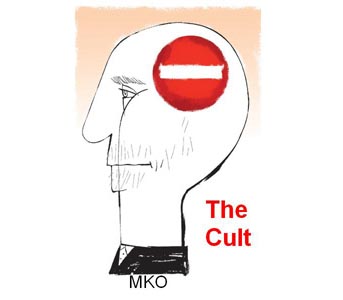
The cult of Rajavi

Cults and Terrorism – A Case Study

Psychiatrists and Sociologists who are experts in this field, broadly agree on a general principle which is that a terrorist group that systematically utilizes violence to reach its goals will also be utilizing some specific aspects of cult modus operandi according to contemporary definitions of cults [1]

What this means is that an organized entity which, for any stated reason, attempts to physically eliminate its opponents (as opposed to engaging with them in any other way) will be assumed to be employing mind control techniques (often referred to in common parlance as "brainwashing") in order to attract, recruit and maintain its recruits and to exert power over every aspect of their lives. Again, many scientists of human and social studies who have extensively studied this phenomenon agree that any cult, because of its unique characteristics, is potentially capable of using violence and physically eliminating not only its own members but also its opponents if it deems this necessary. Any cult will, in theory at least, believe this to be an absolute right.

Examination of a documented example in this regard is used here to open up this issue. In the following we first describe three interlocking circles of the structure and operations inside one clearly defined terrorist cult:

In the First Circle there stand the people who are trained to carry out terrorist activities and to ultimately destroy their own lives and those of the others. These individuals are proud of their terrorist acts and consider this, within the framework of their ideological system, to be the highest pinnacle of purity and sacrifice. This ‘ideological’ framework is significant because of course the direct perpetrators of terrorist acts are themselves the prime victims of terrorism but unfortunately are quite unaware of this bitter fact. It is due to this framework that the fact that some suicide bombers do not inflict casualties as a result of their own deaths does not stop others from following them.

In the Second Circle there stand the people who play the role of intermediates between the leader of the organization and those who are tasked to act in the actual scene. It is these individuals who put into practice a specific process of psychological manipulation or mind control which will prepare the people in the first circle to carry out terrorist operations. These individuals are so thoroughly dissolved in the system of the organization that they are capable of sincerely and uncritically imposing these mind control techniques on others.

In the Third Circle there stand the leaders of the cult who have developed a mask to portray freedom and humanity to the members of their cult and beyond this to the outside world where their purported advocacy of democracy and human rights is designed to distance them from the actual victims of terror on both sides. Cults are not what they show. Cult leaders are expert at covering their actual nature and easily show a different face from their actual one to those who do not know them.

Now we describe a documented example using the framework of those connected circles which comprise the structure of a terrorist cult. The case study has been chosen from the Mojahedin-é Khalq Organization (MKO). This organization according to current sociological definition is a destructive cult. [2]

First Circle

Around March 2001, three individuals named Garshasb Soleymanian, Mas’ud Bakhshi and Amir Gudarzi, who had been trained militarily and ideologically in the MKO camps in Iraq under the hegemony of Saddam Hussein, were sent to a city inside Iran to perform a terrorist act. They were eventually killed in a street clash with law enforcement officers. The news relating to this clash along with their biographies was published in Mojahed, a Persian language newspaper, the main publicity organ of the MKO at that time. From the text and tone of their letters to their commanders and their wills, we can derive the kind of preparation that all three underwent for the mission and identify the specific psychological manipulation which takes place under the heading ‘Internal Ideological Revolution’. The mind-set of all three is that they are acting as saviours by conquering the city and freeing the people. They apparently believe that all these people are waiting for the arrival of their commanders after they have cleared the way for them. Such evidence of psychological manipulation, which often also includes forms of coercion, which is imposed on the operational individuals in the ‘first circle’ can be found in most cults. It is this which guarantees the operation being performed whatever the price might be and that the next individuals with the same mental mechanism get ready to finish the unfinished task of their previous colleagues. In this regard, the cult attaches specific, value laden attributes to their operatives which are highly significant: “the proud hero of the scene of commitment and bearing responsibility, the courageous Mojahed-é Khalq commander, with the will like steel, the heroic Mojahed, the young blood of the sun . . .” (The sun is often used in the MKO as an analogy for cult leader, Maryam Rajavi)

(Memorize the three photos of the three persons above)

Garshasb Soleymanian writes in his letter to "Sister Maryam" (Maryam Rajavi) that: "I thank God thousands of times particularly when I see that I would have not reached the values of your revolution (the MKO’s Internal Ideological Revolution [3]) elsewhere. If you had time, please pray for me that I be able to fulfil the commitments of being your soldier with my maximum assault against the enemy". The lexicon of cult indoctrination embodied in this letter clearly demonstrates the cultic relationship of the devotee to the leader.

Second Circle

We mentioned that the people who commit acts of terror are the prime victims of their own actions, but at the same time are proud of killing and maiming and they are convinced that their action is holy and divine. This mind-set is strikingly at variance with that of ordinary, un-indoctrinated people in every society who would not be proud of launching mortal shells on a city. Quite to the contrary, when hearing of such acts of terror people become fearful and disappointed. So, how is it possible that some can shed the blood of others and be proud of their deeds?

The person standing in the second circle is instrumental in converting normal people into killers. How do they think and what techniques do they use?

Ms Sediqé Hoseyni, currently First Secretary of the MKO in Iraq and in the Ashraf Camp, met up with the team identified as First Circle members above just before they embarked on their terrorist mission. In the meeting she conveyed to them the message of their Spiritual Leader, Maryam Rajavi, in order to boost their morale. This was the farewell meeting between the followers and the messenger of the guru in order to prevent the individual having any doubts about what he is about to do. He must prove with his operation that he has reached a high level of obedience to Maryam Rajavi. At the same time, as the go-between, Sediqé Hoseyni sincerely believes in what her recruits are about to do.  

(Sediqé Hoseyni in her last visit with the operational team)

Third Circle

Now we move to the top of the pyramid of the cult in order to examine the practical mechanism of cults and to better understand their true content. The recruits into a cult are indoctrinated into worshiping the cult leader – in this case the Spiritual Leader, Maryam Rajavi. All members of the MKO are equal in only one aspect and that is their adoration of the leader and this is their only right within the cult. Indeed, the value of an individual inside the cult is measured solely by the mental, emotional and moral proximity they have to the leader. (Interestingly, if the recruit did not want to stay or could not do so in the determined framework, the very same person would within a day become, in the language of the cult, a traitor, defector and mercenary of the enemy.)

Ms Sediqé Hoseyni has proved the extent of her ideological faith in the spiritual leader by successfully passing all the phases of the Internal Ideological Revolution and being able to to indoctrinate others in it. In this respect she has passed all the stages of submitting to the demands of the cult leader. It is for this very reason she has now been chosen and introduced as the First Secretary of the MKO.

(Maryam Rajavi and Sediqé Hoseyni in a military workshop in the NLA in Iraq)

Allocation of rank or position in a cult is not done according to the capabilities, abilities, or personal talent of the individual. The main factor is the extent of dependence on and submission to the cult’s leader. For the individual member, this is a difficult matter to prove. Other members of the cult must be able to testify that that particular person has dissolved into the system and denied their own identity and has replaced it with the identity of the leader. They must have become a ‘transparent’ person and most important of all must be judged to have reached the fullest understanding of the absolute spiritual leadership. In the MKO, one of the ways to prove that is the success of the teams trained by the person and how effectively they have learned to either kill or get killed.

Remember that the leaders of the cult adopt a peaceful appearance and present democratic and liberating slogans. However, a cult exists in direct conflict with the outside world (‘us’ and ‘them’) and through a process of psychological manipulation or mind control can convert even the most honest peaceable of persons into terrorists and murderers to defend itself as an entity.

Mr Ali Moradi a former member of the MKO cult returned home to his family after the fall of Saddam Hussein’s dictatorial regime. He writes about Sediqé Hoseyni as follows:

"She gradually rose in the ranks of the MKO. After a while, Sedeqé became the deputy commander of Axis 3 of the National Liberation Army (NLA) [the Mojahedin’s military wing]. She was then moved to Centre 11. After a while some young people who had recently been deceived into the organisation moved to her part and underwent the brainwashing processes. After a year at Centre 11, Sediqé became the deputy and then the commander of Centre 17. This was about the same time that an agreement was reached with the former Iraqi dictator Saddam Hussein to send teams inside Iran to undertake sabotage activities. Then Sediqé moved to the city of Kut in Iraq as the Chief of Staff of Centre 5. She was chosen to guide and control the teams who were nominees to be sent to Iran since she was very stubborn and inflexible. The Mehran, Shalehabad, and Dehloran regions were the areas that her teams were to perform their operations. In this base she managed to brainwash many teams with the aid of some well known MKO torturers and interrogators such as Assadollah Mosanna, Naqi Arvani, Mohammad Reza Mohaddes, and Kamal Niknami and to prepare a few terrorist teams. These teams were first settled in separate compartments and were shown made-up films and were given special training and education in order to be able to kill without mercy inside Iran. One of masterworks of Sedeqé was to convince the team members to use cyanide pills if they are about to face any danger.

In this period the team of Abdolkarim Mahmudi and his companion and the team of Gashtasb and Mas’ud Bakhshi and their companion and some other teams were sent to perform terrorist operations which resulted to their deaths. Also the clashes in the region of Chilat which resulted to the death of Allahmorad Chaghaleh and Shahram Juyandeh and their companion were the works of Sediqé Hoseyni. There were several teams which were trained and sent to Iran under the command of Sediqé of whom there is no trace of their destiny whatsoever. In this period Sediqé, played a decisive and active role in training and sending terrorist teams to Iran and she was totally obedient to the desires of Rajavi the leader of the MKO. She always used to say that a successful commander is the one who would not care about the lives and safety of his/her recruits since this sort of consideration would create an obstacle to complete missions. Therefore since her way of accomplishing tasks was quite desirable to Massoud and Maryam Rajavi, she was appointed to become the Commander in Chief of the Fourth Army of the NLA. In the army she showed her total compliance until was appointed to be the deputy of Mozhgan Parsayi [at that time First Secretary of the MKO].

But another era of Sediqé’s struggle which appears to be the main factor for her ascending was her suppressive role in the process of family visits to Camp Ashraf after the fall of Saddam Hussein in 2003. She introduced a new thesis and gave the formulae: Family = nest of corruption and Family = anti struggle, which she wrote on the board. She held several sessions before any meeting with the family to indoctrinate the members who were about to face their relatives with these formulae. She used to say that we must be firm against the nest of corruption and anti struggle and against our family and oppose them. Therefore before any meeting she used to hold compulsory sessions for those who were about to meet their families and Sediqé used to brief them that the families have come on a campaign and therefore we must either fight them back when we meet them or do not go to the meeting at all. People were instructed not to receive photographs, not to embrace or kiss each other, not to cry, not to show emotions, and not to divert the political discussions to emotional ones. She used to instruct people so as to finally leave them with a cold and impassive attitude. She wanted them to prove to their families that they are the children of Massoud and Maryam. Anyone that Sediqé suspected to be anxious to visit their family was prevented by using different excuses from meeting with the family.

This reference to the words of Mr Moradi is not to deal with the personal character of Ms Sediqé Hoseyni since we must believe that she is herself a victim of the cult before anything else, and she has been a victim of mind control in the system of the cult in such way that she is capable of brainwashing others with absolute sincerity. Certainly any member in her position would have acted in the same manner. The aim of this article is to expose a connection between the two phenomena of terrorism and cult by analysing the two inseparable principles of ‘armed operation’ and ‘current operation’ which operate in the MKO. The term armed operation refers to the principle of using violence to achieve the aims of the cult. The term current operation refers to the necessity for all members at all levels to undertake ongoing psychological manipulation through ritual daily confession and repentance sessions.

In the above example of one specific terrorist organisation, the connection between its internal cult relationships (mind control – or psychological manipulation and the total submission to the cult leader) and its external relationships (committing acts of violence against its own members and the outside world) are clear. With even a general understanding of the nature of cults, Ali Moradi’s description above of the behaviour of the MKO’s current First Secretary Sediqé Hoseyni can leave no doubt that the MKO is a cult. Beyond this, his testimony exposes the underlying connection between cult methodology and terrorism in an organisation having the three above mentioned interconnected circles.

According to the teachings of the MKO cult, the recruits of the organisation must be devoid of any emotional feelings toward their beloved ones and their families. They must stop their contacts with them in order to become good tools to carry out terrorist acts. Again according to the teachings of the cult, the recruits must mentally reach a point at which they truly believe that they are absolutely nothing and they are of no value whatsoever and their lives are only to be sacrificed for their leader in a terrorist operation. Those who have submitted totally and can pass this value to others and turn them into robots who can perform the terrorist operations better, will rise higher in the system of the cult. These known methods and techniques are not used solely by the MKO. Nearly all terrorist organisations and even mafia type gangs utilize these psychological techniques, otherwise they would not be able to persuade their members logically and with open discussion to endanger other people’s lives as well as their own and ask them to carry out blind armed operations and blow up a hand grenade in their own belly or to take cyanide pills.

The role played by Sediqé Hoseyni in the family relations of cult members as described in the testimony of the member returned from Iraq is a common characteristic of all cults. Basically, one of the most underscored points of differentiation between cults and lawful organisations is their viewpoint on the family and family values. All established religions and popular parties and groups would look at the family as a valuable establishment which must be at least respected if not encouraged. On the contrary, cults, in any form that they might take, ultimately consider family relations and its values as their enemy. Cults only tolerate family connections in two ways. One is to recruit potential members and the other is to gain money from them. Accepting family values and terrorism do not match together. An individual who is tasked to take the lives of other people must initially suppress their own civilizing and humane behaviours. An individual indoctrinated by a cult into evacuating themselves of any feelings would not have any qualms about planting bombs in public places and taking the lives of innocent people.

The direct relationship between a terrorist act and the cultic relationship is the basis for this article and it is hoped this example will provide a starting point for further investigation into this link.

Notes:

[1] There are several generally accepted definitions of what differentiates a cult from other similar entities.

The late Margaret Singer, clinical psychologist and once Professor of Psychology at the University of California, Berkeley was the preeminent cult expert of the 20th Century. She counseled and/or interviewed thousands of people affected by controversial groups often called cults. Dr. Singer offered meaningful definitions of unsafe groups or cults in her book Cults in our Midst.

According to Dr. Margaret Singer, unsafe groups or cults can generally be defined by three factors:

1. The origin of the group and role of the leader.

2. The power structure, or relationship between the leader[s] and the followers.

3. The use of a coordinated program of persuasion, which is called thought reform [or more commonly, ‘brainwashing’].

A more specific definition can be taken from the Cult Information Centre:

Every cult can be defined as a group having all of the following five characteristics:

1. It uses psychological coercion to recruit, indoctrinate and retain its members;

2. It forms an elitist totalitarian society;

3. Its founder leader is self-appointed, dogmatic, messianic, not accountable and has charisma;

4. It believes ‘the end justifies the means’ in order to solicit funds and recruit people;

5. Its wealth does not benefit its members or society. [2] The term destructive cult refers to a cult which poses a danger to its own members and/or the outside world.

HOW TO DETERMINE IF A GROUP IS A DESTRUCTIVE CULT

Q) Anybody can unfairly attack a group they disagree with by calling it a cult or saying they are using coercive mind control. How does FACTNet prevent this type of problem and determine fairly whether or not a group is a cult?

A) FACTNet uses specific criteria to determine if a mind control system has been used, and does not suggest organizations are destructive or dangerous cults without careful research and determination that the evidence fits definite criteria. These criteria are threefold.

The first set of criteria comes from the groups’ use of a specific set of mind control tactics. Please see "A technical overview of mind control tactics" at http://www.factnet.org/rancho1.htm for details or see http://www.factnet.org/coercivemindcontrol.html for a shorter version. These two documents are derived from the work of Dr. Margaret Singer former professor emeritus at the University of California at Berkeley, the acknowledged leading authority in the world on mind control and cults.

The second set of criteria has to do with defining other common elements of mind control systems, as defined by Robert Jay Lifton’s eight point model of thought reform. Please see "Robert Jay Lifton’s Eight Point Model of Thought Reform" also at http://www.factnet.org/rancho1.htm. If most points in this model are being used in a cultic organization, it is most likely a dangerous and destructive cult.

The third set of criteria have to do with defining common elements of destructive and dangerous cults. The following section will help clarify what some of those specific elements and criteria are.

Common Properties of Potentially Destructive and Dangerous Cults

The cult is authoritarian in its power structure. The leader is regarded as the supreme authority. He or she may delegate certain power to a few subordinates for the purpose of seeing that members adhere to the leader’s wishes and roles. There is no appeal outside of his or her system to greater systems of justice. For example, if a school teacher feels unjustly treated by a principal, appeals can be made. In a cult, the leader claims to have the only and final ruling on all matters.

The cult’s leaders tend to be charismatic, determined, and domineering. They persuade followers to drop their families, jobs, careers, and friends to follow them. They (not the individual) then take over control of their followers’ possessions, money, lives.

The cult’s leaders are self-appointed, messianic persons who claim to have a special mission in life. For example, the flying saucer cult leaders claim that people from outer space have commissioned them to lead people to special places to await a space ship.

The cult’s leaders center the veneration of members upon themselves. Priests, rabbis, ministers, democratic leaders, and leaders of genuinely altruistic movements keep the veneration of adherents focused on God, abstract principles, and group purposes. Cult leaders, in contrast, keep the focus of love, devotion, and allegiance on themselves.

The cult tends to be totalitarian in its control of the behavior of its members. Cults are likely to dictate in great detail what members wear, eat, when and where they work, sleep, and bathe-as well as what to believe, think, and say.

The cult tends to have a double set of ethics. Members are urged to be open and honest within the group, and confess all to the leaders. On the other hand, they are encouraged to deceive and manipulate outsiders or nonmembers. Established religions teach members to be honest and truthful to all, and to abide by one set of ethics.

The cult has basically only two purposes, recruiting new members and fund-raising. Established religions and altruistic movements may also recruit and raise funds. However, their sole purpose is not to grow larger; such groups have the goals to better the lives of their members and mankind in general. The cults may claim to make social contributions, but in actuality these remain mere claims, or gestures. Their focus is always dominated by recruiting new members and fund-raising.

The cult appears to be innovative and exclusive. The leader claims to be breaking with tradition, offering something novel, and instituting the only viable system for change that will solve life’s problems or the world’s ills. While claiming this, the cult then surreptitiously uses systems of psychological coercion on its members to inhibit their ability to examine the actual validity of the claims of the leader and the cult.

http://www.factnet.org/rancho5.htm

[3] Internal Ideological Revolution

Introduced at the time of the marriage of Massoud Rajavi with Maryam Azdonlou in February 1985. Rajavi declared himself the self-appointed ideological leader of the Mojahedin, or spiritual leader – a role taken over in public by his wife Maryam Rajavi since his disappearance after the fall of Saddam Hussein in 2003.

Along with this role he introduced ‘phases’ of the Internal Ideological Revolution which would in his terms lead the members to a full understanding of his ideological beliefs. The phases included daily reporting of thoughts and feelings; forced marriage followed by forced divorces; separation of children from parents; confession of sins including erotic dreams and fantasies. The aim of these phases is to connect the member to the leader with nothing between them in an exclusive relationship of total submission to the leader’s will.


Iran interlink, February 2007

March 11, 2007 0 comments
FacebookTwitterPinterestWhatsappTelegramSkypeEmail
The cult of Rajavi

Women Lured by Mojahedin-e Khalq, the Religious Cult

 I have only one solution: to rise above this absurd drama that others have staged around me.

Still reeling from my bitter experience, I am trying to come to grips with many years of my most vulnerable life spent in a religious, destructive cult called the Mojahedin-e Khalq (MEK); an experience which shattered my confidence and left me feeling abused and betrayed.


I was seeking freedom and the equal rights of men and women in my homeland Iran when I was recruited by and trapped in the Mojahedin cult.

At the time that I succumbed to them and became a member of the MEK, I would never have thought that one day the MEK’s leaders would betray me as they did.

As a former cult member, I endorse the view that the Mojahedin cult’s leaders Massoud and Maryam Rajavi are deceptive, exploitive masters of mind control who can weave pernicious spells capable of holding followers in thrall for decades, especially the women. Like many leaders, they are handsome, attractive and seductive.

The organization itself vehemently rejects the notion that it is a cult–and all that the designation brings with it. The leaders prefer to describe their outfit as a legitimate political group which wants to bring freedom to Iran. Unfortunately, behind this façade they do not follow even the minimum principle of freedom which is the freedom of personal decision making. However the MEK characterizes itself, an individual’s foray into the cult netherworld can exact a huge emotional toll.

The surrender of personal autonomy, even during the first brief enchantment, can cause profound self-doubt and loss of self-esteem. A longer stay can seriously derail (if not destroy) a member’s life. The damage is even greater if exiting members were abused and abuse of women’s sexuality in the MEK cult is a common theme for women members. Some former women members describe being forced into marrying men that they did not know. Then, in 1990 the leader of the MEK cult ordered all the members to divorce. This meant that all the married couples in the MEK must divorce without any question or protest. For unmarried members, both men and women, they were required to divorce their sexuality and purify themselves of all sexual thoughts and feelings. Women in the MEK are indoctrinated into performing whatever has been planned for them by the leaders. After the divorces, the women had to give up their children and denounce and destroy their feelings of motherhood.

How much do we have to fear from these groups? And how do otherwise intelligent and seemingly sensible women get trapped in such madness?

In the main, cults target people in transition–college students away from home for the first time, people who have moved to new cities for jobs, those who have just been divorced or widowed. The vast majority of members are merely looking for a sense of community during a difficult time in their lives. This is how the MEK as a cult group operates. The MEK recruiters deceive and trap people by finding the weak point of the individual. Once recruited, the individual is subjected to a daily indoctrination using patterns of mind control. This will start by keeping recruits so busy and so isolated that they have no time to question or reflect on what they’re doing or to talk to others who might instill doubts. Rigid rules and rituals help reinforce the autonomy of the MEK cult, particularly in women. Yet experts in cults disagree on whether mind control without the use of force is even possible. "No-one who has observed these groups closely has concluded brainwashing is the reason people are in such cult," insists David Bromley, a professor of sociology at Virginia Commonwealth University, and this is what exactly MEK does. Another powerful factor is the charisma, magnetism, and seductive talents of the cult leaders. "They are con artists par excellence," I would insist, invasion of privacy, and the infliction of severe emotional distress.

Cults like the MEK should not remain such a mystery to people at this time. It is no longer an unknown phenomenon. Broad agreement does exist among psychologists and sociologists about what is meant by referring to a group as a cult. The study of countless cults has given rise also to valuable research into the use of mind control techniques and what is meant by psychological manipulation and psychological coercion.

Still, while organizations like the MEK are taken at face value and not subjected to rigorous investigation and research, it is clear that not enough is known about the many former members who have been able to extricate themselves from the clutches of the cult and return to a normal life. Nor is it not possible to ascertain how many people are still being recruited through the front door by dangerous, destructive cults like the MEK even as disenchanted members leave through the back door.

As a former member of the Mojahedin cult, I wonder why the public does not know more about destructive cults and the warped motives of their leaders. While experts may argue the finer points about what actually makes a cult or whether or not mind control or brainwashing keeps members in thrall, former members like myself struggle to put their lives back together. But, it certainly isn’t easy: being in a cult is not something you walk away from and forget, it is like a disease and needs a long term cure.

There is no doubt that the Mojahedin-e Khalq is a destructive cult. But, when the claim of such an entity to be a democratic, freedom-loving political force which respects human rights, is not subjected to real scrutiny based on the evidence of former members, then I believe the tolerance of such destructive cults will be far more detrimental to society than anyone can imagine they are.
Parvin Haji, Canada

March 11, 2007 0 comments
FacebookTwitterPinterestWhatsappTelegramSkypeEmail
UK

Update on Mojahedin Khalq Organisation in Europe

A number of British MPs in the House of Commons discussed the issue of Iran’s nuclear program.

In the meeting, the report of which was published by British Parliament’s website, UK Foreign Office minister Kim Howells responded to some MPs’ request for lifting MKO from terror list: "On the proscription of Mojahedin-e Khalq, the Home Office rejected an application for de-proscription last year and that is, strictly speaking, a matter for the Home Office."

"The MEK is proscribed under the Terrorism Act 2000 and its involvement in violence means that it has little support in Iran. The MEK claims to support human rights and democracy, but it is hard to square that with its authoritarian structure and claims by respected human rights non-governmental organisations of serious violations of the rights of its own members," he added.

In response to protests on terrorist designation of MKO, Mark Pritchard said:

"All solutions on Iran, whether by the international community or Iranian exiles, should be peaceful. They shouldn’t be aimed at weakening the position of current regime."

"I believe that we should respect Foreign Office’s decision to band the MKO".

 "Mojahedin-e Khalq organization remains on EU’s terror list," French Foreign Minister Philippe Douste-Blazy said.

In an interview with Iranian reporters in Paris, he added: "In France, this organization is still under prosecution."

"Prosecution began in 2000 and led to the detention of 165 members of MKO in 2003 and the trial of Maryam Rajavi," he said.

"French officials act in the framework of law and there’s no flexibility in dealing with the MKO."

In response to a question on France’s instance towards Hizballah and whether it was on EU’s terror list, Blazy said: "No, Hizballah is not on EU’s terror list."

"In our view, Hizballah has members in Lebanon’s Parliament. We like it to turn to a political movement from an armed one."

  The European Parliament, in a meeting Tuesday, clarified that a European court ruling on the Mujahedin Khalq Organization (MKO) in December referred to procedural matters and in no way changes the status of the MKO as a terrorist group.

Belgian Foreign Minister Karel de Gucht has reportedly said that he will use his veto power in the EU Council to stop any attempt to remove the MKO from the EU’s terror list.

The EP’s Committee for Relations with Iran held a meeting on "the MKO and consequences of the judgment of the European Court of First Instance of 12 December’ to unfreeze the assets of the MKO. EU put the MKO on its terror list and ordered continued freezing of its funds in 2002.

"It is not a ruling on substance. It is a procedural decision stating that the EU Council did not provide the right to a hearing.

So it is a procedural shortcoming," German MEP Michael Gahler, who is also vice-president of the EP’s Foreign Relations Committee, told the meeting.

He said that the EU had sent a letter to the MKO stating the reasons why the group should be kept on the terror list.

 "So it’s not correct to believe that there was any other reason.

The problem lies in a procedural error. The MKO will try again and appeal against a final decision, but I am quite sure that the Council will not go along with the ruling (of the court) at the end of the day," said Gahler.

A legal advisor to the EU Council also explained that the European court ruling had reference to procedural matters relating to the obligations to justify the reasons and give the MKO the right to a hearing, but it does not affect the common EU position to maintain the MKO in its terror list.

Josy Dubie, Belgian senator and a former war correspondent for a Belgian TV channel, condemned the MKO as a terrorist organization.

Dubie told the meeting that he covered the eight-year imposed war in the 1980s from both sides, that is, Iran and Iraq, and witnessed MKO fighters launching attacks against their own country (Iran).

"What I discovered was a sect, a group of men and women completely and irrationally devoted to their leader, Masoud Rajavi, which shocked me deeply. I had a feeling that I was among a group of fanatics who followed the orders of their leader blindly," he added.

Dubie, since 1999, has been a member of the Belgian Senate and vice-chair of its Foreign Relations committee. He said he has been recently visited by some MKO members.

"They target people they consider to be important and try to influence them. They try to convince these people that they are a democratic movement fighting for their country. But that is the opposite of what I saw," said the Belgian senator, who also clarified that he had no sympathy for the current regime of President Ahmadinejad.

"So when I received them in my office, I told them what I had seen and they did not contact me again because when they `realize it is not going to work they abandon you and look for somebody else,’" he said.

When Maryam Rajavi was invited by certain members of the Belgian Senate, they (MKO) claimed they had been officially invited to the senate.

"I deny this propaganda. The Belgian Senate itself refused to receive Maryam Rajavi," he said.

Some individual members of the Belgian Senate, including its President Anne-Marie Lizin, received Rajavi, who lives in Paris, last October. "A large number of senators protested, including myself," said Dubie.

Belgian Foreign Minister Karel De Gucht asked the senate about this matter and said he was very sore about this meeting and regretted that she had been invited by some senators.

De Gucht reportedly told the senate that the MKO had been responsible for hundreds of attacks in Iran and elsewhere, practiced torture and used emotional blackmail.

Dubie said he asked De Gucht in the senate about the court ruling on the MKO and whether the minister was in favor of removing the MKO from the list of terrorist groups.

According to Dubie, the Belgian foreign minister’s answer was:

"My answer to your question is very simple. I am in favor of keeping the PMOI on the European list and any decision to lift them or not to lift them requires the decision of all of the EU member states.

Belgium has a veto here and is prepared to use it."

"I can reassure you that the council has no intention of taking the MKO off the list," said the minister.

 Mohammad Hossein Sobhani, a repentant MKO member and an author, related his long and bitter experience with the terror group in Iraq — how he was arrested and kept in solitary confinement for eight years in Asharf Camp and then in Abu Ghraib.

He asked the European parliamentarians not to use the "violations of human rights in Iran" as an excuse to support criminal terror groups such as the MKO.

Portugese MEP Paul Casaca, who organized the pro-MKO group ‘Friends of a Free Iran’ in the EP, had objected that since no MKO member was invited to speak, Sobhani should also not be allowed to talk in the meeting.

German MEP Michael Gahler said the agenda should not be changed.

"A voting of MEPs took place and the agenda was approved as it was." The chair of the EP’s delegation from its Committee for Relations with Iran, Angelika Beer, said she decided not to invite the MKO "because the information provided to me told me that the MKO has not been deleted from the list of terrorist organizations and therefore I did not find it correct to invite them."

March 11, 2007 0 comments
FacebookTwitterPinterestWhatsappTelegramSkypeEmail
Mujahedin Khalq 's Function

The Story of MKO

Mojahedin-e Khalq of Iran is a political organization that seeks the overthrow of current Iranian regime.


History:


This group was established in 1965 by a group of middle-class students headed by people like Mohammed Hanifnejad, Saeed Mohsen and Ali Asghar Badizadegan. The group was first opposed to Pahlavi regime and after a few years, they adopted an extreme ideology that was taken from Marxism and Islam.

Before the group’s armed attack against Shah’s regime started, former Intelligence Service of Iran (Savak) arrested several leaders and 90 percent of members of the group. Only 10 percent of members could survive the attack and go to hiding.

Before the revolution of 1979, Savak released a number of MKO members including Massoud Rajavi.

Before the revolution, MKO attacked West’s targets and interests in Iran but after the revolution, it conducted many military and sabotaging operations against the new regime.

The most important attacks are as follows:


– Assassination of leaders and officials of Islamic Revolution.

– Bombing Iran’s parliament building*, in which many of MPs were killed.

– Destroying Iran’s economical infrastructures.


The MKO has a long history of hostility towards Western countries and several American military officers in Iran were assassinated by the group in 1970s. Thus, some Western countries, including the US and Canada consider it a terrorist organization. It should be noted that former Iraqi dictator, Saddam Hussein, was the main military, financial and political supporter of the group, especially during Iraq’s war with Iran.

In 1986, French foreign minister signed a deal with Iran according to which, Iran advised Hizballah in Lebanon to free French hostages in Lebanon and in return, French officials shut MKO offices in France and deported its leaders.

The MKO continued its hostility towards the West but what was surprising for everyone was US’s support for the group after invasion to Iraq.

The group, still based in Iraq, had some military bases in the country:


– Camp Ashraf: the headquarters of the organization, 100 Km from western borders of Iran and 100 km north of Baghdad.

– Anzali Camp: 120 km from Baghdad and 40 km from Iranian borders

– Faezi Camp: near the city of Kut,

– A camp near the city of Meqdadieh.


The MKO has apparently stopped hostility towards the West. The group has been supported by US officials especially after former Soviet Union broke down. The group tries to establish ties with Western countries, particularly with those who oppose the Iranian regime.

In this way, the group served CIA and Mossad and Israeli lobby groups like AIPAC, Center for Jews’ National Security Affairs, Congress Committees, strategic centers and Neocons’ organization in the US.


Group’s Ties with Israeli Lobby:


Despite being one of the biggest opposition groups to Islamic Republic, the group didn’t dare to establish ties with Israeli lobbies or the US and UK when Saddam was in power. Following Bush’s presidency and the rule of Necons on Pentagon and their efforts to change the regime in Iran, and after US’s invasion to Iraq, the group established strong and direct ties with all Israeli lobbies in and out of the US. In this regard, Mahan Abedin said in an interview with Asia Times that Israeli lobby and some Necon leaders had decided to use the group as a good alternative for Iran. Abedin referred to the comments of Massoud Banisadr, a former leader of MKO, who said:”We know that Israeli lobby has an influential role in the congress and therefore when we want to pursue a particular legal rule we should try to get closer to Israeli lobby.”


MKO’s Ties with Mossad:


The group has had a longtime relationship with Israel’s Mossad. An espionage network tied to Israel’s Mossad is active inside Iraq and Iran. The elements of this network have been selected from the members of MKO. This network collects top secret information on economical, political, social, military, technological and security affairs and transfers it to Mossad. The intelligence is then transferred through Mossad’s base in Dihok in a region under the control of Barzani.


Mossad, Shin Bet, and Shabak train MKO members with following purposes:


– Political assassination of Iranian leaders,

– Destroying Iran’s infrastructures: bridges, strategic places like power plants, communication offices and …

– Creating psychological war in order to divide internal groups,

– Destroying Iran’s economy by printing fake bills, destruction of farms and setting fire to strategic places,

– Concentrating the efforts of opposition groups and giving financial, logistic, and military aids as well as training to these groups,

– Distribution and installation of satellite-controlled spying systems in order to locate Iran’s infrastructure for possible attack, including military, security and nuclear establishment.


One can say that MKO’s relations with the US and Mossad will continue and expand. However, neither Iranian regime would be toppled by MKO nor Israel and the US would be able to take the risk of attacking Iran. Thus, the MKO has no option except giving intelligence to Mossad and this is the only condition for receiving food from the White House.

—————————————————

* The author should have said”Republic Party”instead of”Parliament”

 Al-Jamal Network

March 11, 2007 0 comments
FacebookTwitterPinterestWhatsappTelegramSkypeEmail
Newer Posts
Older Posts

Recent Posts

  • The black box of the torture camps of the MEK

    December 24, 2025
  • Pregnancy was taboo in the MEK

    December 22, 2025
  • MEPs who lack awareness about the MEK’s nature

    December 20, 2025
  • Why did Massoud Rajavi enforce divorces in the MEK?

    December 15, 2025
  • Massoud Rajavi and widespread sexual abuse of female members

    December 10, 2025
  • Facebook
  • Twitter
  • Instagram
  • Youtube

© 2003 - 2025 NEJAT Society . All Rights Reserved. NejatNGO.org


Back To Top
Nejat Society
  • Home
  • Articles
  • Media
    • Cartoons
    • NewsPics
    • Photo Gallery
    • Videos
  • Publications
    • Books
    • Nejat NewsLetter
    • Pars Brief
  • About Us
  • Contact us
  • Editions
    • عربي
    • فارسی
    • Shqip