Nejat Society
  • Home
  • Articles
  • Media
    • Cartoons
    • NewsPics
    • Photo Gallery
    • Videos
  • Publications
    • Books
    • Nejat NewsLetter
    • Pars Brief
  • About Us
  • Contact us
  • Editions
    • عربي
    • فارسی
    • Shqip
Nejat Society
Nejat Society
  • Home
  • Articles
  • Media
    • Cartoons
    • NewsPics
    • Photo Gallery
    • Videos
  • Publications
    • Books
    • Nejat NewsLetter
    • Pars Brief
  • About Us
  • Contact us
  • Editions
    • عربي
    • فارسی
    • Shqip
© 2003 - 2024 NEJAT Society. nejatngo.org
Families of MEK hostages- Kermanshah province - Iran
Mujahedin Khalq Organization members' families

Families of MEK hostages from Kermanshah pen letter to the ICRC

Dear Director General of the International Committee of the Red Cross,
With respect and best wishes for your success,
we, the families whose names are listed below, in Iran and Kermanshah province, would like to inform you that one of our family members was captured by the Iraqi army during the Iran-Iraq war four decades ago.

Each of them spent the war and the end of the ceasefire in camps and detention centers in Iraq. During those years, we, the families, were informed of the status of our captive members through letters from the International Committee of the Red Cross based in Iraq.

We would like to inform you that 37 years have passed since the ceasefire between Iran and Iraq and the government has changed in Iraq, but our family members have not yet been exchanged and returned to their families.

According to Article 118 of the Third Geneva Convention, prisoners of war must be released and returned to their country immediately after the end of active hostilities. Despite this article, our children have not been exchanged 37 years after the end of the war.

According to the information we have received from the released prisoners, we learned that our children were injected by the dictatorial regime of Saddam in a deal with the terrorist group Mujahedin-e-Khalq, which was based in Iraq at that time, and the International Red Cross was deceived into believing that they freely chose to join this group. And now, for several decades, this injustice has been done to our prisoners.

Therefore, we, their families, ask you, as the International Red Cross, whose duty is to free our captive children, to take action regarding the release of our children. It is necessary to clarify that the Mujahedin-e-Khalq organization, which has taken our children into second captivity, has left Iraq and has a camp called Ashraf 3 in Albania, so we ask you for help in freeing our loved ones.

Thank you in advance,

Names of prisoners:
Ali Sepah Amiri/Yahya Moradpour/Nowrooz Darvishi/Alireza Jafari/Ali Ashraf Maleki/Houshang Moradi/Abdolkarim Karimi/Mohammad Ali Parva/Ali Asghar Darvish Tabar/Alimorad Lotfi/Mosayeb Rashidi/Alireza Khalo Kakaei/Ali Yousefi.

June 2, 2025 0 comments
FacebookTwitterPinterestWhatsappTelegramSkypeEmail
Soraya Abdollahi
Mujahedin Khalq Organization members' families

How the MEK abducted my son – and Albania looked away

When Soraya Abdollahi was working day and night as a single mother in her 30s to provide for her three young children, she thought the biggest challenge she would face in the future was ensuring her kids received an adequate education and married someone they loved. She never imagined that, at 64 years of age, she and the rest of her family would have already spent over two decades looking for her only son, Amir Arsalan.

Soraya has three children. Arsalan is the second, and the one she felt the closest to. “We led a difficult life financially,” she explained. “I worked at factories and sometimes had to take night shifts. Arsalan helped me with money. After school, he worked at car repair shops, made his own allowance, and helped buy some of the things his sisters needed.”

Amiraslan Hasanzadeh

Amir Aslan holding his little sister. He is in his late teens in this picture

Arsalan became obsessed with bodybuilding around the age of 16. He liked the sport because it helped him gain strength and could ultimately help him make money. “He had a coach who told him he needed to complete an international course. That way, he would be able to take part in tournaments and also have trainees of his own.”

In the early 2000s, Soraya’s beloved son travelled to Turkey at 20 years old to get the certification. There, he met an Iranian man who owned a factory in Germany. In reality, however, the man was an undercover Mojahedin-e-Khalq (MEK) agent, looking to recruit new members for the terrorist organization.

“Arsalan called me one day, saying he’d changed his plans,” Soraya remembered. “He said he’d met a wealthy factory owner who offered him a well-paying job in Germany. He said the man promised he could bring me and his sisters to Europe after a few years.”

The Istanbul hotel where Arsalan was staying also housed many other Iranians. The MEK agent had strategically placed other group members around the hotel to vouch for the supposed factory owner, portraying him as a generous and philanthropic individual to those he was targeting.

Soraya sent a significant amount of money to Turkey to cover her son’s travel expenses to Germany. “The man who claimed he was taking him to Europe even spoke to me on the phone while Arsalan was still in Turkey,” she recounted. “He said the money I’d sent wasn’t enough, but that he’d still take Arsalan and deduct the remaining amount from his salary.”
Arsalan called his mother shortly after to say goodbye. Then, he vanished.
“I was worried sick every day. I couldn’t believe I had lost contact with my son so easily and had no way of reaching him. It was a living nightmare.”

It took Arsalan three years to contact his mother again. He told Soraya that he had been staying in a refugee camp in Germany where no means of communication existed, but that he was now out and about, living a good life, and training dozens of athletes at a gym he owned.
“He gave me a German number and said we could now keep in contact regularly,” Soraya stated. The number turned out to be a fake.

Four years outside hell’s gates

It wasn’t until 2008 or 2009 that Soraya discovered the truth about her son. The supposed factory owner Arsalan had met hadn’t taken him to Germany at all; instead, he’d taken him to Iraq. And not just anywhere in Iraq, but to Camp Ashraf: the desolate and secluded headquarters of the MEK, holding over 5,000 individuals. Some had entered the camp willingly, while others, like Arsalan, had been abducted and dragged there.
“I found out about my son’s fate through a distant relative of my sister-in-law, who had left the MEK and returned to Iran. He knew me, so he looked for me and let me know what had happened to Arsalan.”

Back then, Soraya didn’t know much about the MEK. She recalled hearing their name on television in the 1980s when they were carrying out terrorist attacks in Tehran, but at 18, she was too focused on her new married life to pay much attention. Even after learning that Arsalan had been taken by the MEK, she naively imagined they lived relatively normal lives within the general population. The reality of the situation only became clear when an association founded by former MEK members took her and other families whose children had been abducted to Iraq. Their goal was to shout their children’s names outside Camp Ashraf, hoping they would hear them and attempt to escape.

Mike Pence

Former US Vice President Mike Pence addresses the MEK at the Ashraf-3 camp in Albania on June 23, 2022

“We crossed into Iraq through the Mehran border in western Iran. I can’t truly describe the emotions I felt when we reached what was essentially a desert. People pointed to these horrifying concrete blocks and said, ‘That is Ashraf.'”
As previously reported by the Tehran Times, those inside the camp were virtually cut off from the outside world. Mobile phones were forbidden, TV watching was restricted, and computer use was limited to assigned tasks. Relationships were tightly controlled as well. The group’s leader, Masoud Rajavi, forced all couples within the camp to divorce, separated children from their parents, and claimed all remaining women as his own wives. He mandated daily sessions where everyone was forced to confess their “sins” and reaffirm their loyalty to Rajavi and his agenda.

Soraya stayed outside Camp Ashraf for four years. She and other families of abductees lived in harsh conditions alongside the Iraqi Army stationed nearby. Food was scarce, clean water was unavailable, and maintaining hygiene was a constant struggle. But Soraya persevered despite the hardships. She and the others would set up loudspeakers around the camp, shouting their children’s names into microphones, hoping to reach them. Of course, none of their children were ever allowed to approach the gates. Occasionally, some of the higher-ranking MEK members would come out to hurl insults, rocks, and pieces of scrap metal at them.

Soraya was eventually forced to return to Iran for surgery after her back got severely injured in one of these attacks. By the time she returned to Iraq, her son had been moved to a new MEK camp in Albania.

“We tried to do the same thing in Albania. Back then, Albania still had an embassy in Iran. I went there with a few other mothers to apply for visas, but we were all denied without any explanation. Every time we tried after that, the result was the same,” she said, tears starting to stream down her face.

According to information obtained by the Tehran Times, the new camp in Albania—set up for the MEK with U.S. coordination—is run under the same harsh and inhumane conditions as the one in Iraq. People there are stripped of their freedom and identity, forced to work long hours every day, and face severe punishments, even death, if they don’t follow orders.

Tirana snapped its diplomatic ties with Tehran in 2022, under the alleged influence of the United States and Israel, the two biggest supporters of the MEK. Albanian police even raided Iran’s diplomatic premises when the diplomats were not in the building.

Betrayed also by international rights bodies and Western states

After no luck with the Albanian government, Soraya then hoped that involving an international body like the United Nations might help. “All I knew was that the UN was responsible for upholding human rights. So, I went to Geneva in 2016 with several families whose children were also trapped in Albania,” Soraya explained.

In Geneva, she managed to meet with Ahmad Shahid, who was the UN Special Rapporteur on the human rights situation in Iran at the time. “I told him my story, and he assured me he would help me meet my son. He invited me to attend a meeting he was having with the MEK at the UN building. But when he saw me at the meeting, he pretended he’d never met or spoken to me before.”

MEK Camp in Albania - Tirana called Ashraf 3

Individuals walking on the streets of Ashraf-3 camp near Tirana. They are banned from exiting the site or communicating with the outside world

Her experiences with organizations like the International Committee of the Red Cross (ICRC) followed a similar pattern. She would initially be promised assistance, only to be ignored indefinitely.

Soraya’s disappointment does not end with international organizations. While she lives every day in pain thinking of her son living in a terrorist jail, Western governments – particularly the US, UK, France, and Germany – promote the terrorist group as freedom fighters striving to bring prosperity to Iran! The MEK is routinely brought to the U.S. Congress as well as European parliaments, honored, and at times awarded.

“I understand that these governments have political goals and are using the MEK to achieve them,” Soraya stated. “But still, how can they call these people democratic? The MEK is torturing its members physically, mentally, and sexually. And now, Albania shelters them while refusing to let mothers like me see our children.”

The future, and what it could look like

An Iranian court is currently conducting public hearings on the crimes committed by the MEK over the past four decades. Since Soraya’s son did not join the group voluntarily, he, along with nearly 2,000 others associated with the organization, is not on the list of defendants. However, Soraya believes that if the doors of the MEK camp in Albania open and people get the chance to leave, even some of those who joined willingly could return to Iran and live there safely. She says she knows many former members who have already come back and are now leading normal lives, just like any other Iranian citizen.
“I doubt any other government would be this forgiving toward people who took up arms and fought against their own country,” she said, referring to the MEK’s alliance with Saddam Hussein during Iraq’s invasion of Iran in the 1980s. “Yet, based on what I’ve learned over the years, Iran’s government has pardoned many of them.”
By the end of our interview, Soraya looked tired and hopeless, a state that also characterized her 24-year search for her son. “I just want to hear my son’s voice one more time. Is that too much for a mother to ask for?”

By Sheida Sabzehvari

June 1, 2025 0 comments
FacebookTwitterPinterestWhatsappTelegramSkypeEmail
Massoud Rajavi
Massoud Rajavi

An Analysis on Massoud Rajavi and his addiction to power

Based on Gabor Maté’s views on addiction
Dr. Gabor Maté, renowned addiction expert, believes that the source of addictions is not to be found in genes, but in childhood trauma and in stress and social dislocation endemic to systems of inequality and injustice. In his TEDx Talks, he states some facts about power-addict people. The criteria that he clarifies is dramatically compatible with Massoud Rajavi.

According to Gabor, some people are addicted to power, to wealth and to acquisition because they want to make themselves bigger. Their sense of insecurity and inferiority makes them need power to feel okay in themselves.

He refers to certain dictators in the history such as Alexander, Napoleon, Stalin and Hitler. To make themselves bigger, and in order to get that power, they were quite willing to fight wars and to kill a lot of people, just to maintain that power. “The addiction to power, is always about the emptiness that you try and fill from the outside,” Gabor says.

First of all, why did they need power so much? The interesting thing is that physically, they were all relatively short people, about my size, or even smaller. They came from the margins; they were not part of the mainstream population. Stalin was Georgian, not Russian; Napoleon was Corsican, not French; Alexander the Macedonian, not Greek; and Hitler was Austrian, not German. So, there was a deep sense of insecurity and inferiority complex in them.

Remember Massoud Rajavi, short man born in a small town far from capital with no upper-class family! He finds himself in a situation that all the first founders of the Mujahedin-e Khalq (MEK) are gone. He takes over the organization. However, after the Iranian revolution he and his group cannot find any position in the newly-established Islamic government. So, he sets off for a bloody war with Iranian government.

“They needed power to feel good about themselves, to make themselves feel great,” Gabor suggests. “And to get that power, they were quite willing to wage war and kill a lot of people, just to keep that power.” That’s what Rajavi did in accomplice with Saddam Hussein and other war-addicts around the world. His addiction to power led him to build his cult of personality in which he violates the right of his member, abuses women and trains child soldiers.

Amir Yaghmai, a former child soldier of the MEK, recalls Rajavi’s compatibility with what Gabor says about power addicts:
A man of about 160 centimeters tall, full of sexual and psychological complexes, who had built the structure of a cult around his pathological need for control and power. Forced divorces, obtaining confidentiality signatures from hundreds of women, weekly sexual confessions, forced baths called “ideological purification baths” [self-criticism sessions as cult jargons in the MEK ]

None of these were signs of faith, spirituality, or liberation. Rather, they were all tools for dominating people, from the inside and outside. Rajavi was a concrete example of what Gabor Maté was talking about: a person who felt empty without power and found existential meaning only in dominating others.

Mazda Parsi

May 31, 2025 0 comments
FacebookTwitterPinterestWhatsappTelegramSkypeEmail
Ebrahim Khodabandeh, the CEO of Nejat Association
The cult of Rajavi

Tehran Times Interview with Ebrahim Khodabandeh- Part2

In the first part of the interview of Ebrahim Khodabandeh, the CEO of the Nejat Society with Tehran Times, he presented a brief of his involvement with the MEK and missions of Nejat Society.

Asked about his activities as a member of the MEK, he explains how he served the group as foreign affairs agent who used to travel across the world. However, he was always under the group’s cult-like monitoring system.

Based on his testimonies, although he was not isolated at Camp Ashraf, Iraq, Khodabandeh was not allowed to visit his family including his daughter who was based in London.
He also told Tehran Times the process that ended with his arrest and extradition to Tehran and eventually his defection from the MEK. The foundation of Nejat Society was one of his achievements after he was released from Evin Prison. He explained about this humanitarian act.

The interview has been published in three parts on Tehran Times website. This is part two.

https://dlb.nejatngo.org/Media/Interview/Tehrantimes-khodabandeh-22.mp4
May 26, 2025 0 comments
FacebookTwitterPinterestWhatsappTelegramSkypeEmail
MEK members' families at Liberty Gates,Iraq
The cult of Rajavi

Family Bonds vs. Rajavi’s Brainwashing Machine

Introduction

In one of the darkest chapters of the history of terrorist Mujahedin-e Khalq (MEK), led by Massoud Rajavi, an incident revealed that the power of family bonds is stronger than any brainwashing tool. Families who came to the gates of Camp Ashraf to see their loved ones encountered a plot not aimed at emotional reunion, but rather at propaganda in order to recruit family members. However, these plans unexpectedly led to the weakening of the cult’s internal structure.

Behind Ashraf’s Closed Doors

During the years the MEK was located at Camp Ashraf , Iraq, hopeful families traveled to this heavily guarded and isolated compound seeking a short visit with their children, siblings, or spouses. Social and emotional pressure from these families forced the organization to react. Rajavi and other leaders temporarily allocated houses—formerly used by couples before the so-called “ideological divorce”—to families.

Note:
The ‘ideological divorce’ was a policy imposed by Massoud Rajavi that forced members to sever all emotional and familial ties, so that their emotional dependency would be entirely eliminated. Based on this policy all married members were coerced to divorce.

The Real Goal Behind Family Invitations

Though it appeared to be a gesture of goodwill, the real purpose was to deceive public opinion, recruit younger family members, and emotionally drain the families through strictly monitored visits. Rajavi also aimed to build a sociable portrait for his group attracting individuals among the visitors who would portray a supportive image of the group and promote the cult’s official narrative. These efforts, however, failed, as the emotional atmosphere and truth-seeking spirit of the families prevented the manipulated narrative from taking hold.

Cracks in the Cult: The Voices of Mothers

Rajavi’s plan failed. Not only did those who met their families consider escaping or leaving the group, but even other members—present in the meeting halls or who merely watched over the visiting parents—experienced deep emotional impact. These meetings, orchestrated for the first time with specific propaganda goals, unexpectedly led to emotional awakening and internal doubt. Even those who weren’t allowed to meet their families were affected by witnessing these emotional scenes or hearing families’ stories. The cult, despite its extensive psychological isolation efforts, could not sever the deep-rooted human connections.

Testimonies from Former Members

Mohammadreza Yazdanpanah:
“When I heard my mother crying at the camp gate, everything collapsed inside me. For years they told us that family was the enemy, but that day I realized who the real enemy was.”
Sara Nouri:
“The moment I saw my father, I froze. They didn’t let us speak, but that one look was enough to make my decision final.”
Hamid Davari:
“Even those who didn’t meet their families were shaken by the sound of mothers crying. That was the voice of truth, not propaganda.”

Conclusion

The MEK, under Massoud Rajavi’s leadership, attempted once again to mask the truth using emotional manipulation and staged propaganda. However, the presence of families at Camp Ashraf’s gates not only disrupted these plans, but also triggered widespread awakening and defections. The story of Ashraf proved once again that the strength of familial bonds surpasses any fabricated ideology or forced isolation.

Ali Mohammadi

May 26, 2025 0 comments
FacebookTwitterPinterestWhatsappTelegramSkypeEmail
MEK women
Mujahedin Khalq Organization's Propaganda System

Under what circumstances can MEK women violate the forced hijab law?!

A few weeks ago, the Middle East Forum published an article about the unpopularity of Maryam Rajavi among Iranian youth. The author stated that the reason for the unpopularity of the Mujahedin-e Khalq (MEK) among Iranian youth was the hijab of the leader and female members of the group.

Although the author of this article only addressed one of the reasons for the unpopularity of the MEK and did not consider important reasons such as the terrorist record, betrayals, and crimes of the MEK against the Iranian nation, his reference to the issue of forced hijab in Maryam Rajavi’s organization is worth examining.

What is clear is that in the MEK, the right to choose one’s clothing is very limited for members, both men and women. This restriction is even worse for women. In Maryam Rajavi’s ruling structure, the hijab is completely mandatory.

The rule of forced hijab for female members inside the MEK campa continues to this day despite the protests against forced hijab in Iran. A significant example is the case of a child soldier in the MEK, Damona Taavoni. During the Albanian police raid on Camp Ashraf 3, Damona, who was being interviewed by an Albanian news outlet, was warned by her superior about her hijab. The film went viral in the social media.

As a matter of fact, the MEK leaders, namely Maryam Rajavi, are unable to lift the restrictions on clothing for members within the group because breaking any of the organizational restrictions means breaking the cult bars. In an organization where there is strict gender segregation, forced divorce, and a ban on getting married and having a family, observing hijab and conservative clothing style is a very serious tool in controlling the members.

But in order to attract the attention of Western politicians and to purify their image among Iranian youth, the leaders of the MEK are forced to cover up the ban on hijab inside their camps. They allow certain number of their followers and sympathizers to show up in the group’s rallies without a veil on their heads. That is why in the images of events of the MEK that are held outside camp Ashraf 3 –with the mouth-watering titles of freedom, human rights, democracy, and women’s rights– Iranian girls are seen without hijab, albeit in relatively conservative clothing such as long sleeve jackets and suits.
These young un-veiled girls are usually chosen from among the daughters of the MEK members. These girls are the same former children who were separated from their Mujahed parents and were smuggled to Europe and North America in 1991. Girls like Militia Javedan, whose parents were MEK members and who were separated from their parents and passsed between several foster families in Norway. Today she serves the MEK office in Norway when ever they need a young modern woman to speak on behalf of the MEK.

A large number of MEK girls and its former child soldiers such as Atefeh Sabdani and Zhina Hosseinnejad, have managed to keep their distance from this organization and even criticize it, but many of these girls are still financially and even emotionally dependent on the MEK’s cult-like system because they may still have their mothers in Ashraf 3 or because they are like Damona still trapped in Ashraf 3.

MEK girls living in Europe, with their modern clothing, have the duty to be propagandists for the organization that has imprisoned their mothers in the village of Manz, Albania, in that remote camp. Given that their mothers are alive, they live in complete isolation from the outside world in a cult-like violent group that has required them to observe the compulsory hijab.

Mazda Parsi

May 25, 2025 0 comments
FacebookTwitterPinterestWhatsappTelegramSkypeEmail
Mothers Protest against MEK’s presence in Durres, Albania
Missions of Nejat Society

Mothers Protest against MEK’s presence in Durres, Albania

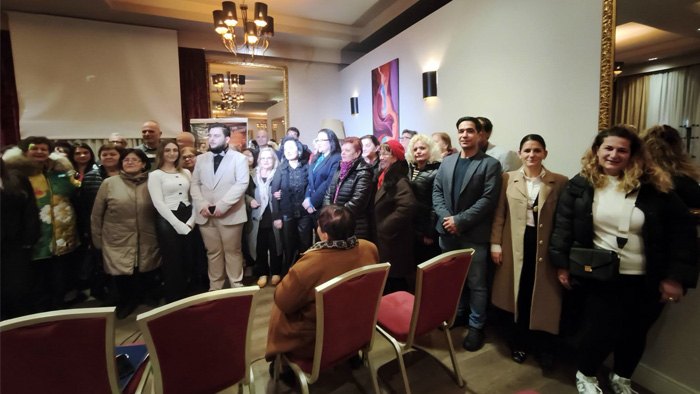
A demonstration was held in Durres, the city where the Mujahedin-e Khalq (MEK) is based, at the initiative of Nejat Society Albania.

The demonstration, which took place right in front of the municipality of Durres lasted for an hour. Albanian mothers who are members of Nejat Society Albania distributed flyers to the public to enlighten them about the MEK’s inhumane actions, including not allowing mothers to visit their loved ones, not even receiving letters, opposing the Red Cross in this regard.
The flyers read: “Dear people of Durres! Unfortunately, the group that has occupied part of your city has ruthlessly deprived all its members of basic human rights. One of these rights is the right to contact their families. We have a large number of letters that need to be delivered to them. Please help us in this noble and blessed work by kindly and vigilantly transferring these paper butterflies between families and their loved ones in the MEK, because family is the most precious thing in the world.”

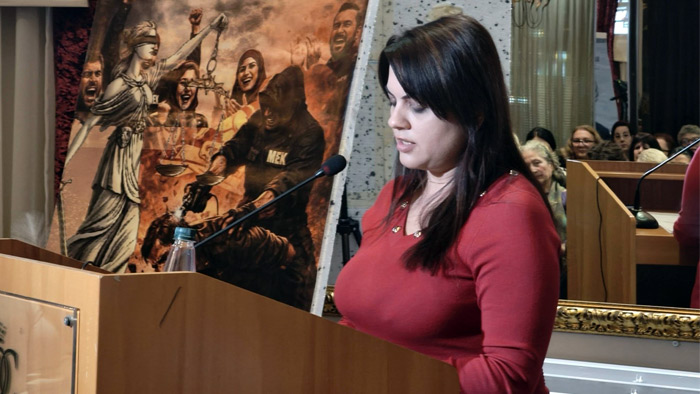
During the rally, Nejat Society Albania also read a statement addressing the Albanian government:
“The honorable Albanian government,
We, former members of the MEK, sympathetically declare that the organization we were once members of is far from human rights, democracy, and humanity. For this reason, its presence in every country has always been accompanied by tension. The group has only been able to cooperate and accompany with a dictatorial host like Saddam Hussein.”

Nejat Society Albania warned the Albanian government and citizens that The MEK’s independent presence in Albania running a dangerous group independently from the Albanian government and isolated from the Albanian society with its own laws is certainly a terrible blow to the freedoms stipulated in Albanian laws.

The demonstrators demanded the government to treat the MEK members like all refugees in all European countries so that their trapped members enjoy the minimum freedoms of a human being today. According to them, the MEK’s independent and controlled base inside Albania is not only meaningless and annoying, but also contrary to the interests of the government and people of Albania.

May 24, 2025 0 comments
FacebookTwitterPinterestWhatsappTelegramSkypeEmail
Ebrahim Khodabandeh, the CEO of Nejat Association
Former members of the MEK

Tehran Times Interview with the CEO of Nejat Society – Part 1

Ebrahim Khodabandeh, a former MEK member and current CEO of the Nejat Society, was interviewed by Tehran Times a few weeks ago.

Sheida Sabzehvari of Tehran Times introduces Nejat Society as “a Tehran-based entity with offices across Iran and Europe that assists families seeking contact with loved ones in the MEK.”

Presenting a summary of his involvement with the MEK, Khodabandeh tell Tehran Times about the group’s tactics to infiltrate the western governments, to buy the support of certain politicians and to raise funds in European cities. He also speaks of the cult-like attitudes of the group leaders who violate the basic rights of their own members.

The CEO of Nejat NGO explains about the activities of the NGO during the past two decades in order to accomplish its mission which is to aid the families of MEK members who are not allowed by the group leaders to contact their loved ones. According to Khodabandeh, cooperating with the international human rights bodies, Nejat NGO has taken a lot of actions to help families but in most cases the bodies have failed to provide adequate assistance in this regard.

The interview has been published in two parts on Tehran Times website. This is part one.

https://dlb.nejatngo.org/Media/Interview/Tehrantimes-khodabandeh-1.mp4
May 21, 2025 0 comments
FacebookTwitterPinterestWhatsappTelegramSkypeEmail
lobby
Mujahedin Khalq Organization's Propaganda System

The MEK Illusion of “International Support”

In recent years, the terrorist organization Mujahedin-e Khalq (MEK), under the leadership of Massoud and Maryam Rajavi, has persistently attempted to create a false image of legitimacy by showcasing superficial links with Western officials. In reality, the Rajavi cult seeks out elderly and retired politicians from Europe and the United States to fabricate an illusion of “international support.”

A prime example of this deception is the recent interview with David Jones, a former MP from Wales, aired on the group’s media outlet, so-called “Simaye Azadi.” Jones, who has long been retired from active politics, does not represent the official stance of the British government in any capacity.

This tactic extends beyond David Jones. Over the years, MEK has exploited the appearances or statements of figures such as:
– John Bolton, former U.S. National Security Advisor
– Rudy Giuliani, Donald Trump’s former personal attorney
– Patrick Kennedy, former U.S. Congressman
– Ingrid Betancourt, retired Colombian politician
– Alejo Vidal-Quadras, former Vice President of the European Parliament
– Giuliano Pisapia, former Italian MEP

And other retired personalities who either accepted financial donations or were drawn in by their anti-Iran stance—willingly or unknowingly serving the propaganda machine of the Cult of Rajavi.

A Reality Far from Their Propaganda

None of these individuals, especially in their current roles, hold any influence in official decision-making bodies. Their participation in MEK events does not reflect the policies of their respective governments and has sometimes drawn criticism from media and the public alike.

Conclusion: Unmasking Deceit through Responsible Awareness

Through relentless propaganda efforts, the Rajavi cult seeks to disguise its dark history with a polished exterior. It is incumbent upon journalists, human rights defenders, independent institutions, and free media to expose these manipulative tactics. The exploitation of retired figures, instead of genuine grassroots or political support, only underscores the group’s deep isolation and lack of credibility among nations.

Fereydoon Ebrahimi

May 19, 2025 0 comments
FacebookTwitterPinterestWhatsappTelegramSkypeEmail
republican US Congressman, Tom McClintock
Mujahedin Khalq; A proxy force

Why so much hate speech against MEK sponsor in the US Congress

Once more the republican US Congressman, Tom McClintock, has declared his support for the Mujahedin-e Khalq (MEK) and eventually has received a new wave of online hate speech. He announced on his X account that he would voice his support for H.Res. 166 in the House of Representatives, a few days ago.

This resolution is in the first stage of the legislative process. It was introduced into Congress by McClintock on February 26, 2025. According to the Congress, the resolution has been cosponsored by 224 representatives (139 Republicans, 85 Democrats), and the chance of being agreed is 21 percent.

The act of McClintock and his peers indicate that the MEK have mastered the art of lobbying in the US government. Through clandestine funding and aggressive lobbying, the MEK has managed to gain the endorsement of Western politicians, this time Congressman McClintock. They. These endorsements, however, are based on a selective narrative that conveniently ignores the MEK’s history of terrorism and authoritarianism.

The MEK and its political arm, the so-called NCRI (National Council of Resistance of Iran), are primarily used as leverage by Western powers to gain strategic concessions, rather than as legitimate contenders for Iran’s future leadership. While the group may serve tactical purposes in short-term objectives—such as intelligence gathering, sabotaging nuclear facilities, or eliminating key figures—their role is largely instrumental.

The most recent role that the MEK played was echoed by Fox News last week when it claimed that new satellite images obtained by Fox News have shown a secret Iranian nuclear weapons facility. The MEK’s figure Alireza Jafarzadeh on Fox News has been responsible to fear-monger about what he calls “the threat of the nuclear weapons program of Iran”. Whenever the US-Iran negotiations get close to a potential agreement, the MEK is the best instrument for US warmongers and Israel to play in their ground.

As a matter of fact, The MEK is a pawn in a larger geopolitical game, one where it is useful for undermining the regime but is not considered a viable alternative for a future Iran even if the H.Res. 166 resolution claims that Maryam Rajavi’s ten-point plan enjoys the support of thousands of western figures.

MEK’s History of Terrorism, Betrayal

When discussing Iran’s future, the MEK stands out—not for its promise of democracy, but for its long history of terrorism, betrayal, and oppressive practices. Despite attempts to rebrand itself as a democratic force, the MEK’s violent history, actions and alliances speak of a much darker story.

An authoritarian group

The MEK’s origins lie in its founding as an Islamo-Marxist organization, ideologically tied to communism. Early on, it sought financial and logistical support from the Soviet KGB, requesting $300 million and asylum for its members in 1970. Such alliances paint a clear picture of a group willing to partner with dictatorships such as Saddam Hussein for survival and influence, rather than championing democratic ideals.

Terror Campaigns against Americans and Western Interests

The MEK’s history is marked by brutal attacks on Americans and Western institutions. In 1972, the group attempted to assassinate Brig. Gen. Harold Price, leaving him permanently disabled. In 1973, they murdered Lt. Col. Louis Lee Hawkins in Tehran. By 1976, the MEK was implicated in the killing of three American employees of Rockwell International—William Cottrell, Donald Smith, and Robert Krongard.
Beyond assassinations, the MEK engaged in bombings throughout the 1970s, targeting multinational corporations like Pan-American Airlines and Shell Oil, as well as SAVAK intelligence facilities. These attacks were not acts of resistance but calculated acts of terror aimed at spreading fear and asserting control.

Crimes against Humanity as Saddam’s private army

The MEK’s betrayal of its homeland reached a peak during the Iran-Iraq War, where it allied with Saddam Hussein. The group not only fought alongside Iraqi forces against Iran but also participated in suppressing Kurdish, Turkmen, and Shia uprisings in Iraq. These actions directly contributed to crimes against humanity, cementing the MEK’s reputation as opportunists willing to side with despots for power.

Rajavi’s Cult of Personality

Internally, the MEK operates as a cult, enforcing rigid authoritarian control over its members. Absolute loyalty is demanded, dissent is crushed, and brainwashing techniques are used to maintain the Rajavis’ dominance. These practices expose the group’s true nature: not a political movement, but a power-hungry organization bent on domination.

Detested by Iranians

Far from being a voice for the Iranian people, the MEK is widely despised across political and social spectrums in Iran. Its betrayal during the Iran-Iraq War, violent history of killing Iranian people, and authoritarian practices have alienated it from the population. The MEK’s lack of grassroots support underscores its illegitimacy as a representative of Iran’s future.

Warning for MEK sponsors

The MEK’s history disqualifies it as a legitimate opposition group or a viable alternative for Iran’s future. From assassinations and bombings to collaboration with Saddam Hussein, the group’s actions reveal a pattern of betrayal and authoritarianism. Any endorsement of this group– even as a tool to obstruct Iran-Us talks– betrays the values of justice and human rights that.

By Mazda Parsi

May 17, 2025 0 comments
FacebookTwitterPinterestWhatsappTelegramSkypeEmail
Newer Posts
Older Posts

Recent Posts

  • Farman Shafabin, MEK member who committed suicide

    December 3, 2025
  • Nejat Newsletter No.131

    December 3, 2025
  • Israeli Hayom: The case for redesignating the MEK, Learning from history

    November 29, 2025
  • Propaganda and Cyber Operations of the Mujahedin-e-Khalq (MEK) Terrorist Group

    November 23, 2025
  • Mujahedin-e Khalq| resistance or violence

    November 18, 2025
  • Facebook
  • Twitter
  • Instagram
  • Youtube

© 2003 - 2025 NEJAT Society . All Rights Reserved. NejatNGO.org


Back To Top
Nejat Society
  • Home
  • Articles
  • Media
    • Cartoons
    • NewsPics
    • Photo Gallery
    • Videos
  • Publications
    • Books
    • Nejat NewsLetter
    • Pars Brief
  • About Us
  • Contact us
  • Editions
    • عربي
    • فارسی
    • Shqip