Nejat Society
  • Home
  • Articles
  • Media
    • Cartoons
    • NewsPics
    • Photo Gallery
    • Videos
  • Publications
    • Books
    • Nejat NewsLetter
    • Pars Brief
  • About Us
  • Contact us
  • Editions
    • عربي
    • فارسی
    • Shqip
Nejat Society
Nejat Society
  • Home
  • Articles
  • Media
    • Cartoons
    • NewsPics
    • Photo Gallery
    • Videos
  • Publications
    • Books
    • Nejat NewsLetter
    • Pars Brief
  • About Us
  • Contact us
  • Editions
    • عربي
    • فارسی
    • Shqip
© 2003 - 2024 NEJAT Society. nejatngo.org
Mujahedin Khalq; A proxy force

Just Say No to the MKO

One of the allegations made by Seymour Hersh in his piece on Iran was that the United States was infiltrating Iran, with the clear implication being that the members of the strange Marxist terrorist (ex-terrorist?) Mujahedin-e Khalq Organization were being used by the United States to gather information on Iran’s nuclear weapons program. Doubtless with the MKO in mind, David Kay made the important point yesterday in the Washington Post:

[D]issidents and exiles have their own agenda — regime change — and that before being accepted as truth any "evidence" they might supply concerning Iran’s nuclear program must be tested and confirmed by other sources.

In any case, it’s not clear how effective the MKO can be, anyway, writes Massoud Khodabandeh of the Jamestown Foundation (echoing a point made by the Brooding Persian):

In any event, the notion of sending MKO members inside Iran as secret operatives tasked with undertaking espionage and sabotage operations was always a non-starter. This proposal entirely overlooks the actual state of the organization itself. The average age of the members is over 48 years, with a significant number over 50 years old. And these are people whose bodies have been ravaged by the conditions of constant military training, sleep deprivation and inadequate nutrition. Most have not set foot in Iran for nearly 24 years and would have difficulty now navigating around their own neighborhoods, let alone an unknown nuclear facility. More than this, the psychological state of the members following years of isolation and psychological coercion would not allow them to act independently or intelligently outside their immediate organizational environment – let alone in hostile territory. In short, the U.S. covert operation would need local Iranians not burnt-out ex-patriots. In addition, the MKO has become so heavily infiltrated, and not just by the Iranians, that it is hard to see how such a plan could be even formulated without Iran becoming forewarned of it.

I’m not sure who’s behind the strange US Alliance for Democratic Iran (Brownback?), but it’s worth noting that they support the use of the MEK, as do Daniel Pipes and Patrick Clawson:

Can the MEK be useful? Yes. Western spy agencies are short on "human intelligence" – meaning spies on the ground in Iran, as distinct from eyes in the sky. Coalition military commanders should seek out the MEK for information on the Iranian’ agents in Iraq. The MEK can also supply key information on developments in Iran – where, despite a tendency toward exaggeration, it has had some major scoops. Its information in mid-2002 about Iran’s nuclear program, for example, was better than what the International Atomic Energy Agency knew, thereby leading a shocked U.S. government to kick off an investigation that confirmed just how far advanced the Iranians are toward building a nuclear bomb. […]

…I’ve also seen it regularly alleged in the press that "officials in the Defense Department and Vice President Dick Cheney’s office" support the use of the MEK but haven’t seen any names attached to that. For the record, Dr. Ledeen is officially opposed.

Now here’s the ironic part of the Jamestown piece:

While Iran lined up with the United States to push for the January 30 elections to go ahead, the MKO struck a defiant tone, effectively adopting the same rhetoric as the neo-Baathists, Salafi Islamists and other insurgent forces that are desperate to derail the election process. But despite its vociferous criticism of the elections, the MKO has no power or mandate to influence the outcome of the electoral process. Implausibly, the organization claims a constituency of support among Iraqi Sunni Arab tribal leaders (especially in Diyala Province) which contrasts strangely with its inability to show any meaningful support inside Iran. The emergence of democratic institutions in post-war Iraq will severely undermine the MKO, as it will lend popular legitimacy to calls for their immediate expulsion. In short, the United States will not be able to ignore the wishes of the new elected government as it ignored the wishes of the unelected IGC back in December 2003.

Hmmm.

… one thing I forgot to mention: what Clawson and Pipes want to do (which may or may not be what we are doing at this point) just gives another pretext for a clampdown on regular Iranians. Why would anyone support that?

Comment:

Submitted by Eric Martin on February 9, 2005

"MEK was added to the U.S. State Department’s list of foreign terrorist groups in 1997 and to the European Union’s terrorist list in 2002 because its attacks have often killed civilians."

http://www.terrorismanswers.org/groups/mujahedeen.html

Also from the same site:

What major attacks has MEK been responsible for?

The group has targeted Iranian government officials and government facilities in Iran and abroad; during the 1970s, it attacked Americans in Iran. While the group says it does not intentionally target civilians, it has often risked civilian casualties. It routinely aims its attacks at government buildings in crowded cities. MEK terrorism has declined since late 2001. Incidents linked to the group include:

-The series of mortar attacks and hit-and-run raids during 2000 and 2001 against Iranian government buildings; one of these killed Iran’s chief of staff

-The 2000 mortar attack on President Mohammad Khatami’s palace in Tehran

-The February 2000 “Operation Great Bahman,” during which MEK launched 12 attacks against Iran

-The 1999 assassination of the deputy chief of Iran’s armed forces general staff, Ali Sayyad Shirazi

-The 1998 assassination of the director of Iran’s prison system, Asadollah Lajevardi

-The 1992 near-simultaneous attacks on Iranian embassies and institutions in 13 countries

-Assistance to Saddam Hussein’s suppression of the 1991 Iraqi Shiite and Kurdish uprisings

-The 1981 bombing of the offices of the Islamic Republic Party and of Premier Mohammad-Javad Bahonar, which killed some 70 high-ranking Iranian officials, including President Mohammad-Ali Rajaei and Bahonar

-Support for the 1979 takeover of the U.S. Embassy in Tehran by Iranian revolutionaries

-The 1970s killings of U.S. military personnel and civilians working on defense projects in Tehran

And this from the State Department’s website:

http://www.state.gov/s/ct/rls/pgtrpt/2002/html/19991.htm

Mujahedin-e Khalq Organization (MEK or MKO) a.k.a. The National Liberation Army of Iran (NLA, the militant wing of the MEK), the People’s Mujahedin of Iran (PMOI), National Council of Resistance (NCR), the National Council of Resistance of Iran (NCRI), Muslim Iranian Student’s Society (front organization used to garner financial support)

Description

The MEK philosophy mixes Marxism and Islam. Formed in the 1960s, the organization was expelled from Iran after the Islamic Revolution in 1979, and its primary support now comes from the Iraqi regime. The MEK’s history is studded with anti-Western attacks as well as terrorist attacks on the interests of the clerical regime in Iran and abroad. The MEK now advocates a secular Iranian regime.

Activities

The worldwide campaign against the Iranian Government stresses propaganda and occasionally uses terrorist violence. During the 1970s, the MEK killed US military personnel and US civilians working on defense projects in Tehran and supported the takeover in 1979 of the US Embassy in Tehran. In 1981, the MEK detonated bombs in the head office of the Islamic Republic Party and the Premier’s office, killing some 70 high-ranking Iranian officials, including chief Justice Ayatollah Mohammad Beheshti, President Mohammad-Ali Rajaei, and Premier Mohammad-Javad Bahonar. Near the end of the 1980-88 war with Iran, Baghdad armed the MEK with military equipment and sent it into action against Iranian forces. In 1991, it assisted the Government of Iraq in suppressing the Shia and Kurdish uprisings in southern Iraq and the Kurdish uprisings in the north. Since then, the MEK has continued to perform internal security services for the Government of Iraq. In April 1992, the MEK conducted near-simultaneous attacks on Iranian Embassies and installations in 13 countries, demonstrating the group’s ability to mount large-scale operations overseas. In recent years, the MEK has targeted key military officers and assassinated the deputy chief of the Armed Forces General Staff in April 1999. In April 2000, the MEK attempted to assassinate the commander of the Nasr Headquarters—the interagency board responsible for coordinating policies on Iraq. The normal pace of anti-Iranian operations increased during the “Operation Great Bahman” in February 2000, when the group launched a dozen attacks against Iran. In 2000 and 2001, the MEK was involved regularly in mortar attacks and hit-and-run raids on Iranian military and law-enforcement units and government buildings near the Iran-Iraq border, although MEK terrorism in Iran declined throughout the remainder of 2001. Since the end of the Iran-Iraq war, the tactics along the border have garnered almost no military gains and have become commonplace. MEK insurgent activities in Tehran constitute the biggest security concern for the Iranian leadership. In February 2000, for example, the MEK launched a mortar attack against the leadership complex in Tehran that houses the offices of the Supreme Leader and the President. Assassinated the Iranian Chief of Staff.

by praktike –  February 9, 2005

November 10, 2005 0 comments
FacebookTwitterPinterestWhatsappTelegramSkypeEmail
UK

US urges UK to maintain dialogue with Iran

The British government is adopting a cautious diplomatic approach towards peacefully resolving disputes with Iran that has the support of US, according Foreign Office Minister Lord Triesman.

"Cutting links with Iran will do nothing to advance those objectives. The United States, which has no contacts with Iran, continues to urge us to maintain our contacts with Iran to try to keep some dialogue going," Triesman said.

"These are difficult circumstances and we must all in the Security Council work together for a peaceful resolution of those issues before the situation spills into a worse one," he said during a brief debate in the House of Lords Tuesday.

The debate on recent comments made by Iranian President Mahmoud Ahmadinejad on Israel was raised by Labour peer, Lord Corbett, a renowned supporter of the Mujahiden-e Khalq terrorist group, who urged the UK government to treat the outlawed group as a "friend." But the Foreign Office minister rejected the call, saying that the MKO was proscribed under the country’s Terrorism Act 2000 and that the government had "no plans to carry out such a review."

"Its claims to be a democratic party, fighting for a better Iran, are hard to square with its history of violence and authoritarian acts," he said.

A similar call made by Conservative MP Brian Binley, a self- confessed paid supporter of the MKO’s front-group, the so-called National Council of Resistance, was also rejected by Foreign Secretary Jack Straw in the House of Commons Tuesday.

Triesman said the MKO has "a long history of involvement in terrorism in Iran and elsewhere and is, by its own admission, responsible for violent attacks that have resulted in many deaths." He admitted that relations with Iran was "difficult" that there was no "quick or easy resolution," but emphasized that "all means" must be deployed to keep lines of communications open.

"When one looks at the range of options before us, it is a matter of building carefully with those who are our friends in Iran, who are part of the future of Iran, and not finding ourselves in an escalating position where the steps that we take generate more conflict, rather than making an attempt to resolve matters by peaceful and diplomatic means," Triesman told his fellow peers.

London, Nov 2

November 8, 2005 0 comments
FacebookTwitterPinterestWhatsappTelegramSkypeEmail
UK

UK opposed to de-proscribing MKO terrorist group

The British government has dismissed a call from a leading supporter of the so-called National Council of Resistance (NCRI) to provide backing to deproscribe the anti-Iran Mujahedin-e-Khalq as a terrorist group.

"We have no such plans. The Mojahedin-e Khalq (MKO) is proscribed in the UK under the Terrorism Act 2000," Foreign Office Minister Kim Howells said in a written parliamentary reply, published Tuesday.

"It has a long history of involvement in terrorism in Iran and elsewhere and is, by its own admission, responsible for violent attacks that have resulted in many deaths," Howells told MPs.

The minister was asked by Conservative MP Brian Binley if the UK government would make representations to both the US and the EU to remove the MKO from its list of debarred organizations.

But Howells said that the MKO is listed in the US as a foreign terrorist organization and it is on the EU’s asset freeze list and that his government "welcomes this."

Last month, Labour MP David Amess revealed that he accompanied Binley on paid trip to the UN General Assembly last month to rally support for the NCRI as a front group for the MKO.

London, Nov 1

November 8, 2005 0 comments
FacebookTwitterPinterestWhatsappTelegramSkypeEmail
UK

Straw rejects call to support Iranian opposition groups

Foreign Secretary Jack Straw Tuesday rejected a call from a supporter of the MKO terrorist group to start talks with Iranian opposition groups to overthrow the country’s government.

"Regime change in Iran is not part of the policy of Her Majesty’s government, nor do I think it would be wise," Straw told MPs.

The foreign secretary was urged in parliament by Conservative MP Brian Binley, who was paid by the so-called National Council of Resistance to travel to the UN General Assembly in New York in September to rally support for the MKO’s front group.

The rejection came after Foreign Office Minister Kim Howells dismissed a call from Binley to back his campaign to deproscribe the MKO as a terrorist group.

"The Mujahideen-e Khalq Organization (MKO) is proscribed in the UK under the Terrorism Act 2000. It has a long history of involvement in terrorism in Iran and elsewhere and is, by its own admission, responsible for violent attacks that have resulted in many deaths," Howells said

London, Nov 1

November 8, 2005 0 comments
FacebookTwitterPinterestWhatsappTelegramSkypeEmail
Former members of the MEK

No report on fate of 250 ex-MKO members

Former MKO officials: No report on fate of 250 ex-MKO members No news is at hand in recent days on the fate of 250 members of the terrorist Mujahideen Khalq Organization (MKO) who have been urging to leave Iraq and return to Iran as a priority, according to former MKO officials who have fled to Europe from Iraq.

The former MKO officials believe that probably the group might have either been trapped in MKO detention camps inside the US army protected garrisons in Iraq or might have been subject to organizational duels and been killed.

The commander of the dissolved Raad group, affiliated to the military wing of the MKO, identified only as Masood Gh. told reporters here on Tuesday that he was seriously concerned about the fate of his former friends in Iraq.

The dissolved Raad Group used to be involved in sabotage operations in Abulkhasib region south of Iraq.

Masood said that alike many other former military structures of the MKO in Iraq, Raad Group lost its identity as he and a large number of other members of the group left Iraq.

The International Red Cross has in an official report said recently that former MKO members had on several occasions voluntarily returned to Iran over recent months — 328 of whom were accompanied with their families — and received amnesty.

Masood said that he had managed to flee Iraq one year ago, finally succeeding in receiving conditional residential permit after a long uncertainty in different countries.

From the standpoint of European Union, with Sweden being one of its members, the MKO is a dreadful terrorist organization. The US however, in a double-standard approach and despite recognizing MKO as a terrorist group, has very close links with it.

Masood further told reporters that there is yet one more possibility, that is the 250 missing MKO members might have been transferred to the US army camps in Iraq for possible use in terrorist operations inside Iran and other parts of the world.

Iranian security institutions have provided proofs and documents which show that perpetrators of recent bombings in southwestern city of Ahvaz in Khuzestan province, which left six martyred, had infiltrated into the city from beyond borders and from inside Iraq.

The press in the Persian Gulf littoral states disclosed on Monday that the US and Britain have sent up camps south of Iraq to offer terrorist training courses.

Stockholm, Nov 1

November 8, 2005 0 comments
FacebookTwitterPinterestWhatsappTelegramSkypeEmail
Mujahedin Khalq Organization as a terrorist group

NCRI’s Role in Suppressing Iraqis

At the dawn of a day in early 1991, MKO members armed to the teeth, led by Fatima Tahoori (Zarrin), surrounded the Iraqi border city of Jelula. The town was still asleep when the commander (who was known in the organization as Barabbas for her brutality) broke the early morning silence with her orders. Rajavi forces, backed by Iraqi artillery which targeted Kurdish area, attacked the villages and towns. In this criminal act, some NCRI members were involved:

1. Manoochehr Hezarkhani

2. Karim Ghasim

3. Fariba Hashtroodi

4. Hussein Naghdi

5. Mehdi Same’

6. Rohani, in charge of Nationalities Commission

They wore military uniforms and fired the first bullets towards Jelula to boos the morale of members and say that this is what Sister Maryam expects from us.

A few hours later these very people talked to selected foreign reporters about defending against the aggression of the Iranian regime! Meanwhile, Maryam Rajavi, accompanied by Afsaneh Shahrokhi and Mahboobeh Jamshidi flew over the runaway Iraqis with a helicopter and ordered the massacre of ordinary people. I can exactly remember that in suburbs of Jelula, a number of people were taking their properties out to the deserts and mountains with tractors when Jalil Dezfouli (then, deputy chief commander and currently member of current Council) ordered MKO members to set on fire their properties, confiscate their vehicles and insult them.

To give legitimacy to the hysteric massacre of people, one of the commanders (Zhila Tolu’, currently member of Leadership Council and NCRI) intentionally deployed 3 of her guards to the ambush of rebel Kurds to be killed by them. Rajavi issued an announcement for the forces: “Your brothers have been attacked sexually and their bodies have been burnt”. This created a wave of hatred toward Kurds in the members so that they demolished villages and buried some people alive.

Then these very democrat members of the Council took part in the operation of cleaning up the region. According to a number of forces (under the command of Farhad Olfat), Mr. Rohani (in charge of Nationalities Commission) saw a wounded man and he immediately shot the “coup de grace”…

TheBlackfile.com

November 8, 2005 0 comments
FacebookTwitterPinterestWhatsappTelegramSkypeEmail
Mujahedin Khalq Organization as a terrorist group

MKO members not denying their role in Basra blast

The terrorist group of Mujahideen Khalq Organization (MKO) has shown no reaction to the reports released on interference of its members in the Monday explosion in the Iraqi city of Basra.

Whenever the meddling of its members in any subversive act is revealed, the MKO terrorist group always denies it by issuing a statement.

According to a security source in Basra, members of MKO were responsible for the Monday explosion in the port city of Basra.

At least 20 people, mostly non-military, were killed in the explosion of a car laden with bomb in Basra port city in southern Iraq late Monday and more than 50 others were wounded.

The security source told IRNA that the terrorist act followed suspicious contacts between MKO members and some of the British military and security forces.

No statement was released by the terrorist MKO group several hours after the report on the blast was released.

An hour prior to the blast, Basra security agents witnessed the suspicious trafficking of several MKO members at the site of explosion.

The type of installation of bombs in the incident is quite similar to other terrorist activities of MKO group. Tehran, Nov 1

November 8, 2005 0 comments
FacebookTwitterPinterestWhatsappTelegramSkypeEmail
Mujahedin Khalq as an Opposition Group

MKO involved in car bombing in Basra

MKO involved in car bombing in Basra, Iraqi security official

Terrorist Mujahideen Khalq Organization (MKO) was involved in car bombing in the southern port city of Basra on Monday, Iraqi security official told IRNA on Tuesday.

The car bombing on Monday killed at least 20 Iraqi civilians and injured more than 50 in Basra. Several of those injured are in critical condition.

The security official said that the number of deaths will probably rise.

"The car bombing took place in Basra following suspicious contacts between MKO elements and British military officers based in the Iraqi city," he said.

Iraqi police arrested two British nationals accused of bombing in the residential areas of Basra so far. British troops attacked the prison to free the British prisoners later on.

The British officers have embarked on hiring MKO elements for sabotage and terrorist attacks in Iraq for their own inhumane ends.

Iraqi Prime Minister Ibrahim Jaafari said earlier that the MKO will be expelled from the country for the crimes they perpetrated against Iraqi people under Saddam Hussein.

In the final years of Saddam Hussein’s rule in Iraq, MKO served as accomplice to Iraqi dictator in crushing Iraqi people’s uprising in northern Iraq against Saddam.

MKO is currently working in collaboration with US and UK troops occupying Iraq since April 2003.

The security official said that evidences of MKO involvement in Basra car bombing are being collected.

He said that the style of the terrorist attacks bear striking similarity with the MKO’s previous operations in Iraq. Tehran, Nov 1

November 8, 2005 0 comments
FacebookTwitterPinterestWhatsappTelegramSkypeEmail
Missions of Nejat Society

Families organize petition

The petition of family members of Nejat Society in Azerbaijan province to the international communities

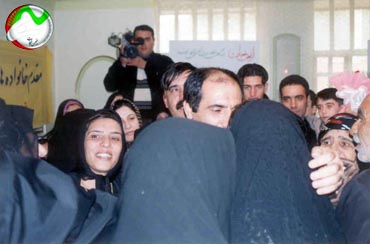
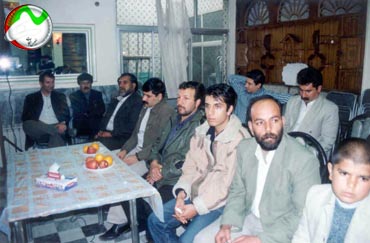
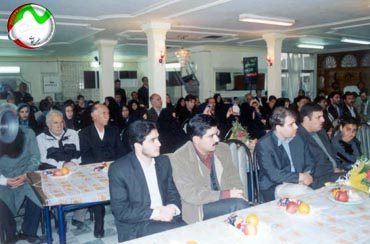
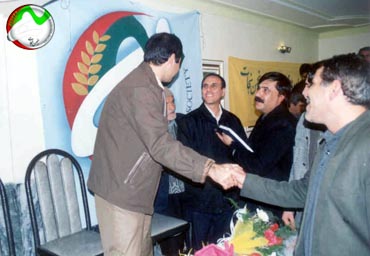
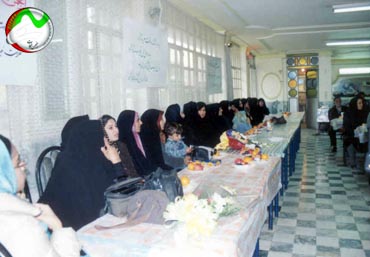
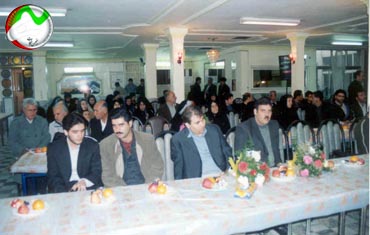
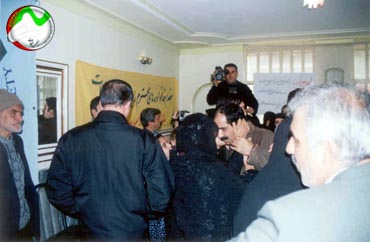
In a meeting held [with the assistance of Nejat Society] in Eastern Azerbaijan province on September 28, two defectors of MKO joined their families. In the event, a number of MKO members’ families signed a petition addressing Red Cross office in Tehran, Iraq and Switzerland embassies in Tehran and asked for direct meeting with their loved ones held in MKO’s camp Ashraf in Iraq.

The content of the petition is as follows:

“In the name of God

From:

Nejat Society in the Eastern Azerbaijan Province

To:

Red Cross office in Tehran

[US interests section at the] Swiss embassy in Tehran

Iraq embassy in Tehran

We, signatories of this petition, as the families of a number of people held by the organization of Mojahedin-e khalq in Camp Ashraf in Iraq ask the respected officials to manage our direct meeting with our loved ones in Iraq to become certain of their mental and physical status and get them back to the family.

Families signing the petition:

1. Nasser Fakhri

2. Mir Mohsen Mortazavi

3. Ali Joodat

4. Dariush and Mahboobeh Dabbagh Tabrizi

5. Salman Dolat Panah

6. Ali Akbar Azimi

7. Hassanali Pour Mohammed Rouhi

8. Mehdi Sojoodi

9. Abolfazl Sheikh Beglou

10. Abdullah Nikbakht Tabrizi

11. Kheirallah Mohammed Alian

12. Nasser Javanshir

13. Hassan Rahnamai Ana Khatoon

14. Majid Ashk Khooni

15. Ramin and Majid Hassan Pour

16. Jalal Fakhimzadeh

17. Bakhshali Alizadeh

18. Habibeh Onsorian

19. Mohammed Reza Sedigh Aghbolagh

20. Mohammed Ali Baghbanbashi

21. Ali Asghar Karami

22. Suleiman Kheiri

23. Javad Abdi Nemat Abad

24. Karim Nalbandian (Ashrafi Vala)

25. Ali Hamed Ranji

26. Zekr Ali Zibayee

27. Kheirallah Mohammedian

28. Mir Sadegh Hejazi

November 8, 2005 0 comments
FacebookTwitterPinterestWhatsappTelegramSkypeEmail
Mujahedin Khalq; A proxy force

Friends in high places

Western governments classify the People’s Mojahedin as a terrorist group, but it can still boast allies in the US and UK. Dan De Luce charts its history

Western governments describe the People’s Mojahedin as a terrorist organisation, yet the group has allies in the House of Commons and the US Congress.

When one of its leaders was arrested by French police last month, her followers went on hunger strike. Several set themselves alight in front of television cameras, with two later dying.

French security officials claim that the People’s Mojahedin was planning to stage terrorist attacks throughout Europe, but the group says that it advocates secular democracy and women’s rights in Iran.

So who are the People’s Mojahedin, and where did the group come from?

Its origins lie in the 60s, when opponents of the Shah’s regime in Iran looked to socialist ideals and new readings of Islamic texts for inspiration in their campaign against the US-backed monarchy.

Outraged by the Shah’s brutal suppression of dissent, the People’s Mojahedin, or Mojahedin Khalq Organisation (MKO), chose to take up arms.

Bombings and assassinations, including several attacks that claimed the lives of US military officers and contractors, took a serious toll and provoked further repression by the regime.

The MKO’s blend of Marxism and Islam influenced other opposition figures, and made its mark on the clerics who came to rule Iran after the fall of the Shah. However, divisions among the MKO’s ranks became apparent, with some electing to part from an increasingly radical leadership.

As the only armed and organised opposition group during the final years of the Shah’s rule, many historians say that the People’s Mojahedin played an important role in his eventual overthrow in 1979.

During the chaotic days after the Shah had fled amid mass protests, the MKO seized the state television headquarters and other government buildings.

As Ayatollah Ruhollah Khomeini and his allies asserted control in what later became known as the "Islamic revolution", the MKO attracted a large following among students, who admired its record of fierce opposition to the Shah’s regime.

Yet the group soon found itself marginalised as Islamic conservatives sought to defeat left-wingers. When the ayatollah demanded that the group disarm, it refused. Violent conflict eventually erupted between the Islamic clerical leadership and the MKO, which had done so much to weaken the Shah.

MKO members resumed the terror tactics practised during the Shah’s era, assassinating senior figures and then speeding away on high-powered motorbikes.

Its underground war against the government reached a peak in June 1981, when a series of bombs exploded in Tehran’s city centre during a major political meeting. The bombing killed 72 people, including chief justice Mohammad Beheshti, a senior figure close to the ayatollah, government ministers, numerous MPs and civil servants.

A month later, the president, Mohammad-Ali Rajei, and the prime minister, Javad Bahonar were killed in a bombing attack.

The government waged a determined campaign against the People’s Mojahedin, using Militant Revolutionary guards and arresting and executing numerous MKO suspects.

In recent years, some journalists have questioned whether all those arrested were proven MKO agents, or whether they were merely rounded up in a sweeping move against all opposition.

Lethal attacks on the clerical leadership failed to bolster the MKO’s position, and civilian casualties cost it support among ordinary Iranians.

"I remember my parents told us we couldn’t go outside because they were afraid of more bombings by the MKO," Mustafa, a computer engineer, recalled.

With western governments backing Iraq in its war against Iran, the MKO decided to link its future with the Iraqi president, Saddam Hussein. The group acted as infiltrators and a source of military intelligence for Baghdad, and Saddam later used the MKO to help crush Kurdish and Shia opponents.

By siding with a regime bombing Iranian cities and killing hundreds of thousands of young Iranians, the MKO became despised in Iran and lost what support it still retained.

"The one thing in which there is common agreement among all political parties here, reformist or conservative, is that the MKO is a black organisation," Amir Mohebian, a conservative academic, said in an interview.

The 1980-88 Iran-Iraq war ended in stalemate, forcing the MKO into permanent exile and subservience to Saddam’s repressive rule. A group that had been born in opposition to one dictatorship became dependent on another.

The recent collapse of Saddam’s government has rendered the MKO homeless. The US bombed MKO bases during its attack on the Iraqi regime, but was slow to negotiate the group’s surrender. Diplomats say that the US coveted intelligence about Iran held by the MKO.

More and more, analysts believe, the MKO may have become a pawn in a bigger contest between Washington and Iran. The George Bush administration sees the MKO as a possible lever in its campaign to restrict Iran’s nuclear programme and force the extradition of al-Qaida suspects in the country.

Although it has staged occasional hit and run raids along the Iran-Iraq border, including mortar attacks, it is the MKO’s skilful public relations effort that has kept it alive outside Iran.

Through its political wing, the National Council for Resistance, articulate spokesmen, fluent in foreign languages, explain the group’s goals in clear terms, delivering user-friendly material to the media. Outsiders already hostile towards Iran’s theocracy respond well to the group’s message.

The MKO’s ability to gain allies in parliaments, and publicity, infuriates Iran, which accuses Washington and other governments of adopting a hypocritical stance in their declared war on terrorism.

The MKO also has managed to raise serious sums of money from exiles and supporters. French police seized some $8m (£4.5m) during a recent raid on the MKO headquarters.

Former members have told horror stories about life inside the organisation, which, they say, resembles a cult. They have accused their former masters of punishing disobedience with torture, or even murder, and allege that the leadership separated some children from their parents.

Ervand Abrahamian, a history professor at Baruch College, in the US, has written a comprehensive history of the MKO. He says that the group has been sustained less by ideology than by a cult of personality surrounding its leader, Massoud Rajavi, and his wife, Maryam.

"If Massoud Rajavi got up tomorrow and said that the world was flat, his members would accept it," he told the New York Times.

Spokesmen for the MKO deny allegations of brainwashing, insisting that the organisation is the target of propaganda by the Iranian government, which it has labelled a "clerical dictatorship".

Whether the People’s Mojahedin is a fanatical cult set on violence or the democratic organisation described by its leaders, its days of influence in Iran faded long ago.

Deprived of a base for its armed resistance, unpopular in its homeland and targeted for investigation by French authorities, it appears to be in terminal decline.

Dan De Luce 

November 8, 2005 0 comments
FacebookTwitterPinterestWhatsappTelegramSkypeEmail
Newer Posts
Older Posts

Recent Posts

  • A Criterion for Proving the Violent Nature of the MEK

    December 31, 2025
  • Rebranding, too Difficult for the MEK

    December 27, 2025
  • The black box of the torture camps of the MEK

    December 24, 2025
  • Pregnancy was taboo in the MEK

    December 22, 2025
  • MEPs who lack awareness about the MEK’s nature

    December 20, 2025
  • Facebook
  • Twitter
  • Instagram
  • Youtube

© 2003 - 2025 NEJAT Society . All Rights Reserved. NejatNGO.org


Back To Top
Nejat Society
  • Home
  • Articles
  • Media
    • Cartoons
    • NewsPics
    • Photo Gallery
    • Videos
  • Publications
    • Books
    • Nejat NewsLetter
    • Pars Brief
  • About Us
  • Contact us
  • Editions
    • عربي
    • فارسی
    • Shqip