Nejat Society
  • Home
  • Articles
  • Media
    • Cartoons
    • NewsPics
    • Photo Gallery
    • Videos
  • Publications
    • Books
    • Nejat NewsLetter
    • Pars Brief
  • About Us
  • Contact us
  • Editions
    • عربي
    • فارسی
    • Shqip
Nejat Society
Nejat Society
  • Home
  • Articles
  • Media
    • Cartoons
    • NewsPics
    • Photo Gallery
    • Videos
  • Publications
    • Books
    • Nejat NewsLetter
    • Pars Brief
  • About Us
  • Contact us
  • Editions
    • عربي
    • فارسی
    • Shqip
© 2003 - 2024 NEJAT Society. nejatngo.org
Former members of the MEK

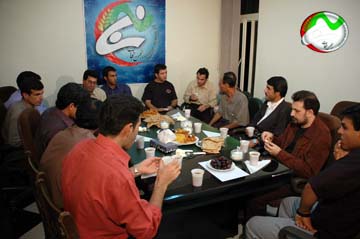
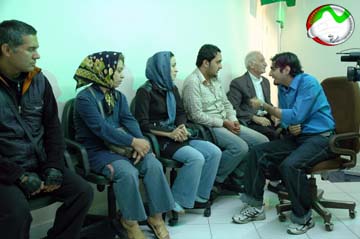
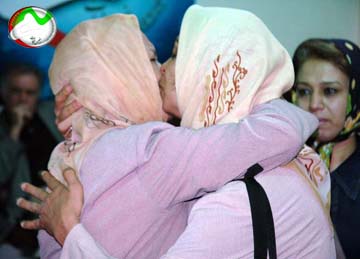
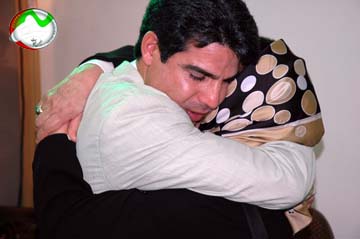
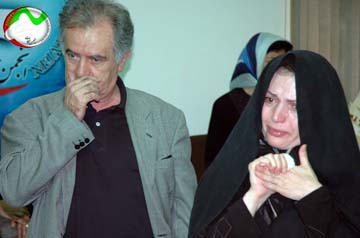
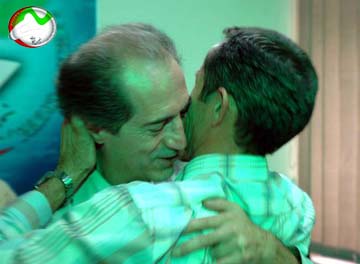
14 MKO Defectors Return Home

After the return of a number of former MKO members from Iraq to Iran during past few months, another group of 14 former MKO veterans- who had been under the supervision and protection of US forces- have returned to their countries with the cooperation of International Red Cross.

When anti-Iranian propagandas of terrorist MKO and other opposition groups faded and these people found the truth, they returned by their own will.

At the time being, Islamic Republic has issued pardon for them and the best and safest way for saving them is Iran.

It’s notable that 250 former members have returned to Iran since February.

July 12, 2005 0 comments
FacebookTwitterPinterestWhatsappTelegramSkypeEmail
Maryam Rajavi

Maryam Rajavi prosecuted over human rights violations

Former Members Prosecute Rajavi
Former members of Mojahedin-e Khalq organization take action against the leaders of this organization in France.
According to Le Parisien, Massoud Khodabandeh, Karim Haqqi Moni, Massoud Tayebi and Jamshid Tahmasebi-four former members of MKO-have accused MKO leaders of violating human rights and freedoms as well as torturing and endangering the lives of other people.
About their complaint in French Judiciary, Le Parisien wrote: “Maryam Rajavi and her husband allow themselves to interfere in the private lives of the members and break their marital relations.”
This paper notes that these four men were former members of MKO, adding: “The leaders of this organization have issued execution order for Tayebi and Haqqi to prevent them from leaving the organization but they have been able to escape to Europe and get political asylum from Netherlands government.”
According to Le Parisien, Khodabandeh was Rajavi’s bodyguard. When he decided to leave MKO, they injected narcotics into his body and Tahmasebi was under heavy mental tortures.
Le Parisien quotes French security service: “this organization never allowed its members to open an account. It has been listed as a terrorist organization by the US and EU.”

July 11, 2005 0 comments
FacebookTwitterPinterestWhatsappTelegramSkypeEmail
Former members of the MEK

Memories of Ali Moradi

 Ali Moradi had been a sergeant in the Iranian army at the outbreak of the Iran-Iraq war. He was captured early on and spent nine years as a POW in Ramadi camp. He was among a group of Iranian POWs recruited into the Mojahedin shortly after the ceasefire by promises of marriage and  paid work. This is an extract from a longer interview conducted after his return to Iran. After Maryam returned to Iraq in 1997 the Rajavis imposed more radical changes to combat what Maryam called our bourgeois mind-set. Under the new rules, a gender apartheid was introduced so that men and women were physically separated. Now there were only all male units and all female units both of which had 3 or 4 women commanders. All were completely separate. A man and woman were no longer allowed to be alone in the same room. We were not allowed to speak to women unless authorized for work purposes. In the autumn of 2002 when the US stepped up its threats against Iraq, Massoud and Maryam held a meeting for all the combatants. They analyzed that in 2005 the Khatami government would be toppled by a popular uprising and we must ready ourselves for a final operation.

Just about everybody had questions at that point. What would we do if the Americans attack us? The answer came, ‘We will attack Iran’ with everything we have’, said Massoud.

Now I have to say that most members don’t actually expect to die, but Massoud Rajavi boasted that we would go like Ashura (marking the martyrdom of Imam Hossein with his followers). This was the Black Phase and it was clearly a suicide mission for the whole organization.

The next news we had from the leadership was that Mohammad Mohaddessin had written to the UK Foreign Office and the US Department of State and had announced our neutrality.

In another meeting, Rajavi read a message to us which said that the US and UK had agreed not to attack our camps. Within a month two of our camps had been attacked by the coalition forces and around fifty combatants had been killed. According to Rajavi’s orders the NLA should now launch its final all-out attack on Iran. But they did not move. Most people, I can say 95% of people felt devastated then. Everyone had the same thoughts in their minds. ‘I gave my life to this struggle, what has happened to my aims now?’

Worse was to come when Hossein Abrishamchi, (brother of Mehdi Abrishamchi who is subject to the French judicial investigation into the MEK’s terrorist activities in France) and Mojgan Parsii (nominal head of the MEK in Iraq) negotiated first a ceasefire then total disarmament with General Ordinero of the US army. Within a week the MEK’s armour and weapons was collected and the US surrounded Camp Ashraf to where all the MEK’s combatants were rounded up and sent. (A cache of weapons had been hidden by the MEK, but US air forces soon discovered it.) Again, the combatants felt devastated. Everyone began questioning what had happened to the organization, what was the future, what about the aims I had given my life to, what about the overthrow of the regime. Remember too that at this point we still had no idea that around 250 leading members had escaped Iraq and fled to Europe, including Maryam Rajavi.

In the chaos which followed the US and coalition invasion of Iraq, the combatants enjoyed a little freedom, and we began to talk and discuss the event and the possible outcome for the organization. After the American forces rounded everyone up into Camp Ashraf they began to interview everyone. The first interview was to establish the name, origin and other basic information so that an ID card could be issued. The second interviews were held to collect DNA information from each resident of the camp. The third interviews were held by representatives of the US Department of State. They were asking everyone for information. One thing that we were asked in every interview was ‘where is Massoud Rajavi’, it was a question for all of us as much as for the Americans. In the third interview we were asked where we would like to go once we left Iraq. The MEK had told everyone to answer that they want to stay in Iraq, but most people disregarded this and insisted they wanted to go to another country. The MEK had told everyone that if you go to Iran they will torture you and hang you and that you can’t go to Europe because they won’t accept you. In spite of this, during the first interviews around 115 asked directly for help from the US forces to get out of the camp. These were taken to the North of the camp where the US army had it barracks.

To date, over 600 MEK resident of Camp Ashraf have taken refuge with the US forces in the North camp. From these, over 250 have been repatriated to Iran and the others remain. The only reason it had been possible for these people to escape to the North camp was because MEK commanders do not have guns and cannot stop them.

People want to leave, but they are afraid of the unknown. They don’t have any real information. No one has told them where they can go, that they have alternatives. The Mojahedin told us that it would not allow the Red Cross to visit our camp.

Hossein Madani told me personally that ‘we have tried everything we can, including lobbying them intensively in Switzerland, so they will not come to our camp’. It was a deliberate policy to prevent people from asking to leave. But I had a PoW card from the Red Cross, so I was able to go to the North camp and ask for refuge with the Americans. I had nothing left to keep me there. I had no family, I had lost my aims, and worst of all was the deception of the MKO which I could now clearly see.

I would say that right now around sixty to eighty percent of the people in the camp are dissatisfied and would leave if they could. The conditions inside Camp Ashraf are really severe. The control over the members has become even more rigid after the protected persons status was given.

You are not allowed to talk to one another. If two people get together and start talking, suddenly someone will pop up and start interrogating them and accusing them, ‘what are you talking about, you are undermining the leader …’ There is no news from the outside world. We have no real information and now I know that all the news they gave us about Iran is wrong. I mean ALL of it. In the camp if anyone expresses any questions about anything they are taken into a group of about twenty people who talk to that one person to convince them. They have confiscated everyone’s documents too to make it hard to get out. The US army haven’t been very helpful either. In the north camp they told us they had to make sure people wouldn’t be a terrorist threat if they go to Europe, but how do you want to prove that. But people still escape, and the MKO commanders have no guns so they can’t stop them. I know several of the top people have run away; Said Jamali, Khalil Ramazanpour and Alireza Ahad are all in the North camp. Davoud Baghervand came back with my group and is now in Iran.

I think that everyone in the MKO has questions about their future, even the leaders. Many want to leave but they have nowhere to go. Around 80% of those who had the courage to leave did so after they had been visited by their families. That’s why the MKO is so afraid to let the families in the camp.

When it comes to the point that they can’t deny a family visit, they take you aside and

have an intensive meeting to prepare you. I met with Fereshte Yegahni for one and a half hours before a visit from my brother. She told me, ‘your brother will tell you lies. The Iranian government has sent him. Be very careful as this is a political activity by the regime. Don’t see him as your brother, you must believe that you are talking to the regime. Don’t cry, and don’t let him persuade you to leave.’ This was unacceptable to me. I saw my brother and shortly after that

meeting I went to the North camp, determined to get home. I wrote to Colonel Georgis and the Red Cross and told them I want to leave and go back to Iran. Conditions in the North camp are very difficult, they gave us non-halal meat, pig meat, and there is no air conditioning. In every twenty four hours we have to line up five times on parade. We weren’t able to have contact with our families because the Americans told us that letters would be censored by the country receiving them, which in our case was Iran, so people were afraid to write, though we did get letters. When I finally got to go home I remember looking down from the airplane window as we took off, at the flat ground of Iraq. When we flew over the border and I saw the mountains of Iran with the snow on them, I was so happy I just wanted to jump

straight out of the plane and land in the snow of my homeland. At the airport in Tehran I expected hostility, but people came forward to greet us and welcomed us warmly. For two days I was really fearful. I thought this had just been for propaganda. But as the kindness continued for five and six days, only then did I believe it. I am now home with my  family. I have had no problems since I came back to Iran. They have tried to help us here as much as possible. But in the end I have wasted years of my life with that organization. I have no wife, no children, I have no job and no wealth.

I have nothing. And now I know I lost all my life for the selfish ambition of one man. When I was in Camp Ashraf everyone in the camp was asking the same question ‘Where is Massoud Rajavi?’ The last time I saw him was the day before the US invasion of Iraq. He has not been seen or heard from since that time. That’s over two years. For his followers at all levels of the MEK hierarchy, this has become the major issue. When anyone asks, Rajavi’s commanders say it’s for security reasons. But no one accepts that. A leader should be at the front of his forces, not run away at the first sign of danger. Rajavi always boasted ‘I am the leader and I am the first in line for sacrifice’. But the combatants are now comparing him with Sattar Khan, Mirza Kuchik Khan, Mousa Khiabani and other rebel leaders who died fighting alongside their forces. Rajavi’s commanders say his disappearance is for security reasons, but no one has


any doubt that Rajavi has just run away to save his own skin. People in the camp feel totally betrayed. This has been the worst betrayal, no one can trust anything anymore. Morale is so low in the camp that that even if Rajavi should reappear before them tomorrow, the vast majority of forces in Ashraf Camp will refuse to follow him. Everyone now has questions only about their own future.

Our forces returned to the garrison and were disarmed. The US forces freed the people of Iraq and for a while we kind of felt saved too. The atmosphere in the camp opened up a little and we had some freedom. At this time a lot of people abandoned the garrison and went to the US camp and didn’t return.

Soon after the disarmament the organization closed the atmosphere again.

Even though they didn’t have guns, the commanders kept the organization intact using Rajavi’s methods of fear and intimidation. We all saw how we had lost everything, our whole struggle had come to nothing and morale was very low.

The most important thing that happened during these two years has been the visits of families. The organization was severely opposed to contact with our families. Even a phone call was not allowed. I tricked them and said I would ring my family and ask for money – the organization is always desperate to get money. I called my brother and he  convinced me to come home. The organization described the family visits as an emotional war. They said our families had been sent by the regime to destroy us. They told us the Iranian Intelligence Ministry had motivated our families to come to Iraq. For this reason, many people were afraid to speak to their own families.

One of the things that gave us courage to leave and go to the American camp was that we had been given recognition

as people. I’m not talking about the protected persons status, I mean that the Americans interviewed us and wrote down our names and gave us an identity. Now we could not just disappear. In the beginning the Americans were not good with us, but after the protected persons status their relations with us improved. When we went for interviews the MKO told us, ‘don’t tell the US that you want to leave, defend the MKO in front of the Americans.’ But in our hearts we all wanted to leave. A month after the protected persons status was granted, the MKO set about destroying all its documents. Particularly those relating to the relations with the Iraqis and with the US. We destroyed all our military schedules and destroyed the books and songs which were against the USA.


More than anything else, Massoud Rajavi’s disappearance destroyed morale in the organization. We were all thinking that if he’s the leader why has he left. We felt betrayed. We watched the video of Ebrahim Zakeri’s [Rajavi’s former head of MKO intelligence] funeral in Paris. We showed no reaction, but in our hearts we were all stunned to see the organization’s top people all there in Paris. They had all run away.

Rumours started that Massoud must also be hiding in Europe. No one knew what to think, but no one dared discuss it. Only, everyone knows in all our hearts that the organization is finished. When the families started coming to visit, the MKO told us they are the representatives of imperialism and we must destroy them. The families became our new enemy rather than the Islamic Republic. They told us stories about the US camp. They said the Americans had killed two of our people and thrown the bodies away. They said they would make us immoral if we went there. People stay because of this. And because they don’t have any place to go. The Americans said we had four options, to stay in Iraq, to go to Iran, to apply for asylum in another country or to leave through international organizations.

We were always asking, ‘where are the international organizations, where is the Red Cross?’ But the MKO wouldn’t let them come into the camp. They told us we have to stay there. They tried to make the members forget about the other three options.

Even so, the men have the courage to escape now the leaders don’t have guns. They can apply to leave and go to the north camp. But the situation for women is desperate beyond description. In the time I was there I only saw three women who had dared to come to the north camp. That’s out of over six hundred people. What they told us was really shocking. Even these women who escaped did so believing that they would be raped by the Americans when they got to the north camp. That’s how bad things are. The younger women are controlled by the older women and they are under observation all the time. There is strict gender separation in Camp Ashraf. Men and women are not allowed to speak to one another. They have separate vehicles. Let me tell you how absurd and at the same time shocking this is.

When they want to put petrol in their vehicles the men and women have separate times. The men go between 8 and 9 am. Then there is a gap of twenty minutes before the women can visit the petrol pumps from 9.20 to 10.20 am. The  reason for the gap is so there is absolutely no possibility that men and women meet one another at the station. That is how the situation is.

The Mojahedin really has two faces. In spite of all their external propaganda, the situation of women in the organization is really worse than anything you can imagine. I saw Maryam Rajavi in the last Women’s Day celebration. She released a symbolic white dove. In my mind when I imagine her, I see this dove in one hand and her other hand is like a claw grasping my neck and viciously strangling me. In the end, Rajavi crossed the boundary and tortured his own people. He killed and tortured his own people and he exploited women. I can never forgive him for this.

 Survivors’ Report  May 2005

July 11, 2005 0 comments
FacebookTwitterPinterestWhatsappTelegramSkypeEmail
Mujahedin Khalq 's Function

Faded hopes for Iranian exiles

Engulfed by various crises, and reeling from a Human Rights Watch report that branded it a serious abuser of human rights, the Mujahideen-e-Khalq (MEK) still insists on touting itself as a credible alternative to the ruling political system in Iran. Its relentless propaganda notwithstanding, there is now every sign that the MEK will disintegrate some time in the next five years.

For the past two decades the MEK had based its strategy on a carefully constructed three-tier approach encompassing a political coalition (in the form of the National Council of Resistance), a disciplined political organization at the heart of this coalition (ie, the MEK) and an armed force in Iraq (the so-called National Liberation Army). But rather than reflecting actual capabilities, this three-tier strategy was essentially propaganda and designed to consolidate the MEK’s position as the leading enemy of the Islamic Republic of Iran. This illusion worked well just as long as Saddam Hussein remained in power in Iraq. It is for good reason then that MEK observers identified the March 2003 US invasion as the biggest strategic setback in the organization’s 40-year history.

The contention here is straightforward: deprived of its armed wing and its ideological leader, unable to organize effectively in the West due to its terrorist designation and with events in Iran developing on a trajectory that is least favorable to MEK designs (the big turnout in last Friday’s presidential election is one example of this), the MEK is faced with several fundamental crises that it cannot overcome. The only realistic scenario (and indeed solution as far as some of the more progressive forces in the MEK are concerned) is the dissolution of the organization as presently conceived.

The ‘third’ way

Since the ouster of Saddam, the MEK has discovered "peaceful" politics. Previously insistent that the only roadmap to regime change in Iran was through an invasion of the country by its 3,000-strong force based in Camp Ashraf, in Iraq’s Diyala province, the MEK had to revise this overly ambitious strategy after its forces capitulated to the American military and surrendered their arms.

The MEK’s "third" way is refreshingly simple to the point of bewilderment. The only effective way of forcing change in Iran, according to the organization’s spokesmen, is neither through war and an American invasion, nor compromising with the Islamic republic, but in empowering the Iranian opposition (ie, the MEK).

There are several fundamental problems with this reductive argument, not least because an American "war" against Iran is unlikely, and what the MEK terms "compromise" with the ruling regime is mired in ambiguity. Aside from this basic observation, the whole notion that the MEK can affect anything in Iran (let alone overthrow the Islamic republic) is no longer taken seriously by anyone. MEK spokesmen claim that if the organization was removed from US State Department and European Union terrorism lists, it would be in a position to effectively challenge the ruling regime. The problem with this argument is that before 1997 the MEK was not only not on any terrorist lists, but it also enjoyed the whole-hearted support of Saddam and could use Iraqi territory as it wished, and even in those highly favorable circumstances it could not advance its agenda even by a millimeter.

To advance this latest "third" way approach, the MEK has made some minor and cosmetic changes to its organization and tactics. Most importantly, the organization has resorted to establishing pressure groups and consultancies in North America. These organizations are run by veteran MEK members, and their primary function is to establish and manage relations with neo-conservative organizations and interests in the US.

The heads of these effectively fake organizations also contribute opinion pieces to sympathetic US dailies and publications, promoting the "third" way and the so-called Iranian resistance. Arguably the most well-known consultancy is Near East Policy Research Inc, which, according to a website that investigates MEK lobbying in the US [1], was established in May 2003 by Ali Safavi, a well-known and veteran MEK member. Another well-known MEK member, Ali Reza Jaafarzadeh (who was previously the MEK’s official representative in the US) is currently working for the Fox News network as a Middle East analyst.

This latest MEK initiative has all the trappings of the MEK’s previous ambitious and failed programs and is unlikely to amount to anything in the long term. Its biggest success so far has been to mobilize neo-conservative support for the "third" way. At the forefront of this support is the Iran Policy Committee (IPC), an organization made up mostly of retired military officers with impeccable neo-conservative credentials. The IPC published a white paper, outlining US policy options for Iran, in February. Although mostly a clumsy report written by non-experts, this white paper was remarkable for its whole-hearted support of the MEK.

The best way to understand the MEK’s "third" way is to place it in a continuum of failed strategies in the past. The MEK’s "first" way of gaining power in post-revolutionary Iran was to start a serious terrorist campaign in June 1981. The leaders of the organization had grossly overestimated their strength and conversely underestimated the determination of the Islamic republic to put down armed challenges. The result was the complete elimination of the MEK network inside Iran, to the extent that by late 1983 the MEK had no serious presence in the country. The failure of this "first" way led to desperate measures, which culminated in an alliance with Saddam, the invader of Iran.

The MEK’s entry into Iraq led to the creation of a conventional, albeit very small, armed force along the Iran-Iraq border. The "second" way envisioned capturing power through an invasion of Iran backed by Iraqi air cover. This crazy strategy was taken to its mindless extreme in July 1988, when the MEK army launched operation "eternal light" and invaded Iran from the central border regions. Not surprisingly, the small MEK force was destroyed by Iranian forces after the Iraqis backed off from providing prolonged air cover. The MEK admitted losing more than 1,200 fighters in the operation, but the true figure was nearer to 2,000.

The end of the Iran-Iraq war in 1988 might have heralded the end of the "second" way had it not been for Saddam’s wish to keep the MEK both as a strategic trump card against Iran and an internal security tool within Iraq. This ensured that the strategy of toppling the Islamic republic through an armed invasion was not abandoned, until the US invasion of Iraq in March 2003 put an end to the MEK’s tried, tested and failed plans. This paved the way for the concoction of a "third" – and most probably final – MEK strategy of overthrowing the post-revolutionary order in Iran.

An organization in crisis

The MEK knows better than anyone else that the "third" way is a non-starter. Firstly, the organization has no presence inside Iran and little credibility with Iranians outside the country. At best, the organization is simply dismissed as decrepit and irrelevant, while a majority of Iranians regard its members as eccentric traitors who fought alongside their enemies in the Iran-Iraq war. The MEK also knows better than anyone else that it cannot gain recognition from the US government. It is not just because the MEK is the only Iranian organization that has murdered Americans and publicly boasted about it, but also because the US government is well aware of the checkered history, authoritarianism, limitations and hopeless future of this quixotic organization.

The MEK’s "third" way is simply a tactic to buy time and prepare the organization psychologically for the inevitable expulsion of its remaining members from Iraq. In the final scheme of things, the "third" way is designed to prevent the organization from disintegrating, but it is unlikely to work.

Essentially, four factors drive the dynamics of organizational disintegration. First and foremost the loss of its armed wing and the effective end of the "armed struggle" is profoundly unsettling for the MEK. The entire organizational ethos and world view of the MEK revolves around "armed struggle" and the romanticism and cult of martyrdom that surrounds it. All its slogans, insignia, flags and imagery are woven around this theme. Indeed, one of the main reasons that the MEK came into conflict with the Islamic republic was the organization’s insistence that it maintain its own armed militia in the country. Moreover, the whole-hearted and obsessive attachment to political violence was a factor in the US State Department’s decision to add and maintain the MEK on its terrorist list.

Secondly, the disappearance of Massoud Rajavi, the ideological and spiritual leader of the MEK, deprives the organization of effective long-term leadership. Rajavi went into hiding the very day that Saddam abandoned Baghdad to American invaders, and not a word has been heard from him since. Whether or not he physically survives in the decisive months and years ahead is beside the point, for the fact is that he is now politically dead and cannot be revived.

As critics of the organization have been quick to point out, any leader who decides to go into hiding at a time when his organization is experiencing its most stressful period since its inception cannot expect to be rehabilitated. Rajavi has gone into hiding for good reasons, since the disasters that have engulfed the MEK in recent years have largely been a result of his decisions and style of leadership. But Rajavi’s incompetent leadership notwithstanding, his loss is a big blow to the organization. Above all else it completely undermines its elaborate and complex ideology. To put it simply, the MEK believes that it is at the forefront of human evolution, and that its ideological leader, Rajavi, stands at the very peak of historical evolution. The fatal damage that the loss of this so-called ideological leader inflicts on the MEK’s eccentric world view is self-evident.

Thirdly, the MEK cannot resettle effectively in the West. The group’s highly centralized and disciplined organization means that it needs a discrete territorial base from which to operate. The vast Ashraf camp in Iraq’s Diyala province was ideal for the MEK and its loss cannot be over-estimated. Following the downfall of Saddam, the MEK tried to relocate most of its people and resources to its European headquarters in the Parisian suburb of Auvers-Sur-Oise, but these plans were foiled on June 17, 2003, when French counterterrorism agents stormed into the sleepy village and detained more than 165 MEK members, including Maryam Rajavi.

Finally, political developments inside Iran have made it increasingly difficult for even the most hardcore of MEK members to believe that regime change is a realistic scenario. The MEK has consistently misread political developments in Iran for the past quarter century, partly because it has not had a presence inside the country. For instance, Rajavi, the disappeared ideological leader, was for three years telling his organization that the Islamic republic would collapse before the end of Mohammad Khatami’s first term as president in June 2001. This wildly optimistic assessment turned out to be yet another example of wishful thinking on the part of the overly pretentious Rajavi.

This month’s closely contested presidential election and the surprises it has thrown up – Mahmud Ahmadinejad – indicates, first and foremost, that the reformist discourse of making major changes to the country’s political institutions has been eclipsed by more parochial and practical concerns with social justice and the nature and scope of economic development. Therefore, if the reformist program (which is inherently loyal to the Islamic republic and seeks to gradually reform it from within) is increasingly dismissed as irrelevant, groups that advocate the overthrow of the Islamic republic in its entirety are clearly beyond the pale as far as the vast majority of Iranians are concerned.

The factors outlined above encompass core features of the MEK and go to the very heart of this organization as a coherent and viable entity. The fact that all these characteristics have not just been undermined, but simply eliminated from the equation, speaks volumes about the existential crisis that has engulfed the MEK. In fact, there are already signs that the organization’s remarkable discipline is breaking down. Sources inside the British, Dutch and Canadian sections of the MEK speak of a sharp decline in the morale of supporters and a tendency by some peripheral elements in the organization to speak to other Iranian organizations. A few years ago, this would have been unthinkable, since the MEK bans any interaction with members of groups and organizations that are not under its influence.

In the event of disintegration, at least two distinct groups will emerge from the carcass of the MEK. Veteran member Mehdi Abrishamchi (long considered Massoud Rajavi’s right-hand man and the former husband of Maryam Rajavi, who divorced her so Massoud could launch his so-called ideological revolution) will most likely emerge as a leader of a breakaway faction. Abrishamchi will likely attract those MEK elements who want to go back to the roots of their organization, before Massoud Rajavi transformed them into an isolated cult. Veteran member Mohsen Rezai (better known as "Habib") might constitute another pole of leadership. Known as a pragmatist and realist, Rezai could attract the more talented members of the organization, especially those who currently perform political and diplomatic tasks. Maryam Rajavi is unlikely to emerge as a leader of any sorts since she derives all her legitimacy from Massoud. One of the arrangements that followed the MEK’s ideological revolution in 1985 was that Massoud would be the "ideology" while Maryam would perform executive tasks.

The above scenario is clearly speculative, but in all likelihood factions motivated by the aforementioned agendas will emerge from the carcass of the MEK. The point to be made is that the MEK – despite all its faults – has 40 years of history behind it and to expect it to disappear entirely is unrealistic. Although the MEK is the oldest Iranian political group of modern times, the disintegration of the organization in its current form has been long overdue. Various factors have converged to ensure its survival to this point, of which the most important was the patronage of Saddam. And in the final analysis, whatever emerges from the carcass of the MEK, the greatest legacy of its demise will be the final and definitive repudiation of terrorism as a legitimate tool in Iranian politics.

Mahan Abedin  –  June 29, 2005

"Mahan Abedin is the editor of Terrorism Monitor, which is published by the Jamestown Foundation, a non-profit organization specializing in research and analysis on conflict and instability in Eurasia. The views expressed here are his own."

July 10, 2005 0 comments
FacebookTwitterPinterestWhatsappTelegramSkypeEmail
Nejat Publications

Pars Brief – Issue No.16

1.       14 MKO Defectors Return Home

2.       Ex-members to sue Iran opposition MKO leaders

3.       International Arrest Warrant for MKO Members

4.       MKO in Saddam’s Plan for Assassinating Bush

5.       Faded hopes for Iranian exiles

 
Download Pars Brief – Issue No.16

July 9, 2005 0 comments
FacebookTwitterPinterestWhatsappTelegramSkypeEmail
Human Rights Abuse in the MEK

Abusing Children in Rajavi’s Cult

Jamshid Tahmaseby

An interview with Mr. Jamshid Tahmasbi about gathering in Berlin and about abusing children in the cult of Rajavi in different countries.  

Q: Mr. Tahmasbi, please tell us about the purpose of this gathering before the Parliament of Germany?

A: We follow two goals. One goal is to prevent abusing children and the other is to pursuit the situation of MKO defectors, now in the US camp. We want the public and Human Rights advocates and officials to hear their words. This is the aim of our gathering.

Q: you pointed to the children. What measures have been taken in this regard?

A: Generally, blind moves by terrorist groups influence various parts of the society. Children constitute one of the most innocent groups, abused directly or indirectly. But when we discuss it particularly about Mojahedin-e khalq, its dimensions go beyond normal. This cult’s record in abusing children returns to the 60s, when they used children for moving documents, propagandistic materials, their journals, arms and hiding safe houses. In most of the cases, children were endangered and sometimes they were killed. They also used children to cover their commutes which led to killing of a number of children in street clashes. After the cult was resettled in Iraq, they first separated the children form the families and sent them to Europe and America. This had irreparable damages to the children, physically and mentally. The fate of many of these children is not known; and those who survived and reached the age of 15 or 16 were deceived and taken back again into Iraq (by promising that they could meet their parents there). In Iraq, they got their identity cards and never allowed them to leave. These pressures led to committing suicide by these people, such as Alan Mohammedi. And the ugliest form of the abuse was sexual abuse. Many of the children were abused sexually, raped; we have several cases with their names and details but we don’t release the names due to considering their honor. We have given this information to Human Rights organizations; after the US took MKO Camps under control, a number of children could escape from the camp but unfortunately we don’t have any information about some of them. Some, of course, could escape to Europe, such as Mr. Ezzati and Mr. Ehsan; we now hear about their shocking situation of themselves and in the following days more details will be presented to the public.

Q: Do you have any contact with defectors in the US Camp, or have you done anything to help them? You and many other former members are among political and human rights activists.

A: since we were aware of the anti-human policies of this cult, we started our activities-from the day coalition forces attacked Iraq- to save those who wanted to leave MKO. We tried to pave the way for their exit from Iraq. But at that time we couldn’t succeed since our activities were very limited and since the leaders of the group created many obstacles. However, we did our best. For instance, we contacted human rights organizations, politicians, and members of parliaments. In this regard we needed the real identity and situation of these people but unfortunately at that time we didn’t have access to such things. But now that dissidents and defectors are being kept in another camp under the US supervision, we have the access. Most of them contacted, we were able to get details and present the information to officials. For instance, we have talked with officials here in Germany about those who are German residents; we have been successful in this regard. But we have still a long way to go. Fortunately, unlike the beginning stages of the work (when no one was aware of the situation), now many of the officials are cooperating. We hope we could be able to help these people as soon as possible.

Q: What do you (and others, who work in this regard) expect from European countries and even the US? Do you expect them to help?

A: the most important request of these victims is to be able to decide independently. They want to choose their struggle path in their future life. They want to continue without fear, terror or pressure. They have problems in this regard. Although they live in the US camp but the cult still threatens them and puts pressure on them. In their patrols, Mojahedin threaten these people and sometime attack them. So, we ask the US forces to guarantee their security so that they can get what they want, which is a normal and ordinary life.

July 5, 2005 0 comments
FacebookTwitterPinterestWhatsappTelegramSkypeEmail
Mujahedin Khalq; A proxy force

Richard Perle Supports Terrorism

He spoke at a terrorist fundraiser

He is the author of a book that criticizes the U.S. government for being too soft on terrorism. He was an advocate of invading Iraq  and most of the other Arab countries in the Middle East – long before 9/11. He wants us to give up a lot of our civil liberties, including submitting to a national ID card, and he’s taken to the hustings promoting an approach to the "war on terrorism" that’s more royalist than the king.

His name is Richard Perle, and he’s one of the leading and certainly one of the most visible neoconservatives in Washington, D.C., whose combative style and clear contempt for his opponents has earned him the sobriquet "Prince of Darkness."

He is also a supporter of terrorism.

Why else would he have agreed to speak at a January 24 fundraiser, billed as "A Night of Solidarity," supposedly to raise money for Iranian earthquake victims  an event sponsored by groups that have links to the Mujahedin-e-Khalq (MEK), listed by the U.S. State Department as a terrorist organization?

MEK is a formerly Marxist group with odd, cultic overtones. Led by Maryam Rajavi, the self-proclaimed "President Elect" of Iran, and her husband, Massoud, head of the group’s military wing, they originally supported Khomeini when he overthrew the Shah, and carried out terroristic attacks on Americans, only to turn against the regime.

MEK took up residence in Iraq, where they were given sanctuary and armed by Saddam Hussein. They fought against their own country  on the Iraqi side  during the long Iran-Iraq war. During the U.S. invasion of Iraq, MEK carried out military operations in defense of the Ba’athist regime, and its main base came under attack by U.S. forces. MEK agreed to capitulate, but there was some question about to what extent they disarmed. Even today their main force remains intact.

Their fate has become a political football, pitting the U.S. State Department against the neoconservatives in Washington who now have Iran fixed in their sights. The neocons are pushing the idea that we can use the MEK to overthrow the Iranian regime: this is the same group that tried to ingratiate itself with the Bush administration by sharing "intelligence" that supposedly pointed to Iran’s intention of developing a nuclear weapons program.

U.S. law enforcement conducted a series of raids that rounded up prominent MEK cadre, closed down their offices, and froze their assets, but, operating under the protection of Washington’s War Party, these terrorists are freely going about their business, and even gaining open support from prominent U.S. government officials, like Perle. What’s interesting is that their support cuts across ideological and party lines.

It isn’t just the neocons who have been giving them their support, inside government and out: the Feminist Majority Foundation is also on board, on account of the MEK’s fervid feminism. Around half of the MEK’s fighters are women, and Ms. Rajavi is marketing herself, with some success, as a feminist icon.

In Congess, where more than a hundred legislators signed a letter of support for MEK, Rep. Ileana Ros-Lehtinen (R-Fla.) is their Boadicea, and Rep. Sheila Jackson Lee (D-Texas) their Joan of Arc. Tom Tancredo (R-Colo.) is another of their major champions, a group that includes Reps. Edolphus Towns (D-N.Y.), Lincoln Diaz-Balart (R-Fla.) and Bob Filner (D-Calif.)

Writing in The Hill, Washington’s political newspaper of record, Sam Dealey gives us details on the various MEK front groups. What’s interesting is that the other groups listed, including the Justice Matters Institute and something called "Near East Policy Research," provide an object lesson in the weirdly relentless efforts of a terrorist group to implant itself in American politics.

The Justice Matters Institute, headquartered in downtown San Francisco, serves its clients a mixed salad of California-style touchy-feely ethno-politics, drenched in a feminist-flavored sauce:

"Justice Matters Institute defines a socially just society as one in which every group has a voice, every culture is respected, and every individual has equal access to resources and means of communication. Working for social justice entails working to overcome current injustices while building solutions that make a better world. "

Right on, comrade!

But one group listed as a sponsor of the fundraiser that Dealey doesn’t delve into is the mysterious "Near East Policy Research," which, along with the JMI, sent along a "solidarity message" to the fundraiser.

There is no such group going by that exact name, but there are two possibilities: one is the Washington Institute for Near East Policy (WINEP), a pro-Israel, pro-war, pro-MEK thinktank that has defended the Rajavi cult. On their website, MINEP posts a piece by Daniel Pipes and Patrick Clawson, in which the authors deny that MEK is a terrorist organization – that’s now all in the past, they write:

"Can the MEK be useful? Yes. Western spy agencies are short on "human intelligence"  meaning spies on the ground in Iran, as distinct from eyes in the sky. Coalition military commanders should seek out the MEK for information on the Iranian regime agents in Iraq."

Does it matter that MEK is a Marxist cult with a violent history, and longstanding links to the regime of Saddam Hussein  and that the group helped put down the 1991 Shi’ite rebellion, in which many thousands were killed or forced to flee? Does it matter to Pipes and Clawson that support for the MEK nutballs only discredits the U.S.?

Of course not. All that matters is the neoconservative goal of overthrowing the regime in Tehran.

The other possibility is the Center for Near East Policy Research (CNEPR), the American branch of which, according to its official IRS papers, is headquartered in West Roxbury, Massachusetts. Headed up by one Arnold M. Soloway, CNEPR is "a membership organization" that "helps Israel Resource News Agency maintain its operation," although now it appears the organization has since moved from Roxbury to Wellesley. The Israel Resource News Agency headquarters is listed as "Beit Agron International Press Center Jerusalem, Israel," with David Bedein as the "Bureau Chief."

CNEPR’s views are indistinguishable from WINEP’s: Israel can do no wrong, the Palestinians can do no right, and America must side with the former in every instance.

What is Israel’s interest in all this? Iran’s development of nuclear power has the Israelis threatening to bomb Iran’s alleged nuclear facilities, and Prime Minister Ariel Sharon is on record as saying that Tehran is now the main danger to the Jewish state. That Israel’s supporters in the U.S. are not averse to supporting a terrorist group which, nonetheless, serves Israeli interests is hardly surprising: what’s astonishing, however, is that they would do it so openly.

In France, members of MEK were rounded up after a plot to attack Iranian embassies across Europe was exposed: fanatical MEK-ites set themselves on fire in protest. Clearly, these are a bunch of dangerous radicals, who might resort to violence at any moment. When the MEK connection to the January 24 event came out, the Red Cross and La Leche International, which had agreed to lend their names, withdrew. Even Rep. Tancredo, formerly a staunch defender of the group, backpedaled, withdrawing his support for the fundraiser.

But not Richard Perle.

Rep. Bob Ney (R-Ohio) is demanding an investigation into how an organization officially deemed a terrorist group could operate so openly in Washington. Let the process start with an inquiry into the Perle connection.

For Perle, a member of the Defense Policy Board, to make a public appearance  in the middle of his book tour! in front of a group that killed at least 6 U.S. citizens, and wouldn’t hesitate to kill more in pursuit of their goals, is an outrage. If someone with an Arab name and connections to Muslim organizations had dared do such a thing, he would have been shipped to Guantanamo so fast his head would’ve spun off its axis. People are being jailed and deported for much less, these days: but I guess there’s one standard for the Richard Perles of this world, and another for the rest of us.

by Justin Raimondo 

July 3, 2005 0 comments
FacebookTwitterPinterestWhatsappTelegramSkypeEmail
USA

U.S. troops surround Iranian opposition group in Iraq

CAMP ASHRAF, Iraq (AP) – The U.S. army surrounded camps of an Iranian opposition group in eastern Iraq on Friday, demanding they lay down their arms or "be destroyed."

Surrender negotiations between U.S. officials and the Mujahedeen Khalq continued past nightfall with no apparent resolution, though the Americans appeared confident of an agreement. The confrontation came three weeks after a truce between the Iranians and the army, which U.S. officials said had been a "prelude" to surrender.

But the group’s well-armed force, which for years has fought Iran’s Islamic rulers with the backing of Iraqi President Saddam Hussein, poses a potential challenge to the U.S.-led coalition’s authority as Iraq’s military occupier and U.S. troops said they were prepared for full-scale combat.

U.S. Abrams tanks lined nearby highways and helicopters flew low over the low-slung sandstone buildings that are Camp Ashraf, the group’s headquarters. U.S. officials said thousands of Mujahedeen fighters were inside.

Under the April 15 truce, the Mujahedeen Khalq could keep its weapons to defend itself against Iranian attacks but had to stop manning checkpoints it had set up, with armed fighters in khaki uniforms behind sandbagged emplacements and Jeeps mounted with machine-guns.

At the time, the U.S. State Department called the agreement "a prelude to the group’s surrender."

"This has been in the works for a while. The ceasefire was a stepping stone to the capitulation agreement," military spokesman Capt. Josh Felker said.

But reports of roadblock confrontations involving the group in recent days suggested it had continued playing an active, armed role in the region. U.S. military commanders "don’t want two armed forces in the area," Felker said.

Still, he indicated the standoff with the group – listed by the United States as a terrorist organization since the 1990s – could be resolved peacefully.

"As far as I know, they are agreeing to capitulate at this time," he said.

The Mujahedeen Khalq was negotiating with Gen. Ray Odierno, commander of the U.S. army’s 4th Infantry Division.

The U.S. ultimatum also came amid reports fighters loyal to an Iranian-based anti-Saddam group, the Badr Brigade, have been infiltrating into the area near the Mujahedeen’s base. The United States fears clashes between the two opposing groups.

Mujahedeen Khalq forces also contend Iranian fighters ambushed them at least once in recent days, wounding one.

Friday’s confrontation pits the United States against a group that spent a generation fighting Iran’s clerical regime – the government President George W. Bush includes in his "axis of evil."

More negotiations were planned for Sunday morning but the U.S. army wouldn’t comment further about whether Friday’s talks produced any progress.

The choices for the paramilitaries appeared bleak. U.S. military talking points gave the following guidance, using the group’s acronym: "MEK forces will be destroyed or compelled to surrender, leading to disarmament and detention."

The Mujahedeen Khalq, the People’s Warriors, is the military wing of the Paris-based National Council of Resistance of Iran, an umbrella body said to unite Iran’s diverse opposition groups.

Before Saddam’s ouster, the group helped train Saddam’s elite Republican Guard units, the U.S. military said. It has several camps near Baqubah, about 70 kilometres northeast of the Iraqi capital Baghdad and not far from the Iranian border.

It was allied with the late ayatollah Ruhollah Khomeini’s Islamic fundamentalists during the 1979 revolution that overthrew the pro-U.S. dictatorship of Shah Mohammed Reza Pahlavi. But the new government soon banned the Mujahedeen Khalq and other groups that advocated a secular regime.

In the past, Washington deemed the Mujahedeen Khalq a terrorist organization. Iran’s clerical government has said it was hypocritical of the United States to describe the group as terrorist, yet still sanction its existence.

During the 1970s, the group was accused in attacks that killed several U.S. military personnel and civilians working on defence projects in Iran, although the group denies targeting Americans. It was reported to have backed the takeover of the U.S. Embassy in the Iranian capital Tehran in 1979.


July 3, 2005 0 comments
FacebookTwitterPinterestWhatsappTelegramSkypeEmail
USA

U.S. bombs Mujahedin; backers hide

Congressional supporters of an Iraq-based terrorist organization kept a low profile this week after confirmation that U.S.-led coalition forces attacked their bases during the final days of the war.

The group, known as the Mujahedin-e Khalq (MEK), is made up of Iranian dissidents based in Baghdad. Despite a history of violence against Americans and its common cause with former Iraqi leader Saddam Hussein, the group developed a significant following in Congress for its opposition to Tehran’s regime.

In 1997, the State Department identified the MEK as a foreign terrorist organization. Last Tuesday, General Richard Myers, chairman of the Joint Chiefs of Staff, acknowledged in a briefing at the Pentagon that the U.S. bombed MEK forces.

“We are still pursuing elements of the MEK inside Iraq,” Myers said, adding: “It’s possible some of them may surrender very soon to coalition forces.” We’re still interested in that particular group.”

House supporters of the MEK, led by Rep. Ileana Ros-Lehtinen (R-Fla.), staunchly defended the group when The Hill reported April 2 that U.S. officials were targeting their bases in Iraq.

“They’e a combatant,” a State Department spokesman said at the time. “Targeting data is being provided to the Pentagon. We believe they are undertaking some of the actions in the south [of Iraq] where enemy combatants have disguised themselves as civilians.”

Ros-Lehtinen insisted at the time that the State Department spokesman was wrong and that her sources in the U.S. government assured her the MEK was not considered a combatant.

“This group loves the United States; they’re assisting us in the war on terrorism; they’re pro-U.S.” she told The Hill. “This group has not been fighting against the U.S. It simply isn’t true. “ I have attended many classified briefings on the Hill, and never once has this group been brought up.”

Over the years, officials in the counterterrorism office at the State Department have regularly tried to meet with lawmakers who support the MEK in an effort to dissuade them.

Aides to Ros-Lehtinen, chairwoman of the House International Relations subcommittee on the Middle East and Central Asia, did not return several calls for comment after Following confirmation from Gen. Myers confirmed that the MEK was regarded and treated as an enemy during the war.

Earlier this month, Rep. Tom Tancredo (R-Colo.) expressed shock upon hearing that the State Department considered the MEK combatants. “If these reports are accurate, that’s the end of it for me,” he told The Hill three weeks ago.

But citing “information of a different nature entirely from people who are closer to the scene than the State Department,” Tancredo later called The Hill to reassert his backing of the MEK. He declined to identify his sources at the time, except to say that they were with “our government”

Like Ros-Lehtinen’s office, Tancredo’s aides did not return calls this week seeking comment.

Other lawmakers who have long backed the MEK also declined comment. They are Reps. Edolphus Towns (D-N.Y.), Bob Filner (D-Calif.), Lincoln Diaz-Balart (R-Fla.) and Sheila Jackson Lee (D-Texas).

Although the MEK’s political arm, the National Council of Resistance, has garnered signatures of support from a number of U.S. lawmakers, it’s unclear whether those members were adequately informed about the group when they signed on.

Ros-Lehtinen claims 150 colleagues signed a letter she circulated last year in support of the MEK. Although the letter was released in November, Ros-Lehtinen has repeatedly declined to name those Congress members who backed her.

“A list has not been published because most members who initially signed on have withdrawn their support and the list has dwindled down to no more than a handful of Congressional supporters,”charged Rep. Bob Ney (R-Ohio), a vocal critic of the MEK.

Several lawmakers said they asked to have their names removed when they learned more about the group. In addition, Reps. Henry Hyde (R-Ill.) and Tom Lantos (D-Calif.), the chairman and ranking member of the House International Relations committee, respectively, wrote a counterletter to their colleagues providing “ful” and “accurate” information on the MEK.

The group’s supporters on Capitol Hill may decrease after Myers’ comments. On Thursday, other senior administration officials echoed Myers’ comments to reporters. “The [MEK] forces were fully integrated with Saddam Hussein’s command and control [and] therefore constituted legitimate military targets that posed a threat to coalition forces,” said State Department spokesman Richard Boucher in Washington.

“We know there’s a presence of the  [MEK] inside of Iraq, and indeed we have been targeting them for some time,” said Brig. Gen. Vincent Brooks from Central Command in Doha, Qatar. “There’s work that’s ongoing right now to secure some sort of agreement that would be a cease-fire and capitulation,” he said.

On Monday, The Associated Press reported a military spokesman saying that a cease-fire had been negotiated with MEK forces in Iraq.

By Sam Dealy

July 3, 2005 0 comments
FacebookTwitterPinterestWhatsappTelegramSkypeEmail
Mujahedin Khalq; A proxy force

US may support controversial Iranian group

An armed Iranian exile group listed as a terrorist organization by the USA and European Union may now get US support to help topple Iran’s ruling regime. The Mujahedin-e Khalq Organization (MKO) has its European headquarters in Norway.

Although the MKO has been listed as a terrorist organization by the USA and EU since 1997 and its leaders are banished from most European nations, it is not listed by the United Nations.

Ministry of Foreign Affairs press spokesman Karsten Klepsvik explained Norway’s stance on the MKO to Norwegian Broadcasting (NRK) on Thursday.

“The USA’s list has nothing to do with us, but in connection with the EU list, which we do follow, we have authority to pursue the group if they do something illegal in Norway,” Klepsvik said.

Support from Washington?

British newspaper The Daily Telegraph reported that the Pentagon is now considering aiding the MKO as part of an overall strategy of trying to destabilize and topple Iran from within.

According to the Telegraph, the group’s “military expertise and discipline has impressed the Pentagon, which has suggested it could be renamed and operate with clandestine American help”.

The MKO has carried out several political assassinations in Iran and built up an army on the Iran border with the blessing of former Iraq head Saddam Hussein.

Middle East expert Kari Vogt at the University of Oslo is extremely skeptical to a strategy involving the MKO, whom she says is an undemocratic and violent group that has no foothold in Iran.

“They have made themselves extremely unpopular with the Iranian people. Norway has been a bit more willing than other European nations, which have gotten extremely cold feet, towards them,” Vogt said.

Norway’s Foreign Ministry has no plans to investigate MKO activities inside this country.

“If this group had been on the United Nations terror list we would have had obligations of international law to examine how they are financed and what their members do,” Klepsvik said.

Aftenposten English Web Desk – by Jonathan Tisdall

July 3, 2005 0 comments
FacebookTwitterPinterestWhatsappTelegramSkypeEmail
Newer Posts
Older Posts

Recent Posts

  • A Criterion for Proving the Violent Nature of the MEK

    December 31, 2025
  • Rebranding, too Difficult for the MEK

    December 27, 2025
  • The black box of the torture camps of the MEK

    December 24, 2025
  • Pregnancy was taboo in the MEK

    December 22, 2025
  • MEPs who lack awareness about the MEK’s nature

    December 20, 2025
  • Facebook
  • Twitter
  • Instagram
  • Youtube

© 2003 - 2025 NEJAT Society . All Rights Reserved. NejatNGO.org


Back To Top
Nejat Society
  • Home
  • Articles
  • Media
    • Cartoons
    • NewsPics
    • Photo Gallery
    • Videos
  • Publications
    • Books
    • Nejat NewsLetter
    • Pars Brief
  • About Us
  • Contact us
  • Editions
    • عربي
    • فارسی
    • Shqip