Part 2
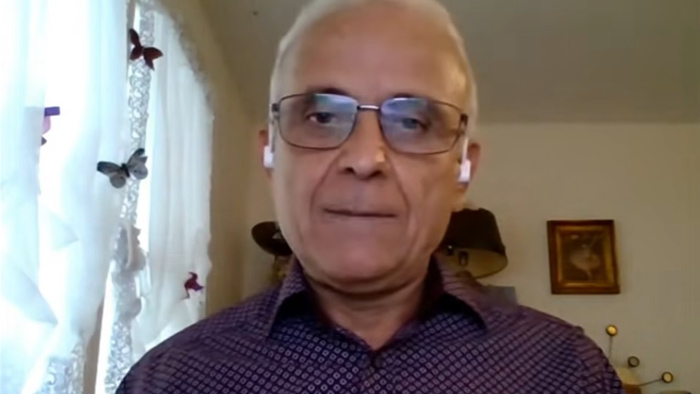
Mohammad Karami, former member of the MEK, speaks of how Maryam Rajavi became so versatile in the MEK. Mohammad Karami was interviewed by Akbar Karami, the owner and interviewer of a YouTube channel on which the conversation was published. In this interview, Akbar Karami questions Mohammad Karami about the internal structure and functioning of the MEK, the rise of Maryam Rajavi, decision-making, treatment of dissent, finances, and the organization’s ideological practices.
In the MEK, leaving means disagreeing
This may be the key to understanding Karami’s description. In an ordinary political organization, you can say: “I disagree with the leadership.”
And, ultimately: “I resign.”
Karami describes an organization in which leaving could itself be interpreted as a form of ideological betrayal. That creates an enormous asymmetry of power.
If the leadership controls your housing, your employment, your social relationships, your access to information, your relationship with your spouse, your relationship with your children, your ability to leave, then “voluntary membership” becomes meaningless.
This is one reason Human Rights Watch’s investigation is significant: the witnesses specifically described abuse occurring after they expressed a desire to leave.
How did the “Maryam Rajavi story” develop?
The process of promotion of Maryam Rajavi can be divided into roughly four stages.
Stage 1 — Maryam as a senior revolutionary
Maryam was originally one of several important MEK figures. She was not initially the supreme leader.
Stage 2 — 1985 ideological revolution
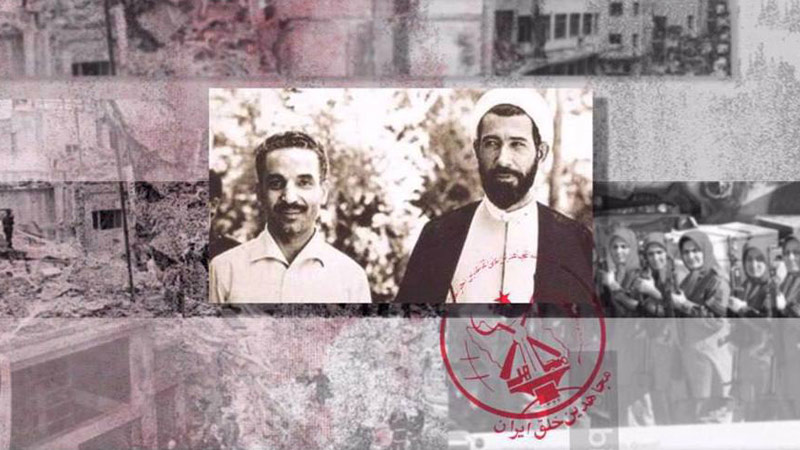
This is the turning point. Massoud promoted Maryam to a position of extraordinary authority, followed by the divorce from Mehdi Abrishamchi and marriage to Massoud. The organization presented this as an ideological transformation rather than an ordinary leadership succession.
Stage 3 — Maryam as the embodiment of the new leadership
Over time, Maryam became much more than an administrator. She became a symbol of the organization’s ideological transformation. This is important because it means loyalty to Maryam could become intertwined with loyalty to the organization itself.
Stage 4 — After Massoud’s disappearance
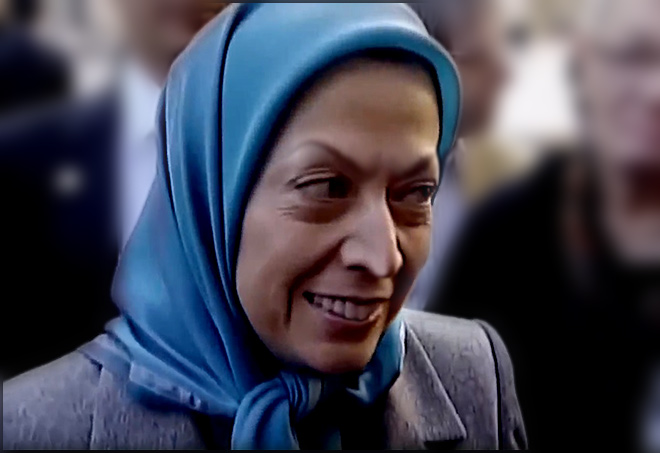
After Massoud disappeared in 2003, Maryam became increasingly prominent as the movement’s public leader and international representative. Today, the organization’s public communications overwhelmingly revolve around Maryam Rajavi.
So the evolution was not simply a conventional promotion through bureaucratic ranks. Karami’s argument is that the organization constructed a system in which personal loyalty to the Rajavi leadership became an ideological obligation.
What does Karami say about MEK’s financial resources?
Karami says that during the Iraq period, the organization had access to very large financial resources and developed mechanisms for moving, disguising, laundering or accounting for money.
In one detailed account, he testifies that members were instructed to create documentation for supposedly legitimate expenditures involving families and children, including documents that he says were used to create a paper trail for large sums of money.
He also describes the use of organizations and associations outside Iraq as part of the financial infrastructure.
It is also independently documented that Saddam Hussein’s government provided the MEK with financial and military support during the organization’s Iraq period. The U.S. State Department reported that after MEK leaders moved to Iraq in 1986, Saddam’s regime provided basing, financial support and training. It also reported evidence of Iraqi funding during the Oil-for-Food period. Human Rights Watch likewise states that Iraqi financial and logistical support ended after Saddam’s government fell in 2003.
The MEK, a religious cult
This is probably the most useful way to understand what Karami is arguing. He argues that the
organization operates through mechanisms normally associated with a high-control religious or cult-like organization, despite presenting itself as a political movement.
There are several characteristics he points to: charismatic leadership; ideological absolutism; extreme personal loyalty to the leadership; separation from outsiders; restrictions on intimate relationships; compulsory ideological sessions; confession/self-criticism; punishment for dissent; difficulty leaving; control over personal life. This is an internal conception of the leader as possessing special ideological authority.
This characterization isn’t unique to Karami. A 2006 U.S. State Department report explicitly described the MEK as displaying “cult-like characteristics,” citing ideological indoctrination, “eternal divorce,” ideological cleansing sessions and separation of children from parents.
RAND also identified characteristics it considered typical of cultic organizations, including authoritarian control, restrictions on marriage, emotional isolation, forced labor, physical abuse and limited exit options.
The bottom line of Karami’s interview
The MEK’s real system of power is not primarily its formal organizational chart. It is a system of personal and ideological control centered on the Rajavi leadership. In Karami’s account, in the MEK, ideology legitimizes the leadership. Leadership determines the correct political line. Hierarchy transmits that line downward. Ideological meetings make members internalize it. Criticism becomes self-criticism. Dissent becomes an ideological problem. Leaving becomes betrayal. Control over personal life makes departure difficult.
And Maryam Rajavi’s importance emerged from this system rather than simply from winning an internal election.
Karami is describing a system in which the leadership has extraordinary authority and in which lower-level officials enforce decisions throughout the organization. That explains how someone can become “all-powerful” without personally issuing every order.