Nejat Society
  • Home
  • Articles
  • Media
    • Cartoons
    • NewsPics
    • Photo Gallery
    • Videos
  • Publications
    • Books
    • Nejat NewsLetter
    • Pars Brief
  • About Us
  • Contact us
  • Editions
    • عربي
    • فارسی
    • Shqip
Nejat Society
Nejat Society
  • Home
  • Articles
  • Media
    • Cartoons
    • NewsPics
    • Photo Gallery
    • Videos
  • Publications
    • Books
    • Nejat NewsLetter
    • Pars Brief
  • About Us
  • Contact us
  • Editions
    • عربي
    • فارسی
    • Shqip
© 2003 - 2024 NEJAT Society. nejatngo.org
court
Mujahedin Khalq Organization

MKO terrorists to be prosecuted through intl. legal channels

To download the video file click here

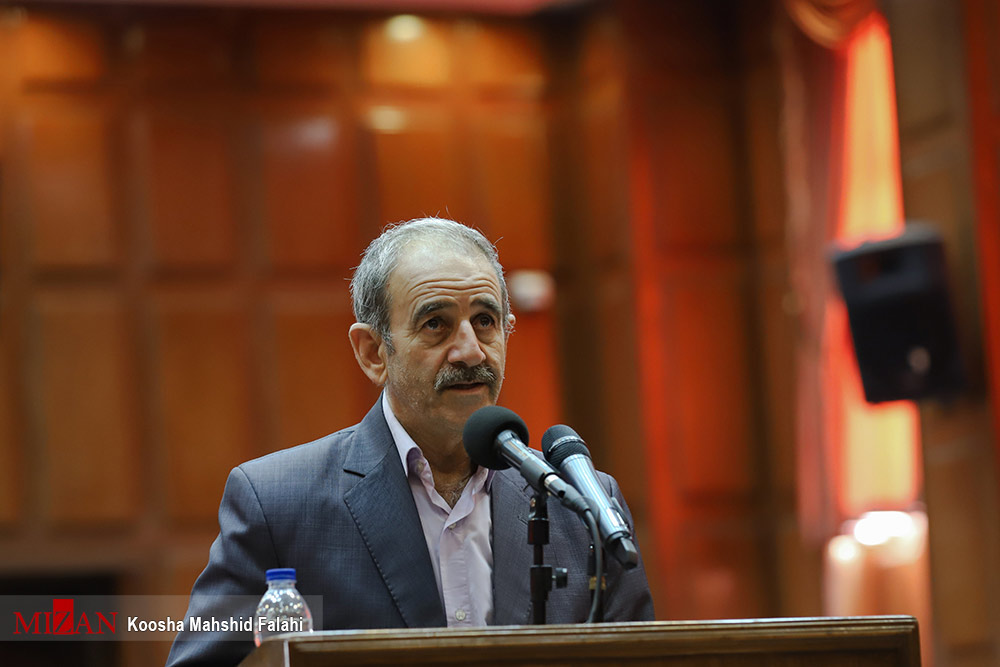
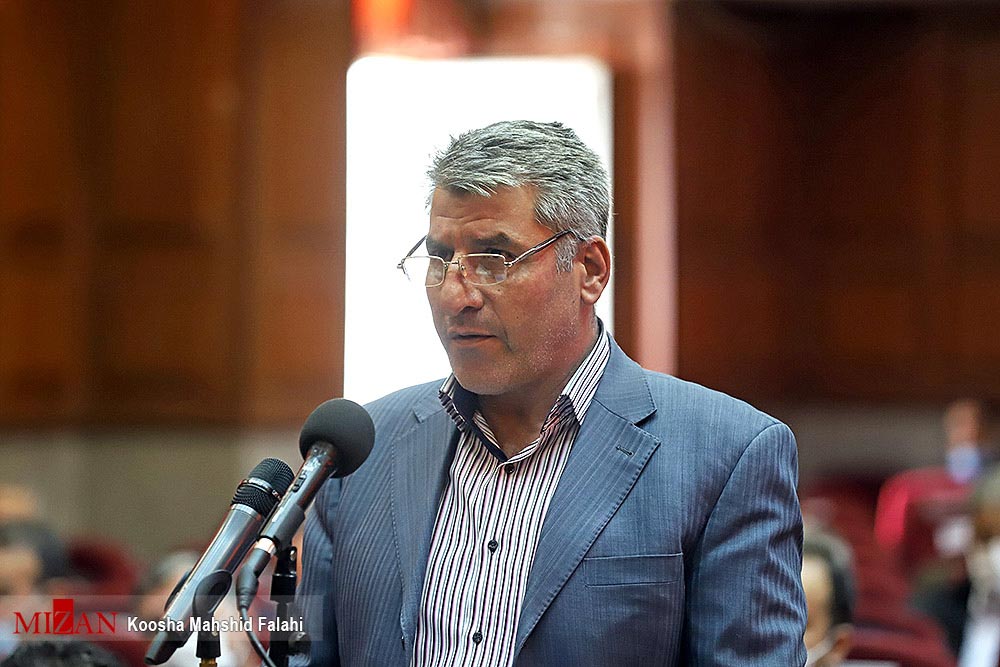
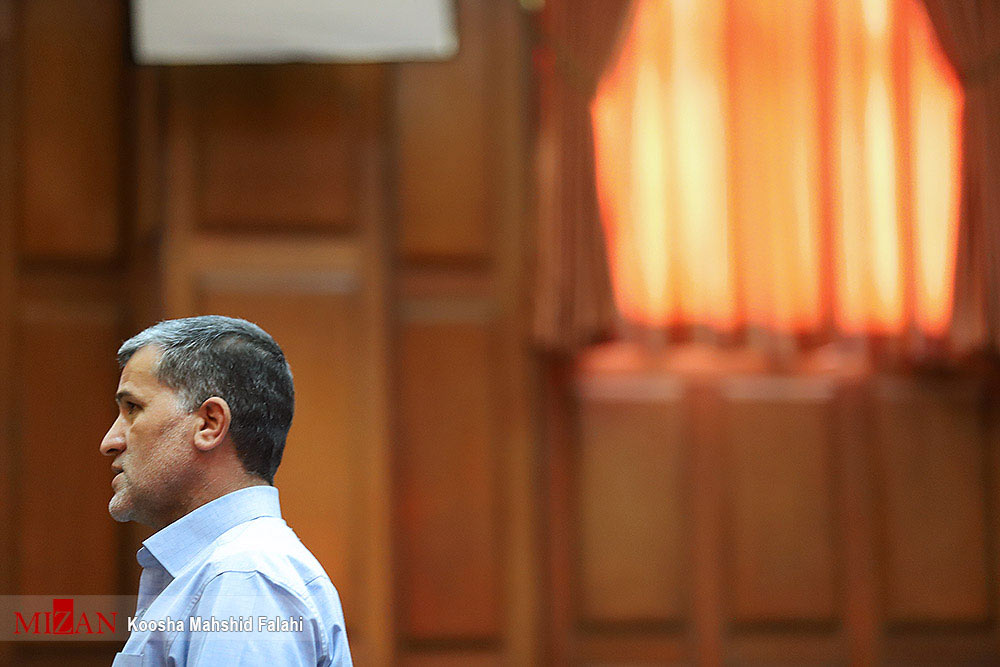
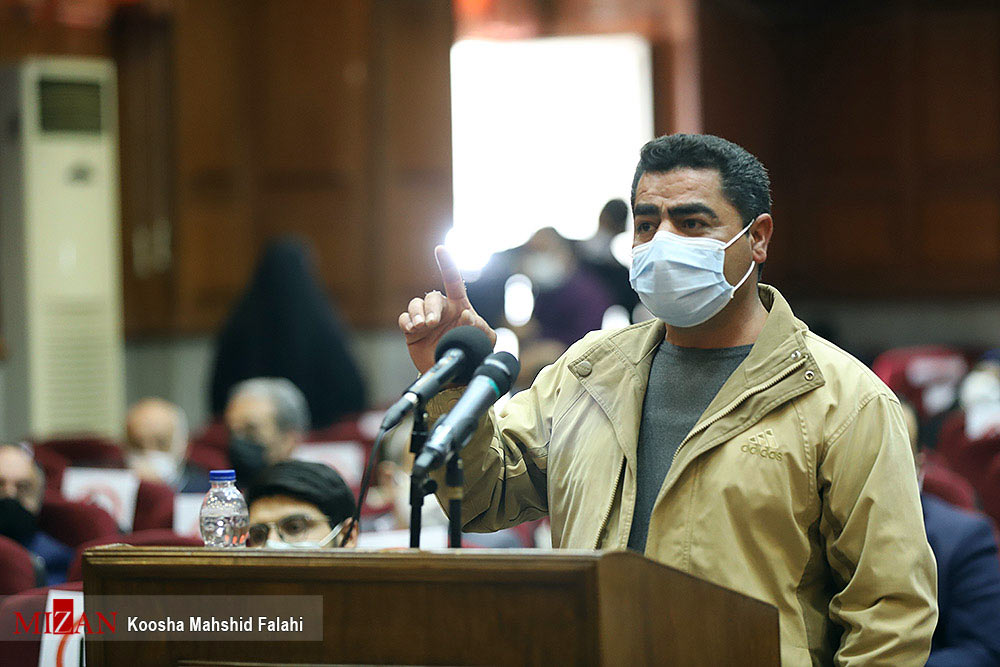
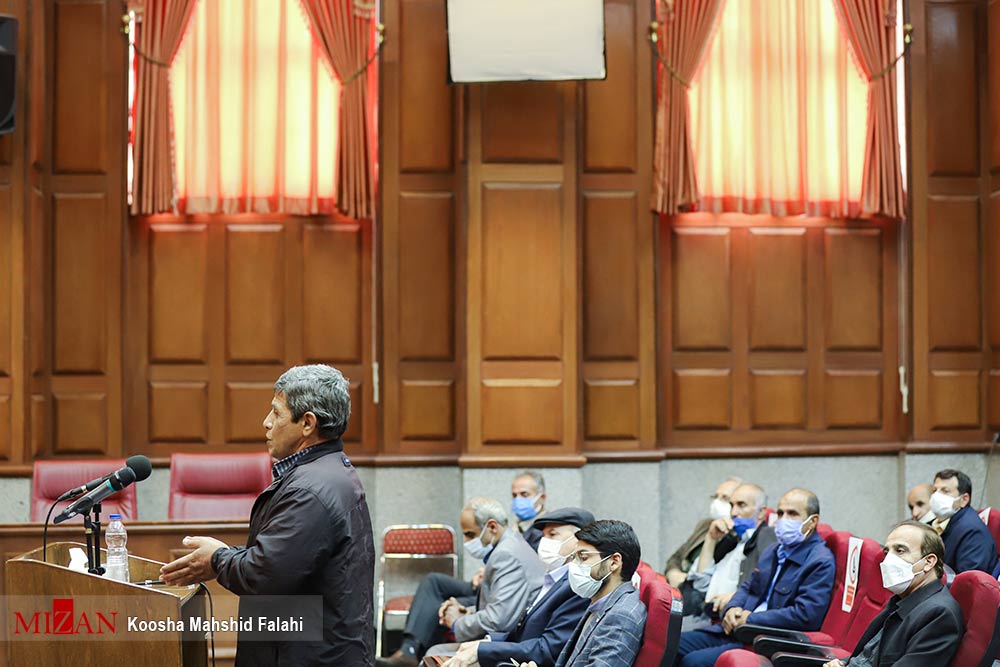
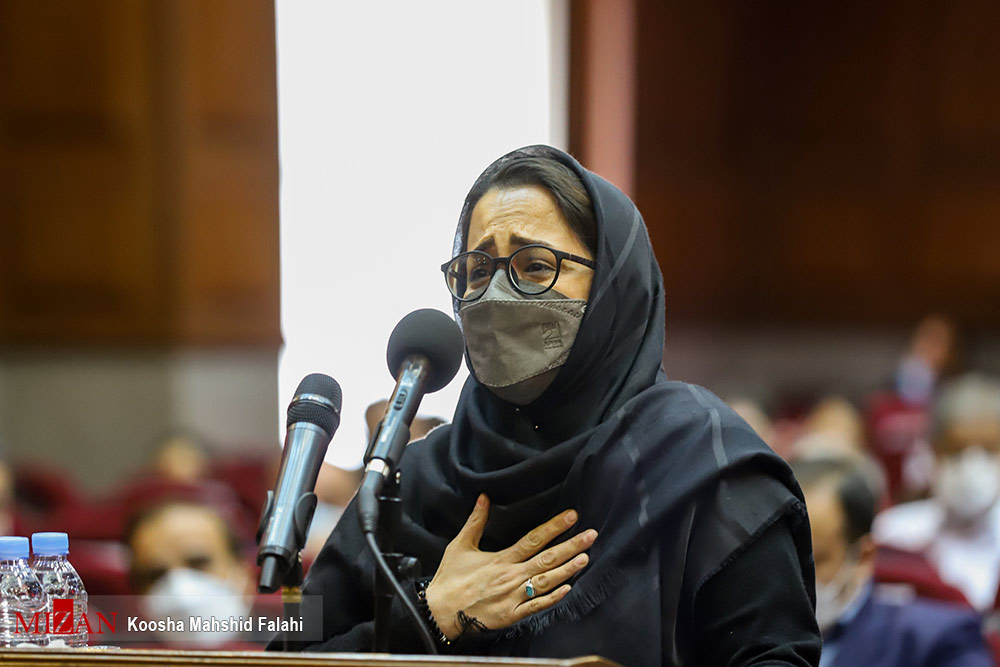
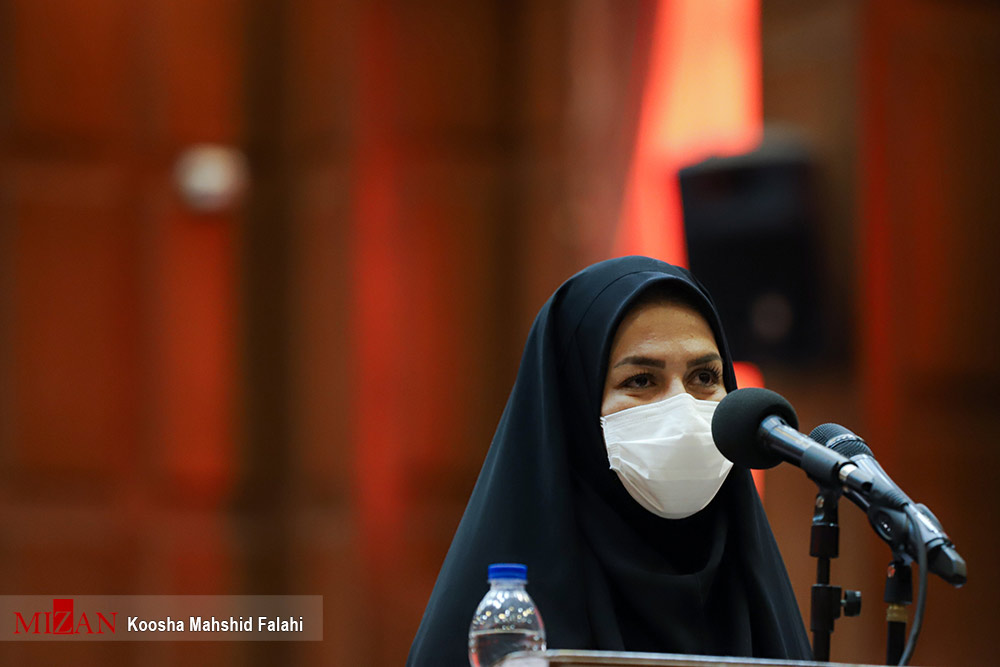
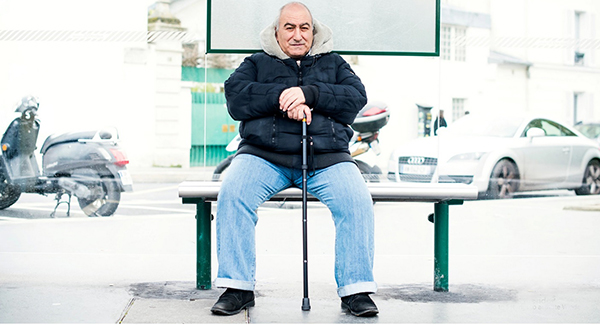
These people are former members of the most notorious anti-Iran terrorist group, known as the MKO or Mojahedin-e Khalq Organization. They fled the group years ago after spending two decades in the MKO under duress. They have now filed a lawsuit at an Iranian court against leaders of the terror group, namely Masoud and Maryam Rajavi.

The 42 individuals claim damages and compensation in connection with imprisonment, torture and deprivation of their rights exercised by the terror group.

The court issued the verdict, which confirms all of the charges.

The MKO has carried out a series of bombings and assassinations against Iran and fought alongside Iraqi forces in the 1980-1988 Iran-Iraq war.

Official figures in Iran report that out of 17,000 terror victims in the country, 12,000 of them were killed by the MKO terrorists.

In 2012, the terror group was relocated from an American military base in Iraq to Albania and France after the US and Europe delisted the group as a terrorist organization.

The anti-Iran cult now enjoys freedom of activity in the US and Europe and holds regular meetings with American and European officials.

The verdict now allows the plaintiffs to take their complaint to international courts, where they can hope that France and Albania would hand over the criminals to Iran.

Ask any Iranian about the MKO and you would hear the word Monafeqin, the Persian word for hypocrites. Now as Monafeqin enjoy full support by the West, former MKO members say it is unlikely that France and Albania cooperate and extradite the terrorists, but that would prove the West’s double standards on the issue of terrorism.

Yusef Jalali
March 27, 2021 0 comments
FacebookTwitterPinterestWhatsappTelegramSkypeEmail
Ruptly on MEK Court
Mujahedin Khalq Organization

Civil Court Against Mujahedin-e Khalq Cult In Tehran

Former members of the People’s Mujahedin of Iran (MEK) reacted outside a Tehran courthouse on Wednesday after the organisation “was condemned and obliged to pay for financial and moral damages” to them, according to the plaintiffs.

To Download the video file click here

The plaintiffs, themselves former members of the cult-like group, allege they were captured during the Iraq-Iran war and were forced to become members of the political-militant group which advocates and fights for the overthrow of the Islamic Republic of Iran under the leadership of Maryam and Massoud Rajavi.

Forty-two individuals were involved in the proceedings and were claiming damages and compensation in connection with imprisonment and torture and alleged human rights violations.

The European Union, Canada, and the United States had previously categorised the MEK as a terrorist organisation. The designation has now been lifted.

Ruptly.tv

March 27, 2021 0 comments
FacebookTwitterPinterestWhatsappTelegramSkypeEmail
weekly digest
Iran Interlink Weekly Digest

Iran Interlink Weekly Digest – 281

++ On 12th March, several ex-MEK member organisations from Paris gathered together and sent a delegation to the Albanian embassy in Paris. They had a brief meeting with the deputy ambassador and arranged a formal meeting with the ambassador at a later date. In this conversation they handed over some documents and a statement to be passed to PM Edi Rama’s office. On 16th March, these groups met again to hold pickets in various places around Paris in which they distributed leaflets and talked with people. They raised these issues: The main issue is the Hadi Sani Khani case, because he had previously been kidnapped from Turkey and taken to Iraq by MEK on the false promise of getting a job. After many years, when MEK arrived in Albania Hadi managed to escape and became a critic of the cult. Now he has been kidnapped again and taken to Paris. Using his name, MEK have published all kinds of statements and confessions on his behalf, but with no photo or signature, etc. Yet, when French police questioned the MEK in Albania, MEK leaders said they don’t know where he is. The former members’ demand is for the Albanians who host the MEK to investigate his suspicious and concerning disappearance. The French don’t host the MEK anymore, so it is Albania that is responsible for their actions. The second issue is the demand from Albania to protect ex members and their families. After the court case in Iran, Massoud Rajavi has come out openly threatening to kill former members in Albania. It’s up to the authorities there to protect them. Thirdly, the picketers emphasised that now Trump has gone there is no excuse by saying Albania is under pressure from the US to support terrorism. The viable way forward is to allow the families to come and help rescue their loved ones. Hadi’s father could have been given a visa to come and see his son, and if he had the help and support of his family he would not have been kidnapped. Albania must be the solution, not the problem.

++ After Rajavi’s statement following the court case in Iran, there were many reactions from people who follow his life and death. One asks, ‘if he’s alive, where is he? What is the game’. Others ask, ‘why has his voice not changed after thirty years’. There is general agreement that Rajavi has gone bonkers, that he has vanished, but is asking Iran’s heads of state to come to court. Commentators describe Rajavi’s response as panicked reaction – whether it comes from him or the MEK. They point out that the court case in Tehran is an international case and will have international consequences and Rajavi knows that. The best comment is from one of the older family members who said, ‘it reminded me of my granddaughter when she was five, hiding in a cupboard to play. But because she saw a spider she screamed and jumped out of the cupboard. This is like Rajavi jumping out of his hiding hole when he saw the court case against him!’

In English:

++ Massoud Khodabandeh commented on Rajavi’s reaction to the court case in Iran in which 42 former members accuse Massoud and Maryam Rajavi and 40 other named senior members of MEK of human rights abuses. Khodabandeh writes that it is laughable that Rajavi challenges Iran’s leaders to meet him in court since he has avoided any legal action over his three decades as MEK leader. Khodabandeh lists the events which threatened Rajavi and the diversions and distractions he used to evade prosecution. He also points out that Rajavi has a history of eliminating troublesome members. This is what makes his threat to kill the former members in Albania all the more worrying. Rajavi will not hesitate to use violence and assassinations to avoid facing the law. Khodabandeh concludes that the most effective solution is to reinstate the US program to de-radicalise the MEK in Albania.

++ Mazda Parsi writes about how the MEK do not celebrate Nowruz, the biggest celebration of the year for Iranians. Celebration is a taboo inside MEK. The only reference to Nowruz is for Maryam Rajavi to pose in front of a Haftsin table in her luxurious headquarters. In the past in Iraq, spontaneous enjoyment of Nowruz was crushed; the members told ‘we are here to fight, not to dance!’ Parsi points out that as a cult, the MEK has changed the meaning of any cultural heritage and traditions. Maryam Rajavi now uses Nowruz to advertise her power over the rank and file. She promises they will overthrow the regime. The same old forty-year-old promise.

++ Anne Khodabandeh writes about a small intervention by Albania’s diplomat in Geneva in the UN Human Rights Council. Iran criticised the UN Special Rapporteur’s comments on human rights in Iran and asked why the MEK were in Albania at all. Dr Illir Nezaj read out a prepared statement claiming that Albania is fighting terrorism and the MEK are not a terrorist group. According to Khodabandeh this raised questions among Albanians who for example, asked why the MEK have a paramilitary camp in Albania if they are not a terrorist outfit. Khodabandeh asked why Albania is not investigating the suspicious disappearance of Hadi Sani Khani, and also “Understand that threatening violent regime change against another country is illegal under Albanian law. What do you think the MEK have been doing since they arrived in your country?” with a link to a visit by the late Senator John McCain to meet with MEK in Albania to promote regime change. Khodabandeh concludes that this behaviour is problematic for the EU and will prevent Albania’s accession.

March 19 2021

March 27, 2021 0 comments
FacebookTwitterPinterestWhatsappTelegramSkypeEmail
Rajavi and Nowruz
Mujahedin Khalq Organization

Persian New Year in the MEK Camps

Nowruz is the national New Year festivity celebrated in Iran, Afghanistan, the Kurdish regions of Iraq, Turkey and Syria, and throughout Central Asia. It is a springtime celebration of which the activities symbolize rebirth and the link between humans and nature. It is part of Zoroastrianism, a Persian religion that predates Christianity and Islam to the first millennium BC.

The two-week celebrations of Nowruz include seeing relatives, picnicking, travelling, and eating traditional food. The arrival of Nowruz is announced by street singers, known as Haji Firooz, who wear colourful outfits and play the tambourine. So happiness is in the air in the Persian territories.

While the Iranians consider Nowruz as their biggest celebration of the year, members of the Mujahedin Khalq Organization of Iran (the MEK/ MKO/ PMOI/ Cult of Rajavi ) miss all the above-mentioned celebrations and traditions and eventually the delight it spreads among the participants. In fact, the MEK knows itself as part of the Iranian population in exile but the Persian New Year’s celebration is a taboo in the group. The entire festivities are limited to the leader Maryam Rajavi’s New Year massage and a Haftseen table in front of her in her luxurious headquarters.

The rank and file of the group take part in certain group marches and gatherings and some paramilitary events empty of emotions and joy. Members of the group are not allowed to meet their relatives even if they are all inside the camp. They may accidentally visit each other in the gatherings but the visits are completely under the control of the commanders.

Ghorban Ali Husseinnejad

GhorbanAli HosseinNezhad and his daughter Zeinab were both in Camp Ashraf before defecting the group. “When my daughter Zeinab was only seventeen years old, the MEK leaders brought her from France to the military unit at Camp Ashraf,” Hosseinnezhad says in an interview. “While we were both in Camp Ashraf, we were not allowed to visit each other except for an hour or two in Nowruz events in which we were under severe supervision. However, I have not been able to meet my daughter since three years ago because they did not even let meet visit her in the last Noruz that I was in Camp Ashraf.” Fortunately, GhorbanAli and Zeinab are both in the free world right now and have access to contact each other freely.

Ali Sorkhian is another defector who writes of his memories in the so-called celebration of Nowruz in the MEK. “I was a war prisoner that the MEK propaganda agents recruited me to join them,” he writes. “The first Nowruz that I was in the MEK, the group leaders wanted to show off a happy event before the eyes of me and some other war prisoners who have been deceived to join the group. The group’s music band played a very happy track and very naturally many members stood up and started dancing. Immediately, the scene turned out to be a horrific one for the commanders, particularly for Mehdi Abrishamchi. He began crying angrily at the cheered up crowd. “Sit down”, Abrishamchi shouted, “We are here to fight not to dance.” !

Rajavi and Nowruz

Sorkhian believes that the memory turned out to be a dark experience. “Since then we were never eager for Nowruz celebrations,” he writes. “Nowruz made us sad because we had to work harder and we had no happy time, we were not even allowed to contact our family.”

“Nowruz celebration was the saddest time for us because it reminded us of Iran, our family and the passion we had for the new year in Iran ,” Jaber Majdian, an MEK defector, writes. “The group leaders did not want us to think of our past, Iran and our family. Eventually the agenda for Nowruz, was to work harder, to redesign and repaint buildings. They wanted to make members exhausted and drained of energy. Thus, on the very day of Nowruz, the rank and file were so tired that they all hated to take part in the marches and ceremonies. Everyone’s mind was obsessed with the enthusiasm of Nowruz celebrations at home.”

As a cult-like establishment, the MEK have changed the meaning of any cultural heritage and any tradition to a notion along with the ambitions of power. Every year, Maryam Rajavi’s Nowruz message is actually an opportunistic act to boast her position as the leader of the MEK’s rank and file and to repeat the very promise she has every year: the overthrow of the regime”. No matter that the promise has been repeated for over forty years.

Mazda Parsi

March 17, 2021 0 comments
FacebookTwitterPinterestWhatsappTelegramSkypeEmail
Maryam Rajavi
Mujahedin Khalq Organization as a terrorist group

Families of Victims Ask EU Int’l Bodies to Prosecute MKO Terrorist Group

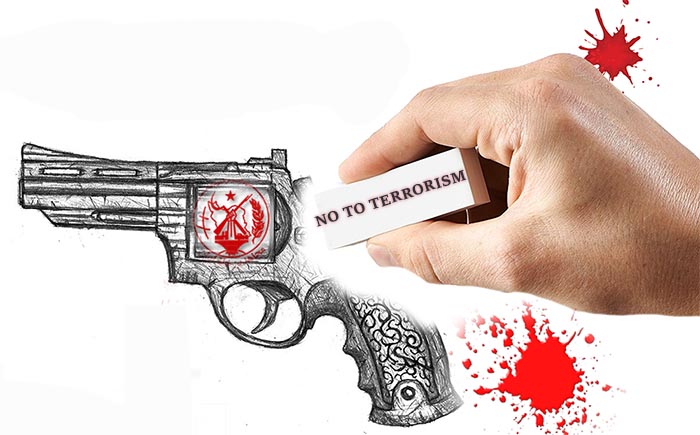
Families of terror victims in Iran asked global institutions affiliated to the European Union to launch legal proceedings against the Mojahedin-e Khaq Organization (MKO, also known as MEK, PMOI and NCRI) for terrorist operations that have claimed the lives of thousands of Iranian civilians.

Families of Iranian victims of terrorism wrote an open letter addressing the EU officials to take legal proceedings against Mujahedin-e Khalq terrorist group, after the group’s ringleader Massoud Rajavi reportedly ordered his terror cells to intensify their anti-Iran acts.

Iran Terror Victims

A recent statement attributed to Masoud Rajavi, presumably dead, invited top Iranian leaders to attend an international court case with him.

“We are the families of the victims of assassinations and violence of the terrorist group Mujahedin-e Khalq Organization who lost our children, parents and grandparents in targeted and blind operations of this group,” the letter read according to Habilian Association, an Iranian human rights NGO.

“The families of terror victims in Iran call on all international officials and institutions in the European Union to, along with restricting the activities of this group in Europe, prosecute the leaders of this terrorist group in an international court with the presence of their victims,” they added.

The letter noted that Rajavi’s order depicts a “violent strategy” toward the judicial process and the court hearing on March 8 and 9, 2021, during which a number of former members filed a complaint about years of torture and violation of human rights by the terrorist outfit.

They said the MKO’s recent activities proved that it is still a “militant cult” and too far to be an “opposition group,” citing Rajavi’s recent order to the terror cells to identify Iranian citizens working in judicial and military institutions and “execute justice on them.”

They declared their full readiness to cooperate in this process by providing necessary documents to the responsible institutions.

The MKO is listed as a terrorist organization by much of the international community. Its members fled Iran in 1986 for Iraq, where they received support from then dictator Saddam Hussein.

The notorious outfit has carried out numerous attacks against Iranian civilians and government officials for several decades.

In 2012, the US State Department removed the MKO from its list of designated terrorist organizations under intense lobbying by groups associated to Saudi regime and other regimes adversarial to Iran.

A few years ago, MKO members were relocated from their Camp Ashraf in Iraq’s Diyala Province to Camp Hurriyet (Camp Liberty), a former US military base in Baghdad, and were later sent to Albania.

Those members, who have managed to escape, have revealed MKO’s scandalous means of access to money, almost exclusively coming from Riyadh.

The MKO terrorist group specified the targets as martyred Lieutenant General Qassem Soleimani, who commanded the Quds Force of the Islamic Revolution Guards Corps (IRGC), and Iranian Judiciary Chief Seyed Ebrahim Rayeesi.

The terrorist organization said it would “welcome” their assassination, adding that it desired for the ranking officials to “join” Asadollah Lajevardi, Tehran’s former chief prosecutor, and Ali Sayyad-Shirazi, a former commander of the Iranian Army’s Ground Forces during Iraq’s 1980-88 war against Iran.

Earlier in June 2019, a leaked audio of a phone conversation between two members of MKO, revealed Saudi regime has colluded with the MKO elements to frame Iran for the tanker attacks in the Persian Gulf.

In the audio, which is being released by the Iran Front Page for the first time, Shahram Fakhteh, an official member and the person in charge of MKO’s cyber operations, is heard talking with a US-based MKO sympathizer named Daei-ul-Eslam in Persian, IFP news reported.

In this conversation, the two elements discuss the MKO’s efforts to introduce Iran as the culprit behind the tanker attacks in the Persian Gulf, and how the Saudis contacted them to pursue the issue.

“In the past week we did our best to blame the [Iranian] regime for the (oil tanker) blasts. Saudis have called Sister Maryam (Rajavi)’s office to follow up on the results, [to get] a conclusion of what has been done, and the possible consequences,” Fakhteh is heard saying.

“I guess this can have different consequences. It can send the case to the UN Security Council or even result in military intervention. It can have any consequence,” Daei-ul-Eslam says.

Attacks on two commercial oil tankers in the Gulf of Oman on June 13, 2019 and an earlier attack on four oil tankers off the UAE’s Fujairah port on May 12, 2019, have escalated tensions in West Asia and raised the prospect of a military confrontation between Iran and the United States.

The US, Saudi Arabia, and the UAE have rushed to blame Iran for the incidents, with the US military releasing a grainy video it claimed shows Iranian forces in a patrol boat removing an unexploded mine from the side of a Japanese-owned tanker which caught fire earlier this month.

It later released some images of the purported Iranian operation after the video was seriously challenged by experts and Washington’s own allies.

The MKO which is said to be a cult which turns humans into obedient robots, turned against Iran after the 1979 Islamic Revolution and has carried out several terrorist attacks killing senior officials in Iran; yet the West which says cultism is wrong and claims to be against terrorism, supports this terrorist group officially.

After the Islamic Revolution in 1979, the MKO began its enmity against Iran by killing over 17,000 Iranians and terrorist activities. Several members of the terrorist group and its leaders are living in France now, freely conducting terrorist activities.

The MKO terrorist group has martyred 17,161 Iranian citizens, including late president Mohammad Ali Rajayee, former prime minister Mohammad Javad Bahonar, late Head of Supreme Judicial Council Ayatollah Mohammad Beheshti, late Deputy Chief of the Iranian Armed Forces General Staff Ali Sayyad Shirazi, and 27 legislators, as well as four nuclear scientists.

March 17, 2021 0 comments
FacebookTwitterPinterestWhatsappTelegramSkypeEmail
MEK Terrorists
Mujahedin Khalq Organization

Five decades of MKO’s terrorism: From militia to terrorist cells

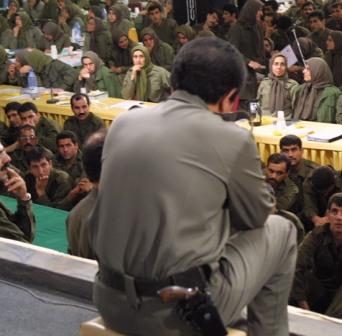
Throughout the contemporary history of Iran, numerous militia groups have been formed especially among the left streams,among whose common features are violent and terrorist measures. Although those groups were formed to fight the ruling political system, most of the victims of their operations were civilians. The Mojahedin-e Khalq Organization, also known as MKO or MEK, is one of the most well-known of these groups that officially launched its militia in the first months of the victory of the Islamic Revolution and started a period of violence and bloodshed in different parts of Iran. Now, nearly two decades after the MEK’s disarmament, the group has re-launched its terrorist cells under the new name”rebel centers.”

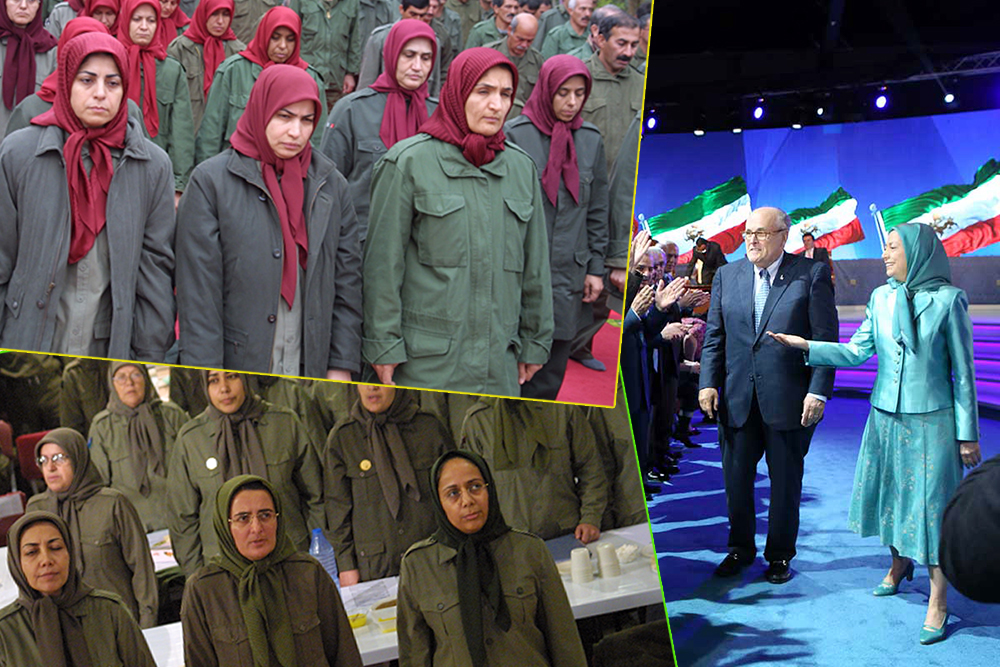
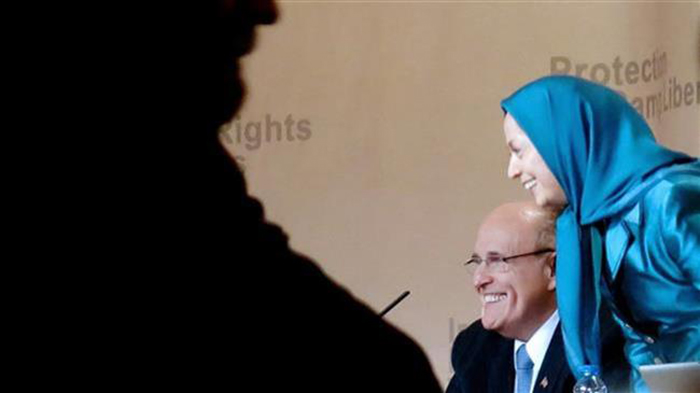
Maryam Rajavi and Giuliani

According to dictionary definitions, militia is a military force that is raised from the civil population to supplement a regular army in an emergency. Also, it has been defined as a military force that engages in rebel or terrorist activities in opposition to a regular army.What is meant by militia in this article is the latter definition i.e., the organized armed insurgent forces in the first years of the Iranian Revolution.

After the Islamic Revolution, the term militia was first used in Iran by the Mojahedin-e Khalq Organization (MKO) although this concept was not unfamiliar to left-wing groups. According to the statements and documents the MKO left behind, Massoud Rajavi, the group’s leader after the Revolution, announced formation of the militia on November 23, 1979 although it was officially announced on 27th of November in the Mojahed Magazine. The militia was an organized non-professional force whose members could continue education and work as well as organizational activities. Hence, a militia can perhaps be called a”part-time guerrilla”or, in MKO’s words,”part-time fighters”emphasizing its military and armed nature.

Iran’s Foreign Ministry says the US and Europe, as supporters of the MKO terrorist group, have the blood of Iranians on their hands.

The reason behind formation of the militia

After the siege of the American embassy and Ayatollah Khomeini’s mass mobilization order i.e., “the army of 20 million” on November 26, 1979, the MKO announced the formation of its militia. According to the military-political declaration No. 23 on November 23, 1979, the militia branch was formed in the MKO. In order to justify arming themselves and the formation of this small private army, the MKO announced that they aimed to stand against the United States (Collection of Declarations, Vol. 2, pp. 140-141). Mojahed, the official magazine of the MKO, on November 27, 1979 in its special issue No. 2, thanked Imam Khomeini and tried to turn the Supreme Leader’s order to its advantage by calling its militia the army of 20 million. They issued this statement:”And now all the revolutionary forces, all the brave warriors of the army and our brothers in the Revolutionary Guard Corps are to do everything in their power to establish the 20-million revolutionary army in particular and also organize the militia of thirty-seven million people”.

Next, the MKO issued another statement under the title of “regulations for carrying and maintaining weapons and objectives of the militia” to justify arming of most of their members. During the victory of the revolution, many army garrisons were looted by members of the MKO, and the group’s military branch, which had been active since 1971, was also illegally armed. Therefore, they used to pretend that their armed organization is somehow related to the regular armed forces in an effort to prevent sensitivities that arose after the formation of their militia.

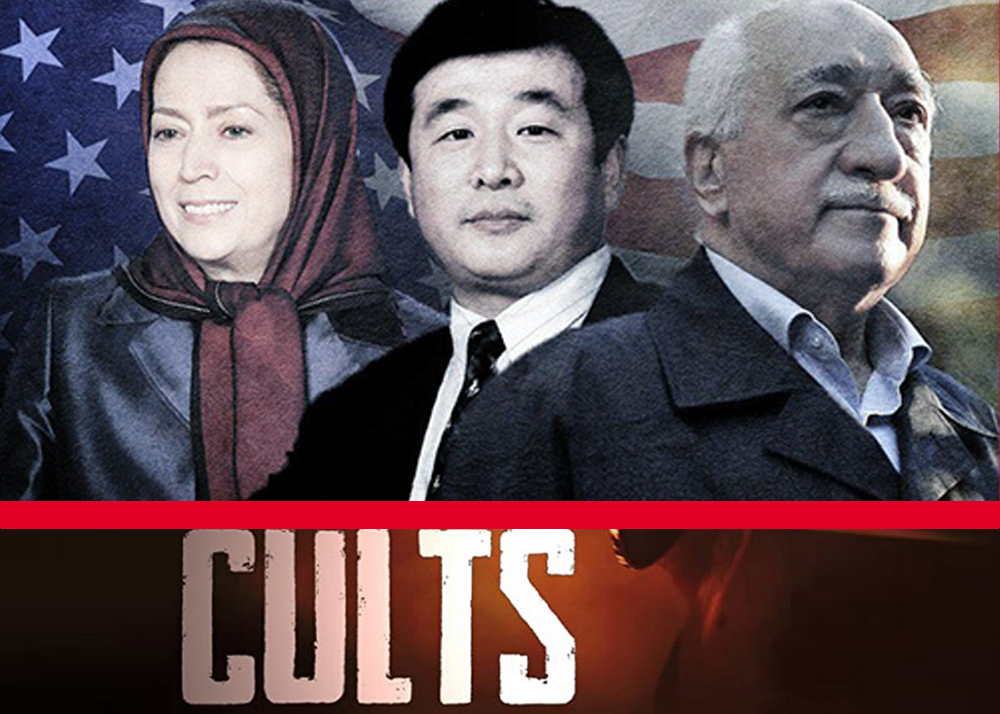
The United Sects of America: How cultists help to form of the US foreign policy

Actions taken by the militia

Since January 1979, the militia was used as a lever at the service of propaganda techniques and social missions to disrupt social order and create confrontations in some neighborhoods of Tehran and other cities. Activities of the militia units augmented during the first presidential election campaign in support of Bani Sadr. Students made up majority of the members of the militia, and, given their revolutionary spirit and great interest in military and armed activities, they constituted a major part of these organized units’ recruitees. According to the policies of the MKO leaders before the crucial period of June 20, 1981, the militia units made several symbolic moves during this period in order to flaunt their power to the opponent. These units performed maneuvers to show their social power at different times such as December, January and February of 1980. At the time, Maryam Qajar Azdanlu (Rajavi), the current leader of the MKO, had various responsibilities with respect to organizing the women’s militia and leading female students’ revolutionary campaigns of construction activities in rural areas (Kayhan newspaper, March 10, 1980, p. 15). The militia marched from the University of Tehran to the US Embassy on Wednesday April 9, 1980, in order to demonstrate its firm grip on the opponents.

Following the tensions created by the MKO, on June 13, 1980, the militia demonstrated simultaneously in 10 locations in Tehran to exhibit its power. In this series of demonstrations, dozens of ordinary people and individuals resembling government supporters (characterized by being religious and having a beard) were beaten or injured by cold weapon. Dozens of buses, motorcycles and people’s automobiles were set on fire and the MKO chanted mottoes against Shahid Beheshti and the Islamic Republic Party and in favor of Bani Sadr. Most of the militia’s encounters in the clashes were physical and involved the use of cold weapon. Members of the militia had received military training and acted in an organized manner and could easily identify the opposition and beat them more. Throughout 1980, the militia started major riots in the cities of Sabzevar, Isfahan, Karaj, Abadan, Gorgan, Ghaemshahr, Tehran and Shiraz. Presence of the militia during Bani-Sadr’s speech at the University of Tehran on March 5, 1981, and its subsequent clash with government supporting forces was another manifestation of this militant group of the MKO.

On the afternoon of June 20, 1981, while the political inadequacy of President Bani Sadr was being examined in the Parliament, the militia which was equipped with knives, cutters, brass knuckles, Molotov cocktails, acid sprays and firearms (only for group heads and main cadres), organized demonstrations on streets of Tehran to revolt against the ruling government. Simultaneously with the movements in Tehran, similar sporadic clashes took place on a smaller scale in several cities such as Isfahan, Hamedan, Urmia, Shiraz, Ahvaz, Arak, Zahedan, Masjed Soleyman, Bandar Abbas and Mashhad, during which dozens were injured and several were murdered (IRIB Website).

Most of the militia’s activities were propaganda and sabotage. Up till June 20, 1981, the militia mostly performed as guardians of meetings and lectures of those they believed in. The activities they performed later on include selling the group’s publications, collecting financial aid for the benefit of the group, organizing construction campaigns in deprived areas of the country, and military activities. Construction activities of the militia and their presence in villages were mostly to compete with the Jihad of Construction (Jahād-e Sāzandegī), to carry out propaganda in favor of the MKO, and to gather supporters for this group, which in most cases failed. In fact, these actions of the militia, similar to the reason of its formation, were in competition with revolutionary institutions and organizations such as the Basij Force.

Having the illusion of owing the revolution, the MKO at this time tried to emulate the government structure as if it were a legitimate ruling system. The MKO had pinned its hope on the militia as a means of executing the group’s authoritarian intentions. Rajavi acknowledged that his militia had about 10,000 capable troops and used it to distrain the ruling government. This half-baked idea of the MKO soon created the illusion of being able to stand against the government. By triggering their revolt on June 20, which led to the apprehension or escape of the MKO militia members and exposure of their weaknesses not only in terms of military power but also in even revolting, this illusion quickly faded (Website of Rahenoo News Agency).

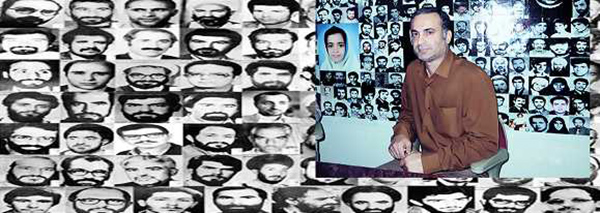
An Iranian Human Rights NGO for the first time releases the names of 1,503 martyrs killed by the MKO terrorist group in 1988.

Formation of National Liberation Army

In the street clashes of the summer of 1981 and on September 27, the militia, whose philosophy of existence was to form a private army for the promised day, entered the social insurgency phase once again by provoking students. According to the available documents, the militia organized eight unsuccessful riots between 1983 and 1985, which were of course much smaller than the flood of people supporting the revolution and simply failed. Nonetheless, the large-scale assassinations of government officials and ordinary people may be considered the greatest achievement of the MKO militia in these years (Document Archive of Habilian Association).

Coming to know its inability to conduct terrorist attacks inside Iran and according to the MKO’s policy on exiting the country, the militia gradually moved to Iraq and with the benefit of Saddam’s military and logistical facilities, changed its name to the so-called National Liberation Army in 1987. In his statement for the establishment of this army, Massoud Rajavi described the militia as the nucleus of the Liberation Army and said in that regard “… this is why the MKO founded the militia in the first year of (Ayatollah) Khomeini’s ruling” (Document Archive of Habilian Foundation). This so-called army of the MKO carried out several military operations against Iran on the battlefields during the last two years of the Iran-Iraq war and was eventually destroyed in Operation Mersad.

After the US occupation of Iraq in 2003, the MEK which was listed by the US as a terrorist group, was forcibly disarmed by the US Army and the group’s military wing was forced to hand over its heavy and semi-heavy weapons to the US forces in Iraq.

Albania

The MEK has since tried to adapt its tactics to the new situation. So, in order to get out of the terrorist lists in the UK, EU and US, it took a new approach that was more like a tactical change than a strategical one.In this way, through launching a political and propaganda campaign against Iran, the group sought to persuade the West that it is the only alternative to the Islamic Republic.In recent years, however, the MEK has attempted to direct its regime-change activities inside Iran by organizing its forces in the form of terrorist cells called “rebel centers”.

The fact is that the foundation of this group relied on armed activity both at the time of the official announcement of the formation of the militia in 1979, and during the 1980s. Thus, with Donald Trump coming to power and his non-diplomatic behavior and actions against Iran,the MEK gained the opportunity to gradually revive their past militant approach after 13 years of forced disarmament.

Launching terrorist cells

The MEK considered Trump to be the last circle of pressure on Tehran, whose unprecedented encounter with the Islamic Republic would lead to the collapse of the ruling political system in Iran. Thus, by focusing on the establishment of violent and terrorist cells inside Iran, they challenged the claim of some viewers regarding the group’s transition from military stage to the political phase and proved that the Mojahedin is still a violent militant group.

The remarks made by some senior MEK members during Trump’s presidency regarding the group’s new terrorist cells, known as rebel centers and describing them as an extension of the National Liberation Army militia prove that the political gestures of the MEK leader, Maryam Rajavi, are nothing but a deceptive approach to gain the support of some European and American politicians.

During the same period, the MEK carried out dozens of sabotage and violent operations against various targets in Iran. Although those operations did not cause any casualties or damage, the very establishment of terrorist cells and encouragement of the youth to join these destructive centers as well as inciting them to attack governmental and non-governmental sites, are examples of promoting violence and terror, and are as illegal as the threats of Canadian anarchist extremist groups to target the country’s infrastructure.

Now, with the end of the Trump era and fading of the MEK’s aspirations in the US presidential election, it remains to be seen whether the group’s terrorist cells will continue to act or not. Regardless of the ineffectiveness of the actions of these cells inside Iran during recent years, what seems to be important is that Europe has probably inadvertently become the main focus of the elements of this violent and terrorist group. Previously only present in Western Europe, former pro-Saddam Hussein militia terrorists have now spread to the other side of Europe, the Balkans.

(The views expressed in this article do not necessarily reflect those of Press TV.)

By Reza Alghurabi

Reza Alghurabi is an Arab journalist who lives in Iran. He is a former researcher at the Beirut Center for Middle East Studies and an independent researcher and journalist writing in Iranian newspapers including the Khorasan daily.

March 17, 2021 0 comments
FacebookTwitterPinterestWhatsappTelegramSkypeEmail
court hearing on MKO leaders crimes
Iran

Evidences of torture and abuse in the MEK

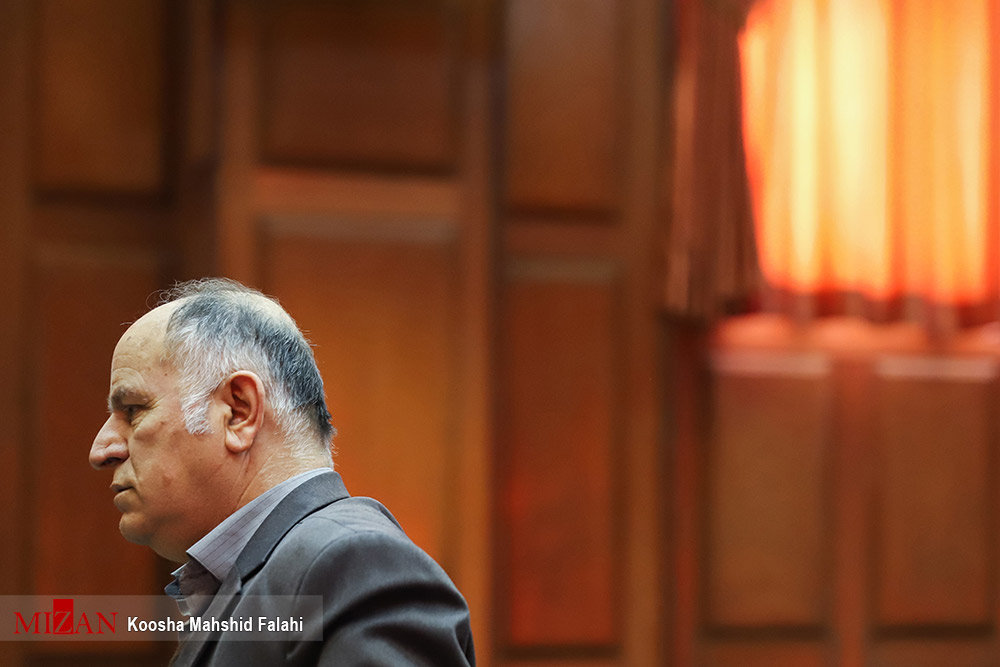
A court session was held in Tehran to investigate the complaints filed a by a group of former members of the Mujahedin Khalgh Organization (MKO/ MEK/ PMOI/ Cult of Rajavi) specifically to sue the leaders Masoud and Maryam Rajavi and certain other senior officials of the group.

To download the video file click here

42 people addressed the court, giving evidences on several cases of abuse and torture inside the MEK. The followings are only a few cases of the complainants’ testimonies:

Ali Moradi

Nightmares I still see
Ali Moradi, was a victim of forced labor, mal-treatment and deception in the MEK. He was deceptively told by the group commanders that his wife was executed by the Iranian government and his brother was killed by the Iranian revolutionary guard. He found both of them alive after he defected the group. “They deprived us of our family. We were mentally abused. I still see nightmares of those days, at least once in a month”, He told the court.

Akbar Khabare

They burned my tattoo
Akbar Khabareh was a war prisoner of the Iran-Iraq war who was recruited by the MEK. He was a member of the group for 17 years. “I lost the best years of my life in this illegitimate cult,” he addressed the court. “I had my mother’s name tattooed on my arm. They told me that it had to be burned. They burned it by soldering iron.”

Nader Chapchop

They pulled off my nails
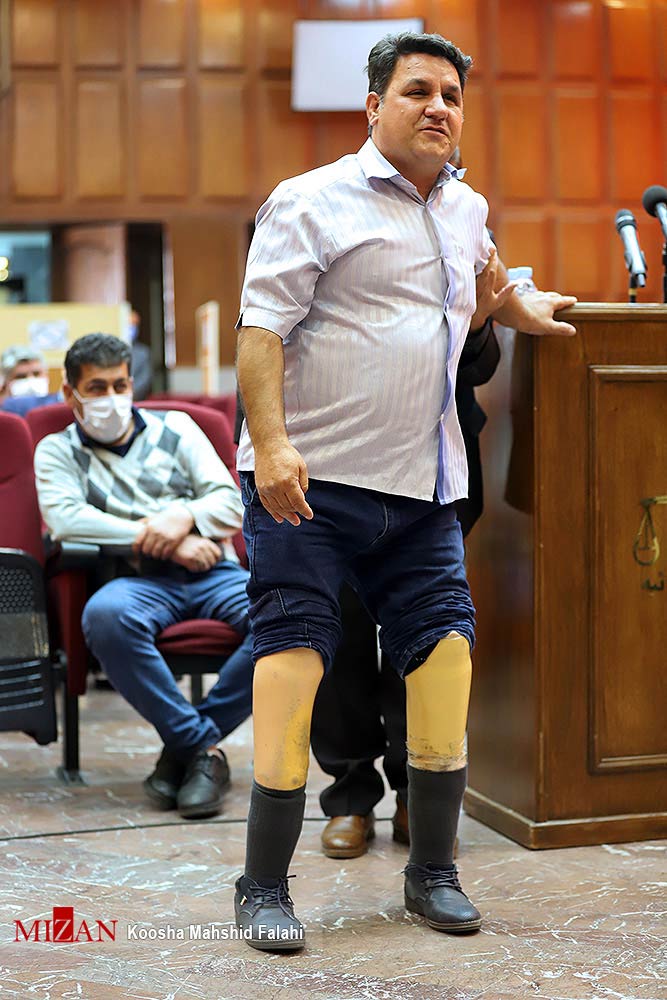
Nader Chapchaap was deceived to join the MEK by its recruiters in Turkey where he had immigrated to work. He was taken to Iraq and forced to stay in Camp Ashraf for four years. “They pulled off my toe nails and then forced me to work in military and service units of the organization,” he addressed the court. “Consequently, my feet were infected.” Chapchaap’s feet were then amputated.
Another complainant in the court, Mohammad Javad Assadi who was recruited by the group in the same way as Chapchaap was, said, ”I was imprisoned by the MEK for three and a half years and then I was kept in the American camp for four years and I witnessed they pulled off Chapchaap’s toenails.”

Eskandari

They kept me in a cage
Fathollah Eskandari was a soldier in the Iran-Iraq war when he was shot and taken as a hostage by the MEK forces. “They kept me in a cage for the first three months,” he said. “During the 17 years of my imprisonment in the MEK, I witnessed a man named Khodam Golmohammadi set himself on fire, he survived, they took him somewhere, I did not see him anymore. I saw Hojat Azizi and Karim Pedram shot themselves dead and a blind man named Rasool set himself on fire too.”

Fereydoun Ebrahimi

Forced me to hunger strike
Fereidoon Ebrahimi escaped the MEK in 2015. He had been recruited by the MEK in Turkey. “The mental tortures are worse that the physical tortures in the MEK,” he told the judge. “I was forced to take part in the group’s hunger strike for 92 days in 2011.”
“Camp Ashraf was a forced labor camp,” he told about MEK’s cut-like system. “We had no time to think freely since we were forced to work hard from 5 am until night.”

Mahmoud Dashtestani

It was forbidden to speak of your mother
Mahmoud Dashtestani was only 15 when he was taken as a war prisoner by Iraqi forces, he was then recruited by the MEK. He escaped the group in 2009 and returned to Iran as a 41-year-old man. “Once, I told a memory about my mother, my peers sent a report against me to the superior members,” he recounted an experience of the cult-like structure of the MEK. “They jailed me for three days and then they made me sign a paper to promise that I would not think of my mother anymore.”

Kayoukan

I am the People
Leila Kayukan is the daughter of Rahim Kayukan, an MEK member. “For 40 years, the efforts of my family to contact my father have not been successful,” she told the court. “As a child, I lost my dad, I never even heard his voice. I am the people.” She refers to the alleged title of the group, “Fighters of Iranian People”.

Leila Qasemi

My brother was not in Denmark
Leila Qasemi is the sister of Habibollah Qasemi, a hostage of the MEK. “We have not seen my brother since 19 years ago,” she addressed the court. “My brother went to Turkey and then traveled to Greece where he was deceived by the MEK recruiters and was taken to Camp Ashraf, Iraq.”
The Qasemis thought that Habibollah had gone to Denmark from Greece. “We pursued his case via the Ministry of Foreign Affairs and realized that he had never gone to Denmark but he was kidnapped to join the MEK in Iraq.” In 2016 they went to Camp Ashraf to visit his brother. “They did not allow us to visit him but instead we were attacked by rocks,” she said.

Hadi Shabani

I am here to confirm their testimonies
Hadi shabani was a member of the MEK for 20 years. He left the group in 2004. He took part in the court hearing to give his testimony endorsing other complainants. “I was responsible of the reception unit in the MEK so I witnessed many things,” he said. “Soon after I myself entered the group, all the ideals I had about the cause of the group collapsed in my mind.”
“In the cult of MEK you are not allowed to ask questions, you are just the executors of the leaders’ orders,” he told the judge.

March 16, 2021 0 comments
FacebookTwitterPinterestWhatsappTelegramSkypeEmail
World Health Organization
Mujahedin Khalq Organization members' families

Mr.Zarei expressed concern about the health of his brother at MEK Camp

In a letter to the World Health Organization (WHO) in Albania, Mr. Mohammad Ebrahim Zarei expressed his deep concern about the health of his brother, Gholam Hossein Zarei, who is being held in the Mojahedin Khalq (MEK) camp in Albania.

World Health Organization

The text of the letter is as follows:

Representative of the WHO in Albania
Greetings and best regards

I am Mohammad Ebrahim Zarei, the brother of Gholam Hossein Zarei, who is now in a closed and remote camp of MEK in Albania with no connections to the outside world.

My family and I have not seen my brother for many years and we have not heard his voice on the phone and we have not even received a message from him, and this always bothers us.

But now the news worries us a lot, and that is that on the one hand, my brother is probably infected with the Covid-19 virus and is living in very acute conditions, and on the other hand, the health conditions inside the camp are unfavorable due to the group life.

We, the family of Gholam Hossein Zarei, have no desire other than hearing his voice and learning about his health. Of course, in support of the MEK, Albania does not grant us Iranians visas and does not allow us to travel. The MEK does not even allow a single phone call to its members.

I ask you not to neglect any action that is conceivable and fruitful in order to alleviate my and my family’s concerns, so that news of my brother reaches us and communication is possible.

Mohammad Ibrahim Zarei
Iran – Khorasan Razavi – Sabzevar
January 2021

Copy to:
Office of the Prime Minister of Albania
Office of the United Nations High Commissioner for Human Rights

March 16, 2021 0 comments
FacebookTwitterPinterestWhatsappTelegramSkypeEmail
Maryam Azad
Mujahedin Khalq Organization members' families

Who can help us deprived families?

Ms. Masoumeh Azad Manjiri, the sister of Maryam Azad Manjiri, who was detained in the Mojahedin-e Khalq (MEK) camp in Albania, wrote a letter to the World Health Organization requesting that her sister’s health be taken care of.

Maryam Azad

The text of the letter is as follows:

Representative of the World Health Organization in Albania

Greetings and best regards,

I am Masoumeh Azad Manjiri, the sister of Maryam Azad Manjiri. My sister is currently in the Mojahedin-e Khalq (MEK) camp in Albania. He left Iran with his wife Mohammad Norouzi 32 years ago.

We later found out that they were deceived by the forces of the MEK and transferred to the organization’s camp in Iraq. In all these 32 years, I have not met her or even heard her voice. It is the wish of every sister to be able to communicate with her loved one and be informed about her condition.

You know that even in the most horrible prisons in the world, and in the case of the most dangerous prisoners, families are allowed to call and visit, but we are deprived of this minimum possibility. Who can help us deprived families? Which international body should we take our complaint to? Who would support us?

Worst of all, I think my sister has a disease caused by Covid-19 and is living in difficult conditions, and the health facilities inside the camp are not good and they have suffered many casualties so far, because the environment there is completely closed. The MEK does not allow its members to communicate with their families, and the Albanian government does not allow Iranians to travel to that country to pursue the issue.

I desperately ask you not to neglect any action that is imagined in order to alleviate the worries of me and my expectant family, so that news of my sister will reach us and we will be able to communicate.
Please understand the feelings of me and my family and do not hesitate to pursue this issue.

Thanks and best regards,
Masoumeh Azad Manjiri
Iran – Khorasan Razavi – Sabzevar

Copy to:
Office of the Prime Minister of Albania
Office of the United Nations High Commissioner for Human Rights

March 15, 2021 0 comments
FacebookTwitterPinterestWhatsappTelegramSkypeEmail
Massoud Rajavi
Massoud Rajavi

Rajavi orders widespread assassinations throughout Iran

In response to the recent message of the Mojahedin-e Khalq Organization (MKO)’s leader, in which he ordered the group’s terror cells to initiate widespread assassinations throughout Iran, families of Iranian victims of terrorism have written a letter to the international institutions of the European Union calling for legal proceedings against this terrorist group.

“The families of terror victims in Iran call on all international authorities and institutions in the European Union to, along with restricting the activities of this group in Europe, prosecute the leaders of this terrorist group in an international court with the presence of their victims,” the letter read.

Terrorism

According to this letter, the MKO leader’s order demonstrates adoption of a violent strategy towards the judicial process and the court hearing on March 8 and 9, 2021 where a large number of former members filed a complaint about years of torture and violation of human rights by this group.

As the open letter points out: “the group’s recent move to establish terror cells in Iran and their acts of sabotage and violence, which is officially admitted and prompted by the group, proved that the MeK is still a militant cult and a far cry from becoming an opposition group.”

Referring to The MKO’s location in Europe and freely activity of its members in European countries, families of Iranian terror victims warned that the group’s previous crimes and the violent threats its leader made on March 8 as well as any upcoming terrorist acts and assassinations in Iran, are partly the responsibility of the countries which have sheltered this group.

Massoud Rajavi

Read the full text of the letter below:

We are the families of the victims of assassinations and violence of the terrorist group Mojahedin-e Khalq Organization (aka MKO, MeK, PMOI) who lost our children, parents and grandparents in targeted and blind operations of this group. We have repeatedly protested against the negligence of international institutions in carrying out their obligations such as restraining this group and taking necessary measures to start prosecuting its leaders for their terrorist acts and crimes against humanity.

In our earlier correspondence, we had warned that ignoring their violent acts and behaviors would lead to this group’s return to violence and aggression.

As a result of this negligence, on March 8, Massoud Rajavi, leader of the Mojahedin-e Khalq Organization who has been living in hiding for nearly two decades due to fear of criminal prosecution and has been leaving occasional voice messages for members of his cult, broadcast a message to members of his terror cells known as”rebel centers”in which he ordered them to make use of weapons and initiate widespread assassinations throughout Iran.

This order of the MKO leader clearly demonstrates adoption of a violent strategy towards the judicial process and the court hearing on March 8 and 9, 2021 where a large number of former members filed a complaint about years of torture and violation of human rights by this group.

Fearing that ex-members of his cult sue him in court in Tehran and disregarding dozens of international documents on MeK crimes, terrorist acts and violation of human rights, Massoud Rajavi has escaped forward and invited Iranian officials to appear in an international court. On the other hand, former members and survivors of this terrorist group demand to go to an international court of law along with Massoud Rajavi and other leaders of this group to be fairly judged. Do Massoud Rajavi and his wife, as leaders of this cult, dare to appear in an international court of law before the victims of the crimes they have committed? And are EU officials and international institutions based in this continent ready to hold such a trial? This is the legal obligation of European officials and institutions. The MeK is located in Europe and its members travel freely in it. Therefore, the group’s previous crimes and the violent threats its leader made on March 8 as well as any upcoming terrorist acts and assassinations in Iran, are partly the responsibility of the countries which have sheltered this group.

In his message which promoted violence, leader of the MeK called on his elements to provide his rebel centers, with names and addresses of employees of Iran’s military, security and judicial institutions so that for what he calls the”Great Day of Justice”, weapons can be fired at their chests! In the message, Rajavi made mention of the early years after the 1979 revolution when his group’s death squads assassinated Iranian civilians and officials. He requested the rebel centers to do the same.

As mentioned, numerous reports have been published by the research centers, governmental institutions and western intelligence agencies about this cult and its threats.

The FBI’s 1987 report; a Court of Appeals document on June 25, 1999, based on a CIA Report; US Government Statement in 1997; a report by Canada’s SIRC in 1992; US Department of Justice’s report in April 2009; State Department’s Reports in 2004, 2005, and 2006; Executive Order No. 13224 by the US Secretary of State on Terrorist Financing of the National Council of Resistance and the Mojahedin-e Khalq Organization in August 2003; US Court of Appeals’ verdicts in 1999, 2005, and 2009; FBI’s reports in August 2002 and November 2004; a report by the American Institute for Political Studies (IPS) in 2012; a 2005 Human Rights Watch report named No Exit; German BfV agency’s reports in 2004 and 2005; a document regarding the MEK’s inclusion in the European Union terrorist list printed in the Official Journal of the Union in December 2007; a report by security service of North Rhine-Westphalia State in October 2005; the 2008 North Rhine-Westphalia State Protection Office’s Report; Foreign Affairs Committee of the British Parliament’s report in July 2003; the British Foreign Relations Committee’s report in July 2004; official Statement by the UK Foreign Secretary in May 2008; Statement by the French Minister for Justice in June 2003; Swedish Government Resolution on 2 September 2004, and Swedish Immigration Office Decision against the MEK; EU Declaration on 5 April 2002; the US Deputy Secretary of State’s reports to Congress and the Foreign Affairs Committee of House of Representatives in October 1994; the 2009 Rand Corporation’s report; Saban Center for Middle East Policy’s report in June 2009; Columbia Court of Appeals’ report in 2010; and US Council on Foreign Relations’ report in July 2014.

These documents, reports and verdicts are only part of what proves the violence and terrorism of the Mojahedin. The group, which was disarmed in 2003 as a militant group affiliated with Saddam Hussein’s regime following the US invasion of Iraq, has since acted in Europe, pretending itself as a political group opposed to the Iranian government. However, the group’s recent move to establish terror cells in Iran and their acts of sabotage and violence, which is officially admitted and prompted by the group, proved that the MeK is still a militant cult and a far cry from becoming an opposition group. One should add to it the recent order of Massoud Rajavi to the terror cells to identify Iranian citizens working in judicial and military institutions and “execute justice on them”.

The families of terror victims in Iran once again call on all international authorities and institutions in the European Union to, along with restricting the activities of this group in Europe, prosecute the leaders of this terrorist group in an international court with the presence of their victims. We also declare our full readiness to cooperate in this process by providing the required documents to the responsible institutions.

To:
European Commission
Council of the European Union
European parliament
Secretariat of the European Parliament
European Court of Human Rights
Court of Justice of the European Union
Council of Europe Committee on Counter-Terrorism

Sincerely yours,
Habilian Association (Families of Iranian victims of terrorism)
March 12, 2021

March 14, 2021 0 comments
FacebookTwitterPinterestWhatsappTelegramSkypeEmail
Newer Posts
Older Posts

Recent Posts

  • The black box of the torture camps of the MEK

    December 24, 2025
  • Pregnancy was taboo in the MEK

    December 22, 2025
  • MEPs who lack awareness about the MEK’s nature

    December 20, 2025
  • Why did Massoud Rajavi enforce divorces in the MEK?

    December 15, 2025
  • Massoud Rajavi and widespread sexual abuse of female members

    December 10, 2025
  • Facebook
  • Twitter
  • Instagram
  • Youtube

© 2003 - 2025 NEJAT Society . All Rights Reserved. NejatNGO.org


Back To Top
Nejat Society
  • Home
  • Articles
  • Media
    • Cartoons
    • NewsPics
    • Photo Gallery
    • Videos
  • Publications
    • Books
    • Nejat NewsLetter
    • Pars Brief
  • About Us
  • Contact us
  • Editions
    • عربي
    • فارسی
    • Shqip