Nejat Society
  • Home
  • Articles
  • Media
    • Cartoons
    • NewsPics
    • Photo Gallery
    • Videos
  • Publications
    • Books
    • Nejat NewsLetter
    • Pars Brief
  • About Us
  • Contact us
  • Editions
    • عربي
    • فارسی
    • Shqip
Nejat Society
Nejat Society
  • Home
  • Articles
  • Media
    • Cartoons
    • NewsPics
    • Photo Gallery
    • Videos
  • Publications
    • Books
    • Nejat NewsLetter
    • Pars Brief
  • About Us
  • Contact us
  • Editions
    • عربي
    • فارسی
    • Shqip
© 2003 - 2024 NEJAT Society. nejatngo.org
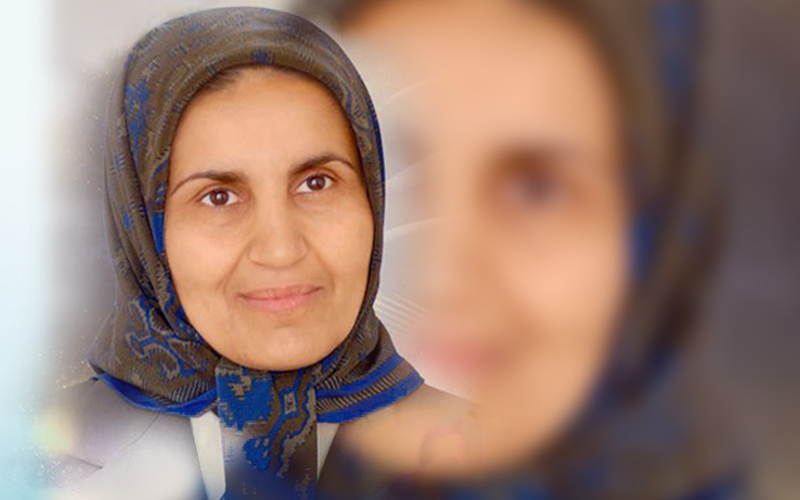
Ahmad Abdi mum
Mujahedin Khalq Organization members' families

The video message of Ahmad Abdi’s mother

Mahin tavakoli is the mother of Ahmad Abdi, member of the Mujahedin Khalq Organization (the MKO/ MEK/ PMOI/ Cult of Rajavi). She has been looking forward to meet her son for 40 years.
Ahmad was taken as a war prisoner by Iraqi forces in 1980 when he was a volunteer military in Iran-Iraq war. He used to contact his family from inside the Iraqi prison until 1988 but since then his family had no news about him. In 2001, defectors of the MEK told Ahmad’s family that he was in Camp Ashraf.
Ahmad’s father died a few years ago while he was looking forward to see his beloved son. Now, his mother asks him to contact her hoping that Ahmad will see the video someday.

To download the video click here

October 7, 2020 0 comments
FacebookTwitterPinterestWhatsappTelegramSkypeEmail
mek - coronavirus-albania
Former members of the MEK

Iranian MEK cult in Albania poses public health risk

With its small population of 2.8 million people, the Republic of Albania may appear to have a more manageable task (depending, of course, on the availability of health care resources) of testing and tracking contacts to halt the spread of the coronavirus, than countries with multiple millions of citizens living in large, sprawling cities and conurbations. But as Albania extends its lockdown to stop the spread of the coronavirus, the country faces a specific problem that some other countries also face — notably South Korea — the presence of a closed and secretive cult in the midst of the population.

Since its arrival in Albania in 2016, the Iranian Mojahedin-e Khalq (MEK), also known as the Rajavi cult after its leaders Massoud and Maryam Rajavi, the group has caused problems for the authorities and citizens of their host country. Exploiting the unresolved problems of crime, corruption, and a weak state dependent on American approval, the MEK has manipulated, bribed, and intimidated its way into the political, media, and criminal elements of Alabania. According to well-known historian Olsi Jazexhi, the MEK has even perverted Albania’s foreign policy making it a hub for anti-Iran activities and creating a security nightmare for Albania’s police and security services.

MKO members in Albania and the corona virus

Coronavirus in Albania and the Presence of Mojahedin-e Khalq in Tirana

Now the group poses another risk to the country — a public health risk that cannot be assessed or managed.

In 2017, both tacit support from the Trump administration, and overt support from neoconservative personalities, enabled MEK leaders to evade a planned de-radicalization program and instead build a closed secure camp in Manez — a remote town in the county of Durres — to house up to 2,000 cult members. Camp Ashraf 3 — as it is known — is guarded by private armed security personnel as well as MEK officials; only invited persons are allowed entry. Before this mass incarceration, dozens of members took advantage of the move to Albania to separate from the group. They reported terrible human rights abuses and conditions of modern slavery in the MEK. Journalists were refused entry to the camp to interview members locked up there.

For the majority of MEK members then, a lockdown may seem irrelevant since they were already in forced isolation from the outside world, but for Albania, the existence of the group in the country poses a real dilemma.

MEK in albania and the resk of corona

Although most cult members will not emerge in public, the group relies on regular supplies from outside, particularly food and medicine, and those who emerge to procure these supplies are part of a greater chain of contacts that stretch all the way to Italy. Not only are MEK members who move around Albania unaccountable and untraced, the MEK is notorious for trafficking its own members past national borders.

The MEK’s leading members made frequent trips to Italy in the early months of this year, exposing them to COVID-19. In this respect, it is important to acknowledge that the MEK members are not all based in the closed camp. Last year, MEK leader Maryam Rajavi was forced to leave her base in France and set up her new headquarters in Albania. Many leading members live in the capital Tirana and occupy a variety of premises — from business offices to an entire floor of the International Hotel in Skanderbeg Square in Tirana. Where are those people now? What contact did they have between Italy and the residents of Camp Ashraf 3? Durres county is the epicenter of the current coronavirus epidemic in Albania. Have MEK members inside been infected?

We don’t know and we may never know. The Albanian authorities, including the security services, do not have access to the camp. According to investigative journalist Gjergji Thanasi, who lives in Durres county near the MEK camp, the Health Ministry “deals with Camp Ashraf 3 as if it does not exist. There is not a single line in the Durres Municipality health officials’ paperwork written about the camp and its residents. No Albanian health official has ever entered the camp.”

This means that no matter how hard epidemiologists may be working to trace the contacts of positive cases throughout the country, the MEK will not submit to allow Health Ministry staff inside the camp to test the individuals there. Thanasi goes on to explain, “the MEK have their own doctors, nurses, and dentists. When they have seriously ill patients, they hire private ambulances to transport them to a public hospital in Tirana.”

What is deeply concerning in this crisis, however, are the messages emerging from the camp and covertly passed to those who are concerned with their welfare. Over a thousand families of these disappeared MEK members, who have been trying for two decades to gain contact with their loved ones, say these messages are alarming. They say that the MEK leaders have blocked every form of access to medical care and hospital visits have been cancelled. They also report that some people have gone missing and nobody knows where they are. Everyone inside the camp is worried about the virus and that they are getting no help. They say there is a general sense of dread about the spread of COVID-19.

According to Thanasi, employees of Durres Municipality who engaged in disinfecting streets, squares, flea markets, and agriculture produce markets had contacted the MEK camp via the local Manez council officials offering to disinfect the camp. “We were thanked profusely before our offer was very politely turned down. The commanders at the camp insisted they had already thoroughly disinfected the camp”, Thanasi was told. The Municipal workers however added there was “no evidence this had been done.”

Outside the camp, local residents have observed the MEK’s efforts to deal with the crisis. Speaking to Thanasi, one resident said, at the camp entrance, Albanian armed security guards and MEK members have been observed wearing masks and gloves, “but those on duty at a second gate do not always use protective gear.”

It appears that in public, MEK personnel will wear the masks and gloves, but a group of MEK members who work in a small facility outside the camp fence opposite the main entrance generally do not wear protection. It could be that a shortage of PPE means the MEK has to adopt a public relations exercise to be seen to observe distancing, isolation and protective measures. More cynically, the patchy distribution of protective gear could be linked to a hierarchy of privilege.

Without official oversight, it is not known how many MEK members will contract the virus and how many will die as a result. What is known is that since arriving in Albania, dozens of MEK members have died — reportedly from old age and illness — yet their reported cause of death cannot be relied upon.

MEK leaders mostly refuse post-mortem examinations. The MEK leaders are just as unlikely to report incidences of COVID-19 infections and deaths. MEK members are especially susceptible to the ravages of this virus. Their average age is around 65, with some members in their seventies and eighties. Many members have underlying health issues, and weakness brought on by the decades of overwork and harsh living conditions endured in Iraq. Rajavi herself is so frightened of succumbing to the virus that back in March she had one of her parliamentary lobbyists raise the possibility of travelling to the UK where even as a visitor she could access world class medical facilities.

Clearly, even if the MEK does eventually allow sick members to be tested and gain access medical care, Albania is barely equipped to deal with a widespread outbreak of the coronavirus among the indigenous population. If this troublesome group consumes badly needed resources, the finger of blame will surely go to Albania’s corrupt politicians who allow this group to flout the country’s laws and national interests and pursue its own agenda. That finger of blame must as well point directly at the Trump administration too. Secretary of State Mike Pompeo is happy to use MEK propaganda churned out by the troll farm in Camp Ashraf 3 by enslaved members to attack Iran and justify the continuation of extreme sanctions. What responsibility will he take for the health and wellbeing of these people and the people of Albania.

Responsible Statecraft

October 6, 2020 0 comments
FacebookTwitterPinterestWhatsappTelegramSkypeEmail
Nejat Newsletter 76
Nejat Publications

Nejat Newsletter – No.76

Inside This Issue:

– Rajavi is the Main Culprit for the Death of My Sister
Following the publication of the news of Shahin Qasemi’s death by the news media of the Mujahedin Khalq Nejat Newsletter - no 76Organization (the MKO/ MEK/ PMOI/ Cult of Rajavi), her brother Siavash Qasemi contacted the office of Nejat Society in Ahvaz, Khuzestan and asked to publish the message of his family’s grief for the loss of his sister:

– NEJAT SOCIETY CEO LETTER TO MS MARIA ARENA MEP
On behalf of the suffering families of members of the Mojahedin-e Khalq Organization (MEK, MKO, Rajavi Cult), based in the organization’s camp in Albania, I would like to inform you that this organization, due to its cultic behavior, prevents its members from communicating with the outside world, particularly with family and friends. Recently, a petition was signed by more than 11,000 relatives,….

– Mother of Fereydoun Nedayi’s letter to the Prime Minister of Albania
I am Roghayeh Farazian Fard Kohan, the elderly mother of Fereydoun Nedayi. My son went to military services in the army in Iran in 1979 and was captured by Iraqi forces on the battlefield in 1980. He was held captive in Iraqi POW camps for eight years. In 1988, a ceasefire was established between Iran and Iraq, but the Iraqi government refused to return prisoners of war. A year later, in 1989, the situation in the POW camp was deliberately worsened, and then the MEK entered and talked to the POWs …

– FAMILIES OF THE MEK MEMBERS SHOULD PLANT THE SEED OF HOPE FOR THEIR LOVED ONES
The MEK leaders block communications with the outside world, particularly families are labeled as enemies of the group, and are considered “agents of the Iranian Intelligence” and eventually the enemies of their children! However, families who are inside the MEK camp live separately.
Spouses were forced to divorce. No parents are allowed to live with their kids. No sibling is allowed to socialize in the camps unless it is the New Year’s celebration. This is part of the regulations of every destructive cult.

– MEK FAMILIES PETITION ALBANIAN EMBASSY IN PARIS
The 11,000 signatures and letters directed at the PM, President, and officials of the Albanian government from the families were presented in a book submitted to officials in the Embassy.Families are being refused entry visa to Albania by the direct request of leaders of Rajavi Cult. This denial of access to family members is a direct abuse of the UN Human Right Charter OLSI JAZEXHI: MEK IMPOSED ON ALBANIA

– POWs of the MEK. From Iraq to Albania
MEK has been left reeling from the inescapable reaction by Albanians to its attacks on journalists and academics. In particular, Olsi Jazexhi, who is a well know academic with a strong media presence, has invited Maryam Rajavi to a public debate about her activities in his country. In another interview, he pointed out that MEK were imposed on Albania by the US and that Albanians,since then, have protested and demanded that MEK should not be located in their country.

To download the PDF file click here

October 4, 2020 0 comments
FacebookTwitterPinterestWhatsappTelegramSkypeEmail
Supreme Court Trump
Mujahedin Khalq; A proxy force

Judge Barrett Mujahedin-e-Khalq Ties

Amy Coney Barrett, President Trump’s nominee to join the Supreme Court, once represented an affiliate of an Iranian exile group as it challenged its State Department designation as a foreign terrorist organization.

“With today’s actions, the Department does not overlook or forget the MEK’s past acts of terrorism, including its involvement in the killing of U.S. citizens in Iran in the 1970s and an attack on U.S. soil in 1992,” the State Department said upon delisting the group. “The Department also has serious concerns about the MEK as an organization, particularly with regard to allegations of abuse committed against its own members.”

Judge Barrett Mujahedin-e-Khalq MEK Ties

Barrett disclosed her legal work for the group, which she undertook while employed at a law firm in Washington, in the Senate questionnaire she submitted during her 2017 confirmation process to join the U.S. Court of Appeals for the 7th Circuit. The work did not come up in her confirmation hearing.
Barrett wrote that she was one of five lawyers on a team that represented the National Council of Resistance of Iran and its U.S. representative office from 2000 to 2001 in their petition to review the State Department’s foreign-terrorist-organization designation.

The NCRI is affiliated with the Mujahideen-e Khalq (MEK), a onetime militant group comprising Iranian exiles who oppose Iran’s clerical regime. The Obama administration removed the group from the U.S. government’s list of terrorist organizations in 2012. The MEK has faced accusations of cultlike practices, which the organization has disputed as smears.

mek terror cult

Barrett wrote that she “assisted with legal research and briefing” for the Iranian exile group’s case while she worked for Miller, Cassidy, Larroca & Lewin LLP, a law firm that merged with Baker Botts LLP in 2001 during her employment there. In her questionnaire, Barrett said the counsel of record on the case was Martin D. Minsker, signaling that she was a junior lawyer on the case.
Minsker didn’t immediately respond to a request for comment. A spokesman for Baker Botts declined to comment.

The MEK formed as a militant group in opposition to Iran’s monarchy but was forced into exile after the 1979 revolution that toppled the shah. The State Department designated the MEK as a foreign terrorist organization in 1997, citing its involvement in the killing of Americans in Iran during the 1970s. The department, which also cited a 1992 incident in which five men with knives invaded the Iranian mission to the United Nations in New York, said the NCRI “functioned as part of the MEK” and “supported the MEK’s acts of terrorism.”

Shahin Gobadi, a spokesman for the MEK, said the State Department designated the group as a foreign terrorist organization unfairly in 1997 for political reasons, to curry favor with Iran.
“What’s important is the designation, to begin with, wasn’t established and was politically motivated,” Gobadi said, citing statements by Clinton administration officials involved in the decision.

Barrett played a small role in the MEK’s years-long effort to remove its terrorist designation in the United States.
In the case she worked on before the U.S. Court of Appeals for the D.C. Circuit, the NCRI argued that because it maintained a U.S. affiliate office and bank account, and was seen as an alias of the MEK by the U.S. government, the exile group should have been afforded due process rights under the Fifth Amendment of the Constitution when the State Department deemed the organization a terrorist group.

The court agreed, ordering the State Department to provide due process by disclosing certain information it used to make the determination and affording the designee a right of rebuttal. The U.S. government maintained the terrorist-group designation until 2012, when a D.C. Circuit judge set a deadline for the State Department to grant or deny the group’s petition.

Days before the deadline, the department revoked the designation, citing the group’s public renunciation of violence and the absence of confirmed acts of terrorism for more than a decade. The decision came as the MEK agreed to leave a base in Iraq that Saddam Hussein had allowed its members to occupy for years. The U.S. military had been providing protection for the group at that base.
“With today’s actions, the Department does not overlook or forget the MEK’s past acts of terrorism, including its involvement in the killing of U.S. citizens in Iran in the 1970s and an attack on U.S. soil in 1992,” the State Department said upon delisting the group. “The Department also has serious concerns about the MEK as an organization, particularly with regard to allegations of abuse committed against its own members.”

Gobadi, the MEK spokesman, said the terrorist-group designation was “thrown out the window by the courts.” He called the department’s citation of abuse allegations “preposterous remarks” that “were made as a face-saving measure on the day.”

White House spokesman Judd Deere emphasized Barrett’s junior role in the case, noting that she was not the counsel of record and “assisted with legal research and briefing.”
Arthur Hellman, a professor emeritus at the University of Pittsburgh School of Law and an expert on the U.S. federal courts, said Barrett, as a junior associate at a law firm, probably would not have had permission to choose her clients — and in any case shouldn’t be judged by them. He said the Supreme Court could use judges with more experience in private practice.
“If we think it’s desirable, as I and a lot of others do, that you have justices on the Supreme Court who have gotten their hands dirty with real-world litigation — some of that is probably going to be on behalf of clients that are not terribly admirable,” Hellman said.

Barrett worked in private practice for two years after clerking for Supreme Court Associate Justice Antonin Scalia and before entering academia.

The MEK has long sought legitimacy in the United States, in part by paying former government officials from both major parties to speak at its annual rallies, and has presented itself as a secular, democratic alternative to Iran’s theocratic regime. The dissidents also revealed the existence of secret Iranian nuclear sites, aiding U.S. efforts to thwart Iran’s nuclear ambitions.
Former New York mayor and Trump ally Rudolph W. Giuliani and former Trump national security adviser John Bolton have both been outspoken proponents of the group, as have Democrats like former Pennsylvania governor Ed Rendell and former Vermont governor Howard Dean.

The group, however, has also been dogged by accusations of human rights abuses, after some former members described cultlike practices by the organization designed to control its members.

“I call them basically a cult,” said Ervand Abrahamian, a professor emeritus of Iranian and Middle Eastern history and politics at Baruch College in New York.
Gobadi, the MEK spokesman, disputed those accusations, describing them as part of a long-standing disinformation campaign against the group by the Iranian regime and its intelligence apparatus.
He said the allegations had been proved “time and again to be totally baseless.”

Julie Tate contributed to this report.

By Paul Sonne and Yeganeh Torbati

October 3, 2020 0 comments
FacebookTwitterPinterestWhatsappTelegramSkypeEmail
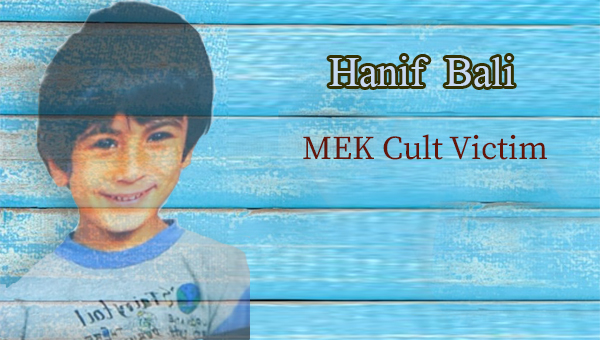
Hanif Bali
The cult of Rajavi

The Mek and Children – Hanif Bali

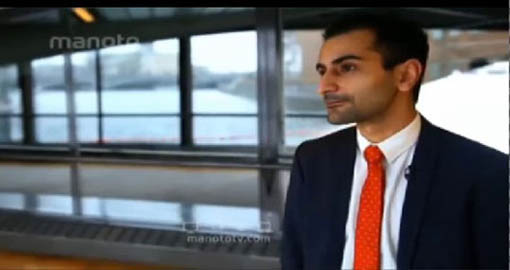
He has been a member of Sweden Parliament since 2010 but he was born in Kermanshah, Iran in 1987. Three years later in Camp Ashraf, his Mujahed parents left him in the hands of the agents of the Mujahedin Khalq Organization (the MKO, MEK, PMOI, Cult of Rajavi) to take Hanif to Europe together with hundreds of other children of the MEK members.

Hanif Bali

Hanif is a successful Swedish citizen now because he is one of those few lucky MEK children who was not returned to Camp Ashraf, Iraq, to receive military training. However, in an interview with Manoto TV in 2016, he recounted heartbreaking stories of his childhood as an orphan in a foreign country. This is what he said about his biological parents: “Mothers were allowed to call their children only once a year. My father has called me only twice in my entire life.”

Hanif Bali as a child vitim of MEK

Hanif arraived in Sweden when he was three years old and moved between eight different families until he turned 18. He spoke of his several moms, “When I was told “your mom”, I had to ask “Which mom?” because I had several moms. “

Today, you can find out a few new details of Hanif’s challenging childhood among his diverse parents and families. On May 2017, he wrote a short caption for a photo of himself by the side of his biological father on his Instagram account: “I met my biological father at 13:30. I do not think DNA test is necessary” (referring to their high resemblance).

Another significant photo shows baby Hanif next to another man. The clarifying caption explains his controversial life far from his biological parents:

“In my entire childhood, I had a lot of fathers. Father is not always biologic or the one who you lived with more or the one who was kinder or more violent than others. Sometimes your dad can be the one who you had the most challenging relationship with but he was the same person who you knew profoundly and loved the most. I have portraits of several fathers in my mind but I had only one dad. I miss him every day.”

October 1, 2020 0 comments
FacebookTwitterPinterestWhatsappTelegramSkypeEmail
Maryam Rajavi
Mujahedin Khalq Organization's Propaganda System

MEK, the Most Hated Among Iranians — From Terror to Propaganda

Iranian forces carried out Defensive Operation Mersad on July 26, 1988, the last major military operation of the Iraqi imposed war in the western province of Kermanshah to successfully counterattack against the Mojahedin-e-Khalq (MEK) terrorist group backed by the US and Saddam Hussein.[1] Two days before the operation, MEK, who had gathered their forces on the Iranian-Iraqi border and were equipped with heavy weapons provided by Saddam, began invading Iranian territory. The MEK advanced under heavy Iraqi air cover, violating UNSCR 598, accepted by both Iran and Iraq, which would end the war on 8 August 1988.[2] Simultaneously with Operation Forough Javidan by the MEK, the Iraqi army bombed several Iranian villages around Kermanshah with Mustard and Nerve chemical weapons of mass destruction killing hundreds of Iranian civilians and injuring 2,300.[3] Not to mention that during the eight years of Iran-Iraq war more than 350 large-scale gas attacks were reported in the border areas,[4] and there is not even a single United Nation Security Council Resolution to condemn the use of chemical weapons; in fact, there could be one, but the United States vetoed the condemnation. Of course, MEK’s offensive failed, leaving thousands of martyrs. After the war, however, the organization continued its attacks against Iranian civilians and government officials. Out of nearly 17,000 Iranians killed in terrorist attacks over the past four decades, about 16,000 have fallen victim to MEK’s acts of terror.[5] The cult, despite its dark history, however, nowadays is being heavily funded by the US regime and Saudis to keep on moving by spreading fake news and propaganda through disinformation campaigns for the sole purpose of manipulating and provoking public opinion.

MEK’s troll farm in Albania

In February 2020, the New York Times interviewed 10 ex-MEK members who said that the MEK’s Albania camp had a troll farm.[6] A troll farm is an institutionalized group of internet trolls aimed to interfere in political opinions and decision-making. According to the Cambridge dictionary, a troll is someone who leaves an intentionally annoying or offensive message on the internet, in order to upset someone or to get attention or cause trouble. MEK’s Albania troll factory or troll farm promoted the opinions of MEK supporters under specific guidelines for specific reasons, spread fake news, and devoted itself to manipulate and provoke the public for rebellion and violence. Certain analysts such as Kenneth R. Timmerman and Paul R. Pillar also believe that the group hires protesters to shape public opinion in exile.[7] In an article published by The Intercept on 9 June 2019, two former MEK members claimed that “Heshmat Alavi” is not a real person, and that the articles published under that name were actually written by a team of people at the political wing of the MEK.[8] Alavi contributed to several media outlets including Forbes, The Diplomat, The Hill, The Daily Caller, The Federalist, and the English edition of Al Arabiya’s website. According to The Intercept, one of Alavi’s articles published by Forbes was used by the White House to justify Donald Trump Administration’s sanctions against Iran.
An Iranian Activist Wrote Dozens of Articles for Right-Wing Outlets. But Is He a Real Person?
In 2018, President Donald Trump was seeking to jettison the landmark nuclear deal that his predecessor had signed with…
theintercept.com

“We were always active in making false news stories to spread to the foreign press and in Iran,” Reza Sadeghi — a member of the MEK until 2008, involved in lobbying activities in the United States, as well as operations at the MEK’s former base at Camp Ashraf in Iraq — reveals in the interview. “At Camp Ashraf, there were computers set up to do online information operations. Over the years, this activity got more intense with the introduction of social media platforms like Facebook and Twitter.”

There are dozens, or maybe hundreds, of other networks in step with peremptory demands of some warmongering regime change advocates. Their objectives are to occupy minds and to distort histories, to disturb and to call forth the public, to use people as artillery support under a constant bombardment of provoking and fake news.
Iran International Network, Saudis’ Black Propaganda Machine
Iran International, launched in May 2017 shortly before presidential elections in Iran, is another London-based…
medium.com

[1] Kaveh Farrokh, “Iran at War: 1500–1988,” Oxford: Osprey Publishing, 2011.

[2] United Nations, “Search engine for the United Nations Security Council Resolutions,” http://unscr.com/en/resolutions/598

[3] Eric A. Croddy, James J. Wirtz, and Jeffrey A. Larsen, “Weapons of Mass Destruction: An Encyclopedia of Worldwide Policy, Technology, and History,” 2004. The actual casualties may be much higher, as the latency period is as long as 40 years. See Robin Wright, “Iran Still Haunted and Influenced By Chemical Weapons Attacks,” January 2014.

[4] Ali Karami, “Long Legacy,” cbrneworld, 2012, http://www.cbrneworld.com/_uploads/download_magazines/Long_legacy.pdf

[5] Hamid Reza Qasemi, 2016, “Chapter 12: Iran and Its Policy Against Terrorism” in Alexander R. Dawoody, “Eradicating Terrorism from the Middle East. Policy and Administrative Approaches,” Springer International Publishing Switzerland.

[6] Patrick Kingsley, “Highly Secretive Iranian Rebels Are Holed Up in Albania. They Gave Us a Tour,” The New York Times, 16 February 2020.

[7] Zaid Jilani, “Attendees Bused Into MEK Rally, Some Of Whom Don’t Really Understand What The MEK Is,” ThinkProgress, 26 August 2011.

[8] Murtaza Hussain, “An Iranian Activist Wrote Dozens of Articles for Right-Wing Outlets. But Is He a Real Person?” The Intercept, 9 June 2019.

by Mehrdad Torabi – medium.com

September 29, 2020 0 comments
FacebookTwitterPinterestWhatsappTelegramSkypeEmail
Mohammad Ali Maleki sister
Mujahedin Khalq Organization members' families

Maleki family message to their beloved Mohammad Ali who is enslaved at MEK Camp in Albania

Mohammad Ali Maleki is a prisoner of war who is being held as slave soldier by Maryam Rajavi cult in Manza, Durres Albania.

He was captured by the Mojahedin-e Khalq (MEK) in 1988 and is until today being held by the Rajavi terrorist cult.

To download the video click here

Part 1: Message from Ms. Reyhaneh Maleki, sister of Mohammad Ali Maleki, residing in the MEK camp in Albania, to the Prime Minister of the Republic of Albania, Mr. Edi Rama, requesting the removal of obstacles to her brother’s contact with his family after decades of absence and unawareness – In Persian with English subtitles

Part 2: Message from Ms. Reyhaneh Maleki to her brother Mohammad Ali Maleki residing in the MEK Camp in Albania – in Persian with English subtitles

Part 3: Message from Mr. Abalfazl Alamdar, nephew of Mohammad Ali Maleki, residing in the MEK camp in Albania, to the Prime Minister of the Republic of Albania, Mr. Edi Rama, requesting the removal of obstacles to his uncle’s contact with his family after decades of absence and unawareness – In English with Persian subtitles

Part 4: Message from Mr. Abalfazl Alamdar to his uncle Mohammad Ali Maleki residing in the MEK camp in Albania – in Persian with English subtitles

Part 5: Message from Zeinab Maleki to her uncle Mohammad Ali Maleki residing in the MEK camp in Albania – in Persian with English subtitles
E-mail: abalfazl.alamdar@yahoo.com

September 27, 2020 0 comments
FacebookTwitterPinterestWhatsappTelegramSkypeEmail
Sasani Families
Mujahedin Khalq Organization members' families

Hope is their only weapon against Rajavi

Ali was a 22 year-old Iranian soldier when he was taken as a hostage by Kurdish guerilla fighters in Iran-Iraq borders. He was then sold to Iraqi forces as a war prisoner. However, he was not officially a war prisoner under the regulations of the international Red Cross. So he was kept under torture and abuse by Iraqi forces in a camp in Mosul. Fed up with daily physical torture, Ali was deceived by recruiters of the Mujahedin Khalq Organization (the MEKO/ MEK/ PMOI/ Cult of Rajavi) to join the group.

This was the start of a long-life imprisonment for Mohammad Ali Sasani. He is 55 years old now. Having lost 33 years of his life inside the MEK camps, he is not allowed to leave the cult-like structure of the group yet. After years of futile effort in order to visit Ali, his parents are still looking forward to meet him some day.

Ms. Akafian - ali sasani's mother

Mahnaz Akafian, Ali’s mother still hopes to see her beloved son. His elderly father is still a caring father, determined to support Ali in any case.

“Where ever Ali is, I pray for him to be prosperous and healthy,”Mrs. Akafian tells Mardom TV.

“I have not seen him for 33 years. He lost his youngness in the MEK. What did Ali achieve in his life…What was the result for Massoud and Maryam Rajavi? Maybe, they think they have gained a lot but they have not gained anything. How do they think that they were able to destroy emotions in the heart of our children and their parents?”

ali sasani's family in front of Camp Liberty-iraq

Ali’s parents are one example of many families who are awaiting the release of their loved ones from the Mujahedin Khalq these days. There are a large number of MEK members’ families whose endeavors and sufferings are not taken serious by the media but their efforts are taken as the attacks of a sworn enemy by the MEK propaganda.

It seems that today the struggle for the MEK leaders is limited to fight the families of their members. Families are considered agents of the Iranian government and members have to fight them. Mr. Sasani, Ali’s father even predicts the day that Ali might show up on the MEK’s TV channel to take action against his family, insulting them and accusing them of being the Iranian agent. However, he promises his son to stay a supportive father for him and to love him forever.”If they force you to show up in TV to insult us, we will whole-heartedly receive you because at least we will see you healthy,”he says in Mardom TV.

Mrs. Akafian warns the MEK leaders about the fruitless struggle they have led against the families. She says:”I warn Massoud and Maryam Rajavi. Change your plan. You cannot cut off the children from their families. They are the beloved children of these families under any circumstance.”

Hope is the key point in the words of parents like Mr. and Mrs. Sasani. They hope that their letters and video messages will somehow reach Ali. They are actually planting the seed of hope to defeat the Rajavis’ plan for the fate of their son.

Mazda Parsi


September 26, 2020 0 comments
FacebookTwitterPinterestWhatsappTelegramSkypeEmail
Ghasemi Shahin
Mujahedin Khalq Organization members' families

Rajavi is the Main Culprit for the Death of My Sister

Following the publication of the news of Shahin Qasemi’s death by the news media of the Mujahedin Khalq Organization (the MKO/ MEK/ PMOI/ Cult of Rajavi), her brother Siavash Qasemi contacted the office of Nejat Society in Ahvaz, Khuzestan and asked to publish the message of his family’s grief for the loss of his sister:
It is necessary to make our voices heard by the public

Shahin Qasemi who died in MEK camp in Albania because of Corona

My family and I have not had any news about my sister for 40 years. During the past years, my brother died and Shahin did not call to offer condolences. At first, I was not familiar with the atmosphere ruling the MEK and I did not know that the leaders of the group do not allow the members to contact their families. Hence, I thought that my sister had lost her feelings and emotions for her family.

When I got to know about the relations inside the MEK, I found out that she was not allowed to contact the outside world. I got assured that Massoud Rajavi is the main culprit for the ruined relationship between Shahin and us. He did not even let her know about the death of our brother. My family and I consider Rajavi as the main criminal to be charged for the death of my sister.

Why didn’t Maryam Rajavi –who weeps crocodile tears for Shahin’s passing—think of us as her family during those 40 years? Why didn’t she inform Shahin of the death of her brother? Is it humanitarian that the group leaders just gave us the news of her death after 40 years of separation and unawareness of her conditions? Why didn’t they tell us that she was sick, maybe we could help her with her treatment?

Therefore, I announce that Rajavi is the main culprit for the death of my sister. I regard her death as a murder. God damn Rajavi who victimized my sister and other people like her, and broke the hearts of their families.
This is the fate of some sincere and naïve youth who were abused by the Rajavis and were finally buries under the soil with their wasted wished to see their loved ones.

Siavash Qasemi
Nejat Society Khuzestan office

September 24, 2020 0 comments
FacebookTwitterPinterestWhatsappTelegramSkypeEmail
Olsi and Maleki
Mujahedin Khalq Organization members' families

Mohamed Ali Maleki’s family ask Albanian government to let him speak to his family

In the following video the family of Mohammad Ali Maleki appeals to the Albanian government to allow Mohamed Ali speak to his family.

Mohammad Ali Maleki is a prisoner of war who is being held as slave soldier by Maryam Rajavi cult in Manza, Durres Albania.

To download the video file click here

He was captured by the Mojahedin-e Khalq (MEK) in 1988 and is until today being held by the Rajavi terrorist cult.

In the following video several family members of Mohamad Ali try to speak to him and convince him abandon terrorism and leave the MEK.

The people in the interview are as follows:
1. Ms. Soghra Maleki (the elder sister).
2. Ms. Robabeh Maleki (the middle sister, the mother of the interpreter)
3. Ms. Reyhaneh Maleki (the younger sister)
4. Mr. Hossein Maleki (the middle brother)
5. Mr. Mahdi Maleki (the younger brother)
6. Amin Maleki (the son of the eldest brother, Hassan)
7. Zeynab Maleki (the daughter of the eldest brother, Hassan)
The person who translates for the family is Abolfazl Alamdar, nephew of Mohammad Ali. The family is located in the city of Ferdaws in South Khorasan province.

Olsi Jazexhi

September 23, 2020 0 comments
FacebookTwitterPinterestWhatsappTelegramSkypeEmail
Newer Posts
Older Posts

Recent Posts

  • The black box of the torture camps of the MEK

    December 24, 2025
  • Pregnancy was taboo in the MEK

    December 22, 2025
  • MEPs who lack awareness about the MEK’s nature

    December 20, 2025
  • Why did Massoud Rajavi enforce divorces in the MEK?

    December 15, 2025
  • Massoud Rajavi and widespread sexual abuse of female members

    December 10, 2025
  • Facebook
  • Twitter
  • Instagram
  • Youtube

© 2003 - 2025 NEJAT Society . All Rights Reserved. NejatNGO.org


Back To Top
Nejat Society
  • Home
  • Articles
  • Media
    • Cartoons
    • NewsPics
    • Photo Gallery
    • Videos
  • Publications
    • Books
    • Nejat NewsLetter
    • Pars Brief
  • About Us
  • Contact us
  • Editions
    • عربي
    • فارسی
    • Shqip