Nejat Society
  • Home
  • Articles
  • Media
    • Cartoons
    • NewsPics
    • Photo Gallery
    • Videos
  • Publications
    • Books
    • Nejat NewsLetter
    • Pars Brief
  • About Us
  • Contact us
  • Editions
    • عربي
    • فارسی
    • Shqip
Nejat Society
Nejat Society
  • Home
  • Articles
  • Media
    • Cartoons
    • NewsPics
    • Photo Gallery
    • Videos
  • Publications
    • Books
    • Nejat NewsLetter
    • Pars Brief
  • About Us
  • Contact us
  • Editions
    • عربي
    • فارسی
    • Shqip
© 2003 - 2024 NEJAT Society. nejatngo.org
blank
Mujahedin Khalq Organization's Propaganda System

Trump tweet, MEK, fake identity

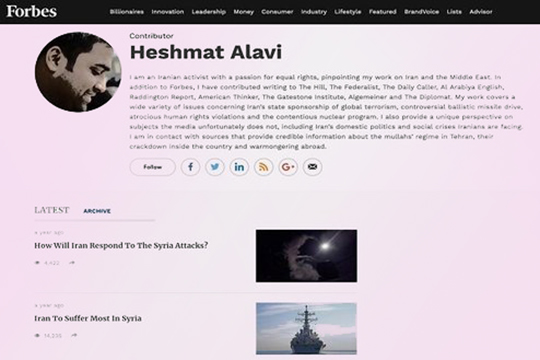
On Wednesday morning, just a few hours after once again threatening to go to war with Iran, President Donald Trump shared a tweet from an account from someone by the name of Heshmat Alavi. Like many of the tweets the president circulates, Alavi was praising Trump, this time for his hard-line stance against the Islamic Republic.

Trump’s amplification of the post was bad enough on its own: Alavi is a supporter of a militant Iranian cult called the Mojahedin-e-Khalq, known as the MEK, an organization that was designated for decades as a terrorist organization and is widely hated inside Iran. What makes it even worse, however, is that Heshmat Alavi does not exist.

As The Intercept reported last June, Alavi is a composite identity run by a team of MEK members based mainly at the group’s compound in Albania, according to defectors who were involved with managing the account and other sources.

“Heshmat Alavi is a persona run by a team of people from the political wing of the MEK,” a former MEK member named Hassan Heyrani, who helped manage the Alavi persona in Albania, told The Intercept in 2019. “They write whatever they are directed by their commanders and use this name to place articles in the press. This is not and has never been a real person.”

In a blog post published after The Intercept story, the Alavi account admitted for the first time that there was no real Heshmat Alavi, claiming instead to be using a pseudonym. “No, I will never reveal my real identity or photograph,” the account wrote. “No activist in his/her right mind would do so. That would place all of my family, friends and myself, both inside & outside of Iran, in complete danger.”

While the Alavi account has never declared itself a member of the MEK, the content produced under the name frequently toed a pro-MEK line. In the same post published after The Intercept story, however, the account explicitly stated its support of the group: “Why do I support the MEK? 1) They have an organization. 2) They have an agenda. 3) They are serious and dedicated.”

Under Alavi’s name, a steady stream of blog posts and tweets have been produced over the years, always advocating harsh U.S. policies toward Iran and occasionally sliding in messages of support for the MEK and its leadership. And it’s not just social media activity: Articles under Alavi’s name were published in an array of mostly right-leaning news outlets in the U.S. At least one of these articles, published under Alavi’s name in Forbes, was cited in the past by the Trump administration to the press to justify its aggressive Iran policy.

Following The Intercept’s 2019 expose, publications like Forbes, the Daily Caller, and The Diplomat that had published articles by Alavi either removed or updated them to reflect his nonexistence as a person.

While news outlets with editorial standards showed a willingness to remove articles by people demonstrated to not exist, social media outlets like Twitter remain useful vectors for getting misinformation out to the public — as in Alavi’s case. Today, Alavi’s account still exists and is still producing superhuman amounts of content.

The account was briefly suspended following The Intercept’s report, but after a storm of pro-MEK advocates tweeting at Twitter’s support account and the company’s CEO, the account was reinstated a few days later. Twitter does not comment on its decisions regarding individual users, but a source familiar with the organization told the Saudi-government owned al-Arabiya news that, after temporarily being banned, the Alavi account was reactivated after being deemed a “credible use of pseudonymity.”

Social media companies have been under increasing criticism for their roles in helping amplify disinformation, including from sources connected to foreign governments and political movements. During the 2016 presidential election, troll farms connected to the Russian government were accused of helping sway American public sentiment over the vote. These activities are only believed to have increased since then.

The MEK, for its part, has a checkered history. A half-century-old revolutionary group, the organization has cycled through ideologies and tactics — from Marxism to democratic advocacy, from terrorist violence to protests and active lobbying in Washington — to rise to prominence. The turn toward seeking U.S. support is a decade-old tactic for a group that once allied with the Palestinian Liberation Organization and, in the 1980s and 1990s, Iraqi dictator Saddam Hussain.

This year, an Intercept investigation documented allegations by former members of the group depicting a cult-like atmosphere inside the organization. The former members detailed practices of forced sterilization, torture, and other methods of controlling followers.
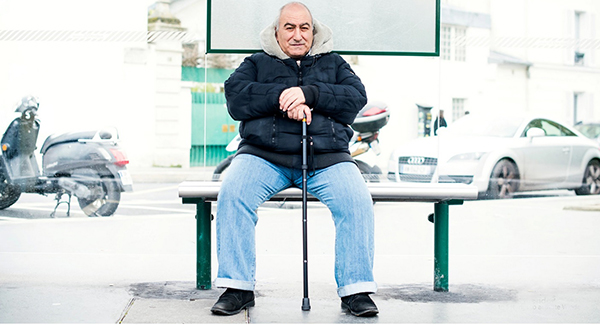
Ghorban Ali Husseinnejad

Nonetheless, the MEK now has powerful allies throughout Washington. Most notably, as of today, the group has found a friend in the White House — a president who has never been uncomfortable with blurring the lines between reality and falsehood.

Murtaza Hussain, theintercept.com
April 25, 2020 0 comments
FacebookTwitterPinterestWhatsappTelegramSkypeEmail
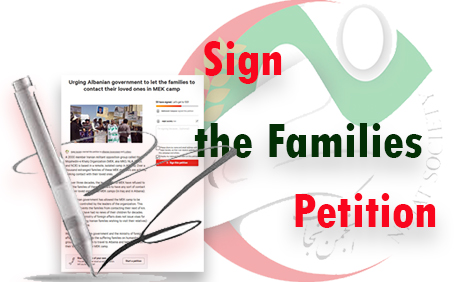
nejat families petition
Mujahedin Khalq Organization members' families

More than 500 signatures after 5 days

As you are aware, on the initiative of the Nejat Society on behalf of the grieving and suffering families of the members affected by the Mojahedin-e Khalq Organization (MEK), a petition was posted on the prominent American site:
https://www.change.org/
The petition, which began five days ago, is addressed to the Albanian government, which has been asked to provide conditions for families to communicate with their loved ones in the MEK camp:

Nejat Society families' petition
https://www.nejatngo.org/en/posts/10595

Families in all provinces of the country as well as abroad have been active in this regard and joined the campaign, which at the end of the fifth day registered more than 500 signatures on the petition.
The list of signatures was sent along with the text of the petition to various organs of the Albanian government and the United Nations, as well as to various European institutions.
Signatures continue to be collected via the following link:

http://chng.it/GCPbBfFPGr

April 25, 2020 0 comments
FacebookTwitterPinterestWhatsappTelegramSkypeEmail
Ashraf 3 in Albania
Mujahedin Khalq Organization

what life is like inside the MEK

The Intercept’s Murtaza Hussain has said members of the Mojahedin-e Khalq, an exiled Iranian militant group better known as the MEK, are tasked to run the cultish group’s online propaganda campaign against the Islamic Republic from the MEK’s bases in France and Albania.

“The MEK is a very secretive organization but defectors have told us that on their bases in Albania and France members are tasked all day with posting articles online and running the MEK’s information operations,” Hussain said in an interview with the Balkans Post published on Sunday.

Last month, The Intercept published an article by Murtaza Hussain and Matthew Cole, providing a comprehensive account of what life was like inside the MEK. The article was based on interviews with the group’s high-ranking defectors.

According to the article, interviews with six defectors in Europe revealed how the MEK isolated, disappeared, and tortured many of its cadres into submission, including forcing dozens of female members to have sex with Masoud Rajavi and undergo medical sterilization so they could devote themselves more fully to the leader and his cause.

It also said the MEK has shelled out hundreds of thousands of lobbying dollars in Washington, first as part of a successful campaign to get itself removed from the State Department’s list of foreign terrorist organizations and later, to build its reputation as a credible alternative to the Iranian government.

“The MEK was designated a terrorist group by the State Department but for years still did lobbying work on Capitol Hill,” Hussain was quoted by the Balkans Post as saying. “It seems that the law has always been unevenly applied on the question of terrorism designations.”

A few years ago, the MEK members were relocated from their Camp Ashraf in Iraq’s Diyala Province to Camp Hurriyet (Camp Liberty), a former U.S. military base in Baghdad, and were later relocated to Albania.

Last year, Germany’s Der Spiegel revealed that members of the MEK undergo horrific training in a camp in Albania, a country that has turned into a hub for anti-Iran activities by hosting the MEK.

Asked why the Albanian government hosts the terrorist organization, Hussain said, “I’m not sure what the Albanian government’s decision-making was but it seems highly likely that they made this decision based on the desire to be on good terms with the U.S. administration and right-wing elements in that country.”

“There has been some speculation also about financial compensation in exchange for taking in this group on their soil,” he added.

The MEK was established in the 1960s to express a mixture of Marxism and Islamism. It launched bombing campaigns against the Shah, continuing after the 1979 Islamic Revolution, against the Islamic Republic. Iran accuses the group of being responsible for 17,000 deaths.

OLSI_JAZEXHI_Albania

Olsi Jazexhi, a Canadian-Albanian historian, has argued that Saudi Arabia is funding the MEK.

Based in Iraq at the time, MEK members were armed by former Iraqi dictator Saddam Hussein to fight against Iran during a war that lasted for 8 years in the 1980s.

In 2012, the U.S. State Department removed the MEK from its list of designated terrorist organizations under intense lobbying by groups associated with Saudi Arabia and other regimes opposed to Iran.

Olsi Jazexhi, a Canadian-Albanian historian, has argued that Saudi Arabia is funding the MEK.

“While the U.S. government and Israel will most probably not spend their money with an ex-terrorist organization, I believe that the only state who can support it should be Saudi Arabia,” the Balkans Post on Wednesday quoted Jazexhi as saying.

“Saudis have done such a thing with Al-Qaeda in Afghanistan or Jabhat al-Nusra in Syria and we should not be surprised if they pay the MEK bill as well,” he added.

In 2018, Professor Paul Pillar, who was a CIA intelligence analyst for 28 years, told the Tehran Times that the financial sources of the MEK have always been unclear, but the most likely sources are states that are regional rivals of Iran.

Hussain also said it is unclear how the group’s activities are funded but “it would be expensive”.

“The MEK has killed thousands of Iranians over the years and was involved in the 2009-2011 assassination of Iranian scientists alongside the Israeli Mossad,” he said.

The investigative journalist added that the MEK is a deeply unpopular group including among opponents of the Iranian government.

Back in June 2019, Hussain wrote an article in The Intercept arguing that Heshmat Alavi, who wrote dozens of articles for right-wing outlets, appears not to exist. Alavi’s persona is a propaganda operation run by the MEK, he quoted two sources as saying.

In the Sunday interview, Hussain said Heshmat Alavi is a persona used by the MEK to “continue its public relations work in the Western countries, aiming to sway elite and public opinion by placing news articles and running social media campaigns promoting its vision for itself as the future government of Iran.”

April 22, 2020 0 comments
FacebookTwitterPinterestWhatsappTelegramSkypeEmail
MEK Women
Former members of the MEK

MEK defectors tell of torture, forced sexual relations with Masoud Rajavi

The Intercept published a news article recently about the cult-like Iranian militant group the Mojahedin-e Khalq. The article is based on interviews with high-ranking defectors.

The following is an excerpt of the article:
On a blisteringly hot summer afternoon in 2006, Reza Sadeghi ran into an old friend at the Iraqi headquarters of the Mojahedin-e Khalq, an exiled Iranian militant group better known as the MEK. The two men had not seen each other in over a decade. Sadeghi guided his friend, who had just arrived from Canada, on a stroll through the desert compound known as Camp Ashraf. He was glad to catch up with an old comrade. But he also had a burning question.

Sadeghi had effectively given his life to the MEK, which means “People’s Mujahideen of Iran.” A 26-year veteran of the group, he had not left Camp Ashraf for over a decade. During that time, he’d had no contact with his family or news of them. The MEK leadership had forced him and most of the other cadres living at Camp Ashraf to abandon even their closest relationships. Most painful for Sadeghi were thoughts of his son, Paul, his only child, now 16 years old. Sadeghi hadn’t seen or spoken to Paul since he’d arrived in Iraq.
As Sadeghi and his old friend strolled through the compound, two MEK minders followed at a distance. Sadeghi walked a bit faster, signaling to his friend that he needed to talk out of earshot of their escorts. Turning a corner between buildings, he whispered: “How is Paul?”
In 1996, Sadeghi traveled to Camp Ashraf, the group’s sprawling compound in northeast Iraq, for a mandatory six-month military training. While the MEK did propaganda and intelligence work, the group’s core skills were military. Membership required extensive training, including everything from weapons skills and bomb-making to operating a T-55 tank.
While he was in Iraq, Sadeghi decided to leave Paul, who was then almost 5 years old and had been born in Canada, with Sadeghi’s parents in Iran. At the time, Paul had never met his grandparents or been to Iran. Sadeghi planned to train for six months, retrieve Paul, and return to the U.S., where he’d spent several years raising money for the MEK’s leadership, which is based in Europe.

But when his training was over, the group asked Sadeghi to stay for another six months. He had been selected to train for assassination missions inside Iran and would fine-tune the fighting and sabotage skills that his commanders told him would soon help liberate his country. His MEK commander told Sadeghi that Paul would be sent back to Toronto to live with his mother, a Canadian woman whom Sadeghi had divorced not long after their son was born. Sadeghi agreed to stay.

Sadeghi got only rare updates about Paul during the 10 years he spent in Ashraf. Members were forbidden from discussing family or friends who were not MEK members. When he did ask about his son, they always told him that the boy was well, living in Toronto with Sadeghi’s ex-wife and receiving hundreds of dollars in support every month from the group.
Now, his old friend from Toronto told Sadeghi something that seemed impossible. His son, the friend said, was not in Canada at all. He had never left Iran and was being raised by Sadeghi’s parents there. Sadeghi’s Canadian ex-wife had filed a report with Canadian authorities, believing that Sadeghi had kidnapped the boy. Paul was declared a missing child by the Royal Mounted Canadian Police.

His picture had even been printed on milk cartons in Canada in the hope that someone might find him and return him to his mother.

“No, he’s in Canada,” Sadeghi declared in disbelief. The friend insisted that wasn’t true. Canadian authorities had even interviewed him about Sadeghi and his son, the man said.
Sadeghi abruptly left his friend and marched to his commander’s office. He told her that he was leaving the organization to retrieve his son. He planned to join the U.S. soldiers at the spartan desert encampment they’d built to house those who managed to escape, Sadeghi said.

His commander called a group of other MEK members to detain him. Suddenly, about a dozen of Sadeghi’s comrades were grabbing him, trying to push and lift him into the back seat of a nearby Toyota pickup. As he resisted, he felt one of his fingers snap.

The MEK members shoved him into the back of the truck, pinning him to the floor with their bodies. The truck started driving. “You’re dead,” one of Sadeghi’s captors told him. “We are going to put you in the ground, and no one will ever know what happened to you.” Forced disappearances and solitary confinement were not uncommon at Camp Ashraf, and Sadeghi was sure he would be executed.
His only chance, he thought, was to try to kick out the window of the truck hoping the commotion would attract attention. He slammed his foot against the glass as the others fought to restrain him. The windows didn’t break, but as the truck slowed to turn onto the camp’s main road, it approached two American soldiers patrolling the road in a Humvee.

The soldiers stopped the truck and ordered everyone out. The men in the back got off Sadeghi and he raised himself up. “I want to leave the MEK,” he told the Americans in English. “I need your help.” The Americans took Sadeghi past the razor wire and armed Humvees and into their own makeshift military compound next door.

“He (Reza Sadeghi) had been selected to train for assassination missions inside Iran and would fine-tune the fighting and sabotage skills that his commanders told him would soon help liberate his country.”

Once inside, Sadeghi asked to make a phone call. He still had the phone number of his brother who lived in Canada. He called him and asked for their parents’ number in Iran. After so much time without a word, they didn’t even know whether Sadeghi was alive or dead.
“When my mother picked up the phone, all I could say was hello. I didn’t know what else to say to her.” he recalled recently. “She recognized my voice and just started crying.”

Issa Azadeh, a senior operative who left the group in 2014 after 34 years, told The Intercept about his experience inside the MEK.

“I couldn’t feel whether I was alive or dead,” said Azadeh. “I was thinking, ‘Did I make a mistake?’ But the first time when I got into the internet, I saw the truth. I searched about cults. I realized we were robots.”
“I loved the MEK very much. I saw all my dreams in this organization, everything,” Azadeh said when we met in Cologne, Germany, last fall. “But when I got involved in detail with things that no one else knew, I realized that there was no difference between [Joseph] Stalin and Massoud Rajavi.”
For MEK members, he said, “Rajavi was right after God. This is something that they put in our minds. Over the years, minute by minute, month by month, year by year, they put that in our minds. If you doubt Rajavi, it means that you doubt God.”
“Rajavi told us that you have to divorce your family completely,” Azadeh said. The leader told his acolytes that “family are the main poison for you guys” and counseled them that if their siblings or other relatives showed up at Camp Ashraf, the MEK members would be required to kill them. Azadeh was shocked. “At one time, family for MEK was honor,” he said. “Then Rajavi announced that family is poison or shame.”
“[Rajavi] said: ‘Don’t think about women. That’s not your life,’” Azadeh recalled. “You have only one aim and one target: to obey everything I say and to overthrow the Iranian government.”

Batool Sultani was also an MEK commander and a member of the High Council. Soft-spoken with brown hair and glasses, Sultani easily blended into the crowd when we met in Cologne. The High Council governed the conduct of everyone living at Camp Ashraf. They could order the isolation, ostracization, and imprisonment of members who ran afoul of Rajavi. But when it came to major decisions, the council had “no real power,” Sultani said. “It was just for show and a means of using the women to keep control over the men who might become Massoud Rajavi’s rivals in the Mojahedin.”

“Maryam Rajavi came to us as female members of the group many times and asked us why we haven’t demanded to see our leader in his bedroom,”

Sultani said. “There was a strong pressure” on MEK women to initiate sexual relationships with Rajavi, she said, “to show your commitment to the leader and the group.”

Another female member of the High Council at Camp Ashraf, whom The Intercept agreed to identify only as Sima, said she joined the MEK in the 1980s and left it in 2014. Unlike other former members, Sima asked that her real name not be used because she feared retaliation from current MEK members.

She now lives in hiding in a European country and agreed to meet privately in a place where other local supporters of the group were unlikely to see her.
“You must know the organization and the psychological warfare that they start against you,” she told us in an effort to explain her fear.

“They assassinate your personality and you will lose your closest friends; even your family wouldn’t trust you. This is the reason that these people are scared.”

As the years dragged on, she began to clash with other members. In response, they placed her under surveillance and forced her to engage in grueling self-criticism sessions that she described as psychologically tortuous. Around 2000, Sima was nearing a breaking point. She made a plan with another woman to escape from Camp Ashraf. They plotted their exit in meticulous detail, but the other woman turned her in to MEK leaders. As punishment, Sima was subjected to even more intense ostracization and psychological torture.
For most of the next 14 years, Sima was confined to one section of Camp Ashraf, unable to move freely on her own. Like Batool Sultani, Sima described an intense form of psychosexual manipulation by Rajavi that she said became an integral tool for controlling female cadres. Years earlier, in 1995, “Rajavi gave every single woman in the organization a pendant and told us that we are all connected to him and to no other man,” Sima said. She was forced to divorce her husband and, like Sultani, eventually became sexually involved with Rajavi.
Around 1998, an even more chilling directive came down from Rajavi to the female members of the organization. “I see some obstacles which have prevented us from reaching our goals and achieving victory,” Rajavi told members of the group, Sultani recalled.

“That obstacle is hope for the future. We want to eliminate any kind of hope for the future from your mind. You are either with us or not!”

Sterilization would be a means of focusing the women’s minds. “They said that this organ of the body, the womb, has made women want to be mothers someday and return to domestic life,” Sultani said. “And so, visits with women began, to get them to go in groups of 20 or 30 to have a hysterectomy.”
Women were scheduled for appointments at an MEK hospital in Camp Ashraf. The procedures would be carried out by a female MEK member who had been trained as a doctor, assisted by a local Iraqi physician. At first, Sultani resisted. But finally “the pressure was so great that it broke my resistance, and I agreed that I, too, should make an appointment,” she said. “In other words, they gave so many and varied arguments for me to go to the hospital that I had no choice.”
Sultani said she finally defected from the MEK in 2006, after she was scheduled for the surgery but before it could be carried out.
“How many women have reached the castle?” Rajavi later asked in a meeting Sultani attended, referring to what she called the “women who had abandoned the last vestiges of their sexual world and were operated on.” The doctor answered that there had been 50 so far.
After much urging from MEK leaders, Sima said she finally agreed to have her ovaries surgically removed in 2011. “When you are under brainwashing, you would do anything and everything,” she told The Intercept. “You would do any military operation, you would go and have sexual relations with your leader, you would sell information and intelligence. We were under constant control by the leader.”
When Sima finally left the group, she said, “I was like a lost person.” The United Nations set up a meeting between her and her brother, whom she hadn’t seen for 30 years. At first, she was reluctant to hug or kiss him, so deeply alienated had she become from her closest kin. He showed her how to shop and use money. “We’ve never seen anything like this for about 30 years,” Sima said. “I completely forgot about real life outside MEK.”
When she first spoke out against the group, current members requested a meeting. They offered her several thousand euros not to criticize the group, which Sima says she declined. “I told them, ‘You cannot return what I lost, my family, my husband. You cannot return that.’”
“We joined the MEK for freedom and democracy and independence,” Sadeghi said. “But if we knew that Masoud Rajavi was spying on the Iranian government during the [Iran-Iraq] war, I would never accept that. If I knew that [we received] money from Saddam Hussein to give information, I would never accept that.”
“I remember we were attending a rally at Camp Ashraf where everyone from the movement was supposed to be gathered together,” he said. “They had told us that we had hundreds of thousands of members and maybe millions more supporters in Iran. At the rally, there were only a few thousand people at most. I remember at the time a few of us were wondering. If this is really a movement like Rajavi says it is, where is everyone?”

His reunion with Paul was bittersweet. “My son was supposed to be away from me for six months. It was 10 years,” he said. “The first question was, ‘Dad, where were you? I cannot believe that in the 20th century, you were in some place that you couldn’t be able to send me a postcard or call me for my birthday.’”

Sadeghi had no answer. He was ashamed. He could not articulate how being a member of the MEK had made him feel bereft of individual agency.
In the meantime, Sadeghi, like the other defectors, has many regrets and struggles in his new life. What’s left of his family is scattered between Iran and the West.
“I would never [again] leave Iran, because all these years I left my family and my parents died,” he said. “I miss them very much.”
Every night, he dreams some version of the nightmare he’s lived. “Either I am in prison [in Iran], or I am in Camp Ashraf trying to escape. When I wake up, I’m sweating.”

April 20, 2020 0 comments
FacebookTwitterPinterestWhatsappTelegramSkypeEmail
Nejat Society families' petition
Missions of Nejat Society

Join NejatNGO Families Petition

Recipients: Albanian government, UNHCR, European Parliament, Council of the European Union, European Commission

Nejat Society families' petition

A 2000 member Iranian militant opposition group called the Mojahedin-e Khalq Organization (MEK, aka MKO, NLA, PMOI, and NCR) is based in a remote, isolated camp in Albania. Over a thousand estranged families of some of these MEK members are actively seeking contact with their loved ones.

For over three decades, the leaders of the MEK have refused to allow the families of these members to have any sort of contact with their loved ones in the MEK camps (in Iraq and in Albania).

The Albanian government has allowed the MEK camp to be completely controlled by the leaders of the organization. This situation prevents the families from contacting their next of kin. Some families have had no news of their children for decades. The Albanian ministry of foreign affairs does not issue visas for Iranians (including Iranian families wishing to visit their relatives) to travel to Albania.

We urge the Albanian government and the ministry of foreign affairs to issue visas to the suffering families on humanitarian grounds to allow them to travel to Albania and help them visit their loved ones in the MEK camp.

Please sign the petition at below link, and ask your friends and colleagues to sign the petition of the families too.

Many thanks

http://chng.it/GCPbBfFPGr

April 19, 2020 0 comments
FacebookTwitterPinterestWhatsappTelegramSkypeEmail
blank
The cult of Rajavi

Can MEK survive the coronavirus infection in Albania?

In an interview with the Balkans Post, Dr. Olsi Jazexhi, a Canadian-Albanian historian, argued that the possibility that coronavirus has infected the Mojahedin-e Khalq (MEK)’s camp in Albania is highly likely.

The transcript of the interview is presented below:

Balkans Post: The Intercept has published a piece, according to which the MEK has isolated, disappeared, and tortured many of its cadres into submission, including forcing dozens of female members to have sex with Massoud Rajavi and undergo medical sterilization. What’s your view on this?

Olsi Jazexhi: Hello Balkanspost and thank you for interviewing me again.

The piece by Murtaza Hussain [and Matthew Cole] for The Intercept was an interesting investigation which exposes to the world the bizarre nature of the Iranian Monafeqeen or the Mojahedin-e Khalq ex-terrorist cult. The unfortunate soldiers of MEK are victims of two lunatic cult leaders, Maryam Rajavi and Massoud Rajavi. Today, five decades after the MEK was created we can see that it has achieved nothing expect terrorism, killings and hate of the Iranian people. After failing in their mission to overthrow the republican system of Iran, MEK soldiers have ended up as desperate and stateless refugees in Albania. The foreign fighters of MEK resemble very much with the jihadis of ISIS who are trapped in camps in Syria and have no place to go.

I have met a number of deradicalized MEK defectors who reside in Tirana and their stories are similar to what The Intercept shows. They have told us stories of torture, sexual abuse, radicalization and weird cultish indoctrination that Massoud and Maryam Rajavi have done with them.

Some of the defectors to whom I have spoken and have a very difficult life in Albania, have shown to me how their jihadi commanders were indoctrinating them to renounce a normal sexual life, not to marry, to abandon their families and relatives and to perceive human relations and love as sin from which they had to abstain.

Ehsan Bidi

One ex- Mojahedin member, Ehsan Bidi has shown to me how he was tortured, isolated and beaten by the MEK, because he did not obey to the orders of his jihadi commanders. Their stories resemble very much with stories of other jihadi and lunatic groups in Syria, Iraq, Egypt and the Middle East where foreign intelligence agencies play a crucial role on radicalization and creation of lunatic terrorist organizations such as MEK.

BP: Why do MEK defectors have a difficult life in Albania?

OJ: As I have mentioned in my previous interviews, the Albanian government of Edi Rama and Pandeli Majko are ordered by the Americans to preserve in all possible ways the paramilitary existence and activities of the MEK in Albania. Our government has done anything within its power to intimidate MEK defectors who abandon jihad and return to civilian life to go back to the MEK camp. The strategy of the Americans and the Albanian government is to preserve MEK at any cost, since the Americans hope to use this lunatic cult against Iran and Iraq in the future.

The defectors in Tirana have a very hard time with Albanian authorities. The UNHCR which was responsible for their relocation has abandoned them. Albanian authorities mistreat the defectors, have cut their financial support and refuse to renew the asylum papers to many of them. One defector, Ehsan Bidi has been imprisoned by Albanian authorities since August 2019, after they canceled his asylum status. Ehsan is being punished because he was critical of MEK and exposed their crimes in the media. The MEK which was embarrassed by his revelations did all it could to force the Albanian authorities to illegally remove his asylum status and imprison him.

The defectors present a very serious challenge for the existence of MEK, since they threaten its existence in three major ways:

They reveal to the outside world the criminal and weird structure of the organization.
By abandoning the organization, they motivate many of their comrades who are isolated in the camp to escape and start a peaceful civilian life.
They reveal to the Iranian and international community the schizophrenic cultish nature of the MEK, and show to the world that the MEK has no relation with democracy and civilization. The defectors destroy the massive investment that the Trump administration has done to promote the MEK as an ‘opposition’ group to the democratic system of Iran.

They prove to the world that the MEK is not the ‘Iranian opposition’ as Rudy Giuliani, Mike Pompeo and John Bolton like to describe them, but instead it is a scary lunatic cult which is hated even by its own soldiers.

That is why the MEK hates and fights its defectors. If in Syria ISIS was decapitating its defectors, in Albania MEK is pushing the Albanian government to scare, intimidate and imprison them.

BP: What is going on with the MEK now in the time of coronavirus?

OJ: We know very little about the everyday dealings of the MEK in Albania. They are a very secretive and closed organization. Journalists from the New York Times, al Jazeera, BBC etc. who have approached them, have been attacked, insulted, intimidated and given very limited access to their camp.

Maryam Rajavi, the old leader of the cult who has many friends in the Trump administration has managed to silence the Albanian media and government. The MEK has created a state within a state and even the Albanian government cannot access it. The secrecy of the MEK camp can be compared to the Concentration Camps that China has built against the Uyghur Muslims in Xinjiang.

Since we do not have access to their camp, we do not know how they are coping with coronavirus. Their 3000 or so members live separate from us and are kept in total lockdown. Since the outbreak of coronavirus, their commanders who before this were seen moving in Tirana now are not seen out anymore.

Some defectors claim that the MEK camp is suffering from coronavirus infection. Their camp of Manza is situated between Tirana and Durres. These are the cities which have most infected persons in Albania. We have infected doctors and nurses in the hospitals of Tirana and Durres, places where many old MEK soldiers receive treatment. Thus the possibility that coronavirus has infected their camp is highly likely.

On April 9, 2020, the MEK announced that one of their commanders, Babak Khalili had died. We do not know if his death was caused by coronavirus or other medical complications. Albanian authorities are not allowed to do postmortem analysis to dead Mojahedin. Since their members are not registered with Albanians’ national registry they can die as many as they want. They can even kill each other and no one will be able to trace and analyze the reasons of their death. Moreover, many MEK soldiers have entered into Albania with fake names and identities. By living in total isolation and secrecy and apart from their families, we can never find how many deaths MEK will face because of coronavirus.

However, if coronavirus has already penetrated the MEK camp, the cult members will die en masse. The vast majority of the Mojahedin are old, suffer from different disease, live close to each other and in case coronavirus enters the camp it will devastate the organization and few will survive.

BP: Karim Sadjadpour, an Iran expert with the Carnegie Endowment for International Peace, has described the organization as a fringe group with mysterious benefactors that garners scant support in its home country. Is there any evidence to show who these “mysterious benefactors” are?

OJ: Karim Sadjadpour is right. The MEK is a fringe group. It has very few supporters among the Iranians. The MEK can be compared in many ways with Lord’s Resistance Army of Uganda (LRA). Like LRA it was listed as terrorist organization by the United States and later delisted. Maryam and Massoud Rajavi, the leaders of the MEK, resemble very much with Joseph Rao Kony of LRA. If Joseph Kony proclaimed himself a spokesman of God, Maryam and Massoud Rajavi proclaim themselves – according to testimonies of defectors – representatives of God.

If LRA was supported by Sudan, the MEK was supported by Saddam Hussein in Iraq and now after the American invasion of Iraq, it is being openly supported by the United States and most probably Israel, Saudi Arabia and United Arab Emirates.

Many foreign journalists who visit Albania and meet MEK observers have raised your question: who finances the MEK and its existence in Albania? In an interview that I had for Counter Punch in December 2019, I said the following:

“Their organization, which is believed to have around 3000 members, needs a huge budget to run. Each MEK member used to take around 500 EURO per month to survive in Albania from UNHCR. The minimum budget that the MEK takes to sustain its members and camp is around 1.5 million EURO per month. It is believed that this budget comes from Saudi Arabia. In a year, they need at list 18 million EURO, without counting here the money that they spend for building their facilities and hosting periodic events where they invite retired and second-class politicians from the West who get free hotel, food, airplane tickets and some stipends for their attendance.”

As we can understand from the above, the MEK needs a state to finance its existence. While the U.S. government and Israel will most probably not spend their money with an ex-terrorist organization, I believe that the only state who can support it should be Saudi Arabia. Saudis have done such a thing with Al-Qaeda in Afghanistan or Jahbat al-Nusra in Syria and we should not be surprised if they pay the MEK bill as well.

BP: In a piece published by the Washington Post in September 2019, Shahin Gobadi, spokesman of the anti-Iranian Mojahedin-e Khalq (MEK) terrorist group, claimed that “a cursory review of the MEK’s history shows it has survived and flourished for 54 years, not because of having a voice in the White House but because of its reliance solely on the Iranian people and because it has been willing to pay the price for democracy in blood and treasure.” What could you say about these remarks?

OJ: Shahin Gobadi is an old man whom we have seen in the court of Durres in Albania attending the court case against his friend Behzad Saffari. Shahin is a very interesting personality, who like the rest of his Mojahedin are afraid from the media and do not dare to debate their ideas in public. Now that he is getting old Shahin resembles so much with Victor Hugo’s Quasimondo, the Hunchbacked Bell Ringer of Notre Dame cathedral in Paris.

Shahin and Behzad Safari are both liars. The Albanian journalist Gjergji Thanasi, has sued Behzad for libel and slander after the later accused Gjergji Thanasi to be an Iranian agent. I hope Shahin Gobadi and Saffari will be able to properly defend themselves in the Albanian court for their insult against Gjergji Thanasi, and have not the fate of Quasimondo and Claude Frollo of Victor Hugo’s novel.

Shahin Gobadi’s claim that “MEK has survived and flourished for 54 years … because of its reliance … on the Iranian people” is a lie and Shahin knows this very well. As an Albanian journalist who have visited and interviewed many people in Iran and many defectors in Albania, I can say that the people of Iran and even many Mojahedin inside their Manza camp hate MEK and do not consider them to be serious about what they claim.
On the left Shahin Gobadi walking outside Durresi’s court in Albania, September 2019

In the past 54 years, the MEK has seen only failures, wars, terrorism, betrayal of their nation and death. It has brought only suffering to Iranian people and even to their own members who today survive as desperate stateless refugees in Albania. After coming to Albania, the first thing that the MEK did was to ask the Albanian authorities and their American friends to expel any Iranian national who was living in Albania, freeze their bank accounts and prohibit any Iranian from entering the country. Is this how MEK loves the Iranians and relies on them? If the MEK loves the Iranians it will not fight them in the Balkans as it has done in the past years.

Shahin Gobadi’s statement that MEK “has been willing to pay the price for democracy in blood and treasure” is also fake for a number of reasons.

The MEK is not a democratic organization. It does not fight for democracy. It is a totalitarian cult.
The MEK is no longer a physical threat for Iran and it has no blood left to fight with the Iranian people. The vast majority of MEK members are old and cannot fight. Since their expulsion from Iraq and isolation in Albania, the MEK has transformed itself into a warmongering and fake news making organization.

The MEK owes its existence to Saddam Hussein and nowadays to the Americans, Saudis and Israelis who have dumped them to Albania. Shahin Gobadi, Maryam Rajavi and other MEK commanders know very well that their organization is living its last days of existence in Albania. The massive defections, the total isolation of its members and the war that Maryam Rajavi has declared on her defectors and any Iranian national who comes to Albania show the desperation that exists within the organization. Their hysteria against journalists, the media and their fear from facing the public opinion are very revealing.

If the U.S. administration and the Albanian government withdraw their support from the MEK and if the Saudis (or whoever pays their bill) cut their money, the MEK will be dismantled within a few weeks. Maryam Rajavi will face massive defections and without the protection of the Albanian government, her soldiers will riot and break free.

The declaration of Shahin Gobadi is a wishful thinking. Shahin Gobadi, Maryam Rajavi and the MEK command are desperate. Their time has run out and their utopic dream of turning Iran into a MEK-istan will never materialize.

Olsi Jazexhi is a Canadian-Albanian historian who is specialized in the history of Islam, nationalism and religious reformation in Southeastern Europe. His interest covers nationalism, radicalism, religious and ethnic identities in the Balkans.

Dr. Olsi Jazexhi ,balkanspost

April 18, 2020 0 comments
FacebookTwitterPinterestWhatsappTelegramSkypeEmail
scattered families
The cult of Rajavi

Scattered families in the MEK

Amir Vafa was born in France after his parents moved there from Iran to join Massoud Rajavi and his movement. They were then sent to the group’s Camp Ashraf in Iraq where thousands of members of the Mujahedin Khalq Organization (the MKO/ MEK/ PMOI/ the Cult of Rajavi) were sheltered by Saddam Hussein.

Amir VAfa Yaghmaei

But Amir could not maintain family ties in Camp Ashraf, together with about 500 kids he was separated from his parents and sent to European countries. This action was taken”in the terms of the Second Ideological Revolution”as Antione Gessler writes in his book on the MEK,”Autopsy of an Ideological Drift”.”In the absence of family abroad, the children were sent to orphanages or special schools established by the Mojahedin in Germany and the Netherland”.

scattered families

Gessler whose book was published in 2005 in France, has stated the testimonies of several parents who left their children behind in the hands of the MEK. Nadere Afshari was one of those eye witnesses who has in her turn written her memoirs of orphaned children in the MEK in Persian.

“Rajavi considers the family as an integral cell in his organization,”Afshari says.”He therefore feels free to intervene in the marital relations of members against their own will.”

The testimonies quoted in the book are clearly parallel to those that are put in the Intercept’s recent article on the MEK titled”Defectors Tell of Torture and Forced Sterilization in Militant Iranian Cult“. Authors of this greatly investigated article interviewed some former members of the group whose families were fell apart after they joined the MEK.

blank

Batool Sultani, photographed in Paris in January 2020.
Photo: Matthew Cassell for The Intercept

Batoul Soltani a well-known female defector of the MEK is one on those interviewed by Murtaza Hussain of the Intercept.”She had joined the MEK in the 1980s, following her husband, who had become enamored with the group and its leader,”according to the Intercept.”She had rationalized the decision as a way to keep her family together. But the group’s cultish nature became clear when they began living at Camp Ashraf in Iraq. Her relationship with her husband rapidly grew strained. They were both subject to what she described as”brainwashing”by the group’s senior cadres, who segregated them by rank and controlled their interactions with one another.”
The brainwashing process that coerced members to break off family ties, was concisely explained by Mitra Yusefi who was quoted by Antoine Gessler:

“When Rajavi after his divorce from BaniSadr’s daughter married his comrade’s wife, Maryam, we were shocked. My husband then took a strong position saying that you cannot take another’s wife. Two days later, though, they convinced us of the opposite. We were such fools…”

In 1991, MEK commanders took Sultani’s two young children, age 6 months and 5 years; the children were sent to live with MEK members in Holland and Sweden, according to Soltani’s testimonies stated for the Intercept.”It was a decision that she felt unable to oppose,”the Intercept clarifies the MEK nature.”In the insular world of the MEK, Massoud Rajavi had been effectively transformed into a subject of worship. Cadres were taught to both fear and love him, and they did. Many female members were expected to express this love physically.”

Batoul Soltani and her child

Batoul soltani and her child

“Maryam Rajavi came to us as female members of the group many times and asked us why we haven’t demanded to see our leader in his bedroom,”Sultani said.

“There was a strong pressure”on MEK women to initiate sexual relationships with Rajavi, she said,”to show your commitment to the leader and the group.”
“Uprooted, far from their country, and cut off from their culture, these children became wanderers without identity”, Gessler suggests.
Since leaving the group, Batul Soltani has tried to rebuild her relationships with her children, who are now in their early 20s, only to find them angry and uncomprehending about the decades she spent away from them, based on the Intercept’s report.

“I try to tell them we were like robots, it was brainwashing. Anything Massoud Rajavi told us to do we did; we didn’t feel like we had any choice,”she told the Intercept.”They ask me why I never called, even on their birthdays. It is hard for them to understand any of this.”

blank

Reza Sadeghi in Paris, France, on Jan. 11, 2020. Sadeghi was a member of the MEK for 26 years.
Photo: Matthew Cassell for The Intercept

Sadeghi is another defector of the MEK interviewed by the Intercept. Based on his testimony, he got only rare updates about his son Paul during the 10 years he spent in Ashraf.”Members were forbidden from discussing family or friends who were not MEK members. When he did ask about his son, they always told him that the boy was well, living in Toronto with Sadeghi’s ex-wife and receiving hundreds of dollars in support every month from the group.”
When Sadeghi was informed by a friend that his son was not in Canada at all and he had never left Iran and was being raised by Sadeghi’s parents there, Sadeghi decided to leave the group to find his son but he was faced with a deadly punishment by the group authorities.
“His commander called a group of other MEK members to detain him”, recited the Intercept.”Suddenly, about a dozen of Sadeghi’s comrades were grabbing him, trying to push and lift him into the back seat of a nearby Toyota pickup. As he resisted, he felt one of his fingers snap. The MEK members shoved him into the back of the truck, pinning him to the floor with their bodies. The truck started driving.

“You’re dead,”one of Sadeghi’s captors told him.”We are going to put you in the ground, and no one will ever know what happened to you.”Forced disappearances and solitary confinement were not uncommon at Camp Ashraf, and Sadeghi was sure he would be executed.”

Ghorban Ali Husseinnejad

Ali Hosseinnejad, a former member of the MEK, on March 9, 2020, in the Paris suburb of Vincennes, France.
Photo: Pete Kiehart for The Intercept

GhorbanAli Hosseinnejad, Rajavi’s personal translator was also interviewed by the Intercept. The story of his scattered family is heartbreaking too.”In 1981, when the Iranian government declared the MEK a banned organization, Hosseinnejad and his family decided to flee Iran,”according to the Intercept.”Zeynab was 4 years old but Mona was a newborn, too young to be exiled. Ali, Tayebeh [his wife], and Zeynab fled to Europe, leaving Mona with Hosseinnejad’s mother in Iran.”

mona and Zeinab Husseinenjad

As a teenager Zeynab was trained as an MEK fighter in Camp Ashraf.”But the psychological stress and isolation in the camp began to wear on Hosseinnejad,”the report reads.”Despite living in the same compound, he was allowed to see Zeynab just once a year. He hadn’t seen Mona, his younger daughter, since the day he fled Iran.”
In spite of the few cases on family rights abuses that were covered in books, articles and reports, cases of collapsed families are as many as the number of MEK former and current members. Nadereh Afshari truly briefed the entire MEK’s dark history of banning family life in the title of her book on the MEK:”Forbidden Love”.

By Mazda Parsi

References
– Gessler, Antoine, Autopsy of an Ideological Drift, Depot Legal, December, 2004, Paris, France.
– Hussain, Murtaza, & Cole, Matthew, Defectors Tell of Torture and Forced Sterilization in Militant Iranian Cult, The Intercept, March 22, 2020.

April 16, 2020 0 comments
FacebookTwitterPinterestWhatsappTelegramSkypeEmail
MEK troll farm in Albania
Mujahedin Khalq Organization's Propaganda System

MEK uses the pandemic to increase pressure on Iranian People

The anti-science, conspiracy-driven, and radical right-wing agenda of the Trump administration has directly led to the needless deaths of tens of thousands of Americans and foreign citizens amid the worst pandemic to strike the world since the 1918 influenza scourge. Like any fascist tyrant, Trump requires scapegoats to maintain his power base and he has discovered plenty of them.

In addition to scapegoating almost a dozen U.S. state governors, two past U.S. presidents, and the Democratic Party, Trump has seen fit to blame the World Health Organization for the Covid-19 pandemic, even threatening to cut off U.S. assistance to the global health body.

Trump’s attack on the WHO came as no real surprise. The director-general of the WHO, Dr. Tedros Adhanom Ghebreyesus, is from Ethiopia, a nation Trump included in his sweeping reference to African nations as “shithole countries.” Trump also falsely accused the WHO of being “China-centric.” Dr. Tedros hit back at Trump’s criticisms, stressing that countries should avoid politicizing Covid-19 “if you don’t want to have many more body bags.”

Trump’s familiar fascist tactic of scapegoating others for his own failures is what was ultimately behind his attacks on the WHO and China. However, Trump’s xenophobia and racism were not the only reasons for his attacks. Trump was echoing the propaganda of several right-wing entities, including those that back Taiwan’s admission to the WHO against strong Chinese opposition, the Falun Gong and its press mouthpiece, “Epoch Times,” that are opposed to the Chinese government and receive favorable treatment by the Trump White House; and white supremacist groups opposed to the WHO director being a black man from Ethiopia. Also irritating Trump was Dr. Tedros’s admonitions to Washington that it was not helpful to refer to Covid-19 as the “Chinese virus” or “Wuhan virus.” Anti-Asian racial attacks were reported from around the world after Trump and his supporters began blaming the virus on China.

MKO members in Albania and the corona virus

Rather than continue to maintain the U.S. government’s pandemic and epidemic watch and reaction infrastructure, one that coordinated much of its activities with the WHO and similar national entities around the globe, the Trump administration brutishly slashed and burned the capabilities of the government to monitor the outbreak of human, animal, and plant diseases. These

In 2019, Trump ignored the findings of the first annual report by the Global Preparedness Monitoring Board, an entity established by the WHO and World Bank, which predicted a global pandemic that could kill tens of millions of people. The previous year, the Trump White House abolished the National Security Council’s directorate of Global Health Security and Biothreats. The directorate’s “Playbook for Early Response to High-Consequence Emerging Infectious Disease Threats and Biological Incidents” was tossed aside and ignored. Department of Homeland Security staff elements charged with ensuring the national defense against a pandemic were fired or re-assigned. A U.S. Center for Disease Control and Prevention doctor assigned to the U.S. embassy in Beijing and was responsible for coordinating U.S. efforts with her Chinese counterparts was called back to the United States with the position remaining unfilled. Trump also ended the State Department’s PREDICT program that funded joint U.S.-Chinese pandemic research and warning programs, as well as similar operations coordinated with some 60 other foreign laboratories.

A November 2019 report from the National Center for Medical Intelligence (NCMI), a part of the Defense Intelligence Agency (DIA), issued a few weeks prior to the first Covid-19 outbreak in Wuhan, China, provided an early warning of the impact of Covid-19 in China. The NCMI has access to National Security Agency intercepts of Chinese cell phone calls, emails, and encrypted communications among senior officials of the Chinese government. In a still- classified report, the NCMI warned that the virus outbreak in Wuhan stood to be a cataclysmic event that posed a threat to U.S. forces in the Asia-Pacific region. Covid-19’s effect on U.S. naval forces, including the USS Theodore Roosevelt and USS Ronald Reagan, aircraft carriers assigned to the U.S. Seventh Fleet, proved the accuracy of the NCMI’s November report.

Trump simply ignored reports from the NCMI, the WHO, and his own White House trade official, Peter Navarro. By the end of January, while Trump still considered the threat of Covid-19 to be a “hoax” ginned up by his Democratic opponents, Trump had been amply warned via classified President’s Daily Briefs and Navarro’s memoranda to the National Security Council that the world was on the precipice of a pandemic catastrophe. Trump continued to ignore the situation, even claiming the virus would disappear when the weather became warmer in the Spring. On February 23, Navarro sent the following memo to Trump via the National Security Adviser, acting Chief of Staff Mick Mulvaney, and the Covid-19 Task Force chaired by Vice President Mike Pence:

MEMORANDUM FOR PRESIDENT

THROUGH NSA, COS, COVID-19 TASK FORCE

There is an increasing probability of a full-blown COVID-19 pandemic that could infect as many as 100 million Americans, with a loss of life of as many as 1-2 million souls.

Certain far-right elements in the Trump administration, particularly Secretary of State Mike Pompeo, began figuring out ways to weaponize Covid-19 to bring about “regime change.” Sanctions were increased against Iran, Venezuela, and Cuba. Pompeo and his cohorts, including Treasury Secretary Steve Mnuchin, took full advantage of the terrible impact of Covid-19 on Iran to deny medical and financial support to the Iranian government and people. The influence of the cultish terrorist organization, Mojahedin-e-Khalq (MEK), which used the pandemic to increase pressure on Tehran, is strong within the Trump White House. In addition, the right-wing Florida Republican senators Marco Rubio and Rick Scott, used the pandemic to coordinate with wealthy Cuban and Venezuelan expatriates in south Florida to increase political pressure on Cuba and Venezuela.

Trump’s Attorney General and capo, William Barr, used the opportunity of the pandemic to indict President Nicolas Maduro and senior officials of his government on phony drug smuggling charges, the same gambit that was used by Barr against Panamanian leader Manuel Noriega when George H. W. Bush wanted him out of the way.

The Trump White House, with creepy Trump son-in-law Jared Kushner calling the shots, began using all sorts of methods, including piracy, theft, and extortion, to divert into stockpiles controlled by Kushner ventilators, medical supplies, and pharmaceuticals ordered by other countries. Victims of Trump’s and Kushner’s mafia-like scheme included Canada, France, Germany, Barbados, Brazil, and the Cayman Islands.

Meanwhile, other countries became the benefactors as the United States became a pariah state. Iran offered to share its Covid-19 medical expertise with other countries. China and Russia provided medical supplies and personnel to Covid-19 hard-hit Italy. China sent medical supplies to France and Serbia. Also assisting Italy with supplies were Austria, France, and Germany. Against pressure by the Trump administration to expel Cuban doctors working abroad, nation after nation flipped their middle fingers at Washington and welcomed Cuban medical teams to Italy, Andorra, Qatar, Barbados, Montserrat, Belize, Antigua and Barbuda, Jamaica, Suriname, Dominica, Saint Vincent and the Grenadines, Grenada, Saint Lucia, Saint Kitts and Nevis, Angola, Portugal, Mexico, Venezuela, Nicaragua, and the British Virgin Islands.

Rejecting the porcine snorts from Pompeo, Andorran Foreign Minister Maria Ubach declared, “I am aware of the position of the United States, but we are a sovereign country and we can choose the partners with which we are going to have cooperation.” Pompeo and his team of dime store cowboys were further incensed after the United Kingdom formally thanked Cuba for allowing the cruise ship “Braemar” to dock in Cuba to repatriate British passengers back home. The Cuban gesture came after other Caribbean nations refused to allow the ship to dock and offload passengers after an outbreak of Covid-like symptoms on board.

After the scourge of Covid-19 passes and the world is largely finished with disposing of its dead, there will come a time for calling those to account who ignored and took advantage of the pandemic for their own selfish interests. Mr. Trump will most deservedly be at the head of the line when it comes to pointing accusatory fingers.

By Wayne Madsen , Strategic-culture

April 15, 2020 0 comments
FacebookTwitterPinterestWhatsappTelegramSkypeEmail
mek in labania and the coronavirus
Mujahedin Khalq Organization

The Cult of MKO and the Coronavirus

Following the outbreak of Corona in Italy, more than 120,000 Albanians residing in Italy returned to their country. Albania is now one of the countries involved with coronary artery disease. A country that has not yet controlled the spread of the coronavirus, with a lack of basic health and service infrastructure to manage the crisis. Albanian Prime Minister Edi Rama has warned violators of the Corona laws that they will be denied unemployment benefits and student scholarships for at least one year if they violate the law. He also said law enforcement, including police and special security forces, are ready to use force or tear gas against violators. He has even said that retirees who do not comply with regulations will be considered a traitor to the war!
This war situation in Albania becomes even more sensitive when we know that there are more than three thousand members of the Mojahedin-e Khalq (MEK or MKO) in Tirana. People who are all considered to be administrative retirees, but are confined to work in the MEK’s terrorist camp. Old men and old women who spend the last years of their lives behind computer systems in the MEK camp, using media accounts on social networks, to engage in media warfare against their dissenting political ideas.

MKO members in Albania and the corona virus

There are two main factors that increase the prevalence of Corona disease, as well as the mortality rate and the rate of movement among members of the sect.

The first factor is the sectarian and colonial way of life of the MEK, which has gathered more than 3,000 people in a military camp and will cause a widespread and rapid spread of the virus in their place of residence.

Another factor is the older age of the members of the cult, which was created following the adoption of ideological laws prohibiting marriage. In fact, they are old men and old women who were involved in this cult in their early youth, and because of the prohibition of marriage in this sect, no new generation was formed. This has made the Mojahedin camp like a nursing home where leaders of a cult have separated from ordinary life and are now unable to resist the coronavirus due to the age and weakness in the body’s immune system and to save their lives and society.

In such circumstances, the Corona virus is not only a threat to the survival of this cult, it has also made them a major threat to the Albanian people and to the entire European community. Because of the outbreak of the disease in the terrorist MEK, and given their arrivals in Tirana, they can pose a great danger to the Albanian people and even to the European community. As in their youth, their terrorist activities endangered people’s lives.
In recent days there are some news that indicate that MEK are the main cause of outbreak the corona virus in Albania, but as soon as they found out that some news agencies in Albania mention this on their articles they ban those news agencies and deleted those articles but Albanian people now know that they are responsible of this outbreak in Albania.

With a population of 3 million, Albania is a low-population country, and if Corona is published in Albania by the MEK, it will reduce the population, in other words, manipulate the population, and this may be a trick by this terrorist group to take control of the country of Albania. And the Albanian people would be forced to live under the control of a terrorist group. Perhaps the arrival of Maryam Rajavi, the leader of this terrorist group from France to Tirana, may be the reason for the start of this evil plan and the outbreak of the dangerous coronavirus among the happy and lively Albanian people.

MEK has killed people in every country it lived in with its terrorist acts and extravagances, and has become a distrusted group for the government and the politicians of those countries. If we look back, while they were in Iran, thousands of innocent people were killed by them, and in Iran alone, they slaughtered 12,000 people, including women and children. In Iraq, they massacred thousands of Kurds and shed the blood of these strong and hospitable people in order to be dear for Saddam, and then they went to war with their own country along with Saddam and massacred a large number of innocent Iranians who were even not armed.
Albania is a peaceful country and its people have lived so many years in peace and happiness but now it seems is the turn of Albania to witness the massacre of its own people by placing this terrorist group in its territory. Isn’t it the time to get rid of this disgusting terrorist group once and for all? Are dirty American dollars, worth destroying the innocent people of Albania by tricky reasons like corona virus? Why corruption caused by MEK affected justice system of Albania? Until when Albanian people like Gjergji Thanasi, cannot be able to enjoy equal rights in the Albanian courts? The situation of Gjergji Thanasi is a case in point. Thanasi, an award-winning investigative journalist, sued MEK member Behzad Safari for defamation, after Safari made scurrilous allegations against him. The case is dragging on because of corruption in the judicial system. Judges are removed, replaced, they don’t turn up, the public prosecutor does not turn up, the defendant does not turn up, the defense lawyers don’t turn up, the English language translator does not turn up. With such a broken system, a respected Albanian citizen cannot obtain justice against the defamatory statements made by a stateless member of a terrorist organization. It seems something is wrong in Albania and it is the time people once again cure this corruption once and for all.

Alireza Niknam, Geopolitica.ru

April 15, 2020 0 comments
FacebookTwitterPinterestWhatsappTelegramSkypeEmail
Soraya Abdollahi
Mujahedin Khalq Organization members' families

Letter of a suffering mother to the International Human Rights Bodies

Greetings and Regards

I call on all international human rights organizations to help.

I am Soraya Abdullahi from Iran. Amir Aslan Hassanzadeh is my only son who was abducted in 2002 by members of the Mojahedin Khalq Organization from Turkish job search and transferred to the Mojahedin headquarters in Iraq under the name of Ashraf. I have traveled to Iraq several times.

I asked all human rights organizations in Iraq and other countries to help me meet my son, but unfortunately I have not received any response so far.

Therefore, due to the concerns of the current situation in Albania and the place of imprisonment of Iranian individuals named Manez, I ask you, as a human rights representative and supporter of those whose members are abducted and imprisoned by the sect, to take measures as soon as possible. Let me have news of my son’s current situation.

I haven’t heard from my son for nearly eighteen years.

I am waiting for your answer.

Best regards,

Soraya Abdullahi

April 13, 2020 0 comments
FacebookTwitterPinterestWhatsappTelegramSkypeEmail
Newer Posts
Older Posts

Recent Posts

  • The black box of the torture camps of the MEK

    December 24, 2025
  • Pregnancy was taboo in the MEK

    December 22, 2025
  • MEPs who lack awareness about the MEK’s nature

    December 20, 2025
  • Why did Massoud Rajavi enforce divorces in the MEK?

    December 15, 2025
  • Massoud Rajavi and widespread sexual abuse of female members

    December 10, 2025
  • Facebook
  • Twitter
  • Instagram
  • Youtube

© 2003 - 2025 NEJAT Society . All Rights Reserved. NejatNGO.org


Back To Top
Nejat Society
  • Home
  • Articles
  • Media
    • Cartoons
    • NewsPics
    • Photo Gallery
    • Videos
  • Publications
    • Books
    • Nejat NewsLetter
    • Pars Brief
  • About Us
  • Contact us
  • Editions
    • عربي
    • فارسی
    • Shqip