Nejat Society
  • Home
  • Articles
  • Media
    • Cartoons
    • NewsPics
    • Photo Gallery
    • Videos
  • Publications
    • Books
    • Nejat NewsLetter
    • Pars Brief
  • About Us
  • Contact us
  • Editions
    • عربي
    • فارسی
    • Shqip
Nejat Society
Nejat Society
  • Home
  • Articles
  • Media
    • Cartoons
    • NewsPics
    • Photo Gallery
    • Videos
  • Publications
    • Books
    • Nejat NewsLetter
    • Pars Brief
  • About Us
  • Contact us
  • Editions
    • عربي
    • فارسی
    • Shqip
© 2003 - 2024 NEJAT Society. nejatngo.org
MEK’s troll farm in Albania
Mujahedin Khalq Organization's Propaganda System

MEK and Fake News

The cabinet plans to combat fake news were presented in silence on Friday. A missed opportunity, thinks political editor David van der Wilde. “The Netherlands should be more concerned about it.”

Fighting fake news; on her arrival, Deputy Prime Minister Kajsa Ollongren saw it as one of her most important tasks. Substantial criticism immediately followed. The Minister of the Interior was called paranoid or declared to be Big Brother. And then it remained silent for months. Apart from an information campaign, fake news seemed to have disappeared from the agenda. Until this Friday.
heshmat alavi

The Politics and Social Media manipulation study was presented on the first day of the recess. On behalf of the minister, two UvA scientists looked into the state of digital debate. The conclusion? Not fake news but pulp, propaganda and fake followers cause the problems on the Dutch web.

With the relative silence and the noiseless report during the recess, the subject seems to be obscured. Tendentious sites such as DDS and GeenStijl crow victory and sceptics see their equal confirmed: That whole fake news story itself is completely fake. A special conclusion. Because whoever takes the trouble to read the research or to study the subject at all, sees something else.

Getting worse

The researchers do have concerns about what they call ‘junk news’. The foreign culprits are not extremely active, but there are problems nationally. There is a warning for politicians and opinion makers with joke followers and it is found that it makes it easier for right-wing conspiracy theories to reach the mainstream.

Researcher Richard Rogers explains to me that pulp and hyperpartite ‘news’ is being shared more and more easily, particularly during elections. Something that, according to Rogers, ‘only gets worse’. He also points to the fact that, although social media companies remove fake news, they are very closed.

For example, it is not disclosed which accounts are blocked or deleted by the companies or removed or why. That makes it difficult for researchers and journalists to see and report abuses. That does not really help in an open and democratic debate.

Influence brigades

Yet that is only part of the threat. Last year I went into the world of digital influence for De Nieuws BV for a few months. What I found was a world of digital armies and state influence. That reality is seen not only by security services and politicians. Numerous studies, dashboards and publications show that the problem exists.

For example, a 2017 study by Cambridge University already noticed that at least 29 countries with their own digital influence brigades are active worldwide. In addition to Russia and Iran, for example, allies are also involved in this. Germany has the ‘Cyberkommando des Bundeswehr’ on the digital front line and the British are deploying their 77th Brigade on Facebook.

Whether the Netherlands itself plays an active role in influencing, I have unfortunately not been able to find out or disprove. We do know through articles in NRC, Green Amsterdam and the New York Times that we have been the target of Russian influence operations. Fortunately, no attempts were made in the last few elections.

A good example of this is the story of the MEK. An Iranian Mojahedin cult with its own troll bunker in Albania. The group even managed to come up with its own writer in addition to the propaganda tweets: Heshmet Alavi . A ‘writer’ who managed to publish his stories on The Daily Caller, The Diplomat and Forbes and thus even influence Trump’s policies.

The Mojahedin Khalq (MEK) troll bunker

A good example of this is the story of the MEK. An Iranian Mojahedin cult with its own troll bunker in Albania. The group even managed to come up with its own writer in addition to the propaganda tweets: Heshmet Alavi . A ‘writer’ who managed to publish his stories on The Daily Caller, The Diplomat and Forbes and thus even influence Trump’s policies.

There are countless fascinating stories. These range from American useful idiots in the Mueller report, sent by Russian trolls with pocket money to demonstrate theatrically, to the “my tweet is right” by Marjolein Faber.

So, influencing you and me with false messages and propaganda pulp is not a fairy tale. That we have seen no evidence of foreign influence in the last few elections is good news. But it does not mean that the threat has disappeared. The Netherlands should therefore be more worried. A little more spotlight on this report would not have been out of place.
David van der Wilde, NPO Radio, Translated by Iran Interlink

David van der Wilde is a political editor for De Nieuws BV

October 24, 2019 0 comments
FacebookTwitterPinterestWhatsappTelegramSkypeEmail
Nejat Newsletter
Nejat Publications

Nejat Newsletter No.65

Inside This Issue:

Nejat News Letter

  • Cement ties to MEK Terrorists!
  • Madam Rajavi, let my mother see her grandson
  • MEK’s paid speakers, “to be or not to be”
  • Pompeo embraces the Cult killed Americans
  • MEK’s Heshamt Alavi Ex. of Washington’s Ignorant Iran Experts
  • John Bolton Out!

To download the PDF file click here

October 22, 2019 0 comments
FacebookTwitterPinterestWhatsappTelegramSkypeEmail
Iran's ambassador to London - Hamid Baeidinejad
Iran

MEK members new weapon in Albania

MKO terrorists trying to manipulate public opinion

Iran’s ambassador to London slammed the Albania-based Mujahedin-e-Khalq (MEK/MKO) terrorist group for its efforts to manipulate the public opinion by the fake news.

Iran's ambassador to London - Hamid Baeidinejad

In a Twitter message on Sunday, Hamid Baeidinejad posted an image of a group of MKO members in a big computer lab and wrote, “The MKO members in Ashraf camp, Albania, have been trying to use a new type of weapon [against Iran].”
“Their weapon includes the supercomputers by which they are trying to spread lies and fake news to poison the public opinion,” he added.
The MKO, which is currently acting as a proxy against Tehran, fled Iran in 1986 for Iraq and was given a camp by former Iraqi President Saddam Hussein. It fought on the side of Saddam in the Iraqi imposed war on Iran during which the former Iraqi dictator used chemical weapons against Iranian civilians on a massive scale. The notorious group is also responsible for killing more than 17,000 Iranians in different acts of terrorism, including bombings in public places and targeted killings.
It was listed as a terrorist organization by the US and European Union in 1997 and 2002 respectively, but as more efforts got directed to vilify Iran, the MKO got delisted by the EU on January 26, 2009 and by the US on September 28, 2012.
After Washington formally removed the MKO from its list of terror organizations, the group became able to have its assets under the US jurisdiction unfrozen and do business with the American entities.

October 22, 2019 0 comments
FacebookTwitterPinterestWhatsappTelegramSkypeEmail
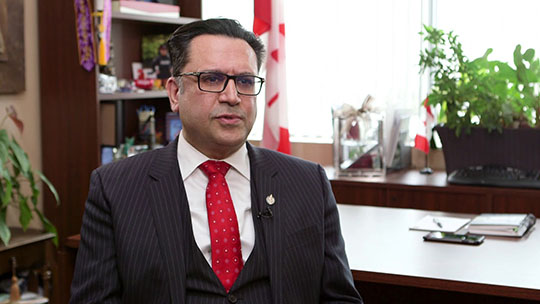
Majid Jowhari of Iranian Canadian Congress
Mujahedin Khalq as an Opposition Group

A smear campaign linked to MEK revealed

ICC Condemns Foreign-Linked Smear Campaign Against Richmond Hill MP

The Iranian Canadian Congress (ICC) has received multiple reports over the past few days about a smear campaign linked to Mujahedin-e-Khalq (MEK) against Iranian-Canadian MP and Richmond Hill candidate Majid Jowhari.
MEK is an extremist Iranian opposition group that was listed in Canada as a terrorist entity as late as 2012. According to multiple reports the organization has dubious sources of funding and links to Saudi Arabia.

Majid Jowhari of Iranian Canadian Congress

On social media, fake accounts associated with MEK have distributed false information about Mr. Jowhari. Seemingly, the only reason behind the targeting of Mr. Jowhari by the MEK is that, aligned with PM Trudeau’s promise in 2015 to re-engage with Iran and reopen the embassies, Mr. Jowhari supported this promise as well and presented the views of his constituents to the Canadian government. Time and again we have also witnessed that the majority of Canadian-Iranians also support diplomacy and peace with Iran and are against policies of sanctions and war.
The ICC is extremely concerned about the MEK-linked smear campaign against a Canadian citizen running for public office. We are monitoring the situation carefully and will communicate our concerns with Canadian officials.
We once again encourage all members of the Iranian-Canadian community to participate in the federal elections on October 21st and vote for the party or candidates who represent their views.
iccongress.ca

October 21, 2019 0 comments
FacebookTwitterPinterestWhatsappTelegramSkypeEmail
blank
Mujahedin Khalq as an Opposition Group

MEK and War Agenda in Trump Admin

Trying to Exploit Iran’s Diverse Ethnic Population to Advance a War Agenda

On September 25, during the annual meeting of the United Nations General Assembly, United Against Nuclear Iran (UANI)—a pro-Israel, anti-Iran lobby group—held a “summit” in New York that was attended by, among others, Secretary of State Mike Pompeo, Israeli ambassador to the U.S. Ron Dermer, and Sigal Mandelker, the outgoing Under Secretary of Treasury for Terrorism and Financial Intelligence, as well as diplomats from Bahrain and Saudi Arabia. As usual, tough rhetoric was uttered by all the speakers, and threats were made.

The day before the summit, another meeting was held that had allegedly been organized by Mark Wallace, the CEO of UANI, although it is widely believed that UANI was behind the meeting. The participants in the meeting were supposedly representatives of various Iranian opposition groups in exile, as well as ethnic secessionist groups. The meeting was, however, dominated by the Mojahedin-e-Khalq (MEK), a group that until 2011 was listed by the U.S. State Department as a terrorist organization and is despised by all Iranians due to its alliance with the regime of Saddam Hussein during the Iran-Iraq War and other acts viewed by virtually all Iranians as treason. Also present were the National Council of Resistance of Iran, MEK’s political arm, and the Organization of Iranian American Communities, another MEK front group. A fourth group, the U.S. Foundation for Liberty and Human Rights, appears to be linked with MEK, as the content of its website uses the same rhetoric as the MEK. Representatives of six ethnic groups also attended the meeting, none of which has any significant support inside Iran as best one can tell.

One of the groups participating in the gathering was the Arab Struggle Movement for the Liberation of Ahwaz (ASMLA). Ahwaz, or Ahvaz, is the provincial capital of Khuzestan, the oil-rich province in southwestern Iran near the border with Iraq. ASMLA claims to represent the minority Iranian Arabs in Khuzestan who are supposedly suppressed by Tehran. The group, founded in 1999, has carried out several terrorist attacks in Iran over the past fifteen years, including in January 2006, in May 2015, in June 2016, in January 2017, and in October 2018.

“This is the first time in history, since the Iranian revolution in 1978 and 1979, that such a broad cross-section of the leaders and delegates from Iranian dissident … groups have gathered in a convention for Iran’s future.” Wallace boasted despite the fact that those same “leaders” are either little known or are virtually universally despised in Iran.

This is not the first time that the U.S. far right has tried to exploit Iran’s diverse ethnic population in order to stir trouble in the country and advance its anti-Iran agenda. In fact, this practice has a long history that goes back to practically the 1979 revolution and the hostage crisis of 1979-1981. Since April 1980, when Washington cut diplomatic relations with Iran, successive U.S. administrations and the U.S. far right have seen exploiting ethnic grievances in Iran as a key route toward destabilizing the country.

The Clinton administration imposed a package of sanctions against Iran in 1996 that the Bush administration renewed in 2001 and again, indefinitely, in 2006. After preventing the European trio of Britain, France, and Germany from reaching an agreement with Iran over its nuclear program in summer of 2005, the Bush administration launched its efforts to exploit Iran’s ethnic minorities and the dissident groups that supposedly represent them, in order to either break up Iran into multiple weak states, or, at the very least, to stir up trouble and destabilize the country.

That strategy has a long history in the Middle East. Washington, for example—acting at the behest of the Shah of Iran—backed a Kurdish insurgency in Iraq until 1975. It has been best exemplified in the ways in which Israel has applied it to some of its Arab neighbors. In February 1982, three months before Israel invaded Lebanon in support of the Christian Falange militia, the Likud strategist Oded Yinon published an article [in Hebrew, whose translation was published by Israel Shahak, the Israeli academic and civil-rights advocate] in which he called on Israel’s leadership to adopt a policy of fragmenting the Arab world into a mosaic of ethnic and confessional groupings. “Every kind of inter-Arab confrontation would prove to be advantageous to Israel,” he argued, urging that Israel must reconfigure its geo-political environment through the Balkanization of the surrounding Arab states into smaller and weaker states.

Building on Yinon’s analysis ten years later, neoconservative historian Bernard Lewis—who would become a key informal adviser to Vice President Dick Cheney in the run-up and immediate aftermath of the U.S. invasion of Iraq—wrote in an essay in the journal Foreign Affairs:

Another possibility, which could even be precipitated by [Islamic] fundamentalism, is what as of late has become fashionable to call ‘Lebanonization.’ Most of the states of the Middle East – Egypt is an obvious exception – are of recent and artificial construction and are vulnerable to such a process. If the central power is sufficiently weakened, there is no real civil society to hold the polity together, no real sense of common national identity or overriding allegiance to the nation-state. The state then disintegrates – as happened in Lebanon – into a chaos of squabbling, feuding, fighting sects, tribes, regions and parties. If things go badly and central governments falter and collapse, the same could happen, not only in the countries of the existing Middle East, but also in the newly independent Soviet republics…

In their infamous “A Clean Break: A New Strategy for Securing the Realm,” the policy document written in 1996 for Benjamin Netanyahu, the then-newly elected Prime Minister of Israel, Richard Perle et al. suggested that Israel should “work closely with Turkey and Jordan to contain, destabilize, and roll-back some of its most dangerous threats [meaning Iran and Iraq].” David Wurmser, one of the authors of the same report who served on Cheney’s national security staff from 2003 to 2007, went further, writing in a lengthier report that Syria and Iraq could easily fragment into separate ethno-sectarian segments, “a development that would enhance the security of Israel and the West.”

These ideas were clearly picked up by the Bush administration and later applied to Iran. “In the past six months, Israel and the United States have also been working together in support of a Kurdish resistance group known as the Party for Free Life in Kurdistan [known as PJAK or PEJAK],” Seymour Hersh reported in November 2006. “The group has been conducting clandestine cross-border forays into Iran, I was told by a government consultant with close ties to the Pentagon civilian leadership, as `part of an effort to explore alternative means of applying pressure on Iran.’”

In February 2007, the Telegraph of London reported that:

CIA officials are understood to be helping opposition militias among the numerous ethnic minority groups clustered in Iran’s border regions. In the past year there has been a wave of unrest in ethnic minority border areas of Iran, with bombing and assassination campaigns against soldiers and government officials… Funding for their separatist causes comes directly from the CIA’s classified budget but is now ‘no great secret,’ according to one former high-ranking CIA official in Washington.

In the same month, Cheney himself traveled to Pakistan and met with its then-president, General Pervez Musharraf. Pakistani government sources said at the time that the secret campaign against Iran by Jundullah was on the agenda when the two met. Jundallah was a Baluch terrorist group that for years staged terrorist attacks in Iran from its bases in Pakistan. In an interview later that month, Cheney referred to the Jundallah terrorists as “guerrillas” in an apparent effort to lend them legitimacy.

In April 2007, ABC News reported that, according to Pakistani and U.S. intelligence officials, Jundallah had been secretly encouraged and advised by U.S. officials since 2005.

In an interview with National Public Radio in June 2008, Hersh explained how the Bush Administration’s policy of “my enemy’s enemy is my friend” led it to support Jundallah and MEK. The next month, Hersh quoted Robert Baer, a former CIA clandestine officer who had worked for nearly two decades in South Asia and the Middle East, as saying, “The Baluchis [a small ethnic minority group residing in Iran’s and Pakistan’s provinces of Baluchistan] are Sunni fundamentalists who hate the regime in Tehran, but you can also describe them as Al Qaeda. These are guys who cut off the heads of nonbelievers—in this case, it’s Shiite Iranians. The irony is that we’re once again working with Sunni fundamentalists, just as we did in Afghanistan in the nineteen-eighties.” Baer repeated those assertions in the fall of 2008 at a symposium co-organized by this author on U.S.-Iran relations at the University of Southern California.

In the same article, Hersh also stated that the MEK received arms and intelligence, directly or indirectly, from the U.S., and that PJAK, “which has also been reported to be covertly supported by the United States,” operated against Iran from bases in northern Iraq for at least three years. PJAK used Iraqi Kurdistan as its base to carry out multiple raids into Iran that killed many civilians, as well as soldiers and policemen. At the time, the Bush administration denied helping PJAK, despite the fact that the group’s chief, Rahman Haj-Ahmadi, had traveled to Washington around the same time, reportedly to gain financial and military support for his militia. In 2009, the Obama administration declared PJAK a terrorist organization.

PJAK is still active in the border area between Iran, Turkey, and Iraq. When in December of 2017 there were scattered demonstrations in several Iranian cities against the terrible state of the Iranian economy, PJAK issued a statement asking people to rise up. It carried out terrorist attacks inside Iran on 27 July 2019 that killed and injured scores of people.

In December 2009, Selig Harrison reported in the New York Times that the Bush administration had provided support to Jundallah, as well some Kurdish groups operating in western Iran. According to his report, that assistance was sent through Pakistan’s Inter-Services Intelligence agency, while the Kurdish groups received their support through Israel’s Mossad.

The Bush administration was not the only one that was trying to exploit the dissatisfaction of some of Iran’s ethnic groups to destabilize the country. Israel and Saudi Arabia were also participants. In January 2012, Mark Perry reported how Mossad agents, using U.S. passports and posing as CIA agents, tried to recruit members of Jundallah to fight their covert war against Iran.

Jundallah’s leader, Abdolmajid Rigi, was captured by Iran’s security forces and executed in June 2010. The Obama administration put Jundallah on the terrorist list in November 2010. The group then split into Pakistani and Iranian branches. The former attacks Shiites in Pakistan, while the Iranian branch, known as Jaish ul-Adl, continues to carry out terrorist attacks and kidnappings in Sistan and Baluchistan province in southeastern Iran, near the border with Pakistan. It is widely believed in Iran that Jaish ul-Adl is supported by Saudi Arabia and United Arab Emirates.

The Kurds and Baluchis are not the only ethnic groups that the Bush administration and its allies tried to exploit. In a July 2008 article, Hersh also mentioned possible U.S. support for separatists in Khuzestan province. As already pointed out, over the past 15 years, Iranian-Arab separatists have carried out bombing and terrorist attacks in Khuzestan, the latest of which took place in October 2018, when they attacked during a military parade. An armed group, Ahvaziya, claimed responsibility for the attacks. Ahvaziya is part of the ASMLA group that participated in the Washington meeting of Iranian separatist groups.

Iran has accused Saudi Arabia of funding, arming and training the group. After the attacks, Abdulkhalegh Abdulla, a former adviser to the Crown Prince of Abu Dhabi, wrote in a tweet that the attack was not terrorism because it was against Iran’s military, and that the attacks were part of what Mohammad bin Salman, the crown prince and de facto ruler of Saudi Arabia, had threatened in May 2017, namely, that Saudi Arabia is “not waiting until there becomes a battle in Saudi Arabia,” and so it “will work so that it becomes a battle for them in Iran.” His tweet created deep anger in Iran.

As the author recently reported, the Trump administration has decided to continue what the Bush administration began. Before he was appointed as Trump’s national security adviser, in his “manifesto” for getting the U.S. out of the nuclear agreement with Iran, John Bolton advocated U.S. support “for Kurdish national aspirations, including Kurds in Iran” and providing “assistance to Balochis, Khuzestan Arabs, Kurds, and others…” After his appointment, Bolton, Secretary of State Mike Pompeo, and Brian Hook—who is the State Department’s Special Representative for Iran and directs its “Iran Action Group”—met with some of the leaders of Iran’s Kurdish groups. Last June, Abdullah Mohtadi and Mustafa Hijri—who lead, respectively, the Iranian Communist Kurdish group Komala and the Kurdistan Democratic Party of Iran [KDPI]—travelled to Washington, with Mohtadi reportedly meeting with Pompeo and Hijri meeting with State Department officials. Komala’s office in Washington has registered with the Justice Department as a lobbying group to “establish solid and durable relations” with the Trump administration.

Both groups have carried out terrorist attacks inside Iran, and, under the guise of calling for a federal system, both have separatist tendencies. The separatist nature of the KDPI became clear when, back in 2012, Hijri asked the U.S. to declare Iran’s Kurdistan province a “no-fly zone,” so that his forces could attack government forces freely and eventually secede from Iran. Hijri has also called for “regime change” in Iran, and has declared the Islamic Republic “a common enemy” of the Kurds and Israel, asking the Jewish state for support.

The attempt by UANI, a group that reportedly receives a lot of its funding from Saudi Arabia and the United Arab Emirates, to provoke ethnic strife in Iran may well lead to more bloodshed, but it will likely ultimately fail. Iranians of diverse backgrounds have lived together side-by-side and have preserved their nation for thousands of years. Iran’s true opposition inside the country—the reformists, religious-nationalists, secular leftists, labor groups, human rights activists, and others—and its supporters in the diaspora reject discrimination against minorities, ethnic tensions, economic sanctions, military threats, and foreign intervention. In the democratic Iran that the true opposition will eventually achieve, all Iranians, regardless of their ethnicity, religion, or gender, will be equal.

Muhammad Sahimi is a Professor at the University of Southern California in Los Angeles.

October 21, 2019 0 comments
FacebookTwitterPinterestWhatsappTelegramSkypeEmail
weekly digest
Iran Interlink Weekly Digest

Iran Interlink Weekly Digest – 262

++ There have been several pieces in Farsi about the Giuliani affair and how after already losing John Bolton the MEK are now in a panic over losing Giuliani too.

++ An article answers Maryam Rajavi’s statement declaring that she is against the Turkish actions in Syria and is supporting the Kurds. This article points out that Rajavi killed more Kurds than anyone. That’s the reason the Kurdish council boycotted the UANI session in New York when you were invited. Other commentary points out that Rajavi enters into everything like a mosquito, except the real issues she needs to answer for and which she hasn’t answered for three decades – the families, supporting Saddam, internal abuses, etc. Every now and then the MEK make it clear they are proud mercenaries for any issue, but then they also claim all they are about is rescuing Iran. This is why even while talking about the Turkish actions in Syria, the MEK’s announcement is announcement is 80% swearing against Iran as though Iran is responsible for this.

++ Another example of this mercenary approach is that MEK appear to believe some executions are good executions while some executions are bad. One article in particular lists all the executions committed by the MEK themselves; from killing Americans in Iran, the executions of Kurds in Iraq, right up to recent executions in Albania like Malik Sharai. It notes that the MEK was silent about all the executions by Saddam. And how in all the past four decades they have not dared to mention the barbaric executions in Saudi Arabia. As if those are OK.

In English:

++ City News, Albania reported that journalist Gjergji Thanasi has sued MEK enforcer Behzad Saffari Dehkord for defamation. Saffari has several times labelled Thanasi ‘an agent of the Iranian regime’ – the standard epithet applied to all of MEK’s critics. But perhaps when your terrorist cult has been foisted on a small, struggling country and is intolerable to every citizen except those paid by the MEK or the US, such behaviour needs to be brought to book. The MEK sent one of Albania’s highest paid lawyers to the first hearing, but Saffari will be obliged to attend the next hearing in person.

++ Mazda Parsi, Nejat Bloggers, refers to the book ‘Gullible Superpower: U.S. Support For Bogus Foreign Democratic Movements’ by Ted Carpenter of the Cato Institute and reviews the chapter on the MEK. Parsi says that advocacy for the MEK is not limited to the U.S. and Israel but includes Saudi Arabia and now Albania. According to Reza Alghurabi of the Herald Tribune, Albania’s support was bought by the U.S. which paid $25m to the government and $20m to the UNHCR. The MEK has also generously paid “hefty sums of money for a ten-minute speech on behalf of the group”. Such payments have corrupted Albania’s approach to Iran. “In exchange the Albanian authorities serve them with hostile acts towards Iran”, says Parsi. However, no matter how much the MEK’s advocates try to pretend that the Iranian people do not loathe the MEK, this is an established fact.

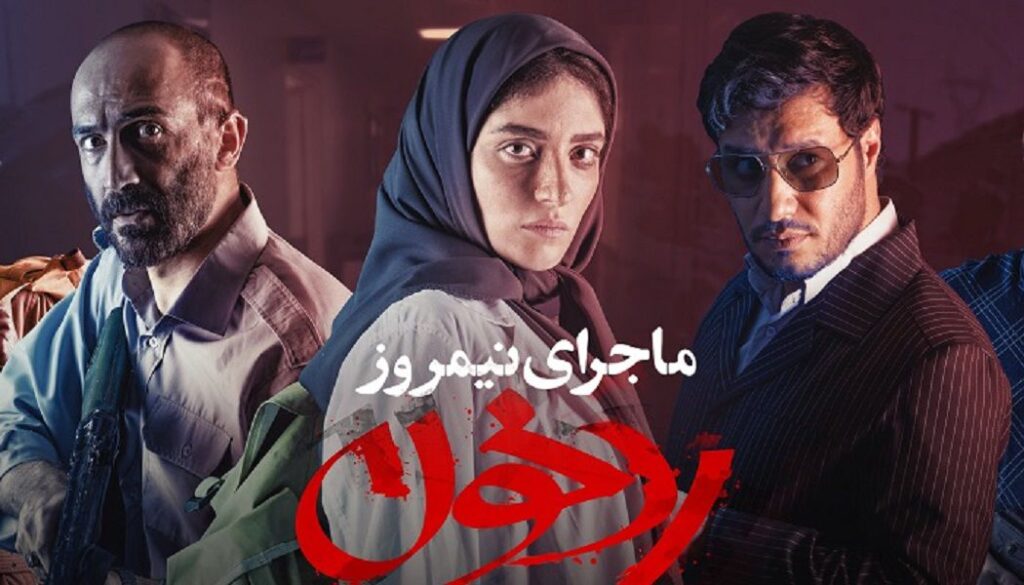
++ A piece in the Tehran Times reviews the work of Iranian filmmaker Mohammad-Hossein Mahdavian. Mahdavian has made two films about the MEK’s history in Iran, Trace of Blood and The Midday Event. “The stories of “The Midday Event” and “Trace of Blood” were set in the 1980s when Mahdavian and Ebrahim Amini, with whom he co-wrote the screenplays for the films, were only children. However, in an interview with Mahdavian, veteran critic Hushang Golmakani, who works for the Persian monthly Film, called the details of the sets and dialogues of “Trace of Blood” perfect. ‘The film has the potential to be biased, but it has maintained its balance. The film has very good dialogues and perfect ending’, Golmakani noted. It appears that a perfect filmmaker who is genuinely skilled in transforming real political narratives into films has emerged.”

++ MEK advocate Rudi Giuliani was in the spotlight this week with several articles mentioning the MEK as one of many foreign groups who have paid him handsomely for his advocacy. In relation to the MEK, Politico reported that “Giuliani has claimed he’s only working ‘as a private citizen—thank God I can still do that’.” NBC News ran a lengthy detailed examination of Giuliani and other high-profile figures who have been happy to shill for the MEK over many years without registering as lobbyists for a foreign group. This may or may not be the beginning of Giuliani’s downfall. But it certainly is another nail in the coffin of the MEK.

++ Muhammad Sahimi in Lobelog describes UANI sponsored gatherings of so-called Iranian opposition groups as the U.S. far right’s efforts “ to exploit Iran’s diverse ethnic population in order to stir trouble in the country and advance its anti-Iran agenda”. Sahimi details the background of these groups and concludes: “The attempt by UANI, a group that reportedly receives a lot of its funding from Saudi Arabia and the United Arab Emirates, to provoke ethnic strife in Iran may well lead to more bloodshed, but it will likely ultimately fail. Iranians of diverse backgrounds have lived together side-by-side and have preserved their nation for thousands of years. Iran’s true opposition inside the country—the reformists, religious-nationalists, secular leftists, labor groups, human rights activists, and others—and its supporters in the diaspora reject discrimination against minorities, ethnic tensions, economic sanctions, military threats, and foreign intervention. In the democratic Iran that the true opposition will eventually achieve, all Iranians, regardless of their ethnicity, religion, or gender, will be equal.”
October 18, 2019

October 21, 2019 0 comments
FacebookTwitterPinterestWhatsappTelegramSkypeEmail
the Trace of Blood
Mujahedin Khalq as an Opposition Group

Trace of Blood

A Film About MEK History

Filmmaker emerges to bring dramas from Iran political history to life

“I was born during the war, which had lasted for so long that I thought that it would be forever and would never end. When I heard people talking about the frontline I imagined it was a geographical location like a sea or a forest near the borderlines of each country where the war took place. We were in our childhood, experiencing a certain way of life. We chanted slogans in the schools and talked about certain issues and heard about subjects from the media that deeply influenced our hearts and minds. Today, the experiences of those years caused me to be interested in returning to those years with new feelings and perceptions, which come from awareness, and I want to recollect the memories of those years again.”

Mohammad-Hossein Mahdavian made the remarks during the Fajr Film Festival in Tehran in February after the premiere of his latest political thriller, “Trace of Blood”, which is currently on screen at Iranian theaters.

Perhaps nobody imagined that a filmmaker of political thrillers was being born in the new wave of Iranian cinema in 2016 when Mahdavian made his debut feature “Standing in the Dust” at 34.

The film recounted the life story of Ahmad Motevasselian, an IRGC commander who was kidnapped by the Zionist regime in 1982 in Lebanon.

The choice of subject matter was viewed by critics as an easy and clever way for the newcomer to obtain approval for the film from Iranian cultural officials.

At the time, the film was produced at the Owj Arts and Media Organization, a Tehran-based institution that produces revolutionary works in art and cinema. Nowadays, the projects that the organization supports no longer face burdensome bureaucratic hurdles imposed by the state.

“‘Standing in the Dust’ was the most customized movie I have ever made, and was my most popular film and also received critics acclaim,” Mahdavian told the Persian daily Sharq after the premiere of “Trace of Blood”.

“‘Lottery’ was my most independently produced film, but it failed to satisfy the critics,” he added.

A year later, Mahdavian’s second movie, “The Midday Event” on the terrorist activities of the Mojahedin-e-Khalq Organization (MKO) in Iran in the 1980s, demonstrated his passion for factual political stories taken from modern Iranian history.

In this film, the new government, after toppling the Shah in 1979, assembles a security group to fight against MKO’s terrorist attacks in 1982.

His third film, “Lottery” about trafficking Iranian women to the United Arab Emirates was viewed as regressive by critics.

“I have the courage to make a film and accept the negative reviews. But what urges me to continue on this path is the people for whom I make the films,” he noted.

“Trace of Blood”, also known as “Blood Trap”, is a sequel to “The Midday Event”. In this film, Iranian security forces come together in 1988 to trace the MKO’s undercover agents, which had penetrated the security forces in 1982. They also want to foil Operation Eternal Light, which the MKO carried out against Iran with the full support of the Iraqi dictator, Saddam.

The stories of “The Midday Event” and “Trace of Blood” were set in the 1980s when Mahdavian and Ebrahim Amini, with whom he co-wrote the screenplays for the films, were only children.

However, in an interview with Mahdavian, veteran critic Hushang Golmakani, who works for the Persian monthly Film, called the details of the sets and dialogues of “Trace of Blood” perfect.

“The film has the potential to be biased, but it has maintained its balance. The film has very good dialogues and perfect ending,” Golmakani noted.

It appears that a perfect filmmaker who is genuinely skilled in transforming real political narratives into films has emerged. However, he wants to try his hand at other genres.

“There is no time to lose; life is too short and I haven’t made a lot of films. Certainly, I will try other genres—I don’t know when—but I want to try something different,” he said.

“If I find a different story appropriate enough to be turned into a film, of course I will make it. Once, I even wanted to make a film for children, because whenever we intend to take our children to the cinema, we can’t find films entertaining enough for children,” he added.

The social theme of the story in “Lottery” from his short but brilliant career reflected a shift. Centering on topics such as sex trafficking rings in Iran is a bit much for this cinema. His camera should be focused on major stories such as the Iran hostage crisis in 1979, which has been distorted by numerous biased movies from Iranian and foreign filmmakers, including Ben Affleck’s 2012 movie “Argo”.

Mahdavian seems to go his own way in filmmaking. He is clever enough to avoid joining specific currents, which tend to categorize everything by the rules of politics. His avoidance of these trends should help prevent him from being tagged as a governmental filmmaker.
By Seyyed Mostafa Mousavi Sabet

October 21, 2019 0 comments
FacebookTwitterPinterestWhatsappTelegramSkypeEmail
Rajavi_Giuliani
Mujahedin Khalq; A proxy force

Paid speeches, MEK Terrorists, Legal woes

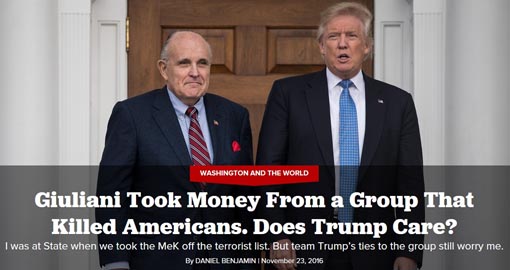
Giuliani’s work for Iranian group with bloody past could lead to more legal woes

Giuliani ally Michael Mukasey’s move to register as a lobbyist for an Iranian dissident group may spur the DOJ to investigate, experts say.

In the spring of 2017, former U.S. attorney general Michael Mukasey met with representatives of the Iranian dissident group Mujahedeen e-Khalq (MEK), a State Department-designated foreign terrorist organization until 2012.

Mukasey wasn’t alone. Joining him at the meeting was another high-profile American political figure: Rudy Giuliani.

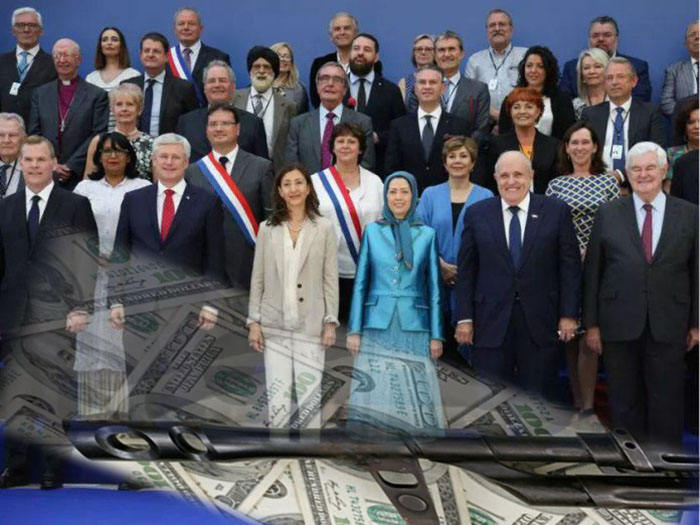
For nearly a decade, the former law partners have pushed the agenda of the MEK, giving paid speeches and writing newspaper op-eds expressing support for a group linked to the deaths of six Americans in the 1970s.

But it wasn’t until late last month that Mukasey registered as a foreign agent lobbying pro bono for MEK’s political arm. Giuliani still hasn’t, raising the possibility that the Justice Department could target him in an illegal lobbying probe, experts say.

“This is the kind of scenario that very commonly leads them to launch an investigation,” said Josh Rosenstein, a Washington-based lawyer who advises clients on compliance with federal lobbying laws.

If Giuliani and Mukasey were”working together or in parallel,”Rosenstein added,”then it’s a huge problem for Giuliani.”

Mukasey’s move to register as a lobbyist for the MEK’s political affiliate comes as Giuliani, the former New York City mayor-turned-personal lawyer to President Donald Trump, is facing growing legal peril connected to his international business activities.

Rudy Giuliani

Giuliani’s overseas dealings, primarily in Ukraine, are under fresh scrutiny after two of his associates were charged last week in a scheme to funnel foreign money to U.S. politicians.

The New York Times has reported that Giuliani’s business dealings are under federal investigation and prosecutors may be looking at his exposure for failing to file as a foreign agent.

Legal experts say Giuliani’s work on behalf of the MEK and its political arm, the National Council of Resistance of Iran, also raises questions about whether he may have run afoul of the Foreign Agents Registration Act, or FARA. The law requires American citizens to disclose to the Justice Department any lobbying or public relations work on behalf of a foreign entity, regardless of whether they’re paid for the representation.

A review of the group’s government filings shows that Giuliani met with MEK officials at least once every year since 2014. A range of issues were discussed, including “Iran’s nuclear weapons as well as Iran’s terrorism in the region, including Iraq and Syria” in 2014, the plight of Iranian dissidents living in Iraq in 2015, and the protests in Iran in 2018.
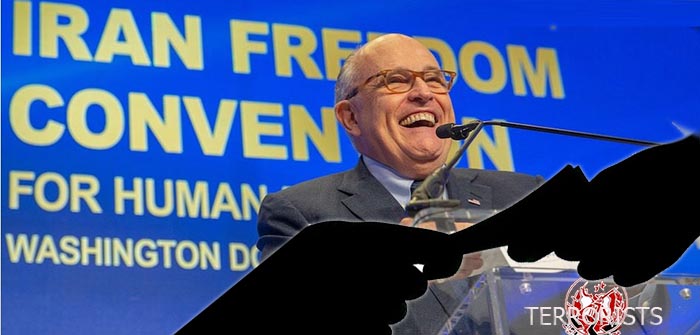
During that period, he has appeared at MEK-related events in Poland, Albania, Paris and Washington. FARA experts say Giuliani’s speech in Washington in May 2018 and U.S.-based writings in support of the group are particularly problematic.

“This certainly walks like a FARA issue and talks like a FARA issue,” said Matthew Sanderson, a defense lawyer who specializes in foreign lobbying cases.

He said the Justice Department will likely try to “develop facts to determine whether these efforts to influence public opinion in the U.S. were at the request or direction of MEK, a foreign interest.”

“This is a particularly unusual situation because Mr. Giuliani was acting as the president’s counsel, all while acting in ways that suggest he was simultaneously representing certain foreign interests,” Sanderson said.

In an interview with NBC News, Giuliani said he has no reason to register as a foreign agent because, unlike Mukasey, he’s not planning to speak to U.S. government officials about the MEK.

“I’m not doing what he’s doing,”Giuliani said.”He’s not registering for any previous activity. He’s registering because he’s asking for a specific meeting with the government.”

Giuliani would not elaborate on the reason for the meeting. Mukasey declined comment.

Representatives for the group’s political arm did not return requests for comment.

Formed in the 1960s as a Marxist-Islamist movement, the MEK has a bloody history.

The group, whose name translates as “People’s Holy Warriors of Iran,” is accused of killing six Americans before the 1979 Iranian revolution and assassinating Iranian diplomats in the subsequent years.

A longtime ally of the Iraqi dictator Saddam Hussein, the MEK was placed on the State Department’s terror blacklist in 1997. The group enlisted an A-list cast of former American political and law enforcement leaders as part of its effort to remove itself from the terrorist list and enhance its reputation in the West.

The strategy worked. In 2012, Secretary of State Hillary Clinton announced a decision to remove the group from the list.

Daniel Benjamin, a State Department counterterrorism coordinator from 2009 to 2012, has focused extensively on the network of American politicians who have been paid by MEK, including Giuliani and Mukasey.

“I found it pretty distasteful that they were shilling for this group even if it was delisted,” said Benjamin, now a professor at Dartmouth College. “This is a group that has American blood on its hands, and it’s never owned up to that.”

Benjamin said the group has long attracted anti-Iran hard-liners who recruit like-minded peers.

“Look at those who have gone on their gravy train and then go to their events and say MEK is going to bring democracy and peace to Iran,” Benjamin said. “Basically these guys bring aboard their pals. Especially among the hardest line anti-Iran folks, this is the place to go. Though plenty of people become much more hard line once their pockets are filled with MEK money.”

“The big question,” Benjamin added,”is where does all this money come from?”

Karim Sadjadpour, an Iran expert with the Carnegie Endowment for International Peace, described the organization as a fringe group with mysterious benefactors that garners scant support in its home country.

“Their population in Iran hovers between negligible and nill,” Sadjadpour said.
Still, the MEK’s roster of supporters includes an array of prominent Americans: former FBI Director Louis Freeh; former Democratic governors and presidential candidates Howard Dean and Bill Richardson; Trump’s former national security adviser John Bolton; and former Obama national security adviser James L. Jones.

In speeches and media interviews, Giuliani and the others have insisted the MEK is now a democratic-minded opposition group committed to overturning the mullah-led government in Tehran. They say their support for the group is also based on humanitarian motives — to ensure the safety of the Iranian dissidents living in Iraq who face the threat of attacks.

Giuliani’s MEK advocacy dates to at least 2010. In December of that year, he and Mukasey were among a group of prominent Republicans who traveled to a rally in Paris where they called on the Obama administration to remove MEK from the U.S. list of foreign terrorist organizations.

“For your organization to be described as a terrorist organization is just really a disgrace,” Giuliani declared before a crowd of Iranian exiles, according to an article in The Washington Post.

Mukasey urged the White House to offer “all possible technical and covert support to those fighting to end oppression in Iran.”

“What it has done and what it is doing is nothing less than an embarrassment,” he told the crowd, according to The Post.

The following year, Giuliani and Mukasey co-wrote an op-ed in the National Review with two other MEK supporters defending the organization.

In the 2011 piece, headlined “MEK is not a terrorist group,”Giuliani and the others argued against suggestions that the authors were providing material support to a terror group. The MEK has”provided valuable intelligence to the United States to Iranian nuclear plans,”they wrote.

In his FARA filing, dated Sept. 26, Mukasey wrote that he’s not being compensated for his MEK advocacy.

“The registrant has agreed to communicate with executive branch and legislative officials in the United States government on behalf of the foreign principal and its members on an unpaid basis,”the filing says.”However, the foreign principal will reimburse the registrant for direct expenses such as filing costs and travel.”

The filing lists Sept. 20, 2019, as the date of the agreement with MEK.

Sanderson, the defense lawyer who focuses on government lobbying, said the listing of that date could pose problems for Mukasey if he started doing lobbying work for MEK before then.

“Filing a late registration, especially if you’re not accurate in your description, could result in charges,”Sanderson said.

But Sanderson added that filing late is still better than not filing at all.”If you approach the government and proactively say, ‘I’m registering,’ even if it’s late, you’re in a much better position than if the government comes to your door.”

Giuliani would not say how much the group pays him for his appearances. He said there’s no reason why the Justice Department would target him for activities that dozens of other former U.S. politicians and military figures are participating in.

“If I have to register, so do three former heads of the joint chiefs of staff and eight very prominent Democrats and eight very prominent Republicans,”Giuliani said.

In an interview with NBC News’ Andrea Mitchell in Poland this past February, Giuliani said he worked to get the MEK off the terror list because”there was no evidence of any kind of terrorist activity for over 20 years, if any, and they were basically revolutionaries who overthrew the shah.”

“They believe in democracy, in human rights, rights of women,”said Giuliani, who was appearing at an MEK event.

In the interview, he also defending advocating for the MEK while also working as the president’s personal lawyer.

“I’m a private lawyer, so private lawyers have private clients,”Giuliani said.”This has been a client of mine for years. Maybe if I was taking a new position. Maybe if i was taking a bold new different position. I’m just repeating what I said 11 years ago, 10 years ago.”

Mukasey told The New York Times in 2011 that he had been paid his standard speaking fee — $15,000 to $20,000, according to the Web site of his speakers’ agency — to deliver talks at MEK-related events.

He insisted that his decision to advocate on behalf of the group was not driven by money.”There’s no way I would compromise my standing by expressing views I don’t believe in,”Mukasey told The Times.

Federal prosecutors have brought few FARA cases over the years. But the law garnered renewed attention during the special counsel’s investigation into Russian election interference.

Two Trump associates, Paul Manafort and Rick Gates, were charged with failing to register as foreign agents.

Giuliani’s contacts with the MEK extended into this past summer. In July, he traveled to Albania to meet with the group’s president, Maryam Rajavi.

An article from the MEK’s official website said Giuliani”emphasized that America stands on the side of the Iranian people and supports their struggle for freedom.”
By Julia Ainsley, Andrew W. Lehren and Rich Schapiro – nbcnews.com

October 20, 2019 0 comments
FacebookTwitterPinterestWhatsappTelegramSkypeEmail
Maryam Rajavi
Mujahedin Khalq Organization's Propaganda System

Maryam Rajavi mirrors Chalabi

Ahmad Chalabi, the Iraqi politician who died in 2015, is widely known for pushing for the U.S. invasion of Iraq. From exile he helped provide the manufactured excuses needed by the United States for the invasion in 2003 but was eventually denied any share in power after the fall of Saddam Hussein.
Chalabi was perhaps the Iraqi most closely associated with President George W. Bush’s decision to go to war. He cultivated close ties with journalists in Washington and London, American lawmakers, the neoconservative advisers who helped shape Bush’s foreign policy, and a wide network of Iraqi exiles, many of whom were paid for fabricating and distributing intelligence against Saddam Hussein’s government.
It was later revealed that his group, the Iraqi National Congress, received more than $100 million from the C.I.A. and other agencies between its foundation in 1992 and the start of the war. He cultivated friendships with a circle of hawkish republicans – Dick Cheney, Douglas J. Feith, William J. Luti, Richard N. Perle and Paul D. Wolfowitz – who were central in the United States’ march to war.
Chalabi was used by the American warmongers to ‘sell’ the claim that Saddam Hussein possessed weapons of mass destruction and that he had refused to fully cooperate with United Nations weapons inspections as an excuse to launch war against the country.
But the case for the war was predicated on flawed intelligence, and a 2006 report by the Senate Intelligence Committee concluded that “false information” from sources affiliated with the “Iraqi National Congress” was used to support key intelligence community assessment on Iraq and was widely distributed in intelligence products prior to war.
Did Chalabi push the U.S. into the war or was he rather used by advocates of war to produce excuses and announce false intelligence? It was later proved that Chalabi was truly the loudspeaker of the White House warmongers whenever they were not able to directly show their faces. They needed a so-called opposition group to do the job for them or at least to pull the trigger.
Now the Iranian Maryam Rajavi, leader of the Mojahedin-e Khalq Organization (MEK, MKO, NCR, NLA, Rajavi Cult) is playing (and has played for a long time) the same role as the Iraqi Ahmad Chalabi, this time in relation to Iran.
On Monday September 30, 2019 in Washington, the group, which has close ties with the warmongers of the White House, announced baseless details blaming the missile drone attack against Saudi oil facilities on Iran. Without any evidence, the MEK claimed that the decision for the attack was taken by the Supreme National Security Council, presided over by President Rouhani and with the presence of Foreign Minister Zarif.
This echoes the small task the MEK was previously given to promote the manufactured nuclear crisis against Iran. In August 2002, Alireza Jafarzadeh, the representative of the National Council of Resistance (a front organization for the MEK) to the U.S., appeared in a press conference in Washington and issued some nuclear intelligence against Iran. This was later proven to have been handed over to the MEK by Israeli Intelligence. This was being done while the group was listed as a terrorist entity by the U.S. State Department. The Americans only needed an Iranian opposition group to start the crisis, it wasn’t fussy about which one.
The MEK is a highly controversial group. It was responsible for killing several Americans in Iran during the 1970s. In 1992 its members attempted a violet attack on Iran’s U.N. delegation in New York. In 2012 it was removed from the U.S. State Department’s list of foreign terrorist organizations after an intense lobbying campaign that included paying retired U.S. government officials and leaders. Its supporters in the White House say the MEK has been an essential conduit for sensitive information about Iran’s nuclear program.
MEK members in Iraq were largely disarmed after the 2003 American invasion. The group had been granted protection by Saddam Hussein before the invasion and by the US army after the invasion and lived at Camp Ashraf for two decades. After the U.S. troop withdrawal in 2009, many group members moved in 2012 from Camp Ashraf to Camp Liberty, an abandoned U.S. military base. They have been now granted a remote and isolated base in Albania under the Trump Administration where the leaders have reconstructed their cultic internal relations and are doing their job in exactly the same way as performed by Ahmad Chalabi – the manufacture of excuses and false narratives to pave the way for war.
The MEK’s well financed meetings in Paris and now Albania are used as a platform for American politicians to announce their policy of regime change in Iran and the imposition of ‘maximum pressure’ sanctions. It is the only so-called opposition group which fully and unequivocally supports this policy to push the U.S. into war with Iran.
The Trump administration is conflicted about Iran. Even as the warmongers in the White House push for war there are others who are beginning to pull back. The MEK played its role in promoting accusations about Iran’s involvement in the Saudi missile attack. But this time, unlike Chalabi’s accusations, neither politicians nor media have given credence to Maryam Rajavi’s claims. It could well be that history lessons have been learned.
Ebrahim Khodabandeh

October 14, 2019 0 comments
FacebookTwitterPinterestWhatsappTelegramSkypeEmail
USA double standards on terrorists
Mujahedin Khalq Organization as a terrorist group

Democratic cover for terrorist proxies like MEK

Back in 1981, a 3-year-old girl Zahra Nourbakhsh, was on a bus together with her family, when it was set on fire by the agents of the Mujahedin Khalq Organization (the MKO, MEK, PMOI, Cult of Rajavi) in Shiraz, Iran. In that traumatic incident, she was severely injured and her two-year-old sister was killed. [1]
This was one of the many terrorist attacks of the MEK against Iranian civilians and authorities. However, Advocacy for violent groups such as the MEK, as a tool to run the agenda of superpowers, is not a taboo. Ted Carpenter, vice president for defense and foreign policy studies at the Cato Institute in Washington, D.C, analyzes this phenomenon in his book “Gullible Superpower: U.S. Support For Bogus Foreign Democratic Movements”.
In his book Carpenter focuses on ten separate case studies of times the United States gave “democratic” cover to movements that were far from deserving. These include the Islamic fundamentalist Mujahideen in Afghanistan, Nicaraguan and Salvadoran death squads, the authoritarian Jonas Savimbi of Angola, the organ-trafficking Kosovo Liberation Army, Ahmed Chalabi’s National Iraqi Congress, and the People’s Mujahedin of Iran. [2]
“Gullible Superpowers has an excellent chapter on the Iranian group Mujahideen-e-Khalq (MEK),” writes James Bovard of the American Conservative. “That organization sprang up in the 1960s and proceeded to kill Americans in the 1970s and large numbers of Iranians in subsequent decades. NBC News reported in early 2012 that MEK had carried out killings of Iranian nuclear scientists and that it was “financed, trained and armed by Israel’s secret service.” [3]
Advocacy for the MEK as the enemy of their enemy is not limited to the US and Israel. The group is also embraced by the regional rival of Iran, Saudi Arabia. However, Albanian government should also be added to the list of MEK’s friends although it has never been involved in serious political engagements or arguments with Iranian government. Actually, the motivation of Albanian authorities to receive the MEK is based on money. It was chosen as a safe haven for the group because the US wanted so.
Reza Alghurabi of the American Herald Tribune writes, “Under pressure from the Iraqi government and the country’s civil activists who demanded the expulsion of the MEK from Iraq, the U.S. government was forced to choose Albania, which was suffering from extremely weak economic conditions, as the final destination of the terrorist group.” [4]
Alghurabi explains how the US government “was forced to choose” Albania: “The Americans lured the Albanian officials into hosting the MEK by donating a $25 million package which was offered to Albania under the pretext of promoting reforms in the country. Furthermore, another $20 million was donated to the UN refugee agency by the U.S. to help resettle the MEK in Albania.” [5]
Nevertheless, this is not the only financial resource that Albania enjoys by the side of the MEK. The MEK is notoriously known for its lavish payments to its sponsors. Speakers at the MEK events are usually paid hefty sums of money for a ten-minute speech on behalf of the group. So, it is quiet natural for the MEK to fund the Albanian government and its authorities. In exchange the Albanian authorities serve them with hostile acts towards Iran.
“Edi Rama’s UN speech on September 27, 2019 in which he denounced Iran and praised the MEK, has raised speculations that the terrorist group influences Albanian officials,” Alghurabi writes. “In addition, Ilir Meta, another member of Albania’s socialist party and the Albanian president, had also visited MEK’s headquarters in Manze earlier and met with the group’s leader Maryam Rajavi.” [65]
Double standards on terrorism point to an awkward attitude among politicians in the US, Israel, Saudi Arabia and Albania. As far as a terrorist group is beneficial, it can be considered as democratic. “MEK apologists continue to portray the group as idealistic freedom fighters devoted to democracy,” James Bovard states. “A simple online search shows that the Farsi translation of the group’s name is “holy warriors of the people.” But as long as the MEK serves the purposes of the Saudi and Israeli governments and their American string-pullers, there will be plenty of Washingtonians who pretend that the Iranian people do not loathe MEK.” [7]
They can pretend anything they are willing too but the absolute truth is that the MEK is loathed by the Iranian people.
Mazda Parsi

Sources:
[1] https://www.nejatngo.org/en/posts/6767
[2] Carpenter, Ted Galen, Gullible Superpower: U.S. Support For Bogus Foreign Democratic Movements, Cato Institute, February 19th , 2019.
[3] Bovard, James, Idiocy or Perfidy? How We Get Hooked on Foreign Democracy Crusades, the American Conservative, October 2nd , 2019.
[4] Alghurabi, Reza, Why Did Saudis Decide to Expand Their Relations with Albania?, American Herald Tribune, October 6th, 2019.
[5] ibid
[6] ibid
[7] Bovard, James, Idiocy or Perfidy? How We Get Hooked on Foreign Democracy Crusades, the American Conservative, October 2nd , 2019.

October 12, 2019 0 comments
FacebookTwitterPinterestWhatsappTelegramSkypeEmail
Newer Posts
Older Posts

Recent Posts

  • The black box of the torture camps of the MEK

    December 24, 2025
  • Pregnancy was taboo in the MEK

    December 22, 2025
  • MEPs who lack awareness about the MEK’s nature

    December 20, 2025
  • Why did Massoud Rajavi enforce divorces in the MEK?

    December 15, 2025
  • Massoud Rajavi and widespread sexual abuse of female members

    December 10, 2025
  • Facebook
  • Twitter
  • Instagram
  • Youtube

© 2003 - 2025 NEJAT Society . All Rights Reserved. NejatNGO.org


Back To Top
Nejat Society
  • Home
  • Articles
  • Media
    • Cartoons
    • NewsPics
    • Photo Gallery
    • Videos
  • Publications
    • Books
    • Nejat NewsLetter
    • Pars Brief
  • About Us
  • Contact us
  • Editions
    • عربي
    • فارسی
    • Shqip