Nejat Society
  • Home
  • Articles
  • Media
    • Cartoons
    • NewsPics
    • Photo Gallery
    • Videos
  • Publications
    • Books
    • Nejat NewsLetter
    • Pars Brief
  • About Us
  • Contact us
  • Editions
    • عربي
    • فارسی
    • Shqip
Nejat Society
Nejat Society
  • Home
  • Articles
  • Media
    • Cartoons
    • NewsPics
    • Photo Gallery
    • Videos
  • Publications
    • Books
    • Nejat NewsLetter
    • Pars Brief
  • About Us
  • Contact us
  • Editions
    • عربي
    • فارسی
    • Shqip
© 2003 - 2024 NEJAT Society. nejatngo.org
blank
Albania

Full Exclusive / Camp Incident, Iranian Mojahedin Beat British Journalist

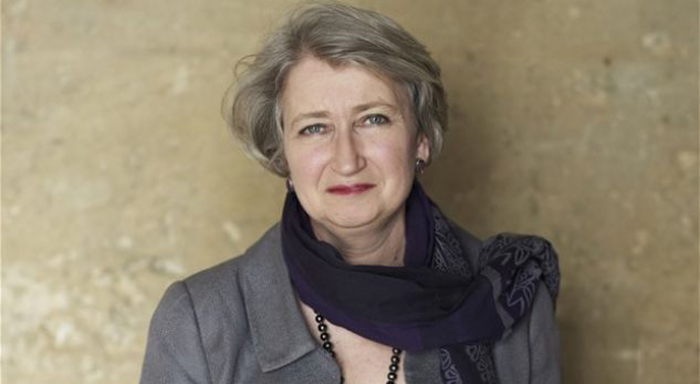
International Affairs Editor on Channel 4, Lindsey Hilsum mistreated, authorities are silent about the event. Minister Fatmir Xhafaj, the highest police authorities, and the British Embassy in Tirana have become aware of this incident.

An attempt was made to keep secret an incident at the Iranian Mojahedin camp in Manzas, Durrës, in which a well-known British journalist and her film crew were beaten. But Shqiptarja.com has discovered all the details of this incident.
Sources from the State Intelligence and Anti-terrorism Services, speaking on terms of anonymity, indicate that the incident occurred on August 10. The whole event was not reported in the daily communiques of criminal events by the police, although it is a scandal, and not a small one.

The Event

At the beginning of August, a British television crew for Channel 4 arrived in Albania, along with the well-known Middle East affairs journalist Lindsey Hilsum. The purpose of their visit was to investigate the lives of the Iranian Mojahedin, who have been given refuge for some years in our country, and the mystery of the newly-built, giant and fortified camp, hosting 3,000 dissidents of the Iranian regime.

Shqiptarja.com learned that on the morning of August 10, Lindsey Hilsum, accompanied by her producer Darius Bazargan, travelled in the direction of Manza, in the Durrës Region, to film the camp. They were accompanied by an Albanian translator.

As Lindsey Hilsum was standing outside the camp’s fence, at the back, trying to look inside the camp, she was pushed, and she was subjected to force by the private security guards, as well as by some Iranians.

An eyewitness told Shqiptarja.com that the attack was immediate and that the journalist was frightened. “They tried to take the camera and break it. The journalist panicked and started screaming, while young man of short stature who accompanied her was grabbed by the throat”, he said.

After a few minutes, an emergency police patrol arrived, which protected the journalist and her crew. They were escorted to the police station where they reported the incident and explained that they were doing their job [as journalists]. After giving their statements, they were released.

The Incident

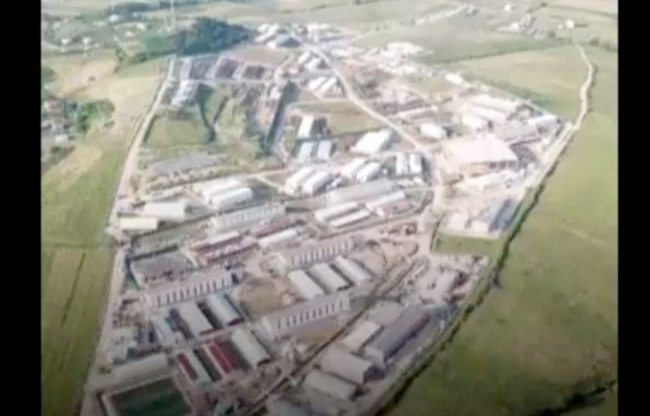
The entire incident has been filmed by the British film crew and will be broadcast in the next few days on Channel 4. A source aware of the content of the investigation told Shqiptarja.com that the film material provided by British television and the interviews taken show what happens inside the camp which is guarded fanatically so that nothing escapes outside the massive walls of this camp, lying on 26 hectares.

Minister Fatmir Xhafaj, the highest police authorities, and the British Embassy in Tirana have become aware of this incident.

Meanwhile, SHISH has sent Prime Minister Rama a detailed memo about the event. Shqiptarja.com sent an email to producer Darius Bazargan asking him to comment on the event to which he replied to contact his executive producers who would make a public statement later.

Albanianja.com requested a statement about this incident from the Mojahedin spokesman in the Manza camp, who claimed to believe that the TV crew was serving the interests of Iran’s regime’s secret police.

Full Reaction of MEK:

“On Friday, August 10, 2018, a television crew of three, secretly and without prior notice, filmed and photographed within the residence of members of the Mojahedin People’s Organization of Iran (PMOI-MEK), refugees in Albania, from an adjacent place. Local Albanian security agents, who pointed out this suspicious and unlawful act, asked not to film and surrender the footage. But team members, who were introduced as Britons working for British TV Channel 4 TV, disregarded this request and continued their work until the Albanian police came and escorted them to the police district.

“The next day, the news of their visit to the PMOI residence and photos taken there was featured on Facebook’s site by Massoud Khodabandeh, a notorious agent of the Iranian Intelligence Ministry (MOIS), as well as on Iran’s website -Interlink that is run by MOIS. Thus, it became clear that this audio-visual team from Channel 4 is in active communication with this Iranian intelligence agent and has taken the task of preparing a program to denigrate PMOI. But when MOIS realized that the publication of the news and photos had tarnished her conspiracy against Mojahedin, she ordered that they be removed on August 12th.

“On August 10, shortly after the release of the Channel 4 filming team, a PMOI press spokesman wrote an urgent letter to the television channel editor, telling the story and threats facing Mojahedin in Albania: “We are very worried that the filmed videos will fall into the hands of the Iranian Intelligence Ministry, “but he did not receive any response. He sent another letter to the editor on August 13 about the release of photographs describing the story of MOIS agent Khodabandeh, and attached two reports from a parliamentary group of the United Kingdom and the Federal Library of Congress’s Library Division about his dependence on MOIS, as well as an explanation from the editor. The letter remains unanswered.

“The claims that the reporter is beaten are completely lied. For your information, the first person claiming the reporter was beaten was Massoud Khodabandeh, the Iranian intelligence agent. So the origin of this claim is the Iranian intelligence ministry. Moreover, if the security personnel who, based on the advice of the Albanian government, are there for protection, would have done something wrong, the police would have banned them, not the reporters. Lies and gathering information about the compound of the MeK are part of preparing the ground for terrorist attacks against Iranian refugees. Similarly, in March a terror plot against their residential complex was prevented and two Iranian “reporters” were arrested.”

It is not yet known whether the Durrës police and prosecutor’s office have investigated this serious incident after receiving the testimony of the British journalist and her crew, or questioned the security guards at the camp, the protagonists in beating the English media people.

This is not an isolated incident between the Mojahedin refugee camps and international media interested in reporting on their lives. Shqiptarja.com learned that some days ago there has been another clash with an English-speaking journalist, The Guardian reporter named Arron Merat.

Profile / Lindsey Hilsum, Channel 4 journalist

Lindsey Hilsum is an international news editor on the prestigious British Channel 4 channel. During her career as a journalist, she has covered the world’s main conflicts over the last two decades, including the wars in Iraq, Afghanistan and Kosovo, as well as the Israeli-Palestinian conflict. In 2011, she reported on the ground the riots and unrest in Egypt, Bahrain and Libya. She has made numerous reports from Iran and Zimbabwe and was the Channel 4 Correspondent in China from 2006 to 2008. During the 2004 American attack on Fallujah, Iraq, she was on the front line of the attack alongside American Marines. She was the only foreign-language journalist who spoke English in Rwanda when the genocide began. Before engaging in journalism, she worked with relief missions in Latin America and Africa.

Her first book “Sand Storm: Libya at the Time of the Revolution” was published in Britain in April 2012 and May of that year in the US.

Hilsum was honored with an honorary doctorate from the English Essay University in 2004 and received awards such as television journalist of the year and was awarded medals by the Royal Geographic Society.

Dissidents

Three thousand opponents of the Tehran regime settled in Albania.

Since 1986, dissenters against the Iranian regime were sheltered in Ashraf camp, built by the United States on Iraqi land, on the border between Iraq and Iran. Their transfer to Albania began when the government of Berisha agreed to accommodate the first 210 Mojahedin who arrived in Tirana in May 2013. All of the Camp Ashraf residents came to Albania following an agreement between Prime Minister Rama and former Secretary of State John Kerry in 2016. The Iranian People’s Mojahedin Organization (MEK) is a movement that acts to overthrow the current regime in Iran.

The 3,000 Iranian Mojahedin who came to Albania previously lived in rented flats, but are now accommodated in the Manzas area, some kilometers from the city of Durres. It is understood that money for the land purchase and construction of new housing within the camp is funded by the community of Iranian dissidents living mainly in Europe. The new housing is surrounded by a security perimeter to avoid any potential risk. The protection of Iranian dissidents coming to Albania is guaranteed by intelligence agents. Meanwhile, the camp is guarded by private guards.

“We will stay in Manza until the end of the dictatorial regime in Iran. Our dream is to go back to our families in a free Iran”, one of them said off-camera for Report TV.

By Muhammad Veliu, Arsen Rusta,Shqiptarja.com, Translated by Iran Interlink
August 20, 2018 0 comments
FacebookTwitterPinterestWhatsappTelegramSkypeEmail
blank
Albania

Scandal / Tourism without water – which goes to Mojahedin Khalq

At the height of the tourist season, one of the most frequented beaches in Durres, Lalzi Bay, is not supplied with drinking water.

The news was announced by the journalist Andi Bejtja, who in a post on his social network, writes that the reason for this is because a special pipe has been added to the network which prioritises water for the Mojahedin camp at Maminas.

“Come on, come on, there is no water at all in Lalzi at the height of the tourist season, that a special pipe is inserted into the network and as a priority water goes to the Mojahedin camp in Maminas. It’s better to be a Mojahed than a tourist in the summer.”

CNA, by G.T., Albania, Translated by Iran Interlink,

August 19, 2018 0 comments
FacebookTwitterPinterestWhatsappTelegramSkypeEmail
weekly digest
Iran Interlink

Iran Interlink Weekly Digest – 239

++ In Albania, Mostafa and Mahboubeh Mohammadi and many former MEK members, report that MEK agents are subjecting them to serious daily harassment. MEK have sent tens of agents to Tirana to follow, photograph and threaten these vulnerable people as they go about their daily lives. The Mohammadis relate that any time they leave their accommodation, they are surrounded by groups of MEK who follow them, and that MEK sit in wait in the shopping centres so that wherever they go, they are followed and confronted by aggressive and intimidating MEK agents. The Albanian authorities, although aware of this activity, appear unable or unwilling to stop it. Due to MEK hysteria and panic about their illegal and cultic activities, Iran Interlink believes there is a danger of escalation into violence by these agents.

++ MEK veteran Mehdi Abrishamchi is leading an effort to re-write history in the MEK websites. MEK’s history in Iraq is now being portrayed as somehow victorious and heroic as though the group had desperately tried to relocate to Albania instead of the Iraqi government having successfully thrown them out of their country. Farsi commentators are mocking and denouncing the MEK for this exercise in futility, saying that it just displays desperation and panic.

In English:

++ Mohammad Sahimi writing in AntiWar, details ‘Iran’s Long List of Grievances Against the United States’. In the context of Donald Trump’s decision to pull the US out of various international agreements and organisations, Sahimi details how the US exit from the JCPOA is in contravention of international law and agreements. The article goes on to list a history of American treachery against Iran, including, more recently, support for MEK; “the exiled opposition [sic] group that is universally hated by the Iranian people for collaborating with the regime of Saddam Hussein during the Iran-Iraq war; was listed up until 2011 by the State Department as a foreign terrorist organization, and assassinated several American advisers in Iran in the 1970s. Giuliani and Bolton have been fantasizing about “regime change” in Tehran, and installing the MEK as Iran’s new ruler”.

++ Max Parry, Global Research, ‘Russiagate Conceals Israeli Meddling and Coming War with Iran’. The piece examines how a seeming obsession with assumed Russian interference in American political affairs has masked the real role of Israel in determining US foreign policy. “Israel disrupts U.S. elections and impacts the media far and away more than any other country, but even mentioning this fact can relegate a journalist to marginal publications or risk being publicly smeared as an anti-Semite.” Parry singles out Iran as the most important locus of Israeli influence. In particular, promotion of MEK. Parry goes into some detail to ensure MEK’s history is covered fully, before bringing us up to date: “The group is also known by the CIA to have aligned itself with ISIS against the Iranian-backed government in Iraq that expelled them. ISIS and MEK even likely coordinated terrorist attacks in June 2017 in Iran just as the Trump administration increased the economic sanctions. In addition to Ashraf 3, the MEK is allegedly being trained at the NATO military base in Kosovo, Camp Bondsteel, possibly for a regime change operation in Iran.” Parry’s explanation for the contradictions and obfuscations in US words and policies is that America is an empire in decline which seeks scapegoats to blame for its downfall.

++ Michael Tomasky’s piece in the Daily Beast, ‘America’s Mayor’ Rudy Giuliani Is Just Donald Trump’s Stooge Now, argues that the former lawman is not beyond using dirty tricks to save President Trump from political downfall. “He understands that his client, as the president of the United States, can’t face indictment and trial in the normal way any other American citizen can. The legal system can’t catch up with him, at least while he’s president. Only the political system can. Congressional action is the only remedy for a lawless president. And Congress obeys (in theory) the will of the people. Get the people to hate the law, to believe that the law itself is lawless, and the people’s representatives will be cowed into inaction.” Tomasky warns that Giuliani’s potential accomplices – former Attorney General Michael Mukasey and former FBI director Louis Freeh – in subverting law and democracy in America are, like him, paid promoters of MEK, “a group with American blood on its hands”. With further evidence of Giuliani malpractice, this time linked to Turkey, Tomasky concludes: “If Giuliani had gracefully left public life after 2001, he’d have secured an overall positive place in the history books (we can debate how fully deserved that would have been, but it would have been the case). Now? Everything before, bad and good, is erased. He will join Trump in the history books, and nothing else matters. He has destroyed himself. Let’s hope that’s all he destroys.”

 August 17, 2018

August 18, 2018 0 comments
FacebookTwitterPinterestWhatsappTelegramSkypeEmail
Rudy Giuliani
Mujahedin Khalq; A proxy force

‘America’s Mayor’ Rudy Giuliani Is Just Donald Trump’s Stooge Now

RUDY CAN FAIL

The lawman gone bad isn’t making a legal case. He’s trying to get the mob to destroy the law on behalf of his client.

So now we have the former lawman Rudy Giuliani arguing daily to the American people that their country’s laws and legal processes are illegitimate.

Collusion, he now says, is not a crime. President Trump never told James Comey to go easy on Michael Flynn, he avers, contradicting Comey, witnesses who confirm that Trump told everybody but Comey to leave the room on the fateful night—and not least of all, himself. Robert Mueller can’t possibly have anything on Trump. On Fox, Giuliani actually spoke the sentence: “The president’s an honest man.”

We know what all this is about. He understands that his client, as the president of the United States, can’t face indictment and trial in the normal way any other American citizen can. The legal system can’t catch up with him, at least while he’s president. Only the political system can. Congressional action is the only remedy for a lawless president. And Congress obeys (in theory) the will of the people. Get the people to hate the law, to believe that the law itself is lawless, and the people’s representatives will be cowed into inaction.

So that’s what Giuliani is up to: He, a former federal prosecutor, is trying to get the mob to destroy the law.

And now, as of Monday morning, he’s gone a step further. On Twitter he called on Jeff Sessions to appoint a special prosecutor to investigate the special prosecutor, and he even offered up two names: former Attorney General Michael Mukasey and former FBI director Louis Freeh.

The drumbeat will now start. Giuliani will go on Fox (probably has already) to promote these ideas, and the right-wing media will follow suit along with congressmen like Jim Jordan and Devin Nunes.

It’s an unspeakably outrageous idea, by the way. You can object to the fact that Mueller was appointed. You can support his firing, if you like. But the idea that we can go around appointing investigators to investigate investigators is extremely dangerous. It’s an attempt to extinguish long-standing legal process and practices in this country. A negation of law.

I hated Ken Starr with the heat of a million suns 20 years ago, but it never would have occurred to me in a jillion years that Janet Reno should appoint someone to investigate him. And I don’t believe, from the reading and interviewing of principals I’ve done over the years, that it ever occurred to anyone in the Clinton White House or Justice Department. Trying to undermine a statutorily lawful investigation in that way is not the kind of thing that occurs to democrats.

That small “d” is intentional. I don’t mean Democrats. I mean democrats. Capisce?

What will Sessions do as the pressure mounts? I don’t want to give you more nightmares than you’re already having, but the fate of the country may hinge on Sessions, and whether he has the kishkes to stand up to this subversion of law. Because if he caves and makes such an appointment, we’ll move farther down the path of there being no law in this country except what the president decides is law.

And if Sessions appoints one of the two men Giuliani suggests, we’ll be moving there at breakneck speed. On paper, both are certainly qualified. In reality, both are very ideological men—and not coincidentally, Giuliani buddies.

Freeh, the FBI director under Bill Clinton, tried to use the bureau to damage Clinton on various matters, and praised Starr. He left office not long before 9-11 after having failed to act on a pile of evidence suggesting that a major terrorist attack may be in the offing. But what Freeh and Giuliani really share is their support for—and payment from—the Mujahedin-e-Kalqh (MeK), the Iranian group with American blood on its hands that America’s Mayor lobbied to have taken off the State Department’s terrorist list in 2012. Giuliani was paid a lot of money by the group, no one knows just how much, and Freeh spoke to MeK for a hefty fee.

Mukasey’s background is even more ominous. He and Giuliani had a secret meeting with Turkish President Recep Tayyip Erdogan in February 2017 to try to negotiate a deal under which in return for certain assurances from Turkey, the United States would release from prison Turkish-Iranian citizen Reza Zarrab, held on a range of charges, including that he conspired to violate U.S. sanctions on Iran.

The Zarrab story is bizarre and, for Americans who are worried about the path this country is currently traveling, chilling. As you know, after a failed coup in Turkey in July 2016, Erdogan went into total authoritarian mode, arresting political opponents and journalists and firing thousands of civil servants, professors, and school teachers. But the pre-history of that dark episode goes back a few years before, to a time when an independent investigation was on the verge of uncovering massive levels of corruption in the Erdogan government.

Zarrab, an Erdogan ally, was a target of that probe. In 2013, with mounting evidence of corruption, Erdogan started denouncing the investigation. It was a “witch hunt.” The work of the murky and nefarious “deep state.” Sound familiar?

Erdogan fired the investigators. In the eyes of the world, he is a despot. Well, most of the world. In April 2017, Turkish voters passed a referendum that vastly increased Erdogan’s powers—he can now, for example, choose a majority of senior judges and unilaterally decree emergency powers. Election observers said the vote did not live up to European standards, and most of the world frowned on the result. Trump called Erdogan to congratulate him.

Slowly but surely, we are becoming more and more like Erdogan’s Turkey. Trump can’t directly fire Mueller as Erdogan did the corruption investigators in Turkey, and it seems we’re still enough of a democracy for the moment that he fears a backlash, even from supine Republicans, were he to move toward dismissing Mueller.

So the work-around, the Attack Mueller Plan B they think they can get away with in a still-democratic country? Investigate him. And now, says Rudy, the investigation ought to be led by a man who partnered with him to do Erdogan a favor. While most of this is probably driven by pure greed, in Giuliani’s case, he’s made it clear who and what he admires, and it’s not the best traditions of this country.

If Giuliani had gracefully left public life after 2001, he’d have secured an overall positive place in the history books (we can debate how fully deserved that would have been, but it would have been the case). Now? Everything before, bad and good, is erased. He will join Trump in the history books, and nothing else matters. He has destroyed himself. Let’s hope that’s all he destroys.

Michael Tomasky, The Daily Beast

August 15, 2018 0 comments
FacebookTwitterPinterestWhatsappTelegramSkypeEmail
Mohammad Sahimi
Missions of Nejat Society

Iran’s Long List of Grievances Against the United States

On May 8 President Donald Trump announced that the United States will be leaving the nuclear agreement that Iran signed in July 2015 with P5+1 – the five permanent members of the United Nations Security Council plus Germany – officially known as the Joint Comprehensive Plan of Action (JCPOA). The President also announced that he will re-impose the economic sanctions against Iran that had been lifted by President Obama after the JCPOA had been signed. The first stage of the sanctions went into effect on August 6, with the second stage planned for November 6.

It is highly unusual for one administration to not abide by the provision of an international agreement signed by its predecessor. But, with the Trump administration pulling the United States out of so many international agreements and organizations, anything is possible. The U.S. has already left the Paris Agreement of climate change, and the Trans-Pacific Partnership. The US has withdrawn from UNSECO, the United Nations’ cultural organization, and from the UN’s Human Rights Council. Thus, leaving the JCPOA continues the patterns.

The US exit from the JCPOA is, however, illegal. When the JCPOA was signed in 2015, it was endorsed by the UN Security Council, which approved unanimously Resolution 2231 expressing its endorsement. The Resolution was filed in the framework of Chapter VII of UN Charter that deals with peace and stability in the world. According to the Charter, it is mandatory for all members of the UN to abide by the provisions of any Resolution filed under Chapter VII. Thus, not only has the US broken its promises to Iran and violated its commitment to the JCPOA, it is also in violation of its obligations toward the UN.

Then, on July 17 the International Court of Justice (ICJ) announced that Iran has initiated proceedings against the US, complaining that through its actions, and in particular imposition of the economic sanctions, the US has violated the Treaty of Amity, Economic Relations, and Consular Rights that it signed with Iran in Teheran on 15 August 1955 and went into effect on 16 June 1957. The Treaty was signed by the Dwight D. Eisenhower administration after the Central Intelligence Agency, together with Britain’s MI6, overthrew Iran’s democratically-elected government of Dr. Mohammad Mosaddegh, Iran’s national hero who is still revered in Iran, in August 1953. It was supposed to mend the relations between the US and the Iranian people. But, in reality the US supported the dictatorship of Shah Mohammad Reza Pahlavi for 25 years, until it was toppled by the Iranian Revolution of February 1979.

In its formal complaint to the ICJ Iran charged that the US is in breach of its obligations to Iran under Articles IV (1), VII (1), VIII (1), VIII (2), IX (2) and X (1) of the Treaty. Article VI(1) states that, “Each High Contracting Party shall at all times accord fair and equitable treatment to nationals and companies of the other High Contracting Party, and to their property and enterprises; shall refrain from applying unreasonable or discriminatory measures that would impair their legally acquired rights and interests; and shall assure that their lawful contractual rights are afforded effective means of enforcement, in conformity with the applicable laws,” which are clearly violated by the re-imposition of the sanctions.

Article VII(1) of the Treaty stipulates that, “Neither High Contracting Party shall apply restrictions on the making of payments, remittances, and other transfers of funds to or from the territories of the other High Contracting Party, except (a) to the extent necessary to assure the availability of foreign exchange for payments for goods and services essential to the health and welfare of its people, or (b) in the case of a member of the International Monetary Fund, restrictions specifically approved by the Fund,” which is also violated by the US because it wants to cutoff Iran from the international banks and financial institutions, and did so during the Obama administration, before the JCPOA was signed.

According to Article VIII(1), “Each High Contracting Party shall accord to products of the other High Contracting Party, from whatever place and by whatever type of carrier arriving, and to products destined for exportation to the territories of such other High Contracting Party, by whatever route and by whatever type of carrier, treatment no less favorable than that accorded like products of or destined for exportation to any third country, in all matters relating to: (a) duties, other charges, regulations and formalities, on or in connection with importation and exportation; and (b) internal taxation, sale, distribution, storage and use. The same rule shall apply with respect, to the international transfer of payments for imports and exports.” Since the Trump administration has banned imports of any products from Iran, including rugs and pistachios, it is in violation of this Article.

Article VIII(2) explicitly prohibits imposition of sanctions by the two particles against one another, as it declares that, “Neither High Contracting Party shall impose restrictions or prohibitions on the importation of any product of the other High Contracting Party or on the exportation of any product to the territories of the other High Contracting Party, unless the importation of the like product of, or the exportation of the like product to, all third countries is similarly restricted or prohibited.” The same principle can be argued based on Article IX(2) that states that, “Nationals and companies of either High Contracting Party shall be accorded treatment no less favorable than that accorded nationals and companies of the other High Contracting Party, or of any third country, with respect to all matters relating to importation and exportation.” Finally, according to Article X(1), “Between the territories of the two High Contracting Parties there shall be freedom of commerce and navigation,” which the sanctions would be violating.

To be sure, this is not the only treaty with Iran that the US is violating. For years successive administrations have supported various opposition groups against Tehran. The George W. Bush administration, for example, devoted $75 million to support the opposition groups. In a recent speech in Southern California, where there is a large community of Iranian-Americans, Secretary of State Mike Pompeo spoke about supporting the opposition groups. Rudy Giuliani, the President’s attorney, and John Bolton, Trump’s national security adviser, have both been paid lobbyists for the MEK, the exiled opposition group that is universally hated by the Iranian people for collaborating with the regime of Saddam Hussein during the Iran-Iraq war; was listed up until 2011 by the State Department as a foreign terrorist organization, and assassinated several American advisers in Iran in the 1970s. Giuliani and Bolton have been fantasizing about “regime change” in Tehran, and installing the MEK as Iran’s new ruler.

All of these violate the Algiers Accord, the agreement between the US and Iran that ended the Hostage Crisis of 1979-1981. Point I, paragraph 1 of the Accord states, “Non-Intervention in Iranian Affairs – The United States pledges that it is and from now on will be the policy of the United States not to intervene, directly or indirectly, politically or militarily, in Iran’s internal affairs.”

But, Iran’s grievances do not end with violations of the two treaties, and imposition of the economic sanctions. In addition to supporting the dictatorship of Shah Mohammad Reza Pahlavi the US sided with Saddam Hussein’s regime during its war with Iran. The US destroyed two of Iran’s offshore oil platforms in the Persian Gulf in 1987; it attacked the Iranian navyin the same year, and shoot down Iran’s passenger airliner over the Persian Gulf in July 1988, killing 290 people, including 63 children. Since 1995 the United States has prevented large-scale foreign investment in Iran’s oil and natural gas industries. The complete list of grievances is too long to be given here. As a UN member, the US is violating its obligations toward that organization and its charter by trying to topple Iran’s political system.

Ever since the 1979 Revolution, the image of Iran and its people that has been presented to the American public has been unreal and completely distorted. Iran’s population of 83 million is young, educated [Iran’s rate of literacy is 93 percent], and very well connected to the rest of the world. While Iranian people want democracy, respect for human rights, economic prosperity, and friendly relations with the rest of the world, which the Islamic Republic has failed to a large extent to deliver, they also reject outside intervention in their internal affairs. With the exception of Israel, among all the nations in the Middle East and North Africa Iranian people are the least hostile toward the US and many believe the friendliest.

So, next time when you read about Iran, remember what the US has done to that nation for the past 65 years.

Mohammad Sahimi,

Muhammad Sahimi is a professor at the University of Southern California in Los Angeles. For the past two decades he has published extensively on Iran’s political developments and its nuclear program. He was a founding lead political analyst for the website PBS/Frontline: Tehran Bureau, and has also published extensively in major websites and print media. He is also the editor and publisher of Iran News and Middle East Reports and produces a weekly commentary for broadcasting that can be watched at http://www.ifttv.com/muhammad-sahimi.

August 15, 2018 0 comments
FacebookTwitterPinterestWhatsappTelegramSkypeEmail
MEK; Israel mercenaries
Missions of Nejat Society

Russiagate Conceals Israeli Meddling and Coming War with Iran

Since taking office a year and a half ago, the allegations of ‘collusion’ between U.S. President Donald Trump’s election campaign and the Russian government have buried nearly all other substantive issues in regards to his administration. This hasn’t been limited to marginalizing reportage of destructive domestic legislation or the escalation of endless war abroad. It has successfully diverted attention away from other foreign governments shaping U.S. policy and elections. The media has even downplayed Trump’s sycophantic behavior towards other heads of state in favor of their pathological obsession with his perceived obsequiousness toward Russian President Vladimir Putin. This is largely because “Russiagate” is not based on facts or evidence, but a psychological operation conducted by the intelligence community through mass media disseminating suggestive and pre-selected disinformation about Trump and Russia. Not only has it enabled the national security state and political establishment to neutralize the anti-Trump “resistance”, it has become a smokescreen for the ‘collusion’ between Trump and the state of Israel which continues to guide his decision making.

One month after his shocking victory and before his inauguration, one of the top members of Trump’s transition team, National Security Advisor Michael Flynn, directly contacted members of the UN Security Council and urged them to block a draft resolution that condemned illegal Israeli settlements in occupied Palestinian territory. General Flynn corresponded with diplomats from several foreign governments (including Russia) to learn their stance on the resolution and tried to persuade them to vote against it. Flynn would later plead guilty to making false statements to the FBI about his discussions with the Russian Ambassador to the U.S., Sergey Kislyak. The Israeli government candidly admitted to seeking help from Trump’s transition team and it was his son-in-law, Jared Kushner, who put Flynn up to the task. However, it is not unusual for foreign officials to communicate with an incoming administration and Flynn lobbied envoys from other nations in addition to Russia.

None of this prevented the media from neglecting the substance of Flynn’s guilty plea to Special Counsel Robert Mueller’s investigation, which is that he likely gave the FBI incomplete information about his communication with Kislyak only because the Trump campaign was already under inquiry for ties to the Kremlin. In a mindless frenzy, the media have presumed this correspondence between Flynn and a Russian official was evidence of a diabolical plot between Trump and the Kremlin that occurred during the election. The fact that the transition team did collude with Israel or the actual content of his talks with the Russian Ambassador was reduced to a footnote. It is not that the double-dealing between Israel and Trump has been unreported, but rather it is normalized and deemed completely acceptable because relations with Israel are unquestionable.

If there is a foreign country which routinely interferes i n U.S. elections , it is the state of Israel through its immeasurably powerful lobbying groups. Its most influential organization is the American Israel Public Affairs Committee (AIPAC), which is not forced to register as a foreign agent as its tentacles permeate into all aspects of the democratic process. AIPAC closely monitors American elections at every level, blackmailing the support of the entire U.S. congress to deliberately ignore Israel’s reckless violation of international law, its ever-expanding illegal occupation of Palestine, and war crimes in Gaza and Lebanon. For the same reason, the media continues to whitewash the IDF’s ongoing massacres on the Gaza strip, while the mantra of “Putin kills journalists!” is chanted as Israeli snipers murder Palestinian journalists on camera wearing “PRESS” across their chests. In turn, the Zionist lobby manipulates the bias of major news outlets and infiltrates the rosters of the Washington elite think tank community. Israel disrupts U.S. elections and impacts the media far and away more than any other country, but even mentioning this fact can relegate a journalist to marginal publications or risk being publicly smeared as an anti-Semite.

Recently, it was revealed that Donald Trump Jr. and Blackwater founder Erik Prince had met with an Israeli private intelligence firm called PSY-Group offering social media manipulation services in August 2016. Most of the mainstream media coverage minimized the significance that the firm is an Israel-based company, whose ominous motto is to “Shape Reality.” Instead, coverage of the Mueller probe has focused exclusively on the Russian-based Internet Research Agency indicted by the U.S. Justice Department for “conspiracy to defraud the United States.” The premise that an internet marketing and clickbait scam company owned by a ex-hot dog salesman could have swayed the election of the most powerful country in human history simply by sharing memes and buying Facebook ads through phony social media accounts is beyond comprehension.

While blame for election interference has been squarely placed on Russia, Israel has managed to escape free from any scrutiny despite the disclosures about PSY-Group. Meanwhile the consulting firm Cambridge Analytica, founded by Breitbart CEO/White House Chief Strategist Stephen K. Bannon and pro-Trump billionaire Robert Mercer, became the center of controversy when it was exposed for illegally mining the data of millions of Facebook users as it worked for the Trump and Brexit campaigns. Yet according to a whistleblower, the firm had also employed the Israeli private security firm Black Cube to hack an election in Nigeria. Black Cube is the same agency formed by ex-Mossad agents implicated in the Harvey Weinstein scandal that sparked the #MeToo movement. Why has this revelation aroused little to no interest from the Mueller team or the media?

If an analysis were based on Trump’s actual policies, there would be no clearer front-runner for impact on his governance than Israel. It goes beyond his plans for a border wall being modeled after the West Bank and Egypt-Sinai barrier fences. As President, he has surpassed each of his predecessors in out-and-out support for the Jewish state and hostility towards the Palestinians. The controversial decision to move the U.S. embassy from Tel Aviv to Jerusalem, approved by 90 out of 100 Senators, has irreparably damaged any remaining belief that the U.S. was ever a neutral peace broker in seventy years of Israeli-Palestinian relations. The move to recognize Jerusalem as the ‘undivided’ capital of Israel has been his most bipartisan measure — coastal elite liberals and the Bible Belt may like to appear worlds apart, but on fanatical support for Israel they too are ‘undivided.’ The Israel lobby has long held sway over both major parties and it was Senate Minority Leader Chuck Schumer who led the applause of Trump’s Jerusalem decision, the same fanatical Zionist who has sought to make boycotting of Israel a felony crime.

Peace with Russia and China, But More Wars in the Middle East? The Contradictions of Trump’s Foreign Policy

Israel has also determined much of Trump’s other foreign policy moves, especially those towards its sworn enemy — the Islamic Republic of Iran. Prime Minister Benjamin Netanyahu adamantly opposed the nuclear deal framework even though spy cables revealed that his own intelligence agency contradicts his claims about their nuclear capabilities. The motive for Iran to agree to the nuclear deal was primarily to alleviate the damage done from decades of economic sanctions by the U.S. The crisis itself is engineered — in actuality Iran long ago ended its nuclear program but it’s wounded economy forced it into accepting the terms of the now abandoned Joint Comprehensive Plan of Action (JCPOA). As if this weren’t enough, a recently leaked clip of Benjamin Netanyahu bragging about convincing Trump to withdraw from the Iran deal was made public but was buried in the headlines during the Helsinki summit with Putin. This collusion didn’t bother Democrats one bit as both parties just unanimously approved a $38-billion aid package to Israel for the next ten years.

It was Trump’s opponent in the 2016 election, Hillary Clinton, who as Secretary of State delisted the Mojahedin-e-Khalq (People’s Mujahideen of Iran) from the State Department’s list of terrorist organizations in 2012. The militant organization (abbreviated MEK, MKO or PMOI) is a cult-like group in exile which advocates the violent overthrow of the Iranian government and was officially designated a terror group for 15 years by the U.S. It was removed by the Obama administration after aggressive lobbying by its political wing based in France, the National Council of Resistance of Iran (NCRI). Two of Trump’s top associates — war hawk National Security Advisor John Bolton and his lawyer representing him in the Mueller probe, former New York City Mayor Rudy Giuliani — have repeatedly met with the MEK in recent years giving highly paid speeches at their events advocating regime change in Iran.

Founded in 1965, the MEK committed terrorist attacks throughout the Shah’s reign which killed thousands of Iranians and also included several plots that took the lives of U.S. personnel. The group today claims the attacks which killed Americans were committed by a breakaway Marxist faction of the group during a period when the Shah imprisoned its founder, Massoud Rajavi, but the evidence of it’s violent past (and present) is overwhelming.

This is yet another instance of the U.S. re-branding terrorism when it suits its interests while simultaneously conducting a vaguely defined war against it. The decision to remove the group from the blacklist was a politicized move as the criminal activity of the MEK has never ceased. Another motive has been the group’s close ties with Israel, whose intelligence agency Mossad has trained MEK operatives in committing assassinations against Iranian nuclear scientists.

In 1979, the MEK participated in the Islamic Revolution which overthrew the U.S.-backed Shah. Persian royalty had been in power for more than 2,000 years, but the Pahlavi monarchy had been re-installed as a U.S. puppet following a CIA/MI6 coup d’etat in 1953 green-lighted by Winston Churchill and the Eisenhower administration. The illegal putsch ousted the first ever democratically-elected President of Iran, Mohammad Mosaddegh, who had nationalized the Iranian oil industry and thrown out foreign oil companies like the Anglo-Persian Oil Company, later known as British Petroleum (BP), recently known for the Deepwater Horizon oil spill. The Shah ruled brutally over Iran serving Western oil interests until the Islamic Revolution which was a huge loss for U.S. hegemony that it has sought to regain ever since. After the popular uprising, Ayatollah Khomeini consolidated power and pushed out the leftist participants, liberal elements and rival Islamists like the MEK. The group was then outlawed and went into exile after a failed insurrection.

During the Iran-Iraq war in the 1980s, Saddam Hussein (then supported by the U.S.) allowed the MEK to operate in Iraq, providing weapons and funding to carry out terrorist attacks against Tehran. When the U.S. invaded Baghdad in 2003, the remaining MEK and its nearly 3,000 Iranian exiles were given protection status by the Bush administration in U.S. military facilities. Massoud Rajavi disappeared during the U.S. invasion and to this day his whereabouts are still unknown. His wife, Maryam Rajavi, has led the group since and continued the cult of personality that existed around her husband’s leadership, purging critics and assassinating defectors while rebranding the terror cult as a ‘pro-democracy’ organization. The new Iraqi government began to develop close relations with Iran during the period which saw the rise of ISIS and the MEK were suddenly no longer welcome. Iraqi security forces raided their base in Camp Ashraf killing dozens of MEK members, a sign of waning U.S. influence in post-Saddam Iraq. The Rajavi cult have since been evicted and relocated to Albania and NATO-occupied Kosovo where the group has strong Islamist supporters. In Albania’s capitol Tirana, the exiled opposition group is currently based in a compound known as ‘Ashraf 3’.

The group is also known by the CIA to have aligned itself with ISIS against the Iranian-backed government in Iraq that expelled them. ISIS and MEK even likely coordinated terrorist attacks in June 2017 in Iran just as the Trump administration increased the economic sanctions. In addition to Ashraf 3, the MEK is allegedly being trained at the NATO military base in Kosovo, Camp Bondsteel, possibly for a regime change operation in Iran. Concurrently, Trump is reported to be preparing to strike Tehran as early as this month according to the Australian Geo-Spatial Intelligence Organization, just as he tweeted threats at Iranian President Hassan Rouhani. The decision to use Kosovo as a base of operations for the MEK is consistent with the protectorate’s history — it was established after seceding from Serbia when the Clinton administration supported another de-listed Islamist terror group, the Kosovo Liberation Army (KLA), in NATO’s bombing campaign against Belgrade in 1999.

Trump rhetorically has been a harsh critic of NATO and the media has used this as further ‘evidence’ of his secret allegiance to the Kremlin, but an examination of his actual courses of action show the contrary. NATO has already expanded to include Montenegro in it’s membership and Trump is sending arms to Ukraine in its war against pro-Russian separatists. The National Security Council added an additional $200 million worth in support immediately following the Helsinki summit in a move the Obama administration had opted against. Even a senior fellow at the Atlantic Council, a NATO-funded think tank, assessed that Trump has taken a very hard-line stance on Russia despite the photo opportunity with Putin. After all, the summit did not result in the lifting of sanctions or the recognition of Crimea as Russian territory as some predicted. Apart from his rhetoric, what policies has Trump enacted that appease Russian interests?

If his statements and policies diverge, what remains a mystery is the intention behind his dialogue with Russia. Many speculate it is an effort to realign Washington with Moscow to halt the ascent of China while driving a wedge between Iran and Russia. While Putin may have rebuilt the Russian economy, the claim that Moscow has become a rival ‘superpower’ is greatly exaggerated — Washington’s main geopolitical challenger is China. Obama’s “pivot to Asia” turned out to be a catastrophic failure, as did the attempt to oust Assad in Syria and desperation move to covertly back the failed Gülenist coup in Turkey. Regardless of whether Trump’s motive is to reset U.S. foreign policy or the unlikely possibility Putin would ever agree to an alliance against China, the imaginary Russian collusion narrative is subterfuge which benefits Israel. It is either inadvertently or purposefully concealing the principal guilty party in meddling in the U.S. election — Benjamin Netanyahu and Israel.

The 2016 election was a contest over how best to arrange the deck chairs of the Titanic — either way the empire has overplayed its hand and the ship was going down no matter the outcome. We are told that American voters, specifically the “white working class”, were too stupid to think for themselves. They did not follow orders from the “polls” predicting a 90% chance of a Clinton victory, which really were belittling instructions as to how to vote. We are led to believe they chose to elect a populist demagogue instead of Wall Street’s darling because they were brainwashed by ‘Russian interference’, not the collusion on the part of the DNC to rig the primaries in Clinton’s favor. Apparently, this same logic does not apply when Israel interrupts US elections — their interference doesn’t rob Americans of their agency in the voting process.

Israel is also directly supporting the ascendancy of the far right in the West that the same liberals have raised the alarm about while pointing the finger at Moscow. In the EU, Israel has close ties with Hungary’s anti-Semitic President Viktor Orban and the other nations of the Visegrád 4 Group in the grip of anti-immigrant hostility. It is even providing military aid to the neo-Nazi Azov Battalion in Ukraine fighting pro-Russian separatists. The links between the U.S. far right and Zionist organizations is also no secret, with Steve Bannon having spoken at ZOA galas despite being an alleged anti-Semite. Israel controversially just passed the “Jewish nation-state” law that mirrors Nazi Germany’s Nuremberg Race laws, inscribing ethno-nationalism and the complete exclusion of Arabs into its very definition as a state. At the same time, the definition of anti-Semitism has been conflated into being synonymous with criticism of Israel, which is the exact sentiment that is causing the media to disregard Trump’s collusion with Netanyahu in favor of Russiagate. It is also the same schizophrenic logic that enables Israel to align itself with the far right.

If history is any indicator, when an empire is in decline it will seek out scapegoats to place blame for its downfall. It is no coincidence that while the far right expresses hostility towards immigration and the demise of the nation state by globalism, the political establishment is inculpating the rising power of Russia for the end of America’s full spectrum dominance. When all is said and done, the Democratic Party will only have itself to blame for its utterly failed strategy of atomizing the working class on cultural issues while neglecting to address the collapsing global economy. We can only hope that its defeat will open new political space for those who wish to confront it.

Max Parry is an independent journalist and geopolitical analyst. His work has appeared in publications such as The Greanville Post, OffGuardian, CounterPunch and more. Read him onMedium. Max may be reached at maxrparry@live.com

By Max Parry

August 13, 2018 0 comments
FacebookTwitterPinterestWhatsappTelegramSkypeEmail
US advicated of MEK Terrorists
Mujahedin Khalq; A proxy force

Opinion: MEK Influence Wanes at White House, Gains Ground in House of Lords

An Iranian opposition group once listed by Britain and America as a terrorist organisation has been courting senior U.S. officials in the hope of establishing itself as Iran’s next government, and is now looking to the House of Lords in Britain for support, in the face of declining interest at the White House.

The People’s Mojahedin Organization of Iran, or the Mojahedin-e Khalq (MeK), held its Free Iran rally in Paris last month, an annual event that the group hosts in which it calls for regime change in Iran. Rudy Giuliani, former Mayor of New York and President Donald Trump’s personal lawyer, was one of the event’s keynote speakers. John Bolton, Trump’s national security advisor and a longtime MeK supporter, spoke at last year’s rally.

From 3rdL-2ndR, former U.S. Senator Joseph Lieberman, Maryam Rajavi, president-elect of the People’s Mujahideen Organisation of Iran’s (PMOI) political wing, former New York Mayor Rudolph Giuliani and former Spanish prime minister Jose Luis Rodriguez Zapatero take part in a rally in Villepinte, near Paris June 27, 2014. REUTERS/Benoit Tessier


Maryam Rajavi and former mayor of New York Rudy Giuliani take part in a rally in Villepinte, near Paris June 18, 2011. REUTERS/Benoit Tessier

Few grassroots movements are able to command such high-profile speakers at their events. The MeK is different. As an opposition group to Iran’s regime, it receives substantial funding, believed by some to originate from the Kingdom of Saudi Arabia, a strategic ally of the United States.  Bolton, who has given several talks hosted by the group, is estimated to have received over $180,000 for personal appearances. There has been speculation, too, about the attendees at MeK’s conferences. Claims that the group pays for the crowds at its events have surfaced online, and footage of bored Algerian, Polish and Czechs at MeK rallies has been played across Twitter and Facebook. MeK has also been accused of pumping vast sums into social media accounts manned by dummy supporters.

As worldwide interest in Iran has increased, so too has the desire to get to know Iran’s opposition groups. The internet has given organizations like MeK the oxygen they crave, but it has also made them vulnerable to inspection. Controversial information about the MeK has resurfaced, like this video showing two former high-ranking MeK officials giving evidence of the group’s ongoing money laundering and trafficking activities, to the European Parliament in 2016. Revelations like these, and mounting pressure from Iranians both inside and outside Iran, have led White House officials, including President Trump, to distance themselves from the group.

The tipping point for MeK came last Sunday, when U.S. Secretary of State Mike Pompeo delivered a speech at the Reagan Library in California entitled, “Supporting Iranian Voices.” MeK officials had made a public show online of the group’s invitation to the event. Three days before the talk, during a press briefing at the State Department, a senior official was asked by a journalist at the briefing, if the MeK had been invited to the talk. The official replied, “No, I don’t believe they are.” Their absence at the event confirmed what the group must have known for some time: it was losing its pull at the White House.

Historically, it has been easy for MeK to bend the ears of government officials in the West. A shared common interest in toppling the Iranian government, and handsome fees for appearances and shows of outward support, have thrown a veil over MeK’s dark past. With no other rival opposition organization able to match MeK’s financial muscle, their stance is often the only one heard on Capitol Hill. A lack of Iranian American officials within Congress has, too, allowed the group’s controversial past to remain largely uncovered in the Western world. The British government now finds itself in exactly the same place as the U.S. government did 12 months ago.

MeK has been quietly making the rounds in the House of Lords. A statement released in April 2018 by the British Committee For Iran Freedom (BCFIF), and signed by 100 peers, calls on the UK government and the international community to recognize MeK as a legitimate alternative to the current government in Iran. Former Committee Chair and Labour MP, Lord Corbett, spent a large part of his career supporting the organization, before he died six years ago. The BCFIF is aware of MeK’s past, though it’s unlikely the peers who signed the letter are fully informed.

The statement itself, which the Committee uses to justify its support for MeK, is riddled with factual errors which rewrite history to MeK’s advantage. The committee suggests that the uprisings in Iran were galvanized and led by MeK,though there is no evidence to support this view. There is, though, a general consensus among analysts that the protests which erupted across the country were uncoordinated and sparked by several different concerns, eventually leading to the participation of the Bazaaris, whose significant political and economic influence in the country reaches back decades.

The statement also claims that MeK has wide support from Iranians inside the country. There are conflicting reports on this, but the overarching view appears to be one against the organization playing a part in Iran’s political future. Many Iranians still remember MeK’s role in the political assassinations which took place after the revolution, and its involvement in the Iran-Iraq war.

The British Committee For Iran Freedom’s website does not feature the signed statement, nor does it offer details about its members or Chairman. A question mark also remains over whether the committee receives financial support from MeK, as it appears to be ramping up its efforts to place the group in the spotlight. Much like the White House, the UK government may see MeK as a pawn which can be dispensed with – or one it has no use for. That cabinet ministers never responded to BCFIF’s statement is perhaps the most telling sign of all.

kayhan life

August 12, 2018 0 comments
FacebookTwitterPinterestWhatsappTelegramSkypeEmail
MEK- Mujahedin khalq Organization
Missions of Nejat Society

Albanian Police No Match For MEK Commanders Trained By Saddam’s Mukhabarat

A family drama playing out in Albania has caught the attention of media and public opinion. But this is no ordinary drama. It is the story of Iranian born Mostafa and Mahboubeh Mohammadi, who are Canadian citizens and their twenty-one-year struggle to rescue their daughter from a dangerous terrorist cult.

In 1997, Somayeh and her brother Mohammad, were deceptively recruited into the violent extremist group, Mojahedin-e Khalq (MEK). Somayeh was seventeen. They travelled to Iraq for a two week visit to the MEK training camp, and never returned home. Their parents were supporters of MEK and at first simply appealed directly to the group’s leaders for their children’s return to their studies and family. MEK ignored their requests.

It wasn’t until the fall of Saddam’s regime in 2003 that Mostafa was able to travel to Iraq independently of MEK and reach out to his children. He managed to rescue Mohammad and bring him back to Canada. But Somayeh was under constant supervision by MEK commanders who used coercive control to confuse and intimidate the girl. She was afraid to leave, even though she had written several times to the US Marines guarding the camp asking for help.

Her parents made repeated attempts to meet freely with Somayeh, so they could reassure her of her future with them in Canada. MEK closed all doors to them and in doing so, alienated a whole family which had been ardent supporters. Mostafa had even volunteered to take part in the MEK orchestrated self-immolations in 2003 to protest the arrest in Paris of MEK leader Maryam Rajavi. He was only saved when a friend snatched the lighter from his hand after Mostafa had doused himself in petrol. Now, instead of returning Somayeh to Canada and having a family of active supporters for their cause, MEK has destroyed the life of a young woman and broken the hearts of her family.

Somayeh was brought to Albania with another 3,000 MEK after Iraq expelled the terrorist group. From their first arrival in Tirana in 2013, MEK members frightened ordinary citizens with their intimidatory behaviour. Intense and forceful but somehow disengaged, MEK members swept through the capital like a plague. In place of a de-radicalization programme, the Americans in charge of them allowed them to retreat behind the closed walls of a purpose-built terrorist training camp in a rural town, Manez in the district of Durres. In spite of this, over four hundred have managed to escape the group and are willing to endure hardship rather than continue to associate with MEK. One recent escapee described conditions inside MEK as “slavery”.

In this context, Mostafa and Mahboubeh are now in Tirana making another attempt to meet their daughter. This time, without the presence of MEK minders. They have appealed to the Albanian authorities to help them. They refused.

Instead, MEK has been allowed to go berserk, instigating a campaign of propaganda and intimidation that has created a real crisis for the country; for its citizens, its government and its security and law enforcement services.

Albanian media presents this as a family dispute. But there is no equivalence between the ordinary parents from Canada and the people who are surrounding Somayeh. These are people whose background reveals how dangerous they are. So that when the Albanian police are called to an incidence of public disorder, they are not expecting nor are they quipped through training or resources to deal with radicalised violent extremists trained by Saddam Hussein’s Republican Guards, many with blood on their hands. Yet this is what the government has imposed on them. Even the security and intelligence services of Albania are inadequately prepared to deal with the criminal unpredictability and unaccountability of MEK.

The MEK commanders and agents involved in delivering MEK’s version of Somayeh’s story are as follows:

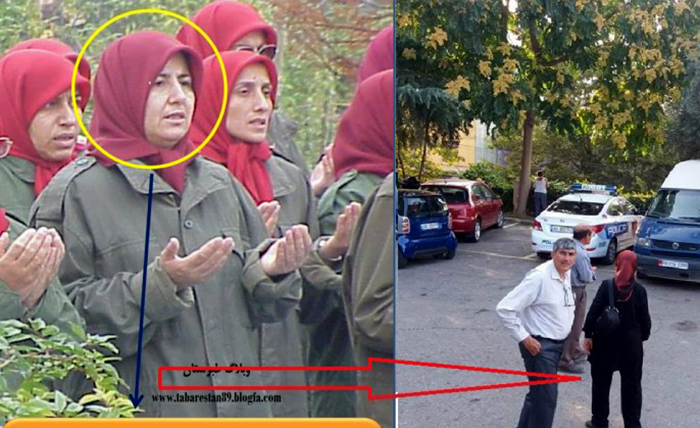
The female commander, Jila Deyhim, was recruited as a student at Manchester University in the UK at the time of Iran’s 1979 Revolution. Her husband Ahmad Shadbakhti was killed in an armed clash with security forces in Tehran. Jila left their daughter in the UK to be raised by her brother Khosro Deyhim (aka Haji) in Newcastle Upon Tyne while she went to join MEK in Iraq.

Jila is the head of MEK Operations in Tirana. As well as being present when two MEK operatives publicly assaulted Mostafa in a street in Tirana, she organised for over 60 MEK to surround Police Station 4 in Tirana while two arrested MEK members were being questioned by police. Afterwards, JIla sent the 60 MEK to spread through the city to hunt down and intimidate and beat up ex-MEK members. (Local police officers, used to dealing with ordinary crimes and criminals, were so shocked by the MEK behaviour that they wrote to the Interior Ministry saying they are not equipped to deal with sixty potential suicide bombers and to ask that the security forces in charge of MEK make sure the police will not have to deal with these ‘guests of the state’ again.)

Historically, Jila served as a commander during the Kurdish massacres – Operation Morvarid (Pearl) in 1991 – as well as many other operations. Witnesses have given further testimony of her torturing and killing disaffected members in MEK/Saddam Hussein prisons in Camp Ashraf. Jila ‘graduated’ as a highly trained intelligence officer under Saddam Hussein’s security service. In addition, she undertook field training, tank driving, basic combat and SWAT command.

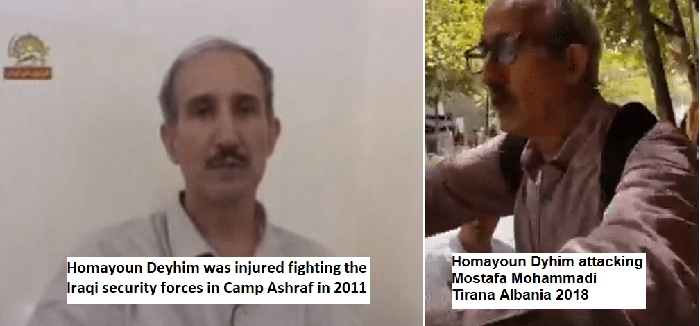
Homayoun Deyhim – in the pink shirt assaulting Mostafa Mohammadi – is a brother of Jila. He studied Electrical Engineering in Newcastle University in the UK just before the Revolution. During the Revolution he went to India to study for an MSC. In India he worked for MEK, but was later recruited by Jila to go to Iraq.

Homayoun never achieved any significant rank, working mostly in the technical and repair departments. But he is famous inside MEK for agreeing to do anything to get promoted. Hence, on many occasions he was involved in punitive beating and humiliating of other members in Camp Ashraf. Homayoun undertook basic military training and Republican Guards operations training.

In Police Station 4 in Tirana after his arrest for assaulting Mostafa, Jila instructed Homayoun to claim that Mostafa had attacked him. They did not know at that time that there was videoed evidence from the scene which shows what actually happened.

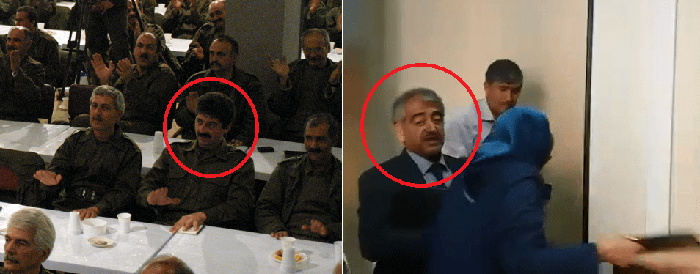
Behzad Saffari from Isfahan went to the UK to study dentistry He was recruited by MEK and sent to Iraq after Rajavi moved there. He was injured in operation Eternal Light (Forough Javidan) in 1988 and brought back to London to recover before being sent back to Iraq. Witnesses allege that Behzad was involved in beatings in MEK prisons. Behzad cheated his family out of their life savings – which he gave to MEK – by falsely claiming to have left the organisation. His father sent money to family members in Canada, but it ended up in MEK accounts in the UK.

Behzad was involved in liaising with the UNHCR during the transfer process from Iraq to Albania. Former members recount how the UNHCR gave each individual 100 USD for the journey and after their arrival. When the members arrived in Tirana airport, Behzad took the $100 from each one of them and gave them one hundred Albanian LEK as local currency (around one US dollar).

Behzad is currently involved with the teams harassing ex-members and journalists in Tirana. Behzad Saffari is liaising with the MEK lawyer and answers to Jila Deyhim.

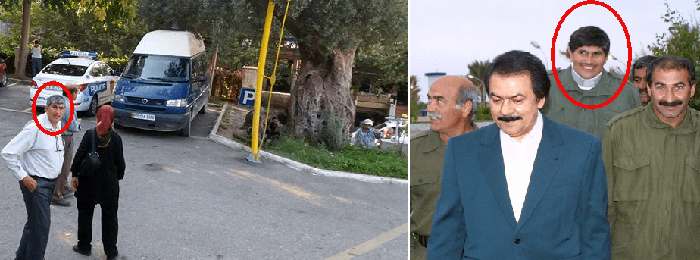
Ahmad Taba (aka Akbar), was a student in UMIST (Manchester) at the time of the Iranian Revolution in 1979. He was recruited by MEK to work in London and was then transferred to Iraq after Massoud Rajavi went there.

Ahmad was trained as a helicopter pilot by the Iraqi Army. He graduated from training by Saddam’s Republican Guards, which included guerrilla war and SWAT tactics. He also underwent a 9-month course with Saddam’s Mukhabarat, from which he graduated as an Intelligence officer. He killed many civilians in the Kurdish attacks and there are witnesses connecting him to the torture of prisoners in Camp Ashraf.

Somayeh Mohammadi herself has not left the MEK camps in Iraq or Albania for twenty-one years. She has no idea about what is happening in the outside world. It is incomprehensible that a woman who claims to be freely pursuing a political struggle for violent regime change against Iran is incapable of meeting alone with her parents to tell them face to face of her decision. Her parents, who know her so well, say it is clear she is afraid and not acting freely when she speaks out against them. Surrounded by the above MEK characters, it is clear that she is under control and is unable to speak or act for herself in any meaningful way. This is not a family dispute, Somayeh is a hostage.

Under the pressure of coercive control, experts can easily recognise in Somayeh a victim who, in the hands of MEK, has been forced to the edge of a cliff over which she may be pushed or fall. If it is subsequently reported that she has disappeared, committed suicide, drowned in a reservoir or otherwise come to harm, there can be no doubt that the government of Albania must be held accountable. She cannot save herself from harm, yet the possibility of MEK harming her is very high. She is in great danger.

Albania may be a failed state, but it is not a rogue state like Saddam’s Iraq. It is a state with pretensions to joining the European Union. The government can and should be held accountable for whatever happens to Somayeh Mohammadi. The way to prevent such an outcome is to step in and separate her from her captors.

Iranian.com

August 11, 2018 0 comments
FacebookTwitterPinterestWhatsappTelegramSkypeEmail
weekly digest
Iran Interlink Weekly Digest

Iran Interlink Weekly Digest – 238

++ A pro-MEK piece was published by Fox News in response to the multiple exposures and articles about MEK in Farsi, English and Albanian language media. Sources close to MEK in Albania describe them as ‘running around like headless chickens’ because everyone now knows who they are and how they operate.

++ Farsi commentary is almost all in condemnation of the MEK attacks on the Mohammedi’s, the ex-members and the failed state of Albania which cannot cope with them. One writer says that it simply doesn’t fit that a mother and father are agents of Iran. No agent would have been going around the world from Iraq to Europe and now Albania for twenty years. The only person who would have the motivation to devote their life for this is a mother.

++ Ex-members have re-published an MEK article on their own sites, the MEK article is called ‘Mojahedin in Albania in Google’. They explain that MEK has panicked because Google search comes up overwhelmingly with anti-MEK writing. MEK claims, in its article, that to do such a thing needs hundreds of thousands of dollars expenditure, because everyone knows that to make sites and to force tags into major newspapers, so it would come up in MSM is a hard and costly job. Spending this much money cannot be done except by the Intelligence Ministry of Iran, unless you claim ‘the people’ have paid for it. Ex-members are saying ‘you are looking at a mirror’. First MEK are thinking that the only way to be in Google is to spend vast amounts of money and work on it, which is what they do themselves. And to say that ‘the people’ are paying is simply a reflection of how they describe their own shady financial affairs. Secondly, this clearly shows that the whole system of MEK is focused on Google wars. If they think they have lost this time, it means if they are in Google at other times they think they’ve won. Their whole struggle has been reduced to an online presence. MEK’s only argument – warped logic – is that ‘they’ are spending so much money to say MEK has collapsed. Why would you spend that if we haven’t collapsed?

In English:

++ Nejat Society has published a second teaser for its 3-part documentary series ‘The End of the Path’. Filmed at Camp Ashraf and Camp Liberty in Iraq, the series shows how the MEK lived and exposes its cultic behaviour, in particular its human rights abuses against the members and their estranged families.

++ Mazda Parsi for Nejat Bloggers unpicks John Limbert’s warning that support for MEK by some US politicians “would end up backing MEK, a group hated by most Iranians and resembling a combination of the Jonestown cult and the Khmer Rouge.” Parsi describes conditions of slavery under the Khmer Rouge in Cambodia – the same slavery that is going on with MEK today. He references NYT contributor, Elizabeth Rubin, Human Rights Watch and Al bawaba website, who have all warned about the cultic nature of MEK and the potential for Maryam Rajavi’s MEK to become the Pol Pot of Iran.

++ As the controversy rumbles on in Albania about the efforts of parents from Canada to rescue their 38-year-old daughter, Somayeh Mohammadi, from behind the closed walls of Camp Ashraf 3, where she is under constant coercive control, the Tirana Times published lengthy coverage of events in English. The article superficially and uncritically repeats the allegations and counter allegations made by each side. The article does not investigate whether the Mohammadis have been sent by Iran to kill their daughter. Nor does it investigate whether Somayeh is a free agent and really has written the letters published in Albanian media.

++ Telesur ran a critique of American foreign and military policy by Catherine Shakdam, ‘Nuclear Deal: Is The MKO Playing Into Anti-Iranian Sentiments?’. Pointing out that President Trump approved the largest military budget in in US history in 2018, Shakdam claims that the US systematically had a hand in ‘terrorising and bullying’ other countries over the decades, often contravening international law. Iran on the other hand has “acted in accordance with international treaties within the parameters of international law…”. The US has made an enemy of Iran for reasons “that lie well beyond its national interests”, common sense and political consensus. Trump’s “decision to contemplate regime change in Iran that should command our ire – especially when it entails empowering well-known terror militants: the MKO, also known as MEK”, says Shakdam, who goes on to describe the MEK in dangerous terms. Support for MEK – “a terror group whose ideology is sold to bloodshed, murder and heinous acts of violence on the basis of its self-proclaimed exceptionalism” – “contravenes not only international law as it plays directly into the definition of state-sponsored terrorism, but political common sense”.

++ Massoud Khodabandeh’s article ‘Albanian Police No Match For MEK Commanders Trained by Saddam’s Mukhabarat’, in The Iranian, analyses the disparity between an ordinary couple from Canada and the MEK commanders who are controlling the life and activities of their daughter behind closed doors in an isolated camp. Khodabandeh points out that while Albanian media present this as a family dispute it is not and gives brief biographies of the MEK commanders and agents involved in ‘delivering MEK’s version of Somayeh’s story’. The four, originally recruited from the UK as students, are Jila Deyhim, Homayoun Deyhim, Behzad Saffari and Ahmad Taba. All received training by Saddam Hussein’s security and military services. Albanian police were shocked by the behaviour of MEK as 60 ‘potential suicide bombers’ surrounded police station 4 in Tirana. Khodabandeh concludes that Somayeh is in great danger and if any harm, injury or death befalls her, the government of Albania will be held responsible.

++ Jounalist Ken Klippenstein wrote another expose for The Young Turks (TYT) Network, ‘It’s not Just Bolton and Giuliani: Trump Team’s Links to Iran ‘Cult’ Run Deep (Walid Phares)’. As the title indicates, the Trump Administration is riddled with MEK supporters who are financially compensated for meeting with and promoting MEK. This piece focuses on Walid Phares who met with MEK to discuss ‘the human rights situation in Iran’. Other MEK advocates include Kenneth Blackwell, Michael Mukasey and Michael Ledeen. However, the article ends: “Human Rights Watch’s Sarah Leah Whitson, director of its Middle East and North Africa division, told TYT, ‘We have documented very serious abuses by the MEK against its own members, including the forced detainment and torture of dissident voices at MEK camps in Iraq’.

“‘In most of these cases, the MEK sought to punish with physical and psychological abuse individuals who wanted to leave the organization’, Whitson said. Unsurprisingly, MEK has been described by many, including the Rand Corporation, as a ‘cult.’

“Asked about the Trump team’s links to the group, Whitson told TYT, ‘We have repeatedly raised our concerns with American officials who have received funds from the MEK, including for example Mr. Giuliani’.”

August 10, 2018

August 11, 2018 0 comments
FacebookTwitterPinterestWhatsappTelegramSkypeEmail
blank
Mujahedin Khalq; A proxy force

It’s not Just Bolton and Giuliani: Trump Team’s Links to Iran ‘Cult’ Run Deep

Federal documents show MEK met with top Trump officials in addition to National Security Adviser John Bolton and Trump lawyer Rudy Giuliani, seen here honoring slain MEK members at a 2013 UN rally. (Photo: Mario Tama/Getty Images.)

President Trump is known for his tough talk on terrorism, having gone as far as threatening family members of suspected terrorists. But his administration has numerous ties to a group that was until recently on the State Department terror list, federal documents show.

TYT previously reported that the group, People’s Mujahedin of Iran, also known as the MEK, the acronym for its Persian name, conducted a combined total of at least five meetings in 2017 and 2018 with John Bolton prior to his appointment as Trump’s national security adviser and with Rudy Giuliani, Trump’s personal lawyer. Bolton was a vocal advocate for resuming sanctions against Iran, which Trump did shortly after Bolton’s arrival.

The MEK is an Iranian exile group that fled Iran following the 1979 revolution and has since opposed Tehran, at times violently, and at times with backing from American politicians of both parties. Until 2012, it was designated by the US State Department as a terrorist organization.

Disclosure forms filed by the MEK with the Justice Department show that its connections to Trump’s circle go well beyond Bolton and Giuliani. The group has had previously unreported dealings in the last two years with at least four high-profile foreign-policy figures whose connections to Trump include a lead role in his transition and advising him on Iran policy.

(MEK payments to Giuliani and Trump Transportation Secretary Elaine Chao, among other Republicans, have been previously reported.)

Perhaps the most controversial of Trump’s associates to have met with the MEK is Walid Phares, who served as Trump’s adviser on counterterrorism and the Middle East during his presidential campaign. This was hardly a symbolic post; Phares was compensated $13,000 per month by the campaign. Phares has come under criticism for Islamophobic remarks. For example, Phares has said that Muslims in the U.S. intend to take over American institutions and “are here to spread Sharia.”

Phares has also claimed that the Obama administration and Secretary of State Hillary Clinton were in league with the Muslim Brotherhood. In October of 2016, Phares tweeted, “The triangle Clintonmachine-Iranregime-MuslimBrotherhood has unleashed a coordinated propaganda offensive against @realDonaldTrump worldwide.”

Phares’s fiery rhetoric about Islamism doesn’t appear to apply to the MEK, itself an overtly Islamist group.

The Justice Department documents show that Phares met with the MEK on two separate occasions after Trump’s electoral victory in November 2016. Like many of the filings international advocacy groups are required to submit about their activities in the US, MEK filings tend to be broad and vague. One document reports a January 12, 2017, meeting, little more than a week before Trump’s inauguration, “to discuss the situation in Iran and the Middle East.”  Another filing describes an October 10, 2017, meeting “to discuss human rights situation in Iran.”

Though the documents do not make clear what exactly was discussed, Phares, like the MEK, has called for US-backed regime change in Iran.

Kenneth Blackwell, who oversaw domestic issues for the Trump transition team and later served on Trump’s voter fraud committee, met with the MEK on October 3, 2017, one document shows, “to discuss the United Nations resolution censuring human rights abuses in Iran.” At the time of the meeting, Blackwell was still on Trump’s voter fraud committee, which was active between May 11, 2017, and January 3, 2018.

Another Justice Department filing shows Blackwell served as a panelist on a discussion organized by the MEK on December 1, 2017, at the National Press Club in Washington. The panel discussion was titled, “Iran: Where Mass Murderers Rule.”

Another person who met with the MEK is former Bush Attorney General Michael Mukasey, a longtime law partner of Giuliani. Mukasey’s son, Marc Mukasey, was reportedly on Trump’s shortlist to replace Manhattan US Attorney Preet Bharara. Both Marc and Michael Mukasey served on Giuliani’s campaign advisory committees.

The documents show that Michael Mukasey met with the MEK at least twice after Trump’s inauguration. One meeting, on May 10, 2017, involved both Michael Mukasey and Giuliani, “to discuss the situation in Iran and the Middle East.” The other meeting took place on January 23, 2018, and is described only as “to discuss Iran.”

Then there’s Michael Ledeen, a scandal-plagued figure who co-wrote a book about radical Islam with Michael Flynn just prior to Flynn’s brief stint as Trump’s national security adviser. Ledeen has figured in some of the most notorious foreign-policy incidents in modern American history, including the Iran-Contra scandal under Reagan and false intelligence about yellowcake uranium in the run-up to the Iraq War.

In the debate prior to the Iraq invasion, Ledeen wrote, “One can only hope that we turn the [Mid-East] region into a cauldron, and faster, please. If ever there were a region that richly deserved being cauldronized, it is the Middle East today.” More recently, Ledeen has said that Iran supports Al-Qaeda.

The documents show Ledeen met with the MEK at least twice since Trump’s inauguration: Once on January 30, 2017, and again on April 19, 2018; both times “to discuss the situation in Iran and the Middle East.”

The documents were filed officially by a France-based group, the National Council of Resistance of Iran, widely understood as a MEK front organization.

Despite its support among both Republicans and Democrats, the MEK remains controversial. In the 40-plus years since its creation, the MEK allegedly has killed several American servicemembers and contractors, attempted to assassinate a top U.S. general, and tried to kidnap the U.S. Ambassador to Iran, Douglas MacArthur II.

The Clinton State Department removed the group from its terror list in 2012 following an intense lobbying push, including by Giuliani. In recent years, Iran hawks have warmed to the MEK, which has long called for regime change in Iran.

Notwithstanding the group’s support in Washington, human rights groups remain skeptical.

Human Rights Watch’s Sarah Leah Whitson, director of its Middle East and North Africa division, told TYT, “We have documented very serious abuses by the MEK against its own members, including the forced detainment and torture of dissident voices at MEK camps in Iraq.”

“In most of these cases, the MEK sought to punish with physical and psychological abuse individuals who wanted to leave the organization,” Whitson said.

Unsurprisingly, MEK has been described by many, including the Rand Corporation, as a “cult.”

Asked about the Trump team’s links to the group, Whitson told TYT, “We have repeatedly raised our concerns with American officials who have received funds from the MEK, including for example Mr. Giuliani.”

By Ken Klippenstein, TYT Network

Ken Klippenstein is a freelance journalist who can be reached on Twitter at @kenklippenstein or via email: kenneth.klippenstein@gmail.com

August 11, 2018 0 comments
FacebookTwitterPinterestWhatsappTelegramSkypeEmail
Newer Posts
Older Posts

Recent Posts

  • Rebranding, too Difficult for the MEK

    December 27, 2025
  • The black box of the torture camps of the MEK

    December 24, 2025
  • Pregnancy was taboo in the MEK

    December 22, 2025
  • MEPs who lack awareness about the MEK’s nature

    December 20, 2025
  • Why did Massoud Rajavi enforce divorces in the MEK?

    December 15, 2025
  • Facebook
  • Twitter
  • Instagram
  • Youtube

© 2003 - 2025 NEJAT Society . All Rights Reserved. NejatNGO.org


Back To Top
Nejat Society
  • Home
  • Articles
  • Media
    • Cartoons
    • NewsPics
    • Photo Gallery
    • Videos
  • Publications
    • Books
    • Nejat NewsLetter
    • Pars Brief
  • About Us
  • Contact us
  • Editions
    • عربي
    • فارسی
    • Shqip