Nejat Society
  • Home
  • Articles
  • Media
    • Cartoons
    • NewsPics
    • Photo Gallery
    • Videos
  • Publications
    • Books
    • Nejat NewsLetter
    • Pars Brief
  • About Us
  • Contact us
  • Editions
    • عربي
    • فارسی
    • Shqip
Nejat Society
Nejat Society
  • Home
  • Articles
  • Media
    • Cartoons
    • NewsPics
    • Photo Gallery
    • Videos
  • Publications
    • Books
    • Nejat NewsLetter
    • Pars Brief
  • About Us
  • Contact us
  • Editions
    • عربي
    • فارسی
    • Shqip
© 2003 - 2024 NEJAT Society. nejatngo.org
Maryam Rajavi

Rajavi’s Interesting Interpretation of Justice and Victory

French judiciary thrown out terrorism and money laundering charges against members of the Mujahedin Khalq Organization (the MKO). As the case against the MKO was closed, the group propaganda called it a “legal victory” and “a victory for justice”.

In 2003, after Maryam Rajavi along with 165 of her followers were arrested by French Police, France’s counterintelligence chief at the time, Pierre de Bousquet de Florian, said the crackdown was aimed at preventing attacks on Iranian diplomatic missions in Europe and elsewhere. He said that the MKO was transforming their compound in Auver Sur d’Oise, Paris, into “an operational center for terrorism,” after losing firepower in Iraq when the US disarmed them.

Considering the large amounts of money – about 9 million dollars – found in the MKO Parisian base, the money laundering accusation was not so deniable but the bizarre long-lasting investigation process –for eleven years– might change the path to justice and might involve a lot of other parameters. Moreover, the trial that begins with terrorism, money laundering and spying accusations, and which ends in
acquittal of those who are charged with the crimes, cannot be so credible.

 It is crystal clear that eleven years of lobbying and spending huge amounts of money to get lawyers and consultants manipulates the administration of justice.

However, for the time being, legal culpability or acquittal of the MKO in Western courts does not seem to be so important since the West has a double standard toward to terrorism and divides terrorism into bad and good. For instance, the Syrian opposition group – that were linked with ISIS from the beginning – were at first supported financially, politically and militarily by the west,  but now that the West sees its interests at stake by these Islamic extremists of the Islamic State group ,it forms coalition against it. The same approach is used about the MKO. Depending on its function in the Iran-West relations, the MKO has had different roles for the past three decades. However, the entire contradictions about the Wests’ attitude regarding the MKO never changes the violent cult-like substance of the group.

Actually justice is defined by the individuals who are still banned behind the bars of the MKO cult structure. It is defined by thousands of civilians who have been victims of violence of the Cult of Rajavi. Justice should be defined by women who were abused in filthy relations of Massoud Rajavi’s cult of personality. Violated women’s rights should be investigated in the new Press TV documentary, “Comrades in Arms”. (The documentary shows how women of the MKO were manipulated to devote their soul and body to the cult leader, Massoud.)

 Justice and legitimacy should be sought in tears of parents who died before their dreams of visiting their loved ones in Ashraf came true.

In her alleged celebration for “victory”, Maryam Rajavi makes fun of “terrorism accusation” while documents of the MKO’s violent history are even available on its own journals. The MKO’s propaganda and media have always glorified their terrorist acts against the Iranian civilians and officials.

The group’s violent past is undeniable. The last example of the MKO’s support for terrorism was obviously seen in the group’s propaganda website.  When Iraqi strategic city, Mosul was seized by the ISIS forces a few months ago, the MKO hailed and praised the occupiers calling their atrocities, ”uprising of Iraqi revolutionaries and tribes”! The MKO congratulated extremist occupiers while Iraqi state and people were awfully concerned and shocked by destructive, bloody acts of the ISIS.

Definitely, the truthfulness of a movement is determined by its positions, acts and the public support it enjoys. As a matter of fact, the MKO cult has taken hostile positions against Iranian nation for over three decades, by siding with Saddam Hussein in the 8 year war against Iran or spying and operating terror acts for Israelis against Iranian scientists.

 To investigate the extent of public support for the MKO in Iran, one should simply read the reports of the US government on the group such as RAND report and the report of the US State Department for Patterns of Global Terrorism.

Victory means winning people’s hearts and minds realizing justice and truth for the same people. But, Mujahedin e Khalq do not enjoy the least support by the Iranians inside Iran. Besides, they are not able to accomplish human rights and justice for their own members inside the Cult.

Mazda Parsi
September 29, 2014 0 comments
FacebookTwitterPinterestWhatsappTelegramSkypeEmail
Iran Interlink Weekly Digest

Iran Interlink Weekly Digest – 66

++ Reactions to the Paris court case continue. Rajavi is on overdrive to shout “victory, victory”. But critics asked “what victory?” Ali Jahani has written listing all the so-called victories Rajavi has announced, with this as the latest one. He asks “as what part of your non-existent strategy or tactic does this so-called victory have a place, how is this a victory?” Irandidban has reacted to the court case saying that this is not something worth Iran even thinking about, but certainly France lost face when the judge accepted the word of Maryam Rajavi saying she had nothing to do with the Mojahedin Khalq organisation and was therefore not answerable for any crimes. It goes without saying that Massoud Rajavi has suffered the biggest loss here because all his excuses have gone – similarly being removed from the terrorism lists and similarly the change of government in Iraq. Now we must wait and see what Rajavi’s next excuse is for not doing anything useful. Using the same argument, Maryam Sanjabi’s article asks “what is Massoud Rajavi’s excuse for not coming out? With all these victories why is he still hiding.”

++ Rajavi has published an extensive article (in Farsi) claiming that the Paris judge has said ‘the MEK are a legitimate political force and have not undertaken any wrongdoing whatsoever, and are a respectable group, etc, (basically repeating what the MEK’s hired lobbyists say). It is interesting that the court of around 9 affiliated people have nothing to do with the MEK at all. As usual, there is no source given for this claim, and it its becoming a trend for the MEK to simply make things up on their sites. Their hope is that by repeating these lies they will be made to look like facts. They have increasingly opened new outlets under pseudonyms in London and Brussels, and now manufacture document-like pdf files about all sorts of issues and then link them all together. The MEK are also using these made-up networks against the Khodabandehs and Iran Interlink (as their main exposer and main enemy according to a pronouncement of Rajavi). As usual the outpourings are a mish-mash of everything to hide their true faces and, as usual, they are trying to show themselves as anti-fundamentalist but at the same time attack Baroness Nicholson of Winterbourne and anti-war MPs and personalities, (and placing the Khodabandehs in the centre of these). An example is the website standforpeace.org.uk.

++ An article on Sahar reports that Rajavi has a new audio message for Camp Liberty residents in which the story of the “Moon or the Well (Mah va Chahr)” is explained. He says that some see me at the bottom of the well and some see me in the moon. He says that people who blame me for everything from 30 khordad (1981) to the situation in Iraq, don’t know what they are talking about! He says “I am in the moon”, and declares “you and the people of Iran should be grateful because I saved the MEK, (he doesn’t say for what purpose), and that was the biggest achievement of its history, and it has been its utmost aim and its highest aim ever. He does not explain what happened to ‘toppling the regime’ etc. Sahar reports that the situation inside the camp is explosive and trouble can be triggered any day, and the situation is becoming more and more dangerous as members resist orders and fights break out.

++ Nejat has a briefing article about the members of the so-called Friends of a Free Iran in the European Parliament which had its first meeting on 17th September as announced by the MEK. The article talks about the MEK undertaking damage limitation after the loss of Struan Stevenson and Alejo Vidal Quadras in the EP. “The new group comprises the same people who denounced Iraq – which did not take off – the same disrepute people who have been recruited as the MEK’s paid lobbyists”. Nejat concludes the article describing this as “Too little. Too late”. The new group is described as a mirror for Netanyahu’s policy against any deal between Iran and the West and as advocates for war and bombing.

++ Ghorban Ali Hossein Nejad has written a letter to the French president saying that “now the country of France (where I live) has accepted that the Mojahedin have done no wrong, could you please ask your friends to let me see my daughter for five minutes after all these years, and arrange for my other daughter, who has never seen her sister, to be allowed to have a short visit? After all you now have a responsibility in this as the head of the Mojahedin Khalq, who have my daughter in the unacceptable camp in Iraq, is operating from this county as your guest.”

++ Parsian Youth site has posted a new article further exposing a number of MEK torturers. Their names are Mortezaee (aka Javad Khorasan), and Abdolvahab Faraji Nejad (aka Afshin), both trained interrogators and torturers of Saddam’s Private Army. They have now been sent to Tirana, Albania, to control the members and ex members there. Both carry ‘Pentagon ID cards’ to show and they claim thereby to have ‘full immunity from the law’.

In English:

++ In Geneva the Association for Defending Victims of Terrorism (ADVT), an Iranian non-governmental organization for people who have lost loved ones to terrorism, hosted a panel in the 27th meeting of the UN Human Rights Council. Speakers from Iran, Britain and the United States attended – Shia, Sunni and Christian. In the meeting Iranian victims of terrorism were able to tell their story.


++ Razak Abdul A’imma al-Haidari, Iraqi MP, from the Badr Parliamentary bloc said that the Mujahedin Khalq Terrorist Organization was counting on the ISIL in Iraq to collude with them to keep its members at Camp Liberty (Temporary Transit Location) and then to take them back to Camp Ashraf. “The MEK is ready to cooperate with any terrorist party hostile to the Iraqi government and the people”, the MP Al-Haidari told Ashraf News reporter.

++ News Analysis, Xinhua News: DAMASCUS, Sept. 19 (Xinhua) — Washington’s recent decision to arm and train the Syrian rebels, who will supposedly fight the Islamic State (IS) terror group, will only exacerbate and prolong the Syrian crisis in what analysts said would be like “casting oil on a smoldering fire.”

++ An article by Massoud Khodabandeh published in Huffington Post and Iranian.com says ‘America Must Make Its Underlying Intentions Toward Iran Clear’. “If America’s Iran policy was designed to weaken and isolate the country, it has failed. Iran certainly feels itself in a much stronger position moving forward. Ultimately, the real leverage behind a sanctions regime is that it stops short of, but still depends on the ability to follow through with the ultimate threat, war. It is, however, now possible to state that if Israel, with or without the backing of the United States, could have launched a pre-emptive air strike to take out Iran’s nuclear infrastructure, then it would have done so by now.”


++ TEHRAN (FNA)- Yuram Abdullah Weiler, a Colorado-based writer and political critic, believes that the broad international coalition against ISIL is a massive media event to justify direct US intervention in Syria, underscoring that last year’s false-flag chemical attacks were not sufficient, but this year’s beheadings of western journalists seem to have sold intervention in Syria to the West.


“The Washington regime has a history of using covert action to attain its geo-political goals. From the Philippines to Latin America to the Middle East, the US has intervened in so many countries that it is difficult to count them. And what some would call covert action, I would call state-sponsored terrorism, so in that sense, the US is the world’s leader in its support of terrorism,” he said in an interview with Fars News Agency.

++ Open Letter of 57 victims of the Iranian Mujahedin-e Khalq Terrorist Cult to Barak Obama, President of the United States of America. “We believe there are a tremendous amount of similarities between the ISIS that was described in your speech, and the Iranian terrorist Mujahidin-e Khalq. Indeed, many experts on Iraq and Iran share the view that the Mujahidin in Iraq provide media and logistics support for ISIS. Some of the common characteristics of the Mujahidin and ISIS are as follows: 1. The Mujahidin hide their anti-western and anti-democratic thinking from the general public. While they believe in religious lifelong leadership and Islamic Caliphate and have been practicing it within their cult for years, they pretend publicly to believe in democracy and free elections…”


++ Expert in cultic abuse and terrorism in the MEK, Anne Khodabandeh, speaks in a London charity meeting. “A lively discussion followed. In particular the issue of Muslim dress code was raised in terms of the adoption of the Niqab by western middle class educated Muslim women. Anne Khodabandeh explained the structure of terrorist organisation by using the ‘onion’ analogy. At the core of the onion are the suicide bombers and beheaders, these are surrounded by financiers, logistics and arms suppliers, but beyond that are layers and layers of people not identified as terrorists but who support and hide the innermost activities. Some do this by creating diversionary issues like provocative dress.”

++ Fars News published a piece by Gareth Porter titled: The False Intelligence Behind the “Manufactured Crisis” over Iran’s Nuclear Activities. Extract: “Someone leaked to David Sanger of the New York Times that those documents had come from the laptop computer of an Iranian scientist involved in the alleged program who later feared that he had been discovered and managed to get the computer out through his wife. US officials told senior IAEA officials that they feared the “third party” that had brought out the documents was now dead, according to former Director-General Mohamed ElBaradei. But that was a crudely constructed cover story to hide the real source of the documents. In fact, the German intelligence agency, BND got those documents from a member of the Mujahedin-e-Khalq (MEK, also known as MKO, NCRI and PMOI), the Iranian terrorist organization that had become a client of Israel. The MEK member was a sometime source for the agency, but senior BND officials regarded the source as “doubtful,” according to former senior German official Karsten Voigt, who told me the whole story of his November 2004 conversation with his BND contacts on the record a year ago.”

++ Mahdi Darius Nazemroaya writes for Global Research: The March to War: Fighting ISIL is a Smokescreen for US Mobilization against Syria, Iran. Extract: “Like Syria, Al-Malaki government’s cardinal sins were tied to blocking the pathway to Tehran. Firstly, the Iraqi government evicted the Pentagon from Iraq at the end of 2011, which removed US troops stationed directly on Iran’s western border. Secondly, the Iraqi federal government was working to expel anti-government Iranian militants from Iraq and to close Camp Ashraf, which could be used in a war or regime change operations against Iran. Ashraf was a base for the military wing of the Iraqi-based Mujahidin-e-Khalq (MEK/MOK/MKO). The MEK is an anti-government Iranian organization that is bent on regime change in Tehran. It has even openly endorsed US-led attacks on Iran and Syria.”

September 26, 2014

September 28, 2014 0 comments
FacebookTwitterPinterestWhatsappTelegramSkypeEmail
Mujahedin Khalq; A proxy force

The March to War: Fighting ISIL is a Smokescreen for US Mobilization against Syria, Iran

The ISIL or IS threat is a smokescreen. The strength of the ISIL has deliberately been inflated to get public support for the Pentagon and to justify the illegal bombing of Syria. It has also been used to justify the mobilization of what is looking more and more like a large-scale US-led military buildup in the Middle East. The firepower and military assets being committed go beyond what is needed for merely fighting the ISIL death squads.

While the US has assured its citizens and the world that troops will not be sent on the ground, this is very unlikely. In the first instance, it is unlikely because boots on the ground are needed to monitor and select targets. Moreover, Washington sees the campaign against the ISIL fighters as something that will take years. This is doublespeak. What is being described is a permanent military deployment or, in the case of Iraq, redeployment. This force could eventually morph into a broader assault force threatening Syria, Iran, and Lebanon.

US-Syrian and US-Iranian Security Dialogue?

Before the US-led bombings in Syria started there were unverified reports being circulated that Washington had started a dialogue with Damascus through Russian and Iraqi channels to discuss military coordination and the Pentagon bombing campaign in Syria. There was something very off though. Agents of confusion were at work in an attempt to legitimize the bombardment of the Syrian Arab Republic.

The claims of US-Syrian cooperation via Russian and Iraqi channels are part of a sinister series of misinformation and disinformation. Before the claims about US cooperation with Syria, similar claims were being made about US-Iranian cooperation in Iraq.

Earlier, Washington and the US media tried to give the impression that an agreement on military cooperation was made between itself and Tehran to fight ISIL and to cooperate inside Iraq. This was widely refuted in the harshest of words by numerous members of the Iranian political establishment and high-ranking Iranian military commanders as disinformation.

 After the Iranians clearly indicated that Washington’s claims were fiction, the US claimed that it would not be appropriate for Iran to join its anti-ISIL coalition. Iran rebutted. Washington was dishonestly misrepresenting the facts, because US officials had asked Tehran to join the anti-ISIL coalition several times.

Before he was discharged from the hospital after a prostate surgery, Ayatollah Ali Khamenei, the highest ranking official in Iran, told Iranian television on September 9, 2014, that the US had requested that Tehran and Washington cooperate together inside Iraq on three different occasions. He explained that the US ambassador to Iraq had relayed a message to the Iranian ambassador to Iraq to join the US, then, in his own words, «the same [John Kerry] — who had said in front of the camera and in front of the eyes of all the world that they do not want Iran to cooperate with them — requested [from] Dr. Zarif that Iran cooperate with them on this issue, but Dr. Zarif turned this [request] down.» The third request was made by US Undersecretary Wendy Sherman to Iranian Deputy Foreign Minister Abbas Araghchi.

Khamenei additionally made it clear that he categorically ruled out any cooperation with Washington on the issue. «On this issue, we will not cooperate with America particularly because their hands are dirty,» he publicly confirmed while explaining that Washington had ill intentions and nefarious designs in Iraq and Syria.

Like Russia, Iran has been supporting Syria and Iraq against ISIL. Also like Moscow, Tehran is committed to fighting it, but will not join Washington’s anti-ISIL coalition.

New Invasion(s) and Regime Change Project(s) in the Pipeline?

As was pointed out on June 20, 2014, in Washington’s eyes Nouri Al-Malaki’s federal government in Baghdad had to be removed for refusing to join the US siege against the Syrians, being aligned to Iran, selling oil to the Chinese, and buying weapons from the Russian Federation. Iraq’s decision to be part of an Iran-Iraq-Syria pipeline also undermined the objectives of the US and its allies to control the flow of energy in the Middle East and to obstruct Eurasian integration. [1]

 There were also two other unforgivable cardinal sins that Al-Malaki’s government in Baghdad committed in Washington’s eye. These offenses, however, should be put into geopolitical context first.

Remember the post-September 11, 2001 (post-9/11) catchphrase of the Bush II Administration during the start of its serial wars? It went like this: «Anyone can go to Baghdad, but real men go to Tehran!» The point of this warmongering catchphrase is that Baghdad and Damascus have been viewed as pathways for the Pentagon towards Tehran. [2]

Like Syria, Al-Malaki government’s cardinal sins were tied to blocking the pathway to Tehran. Firstly, the Iraqi government evicted the Pentagon from Iraq at the end of 2011, which removed US troops stationed directly on Iran’s western border. Secondly, the Iraqi federal government was working to expel anti-government Iranian militants from Iraq and to close Camp Ashraf, which could be used in a war or regime change operations against Iran.

Ashraf was a base for the military wing of the Iraqi-based Mujahidin-e-Khalq (MEK/MOK/MKO). The MEK is an anti-government Iranian organization that is bent on regime change in Tehran. It has even openly endorsed US-led attacks on Iran and Syria.

Although the US government itself considers the MEK a terrorist organization, Washington began to deepen its ties with the MEK when it and its staunch British allies invaded Iraq. Disingenuously and ironically, the US and Britain used Saddam Hussein’s support for the MEK to justify labeling Iraq as a state-sponsor of terrorism and to also justify the Anglo-American invasion of Iraq. Since then the US has been has been nurturing the MEK.

Since 2003, the US has been has been funding the MEK. Washington has been protecting the MEK, because it wants to keep them on a leash as either leverage against Tehran or to have the option of one day installing the MEK into power in Tehran as part of a regime change operation against Iran. The MEK has literally become incorporated into the Pentagon and CIA toolboxes against Tehran. Even when the US transferred control of Camp Ashraf to Baghdad, the Pentagon kept forces inside the MEK camp.

 Eventually the MEK forces would mostly be relocated in 2012 to the former US base known as Camp Liberty. Camp Liberty is now called by an Arabic name, Camp Hurriya.

The Istanbul bureau chief of the Christian Science Monitor, Scott Peterson described how US officials began to really put their weight behind the MEK during the start of the Arab Spring in 2011. This is tied to Washington’s regime change dreams. Peterson wrote that US officials «rarely mention the MEK’s violent and anti-American past, and portray the group not as terrorists but as freedom fighters with ‘values just like us,’ as democrats-in-waiting ready to serve as a vanguard of regime change in Iran.» [3]

Washington Has Not Abandoned Dreams of Regime Change in Tehran

Washington has not abandoned its dreams for regime change in Tehran. Is it a coincidence that the US and EU support for the MEK is increasing, especially when the ISIL threat in Iraq began to be noticed publicly?

 Six hundred parliamentarians and politicians from mostly NATO countries were flown in for a large MEK gathering in the Parisian northeastern suburb of Villepinte that called for regime change in Iran on June 27, 2014. Warmongers and morally bankrupt figures like former US senator Joseph Lieberman, Israeli mouthpiece and apologist Alan Dershowhitz, former Bush II official and Fox News pundit John Bolton, former New York mayor Rudy Giuliani, and French former minister and United Nations Interim Administration Mission in Kosovo (UNIMIK) chief Bernard Kouchner all met the MEK to promote regime change and war. According to the MEK, over 80, 000 people attended the regime change rally. Supporters of the insurgencies in Iraq and Syria were also present at the Villepinte gathering calling for regime change in Iraq, Syria, and Iran.

The irony is that the money for the event most probably came from the US government itself. US allies probably contributed too. This money has gone to the MEK’s lobbying initiatives with the US Congress and US Department of State, which in effect is recycling US funding. People like Rudy Giuliani — probably one of the most hated mayors in the history of New York City until he took advantage of the tragic events of 9/11 — are now effectively lobbyists for the MEK. «Many of these former high-ranking US officials — who represent the full political spectrum — have been paid tens of thousands of dollars to speak in support of the MEK,» according to the Christian Science Monitor. [4]

Giuliani has been speaking at MEK events at least as far back as 2010. In 2011, he publicly pushed for regime change in Tehran and Damascus at a MEK gathering. «How about we follow an Arab Spring with a Persian Summer?» he rhetorically declared. [5] Giuliani’s next sentence revealed just how much of a scion of US foreign policy the initiative to support the MEK truly is: «We need regime change in Iran, more than we do in Egypt or Libya, and just as we need it in Syria.» [6]

Joseph Lieberman’s friend and fellow war advocate Senator John McCain was unable to make the trip to the Parisian suburb in Seine-Saint-Denis, but addressed the regime change gathering via video. Congressman Edward Royce, the chair of the US House Foreign Affairs Committee, also showed his support for regime change in Iran through a video message. So did Senator Carl Levin and Senator Robert Menendez.

Large delegations from the US, France, Spain, Canada, and Albania were present. Aside from the aforementioned individuals, other notable American attendees to the June 27, 2014 event included the following:

1. Newt Gingrich, the former speaker of the lower chamber (House of Representatives) in the bicameral US Congress;

2. John Dennis Hastert; another former speaker of the House of Representatives;

3. George William Casey Jr., who commanded the multinational military force that invaded and occupied Iraq;

4. Hugh Shelton, a computer software executive and former chairman of the US Joint Chiefs of Staff;

5. James Conway, the former chief of the US Marine Corps

6. Louis Freeh, the former director of the Federal Bureau of Investigation (FBI);

7. Lloyd Poe, the US Representative who sits on (1) the US House Subcommittee on Europe, Eurasia, and Emerging Threats and chairs (2) the US House Subcommittee on Terrorism, Non‐proliferation and Trade;

8. Daniel Davis, a US Representative from Illinois;

9. Loretta Sánchez, a US Representative from California;

10. Michael B. Mukasey, a former attorney-general of the US;

11. Howard Dean, the former governor of Vermont;

12. William Richardson, the former secretary of the US Department of Energy;

13. Robert Torricelli, a former legislator in the US House of Representatives and the US Senate senator who is the legally representative of the MEK in Iraq;

14. Francis Townsend, former Homeland Security advisor to George W. Bush Jr.;

15. Linda Chavez, a former chief White House director;

16. Robert Joseph, the former US undersecretary that ran the (1) Bureau of Arms Control, Verification, and Compliance, (2) the Bureau of International Security and Nonproliferation, and the (3) Bureau of Political-Military Affairs;

17. Philip Crowley, the former assistant-secretary of state responsible for public affairs;

18. David Phillips, the military police commander who restructured the Iraqi police and was responsible for guarding Camp Ashraf and Saddam Hussein as a prisoner;

19. Marc Ginsberg, the senior vice-president of the public relations firm APCO Worldwide and former US ambassador and US presidential adviser for Middle East policy.

Like the US presence, the French presence included officials. Aside from Bernard Kouchner, from France some of the notable attendees were the following individuals:

1. Michèle Alliot-Marie, a French politician who among her cabinet portfolios was responsible for the military and foreign affairs at different times;

2. Rama Yade, vice president of the conservative Radical Party of France;

3. Gilbert Mitterrand, the president of the human rights foundation France Libertés, which has focused on ethnic groups such as Kurds, Chechens, and Tibetans;

4. Martin Vallton, the mayor of Villepinte.

From Spain the notable attendees were the following:

1. Pedro Agramunt Font de Mora, the Spanish chair of the European People’s Party (EPP) and its allies in the Council of Europe;

2. Jordi Xucla, the Spanish chair of the Alliance of Liberals and Democrats for Europe (ALDE) Group in the Council of Europe;

3. Alejo Vidal-Quadras, a Spanish politician and one of the fourteen vice-presidents of the European Union’s European Parliament;

4. José Luis Rodriguez Zapatero, the former prime minister of Spain (who was also visibly accompanied by his wife Sonsoles Espinosa Díaz).

Other notable attendees from other Euro-Atlantic countries included:

1. Pandli Majko, the former prime minster of Albania;

2. Kim Campbell, the former prime minister of Canada

3. Geir Haarde, the former prime minister of Iceland;

4. Ingrid Betancourt, a former Colombian senator;

5. Alexander Carile, a member of the British House of Lords, the upper house of the British Parliament

6. Giulio Maria Terzi, the former foreign minister of Italy;

7. Adrianus Melkert, a former Dutch cabinet minister, a former World Bank executive, and UN Secretary-General Ban Ki-moon’s former special envoy to Iraq.

Not only regime change was talked about, but the cross-border crisis in Iraq and Syria was a major subject. Fox News gave the event special coverage. Just in July, the MEK’s leadership had condemned Iranian support to the Iraqi federal government in its fight against the ISIL, yet since the US had began to nominally fight the ISIL the MEK has begun to hold its tongue.

Before the regime change gathering, the MEK’s leader Maryam Rajavi — who the MEK has designated as the president of Iran since 1993 — even meet with the puppet Syrian National Council’s leader Ahmed Jarba in Paris to discuss cooperation on May 23, 2014.

MEK leader Maryam Rajavi and SNC leader Ahmed Jarba meet to discuss cooperating for regime change in Tehran and Damascus.

Regime Change in Damascus through Mission Creep in Syria

The bombing campaign that the US has started in Syria is illegal and a violation of the UN Charter. This is why the Pentagon took the step of claiming that the US-led bombing campaign was prompted by the threat of an «imminent» attack that was being planned against the territory of the US. This allegation was made to give legal cover to the bombardment of Syrian territory through a warped argument under Article 51 of the UN Charter that allows a UN member to legally attack another country if an imminent attack by the said country is about to take place on the UN member.

 Barack Obama and the US government have done their best to confuse and blur reality through a series of different steps they have taken to claim legitimacy for violating international law by bombing Syria without the authorization of Damascus. Although US Ambassador Samantha Powers informed Syria’s permanent representative to the UN that US-led attacks would be launched on Al-Raqqa Governate, informing Bashar Al-Jaafari through a formal unilateral notification does not amount to being given the legal consent of Syria.

The US-led attacks on Syria do not have the backing of the UN Security Council either. The US government, however, has tried to spin the September 19, 2014, meeting of the UN Security Council that John Kerry chaired as a sign that the UN Security Council and international community are backing its bombing campaign.

Nor is it a coincidence that just when the US assembled its multinational coalition to fight the ISIL and its pseudo-caliphate, that John Kerry conveniently mentions that Syria has violated the Chemical Weapons Convention (CWC). While admitting that Syria did not use any material prohibited by the CWC, Kerry told US legislators that Damascus had breached its commitments to the CWC on September 18, 2014. In other words, Washington intends to go after Syria and pursue regime change in Damascus. If this does not make it clear, then the fact that the US will use Saudi Arabia to train more anti-government forces should. [7]

A US brinkmanship strategy to justify a US-led bombing campaign against Syria has been put into action with the intent of creating a pretext for expanding the illegal US-led airstrikes in Syria that started on September 22, 2014.

 What the US envisions is a long-term bombing campaign, which also threatens Lebanon and Iran. According to Ali Khamenei, the US wants to bomb both Iraq and Syria using ISIL as a smokescreen on the basis of the model in Pakistan. More correctly, the situation should be compared to the AfPak (Af-Pak) model. The US has used the spillover of instability from Afghanistan into Pakistan and the spread of the Taliban as a pretext for bombing Pakistan. Iraq and Syria have been merged as one conflict zone, which Ibrahim Al-Marashi, using a neologism, has described as the rise of «Syraq.»

The Broader Objective: Disrupting Eurasian Integration

While the US has been pretending to fight the same terrorist and death squads that it has created, the Chinese and their partners have been busy working to integrate Eurasia. America’s «Global War on Terror» has been paralleled with the rebuilding of the Silk Road. This is the real story and motivation for Washington’s insistence to fight and remobilize in the Middle East. It is also the reason why the US has been pushing Ukraine to confront Russia and the EU to sanction the Russian Federation.

America wants to disrupt the reemerging Silk Road and its expanding trade network. While Kerry has been busy frightening audiences about the ISIL and its atrocities, the Chinese have been busy sweeping the map by making deals across Asia and the Indian Ocean. This is part of the westward march of the Chinese dragon.

Parallel to Kerry’s travels, Chinese President Xi Jinping visited Sri Lanka and went to the Maldives. Sri Lanka is already part of China’s Maritime Silk Road project. The Maldivians are newer entries; agreements have been reached to include the island-nation into the Maritime Silk Road network and infrastructure that China is busy constructing to expand maritime trade between East Asia, the Middle East, Africa, and Europe. Nor is it a coincidence that two Chinese destroyers docked at the Iranian port of Bandar Abbas in the Persian Gulf to conduct joint drills with Iranian warships in the Persian Gulf.

Parallel to east-west trade, a north-south trade and transport network is being developed. Iranian President Hassan Rouhani was in Kazakhstan recently where he and his Kazakhstani counterpart, President Nursultan Nazarbayev, confirmed that trade was due to see manifold increases. The completion of the Kazakhstan-Turkmenistan-Iran railway, which will create a north-south transit route, is being awaited. Cooperation between Tehran and the Eurasian Union was also discussed by the two presidents. On the other western side of the Caspian Sea, a parallel north-south corridor running from Russia to Iran through the Republic of Azerbaijan has been in the works.

The anti-Russia sanctions are beginning to cause uneasiness in the European Union. The real losers in the sanctions in Russia are the members of the European Union. Russia has demonstrated that it has options. Moscow has already launched the construction of its mega natural gas Yakutia–Khabarovsk–Vladivostok pipeline (also known as the Power of Siberia pipeline) to deliver gas to China while BRICS partner South Africa has signed a historic deal on nuclear energy with Rosatom.

Moscow’s influence on the world stage is very clear. Its influence has been on the rise in the Middle East and Latin America. Even in NATO-garrisoned Afghanistan, Russian influence is on the rise. The Russian government has recently compiled a list of over one hundred old Soviet construction projects that it would like to recuperate.

An alternative to US and EU sanctions is beginning to emerge in Eurasia. Aside from the oil-for-goods deal that Tehran and Moscow signed, Russian Energy Minister Alexander Novak announced that Iran and Russia had made several new agreements worth seventy billion euro. Sanctions will soon merely isolate the US and the EU. The Iranians have also announced that they are working with their Chinese and Russian partners to overcome the US and EU sanctions regime.

America is being rolled back. It cannot pivot to the Asia-Pacific until matters are settled in the Middle East and Eastern Europe against the Russian, Iranians, Syrians, and their allies. That is why Washington is doing its best to disrupt, divide, redraw, bargain and co-opt. When it comes down to it, the US is not concerned about fighting the ISIL, which has been serving Washington’s interests in the Middle East. America’s main concern is about preserving its crumbling empire and preventing Eurasian integration.

Notes

[1] Mahdi Darius Nazemroaya, «America pursuing regime change in Iraq again,» RT, June 20, 2014.

[2] Mahdi Darius Nazemroaya, «The Syria Endgame: Strategic Stage in the Pentagon’s Covert War on Iran,» Global Research, January 07, 2013.

[3] Scott Peterson, «Iranian group’s big-money push to get off US terrorist list,» Christian Science Monitor, August 8, 2011.

[4] Ibid.

[5] Ibid.

[6] Ibid.

[7] Matt Spetalnick, Jeff Mason and Julia Edwards, «Saudi Arabia agrees to host training of moderate Syria rebels», Caren Bohan, Grant McCool, and Eric Walsh eds. Reuters, September 10, 2014.

By Mahdi Darius Nazemroaya,

September 27, 2014 0 comments
FacebookTwitterPinterestWhatsappTelegramSkypeEmail
Mujahedin Khalq; A proxy force

The False Intelligence Behind the “Manufactured Crisis” over Iran’s Nuclear Activities

We are pleased to publish the piece below by Gareth Porter, author of the new book, Manufactured Crisis: The Untold Story of the Iran Nuclear Scare, which offers an exceptionally thorough deconstruction of the intelligence (and media) “case” that Iran is trying to build nuclear weapons.

The world’s news media have long accepted without question the charge that Iran had for many years used its civilian nuclear program as a cover for a nuclear weapons program. That narrative has rested on intelligence documents and reports that were accepted as credible by the International Atomic Energy Agency. The IAEA in turn has been treated in the news media as a non-political authority without any axe to grind.

But, as I document in detail in Manufactured Crisis, the intelligence documents at the heart of this narrative were fabrications created by the state with most obvious interest in promoting such a narrative—Israel. The origin of the false intelligence was the ambition of the neoconservatives in the Bush administration and their Israeli ally to carry out regime change in Iran, which they believed would require the use of force, though not with large-scale ground troop as in Iraq.  They also believed that the only way to justify such a war would be to build a case that Iran was threatening to obtain nuclear weapons of mass destruction.

 Against the backdrop of a political strategy for Iran, on which Undersecretary of State John Bolton was coordinating with Israel in 2003-04, a large cache of documents from an Iranian nuclear weapons research program came into the possession of Germany’s intelligence agency, the BND, late in the summer of 2004. They included computer modeling of a series of efforts to integrate what appeared to be a nuclear weapon into the Shahab-3 Iranian missile, and experiments with high explosives that could be used to detonate a nuclear weapon. Someone leaked to David Sanger of the New York Times that those documents had come from the laptop computer of an Iranian scientist involved in the alleged program who later feared that he had been discovered and managed to get the computer out through his wife. US officials told senior IAEA officials that they feared the “third party” that had brought out the documents was now dead, according to former Director-General Mohamed ElBaradei.

 But that was a crudely constructed cover story to hide the real source of the documents. In fact, the German intelligence agency, BND got those documents from a member of the Mujahedin-e-Khalq (MEK, also known as MKO, NCRI and PMOI), the Iranian terrorist organization that had become a client of Israel. The MEK member was a sometime source for the agency, but senior BND officials regarded the source as “doubtful,” according to former senior German official Karsten Voigt, who told me the whole story of his November 2004 conversation with his BND contacts on the record a year ago.

The senior BND officials had contacted Voigt, who was then coordinator of North-American relations for the foreign office, immediately after Secretary of State Colin Powell had made comments to reporters about “information” that Iran was “working hard” to combine a ballistic missile with “a weapon.”   The BND officials were alarmed that the Bush administration was intending to make a case for war against Iran based on those doubtful documents.

The sequence of events presented a remarkable series of parallels with the Bush administration’s exploitation of the BND source codenamed “Curveball” to make the case for war against Iraq less than two years earlier. That Iraqi refugee in Germany—who turned out to be the brother of a senior official of Ahmad Chalabi’s Iraqi National Council—had told tales of Iraqi mobile bioweapons labs to the BND, which had passed them on to the CIA. But BND officers had eventually begun to doubt his stories. When George Tenet had asked BND chief August Hanning in December 2002 whether the United States could use the information publicly, Hanning had written a personal note to warn him that the United States should not rely on the information without further confirmation. Colin Powell had nevertheless used the very information about which Hanning had warned as the centerpiece of the case for war in Iraq. Now Powell was going public with another claim about WMD intelligence from another dubious source to make what sounded like the beginning of a case for war against another adversary of the United States.

 Voigt believed the senior BND officials wanted him to issue another warning to the United States not to rely on these documents, and a few days later, he did give such a warning in public, in a coded fashion. In an article in the Wall Street Journal Voigt was reported to have said the information to which Powell had referred had come from “an Iranian dissident group” and that the United States and Europe should not “let their Iran policy be influenced by single-source headlines.”

The BND officials were not the only ones who had questions about those documents. Some US intelligence analysts wondered why the purported nuclear weapons research project documents only included material about alleged high explosives experiments, a missile reentry vehicle and the design of another uranium conversion facility totally different from the one Iran had adopted after years of research, development and testing. Why, they wondered was there nothing about weapons design? And why was the work on the missile reentry vehicle amateurish – or, as David Albright put it to this writer in a September 2008 interview, “so primitive”?  Why was the design for a bench-scale conversion process marred by such fundamental flaws that the IAEA’s Olli Heinonen had to acknowledge in a February 2008 briefing that it had “technical inconsistencies.”

The documents also exhibited anomalies that were direct indicators of fraud. The most dramatic was the fact that the studies modeling the missile reentry vehicle were based on the initial Shahab-3 missile, which the Iranian missile program is known to have begun to replace with an improved model as early as 2000 – two years before those modeling studies were said to have been started in mid-2002. The redesign of the reentry vehicle, which was a key to improved design, would have been far advanced by then, according to Michael Elleman of International Institute for Strategic Studies, who was the main author of an authoritative study of the Iranian ballistic missile program. The shape of the new reentry vehicle, first revealed to the world when the new missile was flight tested in August 2004, bore no resemblance to the old one portrayed in the documents. The authors of the documents had obviously been unaware of that complete redesign of the reentry vehicle, meaning that they could not have part of an Iranian Defense Ministry-sponsored program.

 The creators of the collection of documents were clever enough to build them around an authentic document that could be verified as real and thereby lend credibility to a collection that otherwise lacked any evidence of authenticity. But the document was not from inside the Iranian government but a letter from a high tech company to an Iranian engineering firm. It would have been relatively easy for Mossad, which carries out constant surveillance of high tech companies, to acquire that document. The document was then used to provide evidence of connections between different parts of the alleged project that was otherwise absent: anonymous handwriting on it referred to the reentry vehicle study. Those touches reveal creators who were eager to maximize the political effect of the document and apparently not worried that they would be too obvious.

 The daring of the venture as well as the fact that the actual document around which it was built would have been a routine discovery for Mossad leave little room for doubt about the Israeli origins of the collection.

 The plan had been to have the IAEA focus entirely on what ElBaradei was calling the “alleged studies” once the “Work Program” negotiated with Iran on the various other issues the Agency had raised since 2004 was completed. But then came the National Intelligence Estimate of November 2007, which concluded that Iran had stopped the work on nuclear weapons that the intelligence community had been certain it had been doing for years in 2003. That estimate all but eliminated the case for the use of force, so it created a serious problem for Israel.

 The Israelis responded quickly, however, coming up with an entirely new series of intelligence documents and reports in 2008 and 2009 showing that Iranian nuclear weapons research and development program was far more advanced than previously believed. Those documents were transmitted to the IAEA directly by Israel, according to ElBaradei’s memoirs, but the IAEA never disclosed that highly salient fact.

 The first document arrived as early as April 2008, and the IAEA’s Safeguards Department immediately mentioned it in the May 2008 IAEA report. It was a Farsi-language report on experiments with high explosives that was obviously intended to suggest the initiation of a hemispherical charge for an implosion nuclear weapon.

 The very next IAEA report in September 2008 announced that the experiment “may have involved the assistance of foreign expertise.” That was obviously a reference to a scholarly paper on a methodology for measuring intervals between explosions using fiber optic cables co-authored in 1992 by Ukrainian scientist Vyacheslav Danilenko, who had worked in Iran from 1999 to 2005. The IAEA thus swallowed the implausible Israeli claim that a spy had obtained a top secret Iranian document on nuclear weapon-related experiments that just happened to involve the same methodology about which Danilenko had published.

 The far more plausible sequence of events was that Mossad had discovered Danilenko’s work in Iran in a routine investigation of foreign personnel in the country and soon found out that he had worked at the Soviet nuclear weapons complex at Chelyabinsk and had published on a method for measuring explosive internals. Those discoveries would have inspired the idea of secret Iran document describing high explosives experiments that would include a measurement technique that would implicate Danilenko—who would be portrayed as a Soviet nuclear weapons specialist—in the alleged Iran nuclear weapons program.

 Further supporting that explanation for the appearance of the document is the fact that the most sensational intelligence claim in the November 2011 IAEA report involves yet another Danilenko publication. The IAEA said it had “information” that Iran had built a high explosives containment chamber in 2000 “in which to conduct hydrodynamic experiments”, which it defines as tests to “simulate the first stages of a nuclear explosion”, at its Parchin military facility. And it cited a publication by the same “foreign expert”—i.e., Danilenko—as allowing it to “confirm the date of construction of the cylinder and some of its design features (such as its dimensions).

 That Danilenko publication, however, was actually on the design of an explosives chamber for the production of nanodiamonds. The drawing of the chamber accompanying the article, moreover, displays features, such as air and water systems for cooling the tank immediately before and after the explosion, that would have made it unusable for the purpose of testing nuclear weapons designs. Despite having worked in a Soviet nuclear weapons complex for many years, Danilenko had worked from the beginning of his career on explosive synthesis of nanodiamonds, which involved no knowledge of nuclear weapons or of methods for testing them. (The first American to discover nanodiamonds synthesis, Dr. Ray Grenier, who had also worked for many years in Los Alamos National Laboratory, the top US nuclear weapons complex, told me that he himself had never worked on anything directly connected with nuclear weapons, and that all of his work on nanodiamonds synthesis had been unclassified.)

The IAEA never produced any confirming evidence for the tale of the bomb test chamber at Parchin provided by Israel.  Former IAEA chief inspector in Iraq Robert Kelley, who had also been project leader for nuclear intelligence at Los Alamos national laboratory and head of the US Department of Energy’s Remote Sensing Laboratory, immediately pointed out that the IAEA description of the alleged explosive containment chamber and its intended purpose made no sense technically. Kelley observed that the capacity of the alleged chamber to contain 70 kilograms of high explosives reported by the IAEA would have been as “far too small” for the kind of hydrodynamic nuclear tests the report claimed as its purpose. Kelley and three other intelligence experts on photo interpretation also pointed out that the satellite photos of the site at Parchin indicate that it displays none of the characteristics that would be associated with a high explosives testing site.

And Iran’s behavior in regard to the site in Parchin contradicts the notion that it needed to hide evidence of nuclear testing there. Iran allowed the IAEA to pick any five sites in one of the four quadrants of Parchin to visit and take environmental samples in February 2005 and then did the same thing again in November 2005. And the IAEA reported in February 2012 that it had obtained the complete run of satellite photos of the site from February 2005 to February 2012 and found that there was no evidence of any significant activity at the site for the entire seven years.

 The tainted intelligence underlying the charges of a covert Iranian nuclear weapons program is now one of the major issues in the nuclear negotiations with Iran. The introduction of the demand that Iran must satisfy the IAEA indicates either that the Obama administration believes completely in the official nuclear narrative and is dangerously overconfident about its bargaining position or that the administration has been assured by IAEA director general Yukiya Amano that he will do what is necessary to reach agreement with Iran on the issue of “possible military dimensions” of the nuclear program.  In either case, the fate of the false intelligence and the fate of the nuclear talks are now deeply intertwined.

By Gareth Porter

 This article originally appeared on Goingtotehran.

 Gareth Porter is an independent investigative journalist and historian who writes on US national security issues. His latest book Manufactured Crisis: The Untold Story of the Iran Nuclear Scare, was published in February by Just World Books. In 2012 he received the Gellhorn Prize for journalism awarded by the UK-based Gellhorn Trust. Columbia University international relations specialist Robert Jervis called his previous book, Perils of Dominance: Imbalance of Power and the Road to War in Vietnam, “(t)he most important contribution to our understanding of the war in Vietnam since the Pentagon Papers”.

Porter is due to arrive in Tehran on Saturday, September 27, to participate in the releasing ceremony of the Persian edition of his book which has been translated by Fars News Agency and will go on display during a launching and signing ceremony at FNA’s central office in Tehran this afternoon.

The ceremony will be attended by senior Iranian officials and a number of foreign scholars.

September 27, 2014 0 comments
FacebookTwitterPinterestWhatsappTelegramSkypeEmail
USA

Open Letter of 57 victims of the Mujahedin-e Khalq Terrorist Cult to Obama

To Barak Obama, President of the United States of America

Dear President Obama,

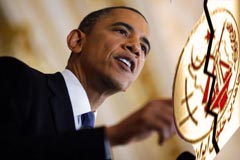
We are a group of ex members of the People’s Mojahedin Khalq Organization (PMOI aka MEK, MKO, NCRI), who have been victims of this terrorist cult. We read your far reaching speech in the State Department Web site on September 10, 2014. We would like to express our highest appreciation and admiration for the deep understanding of the issue of terrorism and cults in the Middle East region shown in your speech.
You have precisely addressed the real roots of the formation of al-Qaida and ISIS, and expressed your deep sorrow for the barbaric crimes committed against innocent women and children by the terrorist ISIS in Iraq. You also mentioned their barbaric collective summary executions of soldiers.

Mr President,

The unfortunate existence of terrorist cults in the Middle East region and their anti-human behavior is a deep wound that its healing is only possible by preventing them from recruiting and from gaining financial, military and political power.

The al-Qaida and ISIS experience proves that the free world should be proactive rather than reactive, and such terrorist cults should be degraded and ultimately destroyed before the people of the world and the region especially women and children start paying the heavy price with their lives.

Therefore as you have mentioned, “these terrorists are unique in their brutality. They execute captured prisoners. They kill children. They enslave, rape, and force women into marriage.” There should be a unique and united policy towards all the terrorist cults. There should not be good and bad terrorists as some with the intention of opening room for future terrorist groups to form imply.

We believe there are a tremendous amount of similarities between the ISIS that was described in your speech, and the Iranian terrorist Mujahidin-e Khalq. Indeed, many experts on Iraq and Iran share the view that the Mujahidin in Iraq provide media and logistics support for ISIS.

Some of the common characteristics of the Mujahidin and ISIS are as follows:

1. The Mujahidin hide their anti-western and anti-democratic thinking from the general public. While they believe in religious lifelong leadership and Islamic Caliphate and have been practicing it within their cult for years, they pretend publicly to believe in democracy and free elections.

2. Whilst they deeply and strongly believe in armed struggle and the use of violence to achieve their goals, to win their case in a court in Europe, the leaders pretended to be against any violence and armed struggle. Even so, there is still a weapon in their emblem which is a sign that armed struggle is in their ideology.

3. The Mujahidin-e Khalq severely violate human rights. The dissident members were arrested, tortured, jailed in solitary confinement inside their barrack named Ashraf in Iraq and later transferred to Abu-Ghraib prison in Iraq. The Human Rights Watch report published in 2005, about the Mujahidin-e Khalq’s violations of human rights based on the victims’ direct evidence, clearly and strongly condemned their abuse of human rights. The victims are ready to testify to your administration or US Government officials in person. Also the reports of defecting and escaping members in recent years confirms still more the Human Rights Watch report.

4. The Mujahidin, in cooperation with Saddam Hussein’s army participated in the imprisonment and brainwashing and execution of the Iranian POWs in Iraq during the Iran-Iraq war.

5. Massoud Rajavi, the leader of the Mujahidin, ordered compulsory marriages inside their cult after the disastrous military attack on Iran from Iraq in 1988 which resulted in the deaths of 1400 of its members. During these forced marriages hundreds of women who had lost their husbands, had to marry male members not of their choosing.

6. Massoud Rajavi who considers himself as a caliph, a supreme religious and political leader of the people of the world, one year later ordered forced divorce of the Mujahidin families, and he later married himself to all these divorced women.

7. To pave the way toward marrying the divorced women members, he completely destroyed their families by separating even the children from their parents and sent them outside Iraq so there would be no common grounds for the divorced couple to meet or interact. Some of those children, who numbered about 800, aged 7 months to 8 years, were kept in Mujahidin bases in Europe and the USA where they were brainwashed so they would remain obedient and loyal to the cult. Later, clearly against the Geneva Conventions, some of those children aged 15-16 were sent back to Iraq to take part in military operations in which some were killed, and some are still in imprisoned inside camp Liberty. Some of these children have been seriously mentally and socially disordered due to separation from their families.

8. The defected women members of the Mujahidin who have successfully escaped from the Camp in Iraq and been able to reach the west, say that they have been systematically sexually abused by Massoud Rajavi. On the order of Massoud Rajavi and through the administration of Maryam Rajavi women members were forced to undergo needless hysterectomies as a means of destroying any hope they might have of returning to a normal and natural life. Many of such defected women members are ready to talk to any fact-finding body in person.

Dear President,

The Mujahedin was established with the strategy of destroying US led Imperialism. This is our knowledge after some 30 years inside the Mujahidin. Its pretence to be liberal and democratic is a tactic to help them reach power, after which their main strategy can be applied.

As we mentioned earlier in our letter there are no good terrorists, or safe terrorists. All are waiting for their own right time to spread as a cancer in the region or elsewhere.

Apparently the Mujahidin are considered good or safe terrorists so that their high ranking officials such as Mr Alireza Jafarzadeh and Ms Sona Samsami, who used to wear military uniform and commanded military operations, have an office in Washington DC and officially represent the Mujahidin (as their front organization the National Council of Resistance). For your information, Mr Alireza Jafarzadeh had requested in writing (see attached), to commit a suicide attack in order to prove his loyalty to Rajavi.

We wish you success in your fight against all forms of terrorism. We also greatly appreciate and thank you for reading our letter.

Most Respectfully,

1. Rabeae Shahrokhi

2.Nasrin Ebrahimi

3. Khodabakhsh Roodgar

4.Roohola Tajbakhsh

5.parvin Haji

6.Mohammad Hossein Sobhani

7. Alireza Nasrolahi

8.Ali Akbar Rastgou

9.Seyyed Amir Movaseghi

10. Edward Termado

11. Alireza Mirasgari

12: Ebrahim Khodabandeh

13.Ehsan Roshanzamir

14.Majid Roohi

15.Jafar Ebrahimi

16. Saeed Hazrati

17.Ghorban Ali Hosseinnejad

18.Ghafour Ftahiyan

19. Batoul Maleki

20.Homayoun Kohzadi

21.Mitra Yoosefi

22.Zahra Mirbagheri

23. Anne  Singelton (Khodabandeh)

24.Ayoub Kordrostami

25.Karim Haghi

26.Masoud Khodabandeh

27. Mehdi Nikbakht

28. Mehdi Ahmadi

29. Ali Ghashghavi

30. Arash Sametipour

31.Mehdi Khoshal

32. Alireza Bashiri

33. Ali Hatami

34. Hamed Sarafpour

35. Naser Rezwani

36.Behzad Alishahi

37. Hamidreza Salmani

38. Shirzad Jalili

39.Milad Ariyaee

40. Karim Gholami

41. Mehrdad Sagharchie

42. Abbas Sadeghi

43.Farzad Frazinfar

44.Mehdi Sojoudi

45. Hamid Dehdar

46. Abdolkarim Ebrahimi

47. Ali Bidi

48.Mahboobe Hamze

49. Hassan Azizi

50. Ali Jahani

51. Mirbaghe Sedaghi

52. Nader Naderi

53.Mohammad Razaghi

54. Saeed Naseri

55. Mahmoud Sepahi

56.Mostafa Mohammadi

57. Mohammad Karami

September 25, 2014 0 comments
FacebookTwitterPinterestWhatsappTelegramSkypeEmail
Mujahedin Khalq; A proxy force

Yuram Abdullah Weiler: Example of US support for terrorism is MEK

Yuram Abdullah Weiler, a Colorado-based writer and political critic, believes that the broad international coalition against ISIL is a massive media event to justify direct US intervention in Syria, underscoring that last year’s false-flag chemical attacks were not sufficient, but this year’s beheadings of western journalists seem to have sold intervention in Syria to the West.
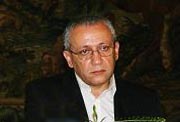
 “The Washington regime has a history of using covert action to attain its geo-political goals. From the Philippines to Latin America to the Middle East, the US has intervened in so many countries that it is difficult to count them. And what some would call covert action, I would call state-sponsored terrorism, so in that sense, the US is the world’s leader in its support of terrorism,” he said in an interview with Fars News Agency.
 When asked about the formation of an international fact-finding commission to prosecute backers of the ISIL, he answered, “But realistically, the US is not a party to the Rome Statute that established the International Criminal Court (ICC) and has a veto in the UN Security Council, making the US practically immune from criminal prosecution. Certainly, a fact-finding commission should be formed, and perhaps some way could be found to prosecute US war criminals, such as Barack Obama, George Bush, Dick Cheney, Donald Rumsfeld and those from other countries such as Prince Bandar Bin Sultan of Saudi Arabia. If nothing else, evidence should be gathered and documented, then stored for prosecution when the opportunity presents itself.”
 Yuram Abdullah Weiler is a freelance writer and political critic who has written dozens of articles on the Middle East and US policy. A former engineer with a background in mathematics and a convert to Islam, he currently writes perspectives on Islam, social justice, economics and politics from the viewpoint of an American convert to Shiite Islam, focusing on the deleterious role played by the US in the Middle East and elsewhere. A dissenting voice from the “Belly of the Beast”, he lives in Denver, Colorado.
 What follows is the full text of the interview:
 Q: Many analysts believe that the so-called Islamic State of Iraq and the Levant (ISIL) is the product of the US polices in the Middle East. What’s your take on that? Do you believe that the US and its allies have directly contributed to the creation of the ISIL?
 A: Absolutely, ISIL is a joint creation of the United States, Saudi Arabia and Qatar with logistical support from the Israeli entity, Turkey, Jordan and other regional actors. While its origin can be traced to former US arch enemy Abu Mus’ab al-Zarqawi, who formed al-Qaeda of Iraq (AQI) in response to the illegal 2003 US invasion of Iraq and later changed its name to the Islamic State of Iraq (ISI). It lost membership when the US bribed Sunni tribes to participate in awakening councils, but bounced back with a vengeance when the US decided to overthrow Syrian President Bashar al-Assad, and Saudi and Qatari began pouring funding into it through Kuwait.
 Saudi Prince Bandar bin Sultan was heavily involved with arming Takfiri terrorists both in Syria and Iraq when he was head of Saudi intelligence from July 2012 until April 2014, as was Hamad bin Khalifa Al Thani, Emir of Qatar until June 2013 when the strategic city of al-Qusayr was repatriated by the Syrian Army. As the chief logistical supplier to Takfiri extremists in Syria, Qatar has provided over 85 planeloads of weapons and supplies compared to only 37 for Saudi Arabia and lesser amounts for other actors such as Jordan. Turkey serves as the primary logistical base through which most munitions, materials and manpower are funneled to the foreign-backed militants in Syria.
 At first, ISI collaborated with other western-backed militants such as the Free Syrian Army, but in April 2013, parts of ISI split off and merged with its Syrian spinoff, Jabhat al-Nusra, to form the Islamic State of Iraq and the Levant (ISIL). However, after the entry of Hezbollah into the conflict in Syria and Assad’s forces gaining the upper hand with the fall of al-Qusayr, Jabhat al-Nusra split off from ISIL in early 2014 to continue its western-endorsed mission of regime change in Syria. After repudiation by al-Qaeda, ISIL remained in Syria and, continuing to amass recruits and funding, made its move in June, capturing large swaths of Northern Iraq, and declaring a caliphate in July. The February 2014 disavowal of ISIL by CIA asset al-Qaeda may have indicated a breakdown in command and control, or perhaps it was a smoke screen.
 In any event, this ISIL blitz could not have been a surprise to Washington, since at least 8 US satellites–4 Lacrosse and 4 Key Hole–crisscrossing over the Persian Gulf for surveillance. Hence, Washington must have intended for ISIL to capture those armaments in Northern Iraq and send them to Syria, thus avoiding the need for US Congress to approve lethal aid for Syrian “rebels.” But because of the barbarity displayed by ISIL with beheadings, rapes and other atrocities, Obama has been forced to put on a show of opposition to demonstrate US “sincerity” in fighting against terrorism. Meanwhile, Washington’s ISIL Takfiri proxies continue with their regime change duties in Syria, but now with the benefit of US air support.
 Q: As you know NATO heads of state convened in the Welsh city of Newport on 4-5 September and US Secretary of State John Kerry and Defense Secretary Chuck Hagel told foreign and defense ministers participating in the NATO summit that the US was forming a broad international coalition against ISIL. Ministers from the United States, the United Kingdom, France, Germany, Canada, Australia, Turkey, Italy, Poland and Denmark met in Wales to hammer out a strategy for battling ISIL, but the policy was questioned by many regional officials and political leaders.
 After the so-called US-led coalition against the ISIL declared its creation, scores of experts and a number of countries lashed out at the western states for pursuing a double-standard policy towards campaign against terrorism in various countries. What’s your perspective on that?
 A: The Washington regime has a history of using covert action to attain its geo-political goals. From the Philippines to Latin America to the Middle East, the US has intervened in so many countries that it is difficult to count them. And what some would call covert action, I would call state-sponsored terrorism, so in that sense, the US is the world’s leader in its support of terrorism.
 Iran has long been a target of US state-sponsored terrorism going back to the CIA-engineered 1953 coup ousting Prime Minister Mohammad Mossadegh. A more recent example of US support of terrorism is the Mujahideen-e Khalq (MEK), which has been taken off the list of designated terrorist organizations. Not only has this deadly extremist group claimed thousands of victims in Iran, but it has in the past killed a few Americans as well. Nevertheless, Washington took the terrorist group off its list as part of its ongoing efforts to destabilize Iran.
 Regarding Syria, if the US commander-in-chief were truly serious about fighting terrorism, he would collaborate with Syrian President Bashar al-Assad, who has been battling foreign-backed extremists since early 2011. Not only has Obama refused to do that, but he has threatened Assad with retaliation if any US warplane is shot down over Syrian territory. So it should be clear that the broad international coalition against ISIL is a massive media event to justify direct US intervention in Syria. Last year’s false-flag chemical attacks were not sufficient, but this year’s beheadings of western journalists seem to have sold intervention in Syria to the West.
 Q: Many experts maintain that an international fact-finding Commission ought to be formed in order to prosecute the backers of the ISIL under international law. What do you think?
 A: The US has been in clear violation of international law in a number of instances: The 2003 invasion of Iraq; drone strikes in Pakistan, Afghanistan, Yemen, and other countries; the Guantanamo prison camp; the treatment of detainees in Afghanistan; the NATO bombing of Serbia; the use of napalm in Vietnam; support of the Zionist apartheid regime; torture of prisoners at Abu Graib; firebombing campaigns during World War II; the use of secret prisons; and we could go on and on. Supporting ISIL is just the latest outrage against international law committed by the US.
 But realistically, the US is not a party to the Rome Statute that established the International Criminal Court (ICC) and has a veto in the UN Security Council, making the US practically immune from criminal prosecution. Certainly, a fact-finding commission should be formed, and perhaps some way could be found to prosecute US war criminals, such as Barack Obama, George Bush, Dick Cheney, Donald Rumsfeld and those from other countries such as Prince Bandar Bin Sultan of Saudi Arabia. If nothing else, evidence should be gathered and documented, then stored for prosecution when the opportunity presents itself.
 Interview by Javad Arab Shirazi
 

September 24, 2014 0 comments
FacebookTwitterPinterestWhatsappTelegramSkypeEmail
USA

America Must Make Its Underlying Intentions Toward Iran Clear

The 5+1 nuclear negotiations will resume in November. Although this is still some time away, analysts, policy writers and diplomats have been busy working to formulate an achievable diplomatic position which will bridge the gaps left at the end of the last session. Here in the UK, we think we know what our position must be. Iran must make concessions on the number of its centrifuges and in exchange sanctions will be lifted within a reasonable time scale. In this respect, the UK falls broadly in line with the American position. But with the opening of the 69th Session of the UN General Assembly next week, and the second visit to New York of Iran’s President Rohani, perhaps this is a good time for the UK to step back and consider exactly what that American position actually is. A side-meeting on September 18 in New York will test the waters on progress. Iran is not optimistic.
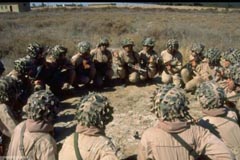
This time last year, western powers pinned great hopes on newly elected President Rohani after the painful and acrimonious Ahmadinejad years. President Obama’s unprecedented personal phone call to him was widely welcomed as a parting gesture of goodwill.

So, can we expect a similarly positive welcome this time around? In many ways, Iran has enjoyed a positive year on the world scene, most recently supporting Iraqi Shiite militia in ousting IS from parts of northern Iraq. Iran has also demonstrably complied with the demands on its nuclear program which were set at the end of the last round of negotiations.

But when Rohani arrives in New York this time there will certainly be no roses strewn across his path. America’s tone this time will be significantly different; if not overtly hostile, it is still, conspicuously chilly. Evidence for this comes not in words — the official America line is that diplomacy must be given a chance to succeed — but specific anti-Iran activity clearly demonstrate a truer U.S. position which still engenders ostracism and enmity rather than engagement and diplomacy.

Ratcheting up pressure on a country by raising concerns over human rights abuses is, of course, a standard diplomatic tool. Amnesty International has criticized Iran for weaknesses in the judicial process leading to the executions of a large number of criminals in recent months. But beyond this, Ahmed Shaheed, the UN Special Rapporteur on the situation of human rights in Iran, became highly critical of an American led campaign which exploited various conferences and forums to pick at the human rights issue like a scab, hoping that it would bleed enough to provoke Iran to respond in anger. Shaheed complained that such actions which deliberately involved him may have actually compromised his impartiality in the eyes of Iran and destroyed his efforts at confidence building to overcome non-cooperation.

But the main indication of bad faith on the American side came when, in spite of widespread warnings and criticism, Congress voted to impose even more sanctions on Iran in the gap between negotiating sessions without waiting for a proper assessment of Iranian compliance with its agreed obligations. Congress argued that since sanctions forced Iran to the negotiating table, this would add leverage to the U.S. position. But there was no evidence of this. Critics pointed out that Saddam Hussein’s regime survived for years under sanctions and only a disastrous war and occupation deposed him. Iran has been under American sanctions for 30 years. What did Congress hope to achieve by adding more? The only interpretation for many was that Congress acted deliberately to provoke Iran to walk away from the nuclear negotiating table.

Iran’s interpretation, which is just as valid as an American view, was that America can only engage in diplomatic relations if its intention is to make concessions as well as extract them from Iran. Iran sees no evidence of this. President Obama is unable to lift sanctions imposed by Congress and clearly a bellicose Congress will not vote to lift sanctions. Indeed one Iranian lawmaker characterized the fresh sanctions as “punishing Iran because Israel lost in Gaza” when Operation Protective Edge achieved none of Prime Minister Netanyahu’s self-imposed objectives.

Now that Iran and Russia have agreed to strengthen energy ties and are looking to create a payment system outside the hegemony of the U.S. dollar, America is slowly waking up to a shifting power balance, arguably of its own making, which signals increasing evasion of the U.S. sanctions regime by countries seeking the economic advantages attached to trading with Iran. Even apart from the problems of Ukraine, Russian and Chinese trade imperatives are unpicking the unity of the P5+1. Obama’s National Security Advisor Susan Rice just traveled to China at his behest to strengthen relations. Germany and France are also weighing the potential economic losses and gains that are imposed on them by the sanctions regime, and may also drift further from the U.S., UK and the silent partner of both, Israel.

Iran has been under sanctions for 30 years but the economy is growing stronger. From a western perspective the Middle East is chaotic and is reaching crisis point with the advent of ISIL. But Iran now enjoys growing influence in the region through the exercise of soft power. Hamas leaders in Gaza are accepting a more political role and have agreed to work with Fatah to create a new Palestinian Authority. Hezbollah has successfully carved out a leading role in the government of Lebanon. This is where we see the hand of Iran. Iraq, Afghanistan, Kurdistan and Syria draw ever closer to Iran not only as a natural, but more importantly in the light of perceived American double-standards, as a reliable ally. Iran’s latest use of this influence was used to successfully help Iraqi Shiite militia oust ISIS from various locations in north Iraq. If America’s Iran policy was designed to weaken and isolate the country, it has failed.

Iran certainly feels itself in a much stronger position moving forward.

Ultimately, the real leverage behind a sanctions regime is that it stops short of, but still depends on the ability to follow through with the ultimate threat, war.

It is, however, now possible to state that if Israel, with or without the backing of the United States, could have launched a pre-emptive air strike to take out Iran’s nuclear infrastructure, then it would have done so by now. The truth is, not only does Iran’s military capability render it a daunting foe, but its retaliatory capability would strike deep into American interests in the Middle East. In 2013, Iran successfully guided down an American drone which was then reverse engineered to create a home made version. Only in August, Iran claimed, controversially, that it had shot down an Israeli drone before it left Iranian airspace after it had been tracked flying near the Natanz nuclear power plant.

Also in August, Iran’s Defense Minister Brigadier General Hossein Dehqan, announced that the supersonic Khalij-e Fars (Persian Gulf) ballistic missile has gone into production. Although Iran describes this as a defensive weapon, the Pentagon is reportedly concerned about Iran’s reach into the Persian Gulf where U.S. warships would be vulnerable.

The crisis in northern Iraq must prove a salutary lesson. That Iran can wield soft power in Iraq does not need stating, but that Iran is willing to work in military cooperation with America where they have mutual interests and benefits has been swept under the carpet by ideologues refusing to “give in” to the Iranians. Instead Senator Kerry is off to visit Jordan, whose own citizens threaten turmoil over recent events in Gaza, and Saudi Arabia, whose Wahhabi reach into Iraq amounts to at best an irritant to the majority of Shiites and Kurds, and at worst, amounts to support for IS. Excluding Iran and focusing on Syria only reinforces the perception that this will essentially be an anti-Iran coalition. But the price will be paid not by Iran but the weak Gulf states and western countries where the terrorists may turn next.

Acknowledging this doesn’t mean we have to like it and it certainly doesn’t mean that the west shouldn’t drive a hard bargain over Iran’s nuclear ambitions. But it does mean that America needs to rethink its obdurate resistance to this new reality and accept that if it can’t wage war against Iran it will need to engage with the Islamic Republic as is, in the here and now. The days of war and regime change bluster have reached the end of the road.

What all this ultimately means is that when the P5+1 countries sit down together with Iran for the next round of nuclear negotiations, they will do so in a much weaker position, not only because of disunity, but because of what Iranians see as American duplicity. America can only engage honestly in diplomatic relations if its intentions are to make concessions as well as extract them from Iran. Iran sees that American diplomats still do not have a clear mandate to resolve the outstanding issues. Instead it appears more the case that the U.S. wants to try to force Iran to walk away first and claim a Pyrrhic victory.

Certainly the UK cannot formulate a negotiating policy in conjunction with the United States until America makes clear its underlying intentions toward Iran.

Huffington Post

September 23, 2014 0 comments
FacebookTwitterPinterestWhatsappTelegramSkypeEmail
Mujahedin Khalq; A proxy force

Training Syrian rebels in SA reminder of training MEK terror group in Saddam’s Iraq

News Analysis: Providing arms, training to rebels will exacerbate Syria crisis

DAMASCUS — Washington’s recent decision to arm and train the Syrian rebels, who will supposedly fight the Islamic State (IS) terror group, will only exacerbate and prolong the Syrian crisis in what analysts said would be like “casting oil on a smoldering fire.”
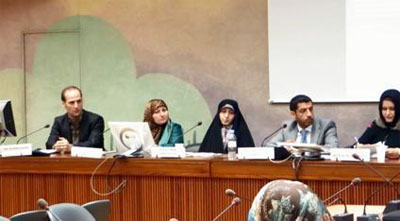
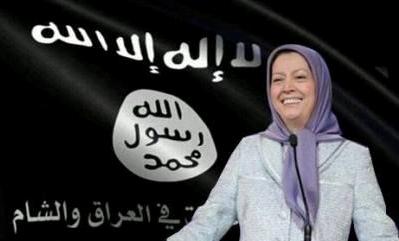
Unlike the situation in Iraq, where the administration of President Barack Obama is coordinating and cooperating with the Iraqi forces in their battle against the IS militants, Washington has turned a deaf ear to the calls of the Syrian government for cooperation on battling the IS in Syria, seeking instead to cooperate and deal with the so-called “moderate” Syrian rebels by agreeing to arm and coach them to be able to confront the IS in Syria.

Obama, who is leading an international coalition of reportedly 50 countries to fight the IS, said that the Syrian opposition forces were fighting both the brutality of Islamic State terrorists and the “tyranny” of the administration of President Bashar al-Assad.

“We will provide training and equipment to help them (moderate rebels) grow stronger and take on IS terrorists inside Syria,” said Obama, who is a staunch critic of Assad that repeatedly called for his departure and questioned his legitimacy.

The Congress on Thursday backed Obama, authorizing the military to arm and train moderate Syrian rebels. The U.S. move, while failing to surprise the Syrian politicians given the fact that the U.S. has always been in favor of the opposition, was seen as a policy toward prolonging the crisis in Syria by attempting to replace the IS fighters with others who will remain loyal to their Western patrons and would keep fighting against the Syrian government.

Maher Murhej, a Syrian politician and head of the Youth Party, told Xinhua he wasn’t surprised by the recent U.S. move, pointing out that the training of the Syrian rebels has already started.

“My information is that the new Congress decision has sanctioned the financing of the rebels, and regarding the training, I have information that training camps have already been opened in Saudi Arabia two weeks ago, namely in the city of Ha’il in northwestern Saudi Arabia, to train Syrian rebels of the Islamic Front and Islam Army groups,” Murhej said, noting that there is no such a thing as “moderate” rebels as the vast majority of the armed militant groups are radicalized.

Saudi Arabia overtly agreed last week to host training camps for “moderate” Syrian rebels, agreeing thus on Obama’s broad strategy to combat the IS group, which has captured large chunks of territories in Syria and Iraq over the past few months.

Meanwhile, Murhej pointed out that the American strategy aims at keeping the Syrian government busy with fighting the rebels for years to come as it is seeking to replace the IS fighters with other rebel groups that would continue fighting the Syrian government troops.

Obama has recently sanctioned to strike the IS positions in Syria, akin to what his air force is doing in Iraq. However, the conundrum for Obama was that he didn’t want to make a move against the IS that could play in the hands of the Syrian regime, meaning that he wouldn’t want to weaken the IS so that the Assad troops can fill in the void.

Instead, the U.S. president decided to arm the “moderate” rebels so that they could be able to fill in the void that the IS may leave after the U.S. strikes on their positions in Syria, analysts said.

Still, the new approach may take at least a year to train the rebels and weaken the IS fighters, which means that the Syrian crisis is likely not going to see an exit or an end in the near future.

“After getting done with the IS, the West wants to leave other rebels to keep fighting the Syrian government… they want an armed insurgency that could last for years in Syria,” Murhej said, adding that “the superpowers are not only working on prolonging the crisis in Syria, actually they are drawing a new strategy for the future in the region. They are talking about camps that would be permanent so we are looking at 10 to 15 years of insurgency in Syria.”

Murhej drew a comparison between the current hosting of the armed rebels by Saudi Arabia and what happened at the times of the late Iraqi President Saddam Hussain, who had hosted on Iraq soil the Mojahedin-e-Khalq movement (MEK), an Iranian opposition movement in exile that advocated the overthrow of the Islamic Republic of Iran. During the Iran-Iraq War in the 1980s, the group was given refuge by Saddam Hussein and mounted attacks on Iran from within Iraqi territory.

“They (superpowers) are attempting to create a similar group to the Islamic State but this time under the commandership of the West,” Murhej said.

Xinhuanet

September 23, 2014 0 comments
FacebookTwitterPinterestWhatsappTelegramSkypeEmail
Mujahedin Khalq Organization as a terrorist group

Iranian terror victims tell story at UN Human Rights Council

The Association for Defending Victims of Terrorism, ADVT is an Iranian non-governmental organization. It’s members are all victims of – or have lost loved ones to terrorism. At the 27th United Nations Human rights council in Geneva they held this panel on terrorism and human rights.

 Speakers from Iran, Britain and the United States are here. Shia, Sunni and Christian. Also here are Iranian victims of terrorism to tell their story. Like Mansoureh Karami, whose husband Massoud AliMohammadi was the first Iranian nuclear scientist to be assassinated in Tehran. Today, the world’s attention is on the violence and terrorism of ISIL in Syria and Iraq. A statement read on behalf of Iraqi Assyrians, warned that the entire population risks being wiped out of the Nineveh province. NGOs warn of a catastrophe, where the story of the victims are lost. The stories heard here will sadly not be the last – but they hope by sharing their experiences they can somehow help.

Also:

 Association for Defending Victims of Terrorism (ADVT) Holds a Panel on: Terrorism and Human Rights

 Link to the source

 Panelists:

 Dr. Hamid Sajadi, Chief Executive of Association for Defending Victims of Terrorism (ADVT)

 Ms. Rubab Mehdi Rizvi, Chairperson of Markazi Imam Hussain Council

 Dr. Mohammed Serkal, the UN Coordinator on Minorities Rights, Alkhoei Foundation

 Ms. Janet McElligott, Activist, Former US White House staffer and Counterterrorism Expert

 Ms. Mansoureh Karami, Wife of Assassinated Nuclear Scientist, Massoud Alimohammadi

 Ms. Masoumeh Eskandari, Daughter of Terror Victim

 Mr. Ali Alssarray, President of International Organization against Terror and Religious Intolerance

 Mr. Nineb Lamassu, Research Assistant, Faculty of Asian and Middle Eastern Studies, University of Cambridge

 Date: September 17, 2014

 Time: 11:30- 13:00

 Venue: Room XXIV, Palais des Nations. Geneva, Switzerland

 Themes:

 · Examining the reasons for the increasing ability of terrorist groups in recruiting new members from around the world;

 · Analyzing the role of civil society and victims of terrorism in countering terrorism;

 · Drawing the attention of the world people to a return to traditional for of slavery which is carries out by hostage-takings of terrorist groups of ISIS and Boko Haram;

 · Evaluating the international responses specially the Resolution 2170 of the UN Security Council in which victims of terrorism and long-term impacts of terrorist attacks on them are not considered.

The Association for Defending Victims of Terrorism, ADVT, Geneva

September 22, 2014 0 comments
FacebookTwitterPinterestWhatsappTelegramSkypeEmail
Iraqi Authorities' stance on the MEK

Iraqi MP: The MEK counted on ISIL to help them stay in Iraq

Razak Abdul A’imma al-Haidari, Iraqi MP, from the Badr Parliamentary bloc said that the Mujahedin Khalq Terrorist Organization was counting on the ISIL in Iraq to collude with them to keep its members at Camp Liberty (Temporary Transit Location) and then to take them back to Camp Ashraf.

‘The MEK is ready to cooperate with any terrorist party hostile to Iraqi government and the people’, the MP Al-Haidari told Ashraf News reporter.

He emphasized that since the MKO is considered a threat for the future of the country, the newly established government of Iraq as well as Iraqi people are serious in removing them from Iraqi soil.

The member of Iraqi National Alliance asserted: Navigating the MKO media, one could see the organization hailing the crimes and savagery committed by the ISIL in Iraq.

He also noted that the leadership of the terrorist Organization in France believed that the Prime Minister Maliki’s stepping down would pave the way for their organization’s stay in Iraq. However Mr. Haidar al-Abadi putted an end to their illusions and at his first press conference emphasized on the expulsion of all terrorist groups – including the Mujahedin Khalq Organization – from the Iraqi territory.

Translated by Nejat Society

September 21, 2014 0 comments
FacebookTwitterPinterestWhatsappTelegramSkypeEmail
Newer Posts
Older Posts

Recent Posts

  • The black box of the torture camps of the MEK

    December 24, 2025
  • Pregnancy was taboo in the MEK

    December 22, 2025
  • MEPs who lack awareness about the MEK’s nature

    December 20, 2025
  • Why did Massoud Rajavi enforce divorces in the MEK?

    December 15, 2025
  • Massoud Rajavi and widespread sexual abuse of female members

    December 10, 2025
  • Facebook
  • Twitter
  • Instagram
  • Youtube

© 2003 - 2025 NEJAT Society . All Rights Reserved. NejatNGO.org


Back To Top
Nejat Society
  • Home
  • Articles
  • Media
    • Cartoons
    • NewsPics
    • Photo Gallery
    • Videos
  • Publications
    • Books
    • Nejat NewsLetter
    • Pars Brief
  • About Us
  • Contact us
  • Editions
    • عربي
    • فارسی
    • Shqip