Nejat Society
  • Home
  • Articles
  • Media
    • Cartoons
    • NewsPics
    • Photo Gallery
    • Videos
  • Publications
    • Books
    • Nejat NewsLetter
    • Pars Brief
  • About Us
  • Contact us
  • Editions
    • عربي
    • فارسی
    • Shqip
Nejat Society
Nejat Society
  • Home
  • Articles
  • Media
    • Cartoons
    • NewsPics
    • Photo Gallery
    • Videos
  • Publications
    • Books
    • Nejat NewsLetter
    • Pars Brief
  • About Us
  • Contact us
  • Editions
    • عربي
    • فارسی
    • Shqip
© 2003 - 2024 NEJAT Society. nejatngo.org
Terrorist groups and the MEK

European MEK Supporters Downplay ISIS Role in Iraq

While the world watched in horror as jihadist extremists from the Islamic State of Iraq and Syria (ISIS) seized the Iraqi city of Mosul, some members of the European Parliament (MEPs) claimed that these actions were not carried out by ISIS, but were “part of a popular uprising” against Prime Minister Nouri al-Maliki.

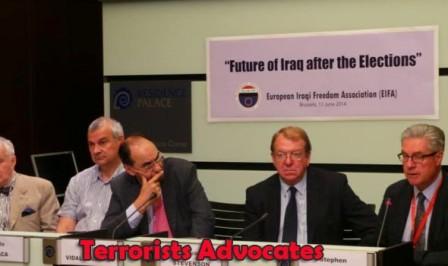
At the same time that ISIS was reportedly committing mass executions in Mosul, these MEPs “disputed” that Mosul and Tikrit had been taken by ISIS, and announced the creation of the European Iraqi Freedom Association (EIFA), a “new NGO with the mission of improving the political and human rights situation in Iraq.”

The comments were made at a June 11 press conference in Brussels, according to a press release for the event.

The ousting of Maliki and the “complete eviction of the Iranian regime from Iraq” are the group’s primary goals, according to the press release of the EIFA, which has no website other than a Facebook page that was created on May 6.

There is no shortage of people arguing that Iran holds excessive influence over Iraq and that Maliki has aggravated many of Iraq’s problems, so why did these MEPs resort to downplaying the horrors of ISIS’ actions in calling for an end to Tehran’s hold on Baghdad?

A clue appears in the EIFA’s emphasis on the security situations of Camps Ashraf and Liberty.

Camp Ashraf became the Iraqi base of the exiled Iranian dissident organization, the Mujahedin-e Khalq, (aka MEK, MKO, PMOI and NCRI), in the 1980s after its exodus from the Islamic Republic following a power struggle and regime-orchestrated persecution.

The MEK, frequently described as a “cult”, was classified as a terrorist organization by the EU until 2009 and by the US until 2012, and has been accused of human rights abuses.

Despite its expensive claims to the contrary (MEK op-eds and advertisements regularly appear in Western media outlets), the NCRI, the MEK’s “parliament-in-exile” and political wing, has no popular support in Iran. In fact, the MEK sided with Saddam Hussein during the 1981-88 Iran-Iraq war and even attempted to take Iranian territory. The vast majority of Iranians inside Iran either consider the group insignificant or harmful to reformist efforts. The MEK is also despised by many Iraqis for its role in crushing Shia and Kurdish uprisings against Saddam’s dictatorial rule. Yet thanks to well-funded lobbying and advocacy efforts, the MEK has still been endorsed by some Western politicians in the US and Europe as a legitimate Iranian opposition movement.

Before setting its sights on the United States, the MEK, through the NCRI, embarked on a well-organized campaign to bring European politicians to its side. After years of unchecked lobbying efforts, the MEK has convinced some MEPs to advocate in its favor. In addition to the leftist groups who uncritically support the MEK because it claims to have Marxist beliefs (along with Islamic ones!), right-wing MEPs seem taken in by its fervent anti-Iranian government stance. It is therefore not surprising that the individuals endorsing the EIFA have also endorsed the MEK.

The foremost MEK-EIFA endorser is Struan Stevenson, a British conservative who chaired the European Parliament (EP) delegation for relations with Iraq in 2009-2014. Under his watch, the delegation has devoted disproportionate attention to the security of Camp Ashraf while almost completely neglecting the more relevant economic, social, security and human rights challenges facing Iraq. When the EP negotiated a 2014 resolution addressing the surge of violence in Iraq in February, Stevenson made every effort to downplay the involvement of ISIS, while directing all blame towards Maliki and Iran.

Another notable promoter of the EIFA is Alejo Vidal-Quadras, a Spanish conservative. During his tenure as Vice President of the EP (2009-14), he functioned as one of the NCRI’s chief supporters. The EIFA has also been endorsed by former Portuguese socialist MEP Paulo Casaca (2004-09), a self-styled “expert on Iraq” who reportedly employed a MEK member as one of his personal assistants during his parliamentary stint.

Seen in the light of their MEK connections, it’s clear why these MEPs are trying to downplay the role of ISIS as a serious threat to the stability of Iraq and the broader region. The MEK and its supporters view Maliki as an Iranian pawn and believe that if Maliki goes, the Iranian government (which the MEK detests) will suffer. So in following the proverb, “the enemy of my enemy is my friend”, the MEK’s supporters and ISIS have found a common cause in pushing for Maliki’s ouster.

Even though Vidal-Quadras, Stevenson and Casaca will not be serving in the incoming European Parliament as of July 1, the MEK will surely try to recruit more MEPs for its cause, including with new tools like the EIFA. Of course, whoever is approached by the MEK — and most MEPs will be approached if they haven’t already — would be wise to think twice about associating with an organization that attempts to minimize the acts of a group so murderous and fanatical that even al-Qaeda has declared it too extreme.

Photo: The European Iraqi Freedom Association’s (EIFA) June 11 press conference in Brussels featuring European members of parliament Stephen Hughes, Struan Stevenson, Alejo Vidal-Quadras, and Paulo Casaca.

by Eldar Mamedov

About the Author

Eldar Mamedov has degrees from the University of Latvia and the Diplomatic School in Madrid, Spain. He has worked in the Ministry of Foreign Affairs of Latvia and as a diplomat in Latvian embassies in Washington D.C. and Madrid. Since 2007, Mamedov has served as a political adviser for the social-democrats in the Foreign Affairs Committee of the European Parliament (EP) and is in charge of the delegation for inter-parliamentary relations between the EP and Iran.
June 21, 2014 0 comments
FacebookTwitterPinterestWhatsappTelegramSkypeEmail
Mujahedin Khalq; A proxy force

Mossad used Mojahedin Khalq for years

Global fear of Iran’s ‘controversial’ nuclear programme is a ‘US-Israeli construct’

‘Iran will have enough enriched uranium for nuclear bomb by next summer’ – Netanyahu at the UN General Assembly in Sep 2012

Iran’s nuclear talks with the P5+1[1] are taking place in Vienna. A “solid commitment” from Iran is needed, ensuring that its stated peaceful atomic energy programme is not a clandestine attempt to build nuclear weapons. The Iranians have found themselves needing to make a leap towards lifting the crushing international sanctions, notably those imposed by the US. It is the basis of these sanctions that MEMO has re-examined with a group of senior researchers in the field.

When Ellie Geranmayeh, Iran expert at the European Council on Foreign Relations (ECFR) spoke with MEMO, she insisted, “In the same way that any potential military dimensions of Iran’s nuclear programme needs to be explained to the United Nations, the West also needs to explain the basis of its accusations and suspicions.”

Ever since the International Atomic Energy Agency (IAEA) reported “sensitive enrichment and reprocessing activity” in Iran in 2003, the country has been under close supervision. The UN Security Council decided to impose economic sanctions for Iran’s non-compliance with its previous request to suspend enrichment activities before extending them in 2007, 2008 and 2010. According to Reuters, Washington was recently pushing for an even more severe attack on the Iranian economy, but this was rejected by the Security Council. Iran’s former president, Mahmoud Ahmadinejad, argued that the sanctions are “illegal” and imposed by “arrogant leaders”. The sanctions are devastating the Iranian economy and have been imposed despite the fact that Iran’s uranium enrichment is being held below 5 per cent, consistent with developing fuel for a civilian nuclear power plant. US pressure has led several nuclear contracts between Iran and foreign governments to fall through.

The United States Enrichment Corporation (USEC)[2], meanwhile, has used its official website to “call for action” to change the course of its declining share of the global enrichment market, underscoring the need to “limit the spread of enrichment technologies to rogue states”. This controversial Western centric use of the phrase “rogue states” demands a thorough investigation, according to many experts.

Furthermore, the West’s foundation for these claims against Iran has too many fault lines “to begin to even list them,” claims historian and Iran nuclear expert Dr Gareth Porter. The single biggest factor pushing “the elite’s obsession over Iran as a threat and as an enemy,” he says, “is that the basic premise was laid down early at the end of the Cold War.” His ground-breaking work recently received the annual Martha Gellhorn Prize for Journalism from the London-based journalists’ Frontline Club. MEMO spoke to Porter about the trajectory of the “imminent Iranian nuclear threat” and its construct by a handful of powerful actors with a particular political agenda and documents “with little reliability” that the media over the last decade have had no qualms about accepting and sharing as (unauthenticated) “evidence”.

1)”The laptop documents”

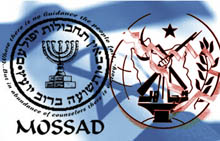
One of the main anomalies in America’s porous trajectory on Iran is the pseudo-crucial “laptop documents”. Presented by the US to the Security Council, these 1,000 pages are alleged to contain research on nuclear weapons-related activities, stolen from the computer of an Iranian scientist or engineer who was, it is claimed, involved in the programme. “This was a trick to cover the truth,” said Porter. He recapped how the documents were passed to Germany’s intelligence agency by a member of the Mujahideen-E-Khalq (MEK) an Iranian terrorist organisation in exile, which has been a client of Israel’s Mossad spy agency for several years. German intelligence and many other government officials, including ex-US Secretary of State Colin Powell, warned that the US and EU should not make the mistake of basing policy on this information.

2) Redesigned Iranian missile

Another central anomaly is the “discovery” that the Iranian missile re-entry vehicle is depicted in the documents as being redesigned to accommodate a nuclear payload. “This was one that had been discarded by Iran at least two years before the drawings were said to have been made,” Porter argues, “not according to Iranian sources, but an authoritative Western source: the London-based International Institute for Strategic Studies (IISS).”

3)Technical errors

“The discovery that the same drawings of an alleged effort to redesign the re-entry vehicle of the Shahab-3 missile contained numerous technical errors,” Gareth Porter contends, “indicated again that they had not been done by those involved in Iran’s missile programme.”

4) Codename (5.15)

This was given to one of the sub-projects in the alleged nuclear weapons research programme that was, in truth, the number assigned to a contract with the civilian atomic energy organisation of Iran or an ore processing facility and was signed two years before the supposed covert research programme was even said to have begun.

Israel’s position

Last week, at the Herzliya Conference, Israel’s platform for the articulation of national policy, Global Jewish News Source reported major Israeli politicians with strong beliefs in this propaganda. “What is at stake is not merely Israel’s position in the Middle East,” argued Likud’s Yuval Steinitz, “what is at stake is the fate of the entire world… Iran is a nuclear threshold state. It just hasn’t created the weapons yet.”

Lina Khatib of the Carnegie Endowment for International Peace think-tank explained to MEMO how Israel been trying to push the US to take military action against Iran to stop its nuclear enrichment programme. Further, the government in Tel Aviv has also been engaging in “clandestine intelligence operations to halt Iran’s nuclear developments, for example through cyber-attacks,” she warned. In response, America pushed back against Israel’s request for military strikes against Iran, and is not likely to include Israel as a formal partner in the Vienna negotiations over the nuclear file, “though the US will ensure that Israeli interests are represented during the talks”.

“Overwhelming” evidence exists, according to Dr Gareth Porter, that it was Israel’s Mossad that produced the falsified documents that have propelled the “manufactured crisis” forward, “not just once, but twice”. First came the “laptop documents” that surfaced in 2004 followed in 2008-2009, two years into his research, when a series of intelligence reports and allegedly Iranian documents were given to the IAEA directly by the Israelis, “resulting in more accusations following the November 2011 IAEA report”.

According to Porter, Israeli’s pressure on the Obama administration to make demands of Iran will ensure that the talks fail. “Thus far that Israeli strategy has succeeded, because the Obama administration has demanded a cut in Iranian centrifuges that makes it difficult to envision a final compromise.” Basing any military action on false dossiers would be as irresponsible as the invasion of Iraq in 2003; the world witnessed what consequences that had, when soldiers on the ground had no clue about what was going on.

Current talks

Iran has been talking separately with most of the members of the P5+1 group in advance of the formal meetings week. Although reports have been modestly positive about the potential outcome, the final accord date set as July 20 is already predicted to be given a six-month extension by government officials from most of the countries involved.

Porter remains “very worried” that the talks will fail because of America’s “hard-line” refusal to tolerate any Iranian enrichment of uranium to support even its present nuclear reactor, “much less future reactors”. He recently interviewed Iranian Foreign Minister Javad Zarif, who has not given up hope of renewed and extended diplomatic flexibility on behalf of the US. Even so, he indicated that statements had been made in the talks, as well as to the media, that were “posturing”. He implied that this was politically dangerous because it would make later adjustment in the US negotiation stance very difficult.

According to Lina Khatib, we will see the lifting of some sanctions, but a comprehensive deal will take time to be made and implemented. However, as Iran’s nuclear programme is primarily, she says, “aimed at giving Iran political weight in the Middle East and international recognition as a major regional player, rather than at preparing to conduct a nuclear attack,” there might be more “muscle-flexing” involved than seen so far.

The threat of an ISIS take-over of major Iraqi cities near the border with Iran has collided with the current negotiations on the country’s nuclear programme and arguably paved the way for an indirect willingness to reach an agreement with America. The pace of events means that Iran, which in the 1980s fought former Iraqi dictator Saddam Hussein for eight years, may be willing to cooperate with Washington to bolster Iraq’s Shi’ite Prime Minister Nouri al-Maliki. Iranian President Hassan Rouhani has said that he will consider such cooperation, if the US takes action in Iraq.

However, a US official cautioned against reading too much into the latest talks: “No one should expect that all of a sudden, overnight, even if we resolve the nuclear agreement, that everything will change. It will not. The fundamentals remain exactly as they are. Until we resolve the nuclear issue there cannot be any kind of fundamental change in this relationship.”

Footnotes

[1] Iran has had meetings with China, France, Germany, Russia, the United Kingdom and the United States. These six are known as the P5+1 (the permanent five members of the UN Security Council plus Germany) or alternatively as the E3+3, used by European countries. These meetings are intended to resolve concerns about Iran’s nuclear programme.

[2] USEC: the American corporation that contracts with the United States Department of Energy to produce enriched uranium for use in nuclear power plants.

Henriette Johansen, Middle East Monitor,

June 19, 2014 0 comments
FacebookTwitterPinterestWhatsappTelegramSkypeEmail
Former members of the MEK

MKO defector Reza Rajabzadeh is back home

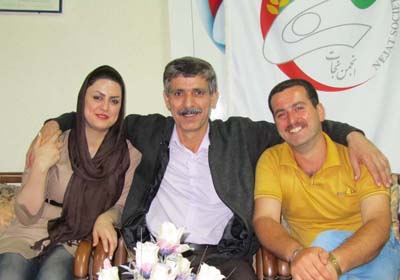
Former member of the Mujahedin Khalq Organization  (the MKO) returned home after 25 years of imprisonment in the Cult of Rajavi.

Nejat Society Gilan office celebrated the reunion of Mr. Rajabzadeh and his beloved children who were barely 5 years old when their father left home as a an Iranian soldier to fight Iraqi Baa’th regime. Mr.  Rajabzadeh was a war prisoner when the MKO recruiters deceived him to join their cult. Under the mind control system of the cult, he lost his youth and family.
While hugging his father, the son of Mr. Rajabzadeh,  Mehran cried , "Shame on Rajavi who separated me and my sister from our father for 27 years! He made us live in grief and suffering."
Rajabzadeh’s daughter, Razieh hugged and kissed her father. She appreciated the efforts of Nejat Society for the return of her father.
Reza Rajabzadeh who could hardly ever control his tears said:" I’m sorry…I love my children…Shame on Rajavi who broke down a lot of families! I will not stop denouncing him and his cult unless all prisoners of Camp liberty are released."
Reza Rajabzadeh left the MKO about two years ago. After his release, He stayed in a hotel in Baghdad as he wanted. He was one of the active ex-members of the group who revealed the notorious safe house of Masoud Rajavi, Base 49.

June 18, 2014 0 comments
FacebookTwitterPinterestWhatsappTelegramSkypeEmail
Europe

Brok: Majority of Eu Parliament do not like MKO

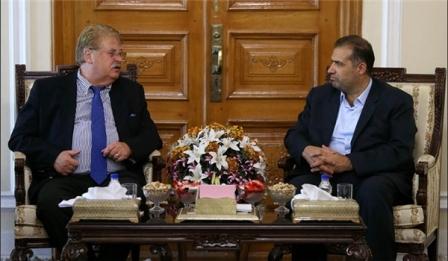
Chairman of the European Parliament Committee on Foreign Affairs Elmar Brok underlined that the new European Parliament is aware of the importance of ties with Iran.
Brok made the remarks in a meeting with Head of the Iranian legislature’s Friendship Group with the European Parliament Kazzem Jalali in Tehran on Sunday.

During the meeting, Jalali pointed to the talks between Iran and the Group 5+1 (the five permanent UN Security Council members plus Germany), and said, "The nuclear talks were underway in desirable conditions, but unfortunately the (European Parliament’s Human Rights) resolution against Iran changed the overall atmosphere of the negotiations."

Jalali expressed surprise at the presence of a "shameless" group like the terrorist Mojahedin-e Khalq Organization (MKO, also known as MEK, PMOI and NCRI) in the European Parliament, and said, "Even the critics of Iran’s political system do not recognize the MKO and the European Parliament had better try to listen to the Iranian nation, statesmen and people’s true representatives."

Jalali reiterated that the talks between Iran and European Parliament can be a prelude to a bigger agreement in the future, "but harnessing the radicals, specially at the European Parliament, is the prerequisite for such an agreement".

Brok, for his part, said that the new European Parliament lays emphasis on the importance of the relations with Iran, and said, "The majority of the European Parliament do not like cooperation with groups such as MKO and only a minority group in the Parliament support the MKO."

Brok said that the EP welcomes achievement of a final deal by Iran and the G5+1, and added, "It will be in the interest of both sides in economic and political terms to resolve Iran’s nuclear issue and I believe that Iran is entitled to run civilian nuclear activities and I hope that the international community take this into consideration as well."

The EP adopted a resolution against the human rights conditions in Iran in April. The resolution came under harsh criticism by the Iranian Parliament Speaker, Ali Larijani, who described it as "distressed words".

"As a matter of fact, this resolution is nothing more than a political statement in terms of the method used for compiling the contents to show the European Parliament’s symbolic position which has no executive power… and a type of distressed wording is seen in this composition-like text," Larijani said, addressing the Iranian legislators in an open session of the parliament in April.

He said that the resolution welcomes expansion of ties with Iran, progress in talks between Tehran and the world powers and cooperation with Iran on Syria and fighting terrorism on one hand, and raises allegations against issues, including elections in Iran, human rights situation and women’s rights, which are considered as meddling in the country’s internal affairs, on the other hand.

Larijani questioned the wisdom of the European legislators who, he said, show willingness to increase extended cooperation with Iran in nuclear, regional and technological fields while uttering such "cheap and baseless words".

The resolution adopted by the European Parliament in a meeting in Brussels called for meetings between EU delegations and Iranian dissidents and opposition leaders and criticized the presidential elections in Iran.

The European’s move angered officials in Tehran as it was adopted after the western states voiced their consent and pleasure in the betterment of ties with Iran following a breakthrough deal over Tehran’s nuclear program.

June 17, 2014 0 comments
FacebookTwitterPinterestWhatsappTelegramSkypeEmail
Terrorist groups and the MEK

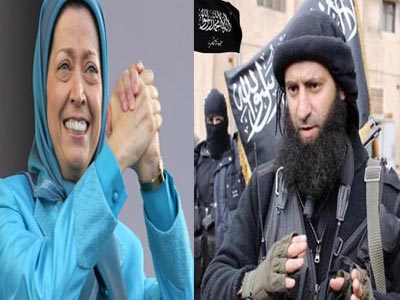
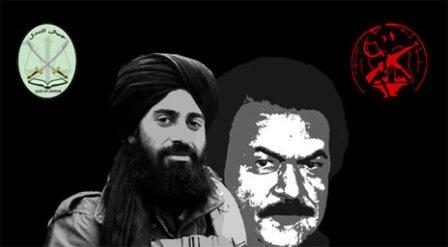
What makes MKO and ISIS brothers?

The legacy of Osama bin Laden and Saddam Hussein appears in a more dangerous group called Islamic Iraqi State and the Levant (Daesh in Arabic).     

ISIS was formed in April 2013 and grew out of al-Qaeda in Iraq (AQI). It has since been disavowed by al-Qaeda, but become one of the main jihadist groups fighting government forces in Syria and is making military gains in Iraq according to BBC.

Correspondents say it appears to be surpassing al-Qaeda as the world’s most dangerous jihadist group. Some suggest that Al Qaida rejects ISIS because it is too extreme!

One part of the ISIS’s supporters in Iraq includes elements of former Iraqi Baa’th regime that severely oppose the government of Nouri al Maliki. Eventually, as "Saddam’s Private Army" the Mujahedin Khalq Organization (the MKO) is naturally one of their sponsors in their distressing acts of violence and terror in Iraq and Syria.

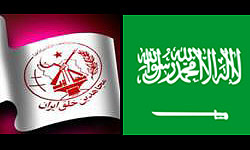
Baathists welcome ISIS and MKO welcomes both. Saddam Hussein’s daughter in Jordan, with whom the MKO is in close collaboration, went further and thanked the Saudi government for supporting ISIS, reported Iran Interlink.

This devil alliance between Baathists, extremists and cultists is not accidental. It is actually originated in the cult-like violence which exists in the substance of such groups. Definitely, the cult of Rajavi and ISIS resort to violence and terror as their only solution to the world’s problems.

The most crucial factor in the rule of both which is based in violence is that dissident voice must be silenced by killing and bloodshed. This essential rule was instructed to them by their main masters Saddam Hussein and Osama. However, today they are more aggressive that their predecessors.

The MKO leaders also deal out harsh treatment against their own members in their camps. Members including hundreds of women are isolated from the outside world just like the so-called Islamic state of ISIS in Mosul under which women are banned from getting out of house or being uncovered.

The cult’s website praises the ISIS’s statement in which it promises to kill the government forces unless they surrender. Calling the ISIS terrorists as “Revolutionary forces” the MKO propaganda expresses solidarity with them.

ISIS forces are considered brothers by the MKO because they are the group’s ideological brothers if not biological brothers.

Mazda Parsi

June 15, 2014 0 comments
FacebookTwitterPinterestWhatsappTelegramSkypeEmail
Terrorist groups and the MEK

The MKO and Saddam’s daughter support the IS of Iraq and the Levant

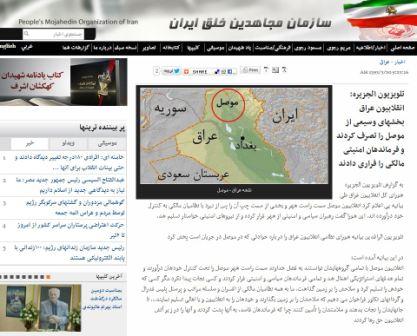
An article published on the Mojahedin Khalq’s official website exposes the group’s affinity with the gruesome Islamic State of Iraq and the Levant (ISIS) in Iraq.

The first page of their site (see picture below) says in Farsi, “Revolutionary forces in Iraq have captured parts of Mosul after fighting with Maliki’s forces”. Referring to the Islamic State of Iraq and the Levant as “Revolutionary forces” is something the MEK have invented to demonstrate its solidarity with the group. The article goes on, “The revolutionaries have announced that Maliki’s forces have run away”, and quotes from ISIS itself, “we didn’t let anyone survive except those who surrendered to us”. According to the MEK, the ISIS statement goes on, “We inform all government forces they should surrender otherwise they will be killed”

.

Saddam Hussein’s daughter in Jordan, with whom the MEK are in close collaboration, went further and thanked the Saudi government for supporting ISIS.

Reports from Baghdad say the Government of Iraq has evidence the MEK has collaborated with ISIS. The Iraqi Government revealed evidence that equipment which went missing from Camp Ashraf after the main group of residents were transferred to Camp Liberty, is now being used by ISIS. The equipment includes military vehicles with gun mounts. Ahmad Al-sharifi, a prominent security analyst in Baghdad has published the evidence, and says there is no doubt some equipment currently used by ISIS is that previously used by the MEK. He goes on to say the source of support for ISIS is clear for those in the region, and only a small part of this support comes from the MEK.

Only days ago, MEK leader Massoud Rajavi expressed his solidarity with the Saudi backed Jaish-ul-Adl terrorist group based in Pakistan. Referring to the execution of 16 men affiliated to Jaish-ul-Adl terrorist group Masoud Rajavi described them as “martyrs” and “brothers”.

Earlier in October 2013, Maryam Rajavi, the co-leader of the MEK, also released a statement condemning the execution of terrorists, while a group of Iranian border guards were killed in cold blood close to the Iranian border with Pakistan.

The MEK website now claims that the revolutionaries of Iraq have thrown out Maliki’s commanders.

June 14, 2014 0 comments
FacebookTwitterPinterestWhatsappTelegramSkypeEmail
Iran Interlink Weekly Digest

Iran-Interlink Weekly Digest – 56

++ Most of this week’s Farsi posts, comments and articles have been about the events in Iraq. The MEK has been on overdrive producing anti-Maliki and anti-Iraqi government propaganda to the point that their internal critics have raised the alarm claiming they are putting the lives of the people in Camp Liberty in danger by siding with the Islamic State of Iraq and the Levant (ISIL) and thereby legitimising the killing of them by opposing Kurdish and Shiite militias etc.

++ Newspapers and analysts in Iraq are saying that the Baath Party and ISIL are the same thing, and are working together; ISIL forces are carrying the Baath Party and ISIL flags together. Many are from Saddam’s army and this explains why there are personnel able to fly helicopters and aircraft. Many writers highlight the US’s insistence on keeping the MEK in Iraq. Now the Iraqi press and analysts are joining up the dots, they say it is clear the US have been trying hard to keep as many Saddamists as possible along with Sunnis sympathetic to the West in the Iraqi government. They identify the MEK as a small part of the larger plot against Iraq and its elected government – which encompasses Saudis, Baathists, Western intelligence directors and mercenaries with financial and military support, and Neoconservatives. The aim, allegedly, is to punish Iraqis for freely electing a government which refuses to be a puppet for the Americans, and they are hoping to engineer a coup d’état as they did in Cairo to install such a regime.

++ Reports from Tirana reveal that the MEK’s suppressive system is on the verge of breaking down completely and they can hardly control the people there anymore. MEK commanders Hassan Nayebagha and Esmail Mortezai (aka Javad Khorrasan) will one day come and plead with them to sign papers to say they’ll stay, then the next day they will scream and shout and threaten them, demanding to know who has been leaking information about what is happening there. The MEK clearly don’t know what to do any more. The reaction of these former Camp Liberty residents is to laugh at them and make jokes. Certainly they don’t feel constrained to listen to or fear them any more.

++ There were a couple of articles about the executed Gholamreza Khosravi Savadjani referring to Massoud and Maryam Rajavi’s reaction to this execution. The MEK leaders are publishing as much information as possible about other prisoners linked with the MEK, such as letters of intent to commit acts of terrorism (letters offering their martyrdom). Their aim is to provide incriminating documents for the Iranian government with the hope that more executions will follow.

++ The number of internal critics in the MEK’s circle of influence is growing very fast and their complaints are becoming more serious. They are now criticising Maryam Rajavi for her planned rally on the 27th June. Many are asking her to stop this partying and carnival show while the people in Camp Liberty are under threat due to the precarious situation in Iraq. They are asking her to spend MEK money to bring people out of Iraq rather than paying lobbyists to pose for pictures with her.

++ Hoshiar Zibari, Iraq’s Foreign Minister, has said in a statement that ISIL and ex Saddamists are now working together as one. The Baathist element are called Naghsh Bandieh which is the military section belonging to the Ezzat Ebrahim branch of Saddamists.

In English:

++ Anne Khodabandeh responded to the MEK’s furious attack on Baroness Emma Nicholson who was appointed by PM David Cameron as the UK’s Trade Envoy to Iraq. The MEK naively accuse her of working for Iranian interests. The article, however, highlights the MEK’s failure to make good its thirty year promise of regime change in Iran, and how its current role in the events in Iraq expose its destructive role. Conversely, the role of trade envoy will not only bring economic benefits to the UK, but the greater contact and better relations this entails will act as a catalyst for improving the human rights situation for Iraqi citizens.

++ Mazda Parsi from Nejat Bloggers exposes the debacle engendered by the meeting between Syrian opposition leader Ahmad Jarba and Maryam Rajavi in Paris last week. Jarba is reported to regret the meeting. After he discovered that the MEK is “a terrorist cult with a dark background of terror acts, violence and cult-like behaviour”, Jarba said, “the MEK deceived us”. Parsi concludes: “Ultimately, the whole story demonstrates the opportunistic substance of terrorists in any form. However, as we know, the meeting was held at the request of MKO representatives who had visited the Syrian opposition figures a few days earlier. While both sides expected a beneficial mutual relationship, the final meeting between the two self-proclaimed presidents sounds like a lose-lose game.”

++ Habilian Association in Iran writes, “In his latest statement, the ringleader of Mujahedin-e Khalq terrorist group expressed his solidarity with the Jaish-ul-Adl terrorist group. Referring to the execution of 16 men affiliated to Jaish-ul-Adl terrorist group, Masoud Rajavi, whose whereabouts are unknown since the US invasion of Iraq, described them as their “brothers”. Earlier in October 2013, Maryam Rajavi, the co-leader of the MKO, also released a statement condemning the execution of terrorists, while a group of Iranian border guards were killed in cold blood close to the Iranian border with Pakistan.”

++ Iran-Interlink has published a screen shot of the MEK’s official website which hails the actions of the Islamic State of Iraq and the Levant (ISIL), calling them “revolutionary forces”. Along with Saddam’s daughter in Jordan, the MEK appear to be the only people in the world publicly supporting the group.

June 14, 2014 0 comments
FacebookTwitterPinterestWhatsappTelegramSkypeEmail
Mujahedin Khalq; A proxy force

How US Policy on Iran Came to Be Based on Fabricated Documents

The key “evidence” of an Iranian nuclear weapons program comes via the MEK, a cult-like terrorist group—and was likely produced by Israel.

The nuclear talks between the P5 plus 1 (the permanent five UN Security Council members plus Germany) and Iran entered the drafting phase in Vienna on May 13. The objective is to reach a final deal in the dispute over Iran’s nuclear program by July 20, although the talks could be extended by mutual agreement for another six months. But the Obama administration is demanding a deep reduction in Iran’s uranium enrichment capabilities, which makes a successful conclusion of the negotiations highly unlikely.
This deal-killing demand is not based on an objective assessment of Iran’s nuclear program. It has been justified by the highly politicized concept of “breakout,” which refers to the time it would take Iran, in theory, to enrich enough uranium to weapons-grade level for a single nuclear weapon. But the administration’s embrace of the breakout concept is based on a false narrative about an alleged past covert Iranian nuclear weapons program, which the Obama administration inherited without the slightest questioning from the George W. Bush administration.

The Obama administration’s decision to demand draconian cuts was adumbrated by Robert Einhorn, who was the State Department’s special adviser for nonproliferation and arms control until June 2013. In a report published this past March, Einhorn wrote, “The number and type of centrifuges will be limited to ensure that breakout times are…a minimum of 6 to 12 months at all times.” And in a later article in The National Interest, Einhorn explained what that would mean in terms of reduction from Iran’s present 19,000 centrifuges: “an enrichment capacity greater than a few thousand first-generation centrifuges would give Iran an unacceptably rapid breakout capability.”

Secretary of State John Kerry confirmed that Einhorn revelation in testimony on April 8 before the Senate Foreign Relations Committee. Responding to committee chairman Robert Menendez’s complaint that the administration would allow Iran to accumulate enough weapons-grade uranium to make a single nuclear weapon within six to twelve months of a decision to do so, Kerry said, “I’m not saying that’s what we’d settle for,” hinting that the administration might demand an even longer breakout period. And he defended six to twelve months as “significantly more” than the two months he said was estimated to be the existing Iranian breakout capability.

The insistence on such a reduction in Iran’s enrichment capability is certain to be rejected. Iran has long asserted that it needs a much greater number of centrifuges than specified in US demands, enough to provide nuclear fuel for future nuclear power reactors as they come online. Iranian foreign minister Mohammad Javad Zarif explained to me in an interview on June 3 that Iran is proposing to reassure the United States and its negotiating partners that it isn’t interested in breakout; it will do so by converting all low-enriched uranium immediately into a form that would not be available for weapons-grade enrichment (around 90 percent purity), and then into fuel assemblies for a nuclear reactor.

The Obama administration has taken the position that Iran has no legitimate need to produce its own reactor fuel and should rely instead on the Russians and the French for its supply. Zarif told me, however, that it is “thirty years too late” to tell the Iranians that they must rely on other states for their nuclear fuel. He pointed to the long history of agreements with other states, both on nuclear fuel supply and other forms of nuclear cooperation, on which the other states have reneged.

France, under US pressure, refused to provide enriched uranium fuel assemblies to Iran in the early 1980s despite earlier legal arrangements to do so. It was precisely because US intervention had eliminated the possibility of reliance on foreign enrichment that Iran decided in the mid-1980s to develop its own enrichment capability. That lesson was underlined once again when Russia, under US pressure, delayed the shipment of nuclear fuel for the Bushehr power plant in 2005–06 in order to pressure Iran to cease enrichment entirely.

The insistence that Iran must not be allowed to have the enrichment facilities that would support a civilian nuclear program is the logical consequence of a false narrative about Iran—namely, that Tehran has been systematically concealing a nuclear weapons program that was active at least as late 2003. This view, now almost universally accepted by the US national security establishment and political elites in the United States and Europe, has been reinforced by nearly a decade of mainstream media coverage. The centerpiece of the narrative is the idea that the International Atomic Energy Agency (IAEA) has published, in the form of two sets of intelligence documents, hard evidence of an Iranian nuclear weapons program at least from 2001 to 2003.

The first set of documents, which surfaced in 2004, was said to have come from the laptop computer of an Iranian scientist working on the program. It included a series of drawings of efforts to integrate a nuclear weapon into the re-entry vehicle of Iran’s Shahab-3 missile. Descriptions of those drawings were leaked to selected journalists from 2005 on, generating sensational media stories of a “smoking gun” of nuclear weapons intent.

The US National Intelligence Estimates of 2005 and 2007, which concluded that Iran had carried out a nuclear weapons program, were based in large part on the assumption that those documents were genuine. The IAEA described them as “credible” in 2008—despite the fact that its director general at the time, Mohamed ElBaradei, warned repeatedly that their authenticity had not been established.

But a fundamental error in the re-entry vehicle documents proves they were fabricated: the missile they showed had been abandoned by 2000—two years before the drawings were made—in favor of an improved model whose re-entry vehicle bore no resemblance to that of the old model. And the real story of those documents, revealed to me last year by Karsten Voigt, a former senior official in Germany’s foreign ministry, is that they were turned over to Germany’s foreign intelligence agency, the BND, by a member of the Mujahedin-e-Khalq (MEK), the cult-like Iranian terrorist group that has been fighting the Tehran regime ever since the early 1980s. Furthermore, a senior BND official told Voigt that German intelligence officials regarded the source as “doubtful” and were concerned about what appeared to them to be the Bush administration’s intention to base its Iran policy on those documents.

The MEK role in transferring the documents indicates that they originated in Israel, because the MEK had been serving as a client of Israel for several years, including the “laundering” of Israeli intelligence reports by presenting them to the IAEA and the press as coming from the MEK itself. Israel also provided a new series of documents and intelligence reports to the IAEA in 2008 and 2009 claiming that Iran had been testing nuclear weapons designs and had continued to work on other components of nuclear weapons well after 2003. Although the IAEA never mentioned Israel publicly, former director general ElBaradei reveals in his memoirs that Israel provided the documents directly. After ElBaradei was succeeded by the more pliable Yukia Amano, the IAEA used those Israeli-supplied documents as the basis for its November 2011 report, which made a series of new accusations about Iranian nuclear weapons research projects going beyond the alleged 2001–03 program.

The unquestioning acceptance of this false narrative has shifted the political discourse surrounding the nuclear negotiations sharply toward the Israeli position. As a result, the Obama administration is more vulnerable to the propaganda war against negotiations that Israel’s clients in Congress are waging.

The biggest impact of the false narrative has been to impose the concept of breakout on the administration’s diplomatic posture. That concept is always presented as merely a technical tool to measure Iran’s ability to build a nuclear weapon. Its real significance, however, is the assumption implicit in it that the Islamic Republic has been working feverishly to obtain nuclear weapons and must be prevented by US power from doing so.

During the Iran-Iraq War of the 1980s, Iran’s supreme leader, Ayatollah Ruhollah Khomeini, ruled out the possession of weapons of mass destruction as illicit under Islam, even as Iraq was inflicting horrific casualties on Iran with chemical weapons attacks. That episode makes the fatwa against nuclear weapons by the present supreme leader, Ayatollah Ali Khamenei, entirely credible.

The actual behavior of Iran in recent years has also belied the breakout narrative. By early 2010, breakout theory advocates were already claiming that Iran could produce enough highly enriched uranium for a bomb in just six months. The Ahmadinejad government leaned toward an extreme nationalist, anti-Western political constituency, and at the time there were neither active negotiations nor punishing sanctions on Iran’s oil industry that would have provided an incentive to slow a race toward breakout capacity. But instead of using the years from 2010 to mid-2012 to begin enriching to weapons grade, Iran moved in the opposite direction. It did not use more than half the centrifuges it already had in place to enrich uranium, and it began converting much of its 20-percent-enriched uranium to oxide form, making it far more difficult and time-consuming to enrich to weapons-grade levels.

In fact, the breakout concept is based on an entirely implausible assumption—that Iran would deliberately invite confrontation with the United States by rushing to enrich enough uranium for a single bomb—one that would not even be available for use for as long as three or four years, according to US intelligence estimates.

The narrative that now threatens to plunge the United States into much more dangerous tensions with Iran is the most successful example of a fundamental and persistent problem of US national security policy. Falsified intelligence was used to get the US public to go along with wars in Vietnam and Iraq. The falsehoods about the Tonkin Gulf incident before the Vietnam buildup and Iraq’s alleged WMD programs before the Iraq War were eventually unmasked, albeit after US troops had been committed.

The success of the false narrative on Iran has been facilitated by the disappearance of the investigative function of Congress and the corporate media. Resistance to the manipulation of opinion on national security issues can only be successful if we strengthen the ability of independent media to alert Americans to strategic falsehoods early in their gestation.

Gareth Porter , The Nation

June 12, 2014 0 comments
FacebookTwitterPinterestWhatsappTelegramSkypeEmail
Terrorist groups and the MEK

Masoud Rajavi expresses solidarity with Jaish-ul-Adl terrorists

In his latest statement, the ringleader of Mujahedin-e Khalq terrorist group expressed his solidarity with the Jaish-ul-Adl terrorist group.

Referring to the execution of 16 men affiliated to Jaish-ul-Adl terrorist group, Masoud Rajavi, whose whereabouts are unknown since the US invasion of Iraq, described them as their “brothers”.

Earlier in October 2013, Maryam Rajavi, the co-leader of the MKO, also released a statement condemning the execution of terrorists, while a group of Iranian border guards were killed in cold blood close to the Iranian border with Pakistan.

Jaish-ul-Adl is a Salafi extremist group which along with a number of assassinations of Iranian border guards, abducted five Iranian border guards in Jakigour region in Iran’s southeastern province of Sistan and Baluchestan on February 6 and transferred them to the Pakistani territory.

The group released four of the abductees on April 6 and announced that it had killed the last one.

Iranian Interior Minister said the groups and individuals who have become playthings in the hands of spy agencies of foreign countries carry out desperate but futile measures in border regions to create insecurity.

June 11, 2014 0 comments
FacebookTwitterPinterestWhatsappTelegramSkypeEmail
Saudi Arabia

Saudi expert: KSA funds MKO terrorists

A Saudi political analyst and the director of the Institute for Gulf Affairs in Washington DC, blew the lid off the Saudi Arabia’s multi-million dollars aid to the Mujahedin-e Khalq terrorist group.

Ali AlAhmed revealed on his Twitter page that US sources told him that the Saudi Arabia supplied MKO with the aid of millions of dollars.

Earlier in May 2012, The Guardian reported an investigation by the US Treasury Department has indicated that the terrorist MKO was financially sponsored by the Israeli regime or Saudi Arabia.

"There are some US officials who suspect that, because of the amounts involved, money is also coming from other sources, mostly likely Saudi Arabia or Israel. Those officials point to circumstantial but not definitive evidence that Israel may have used the MEK in the assassination of Iranian nuclear scientists."

Press TV also cited one of the defectors of the MKO as saying that the MKO received funding from Saudi Arabia and Israel, emphasizing MKO’s role in the suppression and massacre of Iraqis under the former Baath regime.

Maryam Sanjabi said there is evidence about the relations and cooperation between the MKO and the Saudi kingdom.

June 10, 2014 0 comments
FacebookTwitterPinterestWhatsappTelegramSkypeEmail
Newer Posts
Older Posts

Recent Posts

  • The black box of the torture camps of the MEK

    December 24, 2025
  • Pregnancy was taboo in the MEK

    December 22, 2025
  • MEPs who lack awareness about the MEK’s nature

    December 20, 2025
  • Why did Massoud Rajavi enforce divorces in the MEK?

    December 15, 2025
  • Massoud Rajavi and widespread sexual abuse of female members

    December 10, 2025
  • Facebook
  • Twitter
  • Instagram
  • Youtube

© 2003 - 2025 NEJAT Society . All Rights Reserved. NejatNGO.org


Back To Top
Nejat Society
  • Home
  • Articles
  • Media
    • Cartoons
    • NewsPics
    • Photo Gallery
    • Videos
  • Publications
    • Books
    • Nejat NewsLetter
    • Pars Brief
  • About Us
  • Contact us
  • Editions
    • عربي
    • فارسی
    • Shqip