Nejat Society
  • Home
  • Articles
  • Media
    • Cartoons
    • NewsPics
    • Photo Gallery
    • Videos
  • Publications
    • Books
    • Nejat NewsLetter
    • Pars Brief
  • About Us
  • Contact us
  • Editions
    • عربي
    • فارسی
    • Shqip
Nejat Society
Nejat Society
  • Home
  • Articles
  • Media
    • Cartoons
    • NewsPics
    • Photo Gallery
    • Videos
  • Publications
    • Books
    • Nejat NewsLetter
    • Pars Brief
  • About Us
  • Contact us
  • Editions
    • عربي
    • فارسی
    • Shqip
© 2003 - 2024 NEJAT Society. nejatngo.org
Mujahedin Khalq; A proxy force

MKO terrorists used for information laundry

Gareth Porter on the true history of Iran’s nuclear program

In all the discussion of Iran’s nuclear program, the consequent international economic blockade directed by the United States, and the ongoing negotiations to resolve the issue, Washington’s official history of the program has rarely been challenged. In Manufactured Crisis, The Untold Story of the Iran Nuclear Scare (Just World Books), award-winning investigative journalist Gareth Porter traces the true history of the program, as well as how and by whom the official narrative was constructed. I put six questions to Porter about his book.
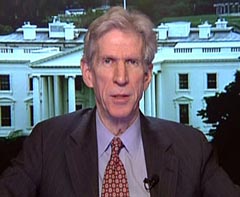
1. Although the Iraqi nuclear “threat” was discredited as an utter fraud years ago, the idea that across the border Iran has sought, at least in the past, to build a nuclear weapon has long been widely accepted in political and media circles. Are you saying that the claim of secret work on nuclear weapons is equally fraudulent, and that the Iranians have never had a nuclear-weapons program?

Yes. In Manufactured Crisis, I show that the claim of an Iranian nuclear-weapons program has been based on false history and falsified records. The description of the Iranian nuclear program presented in official documents, in commentaries by think-tank “experts,” and in the media bears no resemblance to the essential historical facts. One would never know from the narrative available to the public over the years that Iran had been prepared in the early 1980s to rely entirely on a French-based company for enriched uranium fuel for its Bushehr reactor, rather than on enriching uranium itself. Nor would one learn that the Reagan Administration sought to strangle Iran’s nuclear program, which was admitted to have presented no proliferation threat, in its cradle by pressuring Germany and France to refuse to cooperate in any way. The significance of that missing piece of history is that Iran was confronted with a choice of submitting to the U.S. effort to deprive Iran of its right to a peaceful nuclear program under the Non-Proliferation Treaty or else acquiring its own enrichment capability.

Not surprisingly, the Iranians chose the latter course, and went to the black market in defiance of what was by that point a unilateral U.S. policy. Their decision is now described in the popular narrative as evidence that Iran was seeking nuclear weapons early on.

The other relevant historical reality that has been systematically excised from the story of the Iranian nuclear program is what happened in regard to chemical weapons during the Iran–Iraq war. Contrary to disinformation issued by the U.S. Defense and State departments, which suggested that both sides had used chemical weapons in the Iraqi city of Halabja in 1988, the evidence is very clear that Iran never used chemical weapons during the war. The only explanation consistent with the historical record is that Ayatollah Khomeini forbade the use of such weapons, on the ground that both the possession and use of weapons of mass destruction are illicit under Islamic jurisprudence.

This policy, maintained despite the terrible losses Iran was suffering from Iraqi chemical attacks, represents powerful evidence that Shia jurisprudence is a fundamental constraint on Iranian policy toward weapons of mass destruction. It also makes credible the claim that Iran is forbidden by a fatwa from Supreme Leader Ali Khamenei from possessing nuclear weapons. But senior Iranian officials, including a former president of Iran, Hashami Rafsanjani, have been making cogent arguments against nuclear weapons based on strategic grounds since the early 1990s.

2. The U.S. produced various items of evidence over the years to demonstrate the felonious intent of the Iranian program. Where did this evidence come from, and how well does it stand up to scrutiny?

The evidence adduced to prove that Iran secretly worked on nuclear weapons represents an even more serious falsification of intelligence than we saw in the run-up to the war in Iraq. I tell the real story behind a large collection of intelligence documents that appeared mysteriously in 2004 and have been crucial to the Iran nuclear narrative. They supposedly came from the purloined laptop of an Iranian participant in a nuclear-weapons research project, but a former senior official with the German foreign office told me the real story: the documents were provided to Germany’s intelligence service by an occasional source who was part of the Iranian-exile terrorist organization Mojahedin-e-Khalq (MEK).

The obviously self-interested MEK member was thus the Iranian equivalent of the now-discredited Iraqi source known as “Curveball,” whose tales of mobile bioweapons labs in Saddam’s Iraq became the centerpiece of the Bush case for invading Iraq. It is well documented, however, that the Israeli Mossad was using the MEK to launder intelligence it didn’t want attributed to Israel, with the aim of influencing the International Atomic Energy Agency (IAEA) and foreign governments. Further pointing to the Israeli origins of the documents is the fact that Israel was the only country in the world known to have a special office responsible for influencing news coverage of Iran’s nuclear program.

Some key points in the documents give away the fact that they were falsified. The most important example is a set of studies, supposedly done in 2002 and 2003 on the Shahab-3 missile’s reentry vehicle, with the purported aim of allowing the missile to accommodate a nuclear weapon. Evidence from the U.S. intelligence community and authoritative independent sources shows that the Iranians had already abandoned the Shahab-3 by then, and were far along in developing an improved missile with a reentry vehicle that bore no resemblance to the one depicted in the studies. And we now know from Mohamed ElBaradei’s 2011 memoirs that in 2009 Israel provided a new series of intelligence reports and documents to the IAEA that offered further claims of Iranian work on nuclear weapons both before and after 2003.

Those claims were ultimately published in an IAEA dossier of intelligence reports in November 2011. The most sensational assertion made there was that Iran had constructed a large metal cylinder for testing nuclear-weapons designs at its military-research base at Parchin in 2000. This led officials from the IAEA and some of its member states, including the United States, to charge that Iran was altering the site to eliminate evidence. But as I document in the book, Iran had allowed the IAEA to carry out inspections at ten sites of the agency’s choosing on two different occasions in 2005. Furthermore the IAEA obtained satellite images of the site covering February 2005 to February 2012, and found no indication that Iran had been concerned about hiding anything. Finally, a former chief IAEA inspector in Iraq, Robert Kelley, has said that the agency’s description of the alleged cylinder made no technical sense.

3. How did the IAEA end up endorsing the notion that the Iranians have had a covert bomb program in the past and may still have one today?

The IAEA was crucial in legitimizing claims of a covert Iranian nuclear-weapons program, because it was seen as a neutral actor. That image was largely the result of the independence of its former director general, Mohamed ElBaradei, from the Bush Administration. In 2005, when the IAEA received the documents that had come in through Germany’s intelligence service, ElBaradei was deeply skeptical of their authenticity and warned publicly against using them as evidence in a case against Iran.

But his control over the Iran issue was eroded starting in 2008, when the head of the IAEA’s Department of Safeguards, Olli Heinonen, began collaborating with U.S. officials on how to treat the documents. Diplomatic cables released by WikiLeaks, when read against the background of 2008 IAEA reports, show that Heinonen and his Western allies came up with a strategy to falsely portray Iran as having conceded the authenticity of some of the documentation. Their aim was to justify IAEA demands for highly classified information on Iran’s missile and conventional-weapons programs. When Iran predictably refused, the IAEA and a U.S.-led coalition cited this as evidence of a cover-up.

The IAEA came to play an even more partisan role after Yukia Amano of Japan replaced ElBaradei in November 2009. A WikiLeaks cable from July 2009 reveals that Amano promised U.S. officials he would be firmly in their camp on Iran in return for American support of his election as director general. “In their camp” could only have meant that he would support the publication of the intelligence dossier — based entirely on intelligence reports and documents from Israel — that ElBaradei had refused to authorize. The dossier’s November 2011 publication date was timed to provide a political boost to the U.S.-led campaign for crippling international sanctions against Iran.

4. The U.S. intelligence community became a global laughingstock when its assessments of Iraqi WMDs were revealed as entirely bogus. Yet its pronouncements about the Iranian nuclear program are treated with deferential respect. How do you compare the performance of the U.S. intelligence community on Iran with its record on Iraq?

The same political and institutional dynamics drove both failures. The March 2005 Robb–Silberman Commission Report cited analysts who worked on the Iraq WMD file as admitting freely that they had effectively reversed the burden of proof, refusing to believe that Iraq didn’t have WMD unless a highly credible human source said otherwise.

The same thing happened on Iran. It began in 1991, when then CIA director Robert M. Gates singled out Iran as the premier assessment target for the agency’s new center for proliferation issues. Not surprisingly, analysts immediately began interpreting even the most ambiguous evidence as indicating Iran’s intention to develop nuclear weapons. This predisposition just happened to be in line with American policy of forbidding its allies from providing nuclear technology to Iran. In other words, the intelligence followed the policy, not the other way around.

CIA brass apparently went so far as to suppress WMD intelligence obtained by one of its best covert agents in the Middle East because it didn’t fit the conclusion they knew George W. Bush’s administration wanted. I reveal for the first time in the book that a former undercover operative who brought a lawsuit against CIA leadership in 2004 claimed that a highly respected source in Iran had told him in 2001 that Iran had no intention of “weaponizing” its nuclear program. The CIA apparently never informed the White House of that information, and refused to circulate it within the intelligence community.

National Intelligence Estimates in 2001 and 2005, and a draft estimate in mid-2007, all concluded that Iran had a nuclear-weapons program. Paul Pillar, a former National Intelligence Officer for the Near East who participated in the 2001 and 2005 exercises, has recalled that no hard evidence of weaponization informed either estimate, and that their conclusion was based on inference. In the 2005 estimate and the 2007 draft estimate, the conclusion was influenced by the intelligence documents that had come from Israel by way of the MEK. The failure of the CIA’s well-staffed weapons-proliferation center to detect the fraud paralleled its failure to notice the obvious signs that the “Nigergate” document offered as evidence of Iraqi uranium-shopping in Niger was a rather amateurish fabrication.

The final 2007 NIE, which was issued in November, asserted that the 2005 NIE and the mid-2007 draft had both been dead wrong in their assertions that Iranian still had a nuclear-weapons program at the time of their writing. It concluded, rather, that based on intercepted “snippets of conversation,” Iran had had a nuclear-weapons program as of 2003, then stopped it. This finding, which gave additional credibility to the official narrative of Iran’s nuclear intentions, is itself highly questionable. It is very likely that the 2007 NIE authors interpreted evidence of one or more individuals’ work as confirmation of the existence of a full-fledged program — a belief in which they had clearly acquired a strong vested interest.

5. The news media generally disgraced itself in its coverage of the Iraqi nuclear issue. How has it comported itself with respect to Iran?

With Iraq, there was at least dissent over issues like its alleged illegal importation of aluminum tubes, which reflected debates within the intelligence community. Coverage of Iran, on the other hand, has been virtually unanimous in reporting the official line without the slightest indication of curiosity about whether it might be false or misleading. The closest we got to investigative work in the commercial media were hints, buried inside longer stories in the Washington Post, of skepticism in the intelligence community about the 2004 laptop documents.

Some of the most egregious misinformation came in late 2007 and early 2008, in stories in the New York Times and Washington Post about two IAEA reports containing the final results of a major agency investigation. Rather than reporting the fact that the agency had been unable to challenge any of Iran’s explanations of the six issues under investigation, the Times and Post stories simply quoted Bush Administration officials and an unnamed IAEA official as dismissing the Iranian responses.

When the media challenged the official line, it was only because that line wasn’t hawkish enough. David Sanger of the New York Times carried out a relentless campaign in innumerable articles after the 2007 NIE attacking its conclusion that Iran had ceased work on nuclear weapons in 2003.

6. What impact do you believe the essentially unquestioned acceptance of this fraudulent nuclear narrative is likely to have on negotiations with Iran and beyond?

It creates serious obstacles. For one, it makes the Obama Administration much more vulnerable to the arguments of Israel and its followers in Washington that Iran cannot be allowed to have any enrichment capacity. But then, the administration itself has absorbed the essential elements of the narrative into its own analysis, notably via the creation of the “breakout” concept.

“Breakout” is defined as the time it would take Iran to enrich enough uranium to weapons-grade level to allow it to construct a single nuclear bomb. But it was a bogus idea from the beginning, because it assumed that Iran had the desire to rush-build a nuclear weapon. Furthermore it was based on highly unlikely worst-case scenarios for very rapid Iranian enrichment of uranium to a level sufficient for a bomb. According to the worst-case scenarios conjured up by conservative U.S. think tanks and others promoting the myth, Iran has had the same theoretical capacity for breakout — a month or two — since 2010. But rather than racing for a bomb, it has instead converted much of the uranium it enriched to a concentration of 20 percent uranium-235 (the enrichment level that has most worried the United States) to an oxide form that makes it unavailable for enrichment to weapons-grade level.

Nevertheless, the Obama Administration has been so intimidated by the breakout drumbeat that it has now adopted a policy of limiting Iran’s breakout period to between six and twelve months. That translates into a demand that Iran agree to be stripped of 80 percent of its centrifuges, which is all but certain to ensure the breakdown of the talks. Unless the administration changes its posture — which became less likely after it publicly cited that goal as a baseline — fear-mongering propagandists may well succeed in pushing the United States into a situation of increased tension with Iran, including the possible mutual escalation of military threats. That, of course, would be the result that Israeli prime minister Benjamin Netanyahu has long sought.

Andrew Cockburn, Harper’s Magazine
May 10, 2014 0 comments
FacebookTwitterPinterestWhatsappTelegramSkypeEmail
Iraq

Nikolay Mladenov: Election Was ‘Entirely Iraqi-Owned Process’.

 Mojahedin Khalq will be expelled soon

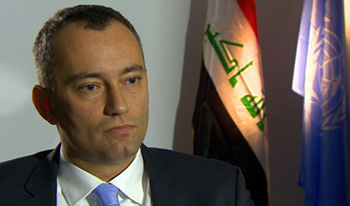
UN Secretary-General Ban Ki-moon’s Special Representative for Iraq and Head of the United Nations Assistance Mission for Iraq (UNAMI) Nikolay Mladenov was in Iraq for the country’s parliamentary election on April 30. He talked with RFE/RL’s Radio Free Iraq correspondent Faris Omar about his assessment of the voting process.
RFE/RL: The parliamentary election on April 30 was the first since U.S. troops left Iraq a little over two years ago. How smoothly did the election go, in your opinion?

Nikolay Mladenov: This was the first entirely Iraqi-owned process in which the United Nations had an advisory role but the leading role was with the Iraqi authorities. And they deserve a lot of credit for a very professional manner in which they approached the organization of the election.”

RFE/RL: The election took place against a backdrop of rising violence in Iraq, which is in the midst of its worst unrest since the country came near to civil war in 2008. At the same time, security forces are actively fighting insurgents in two key cities of Anbar province — Fallujah and the outskirts of Ramadi. Did the security situation have much impact on the election?

Mladenov: The security situation in Iraq is very difficult and inevitably this places a burden on the voting process and on the country at large. Therefore, the fact that 60 percent of people did come out to vote is even more remarkable. The legitimacy of the vote, the acceptance of the results — we will see how the public will react to that once the results are finalized.

RFE/RL: Do you think the election will help Iraq address some of its biggest internal political problems? For example, the disputed border of the autonomous Kurdish region, a dispute which is causing tension between different communities in the north of Iraq, including the Kurds, Turkomans, and Arabs?

Mladenov: I am hopeful that, once the new parliament convenes and the new government is formed, we will — with the cooperation of the federal government in Baghdad and the regional government in Irbil — be able to get back to…resolving the disputed internal boundaries.”

RFE/RL: When we look at Iraq’s conflicts, they often seem to be along sectarian and religious lines. Are you optimistic that Iraq will be able to overcome these divides, partly through democratic processes like this recent election?

Mladenov: Iraqis have for many years been one of the societies in the region that has seen the highest number of intermarriages between faiths and ethnic groups. The people of this country are tired of sectarian divisions and are tired of being labeled in different ways.

RFE/RL: Finally, on a slightly different subject, the UN is involved in the difficult task of trying to resolve the fate of the remaining members of the Iranian opposition group — the Mujahedin-e Khalq — who are still interned at Camp Ashraf and Camp Liberty in Iraq as they await countries to take them as refugees. What are the prospects for finishing this process and closing the camps?

Mladenov: The UN has appointed a special representative to seek relocation opportunities for this group. We are working closely with our American friends and partners who also are looking to such opportunities. It is not an easy process but it is a very important process to find a way for these people to leave the country and to continue their lives in other parts of the world.

May 10, 2014 0 comments
FacebookTwitterPinterestWhatsappTelegramSkypeEmail
Mujahedin Khalq Organization

The MEK’s Influence in EU Politics Matters

In a sign of re-emerging ties between the European Union (EU) and Iran, Edgars Rinkevics, Latvia’s minister of foreign affairs, visited Tehran on April 24. The visit was significant because Latvia will hold the EU’s rotating presidency in the first half of 2015. Issues pertaining to regional cooperation between the EU and Iran in Central Asia and Afghanistan were discussed during Rinkevics’ stay, indicating an EU desire to look beyond Iran’s nuclear program. This visit was another step in a string of reconnections that include trips to Iran by foreign ministers and parliamentarians from a number of EU countries including Austria, Sweden, Italy, and the United Kingdom.                           

Not everybody is pleased with these developments. The National Council of Resistance of Iran (NCRI), the front group for the exiled Iranian dissident organization, the Mujahadeen-e Khalq (known as the MEK, MKO, or PMOI), which was classified as a terrorist organization by the EU until 2009 and by the United States until 2012, denounced a trip last month to Tehran by Austrian Foreign Minister Sebastian Kurz. The denunciation came two weeks after the so-called Friends of Free Iran (FoFi), an informal network of members of the European Parliament (MEPs) closely allied to the NCRI, organized a conference calling for regime change in Iran and lauding the NCRI-MEK as the democratic alternative.

This is the message that the NCRI and bedfellows like FoFi have been promoting for years in European countries where the MEK has had many more years to lobby for and promote its agenda than in the United States. While the notion of an irreconcilable enmity between the West and Iran was relatively easy to promote during Mahmoud Ahmadinejad’s presidency (2005-13), the election of the moderate Hassan Rouhani and the meaningful progress in negotiations over Tehran’s nuclear program challenge that narrative. So, the MEK, which detests the notion of rapprochement between Iran and the West, has shifted gears and chosen human rights as its casus belli against the Iranian regime.

[..]

The good news is that MEK lobbying efforts against diplomacy with Iran are unlikely to succeed. Even with the extravagant funds the MEK has spent on endorsements by political elites, the group’s prominence in the EU is confined only to one part of the EP. The foreign policy decision-making bodies of the EU — the Council of the EU and the External Action Service (EEAS) — do not consider the MEK a serious alternative to the current government in Tehran, as it has virtually no support among the Iranian population. The dominant EU line now clearly favors diplomacy with Iran, which will, hopefully, lead to a final deal over Tehran’s controversial nuclear program. The more the chances of success for diplomacy increase, the more irrelevant the MEK will become.

It would be a mistake, however, to completely disregard the capacity of the MEK to poison the present atmosphere of European-Iranian relations. Institutions like the European Parliament are by their very nature open to lobbying from different groups, and the MEK has proven very adept at recruiting supporters. Among the conservative right, the MEK is viewed as staunch defenders of Israel and Western values against Iran’s so-called “mad mullahs”; among the progressive left, the MEK is seen as victims of the American invasion in Iraq in need of protection (the MEK created its base, Camp Ashraf, in Iraq following its exile from Iran).

The MEK’s expensive lobbying and advocacy efforts have also promoted an image of the group as defenders of human rights, especially women rights, facing Iran’s alleged “medieval, barbaric mullah regime”. The group’s strong presence of women, including leader Maryam Rajavi, is sold as evidence of its commitment to gender equality and secularism. Never mind the irony of its members in Camp Ashraf — excluding, of course, Mrs. Rajavi — being invariably dressed in uniformed, almost military suits and headscarves, and never mind the documented human rights abuses by the MEK against its own members.

On the operational level, the MEK is extremely persistent and aggressive. MEK lobbyists maintain a constant presence in the coffee bars of EP buildings in Brussels and Strasbourg, or in front of the plenary room in Strasbourg. These are strategic locations from which to bombard MEPs and their staffers with requests to support the MEK. Sometimes, however, they overdo it — one MEP recounted to me about how she had to scream at an MEK activist until they exited the elevator she was using to get to her office. Even MEPs’ offices are targets: the MEK lobbyists have no qualms about entering them uninvited and distributing flyers against alleged “Islamo-fascist tyranny” in Tehran.

Yet there is a growing backlash in the EP against the MEK. In May 2011, a number of MEPs from across the political spectrum sent an open letter to their colleagues warning against legitimizing the MEK and its destructive agenda, including to heavyweights such as the powerful German chair of the Foreign Affairs Committee, christian-democrat Elmar Brok, the leader of the social-democrats, Austrian politician Hannes Swoboda, the president of the party of the European liberal-democrats, Annemie Neyts, and many others. The last resolution of the European Parliament on Iran contained no references to the MEK or its demands. And the delegation for relations with Iran, while regularly offering the floor to various opposition groups, resisted giving a platform to the MEK.

However, more needs to be done to counter MEK propaganda, which can impede diplomatic efforts with Iran that can, arguably, allow the government to reform from within. Iranian diaspora organizations and individuals, the vast majority of whom do not sympathize with the MEK, may feel that confronting the MEK would give the group unwarranted importance, but the reality is that by being the only organized and constantly present Iranian opposition group in the West, the MEK gets its voice heard. The only way to prevent those MEPs who sincerely desire democratic change in Iran — but are uninformed about Iranian politics or the MEK — from falling into the MEK´s trap is to provide alternative sources of information.

Tehran can also play its part. The leaders of the MEK and the Iranian government may never get along — the Islamic government executed MEK members en masse in the 1980s following terrorist acts by the MEK against Iranian officials that also killed civilians, and the MEK sided with Saddam Hussein’s regime during the brutal Iran-Iraq war — but the Iranian government faces no current, tangible threat from this organization. By complaining about the group to foreign dignitaries, Iran appears weak and preoccupied with secondary concerns. For example, the EP’s ties with the MEK were raised at all meetings during the EP delegation’s visit to Iran in December 2013, but members of that particular delegation never supported the MEK. Denouncing the MEK to this group of people was akin to preaching to the converted.

Ultimately, a successful nuclear deal will make the MEK more irrelevant, and the EU is an important actor in this process. This deal should also make way for tangible improvements in Iran’s domestic environment. So far, the MEK has not presented a credible challenge to this process, but it must not be given the opportunity to parasite on the legitimate concerns of the international community over Iran’s nuclear program and its civil and human rights policies.

–Eldar Mamedov has degrees from the University of Latvia and the Diplomatic School in Madrid, Spain. He has worked in the Ministry of Foreign Affairs of Latvia and as a diplomat in Latvian embassies in Washington D.C. and Madrid. Since 2007, Mamedov has served as a political adviser for the social-democrats in the Foreign Affairs Committee of the European Parliament (EP) and is in charge of the delegation for inter-parliamentary relations between the EP and Iran.

Eldar Mamedov, Lobelog FP

May 10, 2014 0 comments
FacebookTwitterPinterestWhatsappTelegramSkypeEmail
Iran Interlink Weekly Digest

Iran Interlink Weekly Digest – 51

++ Many people reacted to the news that Maryam Rajavi has instructed MEK members in Europe and America to kill the cult’s vocal critics and ex members wherever possible. Several blamed western governments rather than the actual terrorists who are somehow being protected. Many say that any harm that comes to us or our friends is therefore done with the permission of these governments as they are responsible for what happens in their streets. But in any case, most conclude, such threats are too little and too late to stop us talking, and even more are coming, so the exposures won’t stop.

++ Responses to the articles by Anne and Massoud Khodabandeh over Maryam Rajavi’s failed visa application, include those who point to the failure of the anti-Iranian lobbyists, specifically Rep. Ileana Ros-Lehtinen, to derail the nuclear negotiations. All the responses point out that the American government and European representatives at the talks have reported that progress had been good and more advanced than they had hoped. The only groups screaming against this progress have been Maryam Rajavi and the Israeli Prime Minister – to the point that the former head of MOSSAD has criticised Netanyahu and his ilk for damaging Israeli interests. Putting this together, several writers anticipate that the neocons and Israeli lobby will resort to instigating violence and perhaps terrorism to disrupt the next round of talks in Vienna which are coming up soon.

++ Irandidban has a short note contrasting the fates of the MEK with Hizbollah. Maryam Rajavi has ‘licked ass’ but they still won’t give her a visa, whereas due to what is happening in Syria and the Lebanon, the US administration has been compelled to meet with Hizbollah in Cyprus, even thgouh Hizbollah doesn’t care about the US terrorism list. It is a case of contrasting two extremes – one group relies totally on its own people for support rather than western patronage, the other is totally dependent on America and not a single bit on the people. Putting aside any moral concerns, it is clear which one works.

++ Reports are coming out of Albania on a daily basis. Among the news is of another social gathering hosted by the UNHCR, to which the MEK sent infiltrators to photograph participants and threaten that anyone there without their permission would be dealt with. MEK commander Javad Khorrasan and Hasan Nayebagha a member of the NCRI, are at the forefront of the threats and intimidation, and again are carrying cards saying they are employed by the Pentagon. But other reports say that people are laughing at them and one has shouted, “the Pentagon did its utmost to us in TIPF and after all the things you have done do you think we are afraid for our lives”. Hasan Nayebagha got angry and responded, “if we have to kill you one by one, we will not allow you to make another TIPF in Tirana”. Other reports say that in anticipation of more people coming to Albania from Camp Liberty, the MEK are making great efforts to organise a closed camp to house them. The MEK has b land and are trying to get permission to build accommodation on it. Also in Tirana, since the MEK couldn’t stop the UNHCR interviews, they now say that ‘if you cooperate with us fully, when you are given your refugee status we have the contacts and channels to move you and your status to France, Germany and other good places, otherwise you will have to remain in Albania’. Former MEK members are warning the refugees not to be fooled; ‘the MEK are lying and won’t help you, they just want you to keep quiet for a few more months’.

++ Following the successful Iraqi elections, the results already show there is no hope for sympathy for the Saddamists or the MEK. The MEK reaction is to ignore everything they said before and are now shouting that Al Maliki should not be Prime Minister. Ironically, all the other candidates are even more anti-MEK than he is. Apparently the MEK’s tactic is to say a hundred different things in the hope that one of them will come true and they can claim the credit for having made it happen.

++ This week there were a few events inside Iran in relation to the MEK. One was a press conference in Semnan which had good coverage attended by Ebrahim Khodabandeh, Ronak Dashti, Ali Ekrami, and Iraj Salehi. The exposure was so great that the MEK issued five statements under name of the NCRI to denounce it. But they never rejected or refuted any of the points made, for example about the forced divorces and other cultic practices. Another event was the International Book Fair in Tehran. Mojahadin.com website reported on its attendance, with many interesting items, featuring Steve Hassan’s book on cult recovery called Releasing the Bonds, which is translated into Farsi by Ebrahim Khodabandeh. Mohsen Rezai (former presidential candidate), sitting nearby their stand, remembered when the MEK started and how they ended up where they are now, and said ‘thank God they couldn’t do more harm’.

++ This week five more residents of the temporary transit camp, Camp Liberty, in Iraq, managed to escape the MEK run camp at dawn and surrender themselves to the Iraqi security forces. Mohammad Salman Al-Asadi, a security officer responsible for the protection of Camp Liberty protection, quoted the escapees as saying that they had been planning their escape for months. He said all five have been handed over to the United Nation’s office. The names of the escapees are: Mohammad and Massoud Enayati, Bayez Ali Keshawarzi, Hussein Bahari and Jawad Reza Yousefi.

++ Habilian Association referred to the many NCRI announcements this week about a riot in a street in Tabriz when local shopkeepers placed on the pedestrian sidewalk and ‘the government’ has come to stop them. Habilian says, “The MEK once claimed to be the main opposition but have now been reduced to supporting local shopkeepers in civil matters”.

++ Edalaat Association has a short note referring to this year’s US report on terrorism. It highlights the paragraphs which describe some groups in Syria as having cult culture. In that case, says Edalaat, you know exactly what you are doing when you take the MEK off your terrorism list, because you know exactly how the MEK works.

++ Esmail Yaghmai has listed all the MEK’s swearing at him over the last week. It is a very long list. He adds a couple of his own articles and invites anyone to see what he has said to attract so much swearing. He addresses the MEK leader directly, saying, “One thing I found out for sure, whatever internal critics say to help you, nothing has gone into your brain as it is just blocked. Secondly I am very sorry for the people that you distort to put them under this much swearing as they will be damaged and no good to you in the future. In Persian it is said, ‘the madman who has enjoyed the taste of madness, with a hundred tricks will not be brought back to sanity’.”

In English this week:

++ Fars News reported that Lieutenant Commander of the Islamic Revolution Guards Corps (IRGC) Brigadier General Hossein Salami addressing a ceremony in the Northern province of Alborz said western efforts to prevent Iran’s progress have failed. He accused western spy agencies, collaborating with the terrorist Mojahedin-e Khalq Organization (MKO), of assassinating several Iranian scientists over the last four years.

++ Chairman of the National Security and Foreign Policy Committee of Iran’s Majlis Alaeddin Boroujerdi used a meeting with Co-Chairman of the Iran-Italy Parliamentary Friendship Group Ettore Rosato in Tehran to criticise some European countries for supporting the MEK, pointing out that the group has killed some 16,000 Iranians. He said, “The actions by some European countries in support of such a terrorist group are not consistent with the principles of democracy”.

++ Eldar Mamedov political adviser for the social-democrats in the Foreign Affairs Committee of the European Parliament (EP), wrote a very important and revealing article on “The MEK’s Influence in EU Politics Matters”. The article details the MEK’s negative impact on the politics of the EP, even to the point that, “On the operational level, the MEK is extremely persistent and aggressive. MEK lobbyists maintain a constant presence in the coffee bars of EP buildings in Brussels and Strasbourg, or in front of the plenary room in Strasbourg. These are strategic locations from which to bombard MEPs and their staffers with requests to support the MEK. Sometimes, however, they overdo it — one MEP recounted to me about how she had to scream at an MEK activist until they exited the elevator she was using to get to her office. Even MEPs’ offices are targets: the MEK lobbyists have no qualms about entering them uninvited and distributing flyers against alleged “Islamo-fascist tyranny” in Tehran.”

 May 9, 2014

May 10, 2014 0 comments
FacebookTwitterPinterestWhatsappTelegramSkypeEmail
Mujahedin Khalq; A proxy force

McMillan case: Two kinds of protesters

Cecily McMillan, a young Occupy Wall Street activist has just been found guilty of 2nd Degree assault on a police officer.

The "assault" was a startled reaction after a police officer violently grabbed her breast in 2011, squeezing it so hard he left a hand shaped bruise. McMillan began having a seizure after being arrested, and the NYPD blocked emergency medical technicians from treating her. When McMillan was released from the hospital she was limping, barely able to walk, after being beaten so badly. Her body was covered in bruises.

On May 19th McMillan will receive a sentence of between 2 and 7 years in prison for her startled reaction to a violent police sexual assault. She now sits in New York’s infamous Riker’s Island correctional facility awaiting her sentence.

During the trial, Police officers spoke of "smelly protesters" in their testimony. Prosecutor Amy Choe alleged that McMillan had injured herself, and mockingly dismissed any allegations of police brutality, comparing it to belief in "space aliens." The Jury was not allowed to hear testimony about the NYPD’s record of brutality against Occupy Protesters. A great deal of video of what happened to McMillan was prevented from being shown as well. The prosecution insinuated that McMillan was mentally ill and criminal for protesting at all. Articles from Rolling Stone Magazine, where she was quoted denouncing capitalism were presented as evidence.

Wall Street’s favorite protesters

As Cecily McMillan was being convicted, one of the top stories on the news was a group of nudists in China. The US and western media have raved on and on about the "bravery" of wealthy Chinese people who "heroically" engage in public indecency on a beach.

This is just the latest trendy group of protesters the Western media has decided to embrace. The airwaves have so often been filled with reports alleging mistreatment of "green movement" activists in Iran. We were told about the US backed rebels in Libya as if they were heroes. The insurgents who terrorize Syria are also given this hero treatment.

When Right Sector and Svoboda members were openly running through the streets terrorizing people and assaulting cops in Ukraine, they received endless praise in the Western press. Anderson Cooper strolled through Maiden Square narrating their assaults on police and civilians as if it were a romantic battle.

Through the National Endowment for Democracy, the US government gives billions of dollars to fund protesters in places like Iran, Belarus, and Venezuela. These "protesters" break laws, carry out assassinations, and commits all kinds of crimes.

The reason Cecily McMillan is now a political prisoner is because she occupied Wall Street, she did not occupy on behalf of Wall Street. She did not Occupy Maiden Square, beating up ethnic Russians and Jews, to clear the way for the IMF. She did not commit acts of public indecency in churches and supermarkets hoping to destabilize Russia. She did not strip naked on a Chinese beach. She did not bomb a school is Damascus. She did not hang dark skinned Africans in Tripoli. She did not burn monuments to the Ukrainians who died in the Second World War.

Cecily McMillan slept in a park, talking about income inequality, and plutocracy in the US. While doing it she professed non-violence, and was noted for criticizing the more radical elements of her movement. She was sexually assaulted, and jumped in response. She received a horrific beating, and is now going to spend years in prison.

As far as the US government, courts, and media are concerned, there are clearly two types of protesters.

When protesters are opposing the regime currently topping Wall Street’s enemies list, they get praised on TV, they get funding from various US based non-government organizations, and the slightest attempts to suppress them are declared "tyranny." Luis Posada Carrilles, a Cuban "protester" who bombed an airplane killing over 70 people is living very comfortably in Miami. Terrorists from the "People’s Mujahadeen" (MKO) in Iran, who have tortured and murdered for decades, are happily embraced by political leaders like Tom Ridge, and provided safe evacuation by the United Nations. "Protesters" run through the streets of Venezuela, burning buildings, assaulting police officers, and yet receive support from the US government, and are treated as heroes by the US media.

The US government and Wall Street are happy to fund the most violent, terroristic "protesters" in order to destabilize a government that gets in their way. But when young people in the center of world capitalism engage in peaceful protest, they are dubbed "smelly protesters" and "traitors." They get maced in the face, beaten, and arrested. The kind of brutality routinely unleashed on black and brown people, is turned on those who take political action.

Anthony Bolognia, who famously maced two protesters in the face during the first month of Occupy Wall Street without any provocation had all charges against him dropped. He is continuing his career as a highly paid New York City Police Officer. Though the world watched Occupy protesters in New York being brutally beaten, not a single NYPD officer has been charged with brutality.

The rising police state

The Police Officers who shot Ramarely Graham, a young African-American man through the chest have also received no penalty. No one disputes that they burst into his apartment and gunned him down in front of his family, but not even the slightest penalty has been issued.

The prison system is in the United States is rapidly expanding with 2.5 million people locked away. The schools in the US are often now filled with armed police, and children are often arrested for what would be previously considered a matter of classroom discipline.

The rising expansion of the "criminal justice system" is accompanied by an increased repression of political activists.

The homes of activists from the Freedom Road Socialist Organization were raided by the FBI. Anarchists in Seattle were imprisoned for refusing to testify against their comrades. In Chicago and Cleveland, occupy activists face lengthy sentences in obvious examples of entrapment. The National Security Agency now admits it is spying on millions of people, recording phone calls, emails, etc.

Are we really expected to trust John Kerry, Samantha Power, or Barack Obama in their words against Russia, People’s Korea, China, or Iran? Are we really expected to trust them as "human rights advocates" around the world, as they preside over rising police state at home?

The next time CNN, FOX, or MSNBC begins to speak of "peaceful protesters" in some country Wall Street dislikes, and declares that government to be "tyrannical", and calls to rescue these "peaceful protesters" with sanctions and cruise missiles, millions of people will think of Cecily McMillan, and know that these words are nothing but pure hypocrisy.

Caleb Maupin is a political analyst who lives in New York City, and is an activist with the International Action Center and Workers World Party. He was part of the Occupy Wall Street mo.

May 8, 2014 0 comments
FacebookTwitterPinterestWhatsappTelegramSkypeEmail
Mujahedin Khalq; A proxy force

US and continuous agenda of Hypocrisy

When in 2012 US State department removed the name of Mujahedin-e-Khalq Organization (MKO) from its list of foreign terrorist organizations critics correctly criticized the USA foreign policy’s double standards towards terrorism. Many critics considered the decision as a way to clear legal barriers in the way of overtly arming and funding the terrorists in pursuing a proxy war with Iran.
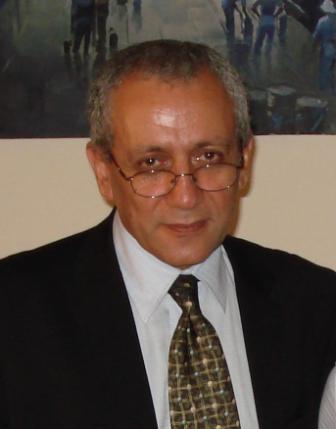
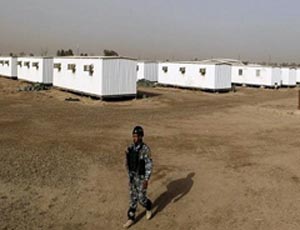
Mujahedin Khalq prolonged a decade long lobbying efforts and invested a great amount of money to get their organization removed from the Black List of FTOs. Vividly crossing the US anti Terrorism Laws, a large number of members of Congress, former White House officials and army generals supported their bid in exchange for large sums of money.

In fact the material support law under which several people with far less alleged crimes got severe punishments didn’t turned out to include over three dozen top U.S. officials who were the most vocal proponents of the War on Terror.

Tony Cartalucci analyzes the US dignitaries’ support of a Terrorist organization with the American blood on their hand as “a combination of theater and formalities to preserve in the eyes of stakeholders in the West’s international order, a semblance of “rule of law. That is to portray MKO’s American lobbyists as merely financially motivated to obfuscate the true nature of their duplicity as well as their true motives- [to use the group as an armed proxy against Iran]. He says considering the US funding of MKO, it is not believable that they are taking this money and sending it right back to America to lobby for their delisting.[1]

Indeed the United States covert support of the MKO terrorist group has been ongoing long before even under the Bush administration as Seymour Hersh exposed in its 2008 article “Preparing the Battlefield” that  “the US had already begun arming and financing them to wage war inside Iran”.[2]

While hypocrisy in confronting terrorism fails to be a new subject the more disturbing point is when some ordinary people are considered criminal for far less affiliation to terrorist group. 

There are more than enough proofs to prove ;the latest of which may be the Mirmehdi brothers who detained on allegations that they were affiliated with the MKO terrorist organization; though the men argued they were not members of MKO or any other terrorist group and had just attended a rally organized by NCR.[3]

To name another case; Morteza Assadi , a 49-year-old real estate agent in northern Virginia whose green card application has been on hold for more than a decade just because in the early 1980s as a teenager he distributed fliers for Mujahedin-e Khalq in Tehran. Assadi said he was never an active member or contributor to its activities and that the group was removed from the list of terrorist organizations in 2012.[4]

As the Obama administration has eased the rules for would-be asylum-seekers and refugees who gave "limited" support to terrorists or terrorist groups, now Assadi is hopeful that the U.S. government will look at his teenage activities as "limited."

The Department of Homeland Security and the State Department are tasked to determine with deciding which terrorists will be benefit from “limited material support”.

However, considering the double standards within the US policy makes the execution of the rule more complicated than it seems to be.

That is the hypocrisy reaches its heights when we see that the rule hasn’t applied to none of the Camp Liberty residents while some high ranking members can freely commute within the US. Although the US repeatedly declared concerns over the safety of TTL residents and appointed a longtime Kerry adviser as the senior advisor for Mujahedin-e Khalq resettlement trying to convince EU states to accept MKO members, yet the US itself hasn’t accepted any of the residents. In March hearing of Capital Hill, Rep. Dana Rohrabacher proposed a bill co-sponsored with 59 lawmakers to grant asylum to the MKO members in the United States but the administration officials privately suggest that Rohrabacher’s bill, and any other efforts to grant asylum to the MEK in the United States, face nearly insurmountable odds.[5]

Despite America’s attempt at window dressing the FTO list, putting some groups on it and removing others is just a political play based on the interests of the US politicians; and even not the people of the United States.

MKO members especially Camp Liberty residents are just a plaything for the US play with the group leaders.

By: A.Sepinoud

References:

[1] Cartalucci,Tony & Ziabari, Kourosh, US “Delisting” of Terror Network: Washington overtly supports the Mujahedin-e-Khalq Organization (MKO), Global Research, October 07, 2012

[2] Hersh, Seymour, Preparing the Battlefield, Newyorker, July7, 2008

[3]  Gazzar, Brenda , San Fernando Valley-based Iranian brothers turn to international tribunals over U.S. detentions, Los Angeles Daily News, April22,2014

[4]Newsmax Wires,Obama Easing Immigration Rule for Terrorist Supporters, February 9, 2014

[5] Wilkie, Christina, John Kerry Gets Pressed To Grant Asylum To Former Terrorist Group Mojahedin, The Huffington Post, March 14

May 7, 2014 0 comments
FacebookTwitterPinterestWhatsappTelegramSkypeEmail
Maryam Rajavi

Using cult leader Maryam Rajavi to derail nuclear talks backfires

With the P5+1 nuclear negotiations with Iran due to resume on Monday (5th May), American anti-Iranian hardliners have been working hard to destroy or disrupt any rapprochement between Iran and the US. As an example, The Hill newspaper, written for the political community in Washington D.C. to reflect business and lobbying views, has been persuaded to give webspace to blogs directly promoting the notorious MEK cult. The blogs, written by Soona Samsami, a member of ‘Saddam’s Private Army’ (aka MEK) and a Briton, Lord Alton (a long time MEK advocate presumably pulled in to give the illusion that this is not an exclusively American plan), are part of a pattern of activity deliberately designed to disrupt or destroy any rapprochement between the US and Iran.

An article (below) by Anne Singleton reveals that these anti-Iranian hardliners in the USA, headed by Rep. Ileana Ros-Lehtinen, already failed in a provocative bid to bring the Mojahedin Khalq’s second-in-command Maryam Rajavi to the US to speak in Washington to coincide with the nuclear talks. Such a visit could have only one purpose; the hope that Iran would take offence and walk out of the talks.

But anyone even remotely familiar with the way in which the view of Iran’s mainstream political establishment toward the MEK has evolved over the past twenty years will understand that this is a futile hope; sure the MEK is a terrorist organisation, but one that has long passed its sell-by date as an actual threat to Iran. (Although Iranian hardliners are just as keen as their American counterparts to exploit the MEK to foment enmity and prevent progress.) The Rajavis, and indeed the MEK itself, are essentially political lightweights who are only able to attract notice through well-paid publicity stunts like that in The Hill.

Rather than causing the talks to fail, the other P5+1 countries would see clearly that America has been reduced to a publicity stunt to gain leverage. Who wins then except Iran?

This is the article by Anne Singleton of Iran Interlink:

Rajavi’s visa application challenges America’s stance on terrorism

May 6, 2014 0 comments
FacebookTwitterPinterestWhatsappTelegramSkypeEmail
Iran

Supporting Mojahedin Khalq terrorists counter to democracy

A senior Iranian legislator has slammed some European countries for supporting the terrorist Mujahedin-e Khalq Organization (MKO), saying the group has slain some 16,000 Iranians.

In a Sunday meeting with Co-Chairman of the Iran-Italy Parliamentary Friendship Group Ettore Rosato in Tehran, Chairman of the National Security and Foreign Policy Committee of Iran’s Majlis Alaeddin Boroujerdi said supporting such terrorist groups runs counter to democracy.

“The actions by some European countries in support of such a terrorist group are not consistent with the principles of democracy,” stressed the Iranian lawmaker.

The MKO fled Iran in 1986 for Iraq, where it received the backing of Iraq’s executed dictator Saddam Hussein and set up a camp near the Iranian border. The terrorist group also sided with Saddam during Iraq’s eight-year war on the Islamic Republic in 1980-1988.

The MKO is listed as a terrorist organization by much of the international community and is notorious for committing numerous terrorist acts against Iranians and Iraqis.

However, the European Union removed the MKO from its list of terrorist organizations in 2009 after the group filed a petition against the blacklisting in 2008.

Elsewhere in his comments, Boroujerdi called for closer Tehran-Rome ties, saying parliamentary cooperation between Iran and Italy could lead to the further enhancement of bilateral relations

He also pointed to the sanctions imposed on Iran over its nuclear energy program, stressing that US and EU bans will not have any impact on the “iron resolve” of the Iranian nation.

Rosato, for his part, described the Islamic Republic as a significant and effective country in the Middle East and the entire world, saying the Italian government is keen to bolster ties with Iran in different domains.

May 6, 2014 0 comments
FacebookTwitterPinterestWhatsappTelegramSkypeEmail
Iran

Iran downplays Western use of Mojahedin Khalq terrorists

Lieutenant Commander of the Islamic Revolution Guards Corps (IRGC) Brigadier General Hossein Salami said the western sanctions against Iran not only were ineffective in preventing the country’s progress, but also caused more flourishing.

“The enemies are trying to stir crisis and chaos in Iran by rocking the boat, but the vigilant officials and nation of the Islamic Iran have resisted against the enemies’ attacks with perseverance and obeying the orders of Supreme Leader of the Islamic Revolution (Ayatollah Seyed Ali Khamenei) and foiled all enemies’ plots through patience, resistance and effort and led the country to a very high rate of growth and flourishing,” Salami said, addressing a ceremony in the Northern province of Alborz on Sunday.

He underlined that the enemies will never be able to prevent the Iranian nation from attaining its goals and causes.

Salami referred to Iran’s astonishing progress in different scientific and industrial fields, and said the enemy is fearful of Iran’s growth in various arenas and is seeking to isolate the country by hatching plots against Tehran’s peaceful nuclear program and assassinating Iranian scientists.

Western spy agencies, collaborated by the terrorist Mojahedin-e Khalq Organization (MKO), have assassinated several Iranian scientists in the last four years.

In the fifth attack of its kind, terrorists killed a 32-year-old Iranian scientist, Mostafa Ahmadi Roshan, and his driver on January 11, 2012.

The blast took place on the second anniversary of the martyrdom of Iranian university professor and nuclear scientist, Massoud Ali Mohammadi, who was also assassinated in a terrorist bomb attack in Tehran in January 2010.

The assassination method used in the bombing was similar to the 2010 terrorist bomb attacks against the then university professor, Fereidoun Abbassi Davani – the former head of Iran’s Atomic Energy Organization – and his colleague Majid Shahriari. While Abbasi Davani survived the attack, Shahriari was martyred.

Another Iranian scientist, Dariush Rezaeinejad, was also assassinated through the same method on 23 July 2011.

Washington and its Western allies accuse Iran of trying to develop nuclear weapons under the cover of a civilian nuclear program, while they have never presented any corroborative evidence to substantiate their allegations. Iran denies the charges and insists that its nuclear program is for peaceful purposes only.

Tehran stresses that the country has always pursued a civilian path to provide power to the growing number of Iranian population, whose fossil fuel would eventually run dry.

Despite the rules enshrined in the Non-Proliferation Treaty (NPT) entitling every member state, including Iran, to the right of uranium enrichment, Tehran is now under four rounds of UN Security Council sanctions and the western embargos for turning down West’s calls to give up its right of uranium enrichment.

Tehran has dismissed West’s demands as politically tainted and illogical, stressing that sanctions and pressures merely consolidate Iranians’ national resolve to continue the path.

The Islamic Republic says that it considers its nuclear case closed as it has come clean of IAEA’s questions and suspicions about its past nuclear activities.

May 6, 2014 0 comments
FacebookTwitterPinterestWhatsappTelegramSkypeEmail
Camp Liberty

Five Camp Liberty residents fled the Cult

Five MKO members residing in Temporary Transit Location, Iraq managed to escape the Camp at dawn Sunday and surrendered themselves to the security forces, Ashraf News reported.

Mohammad Salman Al-Asadi; a security officer responsible for Camp Liberty protection quoted the escapees that they had planned for the escape months before.

The five are handed over to the United Nation’s office, Al-asadi added.

The names of the escapees are as follows:

Mohammad and Massoud Enayati, Bayez Ali Keshawarzi, Hussein Bahari and Jawad Reza Yousefi.

May 5, 2014 0 comments
FacebookTwitterPinterestWhatsappTelegramSkypeEmail
Newer Posts
Older Posts

Recent Posts

  • Rebranding, too Difficult for the MEK

    December 27, 2025
  • The black box of the torture camps of the MEK

    December 24, 2025
  • Pregnancy was taboo in the MEK

    December 22, 2025
  • MEPs who lack awareness about the MEK’s nature

    December 20, 2025
  • Why did Massoud Rajavi enforce divorces in the MEK?

    December 15, 2025
  • Facebook
  • Twitter
  • Instagram
  • Youtube

© 2003 - 2025 NEJAT Society . All Rights Reserved. NejatNGO.org


Back To Top
Nejat Society
  • Home
  • Articles
  • Media
    • Cartoons
    • NewsPics
    • Photo Gallery
    • Videos
  • Publications
    • Books
    • Nejat NewsLetter
    • Pars Brief
  • About Us
  • Contact us
  • Editions
    • عربي
    • فارسی
    • Shqip