
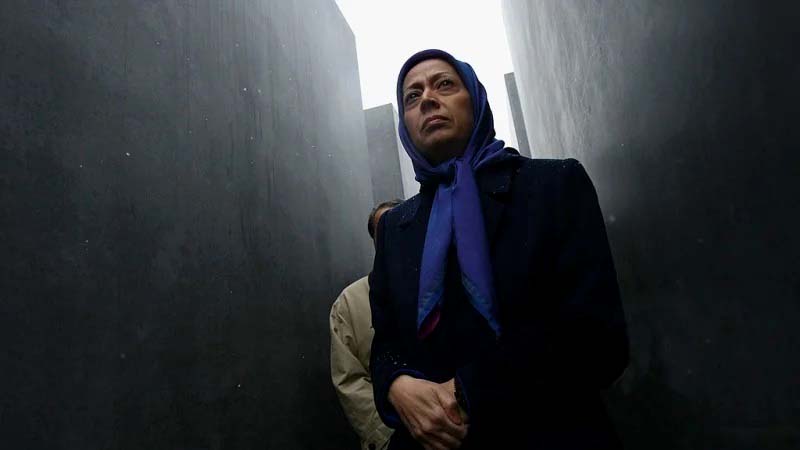
Maryam Rajavi’s ten-point plan has faced a lot of criticism, along with the lack of acceptance of the Mujahedin-e Khalq (MEK) among the opposition to the Iranian government. This criticism has mainly focused on the impossibility of this plan, the lack of credibility of the MEK as a democratic institution, and the historical context of the organization.
Most critics believe that despite the modern and pro-democracy appearance of the aforementioned plan, the implementation of this plan by the MEK is in contradiction with the MEK’s history and its authoritarian internal structure. However, in this article, we will discuss one of the provisions of the plan that is subject to criticism in itself: the seventh article of Maryam Rajavi’s ten-point plan for the future of Iran.
The seventh article of the so-called plan indicates a disregard for Iranian national and territorial integrity due to its stance on minorities’ autonomy. This is a complex issue with different interpretations.
Minorities’ autonomy or separatism
While the plan advocates for the self-governance of ethnic minorities including Kurds, within a so-called democratic framework, its implications for national integrity are debated among analysts and researchers.
“self-governance” within the context that Maryam Rajavi claims, refers to administrative and cultural autonomy. She claims that “Iran’s national unity and territorial integrity” would be the framework of such autonomy.
However, critics view any form of significant autonomy for ethnic minorities as a potential precursor to separatism, regardless of the claimed intentions, especially given the historical context of ethnic tensions in Iran.
History of cooperation between the MEK and the separatists
The MEK’s background indicates that its political wing, National Council of Resistance has a historical alliance with Kurdistan Democratic Party (KDP) which is an armed leftist separatist movement of Kurds in Iran. This have been considered as opportunistic and driven by shared opposition to the Iranian government. The KDP itself has historically sought greater autonomy for Kurds within Iran.
Besides, the MEK sympathizes with Jaysh al-Adl, a Sunni Islamist and separatist militia in Sistan and Baluchestan province. Although there is no credible evidence of cooperation between the two groups, the MEK media not only has not condemned the terrorist attacks of the group, but has always reported them with bias in favor of Jaysh al-Adl.
Documents were also recently published showing that the National Council of Resistance Office in the United States (NCRIUS) has provided financial aid to the Tahririyah Talab group of the Struggle for the Liberation of Ahwaz. According to this document, Alireza Jafarzadeh, the deputy representative of the National Council of Resistance in the United States, has provided $350,000 in financial assistance to Saeed Hamidan, the leader of the Struggle for the Liberation of Ahwaz, in order to “support” him and his so-called “liberation” movement.
In its efforts to destabilize the Iranian government, leaders of the MEK not only ignore national and territorial integrity but also, they try to synergize with separatist groups in order to seek power in Iran.
The nature of such alliance can be strategic, focusing on immediate shared goals against a common enemy but it has not succeeded in over four decades. It just definitely marks the very characteristic of the MEK as an opportunistic hypocrite group.
Mazda Parsi
