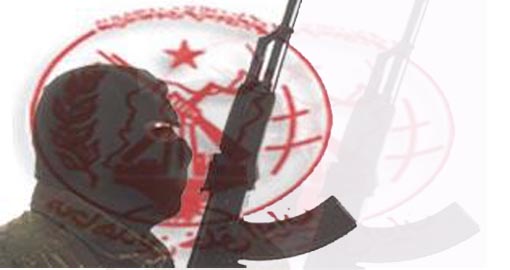
The French word “pratique” is frequently used by the Mujahedin-e Khalq (MEK) propaganda machine. Pratique means action or practice, as opposed to theory or opinion. In fact, pratique is the practical experience of a theory. In the case of the MEK, the term pratique means the tactical application of their ideology through their so-called “resistance units” that operate inside Iran. This discrepancy between the group’s public “democratic” image and its documented and historical violent actions is a focal point of disagreement among observers.
The MEK-run media call the violent actions of the resistance units as “revolutionary pratique,” which is based on Massoud Rajavi’s “revolutionary theory.” The MEK’s apologists define their violent behavior as “practicing revolutionary theory,” because according to the MEK propaganda, “the criterion for measuring the validity and correctness of all theories and opinions is the scene of action.”
The leaders of the MEK claim that “in the mutual influence of thought and action, in order to change many of the “objectivities” that appear rigid and unchangeable, every unit of theoretical training must be practiced and experienced on the stage and on the street by revolutionary forces.”
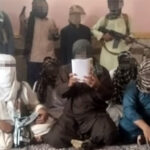
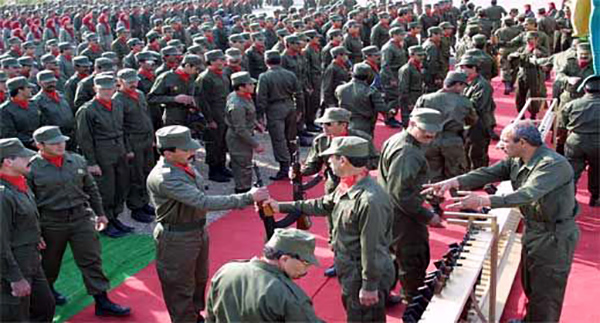
Are these claims, which openly state the fact that the MEK continues to insist on the theory of armed struggle, which it has believed in since its establishment, and in many cases, the resistance units even emphasize it in their campaigns by holding weapons in their hands. The MEK explicitly consider non-violence as a “deviant path”?
Despite the daily publication of images of firings and violent attacks on government and public buildings in Iran on their TV channel and social media, the leaders and supporters of the MEK use justifications to deny that their violence stems from their strategic frameworks.
Rebranding the MEK as “legitimate resistance”
The MEK and its political front present their pratiques not as terrorism but as legitimate resistance to the Iranian government. According to their narrative, “rebellion against the established order” is permissible.
They claim that they do not target civilians and that they target symbols of repression, such as government buildings, IRGC bases, or religious institutions associated with the government. In practice, however, there is no distinction between the two, and in many cases civilians have been harmed or injured in the process. What is certain is that the Iranian public has never welcomed the violent, tension and chaos created by the MEK.
The MEK lost its popular base in Iran from the early years of the 1979 revolution due to violent behavior, the killing of civilians, and collaboration with the aggressor Saddam Hussein. This festering wound was never healed because MEK agents, even in the form of resistance units, have always been a reminder of violence.
According to the media reports of the very MEK, on the occasion of Red Wednesday, 2025 (Chashanbeh Soori), the mercenaries of the MEK blew up dozens of IRGC and Basij centers and judicial institutions in “1,800 revolutionary pratiques in 106 cities and 43 regions in Tehran.”
Although the MEK propaganda machine tries to present the resistance units as emerging from the public, according to numerous documents and reports, these people who are willing to put Massoud Rajavi’s theories into practice on the streets of Iran with their faces covered are just a few deceived mercenaries who carry out the orders of the MEK commanders in exchange for money. The result of all these activities is neither similar to “resistance” nor has a tinge of “legitimacy”.
Violence under the cover of “democratic secularism” through media filtering
Since the removal of the MEK from the list of foreign terrorist organizations by the United States in 2012, the group has prioritized a narrative of democratic secularism to garner Western political support. They claim to have abandoned terrorism in favor of “Maryam Rajavi’s 10-point plan” for a democratic Iran.
To this end, they have resorted to very careful media filtering. In the Western media, they emphasize human rights exhibitions and rallies in European capitals (e.g., Berlin, Paris, Zurich). Violent “operations” are often presented to Persian-speaking audiences as evidence of an “internal uprising” rather than organized popular strikes.
On the other hand, MEK supporters often dismiss reports of violence as Iranian government propaganda intended to discredit the group. False flag claims are also made in this attitude. When violent acts result in civilian deaths or a strong public backlash, supporters often claim that the Iranian government itself carried out these actions to discredit the MEK.
Under Iranian law, when members are punished for the crime of “violence,” the MEK leadership describes these legal actions as “barbaric crimes” and “genocide,” shifting the focus from the act itself to the government’s response. In this case, the violent actions of MEK operatives disappear in the propaganda frenzy against “capital penalty”.
“Resistance” vs. “Violence”
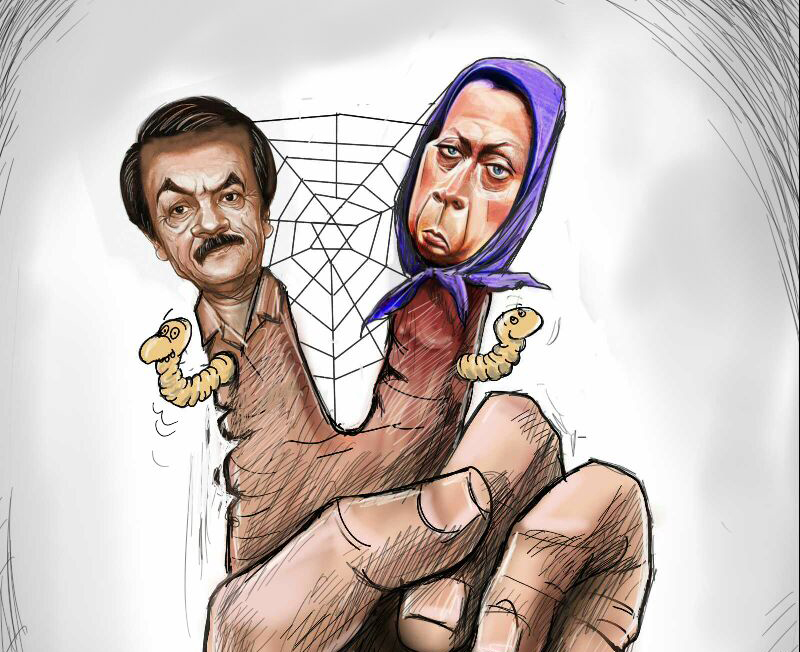
In the MEK media, the term pratique is used to describe “patriotic duty.” The MEK defines burning a government building as a symbolic act of liberation (revolutionary pratique) rather than a violent act. This allows them to maintain an ideology based on “overthrow” while outwardly supporting “peaceful democratic change.” This contradiction between the inner and outer is striking in the realities inside Camp Ashraf 3 as an undemocratic and anti-women structure, and in Maryam Rajavi’s rhetoric as a proponent of democracy and women’s rights.
Despite these denials, international institutions and critics continue to view the MEK’s guerrilla warfare record, terrorist acts against military and civilian personnel, and its current resistance units as evidence of the MEK’s enduring commitment to armed struggle. The revolutionary pratiques of the MEK are completely consistent with its theoretical and practical nature, which has not fundamentally changed over the past half century.
Mazda Parsi