In recent weeks, Donald Trump and a large section of the international media have pushed a familiar storyline: that protesters in Iran want the United States to step in militarily and bring down the country’s leadership.
Trump has paired that messaging with threats of major military action. He has not limited his demands to how Iranian authorities treat demonstrators. He has also insisted that Iran abandon what he describes as a nuclear weapons pursuit and give up long-range missiles and other defensive capabilities.
None of this changes a basic reality inside Iran. Many Iranians have taken to the streets because daily life has become punishing. Prices have surged, the currency has lost value and families have watched wages fall behind the cost of food, housing and medicine. The Trump administration’s sanctions have played a central role in tightening that vice, sharply restricting Iran’s ability to trade and access global markets, and adding momentum to inflation and financial instability.
Yet public discussion often stops there, as if economic pain tells the whole story. It does not. A second layer matters for anyone trying to understand what is happening, and for anyone tempted to treat escalation as “support for the Iranian people”: the question of foreign encouragement and involvement.
Mossad’s messaging and Israel’s public claims
Israel’s intelligence service, Mossad, has not confined itself to quiet signals. Mossad used social media to urge Iranians to mobilise, writing: “Go out together into the streets. The time has come… We are with you in the field.”
Israeli Heritage Minister Amichai Eliyahu also spoke in unusually direct terms, referring to an operation he called “Rising Lion” and saying that Israeli forces had operated on Iranian soil and had people active there “right now”.
Former US secretary of state Mike Pompeo reinforced that message with a tweet: “Happy New Year to Iranians and Mossad agents beside them.” Last year, Mossad director David Barnea said Israel would continue its activities in Iran, declaring: “We will continue to be there, as we have been.”
Taken together, those statements do not prove the scale of any operation. They do something else: they normalise the idea of foreign intelligence activity as a legitimate companion to civil unrest. That is a dangerous precedent, especially in a region where covert action has repeatedly escalated into open conflict and where civilians pay the price first.
The MEK’s self-declared role
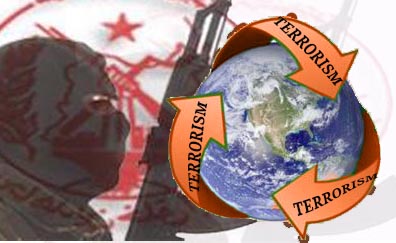
Another actor frequently cited in discussion of the protests is the Mojahedin-e-Khalq (MEK), an exiled opposition organisation with a long and divisive history. The group presents itself as an organiser of protest activity and has issued sweeping claims about casualties and arrests.
The MEK says it has identified 1,449 people killed as of 30 January, 2026 and describes the unrest as a nationwide uprising. It also claims Iranian authorities have detained students accused of links to the organisation. These are serious allegations, but they originate in the group’s own statements and should be treated with caution until independently verified.
The organisation’s history helps explain why its presence triggers such sharp reactions. Founded in 1965, the MEK carried out armed attacks against the Shah’s government and US targets in the 1970s, and it initially supported the 1978–1979 revolution. It later turned against the new Iranian state and went into exile. Its decision to align with Iraq during the Iran–Iraq War remains, for many Iranians, a line that no rebranding can easily erase.
The US State Department designated the MEK a terrorist organisation in 1997, a label that remained until 2012, when the United States removed it during Barack Obama’s presidency.
The organisation’s history helps explain why its presence triggers such sharp reactions. Founded in 1965, the MEK carried out armed attacks against the Shah’s government and US targets in the 1970s, and it initially supported the 1978–1979 revolution. It later turned against the new Iranian state and went into exile. Its decision to align with Iraq during the Iran–Iraq War remains, for many Iranians, a line that no rebranding can easily erase.
The US State Department designated the MEK a terrorist organisation in 1997, a label that remained until 2012, when the United States removed it during Barack Obama’s presidency.
Trump’s call to escalate
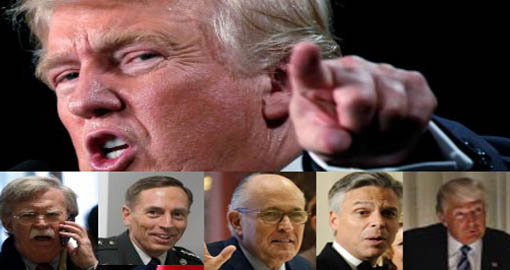
Foreign encouragement has not come only from Israel or exiled groups. On 13 January, 2026, Trump urged protesters to intensify their actions and seize state institutions, writing: “KEEP PROTESTING – TAKE OVER YOUR INSTITUTIONS!!! … HELP IS ON ITS WAY.”
That language matters. It does not read like concern for rights or support for democratic participation. It reads like an invitation to confrontation, paired with the suggestion of outside backing. In a country shaped by long memories of foreign interference, that kind of messaging can deepen polarisation, raise the risk of violence and harden the very security posture it claims to oppose.
What would “regime change” even mean?
Even if one sets aside legality and morality, the strategy collapses under its own questions. If Iran’s leadership fell, who would govern a country of roughly 90 million people? Some proponents point to the Shah’s son, but his support inside Iran is widely contested and he has lived abroad for decades, including in Maryland.
Then comes the issue of force. What would occupation and administration require in manpower, logistics and political cover, particularly in a society where many already distrust US intentions? A project of that scale would not resemble a “targeted strike”. It would look more like a prolonged crisis, with predictable spillover and unpredictable end points.
There is also a religious dimension that outside actors routinely underestimate. Iran’s supreme leader, Ali Khamenei, carries religious authority for many Shia Muslims. A direct assault on Iran risks being read by parts of the region as an assault on a community’s dignity and security, not simply a dispute between states.
Regional actors would also respond through their own interests. Hezbollah in Lebanon, the Houthis in Yemen and powerful Shia political forces in Iraq have long understood that an attack on Iran shifts the balance of power across the region. If they believe Iran’s fall makes them next, they will not disarm out of goodwill. They will prepare for survival.
Finally, escalation dynamics rarely stop where planners imagine. If the United States attacked and Iran inflicted serious damage in return, would Washington or Israel accept that outcome, or would they climb further up the ladder in pursuit of “victory”? In a world where nuclear threats have returned to political conversation with disturbing ease, that is not a remote concern.
A historical warning, and a hard question
Iran does not approach this moment without history. In 1951, Iran’s democratically elected prime minister, Mohammad Mosaddegh, became Time magazine’s Man of the Year. Two years later, a CIA-backed coup removed him. Decades on, the legacy still shapes how many Iranians read foreign pressure: less as humanitarian concern, more as a recurring pattern of control.
That history sharpens a final, uncomfortable question. If an Iranian citizen believed that only a credible deterrent could prevent an existential attack, would they support pursuing nuclear weapons? If not, what real alternative would allow Iran to escape sanctions, threats and covert action while protecting its sovereignty?
These are not abstract debates. They sit at the center of today’s crisis, and any honest discussion of Iran’s protests has to hold them alongside the country’s genuine internal grievances.
Jenny Williams, Middle East Monitor