The most important and challenging fact about the Mujahedin-e Khalq (MEK) today is the deep dichotomy surrounding its rebranded political legitimacy in the West versus its controversial, highly controlled internal structure and violent historical legacy.
While the MEK has successfully shed its former designation as a Foreign Terrorist Organization (FTO) by the United States and the European Union, and while it garners active support from prominent Western political figures, it remains dogged by credible accusations of operating with cult-like internal dynamics. This creates a severe policy challenge: Western governments face a dilemma in balancing diplomatic opposition to the Iranian government with the incorporation or backing of an exiled opposition group that former members and human rights observers accuse of severe internal abuses and authoritarian control.
Perhaps the most troubling aspect of the MEK—and the core of its contemporary controversy—is its internal organizational structure. Led jointly for decades by Massoud Rajavi and his wife, Maryam Rajavi, the group has frequently been characterized by intelligence analysts, academic researchers, and former members as cult-like.
Key features of this internal culture include absolute loyalty to the Rajavis, strict social control over members, violation of human rights of members.
Members are expected to display unwavering personal devotion to Maryam Rajavi and her disappeared husband, who show up as supreme ideological leaders.
First-hand accounts and human rights investigations note that members faced intense regimentation, including mandatory divorces for older couples in the late 1980s and bans on marriage or family life for younger members, all designed to channel total emotional and psychological allegiance toward the organization.
Reports, testimonies and documented facts on human right abuses inside the MEK camps reveal the most controversial part of the MEK’s internal culture. Even when removing the MEK from its terrorism list, the U.S. State Department explicitly emphasized its ongoing concerns regarding allegations of abuse committed by the organization against its own members.
Following the 2003 U.S.-led invasion of Iraq, the MEK found its military infrastructure dismantled by coalition forces, leading to a negotiated cease-fire and the disarmament of its members. Confined first to Camp Ashraf and later relocated to Camp Liberty near Baghdad, the group transitioned its primary focus from armed struggle near Iranian border to a sophisticated, well-funded political and diplomatic campaign in Western capitals.
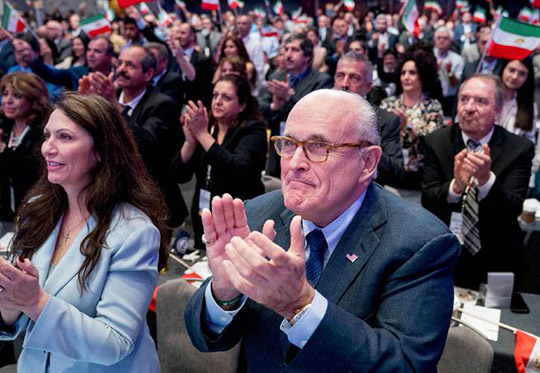
Through its political wing, the so-called National Council of Resistance of Iran (NCRI)—often described as a government-in-exile —the MEK launched an extensive advocacy effort. By enlisting high-profile retired American and European politicians, diplomats, and military officials, the organization successfully lobbied to overturn its terrorist designations in the European Union in 2009 and the United States in2012.
Today, the NCRI presents itself as a democratic, secular alternative to Islamic Republic, advocating for human rights, gender equality, and capitalism in a future Iran.
The challenge lies in the profound contradiction between the MEK’s polished, democratic exterior in Paris and Washington, its violent history and rigid, authoritarian internal structure.
For policymakers, engaging with the MEK as a viable opposition force carries substantial reputational and strategic risks. Critics argue that supporting the group undercuts more authentic, grassroots, and peaceful domestic opposition movements inside Iran.
Ultimately, the most challenging issue is clear: an organization with a history of bloody violence and internal tyranny cannot claim to pursue democratic reforms. Its controversial nature—even in the eyes of Westerners—renders it an unreliable partner for Iran’s future.
Mazda Parsi