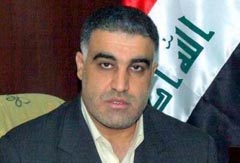
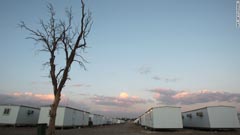
On Wednesday, 21/03/2012 Martin Kobler, the UN Special Representative for Iraq and Head of the United Nation Assistance Mission for Iraq (UNAMI), reported to the meeting of the Foreign Affairs Committee on the work of the UNHCR and UNAMI in Iraq and the current situation of the Iranian Mojahedin-e Khalq (MEK) in Camp Ashraf and Camp Liberty.
As part of his description of the problems of resettlement of the Ashraf residents Kobler said that it demanded a cooperative attitude from the residents.
The infrastructure at Camp Liberty was indeed improved, but the basic services are guaranteed. The capacity of the camp was for use by 4000 – 5000 U.S. soldiers and UN staff. This has been sufficient and would offer ample space.
The medical care at Camp Ashraf, although confined to two doctors and six nurses, but also including use of hospitals outside of Liberty, is guaranteed. The establishment of a clinic inside the camp had, however, until recently been refused by the residents, said Kobler.
In addition, there are ultra-modern kitchen facilities in accordance with U.S. standards, but these were rejected by the occupants.
The U.S. special envoy for Camp Ashraf, Daniel Fried, said that the information that the United States has of the situation in Camp Ashraf and Liberty is consistent with Kobler’s descriptions. The conditions at Camp Liberty are not nearly as bad as described by the MEK.
Kobler appealed to the MEK, to refrain from propaganda and complained that the constant, unnecessary rhetorical attacks by the MEK and its supporters are hindering the UN and the Iraqis in their work.
Fried said the key to success is not discussions about the conditions at Camp Liberty, but the progress of the work of the UNHCR.
In a conversation with Mr Kobler following the meeting, we had the opportunity to inform him of our "Back to the Family" initiative and asked him to work to ensure that in individual discussions with the UNHCR the Ashraf residents are made aware as soon as possible that contact with their family members is available.
Countdown for MKO Departure from Iraq
Female MKO members are easy scapegoats to be victimized by the cult of Rajavi

It is a global responsibility to support women vulnerable to any form of threat and the international woman’s day is the best occasion to remind the responsibility. But it is much discouraging when you see that the she-guru of a notorious terrorist cult takes advantage of the occasion to conceal her group’s ill-mannered, undemocratic fashion.
In a conference held in Paris on March 10, Maryam Rajavi made a speech in the presence of women gathered from several continents and called for support of female members of the group settled in two locations in Iraq, the military camp of Ashraf and the Temporary Transit Location TTL. The conference was held at a time when the majority of the group’s female members, nearly one third of it, are suffering the harsh conditions and treatments of the recognized terrorist cult.
In her speech, Rajavi said: “Women in MKO suffer crushing physical and psychological pressures under the hollow slogans of being the pioneers and heroines of freedom and democracy”. There is no doubt about the first phrase of her sentence, but, alas, the bare truth about MKO is that “freedom and democracy” have no meaning and place.
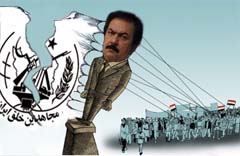
In the contemporary history, no cult has overexposed women using them instrumentally as much as MKO. Although Mojahedin have adopted the false ideological and strategic slogan of setting women free form social, conventional, religious, and historical bonds, yet in practice women have been subject to a kind of modern slavery under the cover of freedom through mental and physical convincing mechanisms. Massoud Rajavi, the absent leader of the group, has focused all his efforts in recent years to misuse various social, cultural, religious, and ethical backgrounds to subjugate women. In this regard, he has exploited the emotional attachments and nature of women as well as their ethical, religious, and traditional constraints to increase their dependence on the organization preventing their leaving from the organization.
Meanwhile, promoting women in leadership cadre of the organization is one of the tricks for intensifying the various aspects of this slavery. In the context of a modern slavery bastion, as MKO leaders acknowledge, the main role of MKO’s female rank and file is to be used as human shields for protecting leadership. The published expose and memories by the separated members indicate that the women in MKO have been abused as easy and accessible instruments in the hands of Rajavi to be victimized whenever necessary. Up to that time their role is safeguarding the military bastion of Ashraf as the ideological and strategic container of MKO.
However, the issue of misusing MKO female members has been ignored due to Rajavi’s covering it under the banner of the emancipation of women. The former members have repeatedly referred to the significance of women for Rajavi. He is well aware that the special characteristics of these women like their emotional attachments, lack of support and ethical and religious constraints has excluded the possibility of their leaving from the organization. Besides, they are under the instilled spell of an imaginary threat if they leave the organization. Maryam Rajavi is right when she says “Women in MKO suffer crushing physical and psychological pressures”, yet here the question arises that who poses these pressures and threats?
During the earlier events and conflicts in camp Ashraf, it was observed that these women were used as human shields to prevent the entrance of Iraqi police to camp and also to win the sympathy of the world toward the residents. What is of the significance in the full-scale propaganda blitz of MKO is the insistence on the necessity of saving the life of women members, while hardly you can see any move by the organization to guarantee the welfare, security and freedom of female members. And how many women have been spotted among the two relocated groups from Ashraf to TTL while, as asserted by almost any international convention, the sick people, women and children have the priority of any relocation from a harsh to a better location?
As the female MKO members are easy scapegoats to be victimized, Rajavi seems to be determined to preserve them as human shields for defending Ashraf. In this regard, taking necessary measures for setting Rajavi’s victims free from cultic relations is of highest priority for Iraqi government and the international bodies. And our main responsibility is making the public opinion and the concerned bodies aware of this imminent disaster. MKO female members have been the most ill-fated and vulnerable stratum of the cult of Mojahedin in the past and recent years and now after years of suffering and misuse, they are supposed to be used as Rajavi’s bargaining chips out of any encountered impasse.
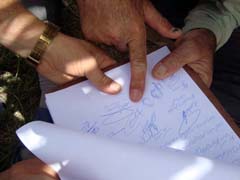
A nationwide campaign has started in Iraq to collect one million signatures from Iraqi nationals to call for the trial of the members of the anti-Iran terrorist Mojahedin-e Khalq Organization (MKO, also known as the MEK and PMOI) and accelerate their expulsion from Iraq. 
According to a report published by the Habilian Association, a human rights group formed of the families of 17,000 Iranian terror victims, the Association of Justice to Defend Iraqi Victims of MKO declared that the first stage of the signature gathering campaign in Diyala province has finished with a total of 40000 signatures.
Secretary-General of the Association of Justice Dr. Nafie Isa told Habilian that the result of the process in other provinces will be announced and made public in the coming days.
Owing to the people’s significant participation, the executive committees of the campaign in other provinces have announced the need for more signature forms.
Hitherto, many university professors and school teachers, young people, university students, tribal elders, politicians, artists, women, and civil society activists in Diyala province have signed the campaign.
The MKO has been in Iraq’s Diyala province since the 1980s.
The MKO is blacklisted by much of the international community, including the United States.
Before an overture by the EU, the MKO was on the European Union’s list of terrorist organizations subject to an EU-wide assets freeze. Yet Maryam Rajavi, who has residency in France, regularly visited Brussels and despite the ban enjoyed full freedom in Europe.
The MKO is behind a slew of assassinations and bombings inside Iran, a number of EU parliamentarians said in a recent letter in which they slammed a British court decision to remove the MKO from the British terror list. The EU officials also added that the group has no public support within Iran because of their role in helping Saddam Hussein in the Iraqi imposed war on Iran (1980-1988).
Many of the MKO members abandoned the terrorist organization while most of those still remaining in the camp are said to be willing to quit but are under pressure and torture not to do so.
A May 2005 Human Rights Watch report accused the MKO of running prison camps in Iraq and committing human rights violations.
According to the Human Rights Watch report, the outlawed group puts defectors under torture and jail terms.
The group started assassination of the citizens and officials after the revolution in a bid to take control of the newly established Islamic Republic. It killed several of Iran’s new leaders in the early years after the revolution, including the then President, Mohammad Ali Rajayee, Prime Minister, Mohammad Javad Bahonar and the Judiciary Chief, Mohammad Hossein Beheshti who were killed in bomb attacks by MKO members in 1981.
The group fled to Iraq in 1986, where it was protected by Saddam Hussein and where it helped the Iraqi dictator suppress Shiite and Kurd uprisings in the country.
The terrorist group joined Saddam’s army during the Iraqi imposed war on Iran (1980-1988) and helped Saddam and killed thousands of Iranian civilians and soldiers during the US-backed Iraqi imposed war on Iran.
Since the 2003 US invasion of Iraq, the group, which now adheres to a pro-free-market philosophy, has been strongly backed by neo-conservatives in the United States, who also argue for the MKO to be taken off the US terror list.
Iraqi Vice President Khudayr al-Khuzaie has reiterated the resolve of Baghdad in its decision to expel the Mujahedin-e Khalq Organization (MKO) terrorist group, describing its members as
‘persona non grata’.
We insist on the expulsion of the terrorist group from Iraq, al-Khuzaie said, adding that the MKO members are not considered guests, but “persona non-grata”.
The Iranian terrorists, who fled to Iraq in the mid-1980s after conducting many terrorist operations against the country’s officials as well as ordinary citizens, also committed numerous crimes against the Iraqi people and helped executed Iraqi dictator Saddam Hussein to suppress several uprisings in the country.
Al-Khuzaie also referred to the cooperation between Iraq and the United Nations with respect to the MKO’s expulsion from Iraq, adding that Iran has expressed its willingness to receive those members of the terrorist group that are willing to abandon terrorist activities and return to Iran.
Earlier in September, the Iraqi government and the United Nations reached a deal, under which they agreed to relocate 3,400 MKO members living in Camp Ashraf, near Baghdad, until their refugee status is determined.
Nearly 750 members of the MKO expressed preference to return to Iran. The Islamic Republic had announced that it would pardon all the residents of Camp Ashraf except less than 100 individuals that have criminal records in the country.
The MKO is listed as a terrorist organization by much of the international community and is responsible for numerous acts of terror and violence against Iranian civilians and government officials.
Iran has repeatedly called on the Iraqi government to expel the group, but the US has blocked the expulsion by mounting pressure on the Iraqi government.
The residents of Diyala province in Iraq condemned the crimes committed by the anti-Iran
terrorist Mojahedin-e Khalq Organization (MKO, also known as the MEK and PMOI) against the Iranian and Iraqi nations, and underlined the necessity for the rapid expulsion of the terrorist group from Iraq.
Several people from Diyala province have sent an email to Habilian declaring their displeasure over the MKO terrorist group’s presence on their territory.
According to a report published by the Habilian Association, a human rights group formed of the families of 17,000 Iranian terror victims, the email contains images of large signboards installed along the roads of Diyala province opposing the presence of Mujahedin-e Khalq terrorist group inside their country.
The message reads, "On behalf of the residents of Diyala, we confirm Iraqi government’s decision to expel Monafeqin-e Khalq (as they are called in Iraq). We urge the government to clean our holy land from their presence.
A group of professors, scholars and tribal sheikhs and the residents of Baqubah, Iraq."
The MKO, whose main stronghold is in Iraq, is blacklisted by much of the international community, including the United States.
Before an overture by the EU, the MKO was on the European Union’s list of terrorist organizations subject to an EU-wide assets freeze. Yet Maryam Rajavi, who has residency in France, regularly visited Brussels and despite the ban enjoyed full freedom in Europe.
The MKO is behind a slew of assassinations and bombings inside Iran, a number of EU parliamentarians said in a recent letter in which they slammed a British court decision to remove the MKO from the British terror list. The EU officials also added that the group has no public support within Iran because of their role in helping Saddam Hussein in the Iraqi imposed war on Iran (1980-1988).
Many of the MKO members abandoned the terrorist organization while most of those still remaining in the camp are said to be willing to quit but are under pressure and torture not to do so.
A May 2005 Human Rights Watch report accused the MKO of running prison camps in Iraq and committing human rights violations.
According to the Human Rights Watch report, the outlawed group puts defectors under torture and jail terms.
The group started assassination of the citizens and officials after the revolution in a bid to take control of the newly established Islamic Republic. It killed several of Iran’s new leaders in the early years after the revolution, including the then President, Mohammad Ali Rajayee, Prime Minister, Mohammad Javad Bahonar and the Judiciary Chief, Mohammad Hossein Beheshti who were killed in bomb attacks by MKO members in 1981.
The group fled to Iraq in 1986, where it was protected by Saddam Hussein and where it helped the Iraqi dictator suppress Shiite and Kurd uprisings in the country.
The terrorist group joined Saddam’s army during the Iraqi imposed war on Iran (1980-1988) and helped Saddam and killed thousands of Iranian civilians and soldiers during the US-backed Iraqi imposed war on Iran.
Since the 2003 US invasion of Iraq, the group, which now adheres to a pro-free-market philosophy, has been strongly backed by neo-conservatives in the United States, who also argue for the MKO to be taken off the US terror list.
The MKO has been in Iraq’s Diyala province since the 1980s.
Iraqi security forces took control of the training base of the MKO at Camp Ashraf – about 60km (37 miles) North of Baghdad – in 2009 and detained dozens of the members of the terrorist group.
The Iraqi authority also changed the name of the military center from Camp Ashraf to the Camp of New Iraq.
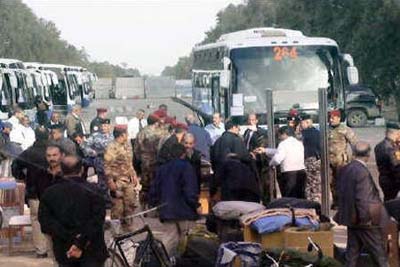
Around 400 members of the Mujahedin-e Khalq Organization (MKO) terrorist group have been moved from Camp Ashraf to a former US military base near the Iraqi capital of Baghdad.
The transfer of the anti-Iran terrorist group to the former US base, Camp Liberty (Temporary Transit Location), near the Baghdad airport, is reportedly part of an agreement reached between the UN and Iraq back in December.
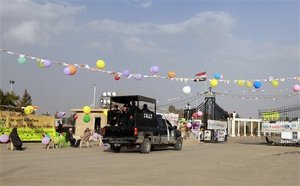
Under the deal, the UN and the Iraqi government agreed to relocate the 3,400 MKO members living in Camp Ashraf until their refugee status is determined.
Last month, another 400 members of the MKO terrorists were relocated to TTL.
In a statement issued on Saturday, the terrorist group expressed displeasure over the living conditions at TTL and sought a temporary relocation to another site near the Jordanian border.
The statement by the terrorist organization claimed that so far, "none of the minimum assurances that (Camp) Ashraf residents had sought has been met."
Most MKO terrorists fled to Iraq in 1986 after Iranian security forces discovered most of their hideouts broke up their terrorist network and arrested hundreds of them in various operations.
Having waged a war against Iran in 1980, former Iraqi dictator Saddam Hussein allowed the terrorist group to set up the paramilitary Camp Ashraf base near Iran’s border in order to aid his regime with military and intelligence operations against the Iranian forces as well as civilians.
The group is also known to have cooperated with Saddam in suppressing the 1991 uprisings in southern Iraq and the massacre of Iraqi Kurds. It has also carried out numerous acts of violence against Iranian civilians, scientists and government officials.
Iran has repeatedly called on the Iraqi government to expel the group, but the US has vigorously attempted to block the expulsion by mounting pressure on the Iraqi government.
In late February, US Secretary of State Hillary Clinton told a House committee that the MKO’s cooperation in a relocation plan from Camp Ashraf "will be a key factor in any decision" on whether to take it off the US list of foreign terrorist organizations.
Clinton’s remarks were viewed as a clear indication that the US is close to removing the terrorist group from its blacklist.
A member of the Islamic Supreme Council of Iraq says that according to the MOU signed with the UN, MKO’s relocation to Camp Liberty[Temporary Transit Location] will be done in several stages.
“Mujahedin-e Khalq’s expulsion from Camp Liberty [TTL] is divided into five stages”, the Vice President of the Diyala provincial council Sadeq Al-Husseini told Habilian. “And even the name of the elements that must leave the camp in each stage is determined.”
“MKO put all its efforts into obstructing their relocation and the residents of Ashraf are telling lies,” Husseini added.
He pointed out that Diyala’s provincial police chief has positioned himself at al-Azim district in Khalis for five consecutive days in order for the group to be relocated to the new camp, but they are looking for extending the deadline by presenting false claims such as lack of preparation or poor health.
He further noted that MKO’s stalling as well as their request to extend the deadline may last a few days but have no results.
In response to Habilian reporter’s question about Iraqi government’s plans to prosecute the leaders against whom arrest warrants have been issued, Sadegh al-Husseini said, “it is solely related to the Iraqi judicial system and we respect it.”
Following the MOU signed between Iraq and the United Nations, in mid-February some 397 MKO members while being barred to carry their stuff were relocated to Temporary Transit Location.
Last week, Secretary of State Hillary Rodham Clinton urged the group to complete the move, but they are complaining about the conditions at TTL which the UN confirmed that it meets the international standards. MKO leaders accuse the United Nations Assistance Mission for Iraq of lying and misrepresenting the conditions at TTL.
In order to prevent the expulsion of MKO members from Iraq and being transferred to Temporary Transit Location which culminates in the collapse of her cult, Mujahedin-e Khalq terrorist group’s ringleader Maryam Rajavi begged the US on Sunday to let them live a temporarily nomadic life on the Jordanian side of the border instead of their temporary relocation to TTL.
The Iraqi Justice Minister describes the Iraq’s decision to expel Mujahedin-e Khalq (MEK, also MKO and PMOI) terrorist group from Iraq as “purely internal.”
Hassan Al-Shammari expressed his wonder over recent remarks of dismissed Iraqi Deputy Prime Minister Saleh al-Mutlaq regarding the Iran’s involvement in the expulsion of MKO members from Iraq and stressed that this measure has been taken following the Memorandum of Understanding signed between Iraq and United Nations, Habilian reported.
According to the report, three days ago Saleh al-Mutlaq, the strategic ally of Mujahedin-e Khalq terrorist organization, said that the decision to relocate MKO members has been taken by Iran and that he was opposed to UN’s decisions in this regard.
On December 25, an agreement signed by Special Representative of the Secretary-General and head of the UN Assistance Mission for Iraq (UNAMI) Martin Kobler and National Security Advisor to the Prime Minister of Iraq, Faleh Fayad.
The agreement established that the Iraqi government will relocate the residents of Camp Ashraf to a temporary transit location where the UN High Commissioner for Refugees (UNHCR) will start a process of refugee status determination, a necessary first step for their expulsion outside Iraq.
Following the MOU Iraqi government paved the way for the relocation of MEK members to Temporary Transit Location. Finally on Saturday 18th February, 397 members of the terrorist cult were relocated to their temporary home in order to be expelled out of Iraq.
With the relocation of about 400 residents of Camp New Iraq, formerly Camp Ashraf, to a new
![]() |
| TTL, A Temporary or Permanent Location is not a permanent place of host and stay as some may presume |
transit center, Temporary Transit Location TTL, near the Baghdad’s airport, the United Nations has welcomed the move calling it “the first step towards a better future” for the transferred residents. But it seems that the relocation does not follow smoothly on the agreed path. For humanitarian reasons and to end the presence of MKO’s members in Iraq in a peaceful way, the Iraqi government agreed to extend the decided deadline 0f their expulsion, in line with the memorandum of understanding signed in December by the UN and the Iraqi Government. Although the relocation of the residents to TTL imposes heavy costs on the Iraqi government, but it demonstrates Iraq’s good will to resolve the situation facing the residents of Camp New Iraq.
As the name of the new location denotes, Temporary Transit Location TTL, it is a temporary facility to facilitate the process of residents’ departure to third countries. The UN High Commissioner for Refugees UNHCR has announced that it will immediately start the process of verification and refugee status determinations, a key step in preparing the submissions of eligible candidates for resettlement in third countries.
Then, TTL is a center for:
– Temporary settlement of the relocated residents,
– To recognize the residents’ individual identity,
– To determine and verify the residents’ former refugee status in other countries
– To determine the residents’ future of returning to Iran or applying asylum in a third country,
– Preparing legal process of applying for asylum seekers,
As stated in MoU signed by Special Representative of the Secretary-General and head of the UN Assistance Mission for Iraq (UNAMI) Martin Kobler and National Security Advisor to the Prime Minister of Iraq, Faleh Fayad, the Iraqi government will facilitate relocation of the residents of Camp New Iraq to TTL where the UN High Commissioner for Refugees (UNHCR) will start a process of refugee status determination of residents individually and regardless of their organizational rank as a necessary step for their resettlement in a third country.
In fact, TTL is not a permanent place of host and stay as some may presume. For sure, the residents’ cooperation with the Iraqi authorities and representatives of UNHCR to complete the relocation and process of refugee status without delay guarantees the human rights, safety and welfare of all residents. Of course, any disapproval and protestation by MKO that might end in prolongation of stay in TTL not only satirizes the meaning of the phrase itself but is also a different aspect of a method of sophistry utilized by the group; to turn TTL into another permanent camp.
By M. Nelson
Human Rights Minister Mohammed Shyaa called on EU countries to facilitate harboring Iranian Mujahidin Khalq members .
According to a statement by the Ministry today: "Shyaa met ambassador of the European Union in Baghdad, Ms. Jana Hapaschkova who praised the effort made by the Ministry of Human Rights in transferring hundred of members of the Iranian (PMOI) from / Camp Ashraf l in Diyala province to / Camp Liberty [Temporary Transit Location] / near Baghdad international airport.
From another hand and in response to a question by the Ambassador about the of the death penalty, Shyaa said the sentences issued after taking into account accuracy of the legal proceedings that accompanied proving the sentences, explaining that "all the death sentences issued against those convicted of crimes of mass murder and crimes of prejudice to national security and peace.
NINA (National Iraqi News Agency)