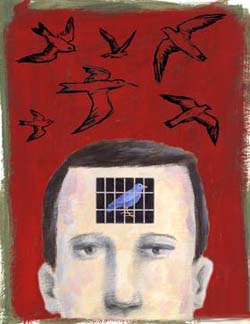
The ruling of the Proscribed Organisations Appeal Commission (POAC) to remove the ban on MKO’s activities remains a serious challenge failing to convince the UK government that the organisation has really foresworn the terrorist tactics which continue to be a potential threat to civilians. Far beyond being an internal threat, terrorism stages a global threat that has to be fought by all the means. A globally proscribed terrorist organization, MKO may appeal to a variety of lawful judiciary bodies and take advantage of proficient lawyers and proponent parliamentarians to divert governments and international bodies from the potential terrorist threat of the organization. The advocates of MKO should be notified that to win a judicial decision in appeals process to de-proscribe a terrorist organization never implies that its terrorist threats have ever been curbed. It has to be noted that it is a tactic commonly exploited by MKO to alter its serious ideological and cultic challenges from an internal issue to a globally concerned judicial case, a ploy manipulated by majority of cults. A comparative study of some current cults reveals amazing results that never excludes MKO as an exception. The tactics employed by cults and a number of political groups to influence public perception and debate are considerable. I spite of countless suppressive measures to extend their hegemonic domination over the insiders, they escape any scrutiny and controls from the outside world. As Margaret Thaler Singer discusses in her Cults in Our Midst, “Despite a rather grim record of atrocious behavior, time and again cults escape the scrutiny and controls bestowed upon other organizations and activities”. To find out how cults benefit from legal leverages and influential individuals and authorities to circumvent law enforcement is possible only through a careful study of the approaches utilized by certain cults and groups. For instance, involving in lawsuits against respondents are generally costly affairs and time consuming but cults utilize a variety of approaches to overcome the problem. Explained by Thaler Singer, “Legal suits are costly affairs. But some cults have developed large in-house legal staffs, including huge numbers of paralegals to help the resident lawyers. Thus legal actions are not very costly for the cults to pursue, whereas the people who must defend themselves can easily go broke battling against such tactics”. It has also to be pointed out that not all advocates and supporters of a cult and political group are in total agreement with ideological tenets and objectives of the target group. A variety of factors like political and party interests as well as personal interests and financial concerns may involve. Brought to attention by Thaler Singer, “Some people committed to cultic groups become downright illogical in their support. For example, there is a small claque of social scientists who have become procult apologists. Some have been given trips to exotic places by large, wealthy cults; some fear revealing critical findings because certain cults have paid for research and underwritten trips to professional meetings”. As noted, in some cases, the laws not only fail to deter the threat of cults but also work as legal buffers defending them against opponents. The question is, are the learned Westerners who support MKO really unacquainted with the tactics employed by the cults? As many of them assert, they have been well acquainted with MKO activities since long and besides, English intelligence systems have long been monitoring the terrorist activities of the group and have already filled exactly recorded details which can help reaching a logical resolution about MKO. There are suppositions why the English fail to reach a consensus about MKO. A doubtful inference is that the group’s English advocates are initially kept in dark about the real nature and the past history of MKO. As mentioned, British intelligence bureaus as well as news agencies, BBC in particular, have a valuable record of MKO’s terrorist operations and atrocities perpetrated inside Iran against American personnel, British interests, regime’s authorities and innocent civilians since its formation. Then, it is doubtful that they have been uninformed of vital facts concerning the national security as people’s representatives. Looking it from a different angle, the English might be dealing with MKO as a psychotherapy case. That is to say, regarding the organization as a destructive cult that has enforced a variety of cult and mind control techniques on the members, they have to be treated with outmost care and caution. That is much because the English have learned any suppressive measure to repel cults may backfire seriously and cause irreparable social damages; they may be in some way following American’s paradoxical approach in dealing with MKO since they have once paid the price of MKO’s ideological hostility against the imperialism. Finally, the English may have concluded that MKO, as a political organization with a military infrastructure, has reached the end of its political life and must run a peaceful life of retirement. For sure, it takes time to instil the truth into old veterans, a responsibility some British factions have assumed on themselves. However, precautionary measures deem necessary concerning MKO; as a globally proscribed terrorist organization and a destructive cult, it has to be under constant, strict surveillance. Bahar Irani,Mojahedin.ws-February 11, 2008
Manipulation Techniques of the MEK cult leaders
Self-delusion is most apparent in those politicians who least consider their supporters and their people in the policies and strategies which they pursue. These are the kind of leaders who do not see the fear in the faces of the people under their autocracy. Rather they relate all such signs of disfavour to the external enemy. When they do find their internal opponents standing opposed to them, they become astonished and fail to analyse the situation realistically.
Self-delusion is the scourge of power that has no popular support. Self-delusion is the illness of those who are unable to evaluate their power and do not understand their true position in either the international or internal political scene. This inability means there is always a vast divergence between the minds of such politicians and real life. On the one hand they are arrogant of their growing power, and on the other hand pass their lives in fear of their enemies; and finally they become the victims of their own phobia. Their self-delusion directs them to only refer to their self-created fantasy. Disaster occurs when the realities of the outside world threaten to destroy their misinterpretation.
Massoud Rajavi, the leader of the Mojahedin-e Khalq Organisation (MKO) of Iran, is an example of an idealistic leader whose absolute power over his followers in the organisation has both shattered his ideals and increased his self-delusion. As Rajavi discovered his power over the organisation to be unlimited, he distanced himself from the realities of life in both his sayings and in his actions. To this end the picture of the social and political life of the people of Iran today is totally different from what he sees or talks about. He is miles away from today’s world.
Massoud Rajavi is so certain about the outcome of the manipulation of the members of his organisation with his ideas that he does not see the rows of people tired of his "ideological revolution" and those who are trying to escape the boundaries of Camp Ashraf in Iraq. He is, of course, not worried about the increasing critics and opponents to his policies and ideas. According to his so-called revolutionary criteria, those who leave him or turn against him are traitors who will sooner or later destroy themselves by their own hands.
Rajavi is a charismatic leader who enjoys the natural supremacy of all such leaders over his followers. He has managed to instil his own fear and paranoia in the minds of his followers so that they are also unable to see the truth of the outside world. Currently the world is deeply concerned about the outbreak of further wars and conflict here and there, and people are working hard everywhere to prevent this. But living in his own self-deluded world Massoud Rajavi is strongly disturbed that there is no war and that the US does not quickly launch a militarily attack on Iran.
Today Massoud Rajavi has gone into hiding and does not give public appearances – apparently for reasons of security. But he is in fact living in his own dream world of self-delusion and the nightmare of fear as all totalitarians of his kind must do.
Ebrahim Khodabandeh, 15 November 2007
ebrahim_khodabandeh_2006@yahoo.com
"Just as most soldiers believe bullets will hit only others, not themselves, most citizens like to think that their own minds and thought processes are invulnerable. ‘Other people can be manipulated, but not me,’ they declare." — Margaret Singer, Ph.D.
Many groups use unethical persuasion tactics in recruiting and retaining members. These methods can range from love bombing to scare tactics (imposing high exit costs, e.g. convincing a person that leaving the group means losing one’s salvation).
According to Wikipedia, the free encyclopedia, brainwashing, also known as thought reform or re-education, is the application of persuasive techniques to change the belief or behavior of one or more people usually for political or religious purposes. Whether any techniques at all exist that will actually work to change thought and behavior to the degree that the term "brainwashing" connotes is a controversial and at times hotly debated question.
In F.A.C.T.net (Fight Against Coercive Tactics Network) you can consider mind control or brainwashing is defined as all coercive psychological systems, such as brainwashing, thought reform, and coercive persuasion. Mind control is the shaping of a person’s attitudes, beliefs, and personality without the person’s knowledge or consent. Mind control employs deceptive and surreptitious manipulation, usually in a group setting, for the financial or political profit of the manipulator. Mind control works by gradually exerting increasing control over individuals through a variety of techniques, such as excessive repetition of routine activities, intense humiliation, or sleep deprivation.
Coercion is defined as, "to restrain or constrain by force…" Legally it often implies the use of PHYSICAL FORCE or physical or legal threat. This traditional concept of coercion is far better understood than the technological concepts of "coercive persuasion" which are effective restraining, impairing, or compelling through the gradual application of PSYCHOLOGICAL FORCES.
A coercive persuasion program is a behavioral change technology applied to cause the "learning" and "adoption" of a set of behaviors or an ideology under certain conditions. It is distinguished from other forms of benign social learning or peaceful persuasion by the conditions under which it is conducted and by the techniques of environmental and interpersonal manipulation employed to suppress particular behaviors and to train others. Over time, coercive persuasion, a psychological force akin in some ways to our legal concepts of undue influence, can be even MORE effective than pain, torture, drugs, and use of physical force and legal threats.
On June 23, 2003 Steven Halley in his article titled “Brainwashing and thought control in the news but far from new’’ mentions an excellent book by William Sargant entitled "Battle for the Mind." In this book, Sargant explains clearly that we all are capable of falling victim to alterations in our thinking through specific techniques …
Sargant is clear that brainwashing and thought control occur in many arenas. Sure it can occur in the religious world, but it also can occur in the political world. For example, a political prisoner is not allowed to sleep or eat much for a lengthy period of time. During this time, he is being intensely confronted with the "evils of democracy." Finally, as the stress grows to an intolerant level, the prisoner becomes willing to denounce democracy, and accept his captors’ point of view. A dramatic, but genuine thought shift occurs.
Dick Sutphen has also his own interpretation of how a cult is build through brainwashing in his book “The Battle for Your Mind: Persuasion and Brainwashing Techniques Being Used On The Public Today” : Conversion is a “nice” word for brainwashing…and any study of brainwashing has to begin with a study of Christian revivalism in eighteenth century America. Apparently, Jonathan Edwards accidentally discovered the techniques during a religious crusade in 1735 in Northampton, Massachusetts. By inducing guilt and acute apprehension and by increasing the tension, the “sinners” attending his revival meetings would break down and completely submit. Technically, what Edwards was doing was creating conditions that wipe the brain slate clean so that the mind accepts new programming. The problem was that the new input was negative. He would tell them, “You’re a sinner! You’re destined for hell!”
… I want to state the most basic of all facts about brainwashing: In the entire history of man, no one has ever been brainwashed and realized, or believed, that he had been brainwashed. Those who have been brainwashed will usually passionately defend their manipulators, claiming they have simply been "shown the light" …or have been transformed in miraculous ways.
The way to achieve conversion are many and varied, but the usual first step in religious or political brainwashing is to work on the emotions of an individual or group until they reach an abnormal level of anger, fear, excitement, or nervous tension.
The progressive result of this mental condition is to impair judgment and increase suggestibility. The more this condition can be maintained or intensified, the more it compounds. Once catharsis, or the first brain phase, is reached, the complete mental takeover becomes easier. Existing mental programming can be replaced with new patterns of thinking and behavior.
Brainwashing is a system of befogging the brain so a person can be seduced into acceptance of what otherwise would be abhorrent to him. He loses touch with reality. Facts and fancy whirl round and change places…. However, in order to prevent people from recognizing the inherent evils in brainwashing, the Reds pretend that it is only another name for something already very familiar and of unquestioned respect, such as education or reform." Edward Hunter, Brainwashing (New York: Pyramid Books, 1956).
What this means is that an organized entity which, for any stated reason, attempts to physically eliminate its opponents (as opposed to engaging with them in any other way) will be assumed to be employing mind control techniques (often referred to in common parlance as "brainwashing") in order to attract, recruit and maintain its recruits and to exert power over every aspect of their lives. Again, many scientists of human and social studies who have extensively studied this phenomenon agree that any cult, because of its unique characteristics, is potentially capable of using violence and physically eliminating not only its own members but also its opponents if it deems this necessary. Any cult will, in theory at least, believe this to be an absolute right.
Many relatively well-educated and affluent young people have been involved with new religious movements-sometimes pejoratively called "cults"—over the past two or three decades in America and other Western countries. Controversy has erupted about the meaning of this participation, as parents, friends, political leaders, and others have attempted to understand why this has occurred. An example of these well-educated people captured in a cult was “Ann Singleton” who got involved with one of the religious cults using psychological manipulation and mind control: MKO (Mojahedin Khalq Organization), the Iranian opposition group which is designated as a foreign terrorist organization by US ,EU and Canada.
“Ann Singleton” is a British woman who spent twenty years in MKO, cites her experiences with them. She was recruited by MEK when she was studying at Manchester University. She left the group when the leaders forced the married members to divorce and prevented the single ones from marriage. She defines the way she was influenced by the recruiters:’’ What happened to me could happen to anyone. These groups entice concerned activists then persuade them to commit terrorist atrocities. They convinced me to give up my life to follow them. Now I see their methods were identical to the ones cults use to brainwash people… They flatter you in a way that
you don’t even realize they are doing it. They really put themselves on a pedestal so that when they want you to join them, you feel special. I thought I was a savior of the world and would have done anything for the Mujahidin.”
In her book Saddam’s Private army Ann Singleton writes:
By the time he [Masud Rajavi] announced the Ideological Revolution, he had already transformed his supporters into a highly disciplined force, ready to act on his command. Now he had to set about changing their minds, or rather, numbing their minds, so those small matters such as politics, ideology or principle would not hinder or interfere with this discipline. He shifted the benchmark for devotion from discipline to obedience, a subtle, but highly significant change. It became necessary for anyone joining the Mojahedin to first accept that they were entering a pyramid system, in which all the decisions came from the very top…Meetings are the mainstays for Rajavi as his means of indoctrination. Through the means of meetings, he is able to send his ideological messages into the hearts of all the members. First he starts by speaking personally to three or four hand picked people and gives them hints on what he expects from them. He then sends them away to think. He brings them back into these small, discrete meetings, again and again until they come back with matching stories. Then in a bigger meeting of ten or twenty people, he does the same thing using the first three or four people to speak and create the example, while requiring that the others catch up with them. This works because for the second group of people, the first people seem to be more ideologically aware and tuned in since they are talking about things that the others have no clue about and have never heard of.
These secondary meetings go on as the first, until these further twenty people are ‘cooked’. Rajavi notes the contribution of these individuals and their stories, plus all the reports that they have been made to write. This pattern is repeated and grows up to the big meeting. By this time, some more hints have been given out through these twenty people to all the ordinary members, who after the big general meeting, are then expected to come out with their own stories of how they have understood the new ideological development. After that comes the time for a reshuffle in the organization so that those who have shown themselves most loyal are promoted – until the next time.
The meetings after Forouq-e Javidan (Rajavi’s failed military coup of 1988, and his second bid for power) were no different, except that after suffering such losses and emotional damage, the members were more willingly looking for some justification which would allow them to be forgiven by their ideological leader. This was in the hope that if they could get past this phase, the next time would give them a victory. It is taboo to even think about blaming the ideological leader, even in your mind.
Parvin Haji is another ex-member of MKO. She explains: ‘’as a former member of the Mojahedin cult, I wonder why the public does not know more about destructive cults and the warped motives of their leaders.
While experts may argue the finer points about what actually makes a cult or whether or not mind control or brainwashing keeps members in thrall, former members like me struggle to put their lives back together. But, it certainly isn’t easy: being in a cult is not something you walk away from and forget, it is like a disease and needs a long term cure.
There is no doubt that the Mojahedin-e Khalq is a destructive cult. But, when the claim of such an entity to be a democratic, freedom-loving political force which respects human rights, is not subjected to real scrutiny based on the evidence of former members, then I believe the tolerance of such destructive cults will be far more detrimental to society than anyone can imagine they are.’’
According to their methods of brainwashing or in other words mind control all the cults use the same techniques. Since you know Al-Qaida is another group working with mind control methods very similar to what MKO uses on its members.
Masud khodabande an ex-member of MKO describes the similarity comparing the two organization (in his interview with Alen Chevalrias the writer of a book on MKO titled Burned Alive):’’ The both organizations use the same system of psychological training to recruit their members and send them to death. This is their weak point and strength point at the same time. The strength point; since in this way they have individuals who follow them to the death. The weak point; because they must keep the members, isolated, in a definite situation for a long time. Therefore they need a territory. In the case of Al Qaida this territory was Afghanistan and for Mujahedin it was Iraq. Nor this one and neither that one could train their members in a free country with regulations and morals restrictions and organize their operations… None of them have principals. They consider themselves over rules…Al-Qaida also uses Islam as a means to lead its goals, just like Mujahedin. Ben Ladeen and Masud Rajavi claim that they are Muslims but they often don’t follow Islam. When they send people to death, it’s not for religion but it’s for their avidity for power. Do you think that all Muslims are convinced with Masud Rajavi and Osama Ben Laden declarations? …
Bahar Irani also compares the two organizations in an article on Mujahedin.ws:
“…The view point induces that unpredicted parameters and catalysts work as aspects of influential material laws and thus, it is required to advance according to these laws. The practical and fundamental difference between al-Qaeda and Mojahedi-e Khalq is exactly the same difference between a rebel and a revolutionary, that is, to best control, organize and conduct terrorist operations. Parallel to these precepts, Mojahedin, in regulation of their relations with the members, strive to infuse them with ideological teachings rather than engaging them in practical orders. Accordingly, it might be a rightly made claim by Mojahedin that the organization never enforced orders on the members to commit self-immolations in June 2003 following the arrest of Maryam Rajavi in France and they were deliberate actions.
The people who commit these loathsome acts are no doubt the byproducts of MKO’s adopted ideology. Explicitly putting in the words, they are slaves of a deeply imbued ideology that can be put into practice even in the absence of the leaders. “
Masud’s brother Ebrahim Khodabande who is also a former member of MKO and is spending his imprisonment period in Iranian Evin prison describes the mind control system as ‘’Development of mental prison’’ and writes: In the new phase of the organization’s history, under the phenomenon of the Internal Ideological Revolution, not only had people to leave their homes and families but they also had to consider their parents, spouses and even children as enemies; obstacles on the path to reach understanding of the noble position of the leadership. Members, even in the west, had to avoid the internet or satellite television and be fed information by the organization only. Iraqi territory provided a perfect opportunity to establish a huge safe-house with no opening to the free world so that members could have their brainwashing performed step by step without any interference. Members in the west would also spend some time there to acquaint themselves with the internal atmosphere of the organization and become pure and obedient elements… if a person leaves the MKO, and the ‘Current Operation’ [brainwashing] sessions are stopped, that person can be reconstructed and sent back into society. It means that these persons have not been terrorists and criminals but they have been in a situation that has forced them to be so."
The “sacrifice” required of the members was articulated in a series of “ideological revolutions” promoted by the leadership. The leadership asked the members to divorce themselves from all physical and emotional attachments in order to enhance their “capacity for struggle.” In case of married couples, this phase of the “ideological revolution” required them to renounce their emotional ties to their spouses through divorce. Masoud Banisadr reports how this process unfolded during an “ideological meeting for ‘executive and high ranking members’” following MKO’s defeat in Iran:
The first thing I was required to do in Baghdad was watch a videotape of an ideological meeting for “executive and high-ranking members.” The meeting, called “Imam Zaman,” started with a simple question: “To whom do we owe all our achievements and everything that we have?”… Rajavi did not claim, as I thought he might, to be the Imam of our times, but merely said we owed everything to Imam Zaman… The object was to show that we could reach Tehran if we were more united with our leader, as he was with Imam Zaman and God. He was ready to sacrifice everything he had (which in fact meant all of us!) for God, asserting that the only thing on his mind was doing the will of God,….we were expected to draw the conclusion that no “buffer” existed between Rajavi and Imam Zaman; yet there was a buffer between ourselves and him [Rajavi] … which prevented us from seeing him clearly. This “buffer” was our weakness. If we could recognize that, we would see why and how we had failed in Operation Forogh [Eternal Light] and elsewhere. Masoud and Maryam [Rajavi] had no doubt that the buffer was in all our cases our existing spouse.
In its annual report on terrorist entities in1994, the State Department has clarified that “ Those who monitor Mojahedin activities have also found evidence of controlled behavior. A Wall Street Journal reporter interviewed former members of the MKO this summer who described an authoritarian environment. These individuals, who refused to give their names for fear of retribution, claimed that the Mojahedin jailed or beat dissidents at MKO basses in Iraq. They also said that the Mojahedin forced couples living at MKO bases in Iraq to divorce, and, sent their children to live in MKO member homes in Europe. The NLA reportedly prohibits physical contact between the men and women stationed in Iraq. Another journalist who has reported on the Mojahedin described similar conduct. "Members living in the West are sometimes said to reside in communal houses, permitted little money of their own and kept on tightly controlled schedules. At Ashraf camp (in Iraq), one official identified himself as a "political officer" responsible for training "the cadres”…
And also DOS added some parts to its documentation on mujahedin in 2007as what follows: “Upon entry into the group, new members are indoctrinated in MEK ideology and revisionist Iranian history. Members are also required to undertake a vow of "eternal divorce" and participate in weekly "ideological cleansings." Additionally, children are reportedly separated from parents at a young age. MEK leader Maryam Rajavi has established a "cult of personality." She claims to emulate the Prophet Muhammad and is viewed by members as the "Iranian President in exile." “
Human rights abuses carried out by MKO leaders against dissident members ranged from prolonged incommunicado and solitary confinement to beatings, verbal and psychological abuse, coerced confessions, threats of execution, and torture that in two cases led to death.
The testimonies of the former MKO members indicate that the organization used three types of detention facilities inside its camps in Iraq. The interviewees described one type as small residential units, referred to as guesthouses (mihmansara), inside the camps. The MKO members who requested to leave the organization were held in these units during much of which time they were kept incommunicado. They were not allowed to leave the premises of their unit, to meet or talk with anyone else in the camp, or to contact their relatives and friends in the outside world.
Karim Haqi, a former high ranking MKO member who served as the head of security for Masoud Rajavi, told Human Rights Watch:
I was the head of security for Masoud Rajavi in 1991. They could not believe that I wanted to separate from the organization. I was confined inside a building called Iskan together with my wife and our six month old child. Iskan was the site of a series of residential units that used to house married couples before ideological divorces were mandated. The organization had raised a tall wall around this area. Its interior perimeter was protected by barbed wire, and guards kept it under surveillance from observation towers. While we were under detention, the organization reduced our food rations, subjected us to beatings and verbal abuses and also intimidated us by making threats of executions.
Ali Zadeh a former member of MKO describes his status while living in Ashraf: “… I found myself cut off from the rest of the world. I had no more contact with my family. My letters, which I gave to the camp’s office, never reached them. We were forbidden any friendships. You were not even pinnate to like animals. All of our feelings had to focus on brother Rajavi. Our daily meetings were psychodramas. People had to bare their inmost selves. They were made vulnerable and disoriented. I was personally insulted, beaten and jailed…”
As what Mehdi Khoshhal mentions in his book Control of Power MKO’s leadership controls every aspect of the members’ lives:’’ …Masud Rajavi closed the doors of Paradise and made it impossible for the ones who didn’t obey him. After 1987 he made the conditions more severe to deserve the Paradise. Now carrying the title Mojahed, giving blood, fighting and dying for the sake of the country and people were not enough. The key to Paradise was to love the leader passionately. Everybody who loved him would exactly go to Paradise. So, Rajavi could manage to overcome the problems and control the forces in this way. Rajavi works on the forces by the help of his knowledge about human psychology and community.’’
Young people are attracted by underground activities. They are easily seduced by them. Once they have joined, the young are completely exploited. They have to clean rooms, wash dishes, do the laundry, etc. They have ideological training sessions. They are permitted no time to think deeply or ask themselves any questions about the organization’s aims. They have no access to their normal news media. They have no right to read newspapers, magazines or books… They are limited to the movement’s own publications. Anyone who dares to break these rules is punished. Only members of the Political Bureau have the right to read everything, analyze the situation and order the others to think in a given way. This is how they kill their critical capacities, their uniqueness and their individual identities. They become completely submissive, obedient and vulnerable at will".
They mostly use teenagers, because they are able to brainwash them and work ideologically and emotionally with them, so they can succeed in their plan. Not everyone with a political belief is able to perform suicide operation. For instance on December 10th 1981 a twenty-one year old woman, supporter of MKO, killed ayatollah Dastgheib a spiritual leader in a suicide operation in the city of Shiraz. After about two decades of committing terrorist suicide operations, in January 2003, when Maryam Rajavi was arrested by French police many members were brainwashed to burn themselves including Neda Hasani a 25 year old girl who died after the self-immolation.
To prepare the individual to carry out orders without any discussion, the Mojahedin are methodical in their training techniques. First, they cut him off from the outside world. Then, they browbeat and humiliate him into a deep sense of guilt. In this way they destroy his moral sensibilities so that he becomes prepared to get indoctrinations.
Related Links:
1.http://en.wikipedia.org/wiki/Brainwashing
2.http://www.factnet.org
3.Article “Brainwashing and thought control in the news but far from new”
By STEVEN HALLEY who is a contributor to factnet.org
4.Book The Battle for Your Mind: Persuasion and Brainwashing Techniques Being Used On The Public Today by Dick Sutphen who is a bestselling author of 19 New Age books. He offers hundreds of mind-programming CDs to improve people’s life or manifest psychic experiences. http://www.dicksutphen.com/index.html
5.Brainwashing by Edward Hunter (New York Pyramid Books,1956,pages 185-186)
6.Cults in Our Midst (Paperback)
by Margaret Thaler Singer (Author), Janja Lalich (Author), Robert Jay Lifton (Author)
7.Ann Singleton interview with BBC on
8.Saddam’s Private Army by Ann Singleton
9. Women Lured by Mojahedin-e Khalq, the Religious Cult by Parvin Haji Canada, March 06, 2007 published at iran-interlink.org
10.Brule vif by Alain Chevalrias page 242
11.Why Brainwashing? Recruitment to New Religions by James T. Richardson http://www.thefamily.org/dossier/books/book3/chapter1.htm
12.Mojahedin.ws Bahar Irani “Inconspicuous Affinity between Al-Qaeda and MKO”
13.A Personal View from Evin by Ebrahim Khodabandeh http://www.survivorsreport.org
14.”NO EXIT” Human Rights Watch report on MKO http://hrw.org/backgrounder/mena/iran0505/
15.Book:”Control of Power” by Mehdi Khoshal
16. US State Department Terrorism Report 2007 http://www.state.gov/s/ct/rls/crt/2007
Nejat Society
Gathering and Speeches in the city of Tabriz in Iran
On Tuesday 4th of December 2007, a meeting was held in the Law Department of Tabriz Islamic Free University. The topic was "Brainwashing: Crime against Humanity".
The meeting started at 1600 hours with the attendance of hundreds of students and scholars. Dr Samad Azizi the head of the Law Department opened the meeting and welcomed the students and participants. He introduces the presenters and discussed the importance of the topic in the world today.
Then Dr Hassan Movassaqi a senior lecturer in the Law Department started his speech. He gave a background of brainwashing in the history and discussed its consequences on human life in details. He went through many past examples of brainwashing and showed how it abuses human rights and why it must be considered as a crime against humanity. He scientifically showed the psychological aspects of brainwashing and explained how someone could hold control over other people’s minds and change their thoughts and persuade them to do deeds against their own will. He referred to the Davidian Cult lead by David Koresh in Waco in Texas and their final fate and called upon the International community to adopt serious measures to tackle this global difficulty urgently.
The next presenter was Mr Ebrahim Khodabandeh a former member of Mojahedin-e Khalq Organisation (MKO) lead by the cult leader Mas’ud Rajavi. He spoke about his experiences of 20 years membership in the MKO and gave many examples of how a person could practically be brainwashed.
He mentioned that he has been studying about cults and their common techniques of thought reforms since he left the organisation in 2003 and returned to Iran. He went into details of the process used by the MKO and many other cults to manipulate their members using psychological methods in order to recruit, preserve and control their followers.
He concluded that the leader of a cult is the only person responsible for the crimes committed by the cult and all followers are themselves the prime victims of the brainwashing practiced inside the cult. He explained how followers of a cult are mentally captivated and why they see no way out of their misery. He therefore concluded that the followers must be helped and the leaders of all destructive cults must legally and internationally be prosecuted and brought against justice.
Then Mr Arash Sametipur another former member of the MKO started his speech. He too explained his own experiences within the Rajavi’s Cult. He mentioned that many former members of MKO have organised themselves into an NGO called Nejat (Salvation) Society and their aim is to free the present members held captive in the Ashraf Camp in Iraq.
He emphasised that many families of members who are brainwashed by the MKO are extremely worried about the destiny of their beloved ones and they need urgent help.
In the end Mr Khodabandeh and Mr Sametipur answered the students’ numerous questions. Apparently the topic of the meeting and the speeches had extremely drawn the attention of the students. They demanded that more of such sessions be held in the future. This meeting finished at 1830 hours.
The students were ever so eager to learn more about the methods of brainwashing utilised inside the MKO and hours after the termination of the meeting they had circled around the two former members and asked them various questions. Some students showed interest to be in contact with the Nejat Society. Some reporters and photographers from the media were present in the meeting too.
Nejat Society
The revolutionary seizure of some members and sympathizers’ properties by the agents of MKO has long been justified in the organization as one of the approaches to raise funds for the group’s budget. Even before the Islamic revolution of 1978 in Iran, MKO and some active armed militia advocated bank robberies and similar ransacking acts as revolutionary deeds to support the struggle. As confessed by Ali Mihandust, a member of MKO tried in Pahlavi’s reign, such acts were justified as part of urban warfare:
A look over the course of struggle during the past year and the extension of blasts, confiscation of the banks, assassinations, kidnapping and similar acts are all evidences of ongoing urban warfare in our society. [1]
The reasoning for involving in these illegal and criminal fundraising activities is more a result of the ideological influences of Marxism and modelling on some other terrorist and militia groups. The majority of the groups that MKO modelled after justifiably followed Machiavellianism in their line of struggle. Of course, the deeds are rationale according to ideological infrastructures, and as Walter Reich explain:
The cause, as codified in the group’s ideology, according to its line of reasoning, becomes the rationale for acts the terrorists are driven to commit. [2]
Believing to be a forerunner in an anti-capitalism struggle, MKO rationalized their illegal accumulation of revenues. They believed that what they did was an inconspicuous and undeclared war against the domination of capitalism. Permitted by MKO’s leadership, a number of members employed by some private and state-owned European firms and factories purloined sums of money and properties both to meet their running expenses and to accomplish the struggle. Ali-akbar Rastgou, an ex-member, quotes Massoud Rajavi justifying theft and purloin:
Through these deeds [theft] we recover our violated rights from the dominant capitalism in the West. It is also lawful according to Islamic laws since the Prophet himself before the reign of Islam 1400 years ago looted the mercantile caravans, being at war with them, and seized their properties to solve his military financial problems. They called it revolutionary seizure. [3]
An important point to mention is that Mojahedin’s leadership had banned the top cadres to be engaged in such activities because of their key role in diplomatic relations. As Rastgou explains:
The outcome of some meetings was Rajavi’s order, except for the members of diplomatic bodies, to all allied associations and sympathizers to take advantage of revolutionary seizure for financial autarky. Consequently, the associations initiated special departments to organize for these crooking deeds. [4]
These are the most common activities among some cults and particularly in MKO as fundraising operations. Another technique manipulated by MKO to raise fund is involving in sophistically organized financial activities.
The organized financial activities
It is the most common technique manipulated by MKO to accumulate big revenues. To involve in illegal financial activities, MKO needs to indirectly register and initiate commercial institutions as well as taking part in private shareholding and investment business under different alias because of the imposed bans following its acknowledgment as a terrorist group. Stealthy and underground financial activities have so far remained as undiscovered. Nobody can believe that accumulation of big sums of money in the organization, as discovered by the French police in its raid into MKO’s headquarters in Paris, come from donations of sympathizers. In this respect, Antoine Gessler believes:
Money remains one of the big unknowns in PMOI’s financing. Must we believe Maryam Rajavi when she flatly claims that the money all comes from fundraising among the Mojahedin and their supporters? This was notably the case in explaining the millions of dollars uncovered during”Operation Theo”. This is just the tip of the iceberg. The PMOI has a lot more at its disposal. [5]
Maryam Rajavi’s claim is in total contradiction with the police investigation that is dubious about the source of the found money:
This statement is in serious contradiction with the police investigators who all note that large amounts of PMOI money circulate around the world through”dirty”networks. [6]
Implicitly stated, it is proven that the organization is involved in a variety of widespread illegal and clandestine activities. According to released information by DST, French Counter-intelligence, certain members on behalf of the organization are involved in dubious, financial activities:
The study of the accounts of certain members of the organisation shows this complexity. The large sums involved and managed by these individuals far exceed their own professional income. They are, in fact, usually without any real profession, or business activity, at least as far as the tax authorities and social institutions are concerned. [7]
Antoine Gessler further points out to the complexity of the organization’s financial networks:
The identification of the financial networks of the People’s Mojahedin Organisation of Iran is anything but easy. The organisation has set up international financial circuits that are very complex. Their opaqueness is such that they are very difficult to ‘read’. The source and destination of the funds are often unknown. [8]
The extension of the fund network makes it a hard task to discover the gathering and channelling of revenues. No credited person can be traced for deposits and redeposits that easily flow in different countries unnoticed:
Information from many sources about the flow of these funds between networks of bank accounts shows a closed circle, difficult to penetrate and evaluate. For example, an account receives deposits from Jordan, Belgium, Germany, etc. and is then debited for new redeposits in France, Germany, Denmark, Norway, Italy, Great Britain, Switzerland, Luxemburg, the United States and so on. [9]
Unproved presence of members and sympathizers in the circle of financial activities in the Western countries complicates identification of fund collection. But, there is no doubt that none of these activities are legal since the organization well justifies the means to achieve the end.
Sources:
[1]. The Last Defense of Martyred Mojahed Ali Mihandust; Published by MKO.
[2]. Walter Reich and Walter Laqueur; Origins of Terrorism: Psychologies, Ideologies, Theologies, States of Mind, 35.
[3]. Ali-akbar Rastgou; Mojahedin mirrored in the history.
[4]. Ibid.
[5]. Antoine Gessler; Autopsy of an Ideological Drift, translated byThomas R. Forstenzer, chapter 15.
[6]. Ibid.
[7]. Ibid, chapter 14.
[8]. Ibid.
[9]. Ibid.
The excerpt from chapter 14 of Antoine Gessler’s “Autopsy of an Ideological Drift” exclusively discussing MKO’s illegal fundraising and financial activities.
Finance
The PMOI needs a big budget to support its activities. These include managing its real estate, its communications system, the travel of its militants and the maintenance of its Anny in Iraq. According to our information, the organisation does not use illegally obtained funds. On the other hand, the PMOI and some of its members are under indictment or civil action for misallocation of funds. This is notably the case in Germany, where significant sums of German private donations and State subsidies were used, in fact, for the purchase of arms for PMOI terrorists and militants in Iraq.
Part of their finances comes from fund raising among individuals and groups of Iranian expatriates. This is done by the PMOI representatives in Europe, North America and the Middle East. Another part comes from its own members dues. They are required to pay regular”tithes”to the organisation. Finally, there was Saddam Hussein. He was the main funder, providing sums estimated at several hundred million dollars.
The identification of the financial networks of the People’s Mojahedin Organisation of Iran is anything but easy. The organisation has set up international financial circuits that are very complex. Their opaqueness is such that they are very difficult to ‘read’. The source and destination of the funds are often unknown. There is a clear policy of hiding the organisation’s financial operations, a source of pride to a membership tempered in clandestine operations.
The financial assets of the People’s Mojahedin of Iran travel through a complicated web of bank accounts in France, throughout Europe, in North America and in the Middle East. The legal holders of these accounts are either real people or private groups, many domiciled in France.
As to the private groups, the Iran Aid Association has as its official humanitarian and social aim the collection of funds in French territory from private donors. They place the vast majority of these monies in foreign personal ban~ accounts, largely in Turkey and the Arab Emirates. These are countries in which all trace of the funds is lost, especially their final destination. Strongly suspected of financing the PMOI’s terrorist war against Iran, as well as its terrorist operations inside the country, the Association succeeds in violating its private, non-governmental status in France, by flouting its statutes and humanitarian basis in law…
Information from many sources about the flow of these funds between a network of bank accounts shows a closed circle, difficult to penetrate and evaluate. For example, an account receives deposits from Jordan, Belgium, Germany, etc. and is then debited for new redeposits in France, Germany, Denmark, Norway, Italy, Great Britain, Switzerland, Luxemburg, the United States and so on.
The study of the accounts of certain members of the organisation shows this complexity. The large sums involved and managed by these individuals far exceed their own professional income. They are, in fact, usually without any real profession, or business activity, at least as far as the tax authorities and social institutions are concerned. The account holders are, thus, very difficult, almost impossible to find. They are all housed at ‘convenience’ addresses of”convenience”, where they most certainly do not reside.
Failing in its military phase, although never denouncing its armed strategy, Mojahedin-e Khalq Organization (MKO) has adopted a diplomatic phase mainly stressing on a prodemocracy campaign in the Western countries as an appropriate means to survive. The new phase, in contrast to its previous aggressive phase, relies less on the human forces and more on abundant financial sources that play a crucial role in the life and demise of the organization. The ever-increasing propaganda and political expenses in the West, modern lifestyle privileges, as seen in the leaders and the members of the National Council of resistance, as well as the running daily expenses of the forces residing in Camp Ashraf and those scattered in other countries require tremendous financial resources. A simple calculation reveals that the organization does have to avail unlimited financial resources to meet its surging financial expenses. Even the organization itself implicitly denies its total rely on sympathizers’ financial aids especially when nobody knows how long they have to sit waiting for the regime’s overthrow. The curious paradox is so disturbing that it makes leaders give some justifying explanations from time to time. In his message delivered on July 3, Massoud Rajavi stated:
Only the Iranian people and history are qualified to make any judgment on the veracity and independency of this resistance. We have reiterated that we are ready to give a detailed record of what we have done through a forty-two year long struggle and any spent penny to Iranian people living in any region from the north to the south. [1]
That is nothing more than a tactic to evade giving justifiable explanations. To escape imposed allegations the organization had to react by periodically calling for donations and financial aides, as advertised in its media and press, in the past two years.
The released documents after the fall of Saddam and also admissions made by the ex-members all indicate that Mojahedin had received abundant sums of dollars from the Iraqi agents as a bounty for espionage collaboration. Only in one of these sessions, due to reported information by Abbas Davari, the Iraqi agents granted the organization a remarkable sum of 50 million in dollars.
No doubt, from the day Mojahedin settled in Iraq till Saddam’s fall, the organization fully benefitted Saddam’s bountiful financial aids. But Saddam’s fall and the regional and political fluctuations led Mojahedin into a financial vacuum and they had to look for new resources to cover their huge expenses. But Mojahedin suffered no financial shortages since they have been commonly indulged in a variety of cult-like techniques to raise funds. Besides, they have promoted much developed and sophisticated techniques. The techniques can be classified and separately discussed as follows:
– Internal techniques of financial abuse
– Organized techniques of fundraising
– Political and social techniques of abuse
Internal techniques of financial abuse
The techniques mainly rely on members, sympathizers and their families’ financial potentialities. Being under political and psychological impact of the organization, they are more open to persuasion of the group and suggestible to offer what they are demanded. Politically, socially and ideologically convinced that the group draws the boundary between two worlds of absolute white and black, they are ready to offer whatever they own in addition to persuade friends and relatives to make remarkable donations. Here are the processes.
Persuading individuals to turn over their properties
It is not too hard to prove that under influential cult mechanisms the individuals willingly surrender whatever property they have gathered all through their career. When they easily consent to do whatever they are demanded to prove their loyalty and devotion to the cult and leader, it is much easier a task to relinquish property and savings unquestionably. To achieve the cause is deemed above anything and the worldly things have to be sacrificed for the greater achievement. That is the point where the individual is persuaded to close his eyes over whatever he owns as worthless unless spent for the accomplishment of the cause. The majority of the recruits in MKO who owned properties or savings rendered them up to the organization retaining not a penny.
Persuading individuals to earn incomes
It seems common in many cults to persuade individuals to travail in fitted professions to earn money for the cult. As the active members of a cult and organization, it is a part of their struggle for the cause to raise funds for the group’s expenses. Far above a duty, it is an organizational command to load the group’s treasure. At the present, many of Mojahedin’s cadres and members, based on their education and professional abilities, are engaged in a variety of profitable businesses and jobs to channel the incomes into the organization’s accounts. Explained by Anne Singleton, fundraising activities marked the degree of loyalty to Rajavi:
As regards membership, Rajavi has at his disposal, a totally loyal and self-sacrificing force of up to three thousand people who are willing to perform any task or deed he requires without question. One of the most important of these tasks has been a concerted and prolonged fund-raising campaign. For nearly two decades, the Mojahedin have been collecting money under the disguise of charity work for victims of Iranian repression, earthquakes and floods. Everyone who becomes involved with the Mojahedin is required to take part in fund-raising activities. This means standing in the street in all weathers, all day and asking the public for money. In the evening, a door to door collection is also employed. Collectors are urged to make up any deficit in their daytime amount in these evenings by working even harder. So important has this fund-raising become that classes are held to teach newcomers how best to manipulate the ‘subject’. Fund-raising very early on became a litmus test for support. Only those prepared to undergo the hardship and difficulty of this activity, were regarded as ready to move on to the next stage of involvement. [2]
Persuading individuals to engage in extortion and charity activities
As part of the organization activities’ duty in Western countries, they resort to a variety of alms gathering and charity activities in the streets. Through deceitful ways, they try to win the sympathy from European citizens under different pretexts of raising funds for homeless Iranian children, political refugees, the families of political prisoners, jobless and needy people and the like. Referring to bullying tactics of fundraising in Western streets, Anne Singleton writes:
When Maryam came to Europe in 1993, she brought with her a totally dedicated force who undertook any task required. They set about taking over from the supporters’ role of fundraising. With their bullying tactics, their productivity far exceeded anything seen before. Some were able to return up to 1500 pounds sterling, per day. But even before this, in one year alone, Iran Aid charity in the UK had a declared income of 5 million pounds. Its undeclared income has been estimated at over twice this, making a total of over 15 million pounds in one year. If this amount is multiplied for just ten countries: UK, USA, Canada, France, Germany, Italy, the Netherlands, Sweden, Norway and Denmark, then an annual amount of 150 million pounds can be estimated to have made its way to the Mojahedin organisation. If this is multiplied over ten years, then the figure of 1.5 billion pounds gives a rough estimate of the resources which Massoud Rajavi has amassed through the efforts of his devoted followers only in the streets of the West. [3]
Anne Singleton also states that the organization even exploited elderly members and sent them into the streets to collect money:
The Mojahedin have also brought to Europe some of their more elderly members who can no longer cope with the harsh conditions in Iraq. These people are also used in fund-raising. That is, standing in the streets from morning until night collecting money under the guise of Iran Aid. These elderly people have little other choice considering the pressures on them. [4]
Persuading individuals to extort money from the families
The individuals are persuaded to conceptualize a black and evil picture of whoever stays out of the context of the cult or organization. Thus the members are convinced that any action to deceive people in general and their parents and relatives in particular are acknowledged as right and ethical. As explained by Margaret Singer:
Psychotherapy and self, improvement cults are particularly known for getting members to produce revised personal histories and, especially, to view their parents as evil and no longer trustworthy. Similarly, as I have mentioned, the religious cults train members to regard outsiders, even blood relatives, as of Satan and to be avoided at all costs. [5]
The individuals, who have left their parents when they needed to have them along, as it is the case with members of Mojahedin, can readily plot to extort money from them. Many MKO’s ex-members confess that under the group’s instructions, they pried big sums of money out of their parents.
Cults also turn members against their families, using a plethora of rationales made to fit the group’s ideology. One political cult, for example, "tests" young recruits by having them deliberately lie to their parents while someone in leadership stands next to them when they make the call. This is a first step in both separating recruits from their families and teaching them to follow irrational orders. [6]
Revolutionary seizure
Admitted by a number of the ex-members, the properties of some members and sympathizers in European cities were confiscated by the agents of the organization under the direct command of the Rajavies. The process will be discussed in detail.
Sources:
[1]. Massoud Rajavi’s delivered message on July.
[2]. Anne Singleton’s Saddam’s Private Army.
[3]. Ibid.
[4]. Ibid.
[5]. Thaler Singer, Margaret; Cults in Our Midst, p. 89.
[6]. Ibid.
Bahar Irani – Mojahedin.ws – October 27, 2007
A scrutiny into the internal relations of the cults, especially in their leaders’ manner of conveying orders to the members while they are absent, reveals that most of these orders are issued indirectly through tokens and expressions incorporated in the messages. But of course these tokens and expressions are thoroughly discussed and apprehended in a conducted series of inter-organizational instruction meetings. In the terrorist cult of Mojahedin-e Khalq, as it might be in other cults, it has been a preferably common approach at least for the last few years to prepare the members psychologically for unexpected and unplanned operations instead of giving direct commands. Nearly two decades before Mojahedin’s members first committed self-immolations in a number of the western countries in June 2003, Massoud Rajavi in his message delivered on the occasion of his marriage with Maryam Azodanlou (Maryam Rajavi) mentioned the suicidal self-immolations as indications of devotion and ideological loyalty:
I avouch once more that self-immolation and suicidal feats prove inferior compared with that redemption and sacrifice. As for Mojahedin at the present, self-sacrifice is the least they can do. From that day on, I saw no Mojahed and read no report unless they volunteered and dedicated for suicidal operations. Of course, it is not suicide but freedom and redemption. We are forerunners of vehemence regardless of how many innocent Iranians might be sacrificed. [1]
At the same meeting, Rajavi announced members’ preparedness for committing self-immolation which specifically indicated a coded revolutionary message:
Any reborn Mojahed carries certain codes and manners. I found identical codes and manners in anybody and any letter I encountered that day coming from inside or outside of the country; they all volunteered for suicidal operations, and each insisted to be the first. [2]
Ebrahim Khodabandeh, a detached member of MKO, reiterates that such modus operandi is common cult-like practices applied by majority of cults. The members are provoked to carry out feats rather than being given direct orders. As he instances in the case of his own arrest, the organization attempted to provoke his daughter to commit self-burning:
On some occasions, the organization refrains to issue direct orders; the members are instigated if they are to be indulged in an activity. He is made to believe he has made a self-generated decision. They never tell somebody, for example, to set himself on fire; they say ‘if I were you, I would set myself on fire’…. When I was arrested in Surya and were sent to Iran, the organization made an instant call to my daughter in London telling him I was under torture and was to be executed soon. They told him ‘if we were you, we would go before the British Ministry of Foreign Affairs and set ourselves on fire’. [3]
The wave of Mojahedin’s self-immolations in June 2007 in objection to Maryam Rajavi’s arrest by French police is the most explicit instance of cult activities practised by MKO. In contrast to the claims made by Maryam Rajavi that the parade of the human torches in Western countries was a matter of abrupt and self-initiated outburst, there are evidences that, as mentioned, a great number of members, through a showy avalanche of letters, volunteered for suicidal and self-burning operations as a proof of their yielding to the ideological revolution. In fact, the idea of self-immolation was first infused into the members by the leaders; it worked as a code for the members to endorse and follow.
Again and again Maryam Rajavi warns the Western states that self-immolations and suicidal operations are potential leverages to confront them against their legally adopted policies against Mojahedin. In a lecture addressing members, she maintained that such operations were consequent revolutionary accomplishments maintained by Mojahedin, and Massoud Rajavi was the only element who could deter perpetration of these operations:
Of the greatest accomplishments of your move was to make all came to know that it was only by the order of Massoud that you made no reaction when we headed for Iraq. You know well that you were all ready to disturb cities through your opposition. But it seems that your quiescence and the strict discipline led them to miscalculation. However, they had to make corrections the following year, and this year they might have learned a good lesson that it was only for Massoud’s command that we could confront them, a fact they are well aware. [4]
Heavily propagated by Mojahedin’s publications following Mojahedin’s first ideological revolution, self-burnings were highly approved as instances of heroic deeds. Published by Mojahedin’s organs we read:
Of the brilliant manifestations of Mojahedin’s loyalty and devotion that highlight the golden pages of Mojahedin’s heroic chapter are countless urges by members and sympathizers for self-burning as a means of displaying opposition and disclosure of the dictatorial intrigues. [5]
It should be pointed out that indoctrination of these suicidal operations is beyond limitations of boundaries; both Camp Ashraf residents and those active in Western countries equally receive persuading instructions:
The volunteers of the revolutionary self-burnings and similar suicidal operations consist both those who live in military camps and fight in forefronts of struggle against the regime and those who in different countries enthusiastically pursuit the accomplishment of Iranian’s modern revolution. [6]
Based on the mentioned facts, it can be concluded that committed suicidal operations by Mojahedin’s members are organizational indoctrinations. In fact, such feats are deliberately plotted cult-like ploys to fulfil the leaders’ ambitions. Applied in the same way as other cults, Mojahedin manipulate a variety of techniques and use impressive terms like heroic deeds, sacred and holy operations and a lot more to persuade members to commit suicidal operations. While denying any given command for such inhuman, abominable and cult-like deeds, Massoud Rajavi in his message acclaims self-burning operations and hails the victims:
Hail to Sedigheh and Neda, the two blazing torches and ever-glaring lights of freedom, and other 23 blazing heroes in 10 countries…. [7]
[1]. Mojahed No. 253, Massoud Rajavi’s speech made on the occasion of his marriage with Maryam Azodanlou, 1975.
[2]. Ibid.
[3]. The lecture delivered by Ebrahim Khodabandeh at the Symposium of the Link between Cults and Terrorism held in Isfahan on October 2006.
[4]. Muslim Students Association’s Gazette No. 127.
[5]. Ibid.
[6]. Ibid.
[7]. Massoud Rajavi’s message delivered in July 2007.
Mojahedin.ws – Bahar Irani – October 16, 2007
Of the key terms to develop an understanding of MKO’s internal revolution is the notion of ‘being in the leader’s debt’. That is the principle that requires all the individuals to deny their personal qualifications and potentialities and completely rely on the leader for the legitimacy of any value. In other words, any goodness is attributed to the leader and the vices are all on the part of the individuals. Through this mechanism, the personality of the insiders crystallizes under the absolute submission to the leader and no claim of any significance, theoretically and practically, or encouragement are validated unless by the leader’s approbation. In general, the insiders, regardless of their ranks and potentialities, must feel indebted to the leader for their success and spiritual felicity. To reach this stage, the insider has to be first purged of his wholly sinful past lived in the absence of the leader; it is impossible unless he is full of remorse and is dissolved in the teachings of the sphere he has joined. Expounding on the process that the insider has to undergo, Maryam Rajavi has said:
In anybody’s career can be found flaws and individual-class ill-indoctrinations engulfing him which deprive him of the blessings of an outward leader. Anybody who believes to be his own leader is left in the sepulchre of his own thoughts. You must push aside the tombstone and reach for a handhold outside. Attach yourself to the source of leadership to gain energy. [1]
According to such a vision, of course the insider must consider himself in somebody’s debt who has unbounded him from a dark, sinful past lived wholly devoid of a leader. Whatever he has committed in the past, even if they were acts of virtues, are worthless in the presence of the newly adopted leader. From here on, the past being completely denied, the individual’s qualifications and personality is conditioned to the absolute submission to the leadership. As Bijan Niyabati admits:
He [who is absorbed by the revolution] is a no one that represents no individual value. His gained prestige is neither an award of his imprisonment inside the prisons of Shah and clerics nor his presence in the fronts of fire and blood. He is neither an eloquent orator nor a highly educated man. He is not even a man. In a word, he carries none of his past merits. [2]
Simply said, a person’s badge of courage and the valor of his revolutionary combats as well as his gained social prestige and all the other merits are volatilized. Now, unquestionable self-surrender is the mechanism that generates his promotion and grants him personality and legitimacy:
From then on, promotion in rank and status is attained not by the virtue of political and organizational qualifications, but through prostrating before a woman. A woman who, for the first time in the history of Shiism, is promoted to the status of an imam. [3]
Denial of the past and absolute submission to the leader leaves the door open for anyone who wishes to join. These two factors demarcate between the old and the new worlds and they are the infrastructures of Mojahedin’s ideological revolution. Is it, as Mojahedin claim, the discovered missing-link in the world of creation that is exclusively possessed by Mojahedin and inserted in their revolutionary methodology? They insist to say that the issue of the ideological leadership and solemnizing mutual relations are tokens of ingenuity and creativeness owned by Mojahedin and which comply with the laws of existence. As Mehdi Abrishamchi admits:
Nowhere in a context out of our mind can we legislate. We must discover laws. We make success if our discovery is proper, otherwise we fail. Social development and evolution have their own set of rules, too. We make advance if we discover their rules, otherwise, we cannot. [4]
Then he asserts that Mojahedin’s leadership has developed a better comprehension of these issues and, thus, has proved to be much qualified for the leadership:
As the human society is part of the created world which is superior to our society and world, the one who has a deeper vision of the general laws dominating the motion of the world and society, which in its simplest definition is termed as ideology, can revolutionize the society. [5]
Is that really the missing-link Mojahedin claim to have discovered? In fact, the claims are the most commonly techniques practiced by the majority of movements’ leaders at least in the past century. Eric Hoffer in his social and psychological autopsy of the believers in the contemporary mass movements, being reactionary or revolutionary, and the exploited techniques to transmute their believers observes that all of them end in cults. More interestingly, the presented evidences are from among the capitalism and socialism camps as well as fascist and pseudo-fascist movements. Tracing the factors in the Soviet Union’s Communist Party, Hoffer has said:
The total surrender of a distinct self is a prerequisite for the attainment of both unity and self-sacrifice; and there is probably no more direct way of realizing this surrender than by inculcating and extolling the habit of blind obedience. When Stalin forces scientists, writers and artists to crawl on their bellies and deny their individual intelligence, sense of beauty and moral sense, he is not indulging a sadistic impulse but is solemnizing, in a most impressive way, the supreme virtue of blind obedience. All mass movements rank obedience with the highest virtues and put it on a level with faith:”union I of minds requires not only a perfect accord in the one Faith, but complete submission and obedience of will to the Church and the Roman Pontiff as to God Him- self.”Obedience is not only the first law of God, but also the first tenet of a revolutionary party and of fervent nationalism.”Not to reason why”is considered by all mass movements the mark of a strong and generous spirit. [6]
What happens in MKO in respect to inspire in insiders the feeling of regret for the past is surprisingly identical with what Stalin did in his purges of the old Bolshevik leaders when he deprived them of any possibility of identification with the past which consequently led to their unbounded contempt for the past and for history:
It is somewhat terrifying to realize that the totalitarian leaders of our day, in recognizing this source of desperate courage, made use of it not only to steel the spirit of their followers but also to break the spirit of their opponents. In his purges of the old Bolshevik leaders, Stalin succeeded in turning proud and brave men into cringing cowards by depriving them of any possibility of identification with the party they had served all their lives and with the Russian masses. These old Bolsheviks had long ago cut themselves off from humanity outside Russia. They had an unbounded contempt for the past and for history which could still be made by capitalistic humanity. They had renounced God. There was for them neither past nor future, neither memory nor glory outside the confines of holy Russia and the Communist party and both these were now wholly and irrevocably in Stalin’s hands. They felt themselves, in the words of I Bukharin.”isolated from everything that constitutes the essence of life.”So they confessed. By humbling themselves before the congregation of the faithful they broke out of their isolation. They renewed their communion with the eternal whole by reviling the self, accusing it of monstrous and spectacular crimes, and sloughing it off in public. [7]
To stabilize the authority of Nazi Party, as Hoffer points out, the devout are always urged to seek the absolute truth with their hearts rather than their minds:
The devout are always urged to seek the absolute truth with their hearts and not their minds.”It is the heart which is conscious of God, not the reason.”Rudolph Hess, when swearing in the entire Nazi party in 1934, exhorted his hearers:”Do not seek Adolph Hitler with your brains; all of you will find him with the strength of your hearts.”[8]
As Hoffer discusses, insiders’ self-surrender is blazoned as atonement for the past sins which the groups themselves cultivate in the insiders:
Self-surrender which is the source of a mass movement’s unity and vigor, is a sacrifice, an atonement, and clearly no atonement is called for there is a poignant sense of sin. Here, as elsewhere, the technique of a mass movement aims to infect people with a malady and then offer the movement as a cure. An effective mass movement cultivates lea of sin. It depicts the autonomous self not only as barren and helpless but also as vile. To confess and repent is to slough off one’s individual distinctness and separateness, and salvation is found by losing oneself in, the holy oneness of the congregation. [9]
The meeting point to comprehend bilateral cult relations is that in the paradoxical converge of the two factors the person comes to recognize the new identity he is led into. Rajavi has always reiterated that he bears the responsibility for the sins the members have done. Rajavi is promoted as the theophany that forgives his followers’ sins and warrantees their salvation. That is what Hoffer terms as ‘a tender spot’. To achieve salvation, Rajavi requires insiders’ total devotion which is accomplished through undergoing a certain process. Explaining on the tender spot, Hoffer states:
There is a tender spot for the criminal and an ardent wooing of him in all mass movements. St. Bernard, the moving spirit of the Second Crusade, thus appealed for recruits:”For what is it but an exquisite and priceless chance of salvation due to God alone, that the omnipotent should deign to summon to His service, as though they were innocent, murderers, ravishers, adulterers, perjurers, and those guilty of every crime?”Revolutionary Russia too has a tender spot for the common criminal, though it is ruthless with the heretic-the ideological”deviationist.”It is perhaps true that the criminal who”embraces a holy cause is more ready to risk his life and go to extremes in its defence than people who are awed by the sanctity of life and property. [10]
A scrutiny into MKO’s teachings of the ideological revolution well approves that, in contrast to the organization’s claims, its parameters are nothing more than emulating commonly practiced cult techniques. It is a historically proven fact that most cults apply these techniques since they work the best in the recruitment and enslavement of the new members. MKO is not an exception.
Sources:
[1]. Shams-e Haeri, Hdi; Mordab [Swamp] (originally in Persian), vol. II, p. 101.
[2]. Niyabati, Bijan; A Different Look at the Ideological Revolution within MKO, Khavaran Publication, p. 102.
[3]. Ibid.
[4]. Mehdi Abrishamch’ lectures on MKO’s ideological revolution.
[5]. Ibid.
[6]. HOffER, ERIC; The True Believer, Harper &. Row Publishers, New York, 1966, p. 108
[7]. Ibid, pp. 62-63.
[8]. Ibid, p. 77.
[9]. Ibid, pp. 55-56.
[10]. Ibid, p. 56.
Bahar Irani – Mojahedin.ws -October 14, 2007
The ideological revolution within Mojahedin-e Khalq Organization, or cult of Mojahedin, has led to so many changes in terms of internal relations of MKO. Mojahedin based the survival of the organization on the necessity for institutionalizing the components of the ideological revolution; before that, it was through providing due backgrounds and taking unique approaches. These adopted approaches, according to MKO ex-members, were similar to the techniques utilized by the past and contemporary cults and were applied as leverages to coerce insiders into absolute obedience to Rajavi’s totalitarian and ideological leadership. Since the main objective behind the institution of the ideological revolution was a quantitative instillation of a new system of values, ethics and thought, then, appropriate techniques and approaches had to be implemented. Here are a number of them deduced from comments made by detached members:
1. Shock
2. Accusation
3. Doubt
4. Subversion
5. Discharge
6. Illusion
7. Commitment
8. Repetition
9. Reformation
Shock
Broaching the issue of Maryam and Massoud’s marriage in the early meetings in order to raise ethical misapprehension indicates the function of shock in destabilizing the mental and ethical balance in MKO members. Since Mojahedin considered Rajavi as the symbol of ideological and political legitimacy, the issue of Maryam and Massoud’s marriage came as a sudden strike of shock.
Accusation
Under the very impact of the sock, in an immediate reaction the members took an inevitable turn to accuse the elements of the shock. However, as the scenarists of the ideological revolution indicate, through the next phases the accusers turned to be the accused for materializing their mentality.
Doubt
The uppermost outcome intended in the mental and psychological imbalance and shock is raising doubt in ethical, ideological, and political legitimacy in the members. The significance of this phase was due to the fact that no longer in organizational relations Masoud was taken into consideration. Moreover, members showed signs of dissatisfaction and considered him as an illegitimate leader. This phase was most important in the plan for materializing members’ mentality and even detecting their contradictory views formed against leadership.
Subversion
The next phase made members believe that they are in contradiction with themselves. In this stage all members on account of the shown reaction to the early shock are accused of making compromise, incurring adversary and holding reactionary views against the leader. As a result, those who would rebuke the leadership found themselves to be in leader’s debt.
Discharge
The sole solution for the members to be released of any accusations was to come to the point that every body had to develop an internal revolution. The first step to such a revolution was that all the hidden thoughts and mentalities of members against the leadership had to be thought over. Later on, such a mechanism was applied to dig out what was lying deep in members’ mind.
Illusion
Discharge created the impression that members’ mentality concerning the revolution and leadership had not been yet thoroughly cleansed. Members developed the illusion that due to their internal contradictions, they had to challenge themselves if they were to start an internal reformation. The internal challenge led them under the illusion that up to that time not only they had been of no use but also had been impediment to any progress. Consequently, they felt a strong need to be attached to a new value system and outside element who was Massoud in this case.
Commitment
Commitment to the leader meant submission to a process that intended to draw individuals out of a nadir of wretchedness and endow them with a new identity that could only be acquired but trough absolute submission to the new atmosphere and relations that deprived members of thinking and any other quest. The major step was the acceptance of the ideological leadership. Up to this phase, the members were convinced that they could not understand what happen around them; ideological leadership was to bear the sins of members and guaranteed their salvation if they were ideologically committed to him.
Repetition (internal control)
Now members had to follow new teachings. They had to undergo another novel process called ‘current operation’ wherein psychological and ethical mentalities of the members were scrutinized in order to resolve members’ circumstantially encountered contradictions. In this phase, all the actions and thoughts of members came under strict control.
Reformation
Continuous control and scrutiny of members’ mentality led to the development of a mechanism for reconstructing a new value system. In this phase, the members, unaware of the quality of the made changes, try to get rid of their past reactionary ideas and replace them with fresh thoughts suggested by others.
Bahar Irani – Mojahedin.ws – Sep. 27, 2007