Freshman Sen. Tom Cotton (R-AR) garnered two profiles this week, one in The Wall Street Journal and another in The New York Times, highlighting his efforts to disrupt normal Senate procedure in hopes of adding “poison pill” amendments to the Corker-Cardin bill that, if passed, would give Congress a say in any comprehensive agreement reached between the P5+1 and Iran.

But in a Senate meeting room Wednesday, Cotton, seated alongside Sen. Thom Tillis (R-NC), may have outdone himself by joining a panel hosted by the Organization of Iranian American Communities (OIAC), a front group for the Mujahedeen-e-Khalq (MEK or MKO).
Cotton and Tillis were not alone. They were joined on the OIAC panel by former Ambassador to Morocco Marc Ginsberg, Senior Belfer Center fellow (and United Against Nuclear Iran advisory board member) Olli Heinonen, former Undersecretary of State for Arms Control and International Security Robert G. Joseph, and the former director of the National Counter Proliferation Center, Joseph R. DeTrani.
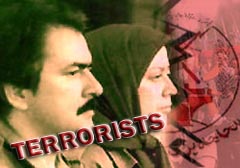
The MEK, which has worked hard – and spent a lot of money — to gain respectability in Washington since its armed units surrendered to U.S. forces in Iraq in 2003, is believed to have been responsible for the killing of six Americans in Iran between 1973 and 1976. Exiled following a power struggle in the early years of the Islamic Republic, the group fought alongside Saddam Hussein in the Iran-Iraq war. Following a lengthy lobbying and legal campaign that included the payment of substantial honoraria to prominent U.S. politicians and retired national-security officials, the MEK was removed from the State Department’s terrorism list in 2012.
The group, along with its numerous fronts in the U.S. and Europe, describes itself as Iran’s democratic government-in-exile but has little to no support within its homeland, according to independent Iran experts.
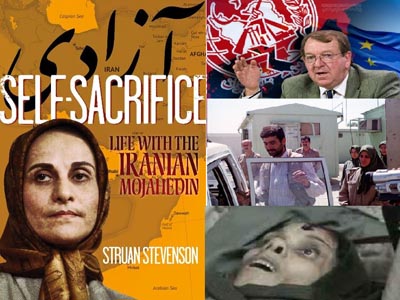
A 2005 report by Human Rights Watch detailed the group’s cult-like control over its members and a record of human rights violations designed to severely punish dissidents or would-be deserters.
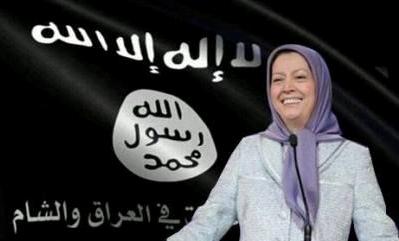
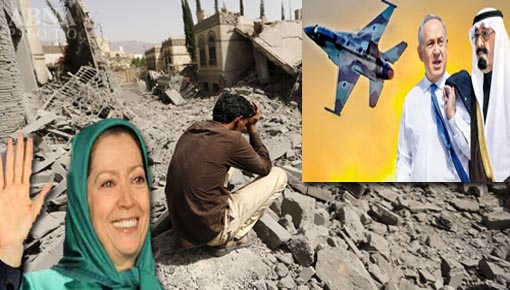
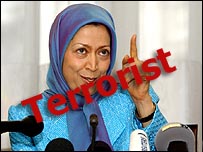
But Cotton and the MEK share a common agenda when it comes to the nuclear negotiations with Iran. In a controversial video appearance from her Paris headquarters before the House Foreign Affairs subcommittee on counterterrorism last week, the group’s co-leader, Maryam Rajavi, recommended that the best way to defeat the Islamic State in Syria and Iraq was to pursue regime change in Iran. And, in January, Cotton, a protégé of Bill Kristol of the Emergency Committee for Israel, told an audience at the Heritage Foundation:
Certain voices call for congressional restraint urging Congress not to act now, lest Iran walk away from the negotiating table, undermining the fabled yet always absent moderates in Iran. But the end of these negotiations isn’t an unintended consequence of congressional action. It is very much an intended consequence — a feature, not a bug.
Neither Cotton nor the MEK, in other words, thinks there should be any negotiations with the Iranian government.
It appears that Cotton, who has quickly displaced Lindsey Graham as the Senate’s most hawkish member, has decided that it is necessary – perhaps even politically desirable – to make common cause with a group that has committed serious human rights abuses, allied itself for some two decades with Saddam Hussein, and carried out terrorist acts, including against U.S. citizens and servicemen – all in the interests of sabotaging an Iran nuclear agreement.
As Rajavi herself might say, “Quel enfant terrible.
By Eli Clifton
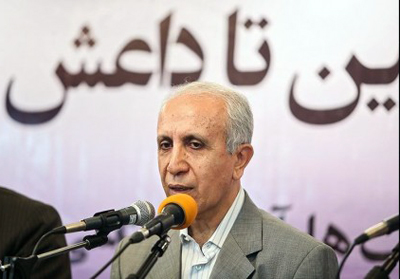
called leader is questionable getting support among some US congressmen for her presence in the congress is interesting and creates doubts in everybody’s mind.
Former US Ambassador to Syria Robert Ford joined former State Department counter-terror official Daniel Benjamin as a second witness that refused to testify at a House hearing because of the presence of the leader of the anti-Iran Mojahedin-e Khalq Organization (MKO also known as MEK, PMOI and NCRI) in the meeting.
invited the cult’s leader, Maryam Rajavi, to testify remotely as part of a panel on ISIS. That prompted one former State Department official to withdraw from the meeting entirely. Robert Ford, the former ambassador to Syria, has also said he won’t take part in a panel that includes Rajavi:
considered a dangerous cult by many, and until three years ago was labeled a terrorist organization by the U.S. government. But after years of concerted lobbying, it enjoys a surprising amount of support on Capitol Hill. And yesterday the MEK displayed its growing influence in U.S. foreign policy debates.
Take the People’s Mujahedin, or Mujahedin-i Khalq (MEK), an Iranian exile group that I’ve written about in the past. MEK used to reside on the State Department’s list of terrorist groups until 2012, when a massive PR campaign led by the most prominent collection of lobbyists that money could buy, bolstered by some strategic donations to the right politicians, convinced Hillary Clinton to remove them from the list. To be fair, the EU had already delisted MEK as a terror group in 2009, and Canada delisted them right after the US did, and obviously there’s no corruption in either Europe or Canada, so I’m sure this was all on the up and up. All MEK did to get listed as a terror group in the first place was little stuff like assassinating a half-dozen or so Americans and blowing up a few US-owned buildings in Iran in the 1970s, before the revolution. Totally innocent stuff, you know.

State of Iraq and Syria ( Islamic State of Iraq and Syria).