
MEK victims warn Lobby groups – "we will claim compensation from MEK beneficiaries"
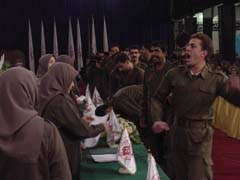
Critics of Iran’s human rights record are being warned by former MEK members in Europe not to  be fooled into giving support to a terrorist cult. The Iranian Mojahedin-e Khalq (MEK) wants to be removed from the U.S. FTO list and is using front organisations to lure paid speakers to a campaign rally in VillePinte, Paris on 23 June.
The warnings come after documents were made available to the U.S. Treasury linking an array of front organisation finances to companies and investments controlled by the Mojahedin-e Khalq’s leader. Top MEK members are also directing political support for the campaign through proxy parliamentary groups like Friends of a Free Iran.
Speakers’ agencies are being urged to exercise extreme caution regarding the MEK’s methods for recruiting support. In the U.S., former political and military heavyweights have already fallen foul of this tactic, where several are currently being investigated for aiding and abetting a terrorist entity. Those attending the rally must know they are engaged by organisations with direct links to the MEK.
With the MEK’s financial sources exposed it has become possible for victims to pursue a class action to claim compensation directly from the Rajavis.
Victims of the MEK, including former members who say their basic human rights were denied them for years, have launched a legal case for compensation from the companies which Massoud and Maryam Rajavi use to fund their elaborate and expensive propaganda campaigns. Anne Singleton speaking for the victims said, "Individuals who accept financial recompense from the MEK through its front organisations for speeches or lobbying should know that they can no longer claim ignorance and we will pursue them through the courts to recover money which should rightfully go to compensate the victims."
The MEK was removed from European terrorist lists on legal technicalities but concerns remain at official levels about the group’s propensity to use violence.
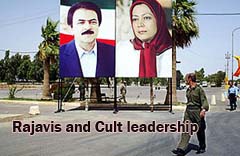
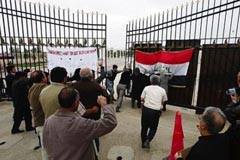
In spite of their public bravado, the MEK leaders are facing harsh setbacks. Massoud Rajavi’s stronghold in Iraq is being dismantled by UNAMI. His wife and co-leader Maryam Rajavi was in court last week in Paris to answer to charges of terrorism related activities, fraud and slavery. Other high ranking MEK members are being pursued for murder and terrorism offences relating to Iran, Iraq and France.
SOURCE Iran-Interlink
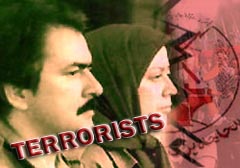 informed that people’s mujahedin organization intends on 23 of June ,2012 to organize a ceremony in the Villepinte Village in France. For informing the public opinion we draw your attention to the following subjects:

 raised to a higher level in the “land of double standards”. Naturally we should wait for the removal of other Foreign Terrorist Organizations from the list at the proper time!
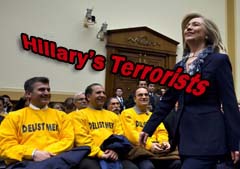
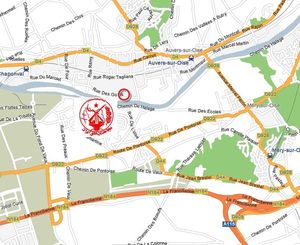
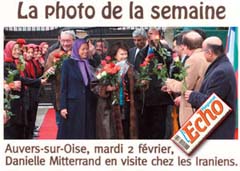
 a terrorist organization, French anti-terrorist police raided various MEK offices in and around Paris, including its garrison at Auvers-sur-Oise, arresting 160 members of the MEK and confiscating millions of euros. Nicolas Sarkozy, Interior Minister at the time, expressed concern that the MEK "wanted to make France its support base, notably after the intervention in Iraq," while Pierre de Bousquet de Florian, head of France’s domestic intelligence service, warned that the group was "transforming its Val d’Oise centre into an international terrorist base."

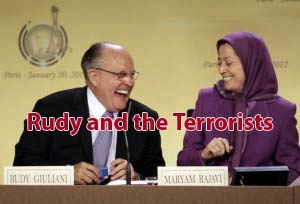



 high-powered lobbying firm that specializes in sanitizing the records of dictators seem to have paid off for Mujahideen-e-Khalq. The Obama administration is preparing to remove the Iranian exile group from the State Department’s official list of terrorist organizations, the Wall Street Journal reported Tuesday:

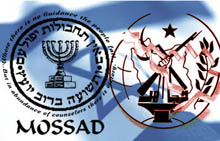
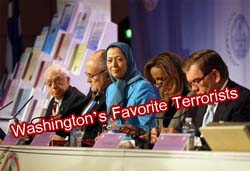 program. Media coverage on the region this week has also centered on the hanging of a member of the Israeli intelligence agency Mossad by Iran. Majid Jamali Fash, was executed for killing one of Iran’s nuclear scientists in 2010. While this news is in deed pertinent, another story from Iran has received less media attention and could have long-term implications for the State Department’s handling of terror groups moving forward.