
Jeremiah Goukla worked as a lawyer in the Bush Justice Department, and then went to work as an analyst with the RAND Corporation, where he was sent to Iraq to analyze, among other things,  the Iranian dissident group Mujahedin-e Khalq (MEK), publishing an oft-cited study on the group. MEK has been in the news of late because a high-powered bipartisan cast of former Washington officials have established close ties with the group and have been vocally advocating on its behalf, often in exchange for large payments, despite MEK’s having been formally designated by the U.S. Government as a Terrorist organization. That close association on the part of numerous Washington officials with a Terrorist organization has led to a formal federal investigation of those officials. Goukla has written and supplied to me two superb Op-Eds on the MEK controversy — one about the group itself and the other explaining why so many prominent Washington officials are openly providing material support to this designated Terror group — and I’m publishing the two Op-Eds below with his consent (as you read them, remember that paid MEK shill Howard Dean actually called on its leader to be recognized as President of Iran while paid MEK shill Rudy Giuliani has continuously hailed the group’s benevolence).
Before posting those Op-Eds, I want to note one update on this matter: supporters of MEK have filed a lawsuit asking a federal court to force the State Department to decide within 30 days whether to remove MEK from the list of designated Terrorist organizations (State Department officials have previously indicated they are considering doing so). In response, Secretary of State Hillary Clinton has told the court that (1) it has no role to play in directing the timing of this decision (“Any interference by a court with the Secretary’s ability to carry out these absolutely critical duties would set a seriously troubling precedent”); and (2) the U.S. Government is currently attempting to force MEK to move from its current base in Camp Ashraf to another location in Iraq (something MEK does not want to do), and whether MEK cooperates with the U.S. Government’s directives will play a large role in determining whether the group is removed from the Terrorist list.
With regard to that second argument: in determining whether MEK belongs on the Terrorist list, what conceivable difference should it make whether MEK is cooperative in moving from Camp Ashraf as the U.S. Government wants? What does their cooperation or lack thereof have to do with whether they are a Terrorist organization? The answer, of course, is that the U.S. list of Terrorist organizations (like its list of state sponsors of Terrorism) has little or nothing to do with who are and are not actually Terrorists; it is, instead, simply an instrument used to reward those who comply with U.S. dictates (you’re no longer a Terrorist) and to punish those who refuse (you are hereby deemed Terrorists). The scholarship of Remi Brulin documents how Terrorism, from its prominent introduction into world affairs, has been manipulated that way. Andrew Exum of the Center for a New American Security yesterday objected to my argument that the field of “Terrorism expertise” is basically fraudulent because the concept of “Terrorism” itself is largely propagandistic and ideological, rather than being some meaningful term with a fixed, coherent definition. His commenters have very effectively addressed his claims, but this game-playing with MEK is yet another example underscoring what I mean.
__________________________________
By Jeremiah Goukla
THE IRAN WAR HAWKS’ FAVORITE CULT GROUP
Despite the flurry of support by some prominent politicians as Secretary of State Hillary Clinton scrutinizes its case, the Mujahedin-e Khalq (MEK), a dissident Iranian group based in Iraq with a propaganda arm in Paris, is no enigma.
The U.S. declared the MEK a terrorist organization 13 years ago partly because the group is thought to have assassinated three U.S. Army officers and three U.S. civilian contractors in Tehran in the 1970s. The group’s pep rallies feature U.S. politicians lured with high fees to come speak on its behalf. The MEK wants the U.S. government to take the group off its terrorist list – as the E.U. and U.K. have already done. But before that happens the group requires close scrutiny.
I studied the MEK for the U.S. military and visited Camp Ashraf, the MEK facility 40 miles north of Baghdad. I also interviewed former MEK members. As Human Rights Watch also concluded, I saw that the MEK is a cult. It uses brainwashing, sleep deprivation, and forced labor to indoctrinate members. It segregates men from women, mandates celibacy, forces married members to divorce (except for its leaders), and separates families and friends who must seek permission just to converse.
MEK members must report their private sexual thoughts at group meetings and endure public shaming. In a Catch-22, those who deny having sexual thoughts are accused of hiding them and shamed, too. The cult has but one purpose: to put itself in charge in Iran.
A brief history lesson illuminates how the MEK transformed from a radical student group in 1965 to what it is today. When the MEK was founded it embraced both Marxism and Islam and dedicated itself to the violent overthrow of the Shah of Iran. All this is reflected in its name, the “People’s Holy Warriors.” By 1979 the MEK evolved into a major movement that threatened Ayatollah Khomeini’s dominance after the Iranian Revolution. He suppressed the group, executing some leaders and imprisoning others. In 1981 some MEK leaders escaped in a stolen plane. Among these was Masoud Rajavi. Exiled to Paris, he established the National Council of Resistance of Iran (NCRI), an umbrella organization of Iranian dissident groups opposed to Khomeini. The NCRI soon became the propaganda arm of the MEK. Rajavi’s wife, Maryam, runs the NCRI, which is also on the U.S. terror list. She calls herself “president-elect” of the NCRI’s “parliament-in-exile.”
When Saddam Hussein waged war against Iran, Rajavi moved the MEK from Paris to Iraq. His alliance with Saddam in a brutally violent war cost the MEK credibility and its font of recruits. Isolated in Iraq’s desert, Rajavi instituted authoritarian control over his decimated army and confiscated his troops’ assets. He encouraged Saddam to send Iranian POWs to MEK’s Camp Ashraf rather than repatriate them. With promises of asylum for POWs and family reunions with the new MEK members, Rajavi duped Iranian visitors to come to the camp and stole their passports so they couldn’t leave.
Human Rights Watch reports that those who tried to escape endured confinement or torture. After the U.S. invaded Iraq, the MEK ejected its most “difficult” members and used guards and concertina wire to entrap the rest. Members must swear allegiance to Masoud and Maryam, whose pictures are in every building at Camp Ashraf. But these days Maryam’s is the public face of the NCRI. Masoud Rajavi mysteriously disappeared in 2003.
Maryam trumpets the dangers of Iran’s nuclear program and gives the NCRI credit for discovering Iran’s Natanz nuclear facility. That self-serving claim is doubtful, as is the NCRI’s posture as a democratic government-in-waiting. While its propaganda arm espouses Western values to Western audiences, the MEK continues to force-feed its doctrine to members who may not criticize the Rajavis and are not free to leave the Ashraf compound.
While many people would like to see a change of regime in Tehran, no one should believe that the MEK would provide Iran with a government based on liberty and justice for all. Indeed, based upon its treatment of its own adherents in Iraq, a MEK regime might not be much improvement over the current one.
________________
By Jeremiah Goukla
INVESTIGATIONS BEGIN INTO MEK SUPPORTERS
The U.S. Treasury Department has begun an investigation into nearly two dozen prominent former government officials who have been paid tens of thousands of dollars to promote the Mujahedin-e Khalq (MEK), an Iranian dissident cult group that has been designated by the State Department as a Foreign Terrorist Organization (FTO) since 1997.
These officials include several prominent George W. Bush Administration anti-terror officials like Homeland Security secretary Tom Ridge, Homeland Security advisor Frances Fragos Townsend, Attorney General Michael Mukasey, UN ambassador John Bolton; as well as former Republican Mayor of New York, Rudolph Giuliani; former Democratic governors Ed Rendell of Pennsylvania and Howard Dean of Vermont; ex-FBI Director Louis Freeh; and retired chairman of the Joint Chiefs of Staff Gen. Hugh Shelton. These former officials have given speeches at home and abroad urging the State Department to remove the MEK from the FTO list.
Given the cacophony of saber-rattling over Iran’s alleged nuclear weapons program – which the U.S. intelligence community generally believes was shut down in 2003 – and the risk, however low, of actually getting prosecuted for “material support of terrorism,” it is important to examine why anyone would promote a designated terrorist organization.
What is the MEK?
The MEK – which is also known as the People’s Mujahedin of Iran (PMOI) and often operates through its Paris-based propaganda arm, the National Council of Resistance of Iran (NCRI) – is an Iranian dissident group that once-upon-a-time was a significant force in Iranian politics. Created to oppose the Shah in 1965, the MEK lost out to Ayatollah Khomeini after the Iranian Revolution, and the mullahs have been the MEK’s target ever since. The regime brutally suppressed the group, forcing it to go underground and its leaders into exile. Most MEK members are now based in Iraq, where they have lived since joining forces with Saddam Hussein in 1986 during the Iran-Iraq War. (For more history of the MEK, see the appendices here.)
Collaborating with Saddam was the MEK’s greatest mistake. Saddam started that war, which was a catastrophe for Iran, but he didn’t win and didn’t install the MEK as the new government. In the process, the MEK killed Iranian soldiers and thereby killed off whatever credibility it once had.
The MEK claims to be the best organized and the most prominent opposition group in Iran. No credible sources that I have seen suggest that it has any relevance in Iran at all, other than to get the mullahs riled up. It is, however, very well organized, because, cut off from new volunteers, the MEK’s co-leaders Masoud Rajavi (whereabouts unknown) and his wife Maryam Rajavi turned the MEK into a cult of personality.
The MEK vigorously denies that it is a cult, accusing critics of working for the Iranian regime or performing inadequate research (using the tactics of climate change, evolution, and tobacco denialists). However, I studied the MEK in depth and over a period of many months for the U.S. military. I visited Camp Ashraf, the MEK facility 40 miles north of Baghdad, and interviewed MEK members, former MEK members, and dozens of military and civilian officials. Along with almost all of my interviewees and Human Rights Watch, I concluded that the MEK is a cult. It employs many common cult practices: mandated celibacy and divorce, thought control, sleep deprivation, and forced labor. It segregates men from women, separates families and friends – who must seek permission just to converse – and even tells family members back home that the members are dead.
Why Would Any American Politicians Support the MEK?
Getting off the FTO list is a stepping-stone to the MEK’s main goal: getting America to install it as the new government of Iran. Why would American politicians want that? There are two main reasons, neither of them good.
The first is ignorance. The MEK presents itself well and is good at running “Astroturf” campaigns. Its NCRI is a self-proclaimed “parliament in exile,” dedicated to the principles of western liberal democracy. Over the years, lots of American civilian and military officials have failed to do their homework and fallen for the MEK’s sales spiel, excited as they were to hear what they wanted to hear. (If something sounds too good to be true…)
Does this remind you of Ahmed Chalabi and the Iraqi National Congress? It should. As Ali Gharib has shown, the same people who helped Chalabi push us into Iraq are now orchestrating public events where former officials promote the MEK.
The second reason is money. The officials were paid to speak on the MEK’s behalf, up to $30,000 per speech. Not bad for a few minutes work.
But this is just the beginning. What the media has generally failed to mention is that these former officials are now in the national/homeland security business. Just take a quick look around Wikipedia, Forbes, and OpenSecrets.org, and here is what you will find:
Tom Ridge has his own security consultancy (Ridge Global, LLC) and lobbying firm (Ridge Policy Group). He chairs the U.S. Chamber of Commerce’s national security task force and sits on the boards of at least one military contractor (TechRadium, Inc.) and one company (Geospatial Corporation) that serves the oil and gas industry.
Francis Fragos Townsend chairs an industry association for intelligence contractors (the Intelligence and National Security Alliance) and is the head of lobbying for a holding company (MacAndrews & Forbes Holdings Inc.) that owns the military contractor AM General.
Rudolph Giuliani has a security consulting firm (Giuliani Partners) and is a partner in a law firm with prominent oil and gas and lobbying practices (Bracewell & Giuliani). He used to own a private equity fund that teamed up with Bear Stearns to invest in security companies.
Louis Freeh has a security and investigations consulting firm (Freeh Group International Solutions, LLC) and a law firm (Freeh Sporkin & Sullivan, LLP), where he represents, among other clients, a Saudi prince in a bribery investigation involving an arms deal.
Hugh Shelton has served on the boards of directors of several military contractors, such as L-3 Communications, CACI International, Inc., and Protective Products of America, Inc.
Bolton, Mukasey, Rendell, and Dean are affiliated with major law firms whose clients include not just standard military contractors but many other more mundane corporations, as expert Nick Turse has shown, also benefit from military largesse. (Bolton is also affiliated with several pro-war think tanks.)
For people in the national/homeland security business, war with Iran would be a cash cow. They and their clients stand to benefit handsomely. Just stoking fears of war can get money flowing, from studies to retrofitting naval vessels. Bombing would be better, as even something as small as the Libyan war involved spending more than a billion dollars. But full-on war, that’s the mother lode. An invasion followed by an Iraq-style lingering occupation and reconstruction would open up hundreds of billions and possibly even trillions of taxpayer dollars for the grabbing.
Hopefully these Treasury Department investigations are a sign that the Obama Administration has finally decided to rein in the warmongers. Ignorance, profit, and the dreams of a terrorist-cult group are lousy reasons to start a war.
By Glenn Greenwald,
 "Members of Congress will join Iranian Americans in wishing the Iranian people a Happy Nowrouz and address the humanitarian rights of Iran’s main opposition in Camp Ashraf and Camp Liberty, in Iraq," reads the flyer for the party, which was held Thursday at the Rayburn building in room 2172, where the foreign affairs committee holds all of its public events.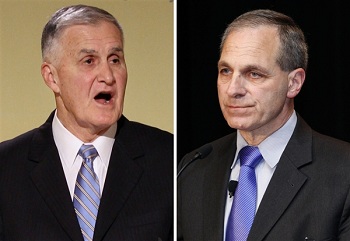
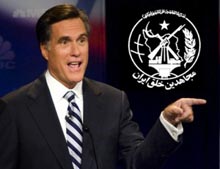 But his ignorance about what has become a lightening rod issue among the foreign policy community raises questions about their work.
 organization).
  investigation into the source of payments to former top government officials who have publicly advocated removing an Iranian dissident group from the State Department list of terrorist groups, three sources familiar with the investigation told NBC News.
 Iran, or MEK, thereby violating longstanding federal law barring financial dealings with terrorist groups. The sources, all of whom spoke on condition of anonymity, said that speaking fees given to the former officials total hundreds of thousands of dollars.
 terrorism to nuclear programs, the myriad challenges have rarely provided any easy answers. One of the few clear issues pertaining to America’s Iran policy has been its designation of the Mujahedin-e Khalq (MEK) as a terrorist organization.
  33rd Anniversary of the Iranian Revolution at The Waldorf-Astoria on February 11, 2012.
 outstation. The US Treasury Department appears to have begun an inquiry to see whether the speaking fees paid by Mojahedin Khalq Organization MKO to its American advocates who have spoken on its behalf are illegal. In an earlier report by The Washington Times, Edward G. Rendell, the former Democratic governor of Pennsylvania and an outspoken supporter of MKO, has been subpoenaed by the Treasury Department. He is asked to turn over information on his relationship with the designated terrorist group. Of course, Mr. Rendell is only one among the long list of former officials, including former directors of the Central Intelligence Agency and the Federal Bureau of Investigation, and many more, who have accepted fees to speak on behalf of MKO in Paris and Geneva as well as appearing in online videos and participating in arranged rallies. Mr. Rendell asserts that he has been paid between $150,000 to $160,000 for seven or eight speeches in support of MKO and calling for its removal from the terrorist list.