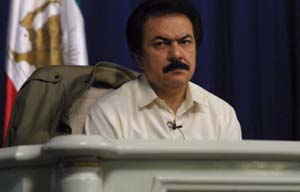
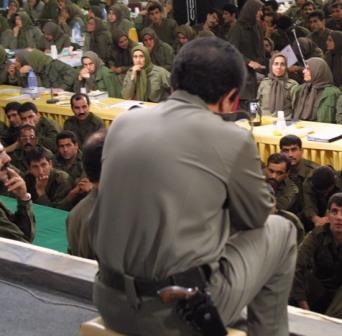
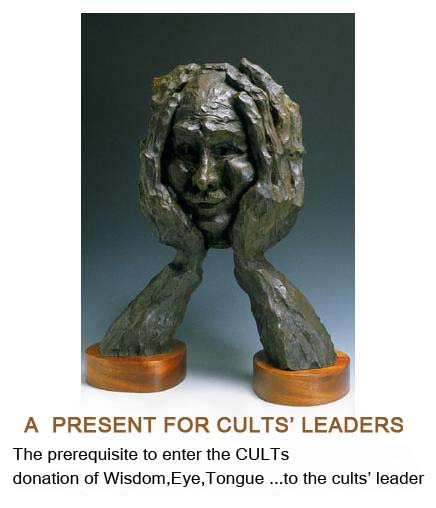
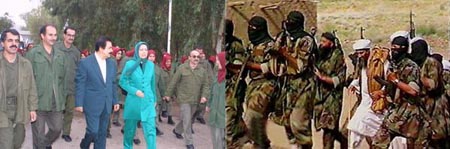
We are only half way through January and the EU terrorism list (from which the Mojahedin Khalq Organisation has been removed) has still not been announced but the MKO (aka the Rajavi cult, MEK, NCRI, NLA) has been unable to refrain from showing its true nature.
Iraq’s National Security Advisor has reported the arrest of an MKO member who is currently in custody after surrendering himself to an Iraqi security unit. The man, who is a resident of Camp Ashraf, was about to perform a suicide mission, but could not go through with it. According to a statement from the office of the National Security Advisor, the MKO member has claimed the MKO use severe torture and brainwashing on its members. He claims that: “I was sent with a clear and precise plan to perform a suicide mission in this Iraqi base”.
http://iran-interlink.org/?mod=view&id=5720
This news will come as no surprise to those who know the MKO. Looking at Massoud Rajavi’s track record over thirty years, nothing more or less than this could be expected. While he was able to send over 2,000 civilians their deaths back in 1988 in the failed Eternal Light operation, he has since then sent numerous smaller groups to perform suicidal terrorist attacks in Iran with the added instruction that if captured the person should use their cyanide pill to kill themselves. More recently, MKO were instructed to set fire to themselves to protest the arrest of Maryam Rajavi on terrorism charges in Paris. Two died and several others sustained serious injury with their permanent disfigurement and disability a direct result of Rajavi’s order.
Massoud Rajavi who owns the MKO also owns the blood of the members and will spill it whenever he needs to. In this case to rescue himself from the mess he has made in Iraq. The MKO members are his capital which buys him power. They are expandable assets which have been used and reused shamelessly by western agencies who have found this a useful and cheap resource in their ‘regime change’ armoury. It is clear that the neoconservatives and Zionists are using the MKO against the Iraqis, and are helping them by facilitating the impunity enjoyed by MKO leaders at the cult’s headquarters in Europe.
This latest fiasco in the Rajavi saga is surely the result of negligence and apathy of the European Union toward the MKO which apparently couldn’t summon the energy or interest to properly investigate the MKO and deal with it accordingly. A feat which has been assiduously performed by successive US Governments since 1994 and which has resulted in the MKO retaining its terrorism designation to date with the added information that the group is a cult. However, the Bush Administration has also proved itself to be overly greedy in wanting to have their cake and eat it. The US army has ‘protected’ this ‘terrorist’ outfit for five and a half years in Iraq in spite of repeated demands by the Iraqis for removal of this known FTO, which collaborated with the former regime, from Iraqi territory.
It is surely time for the international community as represented by the UNHCR and UNCHR to to help the Iraqis ensure that all the individuals held captive in Camp Ashraf are accorded their basic human rights. Rajavi’s victims must be given the opportunity to renounce violence and to leave Camp Ashraf for third countries or to accept voluntary repatriation to Iran. Any delay in dismantling this notorious cult is to condemn the inhabitants to enforced membership of an illegal paramilitary terrorist group.
Rajavis and Cult Leadership
Throughout history, there have always been numerous cults of personality which are often found in dictatorships. As we have studied the stories of the pharaohs of ancient Egypt or Roman Empire, etc. the kings had a divine right and they were sometimes considered or in better words worshiped as god-kings.

Also, in our time, personality cults are common in the monarchist, totalitarian systems with revolutionary opinions such as Joseph Stalin, Adolf Hitler and Pol Pot of Cambodia who all slaughtered a lot of innocent civilians during their ruling period.
The leader of the cult of personality usually seeks to minimize the public power and influence. The members of this type of system gradually loose their power of thinking, choosing and acting instead they submit to the absolute obedience to the person on the head.
In Mujahedin-Khalq Organization (the cult of Rajavi) as well as many other destructive cults, the leaders Masud Rajavi and his third wife Maryam Rajavi have turned the group – which was only a guerrilla force against Iranian regime – into a cult of personality where the members are manipulated to worship their leader as the messenger of God who gets his instruction directly from God. These members who are the victims of a destructive cult are so seriously brainwashed who are always ready to scarify themselves for the leaders by committing self-immolations and suicide terrorist operations. The examples of those operations are simply found in the history of MKO personality cult.
The heroic image that MKO shows to the members to provoke their praise and admiration have turned the group from an armed guerrilla opposition into a terrorist destructive cult which is much more dangerous. When a fighter of an armed guerrilla struggles for his cause he is likely to suffer some physical difficulties but when you are a captive of a cult of personality you are always under mental and physical torture and likely to become an anti-social person who might violate social norms without any sense of guilt or regret.
Cult leaders grab at all means and levers to stabilize their position within cults in a manner of unaccountability to members; a feature leading finally to fascism and individual leadership. Religion and religious beliefs of followers are factors at the hands of cult leaders to be excused of accountability. In fact, they legitimize all their wrongdoings and egocentric decisions based on religious tenets and ideological concerns in a way not to be challenged by outsiders as well as insiders.
Identification of the same features in MKO and on the part of Masoud Rajavi necessitates taking a closer look at his activities and statements. Keeping this issue into mind may give us a better understanding of the reasons why Rajavi introduced his ideological revolution as a manifestation of an exalted truth and unique value in terms of ideological and political concerns. He did so to conceal the apparent contradiction between the fulfillment of ideological objectives of Mojahedin as reflected in the early organizational principles of MKO and the consequences of his self-fabricated ideological revolution.
Of the consequences of the ideological revolution elaborated on by Rajavi as well as his catalysts is introducing Mojahedin leadership as a phenomenon beyond challenge and criticism, a timeless issue and one that is no longer selective and democratic. The result of this consideration is a wide gap made between the status of the leadership and that of the rank-and-files as well as minimization of organizational hierarchy.
Rajavi and his theoreticians made use of religious levers as well as scientific theories like Einstein’s theory of relativity to justify his self-appointed position at the top of MKO. Rajavi was much eager to follow footsteps of Hitler and Stalin in making use of religion, science and ideology to stabilize a status of unaccountability. He held grab to his ideological revolution, based simply on a divorce (that of Maryam Azdanlu and Mehdi Abrishamchi) and remarriage (that of Maryam Azdanlu and Masoud Rajavi), in order to achieve his egocentric objectives. The reaction of the outside world and a leftist party in particular to this action may suffice to show the feedback of the world outside to this dishonorable event:

The news on the marriage of Masoud Rajavi and Maryam Azdanlu, ex-wife of Mehdi Abrishamchi, in recent weeks has aroused the complaint and aversion of revolutionary forces and public opinion. This action that is contrary to revolutionary morale and convention of the socity…surely leads to public complaint and hate… since this indecent and immoral activity is justified in a 14-page statement signed by the organization’s
leader who has a long history of revolutionary struggle and claims to lead Iranian revolution against the current oppressive regime. The significance of this issue has its roots in the fact that while the act is a scandal offending woman and distorting the meaning of leadership, it is introduced as an ideological revolution aiming to esteem the status of women. 1
Despite all the negative consequences of the ideological revolution, it led to the irresistibility of Rajavi to inside challenges. The factor of surprise caused by the initiation of the ideological revolution under the issue of Rajavi had paradoxical results inside and outside MKO. While the world outside refused to recognize the legitimacy of Rajavi’s initiated ideological revolution, he managed to turn it into a belief system within MKO just as a cult leader. As Hoffer put into words:
It is the certitude of his (a cult leader) infallible doctrine that renders the true believer impervious to the uncertainties, surprises and the unpleasant realities of the world around him. 2
Cult leaders claim that understanding cultic codes and doctrines is problematic and difficult and it is just the true believer who manages to understand them. Cult leaders have the ability to deceive members by making false illustrations and predictions of the world from the beginning to the end to the point that turn followers to blind subordinates who consider it as a guilt if they demand accountability on the part of their leader who claims self-sacrificing for his followers’ salvation. When this belief is indoctrinated in members, they turn to devoted followers with absolute confidence in their leader and it may suffice to immune leaders of being challenged from inside. Hoffer believes that:
To be in possession of an absolute truth is to have a net of familiarity spread over the whole of eternity. There are no surprises and no unknowns. All questions have already been answered, all decisions made, all eventualities foreseen. The true believer is without wonder and hesitation. "Who knows Jesus knows the reason of all things." The true doctrine is a master key to all the world’s problems. With it the world can be taken apart and put together. 3
In a nutshell, the attempts made by the theoreticians of the ideological revolution of Mojahedin mainly aim to raise the status of Rajavi to a point beyond all challenges, questions, and doubts and free from accountability and responsibility to his decision makings and activities.
References:
1. The theoretical and political journal of the organization of Fada’yian-e Khalq, 1985.
2. Hoffer, Eric, the true believer, Harper & Row Publishers, New York, 1951, p.76.
3. ibid, p.77.
Commonly, everyone who stands in front of a camera is willing to express a cheerful mood and adopts a positive posture to take a photo of good quality. However, this norm has some exceptions. For instance, there are cases in which individuals try intentionally to present a depressed, annoyed, disappointed, and unpleasant mood in front of a camera. From a psychological point of view, these individuals suffer from some complexes and a sense of despair to the point that bear not to be seen pleased even for a moment. A photo taken of Maryam Azdanlu, MKO’s second leader now in the absence of her husband, when visiting the Holocaust memorial in Berlin, is the subject of this paper. It can be considered her worst photo appearing up to now in websites among her countless photos put in allied as well as rival websites. In fact, putting this photo beside others may leave everyone with an uneasy feeling.

Here, we intend to grasp the implied meaning of this photo. Her mood is not to be attributed to her sympathy arousing from visiting Jews shambles since her past history shows that even in most terrible and intolerable situations, Maryam Azdanlu has managed to control herself, conceal her real feelings, thus standing with her Giaconda-like smile in front of camera lenses. There remains the idea that this has been a hunted photo in which the photographer caught a moment she was representing her unmasked and with no celebrity posture for reporters. The photo is taken when she is no one but Maryam Rajavi with her own personality, feelings, and emotions free from any pretension and stilted gesture.
In fact, this photo may be considered the most exact presentation of Maryam Azdanlu untainted of any razzle-dazzle in a vestibule of informal status and position. It is for the first time she is seen using no make-up, with wrinkles on her forehead, hollow cheeks and eyes, wrinkled skin, etc. Let us finish these descriptions lest annoying her womanish and tender feelings.
This photo is better to be equated with the moments when Maryam is engaged in a never ceasing struggle with herself within her Auvers-sur-Oise camp behind the high walls of Mojahedin fortress in the heart of Europe. It represents the times when she is heavily engaged in internal conflicts with herself to reconcile her numerous inner selves that are irreconcilable with her womanish nature and have long been tormenting her soul. First, her aristocratic self rooted in Qajar dynasty and her class conflict resulting from being engaged in cultist relations. Second, a cultist self rooted in the ideological revolution of Masoud Rajavi. Third, a wretched self rooted in all her political failures and despairs. Fourth, an organizational self rooted in lengthy ideological sessions of Mojahedin, lack of sleep, weekly cleansing sessions, and Jari operations. Finally, her womanish self rooted in her loss of family, husband, and child as well as being accused of infidelity.
In a nutshell, Maryam is to be considered the most miserable woman in MKO due to her internal conflicts and tensions. Also, she is one of the most piteous women of the world since she has met a destiny similar to that of other ill-famed women in the history who played a key role in the historical events and crises and has been exposed to paradoxical judgment on the part of the history. It is only God who knows her suffering in her formal visits of Auvers-sur-Oise families and the time when she hugs and kisses their children yearning to have a real family and life free from any playacting. She is well aware that she is not a leader but a big loser loosing her youth, family, country, fortune and freedom. It is only Maryam who can feel the bitter taste of her out-and-out defeat.
Of the common characteristics of cult leaders referred to in most academic resources is a lack of accountability for their activities and decision-makings. This practice is in full contrast to the norms of leadership in democratic and free societies in which leaders’ decisions and activities have to be parallel to the social major interests and demands of the public. However, leaders in cults not only consider themselves too superior to be reprimanded for what they do but also regard themselves as heavenly gifts bestowed to earthly followers; super-humans beyond restrictions of ordinary people and free from any error. Their self-appointed position necessitates that cult leaders assume responsibility only to a higher position like that of a god or ideology. These features are easily traceable within the notorious cultist relations of MKO, already blacklisted as a terrorist political cult.
Where this approach is rooted and on what basis it is founded constitutes one of the most basic discussions of the field of cult studies. However, it has to be pointed out that its scope depends on the specific content and orientation of each cult and despite the existing subtle differences, it is exercised commonly within all cults. Also, it has to be noted that unaccountability is more outstanding in political cults due to their external manifestations and broad objectives compared to other cults. A factor distinguishing MKO from other parallel political groups is that its leadership is not only unaccountable to the insiders but also prevents other opposition groups to assume responsibility of their doings by means of many factors like accusation, labeling, perversion, threat, subornation and other levers and sometimes even resorts to improper language to beat them off in the course of political struggle and eliminate all rivals. Therefore, the study of this aspect of cultic relations is of a wider dimension in MKO.
Here, there is an attempt to review these aspects in cults in general and in social relations of MKO in particular. First, the fundamentals and foundations of cults are taken into consideration. Stated in the Advanced Bonewits’ Cult Danger Evaluation Frame, Bonewits, classifies unaccountability of cult leaders as one of the cults’ 16 factors:
Charismatic and self-appointed leader who claims divinity or special knowledge and demands his followers unquestioning and total loyalty and obedience. 1
And, according to Ian Haworth of the Cult Information Centre:
All cults share the same characteristics. The definition of any cult is that it indoctrinates its members; forms a closed, totalitarian society; has a self-appointed, Messianic and charismatic leader. 2
This is the very prominent feature of Mojahedin leadership particularly after the development of the ideological revolution that aimed at the legitimization of the idea that the ideological leadership of Rajavi would be no longer accountable to anybody. In addition, it was assumed that faultfinding with Rajavi would be a great and unforgivable sin. The study of the background and reasons of the occurrence of this feature in cult relations from a historical and theoretical point of view may give us a better understanding of the issue.
The factor of unaccountability has an obvious manifestation in all political cults and leftist parties in particular and even has influenced the right groups of fascist orientations. In the contemporary history, and especially in the reign of Stalin in USSR Communist Party as well as that of Hitler in the world of capitalism, there appeared more cases of this orientation. It has to be noted that this feature is found almost in all totalitarian and dictator leaders but it is unlikely to imply that all political leaders are cultic. In fact, this factor along with other features may confirm the cultic nature of a group.
Despite the liberal and modern gestures of some contemporary leaders like Stalin and Hitler, they were of a full totalitarian and dictator nature. Stalin made use of ideological basics of Marxism-Leninism to stabilize his god-like position at the top of the Communist Party and Hitler used the factors of ideology, science and religion to exercise his authority on Nazis. As Stalin used his self-fabricated interpretations of historical and philosophical materialism as the basis of his unaccountable leadership, Hitler grabbed at scientific theories like that of Darwin to impose his leadership on Nazis. Therefore, these leaders paved the way for constituting categorized cults of personality relying on their unaccountable status free from any challenge and question.
The main lever of these leaders for stabilizing their unaccountable position in an egocentric manner is religious taboos and deceiving members by claiming to be connected with the unseen world. However, every cult has its own unique approach in furthering the personal interests of its leader.
References:
1. www.la.info.org/library/programming/bonewits.shtml
2. Singleton, A., Saddam’s private army, Iran-Interlink, 2003, p.xvii.
Basically, the robots are built to help human being live an easier, more comfortable life aiding him to reach his goals. Man can get closer to his ambitions or ideals by using the robots.
The leaders of MKO, as well as the leaders of the other destructive cults have chosen a simpler solution to their problems. They try to make robots out of the human beings who are under their rule in order to get their ambitions.
Now, after three decades of the existence of Camp Ashraf in Diala Province, Iraq and Camp Maryam in Auvers-sur-Oise France, the two bases have turned into the cities of robots:
In the city of robots everyday is like the other day. Any event, revolution and change happen around the world, no change happens in robots’ schedule. The ability of making a decision, choosing and changing is a gift that the robots miss. Indeed change is something necessary that makes the life more interesting and makes the hope blossom in the heart of people.
For the human-like robots of camp Ashraf and even Camp Maryam, in the heart of modern Europe, everyday is the same as yesterday. They get up at a certain time early in the morning; they eat at a certain time, in a certain place. They do the same thing everyday for example watering a garden or cleaning a tank…. They go to bed at certain time every night. While they are asleep, they should care about their dreams and nightmares because they shouldn’t be against the organization’s ideology. If so, the member has to write the contradictions and submit to his or her official and accept the consequences.
They should attend the manipulation meetings everyday to reveal their internal thoughts so as nothing of their thought remain hidden to their leaders. Therefore in the city of robots no one has individuality. Everybody belongs to the leader and has to devote his entire life to him.
But the robots of MKO are not equipped with remote control because they sometimes remember their owns and their belongings like the mothers including Batoul Soltani who had kept her children’s photos for years and watched them in the bathroom under heavy fear and anxiety, to keep the least hope in her heart.
But the leaders of MKO go further to kill the hope and will. They force the women in the cult to have hysterectomy surgery because the robots do not substantially have the power of reproduction or giving birth to the other people. This is the way the destructive cult of Rajavi uses along with its process of building robots.
In describing the characteristics of cult leaders, their anomalous skills and potentiality to enslave recruits, it is commonly referred to as complimentary factors closely related to their charisma. Cult leaders make use of their charisma as well as other psychological and thought-reform techniques in order to control their followers. However, these levers and techniques are to be parallel to the belief system of their followers and is of utmost effect. In fact, cult leaders hold grab to members’ background and misuse through weird means to deprive members of their systems of values and beliefs and to replace them with heretical ones. However, it is not clear whether they believe in their magic power or just use it for deceiving members. According to a researcher working on cults:
Harder to evaluate, of course, is whether these leaders’ belief in their magical powers, omnipotence, and connection to God (or whatever higher power or belief system they are espousing) is delusional or simply part of the con. Megalomania–the belief that one is able or entitled to rule the world–is equally hard to evaluate without psychological testing of the individual, although numerous cult leaders state quite readily that their goal is to rule the world. In any case, beneath the surface gloss of intelligence, charm, and professed humility seethes an inner world of rage, depression, and fear. 1
Although this evaluation seems to be paradoxical, but well illustrates the complex personality of cult leaders. They pretend to act as a savior and a social reformist, while are well aware of the egocentric motives behind their actions and behaviors. According to Weber, an expert on cults, cult leaders in general and political cult leaders in particular, aim to propagate a new religion. He believes that they spread anarchy in the world and exhibit highly destructive behaviors. There are also other features distinguishing political cult leaders from other parallel cases:
Charismatic leader is "a sorcerer with an innovative aura and a personal magnetic gift, [who] promoted a specific doctrine…. [and was] concerned with himself rather than involved with others….[He] held an exceptional type of power: it set aside the usages of normal political life and assumed instead those of demagoguery, dictatorship, or revolution, [which induced] men’s whole-hearted devotion to the charismatic individual through a blind and fanatical trust and an unrestrained and uncritical faith. 2
In the morphology of the leadership of MKO as a political cult, almost all above features are found. The following classification of cult leaders’ characteristics may give us a better understanding of the issue.
1. Believing pretentiously in God,
2. Showing narcissism and megalomania,
3. Aiming to rule the world and develop a global revolution,
4. Fostering innovation and fabricating false religious interpretations,
5. Adopting unusual and unique procedures and approaches,
6. Trying to convince and control individuals,
7. Leading to destruction and anarchy using all possible means,
8. Seeking personal interests.
All these features can be traced in Masoud Rajavi, the leader of MKO, a notorious cult blacklisted in the terrorist list. It has to be noted that he got a number of these features after the development of the ideological revolution of Mojahedin in MKO. However, it is not our intent here to identify the above factors and their instances in Rajavi. Although it is difficult to make a generalization on whether all cult leaders believe in their own magic power and connection to God or not but there can be a clear-cut judgment on Masoud Rajavi in this regard. Taking a closer look at his past history clarifies his inconsistent personality and traits and his grabbing at cultic relations in order to conceal his problematic personality.

Rajavi’s paradoxical personality is apparent where he makes an attempt to stabilize his position by all means either by resorting to the religion or by opposing it. In other words, Rajavi is not even an out-and-out cult leader yet has grabbed at cultic relations and techniques in order to achieve his personal and totalitarian ambitions. Having some features of cult leaders like megalomania and narcissism as well as borrowing cultic thought-reform techniques facilitated his furthering of personal interests. Therefore, he has a more complex personality compared to other cult leaders. His charisma is not an inherent feature but is an instrument intentionally used to subordinate members. In fact, it is a combination of charisma and psychopathy that is common in most cult leaders:
In the case of cults, of course, we know that this induction of whole hearted devotion does not happen spontaneously but is the result of the cult leader’s skillful use of thought-reform techniques. Charisma on its own is not evil and does not necessarily breed a cult leader. Charisma is, however, a powerful and awesome attribute found in many cult leaders who use it in ways that are both self-serving and destructive to others. The combination of charisma and psychopathy is a lethal mixture. 3
It seems that the complexity of Rajavi’s personality cannot be understood without taking general cult leaders’ characteristics into consideration.
References:
1. Madeline, Tobias and Jania Lalich; Captive hearts, Captive minds, Halter House, 1994
2. ibid
3. ibid
Rajavi and his catalysts have misused the history of the organization and its founders in order to justify members that early founders of MKO, and Mohammad Hanifnejad in particular, have appointed Rajavi as the next leader of the organization. In this regard, a number of Rajavi’s fellows have fabricated some statements and have attributed them to Hanifnejad in order to legitimize the ideological leadership of Rajavi. Following the previous articles on the statements made by Lotfollah Meisami and others, here we take a look at those made by Mehdi Abrishamchi and one of the MKO former members. Abrishamchi summarizes all we mean by his manipulation of the history of the organization in one sentence, sacrificing all the alive and dead of the organization to Rajavi and says:
When Masoud speaks, it seems as if he speaks as the representative of all the alive and dead of the organization. 1
He further shows the spirit of Hanifnejad full of praise for Rajavi and makes an attempt to raise the status of Masoud, stating:
Evidently, no one but Masoud is aware of his own status, and hardly anybody can grasp that Masoud has arrived at the high summits of our ideals and has developed our revolution, ideas, and organization to a point that would for sure elevate the soul of Hanifnejad to appreciate. 2
Although the organizational principles of MKO are opposed to centering on just one individual, he introduces Rajavi as the history of the organization and says:
Our greetings and songs, cries and slogans, love and affection, will and determination, poems and stories, all aim to imply the fact that if Mojahedin have reached the present position and have developed their revolution up to this point, serving the humanity and achieving many honors, they owe all these to the ideological leadership of Masoud. Also, we owe our recent ideological revolution to Masoud and Maryam. 3
Manipulating the history of the organization and its victims in Rajavi’s favor is so disgraceful and repulsive that Anne Singleton, an MKO former member, refers to Rajavi as misusing the members’ ignorance, writing:
Rajavi is very good at spending from other people’s pockets, especially in using the deaths of his followers. 4
She further expounds on the fact that Rajavi consents to subordinate all the historical achievements of the organization obtained as a result of so much blood shed for achieving his personal ambitions:
Rajavi clearly wanted power and was prepared to subordinate the whole organisation and all its members into a means for him to achieve this. 5
Interestingly, Rajavi and his fellows claim that he is inheritor of all the ideological principles and the history of the organization. However, the fact is that the ideological principles of the organization have been manipulated, distorted, held in archive and even eliminated under the command of Rajavi and in his favor whenever necessary:
It is worth mentioning Rajavi’s other motive for removing and then burning all of the books from the camp libraries and safe houses abroad, (libraries which incidentally only had approved books in them anyway), and that is that these books and documents were in contradiction to having an ideological leader. Even his own speeches in Tehran University in the political phase before 30th Khordad were destroyed. These speeches had been published and avidly read at the time. Their essence was taken from Marx and Mao and was to compare the evolution of species with the evolution of society and, of course, Islamicise it. Another reason was that these books and documents were very much in contradiction with capitalism and harmful to Rajavi’s new approach to his new Western masters. Until now, the whole ideology and activities of the Mojahedin, including the killing of Americans, all their songs etc, had been built on Maoism and the fight against the West and imperialism. 6
She further elaborates on perverting the ideology of the organization by Rajavi for instrumentalizing the ideology:
Rajavi perverted the ideology of the Mojahedin from its original conception to something, which allowed him total control of all aspects of the organisation including the personal lives of the members. Alongside this internal change, the organisation also lost its direction in the political scene. 7
It has to be pointed out that the history of the organization, its founders and its ideological principles, are of no significance for Rajavi. Their value depends on the extent to which Rajavi can abuse them for the achievement of his ambitions and stabilization of his cultic leadership in the organization. He has attempted to fabricate some memories and accounts to present himself and pretend to be the sole inheritor of the organization and its principles to which he is not hew. He has exploited all the resources of the organization for the fulfillment of his personal interests at the hands of a number of his ignorant fellows.
References:
1. The lecture of Mehdi Abrishamchi on the ideological revolution, Mojahed journal, no. 255
2. ibid
3. ibid
4. Singleton, Anne, Saddam’s private army.
5. ibid
6. ibid
7. ibid
The instrumental misuse of MKO founders and history – part 2
Of the current issues prevalent in the world of politics regarding the challenges MKO has risen to is that Rajavi has manipulated the history of MKO and its founders. It is said that he and his fellows have made an attempt to misuse the history of the organization in a way to legitimize his unauthentic leadership imposed on the organization and its members. Here a number of fabricated memories made by a number of self-seeker MKO members are reviewed in order to bring the matter to light. In this regard, Mohammad Hayati, one of the theoreticians of the ideological revolution introduces Rajavi as the sole advisor of Hanifnejad and says:
I saw no one closer and more active than Masoud in discussion and negotiation with Mohammad [Hanifnejad], no one even Saeed [Mohsen] and Asqar [Badizadegan]. 1
Mehdi Khodaee-Sefat who has not met Hanifnejad grabs at other techniques in order to exalt Rajavi, saying:
Once in 1972, I met Masoud in cell No. 3 in Qasr prison and discovered the mysteries of life in him. Again, in 1975, in the cell No. 6 when I heard his voice for the second time, it was as if I got everything in a blink of an eye and considered the tortures of prison and Savak unimportant. 2
Hamid Asadian, Mojahedin’s poet, makes a generalization and states:
Masoud represents the revolutionary values of a generation who had a historical presence in the political, social, and cultural scene of Iran since 1965. 3
He adds:
All resistances, solution findings, victories and in a nutshell the survival of Mojahedin depends on one person who represents the ideals of Mojahed generation. He is the story of Mojahedin and Mojahedin are his story. 4
And Abrishamchi introduces Rajavi as the sole discoverer of Hanifnejad, stating:
His role [Hanifnejad] was a unique historical and ideological one which was unknown at his time. Just one person, Masoud, discovered it and made a close relationship with him and paid a considerable cost for doing so. 5
In order to check the truthfulness of these statements, we’d better take a brief look at the statements made by Lotfollah Meisami, one of the closest cadres to Hanifnejad, and raise the question that why all these fabricated memories have been recalled simultaneously and after a number of decades and all have a similar theme and form.
Meisami expounds on some points in contradiction to those mentioned before. In contrast to what Rajavi’s allies mean by fabricating theses memories, he says that the main reason Hanifnejad paid more attention to Rajavi was the flaws he had had noticed in Rajavi including selfishness, vanity, egoism and so forth. Thus, Hanifnejad always had him under full control and warned him of his flaws. According to Meisami:
It has to be pointed out that everyone has some traces of egoism and vanity. Yet, in a well-formed organization, all these defects can be surmounted. It was so for Rajavi too and whenever he was in their companion, Mohammad and Saeed kept close to him and controlled him fully. 6
Or:
In the same period of time, the personality of Masoud Rajavi came under question and there appeared many quotations from Hanifnejad. For instance, Hanifnejad was quoted saying that the prevalent egoism in Masoud would be destructive for the organization. The members of central council of leadership were well aware of this statement. 7
Interestingly, in these memories there are some individuals who took a hostile position toward Rajavi at that time and now have changed their mind and come to remember, or better to say fabricating, memories in Rajavi’s favor:
After the schism of 1971 and its consequences, the issue of the leadership was raised in Qasr prison. There were seventy members therein and they needed to be organized so Masoud was already in charge of solving problems. For example, if someone or something was snitched he informed those outside and also made us aware of the outside news. After the imprisonment of Bahman Bazargan, they cooperated with each other, yet when the number of members increased and almost all Mojahedin came to prison, Masoud came under question to some extent. Some members like Musa Khiabani, Fathollah Khamene’i, Kazem Shafiee, Nabi Moazemi, Ebrahim Avoukh, and those gone to Palestine criticized Masoud for his flaws. 8
Furthermore, Meisami points out that Rajavi was so isolated in goal and neglected by MKO prisoners that despite assuming the leadership of the organization, prisoners formed a council of leadership in the prison and conducted polls in which Rajavi was defeated:
There were a lot of members in Qasr prison and it seemed that nothing could fill the void left by the martyrdom of the founders. Also, members were unsure of Rajavi. It was said that there had to open polls for selecting the central cadre in which Musa Khiabani and two other candidates were at the lead; but Rajavi got no vote. 9
In another part of the memories of Meisami, it has been stated that:
Members refrained to accept a fixed leadership. So polls were carried out in which Fathollah Khamene’i, Kazem Shafiee and Musa Khiabani were elected for the first central cadre in the prison yet Rajavi got just a single vote. 10
Most important of all, Meisami believes that Rajavi followed a different path after the execution of founders and even considered them as outsiders:
After the martyrdom of the founders, some members like Masoud Rajavi had a different viewpoint against the early founders and even refrained to consider the former members of the organization as true insiders. 11
References:
1. The book of founders, MKO publications, p.121.
2. ibid, p.138
3. ibid, p.160
4. ibid, p.161
5. ibid, p.87
6. Meisami, Lotfollah; Degeneration of a Mojahed, Mojahed journal, No. 32.
7. The memoirs of Lotfollah Meisami, 2003, p.74
8. ibid, p.194
9. Meisami, Lotfollah; Degeneration of a Mojahed, Mojahed journal, No. 32.
10. The memoirs of Lotfollah Meisami, 2003, p.194.
11. ibid, p.157
Rajavi owes his leadership to a number of factors among which misusing and manipulating the history of the organization and its founders is of utmost significance paving the way for imposing Rajavi on the organization and expansion of his authoritarian leadership therein. The short-term relationship of Rajavi with the organization’s founders, and Mohammad Hanifnejad in particular, is an instrument in the hands of Rajavi and his fellows to manipulate the history of the organization in his favor.
A number of factors like the mass arrests of the early founders and high-rankings in 1971 and their execution as well as Rajavi’s escape from execution made the background for him to manipulate the history of the organization at avail himself of the critical conditions after the schism of the organization. Promotion of Rajavi to the membership of the central cadre after the assertion of Hanifnejad was the beginning of the later seizure of leadership. According to many eyewitnesses it was most accelerated due to Rajavi’s egocentricity and narcissism that prepared for Rajavi and his catalysts to make false interpretations of it. Step by step and especially after the initiation of the armed phase, this illusion turned to reality and many newcomers came to believe that Rajavi was the heir to the leadership after Hanifnejad. It would not be wrong to say that Rajavi’s had a key role in creating this illusion either in gaol or after their freedom in 1979.
There are evidences that the main part of this process has been taken place since 1985 when Rajavi used the ideological revolution as an instrument to stabilize his totalitarian and egocentric leadership in the organization and to legitimize the ideological revolution and its consequences. In the early days of the ideological revolution, some members like Davari, Abrishamchi, and Hayati were tasked with fabricating false memories of the interest of Hanifnejad in Rajavi and the complimentary statements made by Hanifnejad on the political, organizational, and ideological qualifications of Rajavi.
This process was externalized when the central office of the organization issued a declaration on the initiation of the ideological revolution and the ideological leadership of Masoud Rajavi. The declaration asserted that after the execution of the organization’s founders, and Hanifnejad in particular, Rajavi would be the leader of the organization, responsible for its survival and development. It focused on the point that Hanifnejad himself had appointed Rajavi as his successor and the next leader of MKO. Since Rajavi was well aware that his own fabrication of memories was of no effect, he ordered his fellows and catalysts including those arrested in 1971, to make false statements in the intra-organizational sessions of the ideological revolution. Here some of these fabrications will be reviewed. Abbas Davari, whose some instances of offensive behavior towards Rajavi was quoted by some MKO former members, in his article “The point of perfection” published in the organization’s official organ, Mojahed, writes:
Saeed Mohsen was very sensitive about the freedom of Masoud and when Masoud was offered a clemency and his execution was replaced by life imprisonment as a result of the efforts of Dr.Kazem Rajavi [his brother], Mohsen was too happy and asked me to convey his message to Masoud. He said: “Extend my greetings to Masoud and tell him that his responsibility is very heavy at the time being since he is the only remnant of the central cadre and the manifestation of our principles and experiences. He is endowed with a great responsibility in this phase. He will be beset with many problems and may suffer many disturbances. We will receive all praises since we enter the reign of martyrdom yet he will face all accusations since he will continue the struggle and would have a status much higher than ours. He will be martyred every day and every hour. Yes, he will be an alive martyr. 1
In another article, he has pointed out that:
The necessity of ensuring the continuity of this way and developing the revolutionary Islam was evident to the founders and the person who arrived at the very summits of honor. The organization founders accomplished their responsibility and before their martyrdom appointed Masoud as the next leader not to leave the organization without a head. 2
These statements are pre-determined reactions to the objections and accusations made against the ideological marriage of Masoud and Maryam and the issue of Rajavi’s fabricated Imamate. Mohammad Seyedi Kashani makes a statement in this regard, stating:
The most significant thing I remember from the martyr Asqar Badizadegan is the statements he made about Masoud and his seriousness and rigidity. He always said that Mohammad (Hanifnejad) was more interested in Masoud among all members of the central cadre and loved him more than others doing his best to train and teach him as a true Mojahed. Some years later when I got acquainted with Masoud, I found out the reason why the founders had appointed him preferably as the leader among all members of central cadre and those with a longer history in the organization. 3
References:
1. Davari, Abbas, Mojahed journal, no. 456
2. The book of Founders, MKO publications, 2002, p.91.
3. ibid, the statements of Mohammad Seyedi Kashani, p.111