
Cult leadership is feared. To disagree with leadership is the same as disagreeing with God. The cult leaders will claim to have direct authority from God to control almost all aspects of your life. If the cult is not a religious group then questioning the leaders or program will still be seen as a sign of rebellion and stupidity.
As Ann Singleton (former member of MEK) writes in her book “ Saddam’s Private Army” ,Masud Rajavi “ implied in his speeches that if such a leader has done his job well enough, then he starts a relationship with Imam Zaman ( the last and still awaited Imam in Shiite Islam) and therefore has direct contact with God.”
A brochure on MKO in Geostratos website explains that in 1990 Masud Rajavi declared himself ”as a person who receives his power directly from God” so the members were told to surrender their free will to the God’s representative and in case of disobedience they are called guilty or stupid. By this claim Masud Rajavi immunize himself against any criticism or opposition because the members feel guilty to oppose the order of God and also they are intimidated by their high officials in the peer pressure meetings where their character is assassinated.
Guilt, Character Assassination and Breaking Sessions. Guilt will be used to control you. Maybe the reason you’re not making money is because you’re not "with the programme". Maybe the reason you’re not able to convert new recruits is because "your heart is prideful and full of sin". It could never be that the programme isn’t working, or those new recruits have valid reasons for not joining. It’s always your fault, you are always wrong, and so you must try harder! You will also be made to feel very guilty for disobeying any of the cult’s written or unwritten rules.
Character Assassination is used to help create the guilt in you. Character Assassination is a type of false reasoning used by people and groups who have no real arguments. The technical name for Character Assassination is "The Ad hominem Fallacy". This is how it works. Imagine if you will a conversation between two men, Ford and Arthur…
"One plus one equals three", says Ford.
"No I don’t think so. You see when I have one thing, and I have another thing, then I have two things not three", replies Arthur.
"I see your point, but what you must realize is that one plus one when calculated in relation to this complex number domain, which I just invented, and then squared by the sum of the ninth tangent in the sequence of the Fibonacci series results in three!", stated Ford triumphantly.
Ok, Ford is wrong, but that is not the point. The point is that Ford tried to answer Arthur’s reasoning with more reasoning of his own. This is the healthy way people and groups debate subjects. Now lets see what would have happened if Ford had used Character Assassination…
"Arthur I have been a mathematician longer than you. How dare you disagree with me! You are obviously a very smug and prideful person. I think you are disagreeing with me because you are jealous of me, and to be honest with you Arthur your rebellion has really hurt me and a lot of other people too", stated Ford his face intimidating close to Arthur’s.
You see Ford didn’t answer Arthur’s argument, instead he attacked his character. If you are not aware of how Character Assassination works then it is a powerful way to exert control over you.

CHARACTER ASSASSINATION IS A SIGN OF A CULT
Breaking sessions are when one, two or more cult members and leaders attack the character of another person, sometimes for hours on end. Some cults will not stop these sessions until their victim is crying uncontrollably.
CULT MEMEBRS ARE USUALLY VERY FEARFUL OF DISOBEYING OR DISAGREEING IN ANYWAY WITH THEIR LEADERSHIP.HEALTHY ORGANIZATIONS HOWEVER ARE NOT THREATENED BY OPENLY DEBATING ISSUES.
Batoul Soltani is one of the eye-witnesses of character assassination sessions of the Rajavi’s cult who has been the victim of such sessions too. In her memoirs, she describes such meetings in detailed:
“ … while the member is confessing his sins (facts) in the meeting, the others in the group are insulting him with an abusive language using terms like lumpish, idiot …just because he has thought of his ex-fiancé.”
Therefore, after the deceptive methods were used to recruit the members the fearful and intimating atmosphere made by the God-like leader will keep the members in the cult.
Mazda Parsi
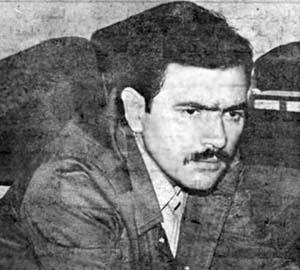 rooted in him that even organizational instructions and indoctrinations succeeded not in changing his attitude and to convince him take a different approach.
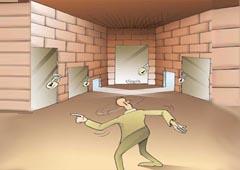 they are superior to the other people because they are saved by their leaders and they can since then be the saviors of the world. Ann Singleton, the former member of the cult of Rajavi affirms this fact:” I though I was superior to the world .. I wanted to save the world.”
  Borders/Médecins Sans Frontières (MSF) in PARIS and they submitted a letter regarding their concerns about psychological pressures and an imposed unlimited hunger strike upon the residents of ASHRAF garrison by PMOI leaders and operatives.
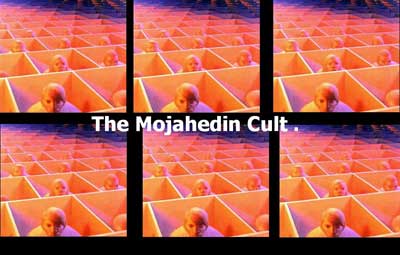 psychologically and sometimes physically. The terrorist cult of MKO has been so successful to function the process of manipulative mind control on its members that the members are purely devoted to the cult leaders and prepared to commit any crime ( Ex. Self- immolations) along with the leaders’ objectives.
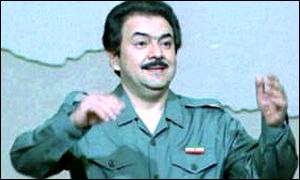 well as his offensive attitude towards religiously inclined forces that can be considered as one of his main errors. In addition, his keeping silent on the events occurred in MKO and the issue of the Marxist wing manifesto for almost one and a half year led to the intensification of the challenges between Rajavi and non-Marxist forces.