
The ongoing saga of Mujahedin-e-Khalq is a good example of how the unfortunately imprecise cliche ought to be understood.
In his new book, The Tyranny of Cliches, Jonah Goldberg goes on a rant against the phrase, 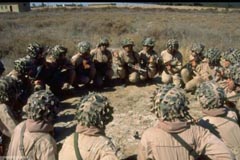 "One man’s terrorist is another man’s freedom fighter," writing, "It is simply absurd to contend that because people may argue over who is or is not a terrorist that it is therefore impossible to make meaningful distinctions between terrorists and freedom fighters." Is that what those who invoke the phrase are saying? Like a lot of cliches, it doesn’t really make literal sense and is probably best avoided, but I suspect what many people mean when they use it is something like, "As a descriptor, terrorist is almost never applied rigorously and consistently to describe the tactics a group is using — rather, it is invoked as a pejorative to vilify the actions only of groups one wishes to discredit. People who agree with the ends of the very same groups often don’t think of them as terrorists, the negative connotation of which causes them to focus on what they regard as the noble ends of allies they’re more likely to dub freedom fighters."
Put more simply, it’s possible to rigorously determine who is a terrorist if you go by the actual meaning of the word, but in practice the term is almost never applied in accordance with a strict definition.
And today I can alert you to an especially Orwellian example.
Back when the Bush Administration wanted to go to war in Iraq, despite the fact that it had nothing to do with 9/11, they did their best to persuade terrorist-hating Americans that Saddam Hussein was a sponsor of terrorism. For example, the Bush White House published a document called "Saddam Hussein’s Support for International Terrorism." Check out this bullet point especially:
Iraq shelters terrorist groups including the Mujahedin-e-Khalq Organization (MKO), which has used terrorist violence against Iran and in the 1970s was responsible for killing several U.S. military personnel and U.S. civilians.
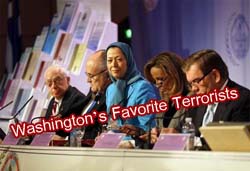
Nowadays, Iran is Public Enemy Number One. Mujahedin-e-Khalq, also known as MEK, is still a terrorist organization. That is to say, it both uses violence to terrorize civilian employees of the Iranian regime and appears on America’s official list of foreign terror-sponsoring organizations. But various prominent Americans are being paid big bucks to help get MEK off the official list of terror groups.
And they’re reportedly poised to succeed. As my colleague Bob Wright puts it:
If MEK had, as it claims, left its terrorist ways behind, this "delisting" of it, though geopolitically unfortunate, might be legally or morally defensible. However, within only the last few months, according to NBC News, MEK agents have murdered people by placing bombs on their cars. The murdered people were Iranian scientists, and the assassinations were apparently orchestrated by Israel — facts that may raise MEK in the esteem of some Americans.
But that doesn’t make the killings any more legal or less terroristic.
As Glenn Greenwald writes:
The application of the term "Terrorist" by the U.S. Government has nothing to do with how that term is commonly understood, but is instead exploited solely as a means to punish those who defy U.S. dictates and reward those who advance American interests and those of its allies (especially Israel). Thus, this Terror group is complying with U.S. demands, has been previously trained by the U.S. itself, and is perpetrating its violence on behalf of a key American client state and against a key American enemy, and — presto — it is no longer a "foreign Terrorist organization."
If you want to know the intended rather than literally expressed meaning of, "One man’s terrorist is another man’s freedom fighter," you need look no further than the story of MEK.
By Conor Friedersdorf ,The Atlantic
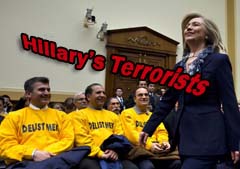 and two children goodbye, and entered a waiting car with his colleague, Lt. Col. Jack Turner, whose wife was getting their three children ready for school. It was the last time the families of these two US servicemen would see them alive.
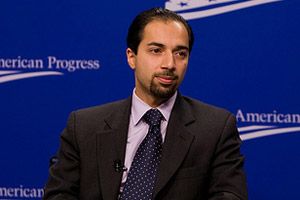 NBC that Israel had teamed up with a violent, cultish, US-terror listed Iranian organization called the Mujahedin-e Khalq (MEK) to assassinate Iranian scientists.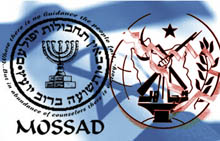
 This, after years of praise and advocacy from elite members in American politics, from Ed Randell to John Bolton to Howard Dean and Rudy Giuliani. These types of people collected payments from the MeK for their advocacy to get the group removed from the State Department’s list, which amounts to “material support” for terrorist groups, a felony. Of course, such well-connected, high-society types don’t get prosecuted for unlawful behavior unless it involves betraying the sanctity of marriage. And the fact that the U.S. government secretly trained MeK fighters in recent years and is now being employed by Israel to conduct acts of terrorism inside Iran probably won’t increase the likelihood of such prosecutions.
 program. Media coverage on the region this week has also centered on the hanging of a member of the Israeli intelligence agency Mossad by Iran. Majid Jamali Fash, was executed for killing one of Iran’s nuclear scientists in 2010. While this news is in deed pertinent, another story from Iran has received less media attention and could have long-term implications for the State Department’s handling of terror groups moving forward.
 Organization of Iran, should be regarded with skepticism.
 The exile organization, the Mujahedin-e Khalq, or MeK, was originally named as a terrorist entity 15 years ago for its alleged role in assassinating U.S. citizens in the years before the 1979 Islamic revolution in Iran and for allying with Iraqi strongman Saddam Hussein against Tehran.
 designated by the U.S. State Department as a terrorist organization. Yet prominent U.S. officials from Howard Dean to Rudy Giuliani have come out in support of the MEK, arguing that the group has turned its back on violence and should have its terrorist designation revoked. For this vocal body of American supporters, the MEK’s commitment to secular, democratic government could help turn the tide against Islamic rule in Iran.
 The issue, however, is muddied by MEK’s decidedly violent and even anti-American past. Originally an Islamic group, in the 1970s the MEK evolved into a Marxist organization dedicated to violent struggle against the U.S.-backed Shah of Iran. Responsible for at least six assassinations of American diplomats, the MEK enthusiastically supported the Iran Revolution in 1979, yet afterwards resisted the new Islamic rule and began a campaign of bombings, kidnappings, and assassinations targeting Iranian officials. The group fled to Iraq in 1986, allying with Saddam Hussein until the 2003 American invasion, after which it sought accommodation with U.S. forces.