
U.S. Joint Special Operations Command (JSOC) helped train, arm, equip and arrange for travel of members of the Iranian opposition group Mujahideen-e-Khalq (M.E.K.) at a secretive site in 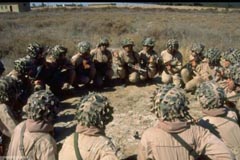 Nevada from 2005 to at least 2007, as reported by Seymour M. Hersh at The New Yorker.
M.E.K. has been listed as a “foreign terrorist organization” since 1997.
It is a felony in U.S. law to knowingly provide material support or resources to a foreign terrorist organization.
Five Iranian nuclear scientists have been assassinated since 2007.
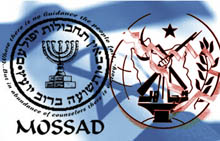
Early last month two senior Obama officials said that the attacks were the work of M.E.K. and that the group is "financed, trained and armed by Israel’s secret service [i.e. Mossad].
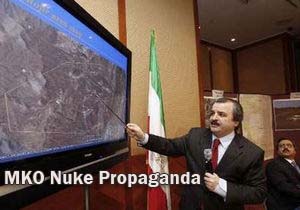
In 2002 M.E.K. publicly revealed that Iran had begun enriching uranium at a secret underground location and the information was provided by Mossad, according to then-head of the International Atomic Energy Agency Mohamed ElBaradei.
From The New Yorker:
The M.E.K.’s ties with Western intelligence deepened after the fall of the Iraqi regime in 2003, and JSOC began operating inside Iran in an effort to substantiate the Bush Administration’s fears that Iran was building the bomb at one or more secret underground locations. Funds were covertly passed to a number of dissident organizations, for intelligence collection and, ultimately, for anti-regime terrorist activities. Directly, or indirectly, the M.E.K. ended up with resources like arms and intelligence.
The training in the U.S. took place at the secretive Department of Energy’s Nevada National Security Site, located about 65 miles northwest of Las Vegas.
A retired four-star general told Hersh that the Iranians received standard training for about six months that included bomb making, communications, cryptography, small-unit tactics and weaponry.
Last month the senior Obama officials lied to the American public about any U.S. involvement in the M.E.K. assassinations, but a former senior intelligence official told Hersh that the U.S. provides intelligence for M.E.K. operations. “The US broke international laws, helped finance terrorism that was responsible for the death of innocent civilians in Iran”, said Bob Smith of Charlotte, N.C. in a telephone conversation, who claims the Special Forces units involved in training the MEK terrorists came from Ft. Bragg, N.C.
"How can the U.S. train those on State’s foreign terrorist list, when others face criminal penalties for providing a nickel to the same organization?”, says Allan Gerson, a Washington attorney for the M.E.K., pointed out the total hypocrisy of simultaneously listing the group as a terrorist organization and training them. I wonder what that says about a lawyer who defends them?
The People’s Mujahedin of Iran (MEK, also PMOI, MKO) founded in September 5, 1965 by a group of leftist Iranian university students as an Islamic and Marxist political mass movement MEK was originally devoted to armed struggle against the Shah of Iran, capitalism, and Western imperialism. In the aftermath of the 1979 Iranian Revolution, the MEK and the Tudeh Party at first chose to side with the clerics led by Ayatollah Khomeini against the liberals, nationalists and other moderate forces within the revolution. A power struggle ensued, and by mid-1981, MEK was fighting street battles against the Islamic Revolutionary Guards.[7][8][9] During the Iran-Iraq War, the group was given refuge by Saddam Hussein and mounted attacks on Iran from within Iraqi territory. Government sources claim that over 17,000 Iranians were killed by the MEK.
The group claims to have renounced violence in 2001 and today it is the main component organization of the National Council of Resistance of Iran (NCRI), an "umbrella coalition" calling itself the "parliament-in-exile dedicated to a democratic, secular and coalition government in Iran. The group has had thousands of its members for many years in bases in Iraq, but according to the British Broadcasting Corporation "they were disarmed in the wake of the US-led invasion and are said to have adhered to a ceasefire."
The United States, Canada, Iraq and Iran have designated the MEK a terrorist organization.
“The US used taxpayer funds to train these terrorists”, said one Charlotte, N.C. veteran. “I would like to see those prosecuted for this crime”, he said. The veteran stopped short of calling for prosecution of members of the Pentagon and senior military officials who carried out what was an “illegal act”. “Soldiers follow orders sometimes. They cannot disobey. They should be excused for their crimes. I more interested in the senior military commanders who went along with this”, he said.
“The possibility that anyone will be prosecuted for helping train terrorists is highly unlikely”, said one retired FBI agent from Charlotte, who declined to be named in this report. “I don’t like what our government does sometimes but I am in no position to do anything about it”, he said.
This is generally the attitude of people I talked to about this incident. From officials at Ft. Bragg who refused to discuss it, to former Special Forces members who claim they just follow orders, to Administration officials who indicated the US is right for funding people who murder and kill people in Iran. They all offer excuses.
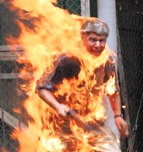
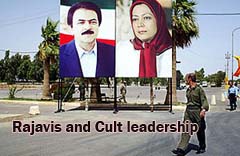
On December 14, 2006, Time Magazine published an article about MEK and reported: "In 2003, French anti-terrorist police raided Maryam Rajavi’s place in Auvers-sur-Oise, securing millions of euros and taking Maryam Rajavi and some of her collaborators into custody. Several of Rajavi’s followers set themselves on fire to protest her arrest, confirming official French concerns about the cultish nature of the group."
On September 14, 1981, Time Magazine published an article about MEK and reported: "The Mujahedin platform focused on anticapitalist, anti-Western slogans. It demanded the nationalization of all foreign businesses run by Iranians and continuation of the anti-imperialist struggle, especially against the U.S. Western intelligence sources doubt that the Mujahedin, though superbly organized, have as many followers as they claim. "They are not a popular movement," one analyst asserts. "Their ideology is not understood by the masses. They are capable, of carrying out terror operations but not of governing Iran."
On April 21, 1997, Time Magazine published an article about MEK and reported:
"There is a cult of personality around Massoud Rajavi and Maryam Rajavi that is unhealthy,"
says Michael Eisenstadt, an Iran expert at the Washington Institute on Near East Policy. "If they were to achieve power, it is unlikely they would give it up."
On August 28, 1988, New York Times published an article that after chemical attacks by MEK against western Iranian cities, Alireza Jafarzadeh as then public spokesman for MEK in the United States said:
"Mujahedeen have learned to take proper tactics when and if necessary. We have always adjusted tactics in our fighting. The form of fighting is secondary."
The Mujahedeen claimed to have inflicted 40,000 Iranian casualties.
On July 13, 2003, New York Times published an article that in 1991 when Saddam Hussein used the MEK and its tanks as advance forces to crush the Iraqi Kurdish people in the north and the Iraqi Shia people in the south, Maryam Rajavi as then leader of MEK’s army forces commanded:
"Take the Kurds under your tanks, and save your bullets for the Iranian Revolutionary Guards."
On December 14, 2006, Time Magazine published an article about MEK and reported: "By the mid-1980s, the group (MEK) had cozied up to Saddam Hussein, who provided them with funds and a compound, Camp Ashraf, north of Baghdad. The U.S. government has accused the group of helping Saddam brutally put down Iraqi Kurdish people in the early 1990s, and of launching numerous attacks inside Iran."
On January 5, 2009, Time Magazine published an article about MEK and reported: "Despite its position on the U.S. terrorist list since 1997, and reports by former members of abusive and cultlike practices at Ashraf, the MEK has gathered support from some surprising places abroad — especially since the U.S. invasion — by pitching itself as a viable opposition to the regime in Tehran.”They have been extremely clever and very, very effective in their propaganda and lobbying of members of Congress," says Gary Sick, a Persian Gulf expert at Columbia University’s Middle East Institute and the author of All Fall Down: America’s Tragic Encounter With Iran. "They get all sorts of people to sign their petitions. Many times the Congressmen don’t know what they’re signing." But others, Sick adds, "are quite aware of the fact that this is a designated terrorist organization, and they are quite willing to look the other way for a group that they think is a democratic alternative to the Iranian regime."
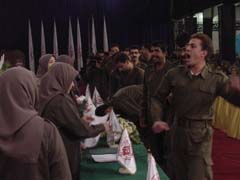
On May 18, 2005, Newsweek published an article about MEK and reported: "Human Rights Watch alleges that the Iranian exile group known as Mujahideen-e Khalq (MEK) has a history of cultlike practices that include forcing members to divorce their spouses and to engage in extended self-criticism sessions. More dramatically, the report states, former MEK members told Human Rights Watch that when they protested MEK policies or tried to leave the organization, they were arrested, in some cases violently abused and in other instances imprisoned. They were held in solitary confinement for years in a camp operated by MEK in Iraq under the protection of Saddam Hussein. MEK representatives in the United States and France, where MEK is headquartered, did not respond to NEWSWEEK phone calls and an e-mail requesting comment. The new Human Rights Watch report does allege strange and sometimes brutal behavior by the group’s leaders and internal security apparatus. According to Human Rights Watch, following this 1988 military defeat, the Rajavi’s leadership of MEK became increasingly authoritarian and cultlike. According to an MEK defector’s memoir, Rajavi claimed to have a mystical relationship with a prophet known as Imam Zaman, who is Shia Islam’s version of the long-awaited Messiah. In order to better cement their relationship with their leader, and hence ultimately their Messiah, Rajavi then instructed his followers to divorce their spouses. The group had already established a practice of "self criticism," under which members were asked to undergo their own personal "ideological revolution" by confessing personal inadequacies in cultlike confession sessions. Human Rights Watch says the testimony of former MEK prisoners paints a grim picture of how the organization treated its members, particularly those who held dissenting opinions or expressed an intent to leave the organization. Other witnesses told Human Rights Watch claimed it was the practice of MEK interrogators to tie thick ropes around prisoners’ necks and drag them along the ground. One witness told investigators: "Sometimes prisoners returned to the cell with extremely swollen necks–their head and neck as big as a pillow." In a statement accompanying its investigative report, Joe Stork, a Human Rights Watch expert on the Middle East, commented:
"… it would be a mistake to promote an opposition group that is responsible for serious human rights abuses."
In 2004, the Federal Bureau of Investigation (FBI) listed the MEK as a terrorist entity (see: http://www.american.com/archive/2011/FBI%20-%20REPORT.pdf
Among the charges the FBI accused the MEK of committing was murder of US citizen Paul Grimm, a Texaco executive in 1978 and participating in the student takeover of the US embassy in Iran. A list of the charges would take 42 pages to list
The FBI field office in Kansas City, Missouri refused comment on this story.
See also article: Hersh: US facilitates MEK terror in Iran
by Robert Tilford ,Exminer
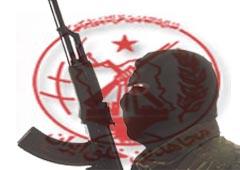 US State Department since 1995. The MEK, however do not simply attack Americans. According to The American Muslim: “The M.E.K. are terrorists. They were driven out of Iran and given a home at a place called Camp Ashraf in Iraq by Saddam Hussein, who they supported. Saddam Hussein used the M.E.K. to carry out terrorist acts in Iran.” In 2001, the MEK “renounced” terrorism. Irrespective of this renunciation, a 2004 FBI report on the MEK which was revealed in June 2011 states that the MEK The long and short is that the MEK are current terrorists not former terrorists. So why would the US consider removing the designation from the group?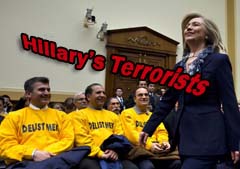
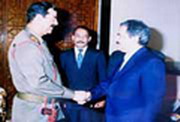
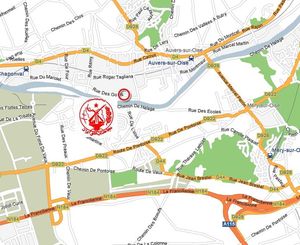
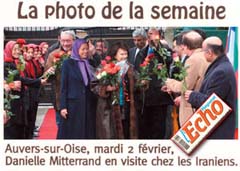
 a terrorist organization, French anti-terrorist police raided various MEK offices in and around Paris, including its garrison at Auvers-sur-Oise, arresting 160 members of the MEK and confiscating millions of euros. Nicolas Sarkozy, Interior Minister at the time, expressed concern that the MEK "wanted to make France its support base, notably after the intervention in Iraq," while Pierre de Bousquet de Florian, head of France’s domestic intelligence service, warned that the group was "transforming its Val d’Oise centre into an international terrorist base."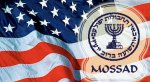
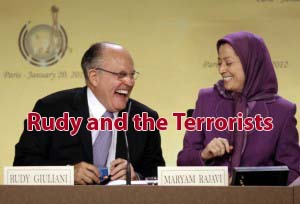
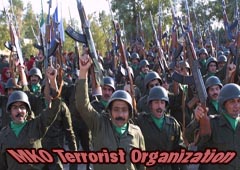 freedom fighter” is a cliche because the truth it conveys is so banal and obvious that it often seems redundant to mention it. A group can employ terrorist tactics while also seeking to achieve self-determination for the people it claims to represent. While the phrase may sometimes be used to justify terrorist attacks, it expresses a truth about the nature of political violence that partly explains but does not excuse the atrocious acts carried out by “liberation” groups.
  on organizations deemed ‘terrorist’ by the US government.
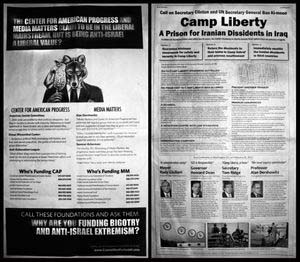
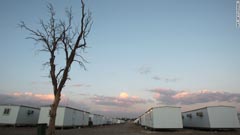 total — have moved to a transit site called Camp Liberty.
 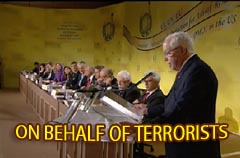 high-powered lobbying firm that specializes in sanitizing the records of dictators seem to have paid off for Mujahideen-e-Khalq. The Obama administration is preparing to remove the Iranian exile group from the State Department’s official list of terrorist organizations, the Wall Street Journal reported Tuesday: