
The head of an Iranian exile group says more than 3,000 of its members holed up in a camp in  eastern Iraq are ready to leave if they get U.S. and U.N. security guarantees.
Paris-based leader Maryam Rajavi said in a statement Tuesday that Camp Ashraf residents are "in principle prepared to relocate to Camp Liberty" _ a recently vacated former United States military base _ if their safety can be guaranteed.
The armed People’s Mujahedeen Organization of Iran moved to the camp during the regime of Saddam Hussein, who saw them as a convenient ally against Tehran. They were disarmed by U.S. soldiers during the Iraq invasion in 2003, and have since become an irritant to Iraq’s Shiite-led government, which is now trying to bolster ties with its neighbor.
The United Nations has said that at least 34 people were killed in an April raid on the camp by Iraqi security forces, and Iraq authorities have vowed to close the facility by Dec. 31.
The Obama">Obama administration _ hoping to avoid a possible violent standoff with Iraqi authorities _ urged the residents Monday to accept a U.N.-brokered deal to move to the temporary site near Baghdad airport where arrangements would be made for them to resettle elsewhere.
The Iranian dissidents have previously resisted leaving, saying they fear persecution at the hands of Iraqi authorities, and sought an extension to the Iraqi deadline.
But on Tuesday, Rajavi said for the move to Camp Liberty to be completed, the "minimum guarantees for the residents’ safety and well-being in order to prevent a recurrence of violence and bloodshed until the residents are resettled in third countries" must be given.
The group said Rajavi had sent a letter Dec. 10 to President Barack Obama">Obama and U.N. Secretary-General Ban Ki-moon outlining the guarantees the dissidents are seeking, including security protection during and after the move by the U.S., European or U.N. forces _ not by the Iraqi government.
U.N. spokesman Martin Nesirky said Tuesday that the top U.N. envoy in Iraq, Martin Kobler, has made helping the Iraqi authorities and camp residents find a workable solution "a top priority."
"The U.N.’s role here is to facilitate, to help the Iraqi government and the camp residents," Nesirky said. "It is very important to note that ultimately it is the responsibility of the Iraqi authorities to work to find a peaceful way out of this, and for the residents of the camp likewise to shoulder their responsibility."
U.S. officials said Monday that the new facility would remain under Iraqi government control, but come under U.N. supervision. Residents not wanting to return to Iran, or live in third countries to which they have family ties, would be able to apply for U.N. refugee status, they said.
The People’s Mujahedeen has been branded a foreign terrorist organization by the U.S., a designation now under review by the State Department. It has been removed from similar blacklists in Europe.
By ANGELA CHARLTON
 leadership of the Mujaheddin-e Khalq (MEK), an Iranian opposition group with cult-like characteristics, to vacate a camp in Iraq and allow residents to move to another location in the country or risk the lives of as many as 3,200 people.
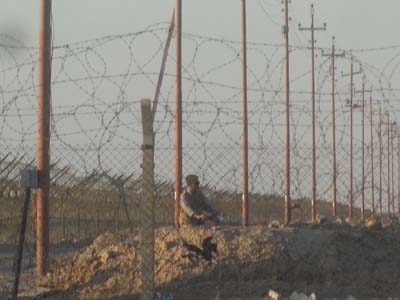 that Iraqi leaders insist must close by Dec. 31. There are particular concerns that MEK members will clash with Iraqi security forces or commit mass suicide.
  the State Department terrorism list, before an end-of-the-year deadline that could see heavy violence and a large humanitarian disaster unfold, senior administration officials said Monday.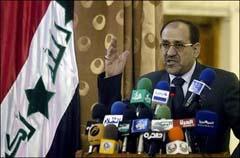
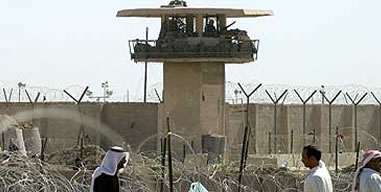
 view on this?
  respect for these people’s fundamental rights, just as they would for anyone else on Iraqi territory. Furthermore, the Iraqi authorities must ensure that the residents of Camp Ashraf have access to such basic services as food, water and medical care, under all circumstances.
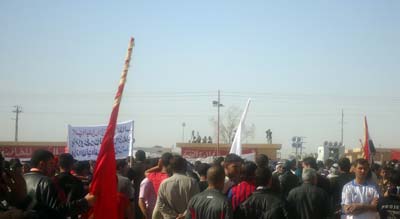 dissidents of the Mojahedine Khalqe Iran Organization reside, in order to renew a demand for closing down the Camp.
 regime of Saddam Hussein and establish a free and democratic society. As American troops depart in accordance with the Troops Withdrawal Agreement of 2008, we begin a new chapter based, as President Obama noted, on “mutual interests and mutual respect.” The decision to implement the agreement came after negotiations held with respect for each side’s sovereign and political decisions.