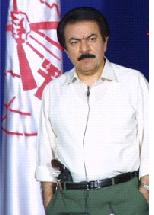
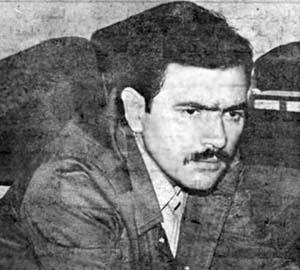
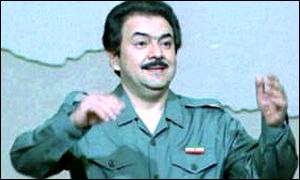
Rajavi & Cult Leadership

Alert and alert, the West states must be on the highest alert and feel moral and political responsibility to prevent more disastrous incidents in Ashraf garrison which can terrorize then jeopardize the local peace and security.
Maryam Rajavi (Iranian Ben Laden) has already tested the success of such an adventurous experience in Paris in June 2003 to achieve her terrorist aims and political blackmails. so that, she issued an ideological command to her cult innocent and deceived members to resort holy self-burning suicide with the intention of de-stabilizing the French political atmosphere to impose her illegitimate conditions on French govt. not to extradite her to Iran because of her terrorist committed crimes in Iran. The price of such an adventurous action was the destruction of two tempting women in France in June 2003. The more delay the heavy human losses in the Ashraf garrison as occurred in Paris in June 2003. Therefore, as a separated ex- member of the “People Mujahidin Organization of Iran” (PMOI) who have been under inhuman psychological and physical torture by this chaotic sect cal l for the urgent and press actions and efforts without any hesitation to salve the live of thousands incarcerated innocent victims in Ashraf garrison situated in Iraq. If the West public opinion and political elites consider the demoniac and inflamed message of Maryam Rajavi’s husband who is the ideological leader of this cult, they will find out that the history is going to be repeated again and create a new Paris self-burning disaster in Ashraf garrison with the highest dimensions of creature of the human catastrophe. Masood Rajavi stimulated and encouraged the caged victims of Ashraf garrison to upheaval against Iraqi elect govt. sovereignty and not to obey the rules and regulations, which has been passed by Iraq constitutional assembly. He intimidated Iraqi govt. to imply with his illegal demands not to impose Iraq dominion over his unlawful self-govt. in the territory of Iraq. Otherwise, he will openly goad and compel his deceived innocent victims in Ashraf garrison to start a hunger strike and if they cannot get their demands from Iraqi govt., they must resort self-holocaust solution to make the West public opinion to support his illegal demands. The authentic sources familiar to his violent nature and characteristics believe that Masood Rajavi’s message is too bloodthirsty and full of intimidations, desperations, and self-contradictions and he does not care how many people will be on fire and killed in his self-created holocaust. Now, I, as a survivor of this terrorist cult ask the West public opinion and responsible authorities to take Masood Rajavi’s message serious to avert Masood Rajavi’s latent holocaust in Ashraf garrison. According to an Iranian axiom, “when you push a wild cat on the ring or on the corner of the room; the cat will scrape and claw you.” It means that when there is an absolute impasse and no alternative to rescue the live and change the conditions, the reaction of such wild animals with violent natures towards such dead end conditions are unexpected, desperate, vague, and outrageous. As a result, the reaction of wildcat is adventurous and violent, it may invade you by any weapon, and way and bomb commit either suicide or self-burning. Based on the past Masood Rajavi’s terrorist adventures in the occasions of impasse conditions and political catch-22, the experience shows that, he is always endeavoring to theorize his cultic conspiracies to prepare the atmosphere for terrorist adventures. That is why he used the language of threat in his message vs. Iraq elect govt. several times in different ways and tried to place the responsibility of his future prepared terrorist activities on the shoulder of Iraq govt. and the rest of the world. That is why; the most significant part of his message is that “the world can not be in the peace and security without the establishment of security in the Ashraf garrison” where is his main and key base for preparing terrorist activities. The reality is that, if the West states are not determine to take necessary action regarding Masood Rajavi’s expressed threats today, thus, tomorrow will be too late. Moreover, the human beings will face the reiteration of Paris self-burning disaster in Ashraf garrison with the highest terrible dimensions. Therefore, the fenced in Ashraf garrison victims are expecting the human consciences and human rights organizations not to hesitate in rescuing them.
Iranpeyvand
The errors of Rajavi concerning the ideological schism of 1954 and its consequences are countless. His twelve-point statement issued while in the prison indicates Rajavi’s position taking toward leftist faction and Marxists as
well as his offensive attitude towards religiously inclined forces that can be considered as one of his main errors. In addition, his keeping silent on the events occurred in MKO and the issue of the Marxist wing manifesto for almost one and a half year led to the intensification of the challenges between Rajavi and non-Marxist forces.
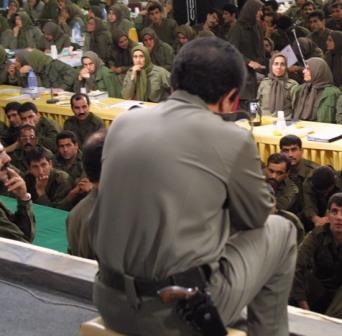
The significance of this issue arises from the fact that hiding the internal schism of MKO and conversion of a great deal of members to Marxism made religious forces think that Mojahedin leadership considered them nothing but instruments for achieving his objectives. There are evidences that Rajavi made his utmost attempt to conceal the schism of the organization and hide it though religious forces had the right to know to where their political and social activities were drifting them. Another mistake made by Rajavi in this particular phase was coining the term leftist opportunist to refer to the converted Mojahedin. In fact he did so to have least contact and tension with Marxist trends and stabilize his status as their strategic ally. In this regard, Shahsavandi says:
Leftist opportunist trend is the label Mr. Masoud Rajavi gave to the intra organizational Marxist trend and called it as such. 1
Hence, in his twelve-point declaration he asserted that he distinguished between the Mojahedin Marxists and other Marxist groups and considered them the strategic ally of Mojahedin as did previously. On the other hand, this moderately taken position was restricted only those in prison and there was no trace of the reaction against Marxist Mojahedin active in the world outside. Even when the liberation movement published Rajavi’s statement outside, Mojahedin declared that it was not acceptable for them and that it had to be revised. They kept this position up to late 1979 when Rajavi took a position against the separated wing.
The coming event during the Iranian revolution clarified the dual and divisive stance of Rajavi. The arrest of Taqi Shahram, leader of the Marxist wing, after the victory of the Iranian revolution, and the position of MKO in this regard stating that revolutionary courts lacked the legitimacy to put him into trial and it was only Mojahedin that were qualified of trying him implied the fact that Mojahedin were under the effect of a luring attraction toward Marxist division, a fear that had already filled the early ranking cadres like Majid Sharif Vaqefi and Samadieh. There are evidences that Marxist Mojahedin collaborated with SAVAK; Rajavi was well informed of it but preferred to say nothing.
However, Rajavi’s unquestionable slant on Marxism and to follow the steps of the leftist revolutionary guerrillas emerged after the victory of the Iranian revolution. Rajavi even asked the family of Sharif Vaqefi to forgive Taqi Shahram who assassinated their son in order to save him from execution which is well reflected in the existing documents and statements of the organization. It was in a condition when Shahram was accused of doing intra-organizational clearance and preparing the background for the arrest of religious forces in late 1977 and even was tangled with the leader of Marxist wing and was subject to organizational purges.
It is not far from logic and reason if it is said that SAVAK had a role in making some high rankings of MKO declare their hidden ideology openly and remove the Qur’anic verse from their emblem. 2
In fact, the antagonist position of Rajavi toward non-Marxist forces led to his opposition to all those supporting the clerical leadership. Although his activities can be considered an organizational error resulting in the exile of MKO from Iran, the consequent events showed that he did so to stabilize his egocentric leadership over MKO and cared not the least about keeping the integration of MKO and hence he preferred Marxists to religious forces. He was unaware that his opposition to religious forces that constituted the most trustworthy members of MKO would result in his parting with Marxist trends too. On the one hand, he lost his religious followers as well as his position among leftist groups due to his ambitious and egocentric activities.
References
1. Saeed Shahsavandi interview with the voice of Iran, part 38.
2. Rohani, Hamid, The movement of Imam Khomeini, p.663.
There are a number of gadgets at which cult leaders grab to convince members of their unquestionable leadership and charismatic figure. Eric Hoffer
refers to the case of leftist political cult of Stalinism that was developed as a result of indoctrinating individuals with a self-fabricated ideology:
The official history of the Communist party states: "The power of Marxist-Leninist theory lies in the fact that it enables the Party to find the right orientation in any situation, to understand the inner connection of current events, to foresee their course, and to perceive not only how and in what direction they are developing in the present but how and in what direction they are bound to develop in the future." The true believer is emboldened to attempt the unprecedented and the impossible not only because his doctrine gives him a sense of omnipotence but also because it gives him unqualified confidence in the future. 1
There are other factors and tools in the hands of cult leaders to make them immune against challenges and criticism. Almost all cult leaders convince members that they have some problematic personal features that have to be corrected by means of cultic techniques and mechanisms. In order to achieve this objective, cult leaders resort to ideological dogmatism and prevent members from thinking. Also they stop the development of self-confidence on the part of members and replace it with total dependence on cultic relations and absolute submission to the point that members suffer from the loss of physical as well as mental independence for ever.
In the ideological revolution of Mojahedin, a phase transforming a political group into a cult of personality, many factors exploited by cult leaders to immunize them against challenges are traceable. Cult leaders make an attempt to convince members that they are endowed with a god-like status and unearthly power in foreseeing future events, a window that is totally closed for followers to see through. Furthermore, they expose members to absolute submission that are in most cases irrational and unreasonable. In this regard, Mohsen Rezaee, an MKO member, says:
The ideological leader has a deeper and greater insight compared to that of ordinary followers. He can foresee and interpret issues in the world that are inexplicable in their own time and it is only the passing of time that reveals their truth. Therefore, a follower has to obey his/her leader devotedly and based on absolute confidence rather than individual understanding. 2
Niyabati, one of the main theoreticians of the ideological revolution of Mojahedin, tries to justify his materialistic viewpoints on the necessity of the absolute submission of followers to cult leader by means of mystical concepts:
A wayfarer [meaning followers of MKO] has no responsibility and should be submissive like a piece of wood in the hands of carpenter. 3
He further adds:
In spiritual journey, no question is allowed. The wayfarer has to put his faith in Sheikh wholeheartedly and must regard him as the most perfect person to conduct him in spiritual training, guidance and education, be his interlocutor and obey Sheikh far from any inward or outward objection. 4
Here, the factor of anathema is added to the factor of sheikh-wayfarer relationship to convince and submit individuals. Furthermore, Rajavi and his apostles have drawn a red line by elaborating on the god-like position of Rajavi and his connection to God and have made attempt to indoctrinate the belief that challenging and disobeying him is an unforgivable sin. Anne Singleton, an MKO ex-member, refers to these factors and writes:
What Rajavi was asking everyone in the Mojahedin to do was to give him total obedience. He implied to them (through the mouths of Maryam and Fahimeh) that he had links with God and therefore knew things that ordinary members couldn’t be expected to understand. This meant that anyone who rejected him was blaspheming against God. The members were mostly willing to allow themselves to be indoctrinated with this new concept. 5
Abrishamchi, a theoretician of the ideological revolution, zealously tries to justify the unquestionable and unfathomable status of MKO leadership and states:
Leadership bears no responsibility downward. His responsibility is determined by the ideological-political considerations of the organization. 6
He further points out that questioning his decisions from lower-ranking members may result in serious disruption of the ideological principles and consequently destabilization of leadership status:
In order to clarify the ideological boundaries, it is necessary to introduce the ideological interpreter of the organization and the person who says the last word. In MKO, it is the thoughts of Masoud that are ideologically problem solving and determine ideological boundaries. Therefore, leader in the organization bears no responsiveness since it may disruptthe leader’s status. 7
In a nutshell, in MKO as in many other cults, there are mechanisms and devices used in order to raise the status of the leader to a point far from that of rank-and-files and to immunize him against criticism and questioning.
References:
1.Hoffer, Eric, The true believer, Harper &. Row, Publishers, New York, 1951, p.58.
2. Rezaee, Mohsen, p.249.
3. Niyabati, Bijan, A different look at the ideological revolution within Mojahedin, p.40.
4. ibid.
5. Singleton, Anne, Saddam’s private army, Iran-Interlink, 2003.
6. Mehdi Abrishamchi’s lecture on the ideological revolution of MKO, 1985, p.44.
7. Mojahed Journal, n. 255, p.23.
Research Bureau – Mojahedin.ws – February 1, 2009
The ideological schism of MKO in 1975, when actually the leaders of the group were in Pahlavi’s notorious prisons, resulted in different reactions on the part
of Mojahedin. The serious errors of Rajavi after the separation of Marxist wing following its declared manifesto was elaborated on and those aware of the course of events in that particular period of time were unanimous that the main mistake made by Rajavi was issuing his twelve-point statement that was considered to be the position taken by all non-Marxist Mojahedin about the schism. It stated that Mojahedin would consider the converted members as their strategic allies and openly revealed their opposition to religious members. It happened at a time when all MKO remnants except Rajavi insisted on reviewing and revising the organizational principles and ideological errors of MKO under the impact of Marxism. Karim Rastegar, an ex-member, elaborates on the impacts of this event saying that after the Marxist wing’s manifesto, Rajavi adopted a dual mannerism of keeping unwavering inclination to the left while role-played a devoted religious inside the prison.
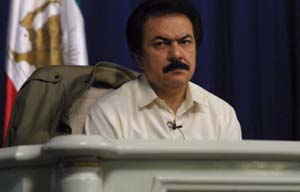
An interesting point is that while siding with the non-Marxist wing, Rajavi took a different position toward the leaders of Marxist wing, i.e. Taqi Shahram, Bahram Aram and against truthful leaders opposed to Marxist wing like Majid Sharif Vaqefi and Morteza Samadieh Labaf. According to Rastegar, Rajavi made an attempt to hide his personal errors and stabilize his leadership over the organization by concealing the truth and labeling the former leaders as traitors as agents:
The leaders inside prison, and Rajavi in particular, tried to acquit themselves of accusations and after the terror of Sharif Vaqefi and Samadieh for a long time overturned the truth calling them traitors and introduced the leftist Vahid Afrakhteh as a hero. For instance, they quoted falsely of committee members that Vahid Afrakhteh has turned to a mythical figure under torture. 1
A more interesting point is that his appreciation of some problematic members like Vahid Afrakhteh intensified the crises and increased the doubt of religious members in Rajavi thus making the ground for his increasingly parting with them. In addition, Rajavi took an antagonist position against religious forces inside prison and worsened the conditions:
The behaviors of Masoud inside prison resulted in marginalization of religious forces. Evidently, appropriate reactions could prevent conflicts and detachments. The organization leadership tried to conceal the realities for five months calling us extremists and compromisers while everyone was well aware of the reality. It was no longer possible for us to bear lies and labels given to the religious members Muslims. Our complaint to the conditions resulted in our total boycott. Nobody dared to communicate with us. Some were so heated that even would kill us if they were allowed to. The news of our boycott by organization leaked to SAVAK and they regarded it a precious opportunity. 2
On the other hand, there is the status and position of Marxist wing. Although they took an overall defensive position regarding the ideological schism, their position is preferred to that of Rajavi that was dualistic and divisive. However, many are unanimous that the main reason of ideological schism of MKO was the dualistic and eclectic viewpoints of the early founders of MKO toward Islam rather than the effect of Marxists therein. Torab Haqshenas, a key figure of MKO in that period of time abroad, refers to significant points on the differences between inside as well as outside looking at the ideological schism of Mojahedin and the divisive position of Rajavi in this regard, saying:
In my opinion, the ideological schism had a principle that was neglected and it was the fact that we should not lie to ourselves. It is correct that we made some mistakes and acknowledged it in 1979 and criticized it, but the main point was that we should not lie to people. When we came to the point that our guide was no longer ideologically religious and it was of no effect to help us in struggle, we had to say it clearly to all people even if it resulted in our losing of many facilities and separation of many members. 3
However, it does not mean that religion was incapable to offer solutions for the challenges of MKO. It is another issue and needs to be investigated in depth. As he says, the hypocrisy and duality of Mojahedin, their eclectic ideology, lack of knowledge on religious precepts and refraining to take a clear position in this regard resulted in the occurrence of schism. In fact, the twelve-point statement of Rajavi issued inside prison was a summary of his real intention and ideas. Shahsavandi, a member of MKO sentenced to death by the order of the Marxist wing’s central committee clarifies the effects of this statement in escalation of inter-organizational tensions and conflicts inside prison:
These twelve articles defined the identity of MKO to the point that members and sympathizers had to recognize it as the basics of their activities word by word with no addition or omission and to transfer it to other prisons and those active outside. 4
The significance of this statement lies in the fact that according to Shahsavandi, it had a decisive role in the future events like that of June 1981:
These twelve articles were in fact the manifesto of Mr. Rajavi against the Marxist drift inside organization. It was a manifesto that led to the revival and reorganization of MKO and worked as infrastructure of activities after the victory of Iranian revolution. 5
Also, he elaborates on the key role of Rajavi in the development of the statement:
The essence and core of this issue is related to Masoud Rajavi and it was mainly for this reason that he tried to stabilize his leadership and bring his role to light. 6
Reviewing the points of this statement and the mistakes made by Rajavi in this regard requires another discussion of its own.
References:
1. Dr. Karim Rastegar’s interview with Cheshmandaz journal on the events of June 1981
2. ibid
3. Torab Haqshenas
4. Saeed Shahsavandi interview with the voice of Iran, part 38.
5. ibid
6. ibid, part 40.
Talking of the mechanisms the cults exploit to force members submit to the wills of the leaders, the charisma and techniques of persuasion are of the two important factors. The priority of the one over the other has always been the subject of studies and discussions but one thing is clear for certain that the charisma and charismatic features avoid making any negative value in general. However, made judgments indicate that the mentality of charisma plays a crucial role in the structure of a group itself, its pattern of recruitment, its ideology and its contradictions, the mechanisms used to gain commitment, and the maintenance and evolution of the group within a given social context.
Charisma on its own is not evil and does not necessarily breed a cult leader. The negative image of the charismatic context and process that is characteristic of most modern social theory is derived from the history of those charismatic leaders who are most feared because of their anti-human and atrocious activities that have risked many lives and intensified social antagonisms. To define charisma first, one dictionary definition of charisma is "a personal magic of leadership arousing special popular loyalty or enthusiasm for a public figure (as a political leader or military commander); a special magnetic charm or appeal”. 1
Charisma was studied in depth by the German sociologist Max Weber, who defined it as "an exceptional quality in an individual who, through appearing to possess supernatural, providential, or extraordinary powers, succeeds in gathering disciples around him." 2
Thus, charisma is the first factor and the magnetic appeal that helps formation of a new cult by convincing recruits that the leader is giving them the ideal they had long been seeking for:
For the cult leader, having charisma is perhaps most useful during the stage of cult formation. It takes a strong-willed and persuasive leader to convince people of a new belief, then gather the newly converted around him as devoted followers. 3
It is actually true of political cults and their charismatic leader compared with other forms of cults. And again it is more typical of the leftist political cults than rightists since the formers basically claim to be relying on the support of the masses. However, the magnetism of a charismatic leader depends on a follower’s demands. Sometimes it happens that somebody’s love and devotion in a leader turns to be absolute aversion and hatred in another’s eye in the same way that the members of the Marxist camp can never live in harmony with those from the capitalist camp.
So we see that charisma is indeed a desirable trait for someone who wishes to attract a following. However, like beauty, charisma is in the eye of the beholder. Mary, for example, may be completely taken with a particular seminar leader, practically swooning at his every word, while her friend Susie doesn’t feel the slightest tingle. Certainly at the time a person is under the sway of charisma the effect is very real. Yet, in reality, charisma does nothing more than create a certain worshipful reaction to an idealized figure in the mind of the one who is smitten. 4
In fact, the magic of a cult leader is his/her ability to allure recruits and build statuses to which all devotedly bow down. But it has to be pointed out that it is not at all the product of an overnight process but skilful application of various techniques of persuasion and brainwashing. It is through these brainwashing techniques that a seemingly non-destructive cult overturns its peaceful codes of conduct and becomes a destructive and even a terrorist cult.
Once considered a charismatic political leader by the help of his organizational comrades, since he lacked the needed appealing characteristics of a charismatic leader, Massoud Rajavi took himself to the status of a deified cult leader for whom many were ready to sacrifice themselves. The process clearly depicts the effectiveness of cult techniques exploited by the falsely created magnetism of a cult leader. It was much because his close ranking cadres idolized him as a divinely inspired figure whose orders for operations, being them terrorist operations that shed many innocents’ blood or suicide and self-immolation operations, had to be blindly submitted to. Although one may wonder to learn about the horrible potentialities of Mojahedin Khalq with Rajavi at the lead, but it is a true example of an existing terrorist cult in the modern world:
Political cults include terrorist groups that resort to the killing of innocent citizens to promote their cause. Suicide bombers are often members of these extremist political groups. When you hear about a suicide bombing in the Middle East, for instance, you may wonder how someone could give his life in order to kill others. 5
It is hard to develop a deep understanding of Rajavi’s personality especially for the Western people and his advocates there. They will come to know his real nature only when it is too late and they have to pay a great deal for their false calculations. In a discourse on the unnoticed, terrible potentialities of Mojahedin Khalq we read:
As I know Mojahedin, they are too hard a wall to climb. I take the opportunity to inform the US and European states; as a theoretician to whom neither MKO nor NCRI have the least responsibility and to whom neither of them establishes any organizational link, I believe Mojahedin are benefitting a remarkably terrible potentiality which break the control, … . 6
It has to be pointed out that emergence of Rajavi as a propagated charismatic leader depended much on the circumstances that well approve the idea that a “charismatic leadership depends not only on personality but on circumstance: the leader must ride the zeitgeist. Chance and timing playa large part in determining whether a would-be cult leader, for example, ends up as Manson or Moses”.7
It was in the midst of a great revolution that Rajavi was released from the prison and found the opportunity of playing a militia leader especially for the zealous revolutionary Iranian youths who could easily follow a Che Guevara-like model. Hardly believing in what people willed, he would express a new mixture of radicalism and idealism and cleverly played the role of a revolutionary who pretended to respect demands of the rising people based on novel political, social and religious claims. In fact, Rajavi bore no charismatic appeal but it was his adventurous charm that allured inexperienced people to join him in his claimed combat against imperialism. But it did not take long to shock Iranian people and the world in general that the anti-imperialists turned to conduct many assassination and terror operations inside Iran and Iraq, claiming thousands of innocent lives.
Who knows, maybe it was the charismatic charm of the Rajavis that fascinated the Europeans to rub off the terrorist label long attached to their cult!
References:
1. Tobias, Madeleine and Janja Lalich; Captive Hearts, Captive Minds, Alameda, CA: Hunter House 1994.
2. Ibid.
3. Ibid.
4. Ibid.
5. Steven Hassan; Releasing the Bonds; Empowering People to Think for Themselves, Freedom of Mind Press Somerville, 2000, p. 8.
6. On Mojahedin’s future in Iraq, www.goftogoo.net.
7. Tobias, Madeleine and Janja Lalich; Captive Hearts, Captive Minds, Alameda, CA: Hunter House 1994.
Massoud Rajavi, affected by leftist and political cultic relations, grabbed hold of religious considerations to immunize himself against encountered challenges
and criticisms and hence, stabilizing his unquestionable leadership in MKO. A significant point to be mentioned is Rajavi’s misusing of religious and ideological factors simultaneously. Singleton elaborates on the interpretation Rajavi made of democracy and responsibility of leaders writing:
Rajavi’s idea of democracy has always been that everybody has the chance of choosing a leader once in their life. As far as he is concerned, people chose either him or Khomeini. After that, the responsibility lay only with the leader, not the individual. People should have no moral guilt if they are totally obedient to the leader. Therefore, good and bad are not for the individual to decide. Members are not even responsible before God because the leader has sacrificed himself to take all their responsibility before God. 1
In fact, Rajavi pursued two objectives. On the one hand, he was likely to convince members to carry out organizational tasks submissively and on the other hand, he was after making himself free from any challenge and criticism. As singleton puts into words, Rajavi justifies his policies as follows:
Later Rajavi implied in his speeches that if such a leader has done his job well enough, then he starts a relationship with the Imam Zaman (the last and still awaited Imam in Shiite Islam) and therefore has direct contact with God. He brought examples from Prophet Mohammad and compared himself to the Shiite Imams. The result of this was to create a mentality of complete lack of responsibility, which would allow the person to take part in suicide bombings or Forouq-e Javidan or any other actions. 2
There are parallel instances of the same mechanisms used by other cults concerning the immunity of leaders against challenges. A look at the statements made by former cult members may bring into eyes the similarities found between cults in this regard. Steven Hassan, a detached cult member himself, refers to the mechanisms used by Marshall Applewhite, his cult leader, and writes:
Charismatic cult leaders often make extreme claims of divine or "otherworldly" power to exercise influence over their members. Many legitimate religions have had powerful figures who have inspired enormous dedication in people. Being a powerful leader is not inherently wrong, though it carries a high potential for abuse. A group becomes destructive when its leader actively uses such power to deceive members and to rob them of their individuality and free will. For example, I was told to surrender my free will (viewed as Satanic) to God’s representative, Moon, and his sub-leaders. Marshall Applewhite told followers that an alien entity was speaking through him, and used this message to justify his absolute control over their lives. Leaders of numerous groups-including the Twelve Tribes, International Churches of Christ, and Jehovah’s Witnesses-claim it is God’s will that members follow them. 3
The effects Stalin had on Rajavi has not to be ignored. Rajavi followed Stalin who claimed to assume political as well as ideological leadership of Marxism and introduced himself as he unquestionable interpreter of Marxist principles. In fact, opposition to Stalin was considered as opposition to Marxist ideology rather than Stalin’s political and strategic theories. As a result, his opponents were considered ideological deviants and were accused of betrayal, espionage, being agents of capitalism, and were sentenced to death by Stalin. Before the development of ideological revolution, Rajavi like Stalin favored democratic centralism and council leadership. Contrary to what is common in MKO at the time being, its organizational principles and pamphlets have referred to leader’s criticism as an organizational necessity:
The necessity of establishing democracy is not just for the sake of claiming to have democracy in the organization (as a liberalist decoration), rather its full implementation aims to revise the decisions made by the organization and its leader on the part of the rank-and-file who are in direct contact with the public and immune leadership against errors and deviations. Since, the leader responsible for decision-makings is likely to make mistakes and is not free from error. 4
The ideological revolution of Mojahedin was initiated under the influence of cultic relations to justify unquestionable as well as cultic leadership of Rajavi by means of controlling mechanisms and brainwashing techniques. It managed to immune leader against all likely criticisms and challenges; from then on the dissidents were known to be the deviated and any posed question an unforgivable sin. The leader was no more responsible fir organizational errors and failures but it was on rank-and-files. As an example, after the failure of the operation Eternal Light, Rajavi accused members and absolved himself from assuming its responsibility. From a psychological point of view, this kind of relationship puts the leader always in an offensive position and members in a position of responsiveness to leader as is common in almost all cults.
Resources:
1. Anne Singleton, Saddam’s private Army, Iran-Interlink, 2003.
2. ibid
3. Hassan, Steven, releasing the bonds, Freedom of mind press, 2000, p.4.
4. The study of the possibility of democratic centralism or the difference between scientific and non-scientific doubt in organizational issues, MKO publication,1980, pp. 40-43.
Cult leaders grab at all means and levers to stabilize their position within cults in a manner of unaccountability to members; a feature leading finally to fascism and individual leadership. Religion and religious beliefs of followers are factors at the hands of cult leaders to be excused of accountability. In fact, they legitimize all their wrongdoings and egocentric decisions based on religious tenets and ideological concerns in a way not to be challenged by outsiders as well as insiders.
Identification of the same features in MKO and on the part of Masoud Rajavi necessitates taking a closer look at his activities and statements. Keeping this issue into mind may give us a better understanding of the reasons why Rajavi introduced his ideological revolution as a manifestation of an exalted truth and unique value in terms of ideological and political concerns. He did so to conceal the apparent contradiction between the fulfillment of ideological objectives of Mojahedin as reflected in the early organizational principles of MKO and the consequences of his self-fabricated ideological revolution.
Of the consequences of the ideological revolution elaborated on by Rajavi as well as his catalysts is introducing Mojahedin leadership as a phenomenon beyond challenge and criticism, a timeless issue and one that is no longer selective and democratic. The result of this consideration is a wide gap made between the status of the leadership and that of the rank-and-files as well as minimization of organizational hierarchy.
Rajavi and his theoreticians made use of religious levers as well as scientific theories like Einstein’s theory of relativity to justify his self-appointed position at the top of MKO. Rajavi was much eager to follow footsteps of Hitler and Stalin in making use of religion, science and ideology to stabilize a status of unaccountability. He held grab to his ideological revolution, based simply on a divorce (that of Maryam Azdanlu and Mehdi Abrishamchi) and remarriage (that of Maryam Azdanlu and Masoud Rajavi), in order to achieve his egocentric objectives. The reaction of the outside world and a leftist party in particular to this action may suffice to show the feedback of the world outside to this dishonorable event:

The news on the marriage of Masoud Rajavi and Maryam Azdanlu, ex-wife of Mehdi Abrishamchi, in recent weeks has aroused the complaint and aversion of revolutionary forces and public opinion. This action that is contrary to revolutionary morale and convention of the socity…surely leads to public complaint and hate… since this indecent and immoral activity is justified in a 14-page statement signed by the organization’s
leader who has a long history of revolutionary struggle and claims to lead Iranian revolution against the current oppressive regime. The significance of this issue has its roots in the fact that while the act is a scandal offending woman and distorting the meaning of leadership, it is introduced as an ideological revolution aiming to esteem the status of women. 1
Despite all the negative consequences of the ideological revolution, it led to the irresistibility of Rajavi to inside challenges. The factor of surprise caused by the initiation of the ideological revolution under the issue of Rajavi had paradoxical results inside and outside MKO. While the world outside refused to recognize the legitimacy of Rajavi’s initiated ideological revolution, he managed to turn it into a belief system within MKO just as a cult leader. As Hoffer put into words:
It is the certitude of his (a cult leader) infallible doctrine that renders the true believer impervious to the uncertainties, surprises and the unpleasant realities of the world around him. 2
Cult leaders claim that understanding cultic codes and doctrines is problematic and difficult and it is just the true believer who manages to understand them. Cult leaders have the ability to deceive members by making false illustrations and predictions of the world from the beginning to the end to the point that turn followers to blind subordinates who consider it as a guilt if they demand accountability on the part of their leader who claims self-sacrificing for his followers’ salvation. When this belief is indoctrinated in members, they turn to devoted followers with absolute confidence in their leader and it may suffice to immune leaders of being challenged from inside. Hoffer believes that:
To be in possession of an absolute truth is to have a net of familiarity spread over the whole of eternity. There are no surprises and no unknowns. All questions have already been answered, all decisions made, all eventualities foreseen. The true believer is without wonder and hesitation. "Who knows Jesus knows the reason of all things." The true doctrine is a master key to all the world’s problems. With it the world can be taken apart and put together. 3
In a nutshell, the attempts made by the theoreticians of the ideological revolution of Mojahedin mainly aim to raise the status of Rajavi to a point beyond all challenges, questions, and doubts and free from accountability and responsibility to his decision makings and activities.
References:
1. The theoretical and political journal of the organization of Fada’yian-e Khalq, 1985.
2. Hoffer, Eric, the true believer, Harper & Row Publishers, New York, 1951, p.76.
3. ibid, p.77.
Of the common characteristics of cult leaders referred to in most academic resources is a lack of accountability for their activities and decision-makings. This practice is in full contrast to the norms of leadership in democratic and free societies in which leaders’ decisions and activities have to be parallel to the social major interests and demands of the public. However, leaders in cults not only consider themselves too superior to be reprimanded for what they do but also regard themselves as heavenly gifts bestowed to earthly followers; super-humans beyond restrictions of ordinary people and free from any error. Their self-appointed position necessitates that cult leaders assume responsibility only to a higher position like that of a god or ideology. These features are easily traceable within the notorious cultist relations of MKO, already blacklisted as a terrorist political cult.
Where this approach is rooted and on what basis it is founded constitutes one of the most basic discussions of the field of cult studies. However, it has to be pointed out that its scope depends on the specific content and orientation of each cult and despite the existing subtle differences, it is exercised commonly within all cults. Also, it has to be noted that unaccountability is more outstanding in political cults due to their external manifestations and broad objectives compared to other cults. A factor distinguishing MKO from other parallel political groups is that its leadership is not only unaccountable to the insiders but also prevents other opposition groups to assume responsibility of their doings by means of many factors like accusation, labeling, perversion, threat, subornation and other levers and sometimes even resorts to improper language to beat them off in the course of political struggle and eliminate all rivals. Therefore, the study of this aspect of cultic relations is of a wider dimension in MKO.
Here, there is an attempt to review these aspects in cults in general and in social relations of MKO in particular. First, the fundamentals and foundations of cults are taken into consideration. Stated in the Advanced Bonewits’ Cult Danger Evaluation Frame, Bonewits, classifies unaccountability of cult leaders as one of the cults’ 16 factors:
Charismatic and self-appointed leader who claims divinity or special knowledge and demands his followers unquestioning and total loyalty and obedience. 1
And, according to Ian Haworth of the Cult Information Centre:
All cults share the same characteristics. The definition of any cult is that it indoctrinates its members; forms a closed, totalitarian society; has a self-appointed, Messianic and charismatic leader. 2
This is the very prominent feature of Mojahedin leadership particularly after the development of the ideological revolution that aimed at the legitimization of the idea that the ideological leadership of Rajavi would be no longer accountable to anybody. In addition, it was assumed that faultfinding with Rajavi would be a great and unforgivable sin. The study of the background and reasons of the occurrence of this feature in cult relations from a historical and theoretical point of view may give us a better understanding of the issue.
The factor of unaccountability has an obvious manifestation in all political cults and leftist parties in particular and even has influenced the right groups of fascist orientations. In the contemporary history, and especially in the reign of Stalin in USSR Communist Party as well as that of Hitler in the world of capitalism, there appeared more cases of this orientation. It has to be noted that this feature is found almost in all totalitarian and dictator leaders but it is unlikely to imply that all political leaders are cultic. In fact, this factor along with other features may confirm the cultic nature of a group.
Despite the liberal and modern gestures of some contemporary leaders like Stalin and Hitler, they were of a full totalitarian and dictator nature. Stalin made use of ideological basics of Marxism-Leninism to stabilize his god-like position at the top of the Communist Party and Hitler used the factors of ideology, science and religion to exercise his authority on Nazis. As Stalin used his self-fabricated interpretations of historical and philosophical materialism as the basis of his unaccountable leadership, Hitler grabbed at scientific theories like that of Darwin to impose his leadership on Nazis. Therefore, these leaders paved the way for constituting categorized cults of personality relying on their unaccountable status free from any challenge and question.
The main lever of these leaders for stabilizing their unaccountable position in an egocentric manner is religious taboos and deceiving members by claiming to be connected with the unseen world. However, every cult has its own unique approach in furthering the personal interests of its leader.
References:
1. www.la.info.org/library/programming/bonewits.shtml
2. Singleton, A., Saddam’s private army, Iran-Interlink, 2003, p.xvii.
In describing the characteristics of cult leaders, their anomalous skills and potentiality to enslave recruits, it is commonly referred to as complimentary factors closely related to their charisma. Cult leaders make use of their charisma as well as other psychological and thought-reform techniques in order to control their followers. However, these levers and techniques are to be parallel to the belief system of their followers and is of utmost effect. In fact, cult leaders hold grab to members’ background and misuse through weird means to deprive members of their systems of values and beliefs and to replace them with heretical ones. However, it is not clear whether they believe in their magic power or just use it for deceiving members. According to a researcher working on cults:
Harder to evaluate, of course, is whether these leaders’ belief in their magical powers, omnipotence, and connection to God (or whatever higher power or belief system they are espousing) is delusional or simply part of the con. Megalomania–the belief that one is able or entitled to rule the world–is equally hard to evaluate without psychological testing of the individual, although numerous cult leaders state quite readily that their goal is to rule the world. In any case, beneath the surface gloss of intelligence, charm, and professed humility seethes an inner world of rage, depression, and fear. 1
Although this evaluation seems to be paradoxical, but well illustrates the complex personality of cult leaders. They pretend to act as a savior and a social reformist, while are well aware of the egocentric motives behind their actions and behaviors. According to Weber, an expert on cults, cult leaders in general and political cult leaders in particular, aim to propagate a new religion. He believes that they spread anarchy in the world and exhibit highly destructive behaviors. There are also other features distinguishing political cult leaders from other parallel cases:
Charismatic leader is "a sorcerer with an innovative aura and a personal magnetic gift, [who] promoted a specific doctrine…. [and was] concerned with himself rather than involved with others….[He] held an exceptional type of power: it set aside the usages of normal political life and assumed instead those of demagoguery, dictatorship, or revolution, [which induced] men’s whole-hearted devotion to the charismatic individual through a blind and fanatical trust and an unrestrained and uncritical faith. 2
In the morphology of the leadership of MKO as a political cult, almost all above features are found. The following classification of cult leaders’ characteristics may give us a better understanding of the issue.
1. Believing pretentiously in God,
2. Showing narcissism and megalomania,
3. Aiming to rule the world and develop a global revolution,
4. Fostering innovation and fabricating false religious interpretations,
5. Adopting unusual and unique procedures and approaches,
6. Trying to convince and control individuals,
7. Leading to destruction and anarchy using all possible means,
8. Seeking personal interests.
All these features can be traced in Masoud Rajavi, the leader of MKO, a notorious cult blacklisted in the terrorist list. It has to be noted that he got a number of these features after the development of the ideological revolution of Mojahedin in MKO. However, it is not our intent here to identify the above factors and their instances in Rajavi. Although it is difficult to make a generalization on whether all cult leaders believe in their own magic power and connection to God or not but there can be a clear-cut judgment on Masoud Rajavi in this regard. Taking a closer look at his past history clarifies his inconsistent personality and traits and his grabbing at cultic relations in order to conceal his problematic personality.

Rajavi’s paradoxical personality is apparent where he makes an attempt to stabilize his position by all means either by resorting to the religion or by opposing it. In other words, Rajavi is not even an out-and-out cult leader yet has grabbed at cultic relations and techniques in order to achieve his personal and totalitarian ambitions. Having some features of cult leaders like megalomania and narcissism as well as borrowing cultic thought-reform techniques facilitated his furthering of personal interests. Therefore, he has a more complex personality compared to other cult leaders. His charisma is not an inherent feature but is an instrument intentionally used to subordinate members. In fact, it is a combination of charisma and psychopathy that is common in most cult leaders:
In the case of cults, of course, we know that this induction of whole hearted devotion does not happen spontaneously but is the result of the cult leader’s skillful use of thought-reform techniques. Charisma on its own is not evil and does not necessarily breed a cult leader. Charisma is, however, a powerful and awesome attribute found in many cult leaders who use it in ways that are both self-serving and destructive to others. The combination of charisma and psychopathy is a lethal mixture. 3
It seems that the complexity of Rajavi’s personality cannot be understood without taking general cult leaders’ characteristics into consideration.
References:
1. Madeline, Tobias and Jania Lalich; Captive hearts, Captive minds, Halter House, 1994
2. ibid
3. ibid