Nejat Society
  • Home
  • Articles
  • Media
    • Cartoons
    • NewsPics
    • Photo Gallery
    • Videos
  • Publications
    • Books
    • Nejat NewsLetter
    • Pars Brief
  • About Us
  • Contact us
  • Editions
    • عربي
    • فارسی
    • Shqip
Nejat Society
Nejat Society
  • Home
  • Articles
  • Media
    • Cartoons
    • NewsPics
    • Photo Gallery
    • Videos
  • Publications
    • Books
    • Nejat NewsLetter
    • Pars Brief
  • About Us
  • Contact us
  • Editions
    • عربي
    • فارسی
    • Shqip
© 2003 - 2024 NEJAT Society. nejatngo.org
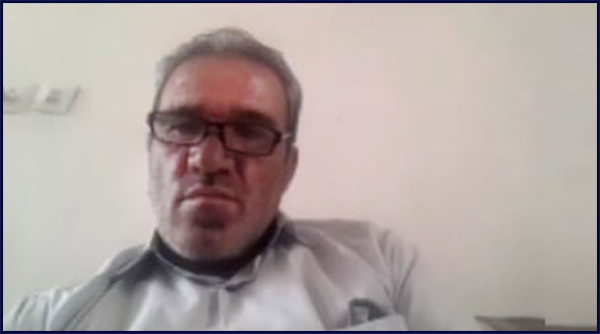
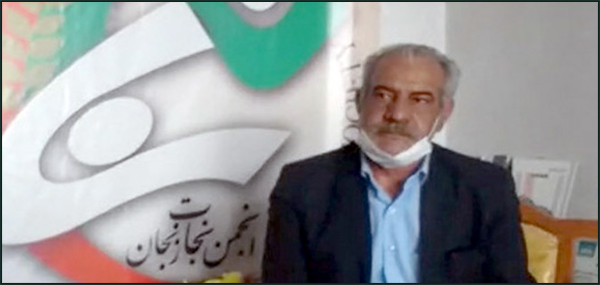
Fereidoon Moradkhani; the brother of Davood Moradkhani
Mujahedin Khalq Organization members' families

Moradkhani: We never forget our loved ones in the MEK

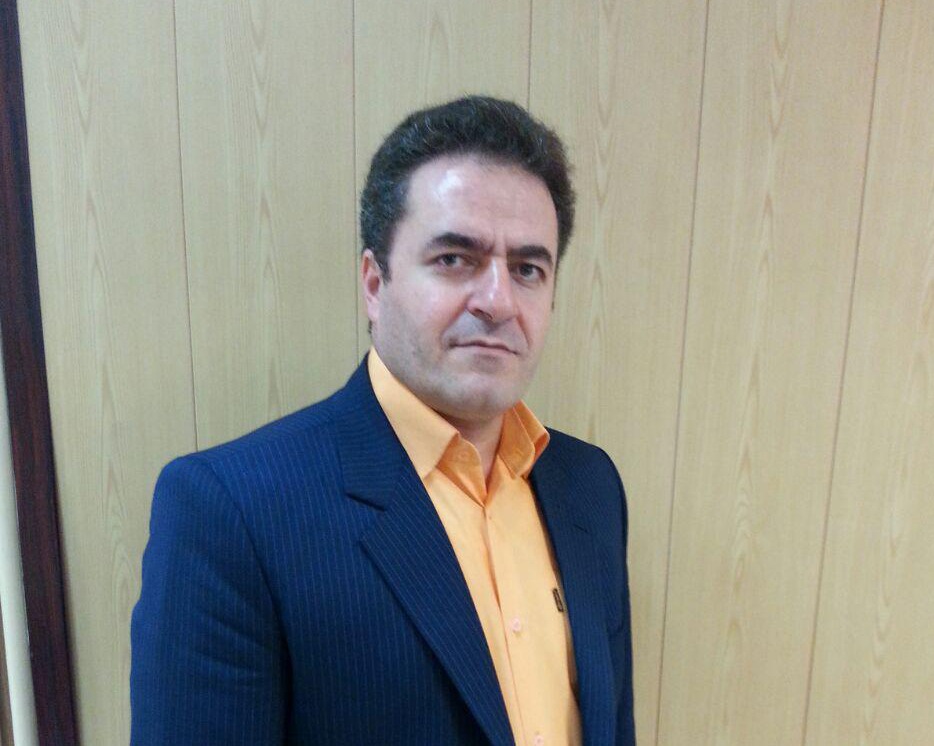
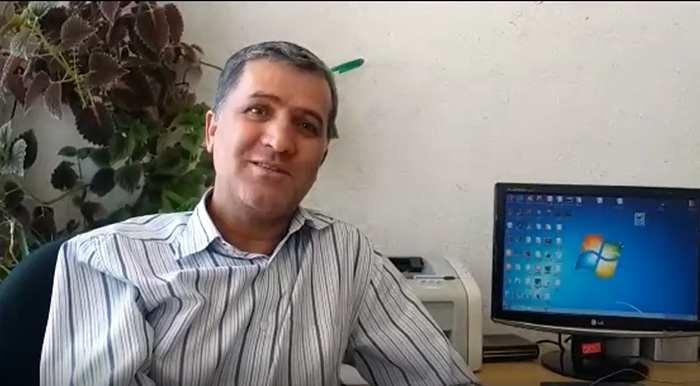
Fereidoon Moradkhani is the brother of Davood Moradkhani. Fereidoon attended the on-line conference held by Nejat Society, last month. Fereidoon has not been able to contact his brother Davood who has been taken as a hostage by the Mujahedin Khalq Organization (MKO/ MEK/ PMOI/ Cult of Rajavi) for 31 years.

Fereidoon addressed the conference:
“…My brother Davood Moradkhani was taken as a prisoner of war by Iraqi forces in the Iran-Iraq war in 1985. He was jailed in Romadi camp for five years. The MEK recruiters came to the camp and promised him to take him to Europe. Davood went to MEK’s Camp Ashraf but it was a one-way path. There was no exit. We have not met him for 35 years. The horrific cult of Rajavi does not value my brother even as a prisoner sentenced to death; he has been deprived of having any contact with us, his family.”

Fereidoon Moradkhani; the brother of Davood Moradkhani

Fereidoon Moradkhani; the brother of Davood Moradkhani

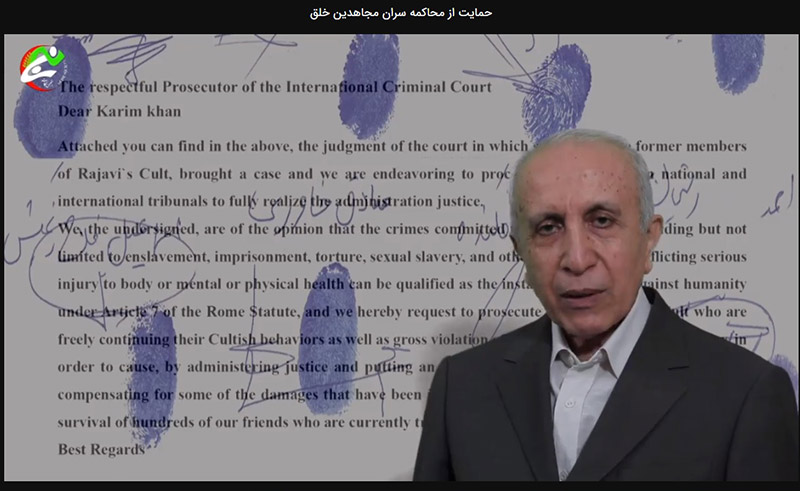
Fereidoon Moradkhani declared his support for the action taken by 42 former members of the MEK to bring the leaders of the group to justice. “My family and I signed the petition to support the petitioners,” he said. “We never forget our loved ones in the MEK. We are terribly concerned about their heath during the Covid Pandemic in the group’s camp in Albania.”

He also appreciated the efforts of Nejat Society to call out the voices of suffering families of MEK hostages. “These actions lit up a spark of hope in our hearts,” he added. “There are numerous individuals like my brother who were brainwashed by the cult and their life was ruined under the shallow promises of the cult.”

Moradkhani spoke of his several trips to Camp Ashraf, Iraq, where he was not allowed to have a short visit with his brother but he and other families picketing there were insulted and attacked by the group agents.

Fereidoon Moradkhani ended his speech saying, “Expressing my hatred toward the horrible treasonous cult of Mojahedin, as the representative of my other siblings, I declare my support for the trial of the group leaders and I demand all individuals and organizations related to this case including the High commissioner of Human Rights of the UN and the International Court of the Hague to aid us paving the way to contact our beloveds who are behind the bars of the Cult of Rajavi in Manza, Albania.”

September 11, 2021 0 comments
FacebookTwitterPinterestWhatsappTelegramSkypeEmail
Mujahedin Khalq Organization members' families

My brother does not enjoy any human rights in MEK

Zahra Gholizadeh is the sister of a man who has been taken as a hostage by the Mujahedin Khalq Organization (MKO/ MEK/ PMOI/ the Cult of Rajavi) for many years. Ali Gholizadeh was very young when he was taken as a war prisoner by Iraqi forces in the Iran-Iraq war. He was then kidnapped by the agents of the MEK in Iraq camps. Since then, he has been barred from contacting his family in Iran.

Zahra participated the last month’s online conference of Nejat Society speaking for the audience who included former members of the MEK and families of other members who are taken as prisoners in the MEK’s camp in Albania.

Zahra Gholizadeh - Ali Gholizadeh sister

Zahra Gholizadeh

Introducing herself to the audience Zahra said, “I am here as the representative of my family. My brother was a POW in the early years of his adolescence and the damned Saddam Hussein gave my brother to the Cult of Rajavi that deceived him by dishonest promises.”

Appreciating the actions taken by the conference organizers, she asked all human rights bodies to aid the families who are looking forward to visit their loved ones in the MEK. “We just want our brother,” she said. “The cult of Rajavi deprives my brother from his most basic right which is contacting his family.”
Explaining about the efforts made by her family to contact her brother, she said, “I myself traveled to Ashraf three times but the cult did not allow us to visit Ali.”

Ali Gholizadeh - MEK hostage in Albania

Ali Gholizadeh

Zahra Gholizadeh and her family got pleased when they were informed that Ali was relocated in Albania but “nothing changed”. They were never allowed to travel to Albania to meet thier brother. “We wrote a lot of letters to my brother but there was no answer,” she said.
“Isn’t it the right of my father to know about his son,” she wondered. “What a rule, what a religion, what an ethic separates a child from his family?” Calling on the human rights bodies she stated, “My brother does not enjoy any human rights.”

Announcing the support of her family for the petition submitted by 42 former members of MEK to the International Court of the Hague, Zahra Gholizadeh expressed hope that the petition would be a preliminary for the release of his brother from the cult of Rajavi.

September 11, 2021 0 comments
FacebookTwitterPinterestWhatsappTelegramSkypeEmail
US and terrorists
Iran

Iran Blasts Western Countries support for MEK terrorists

Iran’s Judiciary Chief Gholamhossein Mohseni Ejeyee blasted the western countries allegations about violation of human rights by the Islamic Republic, saying that such claims are disgraceful lies.

Mohseni Ejeyee categorically dismissed the human rights accusations leveled against Iran by some western states and described such a move as disgraceful at a time when the West does not show any respect for human rights.

The Iranian judiciary chief, meantime, referred to the anti-Iran Mojahedin-e Khalq Organization (MKO also known as MEK, NCRI or PMOI) terrorist group which is operating against Iran in some western countries with the backing of those governments.

“The hypocrites (MKO members) who assassinated and martyred thousands of innocent people, tortured in the harshest way, and destroyed people’s property, today are welcomed and sheltered by some human rights advocates and even appreciate them while considering the Islamic Republic a violator of human rights.”

In a relevant development last month, Iran’s High Council of Human Rights in a statement on Monday rapped the US and other western states for instrumental use of terrorist groups to attain their colonial goals.

“The systematic support of the US regime and the western governments for terrorists and their affiliate streams across the world is a manifestation of their false claims about fighting terrorism and displays the instrumental use of this capacity to advance their colonial goals,” the Council said in a statement on the occasion of the anniversary of the martyrdom of Iran’s late president Mohammad Ali Rajayee and former prime minister Mohammad Javad Bahonar by the MKO terrorist group.

It added that silence and passivity towards terrorism anywhere in the world and the classifying terrorism into good and bad is the main capacity for the spread of terrorism in all parts of the world, and no government or nation will be safe from its consequences.

The statement lashed out at certain governments and international bodies for their silence on the cruelest crimes against the Iranian nation in the past 4 decades and sheltering the anti-Iran terrorists, and said, “They are the main culprits behind the spread of terrorism in the world.”

The MKO is listed as a terrorist organization by much of the international community. Its members fled Iran in 1986 for Iraq, where they received support from then-dictator Saddam Hussein.

The notorious outfit has carried out numerous attacks against Iranian civilians and government officials for several decades.

In 2012, the US State Department removed the MKO from its list of designated terrorist organizations under intense lobbying by groups associated with the Saudi regime and other regimes adversarial to Iran.

A few years ago, MKO members were relocated from their Camp Ashraf in Iraq’s Diyala Province to Camp Hurriyet (Camp Liberty), a former US military base in Baghdad, and were later sent to Albania.

Those members, who have managed to escape, have revealed MKO’s scandalous means of access to money, almost exclusively coming from Riyadh.

The MKO terrorist group specified the targets as martyred Lieutenant General Qassem Soleimani, who commanded the Quds Force of the Islamic Revolution Guards Corps (IRGC), and Iranian Judiciary Chief Seyed Ebrahim Rayeesi.

The terrorist organization said it would “welcome” their assassination, adding that it desired for the ranking officials to “join” Asadollah Lajevardi, Tehran’s former chief prosecutor, and Ali Sayyad-Shirazi, a former commander of the Iranian Army’s Ground Forces during Iraq’s 1980-88 war against Iran.

Earlier in June 2019, leaked audio of a phone conversation between two members of MKO, revealed Saudi regime has colluded with the MKO elements to frame Iran for the tanker attacks in the Persian Gulf.

In the audio, which is being released by the Iran Front Page for the first time, Shahram Fakhteh, an official member and the person in charge of MKO’s cyber operations, is heard talking with a US-based MKO sympathizer named Daei-ul-Eslam in Persian, IFP news reported.

In this conversation, the two elements discuss the MKO’s efforts to introduce Iran as the culprit behind the tanker attacks in the Persian Gulf, and how the Saudis contacted them to pursue the issue.

“In the past week, we did our best to blame the [Iranian] regime for the (oil tanker) blasts. Saudis have called Sister Maryam (Rajavi)’s office to follow up on the results, [to get] a conclusion of what has been done, and the possible consequences,” Fakhteh is heard saying.

“I guess this can have different consequences. It can send the case to the UN Security Council or even result in military intervention. It can have any consequence,” Daei-ul-Eslam says.

Attacks on two commercial oil tankers in the Gulf of Oman on June 13, 2019, and an earlier attack on four oil tankers off the UAE’s Fujairah port on May 12, 2019, have escalated tensions in West Asia and raised the prospect of a military confrontation between Iran and the United States.

The US, Saudi Arabia, and the UAE have rushed to blame Iran for the incidents, with the US military releasing a grainy video it claimed shows Iranian forces in a patrol boat removing an unexploded mine from the side of a Japanese-owned tanker that caught fire earlier this month.

It later released some images of the purported Iranian operation after the video was seriously challenged by experts and Washington’s own allies.

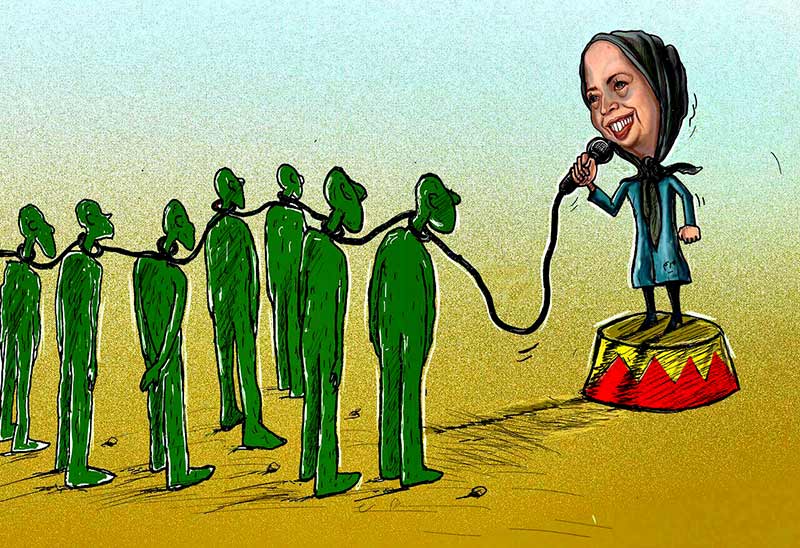
The MKO which is said to be a cult that turns humans into obedient robots turned against Iran after the 1979 Islamic Revolution and has carried out several terrorist attacks killing senior officials in Iran; yet the West which says cultism is wrong and claims to be against terrorism, supports this terrorist group officially.

After the Islamic Revolution in 1979, the MKO began its enmity against Iran by killing over 17,000 Iranians and terrorist activities. Several members of the terrorist group and its leaders are living in France now, freely conducting terrorist activities.

The MKO terrorist group has martyred 17,161 Iranian citizens, including late president Mohammad Ali Rajayee, former prime minister Mohammad Javad Bahonar, late Head of Supreme Judicial Council Ayatollah Mohammad Beheshti, late Deputy Chief of the Iranian Armed Forces General Staff Ali Sayyad Shirazi, and 27 legislators, as well as four nuclear scientists.

September 11, 2021 0 comments
FacebookTwitterPinterestWhatsappTelegramSkypeEmail
Ali Fatehi Mum
Mujahedin Khalq Organization members' families

Mother of MEK member: The appeal to ICJ court warms my heart

Mehrangiz Rezai is an elderly mother of one of the victims of the Mujahedin Khalq Organization (MKO/ MEK/ PMOI/ Cult of Rajavi). She has not seen her son for over 35 years.

Ali Fatehi, Mehrangiz’s son was a soldier in Iran-Iraq war when in 1988 he was taken as a war prisoner by Iraqi forces. He was then recruited by the MEK and since then he has not been allowed to contact his family.
Mehrangiz attended the on-line conference held by Nejat Society last month. She addressed the audience expressing her support for the appeal made by 42 ex-members of the MEK that was submitted to the international court of the Hague.

Ali Fatehi Mum

Mehrangiz Rezai ; Mother of Ali Fatehi – MEK hostage at Camp Ashraf 3 in Albania

“I pray for the success of their appeal in the court,” she said. “This warms my heart and gives me hope for the release of my son from the Cult of Rajavi. At least, I will be able to have my son in the few days left of my life.”
Appreciating the efforts of the organizers of the conference, Mehrangiz Rezai considered it an occasion for families of MEK hostages to open up to each other about their sufferings and offer sympathy to each other.

September 9, 2021 0 comments
FacebookTwitterPinterestWhatsappTelegramSkypeEmail
MEK women - female torturers
The cult of Rajavi

Female torturers of the MEK cult

In January 2021, Damien McGuinness of BBC published an investigated report on “Nazi Ravesbruck camp”, where “female SS guards enjoyed home comforts at a camp where they tortured thousands of inmates”.

Presenting testimonies of victims of these women, the author of the article suggests, “Sometimes the women are portrayed as exploited victims. At other times as sadistic monsters.” He points out a very crucial fact about female tortures who are dedicated to the cause of an ideology, “The truth is more horrifying. They were not extraordinary monsters, but rather ordinary women, who ended up doing monstrous things.”

Nazi Ravesbruck camp

Nazi Ravesbruck camp

What the BBC correspondent concludes is true in other ideological, extremist movements. In September, 2017, Jane Lavender of the Mirror reported on “horrifying confessions of female ISIS torturers” who revealed they enjoyed hurting women – especially in front of dads and husbands. The woman was a member of an all-female jihadist gang and told how she relished torturing her female victims in front of their distraught families. “The terrifying reality of life as a female ISIS torturer has been laid bare as a deserter reveals she “enjoyed” hurting other woman”, write jane Lavender.

ISIS women

female tortures in the ISIS

This was not the only report on female tortures in the ISIS. Other news outlets such as Aljazeera and Daily Mail published accounts on female jihadists who killed and tortured people in Syria, as a new horrific phenomenon in the history of human rights abuse. However, the international community must come to know that female torturers could have been found in the Mujahedin Khalq Organization (MKO/ MEK/ PMOI/ Cult of Rajavi) since the group’s leader, Massoud Rajavi, settled the hegemony of women in his cult of personality, during the 1980’s.
The news media have not been able to cover firsthand accounts on female torturers in the MEK because the group severely controls arrivals and departures of its camps. Nonetheless, the testimonies of defectors of the group, who expose dreadful facts on maltreatments and tortures committed by MEK commanders, mostly female, against their own members, are simply accessible.

Maryam Sanjabi

Maryam Sanjabi

Maryam Sanjabi, escaped the Cult of Rajavi in 2009. She eventually wrote a book about her experience of living inside the MEK. She writes of female commanders who interrogate and torture dissident members inside the cult-like system of the MEK.

Mahvash Sepehri

Mahvash Sepehri

“Mahvash Sepehri was one of the major commanders to suppress every voice of dissent in the group,” Maryam writes. “About two hundred members were tried by Mahvash Sepehri. They were eventually jailed in solitary confinement, mentally and physically tortured.” Maryam Sanjabi believes that Mahvash Sepehri is the responsible for killing a girl named Nasrin Ahmadi under torture.

Mohammadreza Mobin

Mohammadreza Mobin

Mohammad Reza Mobin, former member of MEK wrote a series of articles on female torturers in the Cult of Rajavi. He revealed horrific facts on how members of the group were interrogated and tortured by female commanders. In particular, he explained about a woman named Forough Pakdel.

“Forough Pakdel was one the main commanders who tortured me,” he writes. “Along with Fazel, she interrogated me. They almost tried to kill me during the six months of solitary confinement.” MohammadReza endured the most sever tortures, as he says, only because he had criticized the leaders’ discriminatory attitude toward members.

Nasrin Ebrahimi

Nasri Ebrahimi, a female ex-member of the MEK joined the group when she was only 14. It took her only two years to be a victim of torture by female commanders. “The interrogators were usually, Fahimeh Arvani, Forough Pakdel, Mahnaz Bazzazi, Mehri Haji Nezhad, Batul Rajai and Hajar Tahmasbi,” Nasrin says.
“They wanted me to confess that I was the agent of the Iranian regime and I did not want to confess such a false allegation.”, Nasrin says. “During the entire time of the interrogation sessions Mahnaz Bazzazi and Forough Pakdel were shouting at me, calling me names.”
About the human rights violations committed by female commanders of MEK, the testimonies of former members are countless. Women in the MEK commit crimes, due to the same reasons that other women in Nazi and ISIS establishments committed them.

In a radical system, moral boundaries can be simply transformed or removed. The leader who rules the system –that can be Hitler, Abubakr Baghdadi or Massoud Rajavi—allows violence. In these totalitarian systems, members are charged with strict tasks in the hierarchy. The tasks should be done without any excuse. As a result, any criminal task is normalized in the hierarchy. Victims of the violence are considered as not being human kinds.
Female commanders of the MEK are brainwashed in such a radical totalitarian system that can turn ordinary women to torturers.

Mazda Parsi

September 9, 2021 0 comments
FacebookTwitterPinterestWhatsappTelegramSkypeEmail
MEK members' at camp ashraf
The cult of Rajavi

The soldiers of despair

She was about twenty when she left Iran in 1995 together with her husband, Haidari, and her two daughters, Elahe and Roya. The couple arrived in the Netherlands, where they applied for political asylum. The government refused it. The Mojahedin contacted her husband and asked him to join. Having been never politically involved before, he hesitated. His wife explains: “they told us that if we joined the organization, they would help us obtain political asylum in Holland”. Hoping to legalize their situation, they agreed to collect funds (She uses the word “beg”) for the organization.

Three years later, propaganda and brainwashing has succeeded in convincing the couple to move to Iraq. The trap slowly closed on them. Massoumeh was forced to give her two children to an Iranian nurse, a member of the movement. In 1998, using a forged passport,she arrived in Iraq, via Belgium and Jordan. Her husband joined her one week later. The young woman states: “I was personally seduced by Maryam Rajavi’s position on women’s liberation and by the idyllic picture they painted of the situation in Iraq. But we were soon confronted by a reality that was far less attractive”.

The peoples Mujahidin of Iran: A Struggle for what

As soon as they arrived in Ashraf camp, the Haidaris were separated from each other. They agreed, in writing, to end their married life, to break completely with their families and to write a daily report summarizing what they did, heard and saw. They conformed to the group and underwent military training. Massoumeh learned to handle many different weapons, maintain liaison between networks operating on both sides of the border and even to carry out bomb attacks inside Iran.

In 2001, this young “people’s fighter” took part in an operation in Tehran itself. She marched dozens of Kilometers into Iran, with her fellow women commandos, carrying thirty Kilograms of explosives. On the way back, she was arrested near the town of Ourumieh. After intensive interrogation in the police station,she admitted everything she knew about the organization and was sent to prison. One year later, she was freed and returned to live with her parents in Tehran. But her troubles continue: her husband is still in the Ashraf Camp and does not know that she is alive. Her “death” was announced in “al-Qamar al-Monir”: or “shining Moon”,her nom de guerre.she has had no news of her children, Elahe and Roya, aged nufrse with whom they wee placed is to longer in service. The Netherland success. They remain missing. Have they,too, been sent to Iraq?

Describing the situation among the Mojahedin at the time she left Camp Ashraf, Massoumeh says:” the fighters were weary and losing hope. Those who admitted this were harshly disciplined. I did not know that there were special prisons for Mojahedn. I learned that later from former members I met after I returned to Iran. In fact, we were very badly informed about what went on inside Iraq and knew even less about events outside the country. We had no access to newspapers,magazines or books. Our only source of news was the movement’s own television station. There were no holidays. The few times we left the camp, it was only to bring a sick person to a Baghdad hospital and return right away. All emotional ties were forbidden by the organization. For example, we were not allowed to keep photographs of our own children, write letters to them or our parents, or become friends with anyone else. Since sexual relations had been banned, women could not become pregnant or have babies”.

From the book: The People’s Mojahedin of Iran: A Struggle for what? “By Victor Charbonnier

September 8, 2021 0 comments
FacebookTwitterPinterestWhatsappTelegramSkypeEmail
Mohammd Hussein Sobhani
Human Rights Abuse in the MEK

Sobhani spent eight-and-a-half years in solitary confinement inside MEK camp

Mohammad Hussein Sobhani spent eight-and-a-half years in solitary confinement inside the MKO’s main camp in Iraq, Camp Ashraf, from September 1992 to January 2001. He was subsequently held in Abu Ghraib prison and left Iraq in 2002.

Sobhani first came in contact with the MKO in 1977, a year before the anti-monarchy revolution. By 1979, he was working “professionally and full time” with the organization. When the headquarters of the armed wing of the organization relocated inside Iraq, he followed suit. By 1991, he had risen in the ranks of the organization and had become a member of the Central Committee. However, ever since the “ideological revolution,” when divorces were mandated, he became uncomfortable with the path pursued by the leadership. His differences with the leadership of Masoud and Maryam Rajavi and other members of the Central Committee reached a climax in 1992. Masoud Rajavi argued for remaining in Iraq regardless of the end of the Iran-Iraq war and Saddam Hussein’s defeat in the first Gulf War in 1991, he said. Rajavi still hoped that fighting between Iran and Iraq would resume, and based the organization’s strategy on such a development. Sobhani says he found the possibility of a new war highly unlikely given the dismal state of Iraq’s armed forces. Other members of the Central Committee saw his arguments as a challenge to the Rajavis’ leadership:

Mohammd Hussein Sobhani

Mohammd Hussein Sobhani

As long as my criticisms were mild, I was left alone. But as soon as I persevered in my questioning, their behavior changed dramatically. In the beginning, I discussed my concerns personally with the leadership, Maryam and Masoud Rajavi. I also brought up my concerns with other members of the Central Committee. These discussions reached a dead-end. Once they became certain that I didn’t share their views, on August 28, 1992, they convened a meeting (neshast taiin taklif) to determine my faith and to decide if I was staying with the organization or not. The process began with intimidation, verbal abuse, and beatings. Of course, since I was a high ranking official, I was treated better than ordinary members. I was told that my criticisms and questions were just an excuse to quit the struggle. Their conclusion was that I was a quitter (borideh) and didn’t have the strength to continue the struggle any longer.

On August 31, 1992, Sobhani was moved to a prison and kept under solitary confinement for the next eight-and-a-half years.

After the first two months in prison, all of my beliefs in the organization fell apart. Up to that point I considered my differences with them as a matter of divergent political views; I wasn’t questioning the MKO’s underlying essence. I used to mark my prison walls each time I was subjected to severe beatings. There were many occasions of lesser beatings, but on eleven occasions I was beaten mercilessly using wooden sticks and thick leather elts.
Sobhani was handed over to Iraqi officials in January 2001. He spent one month in mukhabarat prison and then transferred to Abu Ghraib. He was held in Abu Ghraib until January 21, 2002, when he was repatriated to Iran in exchange for Iraqi POWs. In Iran, he was detained and interrogated by the Iranian government. After three days, he escaped from a low security detention center and fled Iran. He is currently living in Europe.

September 8, 2021 0 comments
FacebookTwitterPinterestWhatsappTelegramSkypeEmail
Ann Singleton
Mujahedin Khalq Organization

MEK celebrates its 57th anniversary as what?

On 5th September the People’s Mojahedin e Khalq celebrated its 57th anniversary. But here’s a serious question: ‘As what?’ Is the MEK a terrorist group; a propaganda merchant; a mercenary militia group; a resistance movement; a liberation force; a democratic, feminist opposition group; a government in waiting?

These are some of the descriptions attached to it by observers and by itself over its five-decade history. Sometimes it’s hard to pin down this chameleon like group. Just what, specifically, is the MEK?

Until recently, the MEK kept company with extreme Neocons, Israeli Zionists and Saudis; John McCain, John Bolton, Rudi Giuliani, even Mike Pompeo headlined the MEK’s act. Basically, anybody who took an extreme anti-Iran stance and was prepared to embrace the MEK was welcomed as an ally. Money, of course, changed hands. With a new Democratic president in the US and a new Israeli prime minister, it remains to be seen which version of itself the MEK needs to publicly promote. Whatever that may be, its current attachments, loyalties and pay masters place the MEK at the very heart of what used to be described as American Imperialism.

MEK proxy force for Israel and Saudi Arabia

So, the irony cannot be lost on us that the MEK of today purports to celebrate its 57th anniversary as an armed anti-Imperialist group. The MEK was created in response to the deadly oppression of the Shah and US Imperialism in Iran. The MEK’s founders believed that peaceful protest would not bring about the profound change needed to oust the Shah and his western backers and declared armed struggle. As part of this armed struggle, the MEK assassinated six American personnel in Iran and targeted western interests such as airline offices in Tehran with violent attacks.

After the 1979 revolution led by Ayatollah Khomeini, the MEK declared victory over US Imperialism. Its newspaper declared its extremist stance: ‘Let’s Create Another Vietnam for America!’ In its first two decades, the MEK attracted militant youth, prepared to kill and die for this cause. Those who have survived from those days make up the majority of the current MEK membership. After the mid-1980s, MEK leader Massoud Rajavi converted the group into a personality cult, using sophisticated psychological manipulation techniques to brainwash current and new members into obeying his whims. At this point, the terms of struggle became irrelevant, as every member’s real struggle was to stay loyal to an increasingly autocratic and unhinged set of terms: divorce your spouse and send your children away in order to focus solely on my leadership. Avoiding punishment and shunning became the fundamental preoccupation of every member.

Today, five decades on, it is unclear now whether these radicalised (brainwashed) members are able to think and gain the perspective needed to assess their predicament. Which is, the organisation they joined and devoted their whole lives to is built on the shifting sands of political and financial expediency and the base cowardice of Massoud Rajavi. The MEK of today is almost the opposite of the one they joined. Its ideology has evaporated and been replaced by mercenary expediency in the service of American Imperialism. So, by all means, let them celebrate 57 years of the MEK’s existence. But defining what that existence means has become an impossible dissociative conundrum for each and every member.

September 7, 2021 0 comments
FacebookTwitterPinterestWhatsappTelegramSkypeEmail
MKO children
Human Rights Abuse in the MEK

Children; victims of MEK destructive cult

In the history of religious and destructive cults, children have always been the first victims. Whereas, among militant political groups around the world, there are few cases whose stories are as tied to children as the Mojahedin-e Khalq Organization (MeK).

In 1990 and 1991, the MeK separated about 700 children from their parents and sent them to European countries via the Jordanian border. Rajavi did this without the heartfelt consent of the children’s parents.

During the war with Kuwait, Massoud Rajavi separated these children from their parents and sent them to European countries under the pretext of creating a safe environment for them.

MEK children

Why Rajavi separated children from families?

In the second ideological revolution, which included forced divorce, Massoud did not have much success in the lower echelons of the organization. The inferior members opposed this order, using their children as an excuse to reject separation from their emotional partners. Therefore, Massoud who saw children as a great threat to his so-called ideological revolution thought of removing them.

The winter of 1990 coincided with the First Persian Gulf War. While Saddam was severely weakened, Massoud Rajavi used the dangerous conditions of war to achieve his sinister goals.

In fact, he was trying to carry out his sinister plan to remove the children, the enemies of the ideological revolution, from the territory of Iraq in order to guarantee his intended revolution.

Therefore, in the first step, the schools, recreation centers, and other nests of the members’ children, who numbered more than 700, were closed under the pretext of war condition. Then, they were transported to the anti-missile barracks inside the camp in fear and panic, with minimal means of survival and psychologically vulnerable conditions.

After a few weeks, the children became accustomed to the new situation, and the organization’s trick to forcibly relocate the children failed, and the parents still refused to separate them.

This time, the organization’s officials took cruel action and transferred the innocent children to Baghdad, the center of the airstrikes. Numerous bombings and the endangerment of children’s lives made it easier for the organization’s officials to obtain parental consent. So many of parents were content to move their children wherever the organization deemed expedient.

The first refuge for children after leaving Iraq was Amman, the capital of Jordan. There, the children, who had been in love with each other for years, were sent in groups to various European countries especially Scandinavian countries, Australia, Canada and the United States. Of those, more than 200 children entered Germany illegally under the pretext of leaving the Persian Gulf war. Germany was the second-largest children’s destination after Jordan.

During the presence of children in Germany, the MeK received millions of marks annually from child support associations. Children were returned to Iraq at the age of 16 after receiving organizational and ideological training.

MEK Militia

Why did Rajavi return young children to Iraq?

After sending the kids to European countries, the organization did not allow any contact between the parents and their children. Rajavi pursued some goals for returning them, such as infusing new blood into the organization which was faced with a manpower crisis. On a deeper level, in Rajavi’s eyes, it was the last chance to return those children who had their parents killed in previous operations since all of them were transferred under pseudonyms and fake identities, and as soon as they reached the legal age, they refused to return or in case of a return, they could apply to leave because they had the original card and identity. Therefore, Rajavi was able to transfer many of the children who had been transferred abroad.

September 7, 2021 0 comments
FacebookTwitterPinterestWhatsappTelegramSkypeEmail
Ms. Sedigheh Abbasi -Reza Ali Mirzaei spouse
Mujahedin Khalq Organization members' families

Sufferings of the wife of an MEK member in 36 years of separation

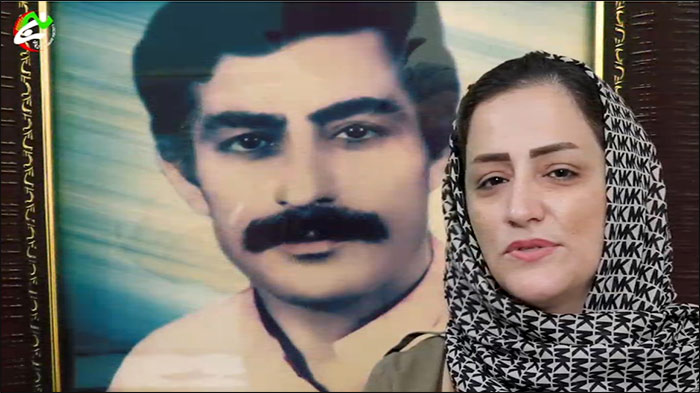
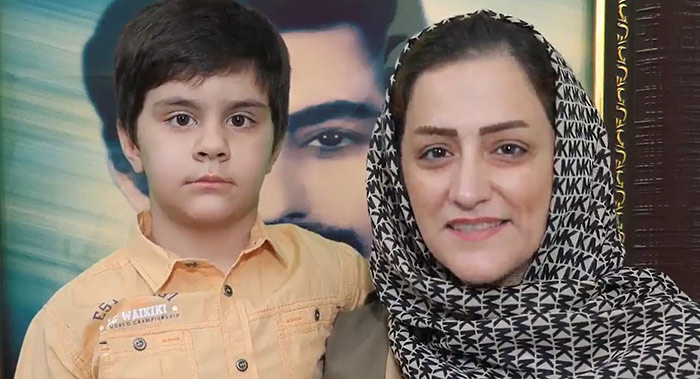
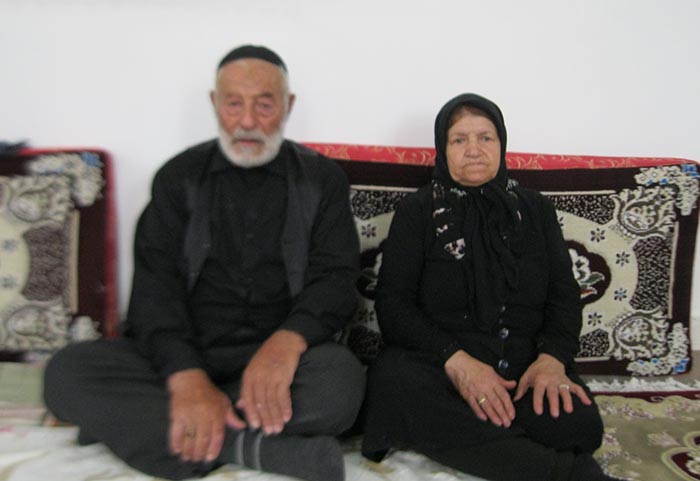
Sedigheh Abbasi had just given birth to her third child when her husband Reza was recruited by the Mujahedin Khalq Organization (MKO/ MEK/ PMOI/ Cult of Rajavi). The newly-born baby, Fatemeh has not seen her father since she was born.

Ms. Sedigheh Abbasi ; Reza Ali Mirzaei spouse

Ms. Sedigheh Abbasi ; Reza Ali Mirzaei spouse

Thirty-six years ago, Reza Ali Mirzai was deceived by the MEK and cut off from the outside world and in particular his family. Sedigheh was since then a single mother who grew her three little children in the absence of her husband. Under the cult-like pressure of the MEK system, Reza has not even called them during these years.
While the couple’s children, Mohammad, Mehdi and Fatemeh are all married and have children, their father, Reza is not allowed to call them or make a video call. Members of the MEK do not have access to the Internet, telephone and smart phones in the group’s Camp Ashraf.

Reza Ali mirzaei family

However, the Mirzais have not stopped taking different actions to find a way to contact Reza. They have published open letters to the international bodies. They have written letters to the Albanian authorities. They have published video and text messages to their beloved father, as the last resorts to contact him.
“Reza please come back home,” Sedigheh tells her husband in her recent video message. “Come back here, let’s build a new life together.” She tries to make him sure that he will enjoy a normal life in Iran after leaving the MEK.
“You children need you,” she tells Reza. “Your grand children want to see their grandpa.”

September 7, 2021 0 comments
FacebookTwitterPinterestWhatsappTelegramSkypeEmail
Newer Posts
Older Posts

Recent Posts

  • MKO Rally Dispersed by French Police in Humiliating Blow to Terrorist Group

    June 27, 2026
  • Nejat Society Albania’s Conference on June 20th

    June 22, 2026
  • Maryam Rajavi’s Stance, Peace or Survival Tactic?

    June 22, 2026
  • France’s foreign ministry denies asking for ban of MEK’s rally

    June 20, 2026
  • The MEK did not allow them to visit their father

    June 20, 2026
  • Facebook
  • Twitter
  • Instagram
  • Youtube

© 2003 - 2025 NEJAT Society . All Rights Reserved. NejatNGO.org


Back To Top
Nejat Society
  • Home
  • Articles
  • Media
    • Cartoons
    • NewsPics
    • Photo Gallery
    • Videos
  • Publications
    • Books
    • Nejat NewsLetter
    • Pars Brief
  • About Us
  • Contact us
  • Editions
    • عربي
    • فارسی
    • Shqip