Nejat Society
  • Home
  • Articles
  • Media
    • Cartoons
    • NewsPics
    • Photo Gallery
    • Videos
  • Publications
    • Books
    • Nejat NewsLetter
    • Pars Brief
  • About Us
  • Contact us
  • Editions
    • عربي
    • فارسی
    • Shqip
Nejat Society
Nejat Society
  • Home
  • Articles
  • Media
    • Cartoons
    • NewsPics
    • Photo Gallery
    • Videos
  • Publications
    • Books
    • Nejat NewsLetter
    • Pars Brief
  • About Us
  • Contact us
  • Editions
    • عربي
    • فارسی
    • Shqip
© 2003 - 2024 NEJAT Society. nejatngo.org
Rumsfeld
USA

Rumsfeld Used MEK Terrorists During And After Saddam

“The only thing tragic about the death of Donald Rumsfeld is that it didn’t occur in an Iraqi prison.”

Donald Rumsfeld, the former U.S. congressman, aide to several Republican presidents, and two-time defense secretary whose torture-laden tenure and ruinous legacy were defined by his lies in service of an unending war that’s killed at least hundreds of thousands of people, died Tuesday at age 88.

By the time he was chosen as then-President George W. Bush’s secretary of defense, Rumsfeld had already been a Navy veteran, four-term Republican U.S. congressman, and adviser to former Presidents Richard Nixon and Gerald Ford—for whom he had served as defense secretary.

In the early 1980s, President Ronald Reagan repeatedly dispatched Rumsfeld as a special envoy to Iraq, whose brutal dictator Saddam Hussein was at the time an important U.S. ally. An infamous handshake between Rumsfeld and Hussein led to the transfer of deadly chemical and biological materials from the U.S. and allies to Iraq. Hussein subsequently weaponized the components and unleashed weapons of mass destruction on both Iranian troops—with the assistance of the Reagan administration—and Iraqi Kurds during the genocidal (pdf) Anfal campaign.

Rumsfeld

As Bush’s defense secretary, Rumsfeld—who served as CEO or chairman of companies including General Instrument and Gilead Sciences—recruited an inner circle of former corporate executives to oversee Pentagon operations, including Air Force Secretary James G. Roche (Northrop Grumman), Navy Secretary Gordon England (General Dynamics), and Army Secretary Thomas E. White (Enron). So great was the influence of the arms industry in the department during Rumsfeld’s tenure that one commentator described it as “Department of Defense, Inc.”

Given his passing today, let’s do some of former Secretary of Defense Donald Rumsfeld’s greatest hits (add your own below).

Here he is, in 2002, being asked about his 1983 meeting with Saddam Hussain. Rumsfeld’s “isn’t that interesting…there I am” lives in my head rent free. pic.twitter.com/h4PifdOe1r

— Sana Saeed (@SanaSaeed) June 30, 2021

An ardent imperialist, Rumsfeld was a leading luminary of the neoconservative movement and a prominent leader of the Project for the New American Century (PNAC), whose other members included Bush administration officials such as Dick Cheney, John Bolton, Elliott Abrams, and Paul Wolfowitz.

PNAC hawks—who envisioned and strategized regime change in Iraq and elsewhere even before 9/11—lobbied vigorously for the 2003 invasion of Iraq, even though they knew the country had no connection with the September 11, 2001 attacks on the U.S. or weapons of mass destruction. When pressed on this last point, Rumsfeld offered perhaps his most infamous explanation:

As we know, there are known knowns; there are things we know we know. We also know there are known unknowns; that is to say we know there are some things we do not know. But there are also unknown unknowns—the ones we don’t know we don’t know.

In the rushed run-up to invade Iraq, Rumsfeld dutifully disseminated Bush administration lies about Hussein’s nonexistent nuclear program, while laughably asserting that the Iraq invasion had “literally nothing to do with oil.”

This is Donald Rumsfeld’s legacy:

“We know they have weapons of mass destruction. We know they have active programs. There isn’t any debate about it.

6 months later, the US invaded #Iraq. pic.twitter.com/8TRKdlkNd7

— Assal Rad (@AssalRad) June 30, 2021

The invasion of Iraq, at first called Operation Iraqi Liberation (OIL) began in the dark of night with a Navy SEAL raid on two offshore Iraqi oil platforms. The New York Times—which parroted many of the administration’s Iraq lies—hailed this as the first “victory in the battle for Iraq’s vast oil empire.”

Rumsfeld predicted a quick and easy war in Iraq. “Five days or five weeks or five months, but it certainly isn’t going to last any longer than that,” he declared in November 2002 with cocksure miscalculation. Although former President Barack Obama officially ended the Iraq War in December 2011, U.S. troops are still stationed there today—and President Joe Biden bombed the country earlier this week.

When U.S. forces conquered Baghdad, one of the first sites they secured was the Oil Ministry headquarters. Meanwhile, the Iraqi National Museum, which housed priceless ancient artifacts spanning Mesopotamia’s 5,000-year history, was being looted. Thousands of statues, manuscripts, and countless other treasures, some of them among the oldest objects created by civilized humans, were stolen while nearby U.S. troops did nothing.

“Stuff happens,” Rumsfeld flippantly replied when faced with images of the looting. “The images you are seeing on television you are seeing over and over, and it’s the same picture of some person walking out of some building with a vase, and you see it 20 times, and you think, ‘My goodness, were there that many vases? Is it possible that there were that many vases in the whole country?’”

Thousands of U.S. troops would die during the course of the U.S.-led invasion and occupation of the country, along with hundreds of thousands of Iraqis. The latter were practically ignored by Bush officials. When Rumsfeld was asked why the public only hears about the number of American war dead and not about Iraqi casualties, he cooly replied that “we don’t do body counts on other people.”

Donald Rumsfeld was war criminal. He didn’t merely “oversee” Iraq War. He was an architect, who backed extrajudicial executions and systematic torture at Abu Ghraib, Bagram, Guantanamo Bay and other prisons. He approved torture plans for Mohamedou Slahi and Mohammed al-Qahtani

— Kevin Gosztola (@kgosztola) June 30, 2021

Rumsfeld was also an instrumental figure in the Bush administration’s torture program. He signed off on torture techniques used by U.S. troops at Guantánamo Bay, Abu Ghraib, and elsewhere—places where prisoners were sometimes tortured to death. He also issued a directive allowing torturers to withhold medical care to prisoners under interrogation who had injuries as serious as gunshot wounds. Later, Rumsfeld would require doctors to certify that detainees slated for torture were certified “medically and operationally” fit for abuse.

The torture memo signed by Donald Rumsfeld, 12/2/02, authorizing 20-hour interrogations, removal of clothing, the use of phobias, and stress positions for up to 4 hours.

Note his handwriting at bottom: “However, I stand for 8-10 hours A day. Why is Standing limited to 4 hours” pic.twitter.com/F34zbkJ5HQ

— George Zornick (@gzornick) June 30, 2021

When the Abu Ghraib torture photo scandal broke, Rumsfeld—after outing the courageous soldier who exposed the abuse—lied about what he knew.

Gen. Antonio Taguba, author of an Army report (pdf) on U.S. torture at Abu Ghraib, said he met with Rumsfeld and other Pentagon brass just before the defense secretary testified to the Senate about abuse at the notorious prison. Taguba, who had seen thousands of photos of detainee abuse, says Rumsfeld asked him if what was happening in the Iraqi prison was abuse or torture.

“I described a naked detainee lying on the wet floor, handcuffed, with an interrogator shoving things up his rectum and said: ‘That’s not abuse. That’s torture.’ There was quiet,’” the general recalled.

#DonaldRumsfeld is responsible for thousands and thousands of deaths and enriching himself in the process. The least we can do is to forever link his name with “war criminal”.

— Veterans For Peace (@VFPNational) June 30, 2021

Yet Rumsfeld testified before the Senate that nobody in the Pentagon had seen the Abu Ghraib torture photos.

However, a Senate Armed Services Committee investigation concluded that “Rumsfeld’s authorization of interrogation techniques… was a direct cause of detainee abuse.”

The senators additionally asserted that it was “unconscionable and false” for leading Bush officials to blame a “few bad apples” in the military for detainee abuse in order to avoid accountability.

Neocon #WaronTerror, #Iraq war and #torture #architect #DonaldRumsfeld has passed away. His legacy of death, destruction, murder and abuse will be remembered by those who experienced it. But, his appointment with dawn has come. pic.twitter.com/v0egPcpMi4

— Moazzam Begg (@Moazzam_Begg) June 30, 2021

While fighting a war purportedly meant to defeat terrorism in some parts of the world, Rumsfeld supported terror elsewhere. Pursuing allies in the so-called War on Terror, Rumsfeld courted dictators including Uzbekistan’s Islam Karimov—who boiled political opponents alive—and the Iranian exile militants Mujahedin-e Khalq (MEK), a State Department-designated terrorist organization.

CIA personnel wait as President George W. Bush visits CIA Headquarters, March 20, 2001, Langley, VA. Photo by Brooks Kraft – Corbis for Time dcfeed

Meanwhile, a Senate Foreign Relations Committee report concluded that Rumsfeld let bin Laden escape in December 2001. The report also said Rumsfeld’s failures ultimately left Americans more vulnerable to terrorism.

It wasn’t as if Rumsfeld did not understand the real root causes of anti-U.S. terrorism. In 2004, he commissioned a task force to study the subject. It concluded that “Muslims do not ‘hate our freedom,’ but rather, they hate our policies.” The task force report cited “American direct intervention in the Muslim world,” U.S. support for dictators in countries including Saudi Arabia and Egypt, and, most of all, “the American occupation of Iraq and Afghanistan.”

Yet Rumsfeld remained an unrepentant cheerleader for war and empire until the end. Medea Benjamin, the co-founder of the women-led peace group CodePink who famously confronted the former defense secretary over his war crimes, tweeted that “his legacy of wars in Iraq and Afghanistan lives on.”

Here’s the day we introduced Donald Rumsfeld as a war criminal at the White House Correspondents Dinner. Of course, he got to eat the nice dinner and we got booted out. Crime pays. https://t.co/6OWFL39MPA

— Medea Benjamin (@medeabenjamin) July 1, 2021

“Donald Rumsfeld was a merciless war criminal who presided over systemic torture, massacres of civilians, [and] illegal wars,” tweeted journalist and The Intercept co-founder Jeremy Scahill. “That’s his legacy and how he should forever be remembered.”

Daily Beast senior national security correspondent Spencer Ackerman wrote, “The only thing tragic about the death of Donald Rumsfeld is that it didn’t occur in an Iraqi prison.”

On the bright side, Donald Rumsfeld gets to shake hands once again with Saddam Hussein AND Nixon.

— John Fugelsang (@JohnFugelsang) June 30, 2021

“Do not mourn the defense secretary,” said Ackerman. “Mourn his victims. There were nearly too many to tally, but his Pentagon refused to count anyway.

BRETT WILKINS, STAFF WRITER, commondreams

July 6, 2021 0 comments
FacebookTwitterPinterestWhatsappTelegramSkypeEmail
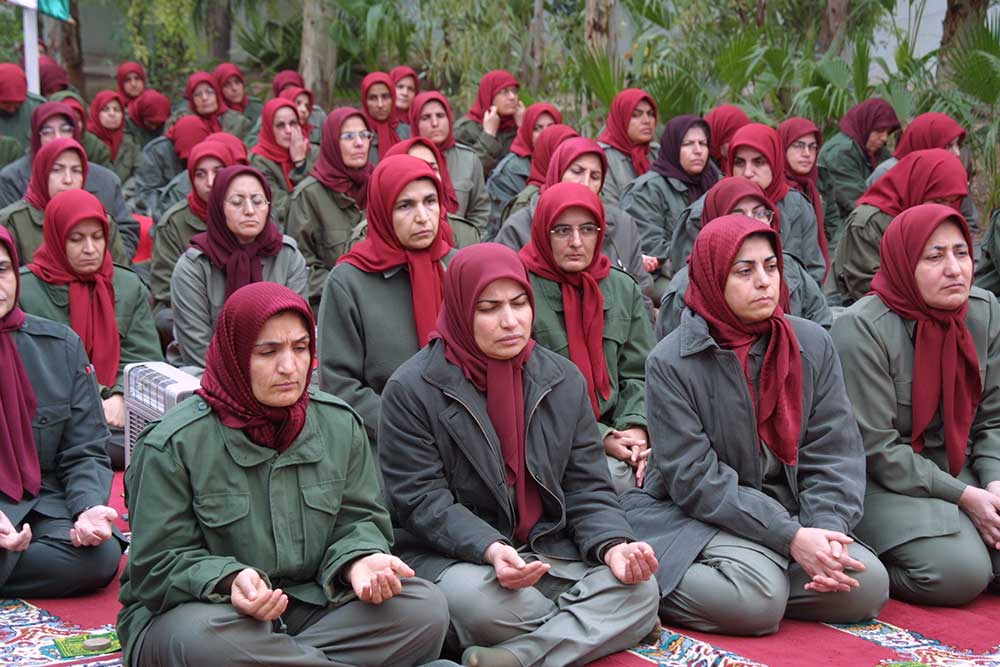
MEK Cult current operation - one of the groups self criticism sessions
The cult of Rajavi

The culture of Cult in MEK left no room for political cause

A cult is most frequently a religious or utopian group with a charismatic leader. Such groups can do a lot of damage causing anything from the breaking up of families to horrific acts of ritual murder, mass suicide and terrorist acts. Fanatical devotion to a leader, who is usually male and make claims to omniscience that are unsupported by evidence, is usually a prerequisite.

Although the Mujahedin Khalq Organization (MEK/ MKO/ PMOI/ Cult of Rajavi) takes the gesture of a pro-democracy political movement to replace the Iranian government, it has been acting like a cult during its half-a-century existence, according to the above-mentioned criteria.
The MEK has all the trappings of a totalitarian cult. The 1994 State Department report on the group documented how Massoud Rajavi the charismatic leader of the MEK “fostered a cult of personality around himself” which had “alienated most Iranian expatriates, who assert they do not want to replace one objectionable regime for another.”

However, the self-immolations that took place after the arrest of Maryam Rajavi by the French Police in June, 2003, was the tip of the iceberg of what Massoud Rajavi has done to his followers. The MEK is no longer a political movement in any case, but just a cult in which members and sympathizers worship the Rajavis and their minds are so manipulated that they cannot even think about right and wrong. The leaders think for them.

MEK self immolation

On June 17, 2003, Maryam Rajavi was arrested by the French counter-terrorism force, together with 165 MKO members in 13 offices. The police also confiscated $3 million in cash in her residence in Auver sur d’Oise, a Parisian suburb. Through the next days, a dozen of MEK members set themselves on fire in European capitals to protest the arrest. Two of them, two women, died of her burns, Neda Hassani and Sedigheh Mojaveri.
These acts of MEK members are akin to what followers of Hassan ibn Sabbah or devotees of David Koresh’s Branch Davidian did. They all qualify to be considered as destructive cults.

MEK members self immolation

When the MEK first started as a political movement, it took arms and launched several acts of terror against the Governments of Shah and Islamic Republic in Iran. A large number of civilians were killed in the attacks. As a destructive cult, the MEK is responsible for the death of even more people including its own members and sympathizers including those who were killed under torture and cult-like pressure and those who were convinced by the leaders to commit suicide and self-immolation.
While violence has been so widespread in the group’s practices, it is not considered a political movement, it is literally a terrorist cult of personality.

Mazda Parsi

July 5, 2021 0 comments
FacebookTwitterPinterestWhatsappTelegramSkypeEmail
paid advocacy
Mujahedin Khalq Organization's Propaganda System

From a Butter Company to Lobbying for Mujahedin-e-Khalq Terrorists

WHY LAND O’LAKES IS LOBBYING ON BROADBAND ACCESS: When most Americans hear the name Land O’Lakes, they think butter, not broadband. But the dairy co-op is getting into the connectivity game, or at least using its company resources to expand access in the communities where its employees work. The company back in April retained the lobbying help of a team at Cornerstone Government Affairs to assist in that effort, according to new disclosure filings, as lawmakers work to fill out a bipartisan infrastructure framework that is expected to include a hefty investment in expanding Americans’ access to high-speed internet.

— The push stems from a listening tour with farmer-owners that Land O’Lakes chief executive Beth Ford embarked on when she assumed the role several years ago, when she heard complaints across the country about challenges with connectivity, said Stacy Rich, who leads the account for Cornerstone. When the pandemic hit, exacerbating issues with access to internet, the company partnered with other corporations from Microsoft to Tractor Supply Co. to the Mayo Clinic as part of the American Connection Project, which then set up thousands of free wifi locations nationwide.

— Now, the coalition is looking to do more, but because its membership is so broad, the group has coalesced around a number of goals rather than any particular bill. The group is calling for $80 billion for broadband infrastructure, more than the $65 billion included in the bipartisan framework. The group also wants improved mapping, ways to address digital literacy, and the extension of some of the telehealth provisions that Congress approved during the pandemic.

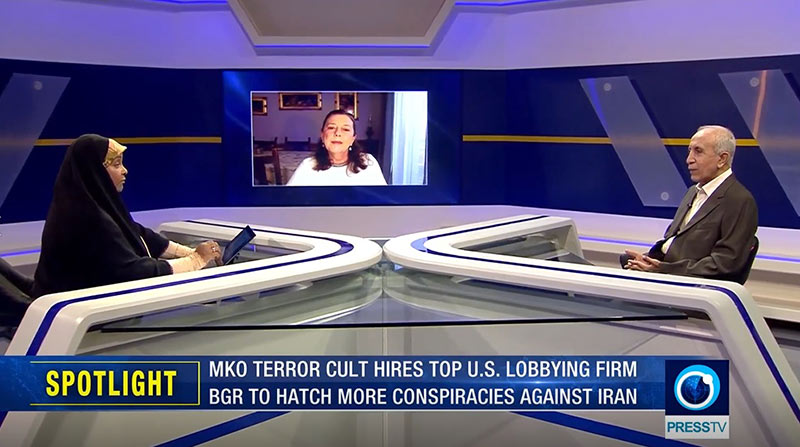
FARA FRIDAY: Here are a couple of notable recent Foreign Agents Registration Act filings, as part of our occasional Friday roundup. BGR Group has inked a $40,000 contract with the Washington office of the National Council of Resistance of Iran to help put on the controversial group’s (somewhat) annual conference, according to documents filed with the Justice Department this week. The council is an affiliate of the Mujahedeen-e-Khalq, a opposition group that’s waged a decades-long campaign against Tehran’s theocratic regime. The MEK was designated in the U.S. as a terrorist outfit for 15 years before it was delisted in 2012 after an intense lobbying campaign, and some analysts now describe the group as a cult.

— The group’s “Free Iran” conference is set to take place virtually on July 10 and will focus on calling for the investigation and prosecution of Iran’s newly elected Ebrahim Raisi over Raisi’s alleged role in overseeing the mass execution of Iranian political prisoners in the 1980s, BGR’s Jeff Birnbaum, who is working on the account, said in an interview. This week, the U.N.’s investigator on human rights in Iran backed such a probe. The conference is set to draw more than two dozen bipartisan members of Congress, according to a filing this week, including at least nine lawmakers slated to speak at the event: Reps. Brad Sherman (D-Calif.), Brad Schneider (D-Ill.), Tom McClintock (R-Calif.), Sheila Jackson Lee (D-Texas), Brian Fitzpatrick (R-Pa.), Raul Ruiz (D-Calif.), Scott Perry (R-Pa.) Don Bacon (R-Neb.) and Joe Wilson (R-S.C.). The event is also set to feature former Canadian Prime Minister Stephen Harper and former national security adviser James Jones; past attendees have included Rudy Giuliani and former Speaker Newt Gingrich.

Happy Friday and welcome to PI. We’ll be off Monday for the holiday, but I’ll be back in your inboxes Tuesday. Send me a lobbying tip and let me know how you’ll be spending the weekend. I’ll be taking a stab at the axe throwing trend so also send any advice on how not to maim myself: coprysko@politico.com. And be sure to follow me on Twitter: @caitlinoprysko.

WHITE HOUSE DEPARTURE LOUNGE?: During an interview with POLITICO Playbook co-author Ryan Lizza this morning, Biden senior adviser Anita Dunn said her time in the administration is winding down and that she would return to SKDKnickerbocker “very shortly.” Dunn ping-ponged from Biden’s campaign back to the strategic comms firm and then to the administration for what she said in an email to staffers at the time would be a temporary post. “I do believe when the president asks you directly to come serve, that you have a responsibility to serve, but this was not my intention to be at the White House full time for a longer stint,” she said this morning.

BUYER WANTED: Precision Strategies, the Democratic consulting firm founded by President Joe Biden’s deputy chief of staff, Jen O’Malley Dillon, Stephanie Cutter, a top adviser on the Biden-blessed outside group Building Back Together, and Obama campaign alum Teddy Goff, is in preliminary talks with potential buyers, POLITICO’s Theo Meyer and Alex Thompson report.

— “It’s unclear whether the firm ultimately will decide to sell” and Precision — which has done work for the DNC, corporate clients like General Electric and Lyft, and is representing the Independent Restaurant Coalition in its fight for industry pandemic aid — is staying quiet on the matter. “But two people familiar with the conversations said Cutter has discussed the possibility with associates. At a time when the political world is still adjusting to the Biden era, Precision provides some major muscle with the party in power. Its acquisition would also continue a long Washington, D.C., tradition of big firms snapping up smaller ones with ties to a new administration.”

— One such firm that has had discussions about buying Precision, per a person familiar, is British conglomerate WPP, which owns dozens of firms in D.C. and throughout the globe. Precision’s chief operating officer, Tom Reno, previously worked for Burson Cohn & Wolfe, which is owned by WPP, and the conglomerate has a record of snapping up well-connected firms in the past: During President George W. Bush’s first term, it “bought a lobbying firm co-founded by Ed Gillespie,” a top aide to his campaign and who later went to work in his White House.”

LEAKED REPORT BLAMES INDUSTRY LOBBYING, MISINFORMATION FOR CLIMATE INACTION: “A recently leaked draft report written by some of the world’s top climate scientists blamed disinformation and lobbying campaigns — including by Exxon Mobil — for undermining government efforts to reduce greenhouse gas emissions and increasing the dangers of global warming to society,” POLITICO’s Zack Colman and Karl Mathiesen report. “The draft report, which has been reviewed by POLITICO and other news organizations in recent days, is part of an upcoming review of climate science by the Intergovernmental Panel on Climate Change, a body that brings together scientists from around the globe to examine the state of climate research.”

— The draft began leaking days before an environmental activist group put out footage of one of Exxon’s lobbyists admitting the company worked with “shadow groups” that waged disinformation campaigns around climate science. It “blamed think tanks, foundations, trade associations and other third-party groups that represent fossil fuel companies for promoting ‘contrarian’ science that misleads the public and disrupts efforts to implement climate policies needed to address the rising threats.”

LOBBYING ON SURPRISE BILLING MOVES BEHIND THE SCENES: The Biden administration on Thursday published its first major regulation laying out how the federal government will implement last December’s hard-won ban on so-called surprise medical bills, but the pricey and public lobbying battle that delayed a deal on the practice has continued — this time, out of the public eye, The New York Times’ Sarah Kliff and Margot Sanger-Katz report. “Passage of the ban set off another aggressive lobbying effort over how exactly billing conflicts between providers and insurers will be resolved when the law takes effect in 2022. The same actors that made their case to Congress are now equally engaged in a behind-the-scenes effort to nudge the regulations in a more favorable direction. ‘The lobbying is very much still going on,’ said Loren Adler, an associate director of the U.S.C.-Brookings Schaeffer Initiative for Health Policy, whose research on the issue was influential among lawmakers.”
Jobs Report

— Michael Blake Bezruki is joining Lobbyit as vice president of government relations, focusing on issues related to infrastructure, housing and construction, and financial services. He was previously part of Wells Fargo’s government relations team and is a National Association of Home Builders alum.

— Deloitte has hired Logan Tucker as a senior consultant in its Federal Human Capital practice. She most recently served as deputy chief of staff and communications director for Rep. Mark Amodei (R-Nev.).

— Hamilton Place Strategies has promoted Julia Decerega and JinAh Kim to directors.

— Veronica Bonilla will be director of media relations for BAE Systems. She was most recently media director at the Aerospace Industry Association.

— Public affairs firm Prism Group recently added Maggie Ambrose, who previously worked with the European Parliament Liaison Office in Washington, as a senior associate, along with senior associate Alexis D’Amato and associate Olivia Lucanie.

— Kathryn Mitchell-Thomas is now team chief for research and engineering in the office of the assistant secretary of Defense for legislative affairs, per Playbook. She most recently was a strategic comms consultant at Booz Allen Hamilton, and is a Jim Langevin and Albio Sires alum.

— Michael Pratt is now senior group director for strategic policy, advocacy and government communicationss at Real Chemistry, Playbook reports. He previously was chief communications officer for Operation Warp Speed in the Trump administration.

Politico.com ,By CAITLIN OPRYSKO

Presented by Obesity Care Advocacy Network

With Daniel Lippman

July 5, 2021 0 comments
FacebookTwitterPinterestWhatsappTelegramSkypeEmail
MEK cult
The cult of Rajavi

Mujahedin-e Khalq cult and systematic self-harm

The Mujahedin clearly and explicitly allow themselves to use any violence to achieve their goals. This violent means can terrorize American military personnel one day and the other day it can assassinate the critic and dissident Majid Sharif Vaqefi, one day it can explode the office of Iraqi Intelligence service and the other day it can order the members to set themselves on fire in the streets.

Prior to their capture in 2003, all MEK members carried cyanide tablets in leather pouches tied around their necks. MEK assassins were instructed to swallow the cyanide if captured during a mission. Masoud Rajavi reputedly has called all MEK members “living martyrs,”

Massoud Rajavi

“As soon as the teams were selected and arranged, the members would be lodged in isolation totally cut off from other members and received no more organizational information. In fact, they had no more contact with others and reached a zero point of no updated information. Second, they would form a new profile just like ordinary people with grown beards. There were other physical, medical and psychological tests as well as recurrently going through the details of their operation and practiced them. And then, they came to the stage of going over the methods of committing suicide; how to break and swallow cyanide capsules, use hand-grenades or guns.”, Batul soltani says on suicide operation of MEK members.
Members of the group who express objections towards the leaders, will be physically and mentally tortured. If their resistance exists, they would be removed and nothing but death awaits them. They would be inevitably forced to commit suicide in some cases. Speaking at a press conference at the Iraqi Defense Ministry in Baghdad, former MKO member Maryam Sanjabi said, “When I was appointed as a senior member of the MKO leadership council, I was told that I could never leave the organization. Otherwise, I had to kill myself by taking a cyanide pill.”

July 4, 2021 0 comments
FacebookTwitterPinterestWhatsappTelegramSkypeEmail
MEK members self-immolation
The cult of Rajavi

Self-Immolation; MEK negotiating tool

Self-immolation is systematic self-harm that prepares individuals in an organization to threaten or intimidate public opinion or even the members themselves.
in 2003, there were approximately 10 self-immolations in protest of Maryam Rajavi’s arrest in Paris. The MeK has also used the threat of immolation as a negotiating tool with the JIATF, with British investigators, and with France.

MEK members self-immolation

July 4, 2021 0 comments
FacebookTwitterPinterestWhatsappTelegramSkypeEmail
Torture in the MEK Cult
Human Rights Abuse in the MEK

Eight years of solitary confinement in the MEK camps for declaring dissent

Mohammad Hussein Sobhani, went to Iraq as a member of the Mojahedin-e Khalq in the early 1980s. In 1992, Sobhani was imprisoned by the MEK after he started raising questions about the leadership’s policies.
In a telephone interview with MSNBC.com, Sobhani confirmed that he was held in solitary confinement for eight-and-a-half years inside the group’s encampment in Iraq, from 1992 until 2001, when Saddam Hussein’s government was sheltering and arming the MEK.
He said he was beaten on 11 occasions with wooden sticks and leather belts. I was beaten severely for disagreeing with them, but I thought it would not last. It lasted for years, Sobhani said.

Mohammd Hussein Sobhani

Mohammd Hussein Sobhani

He eventually was turned over to Saddam’s government and transferred to the notorious Abu-Quraib prison. In January 21, 2002 a number of 50 MKO dissident members whom were handed over to the Iraqi former dictator; Saddam Hussein by Massoud Rajavi, got released by the help of international organizations. Then he repatriated to Iran with a group of Iran-Iraq war POWs. He says he escaped from Iranian detention and made his way to Europe.
In an article on the occasion of his release from the prolonged imprisonments, Mr. Sobhani wrote:
” January 21st reminds me and others – who were prisoners of Abu Quraib, of the bitter as well as sweet memoirs of our freedom from that gruesome prison. In January 21, 2002 a number of 50 MEK dissident members whom were handed over to the Iraqi former dictator; Saddam Hussein by Massoud Rajavi, got released by the help of international organizations.
Honoring this day, I want to remind Massoud Rajavi and Mujahein-e Khalq that we do not let their treasons and crimes be forgotten….It is very bitter and regrettable to see an organization which claims to be after freedom, equality, justice, democracy and monotheistic classless society But imprisons dissent members and those who were no more willing to cooperate with the organization in solitary confinements for years and then hand them over to Saddam Hussein; the Iraqi former dictator. Saddam relatively imprisoned them at Abu Guraib prison under the name of “Mujahedin’s loan “[ Amanat-e Mojahedin ]. We, MEK dissident members, had committed no crime… “

July 3, 2021 0 comments
FacebookTwitterPinterestWhatsappTelegramSkypeEmail
MEK violence and terror
Mujahedin Khalq as an Opposition Group

Hidden and visible violence in Mujahedin Khalq

Naturally using violence against the enemy such as bombing at Islamic Republic Party Office is easier than using violence against its own members like self-immolations in June 2003. The difference shows that the basis of “hidden and visible violence” in the Mujahedin-e Khalq has become more profound and complex.

MEK violence and terror

Violence is violence. One who kills another, can burn oneself too. violence and Terror in any form or cover ,with any motivation, with plenty of sincerity has no result except strengthening violence and dictatorship .You may be able to change a dictator regime by terror and violence weapon but you would definitely replace a more completed and complicated dictatorship. The one who burns himself, will burn his rival doubtlessly, without hesitating.

July 3, 2021 0 comments
FacebookTwitterPinterestWhatsappTelegramSkypeEmail
Emamverdi (Emad) Davaji
Mujahedin Khalq Organization members' families

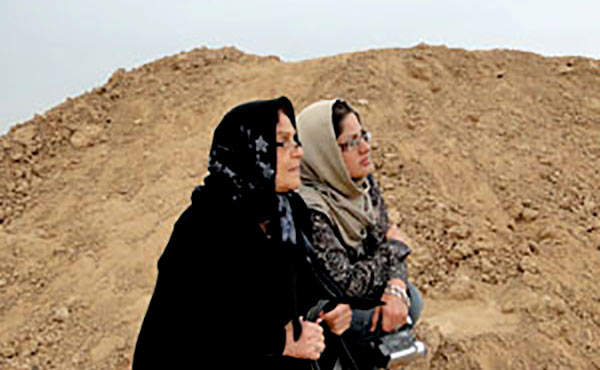
Emamverdi Davaji’s Brother: Rajavi killed my bro

“MEK glorify my brother just after his death”, Hossein Davaji Hajili said about his brother Emamverdi.
Emamverdi whose nickname in the Mujahedin Khalq Organization (MKO/ MEK/ Cult of Rajavi) was “Emad” died on June 26th 2021 after 32 years of imprisonment in the MEK.

The MEK website announced the news of Emamverdi’s death calling him the Honest Mujahed. “His father made him know Mujahedin Khalq when he was 12 years old,” MEK propaganda website claimed. “…he joined the MEK whole heartedly when he was in Iraqi prisons as a soldier.”

Emamverdi (Emad) Davaji

Emamverdi (Emad) Davaji

Hossein Davaji, heartbroken by the death of his brother after 35 years of separation told Nejat Society that his brother was only five when their father died. He clarified that their father was not a literate person and had no idea about the MEK as well as his brother Emamverdi (Emad).
“Defectors of MEK like Raufian and Roozrokh had told me that my brother was very sick, he had a heart disease and was forced to do hard labors in the MEK’s camps,” Hossein said.
Emamverdi was a soldier and only 21 when he was imprisoned by Iraqi forces. He was then recruited by MEK agents in Iraqi prison. Actually, he fled the horrible situation of Saddam’s prison but he fell in the trap of the Cult of Rajavi for 32 years.

July 1, 2021 0 comments
FacebookTwitterPinterestWhatsappTelegramSkypeEmail
Haft-e Tir bombing
Iran

The MEK admitted responsibility over IRP bombing attack

The spokesman of Iran’s government called the martyrdom of the then Chief Justice of Iran, Ayatollah Seyyed Mohammas Hossein Beheshti, a symbol of the assassination of justice and the chemical bombardment of Sardasht as a symbol of the assassination of security.

Iran Press/ Iran news: In his weekly presser on Tuesday, Ali Rabiei said: “In the last four decades, the enemies of Iran have launched a large-scale offensive to assassinate the three fundamental valuable principles; justice, security, and freedom of our nation.”

Rabiei called the assassination of martyr Beheshti a symbol of the assassination of justice.

His remarks were on the occasion of the 40th anniversary of a deadly attack by the anti-Iran Mujahedin-e-Khalq Organization (MKO) terrorist group, which killed some Iranian officials, including the then-head of Supreme Judicial Council Ayatollah Mohammad Beheshti.

On June 28, 1981, a powerful bomb exploded at Iran’s Islamic Republican Party (IRP) headquarters, where the party’s leaders held a meeting.

Haft-e Tir bombing

the MEK bombed the headquarters of the Islamic Republic Party in 1981

The bombing killed scores of Iranian officials, including Ayatollah Beheshti.

The MKO has admitted to having carried out the attack.

In a meeting with General Taher Haboush (Saddam’s intelligence chief) in 1999, the then-head of MKO Masoud Rajavi said: “As you know, I was in Paris from 1981 to 1986. We were not called terrorists in those years. Although they knew who had blown up the Republican Party in Iran … they knew who and what political process killed the president and prime minister of the regime while we were in contact with both the White House and the Elysee Palace. They knew well, but they did not call us terrorists at all.”

The MKO has made numerous terrorist attacks against Iranian civilians and government officials since the victory of the Islamic Revolution in Iran in 1979. Out of the nearly 17,000 Iranians killed in terrorist attacks over the past four decades, about 12,000 have fallen victim to the terrorist group’s acts of terror.
Washington and the European Union have removed the MKO from their lists of terrorist organizations. The anti-Iran terrorists enjoy the freedom of activity in the US and Europe and even hold meetings with officials from the US and EU.

Chemical bombing of Sardasht

Commemorating the anniversary of the chemical bombing of Sardasht, the spokesman of Iran’s government called the event a symbol of the assassination of security, saying that it was not limited to it and continued with the support of terrorist groups inside and outside Iran against the security of this nation, and with the cowardly assassination of Martyr Lt. Gen. Qasem Soleimani, they made yet another symbol of it.

The chemical attack took place on June 28, 1987, in the northwestern province of West Azarbaijan. The Iraqi warplanes dropped chemical bombs on four residential areas, which resulted in the killing of over 100 citizens and injury of 8000.

Iran’s top official explained further to call economic sanctions a symbol of the assassination of the third valuable principle: freedom, which means freedom from poverty and freedom from fear of losing the right to an honorable and dignified life.

“Of course, we have never surrendered to these evil forces of terrorism and the malicious intentions behind it, and we have no intention of surrendering,” highlighted Rabiei.

The government spokesman said: “Today, those Western nations who have granted asylum to the perpetrators of the assassination of Martyr Beheshti and other martyrs of that terrorist incident, and by supporting Saddam Hussein and equipping him with chemical weapons, must apologize to the Iranian people and answer for these crimes.”
Furthermore, in recent years, he said that by imposing inhumane sanctions which have endangered the livelihoods of millions of innocent Iranian citizens.

“However, today, we see that not only are they not remorseful, but they still insist on continuing economic sanctions and unjustly harassing our people,” the spokesman added.

He stated: “This dark background is enough to understand the roots of Iran’s distrust of the West, especially the United States.”

Rabiei added: “On the anniversary of the martyrdom of Martyr Beheshti and the chemical attack on Sardasht and the martyrdom of hundreds of other innocent people, we urge all Western governments, especially the US government, to reconsider past wrongdoing and make up for it, which at its starting point is only to end sanctions against our people’s economy. We call on them to take a step in the right direction to end the forty years of fruitless terror of freedom, liberty, and independence of a proud nation.”

Iranpress

July 1, 2021 0 comments
FacebookTwitterPinterestWhatsappTelegramSkypeEmail
Iraq’s Popular Mobilization Forces military parade
Iraq

Iraq’s PMF at former MEK Camp : What were messages?

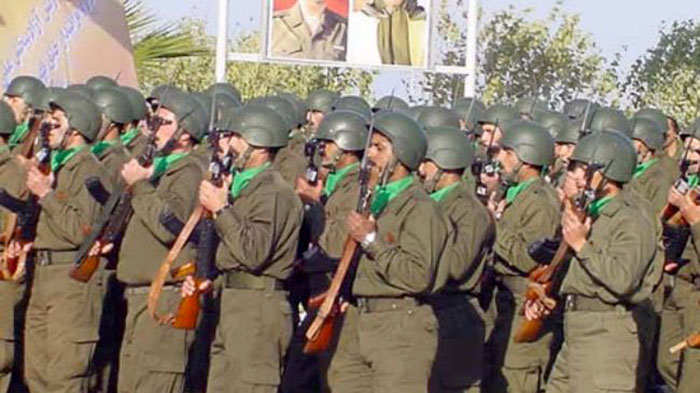
Marking the seventh anniversary of their foundation, the Popular Mobilization Forces (PMF) held a military parade for the first time on June 26. The parade was covered massively by regional and international media, with many of them suggesting that it marked the PMF entry to a new era of its life.

AhlulBayt News Agency (ABNA): Marking the seventh anniversary of their foundation, the Popular Mobilization Forces (PMF) held a military parade for the first time on June 26. The parade was covered massively by regional and international media, with many of them suggesting that it marked the PMF entry to a new era of its life.

The ant-terror movement’s parade was held at a camp in Diyala that was once called Camp Ashraf and hosted anti-Iranian terrorist organization, Mujahideen Khalgh Organization (MKO) harbored by dictator Saddam Hussein. The ceremony was attended by Prime Minister Mustafa al-Kadhimi, Defense Minister Juma Anad, Interior Minister Othman al-Ghanemi, National Security Advisor Qassem al-A’araji, the Chief of General Staff Abdelamir Yarullah, and a number other senior army commanders.

Iraq’s Popular Mobilization Forces military parade

Iraq’s Popular Mobilization Forces military parade

As mentioned, this parade enjoyed a very wide coverage from media and political observers. But the question is about the political, security, and symbolic messages that this event sent.

The interesting point is that the military procession of the PMF was held at a time when this force has been widely attacked by the enemies of the Axis of Resistance especially the US and some Arab countries in recent years. But the PMF’s demonstration of force showed that the enemies plots have gone nowhere and the voluntary units have emerged even stronger than before and continue their march towards their ideals.

PMF established in Iraq’s security and political stability

The massive parade marks the establishment of this popular force in the country’s power structure. Following ISIS attack on Mosul, the grand Shiite Cleric Ayatollah Sayyed Ali al-Sistani issued a fatwa for taking up arms against terrorism on June 13, 2014, at which point Iraqi Shiites mobilized in various units within the PMF. The popular forces’ entry to the anti-ISIS war of was game-changing to the battlegrounds.

Over 40 units constituted the PMF, with their role undeniable in obliteration of ISIS on the ground. It has around 120,000 fighters and the PM is its top commander-in-chief. Faleh Al-Fayyad is its commander and Sadegh al-Saadawi is its chief of general staff. Hadi al-Amiri is the deputy and field commander of the popular forces. The Fatah coalition represents the PMF in the Iraqi parliament. Currently, the force focuses on expulsion of illegitimate American troops from Iraq, as this agenda has legal backing provided by the parliament’s bill for the government to expel the foreign forces. Amid the home and foreign conspiracies against the PMF, the military parade has much to tell and vindicates establishment in the country’s security structure.

Legal and political establishment

It should be taken into account that since its foundation, the PMF faced internal and external opposition. The opponents call for disbanding of these forces and prevention of their activities. They argue that the PMF are parallel to the regular army. The opponents are extremely afraid of the PMF closeness to Iran, a country that provided unwavering support to the anti-terror operations. A Sunni political community, led by the former parliament speaker Osama al-Nujaifi, is the main opponent of the PMF existence. Another opponent is the Kurdish Democratic Party (KDP) led by Masoud Barzani.

In a wider range, part of secular politicians, from both Shiites and Sunnis, are opposed to these forces. Outside the country, the US is the top actor calling for their disbanding. Saudi Arabia, the Israeli regime, the UAE, and the European countries also take hostile stances against the groups. All this opposition comes while the PMF was recognized as part of Iraqi armed forces in November 2016. In March 2018, the ten PM Haider al-Abadi ordered their merger into the armed forces. The recent parade shattered the speculations about their disbandment. The presence of political and military leaders bore witness to establishment of the PMF in the nation’s political and legal establishment.

PMF, a trans-religious force in Iraq

The Parade also demonstrated that the PMF is a trans-religious and trans-sectarian force. The reality is that Iraq has been mired in sectarian tensions since 2003, but the Popular Mobilization Forces showed that it is possible to transcend religious and ethno-sectarian boundaries. In fact, although the Shiites were at the core of the PMF, Sunni Arabs, Kurds, Christians, and Yazidis also joined it, and they are still at the top of decision-making process.

By AhlulBayt News Agency

July 1, 2021 0 comments
FacebookTwitterPinterestWhatsappTelegramSkypeEmail
Newer Posts
Older Posts

Recent Posts

  • MKO Rally Dispersed by French Police in Humiliating Blow to Terrorist Group

    June 27, 2026
  • Nejat Society Albania’s Conference on June 20th

    June 22, 2026
  • Maryam Rajavi’s Stance, Peace or Survival Tactic?

    June 22, 2026
  • France’s foreign ministry denies asking for ban of MEK’s rally

    June 20, 2026
  • The MEK did not allow them to visit their father

    June 20, 2026
  • Facebook
  • Twitter
  • Instagram
  • Youtube

© 2003 - 2025 NEJAT Society . All Rights Reserved. NejatNGO.org


Back To Top
Nejat Society
  • Home
  • Articles
  • Media
    • Cartoons
    • NewsPics
    • Photo Gallery
    • Videos
  • Publications
    • Books
    • Nejat NewsLetter
    • Pars Brief
  • About Us
  • Contact us
  • Editions
    • عربي
    • فارسی
    • Shqip