Nejat Society
  • Home
  • Articles
  • Media
    • Cartoons
    • NewsPics
    • Photo Gallery
    • Videos
  • Publications
    • Books
    • Nejat NewsLetter
    • Pars Brief
  • About Us
  • Contact us
  • Editions
    • عربي
    • فارسی
    • Shqip
Nejat Society
Nejat Society
  • Home
  • Articles
  • Media
    • Cartoons
    • NewsPics
    • Photo Gallery
    • Videos
  • Publications
    • Books
    • Nejat NewsLetter
    • Pars Brief
  • About Us
  • Contact us
  • Editions
    • عربي
    • فارسی
    • Shqip
© 2003 - 2024 NEJAT Society. nejatngo.org
Amia MEK Mossad
Mujahedin Khalq; A proxy force

Resorting to bribery, Mossad info, and MEK sources to blame Iran

Revelations by a former police spy upend the official story blaming Iran for the 1994 bombing of a Jewish community center in Buenos Aires, and suggest a cover-up by dirty war elements may have let the real culprits off the hook.

Se puede leer este artículo aquí en español.

The July 18, 1994 bombing of the Argentine Israeli Mutual Association (AMIA) Jewish community center in Buenos Aires, Argentina was one of the worst pre-9/11 terrorist attacks in the Western hemisphere, killing 85 and injuring 300.

For over a quarter century, the US and Israeli governments have blamed Iran for the bloodshed, citing it as primary evidence of Tehran’s role as the world’s largest sponsor of terrorism.

This narrative remains part of the propaganda offensive against Iran, and has been exploited by the Donald Trump administration to justify a campaign of economic strangulation aimed at either destabilizing the Islamic Republic or achieving regime change.

Amia Argentine mek mossad

Soon after the bombing, the United States and Israel placed heavy pressure on the Argentine government to implicate Iran. At the time, however, officials in the embassy in Buenos Aires were well aware there was no hard evidence to support such a conclusion.

In an August 1994 cable to the State Department, US Ambassador James Cheek boasted of the “steady campaign” the embassy had waged that “kept the Iranians in the dock where they belong.” In a striking comment to this writer in 2007, Cheek conceded, “To my knowledge, there was never any real evidence” of Iranian responsibility.

Bill Brencick, the chief of the political section in the US embassy from 1994 to 1997, also acknowledged in a 2007 interview that US insinuations of Iranian responsibility were based solely on a “wall of assumptions” that had “no hard evidence to connect those assumptions to the case.”

Brencick recalled that he and other US officials recognized “enough of a Jewish community [in Buenos Aires] and a history of anti-Semitism that local anti-Semites had to be considered as suspects.” But this line of investigation was never pursued in any official capacity, likely because it contradicted the interests of a US national security state that was dead-set on indicting Iran for the bombing.

However, a dramatic development has threatened to upend the official US-Israeli narrative on the AMIA attack. In 2014, the public learned that a former spy who had infiltrated the Jewish community in Buenos Aires on behalf of Argentina’s Federal Police had revealed to two investigative journalists that he had been ordered to turn over blueprints to the AMIA building to his Federal Police case officer.

The spy was convinced the building plans were used by the real culprits behind the bombing. His stunning revelation prompted a series of articles in the Argentine press.

The former infiltrator’s account provided the first clear indication that anti-Semitic veterans of Argentina’s “Dirty War” and their allies in the Argentine police and intelligence service orchestrated the explosion.

But Argentina’s legal system — still heavily influenced by the intelligence agency that influenced the official investigation to blame Iran and a prosecutor whose career had been based on that premise — stubbornly refused to investigate the former police spy’s account.
Jose Alberto Perez infiltrated Argentina’s Jewish community on behalf of the Federal Police. He went by the name “Iosi.”

Infiltration, torture, anti-Semitic conspiracies

The former police infiltrator, Jose Alberto Perez, believed the AMIA building blueprints he had provided to the Federal Police were used by those who planned the bombing. He had learned from his police counter-terrorism training course that such building plans could be valuable tools for planning such an operation.

Perez was also convinced that the bomb had detonated inside the building, rather than in front, and had been placed in the interior of the AMIA building through a gap between it and a neighboring building. Experts of Argentina’s Gendarmerie had come to the same conclusion, and leaked it to Clarin, Argentina’s largest tabloid, just two days after the bombing.

Perez also provided crucial evidence that those who had used him to spy on Jewish community leaders were motivated by the same anti-Semitic beliefs that had led the Argentine military dictatorship to single out Jews for especially cruel treatment during the “dirty war” in the 1970s: his case officer, whom he knew only as “Laura”, had ordered him to find out as much he could from the Jewish community about the so-called “Andinia Plan.”
The Andinia Plan conspiracy theory drove the junta’s hostility toward local Jews

According to that alleged plan, Jewish immigrants and foreign Zionists had been secretly plotting to take control of the vast Patagonia region of southern Argentina and create a Jewish state to be called “Andinia.”

The myth of the “Andinia Plan” followed the rise of anti-Semitism as a major social force in Argentina during the 1930s and became a staple of the anti-Semitic right’s narrative during the heyday of military domination of the Argentine society and politics from the 1960s through the “dirty war” against leftists in the 1970s.

At least 12 percent of those subjected to interrogation, torture, and murder during the dirty war were Jews, according to an investigation by the Barcelona-based Commission of Solidarity with Relatives of the Disappeared, although they represented only 1 percent of the population. Nearly all were interrogated about the “Andinia Plan.”

The crusading Argentine journalist Jacobo Timerman, who was born to Jewish parents and whose newspaper provided critical coverage of the military regime’s “dirty war,” was among those detained in the junta’s secret prisons.

Timerman recalled in his memoir how he was asked repeatedly to reveal what he knew about the “Andinia Plan” during extended interrogation and torture sessions. His interrogator refused to accept his answer that it was merely a fiction.

Meanwhile Israel, which maintained strong military and political ties to the Argentine Junta throughout the dirty war, remained silent about the Jewish journalist’s detention throughout the war.
“Iosi” goes to the press

Jose Alberto Perez, for his part, was wracked with guilt about having enabled the AMIA terror bombing. He had become an integral part of the Jewish community, studying Hebrew for three years, marrying a Jewish woman who was the secretary of an Israeli Embassy official and even taking the Jewish version of his Spanish surname, Jose. Within the Jewish community, he was known as “Iosi” Perez.

As he fell into despair, Iosi contacted investigative journalists Miriam Lewin and Horacio Lutzky to ask their help. The two journalists had tried for years to find a foreign sponsor to grant the former spy asylum abroad but to no avail.

Meanwhile, Iosi had secretly taped a video with the prominent Argentine journalist Gabriel Levinas in which he narrated his work penetrating the Jewish community and the unusual request for the blueprints. Levinas posted the video online in early July 2014, just prior to the publication of the second edition of his own book on the AMIA bombing, which included Iosi’s story.

The release of that video prompted Lewin and Lutzky to arrange for Iosi to join Argentina’s Witness Protection Program. The two journalists also urged Argentine prosecutor Alberto Nisman, who had spent a decade accusing Iran of the bombing, to meet Iosi in person.
Alberto Nisman

But according to Lewin, Nisman would only agree to speak with Iosi on the phone. The prosecutor insisted on having three of his employees interview Iosi in person, she recalled in an interview with The Grayzone, then signed a declaration about that July 2014 meeting as though he had been present, and “did not show interest in interrogating him any further.” Iosi entered the Witness Protection Program the same day as the interview, according to Lewin.

Iosi’s Federal Police case officer “Laura,” who was retired by then, was released by the minister of security from the normal secrecy requirement about Iosi’s work. But she rejected Iosi’s testimony, according to Lewin, claiming his reports had been judged “poor.” Her claims stood in stark contrast to the actual reports obtained by prosecutors which clearly showed his findings had been evaluated as “excellent” year after year.

Lewin told The Grayzone she was confident that Iosi would have been able to provide “solid information about the local connection of the bombing,” but none of the four prosecutors who inherited the unsolved AMIA case after Nisman’s death were willing to follow up on the leads he provided.

Lewin noted that several of the senior Federal Police officials who would have been involved in the decisions to infiltrate the Jewish Community and request the AMIA blueprints were still active in 2015. That fact helps to explain why the case was left to die despite Iosi’s explosive revelations.
SIDE covers the junta’s back

Another key factor in the corruption of the AMIA investigation was the role of the state intelligence agency, known as SIDE, in influencing the lead prosecutor, Judge Juan Jose Galeano. Not only was a special unit within SIDE tasked with overseeing the Galeano’s investigation, another SIDE unit operated directly inside Galeano’s office, as journalist Sergio Kiernan reported.

SIDE proceeded to exploit its power to divert attention away from the logical suspects within the junta, circling the wagons to protect its own.

As Sergio Moreno and Laura Termine reported in the daily La Prensa, November 28, 1994, the SIDE unit handling the AMIA investigation was notorious for its hatred of Jews. The group consisted of veterans of the dirty war known as the “Cabildo” group, their name inspired by a right wing anti-Semitic magazine published in the early 1980s that had republished an infamous tract detailing the “Andinia Plan” conspiracy.

The chief of the Cabildo group unsuccessfully sued Moreno and Termine for labeling his unit anti-Semitic. Following complaints by Jewish community leaders about the Cabildo group’s role in the AMIA investigation, it was removed from the case – but not before it deflected public attention away from leaders of the dirty war and onto an alleged Iranian conspiracy.

SIDE’s PR strategy depended on the theory that the AMIA explosion emanated from a vehicle-born suicide bomb, thereby casting suspicion on Iran and its ally, Hezbollah.

The intelligence services claimed a white light commercial van had been used in the bombing. Its engine was supposedly found in the rubble on July 25, a week after the explosion.

The identification number on the engine was traced to Carlos Alberto Telleldin, the Shia owner of a shady “chop shop” operation that rebuilt damaged cars for sale. Telleldin was accused of being an accessory to the terror plot and jailed on other charges.

But the official AMIA case files revealed that Telleldin had been targeted before the AMIA bombing. This stunning fact was noticed by a “private prosecutor” hired by the organization of AMIA victims Memoria Activa.

According to a close analysis of the official evidence by Alberto L. Zuppi, a request by Federal Police to wiretap Telleldin’s phone was issued on July 20 — at least five days before the alleged discovery of the engine that led investigators to blame Telleldin.

In the weeks that followed the AMIA explosion, more evidence surfaced that pointed to Telledin’s role as a patsy.

In September 1994, five Lebanese nationals were detained as they tried to leave Argentina for Paraguay. Through a series of leaks, SIDE planted stories in the media suggesting the suspects were linked to a terrorist network.

The following month, a part-time agent for SIDE and former chief of a notorious prison camp where suspects were tortured during the “dirty war,” Captain Hector Pedro Vergez, began visiting Telleldin in prison.

In four meetings between September 1994 and January 1995, Vergez offered the jailed suspect $1 million and his freedom if he would identify two of the Lebanese nationals who were then detained in Paraguay as having purchased the van from him — thus making it possible to accuse them of the bombing. But Telleldin refused to lie, and the SIDE plan was derailed.

It was not long, however, before SIDE and Galeano initiated a new plan to implicate two Buenos Aires provincial policemen as Iranian-sponsored culprits.

Resorting to bribery, Mossad info, and MEK sources to blame Iran

In July 1996, Juan Jose Galeano personally visited Carlos Telleldin in prison and offered him $400,000 to blame the two police officers. The scandalous scene was captured in a video shown on Argentine television in 1997.

SIDE was actively involved in the cover-up operation, with agency director Hugo Anzorreguy approving a direct payment to Telleldin’s wife.

The case against the two policemen was thrown out in court in 2004, but Galeano and Anzorreguy went unpunished for another 15 years. It was not until 2019 that they were sentenced to prison terms for their role in the affair, highlighting the culture of impunity that surrounded SIDE.

Once the Galeano case imploded, Alberto Nisman attempted to craft yet another narrative blaming Iran for the bombing. For this, he depended on information provided by Israel’s Mossad to Jaime Stiuso, the SIDE official in charge of counterintelligence.

Nisman’s 2006 indictment of seven Iranian officials for the terror plot relied completely on the claims of senior members of the Mujahedin-E-Khalq (MEK), the Israeli and Saudi-backed Iranian exile cult.

Not only were none of the MEK members in any position to provide reliable information about a supposedly high-level Iranian plot because they had been actively engaged in a terrorist campaign of their own against the Islamic government by helping Iraq’s then-President Saddam Hussein select targets in Iran.

Nisman’s reliance on such unscrupulous sources demonstrated his own apparent determination to reach preordained conclusions about Iran’s guilt. It was hardly a surprise, then, that Nisman ignored Iosi’s revelatory testimony.

Nisman’s other major source, Jaime Stiuso of SIDE, was a notorious manipulator who had spent years collecting wiretaps on Argentine politicians. In 2014, the intelligence chief was working to build a case against President Cristina Fernandez de Kirchner for supposedly conspiring with Iran to eliminate the official Argentine accusation of Iranian guilt. Few observers believed the case would hold up under close scrutiny.

In January 2015, Nisman was found dead in his apartment of a gunshot wound to the head. Though political opponents of Kirchner were convinced the prosecutor’s death was the result of a government-sponsored murder, a recent documentary detailing the various investigations of his death, “Nisman: el fiscal, la presidenta y el espía,” concluded that he had committed suicide.

By the time of his death, Nisman was helping direct a disinformation campaign that allowed SIDE to cover for shadowy figures from Argentina’s violently anti-Semitic past, and to bury their likely role in the AMIA bombing.

Iosi’s testimony should have ended that cover-up, but Nisman, SIDE, and the Federal Police colluded to quash a serious investigation.

A quarter-century after the bombing, impunity for the real AMIA terrorists continues.

By Gareth Porter, thegrayzone

Gareth Porter is an independent investigative journalist who has covered national security policy since 2005 and was the recipient of Gellhorn Prize for Journalism in 2012. His most recent book is The CIA Insider’s Guide to the Iran Crisis co-authored with John Kiriakou, just published in February.
August 1, 2020 0 comments
FacebookTwitterPinterestWhatsappTelegramSkypeEmail
Eternal light
Mujahedin Khalq Organization as a terrorist group

Anniversary of Iranian Mersad Operation, an Operation that Became the Nightmare of MEK Terrorists

After Iran agreed to the terms of UN Resolution 598[1], Saddam Hussein confessed at a closed-meeting that he fully intended to renege on the terms of the ceasefire to strike Iran when it the least expected.

Wafiq al-Samarraee, then the head of the Iraqi army intelligence agency and director of military intelligence for Iran noted: “President Saddam, at a special secret meeting at the Ministry of Defense told us: ‘if we succeed in overthrowing the Iranian government, Kuwait will join Iraq, so there is a historic opportunity for a massive attack to overthrow the Iranian regime and changing it with a new government which we will elect [2].”

Ms. Manijeh Habashi who is a former sympathizer and member of the MKO, witnessed Rajavi’s overestimated invasion, the ”Eternal Light”

also read: A portrait of “Eternal Light” drawn by an Eye – witness

According to the Iraqi intelligence official, the MEK assured Saddam that should its members come to rule, Iran would forever be a friend of Iraq and thus support its policies.

The MEK / MKO was so bent on seizing power that its leadership willingly plotted a war against their own, putting millions of innocents in harm’s way. Most striking remains the group’s divorce from reality as its leaders continue, even to this day, to believe they have some form of popular legitimacy.

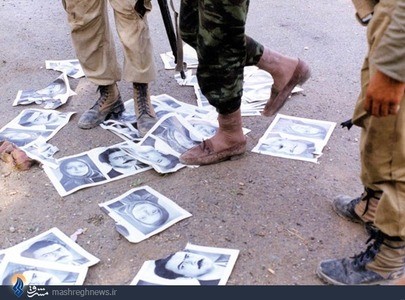
Captain Sattar Sa’ ad of the 3rd Army Corps of the Iraqi Army was there during Operation Forough Javidan; he wrote in his diary: “Massoud Rajavi repeatedly said that in those areas we were going to operate in the people would support us. But Rajavi and his men deceived us. I quickly realized that all Iranians we came across in fact hated Massoud Rajavi and his wife. I saw with my own eyes how they tore Massoud Rajavi’s pictures and his wife and how strongly they resisted.[3]”

ali Einakian - mko former member

also read: Ali Einakian;Joining and leaving Mujahedin

The captain also commented on the crimes and moral deprivation MEK militants so eagerly committed. How for example the group’s female militants gave away sexual favours to prove their loyalty to Iraq and its military. He also described the cruelty of all MEK militants when confronted with Iranian civilians, how they tore at the flesh of women and executed the innocent.

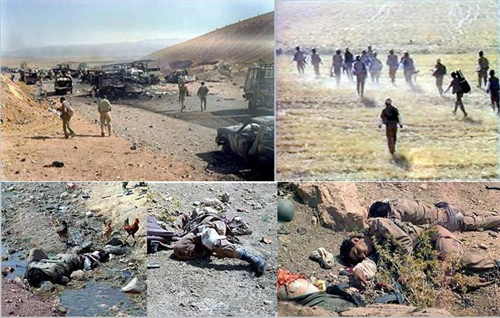
Mersad Operation the Counter Attack of Iran Military Forces
After Iran accepted the UN resolution 598 and declared a ceasefire with Iraq, Saddam used the terrorist MKO group encamped in Iraq to gain as much of Iranian territory as possible.

The MKO was calculating on civil unrest against the regime and public support for their cause. An army of about 15,000 Anti-Iranian forces equipped with weapons and logistics supplied by Iraq and other enemies of Iran started their invasion from west. This proved again that MKO and their European allies did not have a clue about Iranian psychology as Iranians quickly entered the battle position and started the Mersad Operation on July, 28, 1988 with the code:Ya Ali.

Happy with their initial success, the Anti-Iranian army moved towards Kermanshah with dreams of capturing Tehran. They were unaware that this was a tactical move to get them all inside a trap. 34 km west of Bakhtaran, a rain of fire descended upon the enemy destroying most of their armored vehicles including 120 tanks. In this operation 4800 of enemy mercenaries were killed while others fled towards Iraq.
The operation of Forough Javidan became a fiasco for MEK and considered as the worst military operation of the world based on the tactics that many MEK members were killed or arrested. After the operation, Massoud Rajavi shamelessly denied all responsibilities, preferring instead to blame his members’ lack of commitment.

The Iranian Mersad Operation was an extraordinary operation that most of the world military experts claim it as a great operation that showed the quick counter attack of Iranian military forces and one of the examples of military tactics around the world.

Sources:
[1] Security Council Resolution 598 is one of the resolutions issued on July 29, 1988 to end the Iran-Iraq war.
[2] Quoted from the memoir of Captain Sattar al-Sa’ad, responsible for the development of operational activities in the Iraqi Third Corps. Book “Memoire of Captain Sattar al-Sa’ad”
[3] The same source

Alireza Niknam, geopolitica.ru

July 28, 2020 0 comments
FacebookTwitterPinterestWhatsappTelegramSkypeEmail
US advicated of MEK Terrorists
Mujahedin Khalq Organization's Propaganda System

Former US officials speak at radical anti-Iran group’s conference

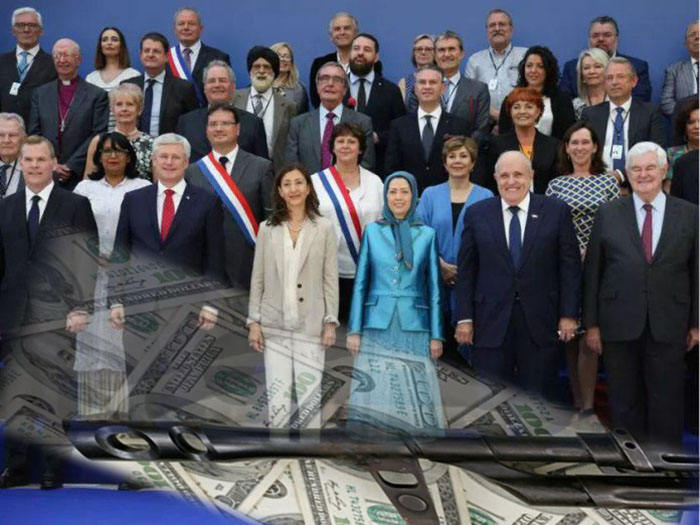
The People’s Mujahedin (MEK) a radical anti-Iran group that some consider a cult and was considered a terrorist organization until 2012 by the US held its annual Free Iran Conference on line.

Former present US officials featured speakers at the conference
The conference was held by the National Conference of Resistance of Iran a coalition headed by the MEK. The MEK is considered the premiere Iranian opposition group by the US. If hawks against Iran had their way they would have the MEK replace the current Islamic regime. US officials such as Secretary of State Mike Pompeo have appeared at events with MEK members.

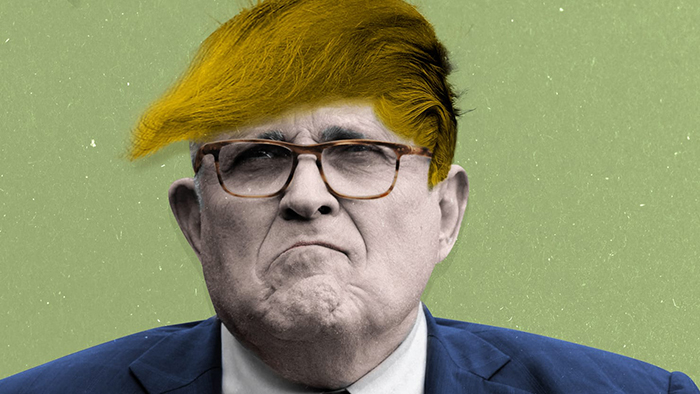
Rudy Giuliani
also read:Giuliani’s work for Iranian group with bloody past could lead to more legal woes

Former mayor or New York Rudy Guiliani has been a frequent guest at MEK gathering. He spoke against the existing government in Iran claiming that the ruling mullahs are like those who ran the mafia that Guiliani prosecuted. Guiliani said:”They’re not only religious maniacs, they’re just plain common criminals, they are crooks, they are thieves. To me, the mullahs are like the people who ran the mafia, the people I prosecuted who ran the mafia, and extorted their people, the Italian American people and subjected them, except this is on a much bigger scale, and the Ayatollah is like the head of the mafia.””

There were also two sitting members of the US Congress who spoke at the conference: Senator Martha McSally a Repulbican from Arizona, and Representative Lance Gooden also a Republican from Texas. Gooden praised MEK leader Maryam Rajavi and encouraged young people to join the fight. She also claimed that the people of the US were with her.

also read :Flow of speaking and writing fees to the MKO’s paid sponsors

The MEK pays well for speeches
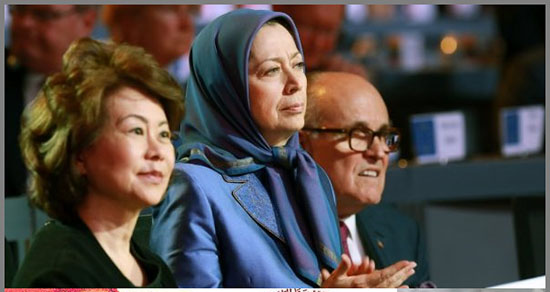
Among prominent former US officials who have spoken at MEK conferences are former speaker of the House New Gingrich and Senator from Connecticut. A February 2017 article notes:”Elaine Chao, confirmed this week as Trump’s transportation secretary, received $50,000 in 2015 for a five-minute speech to the political wing of the Mujahedeen-e-Khalq, previously called a”cult-like”terrorist group by the State Department. Former New York Mayor Rudy Guiliani also was paid an unknown sum to talk to the group, known as the MEK.”

Although not at this year’s conference, former National Security Advisor John Bolton and a prominent hawk has often spoken for the MEK. Records show he has been paid at least $180,000 for speeches over the years.

Rajavi speaks
In the MEK compound in Albania, in front of numerous screens, Rajavi spoke to the conference:. “Our first commitment is that we, the Iranian people and the Resistance, will overthrow the clerical regime and will reclaim Iran. The final word is that the mullahs have no solutions and their regime is doomed to fall in its entirety.”

Previous role of the MEK
The MEK started as a leftist organization in the 1960 in Iran. They attacked the US supported Shah’s police force throughout the 1970s. The group also played a role in the 1979 overthrow of the Shah but ultimately came to oppose the new government of the Mullahs and carried out attacks against it. The MEK was driven out of Iran in the 1980’s

The MEK was welcomed into Iraq by Sadam Hussein who provided them refuge at a military base Camp Ashraf.

The group launched terrorist attacks into Iran and sided with Iran in the eight year war between Iraq and Iran. Many believe that the MEK has at present little support within Iran itself.

After the US 2003 invasion or Iraq the US government commissioned a report about the MEK inside their former headquarters at camp Asharaf.

The report suggested that MEK was much like a cult noting “many of the typical characteristics of a cult, such as authoritarian control, confiscation of assets, sexual control (including mandatory divorce and celibacy), emotional isolation, forced labor, sleep deprivation, physical abuse and limited exit options.”

By Ken Hanly, Digitaljournal.com

July 27, 2020 0 comments
FacebookTwitterPinterestWhatsappTelegramSkypeEmail
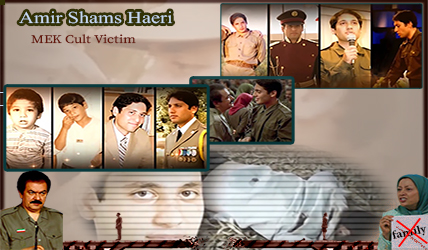
Amir Shams Haeri
The cult of Rajavi

The MEK and Children- Amir Shams Haeri

“A Star of Ashraf Galaxy” was the title of honor that Amir received after he was killed. Amir Shams Haeri was 34 years old when he was killed together with 51 other members of the Mujahedin Khalq in the attack by “Iraqi Intifada Youth” to Camp Ashraf, Iraq.

His father Hadi Shams Haeri was a longstanding member of the MEK before his defection. He joined the group in 1975. Amir was born in 1979. Following the MEK clashes with the newly established Iranian government after the Iranian revolution, Hadi fled to Iraq to join the MEK alongside his wife (Mahin Nazari) and their two children Amir and Nosrat.

Hadi defected the group in 1991 but the MEK leaders took Amir and his sister as hostages and never let them out.

Mehdi Khoshhal an MEK defector and a friend of Hadi writes about his endeavors to take his children back from the group.

“In 1993 Hadi finally reached Netherlands where he could find a stable situation. There, he got to know that the MEK had brought Amir and Nosrat to Germany,” Mehdi Khoshhal writes about Hadi. “He went from Netherlands to Germany to look for his kids at mojahedin’s school. But, the MEK sent their mother Mahin Nazari from Iraq to Germany in order to take the kids to Iraq in revenge for Hadi’s demand to take them.”

In October 2010, Hadi was sick and tired of years of endless efforts to take his children out of the Cult of Rajavi. He wrote an open letter to Amir and Nosrat opening up his grieves in these 20 years of separation. He spoke of a large number of letters that he had sent via the International Red Cross to his kids and were never received by them. In the letter, he advised his children to make a correct decision for their future life telling Amir:

“Son! you are reaching the second half of your life. You should make a conclusive decision and as the older brother you should help your sister Nosrat and save her [from the MEK]. Even you may be able to help your mother find herself and get back to a normal life and contact her family. Dear Amir, I am close to death. I may have no more chance to see you. If you are late, I will not be able to meet you. I am afraid I cannot see you before my death. My beloveds, my message is not political at all. It’s up to you how to think. My message is the message of a suffering heartbroken father whose only wish is to see you, you prosperity and happiness.”

The father died longing to see his children but he did not know that Amir also would die only two years after his father died. GhorbanAli Hosseinnejad former member of the group was Amir’s Arabic teacher at Camp Ashraf.

“After the defection of his father, Amir’s last name was changed into his mother’s. He was called Amir Nazari by the group leaders, “Hosseinnejad writes. “I had no clue that he would lose his life under wrong politics and violent ambitions of Rajavi. “

July 26, 2020 0 comments
FacebookTwitterPinterestWhatsappTelegramSkypeEmail
USA double standards on terrorists
Mujahedin Khalq; A proxy force

US supports Iranian group that it previously labeled as terrorist

Washington, Jul 20 (Prensa Latina) Officials from the United States and Congress support the People’s Mujahedin of Iran (MEK – Mujahedin-e Khalq), which Washington labeled as terrorists until 2012, the news.antiwar.com website reported on Monday.

Rajavi - Saudi Arabia - Iran internation tv


Conference hosted by controversial Iranian opposition group MEK

The Iranian opposition group held its annual Free Iran conference on line on Friday, at which former politicians and military officers from the United States gave speeches, the website added.

The MEK is considered the main Iranian opposition group by Washington, and officials from the Trump administration, like Secretary of State Mike Pompeo, meet with members of that organization, the source noted.

: US assassination of Qassem Soleimani

After the assassination of Iranian General Qassem Soleimani in January, it was reported that President Donald Trump sought advice on Iran from the allies linked to that group, including his personal attorney and former New York Mayor Rudy Giuliani.

Senator Martha McSally (Arizona) and Representative Lance Gooden (Texas), both Republicans, also spoke at the conference and were the only congress people present.

Other speakers were former Senator Joe Lieberman (Connecticut), former speaker of the House of Representative Newt Gingrich and former Senator Robert Torricelli (New Jersey).

https://dlb.nejatngo.org/Media/Documentary/Populist_Marxist_Cult.mp4

to download the video file click here

According to the website, the MEK pays well for these brief speeches and, for example, Donald Trump’s Secretary of Transportation, Elaine Chao, earned 50,000 dollars for a five-minute speech in 2015.

Plenglish.com

July 25, 2020 0 comments
FacebookTwitterPinterestWhatsappTelegramSkypeEmail
Maryam Rajavi
Mujahedin Khalq Organization as a terrorist group

Annual US Supported Anti-Iran MEK Conference

On Friday, the so-called National Council of Resistance of Iran (NCRI) held its annual conference — online because of spreading COVID-19 outbreaks.

NCRI has nothing to do with democratic values, everything to do with wanting Iran transformed into a US controlled fascist police state as it was from 1953 to 1979 under US installed Mohammad Reza Palavi.

The NCRI coalition of extremist elements is led by the so-called People’s Mujahedin of Iran (the MEK).

Until 2012, the group was a State Department terrorist organization.

It operates the same way now, violence and vandalism its specialties, supported by bipartisan US Iranophobes, using the group as a dagger against sovereign Islamic Republic independence, free from US control.

Investigative journalist Seymour Hersh earlier called the MEK a Western intelligence-linked group, covertly funded for anti-Iranian terrorist activities, supplying their operatives with “arms and intelligence.”

mek US terrorists - our men in Iran

The CIA and Pentagon likely continue to arm, fund, and train its operatives, using them as an instrument of US war OF terror, not on it.

Targeted assassinations of Iranian nuclear scientists were carried out by MEK members — financed and trained by Israel’s Mossad.

It’s unclear if they may have been responsible for explosions and fires that occurred this year in Iran, including at the country’s Natanz nuclear site, its main uranium processing facility.

According to Hersh earlier, (t)he first units of the MEK…show(ed) up in Nevada in late 04, early 05, and it was (for) months and months of (special forces) training” by the Pentagon’s Joint Special Operations Command (JSOC).

Hersh explained that their training included high-tech communications tactics, use of spy drones, explosives, and enhanced interrogation techniques.

The US and Israel are waging war on Iran by other means, including use of state-terror, part of their aim to topple Tehran’s legitimate government.

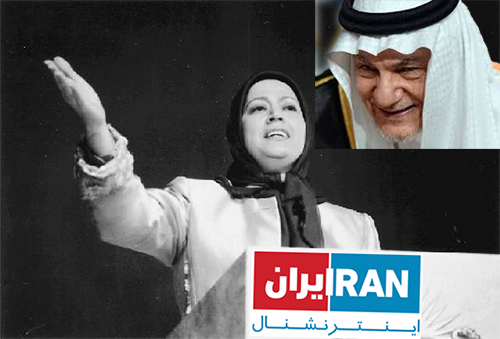
On Saturday, Press TV reported that Tehran’s UK envoy Hamid Baeidinejad slammed a Saudi-funded London television network, specializing in anti-Iran propaganda, for promoting and televising NCRI’s Friday conference.

Rajavi - Saudi Arabia - Iran internation tv

“By broadcasting the gathering of the terrorist Mujahedin-e-Khalq Organization (MKO) that is the murderer of tens of thousands of innocent Iranians, the Saudi Iran International network displayed its full-scale obscenity and shamelessness,” he tweeted, adding that Riyadh helps fund the group.

Press TV explained that the MEK (aka the MKO) sided with US-supported Saddam Hussein during what’s known as the 1980s Iran-Iraq War.

MEK terrorism is responsible for killing “about 12,000” Iranians.

The US and other Western countries removed the group from their “terrorist blacklists.”

It holds annual US/Western/Saudi supported conferences, hardliners from these countries featured as speakers.

According to Reuters, participants at Friday’s conference included Trump regime lawyer Rudy Giuliani and 18 US senators.

John Bolton, Mike Pompeo, Joe Lieberman, Newt Gingrich, Howard Dean, and other well-known US officials appeared at earlier MEK gatherings in a show of support — receiving thousands of dollars for their participation.

During Friday’s conference, MEK leader Maryam Rajavi said its “mission…is to overthrow the mullahs.”

The NCRI is an MEK front group. During Friday’s online session, Giuliani promoted regime change in Iran, saying the following:

“(T)he mullahs are like the people who ran the mafia, the people I prosecuted who ran the mafia and extorted their people,” adding:

“Regime change in Iran is within reach. That’s the goal of NCRI and (MEK head) Maryam Rajavi.”

Maryam Rajavi annual meeting - mek terrorism

She delivered red meat remarks that included saying “(o)ur first commitment is…overthrow(ing) (Iran’s ruling authorities and) reclaim(ing)” the country.

For all its huffing, puffing, US training, and monetary support from Washington and the Saudis, the MEK has scant backing in Iran at most.

A Final Comment

An earlier RAND Corporation “study” said after the US delisted the MEK as a terrorist organization, designating its members as “protected persons,” it left itself “open to charges of hypocrisy in the war on terrorism,” adding:

Practices of the cult-like group include “physical abuse (and) limited…options” for members to escape from its control.

by Stephen Lendman (stephenlendman.org – Home – Stephen Lendman)

July 23, 2020 0 comments
FacebookTwitterPinterestWhatsappTelegramSkypeEmail
Anderson Tim
Mujahedin Khalq Organization as a terrorist group

The MEK Has No Future In Iran

The Interview With Prof. Tim Anderson

The Mojahedin-e Khalq is the name of a terrorist organization, this sect has committed many crimes in its dark life, such as the assassination of thousands of Iranians, Kurds and Americans. We talk about this regard with Professor Tim Anderson, the professor of the University of Sydney, a writer, researcher and anti-imperialist activist.

Prof. Tim Anderson

Here’s the full transcript of the interview:

Q1. According to the news about the cooperation of MEK with spy agencies such as Mossad and the CIA in creating violence and terror in Iran, as well as their cooperation with ISIS in the war with Syria, how do you assess the nature of MEK in this regard?

Pr. Anderson: In the 1970s the MEK participated in the anti-Shah movement but then rapidly fell out with the Islamic Republic and sought refuge with Saddam Hussein in Iraq. In that collaboration they betrayed Iran so badly that they cut off any possibility of return and became a violent and secretive cult in exile, only able to survive through deals with foreign sponsors. MEK terrorism during the Iran-Iraq war will not be forgotten by Iranians with a sense of history. For example, the US Government confirms that in 1981 the MEK “detonated bombs in the head office of the Islamic Republic Party and the Premier’s office, killing some 70 high-ranking Iranian officials, including Chief Justice Ayatollah Mohammad Beheshti, President Mohammad-Ali Rajaei, and Premier Mohammad-Javad Bahonar”. Then later during that war Saddam Hussein “armed the MEK with military equipment and sent it into action against Iranian forces” (US Dept State 2006). Their current sponsors admit that the MEK attacked the volunteers who were defending the Iranian nation.

Q2. MEK in Albania are trying to influence the Albanian authorities to develop their goals in that country, so that now the Albanians can’t even speak against them, like the story of the George Thanasi’s complaint who is upset about the presence of a terrorist group in his country and has revealed their true terrorist face to the world and because of the influence of the MEK in the Albanian judiciary, he has not yet succeeded in resolving his complaint against MEK. Aren’t the Albanian people the ones who do the most harm in hosting Mujahedin-e Khalq?

Pr. Anderson: As in all such cases, we should not blame the people of Albania but rather the Albanian regime, which seeks to ingratiate itself with Washington (and get funds from Washington’s puppets, such as the al Saud regime) by hosting both the MEK and DAESH. Certainly this will cause problems for the Albanian people, as a sheltered terrorist group cannot be completely controlled. They will visit some degree of chaos on their host territory.

Albania _Thanasi

      also read: I love my country and I consider MEK a national security threat, says Albanian journalist
 

In this case investigative journalist Gjergji Thanasi has exposed MEK activities in Albania, pointing out that they pay no taxes and have helped bring DAESH families to the country. MEK activities were also denounced by Olsi Jazexhi, Director of the Free Media Institute in Tirana. Albanian MEPs subsequently met to discuss the MEK threat at home (EU Reporter 2018). Thanasi and others have since indicated that the MEK also poses a public health threat to the country, as its camps are not subject to national health measures (Khodabandeh 2020).

Q3. MEK claims about the human rights while they have violated almost all human rights laws, from forced divorce of the members and the separation of children from families and sending them to Europe and removing the womb of some women that were close to the leader of the organization and torturing and imprisoning members who are critical and dissatisfied with the organization’s leadership are all a gross violation of human rights. Can Mujahedin-e Khalq organization be expected to claim human rights with these inhumane acts which are happening to its members?

Pr. Anderson: The internal repression of the group can be better understood when we appreciate that this is an exile group cut off from any real base in Iranian society, and only able to operate and gain funds through its terrorism and propaganda, on the demand of its foreign sponsors. So while senior EU and US officials (recently Rudi Giuliani and John Bolton) visit their camps in Albania to speak of ‘freedom’, defectors tell of torture and forced sterilization of members (Hussain and Cole 2020). Of course they are unable to credibly speak of ‘human rights’, considering their internal repression and external terrorism.

Why are Journalists Iranian spies according to the MEK

also read:Why are Journalists Iranian spies according to the MEK?

Q4. MEK are terrified that someone would enter their camp, they severely beat reporters who wanted to cover the camp from the world’s leading news agencies, such as Lindsay Hillsum, the reporter of Channel 4 of UK, and other reporters, what is this fear of reporters stands for? Are they trying to hide something or do they want to hide the facts of human rights violations inside the camp so that people do not know their true nature?

Pr. Anderson: Naturally the MEK leadership wants to hide the discontent within its own ranks. Remember that most of its young people were either not born in Iran or have no memory of the country against which they are now instructed to violently oppose. Many may even question if they are Iranian, having grown up in Iraq and Europe. The group has an existential and identity crisis, and no amount of Saudi money and visiting foreigners can hide that.

Q5. MEK, who call themselves a democratic group, assassinated 12,000 people in Iran alone, including many women, children and ordinary people, and even many members of this group were assassinated by the central members of the organization. They were killed for criticizing or seceding from the organization. Now, can this group claim democracy with these terrorist and sectarian acts?

Pr. Anderson: serious analyst considers the MEK as democratic, and this includes many amongst the ranks of their US sponsors. Frank talking amongst former US officials is widespread, partly due to the fact that the MEK was a listed terrorist group in the USA, from 1997 until 2012. Yet before and after 2012 former US officials say much the same thing: the MEK has little to no support within Iran and is detested by Iranian people, including Iranian-Americans.

For example, a 1994 US State Department report said: “shunned by most Iranians and fundamentally undemocratic, the Mojahedin-e Khalq are not a viable alternative to the current government of Iran” (Shermen 1994). Even a 2018 poll of Iranian Americans showed only 6 percent support for the MEK as a “legitimate alternative” to the current government. The year before a poll of Iranian Americans by the same group showed only 7% had a favourable view of Maryam Rajavi, the leader of the MEK (in Mehr 2019). Explaining this in 2019, former US Deputy Assistant Secretary of State, John Limbert, wrote that “Iranian Americans … knew the group well and detested it. They knew its murderous history in Iran” (Mehr 2019). All that is before we come to Iranians living in Iran.

Q6. At the beginning of the Iraq Ba’ath party’s war with Iran, MEK joined Saddam and fought against the people of their country, which killed many Iranians, and the Iranian people consider this group traitors and mercenaries and strongly hate them, even other opposition groups hate and avoid them, their goal is to gain power in Iran, in your opinion, does this group have any future in Iran with a record of betrayal against its own people and without any social place among the Iranian people?

Pr. Anderson: For reasons given above, the MEK has no future in Iran. It has no real base, having been cut off from the country for four decades. As even the US Rand Corporation and the American Enterprise Institute affirm, the MEK is only known within Iran for its treachery and collaboration against Iran with Saddam Hussein and foreign powers. A 2009 report for the Rand Corporation concluded: “most of the MeK rank-and-file are neither terrorists nor freedom fighters, but trapped and brainwashed people who would be willing to return to Iran if they were separated from the MeK leadership. Many members were lured to Iraq from other countries with false promises, only to have their passports confiscated by the MeK leadership, which uses physical abuse, imprisonment, and other methods to keep them from leaving” (Goulka, Hansell, Wilke and Larson 2009). Former Rand Corporation analyst Jeremiah Goulka explained “Once upon a time, the MEK did enjoy some measure of popular support in Iran … [but it has become] a cult group that will not bring democracy to Iran and has no popular support in the country” (Goulka 2012). So while Iran has, in the past, offered amnesty to rank and file MEK members who are Iranian, the MEK as a political group has no future within the country.

Q7. At the beginning of its establishment, this group started with anti-imperialist slogans and went so far as to assassinate 6 American officials and citizens in Iran, how is it that this group is now in the welcoming arms of United States and also United States trusts this group that killed American citizens and chanted anti-American slogans?

Pr. Anderson: Washington’s treatment of the group is cynical. US policy makers know very well that it has no future in Iran, but see the group as a tool which can be used to destabilise and spread misinformation – such as baseless and wildly exaggerated claims about poverty and COVID19 deaths in Iran. After the US turned against Saddam Hussein, the MEK’s fortunes and role in Iraq changed. US forces disarmed and sheltered the group after the brutal invasion of Iraq (the MEK offered no resistance) and the US has remained its chief sponsor and protector ever since (Scott 2012). When the Obama administration removed it from the US terrorist list in 2012, this was done with the hope that the now complaint group could be used against the Islamic Republic, they key supporter of independence struggles in the region (in Palestine, Lebanon, Syria, Iraq and, later on, Yemen).

Academic and former CIA analyst Paul Pillar says, contrary to the claims made by the Obama administration in 2012, that “the MEK certainly has been involved in lethal political violence since 2009”, but that is not of concern to Washington. Indeed, they direct MEK violence against Iran. The policy of the Trump regime “consists of using every any means available to hurt and pressure Iran, while paying little attention to the nature of the means used … if the MEK is opposed to the current political order in Tehran, that’s all that matters to the Trump administration”, said Pillar. Funds for the MEK come from the “regional rivals of Iran”. (Heirannia 2018). Iranian officials make it clear that this means Saudis Arabia, the chief source of funds and weapons for terrorism in the entire West Asian region.

————–
References
EU Reporter (2018) ‘MEPs discuss Mojahedine-E Khalq (MEK) Threat in Albania’, 13 April, online: https://www.eureporter.co/politics/2018/04/13/meps-discuss-mojahedine-e-khalq-mek-threat-in-albania/

Goulka, Jeremiah; Lydia Hansell, Elizabeth Wilke, Judith Larson (2009) ‘The Mujahedin-e Khalq in Iraq: A Policy Conundrum’, Rand Corporation, 4 August, online: https://www.rand.org/pubs/monographs/MG871.html

Goulka, Jeremiah (2012) ‘The Cult of MEK’, 18 July, online: https://prospect.org/world/cult-mek/

Heirannia, Javad (2018) ‘MEK Sources of funds are Iran’s regional rivals: ex-CIA official
International, 28 November, online: https://www.tehrantimes.com/news/429981/MEK-Sources-of-funds-are-Iran-s-regional-rivals-ex-CIA-official

Hussain, Murtaza and Matthew Cole (2020) ‘Defectors tell of torture and forced sterilization in militant Iranian cult’, The Intercept, 22 March, online: https://theintercept.com/2020/03/22/mek-mojahedin-e-khalq-iran/

Jazexhi, Olsi (2018) ‘Has Donald Trump Appointed Madam Maryam Rajavi As Foreign Minister Of Albania?, American Herald Tribune, 22 December, online: https://ahtribune.com/world/europe/2728-maryam-rajavi-albania.html

Khodabandeh, Massoud (2020) ‘Iranian MEK cult in Albania poses public health risk’, responsible Statecraft, 24 April, online: https://responsiblestatecraft.org/2020/04/24/iranian-mek-cult-in-albania-poses-public-health-risk/

Mehr (2019) ‘The MEK is not a valid alternative’, 13 July, online: https://en.mehrnews.com/news/147568/The-MEK-is-not-a-valid-alternative

Shane, Scott (2012) ‘Iranian Dissidents Convince U.S. to Drop Terror Label’, New York Times, 21 Sept, online: https://www.nytimes.com/2012/09/22/world/middleeast/iranian-opposition-group-mek-wins-removal-from-us-terrorist-list.html

Shermen, Wendy R. (1994) ‘1994 US State Department Report on the People’s Mojahedin of Iran’, US State Department, 28 October, online: http://iran.org/news/1994_10-State-Dept-MEK-report.htm

US Dept State (2006) ‘Foreign Terrorist Organizations’, online: https://2009-2017.state.gov/j/ct/rls/crt/2005/65275.htm

By Alireza Niknam, Geopolitica.ru

July 22, 2020 0 comments
FacebookTwitterPinterestWhatsappTelegramSkypeEmail
US advicated of MEK Terrorists
Mujahedin Khalq Organization's Propaganda System

Paid Guests at the MEK Conference

Conference hosted by controversial Iranian opposition group MEK

An exiled Iranian opposition group held its annual Free Iran conference online on Friday featuring speeches from an array of former US politicians and military officials. The conference was held by the National Council of Resistance of Iran, a coalition led by the People’s Mujahedin of Iran, or MEK (Mujahedin-e Khalq), a controversial group widely considered to be a cult, and up until 2012, designated as a terrorist organization by the US government.

The MEK is considered the top Iranian opposition group in Washington, and if Iran hawks had their way, the MEK would replace the current Islamic regime in Tehran. Trump administration officials like Secretary of State Mike Pompeo have appeared at events with MEK members. After the assassination of Iranian Gen. Qassem Soleimani in January, it was reported that President Trump sought advice on Iran from MEK-linked allies, like his personal attorney and former mayor of New York City Rudy Giuliani.

Rudy Giuliani
also read:Is Giuliani ‘comfortable’ with a nation of 81,000,000 people run by terrorists?

A frequent guest of the MEK, Giuliani spoke at Friday’s conference, calling for regime change and railing against the mullahs. “To me, the mullahs are like the people who ran the mafia, the people I prosecuted who ran the mafia and extorted their people,” Giuliani said. The former mayor also praised Maryam Rajavi, the MEK’s leader. “Regime change in Iran is within reach. That’s the goal of NCRI and Maryam Rajavi.”

Senator Martha McSally (R-AZ) and Rep. Lance Gooden (R-TX) also spoke at the conference, the only sitting members of Congress to attend. “Thank you to Madame Rajavi on everything she’s done. I want to encourage young people to continue your fight, your resistance … the people of the United States are with you,” Gooden said.

Other speakers from the US included former Connecticut Senator Joe Lieberman, former Speaker of the House Newt Gingrich, former New Jersey Senator Robert Toricelli, and others.

The MEK pays well for these short speeches.

President Trump’s Secretary of Transportation Elaine Chao collected $50,000 from the MEK for a five-minute speech in 2015. Although he was missing from this conference, former National Security Advisor John Bolton is a MEK favorite and has delivered many speeches to the group. Records show the MEK has paid Bolton at least $180,000 for speeches over the years.

From the MEK’s compound in Albania, in front of hundreds of screens, Rajavi addressed the conference. “Our first commitment is that we, the Iranian people and the Resistance, will overthrow the clerical regime and will reclaim Iran,” Rajavi said. “The final word is that the mullahs have no solutions and their regime is doomed to fall in its entirety.”

The MEK is now based out of Albania, but for many years they operated in Iraq after the group was kicked out of Iran in the 1980s. The MEK started as a leftist organization in the 1960s and carried out attacks on the US-backed Shah’s police force throughout the 1970s. The group played a role in the 1979 overthrow of the Shah but ultimately opposed the new Islamic government and carried out major attacks against the mullahs.

The MEK was welcomed into Iraq by Sadam Hussein, who gave them refuge at a military base, Camp Ashraf. From their base in Iraq, the MEK carried out terrorist attacks inside Iran and took Hussein’s side in the brutal eight-year war between Iran and Iraq war. For these reasons, it is believed the MEK has little or no support inside Iran today. The MEK is also suspected of being involved in assassinations of Iranian nuclear scientists that took place in 2012.

After the 2003 invasion of Iraq, the US government commissioned a report on the MEK from inside their former headquarters at camp Ashraf. The report concluded that the MEK has “many of the typical characteristics of a cult, such as authoritarian control, confiscation of assets, sexual control (including mandatory divorce and celibacy), emotional isolation, forced labor, sleep deprivation, physical abuse and limited exit options.”

Dave DeCamp , Antiwar.com

July 20, 2020 0 comments
FacebookTwitterPinterestWhatsappTelegramSkypeEmail
Reporter
The cult of Rajavi

Why are Journalists Iranian spies according to the MEK?

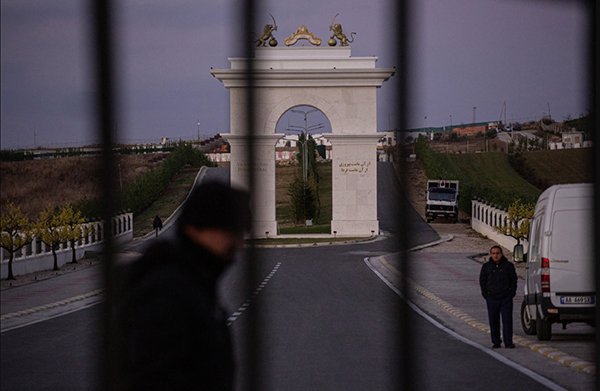
The propaganda media of the Mujahedin Khalq Organization (the MKO/ MEK/ PMOI/ the Cult of Rajavi) published a claim against a Swedish journalist who had come to the group’s camp in Albania, labeling him as the spy of the Iranian Government. The ID cards of the Swedish journalist Ivan Blanco Bravo and two children of MEK members have been published on the MEK’s websites to verify their claim!

This is not the first time that the MEK accuses reporters and journalists of cooperating with the Islamic Republic. During the past decades, there were very few journalists who could manage to enter the MEK’s headquarters.

Why are Journalists Iranian spies according to the MEK

Actually, journalism is based on certain ethical principles that could terribly risk the MEK’s character. “Ethical Journalism Network” compiles five core principles of ethical journalism: 1. Truth and Accuracy, 2.Independence, 3. Fairness and Impartiality, 4. Humanity and 5. Accountability. Therefore, if an independent journalist wants to seek for the truth concerning humanity and fairness in the MEK’s headquarters, he will be responsible enough to transfer the evidences and the reality he or she witnesses in the camp. This is the conflicting point between the MEK and journalists. Although the MEK authorities have made efforts to portrait their establishment as a democratic entity made of freedom fighters, the realities have always leaked from the cult-like structure of the group.
June 13th, 2003 might have been the first time that the MEK authorities found out that the arrival of journalists in their camps will result in a disaster for them even if they take care for all elements of a democratic gesture. The date is the day a correspondent of the New York Times, Elizabeth Rubin published her revealing report on the life inside Camp Ashraf, Iraq. The MEK leaders had allowed Rubin to enter their large base in Iraq showing her different parts of the camp. She was received by a group of members running general interviews. Everything was under the supervision of the group authorities but finally the title of the published article turned out to be: “the Cult of Rajavi “. Rubin wrote a very detailed report of what she saw and heard in Camp Ashraf and frankly described MEK members in the camp as “a slight march to their gaits as at a factory in Maoist China”.
Since then, the MEK leaders seemed to be more cautious about the entrance of any person who is involved with mass media in any way. They do not allow any journalist to enter their camps unless they make sure that he or she is completely coerced to portray an ideal picture of their so-called freedom fighters.

Therefore, those many journalists and reporters who sought to discover the truth of the world inside the MEK and to verify the testimonies of defectors, have been always attacked by the MEK authorities; they were labeled as Iranian spies and harassed by the guards of the group’s camps.

One of the most recent accounts of such attitudes towards journalists took place in 2018. Lindsey Hilsum of the British Channel 4 TV tried to film a documentary of Camp Ashraf 3 in Manez north of Tirana but she was barred by the Abanian guards of the camp. Some of the group members came to the barbed wires and called her “terrorist” and “Iranian spy”. In September 2018, Hilsum published an eleven-minute video report titled “The shadowy cult Trump advisors tout as an alternative to the Iranian government”. She described the MEK as a political religious cult that brainwashes its members; forces celibacy and oppresses dissent.

https://dlb.nejatngo.org/Media/Documentary/Channel4_Shadowy_Cult_MEK.mp4

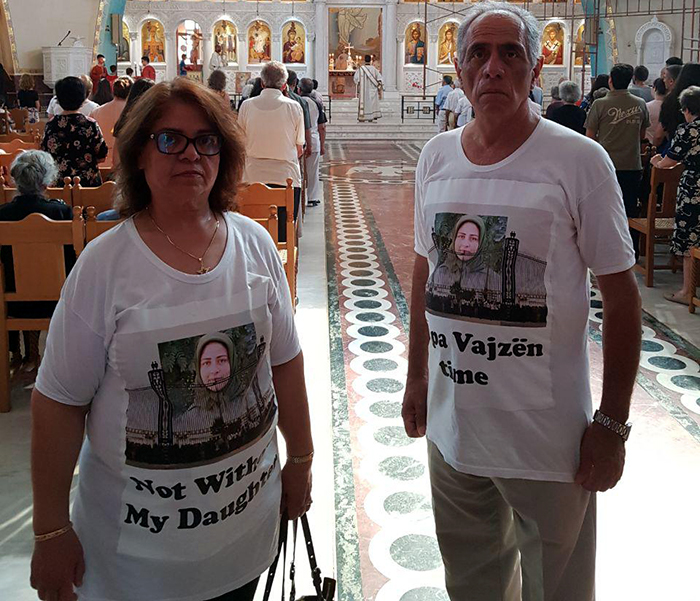
The International editor of Channel 4 who did not succeed to access the inside of the MEK’s base had to listen to the testimonies of those who have left the group. So, she interviewed the Mohammadis, the parents of Somayeh.

Somaye Mohammadi’s Parents – Tirana – Albania

They were active in Albania at that time making efforts to visit their daughter in the MEK. Hilsum’s report also shows Somayeh’s parents being attacked by the MEK agents in the streets of Tirana.

Linda Presley and Albana Kasapi are BBC correspondents who went to the gates of Ashraf 3 last year. They were not allowed to enter the camp so they restricted their report to the interviews with defectors of the group who reside in Albania and with Albanian authorities. In November 2019, they published a report titled, “The Iranian opposition fighters who mustn’t think about sex”. In their article, they clarified:

“Uninvited journalists are not welcome here. But in July this year, thousands attended the MEK’s Free Iran event at the camp. Politicians from around the globe, influential Albanians and people from the nearby village of Manze, joined thousands of MEK members and their leader, Maryam Rajavi, in the glitzy auditorium. US President Donald Trump’s personal lawyer, Rudy Giuliani, addressed the crowd.”

also read: MEK Terrorist Cult Members In Albania Who Mustn’t Think About Sex 

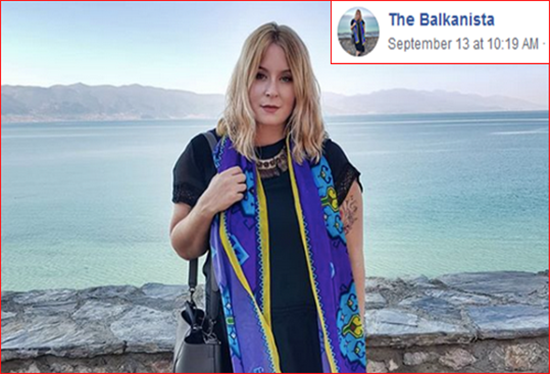
The journalists also stated that the BBC was not able to put any of this to the MEK, because the organization refused to be interviewed. Despite, all of these precautions that the MEK leaders take care about, sometimes the invited journalists do not act the way the leaders expect. Alice taylor is the British journalist who lives in Albania.

My day with the MEK

She was invited to the MEK’s grand gathering in Ashraf 3 in August 2019. She then published her observations of the MEK’s annual grand gathering in Balkanista weblog and her tweeter account under the title “My Day with the MEK”. Her account simply reveals crucial facts about the internal structure of the MEK. For example, she writes about the way she was first received at the event:

“The security guard confiscated my lipstick, face powder, cigarettes, and lighter and put them in a plastic bag, advising me I could collect them afterwards. They tried to confiscate my mobile phone as well, but I argued that having a one-month-old daughter at home, I needed to be contactable. A male MEK member was called over and after pleading my case, I was allowed to take my phone inside on the condition I switched off the internet (I didn’t).”

When she first introduces herself as a journalist to one of the event organizers, she was faced with anger. She got shocked to hear the man telling her “who the hell told you to be here?”. She realized that there were no other journalist, reporter or TV staff in the hall. She just saw a few cameramen and photographers whom she was sure they were MEK members. Alice who had been invited to the event by one of the female commandants of the group, left the gathering after a few hours. Fed up with the repetitive speeches “broken up by periods of coordinated chanting and flag-waving with each outburst as frenetic and enthusiastic as the one before”, she did not answer the Mujahed woman’s consequent phone calls.

And ultimately, another journalist from the New York Times entered Camp Ashraf 3 in Albania. Patrick Kingsley waited for hours in front of the camp before he was allowed to enter. His presence in Ashraf 3 was considered a new opportunity by the MEK leaders to correct the impressions of the former NYT’s journalist Elizabeth Rubin. However, their efforts to portrait the camp as a nice-looking place embellished with museums, gym, music studio and coffee shop, did not work.

MEK

Playing chess at the camp.Credit…Tara Todras-Whitehill for The New York Times

MEK Camp In Albania


A street inside the camp.Credit…Tara Todras-Whitehill for The New York Times

They tried to convince Kingsley and his photographer colleague that the group members are freedom fighters who are friendly and peacefully devoted to the group’s cause: the freedom of Iranians. But his report published on February 16th 2020, revealed new dimensions of the life of whom he called “Highly Secretive Iranian Rebels”. He described his “tour” in Ashraf 3 as “series of interviews, propaganda sessions and tours”.

NYT photo of the Ashraf3 CAmp of MEK in Tirana

The entrance to the camp housing members of the Mujahedeen Khalq, or People’s Jihadists, near Manez, Albania.

Kingsley believes that the MEK leaders allowed him to enter the camp because they “perhaps hoped to correct the impression left by previous journalistic encounters” about 17 years ago. According to Kinsley Rubin’s “subjects spoke from a rehearsed script, and she was barred from talking to people in private”. So Kingsley was allowed to interview Somayeh Mohammadi in private. The outcome was obvious. As before, Somayeh denies her parents’ desire to meet her accusing them of being the Iranian regime’s agent.
However, the NYT’s correspondent does not stop challenging the group. When he asks Ali Safavi about the whereabouts of Massoud Rajavi, the disappeared leader of the MEK, he answers, “Well, we can’t talk about that, that’s … ”. “He trailed off, staring at his feet,” Kingsley writes.
In his two-day tour in Ashraf he does not see more than 200 people around the camp although he was told that the group has 2500 members. He thinks that the rest are isolated. Like any other independent journalist Kingsley decides to interview ten of many defectors of the MEK who live in Albania. Based on their testimonies, he writes of the MEK’s cult-like structure and the troll farm of the group whose job is to launch propaganda against the Iranian government on the Internet.

He also interviews certain US army officials who were in charge of the MEK camp in Iraq after the US invasion. The MEK authorities suggested some army officials who trust but as Kingsley tweets: “But I was keen to find former US officials who no longer have ties with the MEK. They told a very different story.”

Capt. Matthew Woodside, a former naval reservist who oversaw American policy at the Iraqi camp between 2004 and 2005, was not one of those whom the MEK suggested. “I find that organization absolutely repulsive,” Captain Woodside told Kingsley. “I am astounded that they’re in Albania.”

After the publication of the report, Kingsley tweets some additional explanations about his observations that exposes more revelations about the dark life in “the Cult of Rajavi”. For instance, he tweets: ‘’naturally, they all denied most of what is said about the group. They said celibacy, forced divorce and rejection of family life is just a necessary part of overthrowing the Iranian government. One admitted the self-criticism. One admitted it the corrected himself. The rest denied.“

also read:New York Times Questions Presence of MEK in Albania

Therefore, as the mass media and social networks are highly effective to transfer the news, the presence of an independent journalist inside or outside the MEK’s headquarters is totally against the interests of the group and eventually they are all labeled by the MEK leaders as the agents of the Iranian intelligence. The leaders are so terrified of journalists that they accuse a son –who wants to visit his mother in the group—of being the Iranian agent because he is accompanied with a Swedish journalist. This is the absolute right of any child to see his or her mother even though their previous unsuccessful efforts to visit their mothers have made them use mental pressure by bringing a journalist with them.

Mazda Parsi

July 20, 2020 0 comments
FacebookTwitterPinterestWhatsappTelegramSkypeEmail
Nejat Meeting
Mujahedin Khalq Organization members' families

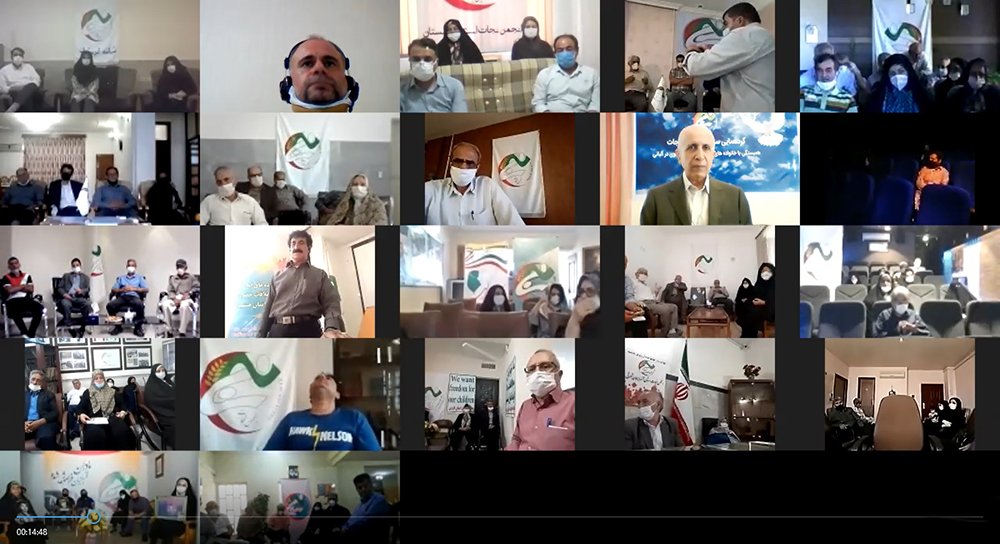
A Report on the Nejat Society Nationwide Gathering

Nejat Society, in solidarity with the families of the captive members of the Mojahedin-e Khalq Organization (MEK, MKO, Rajavi Cult) in Albania, held a nationwide online gathering with the participation of a number of provincial representatives and the presence of some families on Thursday, July 16, 2020.

Nejat Society families meeting - July 2020 - Tir 1399

The online gathering began at 10:30 a.m. and lasted for three and a half hours and was broadcast live on the Nejat NGO site. A limited number of families from a total of 20 provinces were able to speak on the program and convey their messages on behalf of all families. A number of provinces were unable to connect and participate in the gathering due to shortage of time.

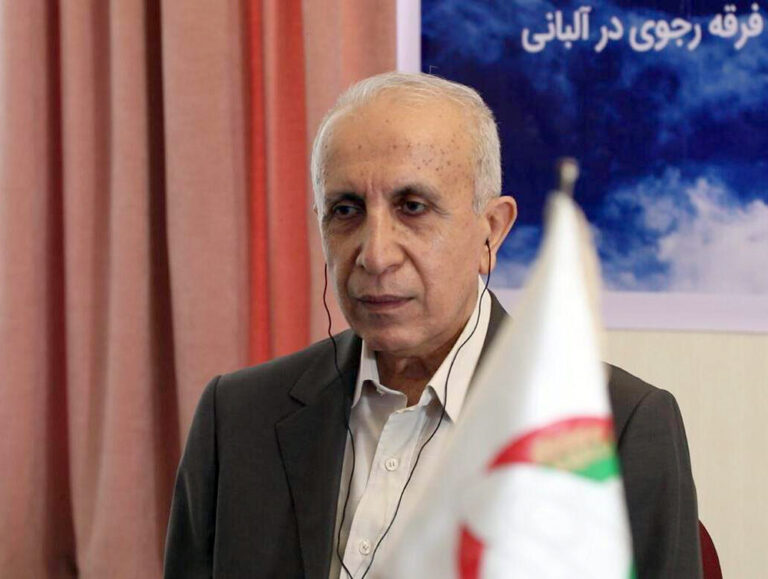
First, Ebrahim Khodabandeh, CEO of Nejat Society, explained the recent activities of the families and the society. He thanked and appreciated the activists of the society in all provinces, as well as the families who have always supported them. He then reported on some of the activities of Nejat Society and the families.
He said that with the onset of the coronavirus pandemic, families’ concerns about the situation of their relatives in the remote and isolated MEK camp in Albania had increased, and they were rightly worried about the health of their loved ones. This prompted them to write letters to the World Health Organization and Albanian officials, as well as international authorities, demanding to be in contact with their loved ones.

Ebrahim Khodabande - CEO of Nejatngo

Khodabandeh also referred to the petition by families, asking the Albanian Prime Minister, as the person in charge of the MEK, to remove obstacles to meeting with members of the MEK, or at least to establish phone/video calls with families on an ongoing basis.

This petition attracted nearly 11,500 signatures from families, relatives, friends and acquaintances of members of the Rajavi cult from all over the world, who wanted nothing more than connection with their relations in the MEK camp in Albania.

Khodabandeh then referred to the Rajavi cult’s response, saying that the Rajavi response to the request, like all destructive cults, was base obscenity, slander and insult. He cited the example of a mother who has not heard the voice of her son – who had one day joined the MEK for some reason – for more than 30 years. He explained that for years this mother has been writing in various forms and by letter to whoever it occurred to her that she could, and that she had asked only for a call from her son. But after all this, the Rajavi cult brought the son to their television, and instead of a few kind words that would make his mother happy, the son started swearing at his mother and called her a mercenary, terrorist and even a”so-called mother.”

The CEO of the Nejat Society said that the MEK and Maryam Rajavi can shout for democracy, freedom, human rights, social justice, etc. from morning to night, and hold regular conferences and seminars, costing millions of dollars and bring war mongering American politicians to the stage, but in practice even cannot allow a kind word from the son of an elderly mother who is struggling with various diseases and finds herself in the last days of her life so that her only wish is to hear the voice of her child.
Khodabandeh concluded that all those slogans about defending the freedom and rights of the people, in practice start with these families, and when the MEK members do this to their families and when also MEK leaders do not tolerate the slightest word of dissent, it is clear what model of democracy and human rights they promise.
The program was broadcast live from the Nejat NGO site, and at the same time it was possible to post comments and log in to the chat system, where many families introduced themselves and wrote their messages. Their loving messages encourage the activists of Nejat Society.

The families stated that they had only one humanitarian demand and asked what was wrong with an organization that could connect 2,000 points to have a video chat but is unable to connect one simple video link for members to contact their family to make them happy? Aren’t these families among the people?

One of the interesting things that one of the families said was that while his relative was held captive by Saddam Hussein in an Iraqi POW camp, his letters kept arriving, informing his family of his condition, but after he was handed over to the MEK, there were no more letters and no further connection.

In his speech, Khodabandeh referred to the Rajavi cult’s excuses for preventing its members from visiting their families, and said that the organization used the excuse of the danger of coronavirus to prevent the visits. He asked if the officials of the organization do not meet or travel? In fact, he said, they are constantly traveling between France, Italy and Albania. Don’t they have a tight group life in a closed camp?

He continued that another excuse the Rajavi cult uses is ‘security threats’. They should be asked what security threats elderly parents can pose to the MEK in Albania. The ‘security threat’ has always been an excuse to separate a person from the family in the Rajavi cult from the beginning.

Regarding preventing members from communicating with their families, the CEO of the Nejat Society explained that this goes back to the cultic nature of the MEK. Cults not only coerce members to sever contact with their family, they also induce the member to hate and fear their family and have no feelings for them.

The member’s feelings must only be for the leader. For this reason, the cult does not allow its members to establish a loving and emotional relationship with their families, but instead they must confront their families with insults and slander so that their innate emotional attachment is not revived to hinder the brainwashing process.

Ebrahim Khodabandeh then raised the issue of the dilemma the MEK is now facing. He suggested that Nejat Society’s activities had placed the Rajavi cult at a crossroads. The organization must either obey the wishes of the families and allow the members’ relationship with their families, which is what we want. And this would show that the MEK has the capacity not to be afraid of families and family emotions. Or it continues in its current way,

exposing more and more of its anti-popular nature to the public, and it reveals that its slogans are completely empty and hollow, and that in practice the MEK is something else.

In the next part, the Rajavi cult’s suggestion of a visit by an international delegation to the families in Iran to prepare a report in this regard was welcomed.

Khodabandeh announced, on behalf of all the families, that this proposal is welcome, and the families are ready to meet and talk with any foreign delegation. And, of course, this delegation should also visit the MEK camp in Albania and talk to the members and deliver the letters of the families and bring their answers back.

In the end, while apologizing to the provinces and the families who did not have time to speak, the demands of the families were summarized, which is the same demand that was raised in the petition of the families with nearly 11,500 signatures addressed to the Albanian government as being responsible for the MEK. It means endorsing the right of families to communicate with their loved ones in the MEK camp in Albania and removing obstacles to establishing this connection.

About 2,000 MEK members are based in the cult camp in Albania, who are deprived rights such as the right to communicate with the outside world, especially with family and friends, the right to marry and create a family, the right to leave the cult, the right to criticize the cult leader and the organizational actions, the right to privacy and many other basic rights.
The extent to which the Rajavi cult fears families as part of the Iranian people and the hysterical and irrational reactions they evoke is truly thought-provoking. This fear proves to what extent the MEK is anti-people and to what extent it has the potential to suppress.
In this conference, the voices of the families were brought to every quarter and will be repeated over and over. The Rajavi cult will expose its anti-popular nature through threats and blackmail against the claims of the elderly mothers and fathers. They will not evade or silence these claims.

July 19, 2020 0 comments
FacebookTwitterPinterestWhatsappTelegramSkypeEmail
Newer Posts
Older Posts

Recent Posts

  • Expectations of human rights bodies regarding censorship within the MEK

    October 13, 2026
  • The Jamalis’ Plea for Help: Save Our Brother from the MEK!

    October 11, 2026
  • Testimonies of Participants in the MEK’s Staged Propaganda Stunt in Karaj

    October 7, 2026
  • Giuliani’s MEK ties have dogged him for years

    October 6, 2026
  • The Tragic Impact of MEK Isolation on Yazdan Teimorian and His Family

    October 5, 2026
  • Facebook
  • Twitter
  • Instagram
  • Youtube

© 2003 - 2025 NEJAT Society . All Rights Reserved. NejatNGO.org


Back To Top
Nejat Society
  • Home
  • Articles
  • Media
    • Cartoons
    • NewsPics
    • Photo Gallery
    • Videos
  • Publications
    • Books
    • Nejat NewsLetter
    • Pars Brief
  • About Us
  • Contact us
  • Editions
    • عربي
    • فارسی
    • Shqip