Nejat Society
  • Home
  • Articles
  • Media
    • Cartoons
    • NewsPics
    • Photo Gallery
    • Videos
  • Publications
    • Books
    • Nejat NewsLetter
    • Pars Brief
  • About Us
  • Contact us
  • Editions
    • عربي
    • فارسی
    • Shqip
Nejat Society
Nejat Society
  • Home
  • Articles
  • Media
    • Cartoons
    • NewsPics
    • Photo Gallery
    • Videos
  • Publications
    • Books
    • Nejat NewsLetter
    • Pars Brief
  • About Us
  • Contact us
  • Editions
    • عربي
    • فارسی
    • Shqip
© 2003 - 2024 NEJAT Society. nejatngo.org
Mehdi Hamidfar mother-kermanshah
Missions of Nejat SocietyMujahedin Khalq Organization members' families

Nejat Families from Kermanshah province pen letters to the Albanian PM

Coinciding with the recent petition of 11,000 signatures, the families of members trapped in the Mojahedin-e Khalq (MEK) camp in Albania from Kermanshah province (West of Iran), sent several letters and messages to Albanian Prime Minister Edi Rama, calling for news and communication and possibly meeting with their loved ones.

In addition to each of these letters, photos, details and documents have been sent, and copies of the letters have been provided to other Albanian officials and media, as well as European and international authorities. In addition, families have expressed their concern about the health of their loved ones in the current state of the prevalence of coronavirus.

May the Albanian government, as a humanitarian move, respond appropriately to these demands and remove the obstacles ahead. Many of these families have not had the slightest news of their loved ones living in the MEK camp in Albania for decades.

Unfortunately during these years, many families in Kermanshah province have passed away while waiting to be reunited with their loved ones, and they have never been able to get any news from them, and their names on this list are missing.

Nejat Families from Kermanshah province

The table of relevant list of letter headings is attached

Some of the messages given to the Albanian Prime Minister by the elderly parents, who unfortunately are called mercenaries and terrorists by the Rajavi cult, are emphasized below:

Mehdi Hamidfar mother-kermanshah

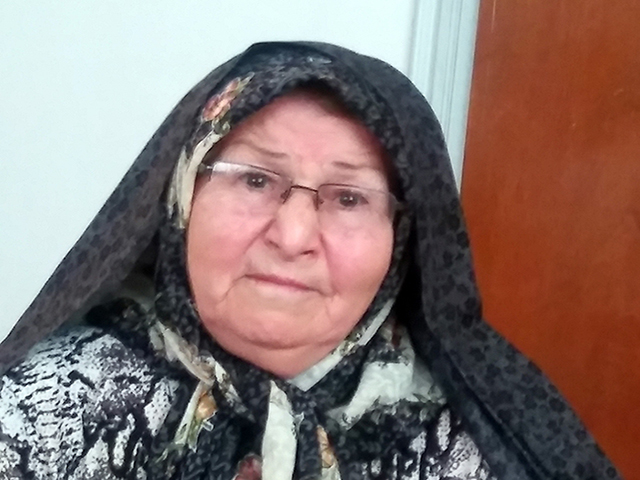
Taj al-Dawla Heydarian, the mother of Mehdi Hamidfar, wrote to Albanian Prime Minister Edi Rama:”I have been uninformed about my son for more than 20 years. Please provide us with the conditions to visit.”

Families of Darush Najafi from Kermanshah

Gorji Bavandpour, the mother of Dariush Najafi, wrote:”I have not seen my son for more than 20 years. Please help me to hear from him.”

Abdolkarim Karimi mother from Kermanshah

“I haven’t heard from my son for years. I ask for your help to get in touch with him,“said Abdul Karim Karimi’s mother, Piroozh Mehrabani.

Mustafa Abbasi, Muzaffar Abbasi's father

Mustafa Abbasi, Muzaffar Abbasi’s father, wrote:”I haven’t heard my son’s voice for more than 20 years. Please help me get in touch with him.”

Mozaffar Abbasi’s daughter Negar Abbasi also wrote:”Please help me to hear my father’s voice once after so many years.”

Haidar Ali Khalou Kakai, the father of Alireza Khalo Kakai - Kermanshah

Haidar Ali Khalou Kakai, the father of Alireza Khalo Kakai, wrote:”I haven’t seen my son for years. Please help me get in touch with him.”

Jawahar Heydarian, the wife of Musayeb Rashidi- kermanshah

“I have been uninformed about my husband for many years. Please help me talk with him,“wrote Jawahar Heydarian, the wife of Musayeb Rashidi.

Fatemeh Rashidi, the daughter of Musayeb Rashidi, also wrote:”I have been waiting for years to meet my father, whom I have never met, or to hear his voice. I need your help.”

Afshin, Noushin, and Neda Sepah Amiri,- kermanshah

Afshin, Noushin, and Neda Sepah Amiri, the offspring of Ali Sepah Amiri, wrote:”We are asking for help to meet or communicate with our father in Albania after so many years.”

Alireza Jaafari dad and brother- kermanshah

Alireza Jafari’s parents, Babajan Jafari and Sakineh Mohammadi, wrote:”We have been uninformed about our son’s condition for years. Help us meet him or at least to hear his voice.”

Ali Murad Lotfi's mother, Fanoos Khodadadian - kermanshah

“I have not seen my son for more than 30 years. I ask you for help to make the conditions for meeting possible,“wrote Ali Murad Lotfi’s mother, Fanoos Khodadadian.

Sajjad Faramanizadeh, the son of Goodarz Faramanizadeh, wrote:”Don’t deprive me from having a father, help me meet my father.”

Vali Doosti – Nejat Association, Kermanshah province agency

June 23, 2020 0 comments
FacebookTwitterPinterestWhatsappTelegramSkypeEmail
Hamid Mohamamd Atabay family
Missions of Nejat SocietyMujahedin Khalq Organization members' families

Nejat Families from Golestan Province plea for help

Simultaneous with the petition of more than 11,000 signatures by the Nejat Society, the families of members trapped in the Mojahedin-e Khalq (MEK) camp in Albania from Golestan Province (northeast of Iran), have sent separate letters and messages to the Albanian Prime Minister asking him to make grounds for them to contact and visit their loved ones.

Each of these letters was sent with photos, details and documents, and copies of them were provided to other Albanian officials, as well as European and international authorities and the media. In addition, the families have expressed their concern about the health condition of their loved ones in the MEK camp in the current situation of the spread of Covid-19.

The Albanian government, as a humanitarian entity, is expected to respond appropriately to these demands and remove the obstacles ahead. Many of these families have not had the slightest news of their loved ones living in the MEK camp in Albania for decades.

It is necessary to mention that during these years, many families in Golestan province while waiting to see their loved ones passed away and they were never able to get news about them, and now their names are missing from this.

Golestani Families at the Liberty Camp

The complete table of messages and emails is attached.

Below are some of the messages sent to the Albanian Prime Minister from the relevant table for emphasis. The same old fathers and mothers or wives and children whom the Rajavi cult calls terrorists and mercenaries:

Hamd Mohammad Atabay family

“For more than 34 years, I have not been able to see my son. I ask you to at least allow me a call“, said Ay Soltan Sarli, the mother of Hamid Mohammad Aq Atabay, to Albanian Prime Minister Edi Rama.

Father of Fereshteh Mohamamdi zade from Golestn

Mehdi Mohammadizadeh, the father of Fereshteh Mohammadizadeh, wrote:”I have not been able to see my daughter for many years and we miss her very much and we want to meet her.”

Ahmad Ismailpour, the father of Mohammad Mehdi Ismailpour, wrote:”My wife and I have not heard from our child for many years and we are very worried about his condition. Please allow us to contact him.”

Sedigheh Abbasi Mojani, the wife of Reza Ali Mirzaei

Sedigheh Abbasi Mojani, the wife of Reza Ali Mirzaei, wrote:”I have been waiting for my husband for more than 30 years and I have raised his children with dignity and I am still waiting for him. Allow him to have at least some simple contact with his family.”

Fateme Mirzaei - daughter of rezaali mirzaei - golestan

And Fatemeh Ali Mirzaei, daughter of Reza Ali Mirzaei, also wrote:”I went to Iraq several times to see my father, but the officials of the organization did not allow me to visit him and I miss him very much and I want to communicate with him.”

And Mehdi Ali Mirzaei, the son of Reza Ali Mirzaei, also wrote:”We are all worried about my father’s condition after 34 years. We are all waiting for at least one letter or call.”

And of course, Mohammad Ali Mirzaei, another son of Reza Ali Mirzaei, wrote:”I hope I can visit my father as soon as possible. We all miss him.”

Alieh Pouladi, the mother of Masoumeh Ghiyasi, wrote:”How many more years should I wait for my dear daughter? It is 40 years now that she has been away from home. Is it not enough? Why should I not see her in these last moments of my life? I am waiting for my daughter’s call.”

“Unfortunately, my sons were deceived and I have not been able to hear their voices for nearly 40 years. At the end of my life, I would love to see my sons,“said Ahmad Golalipour, father of Iraj and Houshang Golalipour.

Shahram Riahi, the son of Mohammad Taghi Riahi, wrote:”The family is very worried about my father’s physical condition and we have not heard from him for more than 30 years. I have started a family. We want to contact my father.”

 Roghayeh Mottaki, the mother of Ruhollah Ramouz

Roghayeh Mottaki, the mother of Ruhollah Ramouz, wrote:”I am at the end of my life. I want to call my son to relieve my worries. I wish to hug my child again after so many years.”

Samira Shahsavar, the daughter of Ismail Shahsavar, wrote:”I wish I could hear my father’s voice or meet him once in my life after 34 years. I ask you to fulfill this humane request.”

“I haven’t heard from my son for 20 years. Please arrange for my son to contact me,“wrote Khadijeh Vahedi, the mother of Taymaz Vahedi.

Abdul Hamid Sarai, Mehdi Sarai’s father, wrote:”Listening to my son’s voice and meeting him at the end of my life is my only human desire.”

Manzar Sharifi Aghili's the mother of Mahnaz Bazazi

“After 35 years I only ask for one appointment or at least one call before I die,“wrote Mahnaz Bazazi’s mother, Manzar Sharifi.

Mrs. Faezeh Shamsi, the daughter of Umm Leila Shamsi, wrote:”My only wish after 40 years is to see my mother and hear her voice, and I ask you to take care of this request.”

Parvaneh Rezaeian, the mother of Esmat Shahnazi, wrote:”I miss my daughter and my only wish before I die is to hear my daughter’s voice.”

Mohammad Agh Atabay – Nejat Society, Golestan Province Representation (Northeast Iran)

June 21, 2020 0 comments
FacebookTwitterPinterestWhatsappTelegramSkypeEmail
Nejat families petition
Missions of Nejat SocietyMujahedin Khalq Organization members' families

Albanian government responds to visa request for MEK families

An Albanian government official, in response to a question from a member of parliament who had asked why Iranians, especially families who want to visit their loved ones in the Mojahedin-e Khalq (MEK) camp in Albania, were not given visas, said: “This decision was made out of fear of the influence of Iranian terrorists and for security reasons.”

Meanwhile, the Albanian government has been hosting the Rajavi terrorist cult for several years now – a cult which recently has officially, through its television network, threatened to kill its opponents and critics and, based on undeniable evidence, is responsible for killing Iranians, Iraqis, and even its own members.

How is it that the government of Mr. Edi Rama has no problem with the presence of a terrorist organization in the country, but considers elderly mothers and fathers whose only wish is to meet with their offspring, to be a security threat? However, even European officials have warned of the organization’s presence on Albanian soil and its security threats, calling it an obstacle to Albania’s EU membership.

Hundreds of photos of elderly mothers and fathers along with documents have been provided to members of the Albanian parliament to ask Prime Minister Edi Rama and the caretaker of the Foreign Ministry on what basis a terrorist organization that has facilities and an open hand inside Albania is not considered a security threat but the presence of their suffering mothers and fathers in the country is a security threat.

Below are just some example pictures of hundreds of parents who want to travel to Albania and meet with their loved ones at the MEK camp. Rajavi claims that these people are terrorists and mercenaries, and the Albanian Prime Minister Edi Rama regards them as security threats.

West Azarbaijan Province (Northwestern Iran):
Vajiheh Khabati, the mother of Sadegh Kayhan, who has been away from her son for 36 years:

Vajiheh Khabati, the mother of Sadegh Kayhan

*****

Safia Eghbali, mother of Dariush Fattah, who has been away from her son for 36 years:

Safia Eghbali, mother of Dariush Fattah

*****

Abdullah Abbasi and Maral Moghadam, the parents of Khalil Abbasi, who have been away from their son for 32 years:

Abdullah Abbasi and Maral Moghadam, the parents of Khalil Abbasi

*****

Zarrin Taj Daneshi, mother of Nasrullah Majidi, who has been away from her son for 38 years:

*****

Robabeh Hassani Farrokhi, mother of Ismail Kavousinia, who has been away from her son for 31 years:

Robabeh Hassani Farrokhi, mother of Ismail Kavousinia

*****

Saifullah Khosravi, the father of Akbar Khosravi, who has been away from his son for 29 years:

Saifullah Khosravi, the father of Akbar Khosravi

*****

Pourandokht Hossein Abizi, mother of Abdullah Moghaddasi, who has been away from her son for 34 years:

Pourandokht Hossein Abizi, mother of Abdullah Moghaddasi

*****

Jan Bibi Torabi, the mother of Nahid Dadashzadeh, who has been away from her daughter for 35 years:

Jan Bibi Torabi, the mother of Nahid Dadashzadeh

*****

Reza Saadat Irani, the father of Farhad Saadat Irani, who has been away from his son for 32 years:

Reza Saadat Irani, the father of Farhad Saadat Irani

Gilan province (Northern Iran):

Mohammad Vali Gholizadeh Birani, father of Ali Gholizadeh Birani:

Mohammad Vali Gholizadeh Birani, father of Ali Gholizadeh Birani

*****

Seyed Reza Hosseini and Najmeh Abdi, parents of Zahra Hosseini:

Seyed Reza Hosseini and Najmeh Abdi, parents of Zahra Hosseini

*****

Farhad Mobarehan and Seyed Zahra Mousavi, parents of Yousef Mobarehan:

Farhad Mobarehan and Seyed Zahra Mousavi, parents of Yousef Mobarehan

Ameneh Khatoon Marghi Foumani, the mother of Azim Rad Mohammad Alizadeh:

Ameneh Khatoon Marghi Foumani, the mother of Azim Rad Mohammad Alizadeh

Alireza Yousefi, father of Mohammad Taghi Yousefi:

Alireza Yousefi, father of Mohammad Taghi Yousefi

*****

Zabihullah Ghaderi, father of Mohammad Ghaderi:

Zabihullah Ghaderi, father of Mohammad Ghaderi

Khuzestan province (Southwestern Iran):

Shahzadeh Sajedifar, mother of Gholam Ali Sajedifar:

Shahzadeh Sajedifar, mother of Gholam Ali Sajedifar

*****

Mrs. Ramhormozi, mother of Nasr Sheikh Mansour Ramhormozi:

Mrs. Ramhormozi, mother of Nasr Sheikh Mansour Ramhormozi

*****

Mrs. Raki, mother of Mohammad Reza Raki:

Mrs. Raki, mother of Mohammad Reza Raki

*****

Mrs. Karimi, mother of Mohammad Karimi:

Mrs. Karimi, mother of Mohammad Karimi

*****

Mohammad Koohaki, father of Manouchehr Koohiki:

Mohammad Koohaki, father of Manouchehr Koohiki:

*****

Mr. and Mrs. Narimi, parents of Gholam Ali Narimi:

Mohammad Koohaki, father of Manouchehr Koohiki:

*****

Mr. and Mrs. Dejan, Mehran Dejan’s parents:

Mr. and Mrs. Dejan, Mehran Dejan's parents

Zanjan province (Northwestern Iran):

Soghra Azadi, the mother of Amir Parvizi, who has been separated from her son for 30 years:

Soghra Azadi, the mother of Amir Parvizi

*****

Sakineh Hamidi, mother of Ali Madad Sadeghi, who has been separated from her son for more than 35 years:

Sakineh Hamidi, mother of Ali Madad Sadeghi

*****

Fatemeh Peykani, the mother of Morteza Ghadimi, who has been separated from her son for more than 35 years:

Fatemeh Peykani, the mother of Morteza Ghadimi

*****

Valiullah Ghadimi, the father of Morteza Ghadimi, who has been separated from his son for more than 35 years.

Fatemeh Peykani, the mother of Morteza Ghadimi

*****

Hanif Mohammadi Kamyab, the father of Asghar Mohammadi Kamyab, who has been separated from his son for more than 35 years:

Hanif Mohammadi Kamyab, the father of Asghar Mohammadi Kamyab

*****

Gol Qiz Khalfi, mother of Habibollah Ghasemi, who has been separated from her son for more than 20 years:

Gol Qiz Khalfi, mother of Habibollah Ghasemi

Qazvin province (Center of Iran):

Tahereh Ebrahimi, mother of Mahmoud Zolghadri:

Tahereh Ebrahimi, mother of Mahmoud Zolghadri

*****

Ghamari Moradari, mother of Masoumeh Oladi:

Ghamari Moradi, the mother of Masoumeh Oladi Salkhori

*****

Ali Akbar and Khadijeh Babaeinejad Parents of Jafar Babaeinejad:

Ali Akbar and Khadijeh Babaeinejad Parents of Jafar Babaeinejad

*****

Hassan and Roghayeh Shojaei Aliabadi Parents of Hossein Shojaei Aliabadi:

Hassan and Roghayeh Shojaei Aliabadi Parents of Hossein Shojaei Aliabadi

*****

Khalil and Roghayeh Barmkuhi Parents of Alireza Gholami Barmkuhi:

Khalil and Roghayeh Barmkuhi Parents of Alireza Gholami Barmkuhi

*****

Alamtab Sahraei, the mother of Hossein Ghahremani

Yazd province (Eastern Iran):

Masoumeh Dehghani, mother of Mohammad Zarezadeh, Baghdadabadi:

Masoumeh Dehghani, mother of Mohammad Zarezadeh, Baghdadabadi

Golestan Province (Northeastern Iran):

Ay Soltan Sarli, mother of Hamid Mohammad Agha Atabay, who has been separated from her son for 35 years:

Hamd Mohammad Atabay family

*****

Manzar Sharifi Aghili’s the mother of Mahnaz Bazazi, who has been separated from her daughter for 35 years:

Manzar Sharifi Aghili's the mother of Mahnaz Bazazi

*****

Nesa Hemmatnia, mother of Rasoul Mahdloo Torkmani:

Nesa Hemmatnia, mother of Rasoul Mahdloo Torkmani

*****

Nora Malahi, mother of Ali Akbar Mardani, who has been separated from her son for 35 years:

Nora Malahi, mother of Ali Akbar Mardani

Lorestan Province (Western Iran):

Mr. Morad Hossein Jafarpour and Mrs. Jafarpour, parents of Ali Askar Jafarpour, who have been separated from their son for more than 18 years:

Mr. Morad Hossein Jafarpour and Mrs. Jafarpour, parents of Ali Askar Jafarpour

*****

Bijadeh Mahmoudi, mother of Eskandar Arjomandi, who has been separated from her son for more than 18 years:

Bijadeh Mahmoudi, mother of Eskandar Arjomandi

*****

Hayat Banu Shadabi, the mother of Asghar and Abbas Faraji, Abbas has been separated for 30 years and Asghar for 20 years from her.

Hayat Banu Shadabi, the mother of Asghar and Abbas Faraji

*****

Sanbar Shakarami, the mother of Masoumeh Shakarami, who has been separated from her daughter for more than 13 years:

Sanbar Shakarami, the mother of Masoumeh Shakarami

*****

Kobra Pak Niat, the mother of Hojjat Azizi, who has been separated from her son for more than 35 years:

Kobra Pak Niat, the mother of Hojjat Azizi,

*****

Mahbanu Mirzaii Qalebi, the mother of Farzaneh Khademi, who has been separated from her daughter for more than 17 years:

Mahbanu Mirzaii Qalebi, the mother of Farzaneh Khademi

Ardabil province (Northwestern Iran):

Mrs. Ershadi, Azim Ershadi’s mother:

Mrs. Ershadi, Azim Ershadi’s mother

*****

Marhamat Abolfathi Niari, mother of Barat Rabi’i:

Marhamat Abolfathi Niari, mother of Barat Rabi'i

*****

Markazi Province (Central Iran):

Mahin Habibi, mother of Parvaneh Abbasi:

Mahin Habibi, mother of Parvaneh Rabiei Abbasi

*****

Aqdas Bandi, Hamid Reza Nouri’s mother:

Aghdas Bandi - the mother of Hamid Reza Nouri

*****

Montaha Zahraei, the mother of Mostafa Ghaedi, who has been away from her son for 30 years:

Montaha Zahraei, the mother of Mostafa Ghaedi

*****

Ashraf Mahallati, Farzin Hashemi’s mother, who has been away from her son for 35 years:

Ashraf Mahallati, Farzin Hashemi's mother

*****

Mrs. Fatemeh Bagherzadeh, the mother of Mohammad Hassan and Mohammad Reza Bagherzadeh, who has been away from her sons for 35 years:

Bagherzadeh Mother

Bagherzadeh Mother

. . .
The number of these suffering mothers and fathers inside Iran is close to one thousand – insofar as it has been possible for Nejat Society to communicate with and follow up these families.

June 20, 2020 0 comments
FacebookTwitterPinterestWhatsappTelegramSkypeEmail
Frankfurter
Albania

The devil must live in Tirana

Terrorists or democrats? Albania is home to 2500 Iranian People’s Mujahedin. Their goal is to overthrow the Iranian regime. They also maintain good contacts in the German Bundestag.
In Tehran, the ayatollahs lead the Iranian people with a hard hand[..]. They have been in power for more than 40 years. Since then, exiled Iranians have been planning to overthrow the government in Tehran. There are several Iranian groups abroad. The largest are the so-called People’s Mujahideen, of which 2500 members are said to live in a camp in Albania. According to their own statements, they want to form a democratic state out of the Islamic Republic. They receive support for such a”regime change”from top American politicians, but also from German members of the Bundestag, such as CDU politician Martin Patzelt.

In Brussels and Berlin, the People’s Mujahideen – also called mujahideen-e khalq and MEK – do intensive lobbying. Members of the resistance group are standing in front of the government buildings and approaching MPs. In this way, Patzelt became aware of the organization – and is now a member of the board of the”German Solidarity Committee for a Free Iran”, which represents the interests of the People’s Mujahideen in Germany.

Frankfurter

The MEK is mentioned in the substantive work in the Bundestag. As a member of the Human Rights Committee, Patzelt thematized the People’s Mujahideen. Other well-known German politicians also support the association based in Berlin-Wilmersdorf as chairperson and advisory board: the former Bundestag president Rita Süssmuth and Otto Bernhardt, board member of the Konrad-Adenauer-Stiftung. They write guest articles for German newspapers in which they draw attention to the situation of exiled Iranians in Albania, hold conferences and visit Iranians in Albania. In an interview with the FAZ, Patzelt says that he is”in line”with the People’s Mujahideen.

It is a strange connection:

The MEK are based on a mixture of Islam and Communism. Dropouts, all of whom are rejected as agents of Iran, report torture and torture in the organization.

The Guardian recently spoke to about a dozen dropouts and reported that members were brainwashed. There is a cult-like atmosphere around the leader Maryam Rajavi and her probably long dead husband Massoud, who is kept alive externally by Rajavi. Rajavi leads the group from Paris.

She is president of the Iranian Exile Parliament.

Patzelt: Not a sect, but a monastic community

In the camp in Albania, women and men live separately. In the evenings, small groups meet with a commander for”ideological training”and to confess sexual thoughts, a former member of the British newspaper said.

The confession is used to create shame.

Sometimes the commander would say:”How do you want to achieve freedom for the Iranian people if you have an erection every day?”

Contact with relatives is prohibited, as is possession of a cell phone.

However, they are not isolated from the outside world: dozens of trolls spread propaganda online every day. Patzelt, a member of the Bundestag, cannot understand the accusation that the MEK is a sect. He sees living together more like a monastic community, who has submitted to the struggle for Iran and tough camp discipline.

The history of the People’s Mujahedin is complex:

the movement originated in the 1960s. They were instrumental in the fall of the Shah in 1979, but lost political supremacy within Iran. In the years that followed, they went underground, bombing Ali Khamenei among others. .. Thereupon the People’s Mujahideen fled to Iraq and fought side by side with Saddam Hussein in the war against his own countrymen. The Iraqi dictator equipped the Iranian fighters with weapons that they only had to surrender in 2003 with the invasion of the United States armed forces in Iraq.

Albania has been home to the People’s Mujahedeen since 2013 after being attacked several times in Iraq and no longer safe there. With the help of the United Nations, the United States and Saudi Arabia, the People’s Mujahedin were flown to the Muslim country in the Western Balkans until 2016. Nothing official is known about the contractual details. Albania is said to have entered into the deal under Washington’s mediation pressure and has received aid in the millions. Previously, Romania was also requested, which rejected the request. Observers in Albania are certain that the political officials have been greased for accommodating themselves. Corruption is common; Albania ranks 106th out of 180 on the corruption perception index.

A serious problem for many Albanians
Martin Patzelt, on the other hand, emphasizes that the reason for the admission is the hospitality of the Albanians. Together with Rita Süssmuth, the CDU politician visited the MEK camp in Albania in 2018. There Patzelt called”to put an end to the religious dictatorship in Iran”. The People’s Mujahideen live in Manza, about thirty kilometers from Tirana. * Inside there is said to be an infirmary, a wood workshop and a computer room.

An Albanian investigative journalist, who does not want to be named, says:

“Nobody in his country accepts a group of people who can commit terrorist attacks. You never know when they will be activated. ”She says that the possibility of getting weapons is not too difficult for MEK, especially in Albania.

There is hardly anyone under 50 among the People’s Mujahideen. Iran’s foreign intelligence agency is still targeting her. In America and Europe they were on the terror list for years. Among the members of the MEK, it is said in Albania, are mainly academics and well-trained engineers and doctors who joined the fighting units of the Iranian resistance decades ago. Their military clout is likely to be manageable. From a political perspective, the group enjoys little support in Iran.

Some observers even say that the People’s Mujahideen are”highly hated”in their homeland. Even Patzelt, a member of the Bundestag, considers the chance of one day toppling the Islamic Republic’s political system to be slim.

For many Albanians, the Iranians are a serious and permanent problem in their country. The presence of the MEK has been causing diplomatic disputes with Tehran for a long time. The Iranian ambassador had to leave the country in December 2018. The Albanian Foreign Minister cited”damage to national security”as the reason. In mid-January 2020, the Balkan state expelled two other diplomats from the country. They are accused of having planned attacks on the MEK and being connected to the killed Iranian General Soleimani. Soleimani led the Quds brigades operating abroad. The US Department of Defense welcomed the expulsion and warned at the same time:”The Iranian regime continues to use diplomatic institutions in Europe and elsewhere as protection, to start terrorist attacks, ”wrote a press spokeswoman on Twitter.
The killing of Soleimani had rated the government in Tirana positively. Albania is a NATO member and is firmly on Washington’s side. There is a George Bush Street in Tirana to testify to the deep friendship. Iran’s spiritual leader Ali Khamenei, on the other hand, recently spoke of a”very small but devilish state in Europe where Americans have made common cause with Iranian traitors”. The People’s Mujahideen are terrorists for the leadership in Tehran. The situation is different for the White House: Donald Trump’s lawyer, Rudy Giuliani, and his former security advisor John Bolton have spoken several times at group events. Giuliani told The Daily Beast earlier this year,”I am one of those who are convinced that there must be regime change in Iran. “For the People’s Mujahedeen, Trump’s election as president was a godsend. However, the prospect of moving to Tehran has not become more realistic since then.

Martin Franke, Frankfurter Allgemeine

June 16, 2020 0 comments
FacebookTwitterPinterestWhatsappTelegramSkypeEmail
Nejat families from Zanjan Province
Missions of Nejat SocietyMujahedin Khalq Organization members' families

Nejat families ask the Albanian PM to let them contact their loved ones in the MEK Camp

The families of the trapped members of the Mojahedin-e Khalq (MEK) in Albania, from Zanjan Province (northwest of Iran), have recently sent letters and messages to the Prime Minister of Albania, asking him to let them to contact and receive news and, if possible, meet with their loved ones.

Attached to each of these letters are photographs, specifications and documents, and copies of which have been provided to other Albanian and media officials, as well as European and international ones. The families also expressed concern about the health of their loved ones in the current state of pandemic.
It is hoped that the Albanian government, as a humanitarian movement, will respond appropriately to these demands and remove the obstacles ahead. Many of these families have not had the slightest news of their loved ones for decades living in the MEK camp in Albania now.

It should be noted that during these years, many Zanjani families have passed away waiting to meet their loved ones, and they have never been able to get any news from them that their names on this list are missing.
Other families from Zanjan province are still sending letters and messages.

Nejat families from Zanjan Province

The table of list of letters sent so far from Zanjan province is attached.


Some of the messages given to the Albanian Prime Minister by the elderly fathers and mothers, which unfortunately the Rajavi cult calls them mercenaries and terrorists, are emphasized below:

Hanif Mohammadi Kamyab, the father of Ali Asghar Mohammadi Kamyab, wrote:”Make arrangements for me to meet my son after more than 35 years.”

Hanif Mohammadi Kamyab, the father of Ali Asghar Mohammadi Kamyab-zajan

*****

Gol Qiz Khalfi, the mother of Habibollah Ghasemi, wrote:”My son has been in the camps of the MEK for many years and they do not allow me to visit him. Therefore, I ask you for help.”

Gol Qiz Khalfi, the mother of Habibollah Ghasemi-zanjan

*****

Morteza Ghadimi, the father of Valiullah Ghadimi, wrote:”My son was a young man who is trapped in the MEK camps. Now, after many years, I have the right to embrace my son.”

Morteza Ghadimi, the father of Valiullah Ghadimi,

*****

Also, Fatemeh Peykani, the mother of Morteza Ghadimi, wrote: “Do you know how hard it is for a mother to be away from her son for so many years? So, because of the value of a mother, I ask for help to meet my son.”

Fatemeh Peykani, the mother of Morteza Ghadimi-zanjan

*****

Rafat Asadi, the mother of Nasser Yeganeh Taramchi, wrote:”I am afraid that due to old age I will not be able to meet my son, who has been in the MEK camps for years. Please help me to meet my son.”

*****

Soghari Azadi, Amir Parvizi’s mother, wrote:”It is a human right to visit my son, and I ask you to do so.”

Soghari Azadi, Amir Parvizi's mother-zanjan

*****

Sohrab Afshar, the father of Meysam Afshar, wrote:”I would like to meet my son once or hear about him.”

Sohrab Afshar, the father of Meysam Afshar

Samad Eskandari and Fathollah Eskandari – Nejat Society, representative of Zanjan province

June 14, 2020 0 comments
FacebookTwitterPinterestWhatsappTelegramSkypeEmail
Nejat Families from Qazvin
Mujahedin Khalq Organization members' families

Nejat Families await the Albanian government response to their requests

Simultaneous with the recent eleven thousand signature petition, the families of members of the Mojahedin-e Khalq (MEK) in Albania from Qazvin province (north of Iran), have sent separate letters and messages to the Albanian prime minister, urging him to enable them to visit or at least make phone calls to their loved ones.
Each of these letters was sent with photos, details and documents, and copies were given to other Albanian officials, as well as European and international ones and the Albanian and international media. The families also expressed concern about the health of their loved ones in the current state of the prevalence of Covid-19 disease.

We look forward to seeing the Albanian government respond to these requests as a humanitarian move and remove the obstacles that stand in the way. Many of these families have not had the slightest knowledge of the situation of their loved ones for decades who are now living inside the MEK camp in Albania.
It is worth mentioning that during these years, many families of Qazvin province passed away while waiting for their loved ones and never managed to get information about them, and now their names are missing from the appendix list.

Nejat Families from Qazvin

The table of mailing lists sent from Qazvin province families is attached.

Below are some messages for the Albanian Prime Minister for emphasis. Unfortunately Rajavi calls the elderly mothers and fathers and the children of his members terrorists and mercenaries:

Roghayeh Rahmani, Amir Rahdar’s mother, wrote to Edi Rama:”I request a visit or at least a phone call so that I can hear my son’s voice for the last time in the final days of my life.”

“I request a meeting with or at least to make a phone call to my son in the last days of my life,“wrote Hossein Ghahremani’s mother, Alamtab Rahmani.

“My last request is to have a phone call with my son in the last days of my life and hear his voice,“wrote Roghayeh Barpaii, the mother of Mohammad Hussein Tayyarzadeh.

Ali Akbar Babaei Nejat - Qazvin

Ali Akbar Babaeinejad, the father of Jafar Babaeinejad, wrote:”I want to meet in person or at least make a phone call to my son.”

Also, Khadijeh Babaei, the mother of Jafar Babaeinejad, wrote:”I request a face-to-face meeting with my son. Is the request of an old mother to visit her son a very big request?”

Maryam Babaeinejad, the daughter of Jafar Babaeinejad, also wrote:”I have been deprived of meeting my father for more than 32 years. Why?”

Ali Asghar Rahimi, Bahman Rahimi’s father, wrote:”In these last days of my life, at least my wish is a phone call from my son after many years. Is it such a great wish?”

“I request a face-to-face meeting with my father. I want at least to hear his voice after many years,“wrote Mehrnoosh Taherkhani, the daughter of Isa Taherkhani.

Tahere Ebrahim- mother of Mahmoud Zolghadri-Qazvin

Tahereh Ebrahimi, the mother of Mahmoud Zolghadri, wrote:”I request a face-to-face meeting with my son. It is very difficult for a mother to stay away from her child for many years.”

Sultan Reza Qalyan, the mother of Mohammad Reza Haji Aghasi, wrote:”I want a face-to-face meeting or at least a phone call with my son before I die like his father. I am longing to see him and hear his voice.”

Alireza Qolami Barmkouhi parents- Qazvin

Roghayeh Bagherzadeh Barmkuhi, the mother of Ali Reza Gholami Barmkuhi, wrote:”I hope to have a meeting with my son before my death, or at least to hear his voice. His father was waiting for him until the last moments of his life.”

“I have a request to meet in person or at least make a phone call to my daughter,“wrote Zahra Fanoudi’s mother, Soghari Eskandari.

“I request a face-to-face meeting, or at least a phone call with my daughter,“wrote Abbas Fanoudi, Zahra Fanoudi’s father.

Righaye Shojaei Aliabadi Family-Qazvin

Roghayeh Shojaei Aliabadi, the mother of Hossein Shojaei Aliabadi, wrote:”I want to see my son after so many years, or at least hear his voice.”

Also, Hassan Shojaei Aliabadi, the father of Hossein Shojaei Aliabadi, wrote:”I request a personal meeting or at least a telephone conversation with my son.”

Fatemeh Sultan Jalili, the mother of Mohammad Niksour, wrote:”I request a meeting or at least a phone call be arranged with my son before my death.”

“I request a meeting with my son,“said Rakhsareh Ghasempour, the mother of Ibrahim Mohammadian Asl.

Ghamari Moradi, the mother of Masoumeh Oladi Salkhori

Ghamari Moradi, the mother of Masoumeh Oladi Salkhori, wrote:”I request a meeting or at least a phone call with my daughter before I die.”

“I want to meet in person with my daughter,“said Khadijeh Delpasand, the mother of Fatemeh Homafar.

“I request a meeting or at least a call with my son,“wrote Mokarameh Mardani, the mother of Saifullah Mardan.

Mohammad Akbarzadeh – Nejat Society, Representative of Qazvin Province

June 13, 2020 0 comments
FacebookTwitterPinterestWhatsappTelegramSkypeEmail
Nejat families from Khorasan Province
Mujahedin Khalq Organization members' families

Nejat Families: lift the obstacles and let us meet our loved ones

From Khorasan Razavi province (northeast of Iran), a number of families of members trapped in the Mojahedin-e Khalq (MEK) camp in Albania, sent separate messages and letters to the Albanian Prime Minister Edi Rama simultaneous with the petition of over 11,000 signatures, urging him to lift the obstacles in order to let them meet their loved ones, or at least arrange a phone call with them.

Many of these families have not heard from their relatives in Albania for several decades now.

The letters were accompanied by photos and documents and were sent to other Albanian officials, as well as European and international authorities and various media outlets. Families are also concerned about the health of their relatives in the context of the outbreak of the COVID-19 pandemic.

Families are eagerly waiting for the Albanian government to respond to these requests and take effective action as a humanitarian gesture. Many of these families have not heard from their relatives in Albania for several decades now.

It should be noted that during these years, many family members in Khorasan Razavi province, while waiting to meet their loved ones, passed away and never managed to find out about their situation, and now their names are missing from the appendix list.

Other families from Khorasan Razavi province are still sending letters and messages.

Nejat families from Khorasan Province

The table of the letters and messages sent so far from Khorasan Razavi province is attached.


Below are some messages to the Albanian Prime Minister for emphasis. Rajavi brazenly calls elderly mothers and fathers as well as the offspring of members of his cult terrorists and mercenaries:

Mohammad Jafar Azad Manjiri, the father of Maryam Azad Manjiri, wrote in a letter to Albanian Prime Minister Edi Rama:”I have been waiting for my daughter for more than 30 years. We families are happy that our loved ones have come to your country, but unfortunately I was told that your government does not issue visas to families. I ask you to give us visas so that we can see our children.”

“I have not seen my daughter for more than 30 years. I want at least one phone call with her“, wrote Batool Qazi, Maryam Azad Manjiri’s mother.

Mehri Khairkhah, the mother of Massoud Abuzarian, wrote:”It is a pity that I cannot come to your country to see my son.”

Khadijeh Jahedi, the mother of Mohammad Baghaei, wrote:”His father died during our son’s separation from us and I keep crying, but I do have hope. Make me happy by giving me a visa to see my son.”

Narges Houripour, the wife of Mehdi Behbahani, wrote:”I have been waiting for my husband for more than 35 years and I raised my children with difficulty. Isn’t it time to have a family visit?”

Rabia Behbahani, the daughter of Mehdi Behbahani, wrote:”We were little sisters when our father was captured in the war in defense of our homeland and then deceived by Rajavi. Now he is in your country and trapped by the MEK. We urge you to let us meet him.”

Raheleh Behbahani, another daughter of Mehdi Behbahani, wrote:”Make it possible to communicate with our father.”

Reyhaneh Behbahani, the other daughter of Mehdi Behbahani, wrote:”We want to contact our father.”

“I have been waiting for my son for more than 35 years. Who is responsible for that? Why shouldn’t they be allowed to call their families?“Wrote Effat Akhlaqi, Mohammad Ali Tavakoli’s mother.

“As a mother, I don’t understand why the MEK does not allow my daughter to make even one call,“wrote Moluk Tavkkol Afshar, the mother of Marzieh Hosseini Mahmoudabadi.

Fatemeh Salehi Shirazi, the mother of Hossein Khorsandi Akbarzadeh, wrote:”Although my son has a wife and a child and they need him, Rajavi has caught him and he is now being held captive at the MEK camp in your country, which is a free country.”

Also, Mohsen Khorsandi Akbarzadeh, the son of Hossein Khorsandi Akbarzadeh, wrote:”Is it such a huge request for a son to ask his father for a call after so many years?”

Zahra Shakibaei, the wife of Ebrahim Doust Razmgah, wrote:”He has left me in Iran with my children in Mashhad for more than 35 years and has been deceived by Rajavi’s lies. He went to the invading country of Iraq and is now in your country at the MEK camp. Contrary to the first agreement, which was supposed to be a temporary settlement in your country, they were moved to an isolated place, like in Iraq under Saddam Hussein.”

“We have been waiting for our father for more than 35 years to see him. We ask you to ask Rajavi why he does not allow our father to visit us,“said Maryam Doust Razmgah, Ebrahim Doust Razmgah’s daughter.

“After more than 35 years, we want to meet our father,“wrote Maliha Doust Razmgah, another daughter of Ebrahim.

“We have been deprived of paternal love for more than 35 years. Allow us to communicate,“wrote Massoud Doust Razmagah, son of Ebrahim Doust Razmgah.

Leila Begum Robat Jazi, the mother of Seyed Javad Robat Jazi, wrote:”I am unhappy that my son has been deceived by a cult that has conspired, murdered and looted alongside Saddam Hussein.”

Seyed Ali Robat Jazi, the father of Seyed Javad Robat Jazati, wrote:”I want to meet my son after years of estrangement.”

“Can you imagine a mother enduring the separation of her son for more than 35 years? What kind of organization does not allow a mother to visit her son?“Wrote Sakineh Moghimi, the mother of Hojjatullah Rezaei Targhi.

Mohammad Hossein Rafianezhad Torqabeh, the father of Mustafa Rafianezhad Torqabeh, wrote:”My son is trapped in the evil mind control of the Rajavi cult, which is hated in my country, Iran. Please allow me to visit him.”

“After years of ignorance, allow my son to visit,“wrote Mustafa Rafianezhad Torqabeh’s mother, Shaukat Sadat Mirnejad.

“I had raised my children with great difficulty. It is not fair for me not to be able to come to your country to visit my daughter. Your country has people with culture and kindness,“wrote Hossein Ranji’s mother, Azra Javaheri.

Mohammad Qassem Zafarani, Hassan Zafarani’s father, wrote:”Thank you for accepting my son as a temporary guest, but I don’t know why you don’t give us visas to come to your country to see him.”

Morteza Shamhamdi’s mother, Shaukat Valizadeh, wrote:”I am a mother and I ask you to allow me to meet with my son.”

Manouchehr Shahabi’s father, Hesamuddin Shahabi, wrote:”I have not heard from my son for more than 30 years. I ask you to allow me to meet with my son.”

Zahra Shahbaz Mansouri, the daughter of Reza Shahbaz Mansouri, wrote: “I am a girl who suffers from the absence of her father and in his absence I also lost my brother. I ask you to make it possible for me to see him.”

Mandana Musazadeh, Mahboubeh Safavi Baigi’s daughter, wrote:”Although I managed to meet with my parents twice after 30 years, it became possible through Sweden, which itself was associated with the hardships and sabotage of the MKO. They prevented me from traveling with my brother and sister who live in Sweden. Now I ask you to allow me to travel from my homeland of Iran to see my parents.”

Mehran Karim Dadi, the son of Gholam Rasool Karim Dadi, said:”I myself was a victim of the Rajavi cult. When Saddam Hussein fell, I was able to escape at night and return to my homeland, Iran. For years, my parents and my two sisters were held in Iraq by the Rajavi cult. Rajavi is terrified of even family contact with his members. Rajavi is still very happy that you don’t give us a visa.”

Mehran Karim Dadi, the son of Suri Nourani, also wrote:”I want to communicate with my parents.”

“We went to Iraq many times to see my son, but unfortunately Rajavi’s agents not only did not allow us to visit him but they also threw stones at us. We were happy that our son went to a European and free country,“wrote Ramazan Ali Kalateh Safari, Ali Asghar Kalateh Safari’s father.

“We can see our son in Albania now, but unfortunately your government does not give us visas. Please make us happy by giving us visas.”

“After many years, I want to hear from my son,“wrote Masoumeh Kalat-e-Safari, the mother of Ali Asghar Kalat-e-Safari.

Fatemeh Firoozi, the mother of Zahra (Sara) Garabian, wrote:”I haven’t heard from my daughter, who is with the MEK, for years. I ask you for help.”

Goli Gorji, Ismail Gorji’s mother, wrote:”I have been waiting for my son for more than 30 years. I am worried about my son.”

Hussein Lesani, Ali Asghar Lesani’s father, wrote:”I have not heard from my son for more than 30 years. Now I have learned that he is in your country. Please allow me and my family to travel to your country with a visa.”

Farideh Javaheri, the mother of Nafis Zaffar Moghadam, wrote:”I have been waiting for my son for more than 30 years. His father died in his absence. Rajavi did not allow him to offer his condolences after his father’s death. I ask you to give us a visa.”

Mandana Mosizadeh Aghovi, daughter of Mehdi Mosizadeh Aghovi wrote:”I have been separated from my father for many years because they do not allow me to communicate with him. Please do something so that I can meet him.”

Mohammad Taghi Mirzaeian, the father of Shahriar Mirzaeian, wrote:”I have been waiting for my son for more than 30 years. Unfortunately, your government does not issue visas to us families. I ask you to give us visas.”

“My daughter has been separated from me for many years. I have not received a single call. Let me see her,“said Shahrbanoo Khedmangozar, Tayyeba Yadegarian’s mother.

Mohammad Ali Yaghmaei, the father of Shaukat Yaghmaei, wrote:”I have been waiting for my daughter for more than 30 years. Unfortunately, your government does not issue visas to our families. I ask you to give us visas to visit our loved ones.”

Gholamreza Behruzi – Nejat Society, Representative of Khorasan Razavi Province

June 11, 2020 0 comments
FacebookTwitterPinterestWhatsappTelegramSkypeEmail
Mujahedin Khalq Organization as a terrorist group

The secret puppet masters behind Trump’s war on Iran

On May 6, President Trump vetoed a war powers bill specifying that he must ask Congress for authorization to use military force against Iran. Trump’s “maximum pressure” campaign of deadly sanctions and threats of war against Iran has seen no let-up, even as the U.S., Iran and the whole world desperately need to set aside our conflicts to face down the common danger of the Covid-19 pandemic.

So what is it about Iran that makes it such a target of hostility for Trump and the neocons? There are many repressive regimes in the world, and many of them are close U.S. allies, so this policy is clearly not based on an objective assessment that Iran is more repressive than Egypt, Saudi Arabia or other monarchies in the Persian Gulf.

The Trump administration claims that its “maximum pressure” sanctions and threats of war against Iran are based on the danger that Iran will develop nuclear weapons. But after decades of inspections by the International Atomic Energy Agency (IAEA) and despite the U.S.’s politicization of the IAEA, the agency has repeatedly confirmed that Iran does not have a nuclear weapons program.


Medea Benjamin

If Iran ever did any preliminary research on nuclear weapons, it was probably during the Iran-Iraq War in the 1980s, when the U.S. and its allies helped Iraq to make and use chemical weapons that killed up to 100,000 Iranians. A 2007 U.S. National Intelligence Estimate, the IAEA’s 2015 “Final Assessment on Past and Present Outstanding Issues” and decades of IAEA inspections have examined and resolved every scrap of false evidence of a nuclear weapons program presented or fabricated by the CIA and its allies.

If, despite all the evidence, U.S. policymakers still fear that Iran could develop nuclear weapons, then adhering to the Iran Nuclear Deal (JCPOA), keeping Iran inside the Non-Proliferation Treaty, and ensuring ongoing access by IAEA inspectors would provide greater security than abandoning the deal.

As with Bush’s false WMD claims about Iraq in 2003, Trump’s real goal is not nuclear non-proliferation but regime change. After 40 years of failed sanctions and hostility, Trump and a cabal of U.S. war hawks still cling to the vain hope that a tanking economy and widespread suffering in Iran will lead to a popular uprising or make it vulnerable to another U.S.-backed coup or invasion.

United Against a Nuclear Iran and the Counter Extremism Project

One of the key organizations promoting and pushing hostility towards Iran is a shadowy group called United Against a Nuclear Iran (UANI). Founded in 2008, it was expanded and reorganized in 2014 under the umbrella of the Counter Extremism Project United (CEPU) to broaden its attacks on Iran and divert U.S. policymakers’ attention away from the role of Israel, Saudi Arabia, the United Arab Emirates and other U.S. allies in spreading violence, extremism and chaos in the greater Middle East.

UANI acts as a private enforcer of U.S. sanctions by keeping a “business registry” of hundreds of companies all over the world—from Adidas to Zurich Financial Services—that trade with or are considering trading with Iran. UANI hounds these companies by naming and shaming them, issuing reports for the media, and urging the Office of Foreign Assets Control to impose fines and sanctions. It also keeps a checklist of companies that have signed a declaration certifying they do not conduct business in or with Iran.

Proving how little they care about the Iranian people, UANI even targets pharmaceutical, biotechnology, and medical-device corporations—including Bayer, Merck, Pfizer, Eli Lilly, and Abbott Laboratories—that have been granted special U.S. humanitarian aid licenses.


https://dlb.nejatngo.org/Media/Interview/Safavi_CODEPINK.mp4

Secretive MKO Cult Member Refuses to Talk to Peace Activists in DC

Where does UANI get its funds?

UANI was founded by three former U.S. officials, Dennis Ross, Richard Holbrooke and Mark Wallace. In 2013, it still had a modest budget of $1.7 million, nearly 80% coming from two Jewish-American billionaires with strong ties to Israel and the Republican Party: $843,000 from precious metals investor Thomas Kaplan and $500,000 from casino owner Sheldon Adelson. Wallace and other UANI staff have also worked for Kaplan’s investment firms, and he remains a key funder and advocate for UANI and its affiliated groups.

In 2014, UANI split into two entities: the original UANI and the Green Light Project, which does business as the Counter Extremism Project. Both entities are under the umbrella of and funded by a third, Counter Extremism Project United (CEPU). This permits the organization to brand its fundraising as being for the Counter Extremism Project, even though it still regrants a third of its funds to UANI.

CEO Mark Wallace, Executive Director David Ibsen and other staff work for all three groups in their shared offices in Grand Central Tower in New York. In 2018, Wallace drew a combined salary of $750,000 from all three entities, while Ibsen’s combined salary was $512,126.

In recent years, the revenues for the umbrella group, CEPU, have mushroomed, reaching $22 million in 2017. CEPU is secretive about the sources of this money. But investigative journalist Eli Clifton, who starting looking into UANI in 2014 when it was sued for defamation by a Greek ship owner it accused of violating sanctions on Iran, has found evidence suggesting financial ties with Saudi Arabia and the United Arab Emirates.

That is certainly what hacked emails between CEPU staff, an Emirati official and a Saudi lobbyist imply. In September 2014, CEPU’s president Frances Townsend emailed the UAE Ambassador to the U.S. to solicit the UAE’s support and propose that it host and fund a CEPU forum in Abu Dhabi.

Four months later, Townsend emailed again to thank him, writing, “And many thanks for your and Richard Mintz’ (UAE lobbyist) ongoing support of the CEP effort!” UANI fundraiser Thomas Kaplan has formed a close relationship with Emirati ruler Bin Zayed, and visited the UAE at least 24 times. In 2019, he gushed to an interviewer that the UAE and its despotic rulers “are my closest partners in more parts of my life than anyone else other than my wife.”

Another email from Saudi lobbyist and former Senator Norm Coleman to the Emirati Ambassador about CEPU’s tax status implied that the Saudis and Emiratis were both involved in its funding, which would mean that CEPU may be violating the Foreign Agents Registration Act by failing to register as a Saudi or Emirati agent in the U.S.
Ben Freeman of the Center for International Policy has documented the dangerously unaccountable and covert expansion of the influence of foreign governments and military-industrial interests over U.S. foreign policy in recent years, in which registered lobbyists are only the “tip of the iceberg” when it comes to foreign influence. Eli Clifton calls UANI, “a fantastic case study and maybe a microcosm of the ways in which American foreign policy is actually influenced and implemented.”

CEPU and UANI’s staff and advisory boards are stocked with Republicans, neoconservatives and warhawks, many of whom earn lavish salaries and consulting fees. In the two years before President Trump appointed John Bolton as his National Security Advisor, CEPU paid Bolton $240,000 in consulting fees. Bolton, who openly advocates war with Iran, was instrumental in getting the Trump administration to withdraw from the nuclear deal.
UANI also enlists Democrats to try to give the group broader, bipartisan credibility. The chair of UANI’s board is former Democratic Senator Joe Lieberman, who was known as the most pro-Zionist member of the Senate. A more moderate Democrat on UANI’s board is former New Mexico governor and UN ambassador Bill Richardson.
Norman Roule, a CIA veteran who was the National Intelligence Manager for Iran throughout the Obama administration was paid $366,000 in consulting fees by CEPU in 2018. Soon after the brutal Saudi assassination of journalist Jamal Khassoghi, Roule and UANI fundraiser Thomas Kaplan met with Crown Prince Mohammed Bin Salman in Saudi Arabia, and Roule then played a leading role in articles and on the talk-show circuit whitewashing Bin Salman’s repression and talking up his superficial “reforms” of Saudi society.
More recently, amid a growing outcry from Congress, the UN and the European Union to ease U.S. sanctions on Iran during the pandemic, UANI chairman Joe Lieberman, CEPU president Frances Townsend and CEO Mark Wallace signed a letter to Trump that falsely claimed, “U.S. sanctions neither prevent nor target the supply of food, medicine or medical devices to Iran,” and begged him not to relax his murderous sanctions because of COVID-19. This was too much for Norman Roule, who tossed out his UANI script and told the Nation, “the international community should do everything it can to enable the Iranian people to obtain access to medical supplies and equipment.”

Two Israeli shell companies to whom CEPU and UANI have paid millions of dollars in “consulting fees” raise even more troubling questions. CEPU has paid over $500,000 to Darlink, located near Tel Aviv, while UANI paid at least $1.5 million to Grove Business Consulting in Hod Hasharon, about 10% of its revenues from 2016 to 2018. Neither firm seems to really exist, but Grove’s address on UANI’s IRS filings appears in the Panama Papers as that of Dr. Gideon Ginossar, an officer of an offshore company registered in the British Virgin Islands that defaulted on its creditors in 2010.

https://dlb.nejatngo.org/Media/Gathering/Code_Pink_MEK_Washington.mp4

Selling a corrupted picture to U.S. policymakers

UANI’s parent group, Counter Extremism Project United, presents itself as dedicated to countering all forms of extremism. But in practice, it is predictably selective in its targets, demonizing Iran and its allies while turning a blind eye to other countries with more credible links to extremism and terrorism.

UANI supports accusations by Trump and U.S. war hawks that Iran is “the world’s worst state sponsor of terrorism,” based mainly on its support for the Lebanese Shiite political party Hezbollah, whose militia defends southern Lebanon against Israel and fights in Syria as an ally of the government.

But Iran placed UANI on its own list of terrorist groups in 2019 after Mark Wallace and UANI hosted a meeting at the Roosevelt Hotel in New York that was mainly attended by supporters of the Mujahedin-e-Kalqh (MEK).

The MEK is a group that the U.S. government itself listed as a terrorist organization until 2012 and which is still committed to the violent overthrow of the government in Iran—preferably by persuading the U.S. and its allies to do it for them. UANI tried to distance itself from the meeting after the fact, but the published program listed UANI as the event organizer.

On the other hand, there are two countries where CEPU and UANI seem strangely unable to find any links to extremism or terrorism at all, and they are the very countries that appear to be funding their operations, lavish salaries and shadowy “consulting fees”: Saudi Arabia and the United Arab Emirates.

Many Americans are still demanding a public investigation into Saudi Arabia’s role in the crimes of September 11. In a court case against Saudi Arabia brought by 9/11 victims’ families, the FBI recently revealed that a Saudi Embassy official, Mussaed Ahmed al-Jarrah, provided crucial support to two of the hijackers. Brett Eagleson, a spokesman for the families whose father was killed on September 11th, told Yahoo News, “(This) demonstrates there was a hierarchy of command that’s coming from the Saudi Embassy to the Ministry of Islamic Affairs [in Los Angeles] to the hijackers.”

The global spread of the Wahhabi version of Islam that unleashed and fueled Al Qaeda, ISIS and other violent Muslim extremist groups has been driven primarily by Saudi Arabia, which has built and funded Wahhabi schools and mosques all over the world. That includes the King Fahd Mosque in Los Angeles that the two 9/11 hijackers attended.

It is also well documented that Saudi Arabia has been the largest funder and arms supplier for the Al Qaeda-led forces that have destroyed Syria since 2011, including CIA-brokered shipments of thousands of tons of weapons from Benghazi in Libya and at least eight countries in Eastern Europe. The UAE also supplied arms funding to Al Qaeda-allied rebels in Syria between 2012 and 2016, and the Saudi and UAE roles have now been reversed in Libya, where the UAE is the main supplier of thousands of tons of weapons to General Haftar’s rebel forces. In Yemen, both the Saudis and Emiratis have committed war crimes. The Saudi and Emirati air forces have bombed schools, clinics, weddings and school buses, while the Emiratis tortured detainees in 18 secret prisons in Yemen.

But United Against a Nuclear Iran and Counter Extremism Project have redacted all of this from the one-sided worldview they offer to U.S. policymakers and the American corporate media. While they demonize Iran, Qatar, Hezbollah and the Muslim Brotherhood as extremists and terrorists, they depict Saudi Arabia and the UAE exclusively as victims of terrorism and allies in U.S.-led “counterterrorism” campaigns, never as sponsors of extremism and terrorism or perpetrators of war crimes.

The message of these groups dedicated to “countering extremism” is clear and none too subtle: Saudi Arabia and the UAE are always U.S. allies and victims of extremism, never a problem or a source of danger, violence or chaos. The country we should all be worrying about is—you guessed it—Iran. You couldn’t pay for propaganda like this! But on the other hand, if you’re Saudi Arabia or the United Arab Emirates and you have greedy, corrupt Americans knocking on your door eager to sell their loyalty, maybe you can.

Medea Benjamin is cofounder of CODEPINK for Peace, and author of several books, including Inside Iran: The Real History and Politics of the Islamic Republic of Iran.

Nicolas J. S. Davies is an independent journalist, a researcher with CODEPINK and the author of Blood On Our Hands: the American Invasion and Destruction of Iraq.

By Medea Benjamin and Nicolas J S Davies ,  intrepidreport.com

June 10, 2020 0 comments
FacebookTwitterPinterestWhatsappTelegramSkypeEmail
Mohammad Khatibi's brother
Mujahedin Khalq Organization members' families

Please hear our cry for help

Honorable Prime Minister of the Government of Albania,

Please help us to achieve our most basic human right
I am Amir Khatibi, the brother of Mohammad Khatibi (Ali Akbar), a member of the Mojahedin Khalq Organization in Albania.
My brother has been trapped by Mojahedin leaders for more than thirty years.
My brother was deceived into joining this organization as an inexperienced young man. My brother had no political experience. He is currently being held in a situation where he is not allowed to communicate with his family at all.
We ask the international community to help our loved ones release themselves from the MEK Cult mental and physical barriers and be able to contact their families without any restrictions.
Please stop this organization’s inhumane actions. Please hear our cry for help
I look forward to hearing from my brother.

Sincerely
Amir Khatibi, Lorestan Province, Iran

Mohammad Khatibi's brother

June 9, 2020 0 comments
FacebookTwitterPinterestWhatsappTelegramSkypeEmail
Nejat NewsLetter - No72
Nejat Publications

Nejat Newsletter No.72

Inside This Issue:

– Families with loved ones trapped inside the MEK cult plea for a visit or at least a phone callNejat NewsLetter - No72

One mother wrote: “It is hard to believe that you are under such a control that you are not able to contact your parents. What a life do you have? Are you living under slavery? As far as we know, you have no free will to choose for your life…..

– Open letter to the UN Human Rights Special Rapporteur

To begin with, Gafour Fatahian, a longtime member of the Mojahedin, was one of the best young people in the organization’s camps in Iraq for more than twenty years. Fortunately, I had been rescued and I am currently living in France…..

– The MEK do not allow me to visit my father
I am Fatemeh Ali Mirzaiee, Reza Ali Mirzaiee’s daughter from Golestan province, Iran.
My father was recruited by the Mojahedin-e Khalq Organization (MKO/ MEK) 35 years ago while he did not know anything about the group…..

– Open Letter to UN Secretary General Antonio Guterres

I am Hamael Ghanizadeh, the elderly mother of three children who are in the Mujahedin Khalq Organization (the MKO) in Albania. My children Mehri, Nahid and Mahmoud Saadat have been mentally and physically imprisoned in the MKO for 33 years and we have not been allowed to meet or contact them (except for one time) during these past years….

– ASSASSINATION OF MEK CRITICS ENCOURAGED ON ALBANIAN BASED

MEK leaders this week used the MEK’s TV programme to officially announce that ‘the assassination of families and critics is a duty wherever possible’.In this programme Parviz Khazaei – Rajavi’s NCRI representative in Scandinavia who had been a diplomat in the Iranian embassy at the time of the Shah, and later worked for the IRI as a diplomat at start of the Revolution before joining with the MEK and who is of notoriously immoral character – sat alongside Abol Qassem Rezai – aka Mohsen Rezai, one of Maryam Rajavi’s deputies infamous for torturing dissenters in Iraq….

– MEK NATIONAL SECURITY THREAT TO ALBANIA; GJERGJI THANASI

“After the outbreak no rank and file members are allowed to go to Tirana,
but for medical emergencies. The commanders continue to visit Tirana including the luxurious Tirana Hotel at Skanderbeg Square.”Thanasi goes on to say, “the rules, regulations and Albanian law cease to exert power at the front gate of the camp. …

– Join Nejat NGO Families Petition
For over three decades, the leaders of the MEK have refused to allow the families of these members to have any sort of contact with their loved ones in the MEK camps (in Iraq and in Albania).The Albanian government has allowed the MEK camp to be completely controlled by the leaders of the organization. This situation prevents the families from contacting their next of kin

– The Rajavi cult attacking the families of the members
This month the MEK output has been dedicated to attacking the families and their petition addressed to Albanian PM Edi Rama asking for help to contact their loved ones in the MEK camp. Many commentators have been surprised that this has been such an important issue for the MEK. Some have questioned why MEK has even wheeled out some of their veteran members like Mohammad Mohaddessin to come to their TV to talk and to answer supporters’ questions.

To download the PDF file click here

June 8, 2020 0 comments
FacebookTwitterPinterestWhatsappTelegramSkypeEmail
Newer Posts
Older Posts

Recent Posts

  • Slovenian PM Janez Janša, MEK & Israel promoter

    July 1, 2026
  • MKO Rally Dispersed by French Police in Humiliating Blow to Terrorist Group

    June 27, 2026
  • Nejat Society Albania’s Conference on June 20th

    June 22, 2026
  • Maryam Rajavi’s Stance, Peace or Survival Tactic?

    June 22, 2026
  • France’s foreign ministry denies asking for ban of MEK’s rally

    June 20, 2026
  • Facebook
  • Twitter
  • Instagram
  • Youtube

© 2003 - 2025 NEJAT Society . All Rights Reserved. NejatNGO.org


Back To Top
Nejat Society
  • Home
  • Articles
  • Media
    • Cartoons
    • NewsPics
    • Photo Gallery
    • Videos
  • Publications
    • Books
    • Nejat NewsLetter
    • Pars Brief
  • About Us
  • Contact us
  • Editions
    • عربي
    • فارسی
    • Shqip