Nejat Society
  • Home
  • Articles
  • Media
    • Cartoons
    • NewsPics
    • Photo Gallery
    • Videos
  • Publications
    • Books
    • Nejat NewsLetter
    • Pars Brief
  • About Us
  • Contact us
  • Editions
    • عربي
    • فارسی
    • Shqip
Nejat Society
Nejat Society
  • Home
  • Articles
  • Media
    • Cartoons
    • NewsPics
    • Photo Gallery
    • Videos
  • Publications
    • Books
    • Nejat NewsLetter
    • Pars Brief
  • About Us
  • Contact us
  • Editions
    • عربي
    • فارسی
    • Shqip
© 2003 - 2024 NEJAT Society. nejatngo.org
Nejat Newsletter 69
Nejat Publications

Nejat Newsletter – No.69

Inside This Issue:

– Rajavi and CoronavirusNews Letter No.69
Coronavirus is, of course, a hot topic and the MEK has been on overdrive to keep itself relevant by falsifying films, audios, and reports so as to denounce Iran for its response to the virus. This has resulted in a backlash among Iranians, including the external opposition. People writing against the MEK in Farsi say….

– Western countries revising their decisions on MEK
This terrorist cult has been rejected by several governments around the world and, primarily it seems to have lost its power due to the high age of its members, who practically can no longer do anything but to create false propaganda against Iran using…

– Why did Netherlands approve asylum for a terrorist?
Mohammad-Reza Kolahi was not only a terrorist, but a big one. As an MEK agent he had penetrated a meeting of 70 top Iranian officials in 1981. Under the cover as the event production sound man he had literally mined the entire meeting hall with explosives in the speakers the night before…

– Appeal of the Iranian Nejat Society CEO to awakened human consciences
I address you on behalf of thousands of suffering families of members of the Mojahedin-e Khalq Organization (MEK, MKO, better known as the Rajavi cult) residing in a remote isolated camp in Albania, about the severe abuses of basic human rights there. The MEK finished the…

– Most of the victims of terror in Iran have been killed by the MEK
In European law, even operations that cause financial loss without risking lives are considered to be terrorist operations. Made by a person or organization with a design and with coordination and specific purpose. The purpose is to create terror among individuals….

– Is Giuliani ‘comfortable’ with a nation of 81,000,000 people run by terrorists?
The United States continues to support the Mujahedeen-e Khalk (MEK), despite the fact that that terrorist organization is losing popularity, not that it ever had very much anyway, around the world. The group remains basically based in Albania….

– New York Times Questions Presence of MEK in Albania
New York Times article is probably the first critical article on MEK’s presence in Albania in the mainstream American media. In the past, Exit News has published stories on the Iranian MEKs. One of our journalists was also granted access….

To download the PDF file click here

March 11, 2020 0 comments
FacebookTwitterPinterestWhatsappTelegramSkypeEmail
Peter Maurer president of the icrc
Mujahedin Khalq Organization members' families

Nejat Families pen letter to the President of ICRC

Dear Mr. Peter Maurer,

Respectfully, we _signatories below this letter_ as families of members of Mojahedeen Khalq Organization (known as MKO/ MEK or PMOI) from Ardabil province of Iran, find it necessary to inform you about our dears (MKO members) situation, prosecution and unjustifiable acts against members by leaders, and violation of most substantial human rights of members, moreover, the massive difficulties and distresses for expectant families.

Peter Maurer president of the icrc

As you know, Mojahdeen Khalq Organization ,as a terrorist group on the basis of violent activities and killing of own opponents, had committed a lot of crimes against its own homeland and its own countrymen in alliance with Saddam Hussein during Iran-Iraq war.
Furthermore, this group committed a series of inhumane actions ranging from torture, prosecution, damages and suffering to threaten Iranian combatants with specific aims of recruiting or so on. there’s various evidences confirming it.
ICRC, as an organization responsible and guardian of international humanitarian law during conflicts, accomplished most valuable activities protecting Iranian captives, the numerous documents and reports indicates inhuman behaviors by MKO  against captives during 8 years war specially in Iraq’s prisons. these reports additionally suggests wide humanitarian actions by ICRC for improving situation of captives too.
In recent years, members of MKO moved to Albania after long settlement in Iraq (Ashraf camp) according to multilateral agreement under monitoring of The United Nations High Commissioner for Refugees. UNHCR)
So sadly we notice you during these years specially after ending Iran-Iraq war and following exchange of captives _that happened as a result of ICRC’s worthy endeavours (as an independent humanitarian body free of political interests or any affiliation to states) there wasn’t good faith or neutrality to coercing this violence_based group for complying international human rights law norms. naturally ending war and following issues leaded to ending ICRC’s activities.

Dear president,
Today, its for years that MKO members are banned even from supplying most primitive human needs. They’re banned from any form of connection with outside world of their camp (unless for organizational purposes) especially with their own families.
This matter, in particular, after revelation of negative reports regarding to MKO’s internal framework and terrible history of this group, additionally international reports (such as report of human rights watch title to NO EXIT, 2005) leads to extreme worries of families over the physical and mental situation of our dears.
On this basis, and taking into account the unique background and admirable functions of ICRC during conflicts, and prominent aims of ICRC relating to promoting the respect to humanitarian rights, we demand you to take effective measures using whole possible diplomatic potentials for removing worries of families and to create context for making relations between MKO members and their families in specific mechanism allowed by international bodies, with full respect to third states rights and complying any other necessities.

We will appreciate your reply.
Best regards,

CC:
-European Union Representation Office in the Republic of Albania
-Mr. Luigi Soreca Head of EU Delegation to Albania
-Elizabeth Tichie Fiesberger, President of the United Nations Human Rights Council
-Representation of the European Parliament in stabilizing EU-Albania relations

March 11, 2020 0 comments
FacebookTwitterPinterestWhatsappTelegramSkypeEmail
USA double standards on terrorists
Mujahedin Khalq; A proxy force

Why Bush officials chose to champion the MEK terrorist group?

Turkey is ratcheting up its invasion of Syria and trying to drag NATO into Erdogan’s personal rehabilitation scheme. Threats and counter-threats are flying as thickly as the bombs and bullets. It remains to be seen whether U.S. policymakers will blunder deeper into this quagmire.

Last October, the Washington establishment was aghast when President Trump appeared to approve a Turkish invasion of northern Syria. The U.S. was seen as abandoning the Kurds, some of whom had allied with the U.S. in the fight against ISIS and other terrorist groups. But the indignation over the latest U.S. policy shift in the Middle East is farcical considering the long record of U.S. double-crosses. Rather than the triumph of American idealism, recent U.S. policy has been perpetual perfidy leavened with frequent doses of idiocy.

Almost none of the media coverage of the Turkish invasion and flight of Kurdish refugees mentioned that President George H. W. Bush had urged the Kurds and other Iraqis to “take matters into their own hands and force Saddam Hussein, the dictator, to step aside” during the U.S. bombing campaign in 1991 in the first Gulf War. After it became clear that the U.S. military could not protect the Kurds from Saddam’s backlash, U.S. policymakers basically shrugged and moseyed along. As a CNN analysis noted in 2003, “Bush refrained from aiding Kurdish rebels in the north, although he finally sent troops and relief supplies to protect hundreds of thousands of fleeing Kurds who were in danger of freezing or starving to death. Bush has never regretted his decision not to intervene.” George H.W. Bush’s abandonment and betrayal of the Kurds did nothing to deter the media and political establishment from posthumously sainting him after he died in late 2018.

U.S. meddling in the Middle East multiplied after the 9/11 attacks. Even though most of the hijackers were Saudis who received plenty of assistance from the Saudi government, the George W. Bush administration seized the chance to demonize and assault Saddam Hussein’s Iraqi regime. President Bush portrayed his invasion of Iraq as American idealism at his best. In his May 1, 2003 “Mission Accomplished” speech abroad the USS Abraham Lincoln, Bush hailed “the character of our military through history” for showing “the decency and idealism that turned enemies into allies.” Speaking three weeks later at a Republican fundraiser, Bush bragged, “The world has seen the strength and the idealism of the United States military.” Washington Post columnist David Ignatius declared in late 2003 that “this may be the most idealistic war fought in modern times.” The torture scandal at Abu Ghraib and elsewhere in Iraq has not been permitted to deter the recent semi-canonization of George W. Bush by the establishment media.

The Bush administration and their media allies produced one smokescreen after another to sanctify the war. Almost all the pre-invasion broadcast news stories on Iraq originated with the federal government. PBS’s Bill Moyers noted that “of the 414 Iraq stories broadcast on NBC, ABC and CBS nightly news, from September 2002 until February 2003, almost all the stories could be traced back to sources from the White House, the Pentagon, and the State Department.” A 2008 report by the Center for Public Integrity found that “in speeches, briefings, interviews and other venues, Bush and administration officials stated unequivocally on at least 532 occasions that Iraq had weapons of mass destruction or was trying to produce or obtain them or had links to al-Qaida or both.” The report concluded that the “false statements – amplified by thousands of news stories and broadcasts” created “an almost impenetrable din for several critical months in the run-up to war.” Bush’s falsehoods on Iraq proved far more toxic than anything in Saddam’s arsenal. But the exposure of the official lies did not deter Defense Secretary Donald Rumsfeld from equating criticizing the Iraq war with appeasing Adolph Hitler in 2006.

FBI to investigate the case of MEK lobbyists

The chaos from the 2003 invasion of Iraq was still spiraling out of control when the Bush administration began seeking pretexts to attack Iran, which Bush had designated part of the “Axis of Evil” in his 2002 State of the Union address. Bush officials and subsequent administration chose to champion the Iranian terrorist group, Mujahideen-e-Khalq (MEK). That organization sprang up in the 1960s and proceeded to kill Americans in the 1970s and to kill large numbers of Iranians in the subsequent decades. A 2004 FBI report noted that MEK continued to be “actively involved in planning and executing acts of terrorism.” NBC News reported in early 2012 that MEK carried out killings of Iranian nuclear scientists and that it “financed, trained and armed by Israel’s secret service.”

That was the same year that a stampede of Washington hustlers took huge payoffs to publicly champion de-listing the MEK as a terrorist organization. As Trita Parsi noted in the New York Review of Books, MEK “rented office space in Washington, held fundraisers with lawmakers, or offered US officials speaking fees to appear at their gatherings. But the MEK did this openly for years, despite being on the US government’s terrorist list.” Federal law prohibited taking money from or advocating on behalf of any designated terrorist group. But, as a 2011 Huffpost headline reported, “Former U.S. Officials Make Millions Advocating For Terrorist Organization.” Former FBI boss Louis Freeh, former CIA boss Porter Goss, co-chair of the 9/11 Commission Lee Hamilton, former attorney general Michael B. Mukasey, former Homeland Security Secretary Tom Ridge pocketing $30,000 or more for brief speeches to pro-MEK events.

Glenn Greenwald rightly scoffed that the advocacy for MEK “reveals the impunity with which political elites commit the most egregious crimes, as well as the special privileges to which they explicitly believe they — and they alone — are entitled.” Greenwald pointed that average people were scourged by the same law the pooh-bahs brazenly trampled: “A Staten Island satellite TV salesman in 2009 was sentenced to five years in federal prison merely for including a Hezbollah TV channel as part of the satellite package he sold to customers.”

Thanks in part to the torrent of insider endorsements, the Obama administration canceled the MEK’s terrorist designation in 2012. While Washington poohbahs continue portraying the group as idealistic freedom fighters devoted to democracy, a simple online search shows that the Farsi translation of the group’s name is “holy warriors of the people,” as Ted Carpenter noted in his new book, Gullible Superpower. Trump administration officials have gurgled about MEK’s possible role in ruling Iran after the current government is toppled. But MEK remains odious to the Iranian people regardless of the group’s PR successes inside the Beltway.

The prior pratfalls of U.S. Middle East policy did nothing to stymie the outrage over Trump asserted that he was withdrawing U.S. troops from eastern Syria. Congress showed more indignation about a troop pullback than it had shown the loss of all the American soldiers’ lives in pointless conflicts over the past 18 years. The House of Representatives condemned Trump by a 354 to 60 vote, and Rep. Eliot Engel (D-NY), chairman of the House Foreign Affairs Committee, proclaimed, “At President Trump’s hands, American leadership has been laid low, and American foreign policy has become nothing more than a tool to advance his own interests.” Sen. Richard Blumenthal (D-Conn.) said he felt “horror and shame” over Trump’s action. Boston Globe columnist Stephen Kinzer aptly described Congress’s protest as “a classic example of ‘buffet outrage,’ in which one picks and chooses which horrors to condemn.”

President Barack Obama had promised 16 times that there would be no “U.S. boots on the ground” in Syria; when Obama betrayed that promise, Congress did nothing. Trump’s plans to have fewer U.S. boots on the ground in Syria — or at least in part of it — somehow became the moral equivalent of giving Alaska back to Russia. Pundits attacked politicians who supported the troop pullback as “Russian assets” – i.e., traitors.

Syria offers another reminder that “material support of terrorism” is a federal crime unless you work for the CIA, State Department, Pentagon, or White House. After President Barack Obama, former Secretary of State Hillary Clinton, and former Secretary of State John Kerry all publicly declared that Syrian president Assad must exit power, the U.S. armed terrorist groups to topple Assad. The Obama administration’s beloved, non-existent “moderate Syrian rebels” achieved nothing. The Kurdistan Workers’ Party, the PKK, a prime beneficiary of the U.S. occupation, has been considered a terrorist group by the U.S. government since 1997. Evan McMullin, a 2016 presidential candidate, admitted on Twitter: “My role in the CIA was to go out & convince Al Qaeda operatives to instead work with us.” Such absurdities spurred Rep. Tulsi Gabbard, D-Hawaii, to introduce The Stop Arming Terrorists Act in 2017 to prohibit any U.S. funding of terrorist groups. Gabbard’s bill was mostly ignored and never enacted though her outspoken criticism of U.S. policy did spur Hillary Clinton and others to vilify her.

Prominent politicians and much of the media blamed Trump for the attacks on civilians that followed the Turkish invasion, carried out mainly by groups allied with the Turkish government. U.S.-armed terrorist groups involved in the Turkish invasion have freed Islamic State prisoners. A Turkish think tank analyzed the violent groups committing atrocities in Syria after the start of the Turkish invasion; “Out of the 28 factions, 21 were previously supported by the United States, three of them via the Pentagon’s program to combat DAESH. Eighteen of these factions were supplied by the CIA.” A prominent Turkish journalist observed after his government invaded Syria: “The groups that were educated and equipped by the United States west of the Euphrates are now fighting against the groups east of the Euphrates that have been also educated and equipped by the United States.” This is nothing new: in 2016, Pentagon-backed Syrian rebels have openly battled CIA-backed rebels in Syria. A prominent Assad opponent who organized a conference of anti-Assad groups financed by the CIA was denied political asylum in 2017 because he provided “material support” to the Free Syrian Army, which meant he had “engaged in terrorist activity,” according to the Department of Homeland Security. A press backlash spurred a reversal on that decision but the media mostly ignored the other contradictions in U.S. policy in Syria.

Members of Congress were indignant that Syrian civilians suffered as the result of Trump’s troop pullback. But both Congress and most of the American media ignored the Syrian women, children, and men who died as a result of U.S. policies that intensified and prolonged that nation’s civil war. This is typical inside the Beltway scoring: the only fatalities worthy of recognizing are those that are politically useful.

Despite Trump’s sporadic declarations on Syria, the U.S. continues to have more than 50,000 troops deployed in the Middle East. The sooner those troops come home, the less likely that our nation will be dragged into another quagmire. The perennial follies and frauds of Middle East policy provide one of the strongest arguments for the United States to mind its own business.

By James Bovard | Future of Freedom Foundation

March 9, 2020 0 comments
FacebookTwitterPinterestWhatsappTelegramSkypeEmail
Corona in Albania
Mujahedin Khalq Organization

MEK Hinders Coronavirus Detection In Albania

International anger has greeted news that a South Korean cult has been responsible for the rapid spread of Coronavirus in the country. The 12 executives of the Shincheonji Church of Jesus must be held accountable for the rapid spread of COVID-19 among the members and for the decision to send thousands of adherents out into public which contributed to the rapid spread of the virus. Investigators are seeking to establish whether this was through neglect or a deliberate act.

Over a million people have signed an online petition calling for the church to be disbanded. But taking such action would not be easy. The church has many members in many countries, and many keep their membership secret. Indeed, the secrecy of cults is one of the major problems associated with their activities. Although prosecution of their leaders is the most effective way to deal with the criminality and human rights violations which inevitably play a role in any cult.

The leaders of the Shincheonji Church of Jesus frequently visited China and the members subsequently socialised with the Korean community without revealing the fact that many of their members are fatally ill.

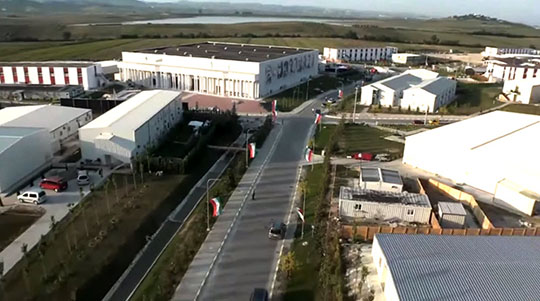
In a similar way, leading members of the Iranian Mojahedin-e Khalq Organization (MEK, MKO, Rajavi Cult) which is based in Albania, make frequent visits to Italy, which has the largest cluster of infections after China, South Korea and Iran. Although the members live in a secretive closed camp named Camp Ashraf 3, some socialise with the Albanian community around them while shopping or visiting officials. The cult’s leaders occupy an entire floor of the International hotel in the middle of the capital Tirana.

There are now rumors from inside the cult’s closed camp in Manez, that some members have vanished, and some are showing signs of flu-like viral sickness. The MEK will certainly not reveal any illnesses inside the cult. They have always kept the cause of deaths inside their camp secret.

The problems surrounding the South Korean cult exist in just the same way with MEK. Unaccountable leadership, isolated and secretive membership. The members are mostly elderly, and many are sick and weak and therefore vulnerable to death following infection. The MEK have no testing kits or medical capability to deal with an outbreak. It is uncertain whether they would even accept any help offered.

Curiously, investigators are looking into why Albania has not announced a single case of Coronavirus even though there are multiple ferry crossings between Albania and Italy every day. The answer appears to be along the lines of ‘if you don’t look for it, you won’t find it’ and ‘if you don’t want to find it, you won’t look for it’.

The MEK is considered to be a national security threat for Europe in general and for Albania in particular. Now with this secrecy they should be considered as a health and hygiene threat too. Unlike the South Korean cult, the MEK consists fewer than 2,000 members. Most of these are contained in a closed camp to which Albanian authorities have no access. The authorities must hold the MEK leaders accountable. Leader Maryam Rajavi must allow full access and investigation into what is happening inside Camp Ashraf 3 and submit the members to Coronavirus to testing. The WHO has a vital role to play in this situation.

The problem is that the MEK is supported by the U.S. and that means it may not be possible for even the government of Albania to contradict or challenge the cult’s behaviour even in the face of the deadly Coronavirus threat. The question now is to what extent are the Albanians ready to suffer a heavy price to appease the Americans?

MEK Hinders Coronavirus Detection In Albania

March 9, 2020 0 comments
FacebookTwitterPinterestWhatsappTelegramSkypeEmail
weekly digest
Iran Interlink Weekly Digest

Iran Interlink Weekly Digest – 268

++ Coronavirus is, of course, a hot topic and the MEK has been on overdrive to keep itself relevant by falsifying films, audios, and reports so as to denounce Iran for its response to the virus. This has resulted in a backlash among Iranians, including the external opposition. People writing against the MEK in Farsi say simply that it’s a nasty thing to do. A few people go on to say that Rajavi has lost the plot. First, thinking Saddam would help topple the regime. Then thinking Giuliani and Bolton would do it and now Rajavi is left expecting Coronavirus to perform regime change. The MEK’s misinformation campaign has spawned the hashtag #MEKtrolls on Twitter.

++ While doing this, there are reports in Farsi about what is happening inside the camp in Albania. Some members have reported suspicious events – people vanishing and others showing cold like symptoms. The inference is that the virus is spreading in the camp but there are no testing kits or access to medical professionals. Families of MEK members are worried about their loved ones. They say the rumours are disturbing.

++ For the last two weeks the MEK has been working hard on damage limitation over the New York Times article. Those answering back against the MEK point out that all the MEK’s attacks are against the reporter. The only thing MEK says is that ‘because the NYT published this, the regime will come and kill us all’. There is no evidence of how that could be achieved since Albania is a NATO country. In addition, what does any of that have to do with this article and why do you never answer anything in the article itself – which bit is correct or which bit is wrong in your opinion. You just rant and hope the troll farm will sort you out. It doesn’t, it won’t.

++ 20th February was the anniversary of the murder of Zaha Rajabi in Turkey in 1996. Rajabi was a member of the leadership cadre, in charge of the MEK’s trafficking activity; mostly arranging for recruits to transfer to Iraq rather than Europe which they would have been promised. Suddenly, this year, Maryam Rajavi wants to call her the MEK’s human rights martyr. Some older people who remember those days have said no, Rajabi was killed in a room with her boyfriend and she was pregnant at the time. This was when the internal Ideological Revolution [forced divorces and celibacy] was in full swing and Rajavi imposed a harsh crackdown on all members. For this reason, nobody but the MEK would have killed her. Her role was trafficking people, but unfortunately for her she fell in love.

In English:

++ Robert Fantina in Global Research writes about continued U.S. support for the MEK terrorists. “So with fading support, and funding probably coming from Israel, and thus, at least indirectly, from the U.S., what is the MEK to do? Hapless Albania must continue to house them, against the wishes of Albanians, but their leaders are in a U.S. chokehold, so they don’t have much choice. The U.S. wants the MEK nearby in case it needs their terrorism for some reason; the U.S. is not averse to having some other country do its dirty work: witness the U.S.-financed Saudi slaughter of Yemenis, as just one example. And should the Albanian government decide to act as its people want, rather than as the U.S. demands, would the MEK then turn its terrorism on them? Albania has certainly been put between a rock and a hard place by the U.S., which doesn’t care in the least about it or the Albanian people; the whole nation is just a pawn in an international chess game that the U.S. is playing, that no one else is interested in.”

++ Alireza Niknam writing for Geopolitica examines definitions of terrorism – for example, in Europe operations that cause financial loss without risking lives are considered to be terrorist operations. Niknam covers the assassination of General Soleimani and the Ahwaz parade attack. The writer highlights the U.S. hypocrisy of killing a general who had contributed to the defeat of ISIS in Iraq and Syria, while supporting the terrorist MEK which has killed thousands of their own people.

++ Anne Khodabandeh wrote for The Iranian that U.S. Iran policy has been backed into a corner by misguided support for the MEK. “…continued engagement with the MEK indicates that the Trump administration still clings to the delusion that the MEK has leverage or influence or power in relation to events in Iran. It does not. The enduring support of MEK by anti-Iran pundits defies logic. Nothing has been gained throughout the past four decades. Much has been lost that can be linked to this support. The MEK promises regime change but cannot even come close to delivering.” This support, argues the writer, enabled the MEK to coerce Albania’s leaders into taking actions contrary to the country’s interests. This has not only enraged Albanian citizens and alienated the European Union, it will not further American policy toward Iran.

++ Ebrahim Khodabandeh, CEO of Nejat Society in Iran, has written an open letter addressed to those with awakened human consciences. The estranged families of MEK members have tried for decades to have human rights officials all over the world listen to their pleas for help. It appears they have no consciences. Let’s see if this letter finally reaches the eyes and ears of those who can and should help.

++ Award winning Albanian journalist Gjergji Thanasi wrote a response to the Nejat Society’s appeal. “As an Albanian who has extensive information about the MEK and their paramilitary facility near Manez town (Ashraf 3 Camp), I pity the rank and file MEK members who are little more than serfs to their lady owner, the old stateless harpy Maryam Rajavi!
“As an Albanian I consider Rajavi’s activity in Albania to be a threat to the national security of my homeland and a blatant violation of human rights of the poor cult members!

“Tell the families to wait and hope. Their loved ones momentarily are simply doomed. It is easier to break out from a low security jail than to leave Camp Ashraf 3. The quisling segments in the Albanian government and opposition behave shamefully like lap dogs to that evil woman Rajavi.
“Momentarily there is very little you can do. It is virtually impossible to receive an Albanian visa as a holder of an Iranian passport. Only those Iranians who are holders of EU, British, American, Canadian, Australian and New Zeeland passports can enter Albania. Even they will suffer a low-level harassment from our police.
“Nothing special that cannot be handled by your Albanian lawyer. They will face a vigorous slander campaign on the part of MEK. The usual stuff: spies of the Mullahs’ regime, terrorists of the Quds force, even in case of senior citizens 70 years old or more.”

++ Mazda Parsi writing for Nejat Bloggers examines the MEK’s love affair with other extremists. The MEK is an extremist movement because “studying the group’s substance and function, one can find out that the MEK has some traits in common with every extremist ideology”. Referencing Robert Fantina’s article in Global Research, Parsi lists other extremist allies, Israel, Saudi Arabia and the far-right Vox in Spain. As an extremist group MEK can align with other extremists regardless their stated ideological beliefs because they all “squeeze through the rifts they make in societies”.

++ Iran’s ambassador to the UK, Hamid Baeidinejad, denounced the MEK’s anti-Iran messaging over the Coronavirus outbreak in Iran. He accuses the MEK of trying to force public opinion into a “mental deadlock” through a duplicitous media and news campaign. “In the early stages of the virus’ emergence in Iran, when the country had not yet sensed the urgency to seek foreign aid, the media campaign tried to imply that the Tehran government would resist Western assistance even at the expense of its people’s lives, he said.

“At the time, they were trying to create the impression that Iran was facing international isolation, and that no country was willing to provide it with emergency aid, Baeidinejad noted.

“In the second phase, the propaganda drive alleged that the foreign medical supplies that had entered the country, including testing kits, were contaminated, he said.
“The official gave assurances that Iran procures the foreign items required through trusted suppliers, and that all the relevant sanitary standards are observed in the process.”

 Mar 06, 2020

March 9, 2020 0 comments
FacebookTwitterPinterestWhatsappTelegramSkypeEmail
Human Rights Abuse in the MEK

For Milad

To the international Human Rights Bodies

My name is Narges Beheshti. My brother Mostafa Beheshti is a member of the Mojahedin-E Khalq Organization (MEK, MKO, NCR, NLA . . .) who is trapped in a remote isolated camp of the group in Albania.

MEK is a terrorist cult supported by the Albanian government. The cult brainwashes the members and forces them into terrorism and crimes.

My other brother Morteza Beheshti was also a member of the MEK living in the cult’s camp Ashraf in Iraq who was killed through a conflict. Both brothers left Iran for more income and a better life, but were deceived into joining the group. Morteza was married and had a son.

My mother passed away recently. After Morteza was killed, her only wish was to talk to Mostafa. Unfortunately, this never happened until she died. The leaders of the MEK, just like other destructive cults, prevent the members to have access to the outside world, in particular to their friends and family.

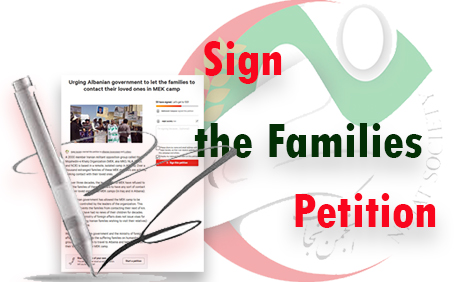
What should I do if I want to contact my brother in Albania and learn about his situation? The Albanian government, in order to appease the MEK, does not let the families to travel to Albania. Even if the families be able to enter the country, they have no chance to see their loved ones and they would be harassed by the Police and authorities.

I firmly urge you to show me a way to persuade the MEK leaders as well as the Albanian authorities to let the members contact their relatives. I am eagerly waiting for your response and thank you in advance for your efforts.

Narges Beheshti, Tehran, Iran

***

The Beheshtis speak to their beloved Milad taken as a hostage in the MEK camp in Albania:

https://dla.nejatngo.org/Media/Report/Beheshti_202003.mp4
March 7, 2020 0 comments
FacebookTwitterPinterestWhatsappTelegramSkypeEmail
MEK propaganda on Corona
Mujahedin Khalq Organization's Propaganda System

Mujahedin-e Khalq to mislead Iranians on coronavirus outbreak

Tehran’s ambassador to the UK says the notorious Mujahedin-e-Khalq Organization (MKO) terror group and other foreign-based anti-Iran movements have launched a propaganda campaign over a coronavirus outbreak in the country with the goal of misleading the Iranian public opinion.

Hamid Baeidinejad said the MKO terrorist cult and its fellow movements have been trying to exploit the epidemic to force the public opinion in Iran into a “mental deadlock.”

The campaign features a “very duplicitous” media and news policy, the envoy said.

In the early stages of the virus’ emergence in Iran, when the country had not yet sensed the urgency to seek foreign aid, the media campaign tried to imply that the Tehran government would resist Western assistance even at the expense of its people’s lives, he said.

Iran Medics

At the time, they were trying to create the impression that Iran was facing international isolation, and that no country was willing to provide it with emergency aid, Baeidinejad noted.

In the second phase, the propaganda drive alleged that the foreign medical supplies that had entered the country, including testing kits, were contaminated, he said.

The official gave assurances that Iran procures the foreign items required through trusted suppliers, and that all the relevant sanitary standards are observed in the process.

The Iranian administration outlines the country’s most recent efforts to battle the new coronavirus outbreak.

“The main goal pursued by this propaganda is to create distrust between the people and the authorities,” he noted, dismissing the “delusions” of those who think such campaigns would yield result.

The MKO has conducted many assassinations and bombings against Iranian officials and civilians since the 1979 victory of Iran’s Islamic Revolution. It notoriously sided with former Iraqi dictator Saddam Hussein during his 1980-88 war on Iran.

Out of the nearly 17,000 Iranians killed in terrorist assaults since the Revolution, about 12,000 died in MKO’s acts of terror.

The terrorist outfit was on the US list of terrorist organizations until 2012. Major European countries, including France, have also removed it from their blacklists.

The new virus emerged in the central Chinese city of Wuhan late last year, and has claimed more than 3,000 lives worldwide so far.

In Iran, it first showed up in the north-central city of Qom. By Tuesday, the country reported 77 fatalities, and 2,336 cases of infection. 435 patients have recovered their health.

The country has mobilized all its resources to tackle the issue, including by ramping up the production of sanitary items, increasing imports of preventive items and enforcing diagnostic measures across the nation.

Most recently, Minister of Industry, Mine, and Trade Reza Rahmani said the production of disinfectants and hygiene products had at least doubled over the past two weeks.

March 5, 2020 0 comments
FacebookTwitterPinterestWhatsappTelegramSkypeEmail
Iran
Mujahedin Khalq as an Opposition Group

US Hostility towards Iran is Counterproductive

Nearly a thousand of us were gathered in Chicago beneath the alarming edifice of Chicago’s “Trump Tower.” Iran’s General Qassem Soleimani had been brutally murdered the day before in Iraq, with several of his associates; and the welcome surprise of Iran’s relatively measured response was yet a few days off.

A region-wide conflagration seemed just on the verge of engulfing perhaps millions of lives, and consuming, as well, much of the species’ remaining time and attention needed to face our direst threats: with the new war we could fear continued paralysis in the face of an unfolding climate collapse, a terrifying new Cold War (now with hypersonic missiles), and a global far-right resurgence driven by shocking inequality and violence.

I’d been to Iran a year before with Voices’ Sarah Ball on a CODEPINK delegation and, addressing the crowd, I thought of how little attention Trump’s worst crimes, his war crimes, now receive from his critics in both parties. I wondered aloud if the right-wing trend that had made Trump commander-in-chief was not, as is often argued, a backlash by the poorest Americans against the same kind of contemptuous disregard that American power also shows for the dignity and safety of the people of Iran.

Tragically, in its “forever wars” the United States consistently denounces authoritarianism and religiosity among the world’s poorest, but only as an excuse to violently drive the people of those countries even further from security, democracy, and peace.

The US condemns the global poor it claims so ardently to wish to protect, too frequently as a shallow pretext for military and economic subjugation. Americans, correct to denounce Iran’s theocratic regime, ignore what Iranians are quick to recognize, that Iran’s worst enemy remains not its own government, but that of the United States.

On our first day in Tehran, reformist foreign minister Mohammad Javad Zarif met with us and quipped that Iran veers rightwards whenever the war-hawk John Bolton is anywhere near the levers of US power. Today the White House would seem to have moved to the right of its stance under Bolton, while Trump’s enemies in both parties alarmingly hail Bolton as an ally in their quest to encircle Russia – Iran’s largest ally.

Predictably, if tragically, this past Friday, religious hardliners swept Iran’s parliamentary elections, with help from a Tehran regime secure as never before in the knowledge that, with US hardliners rampant, Iranians have nowhere else to turn. Iran’s brave dissidents generally rush to reject all expressions of support from US leaders, hastening to agree on one point only with the many Iranians who support the theocracy: that the United States (along with its Saudi and Israeli catspaws) remains the worst threat which Iranians must face.

There is no reason for US voters to suppose that their government’s hostility towards Iran is aimed at realizing anyone’s human rights. Staunch US support for the brutal Saudi dictatorship puts the lie to any such claim. Iran’s military support for its regional allies is massively dwarfed in destructive impact by the Saudi role, directly and through proxies, in bloodily destabilizing the region.

The US’ own 2003 invasion of Iraq remains the century’s worst human rights violation (if the Saudis’ US-backed, famine-assisted war in Yemen doesn’t catch it up). An untold number of Iranians facing dire economic hardship were recently gunned down protesting the greed (perhaps more than the strict religion) of Iran’s clerical oligarchs; but the US had, through its crushing sanctions, imposed this hardship deliberately and with the stated intent of callously forcing Iranians to topple the regime for them.

The idea that a US-driven regime change, either through sanctions or through war, might somehow democratize Iran is popular in the US, but it’s a prospect for which few Iranians would ever want to vote. Social scientists place Iran among Earth’s most nationalistic countries, with many in Iran acutely aware of the US-driven coup which crushed Iran’s stubborn bid for secular democracy in 1953.

The Islamism which revolutionary Iran adopted in 1979 was widely considered an anti-colonialist necessity, a “return to ourselves” required to resist further US cooptation and violence. Today, Iranians well note that US leaders’ regime-change plans tend to involve installing, as Iran’s ‘democratic’ rulers, Iran’s most feared terror group, the “Mojahedin-e Khalq”.

In 1988, during the Iran-Iraq war, the cultlike “MEK” actually invaded Iran, on Iraq’s behalf, from Iraqi soil, and with air cover from Iraq’s Saddam Hussein. Outside Tehran I visited the chief graveyard of that war, resting place for hundreds of thousands. It’s an odd definition of “democracy” under which we hope to impose, through war, the would-be leaders Iranians fear most.

We gathered at a terrible moment this winter beneath the unsightly bulk of Chicago’s Trump Tower, but far more ominous threats loom on our horizon, whether a US war on Iran can be averted or not. Our forever wars, nightmarish enough in themselves, should terrify us for the truly existential crises they prevent us from addressing.

Trump’s worst crimes are his war crimes, and both of the US’ political parties seem focused on urging Trump towards more war, not less. No mere election but a grassroots movement of never-before-witnessed scope would seem needed to turn our government, in this late hour, away from empire and towards the goal of human survival. But to succeed, that movement will need to involve and empower the bases of both parties, including many of Trump’s voters who it would seem easier to simply dismiss and denounce.

When the US settles for condemning Iran, it drives Iran and the world even further towards dictatorship. The most urgent threats facing our species aren’t enemies, like a country or a political party, that we can simply defeat, at however unacceptable a cost, but existential deadlines implicit in our nation’s own wealth and frightened arrogance, deadlines we can’t meet without our “enemies’” freely offered assistance.

The path we must follow within the US seems also to be the sole survivable path the US has left that it can follow abroad – to somehow redress those of our neighbors’ real grievances to which their undeniable failings should never have blinded us; to build a movement for species survival which no-one will join if we won’t share our wealth and our power; and to empower those who, like Iran, we’re most inclined to condemn – in the desperate hope of forging a difficult peace.

– Sean Reynolds (joveismad@juno.com) is a co-coordinator of Voices for Creative Nonviolence (www.vcnv.org) and, in February 2019, traveled to Iran’s Tehran and Isfahan with CODEPINK. He contributed this article to The Palestine Chronicle

By Sean Reynolds, Palestinechronicle

March 4, 2020 0 comments
FacebookTwitterPinterestWhatsappTelegramSkypeEmail
Mr. Gjergji Thanasi, Albanian author and human rights activist
Human Rights Abuse in the MEK

Response to Nejat Society’s appeal

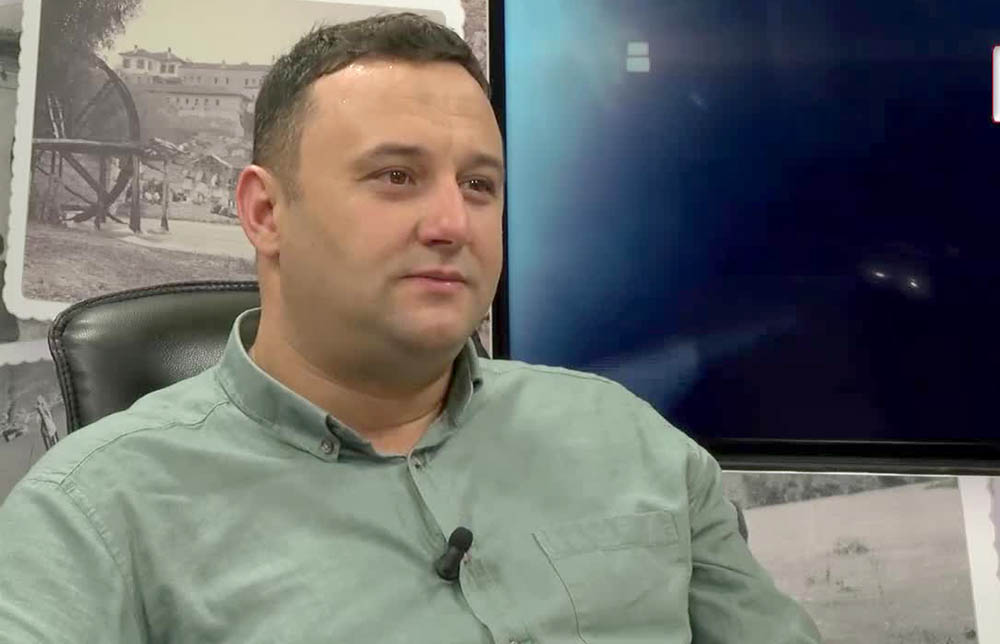
Mr. Gjergji Thanasi, Albanian author and human rights activist, responded to the appeal by the Iranian Nejat Society’s CEO:

Mr. Gjergji Thanasi, Albanian author and human rights activist

He wrote:
As an Albanian who has extensive information about the MEK and their paramilitary facility near Manez town (Ashraf 3 Camp), I pity the rank and file MEK members who are little more than serfs to their lady owner, the old stateless harpy Maryam Rajavi!
As an Albanian I consider Rajavi’s activity in Albania to be a threat to the national security of my homeland and a blatant violation of human rights of the poor cult members!
Tell the families to wait and hope. Their loved ones momentarily are simply doomed. It is easier to break out from a low security jail than to leave Camp Ashraf 3. The quisling segments in the Albanian government and opposition behave shamefully like lap dogs to that evil woman Rajavi.
Momentarily there is very little you can do. It is virtually impossible to receive an Albanian visa as a holder of an Iranian passport. Only those Iranians who are holders of EU, British, American, Canadian, Australian and New Zeeland passports can enter Albania. Even they will suffer a low level harassment from our police.
Nothing special that cannot be handled by your Albanian lawyer. They will face a vigorous slander campaign on the part of MEK. The usual stuff: spies of the Mullahs’ regime, terrorists of the Quds force, even in case of senior citizens 70 years old or more.

Ebrahim Khodabande
March 3, 2020 0 comments
FacebookTwitterPinterestWhatsappTelegramSkypeEmail
Mujahedin Khalq as an Opposition Group

MEK love affairs with other Extremists

Extremism means the advocacy of extreme measures or views. In the world of politics, extremist parties include far-left politics or far-right politics as well as radicalism, reactionism, fundamentalism and fanaticism. The Mujahein Khalq Organization (the MKO/ MEK/ PMOI/ the Cult of Rajavi, NCRI) can belong to all of the extremist agendas in the political spectrum.

The MEK can be considered far left because their ideology is basically founded on the classless society of Marxism. They are reactionary and radicalistic because they believe in the most old-fashioned version of Islam that separates males and females, forces women to cover up, permits the leader of the group to practice polygamy. They exercise cult-like practices so they are fanatics who worship their disappeared leader Massoud Rajavi.

There is no need to mention that, fundamentalism includes traits of all of the above-mentioned political agendas. Thus, the MEK is definitely an extremist movement.

Studying the group’s substance and function, one can find out that the MEK has some traits in common with every extremist ideology. Reviewing its history one can realize that the group`s beliefs and actions have been quite similar to an extremist group to a large extent. The most recent report on the MEK that was published in the Global Research a few weeks ago shows that violent extremism is inherent in this group.

Robert Fantina is an author and activist for peace and international human rights who writes on the MEK’s alliance with the far left American figures like Rudy Giuliani.”Another famous and infamous U.S. citizen, former New York City mayor Rudy Giuliani, personal attorney to U.S. President Donald Trump, calls the MEK a ‘government in exile’.,”Fantina writes.”Apparently, Giuliani has lost the ability to discern truth from falsehood, fantasy from reality; this is not surprising, considering who employs him. [1]

Robert Fantina

As Fantina accurately clarifies the MEK extremist group”is responsible for the deaths of at least 12,000 Iranians”. He keeps on asking,”So is Giuliani saying that he would be ‘comfortable’ with a nation of 81,000,000 people run by terrorists? Perhaps so, since he himself works for the head of the largest terrorist organization in the world.”[2]

Fantina lists another radical ally of the MEK extremists. The first is normally Israel, a hostile state to Iranian government. Referring to the famous report of the NBC News on the group’s financial sources, he concludes that the US and Israel cooperate in their sponsorship for MEK.”That would make sense, since Israel, like the U.S., is a brutal, repressive regime, in violation of countless international laws, and forever violating the rights of the Palestinians in the most unspeakable ways,”he suggests. And since the U.S. supports Israel with $4 billion annually, one can be confident that some of that money is finding its way to the MEK.”He also asserts that Albania is a tool in the hands of the US to maintain the MEK for the rainy day. [3]

Nevertheless, there are also other extremist allies for the MEK out there.”Yet for a group that advocates gender equality and says it is the main pro-democracy Iranian faction, the MEK does little to hide its ties to the ultraconservative, autocratic government of Saudi Arabia”, according to the Middle East Eye.”MEK rallies often feature pro-Saudi speakers and sometimes even Saudi officials.”[4] In an interview with Jordan-based news outlet Albawaba News, former MEK head of security Massoud Khodabandeh detailed the covert means through which the Saudis helped fund the group, including regional smuggling networks and black market transactions. [5]

And finally the most recent revelations about the MEK’s connections with the other extremist groups was made by the Spanish newspaper El Pais. On January this year, the news outlet reported that two lawmakers for Spain’s far-right Vox, Santiago Abascal and Iván Espinosa de los Monteros, received party salaries for eight months that drew on funds from donations by the National Council of Resistance of Iran (NCRI). The two lawmakers belong to a far right Spanish party, VOX.”Both leaders received around €65,000 in total.”[6]
Kathrine Shakdam of the citizen truth tries to answer how come that a far left Islamic extremist group (MEK) gets in bed with a far right anti-Islamic extremist party (VOX) – both ends of the political and social spectrum. She brings the arguments of Julia Ebner, a research fellow at the London-based Institute for Strategic Dialogue. Speaking in an interview Ebner notes:”Both the far right and Islamist extremists benefit when their professed enemies engage in a terror attack or do anything that confirms their narratives. They want to see more rifts and more chaos in society. When communities are scared, when they’re driven apart, they’re vulnerable to the extremist narratives.”[7]

Seemingly, there is no difference for the MEK that its allies range from anti Muslim Zionist parties to Saudi Wahhabis and far away to far right Spanish or American parties. They seek to squeeze through the rifts they make in societies.

Mazda Parsi

References:
[1] Fantina, Robert, The United States Supports the Mujahedeen-e Khalk (MEK) Terrorist Organization, Global Research, February 18th, 2020.
[2] ibid
[3] ibid
[4] The Middle East Eye, Described by critics as ‘a cult’, Iranian opposition group is now lauded by top US officials as alternative to Iran’s government, July 17th, 2019.
[5] Webb, Whitney, Former MEK Official Exposes Saudi Arabia’s Covert Funding of Iranian Terror Group, Talking Point Memo, September 20th, 2020.
[6] Irujo, José María, Gil, Joaquín, Donations from the National Council of Resistance of Iran also funded other party expenses such as rent and computer equipment in 2013 and 2014, El Pais, January 28th, 2020.
[7] Shakdam, Catherine, Convenient Bedfellows: Why The MEK Backs Spanish Far-Right In Tactical Relationship, Citizen Truth, February 12, 2020.

March 3, 2020 0 comments
FacebookTwitterPinterestWhatsappTelegramSkypeEmail
Newer Posts
Older Posts

Recent Posts

  • Slovenian PM Janez Janša, MEK & Israel promoter

    July 1, 2026
  • MKO Rally Dispersed by French Police in Humiliating Blow to Terrorist Group

    June 27, 2026
  • Nejat Society Albania’s Conference on June 20th

    June 22, 2026
  • Maryam Rajavi’s Stance, Peace or Survival Tactic?

    June 22, 2026
  • France’s foreign ministry denies asking for ban of MEK’s rally

    June 20, 2026
  • Facebook
  • Twitter
  • Instagram
  • Youtube

© 2003 - 2025 NEJAT Society . All Rights Reserved. NejatNGO.org


Back To Top
Nejat Society
  • Home
  • Articles
  • Media
    • Cartoons
    • NewsPics
    • Photo Gallery
    • Videos
  • Publications
    • Books
    • Nejat NewsLetter
    • Pars Brief
  • About Us
  • Contact us
  • Editions
    • عربي
    • فارسی
    • Shqip