Nejat Society
  • Home
  • Articles
  • Media
    • Cartoons
    • NewsPics
    • Photo Gallery
    • Videos
  • Publications
    • Books
    • Nejat NewsLetter
    • Pars Brief
  • About Us
  • Contact us
  • Editions
    • عربي
    • فارسی
    • Shqip
Nejat Society
Nejat Society
  • Home
  • Articles
  • Media
    • Cartoons
    • NewsPics
    • Photo Gallery
    • Videos
  • Publications
    • Books
    • Nejat NewsLetter
    • Pars Brief
  • About Us
  • Contact us
  • Editions
    • عربي
    • فارسی
    • Shqip
© 2003 - 2024 NEJAT Society. nejatngo.org
Vidal Quadras
Mujahedin Khalq; A proxy force

Alejo Vidal-Quadras: We (VOX) Received money from Mojahedin Khalq terrorists

Alejo Vidal-Quadras: “Abascal knew about Iranian opponents’ financial support for Vox and was fine with it”

The former head of Vox’s list of candidates for the 2014 European Parliament elections, Alejo Vidal-Quadras, assures that the current leader of the far-right formation, Santiago Abascal, was aware that supporters of the National Council of Resistance Iran (NCRI) contributed funds for that campaign and did not object to that support. “Santiago Abascal knew the economic support of Iranian opponents and it seemed good to him, all help, within the law, was welcome,” he told eldiario.es.

The NCRI is the name adopted by the People’s Mojahedin of Iran (MeK, its acronym in English) to try to pretend it is part of a coalition of groups opposing the Iranian regime. Although originally inspired by Marxism, for years it has been adopted by neoconservative pundits as the alternative to the Iranian regime. According to El Pais, the far-right group received 800,000 euros in 146 donations from people linked to this group to finance that campaign. 80% of the funds that Vox used to try to have representation in the European Parliament came from that group. Vidal-Quadras, who lacked 2,600 votes to enter the European Parliament, left Vox after that fiasco. Before he had spent thirty years in the PP, as an MEP, for which he was trained, between 1999 and 2014.

The Organic Law of the General Electoral System (LOREG) prohibits contributions to the electoral accounts of “funds coming from foreign entities or persons”, that is, they do not have Spanish nationality. However, in October 2013, months before these elections, the Central Electoral Board specified that this prohibition operates only during the electoral period: from the time the elections are formally convened until their conclusion.
The decree calling for these elections was published in the Official Gazette (BOE) on 31 March 2014, which set May 25 as the date for the poll. That is, any foreign donation in this period would have been irregular. Vidal-Quadras says that the law was “scrupulously” complied with. “I did not receive a euro when the elections were already called, if I had, I would have contravened the law and I always abide by the law,” he says.
Alejo Vidal-Quadras: Vox leader Abascal approved financial support from Mojahedin Khalq (MEK) terrorists Alejo Vidal-Quadras en 2012 junto a Maryam Rajavi, presidenta del Consejo Nacional de la Resistencia de Irán (CNRI) FREEIRAN1

Although his departure from the PP and signing up for Vox was not announced until January 27, 2014, Vidal-Quadras says that since the end of December 2013 the circles of the opposition to the Iranian regime already knew of his intention to leave for another party and try again to be a member of the European Parliament under other group. “That’s when that support began to be forged because I am a well-known person in that area,” he explains. In any case, Vox’s candidate was not formally announced to the European Parliament until April 10, with the elections already officially convened and, therefore, when the ban on the receipt of funds from abroad already operated.

Collaboration “without conditions”
Vidal-Quadras frames the “collaboration” of Iranian opponents in his frustrated attempt to be a member of Vox in his “years” relationship with the NCRI. He says that this “close relationship” began to be forged in 1999, when he arrived in Brussels as a PP member of the European Parliament. “I joined then with the Friends of a Free Iran platform, in which were other representatives of the PP and also socialists, liberals, greens … we staged public events, statements or press conferences to give them their support,” he says. “When I left the PP and launched myself at Vox, people from civil society, not the NCRI as an organization, lent me their financial support,” he adds. He insists that they did so “without conditions” as thanks for the 15 years he had been working with them.

When the European Union decided to remove the People’s Mojahedin of Iran (MEK), the main opposition group to the Islamic regime in Tehran, from the European list of terrorist organizations, Maryam Rajavi, president of the National Council of the Resistance of Iran (considered the political wing of the Mojahedin), thanked a group of members of the European Parliament for their support, especially Vidal-Quadras. It was common for the then PP politician to participate actively in all kinds of acts of lobbying in Brussels for the Iranian opposition in exile, reports Marina Estévez.
Vidal-Quadras ascribes the contributions of funds to the period in which he was in Vox and links them “totally” to his person. “There was no donation while he was in the PP”, he says, although he reiterates that members of parliament also participated in activities for the Iranian opposition. On Monday, the party presided over by Pablo Casado announced that he was considering forcing Vox to appear before the Commission of Investigation into the Financing of Political Parties that he is driving solo in the Senate to explain receipt of funds from Iranians that the vice-secretary of Communication of the PP, Marta González, described as “worrying”.

And politicians who concern Pablo Casado, such as former Prime Minister Jose Maria Aznar, have also lent their support to this group of Iranian opponents. In fact, not even its terrorist past, as the USA and the EU considered it until a few years ago, has prevented this organization from enjoying the support of Western leaders. José Luis Rodríguez Zapatero, for example, attended the annual meetings that the group organized in Paris in 2013 and 2014.

Elena Herrera, Eldiaro.es, Spain, Translated by Iraninterlink

January 19, 2019 0 comments
FacebookTwitterPinterestWhatsappTelegramSkypeEmail
Mujahedin Khalq; A proxy force

Maryam Rajavi’s MEK terrorists – The group that supports Vidal-Quadras

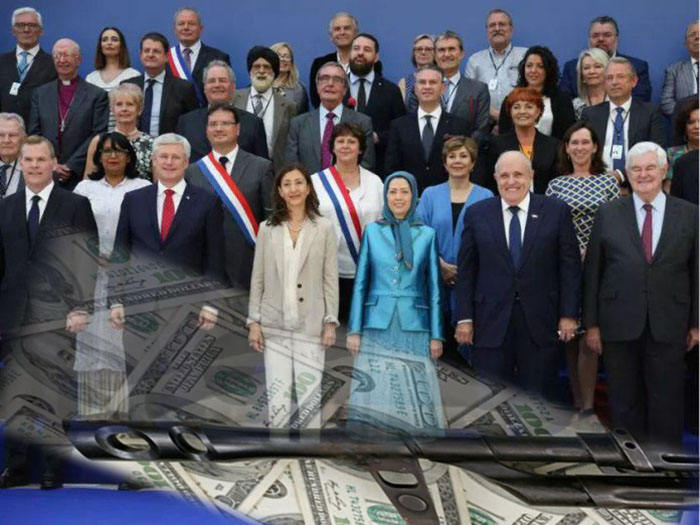
On 30 June, thousands of people gathered in Villepinte, on the outskirts of Paris in an event entitled ‘Free Iran 2018’. Among the speakers were figures such as Donald Trump’s personal lawyer and former mayor of New York, Rudolph Giuliani, whose participation highlighted the important international connections of the event’s organisers, an Iranian dissident group called the Mojahedin-e Khalq (‘fighters of the people’ or MEK as they are known) and its political wing, the National Council of Resistance of Iran (NCRI), both groups are led by Maryam Rajavi, an opposition with decades of struggle behind them. The participation of the New Yorker was not exceptional: in the past, the meetings have had the participation of people like the current US National Security Advisor, John Bolton, Sen. John McCain, the former directors of the CIA James Woolsey and Porter Goss, many British politicians and, as an almost ubiquitous figure, Alejo Vidal-Quadras, former vice-president of the European Parliament with the PP and later a member of Vox.
Vidal-Quadras’ relationship with the group goes back a long way: a decade ago, his efforts got the European Union to remove the MEK from its list of terrorist organisations. He is also president of the International Committee for Justice, a group of former MEPs dedicated to supporting a segment of the Iranian opposition. And the relationship has been beneficial for both parties: according to the newspaper El País published on Sunday, followers of the NCRI financed 80% of the Vox campaign in the European elections in 2014.
Vidal-Quadras himself acknowledges this support: “It’s all right, because that’s what I stated. But about the judgments that are cast, or the assessments made, there is some inaccuracy, as when it is said that it was a Marxist entity from its beginnings”, he tells El Confidencial. Undoubtedly, the organisation is solvent: by all accounts, the group pays tens of thousands of dollars to the speakers at international events (by some estimates, Bolton would have pocketed about $180,000 for his involvement in MEK events), and It has invested huge amounts in lobbying campaigns in Washington, which has guaranteed it a public visibility that might otherwise have been lacking. Among other reasons, for its controversial profile.

“The Mojahedin began as a radical Islamic guerrilla group that borrowed many of the ideas of Marxism to transform Shiism from a conservative religion into a radical ideology”, explains Ervand Abrahamian, an American historian of Iranian descent and author of a book about the MEK. “Now it has become more of a cult based on personal obedience to Rajavi”, he tells El Confidencial.

The MEK represents one of the most surprising chapters in the history of political violence of the last century. The organisation played a prominent role in the Iranian Revolution, staging numerous armed actions against the Shah’s security forces. But after the revolution, friction with Ayatollah Khomeini soon followed – they opposed, for example, the release of hostages from the US embassy in Tehran when ordered by the new revolutionary government – who launched the new repressive apparatus against them. In the resulting phase, thousands of MEK members were killed and tortured, and many others went into exile. They also took revenge: in 1981 they planted a bomb that killed more than 70 senior officials of the regime. The current Iranian supreme leader, Ali Khamenei, lost the use of his right arm as a result of that attack.
Maryam Rajavis MEK terrorists – The group that supports Vidal-Quadras Members of the Mojahedin-e Khalq in Camp Ashraf, in the nineties. (Reuters)

From Paris to Iraq

Vidal-Quadras has always insisted that those responsible for these armed activities are not the Iranian dissidents he supports, but an extremist faction called Peykar: “The MEK movement began in the sixties under the Shah, they were a group of students who fought to oppose that dictatorship. The political police, the Savak, arrested the entire leadership of the movement, which was then emerging and small, and while they were in prison there was a dissident faction left on the street, which became radicalised and became Marxist. But the authentic movement, that has never been Marxist at all. Quite the opposite: its 10-point plan [the program published by the organisation in 2006] is a plan that any western democrat could sign: free elections, denuclearisation, etc.”, he says.
“The NCRI is now a democratic opposition movement to a cruel dictatorship that violates rights in a brutal way every day, considers women as third-class citizens, promotes terrorism internationally and is an element of destabilisation in the world. So, when we talk about an Islamo-Marxist group, a description is created that does not correspond at all with what the NCRI and the MEK are, which are a totally democratic movement”, insists the Spaniard.
Be that as it may, among those who managed to escape into exile was a young man named Massoud Rajavi, who established the NCRI in Paris. But in 1986, when Jacques Chirac’s France began a rapprochement with [Ayatollah]Khomeini’s Iran, Rajavi and his followers moved to Iraq, where they forged an alliance with the worst enemy of the Iranian regime: Saddam Hussein. Something that caused them to lose much of the support they had within their own country.
In 1988, after the ceasefire between Baghdad and Tehran, thousands of members of the group launched an operation called Eternal Light, destined to reconquer Iran. The offensive was easily repelled by the Iranian army, which killed around 4,500 of its 7,000 members. In addition, during the following five months, the Khomeini regime summarily executed thousands of political prisoners in their prisons, many of them from the MEK (the NCRI inflates the figure to 30,000), one of the biggest crimes committed by a state in the last decades, but little known of outside specialist circles.
According to the testimonies of some dissidents, from that moment the cultic characteristics of the group were accentuated:

Rajavi proclaimed himself ‘Mahdi’ (the chosen or future saviour of humanity in the Shia tradition), and insisted that everything, even defeat, was part of a divine plan. In 1990 he ordered all members of the organisation to divorce and sent their children into exile in Europe, where they would be raised by other militant couples as a way, according to critics, of maintaining control over his followers and avoid dissent. An MEK spokesperson asserts that those divorces occurred completely voluntarily. Massoud married one of these divorcees, Maryam Azodanlu, who took his surname.

”Iranian poisoning“

Vidal-Quadras encourages much of this information to be taken with a pinch of salt, saying that the disinformation on the part of Iran’s government is very strong. “All this work to discredit the movement naturally comes from the propaganda war that the Iranian regime is doing against its main opposition group”, he says. He denies, for example, the veracity of the MEK’s alleged participation in the crushing of the rebellion that had erupted in Kurdistan after the Gulf War in 1991, when, according to some former militants, Maryam Rajavi had harangued them saying: “Take the Kurds under your tanks and save your bullets for the Iranian Revolutionary Guards”. However, some of the negative characteristics described by the critics of the group, such as their status as a cult or sect, have been confirmed by sources such as the RAND corporation – hardly suspected of Iranian infiltration – in a 2009 report.
According to the same document, the nineties were an intense time for the MEK:

in April 1992, they committed almost simultaneous attacks against Iranian embassies in 13 different countries, including the Iranian delegation to the UN in New York (which makes them the only foreign group that has managed to attack in the USA besides Al Qaeda). This earned them the inclusion, five years later, in the list of terrorist organisations of the US State Department. When the Bush Administration insisted before the invasion of Iraq on Saddam Hussein’s connections with terrorism he referred, among others, to the MEK. Between 2000 and 2001, the group carried out 350 attacks in different parts of the world, according to a report from the State Department.

When US forces entered Iraq in 2003, after a series of initial skirmishes, the MEK were willing to remain neutral toward the occupiers, allowing their 3,800 members to remain at their base, Camp Ashraf, some 100 kilometres away north of Baghdad. The group also officially renounced violence and modified its political program, now focused on the pursuit of democracy and the defence of human rights in Iran. At that time, Massoud Rajavi disappeared – without even knowing what became of him today – and his wife, Maryam, took over. But that did not relax the iron grip on the group’s members: a devastating Human Rights Watch report in 2005, prepared through interviews with several dissidents, recounts many of the tortures and abuses exercised on its members. Neither, according to some sources, did participation in armed operations.

According to two intelligence officials during the Obama Administration interviewed by NBC, between 2007 and 2012 Israel used members of the MEK to kill half a dozen Iranian nuclear scientists, which increased their apparent value to supporters of regime change against Iran, both Israeli and American. This was helped by the discovery of the secret Iranian nuclear program, carried out in part with information provided by the MEK network in the interior of the country.

Is this the same group that Vidal-Quadras and other international politicians support? Many experts believe that it is. “US officials, including National Security Adviser [Bolton], can have no illusions about the MEK’s propaganda lies about pursuing democracy or enjoying support within Iran. They know very well how despised the MEK are in that country. Unlike other Iranian opposition groups, however, the MEK can organise military operations”, writes Trita Parsi, President of the National Iranian American Council, the leading Iranian organisation in the United States. “Its members have experience in sabotage, assassinations and terrorism, as well as in guerrilla and conventional warfare. These are not qualities that lead one towards any democratisation project, but they are extremely useful if the strategic objective is to provoke regime change (through an invasion) or a collapse (through destabilisation)”, says Parsi.
Maryam Rajavis MEK terrorists – The group that supports Vidal-Quadras 2An Iraqi soldier stands guard at the entrance to Camp Ashraf in Diyala province in February 2010. (Reuters)

Spearheading regime change

These capabilities guaranteed very powerful friends on both sides of the Atlantic. But meanwhile, its members, entrenched in Camp Ashraf and later in another base called Camp Liberty, were the object of hostility by the Iraqi government of the Shiite Nuri al Maliki, an ally of Iran. Iraqi security forces attacked the camps on at least two occasions, causing more than a hundred deaths and hundreds of injuries. This led the Obama Administration to remove them from the list of terrorist organisations in 2012 (the EU had already done it three years before), in order to get the militants out of Iraq and take them to a country that accepted them. The only one which did was Albania.
There, some 2,300 members of the group remain confined in a well-guarded base, without access to the media. Hundreds of them have defected. According to Massoud Khodabandeh, a former member of the group who now helps those who want to leave, the MEK continues the practices of control and torture in the camp, which he describes as “political slavery”.
“Look, I’ve been collaborating with the Iranian resistance in exile for 18 years. I know them perfectly, I have personal friendships with many of them and of course with Mrs. Rajavi”, says Vidal-Quadras. “I have spoken with hundreds of members of the NCRI, I have visited their current camp in Albania and the one they had in Iraq in 2009, I have spoken with all of them with total freedom in the field, and I can assure you that they are absolutely committed people, that they are there voluntarily, that nobody forces them to do anything and that they have a tremendous vocation to free their country from that dictatorship”, says the Spanish politician. “The history of this movement is a story of suffering and persecution, with tens of thousands of victims. For example, the two sisters of Mrs. Rajavi were executed, one of them while pregnant. So, it cannot be denied they have an amazing capacity for sacrifice and tenacity”, he reiterates.
Vidal-Quadras insists on the international support of the group, which in 2009, he says, received the support of more than 4,000 active parliamentarians around the world, and whose events, in addition to the names already mentioned, are attended by people like Ingrid Betancourt or Pat Kennedy “It is an absolutely recognised and democratic movement, which has the support of thousands of active politicians in the US and Europe, in Canada, in Arab countries or Australia,” he stresses. But some of this support is controversial, as is the case with Saudi Arabia.
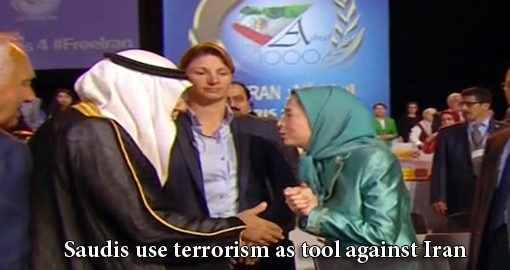
“For years, the cult was funded by Saddam Hussein. Now the Saudis finance it”, says Abrahamian. Although neither Riyadh nor the NCRI admit it, the assistance of former Saudi intelligence chief Prince Turki al Faisal at the 2017 event seemed to confirm the suspicions of the experts. “Rajavi was killed when the US invaded Iraq, but the organisation prefers not to admit it. The Saudi representative at the annual meeting last year officially revealed it for the first time. That a Saudi did it is enormously significant”, says this specialist.
Confined to Albania, the group seemed relegated to almost total irrelevance … until Bolton gained access to the White House. Now, many hawks in Washington seem to have placed their hope in the NCRI to lead a future transition in Iran. Something that, according to most experts, they really are not in a position to do. “In my years as a correspondent for the ‘Washington Post’ in Tehran, I never met anyone who had a positive opinion of the MEK”, says journalist Jason Rezaian. “The organisation has no future in Iran since they worked closely with Saddam Hussein during the eight-year war. The ‘neocons’ in the Trump Administration are using the MEK as they did with [Ahmed] Chalabi and [Kanan] Makiya during the Iraqi invasion”, says Abrahamian, referring to the Iraqi dissidents who assured the Bush Administration, literally, that their troops would be greeted with flowers in Baghdad. The MEK may not have great support inside Iran, but they have many powerful friends out there.

Daniel Iriarte, El Confidencial, Madrid, Translated by Iran interlink

January 19, 2019 0 comments
FacebookTwitterPinterestWhatsappTelegramSkypeEmail
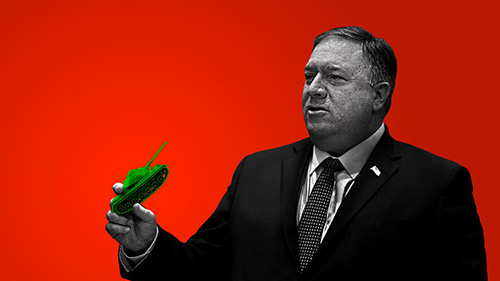
John Bolton
Mujahedin Khalq; A proxy force

Bolton’s Plan for Mideast Included Strikes on Iran, Syria, and Iraq

Bolton’s Radical Reshaping Plan for Mideast Included “Mind Boggling” Strikes on Iran, Syria, and Iraq

Bolton’s willingness to bring Syria and Iraq into the fray along with Iran betrays the fact that he is not just seeking regime change in individual countries but seeking to remake the Middle East as a whole.
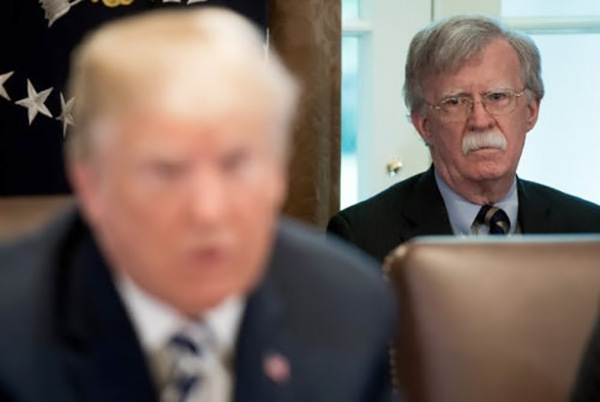
In 2017, less than a year before he became national security advisor, John Bolton promised a gathering of the Mujahedeen Khalq (MEK) that:

In 2017, less than a year before he became national security advisor, John Bolton promised a gathering of the Mujahedeen Khalq (MEK) that:

The declared policy of the United States should be the overthrow of the mullahs’ regime in Tehran. … The behavior and the objectives of the regime are not going to change and, therefore, the only solution is to change the regime itself. … And that’s why, before 2019, we here will celebrate in Tehran!”

While some may have thought Bolton’s statements of regime change in Iran before 2019 were just more bellicose rhetoric from a well-known Iran hawk, a report published Sunday in the Wall Street Journal has revealed that Bolton did everything within his power to push for President Donald Trump to launch a military attack on Iran.
According to the Journal, Trump’s national security team – which is led by Bolton – requested that the Pentagon develop “far-reaching military options to strike Iran” last September after Shia militias in Iraq fired three mortars at the U.S. embassy and diplomatic compound in Baghdad. As the report noted, the shells “landed in an open lot and harmed no one,” but the group that fired them is alleged to have ties with Iran.
This incident, though minor, notably took place amid considerable unrest in the Iraqi city of Basra and during competing efforts by the U.S. and Iran to influence the formation of Iraq’s next national government.
Nevertheless, the minor nature of the incident was apparently the perfect pretext for Bolton and others on the national security team – which Bolton has been stocking with war hawks for much of the past year – to push for a military strike on Iran, something Bolton himself has long sought, as evidenced by his numerous speeches and editorials calling for preemptive bombing of the Islamic Republic.
For instance, in one meeting, Mira Ricardel – then serving as Bolton’s ultra-hawkish deputy national security advisor – described the attacks in Iraq as “an act of war” and said the U.S. had to respond decisively. Ricardel is also a member of the Council on Foreign Relations and aformer executive of U.S. weapons-maker Boeing but left her post last November as result of friction with First Lady Melania Trump.

In addition, during those meetings, the Journal noted that Bolton did not even attempt to hide his real motivations, as he “made it clear that he personally supports regime change in Iran, a position he aggressively championed before joining the Trump administration, according to people familiar with the discussions.”
As a result of those meetings, the Bolton-led National Security Council pushed for an attack plan on Iran so brazen that it deeply concerned Pentagon and State Department officials. One former senior U.S. administration official told the Journal that the request “definitely rattled people” and added that “people were shocked. It was mind-boggling how cavalier they were about hitting Iran.”
In other words, using a remarkably minor incident as a pretext, the Bolton-led group of hawks that compose the majority of Trump’s National Security Council (NSC) was preparing to launch a full-scale regime-change war on Iran. To make matter worse, the Journal also reported that the Pentagon had “complied with the NSC’s request to develop options for striking Iran,” meaning that Bolton and his team now have a range of Pentagon-developed strategies for bombing Iran at their fingertips.

Bolton’s obsession and unkept promise
Bolton ‘s push to bomb Iran last September over such a minor incident may seem strange, but Bolton’s history makes it clear that he has long sought any excuse – from the minor to the non-existent – to justify waging war against Iran’s current government.
As MintPress reported last year, Bolton’s past indicates a near obsession with clearing the way for U.S. military action against Iran. As journalist Gareth Porter has noted, while Bolton was the Bush administration’s key policymaker on Iran, he — by flouting State Department protocol and taking several unannounced trips to Israel — “actively conspired … to establish the political conditions necessary for the administration to carry out military action” against Iran.
Not only that, but Bolton’s behind-the-scenes dealings — using fabricated evidence, provided to him by an Iranian terrorist group that Bolton still openly supports, to convince the United Nations that Iran was secretly developing a nuclear weapon — led Iran’s nuclear program to become a matter overseen by the United Nations Security Council, as opposed to the International Atomic Energy Agency (IAEA). Since becoming national security advisor, Bolton has continued to make this claim — as recently as last week — despite its having been rejected by the U.S. intelligence community repeatedly since 2007.
The terror group relied on by Bolton, Mujahedeen Khalq (MEK), was listed as a “Foreign Terrorist Organization” by the United States government from 1997 and 2012 and, in the past, has conducted terror acts to accomplish its goals, killing Iranians as well as Americans in the process.

More recently, MEK has worked with Israeli Intelligence to murder Iranian scientists. Since its removal from the government’s terror group list after an extensive lobbying effort that targeted prominent U.S. politicians, MEK has sought to reinvent itself as a “moderate” Iranian opposition group even though it has next to no support within Iran and has consistently been characterized as both “cultish” and “authoritarian.”

It was to this very group that Bolton had promised regime change in Tehran in 2019, a promise he ultimately failed to keep, but not for lack of trying.
“Sunni-stan,” partition, and a Middle East rebuilt to suit
Another highly significant revelation of the Journal’s report, which has been largely overlooked, is that the plans for “military options” that Bolton and his team requested from the Pentagon also included strategies for launching strikes, not just in Iran, but in Syria and Iraq. As the report noted, “the National Security Council asked the Pentagon to provide the White House with options to respond with strikes in Iraq and Syria as well, according to people familiar with the talks.”
Bolton’s willingness to bring Syria and Iraq into the fray betrays the fact that he is not just seeking regime change in individual countries but seeking to remake the Middle East as a whole. Indeed, both Syria and Iraq have long been in Bolton’s crosshairs, as evidenced by his 2015 editorial in the New York Times where he calls for the partition of both countries in order to benefit the United States, Israel and “friendly Arab” states like Saudi Arabia.
Bolton’s partition plan involves the creation of a Sunni state out of northeastern Syria and western Iraq, which he nicknames “Sunni-stan.” He asserts that such a country has “economic potential” as an oil producer, would be a “bulwark” against the Syrian government and “Iran-allied Baghdad,” and would help defeat Daesh (ISIS).
Bolton’s mention of oil is notable, as the proposed area for this Sunni state sits on key oil fields that U.S. oil interests, such as ExxonMobil and the Koch brothers, have sought to control if the partition of Iraq and Syria comes to pass. Also notable is the fact that the area of Syria Bolton mentions is the area currently being illegally occupied by the United States. This could well be a driving factor in Bolton’s desire to delay or prevent the U.S. troop withdrawal in northeastern Syria.
However, the most notable part of the Bolton’s editorial calling for the creation of “Sunni-stan” is that he mentions exactly who would benefit from this partition, and it certainly isn’t the Syrians or the Iraqis. “Restoring Iraqi and Syrian governments to their former borders,” Bolton writes, “is a goal fundamentally contrary to American, Israeli and friendly Arab state interests.” In other words, allowing the Syrian government to return to its former borders is “contrary” to the interests of the nations that Bolton supports and that he seeks to make the dominant powers in the Middle East through his aggressive policy for the region.
With Bolton and his team on the National Security Council armed with the tools to bomb both Syria and Iran, it’s only a matter of time before Bolton finds the perfect pretext to begin enacting his vision for a “new” Middle East, most likely starting with Iran.
Whitney Webb is a staff writer for MintPress News and a contributor to Ben Swann’s Truth in Media. Her work has appeared on Global Research, the Ron Paul Institute and 21st Century Wire, among others. She has also made radio and TV appearances on RT and Sputnik. She currently lives with her family in southern Chile.
Whitney Webb, Mint Press Newsfmek

January 16, 2019 0 comments
FacebookTwitterPinterestWhatsappTelegramSkypeEmail
MKO making terror trolls in Albania
Mujahedin Khalq Organization as a terrorist group

Mojahedin Khalq cyber terrorism from Albania

Albania has been at the center of Iran’s diplomatic attention in the past few years. Once supported by Iran, the tiny Muslim country has now become a base for the Mujahedin-e Khalq organization, an anti-Iran terrorist group targeting Iran’s security from inside Albania. Camp Ashraf 3 is MKO’s new base in Albania hosting around 3000 MKO members who have left Iraq. With the support from Saudi Arabia and the U.S., the terrorist group’s camp in Albania has been built in 18 months.

MKO making terror trolls in Albania

One of the most important activities of the MKO in Albania is the terrorist group’s cyber activities. MKO’s cyber unit enjoys 1300 members with several thousand fake accounts in Twitter, Facebook, Telegram and Instagram. According to some defected MKO members, a part of this highly protected facility is a factory for creating fake accounts on the internet which is dedicated to mass manipulation of the social Media.

They are tasked with duties such as creation and management of accounts under the cover of different guilds, spreading lies against the Islamic Republic of Iran, diverting peaceful protests to violent movements, etc.

Hassan Shahbaz, a defected MKO member said in an interview with Aljazeera: “We used to receive daily orders instructing us to emphasize on major topics and current problems in Iran. For instance, unemployment, high prices, and poverty were among the topics to which we had to attract the attention of people and blame the Islamic government in Iran for these problems. This was our daily task on the internet.”

Recruiting cyber experts, indicates the fact that MKO leaders view the internet and its impact on the Iranian security seriously. The internet has turned into a soft-war battlefield against Iran and anti-Iran groups have found a tool to damage the country with the least expenses. The end-goal of the terrorist MKO is a regime-change in Iran. The soft-war waged against Iran by enemy-states and their affiliated groups like the MKO is based on spreading gossips, propaganda, and the exaggeration of domestic problems.
Dr. Reza Ekhtiari Amiri,

January 16, 2019 0 comments
FacebookTwitterPinterestWhatsappTelegramSkypeEmail
Mujahedin Khalq; A proxy force

The People’s Mujahedin are questionable allies of Washington in Iran

Leading US government politicians support the Iranian People’s Mujahedin as a democratic alternative to Iran. Critics see this as a dangerous aberration.

The history of the Iranian People’s Mujahedeen is bloody, turbulent and tragic, their method is controversial and their ideology is full of contradictions.

No Iranian opposition group polarizes like them, no one has so many critics, but no such prominent supporters. For a long time, the People’s Mojahedin have had powerful advocates in the West, but since they have three sympathizers in the White House with Security Advisor John Bolton, Secretary of State Mike Pompeo, and Trump lawyer Rudy Giuliani, the question of what role they play in Washington’s Iran policy is raised , And if they really are the right ally.

“The mullahs must go, the ayatollah must be replaced and replaced by a democratic government of Maryam Rajavi,”Giuliani called last June at the annual meeting of the People’s Mojahedin in Paris. In the front row, Maryam Rajavi sat smiling in her green headscarf and has been leading the group for decades, making herself the”elected president.””The [regime’s] behavior and goals [in Tehran] will not change, so the only solution is to change the regime itself,”Bolton thundered a year earlier in Paris.

Left-Islamist ideology
Officially, President Donald Trump’s sanctions policy against Iran aims to force Tehran to”compromise”its nuclear program, abandon its missile program, and withdraw from Syria, Iraq, and Yemen through”maximum pressure.”Falcons such as Bolton and Pompeo, however, suspect that they are in fact not about a policy, but about a regime change. And that they have given the People’s Mujahedeen a central role in overthrowing the regime in Tehran.
The Mujahedin-e Khalq (MEK) was founded in 1965 by students from the University of Tehran as a city guerrilla to fight the authoritarian Shah regime. Influenced by Marxism and a revolutionary interpretation of Shiite Islam, they developed an idiosyncratic left-wing Islamist ideology. Although the founders were quickly arrested and executed, under the leadership of Massud Rajavi, the group continued its armed struggle and played an important role in the 1979 revolution to mobilize the masses.
After the fall of the Shah, the MEK initially supported the regime of Ayatollah Khomeini, but when in 1980, the left President Abolhassan Banisadr wanted to appoint the MEK leader Rajavi as Prime Minister, it came to the Clash. Mass protests by the People’s Mujahedeen were suppressed, and the group had to go underground while Rajavi and Banisadr fled to France. In the following months, the MEK killed dozens of members of the political elite in attacks, while the regime executed thousands of its followers.
“The People’s Mujahedeen have suffered an incredible amount of suffering, but also caused a lot of damage,”says German Green MP Omid Nouripour. He strongly advised against supporting the group because there are”huge questions about its ideology, its structure and its legitimacy”and because of its past it has little support in Iran. [..]

“Much suffering, much damage done”
The Iraqi dictator had offered his help to the MEK when Rajavi and his supporters had to leave France in 1986. Saddam Hussein gave them several camps on the Iranian border, equipped them with tanks and sent them to the front against Iran. When Tehran and Baghdad agreed a ceasefire in 1988, the People’s Mojahedin launched a final attack in the hope of triggering a popular uprising in Iran. But the offensive became a disaster, and in retaliation, [Ayatollah] Khomeini executed thousands of captured MEK followers.
Because of its role in the Iran-Iraq war, the group is now”more hated by Iranians than al-Qaeda and ISIS,”says Iranian expert Adnan Tabatabaei. Since 1981, the group has been using the fine-sounding name National Council of Resistance (NCRI), but the council is completely dominated by the MEK. Although the MEK had spelled out the cause of their flight to France as democracy, freedom and human rights, that was above all rhetoric.”It is fatal to believe that such a group could positively influence the political process in Iran,”says Tabatabaei.
Supporters of the group, of course, see it differently. Former French Foreign Minister Bernard Kouchner in 2014 called MEK in Paris”an example of the entire Middle East”because of its commitment to separate politics and religion. At the MEK meeting in June, Former House Speaker Newt Gingrich described it as a”movement for freedom, equal rights and democracy.”And former Italian Foreign Minister Giulio Terzi sees them as the”most credible democratic alternative”and the”natural ally”of the West.
The fact is that the MEK, with its thousands of dedicated supporters, is the most active Iranian opposition group and has gained hundreds of supporters in decades of lobbying in Western parliaments. The fact is, however, that the group is highly controversial among exiled Iranians. For many, their commitment to democracy and human rights seems untrustworthy after alliance with Saddam Hussein. And even the pronounced leadership cult around the Rajavis makes many doubt on their democratic views.
When the MEK withdrew to their Camp Ashraf in Iraq after the failed offensive in 1988, Massud Rajavi ordered an”ideological revolution”in which all members committed to celibacy. While the children were sent to MEK families in Europe, the couples divorced to devote themselves to the fight. All love should be with Massud and his wife Maryam Rajavi alone, who was elected president in 1993 and leads the group since the disappearance of her husband in 2003.

Camp in Albania
According to the historian Ervand Abrahamian and other critics, since the”ideological revolution”the MEK has become more and more a political sect. Defectors report that they had to confess their sexual dreams and thoughts in public sessions. In the camps strict gender separation prevailed, friendships or personal conversations were forbidden, the use of radio, newspaper and television also. In 2005, Human Rights Watch also documented in a report how dissatisfied members were massively pressured and sometimes imprisoned and tortured for years.
The MEK categorically reject these allegations to date and refer to critics as Iranian agents. Even Western media who critically report on the MEK are defamed as henchmen of Tehran. Instead of addressing critical questions about their own past, the MEK say they have been victims of a lying campaign, accusing critics of supporting the brutal persecution by the Iranian intelligence service, which recently planned for attacks on the MEK assembly in Paris and the MEK camp in Albania .

The People’s Mojahedin had moved to the camp northwest of Tirana as their situation in Iraq had become intolerable. After the US invasion of Iraq in 2003, the group, then listed by the US as a terrorist organization, had been arrested and disarmed, so it had to give up the armed resistance. In the following years, their camp was repeatedly under attack by pro-Iranian militias, until the last 3,000 MEK fighters in 2013 could finally be transferred to the United States mediation to Albania.

According to media reports, the sect-like character of the MEK in Albania has changed little, but videos of MEK devotees in their same-color headscarves, chanting rhythmically clapping slogans, do not indicate a change. According to a report by al-Jazeera, the group from the camp runs several fake accounts on Twitter to influence the discourse on Iran. So MEK trolls would spread videos of protests in Iran and attack defenders of a moderate policy against Tehran.

The CDU deputy Martin Patzelt, who visited the camp in October with a delegation headed by former Bundestag President Rita Süssmuth, finds it only legitimate for the MEK to spread their ideas over the Internet. He assures that all residents are volunteers in the camp.”The camp in Albania is like a kibbutz,”says Patzelt.”People live there as separated in a religious order and with strict working hours. But there is no compulsion, and they can leave the camp at any time. »

“Persistent personality cult”

The Federal Government, however, sees evidence that the MEK tries to prevent external contacts of its members. In her response to a Greens’ request in September, she described the People’s Mojahedin as an”authoritarian-led”opposition group that, since its creation, has”considered the use of force as a legitimate means of achieving its goals.”The”authoritarian nature”and the”persistent personality cult”around Maryam Rajavi would give rise to doubts about her devotion to democracy and human rights.

For the FDP member of the Bundestag Bijan Djir-Sarai, it is”a mistake, if politicians in the West campaign for a group that has no support in Iran.”The support for the Mujahedin in Germany was”a mystery”to him, and considers it”insane”when German politicians committed themselves without full knowledge of the background of such groups abroad.”A commitment to the People’s Mujahedin is sheer stupidity. I would urge all supporters to engage with their story,”says Djir-Sarai.
In addition to ignorance, there may be another reason to support the MEK: While the group denies cash payments, politicians like Giuliani have received up to $ 50,000 for appearances, according to reports by The Washington Post, The Intercept, and other media ,”The MEK is trying to buy just about anyone,”said former US anti-terrorist coordinator Daniel Benjamin, the”New York Times.””It’s something when someone offers you $ 15,000 to $ 20,000 on the phone to join a panel discussion. This does not happen to former diplomats every day.”
Ulrich von Schwerin, nzz.ch, Translated by Nejat Society

January 15, 2019 0 comments
FacebookTwitterPinterestWhatsappTelegramSkypeEmail
stop terrorism
Mujahedin Khalq; A proxy force

West Sheltering, using Mojahedin Khalq (MEK) terrorists a criminal act

Nozar Shafeie, an expert on international affairs, has said that the European Union’s sanctions against an Iranian intelligence service over claims of Iran’s assassination plot is a “criminal” act.

“The act of Europe in giving shelter to groups opposed to the Islamic Republic of Iran and imposing sanctions against the country because of those groups is criminal,” Mehr news agency quoted him as saying.

If European countries have the political will to continue cooperation with Iran they should not let terrorist groups do activities on their soil, he suggested.

Danish intelligence chief Finn Borch Andersen claimed in October that an Iranian intelligence service had tried to carry out a plot to assassinate an Iranian Arab opposition figure on Denmark’s soil.

Iranian Foreign Ministry spokesman Bahram Qassemi dismissed the claim as a plot by enemies to affect Tehran’s growing relations with European countries.

Anders Samuelsen, the Danish foreign minister, tweeted on Tuesday that the European Union agreed to enact sanctions against an Iranian Intelligence Service over claims of assassination plot.

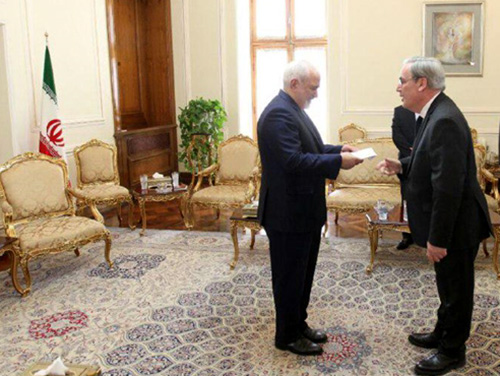
Iranian Foreign Minister Mohammad Javad Zarif has told Europeans that making accusations against Iran won’t absolve them of the responsibility for harboring the terrorist Mujahedin Khalq Organization (MKO) – also called Mujahideen-e Khalq (MEK) — who has murdered tens of thousands Iranians.

“Europeans, incl Denmark, Holland & France, harbor MEK—who killed 12000 Iranians & abetted Saddam’s crimes against Iraqi Kurds—as well as other terrorists staging murder of innocent Iranians from Europe. Accusing Iran won’t absolve Europe of responsibility for harboring terrorists,” Zarif tweeted Tuesday.

The MKO did numerous terrorist acts in Iran, especially in the early years of the 1979 Islamic Revolution. It also sided with Saddam Hussein’s army in the war against Iran in the 1980s.

Saddam also used the extremist group in violent crackdown on the Iraqi Kurds in the north and the Shiites in the south.

January 14, 2019 0 comments
FacebookTwitterPinterestWhatsappTelegramSkypeEmail
weekly digest
Iran Interlink Weekly Digest

Iran Interlink Weekly Digest – 251

++ Edvard Termador wrote an open letter to the Pope explaining how he was forced as a POW to join MEK in Iraq, and how he managed to escape. He tells of two other Christians who were killed by MEK. They were being forced to renounce their religion before they were killed. Termador writes that MEK is still repeatedly threatening to kill him because he speaks about these things. He says the group is basically living on mercenary means and what a shame it is that people pay them for promoting war and sanctions. More important though is the situation of the people in Albania. Termador says he managed to escape, but these people have no opportunity. He asks the Pope to help the people trapped there.

++ There were two more deaths this week in Albania. Every week two or three members are dying. On one side it can be put down to their age, but on the other hand some deaths are suspicious. There is no oversight or inspections to find out what happened to them. We have only to accept what MEK say about them. Behzad Massoudi, who died this week, was with MEK for over forty years. Everyone who knows him says he had no illness as the MEK claim. But he was a critic during all his time with them. His death is suspicious. Albania is such a country that there is no authority to appeal to and ask them to investigate. Who issues the death certificates in the MEK camp? God knows! The law does not apply to that camp.

++ Criticism of the flawed Amnesty International report on the 1988 mass executions of political prisoners in Iran has picked up. More people are now complaining about AI’s cosy relation with the MEK. Some have revealed that this is not new and some of the people in that section of AI have been paid for the past decade by MEK. Some writers have given names, places and amounts of these payments. This criticism has now reached Wikipedia’s ‘Criticism of Amnesty International’ page where this report has now been added as well.

++ Several people have written about MEK suddenly coming out of their shell after US Secretary of State Mike Pompeo’s visit to the Middle East. Saber of Tabriz explains in more detail. He reminds MEK that ‘if the previous anti-Iran coalitions helped you, this one will surely help you as well’. Starting from Saddam and coming to the recent western efforts to make an Arab NATO or trying to create a Kurdish coalition, Saber says that each time, Rajavi jumps up and says, ‘Iran is finished, they’ll give Iran to me now’. Well, surely this lot will help as all the previous ones did. Isn’t that why you are still where you are.

In English:

++ Several open letters were written in support of comments made by Roald Sturla Naas, former Norwegian ambassador to Iran after he criticised the MEK in Today’s Business publication. Naas stated that Iranians regard MEK as a worse option than today’s regime.

++ Mehr News agency reported an Iraqi MP’s claims that the US has started training MEK members in northern Iraq. Mohammad al-Baldawi told Almaalomah newspaper that the US is seeking to “ignite the region” following its failures in Syria. Farsi News agency reported that the “Secretary of Iran’s Supreme National Security Council (SNSC) Ali Shamkhani rebuked members of the Trump administration for speaking more of their dreams than realities …He also blasted US National Security Adviser John Bolton and Israel for making decisions and devising strategies on Iran based on the bulletins released by the Mojahedin-e Khalq … terrorist group, advising them to at least change the terms and words used by the MKO in their bulletins and not to insert the same words exactly in their National Security Strategy.”

++ Giovanni Giacalone wrote a lengthy analytical piece in Italy’s Gli Occhi Della Guerra asking ‘Were the Iranians really ready to carry out an attack in Europe?’ Giacalone examines the evidence behind such claims, quoting Albanian investigative journalist Gjergji Thanasi who showed that the MEK’s claims have no substance. As such this casts doubt on why two Iranian diplomats were suddenly expelled from Albania as per MEK and American demands. The article concludes that the clash between Israel and Iran which is now taking place on Albanian soil, with the MEK playing a major role, threatens to increase destabilization in the Balkans… to the detriment of Europe.

++ Nejat Bloggers said that letters of complaint to Amnesty International over its flawed report have gone unacknowledged. When approached in person, AI staff referred the complainants to the authors of the report – some of whom are known to be working for or sympathetic toward the MEK. Complainants point out that there is no mention of the MEK’s war crimes in 1988, nor its current human rights abuses against its own members. Nor does AI show any interest in the fact families continue to be denied contact with their loved ones in the MEK.

++ Press TV reported remarks by Iran’s foreign minister Mohammad Javad Zarif who “lambasted the European Union (EU) for harbouring notorious MKO terrorists, warning that ‘accusing’ Iran and imposing sanctions against the Islamic Republic will not ‘absolve’ Europe of responsibility for housing members of the terror outfit.” His remarks came after Danish Foreign Minister Anders Samuelsen said in a tweet that the ‘EU just agreed to enact sanctions against an Iranian Intelligence Service for its assassination plots on European soil’. “Tehran has time and again strongly denied any involvement in the purported plots, saying the accusations were merely intended to damage EU-Iran relations”, said Press TV.

++ According to Nejat Society another MEK member publicly announced his escape from the cult in Albania. Abdorrahman Mohammadian said he had been a POW in the Iran-Iraq war before being deceptively recruited by the MEK. Discovering that MEK’s propaganda was completely false was “like the collapse of a mirage”, he said. “It was a pity that we had no way out despite the entire hypocrisy we witnessed there,” he asserts. After being held hostage for 28 years he finally could not tolerate the situation and walked out in November 2018.

++ Press TV reported Ayatollah Khamenei’s address to a gathering in Qom. Khamenei asserted that Iran would not be cowed by American sanctions. He mocked John Bolton’s claim that he and the MEK would celebrate in Tehran before 2019, saying “Christmas was a few days ago. This is how US calculations work …Some US officials pretend that they are mad. Of course I don’t agree with that. Rather, they are first-class idiots,” he said.

 January 11, 2019

January 13, 2019 0 comments
FacebookTwitterPinterestWhatsappTelegramSkypeEmail
Mujahedin Khalq; A proxy force

Mattis and Our Bankrupt Iran Policy

James Mattis’ tenure at the Pentagon ends today. Sina Azodi and Barbara Slavin consider what his departure could mean for the future of Iran policy:

The retired Marine general had policy differences with the president about Iran as well. While a supporter of containment, Mattis advocated remaining within the Joint Comprehensive Plan of Action (JCPOA). His departure tilts the balance in Trump’s national security team in favor of more hawkish individuals who have openly advocated regime change as the ultimate solution to US differences with the Islamic Republic.

When Mattis resigned, I warned that his successor would likely be more of a yes-man and less willing or able to restrain the president’s belligerent tendencies. That might seem like a strange thing to say until we remember that Mattis was responsible for curbing the president’s desire for a much larger military response against the Syrian government in the spring of this year, and according to some accounts he was a major obstacle to an attack on North Korea in 2017. Trump supporters have been quick to credit the president for de-escalation and limited intervention that happened because Mattis restrained him, and they have been equally swift in shifting blame for his escalations of other wars to the people around him. Mattis was unwilling to end our current pointless and illegal wars, but it is also true that he was responsible for keeping Trump from starting new ones.

Mattis shared the administration’s Iran obsession to an alarming degree, but as Azodi and Slavin point out his departure removes one of the only counterweights inside the administration to the much more rabid Persophobes in Bolton and Pompeo. It could also mean one less obstacle inside the administration to an attack on Iran that Bolton and Pompeo have wanted for many years. Azodi and Slavin continue:

Left atop Trump’s national security team is national security adviser, John Bolton, a so-called “offensive realist” who has long pushed for bombing Iran’s nuclear facilities. Bolton also distrusts multilateral agreements and has close ties with the Mujahedin-e Khalq or MEK, an Iranian opposition group with a past history of assassinating American citizens.

The other survivor so far of Trump’s reality show administration is Secretary of State Mike Pompeo. A self-described “counterpuncher,” Pompeo, who replaced the more moderate and less Iran-phobic Rex Tillerson, has also suggested in the past that US should consider attacking Iran’s nuclear facilities.

U.S. forces may be withdrawn from Syria in the coming year (or maybe they won’t be), but that doesn’t mean that war with Iran has become less likely.
By Daniel Larison ,

January 13, 2019 0 comments
FacebookTwitterPinterestWhatsappTelegramSkypeEmail
MEK Global Terrorism
Iran

safe Europe for terrorists and MEK has to get shocking message

Iran not to stay in JCPOA at any cost, official warns Europe

The Special Assistant to the Speaker of the Iranian Parliament for International Affairs Hossein Amir-Abdollahian in a tweet has said Iran will send “a shocking message” to Europe over commitment to the Joint Comprehensive Plan of Action.

“Having strong relations with Europe is a part of Iran’s foreign policy logics. But the West should face a shock to realize we won’t remain in one-way tunnel of current JCPOA at any cost,” Trend reports citing Amir-Abdollahian’s tweet.

The official’s tweet, apparently aimed at Europe’s delaying the opening of a Special Purpose Vehicle, also criticized the European countries’ harboring the People’s Mojahedin Organization (Mujaheedin-e Khalq or MEK), a political-militant organization based on Islamic and Socialist ideology.

“Now, safe Europe for terrorists and MEK has to get a logical, prudent but shocking message,” added Amir-Abdollahian.
Trend.az

January 12, 2019 0 comments
FacebookTwitterPinterestWhatsappTelegramSkypeEmail
Iran

Iran: accusing Iran won’t absolve EU responsibility for housing Mojahedin Khalq (MEK)

Slamming bans, Zarif says accusing Iran won’t absolve EU responsibility for housing terrorists

Iranian Foreign Minister Mohammad Javad Zarif has lambasted the European Union (EU) for harbouring notorious MKO terrorists, warning that “accusing” Iran and imposing sanctions against the Islamic Republic will not “absolve” Europe of responsibility for housing members of the terror outfit.

Iran’s top diplomat made the remarks on Tuesday, hours after the customs union froze the assets of an Iranian intelligence unit and two of its staff over terror charges. It was the first time the EU imposed sanctions on Iran since lifting an array of embargoes following Iran’s 2015 nuclear deal with world powers.

“Europeans, incl Denmark, Holland & France, harbor MEK—who killed 12000 Iranians & abetted Saddam’s crimes against Iraqi Kurds—as well as other terrorists staging murder of innocent Iranians from Europe. Accusing Iran won’t absolve Europe of responsibility for harboring terrorists,” Zarif said in a post on his official Twitter account.

Europeans, incl Denmark, Holland & France, harbor MEK—who killed 12000 Iranians & abetted Saddam’s crimes against Iraqi Kurds—as well as other terrorists staging murder of innocent Iranians from Europe. Accusing Iran won’t absolve Europe of responsibility for harboring terrorists pic.twitter.com/pUXmSjmgyB

— Javad Zarif (@JZarif) January 8, 2019

The Iranian foreign minister referred to the Mujahedin-e-Khalq Organization (MEK or MKO), a terrorist group which is detested for collaborating with the former Iraqi dictator Saddam Hussein during his war on Iran in the 1980s and killing thousands of Iranians in a violent campaign of assassinations and bombings, particularly in those years.

Earlier on Tuesday, Danish Foreign Minister Anders Samuelsen said in a tweet that the “EU just agreed to enact sanctions against an Iranian Intelligence Service for its assassination plots on European soil.”

He further described the step taken by the union as a “strong signal from the EU that we will not accept such behavior in Europe.”

Also on Tuesday, the Netherlands government accused Tehran of hatching plots and involvement in two killings in 2015 and 2017, sending a letter, signed by the foreign and interior ministers, to the Dutch parliament to warn of further economic embargos if Tehran did not cooperate with European probes.

The letter said representatives from Britain, France, Germany, Denmark, the Netherlands and Belgium had met Iranian officials to convey “their serious concerns regarding Iran’s probable involvement in these hostile acts on EU territory,” Reuters reported.

“Iran was informed that involvement in such matters is entirely unacceptable and must be stopped immediately … further sanctions cannot be ruled out,” the letter said.

The provocative move by the European bloc follows last year’s statements by Denmark and France that they suspected a so-called Iranian government intelligence unit pursued killing plots on their territories. Copenhagen at the time sought an EU-wide response.

Tehran has time and again strongly denied any involvement in the purported plots, saying the accusations were merely intended to damage EU-Iran relations. Iran also stresses that it is a victim of terrorism, particularly inflicted by the MKO outfit, whose members largely live freely in the EU countries.

The MKO was once listed as a terrorist organization in the US and Europe and is still widely viewed as a Marxist cult built around the personality of its leader, Maryam Rajavi.

Some of its uncouth practices include forcing the group’s male members to divorce their wives and have them married to Rajavi’s husband Massoud.

The terrorist group is also known for its extremely suppressive control over members in its camps where access to the Internet and other information sources is prohibited.

January 12, 2019 0 comments
FacebookTwitterPinterestWhatsappTelegramSkypeEmail
Newer Posts
Older Posts

Recent Posts

  • Pregnancy was taboo in the MEK

    December 22, 2025
  • MEPs who lack awareness about the MEK’s nature

    December 20, 2025
  • Why did Massoud Rajavi enforce divorces in the MEK?

    December 15, 2025
  • Massoud Rajavi and widespread sexual abuse of female members

    December 10, 2025
  • Farman Shafabin, MEK member who committed suicide

    December 3, 2025
  • Facebook
  • Twitter
  • Instagram
  • Youtube

© 2003 - 2025 NEJAT Society . All Rights Reserved. NejatNGO.org


Back To Top
Nejat Society
  • Home
  • Articles
  • Media
    • Cartoons
    • NewsPics
    • Photo Gallery
    • Videos
  • Publications
    • Books
    • Nejat NewsLetter
    • Pars Brief
  • About Us
  • Contact us
  • Editions
    • عربي
    • فارسی
    • Shqip