Nejat Society
  • Home
  • Articles
  • Media
    • Cartoons
    • NewsPics
    • Photo Gallery
    • Videos
  • Publications
    • Books
    • Nejat NewsLetter
    • Pars Brief
  • About Us
  • Contact us
  • Editions
    • عربي
    • فارسی
    • Shqip
Nejat Society
Nejat Society
  • Home
  • Articles
  • Media
    • Cartoons
    • NewsPics
    • Photo Gallery
    • Videos
  • Publications
    • Books
    • Nejat NewsLetter
    • Pars Brief
  • About Us
  • Contact us
  • Editions
    • عربي
    • فارسی
    • Shqip
© 2003 - 2024 NEJAT Society. nejatngo.org
Mujahedin Khalq; A proxy force

Nancy Pelosi finds time for war hawks but not peace advocates

Congresswoman Nancy Pelosi (D-Calif.) is refusing to meet with—or respond to—a group of her Yemeni-American constituents who are calling for an immediate end to the U.S.-Saudi War on Yemen. In recent months, however, Pelosi has found the time to speak at the conference of the right-wing Israeli-American Council and meet with the Saudi ambassador (one day after journalist Jamal Khashoggi went missing).

The contrast raises concerns about the priorities of Pelosi, historically hawkish on foreign policy, in a political climate where an end to the U.S.-Saudi war in Yemen is finally within reach. The Senate overwhelmingly voted in late November to advance a War Powers Resolution designed to force a vote on the U.S.-Saudi war and ultimately shut down U.S. participation. The resolution, due to a carve-out, would not prevent the brutalities of the ongoing U.S. drone war in Yemen allegedly targeting Al Qaeda, but nonetheless constitutes the most promising effort yet to end the large-scale atrocities of the U.S.-Saudi War.

A similar effort is playing out in the House, with the most recent iteration,HConRes142, introduced by Rep. Ro Khanna (D-Calif.) on November 29. Now that it is politically safe to do so, Pelosi—who will likely be the next speaker of the House—has vocalized her support for the House resolution. She has not, however, transformed her words into action by publicly committing to whipping the caucus on the new measure, making sure the House moves urgently to end the U.S.-Saudi war.

On November 15, the Yemeni Alliance Committee, a group of Yemeni-American organizers that initially formed to oppose Trump’s Muslim ban, many of whom live in Pelosi’s district, requested a sit-down meeting with Pelosi to discuss the War Powers Resolution. Yet Jehan Hakim, the group’s director, said Pelosi—who, at that point, had not yet endorsed the War Powers Resolution—did not respond to the group’s emails or phone calls. “I’m her constituent, and she has an obligation and duty to sit down with me and our members,” Hakim tells In These Times.

When the Congresswoman didn’t get back, the group decided to stage a protest outside of her San Francisco office on November 20, with one sign declaring, “14m Yemenis face famine while Congress feasts”—a reference to the Thanksgiving holiday. In the midst of the demonstration, the group was informed by Pelosi’s staff that, after years of inaction, the minority leader will support the War Powers Resolution. “This was people power,” Hakim says, a sign of “Pelosi and others realizing how much support ending the war on Yemen was gaining.”

Yet Hakim says that Pelosi still has not agreed to meet with the Yemeni Alliance Committee, a particular concern for the organization given that any future House effort to end the war will likely require urgent action to not just endorse the resolution but fight for it. HConRes138—a similar version of the resolution—was blocked in the House on November 14 after it was folded into a rules measure related to the debate over whether grey wolves should be removed from the list of endangered species. At least two of the Democrats who voted to stymie the resolution later said they did not realize they were doing so, raising questions about whether Pelosi, or Democratic whip Stony Hoyer, were putting muscle behind turning out votes to hasten the end of the war. (Pelosi’s office did not respond to multiple requests for comment from In These Times.)

Pelosi has not responded to the Yemeni Alliance Committee’s multiple queries. In contrast, the staff of Rep. Barbara Lee (D-Calif.) met with the organization December 4.

Yet, one day after Lee met with the Yemeni-American group, Pelosi was a featured presenter at the conference of the Israeli-American Council (IAC), a fiercely pro-Israel lobby shop that is intended as the right-wing alternative to the already right-wing AIPAC. Funded in part by Trump patron Sheldon Adelson, the IAC featured numerous speakers who fear-mongered about “Iranian proxies,” a key—and misleading—talking point used to build support for the U.S.-Saudi War on Yemen.

Pelosi showed her deference to another militaristic U.S. ally October 3, when she metwith Saudi Ambassador Khalid bin Salman, one day after Khashoggi was last seen on security footage entering the Saudi consulate in Turkey, where he was almost certainly murdered and dismembered. Just before the Khashoggi scandal broke, the Saudi embassy championed the meeting on Twitter, declaring, “HRH Ambassador Prince@kbsalsaud had an excellent discussion with Democratic leader @NancyPelosi about the historical Saudi-US ties and regional and global developments.” There was no mention, of course, of the 50,000 Yemenis killed by the U.S.-Saudi war over the past three-and-a-half years.

She has also repeatedly vocalized her support for the Mojahedin-e Khalq (MEK), alongside John Bolton, Rudy Giuliani and Newt Gingrich. With virtually no legitimacy within Iran, the MEK is a favorite among neocons because it aggressively lobbies for U.S. military confrontation with Iran, and arguing that its head, Maryam Rajavi, is the rightful leader of Iran. The organization, which supports the U.S.-Saudi war in Yemen, has been described as a cult. According to a Human Rights Watchinvestigation from 2005, members reported “abuses ranging from detention and persecution of ordinary members wishing to leave the organization, to lengthy solitary confinements, severe beatings and torture of dissident members.” As recently as July, when the MEK held a conference in Paris, Pelosi sent a video message conveying her “warm regards.”

Pelosi’s scheduling commitments reflect her role in advocating for disastrous U.S. military interventions, from Afghanistan to Libya. But her constituents, nonetheless, are holding out hope that, with public pressure, she will actively support efforts to end the ongoing U.S.-Saudi War. While the Trump administration claimed November 9 that the United States has stopped assisting with mid-air refueling of bomber aircrafts used in the war, there has been insufficient evidence to prove this is the case, and the decision can be reversed at any time. Meanwhile, the Saudi-led war continues to takecivilian lives, as the Trump administration pledges fealty to the Saudi monarchy.

“This March 2019, the war will go into its fourth year,” says Hakim. “Yemen was declared by the UN as the world’s worst humanitarian crisis in decades. Yemen is on the brink of starvation and famine, and over 14 million Yemenis are at risk of starvation. These numbers are staggering and will only continue to grow unless the U.S. puts a stop to this aggression.”

Sarah Lazare, In These Times

December 18, 2018 0 comments
FacebookTwitterPinterestWhatsappTelegramSkypeEmail
Mujahedin Khalq Organization's Propaganda System

Maryam Rajavi’s MEK Propaganda Fightback Goes Wrong

It has been a terrible year for MEK as various media exposed the human rights violations in the organisation: National Geographic, NBC, Channel Four, the Independent, the Guardian, TRT World, Albawaba and others including Italian and Albanian media.

MEK tried to counter this with its own propaganda films designed to show Camp Ashraf 3 in Manez, Albania as a happy, friendly and well run refugee community.

First MEK invited American bomber L. Todd Wood to make a propaganda film in the camp. Then MEK arranged for a delegation of “former” German politicians to visit the camp, followed by “former” members of the European Parliament.

What the MEK did not expect was that these films would reveal even more scandalous and damning detail about life inside the camp. Exactly the opposite of their intended purpose.

For example:

The films clearly show the gender apartheid in operation in the camp, as male and female members are shown living completely separately.
Men and women perform gendered roles which expose the falsity of the MEK’s claim to feminism: men work on computers, women work in the sewing room.
The computer room, with its banks of computers and male operatives, revealed without doubt that the Twitter troll factory exposed by Al Jazeera was indeed in operation there.
The medical room and dentist were of particular concern since neither the so-called doctors nor the so-called dentists in the camp have full and proper medical qualifications.
However, the bakery, manned by elderly MEK members, was particularly revealing as it reminded us that none of the MEK in Albania have work permits or identity papers or travel documents, yet are working inside the camp. This is because none of the MEK in Albania are paid for the work they do. They are modern slaves. They do not get paid and therefore do not pay taxes. Which reminds us again that MEK never contribute to whatever society they forcefully embed themselves in. Rather than get their bread from a local Albanian bakery thus providing much needed income, they keep all their resources in-house.

But even these gaffes were not as embarrassing as the next film that MEK made to try to repair its image.

The MEK paid Sokol Balla, presenter of The Real Story in Vision Plus TV to make another film inside the camp. This time, MEK were careful to eliminate the previous gaffes outlined above. Instead, they introduced new gaffes.

After the MEK propaganda film was broadcast, viewers soon discovered that the presenter Sokol Balla had been involved in many sex scandals. Balla was revealed through a web chat in which he is filmed masturbating in front of an adolescent girl. This is not the first time MEK has had to scrape the bottom of the barrel to find apologists. Who else would take money from a terrorist cult which enslaves its members except corrupt and morally bankrupt people?

But the best gaffe of all, which perhaps only an eagle-eyed nerd might discover, was when the MEK wanted to show that their members are free to leave the camp and go shopping. But the lonely man trudging up the road looking thoroughly defeated with his two shopping bags is carrying supplies of Tena incontinence pants.

Which begs the question, is this a camp where warriors and freedom fighters are striving to overthrow the Iranian government, or is it a residential care community for the elderly, ailing and disabled?

December 18, 2018 0 comments
FacebookTwitterPinterestWhatsappTelegramSkypeEmail
Mujahedin Khalq; A proxy force

Why the United States Has Not Won a Real War Since 1945

If anyone is still wondering why the United States has not won a real war since 1945, I offer up the example of retired U.S. Army Colonel Wes Martin, who writes for Town Hall and reportedly also has appeared as an expert commentator on Fox. Town Hall is a purveyor of a certain type of “American conservatism.” It was founded by the Heritage Foundation on the principle that the United States is ordained by God as uber alles. Though it features many good writers and even genuine conservatives it occasionally goes off the rails. Its latest incarnation features an article entitled “Obama-loving country music star Tim McGraw partners with terror-sponsoring communists.”
Colonel Martin’s bio includes his service as the Senior Antiterrorism Officer for all Coalition Forces in Iraq and Commander of Camp Ashraf, which is where the military arm of the Mojahedin e Khalq (MEK) terrorist group was camped while Saddam Hussein was still in power. MEK, consisting of Iranian dissidents, was being used by Saddam to carry out low-intensity warfare against Iran. It was placed under American military protection after the fall of Baghdad in 2003.
Martin’s latest foray in Mullah-bashing is a December 10th article entitled “Iran’s Continuing Misinformation Campaign.” It is a defense of MEK, which he describes as a victim of Iranian propaganda. Martin frames his argument around a critique of a November 9th report entitled “Terrorists, cultists – or champions of Iranian democracy? The wild, wild story of the MEK” that appeared in The Guardian, but, in reality, most of his piece is about himself. The Guardian article, written by Arron Merat, provides an in-depth analysis of MEK, how it developed, and what it is doing today. It does, to be sure, come down on the side of MEK being both a cult and a terror organization, which is what Martin disputes.
Martin’s article, like all of his pieces appearing on Town Hall, is nearly unreadable. It includes gems like “The Iranian dissidents have a primary target of the ayatollahs misinformation campaign” and also “This was the first time in U.S. history, and perhaps world history, where one country was invaded and with it came the entrapment of a large military force dedicated to the removal of a third of the country’s leadership.” I’m sure Colonel Martin actually meant something in those two sentences but I am at a loss to figure out what it might be.
Martin reports that MEK first came on to his “radar” in 2003 after the invasion of Iraq by U.S. forces, which is part of his problem, which might be described as seeing what one wants to see. He conducted “an assessment on the MEK and determined they were not a threat.” But other evidence, which Martin should have considered, suggests that MEK was not just a group of Iranian dissidents. A study prepared by the Rand Corporation for the U.S. government conducted interviews at Camp Ashraf and concluded that there were present “many of the typical characteristics of a cult, such as authoritarian control, confiscation of assets, sexual control (including mandatory divorce and celibacy), emotional isolation, forced labor, sleep deprivation, physical abuse and limited exit options.”

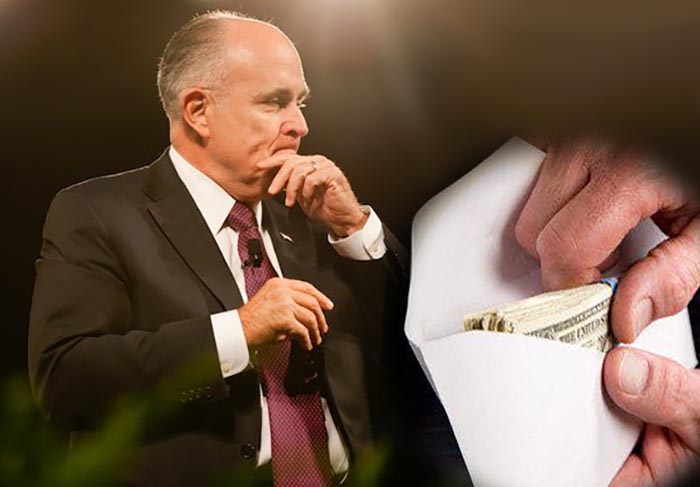
MEK made the transition from terrorist group to “champions of Iranian democracy” by virtue of intensive lobbying of Iran haters. The Guardian article also describes how “A stupendously long list of American politicians from both parties were paid hefty fees to speak at events in favor of the MEK, including Giuliani, John McCain, Newt Gingrich and former Democratic party chairs Edward Rendell and Howard Dean – along with multiple former heads of the FBI and CIA. John Bolton, who has made multiple appearances at events supporting the MEK, is estimated to have received upwards of $180,000. According to financial disclosure forms, Bolton was paid $40,000 for a single appearance at the Free Iran rally in Paris in 2017.”

It apparently never occurred to Martin that the group had a whole lot of history before he appeared on the scene and it began buying American politicians. It may not have been an active threat in 2003, when confronted by overwhelming U.S. military force, but it sure was anti-American back in the 1970s, to include the assassination of at least six U.S. Air Force officers and civilian defense contractors. The ambush in which two air force officers were murdered by MEK was reenacted for each incoming class at the Central Intelligence Agency training center in the late 1970s to illustrate just how a terrorist attack on a moving vehicle might take place.
Colonel Martin is inevitably a harsh critic of President Barack Obama, mentioning in passing that “Unfortunately, the State Department policy under the Obama administration was intent on appeasing the Iran regime.” It is an assertion for which there is scant evidence apart from Obama’s clearly expressed reasonable desire to negotiate an end to any possible Iranian nuclear weapons program. In fact, Obama’s Secretary of State Hillary Clinton removed the group from the State Department terror list in 2012, and then arranged for its relocation to a safe site in Albania, where it still resides.
In another article on “evil” Iran, obviously an obsession with Martin, he states that “The fundamentalists in Tehran were almost overthrown during the vast national uprisings of 2009 (predating the Arab Spring). While former President Obama and former Secretary Clinton stayed silent, in favor of their nuclear deal with the regime…” Martin is dead wrong that the regime was almost overthrown. It was never threatened. And, of course, it would have been difficult for Obama to have remained silent in 2009 over the “nuclear deal” which was not signed until 2015.
Martin also has problems with the Guardian article’s assertion that MEK derives from an “Islamist-Marxist” ideology. He observes “In other words, the MEK is composed of God-fearing atheists. He needs to pick one or the other, because Islam and Marxism do not mix.” Actually Marxism, as a primarily social and economic framework, is not necessarily anti-religious, particularly when religion inspires the workers as part of the class struggle. Political Marxism and religious zealotry can coexist. The communist Tudeh Party of pre-revolutionary Iran was reportedly full of Islamists. And MEK does indeed have both Marxist and Islamic roots. It helped to overthrow the Shah in 1979 through cooperation with the religious parties but then turned against the clerics after they had succeeded in assuming control of the revolution.
Martin also completely ignores MEK’s anti-American, anti-capitalist and anti-colonialist roots. It began as a radicalized student group in Iran in the 1970s that attacked U.S. businesses and was viscerally opposed to the United States presence. The Guardian article describes how one of its songs went “Death to America by blood and bonfire on the lips of every Muslim is the cry of the Iranian people. May America be annihilated.”
Colonel Martin saves his best for last as he fulminates “Iran, the number one nation-state exporter of terrorism, is also the number one exporter of propaganda. Iran’s MOIS [Ministry of Intelligence and Security] will fight the truth with lies, deceit, and manipulation of facts. MOIS expends great effort to neutralize the MEK as the primarily threat to the Iranian regime.”

That Iran is the leading state sponsor of terrorism is often asserted by folks like Colonel Martin and John Bolton but rarely elaborated on, particularly given the fact that the United States operates worldwide with intelligence officers, spec ops and drones that kill lots of people on a regular basis without any declarations of war. Who has Iran killed lately? And when it comes to propaganda, no one does it better or more aggressively that the U.S. and Israel, even if no one believes any of it anymore.
What it comes down to is that people like Colonel Wes Martin, unfortunately proliferating in the U.S. government, hate Iran for a whole lot of reasons that have nothing to do with national security. Israel and its lobby are certainly an element as is the need for enemies to feed the paranoia that drives and funds the military industrial complex. Martin reveals his ignorance when he objects to what he believes to be Iranian government efforts to “neutralize the MEK as the primarily (sic) threat to the Iranian regime.” That claim is complete nonsense. MEK worked with Saddam Hussein to kill Iranians, just as it earlier killed Americans. It is hated in Iran and has little support inside the country. It is a terrorist group, currently being used by the CIA and Israel’s Mossad to assassinate and otherwise kill still more Iranians. This is why luminaries like Mike Pompeo and John Bolton and Colonel Martin love it, not because it is poised to bring democracy to Iran.

American Herald Tribune, By Philip Giraldi

December 17, 2018 0 comments
FacebookTwitterPinterestWhatsappTelegramSkypeEmail
USA double standards on terrorists
Mujahedin Khalq; A proxy force

US violates UN Resolution by sponsoring Mojahedin khalq terrorists

Iran’s deputy ambassador to the United Nations denounced the US government’s addiction to sanctions and warmongering, urging the UN Security Council to condemn US violations of resolutions and hold it accountable for the illegal acts.

Addressing a UN Security Council meeting on “Non-Proliferation: Implementation of Security Council Resolution 2231 (2015)”, held in New York on Wednesday, Eshaq Al-e-Habib denounced the US government for violating the UNSC resolution.

What follows is the full text of his speech:

In the Name of God, the Most Compassionate, the Most Merciful

Mr. President,

I would like to begin by sincerely thanking those Council members who reaffirmed their commitments to continue supporting the JCPOA.

At a time when multilateralism is under threat, preserving the JCPOA, which according to the UNSG, is “a demonstration of successful multilateralism” and a major achievement in “dialogue and diplomacy” is of outmost importance.

From this perspective, we laude the call by distinguished Secretary-General, in his report, that the JCPOA participants, “the Council, all Member States and regional and other international actors must ensure the continuity of this agreement that is fundamental to regional and international peace and security.”

In this meeting that is held to consider the implementation of resolution 2231, the Council should therefore consider and address all obstacles created in its implementation, in particular its provisions on “promoting and facilitating the development of normal economic and trade contacts and cooperation with Iran”.

As it is well-known, the sustainability of the JCPOA has been seriously challenged by unilateral and unlawful conduct of the United States in withdrawing from the JCPOA and re-imposing illegal sanctions against Iran.

It is a clear violation of the resolution that calls upon “all States without exception”, which include the United States, not only to “take actions as may be appropriate to support the implementation of the JCPOA” but also to “refrain from actions that undermine implementation of commitments under the JCPOA”. Therefore, the Council should consider the US illegal acts as a flagrant violation of the resolution and hold it accountable for such violations.

It is evident that any inaction or leniency in taking appropriate action to prevent the violation of resolution will only embolden the US to continue its unlawful practices and irresponsible policies.

The irony is that the US, who itself is in absolute violation of resolution 2231, today accused Iran of violating this resolution.

What we heard today was another series of lies, fabrications, disinformation and deceptive statement by the US. It is not unprecedented. Just recall infamous speeches made in the past at this very chamber by the US officials.

It is not surprising too! Deception is an inseparable part of the US foreign policy as is bullying and its addiction to sanctions and warmongering.

A clear example of such policies is the American approach towards Iran’s peaceful nuclear program on which it manufactured an unnecessary crisis and were successful in abusing this Council to impose illegal sanctions.

Nevertheless, as soon as it was ended with the conclusion of the JCPOA and the IAEA repeatedly confirmed Iran’s full compliance with its commitments, the US withdrew from the JCPOA, violated resolution 2231, re-imposed its illegal sanctions and started punishing States who abide by the resolution.

Such policies and practices clearly indicate that even in the past, they did not have any genuine concern about Iran’s nuclear program.

Now, for the first time in the UN history, a permanent member of this Council is blatantly punishing UN members not for violating rather for complying with a Security Council resolution. And yet, the US finds the audacity to highjack the Council to intensify its hostilities against Iran.

We have not forgotten the days when the US has rendered this Council ineffective in preventing Saddam’s aggression, stopping the use of chemical weapons against Iranians, as well as addressing the attack to an Iranian civil aircraft over the Persian Gulf by the American forces, killing all 290 people on board, including 66 children.

Rather than allowing the US to repeat such abusive pattern, the Council should strongly condemn the US for re-imposing its illegal sanctions against Iranians in violation of the UN Charter and international law.

These sanctions only harm the ordinary, and more importantly, vulnerable people such as women, children, elderly and patients. They prevent even the import of basic food, medicine, and medical devices.

Unlike the US declaration, in practice there is no exceptions or exemptions for importing such needs. Now, they argue that banks “don’t have confidence in Iran’s banking system to facilitate those transactions. That’s Iran’s problem; it is not our problem.”

Isn’t it ironic and disgraceful? How come they had confidence to Iran’s banking system till weeks ago and suddenly and for no reason lost their confidence?! In fact, they avoid such transactions because they are intimidated and threatened by a bullying and irresponsible State.

On 7 November 2018, the US Secretary of State shamelessly threatened all Iranians to mass starvation. He said the Iranian “leadership has to make a decision that they want their people to eat.”

Does weaponizing of food and medicine against civilians have any other designation than crime against humanity?

Isn’t the disruption of free trade and application of the US national laws to other nations thus disrespecting their sovereignty, a clear manifestation of economic terrorism?

The international community should stand against American bullying policies and the US authorities should be held to account for ordering, committing and enforcing such horrible crimes.

Mr. President,

Through fabrication, disinformation and invoking irrelevant criteria, the US tries to create ambiguity and confusion in order to misinterpret the resolution with regard to Iran’s missile launches.

Here, I draw your attention to the interpretation of relevant paragraph of the resolution by the US Special Envoy on Iran, who says that the resolution “simply” and “kindly” calls upon Iran not to undertake certain activity. He then concludes that the resolution’s language is “hardly a clear and enforceable prohibition”.

Iran’s ballistic missile program is designed to be exclusively capable of delivering conventional warheads required to deter foreign threats.

While the Americans shamelessly argue that “Iran’s security concerns are entirely self-generated”, and also hypocritically state that Iran faces no natural threat from Israel, as recently as three months ago, its notorious Prime Minister threatened Iran with even nuclear annihilation. Definitely a wishful dream.

Moreover, no one can ignore consistent tremendous threats Iran continues to face from the US itself, in particular through its outdated mantra of “all options are on the table”.

They are dreaming wishfully to move us back to those days when Saddam’s planes bombed an Iranian city for 105 minutes — the longest aerial assault since WWII — killing and injuring over 1,000 civilians.

They also wish to move us back to those days when Saddam was raining missiles on our cities — some of them carrying chemical components provided by the US– and Iran was actively prevented from purchasing even the most rudimentary means of self-defense to at least deter the aggressor. Do not be surprised, they even prevented the export of barbed wire to Iran! Most of such restrictions still continue.

We have paid a very high price to save our territory from the aggressors and to ensure the security of our borders and citizens. Those days have long passed.

Living in such a volatile region as the Middle East, our Government will not and cannot compromise on its security and its conventional defensive capability as no other country does.

Describing Iran as a source of regional threat is nothing but a blame shift in order to sell more American “beautiful weapons” – as the US President calls them. Conflicts, insecurity and instability in our region has two main sources: occupation of Palestine by Israel and the American interventions and its massive military build-up in the region.

Who can also forget the US role — as openly confessed by its President during his campaign — in creating the ugliest face of terrorism, the monstrous ISIS. If it was not for Iran’s support and help, the black flag of ISIS was still flying around the Middle East. In reaction to Iran’s prominent role in fighting terrorist groups in Syria and Iraq, such groups have conducted a few terrorist attacks in Iran in 2017 and 2018.

Today, in addition to transferring ISIS elements to Afghanistan and Central Asian countries, the US has extended its sponsorship of terrorism to a vicious terrorist cult, the MKO, that has murdered more than 17,000 Iranians and many Iraqis and who currently cozy up to the highest political figures in Washington to destabilize Iran through terrorist activities.

Here, Mr. President, I would like to stress that according to the Charter, this Council represents all Member States thus its decision should also echo their views. Almost all members of this Organization have strongly supported the JCPOA and loudly voiced their rejection of the illegal unilateral sanctions that is a clear violation of resolution 2231. Consequently, the Council should hold the US accountable for re-imposing such sanctions and demand that the US end their application.

This also would be in line with the obligation imposed on the US by the ICJ’s order issued unanimously on 3 October 2018; an order which is a clear testament to the illegality of the US sanctions.

I would also like to clarify that our legal and technical observations on the report of the Secretary-General is contained in a letter that yesterday I have sent to your Excellency. It also covers our views on issues that I did not address in my remarks today.

Last but not the least, the US made baseless allegations against Iran, most of which are either not relevant to the agenda of this meeting or even does not fall under the Council’s purview. Therefore, in my statement, I confined myself to this meeting’s agenda and did not want to defy it as the US did. At the same, my country has responded to those allegations either through our Foreign Ministry or our representatives in relevant international fora in Geneva, Vienna, the Huge or here in New York.

I thank you, Mr. President.

December 16, 2018 0 comments
FacebookTwitterPinterestWhatsappTelegramSkypeEmail
weekly digest
Iran Interlink Weekly Digest

Iran Interlink Weekly Digest – 249

++ Over the past two weeks MEK has played out its fear of the recent media reports by NBC, Al Jazeera, The Independent, The Guardian and others through Google Wars. Last week alone, MEK created ten new sites, with specific tags that will dominate Google News. The people inside MEK say the goal is to push down the recent damning media reports. The whole organisation has become one big click farm, not just Albania, including supporters. The informers say it’s all lies. MEK is trying to say we didn’t kill Americans, we weren’t with Saddam etc.

++ Again, though its media, MEK has launched a fundraising campaign asking for donations. Every time they do this it is obvious they have received a tranche of new money and this is how they launder it. Some ex members who were involved in MEK’s finance department have written about how MEK used to do this. Among the families, Saber from Tabriz has written a note saying Maryam Rajavi must allow families to visit and have contact with their children who have been taken hostage. Claiming that families pay money to you in these campaigns doesn’t hold water if they can’t see their kids. People are not mad to pay money to a gang who have taken their children hostage.

++ The other use of the sites created this week is to simply copy and paste what Pompeo, Bolton and Saudis say: Iran should not have missiles, the EU should not negotiate with Iran, the US should arrest all Iranian diplomats. The first page of MEK sites is just this. In reaction to this, one Farsi commentator says, we thought that after Massoud Rajavi, MEK’s ideological leader is Maryam Rajavi. It’s not, it’s Mike Pompeo. His pronouncements dominate MEK’s sites.

++ This week was the Day of Students, the anniversary to remember the students who were killed by the Shah because of their activities against American Imperialism. Ironically MEK celebrate this day as well, but don’t mention that they were against Americans at that time. Comments point out that this pretended ignorance is immature and doesn’t fool anyone.

In English:

++ Aawa Association broadcast a panel address to the Press Club in Brussels. Anne Khodabandeh participated by making the case that MEK is being actively enabled by the Trump Administration to prevent further development of relations between the EU and Iran. This is done through propaganda in which MEK dominate the narrative on Iran by calling for violent regime change. MEK is also used to demonise Iran though false flag ops. As the previous actions failed to break EU/Iran relations, Khodabandeh warned of an escalation of this false flag activity, probably in Albania, in which some MEK members are killed, and possibly some Albanians. This would be blamed on Iran.

++ IRNA reported a meeting of Iran’s High Council for Human Rights in Kerman. Referring to the West’s double standards on human rights, Mohammad Javad Larijani said, “They spread terrorism in the region in the name of human rights. Today, Mojahedin-e Khalq Organization (MKO) is no different from Daesh (ISIS); human rights cannot grow with bombing exploding mosques and religious centers”.

++ Sarah Lazare, In These Times, slates Nancy Pelosi for turning her back on advocates for peace and negotiation and backing a hawkish foreign policy toward Yemen. Lazare points out that Pelosi “has also repeatedly vocalized her support for the Mojahedin-e Khalq (MEK), alongside John Bolton, Rudy Giuliani and Newt Gingrich. With virtually no legitimacy within Iran, the MEK is a favorite among neocons because it aggressively lobbies for U.S. military confrontation with Iran, and arguing that its head, Maryam Rajavi, is the rightful leader of Iran. The organization, which supports the U.S.-Saudi war in Yemen, has been described as a cult. According to a Human Rights Watch investigation from 2005, members reported ‘abuses ranging from detention and persecution of ordinary members wishing to leave the organization, to lengthy solitary confinements, severe beatings and torture of dissident members’. As recently as July, when the MEK held a conference in Paris, Pelosi sent a video message conveying her ‘warm regards’.”

++ Tasnim news agency reported that Iran’s deputy ambassador to the UN denounced the US government’s ‘addiction’ to sanctions and warmongering. Eshaq Al-e-Habib said the US withdrawal from the JCPOA was a clear violation of the resolution that calls upon “all States without exception”, which include the United States, not only to “take actions as may be appropriate to support the implementation of the JCPOA” but also to “refrain from actions that undermine implementation of commitments under the JCPOA”. Therefore, the Council should consider the US illegal acts as a flagrant violation of the resolution and hold it accountable for such violations. The diplomat also condemned the US’s policy of spreading war and chaos in order to sell more weapons. Also, its support for terrorist groups. “Who can also forget the US role — as openly confessed by its President during his campaign — in creating the ugliest face of terrorism, the monstrous ISIS. If it was not for Iran’s support and help, the black flag of ISIS was still flying around the Middle East. In reaction to Iran’s prominent role in fighting terrorist groups in Syria and Iraq, such groups have conducted a few terrorist attacks in Iran in 2017 and 2018.
“Today, in addition to transferring ISIS elements to Afghanistan and Central Asian countries, the US has extended its sponsorship of terrorism to a vicious terrorist cult, the MKO, that has murdered more than 17,000 Iranians and many Iraqis and who currently cozy up to the highest political figures in Washington to destabilize Iran through terrorist activities.”

++ David William Pear, The Greenville Post, ‘US politicians get money from Mojahedin Khalq (MEK) who killed US citizens’. This piece briefly covers recent decades of Iranian history under the Shah before saying that “Now that the Shah is gone, the US propaganda machine and the mainstream media put out a flood of stories about how wonderful life was under the Shah. The propagandists use economic indicators of inflation, employment, gross domestic product, oil exports and the upper-class standard of living. Anybody who puts out those kinds of comparative economics deserves to flunk Economics 101.
“Iran has been under sever US-imposed economic sanctions for 40 years. The US has been threatening Iran with war and “all options are on the table” for decades. The US has also instigated instability inside Iran and supported external attacks by terrorist groups such as Mujahideen-e-Khalq, or MEK.
“MEK was on the US State Department’s list of terrorist organization until it was removed by former Secretary of State Hillary Rodham Clinton in 2012. The fact that MEK has killed US citizens in terrorist attacks did not hinder some US politicians from accepting large speaking fees at their conventions, even when MEK was still on the US terrorist list.”

++ Iran Interlink republished a piece from the archive. An interview with Iraq’s National Security Advisor Dr. Mowaffak al Rubaie from 2009. The item starts with an explanation of the situation of the MEK in Camp Ashraf before interviewing al Raubaie who headed Iraq’s efforts to expel the MEK as remnants of Saddam Hussein’s repressive apparatus. Dr. al Rubaie’s plan for the difficult task of dismantling an extremist cult has revealed an enlightened, humanitarian approach which could become a blueprint for tackling similar organisations worldwide. In part of the interview he discusses the cultic nature of MEK.

“AS: You have spoken of ‘detoxifying’ the people in Camp Ashraf. Could you explain what this means and why you feel it is necessary? What do you hope to achieve?
MR: As you know from observing the behavior of the MEK and from their history, this is an indoctrinated and tightly disciplined organization of extremist zealots who have employed terrorism and at times even self-immolation to secure their aims. In normal everyday language we can say that they have been “brainwashed”. As is common in organizations of this type, the indoctrination and discipline rely on the continuous pressure of their leaders and the total control by them of their environment. Therefore, individuals have little ability to exercise their free will because they exist in this closed environment and fear for personal reprisals if they are discovered to have deviated from the approved line of responses. As we strive to determine from each individual where they wish to go since they cannot remain in Iraq, we are conducting individual surveys and a census which are open to oversight by the ICRC and the UN. We believe that if we can separate individuals from the all-encompassing domination by their leaders, we can allow them to begin to exercise their rights as individuals and make appropriate choices. That is, we hope to remove them from the toxic effects of their indoctrination and leaders.”
December 14, 2018

December 16, 2018 0 comments
FacebookTwitterPinterestWhatsappTelegramSkypeEmail
Maryam Rajavi

Madam Rajavi and Public Protest

The scenes from Paris showing protesters marching down the Champs-Elysees, the grandest avenue in the city, hurling projectiles at police and being tear-gassed in return, has recently been widespread in the main stream media. “The broken glass and empty tear gas canisters have been swept away and the graffiti scrubbed off the major monuments, among them the Arc de Triumph, after a weekend of violent protests in the capital by a grass-roots movement that calls itself the Yellow Vests,” reported the New York Times.

Casualties and damages have been massive. According to the NY Times, The cost of repairing just the Arc de Triomphe — apart from the graffiti, there was damage to artifacts kept inside — could reach one million euros (about $1.15 million), according to the Center for National Monuments. On Monday, merchants and government officials were still assessing the total property damage. [1]
More than 260 people were wounded nationwide, and at least three died outside Paris on the margins of the protests over the last three weekends. More than 400 people were arrested in Paris. [2]
Meanwhile in Iran, Labor protests continued in Ahwaz and Shush (Khuzestan province) as of Wednesday, November 28. Sugar cane workers demanding back pay reportedly staged an anti-government march in Shush; protesters also clashed with police in Ahwaz during related protests. Iran’s state-run IRNA news agency is reporting that the country’s authorities have detained four workers protesting not having been paid their salaries for months in the southwestern province of Khuzestan. [3]
It seems almost natural that the propaganda media of the Mujahedin Khalq (the MKO/ MEK/ PMOI/ the Cult of Rajavi) do not give a shit to the France protests but they exaggerate the workers protests in Khuzestan, Iran, because the group’s leader Maryam Rajavi is sheltered in France and launches her anti-Iran campaign from France territory. However, she should be asked what about the protests inside her group’s camp in Durres, Albania.

The MKO, as a large populated entity –from 5000 members back in Iraq to over 2000 people in Albania—has always enjoyed a camp in which it has concentrated its forces. The group’s camp in Iraq was even called “Ashraf City”, as it was very well equipped with all facilities of a city such as hospital, factory, pool and park.

After the group’s relocation in Albania, despite the increasing process of defection from the group, the authorities of the MKO set off for building another city in Manez, Durres naming it “Ashraf 3”.
Here’s the question: In the entire history of the Mujahedin Khalq, has there ever been any public protest against the ruling system of the camps or everything was democratically managed by the group leaders?
The answer is NO. No public protest has been reported from inside the MKO camps but this does not mean that the group’s camps have been ruled democratically and everyone inside the group has been satisfied.
Evidences from inside the MKO indicates that dissent is immediately suppressed by the authorities of the MKO. Numerous documented testimonies of former members of the MKO reveal the very undemocratic and even inhumane attitude of the group leaders against any question, let alone conflicting ideas.
According to the Human Rights Watch report “NO EXIT”, human rights abuses carried out by MKO leaders against dissident members ranged from prolonged incommunicado and solitary confinement to beatings, verbal and psychological abuse, coerced confessions, threats of execution, and torture that in two cases led to death. [4]

The testimonies of the former MKO members indicate that the organization used three types of detention facilities inside its camps in Iraq. The interviewees described one type as small residential units, referred to as guesthouses (mihmansara), inside the camps. The MKO members who requested to leave the organization were held in these units during much of the time they were kept incommunicado. They were not allowed to leave the premises of their unit, to meet or talk with anyone else in the camp, or to contact their relatives and friends in the outside world. [5]

Human Rights Watch interviewed at least seven former members of the group to develop its report in 2005. A few years later, the RAND Corporation published another investigated report on what is going inside the MKO. RAND is a research organization that develops solutions to public policy challenges to help make communities throughout the world safer and more secure, healthier and more prosperous.
According to the RAND report, Physical Abuse, Imprisonment, and Lack of Exit Options were the tools of the MKO leaders to keep members inside the cult-like structure of the group and eventually to suppress dissent and departure. “Former MeK members claim that punishment was frequently meted out for such offenses as expressing or fomenting disagreement with the political/military strategy,” the report reads. Asking to leave the group is an unforgivable sin. “Recent accounts recall that punishment for disagreeing with MeK policies ranged from forced written confessions of disloyalty to incarceration in special facilities at Camp Ashraf. Former members report torture and long periods of solitary confinement as punishment for disloyalty.” [6]
Although, the above-mentioned reports are the most significant and official ones on the human rights abuses in the MKO, there are a lot more testimonies of those who have recently left the group’s camps in Albania. Most defectors of the group publish their firsthand account of enduring human right violations in the MKO just because they expressed their willingness to leave the group or in some cases because they dared to express their opposition to the group’s attitudes.
Gholamreza Shokri spent 27 years of his life in the MKO. He was only 20 years old and willing to find a good job in Europe when he was recruited by the MKO in Iraq. The MKO agents promised to help him get the European visa only if he stayed in their camp for a few months. As soon as he entered the organization, they confiscated his ID documents and never gave him back.” whenever I asked for my ID, they would say that they had no idea where it was.” [7]
Thus, Shokri had no way out of the MKO camp but he frequently used to ask the leaders when he could leave the cult. This question was considered a sin by the leaders. Departure from the MKO was forbidden and showing your willingness for leaving the group would be faced with suppression, imprisonment and torture. So he was imprisoned in solitary confinement. [8]

Shokri said that they had closed their eyes and took him to a clandestine jail. “They insulted me calling me spy of the Mullah’s regime,” he recounts. “They beat me in my legs so badly that I could not walk; they were bleeding. They tied my hands with hand coughs for a week. After a week my hands had no sense; I put the fire of a cigarette on them but I didn’t feel it burn. Then they forced me to stand up for one more week. Each time that I fell down out of fatigue, they would beat me so hard that I had to stand up again.” [9]

Besides Shokri, the testimonies of a large number of defectors of the MKO are available on the Net. All have one thing in common: You have no right to protest in the MKO.
While people of all societies have the chance to express their demands, dissatisfactions and even their anger, more or less, members of the MKO are not even able to express their freewill to choose for their future. They are deprived from the most basic human rights.
Maryam Rajavi’s so-called support for the Iranian workers contradicts what is really going on in her destructive cult of personality.
Mazda Parsi

References:
[1]J Rubin, Alissa, France’s Yellow Vest Protests: The Movement That Has Put Paris on Edge, The New York Times, December 3rd, 2018.
[2] ibid
[3] The Associated Press, Report: Iran arrests 4 workers protesting unpaid salaries, November18, 2018.
[4] No Exit
[5] ibid
[6] RAND
[7] https://www.nejatngo.org/en/posts/8960
[8] ibid
[9] ibid

December 15, 2018 0 comments
FacebookTwitterPinterestWhatsappTelegramSkypeEmail
Rudy Giuliani
Mujahedin Khalq; A proxy force

The US Wants to Bring Back the Shah of Iran

The US had a great deal going from 1953 to 1979 with the Shah of Iran. For 25 years Iran was a cornerstone of the US usurping the British Empire in the Middle East, following World War Two. Iran was a base for projecting US power in the region, and strategically it bordered the Soviet Union during the Cold War.
During the early 20th century the British Empire had full control of Iran’s oil industry, and was paying Iran a flat fee for every barrel of oil it extracted. A rough calculation of Iran’s royalties is between 8% to 16% of the profits, but Iran was never allowed to look at the financial books.
Prior to the CIA-led 1953 overthrow of the democratically elected Prime Minister Mohammed Mossadegh, Iran demanded 50% of the profits and control of their oil industry. That was not unreasonable, but Iran was willing to negotiate. At the time, the US oil companies had a 50/50 profit sharing agreement with Saudi Arabia.
The British refused any negotiated settlement. It was then that the Iranian parliament led by Mossadegh voted to nationalized Iran’s oil industry. The British responded with a naval blockade, and began plotting to overthrow Mossadegh and the parliament. As the Prime Minister, Mossadegh held the most political power in Iran because the people were behind him. The Shah of Iran was mostly a figurehead, at the time.
President Harry Truman was adamantly against colonialism and sided with Iran, which infuriated the British. When President Dwight D. Eisenhower took office in 1953, he sided with the British. Eisenhower and Churchill plotted a coup d’état to overthrow Mossadegh. The frightened Shah, who was in on the plot, fled from Iran before the coup attempt just in case anything went wrong. The first attempt did fail. A second daring CIA-led coup succeeded and the US reinstalled Mohammad Reza Pahlavi as the Shah of Iran, with dictatorial power.
By its intervention, the US broke the British Empire’s monopoly on Iran’s oil. That was part of the US’s calculous. After the coup, US oil companies got 40% of Iran’s oil industry, 14% went to Royal Dutch-Shell, 6 % went to the French Petroleum Company, and the British oil company kept 40%. In addition, Iran got its 50/50 share of the net profits that it wanted in the first place. The US immediately sent financial aid to prop up the Shah, and to bolster Iran’s weakened economy from the British blockade.
If the British had initially been flexible, renegotiated a 50/50 oil deal with Prime Minister Mossadegh, then it would have made a coup less likely. Iran was developing a secular democratic government. It might have become a model for other post-colonial countries in the Middle East. Democracy and self-determination are what the US said its world mission was going back to President Woodrow Wilson in 1918:
“….every peace-loving nation which, like our own, wishes to live its own life, determine its own institutions, be assured of justice and fair dealing by the other peoples of the world as against force and selfish aggression. All the peoples of the world are in effect partners in this interest, and for our own part we see very clearly that unless justice be done to others it will not be done to us.”
Since Iran was a developing democracy, an excuse had to be found for a US intervention. Churchill accused Mossadegh of being a communist. There was no evidence that he was. Mossadegh was an anti-colonial nationalist who cared about the welfare of the Iranian people, and that was all the evidence that Eisenhower needed. Mossadegh had to be punished for standing up to the British and demanding Iran’s natural resources for the benefit of the Iranian people.
The winners from the coup were the US and the timid Shah who had ran from his own people. The US would teach him how to have a backbone. He turned out to be a good student, and with the support of the US he turned Iran into a totalitarian police state and he ruled by terror. The Shah got US protection from his own people and from foreign enemies.

The US looked the other way from the Shah’s corruption of conspicuous consumption, stuffing dollars in foreign bank accounts and lining his own pockets, and those of his cronies. The US got a big piece of the Iran oil industry, and Iran gave the US a strategically important location for a military presence. As for the people of Iran, they continued to live in abject poverty and illiteracy.
Now that the Shah is gone, the US propaganda machine and the mainstream media put out a flood of stories about how wonderful life was under the Shah. The propagandists use economic indicators of inflation, employment, gross domestic product, oil exports and the upper-class standard of living. Anybody who puts out those kinds of comparative economics deserves to flunk Economics 101.
Iran has been under sever US-imposed economic sanctions for 40 years. The US has been threatening Iran with war and “all options are on the table” for decades. The US has also instigated instability inside Iran and supported external attacks by terrorist groups such as Mujahideen-e-Khalq, or MEK.
MEK was on the US State Department’s list of terrorist organization until it was removed by former Secretary of State Hillary Rodham Clinton in 2012. [*] The fact that MEK has killed US citizens in terrorist attacks did not hinder some US politicians from accepting large speaking fees at their conventions, even when MEK was still on the US terrorist list.
The US project to destroy Iran’s economy has had a devastating impact. The husky Secretary of Defense Mike Pompeo said that it is up to Iranian’s leadership “if they want their people to eat”.[*] Because of the US, Iran lacks sufficient funds that it would like to invest in human resources and social programs. Iran’s constitution guarantees healthcare and free education for all, as well as protections of civil rights. As reflected in the drafting of the Constitution of the Islamic Republic, the vision of the economic order was:
“Social justice and economic independence were the main economic goals to be achieved, among other means, through the expansion of the welfare state, extension of public ownership, creation of an active cooperative sector, and strengthening the agricultural and industrial sectors for greater self-reliance. ….the Constitution of the Islamic Republic bears great resemblance on economic issues to the charters and constitutions of Arab “socialist” states drafted during the 1960s and 1970s.”
Constant US, Israeli and Saudi threats require Iran to divert its domestic budget more towards defense, instead of its desired economic goals. Terrorist attacks and internal dissention stirred up by the US causes Iran to increase its internal security to the detriment of civil liberties. The US and the mainstream media propaganda machines know what the deliberate effects of US aggressive actions cause, but they cruelly taunt Iran for its economic and social hardships by blaming the victim.
The US uses these same dirty tricks against Cuba, Venezuela, Nicaragua, North Korea, Russia and every other country that the US demonizes for not falling into line behind US domination in the neoliberal New World Order. The New World Order is the US foreign policy that it alone is unrestrained to “destabilize countries in order to integrate them militarily, politically and economically ….into US-style capitalism and culture”.
The US is still fighting a cold war against socialism, the welfare state, and public ownership. A cold war against Iran is not about US national security. Iran is not an existential threat to the US, or to Israel either. [*] It is about US corporations being thwarted from exploiting Iran’s natural resources, privatizing their state-owned enterprises, and “opening” Iran to unequal trade arrangements. It is also about the US being the hegemon in the Middle East.
The US is still using the same gunboat diplomacy that it has been using since the 19th century to “open” Latin America, Japan, Korea, China and the Philippians to exploitation. It is old fashioned imperialism dressed up in the jargon of “human rights, democracy, and US exceptionalism”. It is what old-world colonialism called “civilizing the heathens”.
The US will never forgive the Islamic Republic of Iran for shutting down the US deal of exploitation. With the Shah’s cut from oil companies, he was a very big customer for US weapons manufacturers, such as General Dynamics, Lockheed, and Northrop. He also aggressively bought into President Dwight D. Eisenhower’s Atoms for Peace program. At the urging of the US, Iran began its nuclear program in 1957.
Selling weapons and nuclear technology was good business for weapons manufacturers and the nuclear industry. US companies like General Electric and Westinghouse sold Iran the nuclear equipment and technology, as well as the enriched uranium fuel. They even sold the Shah highly enriched weapons grade uranium, which is the most efficient for producing electricity, and making atomic bombs, too.
As far as the US public knew the Shah was highly popular and loved by his people. Imagine the surprise when the people of Iran overthrew him in 1979. The mainstream media was shocked too, since they had swallowed their own propaganda. The images of Iranians rioting, protesting, burning the US flag and shouting Death to America were frightening, it looked irrational, and it seemed to come out of nowhere.
The US public and press became outraged when the US Embassy in Tehran was stormed by revolutionary students who took 52 Americans hostage. The students renamed the US Embassy the “Den of Spies”. The students had every reason for that name, given the cache of incriminating documents they discovered.
In the US, every nightly TV news broadcast began with the number of days that had passed since the beginning of the Iran Hostage Crisis. It lasted for 444 days, and resulted in President Carter losing his re-election bid to Ronald Reagan in 1980.
Instead of an imperial looking shah, the Iranian Revolution ushered in an Islamic leader to head the government. The thought of Iran turning into a theocracy seemed antiquated to Americans. They had not known that Ayatollah Khomeini was a national hero since the early 1960’s. He had been arrested, tortured, imprisoned and then exiled to France for his outspoken opposition to the Shah. [*] The unphotogenic image of a dour looking Ayatollah Khomeini was an easy target for Western racist and Islamophobic propaganda.
The US public could not understand why Iran became anti-US, anti-West, anti-modern, and appeared to be fanatical. The violent purging of the Shah’s cronies and of the opposition was shocking. Iranian supporters of the Shah who fled to the US brought with them wild tales of people being hung from street lamps for having televisions and toilets in their homes. They left out the part about how they lived in affluent luxury, while the vast majority of people lived in hovels. The transition was violence, and it lasted for about 2 years.
The US public had no idea why the Iranian people hated the US so much. The facts were kept secret from the public for years. The State Department documents were finally made public in 2017. [*] For many decades the public did not know that it was the US, from President Eisenhower on down through the State Department and the CIA, which overthrew the popular democratically elected government of the charismatic Prime Minister Mohammad Mossadegh. [*] But the Iranian people knew that It was the US that put the brutal regime of Mohammad Reza Pahlavi on the Peacock Throne.
The US public was uninformed of the Shah’s repression, political prisoners, torture chambers, assassinations, disappearances and executions. Not only did the US government turn a blind eye to the brutality, it was the CIA (and Israel’s Mossad) that was the overseer and mentor to the Shah’s secret police; the “Organization of National Intelligence and Security of the Nation”, known as SAVAK.
For an example of the Shah’s brutality, an Amnesty International assessment for 1974-1975 report stated:
“The shah of Iran retains his benevolent [world] image despite the highest rate of death penalties in the world, no valid system of civilian courts and a history of torture which is beyond belief.”
Once when The Shah was confronted by a journalist for the French newspaper Le Monde about his brutal repression methods he responded:
“Why should we not employ the same methods as you Europeans. We have learned sophisticated methods of torture from you. You use psychological methods to extract the truth; we do the same.”
In 1978 Amnesty International reported that nothing had changed for the better in Iran. Even the mention of the word SAVAK was enough to send chills down the backs of Iranians.
The explosion of the Iranian Revolution of 1979, the Hostage Crisis and the animosity of the Iranian people towards the US government was the direct result and blowback from 25 years of the US coddling and sheltering its shah puppet. As Kermit Roosevelt who was the CIA station chief in Tehran in 1953 said of the Shah: “He’s our boy”. It was Roosevelt who engineered and implemented the coup that brought the Shaw to power. The codename for the coup was Operation Ajax.
Just as Trump is trying to cover up for MBS (as Thomas Friedman affectionately refers to the Crown Prince of Saudi Arabia), President Jimmy “Human Rights” Carter tried to cover up and sheltered Mohammad Reza Pahlavi after the Iranian Revolution. The Iranian people wanted the Shah arrested by the US, where he had fled. They wanted him extradited to Iran to face justice.
Henry Kissinger and David Rockefeller had appealed to Carter’s compassion to admit the Shah to the US for health reasons. After much vacillation Carter agreed. [*] Carter had had a friendly personal relationship with The Shah. In 1977 Carter visited Iran and toasted the Shah for his “island of stability” and for “the admiration and love which your people give you”.
Carter admitted the Shah to the US on October 21, 1979. On November 4, 1979 revolutionary students took over the US Embassy in Tehran, and demanded the Shah in exchange for the US hostages. Carter said he refused to give in to “blackmail” to a group of “terrorists”. Still vacillating, Carter expelled the Shah from the US. He died in Egypt in 1980.
As a reaction to the Iran Hostage Crisis, the US imposed unilateral sanctions on Iran, cut off the sale of oil and froze their assets in the US. The US put an embargo on Iran, including humanitarian supplies, and the US broke diplomatic relations. Needless to say, the US stopped its “Atoms for Peace” program and cooperation with Iran in developing nuclear energy. Iran released the US hostages within hours of Ronald Reagan being sworn in as President in 1981. The circumstances and timing of the hostage release is still controversial. [*] Most likely, Carter deserves the credit for successfully negotiating the release of the hostages. [*] Why the Iranians released the hostages when they did is still a mystery.
In 1980 Iraq invaded Iran starting the Iran-Iraq war that lasted until 1988. Whether or not the US gave a “green light” to Saddam Hussein to invade Iran, the US did not try to prevent or stop Iraq’s aggression. According to Dexter Filkins, writing in the New Yorker:
Iran’s leaders took two lessons from the Iran-Iraq War. The first was that Iran was surrounded by enemies, near and far. To the regime, the invasion was not so much an Iraqi plot as a Western one. American officials were aware of Saddam’s preparations to invade Iran in 1980, and they later provided him with targeting information used in chemical-weapons attacks; the weapons themselves were built with the help of Western European firms.
The other lesson drawn from the Iran-Iraq War was the futility of fighting a head-to-head confrontation. ……Instead, they had to build the capacity to wage asymmetrical warfare—attacking stronger powers indirectly, outside of Iran.
According to the New York Times, “the Reagan Administration secretly decided shortly after taking office in January 1981 to allow Israel to ship several billion dollars’ worth of American arms and spare parts to Iran”. [*] Cynically the US later said that it gave aid to both sides “to remain neutral”; and unsaid was to keep either side from winning. Both Iran and Iraq suffered over 500,000 casualties each in the Iran-Iraq War.
If the US had hoped that the Iran-Iraq war would weaken Iran, then the unintended consequences were just the opposite, as often is the case with US duplicity. Iraq’s invasion of Iran united the Iranian people strongly behind the Iran revolutionary government. In 2003, President Bush’s invasion of Iraq would make Iran an even stronger regional power.

In 1982 Israel invaded Lebanon, and through a series of events Reagan sent US Marines to Lebanon. He called them a “peacekeeping force” to avoid having to get Congressional approval under the 1973 War Powers Resolution. In 1983 a truck bomb suicide attack on a Marine barracks in Lebanon killed 241 people, mostly US Marines. The US blamed the attack on Iran and declared Iran a “terrorist state”. More US sanctions were imposed on Iran even though there was only circumstantial evidence that Iran was the perpetrator.
In 1988 the US shot down an Iranian commercial airliner that was in Iranian airspace. All 290 passengers and crew of the airliner died. [*] The US claimed that it mistook the plane for a threatening fighter jet. Even though the US admitted that it had shot down the airliner, President George H. W. Bush refused to apologize, saying “I’m not an apologize-for-America kind of guy”.
Even with all the turmoil of the 1980’s, Iran continued to work on its nuclear program. It had signed the Nuclear Non-Proliferation Treaty (NPT) in 1970. Iran has every right under the treaty to a nuclear energy program. In fact, under the treaty the nuclear-weapons countries are obligated to cooperate with the non-nuclear-weapons countries in the peaceful development of atomic energy.
Instead of abiding by the NPT, the US used the red herring that Iran had a nuclear weapons program. Without proof, the US slapped unilateral economic sanctions on Iran. So, Iran turned to France, Russia and other countries to purchase material, equipment and technology for its nuclear energy program.
After the Iraq invasion of Kuwait in 1990, and the US war with Iraq, the US imposed sanctions on both Iraq and Iran. While Iran had declared neutrality in the war, the US accused Iran of secretly aiding Iraq. The real reason why the US imposed sanctions on Iran was that it was concerned that a weakened Iraq would strengthen Iran as a regional power, which is exactly what it did.
Then in 1996 under President Bill Clinton, what was to become known as the Iran and Libya Sanctions Act was passed by Congress. l*] This act penalized any US or foreign entities that invested in Iran’s oil and gas industry. The supposed rational was that investing in Iran’s oil and gas industry would provide Iran with the funds to develop weapons of mass destruction. Since money is fungible, the same logic could be used about all trade with Iran, and eventually it was. Still there is no proof, except circumstantial, that Iran has ever had a nuclear weapons program.
The real reason for economic sanctions is that the US is engaging in economic warfare against Iran. It is angry because their puppet shah was overthrown. US economic sanctions are an attempt to destroy Iran’s economy. As the most powerful and influential economic nation in the world the US can exert tremendous financial penalties, hardships and isolation on other countries. Most of the suffering from sanctions are borne by civilians.
Does supporting the aggressor in a war, aiding the aggressor in the use of banned chemical weapons, giving both sides weapons to kill each other, and shooting down a civilian airliner qualify as “state sponsored terrorism”? Since 1979 the US has killed millions of people is covert operations such as in Afghanistan, and in illegal wars of aggression in the Middle East, such as the 2003 invasion of Iraq.
Yet, Iran is condemned by the US as the world’s “leading state sponsor of terrorism”? Such accusations by the US against Iran are hypocritical and politically motivated hyperbole. [*] The motive for US propaganda is to aid the cause of overthrowing, one way or another, the internationally recognized legal government of Iran. [*] The world’s leading sponsor of state terrorism is surely the US, and its partners in terrorism are the UK, Israel, and Saudi Arabia, and the other Gulf Cooperation Council countries.
The definition of terrorism according to Webster’s dictionary is “the unlawful use of violence and intimidation, especially against civilians, in the pursuit of political aims”.
The victims of US economic sanctions call it financial terrorism. It is and it does hurt mostly civilians financially, and it causes them unnecessary suffering and deaths from the lack of nutrition and medicines for curable and preventable diseases. There is also tremendous emotional distress on the civilian population caused by economic sanctions. Alcoholism, drug addiction, divorce, crime and many other social conditions are exacerbated.
Economic sanctions meet the definition of terrorism, and that makes economic sanctions a crime against humanity. Even UN authorized economic sanctions overstep the Geneva Conventions and are immoral and may be unlawful. The International Committee of the Red Cross has cautioned the United Nations Security Council that the “Security Council is bound to observe the principles of international humanitarian law when designing, monitoring and reviewing sanctions regimes.”
The US wants to turn the clock back to 1953 and a return of the Shah of Iran. Why not? The US had a great deal going with the Shah of Iran for a quarter of a century, until the Iranian Revolution of 1979. That is why the US hates the current government and wants to overthrow it.
The US is determined to undermine the government of Iran. President Trump’s violation of the JCPOA, “Iran Deal”, has put “all options on the table” again: economic sanctions, terrorism, war and even the use of nuclear weapons. Iran is now in its 40th year of the Islamic Republic. [*] Speaking to the terrorist group MEK in 2017, John Bolton said that President Trump’s policies should be that “Ayatollah Khomeini’s 1979 revolution will not last until its 40th birthday.” [*] The 40th anniversary of Iran’s Islamic Revolution will take place in a few months, on February 11, 2019. Obviously, Bolton is not invited.
Trump says that the Iran Deal is the worst deal in history. What the US wants is the old deal that it had with Iran from 1953 to 1979. That was the “Greatest Iran Deal in History”. The CIA already has their man ready. They have been grooming him since he was 17 years old. He lives not far from the CIA headquarters in Langley, Virginia. He is Reza Pahlavi, the Crown Prince of Iran. He is the last heir apparent to his father’s defunct Peacock Throne. He is waiting in the wings for the job opening for a new Shah of Iran.
References
[*] Glide your mouse over the stars in the article for hyperlinks to supporting attributions.
“The Plot to Attack Iran: How the CIA and the Deep State Have Conspired to Vilify Iran”, by Dan Kovalik.
“Shah of Shahs”, by Ryszard Kapuscinski.
“All the Shah’s Men: An American Coup and the Roots of Middle East Terror”, by Stephen Kinzer.
[Bio: David William Pear is a columnist writing on U.S. foreign policy, economic and political issues, human rights and social issues. David is a Senior Contributing Editor of The Greanville Post (TGP) and a prior Senior Editor for OpEdNews (OEN). David has been writing for The Real News Network (TRNN) and other publications for over 10 years. David is a member of Veterans for Peace, Saint Pete (Florida) for Peace, CodePink, and the Palestinian-led non-violent organization International Solidarity Movement. This article is licensed under a Creative Commons Attribution, Non-Commercial 4.0 International License.]
Ends
By David William Pear,Scoop Media

December 12, 2018 0 comments
FacebookTwitterPinterestWhatsappTelegramSkypeEmail
Nejat Publications

Nejat Newsletter No. 58

Inside This Issue:

Greetings from Many Miles Away

Western Journalists Disclose Severe Human Rights Abuses in The MEK 

Over 50 Survivors of Mojahedin Khalq Write To UNHCR

Meet MEK: The Terrorist Cult Supported By Trump Administration

Recently Defected Sadollah Seifi at Nejat Society Office

How the US Uses the “Leftist” MEK Group for Soft Aggression against Iran

European Support of MKO against Security Council Resolutions

To download the PDF file click here

December 11, 2018 0 comments
FacebookTwitterPinterestWhatsappTelegramSkypeEmail
Mujahedin Khalq Organization members' families

The MKO abused my family

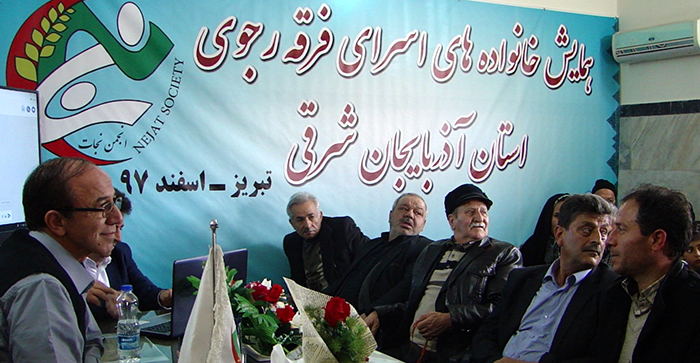
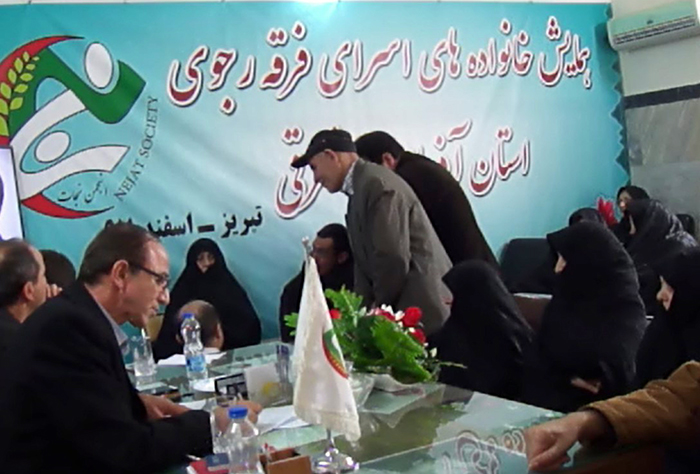
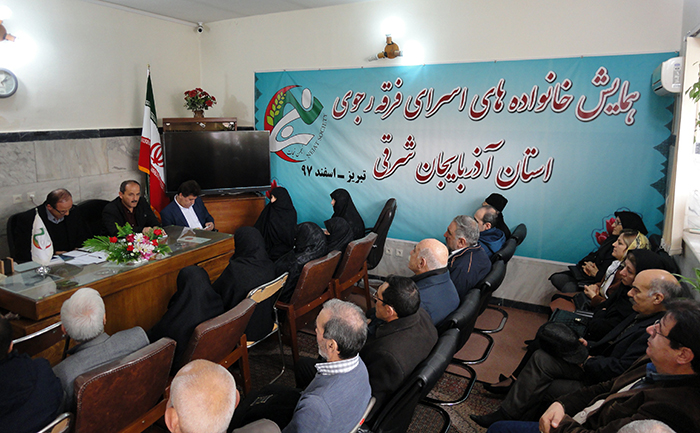
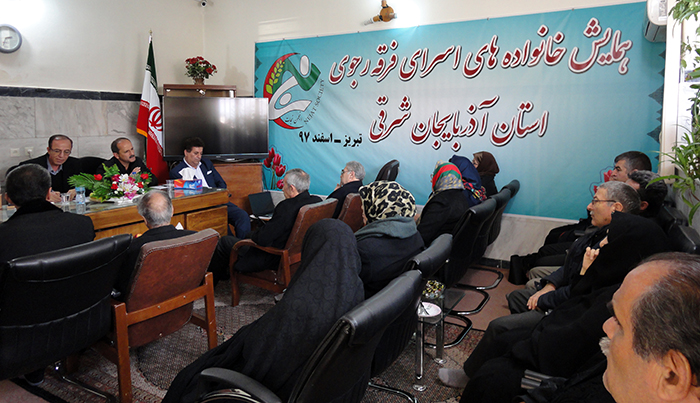
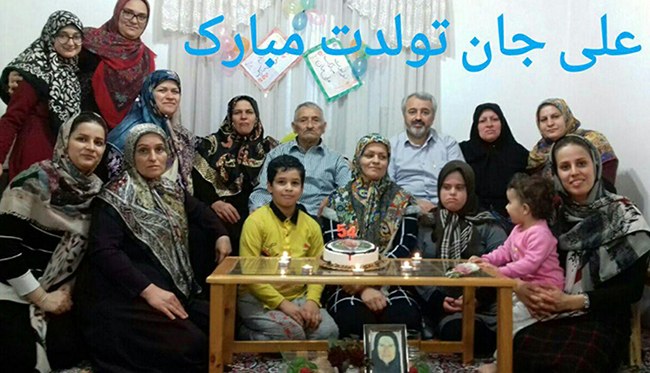
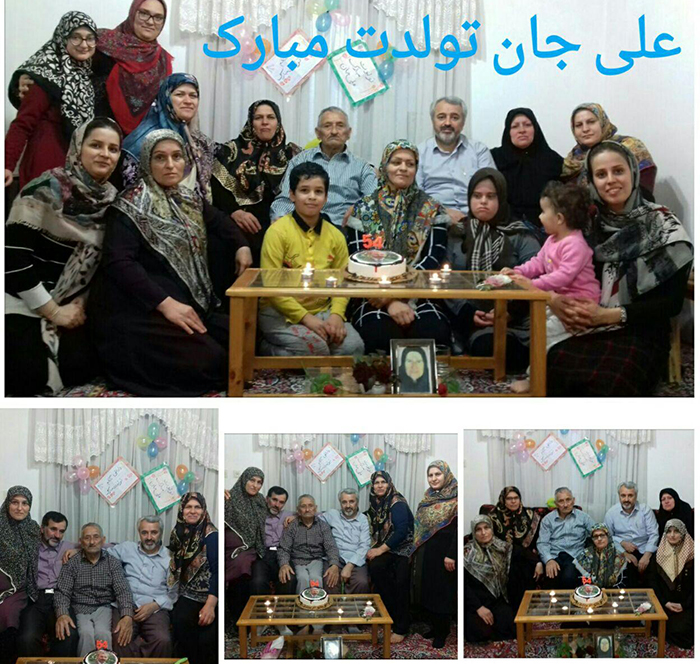
Some of the families of the Rajavi cult hostages attended the Nejat Society Office of Kermanshah Branch to discuss the ways to help their beloveds’ rescue from the MKO Cult.   

The Nejat families also invited the newly defected ; Mr. Saadollah seifi , to get information from the situation of their loved ones.

Mr. Seifi explained the manipulation techniques of the MKO cult and the way it abuses its members. He said about the group’s abusing and making trouble for his family writing letters on Saadollah’s behalf and sending to his family…

 The families calledon the international human rights bodies to help their family members with liberating them form the cult of the Mujahedin-e Khalq.  

December 11, 2018 0 comments
FacebookTwitterPinterestWhatsappTelegramSkypeEmail
MEK Cult
The cult of Rajavi

The Mujahedin Khalq, “a Cultish Death Squad”

The violent nature of the Mujahedin Khalq Organization (the MKO/ MEK/ PMOI/ the Cult of Rajavi) has always been the important issue of critics and arguments between journalists, analysts and those politicians who support the group and consider it as a democratic alternative to the Iranian government.

“The MEK’s efforts over the past two decades to convey a benign public image completely at odds with this internal reality, and to pose as a force for democracy in Iran, have depended on buying the public endorsements of well-known public figures,” write Paul pillar on the National Interest.  “This has required money—lots of it. Five-figure speaking fees have flowed freely. Public disclosure forms indicate Bolton received $40,000 for a single appearance at an MEK event in Paris last year.” [1]

Western Analysts agree that the MEK lacks the capacity or support to overthrow the Iranian government. “They [the MKO sponsors in the US] are probably smart enough to know that this group is not democratic and anyway has no constituency inside Iran,” Paul Pillar told the Guardian. “Trump and his Iran hawks are not concerned with replacing the current regime so much as causing it to crumble. They are pursuing anything that would disrupt the political order in Iran so they and the president can cite such an outcome as a supposed victory no matter what comes afterwards.” [2]

Pillar believes that the MKO has only the capacity to commit violence, and is not able to change the government in Tehran as a democratic force. “They appear to be less interested in democracy in Iran than in the capability for sabotage, destruction, and assassination in Iran—a capability that the MEK still has despite its claims to have forsaken violence,” he writes. [3]

Julia Kassem of the Geopolitics Alert also asserts that “Washington’s pulling out of the Iran nuclear deal and subsequently renewed sanctions come as US National Security Advisor appointee John Bolton’s existential objective to destroy Iran by any means necessary even if it means leveraging the soft power of a cultish death squad.” [4]

She suggests that Trump administration has made large investments on the Iranian opposition groups. “Congress had previously allocated over $20 million for “democracy promotion” in Iran, following accusations that Iran possessed nuclear weapons,” she writes. “It was the MEK that had given false and misleading information to US intelligence on Iran’s alleged possession of nuclear weapons in 2002, a year before the US destabilized Iraq over accusations of “weapons of mass destruction.” This polemic, inspiring an odd part of then-president George W Bush’s “Axis of Evil” speech, is also solidified in MEK leader Maryam Rajavi 10-point plan. The last point demands a “non-nuclear Iran,” calls for the Islamic Republic be “free of weapons of mass destruction.” [5]

Julia Kassem suggests that the double standards of the West in dealing with terrorist groups including the MKO is shared with the entire NATO members. “Various NATO powers have hosted and given the separatist groups coverage in attempts of strengthening support and ties with the United States,” she writes. “They Include France, where the MEK and its umbrella organization NCRI is based, Denmark and the Netherlands, housing Arab Struggle Movement for the Liberation of Ahvaz (ASMLA), and Albania, where a MEK camp, housing a training ground and even Twitter troll-farm, pumping out anti-government tweets and pro-Rajavi propaganda, is based.” [6]

Paul pillar confirmed the US hypocrisy in an interview with Tehran Times. “If the MEK is opposed to the current political order in Tehran, that’s all that matters to the Trump administration,” he said. [7]

He states that the removal of the MKO from the US State Department Terrorist list has been part of the anti-Iran Policy. “A rationale for removing the MEK from the U.S. terrorism list was that in recent years the group has not been involved in killing Americans,” he told Tehran Times. “The law governing the list could be construed that way, although more often, decisions on listing and delisting are not made from such a narrow perspective.  A terrorist group is still a terrorist group even if the blood it spills is not American blood.  The MEK certainly has been involved in lethal political violence since 2009.” [8]

Western supporters should be warned that associating with the MKO will increase Iranian`s hatred feelings toward the US. Iranians will never forget the violent background of MEK in which thousands of innocent people were massacred by this group. Therefore, US should not try to ignore the terrorist nature of MEK and its cruel treatment towards its members.  

By  Mazda Parsi

References:

[1] Pillar, Paul, The MEK and the Bankrupt U.S. Policy on Iran, National Interest, November 13, 2018.

[2] Merat, Arron, Terrorists, cultists – or champions of Iranian democracy? The wild wild story of the MEK, the Guardian,November 9, 2018.

[3] Pillar, Paul, The MEK and the Bankrupt U.S. Policy on Iran, National Interest, November 13, 2018.

[4] Kassem, Julia (Samar), How the US Uses the “Leftist” MEK Group for Soft Aggression against Iran, Geopolitics Alert, November 27, 2018.

[5] ibid

[6] ibid

[7] Heirannia, Javad, MEK Sources of funds are Iran’s regional rivals: ex-CIA official, Tehran Times, December 1, 2018.

[8] ibid

December 10, 2018 0 comments
FacebookTwitterPinterestWhatsappTelegramSkypeEmail
Newer Posts
Older Posts

Recent Posts

  • Pregnancy was taboo in the MEK

    December 22, 2025
  • MEPs who lack awareness about the MEK’s nature

    December 20, 2025
  • Why did Massoud Rajavi enforce divorces in the MEK?

    December 15, 2025
  • Massoud Rajavi and widespread sexual abuse of female members

    December 10, 2025
  • Farman Shafabin, MEK member who committed suicide

    December 3, 2025
  • Facebook
  • Twitter
  • Instagram
  • Youtube

© 2003 - 2025 NEJAT Society . All Rights Reserved. NejatNGO.org


Back To Top
Nejat Society
  • Home
  • Articles
  • Media
    • Cartoons
    • NewsPics
    • Photo Gallery
    • Videos
  • Publications
    • Books
    • Nejat NewsLetter
    • Pars Brief
  • About Us
  • Contact us
  • Editions
    • عربي
    • فارسی
    • Shqip