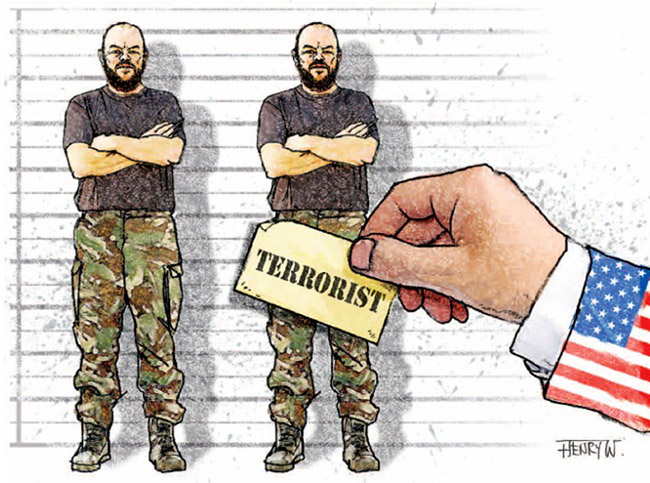
Nejat Society
  • Home
  • Articles
  • Media
    • Cartoons
    • NewsPics
    • Photo Gallery
    • Videos
  • Publications
    • Books
    • Nejat NewsLetter
    • Pars Brief
  • About Us
  • Contact us
  • Editions
    • عربي
    • فارسی
    • Shqip
Nejat Society
Nejat Society
  • Home
  • Articles
  • Media
    • Cartoons
    • NewsPics
    • Photo Gallery
    • Videos
  • Publications
    • Books
    • Nejat NewsLetter
    • Pars Brief
  • About Us
  • Contact us
  • Editions
    • عربي
    • فارسی
    • Shqip
© 2003 - 2024 NEJAT Society. nejatngo.org
Mujahedin Khalq as an Opposition Group

The Secluded Group Scheduled to Overthrow the Iranian Regime

A little ways outside the center of Tirana, Albania lies a military-style base surrounded by high concrete walls topped with barbed wire and droves of security guards keeping watch over all those who venture near the compound.
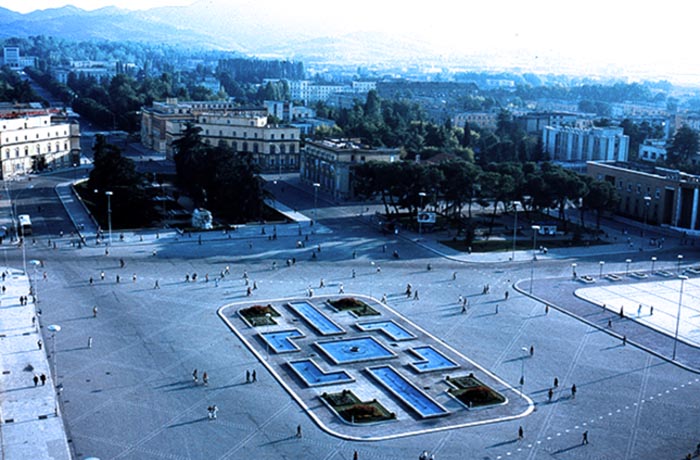
No one is allowed in, and those who live in the base only come out once a year for a lavish conference in Paris hosted by the leaders of the group trapped inside.

What makes the compound one of the most unique in the world, is that its walls are built to keep its inhabitants in, rather than keep any intruders out. Inside are thousands of members of the Mujahideen al-Khalq (MEK), an Iranian organization that was deemed a terror group by much of the world, only to be quietly re-branded as a peaceful, democratic group of freedom fighters.

Now, it is considered a vital strategic partner by U.S. President Donald Trump and his foreign policy team who hope that the MEK will one day storm Tehran, overthrow the Ayatollah’s regime and take the reigns of power. The U.S. paid the U.N. and Albania to build the base, ensuring the group’s survival for the foreseeable future.

“There is a viable opposition to the rule of the Ayatollahs,” Trump’s National Security Advisor John Bolton proudly announced to a conference hall full of MEK members bussed in to the annual Paris gathering from their compound. “And that opposition is centered in this room today.”

But who are the MEK? No one seems to know.

That question is nearly impossible to answer, not least because the MEK has shifted its own identity so many times that former members cannot recognize the group as a coherent body anymore.

Tightly controlled by its leader, Maryam Rajavi, many who have studied the group call it a cult. Iranians call them hypocrites for becoming a pro-Saddam militia that killed thousands of Iranians in the 1980s. Trump’s White House call them the last viable hope of a Free Iran.

The MEK, more than being a terrorist cult, militia or pro-democratic freedom fighters, seems to be a brutal tool of realpolitik, a blunt instrument to be used by the U.S. and its allies in the Gulf to antagonize their geopolitical rival, Iran.

To understand this, Al Bawaba spoke with Massoud Khodabandeh, who was one of the groups most senior leaders for decades, before he escaped and renounced what it had become. Once their top spy, Khodabandeh now lives in the U.K. as a consultant working on deradicalization and lives a relatively quiet life. Although he speaks methodically, he often veers into small anecdotes about his time in the MEK, sharing stories that shed light on the group’s highly secretive past.

His decades-long involvement in the MEK has given him a unique insight into one of the most elusive anomalous groups in the world; he has chosen to share his story with Al Bawaba.

From Students to Guerrilla Fighters

Formed in 1965 by a group of students from Tehran University, the MEK was organized against the rule of the Shah, whose government was installed by the U.K. and U.S. to ensure Iranian oil flowed to the West. Its left-leaning members initially mixed a Marxist understanding of history with Islam, but were targeted by the Shah’s secret intelligence, the SAVAK.

Many of its members were jailed and executed, and the group underwent a series of internal rifts. Eventually, Massoud Rajavi rose to lead the group, and the MEK allied itself with the revolutionary cleric, Ayatollah Khomeini, who was quickly positioning himself as the top contender for the Shah’s job as ruler of Iran.

The MEK became one of the Ayatollah’s most reliable revolutionary force, providing a backbone to protests on the streets of Tehran and supplying thousands of diehard activists. The MEK at this time enjoyed wide support throughout Iran.

.. When [Ayatollah Khomeini]he did seize power in the 1979 Revolution, he disavowed the MEK and its leadership, driving them out of the official political scene. Reacting to this, the MEK  quickly transformed into guerrilla fighters battling the Ayatollah regime inside Iran.

Just as quickly as [Ayatollah] Khomeini flipped on the MEK, they turned on him.

In June 1981, the MEK killed 70 high-ranking members of the Ayatollah’s Islamic Republican Party. The bombing also reportedly injured Ayatollah Ali Khamenei, who is now the current ruler of Iran, permanently affecting his right arm.

Then two months later, they bombed the offices of Mohammad-Javad Bahonar, who was Prime Minister, and Mohammad-Ali Rajai, who was the president at the time, killing both.

Khomeini then set his sights on expelling the MEK from Iran. Most of the members fled to Iraq while its leadership went to Paris.

In Iraq, Saddam Hussein immediately found an use for the MEK, and took them under his wing. He allowed them to build a new base for themselves called Camp Ashraf just north of Baghdad in 1986, and began funding the group. Saddam was fighting a brutal war with Iran at the time, and deployed the MEK as a militia against Iran’s army and its Revolutionary Guards.

Under the command of Saddam and Massoud Rajavi, the MEK killed thousands of Iranians and then was used to violently suppress Iraqi Kurds, something Khodabandeh thought utterly contrary to the original ideals of the group, which he thought to be emancipatory.

“I had joined MEK with idealistic aims and revolutionary ideas,” Khodabandeh told Al Bawaba in an interview. “I was a teenager then.”

“After years, especially after seeing the situation in Iraq and the role of MEK in Saddam’s army, it was obvious that not only had that aim gone out of the window, but the force was now a force for suppression.”

As one of its senior members who helped create international branches in Europe and lead its security, Khodabandeh thought he could convince the rest of the leadership to stick to its founding principles.

“I tried for years to somehow influence the direction with no success whatsoever,” he said.

By the late 1980s, the group was universally reviled in Iran for its role in the Iran-Iraq war, and was firmly part of Saddam’s network of militias he controlled. Its goal of revolution in Tehran seemed distant and abstract compared to the funds and arms it was getting for killing Iranians and Kurds.

Due to its loyalty to Saddam, and its assassination of six American citizens, including three members of the military, the U.S. designated the MEK a Foreign Terror Organization (FTO) in 1997, and much of the world followed suit shortly thereafter.

Bob Filner

For most organizations, to be deemed a terrorist group spells doom for its ability to network and function internationally. They are either treated as pariahs, or actively targeted by states to be eliminated.

It usually means war, with bounties on leaders’ heads and international arrest warrants being issued.

The MEK, however, experienced none of that. In fact, their time as being considered terrorists was unusually luxurious: they lived and worked freely throughout Europe and the U.S., inter-mingling with policy makers and influences as if they were a non-profit with millions to spend.

The MEK also stands as one of only groups who successfully lobbied itself off the list, paying out millions of dollars in a tri-pronged campaign that included donating to influential U.S. politicians, saturating U.S. magazines with pro-MEK advertisements and convincing the U.S. military and political establishment that it was an asset rather than a security threat.

Its removal from the terror list began in 2003, when the U.S. invaded and occupied Iraq, ousting Saddam Hussein and battling against his militias. The MEK was perceived as just another pro-Saddam militant organization, and were targeted as such by the U.S.

But then something strange happened.

After a brief period of conflict, the MEK called for a ceasefire and began discussions with U.S. officials about its status. According to a RAND report, the MEK’s negotiators convinced their U.S. counterparts that they had actually offered to help fight on the U.S.’ behalf before the invasion and that its members were U.S.-educated.

Both were false. They also told the U.S. officials that they hadn’t killed any U.S. forces, even though the MEK had killed at least one member of the special forces. With limited knowledge of the group, the U.S. officials were convinced and accepted the MEK’s terms of the ceasefire, which included the group keeping its weapons.

The MEK then quickly built trust with the U.S., and was treated less like a terror organization and more like a oppressed minority. For their part, the MEK quickly ditched its friendship with Saddam and replaced him with the U.S., who was busy fighting an insurgency and struggling to establish a new government in Iraq.

Despite being listed still as a terror group, then-Secretary of State Donald Rumsfeld moved to grant the MEK the status of ‘“protected persons” under the Fourth Geneva Convention in June 2004, effectively placing it under the protective custody of the U.S. The U.N., International Red Cross and Rumsfeld’s own department disagreed with the decision, but it was final. Rather than prisoners of war to be prosecuted, the MEK had been granted special privileges.

The U.S. also provided the MEK with its own office space in a forward operating base near Camp Ashraf; a move that further signaled the U.S.’ comfort with the MEK.

They also openly prosthelytized to U.S. troops and formal requests to stop them were denied.

The MEK then set about the task of convincing U.S. policy makers that they could be a valuable asset in the ongoing geopolitical struggle against Iran, who was considered one of the key players in the so-called ‘Axis of Evil.’

A Remarkable Lobbying Effort
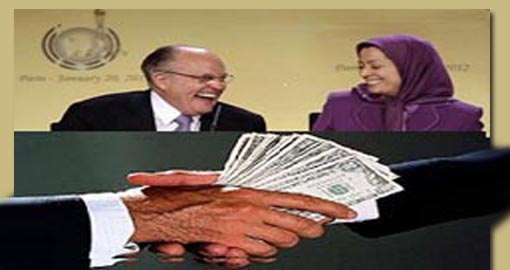
In Washington D.C., the MEK went about becoming a permanent fixture in the social and political spheres. According to Trita Parsi, the founder and current president of the National Iranian American Council, the MEK gained the favor of many policy makers.

“Even when the MEK was on the terrorist list, the group operated freely in Washington. Its office was in the National Press Club building, its Norooz receptions on Capitol Hill were well attended by lawmakers and Hill staff alike, and plenty of congressmen and women from both parties spoke up regularly in the MEK’s favor. In the early 2000s, in a move that defied both logic and irony, Fox News even hired a senior MEK lobbyist as an on-air terrorism commentator,” Parsi writes.

At a time when anti-terror rhetoric was reaching fever levels, and the U.S. was passing highly controversial laws that put the U.S. in a kind of secure, lockdown mode, with warrantless wiretapping, systematic searches, surveillance programs and clandestine torture sites becoming the norm, the MEK was in good standing with the U.S., as terrorist groups go. Although some in the Department of State wanted them shipped back to Iran, and recognized that many of their members were responsible for war crimes, officials in the Department of Defense sheltered them and began using them as a tool against Iran.

The MEK also wanted to win over the hearts and minds of everyday Americans, who likely had not heard of the small, nascent group but may have been concerned about peace and democracy, which the MEK now claimed were their guiding principles.

The group spent hundreds of thousands of dollars from 2005-2012 taking out ads in major newspapers, including The New York Times and the Washington Post. Their ads were designed to look more like petitions or news stories, and they blended into everyday reading.

“35,000 Iranians Rally in Brussels,” one advertisement headline read, seeking to show that the group had popular support. “250 Parliamentarians, 50 Jurists Condemn . . . Conspiracies against Iranian Mojahedin in Iraq, Call for Removal of Terror Tag from PMOI,” read another.

One full-page ad in The New York Times called for the group to be returned to Camp Ashraf after many had been forcibly transferred to the less-secure Camp Liberty.
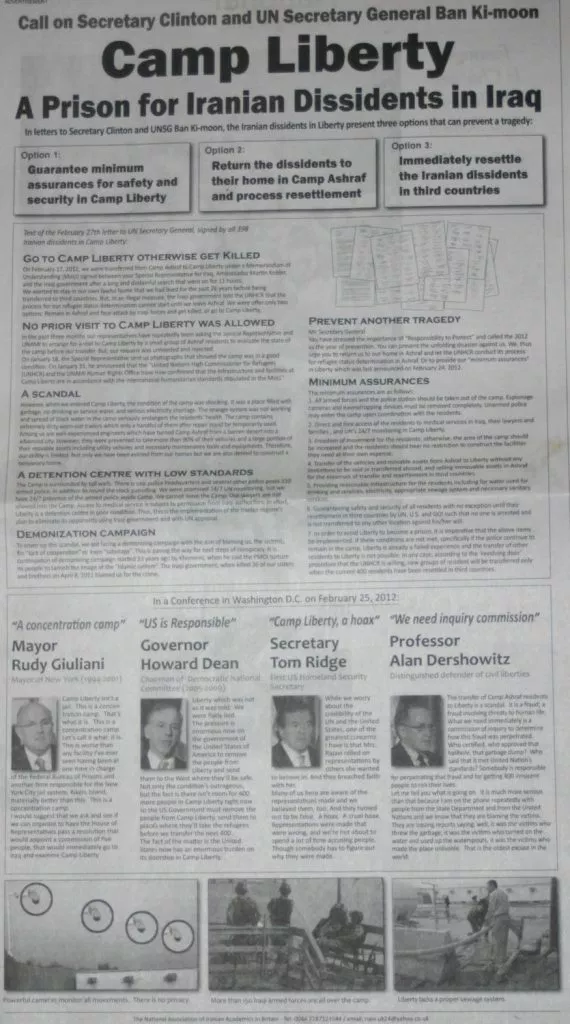
To be sure, the group was under attack by Iraqi forces during the mid-2000s; tens of them died and hundreds were wounded in a series of strikes against Camp Ashraf and Camp Liberty.

The MEK paid for a vast array of U.S. bipartisan support. Among its public allies, even when it was a terror group, was R. James Woolsey and Porter J. Goss, both former CIA heads, former president George W. Bush’s homeland security chief Tom Ridge, Obama’s first national security advisor, James Jones, former New York mayor Rudolph Giuliani, popular Vermont Democrat Howard Dean. Its other allies included Democrat Congressman John Lewis, former FBI Director Louis Freeh, former Representative Patrick Kennedy and retired General Wesley Clark among others.

The ad campaigns and tireless lobbying efforts worked.

In Sept 2012, then Secretary of State Hillary Clinton announced the group was coming off the terror list. A Republican Congressman Dana Rohrabacher praised the decision, saying  “The lives of hundreds of the M.E.K. misplaced persons could well be saved as result.” He also insisted that the group seeks “a secular, peaceful, and democratic government,” in Iran.

The MEK had convinced enough powerful people that they were a genuinely potent opposition force that could offset the power of the Ayatollah’s regime in Iran.

Trita Parsi, who was involved in trying to keep the group on the list, told Al Bawaba that State Department officials were desperately pleading with analysts and policy influencers in D.C. to oppose the delisting, and that Clinton dismissed their concerns about the MEK.

Parsi claims that Clinton was facing backlash from other Democratic party politicians, who had graciously accepted money from a listed terror group. “There were so many high level Democrats that had ended up on the MEK’s payroll…” Parsi says, that pressured Clinton to take the MEK off the list in order to clear their names from being associated with a group listed as a terrorist organization.

The MEK is a group that defies conventional understandings of non-state actors.

Its revolutionary beliefs were once seated in a Marxist understanding of history mixed with Islamism. Now, they are willing to sell their ideology to the highest bidder; there is evidence to suggest the MEK mirrors the stated beliefs of the state that gives them the most support. As of now, its stated goal is to establish a secular, democratic state in Iran.

The only thing is seems genuinely invested in is its leader, Maryam Rajavi, who controls its members so tightly that it has been described as a cult centered around her.

But what does the group actually believe? What is its vision for Iran, and how has its beliefs shifted? What caused the group to go from radical student collective to a set of aging, reclusive shut-ins?

The MEK’s Ever-Shifting Ideologies

Tracing the beginnings of its ideology is easy enough: as it developed in Tehran University in thr 1960s, the MEK advocated for a Marxist reading of history mixed with Shia Islam. Iran, controlled by the U.S. and U.K.-installed Shah, emphasized the MEK’s Marxist leanings to alienate it from the political discourse of Iran at the time, and targeted the group and its founders.

After suffering a split from the more secular, left-leaning members and the execution of its founders, the MEK steadily aligned itself with the hyper-conservative religious cleric, Ayatollah Khomeini.

However grateful Khomeini may have been for the help of the MEK and other leftist revolutionaries in ousting the Western-backed Shah, he did not plan to include them in his theocratic government.

Their exclusion from Iranian politics and governance pushed the MEK into the fringe, where their first real ideological shift happened: going from idealistic pro-Ayatollah activist group to embattled guerrilla fighters.

The political aims for which they campaigned and fought began to fall by the wayside as the group emphasized militant insurgency and its leader, Massoud Rajavi, began to exert more control over its members.

By killing high-level officials of the ruling party in Iran, the MEK showed its willingness to go after those it saw as obstacles to its own plan to take power, even if those in the way were Iranians.

Thousands of members of the MEK were killed by regime intelligence and security forces, but Saddam Hussein promised to support the group, which likely saved it from being eliminated entirely. The group moved from Iran to a base in Iraq, called Camp Ashraf.

Saddam’s move however, led to an about-face for the MEK’s guiding principles, and represents the moment it began to be reviled by Iran. By the time Saddam began funding and housing the MEK, he was already steeped into a stalling invasion of Iran. He began to use the MEK as an auxiliary military force against Iran. The MEK, now refocused on destabilizing the Iranian regime as much as it could, obliged and took part in several operations that killed thousands of Iranians.

Supported by Saddam’s air force, the MEK managed to capture and briefly occupy the Iranian town of Mehran on the Iranian border with Iraq. The MEK reportedly stayed in the town even after official Iraqi army forces had left, and though they were eventually pushed back into Iraq, the battle left three to five thousand Iranians dead.

Their most ambitious plan however, was Operation Mersad. By the time the operation was launched, both sides had agreed to end the war, which had killed hundreds of thousands for no clear strategic gains by either side.

Massoud Rajavi, however, saw the war as his crucial opportunity to dislodge the Iranian regime, and felt it could not end before the MEK had one last shot at mounting a revolt.

Rajavi ordered an all-out invasion into Iran by MEK forces.

Rajavi hoped that his MEK forces, numbering close to 7,000, would be met with a warm welcome by Iranians while he stormed into Tehran to overthrowing the Ayatollah’s regime. He thought the task would be simple and that the MEK could easily do it.

He was mistaken.

Operation Mersad and The MEK’s Descent into Being a Cult
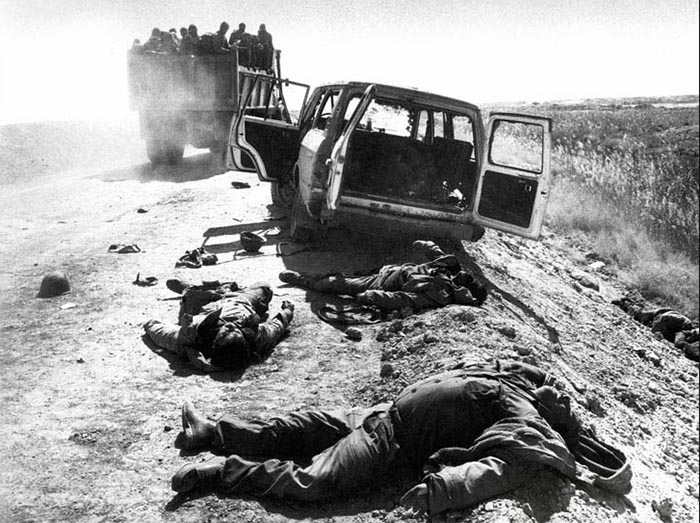
As Khodabandeh tells it, Rajavi called every MEK member from around the world to Iraq for an undisclosed purpose. MEK members streamed into Iraq, where Massoud Rajavi then told them that they would invading Iran.

His plan was to file the group in a straight, thin line to the first major Iranian town, which would rise up with the MEK against the regime and compel a nation-wide revolution. The plan baffled Iraqi generals, who pleaded with Rajavi and tried to inform him that militaries do not send their entire army in a single-file line for an invasion. Rajavi rebuffed them and went ahead with the plan.

The Iraqi army provided air and material support for the MEK for the first leg of the journey, but refused to continue supporting the group once it got further into Iran. Iranian generals, for their part, were astonished that the MEK would defy basic military logic and move all of its assets at once on a single path towards Tehran, so they swooped down to close off the border with Iraq and prevent any further infiltration.

Then, they let the MEK wander into a mountain range, where they trapped the group.

“The whole force got stuck in these four mountains,” Khodabandeh said. Iran’s military closed it off entirely, and the airforce began pummelling the MEK relentlessly.

In just a few days, Iranian forces killed over 3,000 MEK members, many of whom were never trained to be part of an army in the first place. Many escapees were captured and summarily executed, others still with imprisoned and tortured.

The MEK lost half of its members and many of its leaders. “Rajavi never gave the order to come back. Anybody ‘who survived, they came back themselves,” Khodabandeh said.

Khodabandeh also remembers watching Iraqi generals crying at their posts, pleading with Masoud Rajavi to explain why he would order such an attack against all advice that sent his own people into a death trap.

The move to invade Iran cemented the MEK’s domestic reputation as a group of rogue militants in the pocket of whomever would fund them, and forever doomed their ability to generate popular support inside the country.

After this incident, Massoud Rajavi blamed those who survived the massacre for not being loyal enough, and began to mold and shape the MEK into a more insular group, one that could be controlled by just a few people, namely, him and his wife, Maryam Rajavi. Throughout the 1980s, Massoud orchestrated what he called an ‘ideological revolution,’ within the MEK, which forced its members to obey his orders.

But these tools of control became more sinister after Operation Mersad.

“After the failed military operation of ‘Forough Javidan’ [Operation Mersad]…” Massoud Rajavi ordered all those who lost a spouse to immediately re-marry, Khodabandeh said. On top of that, “within a few months he started a new phase of [the so-called] ideological revolution in which his demand was that everyone has to divorce forever and all the women are now his.”

This order reorganized the MEK from being a militant group with some remnants of ideological beliefs, to one where its members were primarily subservient to a person, who dictated every aspect of their lives. Children of MEK members were forcibly taken from their parents and flown out of Iraq, where they were raised in the U.S. and U.K. by sympathizers.

Khodabandeh said he knew of at least one child who was flown out: “I know one of them who changed hands in Canada and U.S. five times. They would register the children for benefits and then would leave them in the street.”

“Every time they faced a major defeat like this, in order to retain control of the organization, the leadership became more and more repressive internally and cultish,” Trita Parsi, the founder and former president of the National Iranian American Council, said to Al Bawaba in an interview.

There is also reason to believe Massoud was literally fashioning the MEK to be a cult as well. Throughout Khodabandeh’s  time in the U.K., he sent dozens of books on psychological manipulations and cults to Massoud Rajavi. Rajavi constantly requested them as well as other odd items including a fake eye for one of his former wives. Khodabandeh, not knowing any better, complied with the requests. Decades later, he learned that Rajavi was having them translated into Farsi and was using them as guides to mold the MEK into a cult.

Massoud Rajavi also introduced other methods of control, some years before the failed invasion of Iran ever happen. Many of them were intended to prevent further divisions in the group from forming.

One ‘session’ was called The Cross, where some MEK members were forced to bear a large cross on them.

Another, called ‘Individuality,’ forced members to describe their loyalty to Massoud and prove that they were working towards his goals. Of course, members were forced to confess deviant thoughts or actions to MEK leadership as well. Those who had transgressed Massoud would be punished, sometimes through solitary confinement and public shaming.

Human Rights Watch began looking into the group’s treatment of its members, and found members who had been held in solitary confinement for years at a time, and of dissident members being tortured to death in front of others as a way of showing the danger of going against the group. It is highly likely many of these methods were developed thanks to the guide Rajavi had made for himself with Khoadenbeh’s books.

The ‘Social Division’ of the MEK released a statement urging its members to accept this internal, ‘ideological revolution,’ that was really a kind of ongoing purge of the group.

“To understand this great revolution…is to understand and gain a deep insight into the greatness of our new leadership, meaning the leadership of Massoud and Maryam. It is to believe in them as well as to show ideological and revolutionary obedience of them…By correcting your old work habits and by criticizing your individual as well as collective shortcomings, we shall gain much awareness in confronting our enemies…Report to your commanders and superiors in a comprehensive manner your progress, its results and outcomes that you gain from promoting and strengthening this ideological revolution.”

After Massoud Rajavi disappeared in 2003, Maryam took over and continued enforcing cult-like practices on the MEK, likely continuing to this day.

In 2016, the MEK was moved to Tirana, Albania, but this trasnfer has done nothing to loosen the hold Maryam has on its members.

The U.S. had the ability to separate the members from the leadership and give them more freedom; something the U.S. declined to do. Trita Parsi thinks many would have defected if they were given such a chance.

Meanwhile, Tara Sepehri Far, an Iran researcher with the Human Rights Watch told Al Bawaba that there are no signs the MEK’s abusive practices against its membership has ended.

“We haven’t updated our research after that but we’re not aware of remedy that has been paid to victims since then,” Far stated. “My understanding is the group still keeps the camp isolated in Albania and doesn’t allow independent monitors and journalist to freely report from there.”

Former MEK members have told journalists that the group’s leadership forces individuals in the Tirana camp to write down their sexual thoughts every day and then read them out loud to others, using shame as a method of control. A leaked Albanian police report assess the MEK as a dangerous group and that there are”reasonable suspicions”that it may be torturing and even killing members trapped inside the Tirana compound today.

“It’s not really proper to called them MEK ‘members,’ they’re more or less MEK hostages. They want to leave but they’re not allowed to,” said Parsi, who has spoken to several families of MEK members in the U.S. who have been fighting for years to reconnect with loved ones stuck in the compound in Albania.

The MEK’s public face is that it is a force for democracy and secular pluralism, though it has little to show for its claim.

The group’s official website says, “The PMOI/MEK seeks to replace Iran’s religious dictatorship with a secular, pluralistic, democratic government that respects individual freedoms and gender equality.”

However, the website also can’t help but remind everyone that it is fundamentally a one-person show by naming Maryam Rajavi as “the future President of Iran,” having apparently decided the results of a hypothetical election in Iran to be in her favor.

“[Massoud] Rajavi always would say that if it was not because of the Internal Revolution the organisation would not exist,” Khodabandeh said.

“I think he was right but the organisation which existed after these changes is not the first one anymore.”

The revolutionary beliefs of the MEK were slowly weeded out of its membership and replaced with forced obedience to one person: Maryam Rajavi.

According to Khodabandeh, the MEK “has since became the tool for the ones who paid to keep it going and became a closed dictatorial organisation.”

Who Funds the MEK

It is widely rumored that Saudi Arabia has been a loyal supporter of the MEK, but there has not concrete account to verify this claim, until now.

Khodabandeh has provided details of specific transfers of valuables good from Saudi Arabia to the MEK, worth hundreds of millions of dollars.

The details are difficult to verify, but nonetheless represent the first comprehensive account of  the MEK’s partnership with Saudi Arabia.

According to the former MEK member who personally oversaw the transfers, Saudi officials operating within the security apparatus of Turki bin Faisal al Saud, the head of Saudi intelligence at the time, and the late king Abdullah bin Abdulaziz al-Saud, gave the MEK three tons of solid gold, at least four suitcases of custom Rolex watches and fabric covering the Kaaba, the most holy site in Islam. The transfers were worth hundreds of millions of dollars.

Saudi’s Gold Transfers to the MEK

Massoud Khodabandeh, who used to head security for MEK’s top leaders and was one of its most-senior members, described to Al Bawaba a network of smuggling and black market sales that Saudi used to fund the MEK covertly.

Gold and other valuable commodities were be shipped from Saudi Arabia to Baghdad. Then, they would be sold in black markets in Amman, Jordan via Saudi-linked businessmen; the money would go to offshore accounts linked to the MEK, funding their operations.

In 1989, a year before Saddam Hussein attacked Kuwait, Khodabandeh and the MEK’s leader at the time, Massoud Rajavi, went to Saudi with an escort by Iraq’s secret police. “Rajavi was to perform pilgrimage as well as other things. At the time for our return to Iraq, we were presented with two suitcases each, presents from King Abdullah, then crown prince. They included gold, [and] Rolex watches,” Khodabandeh said. These watches were custom-made and had the king’s head designed into them.

The MEK, having disavowed personal possessions, removed the king’s head from the watches and sold them to black market businessmen in Amman, Jordan.

They were also presented with a piece of a priceless kiswa, a large drape that is adorned over the Kaaba in Mecca, Saudi Arabia. Kiswas are embroidered with gold and are manufactured at a cost of around $5 million, but the religious and symbolic importance of the fabric makes them much more valuable.

“I was also assigned to bring gold in special lorries,” Khodabandeh said.

Aided by two Iraqi and two Saudi representatives, Khodabandeh smuggled three trucks filled with gold bars from Saudi Arabia to Baghdad. He estimated that each truck held about a ton of gold, making the shipment’s contemporary worth almost $200 million.

“After a few days I arranged for it to go to Amman to be sold,” added Khodabandeh. “We knew a few businessmen who could do this for us and move the money to offshore accounts.”

That top Saudi officials, including the late king Abdullah who was crown prince at the time, was funding a Shia militant group complicates the narrative that Saudi was exclusively exporting a hyper-conservative brand of Sunni Islam, called Wahhabism, around the world to combat Shi’ism. In looking to destabilize the Iranian regime, Saudi appeared more than willing to funnel millions of dollars worth of goods to the Shia MEK.

Khodabandeh noted that some of the money received from its dealings with Saudi was for military vehicles.

Through the Saudi-linked businessmen in Amman, “we bought large fleets of Toyota semi-military vehicles and many other logistical needs.”

Other Sources of MEK Funding: Saddam and the U.S.
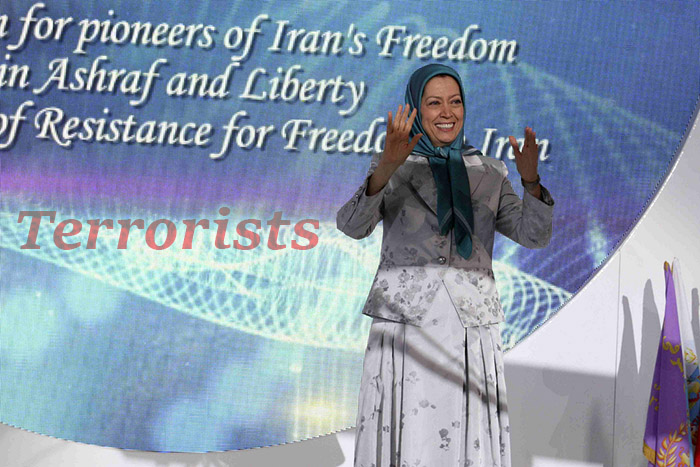
During much of the 1980s and 1990s, the MEK was sheltered and supported by Saddam Hussein, who co-opted the group. Khodabandeh told Al Bawaba that, in addition to receiving regular payment from Saddam, the MEK was funneled money from Iraqi oil that was exported to the U.K.

The MEK also garnered a significant amount of money from fraud and money laundering activities around the world.

A massive FBI investigation into the group’s finances in 2004 revealed a complex web of front organizations disguised as charities that were MEK revenue generators. Fraud and laundering schemes were found all over Europe and the U.S.,

From Washington D.C., to Tampa, Dallas, Los Angeles and even London, Stockholm and Paris, the MEK operated “cells” that took part in fraud schemes and fake charities.

One such fake charity was called the Committee for Human Rights. MEK members posed as representatives of the so-called Committee for Human Rights, seeking donations for the medical treatment of starving Iranian refugee children. The donations received were then laundred via Turkey back to the main base in Iraq, where they were used “to fund MEK’s terrorist operation” according to the report.

To smuggle in MEK members to the United States, which listed the group as a foreign terrorist organization at the time, the organization forged identity and immigration documents.

In 2012, it was delisted as a terror group and recruited by the U.S. for use in destabilizing the Iranian regime. The U.S. paid $20 million to the U.N. refugee agency to transfer thousands of MEK members from Iraq to Tirana, Albania and provided Albania the funds to build the MEK’s military-style facility in Tirana.

The U.S. also “allocated a budget of 10 million dollars for the purpose of a ‘de-radicalization’ program to dismantle MEK as an organisation and sort out the members,” according to Khodabandeh. But the Trump administration halted the program, leaving the members trapped with the leadership.

The group’s shifting alliances closely align with its sources of funding, making the group a kind of quasi-mercenary force, although the group has not engaged in combat in years.

“It changed from a terrorist military organisation to an intelligence-based propaganda machine.”

Turki bin Faisal al Saud, who was directing Saudi’s intelligence at the time Khodabandeh was assigned to smuggle Saudi goods into Iraq for the MEK’s benefit, has since become an outspoken advocate for the MEK.

“Your efforts to confront this regime are legitimate, and your struggle to rescue all sectors of the Iranian society… from the oppression of the Velayat-e Faqih rule, as was said by Mrs. Maryam Rajavi, is legitimate and an imperative,” bin Faisal told thousands of MEK members at an annual conference for the group in Paris in 2017.

“Therefore, advance with God’s blessings.”

Khodabandeh said that bin Faisal replaced Saddam as the main backer of the group. “I would say that after the fall of Saddam, the MEK which was then being run by Massoud under the patronage of Saddam, changed to the organisation run by Maryam under the patronage of Prince Turki bin Faisal Al Saud.”

“It changed from a terrorist military organisation to an intelligence-based propaganda machine.”

As its sources of funding have largely come from Saudi Arabia and the U.S., it is safe to say that the MEK has re-molded itself to be a kind of tool for them.

How the MEK is Currently Being Used

U.S. President Donald Trump does not like Iran and he has increasingly surrounded himself by people who feel the same way. Understood to be the ghoul siphoning off U.S. power in the Middle East, members of the Trump team have been open about their desire neutralize growing Iranian power.

“We ask all nations to isolate Iran’s regime as long as its aggression continues,” Trump said during his speech to the United Nations’ General Assembly on Sept 25.

“And we ask all nations to support Iran’s people as they struggle to reclaim their religious and righteous destiny,” he added.

White House national security advisor John Bolton promised to bring regime change to Iran by 2019 before stepping back the remarks in a press conference on Sept 24 on the US sanctioning in Iran. Secretary of State Mike Pompeo said in the same conference regarding the reimposition of sanctions that Iran needs ‘enormous change’ before the U.S. reconsiders its stance. Trump’s lawyer and loyal ally, Rudy Giuliani, said that he hoped the sanctions would bring a “successful revolution” to the nascent country.

Destabilizing the Ayatollah’s regime in Iran is a Herculean task, not least because domestic opposition to it is disorganized and have largely localized, economic concerns.

But the Trump team are convinced that they have an effective tool to antagonize Iran: the MEK. The MEK claims itself to be Iran’s main opposition group. Bolton, Giuliani and Pompeo have all received thousands of dollars from the MEK to speak on their behalf, championing them as the saviors to the rogue nation.

In reality, the MEK boasts a membership of about 3,000 aging Iranian exiles and former members. Their compound in Tirana, Albania is a full 2,130 miles away from Tehran and they are only allowed out once a year to attend their annual gathering in Paris. They have virtually no support in Iran.

So how are they the linchpin to the U.S.’ plan for Iran?

The MEK and Iran’s Nuclear Program

The MEK has billed itself to provide two services for those who wish to see a destabilized Iran: a network of spies to provide intelligence and a well-oiled propaganda machine that throws dirt on the regime.

The group’s supposedly deep network of spies inside Iran was given credit for helping to expose the country’s secret nuclear facilities in the early 2000s. In 2002, the MEK’s political wing, the National Council of Resistance of Iran (NCRI), made a theatrical claim that it had discovered a secret nuclear facility in Natanz, Iran. The claim made the MEK seem like a credible source of insider knowledge into Iran’s clandestine nuclear weapons development scheme, but as it turns out, much of it was just for show.

The international body in charge of monitoring nuclear sites, the International Atomic Energy Agency (IAEA) already knew about the Natanz site, making the information less than groundbreaking.

In 2015, the NCRI repeated its style of staging a theatrical reveal when it claimed that Iran was developing a secret ‘underground centrifuge facility’ on the outskirts of Tehran, just before the Iran nuclear deal was signed into effect. Some of the details the NCRI discussed about the site, including “3 by 3 meter radiation proof doors that are 40 centimeters thick and weigh about 8 tons … to prevent radiation leak,” are evidently unnecessary for a uranium-enrichment facility, and the images it ‘released’ were ripped from an Iranian company’s website.

A U.S. State Department spokesperson said “Well, we don’t have any information at this time to support the conclusion of the [NCRI’s] report.”

The ‘reveal’ was fake.
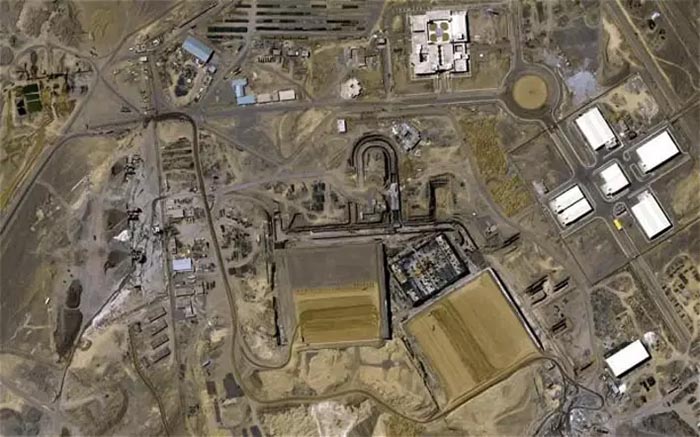
Natanz

What little actual new information it had produced regarding Iran’s nuclear sites were reportedly fed to them by the Mossad, Israel’s secret intelligence, who wanted to reveal the information but needed an element of plausible deniability. The MEK then, was used as an easy middleman.

The other use of the MEK has been as a kind of anti-Iranian regime propaganda machine.

The MEK hosts a lavish annual conference, bringing together its members with some of the world’s top politicians, all united against the Ayatollah regime. The MEK’s leader, Maryam Rajavi, speaks of bringing equality and liberal democracy to Iran in each year’s headline speech. Its official news outlets on its website and the MEK-backed Iran News Wire, produce daily stories on unrest inside Iran to convey to the world that the people of Iran are turning against the regime.

Nevermind that no one is protesting in Iran for the MEK to take over.

Much of Iran News Wire’s story revolve around an ongoing labor strike of Iranian truck drivers; an issue that has no apparent link to the MEK.

It was recently revealed that many of the MEK members in the Tirana base have been operating a troll factory intended to create the false impression that there are untold masses of Iranians who wish for the MEK to overthrow Ayatollah Khamenei and his clerical government.

The MEK operates thousands of social media accounts that posts pro-regime change messages and fights with the MEK’s detractors.

“The majority of it is abusive, libelous, ad hominem and intended to silence,” Azadeh Moaveni, a fellow at New America said of the posts in an interview with an Al Jazeera team investigating the troll factory.

The posts are often made strategically to create trending hashtags, giving the false impression of a populist insurgency against the regime. To be sure, Iran is experiencing unrests across the country: protests have sporadically broken out over the past year due to the country’s economic woes. Double digit inflation and funding expensive military campaigns in Syria, Iraq and Yemen have hampered the country’s budget, choking off its middle class. The U.S.’ re-imposition of sanctions has only added to that volatility.

While these protests may open the window of opportunity on opposition groups, the MEK is universally reviled in Iran for its role in the Iran-Iraq war and is not a player in the country’s political landscape.

This matters little for those U.S. and European policymakers however, who see a further use in the group. Not as a proxy group or intelligence asset, but a source of money.

“Anything to Needle Iran.”

The MEK, with its generous funding sources, has funnelled millions of dollars to politicians since 2003, giving John Bolton at least $180,000 in one year alone, the man now in charge of forming Trump’s foreign policy doctrine. They pay politicians as much as $50,000 to speak at its conferences, and give to both Democrats and Republicans; anyone who will publicly support them in exchange for donations.

Among their beneficiaries are former presidents George W. Bush, Barack Obama, the late John McCain who received at least seven installments of MEK funds according to Joanne Stocker, an editor at Defense Post. They’ve also given money to former CIA heads, other national security advisors and heads of homeland security.

From this strategy of all-out spending, the MEK has amassed a veritable army of D.C. insiders and kingmakers who speak on the group’s behalf, convincing their colleagues that the group is paving the way towards a free Iran.

In return as well, the MEK has received tens of millions from the U.S. to build and maintain its current facility in Tirana via a donation to the U.N. Refugee Agency, and likely continues to enjoy support from Saudi Arabia.

What this means in practical terms is that Trump’s foreign policy stance towards Iran will likely always include the MEK

“Anything to needle Iran,” Ervand Abrahamian said of the support for the MEK from countries like Saudi Arabia. Abrahamian is a historian at the City University of New York who wrote a book on the group, called “The Iranian Mojahedin.”

According to Abrahamian, the cost of Saudi’s support for the group is a mere “pittance,” compared to the consequences of regime destabilization. Trita Parsi, a prominent critic of the MEK and founder of the National Iranian American Council, told Al Bawaba that the MEK continues to serve a useful role in egging on regime collapse in Iran.

“If your objective is regime collapse… then the MEK is almost a perfect fit,” said Trita Parsi to Al Bawaba in an interview. The MEK, Parsi argued, is a capable force to effect regime collapse due to their years of fighting both inside and outside of Iran and their ability to conduct espionage operations.

The group, in other words, is not still around to help inspire a democratic upheaval in Iran, but to dismember the country, taking its government and its people with them.

That such destabilization may cause war, an uncontrollable humanitarian catastrophe and more resentment against Western meddling in regional affairs does not seem important to those hoping to see a disempowered Iran.

Back in the MEK’s camp, the ragtag bunch of former revolutionaries-turned-twitter-trolls don’t look like the group they once were.

Dragged through the decades by the Rajavis with a mix of promises that they would eventually march into Tehran as victors and being thoroughly trapped, the Rajavis have coaxed them along with promises they would all one day march to Tehran as victors of an imaginary revolution and thoroughly trapped them inside a remote prison.

The group, by all accounts, shouldn’t exist anymore.

It carries on as a ghost, pushed forward only by massive amounts of money by states with their own fantasies of uprooting the Iranian regime.

Now that the MEK’s average age is around 55 or 60, “it is fair to say the members have nowhere to go but to stay,” in Tirana and watch the organization slowly fade away, Khodabandeh said.

“The only alternative for them is suicide. Especially the ones who have joined following an idea.”

By Ty Joplin, Albawaba.com
October 6, 2018 0 comments
FacebookTwitterPinterestWhatsappTelegramSkypeEmail
Nejat Publications

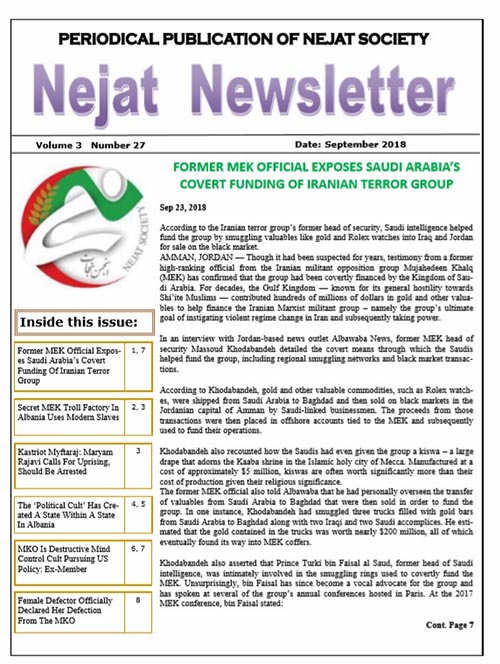
Nejat NewsLetter – No. 56

Inside the Issue:
Nejat NewsLetter


  • Former MEK Official Exposes Saudi Arabia’s Covert Funding Of Iranian Terror Group
  • Secret MEK Troll Factory In Albania Uses Modern Slaves
  • Kastriot Myftaraj: Maryam Rajavi Calls For Uprising, Should Be Arrested
  • The ‘Political Cult’ Has Created A State Within A State In Albania
  • MKO Is Destructive Mind Control Cult Pursuing US Policy: Ex-Member
  • Female Defector Officially Declared Her Defection From The MKO

To download the PDF file click here

October 4, 2018 0 comments
FacebookTwitterPinterestWhatsappTelegramSkypeEmail
Rudy Giuliani
Mujahedin Khalq; A proxy force

Trump War Whore Celebrates Starvation Of Iranian Civilians At MEK Rally

Just when you thought this administration couldn’t get more cartoonishly villainous, Trump lawyer and Simon Bar Sinister stunt double Rudy Giuliani takes to the stage and enthuses about how US sanctions are making Iranian citizens so desperate they are offering to sell their internal organs for $500 in order to stay alive.

“Probably a fortune in Iran today. This is truly pitiful!” he crowed triumphantly to the crowd at the Iran Uprising Summit in New York on Saturday, pleased as punch by the US government’s success in torturing everyday Iranians with starvation.

Giuliani, who is basically what you’d get if necrophilia and racist police shootings had a baby, fumbled his way through a paid speech for the MEK terror cult with all the grace of a drunken creepy uncle MCing his way through a family wedding. In it he not only gloated over the starvation and severe impoverishment of Iranian civilians, but openly proclaimed that regime change was coming to Iran due to the actions of the Trump administration.

“I don’t know when we’re going to overthrow them. It could be in a few days, months, a couple of years, but it’s going to happen. They’re going to be overthrown.” Guiliani said definitively. “The people of Iran have obviously now had enough. The sanctions are working. The currency is going to nothing! They’re where Russia was. They’re where Poland was. We see signs of young men and women saying ‘Give me some food!’ We saw a sign of a man trying to sell his internal organs for five hundred American dollars – probably a fortune in Iran today! This is truly pitiful. These are the kinds of conditions that lead to successful revolution, and God willing, non-violent revolution.”

    At the MEK regime change cult’s Iran Uprising Summit, Trump lawyer Rudy Giuliani proclaims in paid address, “They will be overthrown!” He then celebrates reports of desperate Iranians seeking to sell their organs and begging for food due to US sanctions. pic.twitter.com/AEt6Pl4y5y

— Max Blumenthal (@MaxBlumenthal) September 23, 2018

Truly pitiful, he reckons. That’s like standing on a patient’s oxygen hose at the hospital and then making fun of them for gasping for air. Sanctions are the only legal act of war that deliberately target innocent civilians, and here is Giuliani mocking people for the suffering he is gleefully supporting inflicting.

Corpse bride Nikki Haley was quick to distance the Trump administration from Giuliani’s regime change rhetoric, as was the US State Department in a statement to Reuters, because as we saw them do with Libya and as we’ve seen them attempt with Syria, the US government has ever since the disastrous Iraq invasion had a standing policy of denying that it is pushing for regime change in key strategic regions while doing exactly that. But Giuliani has been repeatedly appearing at these eventsspouting the exact same regime change rhetoric while retaining employment as Trump’s lawyer, and at no time has the president or anyone else in the administration made him stop. The administration can’t actually have that much of a problem with Giuliani’s schtick; if it did Giuliani would either stop or be fired.

Neither has happened. Giuliani keeps getting these lucrative speaking gigs where he champions regime change again and again, which was also done at another such event by murderous psychopath John Bolton not long before he was hired as Trump’s National Security Advisor. Giuliani’s words have the tacit blessing of the Trump administration.

Giuliani was hired to speak alongside Maryam Rajavi, the leader of the Mujahideen e Khalq (MEK), a paramilitary cult that was only recently delisted by Hillary Clinton as a designated terror group at the behest of CIA and FBI insiders and other shadow government stalwarts. The MEK was originally listed as a terrorist group because it has killed Americans and has an extensive history of committing acts of terrorism, and has recently been exposed in operating an extensive social media propaganda campaign to manufacture support for Iranian regime change in the west. Rajavi boasted at the event that her group has organized special “Units of Rebellion” to run riots and interference inside Iran, which was a pretty interesting thing to say on the very same day that there was a terror attack on a military parade in the Iranian city of Ahvaz that slaughtered 24 people and wounded many more.

    At the MEK regime change cult’s Iran Uprising Summit, Trump lawyer Rudy Giuliani proclaims in paid address, “They will be overthrown!” He then celebrates reports of desperate Iranians seeking to sell their organs and begging for food due to US sanctions. pic.twitter.com/AEt6Pl4y5y

— Max Blumenthal (@MaxBlumenthal) September 23, 2018

There was no inference that the MEK was responsible for this particular attack, but it’s kind of fascinating that while Nikki Haley was telling Iran to “look in the mirror” with regard to the attack on Ahvaz because in her view, the attack came from organic civil unrest which is the fault of the Iranian government, Giuliani was celebrating that the sanctions applied by the US were working because they were causing the kind of intense suffering on civilians that leads to civil unrest and a “successful revolution”, while Rajavi was saying that her (exiled) group was planning on riots and provocations to stimulate civil unrest. Not to mention the fact that the coup-staging CIA recently escalated covert operations in that nation.

How exactly do they think this works? You can’t be boasting about your success at provoking civil unrest while pretending you’re just an innocent-but-concerned bystander who had his hands in his pockets the whole time, officer. Not a thing.

They think we’re stupid. They must, or they’d never try to get away with this bullshit. Eyes and ears open, clear-eyed rebels. The veils are being pulled back almost quicker than we can process.

caitlinjohnstone.com , Caitlin Johnstone ,

October 4, 2018 0 comments
FacebookTwitterPinterestWhatsappTelegramSkypeEmail
Iran

Iran wants France talks to clear ‘misunderstanding’ over alleged bomb plot

Tehran called on Tuesday for talks with Paris to clear”misunderstanding”over an alleged bomb plot targeting an exiled opposition group near the French capital.

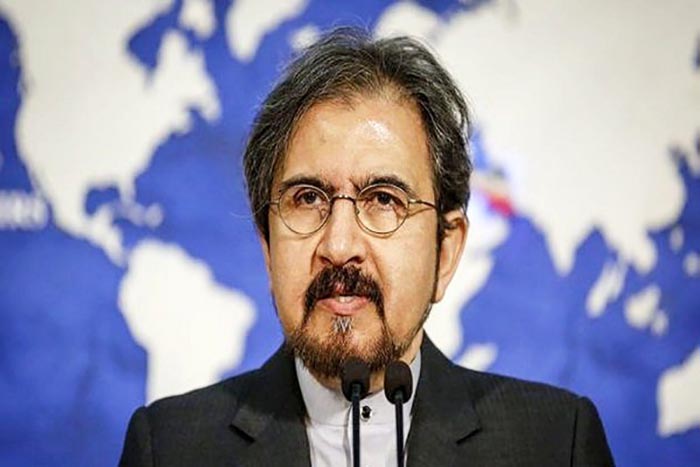
“If there is a misunderstanding… about a thing that does not exist, be it a conspiracy by others or a mistake, we can sit down and talk about it,”Iranian foreign ministry spokesman Bahram Ghasemi told AFP in an interview.

The only way to overcome the issue was through”the art of diplomacy,”he said.”We know of no other way.”

French authorities on Tuesday accused Iran’s intelligence ministry of being behind a foiled plot to bomb a meeting of the People’s Mujahedeen of Iran (MEK), according to a French diplomatic source.

Tehran considers the MEK a”terrorist group”.

France also announced it was freezing the assets of two suspected Iranian intelligence operatives and those belonging to Iran’s ministry of intelligence and security.

One of the operatives is an Iranian diplomat who was arrested in Germany.

“This extremely serious act envisaged on our territory could not go without a response,”France’s interior, foreign and economy ministers said in a rare joint statement.

Ghasemi, however, said that”I vehemently deny”all these accusations”completely and forcefully.”

“When the base issue is wrong and no more than an allegation, basing other hypotheses on such a claim is totally useless and wrong,”he said.

“You cannot accuse the intelligence ministry or anyone else working at it of being involved in an unconfirmed thing.

“Iran can definitely cooperate to fix any misunderstanding between France and Iran, or any other country in the region or Europe,”said Ghasemi.

October 4, 2018 0 comments
FacebookTwitterPinterestWhatsappTelegramSkypeEmail
Mujahedin Khalq; A proxy force

Ahvaz Terrorist Attack Exposes US’s New Chapter of Regime Change Wars

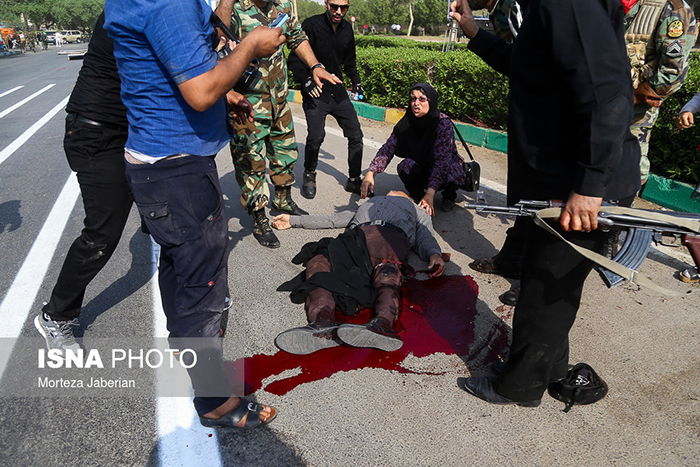
A terrorist attack shook the southwestern city of Ahvaz in the Islamic Republic of Iran on Saturday September 22 morning of during a military parade in commemoration of the anniversary of the war with Saddam Hussein’s regime in the 1980s.

A group of terrorists opened fire at the soldiers in the military parade and the crowd, which included women and children where at least 25 people were killed and 55 others wounded according to IRNA news agency.

According to Tasnim new agency, the terrorist group infiltrated the back position of the military parade and from that position fired shots at the ceremony.

The terrorists could not penetrate the ceremony but fired from a distance, where they initially targeted the memorial platform where high profile attendees were sitting and Islamic Revolutionary Guards Corps, fleeing after they opened fire.

Ali Hussein Zadeh, the assistant of the head of political affairs in Khuzestan province, told Tasnim news agency that four terrorists carried out the attack, adding”the number of martyrs is increasing and the condition of some of the wounded is critical”.

Meanwhile, the Iranian FARS news agency quoted an informed source as saying that two terrorists were killed and another wounded while a fourth was arrested by security forces during the terrorist attack in the city of Ahvaz.

President of the Islamic Republic of Iran, Hassan Rouhani said on Sunday that the terrorists who carried out the Ahvaz terrorist attack on Saturday had received support from neighboring countries in the Persian Gulf, stressing that those involved in the terrorist attack will not escape punishment and that Iran’s retaliation will be crushing.

Rouhani said in a speech on Sunday that he would leave Tehran for New York to participate in the UN General Assembly, saying Iran will not go easy on the Ahvaz’s crime, pointing out that the US administration is behind these young mercenaries. “We know who committed the crime of Ahvaz and who is behind them, and we will respond to the crime in accordance with the laws and interests of the country”, Rouhani reiterated.

As the word governments condemned this act of terror against the Islamic Republic of Iran, the US administration and its regional gulf puppet KSA and UAE kept silent. This muffled stance was in divergence to that of other nations, which offered their sympathies to the victims and condemnation of the attack, with several ambassadors in Tehran writing personal messages, while leaders such as Russian President Vladimir Putin and President Bashar Assad released official statements.

US, MEK and Ahwazia Coordination

The aggressors are a terrorist organization backed by Washington and Tel Aviv and funded by Saudi Arabia under the name of”Ahwazia”, an extremist ethnic terrorist organization that claims to defend the rights of Arab Iranians.  Iranian researcher Dr. Mohamed Sadiq al-Husseini wrote that according to Iranian intelligence sources revealed that the terrorist attack of Ahvaz city was conducted in coordination between the “People’s Mojahedin Organization” of Iran or the “Mojahedin-e Khalq” [MEK] and the”Ahwazia”an Arab-Iranian separatist group with alleged connections to Saudi Arabia, also known as the “Ahvaz National Resistance”.

This link would directly put the US on top of the list of suspects who most probably have incited these terrorist attacks against Iran.

Keeping in mind that that the MEK, an Iranian cult of highly suspicious funding which is beloved by Trump insiders like John Bolton and Rudolph Giuliani for its extremely vocal pro-regime change agenda, was removed from the US State Department’s list of designated terrorist organizations by none other than Hillary Rodham Clinton.  After its extensive lobbying campaign in Washington in 2012, Hillary Clinton de-listed the Iranian dissident MEK, from the State Department’s terror list.

The delisting happened despite NBC News’ report that the MEK has been murdering Iranian nuclear scientists in broad daylight.  The report by Richard Engel and Robert Windrem cited US officials who said MEK members teamed up with “Israelis” to attach small magnetic bombs to the exterior of scientists’ cars before detonating them.  As a result, five nuclear scientists since 2007 have been killed so far. But apparently the State Department did not buy that report, as they told “The Washington Post” in September 2012 that the group has”renounced violence and turned over its weapons to US forces.”

In the current US administration, there are even much more aggressive support for the MEK represented by none other than the warmongering John Bolton. Bolton has also long backed the cult-like terrorist group despite the fact that the MEK has been held responsible for the murder of multiple American military personnel, a kidnapping attempt of a US Ambassador, and other violent attacks in Iran before the 1979 Islamic Revolution.

The MEK was based in Iraq during the regime of Saddam Hussein, who provided arms, financial assistance, and political support.  In 1997, it was among the first groups cited on the US list of foreign terrorist organizations.

However, as it was removed from that list by Hillary Clinton in 2012, Bolton has since spoke at an MEK rally in 2017, for the eighth time, in Paris.  Other speakers at MEK rallies have reportedly been paid tens of thousands of dollars for their appearances.

US President Donald Trump’s rhetoric about supporting the Iranian people has always been void, but promoting someone with Bolton’s views and connections to the highest level of government shows just how devious that rhetoric is. Whenever Bolton talks about supporting “the Iranian opposition,” these cultists are the people he’s talking about.  When he talks about regime change in Iran, he thinks these are the people should take over.

To date, no American MEK booster has risen as high in the government, but now the group will have an admirer advising the controversial US president on a daily basis.

Al-Saud Pay MEK’s Terrorism Bill

According to Dr. Mohamed Sadiq al-Husseini, an intelligence source specialized in Iranian affairs revealed to him the following details concerning the terrorist attack that took place on Saturday morning in Ahvaz:

1) The elements carrying out the armed terrorist attack on the military parade were trained in a Saudi camp southeast of Riyadh specialized for training members of the People’s Mujahideen MEK and other Iranian opposition groups.

2) The training is conducted by Jordanian and Saudi officers under the supervision of US Central Intelligence generals and “Israeli” generals.

3) All camp operations and needs are funded through the Saudi Ministry of Defense.  The funding includes the transfer of Iranian elements from European countries, especially from Albania to the Saudi run camp.

4) CIA and Mossad elements manage operational tasks, such as moving terrorists and weapons into Iran through commercial companies and non-governmental organizations located in Iraq’s Al-Basra city.

5) The CIA and Mossad assets in Al-Basra have nothing to do with training and their responsibilities are limited to logistics.

Recently, Beirut based Al-Manar TV channel revealed reports that training for the elements of the MEK is taking place in Western countries, “Israel” and in special camps inside Saudi Arabia, and terrorist cells are being moved to incite acts of terrorism against Iran through demonstrations and protests funded by intelligence agencies in those western countries.  According to these reports, leaders of MEK have met several times with “Israeli” security officials inside and outside “Israel”.

US officials, including the current national security adviser, have no illusions about the MEK’s disingenuous propaganda lines about seeking democracy or enjoying support inside Iran.  They know very well how despised the MEK is in that country.  Unlike other Iranian opposition groups, however, the MEK can mount military operations.  Its members are experienced in sabotage, assassinations, and terrorism, as well as in guerrilla and conventional warfare.

Hence, they possess qualities that are extremely useful for the US’s strategic objective to cause either regime change (by invasion) or regime collapse (by destabilization).

In other words, for Washington’s anti-Iran neocons, the MEK is not needed to replace the current government and Supreme leader in Iran; it just needs to assist its desired collapse with Saudi funding.  After all the losses incurred by the US foreign policy in the middle east due to incompetent regional allies, the US’s wishful thinking that ensuing chaos would weaken Iran and shift the regional balance of power toward US allies like “Israel” and Saudi Arabia, will only trigger a wave of more losses that will accelerate the demise of the US puppet regimes in the region.

BY Marwa Osman ,Alahednews

Marwa OsmanMarwa Osman

Marwa Osman is a PhD Candidate located in Beirut, Lebanon. University Lecturer at the Lebanese International University and Maaref University and former host of the political show “The Middle East Stream” broadcasted on Al-Etejah English Channel. Member of the Blue Peace Media Network and political commentator on issues of the Middle East on several international and regional media outlets including RT, Press TV, Al Manar and Al Alam. Writer in several news websites including Khamenei.ir, Modern Diplmacy, Shafaqna, Italian Insider.

October 3, 2018 0 comments
FacebookTwitterPinterestWhatsappTelegramSkypeEmail
Mujahedin Khalq; A proxy force

Ofcom investigates TV network over interview praising attack in Iran

Saudi-linked Iran International TV gave airtime to supporter of assault that killed 24 at parade

Ofcom is investigating a UK-based Saudi-linked television network after it gave airtime to the spokesman for an extremist separatist group who praised last month’s terrorist attack in the Iranian city of Ahvaz, which killed at least 24 people, including children.

The investigation by the media watchdog highlights the growing influence of Saudi-linked stations operating from London, which is increasingly becoming a key media battle ground for the proxy wars in the Middle East.

Iran International TV, based in Chiswick, west London, was the first Farsi language media organisation to interview Yacoub Hor al-Tostari, a spokesman for the Arab Struggle Movement for the Liberation of

Tostari said the National Resistance of Ahvaz, an umbrella group linked to the Struggle Movement, had carried out the attack, and praised the killings, later condemned by the UN security council as a “heinous and cowardly terrorist attack”, which he said had hit “legitimate” military targets.

“Today’s operation was carried out by the National Resistance of Ahvaz against legitimate targets, which are Revolutionary Guards, and military members of the Islamic Republic,” he said.

Told that civilians were among the dead, he said: “What was targeted was the viewing platform [of the military parade] where officials stood. Ordinary people were not on that platform.” He added: “I insist that armed resistance is part of our resistance.”

Tostari’s group later backpedalled on the claim. The Ahvaz attack has also been claimed by Isis.

Ofcom confirmed it was investigating the interview. “We are assessing this news programme as a priority against our broadcasting rules,” a spokesperson said. It has not opened a formal investigation.

Iran’s ambassador to the UK, Hamid Baeidinejad, tweeted that the embassy had filed a complaint.

Iran International is one of an increasing number of London-based television stations backed by Middle Eastern interests that are trying to influence audiences thousands of miles away. Questions have been raised over the network’s funding and its links to Saudi Arabia, Tehran’s arch-enemy. Many Iranians compared the interview to giving airtime to Isis after a terrorist attack in the west.

Rob Beynon, the acting head of the channel, stood by the decision to broadcast the interview and said it had referred to the Ahvaz shooting as a “terrorist attack”.

“We and the BBC [Persian] and Radio Farda interviewed the same person during that day and we’ve already said that it was done because we wanted to find out the background to it,” he told the Guardian. “There isn’t a ban on interviewing that person as far as I am aware.”

He said his network would comply with Ofcom but said he did not think the interview with Tostari had broken the rules since he said the spokesman did not incite violence.

“[Tostari] explained his reasons as he saw them and he was challenged by the presenter,” he said. “It doesn’t mean that we agree with him.”

Iran International was launched in May 2017 shortly before presidential elections in Iran. Two other Farsi-language networks, BBC Persian and Manoto TV, are also based in London. Iran International pays generous salaries – one employee said pay was double that offered by competitors – and its 100-strong staff works out of a modern newsroom and studio.

Iran International’s licence is held by its parent entity, a company called Global Media Circulating, according to Ofcom’s records. Adel Al-Abdulkarim, one of the company’s two directors, is also a shareholder, and a Saudi national with a history of working with Saudi Arabian media moguls such as Abdulrahman al-Rashed, the former general manager of the Saudi-owned Al Arabiya, and formerly editor-in-chief of newspaper Alsharq Alwsat.

A source who has worked with the Saudi crown prince, Mohammed bin Salman, said Iran International’s money came from the Saudi royal court, estimated to be about $250m (£192m).

“The money is coming from Saudi Arabia, it is from the royal court,” the source said, questioning whether private investors would risk that amount of money with such a small chance of return.

Beynon did not answer questions on the channel’s funding. He said the day-to-day editorial and technical operations of Iran International were managed by DMA Media Ltd, which is a UK news company owned by private UK shareholders. The Guardian has asked Beynon to explain the precise relationship between DMA Media Ltd and Global Media Circulating.

He added: “Iran International can be judged by its output and the editorial policy implicit in that. It is not reflective of the views of any government and aims to provide news and views of interest to all Farsi speakers.”

This is not the first time Iran International has been heavily criticised. The television previously gave extensive live coverage to a rally by the Mujahedin-e-Khalq (MeK), a cult-like organisation that espouses regime change and has links to Saudi Arabia.

The controversy over the coverage of the MeK rally led to the channel ceasing its cooperation with Mehdi Jami, a respected journalist who spoke out on internal discontent over the decision. At least one journalist left the network after the coverage of the Ahvaz attack.

Shia-majority Iran and Sunni monarchy Saudi Arabia are engaged in proxy conflicts across the Middle East, including in Syria and Yemen. Iran has its own Arabic-language television, Al Alam, which broadcast its own version of events.

It is irked by London becoming a hub for exiled channels it views as subversive. Manoto TV is perceived to be close to monarchists, focusing extensively on pre-revolutionary Iran and depicting the era as glamorous. It lost £33m in 2016 and 2017, according to its latest accounts. Manoto has not disclosed its sources of funding since 2012 and did not respond to a request to explain these.

In 2012, Iran’s English-language state-run Press TV was forced off air in the UK after Ofcom revoked its licence for broadcasting forced confessions of a journalist imprisoned in Iran.

The author of this article has previously appeared on media review shows on Iran International TV as a guest, for which he received usual guest fees

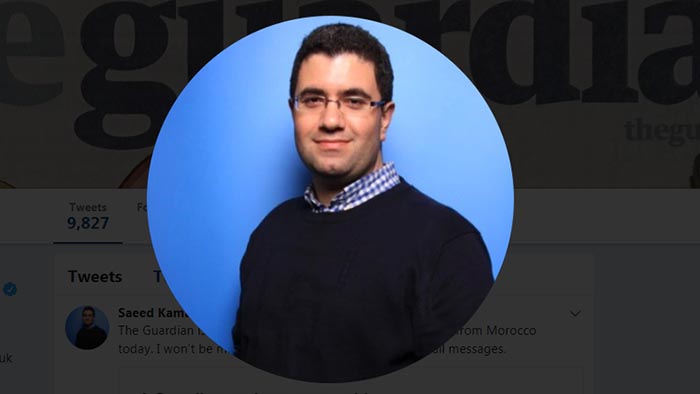
Saeed Kamali Dehghan  , The Guardian

October 3, 2018 0 comments
FacebookTwitterPinterestWhatsappTelegramSkypeEmail
Mujahedin Khalq Organization as a terrorist group

Caleb Maupin confronts MEK Anti-Iran Terrorists

The prominent journalist; Caleb Maupin who has several pieces on the Mujahedin-e Khalq interviews an MEK member during the group’s rally. Maupin published the video on his YouTube page:

https://dlb.nejatngo.org/Media/Report/Caleb_Maupin_MEK_1.mp4

About the MEK history he writes:

“During the Iraq-Iran War, the group became very friendly with Saddam Hussein. With money pouring in from the Iraqi regime, the group formed an armed outfit called the “Iranian National Liberation Army.” They went through Iran committing war crimes, hoping that they could secure victory for the US-backed Iraqi invaders that used chemical and biological weapons against Iranian civilians.

In one particularly brutal war atrocity, the MEK group killed nearly all the residents of a village called Islamabad-e Gharb. The group staged this cowardly attack on July 26th, 1988 – six days after Imam Khomeini had announced he was accepting a ceasefire with Iraq.

The number of innocent civilians slaughtered by the MEK or its various front groups such as the Iranian National Council of Resistance, is likely to be in the tens of thousands, if you include the number of civilians killed during the bombing campaigns, the number of people MEK linked groups slaughtered during the Iraq-Iran War, and the number of victims of MEK terrorism against Iran throughout the 1990s and up to today. Human Rights Watch has issued condemnations of the group for routinely torturing those it holds captive.

The internal workings of the group are equally frightening. A Human Rights Watch report from 2005 describes how, within its various bases and camps, the group subjects members to summary execution for violations of its bizarre regulations and practices…”

Caleb Maupin is a journalist, political analyst and activist who resides in New York City focusing his coverage on US foreign policy and the global system of monopoly capitalism and imperialism.

He studied political science at Baldwin-Wallace College.

He has appeared on Russia Today, PressTV, Telesur, and CNN. He has reported from across the United States, as well as from Iran, the Gulf of Aden and Venezuela.

October 2, 2018 0 comments
FacebookTwitterPinterestWhatsappTelegramSkypeEmail
weekly digest
Iran Interlink Weekly Digest

Iran Interlink Weekly Digest – 243

++ There has been a great deal of commentary about the terrorist attack in Ahwaz pointing out that, apart from the Saudis and Emirates, everyone – even Americans – condemned it. The only Iranians who didn’t condemn the terrorist act were MEK and Iranian ISIS, who claimed to have carried it out.

++ Some commentators have laughed at Maryam Rajavi’s Skype chat with Rudi Giuliani in New York. They say that as much as Giuliani says Trump is going to help their agenda, even if they kill themselves to work for it he can’t even get a visa for her let alone anything else. Referencing Giuliani’s affair, taking Maria Rosa Ryan to Paris, they joke about Maryam: ‘it’s a sad time for them now their love affair is conducted over Skype’.

++ After the disaster of people laughing at Trump’s UN speech, MEK have been on overdrive to support Trump and attack everyone else – Europe, China, etc. Farsi comment is that at least when Trump is attacked he takes it on the chin. MEK just get hysterical.

++ The Farsi speaking representative of the US State Department speaking with Deutsche Welle laid out what the US wants. She said that at the Iran desk in the State Department we have no relation with MEK and we have no delusions, we know that MEK has no support at all in Iran. Asked about Giuliani’s support of MEK, she said ‘yes, he spoke on his own behalf for money. The Stated Department has no connection to that.

In English:

++ Gazeta Impakt, MEK brings American bomber L. Todd Wood to Albania to show that it is not a terrorist organization but is a baker’s organization. “As a man trusted by MEK, L. Todd Wood in an internet video he produced, calls Manzas camp a residential complex – like Sunny Hill or the Malaysian palaces in Tirana. Unlike other journalists who were beaten, expelled, treated as Iranian agents and attacked by Argon’s private armed police, L. Todd Wood gives the impression that the terrorist camp of Manzas is a five-star resort where some angels sleep and not the devils of jihad. The idea is given that the camp is open and anyone can enter there.” MEK showed members working in a bakery, completely forgetting they do not have work permits in Albania.

++ Massoud and Anne Khodabandeh, Balkans Post, Secret MEK troll factory in Albania uses modern slaves. “But, back in Albania if the Al Jazeera interviewer had asked ‘how much money does an MEK member make for spending all day, every day as an internet troll?’ The answer would be “nothing”. MEK does not pay its members anything. It never has and never will. This is because it operates as a cult to which members belong rather than are employed by …”

++ Whitney Webb, Mint Press, Former MEK Official Exposes Saudi Arabia’s Covert Funding of Iranian Terror Group. “In an interview with Jordan-based news outlet Albawaba News, former MEK head of security Massoud Khodabandeh detailed the covert means through which the Saudis helped fund the group, including regional smuggling networks and black market transactions. According to Khodabandeh, gold and other valuable commodities, such as Rolex watches, were shipped from Saudi Arabia …”

++ Hossein Jelveh, Press TV, Traitors to the homeland. “Khodabandeh, the former MKO member, told Al Jazeera that the group had ‘changed from a terrorist military organisation to an intelligence-based propaganda machine’. He is wrong. MKO continues to be the terrorist organization that it has always been. The only difference now is that, facing Iranian power like never before, the group and its sponsors can only attempt online subversion against Iran. Like Saddam Hussein of Iraq, MKO and the House of Saud will have their expiration dates for the US. And until that day arrives, they can wiggle only as much.”

++ Dr. Kevin Barrett, Press TV, Why Western media silent on Ahvaz terrorist attack. “US scholar and political analyst Kevin Barrett: ‘Innocent people being killed by terrorists is front page news in the West; but, in the case of terrorism against Iran, suddenly, everything changes and the media tends to ignore and downplay it’, Barrett told Press TV in an interview on Saturday. Barrett sees the attack as another terrorist operation launched by the United States and its regional allies… Barrett concluded that US-sponsored terrorist attacks were going to be counterproductive in the long run because ‘terrorism doesn’t work … Iranian people are not going to stand it. People like Bolton and Pompeo may have failed to learn that lesson and they will be learning it in the future’.”

++ Press TV, US envoy to UN denies Giuliani’s claim that Trump wants ‘revolution’ in Iran. US Ambassador to the United Nations Nikki Haley says Washington is not seeking to overthrow Iran’s government, denying claims by President Donald Trump’s personal lawyer Rudy Giuliani that the US favored a ‘revolution’ in Iran. ‘The United States is not looking to do a regime change in Iran’, Haley told CNN on Sunday… Giuliani, Trump’s attorney and former mayor of New York City, told an anti-Iran event on Saturday that Trump’s policy of economic pressure and sanctions against Tehran could spur on a regime change. ‘I don’t know when we’re going to overthrow them’, Giuliani said during the so-called Iran Uprising Summit at a hotel in Times Square. ‘It could be in a few days, months, a couple of years. But it’s going to happen’. Giuliani’s remarks went against the Trump administration’s declared policy of not seeking a change of government in Iran despite imposing strong economic sanctions against the country.”

++ Dan Friedman, Mother Jones, Giuliani Has Been Told to Stop Advocating for Foreign Interests but Just Did It Anyway. “Earlier this month, seven Senate Democrats asked the Justice Department to investigate whether President Trump’s lawyer, Rudolph Giuliani, is breaking the law by lobbying for foreign interests without registering as a foreign agent. One of Giuliani’s foreign clients that the senators cited is Mujahedin-e-Khalq, or MEK, an Iranian opposition group that the State Department once included on a list of organizations that support terrorism.”

++ Caitlin Johnstone, Iranian.com, Trump War Whore Celebrates Starvation Of Iranian Civilians At MEK Rally. “Just when you thought this administration couldn’t get more cartoonishly villainous, Trump lawyer and Simon Bar Sinister stunt double Rudy Giuliani takes to the stage and enthuses about how US sanctions are making Iranian citizens so desperate they are offering to sell their internal organs for $500 in order to stay alive. ‘Probably a fortune in Iran today. This is truly pitiful!’ he crowed triumphantly to the crowd at the Iran Uprising Summit in New York on Saturday, pleased as punch by the US government’s success in torturing everyday Iranians with starvation. Giuliani, who is basically what you’d get if necrophilia and racist police shootings had a baby, fumbled his way through a paid speech for the MEK terror cult with all the grace of a drunken creepy uncle MCing his way through a family wedding.”

++ Catherine Shakdam, Citizen Truth, The Other Face of Terror: Why is Washington Entertaining the MKO/MEK as a Political Alternative. “In her documentary for Channel 4 (UK) [Lindsey] Hilsum produces documents enouncing in no uncertain terms how dangerous Albania believes the MKO/MEK to be – highlighting the length foreign governments will go to secure an alliance with the U.S. – SECRET DOCUMENT OBTAINED BY CHANNEL 4 JOURNALIST LINDSAY HILSUM EXPOSING THE THREAT POSED BY THE MKO/MEK. With so many dangerous unknowns revolving around the MKO/MEK … notwithstanding the group’s proclivity to shed blood – including that of its members should they wish to leave, Washington’s wholehearted support boggles the mind.”

++ Gazeta Impakt, Kastriot Myftaraj: Maryam Rajavi calls for uprising, should be arrested. “In the latest issue of Moscow Speaking in Ora News, Kastriot Myftaraj commented on the recent threat of war that Iranian Mojahedin dictator Maryam Rajavi has made against Iran.

Myftaraj comments on the recent call by Maryam Rajavi for an uprising in Iran that was made from the Mojahedin camp in Manzas, citing the Criminal Code of the Republic of Albania to denounce Rajavi’s terrorist demand. Article 221 of the Criminal Code of Albania imposes imprisonment for 15 to 25 years, while the head of the insurgency can be sentenced to life imprisonment for such demands… Myftaraj notes that calls by Maryam Rajavi and the Iranian jihadists in Manzas for war against Iran provokes the latter to attack Albania with its missile system.”

++ Borzou Dargahi, The Independent, The ‘political cult’ opposing the Iranian regime which has created a state within a state in Albania. “’We are supposed to be living in a free and democratic country. But they have built a state within a state that implements its own laws’, says Olsi Yazici, an Albanian writer who is part of the legal team attempting to find out more about the group. ‘They are behaving in Albania like a mafia – breaking laws, blackmailing, paying people off, beating people, threatening defectors, accusing anyone who questions them of being an Iranian agent and controlling their members in the camp through Stalinist totalitarian methods. And at the end, they claim to be democrats who will save Iran’.”

++ Press TV, MKO is destructive mind control cult pursuing US policy: Ex-member. Ebrahim Khodabandeh: “Actually the policy of the White House along with Saudis and Israel has always been regime change in Iran, and they think they can do this by imposing severe sanctions on the Iranians… They think by making the people of Iran suffer they can reach their goal. This inhumane policy cannot be expressed officially, of course. This must be asked by a so-called Iranian group first. The MEK are always ready to betray their country if they think this would reach them to their goal and to power, as they cooperated with the assaulting enemy, that is Saddam Hussein.”

 September 28, 2018

October 1, 2018 0 comments
FacebookTwitterPinterestWhatsappTelegramSkypeEmail
Iran

Iran’s best diplomat takes on US power

Fate has given Foreign Minister Zarif the daunting task of foiling a global campaign aimed at bringing his country to its knees and forcing it to submit to American power.

AP Files/Globe Staff
Donald Trump and Mohammad Javad Zarif.

Hundreds of diplomats from around the world converged on New York this past week for the opening of the United Nations General Assembly. One had a tougher job than all the others — the world’s most challenging diplomatic assignment. Foreign Minister Mohammad Javad Zarif of Iran is today’s David facing the American Goliath. In this confrontation, as in the Bible, the odds favor Goliath.

American leaders are threatening Iran in terms more vituperative than any the United States has ever used against a sovereign nation. To accompany their threats, they have embarked on the harshest campaign of economic sanctions in modern history. Their demonization of Iran wildly exceeds the bounds of reason and geopolitical reality. Fate has given Foreign Minister Zarif the daunting task of foiling a global campaign aimed at bringing his country to its knees and forcing it to submit to American power.

Many senior officials in Washington do not see Iran as a geographical or political entity. To them it is our era’s embodiment of the violent barbarism that has threatened civilization ever since the Visigoths sacked Rome. For much of the last century, we called that nihilistic force “communism.” Then it became “terrorism.” Now it is “Iran.” By portraying Iran as an irredeemable font of evil, we justify the most monstrously misconceived assault on a foreign nation since our invasion of Iraq fifteen years ago.

American sanctions are intended to starve the Iranian economy by forcing every business in the world to stop trading with Iran. Any that refuse, we warn, will be forbidden to operate in the United States. We are also insisting that Iran dismantle the missile defenses that are its main deterrent against attack; embrace Israel, its most persistent enemy; stop aiding governments that request its help, like those of Syria and Iraq; end its support for Palestinian rights; and cut off payments to militias in other countries that are fighting ISIS and al-Qaeda.

In short, we demand unconditional surrender. Zarif’s job is to turn back this tsunami. He is as well prepared for the job as any Iranian.

In vowing to go alone, Donald Trump is turning our country against an agreement it negotiated.

Zarif left Iran at 17 to attend prep school in California. He went on to earn degrees in international relations at San Francisco State University and the University of Denver. Later he became Iran’s ambassador to the United Nations, and in 2013 was named foreign minister. During the six-nation talks that produced the 2015 accord restricting Iran’s nuclear program, he led Iran’s negotiating team. Not even these years of experience, however, prepared him for what he now faces. Nothing could have. No diplomat in modern history has had to deal with a multi-faceted challenge like this one. If he fails, his country, which has existed for 10 times longer than the United States, could collapse.

When President Trump addressed the UN on Tuesday, he denounced the country he called “the world’s leading sponsor of terrorism.” He asserted that its leaders have “embezzled billions of dollars from the treasury,” and that they use their power to “spread mayhem across the Middle East” and “fund havoc and slaughter in Yemen and Syria.” All of that is true — if the country in question is Saudi Arabia.

Every serious study of global terrorism in the 21st century concludes that most of the money supporting al-Qaeda, the Taliban, ISIS, and like-minded gangs comes from Saudi Arabia. It is no accident that Osama bin Laden and most of his 9/11 hijackers were Saudi. No other country, not even Pakistan, has sponsored terror as relentlessly as Saudi Arabia.

The only way to portray Iran as a terrorist state is to define terror as opposing American power. That is Iran’s true sin. Trump’s national security adviser, John Bolton, made this clear when he warned Iran: “If you cross us, our allies or our partners; if you harm our citizens; if you continue to lie, cheat, and deceive, yes, there will indeed be hell to pay.”

That hell would include the imposition of a deranged totalitarian cult, the Mojahedin-e Khalq, as Iran’s next government. It is an exiled group that’s widely hated in Iran — not surprisingly, since it has assassinated Iranian leaders and sided with Iraq in the Iran-Iraq War of the 1980s. Among this cult’s most vocal supporters is Trump’s lawyer, Rudolph Giuliani. In a speech to one of its support groups in New York last week, Giuliani declared that the overthrow of Iran’s government “could be in a few days, months, a couple of years — but it’s going to happen.”

Zarif’s job is to persuade the world to rebel against Trump’s dictates. He has already had some success, notably in India, China, Russia, and Turkey. The most difficult diplomatic nut to crack will be the European Union. Zarif made progress this week. After he met with EU foreign policy chief Federica Mogherini, she announced that Europe would establish a “legal entity” allowing businesses to sidestep sanctions on Iran. Secretary of State Mike Pompeo said he was “disturbed and indeed deeply disappointed” by the move, but its scope is still unclear.

A European break with the United States on an issue so dear to Washington’s heart would be a spectacular breach of the trans-Atlantic alliance that has undergirded American foreign policy for 70 years. Zarif must convince Europeans that making this break would be in their long-term interest. That may be too much to expect even from such an evidently gifted diplomat.

By Stephen Kinzer, Bostonglobe

October 1, 2018 0 comments
FacebookTwitterPinterestWhatsappTelegramSkypeEmail
USA double standards on terrorists
Mujahedin Khalq; A proxy force

US-Delisted MEK Terrorists Still Openly Committed to Violence

In 2012, the US State Department would delist anti-Iranian terrorist group – Mujahedin-e Khalq (MEK) – from its Foreign Terrorist Organization (FTO) list. Yet years later, MEK has demonstrated an eager desire to carry out political violence on a scale that eclipses the previous atrocities that had it designated a terrorist organization in the first place.

In the US State Department’s official statement published in September 2012, the rationale for delisting MEK would be as follows (emphasis added):

    With today’s actions, the Department does not overlook or forget the MEK’s past acts of terrorism, including its involvement in the killing of U.S. citizens in Iran in the 1970s and an attack on U.S. soil in 1992. The Department also has serious concerns about the MEK as an organization, particularly with regard to allegations of abuse committed against its own members.

The Secretary’s decision today took into account the MEK’s public renunciation of violence, the absence of confirmed acts of terrorism by the MEK for more than a decade, and their cooperation in the peaceful closure of Camp Ashraf, their historic paramilitary base.

Yet US policy before the State Department’s delisting, and events ever since, have proven this rationale for removing MEK as an FTO to be an intentional fabrication – that MEK was and still is committed to political violence against the Iranian people, and envisions a Libya-Syrian-style conflict to likewise divide and destroy the Iranian nation.

However, facts regarding the true nature of MEK is not derived from Iranian state media, or accusations made by MEK’s opponents in Tehran, but by MEK’s own US sponsors and even MEK’s senior leadership itself.

“Undeniably” MEK “Conducted Terrorist Attacks”

By the admissions of the United States and the United Kingdom, MEK is undeniably a terrorist organization guilty of self-admitted acts of terrorism. The UK House of Commons in a briefing paper titled, “The People’s Mujahiddeen of Iran (PMOI),” it  cites the UK Foreign Office which states explicitly that:

    The Mojahedin-e Khalq (MeK) is proscribed in the UK under the Terrorism Act 2000. It has a long history of involvement in terrorism in Iran and elsewhere and is, by its own admission, responsible for violent attacks that have resulted in many deaths.

The briefing paper makes mention of “assiduous” lobbying efforts by MEK to have itself removed from terrorist lists around the globe.

A 2012 Guardian article titled, “MEK decision: multimillion-dollar campaign led to removal from terror list,” would extensively detail the large number of prominent US politicians approached and paid by MEK as part of this lobbying effort.

Yet there is more behind MEK’s delisting than mere lobbying. As early as 2009, US policymakers saw MEK as one of many minority opposition and ethnic groups that could be used by the US as part of a wider agenda toward regime change in Iran.

The Brookings Institution in a 2009 policy paper titled, “Which Path to Persia? Options for a New American Strategy Toward Iran” (PDF), under a chapter titled, “Inspiring an Insurgency: Supporting Iranian Minority And Opposition Groups,” would openly admit (emphasis added):

    Perhaps the most prominent (and certainly the most controversial) opposition group that has attracted attention as a potential U.S.  proxy  is  the  NCRI  (National  Council of Resistance of  Iran),  the  political  movement  established  by  the  MeK  (Mujahedin-e  Khalq). Critics believe the group to be undemocratic and unpopular, and indeed anti-American.

Brookings would concede to MEK’s terrorist background, admitting (emphasis added):

    Undeniably, the group has conducted terrorist attacks—often excused by the MeK’s advocates because they are directed against the Iranian government. For example, in 1981, the group bombed the headquarters of the Islamic Republic Party, which was then the clerical leadership’s main  political organization, killing an estimated 70 senior officials. More recently, the group has claimed  credit for over a dozen mortar attacks, assassinations, and other assaults on  Iranian civilian and  military targets between 1998 and 2001.

Brookings makes mention of MEK’s attacks on US servicemen and American civilian contractors which earned it its place on the US FTO, noting:

    In the 1970s, the group killed three U.S. officers and three civilian contractors in Iran.

And despite MEK’s current depiction as a popular resistance movement in Iran, Brookings would also admit (emphasis added):

    The group itself also appears to be undemocratic and enjoys little popularity in Iran itself. It has no  political base in the country, although it appears to have an operational presence. In particular, its  active participation on Saddam Husayn’s side during the bitter Iran-Iraq War made the group widely  loathed. In addition, many aspects of the group are cultish, and its leaders, Massoud and Maryam Rajavi, are revered to the point of obsession.

Brookings would note that despite the obvious reality of MEK, the US could indeed use the terrorist organization as a proxy against Iran, but notes that:

    …at the very least, to work more closely with the  group (at least in an overt manner), Washington would need to remove it from the list of foreign  terrorist organizations.

And from 2009 onward, that is precisely what was done. It is unlikely that the MEK alone facilitated the rehabilitation of its image or exclusively sought its removal from US-European terrorist organization lists – considering the central role MEK terrorists played in US regime change plans versus Iran.

While MEK propaganda insists that its inclusion on terrorist organization lists around the globe was the result of a global effort to “curry favor with Iran’s clerical regime,” it is clear that the terrorist organization earned its way onto these lists, and then lobbied and cheated its way off of them.

The MEK is Still Committed to Violence Today

While Iranians mourned in the wake of the Ahvaz attack, MEK was holding a rally in New York City attended by prominent US politicians including US President Donald Trump’s lawyer Rudolph Giuliani and former US National Security Adviser under the Obama administration, James Jones.

During the “2018 Iran Uprising Summit” Giuliani would vow the overthrow of the Iranian government.

MEK leader Maryam Rajavi would broadcast a message now posted on MEK websites. In her message she would discuss MEK’s role in fomenting ongoing violence inside of Iran.She would admit:

    Today, the ruling mullahs’ fear is amplified by the role of the Mujahedin-e Khalq (MEK) and resistance units in leading and continuing the uprisings. Regime analysts say: “The definitive element in relation to the December 2017 riots is the organization of rioters. So-called Units of Rebellion have been created, which have both the ability to increase their forces and the potential to replace leaders on the spot.”

The roadmap for freedom reveals itself in these very uprisings, in ceaseless protests, and in the struggle of the Resistance Units.

Riots by definition entail violence. The riots taking place across Iran beginning in late 2017 and continuing sporadically since – of which Rajavi and her MEK take credit for organizing – have left dozens dead including police.

One police officer was shot dead just before New Year’s, and another three were killed in late February 2018 during such riots.

In the region of Ahvaz specifically, MEK social media accounts have been taking credit for and promoting ongoing unrest there. Ahvaz was more recently the scene of a terrorist attack in which gunmen targeted a parade leaving dozens dead and scores more injured.

Rajavi and MEK’s ultimate goal is the overthrow of the Iranian government. As Brookings admits in its 2009 paper, the Iranian government will not cede power to US-orchestrated regime change without a fight – and MEK was recruited as a US proxy specifically because of its capacity for violence.Brookings would note:

    Despite its limited popularity (but perhaps because of its successful use of terrorism), the Iranian regime is exceptionally sensitive to the MEK and is vigilant in guarding against it.

It was for this reason that Brookings singled them out as a potential proxy in 2009 and recommended their delisting by the US State Department so the US could provide more open support for the terrorist organization.

It is clear that Rajavi’s recent admissions to being behind political violence inside Iran contravenes the US State Department’s rationale for deslisting MEK on grounds that the group had made a “public renunciation of violence.”

MEK is not only refusing to renounce violence, MEK’s most senior leader has just publicly and unambiguously declared MEK’s policy is to openly wield violence inside Iran toward destabilizing and overthrowing the government.From the United States’ ignoring of its own anti-terrorism laws – aiding and abetting MEK while still on the US State Department’s Foreign Terrorist Organizations list – to the US now portraying MEK as a “reformed” “resistance” organization even as its leader takes credit for ongoing political violence inside Iran, it is clear that once again the US finds itself a willing state sponsor of terrorism.It was as early as 2007 that Seymour Hersh in his New Yorker article, “The Redirection Is the Administration’s new policy benefitting our enemies in the war on terrorism?” would warn:

    To undermine Iran, which is predominantly Shiite, the Bush Administration has decided, in effect, to reconfigure its priorities in the Middle East. In Lebanon, the Administration has coöperated with Saudi Arabia’s government, which is Sunni, in clandestine operations that are intended to weaken Hezbollah, the Shiite organization that is backed by Iran. The U.S. has also taken part in clandestine operations aimed at Iran and its ally Syria. A by-product of these activities has been the bolstering of Sunni extremist groups that espouse a militant vision of Islam and are hostile to America and sympathetic to Al Qaeda.

It is clear in retrospect that the rise of the self-proclaimed “Islamic State” (ISIS), Al Qaeda, Al Nusra, and other extremist fronts in Syria were a result of this US policy. It is also clear that there are many other extremist groups the US has knowingly whitewashed politically and is covertly supporting in terrorism aimed directly at Iran itself.

It is just a matter of time before the same denials and cover-ups used to depict Syrian and Libyan terrorists as “freedom fighting rebels” are reused in regards to US-backed violence aimed at Iran. Hopefully, it will not take nearly as long for the rest of the world to see through this game and condemn groups like MEK as the terrorists they always have been, and continue to be today.

Also in retrospect, it is clear how US-engineered conflict and regime change has impacted the Middle Eastern region and the world as a whole – one can only imagine the further impact a successful repeat of this violence will have if visited upon Iran directly.

By Tony Cartalucci, Bangkok-based geopolitical researcher and writer, especially for the online magazine“New Eastern Outlook”.

October 1, 2018 0 comments
FacebookTwitterPinterestWhatsappTelegramSkypeEmail
Newer Posts
Older Posts

Recent Posts

  • How Did Maryam Rajavi Become All-Powerful in the MEK?

    September 27, 2026
  • Yazdan Teimorian’s Family:  We Are so Heart-Broken!

    September 23, 2026
  • Blackman’s relationship with the MEK should be investigated

    September 19, 2026
  • Democracy Cannot Be Built with Fake Voices

    September 14, 2026
  • Anthropic Disrupted a MEK/NCRI-Aligned Influence Operation That Used AI

    September 12, 2026
  • Facebook
  • Twitter
  • Instagram
  • Youtube

© 2003 - 2025 NEJAT Society . All Rights Reserved. NejatNGO.org


Back To Top
Nejat Society
  • Home
  • Articles
  • Media
    • Cartoons
    • NewsPics
    • Photo Gallery
    • Videos
  • Publications
    • Books
    • Nejat NewsLetter
    • Pars Brief
  • About Us
  • Contact us
  • Editions
    • عربي
    • فارسی
    • Shqip