Nejat Society
  • Home
  • Articles
  • Media
    • Cartoons
    • NewsPics
    • Photo Gallery
    • Videos
  • Publications
    • Books
    • Nejat NewsLetter
    • Pars Brief
  • About Us
  • Contact us
  • Editions
    • عربي
    • فارسی
    • Shqip
Nejat Society
Nejat Society
  • Home
  • Articles
  • Media
    • Cartoons
    • NewsPics
    • Photo Gallery
    • Videos
  • Publications
    • Books
    • Nejat NewsLetter
    • Pars Brief
  • About Us
  • Contact us
  • Editions
    • عربي
    • فارسی
    • Shqip
© 2003 - 2024 NEJAT Society. nejatngo.org
Mujahedin Khalq as an Opposition Group

Nuclear Deal: Is The MKO Playing Into Anti-Iranian Sentiments?

If Iran might not appeal to all political palates, Tehran has already proven to be a truthful and committed actor, writes Catherine Shakdam.

Speaking at the Ronald Reagan Library in July, U.S. Secretary of State Mike Pompeo delivered a scathing critique of Iran and its policies – a knee-jerk reaction, one could argue, to Washington’s debacle in both Iraq and Syria.

If America’s distaste for the Islamic Republic has always run deep, Washington’s grandstanding on national security and the need to ‘offer’ Iranians the freedom they allegedly so desperately crave should not be divorced from the recent losses the United States incurred in the Middle East, both politically and militarily.

“We are asking every nation who is sick and tired of the Islamic Republic’s destructive behavior to join our pressure campaign,” Pompeo said. “This especially goes for our allies in the Middle East and Europe, people who have themselves been terrorized by violent regime activity for decades.”

Pompeo’s words ring a little hollow in the light of the United States’ military track record. However justified and necessary the United States may have framed its propensity to declare war on those it sees as a threat – Afghanistan, Somalia, Yemen, Pakistan, Iraq, Libya, Syria –the United States is nevertheless directly responsible for a great deal of abuses and human suffering.

The United States engaged in 46 military interventions from 1948–1991. From 1992–2017, that number increased fourfold to 188.

The United States’ national identity remains rooted in military interventionism – the expression of a political will which seeks to impose a particular reality over the rest of the world. A common reading of recent increased U.S. military spending, along with its accelerated deployment of armed forces abroad, is that the United States is an aggressive power, committed to maintaining the post–Cold War status quo.

Military Spending

In March 2018, President Donald Trump approved the largest military budget in U.S. history: US$700 billion.

If undoubtedly many countries have been terrorised and bullied by powers greater than their own over the decades, the United States almost systematically had a hand in it – more often than not contravening international law.

Human rights law prohibits the use of torture and inhuman or degrading treatment or punishment. This not only includes prohibiting a state from itself torturing or ill-treating a person, it includes a prohibition on ‘outsourcing’ torture.

‘Extraordinary rendition’ refers to the deliberate apprehension and transfer of detainees to foreign countries for interrogation, outside of the law, where there is a risk that the person might be tortured or subjected to other ill-treatment.

Regardless of what anyone or any one nation may feel about Iran; its policies; system of governance; religious orientation; political standing within the Greater Middle Eastern region, or national ambitions, one can neither reject nor deny Iran’s commitment to its legal obligations – both in regards to the nuclear deal and its military intervention in Iraq and Syria.

Iran never broke the law; it acted in accordance with international treaties within the parameters of international law – a commitment on which the United States has made a point of defaulting.

The United Nations International Covenant on Civil and Political Rights (ICCPR) provides another explicit prohibition against torture and cruel, inhuman and degrading treatment. Article 7 states: “No one shall be subjected to torture or to cruel, inhuman or degrading treatment or punishment. In particular, no one shall be subjected without his free consent to medical or scientific experimentation.”

Washington never burdened itself with such restrictions. Instead, it chose to enact exceptionalism in the name of the freedom it posits to embody, and promises to bring nations – against their will, if need be.

The practice of extraordinary rendition is an affront to the rule of law because it operates well outside the law and lacks any transparency and accountability.

We now know that during the ‘War on Terror’ many people were unlawfully transferred from one territory to another in circumstances where they were subjected to torture, horrendous conditions of imprisonment and ill-treatment. The United Nations Committee Against Torture has said it believes extraordinary rendition has taken place on a significant scale, and there is evidence of hundreds of CIA flights over Europe.

Security Crisis

The United States’ claims against Iran are not founded in reality. If anything they betray a political need, not – as officials have clamored – a necessary reaction to a national security threat.

The United States needs not make an enemy out of Iran; it chooses to for reasons that lie well beyond its national interests.

As Michael H Fuchs puts it: “Trump just manufactured a national security crisis for no reason… His decision to pull the United States out of the Iran deal could place the lives of Americans – and people around the world – in danger. And all for nothing.”

Against not only common sense, but political consensus, Trump’s America chose to break the very deal that stood as a cornerstone to political normalisation with Iran, and in doing so lay waste years of  sustained and highly coordinated diplomatic efforts.

In the almost three years since the deal was signed, not only has the IAEA confirmed that Iran is complying with the deal, but the Trump administration – the very administration now violating the deal – has repeatedly verified Iran’s compliance.

US Secretary of Defense James Mattis admitted the verification mechanisms in the deal are “robust,” and the head of the IAEA called them the “world’s most robust.”

The statement reads: “The IAEA is closely following developments related to the Joint Comprehensive Plan of Action (JCPOA). As requested by the United Nations Security Council and authorised by the IAEA Board of Governors in 2015, the IAEA is verifying and monitoring Iran’s implementation of its nuclear-related commitments under the JCPOA.

“Iran is subject to the world’s most robust nuclear verification regime under the JCPOA, which is a significant verification gain. As of today, the IAEA can confirm that the nuclear-related commitments are being implemented by Iran.”

Still, Washington chose to walk away… and, as it did, it unabashingly blamed Iran for its decision, arguing Tehran’s belligerence and penchant for political meddling in other nations’ affairs.

“The ideologues who forcibly came to power in 1979 and remain in power today are driven by a desire to conform all of Iranian society to the tenants of the Islamic Revolution. The regime is also committed to spreading the Revolution to other countries, by force if necessary,” Pompeo said in his latest attack.

If we ought to challenge Trump’s dishonesty towards Iran, it is his decision to contemplate regime change in Iran that should command our ire – especially when it entails empowering well-known terror militants: the MKO, also known as MEK.

Labelled as a terror group by the United States up until 2012, the People’s Mojahedin Organization of Iran saw its popularity revived on account it offered to fill any political void an imposed regime change in Iran would entail.

Democratic Opposition

The MKO may claim it has a future as the “true democratic opposition to the mullahs” of Iran, and that only it would be able to enact a transition, but as US security expert Daniel Benjamin puts it: “This is just pure wishful thinking. With no support in Iran and a gruesome history behind it, the MEK has no serious political prospects.”

More to the point, the MKO/MEK is a terror group whose ideology is sold to bloodshed, murder and heinous acts of violence on the basis of its self-proclaimed exceptionalism.

“There is also a rich scholarly literature on the MEK’s misdeeds. Indeed, in 2011, distinguished Iranian-American historian Ervand Abrahamian (author of The Iranian Mojahedin) and three dozen other leading Iran scholars including Shaul Bakhash, Gary Sick and Juan Cole all signed a letter, published in the Financial Times, that opposed removing the MEK from the State Department’s Foreign Terrorism Organization List because of its history of terrorism, cult-like behavior and lack of support among Iranians,” writes Benjamin in Politico.

Flushed with interesting new friendships, the MKO/MEK is playing U.S. anti-Iranianism to increase its political capital – a move which contravenes not only international law as it plays directly into the definition of state-sponsored terrorism, but political common sense.

Again, if Iran might not appeal to all political palates, Tehran has already proven to be a truthful and committed actor. Why then muddy the waters and choose as partners those whose history is marred by terror, and maybe more to the point for a U.S. audience, U.S. blood?

For decades, and based on U.S. intelligence, Washington has blamed the MKO/MEK for killing three US Army colonels and three U.S. contractors, bombing the facilities of numerous U.S. companies and killing innocent Iranians.

Catherine Shakdam, Telesur TV

August 8, 2018 0 comments
FacebookTwitterPinterestWhatsappTelegramSkypeEmail
Trita Parsi
Mujahedin Khalq; A proxy force

Talks with Trump can break up US coalition against Iran

One week after the verbal vociferations between the Iranian and US presidents, President Trump surprised everyone by announcing he was ready to talk to Hassan Rouhani with no pre-conditions. He made his remarks at a time when, a week beforehand, President Rouhani had said that war with Iran would be the mother of all wars and warned Trump not to twist the lion’s tail. Trump also tweeted his reaction by warning Rouhani never to threaten the United States. But now, he is talking of unconditional talks with Iran anywhere, anytime Iran is ready. This offer has met with various reactions in Iran. The Persia Digest reporter has interviewed Trita Parsi, NIAC President Emeritus, on the tensions building up between Iran and the US over the last weeks, and Trump’s offer of talks with Iran with no pre-conditions. You can read the interview here.

Some experts believe that Trump intends to bring Iran to the negotiating table by intensifying verbal attacks, as it did with North Korea. Trump had said that if it did not attack the North Korean leader verbally, he would never had conducted talks with him. Can the intensification of verbal tensions between Iran and the United States be the start of negotiations between the two?

That may very well be Trump’s intent, but there are many reasons to believe the Iranian case will play out very differently. First of all, none of Trump’s close advisors favor diplomacy with Iran. Neither do Washington’s allies in the Middle East – in fact, they favor war or the destabilization of Iran. And they have significant influence in Washington. Thirdly, Iran has politics unlike North Korea, where Kim Jong Un can singlehandedly make decisions without facing internal political resistance. Moreover, Trump appears to think that pressure alone can force Iran to back down. Obama thought that too at first, but then realized he had to offer concessions to get concessions. Trump seems to get his Iran analysis from Benjamin Netanyahu, who argues solely for pressure precisely because he wants a US-Iran war.

Some experts have assessed the current situation as having the highest potential for military confrontation between Iran and the US. Is there a possibility of military confrontation between the two, especially if Iran is faced with obstacles in selling its oil?

Yes. The situation is very tense and even though Trump may not desire a war, the path that he is on – pressure and sanctions – will at some point elicit a strong response from Iran. Perhaps in the Persian Gulf. Perhaps elsewhere. The US and Iran will then easily get stuck in an escalatory cycle that can lead to war.

Faced with the pressures of public opinion, Trump was forced to withdraw from the issue of separating children from their illegal immigrant parents. Can public opinion prevent a military confrontation between Iran and the US?

Yes, it certainly can. But if the Republicans continue to control both the House and the Senate, it will be more difficult to translate public opinion and pressure into effective political capital.

The Trump Administration has shown that it has planned a special role for The People’s Mojahedin Organization of Iran or the Mojahedin-e Khalq (MEK). This Organization has no public support in Iran. Why is Trump so interested in this group (even more so than the royalists supporting the last Shah of Iran’s family)?

The support for the MEK is partly because the terrorist organization has bought itself into the American political system through massive donations. But it is also because some favor neither war nor regime change, but rather regime collapse. That is, rather than replacing the government in Iran with another regime, the aim is to replace it with chaos. That would lead to massive instability in Iran and potentially a civil war. Under such circumstances, Iran’s energy will be consumed internally and it will be disabled from projecting power externally or to pose a challenge to US allies like Israel and Saudi Arabia. For this scenario, the MEK can be useful precisely because of its expertise in terrorism.

Trump’s Secretary of State had earlier announced 12 demands as a new US Strategy for talks with Iran. Recently, President Trump said he was ready for negotiations without preconditions. Is this a step down for Trump or just a trap to bring Iran to the negotiating table and impose his demands then?

I think it reflects a division between Pompeo and Trump. Trump may very well really want to get a deal and once at the table he may show significant flexibility precisely because he so strongly desires being seen as a deal maker. But Bolton and Pompeo clearly oppose diplomacy and only seek Iran’s capitulation.

What answer must Iran give to Trump’s proposal of unconditional talks? It seems Trump is trying to portray himself as a proponent of diplomacy and talks. Can negotiations with Trump achieve any benefits for Iran?

It is not unclear negotiations with Trump can lead to a lasting deal. He relishes on being unreliable and is untrustworthy. But at the same time, not speaking directly to Trump leaves him only listening to Saudi Arabia and Israel. Any dialogue with Trump will likely spread panic in Riyadh and Tel Aviv – precisely because they know they cannot trust Trump. At a minimum, that can create tensions and mistrust within the US-UAE-Saudi-Israeli alliance against Iran.

Trita Parsi is author of Losing an Enemy – Obama, Iran and the Triumph of Diplomacy and President Emeritus of the National Iranian American Council.

Persia Digest
August 6, 2018 0 comments
FacebookTwitterPinterestWhatsappTelegramSkypeEmail
Rajavi and polpot
Missions of Nejat Society

An MKO-run government is a Khmer Rouge-like tyranny

Imagine a society in which people are not allowed to have any saying in choosing their own  clothing, schooling, work, shopping and any other aspect of life. This society is a slavery in which people are forced to hard labor and deprived from sleep, rest and leisure time.

You may think that slavery is no more an issue of the contemporary man but modern slavery is still going on in the world as it was so general during the 1970s. The Communist Party of Kampuchea (CPK) which is known as the Khmer Rouge, took control of Cambodia on April 17, 1975. The CPK created the state of Democratic Kampuchea in 1976 and ruled the country until January 1979. The Khmer Rouge began to implement their radical Maoist and Marxist-Leninist transformation program. They wanted to transform Cambodia into a rural, classless society in which there were no rich people, no poor people, and no exploitation. To accomplish this, they abolished money, free markets, normal schooling, private property, foreign clothing styles, religious practices, and traditional Khmer culture. Public schools, pagodas, mosques, churches, universities, shops and government buildings were shut or turned into prisons, stables, reeducation camps and granaries. There was no public or private transportation, no private property, and no non-revolutionary entertainment. Leisure activities were severely restricted. People throughout the country, including the leaders of the CPK, had to wear black costumes, which were their traditional revolutionary clothes. [1]

Today in 2018, the Mujahedin Khalq Organization (the MKO/ MEK/ PMOI/ the Cult of Rajavi) is believed to be the next Khmer Rouge regime in case that it gains power in Iran. Former deputy assistant secretary of state for Iranian affair, John Limbert  suggests that support for the MKO by the side of some US politicians including National Security Advisor John Bolton and his friends, “would end up backing MEK, a group hated by most Iranians and resembling a combination of the Jonestown cult and the Khmer Rouge.” [2]

Limbert’s interpretation on the MKO was first stated by the contributor to the New York Times magazine, Elizabeth Rubin in 2003 after she visited the MKO’s military headquarters in Iraq. “The Rajavis, given the chance, would have been the Pol Pot of Iran”, she concluded at the end of her investigated detailed report on the MKO. [3]

Pol Pot was the notorious leader of the Khmer Rouge. It is estimated that from 1975 to 1979, under the leadership of Pol Pot, the government caused the deaths of more than one million people from forced labour, starvation, disease, torture, or execution while carrying out a program of radical social and agricultural reforms. [4]

Cult-like practices of the MKO leaders is widely denounced by the international bodies and various journalists. “The MEK leaders in Iraq, husband and wife Masoud and Maryam Rajavi, ran the group through obsessive control over its member’s behavior – enforcing total sexual abstinence, making use of torture, and encouraging lethal violence against any perceived enemy, including members’ families,” reported Abawaba website.” According to a Human Rights Watch report, dissenters who criticized the Rajavis or expressed an intention to leave were subject to torture. Two of their members were tortured to death.” [5]

Albawaba correctly states that the MKO is not democratic as it claims. Maryam Rajavi retains tight control of their members’ lives in Albania as well, reportedly doling out minimal money to each of its members to allow them to buy rations of food. She continues to prevent them from speaking to their families or letting them to leave the cult. At the same time, she began effectively courting anti-Iran American politicians, selling herself as a democratic opposition-in-waiting to the Islamic Republic. As the article says the only evidence for Mayam Rajavi’s claim of being “democratic” comes from her “Ten Point Plan”, and her claim that if the MEK were to assume power in the event of regime change, they would ensure parliamentary elections within six months. “Her Ten Point Plan is not in itself objectionable”, it writes. “It outlines commitments to secularism, democracy, gender equality, human rights, a free-market economy, and a foreign policy based on “peaceful coexistence” – objectives that many Iranians likely share.” [6]

However, Albawaba proves that the group’s history is the best evidence to contradict the leader’s claim. “The problem is that Rajavi’s history shows her adopting whatever label is politically convenient at the time, usually without living up to it,” it says. “The 10 Point manifesto itself is quite an about-turn for a group that began as Islamist Marxists. And if the description of Rajavi as an autocratic “cult leader” is even somewhat justified, then taking her word that she will give up power after six months would be foolish indeed. Cult leaders crave power, and will invariably find a reason to cling on to it.” [7]

Ali Alfoneh, a visiting scholar at the Arab Gulf States Institute in Washington D.C., told Al Bawaba, “Based on their past record, NCRI/MEK rule over Iran is more likely to resemble the Khmer Rouge’s rule in Cambodia. I can’t measure the level of their popularity within Iran, but if their level of popularity among émigré Iranians is any guidance, they probably do not enjoy significant popular support within Iran.” [8]

What is noteworthy is that the MEK’s notorious background is known to most scholars and analysts on Iran affairs. American advocates of the MKO in the US administration must keep in mind that the majority of Iranians would never embrace the MEK as a “democratic” alternative. Moreover, the MKO has all the potentials to turn into a Khmer Rouge-like regime under the leadership of Rajavi as the Pol Pot of Iran.

Mazda Parsi

References:

[1] Cambodia Tribunal Monitor Website

[2] Limbert, John, Pompeo and Iran: A Bizarre Mentality, Lobelog, July 24, 2018

[3] Rubin, Elizabeth, The Cult of Rajavi, The New York Times Magazine, July 13, 2003

[4] Cambodia Tribunal Monitor Website

[5] Al Bawaba, Attempts to Rebrand Iran’s MEK Are Far From Convincing, July 25th, 2018

[6] ibid

[7] ibid

[8] ibid

August 6, 2018 0 comments
FacebookTwitterPinterestWhatsappTelegramSkypeEmail
Human Rights Abuse in the MEK

Why are the Iranian Mojahedeen keeping Somayeh Mohamadi as hostage in Albania?

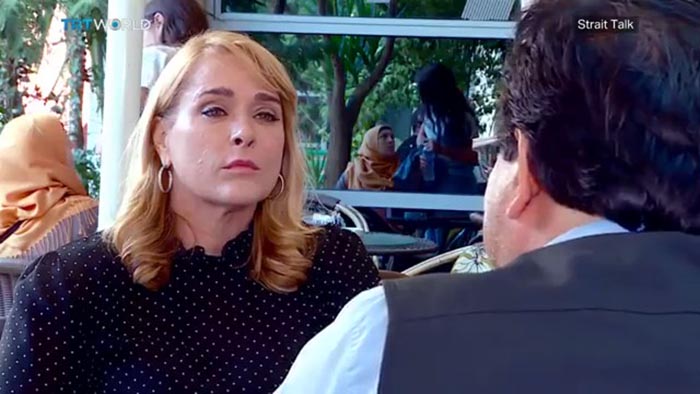
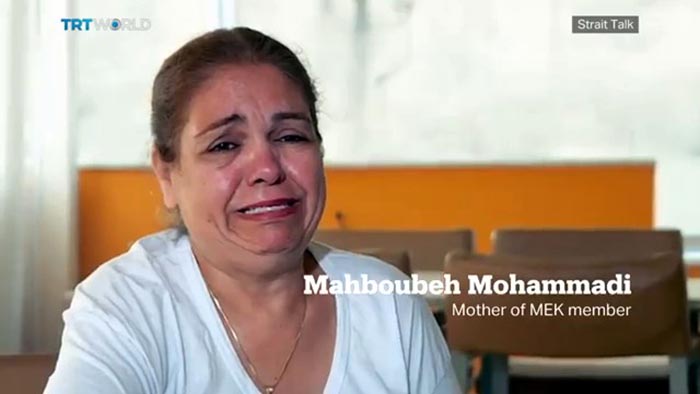
Mustafa Mohammadi and Mahbube Mohammadi are in Albania. They demand that the Albanian government allow them to meet their daughter, Somaye Mohammadi, who has been kidnapped by the terrorist organization of the Mujahideen of Iran since she was 15 years old. The Iranian Mujahideen, who are sheltered in Albania by the Albanian government and the Americans, refuse to allow Mustafa and Mahbube to meet their daughter. They have taken Somaye since she was 15, and she did high school at the Toronto Collegiate Institute. Once radicalized, the jihadists left school, without marrying, without family, and held them as suicide bombers in their base in Albania. They do not let Somaye to meet with her parents….

https://dlb.nejatngo.org/Media/Interview/IMPAKT_Mohammadi_201807_p1.mp4

Part 0ne

https://dlb.nejatngo.org/Media/Interview/IMPAKT_Mohammadi_201807_p2.mp4

Part Two

August 5, 2018 0 comments
FacebookTwitterPinterestWhatsappTelegramSkypeEmail
Mujahedin Khalq Organization members' families

Mojahedin / The father rejected, the mother’s writes to her daughter

The saga continues of an Iranian couple who want to meet their daughter who is a member of the Mojahedin (MEK) who are housed in Albania

Editorial

TIRANA – The saga continues of the Iranian couple seeking to meet their daughter who is a member of the Mojahedin (MEK) who are housed in Albania. A few days ago, Somayeh accused her father of being an Iranian agent, and through a letter asked Minister Xhafaj to expel him from Albania as he posed a danger.

Mostafa Mohammadi, the father of the Iranian, says his daughter is being held against her will inside the Mojahedin camp in Manez, and he has lodged a complaint with the police in the city. A TV report today provided the full denunciation by the 62-year-old who says that his daughter was held in Iraq by force in the MEK organization.

Mohammadi also reveals that MEK has also held his son at Camp Ashraf in Iraq, where members of the Iranian opposition against the Iranian regime were housed. Faced with the situation where the daughter accuses her father of being an Iranian agent, today her mother, Mahboubeh (Robabe) Hamza, has written a letter asking her to agree to meet with her mother rather than her father that she accuses.

Part of Somayeh’s mother’s letter:

O you crazy radicals! You MEK have imprisoned my daughter, radicalized her and pushed her toward violent extremism, made her deny her parents, because it is not logical that a normal person who has not seen their parents for 20 years would not want to at least meet with them, telling themselves that ‘I do not want to get out of this notorious camp, I do not want to live freely in Canada, but I want to do jihad against Iran for Maryam Rajavi’…

You MEK took my boy when he was 15 and I saved him when he was 20 years old. You made my son mad and for two years he was treated by a psychiatrist in Canada because you had made him crazy and you terrorized him…

However, now I publicly invite you to meet me. If you really believe that your father is an Iranian agent – even though you’ve been isolated for 20 years and don’t know where your father has been and what your father has been doing in these 20 years – can’t we meet together?…

Let’s have dinner together so I can see you with my own eyes and kiss you, then let the MEK die from that. If you can’t leave the camp, there is still a chance! Get a phone and dial the number 112 and call the police to come and save you! Come and meet me daughter. For the sake of your mother… Be brave and come out of the MEK camp. There are no Iranian agents in Tirana who want to kill you. The Albanians are good people. They stop me daily in the street and tell us they are sorry for us and how they want you to be free. Prophet Mohammad says that Paradise is under the feet of the mother. Will you leave the MEK’s devils to meet me?

The full letter of the mother of Somayeh to MEK and her daughter

  1. MEK Organization!

I, Mahboubeh (Robabe) Hamza, mother of Somayeh, am writing this letter. I am publishing this letter publicly to ask you to let my daughter go free. You know that we are in Albania and not in Saddam Hussein’s Iraq! Albania is a free European country, where issues are settled by law, not bullets, violence and war like in Saddam’s Iraq! Here you all have taken refuge on humanitarian grounds and are asylum seekers, you are not a paramilitary organization to treat your members as soldiers!

Please, stop!

Stop, writing letters in our daughter’s name!

Enough! Your constant accusation that we are Iranian agents, conspirators, and so on, is unjust since we have no such purpose, except to unite the family unfairly broken by you in 1997!

Enough that you use your agents to access any state office in Albania to prevent me, Somayeh’s mother, from meeting my daughter!

Your agents and subordinates attack us in every corner of Tirana with terror charges and physical attacks only because I want to see my daughter. You are burning because of that!

What did you do to my daughter you crazy radicals?

Why are you threatening my daughter you will kill her parents? Witnesses from your Manza camp, people who have abandoned your jihad and live in Tirana, tell us that you are mistreating my daughter. You are pressurising her to accuse us, her family, as agents. I met my daughter in Iraq in 2004 when the US Marines gave me permission to do so, and she was desperate and wanted to flee from that damned war and from the military organization that mistreated and continues to mistreat its members in front of her eyes all over the world. She was trembling with fear and I her mother embraced her constantly to calm her down. My daughter wrote more letters to me through the US Marines asking for help from your organization that only wants fighting, jihad and blood.

O you crazy radicals! You MEK have imprisoned my daughter, radicalized her and pushed her toward violent extremism, made her deny her parents, because it is not logical that a normal person who has not seen their parents for 20 years would not want to at least meet with them, telling themselves that ‘I do not want to get out of this notorious camp, I do not want to live freely in Canada, but I want to do jihad against Iran for Maryam Rajavi’.

Why do you isolate my daughter so that no one can meet her, neither we as her parents, nor our lawyers, journalists, or the Albanian public who are interested in knowing what kind of criminals you are for destroying a family, who keep our daughter hostage and want to make her a suicide bomber in Iran or Iraq? Frankly, why did you radicalize my daughter – at least in the letters you write – talking only about agents, fighters, killers, Iran, mullahs etc? Are you so crazy? Did Massoud Rajavi’s command not to marry, not to know love, become so bad that you dream only of war and blood?

You took my boy when he was 15 and I saved him when he was 20 years old. You made my son mad and for two years he was treated by a psychiatrist in Canada because you had made him crazy and you terrorized him. Now he has a family, has an education, has a profession in Canada. Yes, and now my daughter. Why can’t she come to Canada to be with her family? Why do you radicalize my daughter and keep her hostage in your camp while your leader Maryam Rajavi and her family live as royalty in Paris? Why can’t I have my daughter free in Toronto like Maryam Rajavi in Paris? Why do Maryam Rajavi and her family live in luxury, while my daughter lives in the prison camp in Manez, in Durrës? If my daughter really wants to do jihad against Iran, why not allow her at least to live freely in Tirana? How much anger do you have?

Who are you to deprive our daughter of this right? Why do you destroy our family and why do you not let our daughter have a family and a normal life like everyone else? Here we are in Albania and not in Iraq. Why are you pushing my daughter to carry out political and terrorist activities against a foreign state? My daughter is not related to Iran! Her homeland is Canada. Why do you not allow her to pursue the Canadian dream but want to lead her as a jihadist to make war on Iran? Why doesn’t Maryam Rajavi go to Jihad in Iran, but she will send my daughter?

We and the rest of her family left Iran for political asylum and we have a very good life in Canada. We do not care about what’s going on with politics anywhere. Every effort we have made to save our daughter is our legitimate right. You, MEK, unjustly denied us the right to parent her when my daughter was 17 years old. You have left my daughter without an education, without a Canadian passport, without a family, no children, no grandchildren, no life with all her friends. You do not let my daughter marry, have a friend or a life like all women, dress in beautiful clothes like her friends, but keep her dressed in military uniform all day long. Keep her isolated in your infamous prison in Manzas.

You have left my daughter without access to the internet, without TV, without education and without reading because you are all in a prison in a free country like Albania. Don’t you feel bad about what you do to our daughter, that you kidnapped our child? Do you realize that Allah will condemn this for ever and a day, even if your masters protect you from the law? Let other families understand what life is like when you have the slogan: “Families are agents of the Iranian regime,” which you say in the group a few times a day as a form of obedience to your organization.

From her friends who have left your group, I learned today how you threaten my daughter if she doesn’t do what you ask for. You do not let her leave the camp, make a free life, but keep her there as a prisoner inside walls guarded by armed guards in the middle of a European country. Why do you do this? Why do not you let her out of the camp? Why can’t I, her mother, meet my daughter oh criminals and murderers? Why do you put politics in between us when parenting is the legitimate right of anyone and nobody can deny it to anyone?

  1. Somayeh! My daughter! The light of my eyes! Owner of my life!

Now I’m writing to you, since I have no other way to communicate with you, although I know that MEK may not even tell you about this letter. But I’m making it public and bringing it to the media so that maybe someone finds it and passes it on to you!

My heart Somayeh,

I am your mother Mahboubeh Robabe Hamza and I want to meet with you. I am the woman who fed you at my breast, I held you in the crook of my arm. You are my flesh and blood.

I have come to Albania. I’m in Tirana, a few miles from you and I want to see you. I want to kiss you. To hold you. I want to have you near. I love you more than my life. I want you to be happy, to be good, to enjoy life, to be with your family, sisters and brothers, to share with the moments of our lives. We have never quit asking for you and are never going to stop, not without seeing you. I’m getting old, I am getting tired, but life is not worth living without seeing you.

I know the letters you wrote against your dad were not written by you, but your jihadist commanders frightened you with threats of “agents”, “the Ministry of Intelligence”, “the Iranian regime”, “mullahs”, and so on. I know, my daughter, that you’re scared and that you do not understand what’s going on because you have not seen daylight with your own eyes outside the MEK military camp for 20 years. I know that the jihadist commanders every day punish you with their fairy tales.

However, now I publicly invite you to meet me.

If you really believe that your father is an Iranian agent – even though you’ve been isolated for 20 years and don’t know where your father has been and what your father has been doing in these 20 years – can’t we meet together?

I am not an Iranian agent and I do not even know about politics. What do you say? Let’s leave your dad on the sidelines, and Iran and Maryam Rajavi and fighting and the whole world, and just meet as mother and daughter? What do you say?

You are well aware how as your mother, who raised you with sacrifices, it plagued my heart when I saw you trembling with fear in Iraq, how I feared that your organization would kill you because you met with us, your parents.

I do not believe the accusations against your father are in your name. I do not believe you are the one who writes them, but those pseudo-letters scary charges are made against your father. The group that prevents us from meeting you attacked your father two days ago. Did they tell you? The Mojahedin beat him!

After the attack, in the middle of the day, in the middle of Tirana, your father and I ended up in the hospital and then in the police station. While we were in the police station [giving evidential statements of complaint], the Mojahedin, under the orders of Commander Behzad Saffari, attacked police station number 4 and called us terrorists and demanded the police imprison us. Do you know about this?

And the day after the attack they sent a second letter to the media in your name.

My daughter, let’s assume you do not love your dad since he’s a bastard, an agent, a murderer, etc. the slanders that staged letter. However, let’s not disown him! (Inshallah MEK does not kill us!)

Yes, your mother, will you not meet with her? I came from Canada for you and left off earning money to see you. Well, from Canada, Morteza and Mohammed ask night and day about you. I miss and love you and want to play with you as we did when you were young. Your friends from the Etobicoke Collegiate Institute are also wondering about you and wanting to meet you. What do you say, will you leave the MEK to meet me and speak on the phone with your brothers in Canada?

Please, if you are the one who wrote those letters and if the MEK would allow you to leave the camp freely, without the supervision of that dreadful commander Behzad Saffari, come and meet me. I live near the parliament in Tirana. The Albanian police will protect us! There will be no Iranian agents to kill you because there are no killers in the country because Albanian police guard us because there is peace and security here!

Let’s have dinner together so I can see you with my own eyes and kiss you, then let the MEK die from that. If they do not allow you out of the camp, there is another opportunity! Get a phone and dial the number 112 and call the police to come and save you!

Come and meet me daughter. For the sake of your mother, be brave and come out of the MEK camp. There are no Iranian agents in Tirana who want to kill you. The Albanians are good people. They stop me daily in the street and tell us they are sorry for us and how they want you to be free.

Prophet Mohammad says that Paradise is under the feet of the mother. Will you leave the MEK’s devils to meet me?

May Allah Keep you Daughter!

Your mother in flesh and blood,

Mahboubeh (Robabe) Hamza

Shqiptarja, Tirana, Albania, Translated by Iran Interlink
August 4, 2018 0 comments
FacebookTwitterPinterestWhatsappTelegramSkypeEmail
Iran
Missions of Nejat Society

Soleimani to Trump: Today you are so weak you have pinned hope on Mojahedin Khalq

Islamic Revolution Guards Corps (IRGC) Deputy Commander for Political Affairs Brigadier General Yadollah Javani underlined Iran’s special geopolitical situation, saying that security of all waterways in the region depend on the country’s presence and assistance.

“Iran’s geopolitical situation is in a way that establishment of security in the regional waterways is not possible without the Islamic Republic’s presence,” General Javani said on Saturday.

He blamed deployment of foreign and trans-regional forces for instability in the region, and said, “Today, the Persian Gulf and the Strait of Hormuz waterways enjoy good security to transfer energy and oil and many world experts stress the Islamic Republic’s unique role in the establishment of security in the region.”

General Javani referred to the US threats to prevent Iran’s oil exports, and said Tehran’s reciprocal threat is credible and well-founded.

In relevant remarks on Thursday, Commander of the Islamic Revolution Guards Corps Quds Force Major General Qassem Soleimani blasted US President Donald Trump for his hollow threats against Iran, warning that the Quds Force alone is powerful enough to stand against Washington in any possible confrontation without any need to the other Iranian armed forces.

“We are closer to you than what you think. You should know that I am your foe. The Quds Force alone and not all the (Iranian) Armed Forces is enough to be your rival (in any confrontation). You are aware of Iran’s power in asymmetric war,” General Soleimani said, addressing a forum in the Western city of Hamedan.

He underlined that Trump’s recent remarks against Iran are not worth response by the Iranian president, and said, “I, as a soldier, respond to Trump. Mr. Trump! How do you dare to threaten us?”

General Soleimani said that the literature that Trump uses to speak with other countries is like the words uttered from the mouth of a person who runs a cabaret or a casino, calling on the US president to ask the country’s spy and security agencies about Washington’s failures against Iran.

“You did every thing you could against Iran in the past 20 years but victory belonged to the Iranian nation,” he underscored.

General Soleimani reminded Trump of the US failures in Afghanistan, Iraq and Yemen and the 33-day war against Hezbollah in Lebanon, and said the US attacked the Taliban with 110 thousand troops but after nearly two decades it is now begging the Taliban for negotiations.

“Ask the ex-commander of your forces in Iraq who he sent to me to ask me to open a window of opportunity by using my influence to stop attacks by Iraqi resistance forces (Mujahedin) on the US soldiers so that they could withdraw from Iraq? Have you forgotten that you had provided adult-size diapers for your battle tank crews? What is your saga and what is the historical background that you rely on for threatening us?”

“You should know that there is not even a single night that we don’t think of destroying you,” he said.

He named Trump as a gambler, and said, “We are so close to you in places that you might not even think of. Come to us! We are waiting for you. You know that this war (against Iran) means destruction of all of your possibilities. You may start the war, but we decide when it should end.”

“Do not threaten us with killing. We are thirsty for martyrdom and annihilation of arrogant powers,” he said.

General Soleimani reminded Trump of the US awe and military power in the past, and said they have become so weak today that they have resorted to Mojahedin-e Khalq Organization (MKO, also known as the MEK, PMOI and NCRI) terrorist group to hit a blow to Iran.

“There was a time when the US enjoyed some awe, when its naval fleet started a voyage, a state would collapse, “but today you have pinned hope on the MKO that has been buried in the wasteland of the history. Have you really pinned hope on a wandering woman that you take from one TV channel to another? Is that all your power,” he asked.

His remarks came after Chief of Staff of the Iranian Armed Forces Major General Mohammad Hossein Baqeri in a statement on Tuesday repeated President Hassan Rouhani’s warning to the US and cautioned Donald Trump to avoid threatening Iran or wait for consequences impossible to imagine.

“As correctly stated in the remarks of our honorable president, the enemies, specially the US, whose deployment centers and interests are accessed by the Islamic Republic of Iran’s overt and covert defense power should not play with lion’s tail otherwise they will be given a strong, unimaginable and regretting response at a very vast extent in the region and the world,” General Baqeri said.

He, meantime, stressed that history has shown that the Iranian nation has always loved peace and never started any war against other countries, and said, “Iran, as the superior power in the Persian Gulf and the Strait of Hormuz, has always guaranteed security of shipping in the vital waterway and the global economy and enjoys the power to make any move (it desires) in this region.”

General Baqeri said that the US president who is childishly preparing for new economic and oil sanctions against Iran should know that in case of implementing such policies, the interests of the US and its affiliates will come under target by the Islamic Revolution’s friends in any parts of the world.

“Thanks God, the Iranian Armed Forces are at the peaks of preparedness and assure (the nation) that they will kill in the bud any plots against the Iranian nation and will give an unforgettable lesson to the enemies,” he concluded.

Trump and Rouhani traded hostile warnings last week, amid rising tensions between the two countries.

Trump tweeted that Iran “will suffer consequences the likes of which few throughout history have ever suffered before” if it threatened the US.

President Rouhani earlier warned his US counterpart against the unbearable costs and dire consequences of blocking Iran’s oil exports, saying belligerency against Iran would the “mother of wars”.

“The regional states are either afraid of the US or do not trust it. Anyone who understands politics a little bit would never say that he/she would prevent exports of Iran’s oil. We have many Straits. The Strait of Hormuz is just one of them,” President Rouhani said, addressing the Iranian ambassadors to foreign states in Tehran on Sunday, repeating his earlier tacit threat that Tehran would close off the Strait of Hormuz in response to any move by the US to zero its crude supplies.

He stressed that Iran has been the guarantor of security in the Strait of Hormuz all throughout the history, saying, “Mr. Trump! Do not twist the lion’s tail because you will regret. You are not able to provoke the Iranian nation against Iran’s security and interests.”

“The Americans should come to realize this point well that peace with Iran would be the mother of all peaces and war with Iran would be the mother of all wars. We do not quiver from threats and we have a deterrent power. Today our internal unity is more than before, threats make us more coherent and we will definitely beat the US,” Rouhani said, and added, “We would sustain costs, but will earn greater interests.”

President Rouhani underscored that the new conditions created after the US withdrawal from the 2015 nuclear deal is an opportunity for relations with the world, exports and home-made production, saying, “Today, talks with the US has no other meaning but surrendering and putting an end to the Iranian nation’s achievements. If we surrender to a liar bullying person like Trump, they will plunder Iran.”

August 4, 2018 0 comments
FacebookTwitterPinterestWhatsappTelegramSkypeEmail
No trust on the MEK
Mujahedin Khalq as an Opposition Group

Why is MEK Group So Unpopular Among Iranians?

Despite all the efforts, the exiled Iranian political-militant organization Mojahedin-e Khalqm’s (MEK) remains unpopular among ordinary Iranians, Iranian dissidents, and opposition figures in the United States.

When the U.S. Department of State held a meeting in which Secretary of State Mike Pompeo discussed regime change in Iran with prominent Iranian opposition figures on July 22, the exiled Iranian political-militant organization Mojahedin-e Khalqm’s (MEK) was not invited. This can be attributed to MEK’s unpopularity, not just among ordinary Iranians but rather among Iranian dissidents and opposition figures in the United States.

While MEK seems to be popular among some U.S. politicians after the group was delisted from terrorist lists, MEK remains unpopular among Iranians and in particular with the Kurds.

The assassination of ordinary citizens, playing a key role in the 1979 Islamic Revolution, taking part in U.S. embassy hostage crisis, and providing security services for Iraq’s dictator Saddam Hussein all contributed to the group being Iran’s most hated political organization.

After ayatollahs forced MEK to stop its armed activity and boycotted its leaders from taking part in the 1981 presidential election, the group started carrying out a series of terrorist attacks. These activities finally forced the group into exile and made them the best military asset of Saddam Hussein during the second half of the Iran-Iraq war.

Providing Security Services for Saddam Hussein

During the first half of Iran-Iraq war, MEK established intelligence cooperation with the Iraqi army. MEK’s cooperation with Iraq became more intense in 1986 after French Prime Minister Jacques Chirac struck a deal with Tehran over the release of French hostages in exchange for the ceasing of French’s technical support for Iraq’s nuclear program. Part of the agreement was forcing MEK to leave France, where it has had its headquarters since 1981. Saddam Hussein invited MEK to relocate their headquarters to Iraq, where MEK formed the 7,000-member National Liberation Army (NLA), which acted as a part of the Iraqi army.

Saddam agreed to provide shelter for thousands of MEK members. MEK’s leaders, including Massoud Rajavi, had taken part in the 1973 Arab Israeli war during which they gained experience of fighting in classic wars. This experience drew the attention of Saddam Hussein who then utilized MEK in operations against Iran.

Joint Operations with Iraqi Army

Soon MEK took part in joint operations with the Iraqi army against Iran, starting with “Operation Aftab” (Sunshine) near Shoush in southeast Iran on 28 March 1988. According to MEK, the organization killed 3,500 Iranian soldiers and captured a further 417, while MEK only lost 123 of its people. The operation was successful in terms of occupation of parts of Iranian territory but had a negative effect on MEK’s reputation. All Iranian opposition groups cut their ties with the group.

“Operation Chelcheragh” was the second major operation in which Iraqis used MEK’s forces against Iran. The operation was launched on June 18, 1988, with the key goal to occupy the Iranian border city Mehran and its oil fields by using Persian language speaking forces to penetrate into Iranian territory and control Kurdish villages in the region. The Iraqi army used 3,000 of MEK’s members during the operation.

Militants of three MEK battalions disguised themselves as Iranian army soldiers, which helped them to break Iran’s defensive line by killing and capturing dozens of their soldiers. Finally, MEK managed to successfully attack Mehran and occupy it in the morning of the next day.

On 20 July 1988, Iran and Iraq both accepted the UN Security Council resolution 598, calling for an immediate ceasefire between the two countries, the repatriation of war prisoners, and the withdrawal of troops. This quickly caused a halt to Iranian military operations with the idea that Iraq would also reduce its forces from the frontlines. However, just days before the official ceasefire, Saddam planned to launch an offensive to occupy as much as possible of Iran’s territory to have the upper hand during any diplomatic negotiations after the truce.

Because using Iraqi army troops to occupy Iran’s territory would breach the resolution, Iraq used militants of MEK for “Operation Forooghe Javidan” (Eternal Light), launched on July 25, 1988. MEK took part with almost 5,000 militants, who were heavily armed by the Iraqi army.

    Today is 30th Anniversary of Operation”Eternal Light”of #MEK/#MKO (#NCRI) terrorist group. On 25/07/1988, #Saddam used #MEK to invade #Iran 5 days after acceptance of #UN Security Council Resolution 598 to occupy more #Iran|ian lands before official ceasefire of 8 August 1988. pic.twitter.com/5GXcsSy58t

— Babak Taghvaee (@BabakTaghvaee) July 25, 2018

During Operation Eternal Light, not a single Iraqi soldier accompanied MEK on the ground. Instead, Iraqi air forces provided significant help on the evening the operation was launched.

To foil any possible resistance of local Kurdish Peshmerga forces, Iraqi air forces dropped chemical bombs on four Kurdish villages in the Gilan-e Gharb county, killing hundreds of civilians and forcing the local Kurdish Peshmerga to leave the region precisely five days before the launch of Operation Eternal Light.

Five days later, the Iraqi army launched a deceptive offensive from the Khuzestan frontlines to draw the attention of Iranian armed forces away from the western fronts. Although these helped MEK to successfully occupy Eslamabad-e Gharb in western Iran on the first day of the operation, they were slowed down by the Kurdish Peshmerga a day later. Kurdish forces managed to entrap MEK armored column behind Chahar-Zabar strait, miles before they reached Kermanshah. Hours later, Iranian armed forces launched the counter-offensive “Operation Mersad” on 26 July 1988.

As a result of this operation, almost 2,000 of MEK’s militants were killed, the Eslamabad-e Gharb was recaptured by Iran, and the remaining MEK militants were pushed back into Iraq…

No Longer on Terror Lists but Still Unpopular

In the course of “Operation Iraqi Freedom” in 2003, air forces of the U.S. and the U.K. bombed military camps of MEK and forced the group to surrender and hand over their arms.

After Operation Iraqi Freedom, MEK members and its leaders were on the edge of prosecution due to the crimes against humanity. Thanks to the generous financial support of Saudi Arabia, the group managed to pay for advocacy of the U.S., U.K., Canada, and other countries to be taken off terrorist lists.

MEK spends millions to hold annual rallies in Paris during which they pay Western politicians to give speeches and rent crowds of refugees and foreign students to play the role of Iranians. MEK also pays western journalists and news agencies to publish articles in support of the group to raise its popularity in the west. Despite these efforts, the Trump administration refuses to take MEK seriously and consider them a popular opposition group.

    MEK expert @joanne_stocker estimates that @AmbJohnBolton has been paid upwards of $180K by the group to speak at its events. Now he’s in a position to advocate for it from inside the White House. @RichardEngel #OnAssignment pic.twitter.com/kxoi2FQ5dn

— On Assignment with Richard Engel (@OARichardEngel) May 27, 2018

Babak Taghvaee, The Global Post
August 4, 2018 0 comments
FacebookTwitterPinterestWhatsappTelegramSkypeEmail
Nejat Publications

The End of the Path documentary

The documentary “The End of the Path” is a first-hand account of suffering families whose loved ones have been misled by a destructive cult called the Mujahedin-e Khalq Organization (the MKO/ MEK/ PMOI/ the Cult of Rajavi). The victims are still taken as hostages by the cult leaders consequently living under a modern slavery.

The three-part documentary was produced while the MEK’s relocation from Iraq to Albania was being accomplished. After the relocation a number of families together with certain former members of the group visited the ruins of Camp Ashraf.

The documentary include these parts: The Ruins of Ashraf, Survivors, and Camp Liberty.

https://dlb.nejatngo.org/Media/Documentary/EP/Path_End_T_M_1.mp4

The documentary serves to inform and awaken public opinion on the sufferings of those who are imprisoned inside the destructive mind control cult, the MEK as a group with no popular base in Iran. Today, the group’s treatment against its members is primarily a human rights issue.

In this regard, the mission of Nejat Society is to expose the true nature of the leaders of the cult. We urge all international humanitarian bodies to help us in our efforts to release the victims of the Cult of Rajavi.

By the Media Group of Nejat Society

Moble Version

Internet Version

August 4, 2018 0 comments
FacebookTwitterPinterestWhatsappTelegramSkypeEmail
Mujahedin Khalq Organization members' families

Latest news on the situation of Somayeh Mohammadi

rightThe struggles of the parents of Somayeh Mohammedi to free their daughter, and the public beating some Mojahedin members made against her parents have frightened the Mojahedin who are housed in Camp Ashraf 3 in Manza in Durres.

Maryam Rajavi, the old cult leader living in Paris, has sent a message on behalf of the mystical cult leader, Massoud Rajavi (who died long ago, but the Mojahedin members are misled into believing he is still alive) to the Mojahedin members. In this false message, the Mojahedin, who believe that Massoud Rajavi is the Imam Mahdi, have been commanded not to leave the camp except in urgent cases. The Mojahedin are reminded that they will win the war against Iran and overthrow the mullahs quickly.

Mojahedin commanders tell the members that they face the threat of Iranian terrorism and kidnapping if they emerge from the organization. There are full provisions inside Manza camp so that there is no excuse to go outside the camp and the Mojahedin are no longer allowed out.

The Mojahedin leadership is exercising a reign of terror against members who have secretly plugged-in phones or tablets in the camp and communicate with their families. Mojahedin members’ use of phones is strictly controlled and if someone is caught using a phone they are punished severely. If someone gets caught talking on the phone or using the Internet, they are forced to sign a document stating that the member admits to being an Iranian agent and working for the Iranian Intelligence Ministry.

The camp commanders have issued orders that anyone who, in exceptional circumstances, leaves Manza camp must be strictly controlled. Women or men who go outdoors are searched for items [photos, documents] when they leave and strip-searched when they return to the camp to check for phones or bugging devices.

The Mojahedin High Command has been fully mobilized to prevent Somayeh Mohammadi from meeting her parents. They spend all their time with Somayeh, congratulating her privately and praising her publicly in front of the Mojahedin members for rejecting her family – who are described as a family of Iranian agents. The Mojahedin members are required to cheer and praise Somayeh as a hero of the revolution and martyrdom and jihad.

Somayeh is praised as a hero who is making great sacrifices for jihad and is refusing to be seduced by Iranian agents. The jihadist command have set Somayeh up with management duties at the General Mojahedin Headquarters, in Mozhgan Parsaii’s office, in order to motivate her and make her believe she is an important jihad leader. She no longer eats meals with the other camp rank and file but is given special treatment and has lunches and dinners with the supreme command.

The Mojahedin’s comanders hold meetings every day for the rank and file members in which they denounce and condemn the presence of enemies of the revolution, Mostafa Mohammadi and Mahboubeh Hamza, Somayehs’s father and mother, in Albania. All the members are required to condemn the presence of the two parents, who are described as mullahs and terrorists. The Mojahedin tell each other that Somayeh’s mother and father have come to commit terrorist acts against them and that they are not in Albania to meet with Somayeh.

In this situation, Somayeh is confused. She is suffering from depression and mental problems. She is kept isolated from her close friends. High ranking Mojahedin have asked her to make a video recording and denounce her father and mother as Iranian agents. Yesterday, on 30 July 2018 she was finally persuaded to attend at the police station in the district in Durres, accompanied by a group of Mojahedin, where she told the police officer that her father is an enemy, a terrorist and she will not meet with him.

While making her statement to the judicial police officer at the district police commissariat, Somayeh was accompanied by a Mojahedin commander who supervised and recorded her so that Somayeh would not go wrong and say ‘yes, I want to meet my family’, and not to escape from the police commissariat.
On 30th July 2018, Somayeh’s father and mother were contacted in Tirana by a LSI activist who offered help to mediate for the family in order to meet Somayeh. However, when she contacted the staff at the Interior Ministry, they told her that this was not possible.

Prime Minister Rama is frightened by the physical assault that the Mojahedin made against Somayeh’s father. Rama has built a reputation for Interior Minister Fatmir Xhafa and has asked the police to prevent MEK and anti-MEK from having any further incidents with each other.

The Rama government is afraid of the whole situation with the Mojahedin. As is Pandeli Majko, who is embarrassed by the exposure of the terrible terrorist cult that he supports. On one hand, the Albanian government is determined not to intervene to liberate Somayeh from the jihadist prison because it is afraid of the Americans. Sander Lleshi, Agron Sojati, and the anti-violent extremism office close to the Prime Minister seem unable to see all the jihadist scandal that has plagued the country. On the other hand, support for Somayeh’s family in public opinion has created another embarrassment for the government. Unfortunately, the Democratic Party and its leaders, who are following the situation from afar, are afraid to attack Rama’s government for abandoning Somayeh in the jihadist camp as they know that it would infuriate the Americans.

The situation seems desperate. In the days ahead, the Mojahedin may persuade Somayeh to appear in a video recording in which she will denounce her father and mother as terrorists and agents of the Iranian regime. The Mojahedin High Command is doing its utmost to stop Somayeh from meeting with her family as they fear that if this meeting does happen, Somayeh would abandon jihad and leave their Manzas jihadist prison for freedom and for Canada.

Translated by Iran Interlink,

August 2, 2018 0 comments
FacebookTwitterPinterestWhatsappTelegramSkypeEmail
MEK mercenaries
Missions of Nejat Society

American support for MEK in Albania alienates Iranian public opinion

Trump’s supposed policy of bullying Iran into begging for talks has stalled after his all-caps Twitter rant was batted back by General Qassem Soleimani’s kick-ass retort. Time for a re-think of the whole approach perhaps. Indeed, many of the tactics used by the US to bring Iran into line over the past forty years have actually enabled and strengthened the ruling establishment there. It’s not that Iran has got better, but the US has made avoidable blunders.

Not least of these is to threaten to bomb the country to destroy its (so-far peaceful) nuclear capabilities. Allied with cruel economic sanctions, the discriminatory Travel Ban and overt support for violent regime change, this aggressive approach only alienates Iranian people.

But while there is disagreement between the various organisations and factions who oppose the Iranian government on any number of issues, there is one thing which unites almost all Iranians and that is the unaccountable American support for the Mojahedin Khalq terrorist cult.

Since the 1980s, the MEK has been facilitated as a terrorist entity and propaganda outlet by the US establishment specifically because of its violent extremism and regime change agenda. These supporters have no illusions – MEK is unreliable and untrustworthy and has no support whatsoever among Iranians. However, intelligence agencies and the military are amoral institutions; they make no judgment about the ethical or moral value of an asset. So, as long as politicians find the ‘MEK threat’ useful to buttress their regime change agendas, the arrangements for MEK’s continued survival remain largely unchallenged.

Because of this complicity, US Secretary of State Pompeo’s claim that “the Trump administration dreams the same dreams for the people of Iran as you do” was met with derision among the Iranian diaspora. If the US at any time had wanted to help the Iranian people, it would have dismantled the MEK. For years, successive US administrations have squandered opportunities to remove MEK from the equation. This failure has contributed to the sterility of US policy toward Iran.

What looked like a genuine process to de-list, transfer and de-radicalize the MEK, initiated by Hillary Clinton in 2012, proved simply to be a pragmatic move which allowed continued US support for MEK in a third country after Iraq increased demands for its expulsion. A $9m deal struck with Albanian Prime Minister Berisha included American funding for a De-Radicalization Institute in Tirana. This was advertised to reassure the Albanian people; MEK members would be re-integrated into society and allowed to take up residence as ordinary citizens to live out their lives in peace and security.

Instead, the US facilitated the re-grouping of MEK in a closed terrorist training camp in rural Albania, where MEK leaders continue their horrible human rights abuses against the members. Apparently, neoconservatives find the group’s promise of regime changeirresistible, even in the face of such evidence. However, above all other considerations, the MEK members in Albania are living, breathing souls and it behoves us to pay attention to them as individuals.

The MEK is described as a destructive cult because it poses the greatest threat to its own members. Many hundreds have been killed and continue to be killed by the leaders. The latest example came only weeks ago with the unexplained death of MEK member Malek Sharaii. Sharaii’s family in Iran say that he had wanted to leave MEK but had incriminating information about the September 2013 massacre at Camp Ashraf which MEK didn’t want to be made public. The family allege that he was murdered because of his past. Due to MEK pressure, the police investigation was halted, Sharaii’s body was apparently ‘discovered’ after two weeks and buried without any post mortem because the MEK claimed this was against their religious practices. He joins a long list of disappeared and mysterious, unexplained deaths of MEK members.

Unsurprisingly then, over four hundred people have managed to escape the cultic clutches of MEK while they are in Albania. The latest escapee, Hassan Shahbazi, described his membership with MEK as “slavery”. There is no doubt, that MEK keeps all its members in a state of modern slavery. Former members confirm that many, many members would like to leave but are trapped and afraid. MEK has hired a private armed security group to keep members inside and everyone else, including the Albanian security services, out.

This enforced entrapment and isolation are compounded by the MEK’s refusal to allow families to be in contact with one another – this is as true for related people inside the camp as for the desperate families outside who, since 2003, have come searching for their loved ones in MEK, offering them help and succor.

One such family, Canadian citizens Mostafa and Mahboubeh Mohammadi, have recently come to Albania to try to rescue their 38-year-old daughter who is still unable to meet with her parents. MEK goons are experts in intimidation techniques including threats of physical and verbal violence, actual violence. More significantly, their claim to have CIA and MOSSAD backing has been enough to silence most Albanian media, who do not want their careers or businesses ruined for this group.

Since its arrival in the small Balkan country, MEK has caused nothing but controversy in Albania. Its citizens rightly fear them. Neither its politicians nor its police can control them. And families like the Mohammadi’s must bear the brunt of MEK violence.

So, while American politicians can feign ignorance, Iranians themselves know the truth. And they know that the Hardliners in Iran are the biggest benefactors of this situation. Not only was the terrorist MEK disarmed and imprisoned in Iraq for a decade at American expense, the group is still used as a bogeyman by Iran’s security services to quell protests and rebellion in the name of counter-terrorism. As a first principle, opposition activists in Iran are careful to distance themselves from MEK in every shape and form.

In this context, using the MEK name as lazy shorthand for ‘violent regime change’ can only be counter-productive; it is guaranteed to unite Iranians against you. If President Trump really seeks to change what his predecessors have done and to shake up politics, his most effective move would be to dismantle MEK. Such a move would be a radical departure from the sterile policies of the past. Trump would take the credit for something that should have been accomplished years ago.

ANNE KHODABANDEH

Anne Khodabandeh, is an expert in anti-terrorist activities and a long-standing activist in the field of deradicalization of extremists. She has written several articles and books on this subject, along with her husband, who is of Iranian origin.

August 2, 2018 0 comments
FacebookTwitterPinterestWhatsappTelegramSkypeEmail
Newer Posts
Older Posts

Recent Posts

  • Pregnancy was taboo in the MEK

    December 22, 2025
  • MEPs who lack awareness about the MEK’s nature

    December 20, 2025
  • Why did Massoud Rajavi enforce divorces in the MEK?

    December 15, 2025
  • Massoud Rajavi and widespread sexual abuse of female members

    December 10, 2025
  • Farman Shafabin, MEK member who committed suicide

    December 3, 2025
  • Facebook
  • Twitter
  • Instagram
  • Youtube

© 2003 - 2025 NEJAT Society . All Rights Reserved. NejatNGO.org


Back To Top
Nejat Society
  • Home
  • Articles
  • Media
    • Cartoons
    • NewsPics
    • Photo Gallery
    • Videos
  • Publications
    • Books
    • Nejat NewsLetter
    • Pars Brief
  • About Us
  • Contact us
  • Editions
    • عربي
    • فارسی
    • Shqip