Nejat Society
  • Home
  • Articles
  • Media
    • Cartoons
    • NewsPics
    • Photo Gallery
    • Videos
  • Publications
    • Books
    • Nejat NewsLetter
    • Pars Brief
  • About Us
  • Contact us
  • Editions
    • عربي
    • فارسی
    • Shqip
Nejat Society
Nejat Society
  • Home
  • Articles
  • Media
    • Cartoons
    • NewsPics
    • Photo Gallery
    • Videos
  • Publications
    • Books
    • Nejat NewsLetter
    • Pars Brief
  • About Us
  • Contact us
  • Editions
    • عربي
    • فارسی
    • Shqip
© 2003 - 2024 NEJAT Society. nejatngo.org
Somaye Mohamamdi Parents
Mujahedin Khalq Organization members' families

Exclusive /Mojahed’s parents say

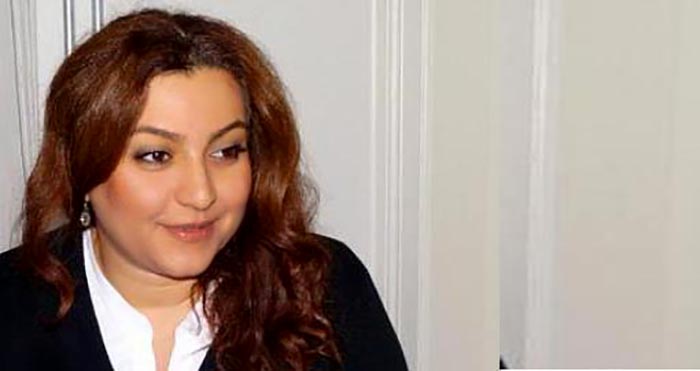
Yesterday the media published a letter to Interior Minister Fatmir Xhafaj, signed by a 38-year-old woman named Somayeh Mohammadi. The letter states that Mohammadi is a member of the People’s Mojahedin Organisation of Iran (PMOI) and that she remains voluntarily in the Mojahedin camp in the district of Durres. This letter says Mohammadi’s father is an Iranian agent and has come to Albania for specific missions and not to meet her.

But the parents of Somayeh Mohammadi, tell a different version. In an interview for TPZ.AL , they say their daughter has been kidnapped by this organization and they are in Durres to return her to Canada. According to Somayeh’s parents, the letter published in the media to the Interior Minister was not written by their daughter but by MEK.

Mostafa Mohammedi and Mahboubeh Hamza
Canadian citizens, parents of Somayeh Mohammedi

Q – Mr Mostafa and Mrs Mahboubeh, the MEK has distributed a letter to the media and accused you of being Iranian agents. Who are you and where are you from?

We’re Mostafa Mohammadi and Mahboubeh Hamze. We are the parents of Somayeh Mohammadi. We have lived in Canada since 1994. Our daughter was kidnapped by the Iranian Mojahedin terrorist organization in 1997. She was abducted together with our son Mohammad Mohammedi. Somayeh was at that time a child and went to the Etobicoke Collegiate Institute in Toronto, Canada.

Our children were kidnapped by the MEK because their activists invited them to Iraq for a two-week visit. But our children did not return. MEK kept Somayeh and our son Mohmmad hostage.

Since that year we have been undertaking a great media and legal struggle to extricate our kids held hostage by the terrorists. Fortunately, in 1999, we managed to save our son from MEK in Iraq and brought him to Canada.

Our son, Mohammad is now working as a manager for a gas company in Toronto. He is married and has a happy life.

But unfortunately, we have not yet managed to save our daughter from the extremist MEK organization.

I work in construction in Toronto, while I, Mahboubeh, am a care nurse for the elderly in Toronto. We are honest people who want to have our daughter, who was abducted when she was 17 years old, back home. The Mojahedin have destroyed their lives, left them without schooling, without marriage, without family, and have radicalized them and turned them into jihadists.

Q – In the Albanian media, MEK has issued a letter on behalf of Somayeh Mohammadi – who identifies herself as a member of the Iranian opposition sheltering in Albania – addressed the Interior Minister of Albania Fatmir Xhafaj. She accuses her father of being an Iranian intelligence officer who has come to Albania to attack the Mojahedin. Why these charges? Can you please explain to us how long you have been in Albania and what is the reason for your visit here?

That letter was not written by our daughter. Our daughter is MEK’s hostage. She has no freedom of religion and thought. She is a prisoner in the Manze jihadist camp. And the letter she sent to Minister Xhafaj was written by the extremist group’s leaders. Our daughter is held with psychological terror. The group’s leaders, who are masters of deception and indoctrination, frighten her and the other members. They say Iran is going to kill you, Iran has brought agents, if you’re out of the camp you are dead, and so on. They say that the only solution is to stay with us in the camp and join jihad against Iran.

As you can see we are old and older. We are not terrorists like the Mojahedin, nor Iranian intelligence agents. We live in Toronto, Canada and not in Tehran. We want to take our daughter to Toronto, and not to Tehran.

We are in Albania for 19 days. We are here to ask for help from the Albanian authorities to let us meet with our daughter who is held hostage by the Iranian jihadist group. We do not want to take our daughter to Canada against her will. We just want to talk to her alone. Let us show that we live in a beautiful and democratic country and ask her in private – away from the threats and brainwashing of MEK jihadists – if she wants to come with us to Canada to live in freedom and in democracy, or to stay in Manze camp, isolated by barbed wire and held as a hostage to be a terrorist in Iran.

The Mojahedin are vicious people. They lie. They not only robbed us of our daughter but now have no shame and accuse us of being agents of Iran. They are people who have a lot of blood on their hands. They are terrorists and killers.

Q -Your daughter stated that she had voluntarily left her family 20 years ago to take part in the cause for Iran’s freedom? What is the truth?

Our daughter is hostage to MEK as was her brother. If you look on the internet you will see that MEK has taken many children as child soldiers. Just as if ISIS gets a little child, indoctrinates it and then turns it into a suicide bomber.

We do not want our daughter to be a suicide bomber for Maryam Rajavi, the MEK leader, and to go and kill people in Iran.

MEK is not an Iranian opposition group. They are terrorists. They are not democratic, and the people of Iran accuse the MEK of being terrorists, murderers and traitors who have served Saddam Hussein and have killed over 17,000 Iranian citizens. If MEK were a democratic organization, they would allow their members to feely meet with their families. Our daughter does not know the world outside because she has been imprisoned for 20 years.

If our daughter wants to be part of the Iranian opposition, she can do this in peaceful ways. Let’s go to Canada and do that right there. But MEK does not let her go free.

But we do not want to deal with MEK. They are fearsome killers. We just want our daughter to be released from the prison camp in Manze and to meet with her in private. To kiss her, to cry with her, and to invite her to come with us to Canada. If she wants to be part of the Iranian opposition, she can do it freely from Canada and not from the jihadist prison camp.

Q –The girl also accuses you of some concrete attacks on MEK’s Camp Ashraf in Iraq?

Firstly, this is not our daughter, but the terrorist leader of the group. Second, what do you think? Would Canada and America leave me alone if we were to attack MEK? Or if I were an Iranian agent? MEK are the most diverse killer, suicidal, and terrorist organization America uses against Iran. We do not want to deal with the MEK nor the policy of Iran or America.

We want peace! As a minimum, we want our kidnapped daughter to meet with us. We want to take her to Canada to live, in a democracy, and not to deal with violent extremism and radicalism.

Q-What are your relations with the current government in Iran?

No relationship. We are Canadian citizens. We are political asylum-seekers in Canada and we got this asylum by fleeing from Iran . We will take our daughter to Canada, not to Iran. To Toronto, not to Tehran!

Q – Have you been contacted by the Albanian authorities about the reasons of your visit to Albania?

Yes, the police have stopped us two times. The first time at the airport and the second time when we came to the hotel and they accompanied us to Police Station 1 in Tirana. They asked us why we are in Albania.

MEK has gone crazy because of our presence here. And for this reason they are terrorizing the Albanian government with letters, complaints, and lies etc. about why they do not want us to meet with our daughter. They know that if we take somebody to Canada, there will be a few hundred men and women who are held hostage by MEK in Albania who will say that we also want to be free. Let’s abandon jihad! Up until now in Albania 400 people have left MEK. This has horrified Maryam Rajavi, so they have brought the Mojahedin to Manze and locked them up in the camp.

Albania is a free country. European. The Mojahedin members want to abandon jihad and embrace democracy and freedom. That is why MEK does not want us to meet our daughter.

But we, inshallah, will meet our daughter and we will go back to our place of freedom in Canada.

We hope and pray that MEK will not kill us because we want to meet our daughter. We hope and pray that the Albanian authorities will protect us and will help us to meet our daughter away from the terrorist presence.

TPZ, Tirana, Albania, Translated by Iran Interlink

July 24, 2018 0 comments
FacebookTwitterPinterestWhatsappTelegramSkypeEmail
Hasan Shahbaz
Former members of the MEK

We were slaves!

Hassan Shahbazi was a university student when he left Iran to visit his friend Hassan Heirani in Camp Ashraf, the headquarters of the Mujahedin Khalq Organization (the MKO/ MEK/ PMOI/ the Cult of Rajavi) in Iraq.

In Ashraf, he was welcome by the authorities of the MKO. “They intrigued our nationalistic sentiments…so I decided to stay there but what I endured during the past years is not easy to recount now,” he writes in his letter of declaration of separation from the MKO.

Hasan Shahbaz

He was coerced to work as a forced labor. “Once I found myself in a discriminating system that claimed the classless society,” he asserts.

However he did not leave the MKO until the group was relocated in Tirana, Albania where the group members could have a very limited access to the outside world. “In the first days of our arrival in Albania, the organization let us visit the city in groups,” he writes. “I contacted my family and I learned that my family had come to Iraq to visit me but the group authorities had not let me know.”

Thus, the final stages of distrust started for Hassan Shahbaz. “The organization authorized itself to decide instead of us,” he suggests. “We were not allowed to contact our families. We had to hate our families.”

He eventually left the MKO secretly on April 3rd, the fourteenth day of the Iranian NewYear while the group had gone on a picnic. “Immediately I submitted to the office of UN High Commissioners of Refugees in Tirana,” he says. “I declare that I have had no relationship with the Mujahedin Khalq Organization since my departure from the group.”

July 23, 2018 0 comments
FacebookTwitterPinterestWhatsappTelegramSkypeEmail
Nejat Newsletter
Nejat Publications

Nejat NewsLetter No. 55

Inside this issue

Nejat Newsletter


  • No Trust On The MEK
  • News from Albania
  • Iranian MEK “Hero” Of Manzas Adds Additional Security Threats To Albania
  • Former Members Of The MKO In European Parliament
  • The MKO And The Terror Of A Nation
  • Maryam Rajavi’s Show In France Distracts From Sinister Death Of Malek Shara’i
  • Open Letter To The UN High Commissioner For Refugees In Albania
  • News in Brief
July 22, 2018 0 comments
FacebookTwitterPinterestWhatsappTelegramSkypeEmail
Massoud Rajavi and Adnan Oktar
The cult of Rajavi

Rajavi should be tried for running a “sex cult” as Adnan Oktar is

The news of the arrest of a Turkish sex cult leader “who preached sermons while surrounded by glamorous women who he dubbed his ‘kittens’” was published in the mainstream media. The news rings the bells for families in the societies all over the world. This warns that the threat of abusive cults is always around.

Photos and films of Adnan Oktar illustrated the reports of his arrest. He is often shown in luxurious places surrounded by “scantily-clad and heavily made-up women — who appeared to have had plastic surgery” dancing around him as if they are mesmerized by him.

The news seems to be a special warning for those who are aware of the sexual abuses that have been committed in the Mujahedin Khalq Organization (the MKO, MEK, the PMOI, the Cult of Rajavi). Actually, these people are terribly concerned about the victims of the Cult of Rajavi because the cult’s destructive practices and sexual assaults of its leader Massoud Rajavi are not widely known to the world; the group has covered its true face under the mask of a democratic feminist political group.

Adnan Oktar, a bizarre and controversial Islamic televangelist figure, was detained in his villa in Istanbul’s upmarket Cengelkoy district by local police on Wednesday, the Daily Mail reported.

Police said accusations against Oktar include forming a gang with criminal intent, sexual abuse of minors, sexual assault, kidnapping, blackmail, fraud, money laundering and exploitation of religious sentiments, according to the report.

The accusations that Adnan Oktar is charged with, are very similar to those of other leaders of destructive cults and particularly to those of Massoud Rajavi –the disappeared leader of the MKO. However, Rajavi has never been sued for the crimes he committed against his followers inside the MKO.

In fact, the only time that an MKO leader was arrested was in June 17th, 2003 that Maryam Rajavi, the third wife of Massoud Rajavi was arrested by the French Police in her headquarters in Paris for money laundering and terrorism charges. The police raid was responded by a dozen of followers of the group who set themselves on fire to protest the arrest of their leader’s wife. Massoud Rajavi has been disappeared since then.

Dead or alive, Masssoud Rajavi is denounced by a large number of dissociated members of his cult of personality. Violations of human rights committed in the MKO include a wide range from sexual harassment to torture and death against both men and women and both adults and children. The Human Rights Watch report titled “No Exit” that was published in in 2005 documented a lot of cases of human rights abuses in the Cult of Rajavi. However, one of the most horrific revelations about Massoud Rajavi was later made by Batul Soltani a former member of the MKO’s so-called elite called “Leadership Council”. She bravely revealed horrifying facts about sexual abuse by Massoud Rajavi although she said that recalling those memoires is “awfully difficult” for her.

Soltani exposed a cultic ceremony in the MKO, called “Salvation Dance” (nude dancing) in which women of the “Leadership Council” were made remove their clothes in front of Massoud Rajavi and dance before him. ”Get close to Massoud and unite with him”, Maryam said to the dancing women.

Soltani added, “They had portrayed the issue of having [sexual] relations with Massoud Rajavi in such a way that it appeared to us as the most sacred task. Mas’ud Rajavi also used verses from the Qur`an to justify his behavior”.

Soltani together with two other former members, Zahra Mirbaqeri and Nasrin Ebrahimi once again denounced the MKO by presenting a list of 100 female members of the group who have gone under hysterectomy to be sexually abused by the Cult leader, Massoud Rajavi, to the European Parliament

Nasrin Ebrahimi had previously revealed that Rajavi had entitled the operation to remove women’s womb as “Summit” referring to women’s extreme devotion to their leader. They lose their final sign of sexuality and motherhood, or as Mrs. Singleton says” to neutralize their sexuality”.

Mir Baqeri said that the surgical operations were carriedout to take out the victims’ wombs so that they would not be pregnant afterbeing raped by Rajavi.

Women of the Leadership Council were given a necklace on which Massoud’s portrait was graved earlier than they were made married with him. Zahra Mir Baqeri has one of the necklaces to show those who are concerned.

“Maryam Rajavi invented rituals such as being washed by other women members so as to ‘spiritually purify’ them, followed by the instruction to dance naked before both the Rajavis to prove they had ‘broken the physical and mental barriers’ to their total submission to Massoud,” The British defector of the Cult of Rajavi Ann Singlton writes. “After these coercive practices, he would choose a bedmate for sex. The women have said that they did not agree to sex with Rajavi out of free will but because they had been coerced through deception into submitting to what they later came to recognize as rape.”

Soltani`s testimonies were then confirmed by male defectors too.  Ghorban Ali Hossein nezhad, former Rajavi’s personal interpreter writes in his Facebook account, “They told me personally that I should erase my martyred wife from my mind and I should imagine her sleeping with Brother Massoud.”

He recalls the exact words of Mehdi Abrishamchi, MaryamRajavi’s ex-husband as telling the male members of the cult,”Your wives should follow Sister Mayam.  I mean as I divorced Sister Mayam so that she could marry Brother Massoud , your wives divorced from you and married Brother massoud.”

Hosseinnezhad even recalls one of the women of the Elite Council who was his Arabic language student once told him, “Rajavi has group sex with us – members of his personal office”. Hossein nezhad asserts that the woman left the group and went to Europe, in 2007.

Compared with Massoud Rajavi What is salient about Adnan Oktar is that at least he seems to be honest in his bizarre mix of Islam and modern secularity.  According to The Times, Oktar runs his own television channel, A9, on which he would “broadcast bizarre sermons from his compound on an Istanbul hilltop” that were “light on Islam but heavy on erotica”.

“Many Turks have long considered him a laughing stock,” The Times adds, and he has repeatedly been denounced by Turkey’s religious authorities. Ali Erbas, head of the country’s Diyanet religious affairs agency, said earlier this year that Oktar had “likely lost his mental balance”.

Massoud Rajavi, along with his co leader Maryam can be considered as ridiculous or mentally sick as Adnan Oktar if not more but for sure t they are more fraudulent and perhaps smarter than Adnan because they have kept all of their clandestine crimes within a very isolated cult-like establishment called Mujahedin Khalq Organization and National Council of Resistance (NCR).

Massoud and MaryamRajavi should be brought to justice just for very similar reasons even if the cult leaders deny this horrific practices. In fact, the female members of the Cult of Rajavi look pale, old, exhausted and barren with no plastic surgeries and cosmetics but they are victims of a sexist modern slavery.

Mazda Parsi

July 22, 2018 0 comments
FacebookTwitterPinterestWhatsappTelegramSkypeEmail
weekly digest
Iran Interlink Weekly Digest

Iran Interlink Weekly Digest – 236

++ This week saw many letters of complaint from families, ex-members and their supporters to the Albanian authorities about the abuse and misuse of human rights as the families are banned from access to their loved ones. The letters ultimately boil down to a question “Are you an independent country; do you not have your own laws that you follow?” The writers point out, “You are the only country, after Saddam, which is providing a closed, extrajudicial piece of land for a terrorist organisation in which to keep our family members as slaves”.

++ This week another MEK member, Hassan Shahbaz, separated from the cult. His main message is that “we have been living as slaves for decades. Nobody would help us, and we had no access to anything. We were totally at the mercy of the internal laws of MEK.”

++ Other writing in Farsi is about the meeting on Sunday in which Secretary of State Mike Pompeo will address Iranian-Americans. One writer, Alireza Nasrollahi, stresses ‘ignoring all your promotion of terrorism, please, please, I urge and beg you, as an American do not talk about human rights when you meet with anyone. I’m not saying this because of world issues, but because I have witnessed your support for slavery in the Mojahedin in Iraq and in Albania’. Other writers say, ‘you inspire the hatred of Iranian people for you by supporting MEK and then say you are on the side of Iranian people’.

In English:

++ Iran Interlink published a piece from Gazeta Impakt condensing a critique by Albanian student Samet Vata of a summer school organized by the Albanian Institute for International Studies (AIIS) as part of the NATO Summit in London. The article is Google translated into English. Vata contradicts a speech by interim American ambassador in Albania, David Muniz who blames Iran for ‘exporting radicalism which scares Europe and the Balkans’. Vata explains that US foreign policy “forced” Albania to host 3000 Mojahedin Khalq terrorist extremists, thus imposing a direct security risk on Albania. Thus, Albania should accept that MEK is a problem for Albania’s relations with Iran because MEK threatens the Islamic Republic of Iran. Vata then questions how 6000 ISIS terrorists would be treated when they arrive in Albania, asking “will they be left alone and given a camp as we have done with MEK?”

++ Tony Cartalucci in New Eastern Outlook, ‘Who are Washington’s “Revolutionaries” in Iran?’ demonstrates how the US is using terrorist organizations to attack and undermine the Iranian state, as it has with Libya and Syria ; portraying the MEK as the voice of Iran’s opposition. Cartalucci goes on to say that “MEK and its NCRI political wing will never rule a functional and unified Iranian nation-state, just as US-backed terrorists in Libya preside – and only tenuously so – over fractions of Libya’s territory and resources. This further exposes what the US intends to do regarding Iran, and that it has nothing to do with improving the lives or prospects of the Iranian people – especially considering Iran’s collective plight is owed not to Iran’s current leadership, but to America’s decades-long policy to encircle, contain, undermine, and overthrow Iran’s institutions.”

++ Dr Ron Paul and Daniel McAdams invited guest Patrick Henningsen on their Liberty Report to discuss Washington’s renewed effort to destabilize Iran (video) with the tag line “This week we learned how US national security establishment and its neocon conclave have anointed a shady terrorist organization, the notorious MEK, to assume the reigns [sic] of power in Iran after the CIA overthrows its current government. What could possibly go wrong…?”

++ Another article exposing paid American support for MEK comes from Christopher A. Preble in National Interest, ‘Meet the Organization Pushing Regime Change in Iran—and Its Willing American Accomplices’. Preble reviews ‘the usual suspects’ and likens the current circumstances with the US political establishment’s embrace of Ahmed Chalabi to justify the invasion of Iraq and criticises a ‘too-credulous media’ for also being duped. He concludes. “Americans must wait to see which direction the U.S. news media will go in 2018, but I hope that they will be more like John Walcott, Jonathan Landay, Warren Strobel, and Joe Galloway, and less like Judith Miller.”

++ Iran Front Page published the results of a poll among the Iranian diaspora in Canada. The results are not unexpected: “nearly 100 percent of Iranian diaspora in Canada maintain that Ottawa officials shouldn’t have taken part in the annual gathering of the Mujahedin-e Khalq Organization (MKO), an anti-Iran terrorist group, which was recently held in Paris.

“According to the survey conducted by the Iranian-Canadian Congress, 98.90 percent of 1,551 Iranian diaspora in Canada who took part in the online survey said they were against the presence of Ottawa officials in the Paris annual gathering.

“In response to a question whether or not the MKO represent you when it comes to Iran-related issues and Canada’s policies towards the country, 99.48 percent said the terroristgroup doesn’t represent them at all, a report by Alef news website said.

“Meanwhile, 94.13 percent said they are against a decision by the former Canadian Prime Minister Stephen Harper to remove the MKO from the list of terrorist organizations in 2012. They also described Harper’s decision as a mistake.”

++ There appears to be no answer to the question, but it keeps being asked:  Ashton Hashemipour in The Gate questions ‘The Baffling Relationship between American Politicians and the MEK’. In particular “politicians have decried the lack of human rights in Iran, the lack of democracy, and the suffering of the Iranian people. Given this context, the relationship between some American politicians and the Mujahedin-e Khalq, or MEK, is baffling.” Perhaps Hashemipour does have answers, or at least suggestions, even though they run up against the usual brick wall… “Although supporting the MEK provides a way for American politicians to ostensibly advocate for a democratic revolution in Iran, the costs of supporting a terrorist group far outweigh any benefits. To weaken the Iranian government and gain the support of the Iranian people, the United States should attempt to act as a friend to the Iranian people, instead of supporting a terrorist organization, banning Iranians from entering the country, and putting crippling sanctions on Iran, which hurt civilians more than the government. But given the immense amount of lobbying from anti-Iran groups—from America-Israel Public Affairs Committee (AIPAC) to the Foundation for Defense of Democracies (FDD)—it is highly unlikely that such a change in the mindset of American politicians will occur.”

++ Nahal Toosi in Politico, a statement from Jamal Abdi, NIAC and Trita Parsi in the New York Review of Books all point out the obvious: Secretary of State Pompeo will have a hard time persuading Iranians to vote to bomb their own country on Sunday. His even harder task will be to persuade any Iranians that supporting MEK is ‘a good thing’.

In Albania:

Iran Interlink: An Iranian father and mother, trying to get contact with their MEK-held daughter visited the Interior Ministry in Tirana to ask for help. Shockingly, three notorious MEK commanders strolled by and breezing through security went on to attend what are clearly frequent visits to brief Albanian government officials what they should do (MEK are always boasting their CIA links). The parents were denied a meeting with anyone, even though they were accompanied by their lawyer. This footage captured the moment when Albania sided with terrorists.

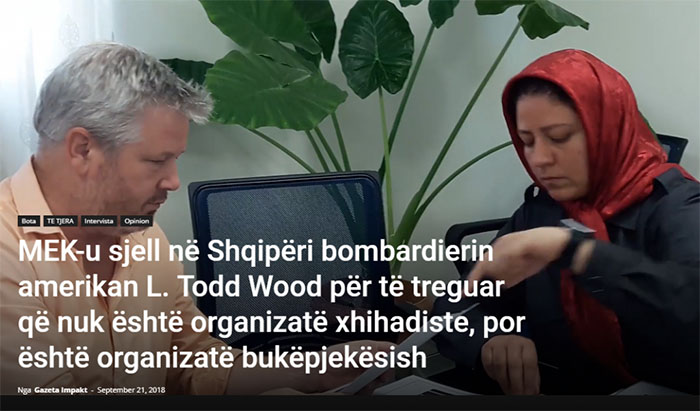
++ Gazetta Impakt, broadcast a moving interview with Mostafa and Mahboubeh Mohammadi (see above) who are in Albania trying to rescue their daughter from MEK. Tears were shed.

July 20, 2018

July 21, 2018 0 comments
FacebookTwitterPinterestWhatsappTelegramSkypeEmail
Mujahedin Khalq; A proxy force

Why Trump’s Hawks Back the MEK Terrorist Cult

On July 22, Secretary of State Mike Pompeo is scheduled to address an Iranian-American audience at the Reagan Presidential Library in California. The speech is part of a deliberate policy of escalating tensions with Iran, targeting its economy and supporting Iranian opposition groups—all for the purpose of pressuring and destabilizing Iran. At least one member of an Iranian terrorist group that has killed American citizens will also be in attendance. But it won’t be to disrupt Pompeo’s speech; rather, to support it. In fact, the member is on the invitation list.

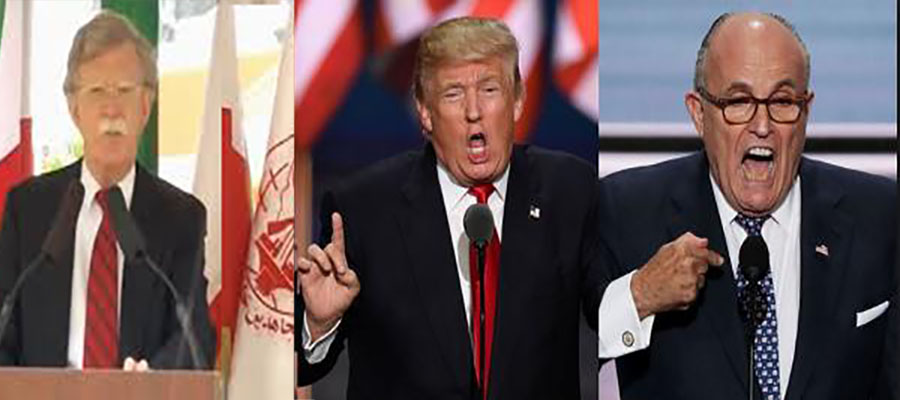
Last month, the same terrorist group held an event in Paris, busing in thousands of young people from Eastern Europe to hear Donald Trump’s personal attorney Rudy Giuliani call for regime change in Tehran. A similar event in Paris last year was addressed by John Bolton, who recently became President Trump’s national security adviser.

How an organization that was only delisted by the US Department of State as a terrorist group in 2012 could so soon after win influential friends at the heart of America’s current administration is the strange and sinister story of the Mujahedin-e Khalq, better known by its initials, MEK. Commonly called a cult by most observers, the MEK systematically abuses its members, most of whom are effectively captives of the organization, according to Human Rights Watch (HRW). Regardless of its delisting by then Secretary of State Hillary Clinton—a political calculation on her part since many senior Democrats, as well as Republicans, had been persuaded by the MEK’s lavish lobbying efforts—the group has never ceased terrorizing its members and has continued to conduct assassinations inside Iran.

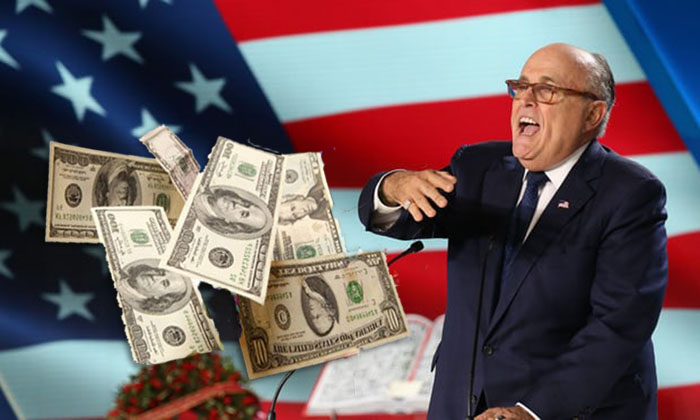
In the 1980s, the MEK served as a private militia fighting for Saddam Hussein during the Iran-Iraq War. Today, it has a different paymaster: the group is believed to be funded, in the millions of dollars, by the Kingdom of Saudi Arabia. In Washington, D.C., as in Paris, France, the MEK pays tens of thousands of dollars in speaking fees to US officials. Bolton, in particular, is a long-time paid supporter of the MEK, reportedly receiving as much as $180,000 for his appearances at the group’s events.

The group is so awash with cash that it doesn’t just pay the speakers; it buys the audience, too. Those young Poles and Czechs who traveled to hear Giuliani’s speech on June 30 came not out of fascination with Trump’s lawyer but for the free weekend in Paris they were offered. The only thing the MEK’s money can’t buy is popular support among Iranians.

The MEK goes back a long way. Founded in the early 1960s, it was the first opposition group to take up arms against the repressive regime of the Shah. Its ideology was based on a blend of Marxism and Islamism, and the group enjoyed widespread support inside Iran in the 1970s. But a series of missteps saw its popularity dramatically dwindle. After the Shah was deposed, the group’s rivalry with Ayatollah Khomeini came to a head not long after the MEK opposed Khomeini’s decision to release the fifty-two American embassy staff held hostage by Iran, and instead, called for their execution. In fact, only a few years earlier, as part of a campaign targeting the Shah’s regime, the MEK assassinated three US Army colonels and three US contractors, in addition to bombing the facilities of several US companies.

Many of the MEK’s members fled to Iraq and established military bases with the blessing of Saddam Hussein. Siding with Saddam in that long and devastating war, which was estimated to have killed more than 300,000 Iranians, turned the MEK into traitors in the eyes of the Iranian public. Nothing has happened since then to change this view of the MEK inside Iran. But the more politically irrelevant the MEK became, the more extreme and cultish it got. After suffering a military defeat in 1988 in which it lost around 4,500 of its 7,000 fighters in a disastrous incursion into Iran, the MEK was in crisis. To prevent the organization’s collapse, its leader, Massoud Rajavi, intensified the cult-like character of the organization in order to prevent its members from defecting.

In 1990, all members of the organization were ordered to divorce and remain celibate. Their love and devotion should be directed only toward the leaders of the organization, Rajavi determined. To reinforce the leadership’s control, some eight hundred children of MEK members were sent abroad from their camp in Iraq to be adopted by exiled members of the group in Europe or North America. If the adult members tried to leave the MEK, they would completely lose touch with their children. To this day, there are scores of MEK members who dare not leave the terrorist group for this very reason. And there are countless children of MEK members who dream of one day being reunited with their parents. I know several of them.

The MEK’s human rights abuses have been well documented by human rights organizations. The MEK leadership has reportedly forced members to make taped confessions of sexual fantasies that are later used against them. In Iraq, disobedient members were routinely put in solitary confinement—in at least one case, for as long as eight years, according to HRW. Other members were tortured to death in front of their kin. As one US official quipped to me in 2011 when the organization was running its ultimately successful multimillion-dollar lobbying campaign to be removed from the State Department’s terrorist list: “Al-Qaeda actually treats its members better than the MEK treats its.”

The MEK, of course, rejects all accusations of terrorism and abuse. The group is not a cult, its advocates insist, but Iran’s strongest democratic opposition group in exile, which seeks a free and democratic Iran. Its members were not forced to divorce, a senior MEK official told the BBC in 2010. Rather, they all divorced their spouses voluntarily. En masse. And anyone who raises these accusations against the group is immediately branded a partisan for the theocratic regime in Tehran.

Given the MEK’s long record of terrorism, human rights abuses, and murder of US citizens, one would think that senior American officials like Giuliani, Pompeo, and Bolton wouldn’t go near the MEK, let alone fraternize with its members or take its fees. But when it comes to Iran, the usual rules don’t apply.

Even when the MEK was on the terrorist list, the group operated freely in Washington. Its office was in the National Press Club building, its Norooz receptions on Capitol Hill were well attended by lawmakers and Hill staff alike, and plenty of congressmen and women from both parties spoke up regularly in the MEK’s favor. In the early 2000s, in a move that defied both logic and irony, Fox News even hired a senior MEK lobbyist as an on-air terrorism commentator.

Al-Qaeda may treat its members better, but rest assured, neither al-Qaeda nor ISIS has ever rented office space in Washington, held fundraisers with lawmakers, or offered US officials speaking fees to appear at their gatherings. But the MEK did this openly for years, despite being on the US government’s terrorist list. The money that Maryam Rajavi (Massoud Rajavi’s wife, who has taken over leadership of the organization since Massoud’s mysterious disappearance in Iraq in 2003) offers to American politicians and the organization’s aggressive advocacy and lobbying only partly explain the group’s freedom of action at the heart of America’s political capital. Certainly, some politicians have likely been duped by the MEK’s shiny image, but Washington’s better-informed hawks are not duped; they simply like what they see, even at the risk of running afoul of federal ethics laws.

At the heart of this improbable-seeming affinity lies a sense of common interest between these anti-Iran fundamentalist, pro-war elements in Washington and Rajavi’s terrorist militia. The US hawks have no problem with the MEK’s terrorist capacities because the group’s utility is beyond dispute—after all, NBC reported that Israel’s spy agency, the Mossad, relied on MEK operatives to assassinate Iranian nuclear scientists during Iran and Israel’s secret dirty war between 2010 and 2012.

American officials, including the national security adviser, can have no illusions about the MEK’s disingenuous propaganda lines about seeking democracy or enjoying support inside Iran. They know very well how despised the MEK is in that country. Unlike other Iranian opposition groups, however, the MEK can mount military operations. Its members are experienced in sabotage, assassinations, and terrorism, as well as in guerrilla and conventional warfare. These are not qualities that lend themselves to any project of democratization, but are extremely useful if the strategic objective is to cause either regime change (by invasion) or regime collapse (by destabilization). In other words, for Washington’s anti-Iran hawks, the MEK doesn’t have to replace the theocracy in Tehran; it just needs to assist its collapse. The ensuing chaos would weaken Iran and shift the regional balance of power toward US allies like Israel and Saudi Arabia.

When my organization, the National Iranian American Council, campaigned against the delisting of the MEK in 2012, I gathered that some in Washington were uncomfortable with our position even though they had no sympathy for the group. They viewed the MEK as irrelevant and felt that resources should not be spent on fighting to keep the group on the list. Others feared the harassment that inevitably follows speaking up against the MEK. But we remained firm in our opposition and pointed out that if the MEK was taken off the list, the warmongers in Washington would be able to throw their full support behind the organization and use it to advance its policy of confrontation against Iran.

In 2012, my organization warned that the MEK was an Iranian version of the Iraqi National Congress, the opposition-in-exile to Saddam Hussein led by Ahmed Chalabi, which the neoconservatives in Washington tirelessly promoted in the early 2000s to provide grounds for going to war in Iraq. Sadly, it is now clear that our worries were warranted: the MEK’s greatest friends and allies in Washington—its paid advocates, in fact—now have the ear of a president who already tore up the multilateral nuclear agreement with Iran.

On May 5, just two weeks after he joined Trump’s legal team, Giuliani told an audience at a D.C. convention organized by an MEK front group that Trump was “committed to regime change.” The war party in Washington has its Iranian version of Chalabi’s Iraqi National Congress.

nybooks.com

July 21, 2018 0 comments
FacebookTwitterPinterestWhatsappTelegramSkypeEmail
Jamal Abdi
Missions of Nejat Society

Pompeo and Trump Plan to Exploit and Silence Iranian Americans

Washington, D.C. – Jamal Abdi, the Vice President for Policy of the National Iranian American Council, issued the following statement in response to Secretary of State Mike Pompeo’s announcement that he will address Iranian Americans in Simi Valley later this month:

Jamal Abdi

“The quest for human rights and democracy in Iran can only be owned by the Iranian people. It cannot be owned by the U.S., Israel, or Saudi Arabia. It cannot be decided by Iran’s government or even Iranian exiles.

“What President Trump and Secretary Pompeo want is to exploit Iranian Americans and co-opt the Iranian people to provide legitimacy for the Trump Administration’s Iraq War redux for Iran. Just as the Bush Administration cultivated a few Iraqi exiles and talked about human rights to provide legitimacy for a disastrous invasion of Iraq, the Trump Administration appears intent on using Iranian exiles to advance dangerous policies that will leave the Iranian people as its primary victims.

“If Sec. Pompeo really wants the Iranian-American community to embrace the Trump agenda, he must start with a sincere apology and rescind Trump’s ban that is dividing Iranian Americans from their friends and loved ones in Iran. He should apologize for the Administration’s move to banish the most prominent Iranian-American national security official from policymaking decisions due to her heritage. Moreover, he should apologize for the decision to strip the Iranian people of their hope for relief from sanctions and greater connections with the outside world, instead ensuring they will be crushed between U.S. sanctions and resurgent hardline forces in Iran’s government that have benefited from Trump’s withdrawal from the nuclear accord.

“It should be abundantly clear that Secretary Pompeo, who called for bombing Iran instead of negotiations, is no friend of the Iranian people. Similarly, Trump – whose national security advisor and lawyer have elevated the voices of an undemocratic, human rights abusing cult, the MEK, to become the next leadership of Iran – does not have the Iranian people’s best interests at heart. The Trump Administration’s close coordination with Benjamin Netanyahu and Mohammad Bin Salman, who are motivated by their own political gain and regional power dynamics rather than any love for democracy or the Iranian people, should dispel any notion this campaign is about helping ordinary Iranians.

“As Americans, we have a vital role to play in ensuring our democratically elected government does not start wars on false pretenses or destroy lives in our names. As Iranian Americans, our voices are particularly vital when it comes to the U.S. government’s efforts regarding our ancestral homeland. We will not be exploited or silenced at this critical moment in history.”

July 19, 2018 0 comments
FacebookTwitterPinterestWhatsappTelegramSkypeEmail
US advicated of MEK Terrorists
Mujahedin Khalq as an Opposition Group

Poll: Mojahedin Khalq Organisation, MKO Doesn’t Represent Iranian Diaspora in Canada

A new survey reveals that nearly 100 percent of Iranian diaspora in Canada maintain that Ottawa officials shouldn’t have taken part in the annual gathering of the Mujahedin-e Khalq Organization (MKO), an anti-Iran terrorist group, which was recently held in Paris.

According to the survey conducted by the Iranian-Canadian Congress, 98.90 percent of 1,551 Iranian diaspora in Canada who took part in the online survey said they were against the presence of Ottawa officials in the Paris annual gathering.

In response to a question whether or not the MKO represent you when it comes to Iran-related issues and Canada’s policies towards the country, 99.48 percent said the terrorist group doesn’t represent them at all, a report by Alef news website said.

Meanwhile, 94.13 percent said they are against a decision by the former Canadian Prime Minister Stephen Harper to remove the MKO from the list of terrorist organizations in 2012. They also described Harper’s decision as a mistake.

As the 22nd Prime Minister of Canada, Harper came from the modern Conservative Party of Canada. During his premiership, he was among the staunch supporters of the Zionist regime and showed deep animosity towards the Islamic Republic. Meanwhile, he never supported the talks between Iran and the six world powers which finally led to the Iran nuclear deal in 2015.

In his latest move against Iran, Harper attended the recent MKO gathering in Paris.

MKO is designated a terrorist organization by Iran and Iraq. Washington and the European Union removed MKO from their lists of terrorist organizations in 2012 and 2009, respectively. The group is based in Paris, with a compound for its militiamen located in Albania.

The MKO held its annual meeting in Paris on Saturday with a number of American hawks such as Rudy Giuliani – Donald Trump’s personal lawyer – and other former US officials as well as former Canadian PM Harper in attendance.

Founded in the 1960s, the terror group fled to Iraq in 1986, where it joined Saddam’s army during the war Iraq imposed on Iran (1980-1988) and helped Saddam kill thousands of Iranian civilians and soldiers during the US-backed war imposed on Iran.

Iran Front Page

July 19, 2018 0 comments
FacebookTwitterPinterestWhatsappTelegramSkypeEmail
US Rajavi lobby
Missions of Nejat Society

The Baffling Relationship between American Politicians and the MEK

It’s no secret that most American politicians want political change in Iran. Whether it be President Donald Trump, Barack Obama, or George W. Bush, regime change (or a significant change in the regime’s behavior) has been a goal of U.S. administrations since the dawn of the Islamic Republic in 1979. Nor have U.S. politicians attempted to hide this: Congressmen across the aisle, for example, have met with Reza Pahlavi, the former Iranian prince whose father was ousted from power during the Islamic Revolution, to discuss regime change. Pahlavi, among many others in the Iranian diaspora, has called on all American politicians to support a democratic, liberal Iran.

American calls for regime change have certainly focused on this idea of a democratic, liberal Iran. Secretary of State Mike Pompeo, Senator Ted Cruz, and National Security Advisor John Bolton (among many others) have openly advocated for such change. But it’s not just Republicans: both House Minority Leader Nancy Pelosi and Senate Minority Leader Chuck Schumer have also called for Iranians to be freed from the chains of the Islamic Republic. These politicians have decried the lack of human rights in Iran, the lack of democracy, and the suffering of the Iranian people.

Given this context, the relationship between some American politicians and the Mujahedin-e Khalq, or MEK, is baffling. The MEK, guided by an undemocratic fusion of Marxism and Islamism, has conducted terrorist attacks against Americans and Iranians alike yet has support from a plethora of U.S. conservative and liberal politicians (including many who advocate for the democratization of Iran), such as Rudy Giuliani, Bolton, Pompeo, Pelosi, and Edward Rendell. Given the MEK’s inability to meaningfully change Iran, the support of U.S. politicians for the Mujahedin will only have negative effects for the United States, namely that it will alienate the Iranian people and give hardliners in the Islamic Republic a chance to capitalize on this support.

What is the MEK?

The MEK was established in 1965 as a leftist organization staunchly opposed to the American-backed Shah of Iran. Until the Islamic Revolution of 1979, the MEK, originally founded upon the ideals of Marxism and Islamism, engaged in a plethora of terrorist attacks, targeting Americans civilians and government workers. Many of its members were either imprisoned or executed while the Shah was in power.

During the Revolution, the MEK helped supporters of Ayatollah Khomeini overthrow the Shah. Yet after a few years of rule by the Islamic Republic, [Ayatollah ]Khomeini saw that the MEK’s ideology was at odds with his vision for the country, and he ordered his forces to arrest and execute Mujahedin members. The Mujahedin responded by assassinating members of the Islamic government, including the Prime Minister in a 1981 bombing.

In 1980, Saddam Hussein, sensing instability in Iran, decided to invade. The MEK, seeing an opportunity to destabilize the Islamic government joined him in fighting their own countrymen. Saddam’s use of chemical weapons, and his bombing of Iranian cities, did not deter the MEK in their support of him, which continued throughout the war. Saddam even helped arm the MEK, allowing them to conduct suicide attacks in Iran. The MEK’s support of Saddam, along with the earlier attacks against American officials, led the U.S. government to designate it as a Foreign Terrorist Organization (FTO).

After the war, the MEK largely focused on assassinations: the Mujahedin have targeted senior officials of the Revolutionary Guard, clerics, and even former Iranian President Mohammad Khatami. Further, they continue to call for regime change in Iran, hosting an annual “Free Iran” rally, at which many Western politicians speak. In the most recent years, however, the MEK, which now calls itself the National Council of Resistance of Iran, has shifted its focus from bombing campaigns to lobbying Western politicians for support.

American Support

In spite of the MEK’s recent history of terrorism, then Secretary of State Hillary Clinton in 2012 removed the organization from of the FTO list, unfreezing its assets and allowing it to engage in financial interactions with those in the United States. The organization, however, in spite of its claim to want democracy in Iran, remains internally undemocratic and is monumentally unpopular among those living in Iran. One can go so far as to say that it is a personality-based cult: Iran scholar Ervand Abrahamian stated that if “[MEK leader] Massoud Rajavi got up tomorrow and said the world was flat, his members would accept it.”

That hasn’t stopped American politicians—the same ones who claim to support a liberal, democratic Iran—from backing the MEK. And while this is not to say that supporting the MEK is enshrined in U.S. policy, the high level of support that it maintains among many American politicians is alarming. Rudy Giuliani is a regular at the MEK’s Free Iran conference. John Bolton gave a jarring speech at last year’s conference, claiming that the group would be celebrating the downfall of the Islamic Republic in Tehran the next year (which didn’t happen). Even Pelosi, a Democrat who supported the Nuclear Deal, put out a statement in support of the group. This does not seem to be a partisan issue: influential American politicians, whether in Congress or in the administration, have supported a group that has conducted terrorist attacks, not only against Iranian government officials but also against American civilians.

There seems to be one of two implications for this support: either the politicians supporting the MEK do not understand that it remains a domestically unpopular and undemocratic terrorist organization, or they acknowledge this but believe that regime change in Iran should be encouraged at any cost.

Though it is true that there has been a change in the MEK’s behavior since the early 2000s, the first possibility is nonetheless laughable. There have been no significant leadership changes since the MEK’s support of Saddam Hussein: Maryam Rajavi is still the leader of the organization and has been (along with her husband who disappeared in 2003) since 1985. Further, there have been no ideological changes in the group since Rajavi took leadership.

Their change in behavior is not due to a change in ideology; rather, it is due to circumstances. During the American invasion of Iraq, the MEK was forcibly disarmed, and its camps were destroyed. Since then, the MEK has simply not had the ability to conduct bombing campaigns in Iran as it did during the Shah’s reign, the Islamic Revolution, and the Iran-Iraq war. Thus, they have shifted their focus to lobbying western politicians for change in Iran, which seems thus far to be working: speakers at this year’s conference, who have given rousing addresses in support of the MEK’s mission, include Giuliani, Newt Gingrich, former Canadian Prime Minister Stephen Harper, and former French Foreign Minister Bernard Kushner. As a result of this lobbying, they’ve probably also realized that bombing campaigns will not help their case with the West.

It would thus be irresponsible to suggest that the MEK has changed. It remains an undemocratic organization under the leadership of the same people who ordered terrorist attacks against Iranians and Iraqis alike: there is a reason that Massoud Rajavi has been wanted in Iraq since 2010 for Crimes Against Humanity. The only change is the method that they use to gain power—they’ve shifted from violence to intense lobbying.

Thus, even if regime change is the ultimate goal, given that the MEK has not undergone significant ideological changes, why would U.S. politicians support a group that has conducted terrorist attacks against its own government officials and civilians?

The first reason is money. The Mujahedin pays a lot of money to secure Western politicians’ attendance at their annual conference. Giuliani, for example, has received tens of thousands of dollars from the group to speak and advocate for the group.

Secondly, it’s entirely possible that these politicians support the MEK, not with the ultimate goal of seeing them take over Iran, but rather, with the goal of instigating instability. Domestic instability and upheaval in Iran would force the government to address its own internal problems at the expense of other concerns, such as maintaining a strong presence in Syria or arming proxies in the region (e.g. Hizbollah, Houthi rebels). This would allow the United States, and its Middle Eastern allies in Saudi Arabia and Israel, to lessen the Islamic Republic’s influence in the region. Perhaps they view the Mujahedin as the group most able to and most willing to sow these seeds of unrest.

Implications of American Support

Despite its talk of freeing Iran and the friends that it has made in the West, the Mujahedin is hated among the Iranian people. For many Iranians, the MEK’s decision to fight alongside Saddam, and its indiscriminate attacks on Iranian civilians, destroyed any possible sympathetic feelings. Further, according to a poll taken by George Mason University, less than one percent of Iranian-Americans—the largest group in the Iranian diaspora—support the MEK.

Thus, wide American support comes at an extremely high cost. Firstly, the MEK does not have nearly enough support to foment a revolution in Iran. As of 2011, the State Department estimated that the MEK has between five thousand and 13,500 members, scattered across Iraq, Europe, and the United States—hardly a group numerous or unified enough to stand up to the Islamic Republic of Iran or meaningfully change the country in any way.[..]

Perhaps more importantly, however, U.S. support of the MEK will only alienate the people of Iran, the very people to whom Western politicians, from Trump to Pelosi to the conference’s speakers, have tried to appeal. Any American call for freedom in Iran—any message in support of the Iranian people—will be marred by this widespread support of a terrorist organization. The only people who will be strengthened by this support are Iranian hardliners, whose ultimate message is that the United States despises Iran, wants the country to fail, and is not a reliable partner. Supporting the MEK will only strengthen that narrative.

Although supporting the MEK provides a way for American politicians to ostensibly advocate for a democratic revolution in Iran, the costs of supporting a terrorist group far outweigh any benefits. To weaken the Iranian government and gain the support of the Iranian people, the United States should attempt to act as a friend to the Iranian people, instead of supporting a terrorist organization, banning Iranians from entering the country, and putting crippling sanctions on Iran, which hurt civilians more than the government. But given the immense amount of lobbying from anti-Iran groups—from America-Israel Public Affairs Committee (AIPAC) to the Foundation for Defense of Democracies (FDD)—it is highly unlikely that such a change in the mindset of American politicians will occur.

By Ashton Hashemipour, uchicagogate.com

Ashton Hashemipour is a second-year Political Science major interested in international relations and foreign policy. This summer, he interned at Congresswoman Robin Kelly’s district office here in Chicago. On campus, he’s the Director of Publication at EUChicago, a Chair for the Model UN Conference the university hosts, and on the International Policy Program at the Institute of Politics.

July 18, 2018 0 comments
FacebookTwitterPinterestWhatsappTelegramSkypeEmail
MEK Terrorists
Albania

Albanians angry that America dumps its terrorists on them

Iran-Interlink – The following article is a critique by Samet Vata of a summer school organized by the Albanian Institute for International Studies (AIIS) as part of the NATO Summit in London. The article is Google translated into English.

In relation to MEK, Vata criticises statements by interim American ambassador in Albania, David Muniz. Muniz first says that Iran was in breach of the JCPOA, which it wasn’t. He then blames Iran for ‘exporting radicalism which scares Europe and the Balkans’. Vata explains that US foreign policy “forced” Albania to host 3000 Mojahedin Khalq terrorist extremists, thus imposing a direct security risk on Albania. Thus, Albania should accept that MEK is a problem for Albania’s relations with Iran because MEK threatens the Islamic Republic of Iran.

Based on an announcement by National Coordinator of the Office for Violent Extremism, Agron Sojati, Vata believes this risk would be extended by the arrival in Albania of 6,000 ISIS terrorists from Syria. Participants in the summer school were confused when Sojati said the numbers were exaggerated but that Albania ‘should be prepared to shelter terrorists who come from the war in Syria’. Vata questions how they will be dealt with, asking ‘will they be left alone and given a camp as we have done with MEK?’

Gazeta Impakt

The Albanian Institute for International Studies is unilateral in the issue of radicalism

from Gazeta Impakt – By: Samet Vata – July 14, 2018


Within the NATO Summit in London, a summer school was organized by the Albanian Institute for International Studies, AIIS, regarding the security environment in the Western Balkans, part of which I was also. The purpose of the school was to inform the strategy that the Atlantic Alliance (NATO) has in the Balkans region, especially Albania, and to build a tense reality of the “danger” of violent extremism.

So things are fine. But when you look at the articulations of the referral characters in this summer school, two ideas are built on the head. First, because of the internal problems the Atlantic Alliance does not have a unified policy for dealing with the Western Balkans. Second, these internal issues require to motivate them with extreme radicalism, which is attempting to undermine the order in the Balkans. This is like dictatorship, which sometimes failed in its ideology, blame for capitalism, but in this case the danger comes from the “dictators” and “imperialists” of the Near, Middle, and Far East. Briefly, Albania and NATO are facing three concrete dangers: Russian economic expansion, Turkish neo-Ottomanism, and “radicalism” in the breeding countries.

At the opening session of the school was the former Defense Minister, Mimi Kodheli, who in her opinion stated that Russia was a real danger for Albania, as her offensive geo-politics also enabled the election result to be changed in favor of the current president Trump. So, if the US that is superpower is vulnerable to Russia, this should make us more alert and cautious to the Albanians in the reports that we are building on the state level, but also in the ideological framework with such countries. Being vigilant and caring will serve to preserve the current stability in the Balkans, she said. Kodheli. We can do this by talking to one another, sharing our thoughts, treating these things together. So united to withstand the risk. She closed her conversation with an expression of John Lennon “Give Peace a Chance”. But I have the impression that such a risk is more cluttered than real and all this story is nothing more than an excuse to justify the sanctions against Russia. The head of Russian diplomacy Lavrov recently said that Russia is not an enemy, but a friend of Europe, and the latter must leave the spirit that has remained since the Cold War. It is true that peace should be given an opportunity, but objectively treated who is hindering this.

Of particular importance in the summer school was the speech of the interim American ambassador in Albania, David Muniz, who replaces the ambassador to fleeing LU until the appointment of the new ambassador. Muniz said Trump’s coming to power has caused little fear because of statements and controversial behavior that the latter had on his domestic and foreign policies. He said that despite these strong statements that Trump has given about withdrawing US from NATO, it is certain that the role of the United States in the alliance is definitely unchanged and there is no discussion of a second case in Brex. Alongside this, the ambassador said that two of the factors that, apart from Russia, are extending their influence on the Balkans, are Turkey and Iran. Turkey, Muniz said, is pursuing a controversial policy with regard to the Alliance and its heart seems to be no longer beheaded by NATO. It has never happened that a NATO member country has bought sophisticated weapons from a non-member country and this has caused a major debate within member states that Turkey does not have to sell more NATO armaments. The case is about buying the Russian S-400 anti-tank system. But I think the ambassador’s word is somewhere else. The US finds it hard to accept Turkey as a self-determining factor in domestic politics and the region as Turkey has been knocking on EU gates for a long time and has been inferior to US supremacy in the region. I say this because another member of the alliance, Greece, has its anti-missile S-300 system in its arsenal, which is an older version of these weapons that Turkey wants to buy. Western powers find it difficult to admit that Turkey, which has always been used as a flesh in the Middle East conflicts, is fleeing from your hands and pursuing a policy that is in line with its domestic interests in the first place, but on the other hand increases the influence and dominance of the Muslim factor in the region.

With regard to Iran, Mr. Muniz said that the withdrawal of the Trump administration from the nuclear pact with Iran was a move to a certain extent, though the deal was very good. That is because Iran has repeatedly violated certain points of the deal by expanding its nuclear activity and producing dangerous weapons for the stability of the region. He also said that Iran is a country that is exporting radicalism and this scares much Europe, but also the Balkans, which are below its range of action. For this reason, Albanian politics and citizens must also give up relations with such dangerous places.

The ambassador is right when he says Iran is exporting radicalism, but not by his will. The ambassador must know very well that his country’s foreign policy “forced” the Albanian state to import over 3000 Iranian mujahideen of the terrorist organization MEK. So, Albania is really endangered by Iranian radicalism, but this is not to blame for the policies of the Islamic Republic of Iran in the Balkans, but as a consequence of the US mid-term interests and as a consequence of the government of Albania’s handling of security issues. Perhaps we should be given a fair share of our country’s interest in the Islamic Republic of Iran, because this Albanian-dominated military group (MEK) directly risks the security of their country.

Seminars were also discussed about the Syrian refugee crisis. National Coordinator of the Office for Violent Extremism Agron Sojati launched his announcement saying that “a rumor is circulating as if 600,000 terrorists are expected to come alive in Albania” and immediately after that made the interpretation of this rumor saying that the numbers are in fact little hyperbolized, though their number will be reduced. According to Agron Soyati, we should be prepared to shelter terrorists who come from the war in Syria in our country that may be the cause of destabilization in the country. But this sentence of Mr. Sojate in some ways confused the participants in the summer school. On one side, Albania seeks to fight the violent radicalism, but on the other hand do we radical shelter? How will Albania behave with the radicals of ISIS going to Albania? Will we leave it in the camp as if we have left the MEK radicals?

Another element I would like to mention from the summer school discussions is the conversation of the executive director of the Albanian Media Institute, Remzi Lani. Among other things Lani said Russia is one of the third factors that are seeking influence in the Balkans not for geo-strategic purposes, but with the sole purpose of alerting and breaking the tranquility of the EU and NATO, while China has only economic intent on its part. He said that the EU’s last EU summit noted a weak will for further enlargement of the Union and that the Berlin process is nearing the end. Regarding Turkey, Lani used tougher and extremist tones. He said Turkey is not a country from which we should take the example of democracy or state leadership, as democracy has died in Turkey. Erdogan with his policy carries a dangerous Islamic agenda that affects the security of our country. However, Turkish investment and their success in the economy should welcome and take the lead – he says. In short, Mr. Lani says that the bread we eat is turkey, and the duet we have. I do not know why Mr. Lani says Turkey has no democracy when in the last election the turnout was much higher than in many EU countries or even the US. In addition, it has not been seen in any dictatorial country to become a democratic election, and the opposition mayor accepts the defeat and welts the winner, as Muharrem Ince did a month ago. In addition, Mr. Lani should be well aware that in the Western ambience there is a great debate about liberal democracy as a model of governance, as it has shown a lack of stability and security of its citizens. This is also noted in the electoral elections of EU countries, which are seeing an increase in left and right extremist electorates. Hungary and Austria are increasingly applying strong politics, the first refusing refugees because they are Muslims, and the second is closing the mosque with the justification that they endanger stability in the country. On the other hand, Trump raises walls with neighboring countries and forbids the entry of citizens of some Muslim countries and this is not seen as a violation of democratic principles, but as security issues. Also, Mr. Lani must bear in mind that we Albanians are a Muslim majority, and the stability that Turkey has shown in its model of regulating religious life should be taken as an example of us, which was also highlighted by Ergys Muzhaqi- expert on security in the country. The Albanian government and civil society must understand that religion (in this case Islam) is auxiliary and contributory to the secularity of the country and to give up once and for all from an atheistic mindset that sees religion as a danger.

Lastly, I would like to conclude with a critique linked to an AIIS study on religious radicalism. In the study that was presented at the seminar, it was noted that although the topic was related to the problems brought by extremist and religiously rooted radicalism, the study represented only “Islamic radicalism” and methods to prevent or cure it. After a replica made with the preparers of the study where I suggested that here the risks of Catholic extremists or other missionaries of the other religions are of a higher degree, I realized that the studies made a portion of their information hold confidential and only specific sections of the studies are presented.

I have also felt this problem in seminars organized by other institutes who are willing to present the risk of “Islamic radicalism” at all costs and present it as a present fact among our society. Europeans should have a standard of extremism and radicalism if they want to establish stability. When speaking of anti-extremism measures, all kinds of extremism must be taken into account, starting with the mass-propagating Catholic in Europe and all other types. When Turkey as a NATO member states that terrorist organizations like FETO operate in Albania, or when our government hosts the MEK, this should be looked at with seriousness and work to resolve these issues, unlike the way in which the word of the Turkish state has fallen into the deaf ears, believe that we have double standards. When Catholic radicalism violates the public sphere, serious measures must be taken to cure this problem. If double policies are to continue, balances will break down in the region and credibility with the international factor will come down.

I think that this policy will have a boomerang effect, which instead of solving it will create unresolved problems in our public sphere. Building a tense environment that feeds fear, xenophobia, Islamophobia and religious radicalism makes society feel less secure and more in panic. Albania is a European country with Ottoman culture and heritage and this should be taken into account in order to maintain the balance and the current fragile peace.

Iran Interlink reporting from Gazeta Impakt, Tirana Albania,


July 17, 2018 0 comments
FacebookTwitterPinterestWhatsappTelegramSkypeEmail
Newer Posts
Older Posts

Recent Posts

  • Pregnancy was taboo in the MEK

    December 22, 2025
  • MEPs who lack awareness about the MEK’s nature

    December 20, 2025
  • Why did Massoud Rajavi enforce divorces in the MEK?

    December 15, 2025
  • Massoud Rajavi and widespread sexual abuse of female members

    December 10, 2025
  • Farman Shafabin, MEK member who committed suicide

    December 3, 2025
  • Facebook
  • Twitter
  • Instagram
  • Youtube

© 2003 - 2025 NEJAT Society . All Rights Reserved. NejatNGO.org


Back To Top
Nejat Society
  • Home
  • Articles
  • Media
    • Cartoons
    • NewsPics
    • Photo Gallery
    • Videos
  • Publications
    • Books
    • Nejat NewsLetter
    • Pars Brief
  • About Us
  • Contact us
  • Editions
    • عربي
    • فارسی
    • Shqip