Nejat Society
  • Home
  • Articles
  • Media
    • Cartoons
    • NewsPics
    • Photo Gallery
    • Videos
  • Publications
    • Books
    • Nejat NewsLetter
    • Pars Brief
  • About Us
  • Contact us
  • Editions
    • عربي
    • فارسی
    • Shqip
Nejat Society
Nejat Society
  • Home
  • Articles
  • Media
    • Cartoons
    • NewsPics
    • Photo Gallery
    • Videos
  • Publications
    • Books
    • Nejat NewsLetter
    • Pars Brief
  • About Us
  • Contact us
  • Editions
    • عربي
    • فارسی
    • Shqip
© 2003 - 2024 NEJAT Society. nejatngo.org
Albania

The Mojahedin Khalq Risk in Albania: This is what Arena said

The Arena show with journalist Dritan Hila this week also discussed the Iranian Mojahedin (MEK) organization. The speakers invited to discuss this issue were: Olsi Jazexhi – Historian, Ermir Gjinishi – Educator and former vice deputy of the Muslim Community of Albania, Ylli Zyla – former Director of Albania’s Military Intelligence Service, and Hajro Limaj – retired general and former Military Attaché of Albania in Turkey, currently he is Director of the National Security Institute of Albania.

The Iranian Mojahedin, the MEK organization, was discussed in the last part of the show. The following is the part of the show about the Iranian Mojahedin who have been living in Albania for some time as a refuge.

https://dld.nejatngo.org/Media/Interview/Arena-MEK-Albania-201804.mp4

Olsi Jazexhi: Yesterday I was speaking in the European Parliament, invited by two MEPs, Ana Gomes and Patricia Lalonde. We were a group of experts on the Mojahedin, the MEK situation. There were people from Britain as well as Dr Nicola Pedde from Italy. There were also some de-radicalized Mojahedin there. In the EU parliament there are Deputies who feel disturbed by the presence of the Iranian Mojahedin there. The Mojahedin have a history in Albania since 2013, the year when the government of Berisha brought the first group of them. In February 2016, we had a visit by US Secretary of State John Kerry, when he was announced that there will be about 3000 people. According to a recently published police report, there are about 2745 Mojahedin in Albania, out of which about 11 have died, 80 have left using regular documents and 65 have fled as illegals from Albania.

Dritan Hila: Will they stay here, will they be naturalized?

Olsi Jazexhi: Since 2014, with the encouragement of American partners, Albania has modified the penal code and Albanians in Albania have become very serious about terrorist organizations. In a debate with former deputy Foreign Minister Edit Harxhi in Top Channel, I asked why he brought these people here. What was said then was that these are war refugees and Albania will accommodate them. The problem with them is different from the war refugees coming from Afghanistan, Iraq, Syria, Palestine etc, who are assimilated, integrated and marry in our society. This is a paramilitary organization, listed as a terrorist organization by the EU and the US, and later because of American policy changes toward Iran they were removed from the list. But the problem is what is happening inside them? First, the organization itself is in crisis; about 200 members have abandoned the organization. I have followed their case and have met some of them. The problem is that the organization itself puts pressure on those who want to abandon jihad, accuses them of following an Iranian agenda, withholds their funds.

Dritan Hila: Where do they find support?

Olsi Jazexhi: “With regard to their funds, there was a secret agreement between the Albanian and American governments and the Mojahedin in Iraq, where it was agreed that these people would behave themselves, and the UNHCR would transfer the MEK, who would pay for their own people in cash. They are paid about 500-600 euros per month. But what happens? The ideology of this organization is that they must wage a violent war against Iran.

Dritan Hila: On arriving here, have they given up their war?

Ermir Gjinishi: This is the problem.

Ylli Zyla: They have renounced war.

Ermir Gjinishi: They have said that we will continue the war against Iran and this is one of the points where they break the agreement with Albania because Albania has put the condition: We keep you, but only provided you do not engage in problems and conflicts.

Olsi Jazexhi: One of the concerns that the MEPs I met in the European Parliament had was that here in Albania, under the influence of the American extremist senators, from John Bolton and John McCain, they are constantly urging them to declare themselves to be ready to do jihad.

Dritan Hila: It seems to me that there are some almost broken with age.

Ermir Gjinishi: Every day they do sports.

Olsi Jazexhi: Exercise and not sports.

Ermir Gjinishi: They are military.

Dritan Hila: Even the colonel, when I telephoned, was walking.

Olsi Jazexhi: 70 percent of them are elderly, but others are 30-40 years old. I’ve met some of these people. These were tank drivers, snipers, there are those who have prepared people for suicide attacks. This is a cultic organization. They are neither Muslim nor non-Muslim. Their leader Maryam Rajavi is something like Shen Eleonora we have had here in Tirana. She tells members that ‘I am the Imam Mahdi and I will deliver Iran’. It seems to me that our Diaspora Minister Pandeli Majko believes she is sacred, since occasionally he says she is a very good woman, he says that when he goes to Iran he will eat ice cream there. The problem is that in the speeches he makes when the US senators come or where Mr Majko goes, he says we will overthrow the Iranian regime and we will bring democracy. This was the problem we discussed in the European Parliament. Experts in the European Parliament explained. This organization is a dictatorial cultic group. Members of the organization were relocated to Manez in Durres because Maryam Rajavi and the Americans were worried that when they were in Tirana, members began leaving the organization. Those inside are not allowed to marry, do not have sex, they are forbidden. They do not have wives, children, they are soldiers who have  sworn to die for Rajavi. They have no freedom of thought.

Dritan Hila: Can they cause problems for Albania?

Olsi Jazexhi: Their existence here turns Albania into what Afghanistan was at the time of [Osama] Bin Laden. Afghanistan at the time of Bin Laden hosted a terrorist organization that was Al Qaeda. What happened? The jihadists created September 11th from Afghanistan.

Dritan Hila: Are you comparing Edi Ramen to Mullah Omar now!?

Olsi Jazexhi: Exactly, I hope to make the news. The problem here is that during the revolts in Iran on December 31, Maryam Rajavi claimed that ‘we are the ones who stir up revolts’. In these revolts people were killed, soldiers were killed, officials killed, institutions burned down, and according to the Albanian penal code the calls made by Mrs. Rajavi are calls for terrorism.

Dritan Hila: The protests were also organized by Ahmed Nayat.

Olsi Jazexhi: A problem that the MEPs dealt with is that there are some pro-war circles in the EU who are encouraged by some US circles who want to promote these people as if they are democratic and will bring democracy. The people who know, such as Ana Gomes, who participated in the stabilization of Iraq after the fall of Saddam Hussein and knows the nature of the cult, says that democratic is the last thing that can be said about the MEK. They do not free their members, they’ve kept them imprisoned for 30 years. They do not let them talk to their families.

Dritan Hila: Mr. Zyla, you see them as a threat because they are recognized as a problem?

Ylli Zyla: I know it as a problem. It would be better not to have them in Albania, but of course there are agreements between states. They have a terrorist background. Their violence began with the Iraq-Iran war, where they participated in many terrorist actions against the Iranian army.

Olsi Jazexhi: They had killed Americans earlier on, at the time of the Shah.

Ylli Zyla: Their policy of violence continued until 2001-2002, when they renounced the policy of violence.

Olsi Jazexhi: They gave up after 2003 when the Americans bombed them. They Americans stopped them.

Ylli Zyla: An agreement was reached.

Dritan Hila: Did this American detention endure?

Olsi Jazexhi: Yes, these have been Saddam’s trustees, they have murdered the Kurds with chemical weapons.

Ylli Zyla: When the Iraqi authorities came to take control of Ashraf camp the MEK did not accept it. There was a clash and there were casualties. The MEK came to Albania on the basis of an agreement. They were not sent to countries like France or elsewhere because in those countries there are Iranian communities and in Albania they are easier to manage. They are in a camp and are easily verifiable by the security services.

Ylli Zyla: Do they not pose a risk in my view? I say there is no risk because they are over 50 years old. The problem may be the infiltration of Iranian intelligence services among these people and that they may become violent. I do not consider it a big risk compared to what we mentioned earlier as Gülenists or Wahhabi organizations. These are less dangerous – do not say they are not – if we keep it under control, Not only under control but also from the effects of the Middle East secret services, namely Iran.

Ermir Gjinishi: The issue, as Olsi said, is that all these kinds of organizations are a problem as cults. What he said about Gülen. The story of the cult led by the saint, what does it mean? History has shown that at certain moments, it is enough to match a thread and follow them because they enforce the orders.

Ylli Zyla: They do not target Albania and they have no support.

Ermir Gjinishi: Iraq did not target Iran, but MEK did target Iran, even in Iraq. Why, they are robots.

Dritan Hila: The problem of cultic organizations is the lack of public scrutiny. I would prefer a dictator over whom we have oversight than such organizations that are scary and have ideological convictions.

Ermir Gjinishi: The MEK should continue to be always under strict supervision. Stay in that enclave they have created. It’s just not the case that they are 50 years old, they daily climb Mount Dajti as a group. I see them. They are military. I don’t have the strength to exercise so much. They do exercise every day. They have to give that up when they go abroad or speak in the name of Albania and threaten the state of Iran. They should give up this idea that we will fight endlessly. We’ve taken refuge only to bring the conflict here.

Ylli Zyla: They cannot threaten Iran because they have no influence. Iranian society does not consider them as an opposition because in the years 1980-81 they turned against their state.

Dritan Hila: These people themselves, are they Iranians?

Ermir Gjinishi: For their whole existence, Iran has treated MEK as terrorists.

Dritan Hila: I thought these people were not opposed to the Ayatollahs.

Olsi Jazexhi: These are Islamist, revolutionary Marxists. These are like Gülen with Erdogan. They were together with the Iranian mullahs when they fought the Shah, then they fought against each other. The Mojahedin have their heroes. The first president and the prime minister of Iran after the Shah were killed by a suicide bomber who blew himself up. Today’s Ayatollah, Khamenei, has his left hand paralyzed because they tried to kill him with a bomb. Mossad of Israel uses them from time to time to kill scientists and kill intellectuals.

Why did America appreciate them? America appreciated them because they exposed the Natanz nuclear reactors that Iran was developing and for this they gave them many points.

Dritan Hila: I do not care about their activity in Iran.

Olsi Jazexhi: The Italian expert who clarified their activity in Europe.

Dritan Hila: I do not care about the Italians’ opinion or what they said, your opinion is of interest.

Dritan Hila: Colonel, you have three minutes, are you are able to score?

Hajro Limaj: America considers MEK as the opposition of the current government in Iran. If an overthrow occurs in Iran, it is determined that the MEK will go in as an opposition and be part of the country’s leadership. I have had the opportunity to meet some of them, stay in their new quarters. They seemed to me normal people. In these circumstances, America has found the most appropriate place for them. But they are under our full scrutiny and we are in control of Iranian agents here in Albania.

Ermir Gjinishi: And they can provoke a clash!?

Dritan Hila: Do you think it’s a little complex that even Bin Laden has been through here, it has become like socks.

Ermir Gjinishi: Albania has never had this number, and these are military.

Dritan Hila: These are additional.

Hajro Limaj: Albania should keep itself clean. It is better not to have them. Our government has no transparency in what it does.

Olsi Jazexhi: If they like them, America should take them to Texas, or lodge them in Saudi Arabia. They are a security risk.

Dritan Hila: However, I think that in some way, Albania became a playground where they can clash with Iranian security services.

Hajro Limaj: An Iranian came to Albania a year and a half ago and is today married to an Albanian, so they use all ways to have people here to follow their activities.

Dritan Hila: Do not forget that we share traditions. The surname Harasani means Khorasani.

Olsi Jazexhi: On the day of Sultan Nevruz – only a few media reported it – these Iranian Mojahedin caused chaos in the Bektashi World Headquarters. It seems that the Albanian police were prompted, and two Iranian journalists were arrested whom Father Mondi himself had invited to cover the ceremony. This was an incident that our media only reported a little. A few weeks ago, former Albanian President, Rexhep Meidani, went to Tehran for a conference celebrating Naim Frasher. MEK attacked our former president and said he had been recruited by Iran. A couple of weeks ago, Top Channel broadcast interviews with three defectors in the Fiks Fare show, showing how they are abused and threatened by this organization which puts pressure on them to continue jihad. The MEK attacked Top Channel and said Top Channel was bought by Iran. These MEK are threatening freedom of speech and thought in Albania. Albania brought them here, but that is very bad. They often exceed the limits of why they came to Albania. They are entering into and becoming part of our debate and are opening up hysteria against Iran. We must say this, put aside attacks on officials of the Iranian embassy and institutions, they are now also attacking religious sites and religious centers like the Bektashi Communist Party. This is a problem because they are meddling in our affairs. It’s not only the problem with Iran.

Ermir Gjinishi: The case of Sultan Nevruz is heavy, the worst of it is that the media did not cover it.

Olsi Jazexhi: They are now interfering in our politics. They are lobbying and trying to buy politicians to lobby for them.

Translated by Iran Interlink

April 16, 2018 0 comments
FacebookTwitterPinterestWhatsappTelegramSkypeEmail
Albania

MEPs discuss Mojahedin-E-Khalq Threat in Albania (Full report)

Experts and political representatives from Albania were in the European Parliament on Tuesday 10thApril, asking Europe for help in preventing the Mojahedin-e Khalq (MEK) from toxifying their country’s internal and foreign relations. MEPs Ana Gomes and Patricia Lalonde hosted a round-table meeting titled ‘Mojahedin-e Khalq (MEK) threat in Albania’ to discuss the problem.

Participants included a UNHCR representative, Albanian opposition politicians, representatives from the Albanian embassy, the Albanian Delegation in parliament, from EU security, and reporters from various media.

Ms Gomes told delegates that she organised the debate because EU relations with Iran are very important, especially with the JCPOA agreement, and for human rights. This is a very different approach from the MEK which advocates regime change from outside the country.

Gomes explained that she first got to know the MEK from its recent time in Iraq where the group had interfered detrimentally in Iraq’s internal affairs. Based on her experience as a former diplomat in the UN Security Council and the UN Commission on Human Rights she was asked to write a report on Iraq in 2007-8. She found the MEK held hostage Iraq’s political relations. Even a visiting Deputy Assistant Secretary of State for George W Bush agreed that MEK was a dangerous organisation.

Gomes mentioned that as head of UNAMI, Martin Kobler tried to work out a solution in Iraq, but was “miserably” attacked by MEK. He found he could not get access to the members to find out what they wanted as individuals. MEK would not allow the normal interviews that the UNHCR conduct.

MEK has new sources of funding after Saddam Hussein and is active in the EUP. Several colleagues tried to prevent today’s meeting. The MEK seem to have free rein in parliament to lobby every day. I am trying to find out by asking the EUP president, which MEPs are providing them access.

Before introducing the speakers, MS Gomes told delegates that when she hosted Nobel Peace Prize winner Shirin Ebadi, she asked her if the MEK are a genuine opposition group. Ebadi was very clear that this group has no credibility among Iranians.

Speakers:

Nicola Pedde, Rome based Institute for Global Studies, provided background context to Albania’s dilemma by describing how he had successfully intervened in Italy to put a stop to the MEK’s deceptive campaigns to corrupt politicians and toxify Italy’s political debate on Iran with their fake information and unwanted regime change agenda.

When the MEK and Maryam Rajavi had free access to the Italian parliament, invited by various government agencies, they gathered signatures from around 70% of MPs. But after interviewing these members it was found that most MPs did not remember signing or what they signed for. Only five members deliberately supported the MEK. There was misuse of members’ ignorance on Iran issues. Such letters were used to increase the MEK’s infiltration inside institutions where they could toxify the bilateral relations and debate between the Italian Republic and the Islamic Republic of Iran. Now Italy has strong relations with Iran, not only economic but political level too.

This toxification was to make businesses and politicians believe that any dealings with Iran will be risky or even bring up conflict. This affected parliament and the media. Since the MEK arrived in Albania it is clear they are trying to exactly replicate the methods there. They are approaching MPs, media and opinion makers, everyone who has a role in influencing the political and social debate in Albania. It is a very small country with economic and security problems. Risking involvement in something against the national interest. Two years ago, few Albanians even knew the name of the group. Now there is the capacity of influencing parliament with information which is produced in a way to derail the interests of the country toward the Iranian government.

We have a camp and a huge amount of people who can be active in the country. They can affect the capacity of the government to stand by its own decisions.

In our experience. One of the questions about this group is ‘What is its final aim’? There is no future for them in Iran, they have no capacity to reach the Iranian population. No capacity to play a role bigger than the one they play today. It is merely about maintaining the status quo. In order to keep power, money and relevance but without escalating it to the point of it actually changing the debate on Iran. That would be too risky for them and expose the fact there is no place for them in the future of Iran. Their influence is unprecedented in Europe, with their cultish approach. Their ability to toxify the debate is increasing in the current atmosphere. The Albanian experience is another aspect of the ability of Europe in dealing with the group.

MEK arrived in Albania under a secret agreement with US and Albanian government. They began to recruit politicians, musicians, students, members of civil society, activists, even Leftists and Communists and paid them come to their events. The MEK rented accommodation from one of the mafia gangs.

When some MEK began to desert the group because they do not believe in the MEK’s jihad any more, I and my wife, who is a lawyer, tried to help them. Albanian people are afraid of jihadi violence and they don’t want them in their country. The irony is that the Albanian government prosecutes those who want to join the jihad in Syria but does nothing to curtail the MEK, which is something the media have queried. Another issue is that refugees from other countries have shown that they want to integrate into Albanian society. The MEK do not want to integrate. They have come as a terrorist organisation and will commit acts of terrorism in the future. They live in a paramilitary camp and their leader Maryam Rajavi every day breaks the law of Albania by calling for jihad against a foreign country. This has resulted in Sunni leaders asking, if MEK can pursue jihad, why can’t we?

Another problem is the blackmailing of Albanian media. When Anne Khodabandeh had media interviews about who the MEK are, the MEK approached the media and told them, we are the MEK and you must not broadcast these interviews. This is outrageous because we have full freedom of speech in Albania. When Top Channel broadcast interviews with former MEK who said they wanted help from the UNHCR and Albanian government to deradicalize, the MEK accused Albania’s biggest TV station of being bought by Iran. But the MEK never accept to debate with anyone.

The MEK create fake news and information and distribute it to Albanian media. They created a campaign to say that because we are talking in the EUP today this has created the risk of a terrorist attack against the MEK in Albania.

The MEK are also attacking intellectuals. Albania is a country of religious tolerance. The MEK sent anti-terrorist police to break up a New Year celebration and arrest two veteran Iranian journalists and accuse them of terrorism. This shameful incident ended only after intervention by the president.

EU parliament, which has a lot of influence in Albania, should ask the Albanian government to demand the MEK abandon their violent jihad, to integrate into our society and to accept the values of democracy. The MEK must end the intimidation, calls for terrorism, lies and misinformation and fake news in Albania. They must dismantle their paramilitary organisation. And if Maryam Rajavi and those like Struan Stevenson disagree with us, they should deal with us in a democratic way. They must come and debate with us. I ask you as Europeans to put the utmost pressure on the Albanian government to save us from this very strange terrorist organisation.

Describes how she has tried to help those MEK who have left the organisation to establish a new life for themselves. We contacted the UNHCR and other agencies who could help but it was very difficult. We asked Geneva for help for these people who have no legal status or economic support in Albania. We finally got an interview with the director of the UNHCR in Albania. He first said we cannot do anything, only offer them food and shelter for six months. He could not say what should happen to them after six months. He confirmed that the Albanian government does not give legal status to these people. The UNHCR is still reluctant to deal with these people.

Instead, the former members’ families are helping them. Those who have families with money are supported, but those without this support are even sleeping in the streets. The MEK are paying some of them but they have no bank accounts, so they get this in cash. It is not clear how this money is arriving in Albania for the MEK.

The MEK have full control over their own members. If they try to contact their families, they will be ejected from the group. Anyone who speaks about them is accused of being agents of the Iranians. Why is nobody objecting? You are not Albanian, but you come to my country and accuse me of being an agent of Iran. I don’t care about Iran, but I do care what happens in my country of Albania. This MEK activity of threatening jihad against Iran, including Americans like Rudi Giuliani who come and clearly threaten Iran. The MEK is performing illegal activity in Albania which wants to be an EU member.

How can the MEK bring democracy to Iran when they do not have any democracy inside themselves? The MEK are not free to move around, get a job or have a family. My government cannot provide them with a civil life because they have no legal status or work permit. They were brought to Albania only with a piece of paper. They are being forced to stay with the group against their will. Their movements and activities are strictly controlled by the MEK. This is like a prison happening right in front of our eyes. Every day they are training, they go running. How can I believe this is not a military group in training?

One of the relatives who came to Albania to make contact with one of his family in MEK was arrested by the police. This is helping the MEK because it makes people afraid.

Starting with an explanation of the state of MEK graves, both in Albania and Iraq, the presentation highlighted the unaccountability of the MEK. In Iraq, many of the hundreds of graves were found to be fake, the contents did not correspond with the stones, some had no bodies, others had two or three. The official numbers of MEK who have arrived in Albania are also vague and imprecise. The US detained 3800 in 2003. After ten years of attrition due to dissociation, conflict, deaths by natural causes, suicides and murder, the UNHCR brought a total of 2901 individuals to Albania in September 2016. By the end of the year this number reduced to 2745.

A police report which quoted this figure also tried to account for the membership. But the numbers do not add up. These discrepancies demonstrate that we don’t know how many there are. By this account there are certainly fewer than 2500 loyal MEK members. Most of these have now been taken to the closed camp Ashraf Three to which we have no access. These numbers matter because we don’t actually know who they are. So, Senator Robert Torricelli, a MEK supporter, claims there are 4,000 MEK in Camp Ashraf Three. Where did they come from?

The police evaluated the MEK as deeply indoctrinated and having taken part in war and trained for terrorism. They know the group is dangerous but cannot keep track of them. Due to the work of investigative journalist Gjergji Thanasi we know the MEK’s activities in Albania are illegal. They do not have permits or pay taxes. He also discovered that America plans to bring more jihadis to Albania, this time the widows and orphans of killed Daesh members.

Journalists who filmed the new camp were not allowed near. Even Albanian authorities, including the police and security services are not allowed inside the camp without MEK permission and escorts. The UNHCR cannot go in and check on the state of the people there. Thanasi also discovered through planning permission permits issued by the Land Registry that Camp Ashraf Three is to have three-and-a-half-meter perimeter walls with guard turrets, a small-arms shooting range and reinforced concrete armoury, as well as a helipad. Things consistent with a military training camp.

It is also not possible for MEK members to leave the camp without permission or escort. They are essentially trapped in there. The people in the camp are living in conditions of modern slavery, like MEK everywhere. This means that the people who come to the European Parliament are actual slaves. We are familiar with the idea of sex slaves or cannabis farm slaves, but these are a genre of political slaves. They don’t get paid, they don’t have rights, like holidays, pensions, healthcare. No family relations are allowed. In fact, you can say that every single right in the UN Declaration of Human Rights is denied to them.

We know that most MEK members would like to leave and would do so if they had somewhere to go. The Albanian government doesn’t support them. UNHCR support is very limited. The UN International Organization for Migration says it is not responsible for them, even though they are foreign nationals brought from a second country to a third country.

The MEK leaders keep them in the camp through imprisonment, coercion and psychological manipulation. Why keep these people if they are so much trouble? The reason must be that two thousand people provide cover for around fifty highly radicalized members who are trained and willing to die and kill to order. The trouble is that, as has been shown, we don’t know exactly who they are because none of the residents have any recorded identity or legal status in the country.

The MEK’s raison d’être is terrorism, violent regime change. That’s what they are there for.

Maryam Rajavi can do as she likes, have people killed, send them here there and everywhere. But in the bigger world, in Albania and in Europe, who is responsible for them? Whatever they do, who must answer for them?

MEP Patricia Lalonde made the closing remarks.

The MEK presence in the EU parliament is very disturbing because of its history of interference in the internal affairs of Iraq. This is also happening in Europe. In France the failure to curtail the MEK in politics has resulted in problems in French and Iranian relations. The MEK must not be allowed to interfere in politics or economic relations.

She told delegates that in 1998 as an MP in the French parliament she had found some sympathy for the MEK cause as a feminist. When she attended an MEK rally she was told how to walk and where to stand and it felt like being in a cult, like in ‘1984’. She cut all contact with the MEK. However, when she was elected as an MEP a year ago, Lalonde was shocked that the first thing to greet her, stuffed under her door, was paper to sign for the MEK. ‘I said, “Oh my God! Are they still alive”.’ It is not acceptable that they are interfering in parliament.

EU Reporter, Brussels, EU Parliament

April 15, 2018 0 comments
FacebookTwitterPinterestWhatsappTelegramSkypeEmail
Albania

Mojahedin-E Khalq Threat in Albania – Parliamentary Round Table

Ana Gomes MEP and Patricia Lalonde MEP host a round table in the European Parliament to discuss the Mojahedine-E Khalq (MEK) Threat in Albania.

https://dlb.nejatngo.org/Media/Meetng/EUReporter-MEK-Threat.mp4

To download the video file click here

The participants included UNHCR representative, Albanian opposition politicians, Albanian embassy rep, reps from the Albanian Delegation in parliament, reps from EU security, and reporters from various media.

,

April 15, 2018 0 comments
FacebookTwitterPinterestWhatsappTelegramSkypeEmail
Albania

EUReporter exclusive interview with Ana Gomes MEP and Patricia Lalonde MEP

EUReporter exclusive interview with Ana Gomes MEP and Patricia Lalonde MEP (Mojahedin Khalq, MEK, Threat in Albania – Parliamentary Round Table)

Mojahedine-E Khalq (MEK) Threat in Albania – Ana Gomes MEP

https://dlb.nejatngo.org/Media/Interview/EUReporter-Gomes.mp4

To download the video file click here

–

Mojahedine-E Khalq (MEK) Threat in Albania – Patricia Lalonde MEP

https://dlb.nejatngo.org/Media/Interview/EUReporter-Patricia-Lalonde.mp4

 to download the video file click here

EUReporter

April 15, 2018 0 comments
FacebookTwitterPinterestWhatsappTelegramSkypeEmail
Ann Singleton
Albania

EUReporter exclusive interview with Dr Olsi Jazexhi and Anne Khodabandeh

Mojahedine-E Khalq (MEK) Threat in Albania – Dr Olsi Jazexhi

https://dlb.nejatngo.org/Media/Interview/EUReporter-Olsi.mp4

To download video file click here
–

Mojahedine-E Khalq (MEK) Threat in Albania – Anne Khodabandeh – Open Minds

https://dlb.nejatngo.org/Media/Interview/EUReporter-Ann.mp4

To download video file click here

EUReporter,

April 15, 2018 0 comments
FacebookTwitterPinterestWhatsappTelegramSkypeEmail
Albania

Mojahedin threat for Albania – debate in the European Parliament

Below is the debate that was organized at the headquarters of the European Parliament in Brussels, Belgium on 10 April 2018, which has terrified the Iranian jihadists of Albania into attacking the participants of this debate in their outlets and their paid for published writing.

The debate below was organized by MEPs Ana Gomes and Patricia Lalonde. European MPs demanded that through this debate, the European Union’s political environment should be alerted to the cultic, terrorist, deceitful and deceptive nature of the Iranian terrorist organization which is sheltering in Albania. In the event, French MP Patricia Lalonde and Portuguese MP Ana Gomes talked about their experiences with this terrorist group in Iraq and Europe and the concern that they have about the penetration of this group into the offices of the European Union.

Dr. Nicola Pedde, director of the Institute for Global Studies in Italy, examined the deceptive and deceiful methods of the Mojahedin group and the Fake News it produces, and the pressures and threats that this group poses for Italy, Italian businesses, Albania and Europe’s relations with Iran.

Dr. Olsi Jazexhi, director of the Free Media Institute, presented the situation of the Iranian Mojahedin in Albania, the threat they pose for media freedom, intellectual freedom, and religious tolerance in Albania. Dr. Jazexhiu showed how the Mojahedin have launched a recruiting campaign of politicians and citizens in Albania, how they commit calls for terrorism, punishable by law in the Republic of Albania, and how they continuously produce Fake News to threaten and terrorize Albanian public opinion. He pointed out that the Mojahedin do not want to integrate into Albanian society as other migrants do, but live instead in paramilitary compounds for jihadist purposes.

Migena Balla, a lawyer based in Tirana, explained her experience with Mojahedin dissociates, people who want to abandon jihad and deradicalize, but who are, unfortunately, not supported by the Albanian state and are labelled and threatened as ‘Iranian agents’ by the MEK terrorist organization if they behave like free citizens or contact their family members in Iran. She showed the psychological pressure and slavery that Mujahideen force on their members who threaten them and keep them isolated from the wider world.

Anne Khodabandeh, director of Open Minds organization and consultant in the field of deradicalization in Great Britain, exposed the cultic and deceptive nature of the Mojahedin and the manipulative methods they are using in Albania and have used before in Iraq, and the threat that the Mojahedin pose for the Albanian public.

The debate was attended by some former Mojahedin who have abandoned jihad and deradicalized, several European journalists and security experts who also participated in the debate. The debate can be followed in the links below. This open debate was attacked by the Mojahedin in their outlets and in some media in Albania, accused of being a prelude to terrorist attacks against the Mojahedin in Albania. However, the Mojahedin failed to intimidate the participants in the debate and to stop their freedom to discuss the aggressive and terrorist nature of the Mojahedin organization:

Gazeta Impakt, Reporting from EU Parliament

April 15, 2018 0 comments
FacebookTwitterPinterestWhatsappTelegramSkypeEmail
NIAC
Mujahedin Khalq; A proxy force

With Bolton Pick, Trump is Assembling an Iran War Cabinet

Washington, DC – Trita Parsi, President of the National Iranian American Council, issued the following statement regarding the appointment of John Bolton as National Security Advisor:

NIAC

“Donald Trump may have just effectively declared war on Iran. With the appointment of John Bolton, and nomination of Mike Pompeo at State, Trump is clearly putting together a war cabinet. As the world awaits Trump’s May 12 decision as to whether he will abandon the Iran nuclear deal, all of the signs now point to a decision to move to war footing.

“Bolton is an unhinged advocate for waging World War III. He has explicitly called for bombing Iran for the past ten years and has suggested the U.S. engage in nuclear first strikes in North Korea. Bolton’s first order of business will be to convince Trump to exit the Iran nuclear deal and lay the groundwork for the war he has urged over the past decade. Additionally, he has has called for ending all visas for Iranians, shipping bunker busting weapons to Israel, and supporting the Mujahedin-e Khalq (MEK) terrorist organization and other separatist groups inside of Iran. The Iranian-American community and our pro-peace, pro-human rights allies will organize to stop Bolton’s plans from becoming a reality.

“Congress must do everything in its power to convince Trump to reconsider this decision and exert maximal pressure to constrain Bolton’s ability to impose irreparable harm to the U.S. and global security. To begin with, the Senate must block Mike Pompeo from becoming Secretary of State.

“Bolton now represents the greatest threat to the United States. This is a dangerous time for our country and a slap in the face even to Trump’s supporters who thought he would break from waging disastrous foreign wars and military occupations.“Bolton was a key player in the march to the disastrous war in Iraq that Trump has criticized as a major foreign policy blunder. He famously demonstrated that he was a ‘kiss-up, kick-down sorta guy’ who dismissed intelligence on Iraq’s WMD program that didn’t fit his predetermined policy preference. The fact that one of Trump’s key advisers is likely to stroke the President’s ego while blocking key intelligence or intimidating any objective analysts that might be underneath him is of deep concern. Of further concern, Bolton fails to acknowledge that the Iraq war was a mistake and only regrets that the Bush administration didn’t overthrow more countries while it was in office.

“Bolton’s ties to the cultish MEK should also immediately disqualify him. Bolton routinely meets with and accepts payments from the group – which has murdered Iranians and American service members alike and is deeply unpopular among ordinary Iranians. Yet, Bolton sees this illegitimate group that commits human rights abuses against its own members as a ‘viable opposition’ that he wants to use to overthrow the Iranian government. Bolton promised an MEK crowd last July, before 2019, we here will celebrate in Tehran!’”

NIAC Staff

April 10, 2018 0 comments
FacebookTwitterPinterestWhatsappTelegramSkypeEmail
Bolton and Rajavi
Mujahedin Khalq; A proxy force

Here’s John Bolton Promising Regime Change in Iran by the End of 2018

Among those most alarmed by President Donald Trump’s selection of John Bolton as his new national security adviser on Thursday were supporters of the Iran nuclear deal, the 2015 international agreement that curbed Iran’s nuclear program in exchange for a partial lifting of economic sanctions.

Rob Malley, who coordinated Middle East policy in the Obama administration, observed that Bolton’s appointment, along with the nomination of Iran deal critic Mike Pompeo as secretary of state, seemed to signal that the agreement would most likely be “dead and buried” within months. Trita Parsi, leader of the National Iranian American Council wrote on Twitter: “People, let this be very clear: The appointment of Bolton is essentially a declaration of war with Iran. With Pompeo and Bolton, Trump is assembling a WAR CABINET.”

Their alarm was understandable. Bolton, who made his name as a belligerent member of George W. Bush’s State Department and a Fox News contributor, has not only demanded that the Trump administration withdraw from the nuclear deal, he also previously advocated bombing Iran instead. Bolton has spent the better part of a decade calling for the United States to help overthrow the theocratic government in Tehran and hand power to a cult-like group of Iranian exiles with no real support inside the country.

Withdrawing from the Iran #NuclearDeal should be a top @realDonaldTrump administration priority.

— John Bolton (@AmbJohnBolton) July 17, 2017

Just eight months ago, at a Paris gathering, Bolton told members of the Iranian exile group, known as the Mujahedeen Khalq, MEK, or People’s Mujahedeen, that the Trump administration should embrace their goal of immediate regime change in Iran and recognize their group as a “viable” alternative.

“The outcome of the president’s policy review should be to determine that the Ayatollah Khomeini’s 1979 revolution will not last until its 40th birthday,” Bolton said. (The 40th anniversary of the Iranian revolution will be on February 11, 2019.) “The declared policy of the United States should be the overthrow of the mullahs’ regime in Tehran,” Bolton added. “The behavior and the objectives of the regime are not going to change and, therefore, the only solution is to change the regime itself.”

As the Iranian expatriate journalist Bahman Kalbasi noted, Bolton concluded his address to the exiles with a rousing promise: “And that’s why, before 2019, we here will celebrate in Tehran!”

#JohnBolton 8 months ago among MEK supporters tells them they will overthrow #Iran’s regime and celebrate in #Tehran with Bolton himself present, “before 2019” pic.twitter.com/H7oaaU3faU

— Bahman Kalbasi (@BahmanKalbasi) March 22, 2018

To understand how extraordinary it is that the man about to become the president’s most senior national security official made this promise to the MEK, it is important to know that, until recently, the Iranian dissidents had spent three decades trying to achieve their aims through violence, including terrorist attacks.

After members of the MEK helped foment the 1979 revolution, in part by killing American civilians working in Tehran, the group then lost a bitter struggle for power to the Islamists led by the revolution’s leader, Ayatollah Ruhollah Khomeini. With its leadership forced to flee Iran in 1981, the MEK’s members set up a government-in-exile in France and established a military base in Iraq, where they were given arms and training by Saddam Hussein, as part of a strategy to destabilize the government in Tehran that he was at war with.

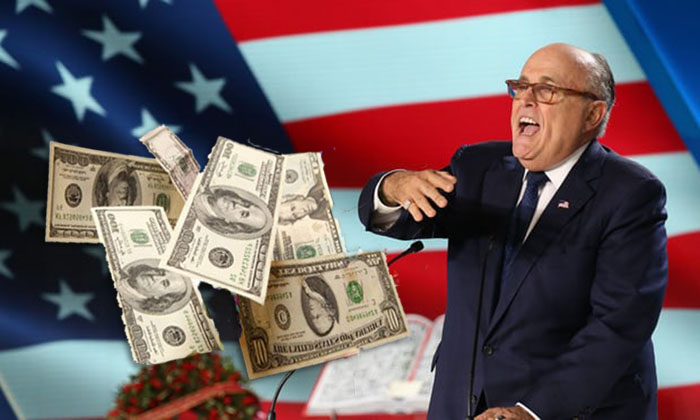
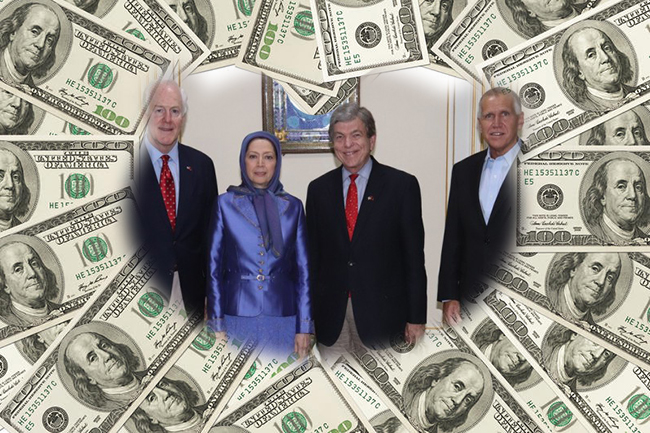
In recent years, as The Intercept has reported, the MEK has poured millions of dollars into reinventing itself as a moderate political group ready to take power in Iran if Western-backed regime change ever takes place. To that end, it lobbied successfully to be removed from the State Department’s list of foreign terrorist organizations in 2012. The Iranian exiles achieved this over the apparent opposition of then-Secretary of State Hillary Clinton, in part by paying a long list of former U.S. officials hefty speaking fees of between $10,000 to $50,000 for hymns of praise like the one Bolton delivered last July.

But, according to Ariane Tabatabai, a Georgetown University scholar, the “cult-like dissident group” — whose married members were reportedly forced to divorce and take a vow of lifelong celibacy — “has no viable chance of seizing power in Iran.”

If the current government is not Iranians’ first choice for a government, the MEK is not even their last — and for good reason. The MEK supported Saddam Hussein during the Iran-Iraq War. The people’s discontent with the Iranian government at that time did not translate into their supporting an external enemy that was firing Scuds into Tehran, using chemical weapons and killing hundreds of thousands of Iranians, including many civilians. Today, the MEK is viewed negatively by most Iranians, who would prefer to maintain the status quo than rush to the arms of what they consider a corrupt, criminal cult.

Despite such doubts that the MEK’s political wing, the National Council of Resistance of Iran, is any more reliable than Ahmad Chalabi’s Iraqi National Congress proved to be, spending lavishly on paid endorsements has earned the group a bipartisan roster of Washington politicians willing to sign up as supporters. At a previous gala, in 2016, Bolton was joined in singing the group’s praises by another former U.N. ambassador, Bill Richardson; a former attorney general, Michael Mukasey; the former State Department spokesperson P.J. Crowley; the former Homeland Security adviser Frances Townsend; the former Rep. Patrick Kennedy, D-R.I.; and the former Vermont Gov. Howard Dean. That Paris gala was hosted by Linda Chavez, a former Reagan administration official.

At a similar event this January, the backdrop behind former Speaker of the House Newt Gingrich, as he praised MEK leader Maryam Rajavi, made the aim of the group’s investment in American politicians clear.

Unsurprisingly, leading figures from among the exile group’s Washington followers have expressed delight over Bolton’s impending elevation to the White House

.@AmbJohnBolton has the right vision and great understanding of the whole region especially the threat from the Iranian regime and the need for a #FreeIran. https://t.co/zlJocvDwgT

— Alireza Jafarzadeh (@A_Jafarzadeh) March 22, 2018

Congratulations to @AmbJohnBolton for the new post. Well deserved. https://t.co/TuXgvx9ApY

— Shirin Nariman (@ShirinNariman) March 22, 2018

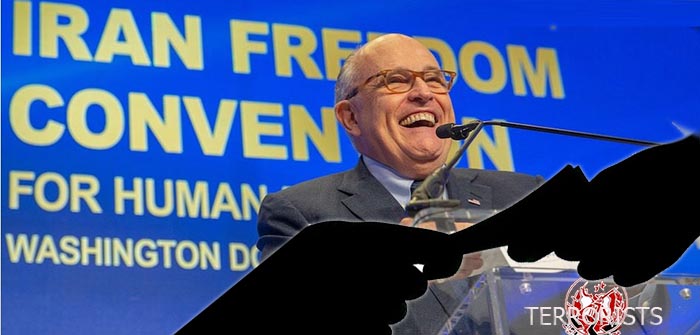
At the group’s celebration of Nowruz, the Persian New Year, in Albania on Tuesday, Rajavi was joined on stage by Rudy Giuliani, the former mayor of New York City.

Mr. Giuliani reiterated that unlike other countries in the region, there is an alternative to the ruling regime in Iran. Thus, its overthrow will lead to peace and tranquillity in a region that has been severely threatened by the clerical regime.#Iran#IranProtests pic.twitter.com/BFb5fWcFgs

— Maryam Rajavi (@Maryam_Rajavi) March 20, 2018

Although the official announcement from the White House was not made until Thursday, Giuliani told the group, to loud applause, that Bolton “is going to be President Trump’s national security adviser.”

In case there was any doubt among the exiles that Bolton might not advise Trump to overthrow Iran’s government, Giuliani assured them that “if anything, John Bolton has become more determined that there needs to be regime change in Iran, that the nuclear agreement needs to be burned, and that you need to be in charge of that country.”

Moments later, Giuliani led the crowd in chanting “regime change.”

Despite the fact that Trump ran for office as a critic of the decision to invade Iraq, Bolton still refuses to call the preemptive attack a mistake. That position stunned even Fox News’s Tucker Carlson, during an interview two weeks ago. After Carlson pointed out that Bolton had called for regime change in Iraq, Libya, Iran, and Syria, and the first of those had been “a disaster,” Bolton disagreed, saying, “I think your analysis is simple-minded, frankly.”

“I think the overthrow of Saddam Hussein, that military action, was a resounding success,” Bolton told Carlson. The chaos that followed in Iraq, he said, was caused by a poorly executed occupation that ended too soon. On the bright side, Bolton said, the mistakes the U.S. made in Iraq offered “lessons about what to do after a regime is overthrown” in the future.

The Intercept.com, Robert Mackey

April 10, 2018 0 comments
FacebookTwitterPinterestWhatsappTelegramSkypeEmail
Iran rally
Mujahedin Khalq; A proxy force

There are no viable alternatives that Trump could bring to power in Iran

By choosing Mike Pompeo as his new Secretary of State and John Bolton as National Security Adviser, US President Donald Trump has formed a hawkish anti-Iran team, indicating that he is planning to bypass diplomacy, scrap the Iran nuclear deal and possibly resort to regime change or military action.

Iran rally

Trump’s anti-Iran team is backed by its regional allies. He held meetings at the White House with Israeli Prime Minister Benjamin Netanyahu on March 5 and Saudi Crown Prince Mohammed bin Salman on March 20 to seal the cooperation. Additionally, on March 23, American, Saudi and UAE national security advisers got together in the White House to discuss how “to counter the Iranian regime’s malign influence and provocative behaviour”.

President Trump may have his teams in place, but it still won’t be easy for him to take decisive action on Iran. Trump is expected to scrap the nuclear deal in May as a first step, however, even this won’t be an easy decision for him to make. In the same month, he is planning to hold a crucial first meeting with North Korean leader Kim Jong-un, who would likely be disinclined to trust a president who has just opted out of an international accord.

He may decide to face all possible repercussions and scrap the deal anyway, but then he would be left with an even harder question: what to do with Iran after breaking the deal? His most likely option would be to try and create some form of chaos to destabilise Iran and push the Iranian establishment out of its comfort zone so the US can dictate terms and get the upper hand.This could be through sending logistic and financial support to the opposition inside Iran, funding proxy “terror” attacks, meddling in elections or supporting internal protests and demonstrations.

Even though there is widespread anger in the country about lack of economic progress; the leaderless and unorganised opposition forces in Iran are unlikely to knowingly cooperate with the US to topple the Iranian establishment. They know that any such move would be brutally dealt with by Iran’s security forces. Also, the memory of the 1953 coup instigated by the US is still fresh in Iranians’ minds so it is unlikely that the opposition would support another US-backed coup or regime change.

Moreover, the strongest opposition force in Iran is already in power. Moderate President Hassan Rouhani has formed an alliance with the reformist camps, and together they are pushing for creating openings within the system through the very limited means available to them. Their mode of cooperation with the West was through the Iran nuclear deal and scrapping it would be the last straw for them.

John Bolton has in the past advocated a joint attack by Israel and the US on Iran’s nuclear facilities, combined with “vigorous American support for Iran’s opposition, aimed at regime change in Tehran”. This is a futile and dangerous solution.

Attacking Iran’s nuclear installations would provoke a fierce response from Iran’s Revolutionary Guard Corps (IRGC), engulfing the entire region and possibly leading to confrontation with Israel.

The idea of regime change without a viable alternative has also proved problematic in the most recent cases of Iraq and Libya. The seven-year US attempt at replacing Bashar al-Assad of Syria has also failed.

Moreover, Bolton advocates bringing to power in Iran a former “terrorist” group, Mujahedin-E Khalq Organisation (MEK), which he regards as a “viable” alternative to the Islamic Republic.

Bolton’s belief in the MEK is ill-founded. The group with a catalogue of human rights abuses has an ideology that blends Islam and Marxism and is referred to as “a cult” by some experts. Although it claims to have adopted moderate policies since 2012 when it was removed from the US “terror” list, most Iranians continue to take a strong exception to its decision to fight in support of Saddam Hussein during the Iran-Iraq War in the 1980s.

Research at Boston College shows that the US tried to change other countries’ governments 72 times during the Cold War and in 66 cases this was done by covert action. According to the data, most of these attempts failed, demonstrating that attempts at regime change “rarely work out as the intervening states expect”.

Moreover, 40 percent of the states that have had foreign-imposed governments have experienced civil wars within the next 10 years.

These results prove that when a regime is dictatorial or corrupt, there are complex underlying reasons that cannot simply be resolved through “regime change”.

“Americans are pushing for harder policies towards Iran, and we need to strengthen our view towards the East, especially China and Russia,” Alaeddin Boroujerdi, head of Iranian parliament‘s National Security Commission told ISNA news agency.

President Trump’s trade war with China, his unprecedented diplomatic war with Russia, combined with the hardening of his stance towards Iran can only further strengthen Iran’s military and economic ties with the two eastern powers to the detriment of the West.

With Russia and Iran both isolated, they would cooperate more on covert action in areas of particular US interest such as Afghanistan and consolidate their victories in Syria. Iran would pour far more funds in support of Hezbollah, Palestinians, the Assad regime, and the Houthis in Yemen.

As of March 2018, the Trump administration has moved away from diplomacy towards increasing the deployment of special operations forces to 149 countries – up from 138 in 2016.

Trump certainly appears to have all but lost the chance to create some kind of platform for direct talks with Iran. But his options for an alternative, hawkish approach also seems to be extremely limited.

The views expressed in this article are the author’s own and do not necessarily reflect Al Jazeera’s editorial stance.

by Massoumeh Torfeh

April 9, 2018 0 comments
FacebookTwitterPinterestWhatsappTelegramSkypeEmail
US_Media_MKO
Mujahedin Khalq; A proxy force

Shameful Truth about the MKO in the American Media

The appointment of John Bolton as US national security adviser by the US president Donald Trump opened an opportunity for journalists and analysts to loom light on Bolton’s notorious connections with the Mujahedin Khalq Organization (the MKO/ MEK/ PMOI/ the Cult of Rajavi). Many reports and articles were eventually published in the American media to warn about the MKO’s threat for the US foreign policy following the appointment of Bolton since as he is a long standing supporter of the formerly-terrorist designated group, the MKO.

US_Media_MKO

The analysis included five aspects of the MKO’s nature:

Totalitarian Cult

Daniel Larison of the American Conservative, a long standing critic of the MKO, posted several articles on the MKO-Bolton ties in the magazine. “The MEK may not be on the U.S. list of foreign terrorist organizations any longer, but it is still a disreputable and despicable group”, he writes. “It is considered a totalitarian cult for good reason.”

Jason Rezaian explains why the MKO is considered a cult: “But it is the group’s activities in the decades since that have cemented its reputation as a deranged cult. For decades its command center was a compound in Iraq’s Diyala province, where more than 3,000 members lived in virtual captivity. The few who were able to escape told of being cut off from their loved ones, forced into arranged marriages, brainwashed, sexually abused and tortured.

“All this was carried out under the supervision of the group’s leaders, Massoud and Maryam Rajavi, the husband and wife at the top of the organization’s pyramid.”

Terrorist entity

“MEK are Terrorists, Even According to Their US Sponsors”, wrote Tony Cartalucci at the New Eastern Outlook. “Despite claims by a growing army of MEK advocates spanning various social media platforms, MEK is without doubt a dangerous terrorist organization. Even those seeking to sponsor MEK as a militant proxy against Iran have admitted as much.”

Cartalucci states that the US State Department admits that the organization carried out terrorism in the past and continues today with abuses toward its own members. The US State Department’s 2012 statement titled, “Delisting of the Mujahedin-e Khalq” would claim:

“With today’s actions, the Department does not overlook or forget the MEK’s past acts of terrorism, including its involvement in the killing of U.S. citizens in Iran in the 1970s and an attack on U.S. soil in 1992. The Department also has serious concerns about the MEK as an organization, particularly with regard to allegations of abuse committed against its own members.”

Larison cites from Elizabeth Rubin the prominent journalist of the New York Times Magazine who was the first to call the MKO as “the Cult of Rajavi” in an article titled the same in June 2003. Rubin had also written about the MKO and its “American fan club” back in 2011:

As a senior State Department official told me, “They are the best financed and organized, but they are so despised inside Iran that they have no traction.” Iranian democracy activists say the group, if it had had the chance, could have become the Khmer Rouge of Iran.

“They areconsidered traitors and killers of Iranian kids,” said the official, who spoke on the condition of anonymity because the Mujahedeen Khalq’s status on the terrorist list is under review.

Misinformation broadcaster

Jason Rezaian comments on Bolton’s enthusiasm for the Mujahideen-e Khalq (MEK) and what it means for U.S. Iran policy:

“The MEK is the type of fringe group that sets up camp across the street from 1600 Pennsylvania Avenue and hands out fliers filled with unsubstantiated claims. This is America— we let crazy people talk. That’s their right, and I would never suggest that they be prohibited from doing that. But giving the MEK a voice in the White House is a terrible idea.”

Larison warns about the penetration of MKO’s propaganda machine in the US policy after Bolton takes the position. “Now that Bolton is in such an influential position in the Trump administration, his connection with and support for the MEK pose some real dangers for the U.S. He could use his position to funnel misinformation from the MEK to the president to distort U.S. policy in their favor,” he says.

Despised by Iranians

Approximately all the journalists share the idea that the MKO is very unpopular in Iran. “It is a measure of how terrible his judgment is and how fanatical his desire for regime change in Iran is that he has become are liable booster of a group that most Iranians despise,” writes Larison.

Jason Rezaian also states, ”The group is loathed by most Iranians, mainly for the traitorous act of fighting alongside the enemy.”

“The group was long a fixture on the State Department’s list of terrorist organizations for having killed American citizens,” he writes. “Bolton and others successfully lobbied to have the designation removed in2012. That did little to change how average Iranians think of the organization.”

He recounts his own authentic experience of living in Iran: “In the seven years I lived in Iran, many people expressed criticism of the ruling establishment — at great potential risk to themselves. Some hoped for regime change by military force, others dreamed of a return of the monarchy and many more wanted to see a peaceful transition to a secular alternative to clerical rule. In all that time, though, I never met a person who thought the MEK should, or could, present a viable alternative.”

Multi-Million Lobbying Campaign

The MKO’s well paid lobbying campaign in the US Congress and administration has been always discussed as a crucial issue of Hypocrisy in the US government. The lobby had been active even during the time the group was in the Foreign Terrorist list of the State Department. Cartalucci criticizes the  MKO’s lobby, “Worst of all, the terrorist organization Bolton lobbied for was literally listed on the US State Department’s Foreign Terrorist Organizations list during his lobbying activities – in direct violation of US counter-terrorism laws.”

“There has been a shameful parade of former U.S. officials, retired military officers, and has-been politicians making their annual pilgrimage to pay tribute to Maryam Rajavi in Paris every year,” Daniel Larison writes. “Bolton has been a faithful devotee for the last decade, and when he was just a former Bush administration official few people cared that he was disgracing himself with his appearances there.”

April 8, 2018 0 comments
FacebookTwitterPinterestWhatsappTelegramSkypeEmail
Newer Posts
Older Posts

Recent Posts

  • The black box of the torture camps of the MEK

    December 24, 2025
  • Pregnancy was taboo in the MEK

    December 22, 2025
  • MEPs who lack awareness about the MEK’s nature

    December 20, 2025
  • Why did Massoud Rajavi enforce divorces in the MEK?

    December 15, 2025
  • Massoud Rajavi and widespread sexual abuse of female members

    December 10, 2025
  • Facebook
  • Twitter
  • Instagram
  • Youtube

© 2003 - 2025 NEJAT Society . All Rights Reserved. NejatNGO.org


Back To Top
Nejat Society
  • Home
  • Articles
  • Media
    • Cartoons
    • NewsPics
    • Photo Gallery
    • Videos
  • Publications
    • Books
    • Nejat NewsLetter
    • Pars Brief
  • About Us
  • Contact us
  • Editions
    • عربي
    • فارسی
    • Shqip