Nejat Society
  • Home
  • Articles
  • Media
    • Cartoons
    • NewsPics
    • Photo Gallery
    • Videos
  • Publications
    • Books
    • Nejat NewsLetter
    • Pars Brief
  • About Us
  • Contact us
  • Editions
    • عربي
    • فارسی
    • Shqip
Nejat Society
Nejat Society
  • Home
  • Articles
  • Media
    • Cartoons
    • NewsPics
    • Photo Gallery
    • Videos
  • Publications
    • Books
    • Nejat NewsLetter
    • Pars Brief
  • About Us
  • Contact us
  • Editions
    • عربي
    • فارسی
    • Shqip
© 2003 - 2024 NEJAT Society. nejatngo.org
Mujahedin Khalq Organization members' families

I have vowed to God, not to die till I visit my son

Nejat Society members of Zanjan Province Branch met a MKO hostage parents.

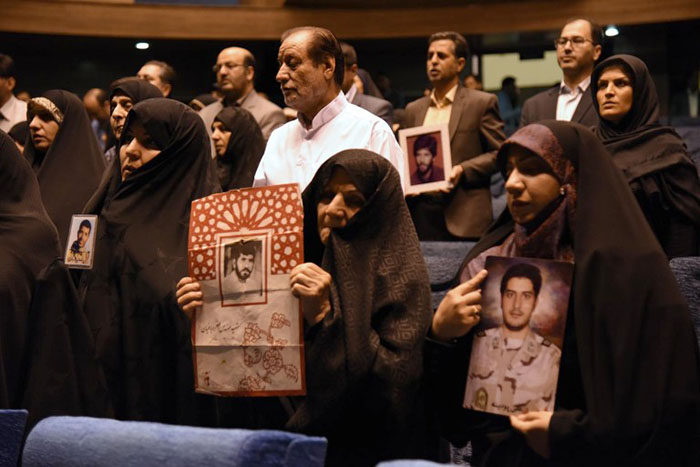
Morteza Ghadimi is behind the bars of the Mujahedin-e Khalq now for long years. He has not contact his family during these years. His ailing, aged parents are impatiently waiting to visit their beloved son again.

Morteza’s mother says:” I have vowed to my God, not to die till I visit my loved son”


April 7, 2018 0 comments
FacebookTwitterPinterestWhatsappTelegramSkypeEmail
weekly digest
Iran Interlink Weekly Digest

Iran Interlink Weekly Digest – 227

++ Jim Lobe, Lobelog: Even Bill Kristol is Worried about Bolton’. “Kristol, who remains probably the single most influential figure …

++ Last week there were some small protests in Khuzestan against a TV programme which had used a map, with dolls displaying ethnicity, which had omitted to show Arab clothes. The protests soon died away after the producer apologised. All last week the Saudi backed MEK have talked endlessly about the separation of Khuzestan based on that incident. Farsi reaction to this is again ‘Rajavi, shut up!’ Many commentators published documents showing the MEK killing Arabs in the south of Iraq and Kurds in the north of Iraq. They say the last people who can talk about ethnicity with that background are the MEK.

++ In Tirana this week the MEK held a big celebration over the appointment of John Bolton. People inside reported that Mehdi Abrishamchi (Rajavi’s first husband) got up and danced. There was also a statement from (the late) Massoud Rajavi read out saying, “It is done and finished, the war has started, and we have won”. All this has become a gif-worthy joke among many commentators.

++ London Kayhan published an article about Iranian oppositions, saying it is necessary for them to get together and find common cause. The article referred to the past crimes of the MEK but indicated that if the MEK reject what they did, they can still join the opposition. ‘You have wasted people’s energies until now, stop that and become a real opposition with us.’ In response to this article, ex-member Davoud Baghervand Arshad has written a lengthy explanation about how the MEK have always fought against other opposition groups and tried to eliminate them so as to be the only one, instead of opposing the IRI. His article concludes, ‘if you still think there is a one in a million chance of bringing along this cult and integrating it into the opposition groups then you are badly mistaken and still don’t get who they are’.

In English:

++ An article by Ted Regencia in Aljazeera charts the MEK’s violent history, before showing that the group’s claim to have given up violence does not match with its continued support for regime change as expressed by John Bolton and Turki bin Faisal al Saud. Regencia quotes analysts and reports which confirm the Iranian people’s deep hatred and mistrust of the group because of its anti-Iranian behaviour.“I have not heard anyone asking them [MEK] to make a comeback [in Iran] or anything like that,” said Tehran-based journalist Saeed Jalili. MEK advocate Senator Robert Torricelli did not comment for the article, “But in an article published in Politico in 2016, Torricelli said he has seen ‘no evidence’ that the MEK ‘took part in terrorist activities against Iranians or Americans’. Torricelli said the group saved American lives following the 2003 US invasion of Iraq, by identifying locations of improvised explosive devices.”

++ Tony Cartalucci, Global Research, writes ‘US National Security Advisor John Bolton Backs MEK Terrorists’. As well as Bolton’s role in George Bush’s Iraq war, his lobbying for a dangerous terrorist organisation – MEK – has greater implications. Even Bolton’s supporters are worried. “A National Security Advisor openly guilty of violating US anti-terrorism laws having provided material support to a US State Department-listed foreign terrorist organization for years illustrates just how profoundly compromised US institutions are and reflects an agenda that not only exclusively serves special interests – but does so at the cost of the American people’s actual security.”

++ Jim Lobe, Lobelog: Even Bill Kristol is Worried about Bolton’. “Kristol, who remains probably the single most influential figure in the increasingly fractious neoconservative movement, expressed some serious discomfort about the appointment” of John Bolton. Apparently even the most hawkish anti-Iran pundits find Bolton ‘utterly unfitted’ for office in the White House. Of course, Bolton’s long-term support for the MEK contributes to that view.

++ MEP Ana Gomes and MEP Patricia Lalonde will host a debate in the European Parliament next week about the MEK threat in Albania. Interested persons are asked to contact Ms Gomes’ office. Speakers include Anne Khodabandeh, De-Radicalisation Consultant.

 April 06, 2018

April 7, 2018 0 comments
FacebookTwitterPinterestWhatsappTelegramSkypeEmail
Albania

EUP Debate: Mojahedin-e Khaq (MEK) threat in Albania

The office of Ana Gomes MEP,

10th April, 16H30 to 18H

Speakers:

Vabba Vannuccini. Journalist of the Italian newspaper La Repubblica

Nicola Pedde, Rome based Institute for Global Studies

Olsi Jazexhi, Director of the Free Media Institute in Tirana

Migena Balla, Lawyer B&B Stutio Legale in Tirana

Anne Khodabandeh, Open Minds, De-Radicalisation Consultant.

Hosted by: Anna Gomes MEP & Particia Lalonde MEP

MEP Ana Gomes and MEP Patricia Lalonde would like to invite you to attend their event: “Mojahedin-E Khalq (MEK) threat in Albania” on April 10th, from 16h30 to 18h.

This event will take place at the European Parliament, in room A3H-1.

If you wish to attend, we would kindly ask you to provide the following information if an accreditation to the European Parliament is needed:

First name:

Last name:

Date of Birth:

Nationality:

ID Card or Passport number:

Type of identification document (if it is ID or Passport):

April 7, 2018 0 comments
FacebookTwitterPinterestWhatsappTelegramSkypeEmail
Jhon Bolton - warmonger - terrorist lobbist
Mujahedin Khalq; A proxy force

The Bolton threat to the Iran nuclear deal

On the campaign trail, Donald Trump often denounced the failures of the US foreign policy establishment, including the trigger-happy Washington insiders who, too often, had led the country down the path of devastating wars. In particular, leading up to and since his election, President Trump has often invoked the example of the 2003 invasion of Iraq as a monumental mistake in contemporary US foreign policy. But, recently, President Trump appointed one of the architects of the Iraq war, John Bolton, to serve as his third national security adviser, replacing H.R. McMaster, a three-star general with a moderate outlook. Bolton’s track record in the nonproliferation space—as the undersecretary of state for arms control and international security affairs from 2001 to 2005, his brief tenure as the US Ambassador to the United Nations in 2005 to 2006, and his writings and media appearances in recent years—all point to the end of the nuclear deal with Iran and a generally more aggressive stance on the Islamic Republic.

Jhon Bolton - warmonger - terrorist lobbist

The Trump administration’s approach has largely been one of increased pressure. If a country’s foreign policy toolbox includes a number of tools, ranging from sticks to carrots, the President’s Iran policy has largely consisted of sticks. But the administration has so far only utilized some of these tools, mainly the adoption of harsher rhetoric, including denunciations at international fora, particularly as undertaken by Ambassador Nikki Haley at the UN Security Council, and sanctions and designations. Hence, so far, Washington has steered away from an all-out confrontation with Iran. The President has long expressed his opposition to the nuclear deal, and his administration has increased the uncertainty surrounding its future and refused to recertify the agreement. But the administration has so far decided not to pull the trigger and withdraw from the deal, as Trump had promised on the campaign trail. Several key administration officials can be credited with moderating the administration’s stance vis-à-vis the nuclear deal, including former Secretary of State Rex Tillerson, Secretary of Defense James Mattis, and McMaster.

But McMaster’s ousting and Bolton’s arrival, potentially coupled with Mike Pompeo’s ascendance at the State Department as Tillerson’s replacement, make it much likelier for the administration to pull out of the nuclear deal and potentially even confront Iran militarily.

To understand why this may be the case, it’s imperative to examine Bolton’s worldview, nonproliferation track record, and stance on Iran.

Bolton largely sees the US foreign policy toolkit through the prism of what most national security professionals view as the last resort: military action. Indeed, Bolton has long advocated for bombing countries to settle disputes and mitigate threats, before such options as negotiations, sanctions, and naming and shaming on the international stage are fully exhausted. In particular, Bolton famously called for attacking Iran to address the challenge stemming from the country’s nuclear ambitions—and this, as the negotiators were working toward a comprehensive agreement achieving strict limits on those ambitions. Likewise, Bolton has often brushed aside the need for multilateralism. In fact, Bolton seems to distrust and disdain negotiations, particularly those requiring American concessions. Multilateralism and the use of the broad American foreign policy toolbox—including incentives, economic and political pressure, the threat of the use of force, and diplomacy—were central to the nuclear talks and resulting agreement. And they also yielded more lasting results at a lower cost than military action would have entailed.

Bolton’s nonproliferation track record is predominantly one of missed opportunities and outright failures. He advocated for the US invasion of Iraq, based on the idea that Saddam Hussein’s regime had retained threatening weapons of mass destruction programs. As he put it then, Bolton was “confident” that Saddam was hiding such weapons facilities. While the Iraqi regime did have WMD programs and even deployed chemical weapons during the Iran-Iraq War (1980-88), that was no longer the case when America attacked the country in 2003. In fact, in a situation reminiscent of the Trump administration’s (and Bolton’s) stance toward Iran, international inspectors were on the ground in 2003 and verifying the state of Iraq’s WMD program, but they were not given a fair chance to complete their work and present their findings before the United States invaded. In fact, in a closer look at the developments leading to the Iraq war, one can spot many similarities between the claims presented by those arguing that time was ticking so the United States had to attack Iraq to prevent catastrophe, and the arguments put forward now by Bolton on Iran. Today, nearly 15 years after the start of Iraq war—where America still sees no end in sight—Bolton continues to support the conflict. And in another situation with parallels to the Iranian controversy, Bolton supported nixing the 1994 Agreed Framework with North Korea. While that agreement was nowhere as comprehensive and strong as the Iran nuclear deal, its collapse did lead to today’s standoff on the Korean peninsula, with Pyongyang possessing a small but growing nuclear arsenal that either has or likely will soon have the capability to hit the United States.

From these foreign policy failures, Bolton has concluded that the use of force and the abrogation of international agreements are the ways for the United States to achieve its goals—despite abundant evidence to the contrary.

But perhaps most troubling is Bolton’s cozy relationship with the Mujahedin-e Khalq (meK), an Iranian opposition group that he hails as a viable alternative to the Islamic Republic, a champion of democracy and human rights, and an agent for a change of behavior by Iran. But the MeK is neither a viable alternative to the current Iranian government nor a force for democracy and human rights, as I have written elsewhere. Instead, it’s a cult-like organization that has abused its own members and is already publishing lists of journalists for its sympathizers to target. It enjoys little support inside Iran and is responsible for a number of terrorist attacks on Iranians and Americans alike. Moreover, there’s no guarantee that the MeK would adopt a policy on the country’s nuclear program or other nefarious activities that is different from the current regime’s. More important yet, the very idea that regime change, Bolton’s preferred foreign policy option to deal with Iran, would be successful and yield a sustainable outcome is put in question by the legacy of the wars in Afghanistan and Iraq.

In that sense, Bolton’s worldview and approach to Iran differ from President Trump’s “America First” policy, which seeks to minimize American involvement in various theaters. But with moderate voices largely isolated and sidelined in the Trump administration, the nuclear deal’s days seem numbered and a potential confrontation with Iran likely.

It must be remembered that US intelligence community has found no evidence of nuclear weapon activities in Iran since 2009. Despite its shortcomings, the Iran nuclear deal has significantly scaled back Tehran’s nuclear program. By May 12, the president will have to choose whether to reissue waivers of the nuclear-related sanctions on Iran, as provided for in the nuclear deal. The administration has already indicated to European negotiating partners and the rest of the world that the President may refuse to do so if no “fixes” to the deal’s shortcomings, as outlined by the Trump team, are found. The administration may refuse to waive the sanctions without withdrawing from the agreement, or simply withdraw from it altogether. While neither scenario is ideal, the latter would be much more complex to rectify down the line than the former.

Indeed, if the deal collapses altogether—which, absent the United States, it will, whether it dies slowly, or immediately because Iran pulls out as well—the Iranians aren’t likely to return to the negotiating table for the foreseeable future. Indeed, as the winter 2017-18 protests in Iran demonstrated, the general public there is fed up with the country’s economic situation, and it increasingly views the nuclear deal as a series of empty promises made in exchange for real nuclear concessions by Iran. Regime hardliners regularly target President Hassan Rouhani and his team that negotiated the deal. And the deal has lost the support of key power centers, including the Supreme Leader and the Revolutionary Guards. The best approach to rectifying the agreement’s shortcomings lie in an option the administration has ruled out altogether: preserving the nuclear deal and building on it, by leveraging the channels of communication that resulted from it, to address other areas of concern in Iran’s behavior, including limitations on the country’s missile program.

For the time being, despite increased pessimism about the fate of the nuclear deal, the Europeans continue to have some leverage over and credibility in Iran—although their attempt to impose sanctions on Iran to appease the Trump administration and push it to preserve the deal may backfire. Whether the implementation of the agreement continues will largely depend on them. The Europeans must continue to engage Iran and preserve the channels of communication that are critical to deescalating the tensions likely to arise from the toxic combination of hawkish voices gaining prominence in Washington—now including John Bolton’s—and hardline pushback in Tehran.

Ariane Tabatabai, The Bulletin.org

Ariane M. Tabatabai is the director of curriculum and an assistant teaching professor of security studies in the Georgetown University…


April 5, 2018 0 comments
FacebookTwitterPinterestWhatsappTelegramSkypeEmail
Female members of the Mujahedin-e Khalq at Camp Ashraf
Mujahedin Khalq; A proxy force

John Bolton´s Plan: Regime Change in Iran in 2018

Sputnik 26 March 2018 :

Shaul Mofaz, former Chief of Staff of the Israeli Defense Forces and ex Minister of Defense: “I have known John Bolton since his days as US ambassador to the United Nations. He tried to convince me that Israel must attack Iran,” Shaul Mofaz said.

The Intercept 23 March 2018:

Rob Malley, who coordinated Middle East policy in the Obama administration, observed that Bolton’s appointment, along with the nomination of Iran deal critic Mike Pompeo as secretary of state, seemed to signal that the (Iran nuclear)  agreement would most likely be “dead and buried” within months. Trita Parsi, leader of the National Iranian American Council wrote on Twitter: “People, let this be very clear: The appointment of Bolton is essentially a declaration of war with Iran. With Pompeo and Bolton, Trump is assembling a WAR CABINET.”

Just eight months ago, at a Paris gathering, Bolton told members of the Iranian exile group, known as the Mujahedeen-e-Khalq, MEK, or People’s Mujahedeen, that the Trump administration should embrace their goal of immediate regime change in Iran and recognize their group as a “viable” alternative.

“The outcome of the president’s policy review should be to determine that the Ayatollah Khomeini’s 1979 revolution will not last until its 40th birthday,” Bolton said. (The 40th anniversary of the Iranian revolution will be on February 11, 2019.) “The declared policy of the United States should be the overthrow of the mullahs’ regime in Tehran,” Bolton added. “The behavior and the objectives of the regime are not going to change and, therefore, the only solution is to change the regime itself.”

As the Iranian expatriate journalist Bahman Kalbasi noted, Bolton concluded his address to the exiles with a rousing promise: “And that’s why, before 2019, we here will celebrate in Tehran!”

To understand how extraordinary it is that the man about to become the president’s most senior national security official made this promise to the MEK, it is important to know that, until recently, the Iranian dissidents had spent three decades trying to achieve their aims through violence, including terrorist attacks.

The MEK supported Saddam Hussein during the Iran-Iraq war. Today, the MEK is viewed negatively by most Iranians, who would prefer to maintain the status quo instead of embracing what they consider a corrupt, criminal cult that killed many Iranians during the war.

Sputnik 25 March 2018: Iran’s secretary of the Supreme National  Security Council Ali Shamkhani has lashed out at the appointment of former US ambassador John Bolton as US National Security adviser, said the Iranian Fars news agency. The secretary specifically pointed out Bolton’s ties to the Mujahedeen-e-Khalq (MEK) group, the Iranian Marxist opposition seeking to overthrow the Ayatollah government and had been on terrorist group lists both in Europe and the US for a long time (until it was removed in 2009 and 2012 respectively) and still is in Iran.

“It is a shame that the United States National Security Adviser is being paid by a terrorist group,” Ali Shamkhani said.

Bolton has been attending conferences organized by MEK for years, which consider themselves Iranian exile government.

by Anders, The bulletin.org

April 4, 2018 0 comments
FacebookTwitterPinterestWhatsappTelegramSkypeEmail
Nejat Publications

Nejat Newsletter No. 53

Inside This Issue:

  1. Nowruz Day 21 MarchNejat Newsletter
  2. Is Albania a Partner of the US in Supporting International Terrorism?
  3. The MKO in the Past One Year
  4. Albanian Media Fooled By MEK ‘Misdirection’
  5. Police Report on the Situation of the Iranian Mojahedin in Albania
  6. In Brief
April 4, 2018 0 comments
FacebookTwitterPinterestWhatsappTelegramSkypeEmail
Mujahedin Khalq Organization as a terrorist group

MEK’s violent past looms over US lobby for regime change in Iran

On June 28, 1981, a huge explosion ripped through the headquarters of Iran’s ruling Islamic Republic Party, killing at least 74 government officials, including the country’s chief justice, Ayatollah Mohammed Beheshti and more than 20 parliament members, gathered that Sunday evening in southern Tehran.

Iran blamed the attack on the Mujahedeen-e-Khalq (MEK), a left-wing political group, which also killed Americans before the 1979 Islamic Revolution.

The suspect reportedly placed the bomb in a rubbish bin near where party leader Beheshti, 52, was addressing the group.

The incident, one of the deadliest political killings in Iran’s history, is still remembered as the Haft-e-Tir bombing, so named after the date when it took place on the Persian calendar.

HAS THE MEK CHANGEDHAS THE MEK CHANGED

A busy square and a subway station in central Tehran were similarly named in honour of the victims.

Two months later, President Mohammad Ali Rajaei, Prime Minister Mohammad Javad Bahonar, and three other people were also killed when an explosive hidden in a briefcase detonated inside the prime minister’s office.

The new president had barely escaped the June bombing.

The effect of the explosion reverberated through the parliament building nearby, and it took more than two hours to put out the fire that followed the blast, according to witness accounts.

A Harvard International Review article described the device as”very sophisticated”.

Bahonar’s secretary turned out to be an undercover MEK operative, and was identified by investigators as the person who planted the bomb. He and the Haft-e-Tir bombing suspect were never arrested.

‘No love lost for MEK’

The MEK’s history of violence has resurfaced in recent days, after US President Donald Trump appointed John Bolton as his national security adviser. The former US ambassador to the UN is a lobbyist for the group and its”government-in-exile”, the Iran National Council of Resistance.

Bolton and the MEK support Trump’s threat to undo the Iran nuclear deal and advocate for”regime change”in Iran. But critics warned the group’s proximity to the levers of American power and the policy they espouse could be a recipe for more bloodshed in the Middle East.

The MEK said it has long renounced violence to advance its goals in Iran. It said it supports”a democratic Iran based on the popular vote”, and the separation of church and state. In September 2012, it was removed from the US”terror list”.

But when Bolton spoke before the group in July 2017 in Paris, members cheered loudly as he said it should be a US policy goal that the Iranian regime”will not last until its 40th birthday”on April 1, 2019.

MEK in Iraq

“I have said for over 10 years since coming to these events, that the declared policy of the United States of America should be the overthrow of the mullah’s regime in Tehran.”

A year before that, Prince Turki bin Faisal Al Saud, a former intelligence chief of Saudi Arabia, also spoke before the group, denouncing the”Khomeini cancer”, in reference to the Islamic Republic’s founder and first Supreme Leader, Ayatollah Ruhollah Khomeini.

Declarations such as those, however, only make the MEK more unpopular in Tehran, diminishing the likelihood that it could play a role in the country’s political future, observers said.

“There is no sympathy towards the group in Iran,”said Marzieh Javadi, a Tehran-based foreign policy expert who closely follows Iran and US relations.

Among the Iranian public, there is a negative view towards the MEK not only because of its policy of regime change, but more so because of its role in the post-revolution political assassinations and the Iran-Iraq war in the 1980s, she said.

At the height of the war between Iran and Iraq, the MEK sided with Baghdad, sending as many as 7,000 of its members to Iraq’s Camp Ashraf near the border with Iran.

According to the RAND Corporation think-tank, the MEK launched numerous raids across the border into Iran.

In exchange for its support of Saddam Hussein, MEK received”protection, funding, weapons, ammunition, vehicles, tanks, military training, and the use of land”.

That decision by the MEK to collaborate with Saddam only magnified Iranian public opinion against the group, Javadi said.

“That was a very dark point in the history of Iran, and that is why there is hostility towards these people,”Javadi said.

‘Socialist ideology’

Saeed Jalili, a Tehran-based journalist and expert on the Iranian economy, said with the group’s chequered past, it is doubtful the MEK has any significant following inside Iran now.

“I have not heard anyone asking them [MEK] to make a comeback [in Iran] or anything like that,”he said.

Majority of Iranians”can’t stand the idea of having a socialist regime”, Jalili said referring to”cruel”single-party ruling system in communist countries.

“The fact that they are believed to be promoting a strict communist ideology makes them less likable here,”he told Al Jazeera.

“Iranians believe it’s no different than the one we already have.”

Al Jazeera contacted former US senator Robert Torricelli, a lawyer of MEK, for comment. He did not reply as of the publishing of this story.

But in an article published in Politico in 2016, Torricelli said he has seen”no evidence”that the MEK”took part in terrorist activities against Iranians or Americans”.

Torricelli said the group saved American lives following the 2003 US invasion of Iraq, by identifying locations of improvised explosive devices.

Founded in 1965 by a group of students from Tehran University, the MEK embraced a combination of Marxist philosophy and Islamic values, and supported an armed revolt against Shah Mohammad Reza Pahlavi, the last royal ruler of the country.

Before the revolution, the MEK carried out attacks on the Shah’s government and his American allies, including the killing of the Tehran police chief in 1972, and two US air force officers in 1975.

Right after the establishment of the Islamic Republic in 1979, MEK members were also believed to have participated in the hostage-taking at the US embassy in Tehran, which lasted for 444 days, according to the United States Institute of Peace and The National Interest foreign policy magazine.

But they later split with the dominant sectarian ruling party, and began targeting Muslim leaders and government officials. In retaliation, the government executed socialist figures and MEK members.

MEK’s rift with Iran worsened when its leader, Masoud Rajavi, aligned with Saddam in the eight-year Iran-Iraq War.

‘Cult-like’

The organisation is now based in Paris and is led by Rajavi’s wife, Maryam Rajavi, an engineer and native of Tehran. It is unknown whether Masoud is still alive.

In her speeches as head of the MEK, Maryman has repeatedly highlighted her policy on gender equality, saying the rights of women are”linked to the struggle against … fundamentalism”.

Her organisation has also vowed to abolish the death penalty and promote freedom of assembly in a”free Iran”.

Torricelli praised MEK as”the most organised and disciplined of the Iranian opposition groups”.

Al Jazeera also requested comment, but received no response, from the office of former New York City mayor Rudy Giuliani, who spoke at the Persian New Year event of MEK in Albania on March 20.

At the celebration, Giuliani told thousands of cheering MEK members that the appointment of Bolton as President Trump’s national security adviser is”very exciting”, while reminding them of Bolton’s 2017 promise of regime change in Iran by 2019.

“You remember John Bolton? You think he changed his mind? No. In fact, if anything, John Bolton has become more determined that there needs to be regime change in Iran, that the nuclear agreement needs to be burned, and that you need to be in charge of that country.”

Iranians, however,”fundamentally don’t trust MEK’s narrative of history and their actions”, said Amir Havasi, an independent journalist in Iran.

Not counting its history of violence, the MEK’s link to the Trump administration”makes them a total pariah in Iran”now, Havasi said, adding the organisation is even more unpopular than the monarchists – those who supported Iran’s overthrown royal ruler.

How the Rajavis run the MEK is also a mystery, according to Kayvan Hosseini, editor of Radio Farda, the Persian-language service of Radio Free Europe/Radio Liberty.

He said former members accused the MEK of acting”like a cult”, and no one is allowed to criticise the Rajavis. There have also been reports of”forced divorces”and”group confessions”of members.

Hosseini said Maryam Rajavi has refused to speak to journalists and answer questions about her organisation.

“As long as they keep their door closed to independent journalists and their leaders refuse to answer to the media, it is not possible to know the truth about MEK.”

Meanwhile, Hosseini said it is not only the MEK but also other opposition groups who”actively seek”regime change in Iran.

But he said it is not up to any particular individual or organisation to decide who should be the”alternative”to the current government in Iran.

“That is a question for the Iranian nation. They should decide whether to keep their current government, or change it to any other form of government they desire.”

April 3, 2018 0 comments
FacebookTwitterPinterestWhatsappTelegramSkypeEmail
weekly digest
Iran Interlink Weekly Digest

Iran Interlink Weekly Digest – 226


++ The MEK leadership’s only mission this week has been to pump up the members by promising that ‘John Bolton will save us, and we will go to Iran’, a message entirely for internal consumption. The reaction – mostly from ex-members – has been to try to wake people inside the MEK up. For example, some point out that Rudi Giuliani sat with Maryam Rajavi in the Nowruz show and asked members to clap for one minute for the martyrs of MEK. He knows they were anti-Imperialism martyrs, but that doesn’t matter to him or Rajavi. Some commentators talk about the Haftsin table for Nowruz. Some years the MEK have a table of items beginning with ‘S’ which symbolise Sarneguni [overthrow], some years they don’t. This year they didn’t. It’s just a game they are playing. Mainly, commentators say that Maryam Rajavi has simply gone over the top. One day she presents a list of MEK martyrs to John McCain. This time, ridiculously, she awarded Giuliani with a ‘medal of Free Iran’. Even more ridiculous is that he accepted it; anything for money. Others say that this organisation, after the deaths of benefactor Saddam and leader Massoud Rajavi, is being used for anything and everything by everyone. One day it is in the hands of the Saudis, the next day Giuliani. Even Iran uses it to claim that the uprising in Iran is their fault. This is the true meaning of ‘mercenary’ force.

In English:

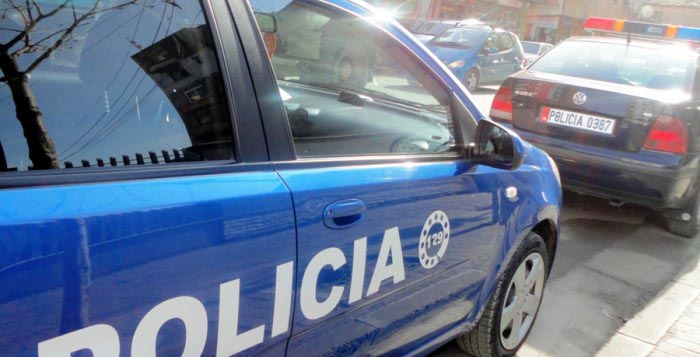
++ Fax Web in Albania reported that 124 former MEK who are resident in the country made a formal asylum request to the Albanian police. The police say there is credible evidence that the MEK’s death threats and other intimidation are real and could end in murder as happened in Iraq. Since 21st February the police have implemented measures to protect and guarantee their lives. Former Military Intelligence Director Ylli Zyla told Fax Web that “a good number of the Mojahedin that are in our country are elderly and do not pose a high risk”. Zyla said further that the security services in our country are keeping these people under surveillance. “The security services have the ability to control this mass of people and the work of their ranks. They have no way of influencing Iranian politics and they have a rule that they cannot get married”, said Zyla.

++ Gazeta Impakt of Tirana published in full the Albanian Information Service report mentioned by Fax Web. “The report highlights the violent attacks and threats of murder that the MEK is making against the defectors who have decided to abandon jihad and deradicalize in Albania, and who the MEK accuse of acting as agents of Iran. Albanian police and SHISH are taking the threats that MEK is making against these deradicalized jihadists in Albania seriously and has placed them under protection from the possibility of assassination by Maryam Rajavi’s extremists.” Pointing out that the MEK’s calls for violent regime change are illegal in Albania, the report continues, “Since the MEK was brought to Albania by the US Intelligence services and used as a diversionary and terrorist organization against Iran and is protected by US-based Senators such as John Bolton and John McCain, the MEK’s violations of Albanian laws are ignored by the Albanian authorities.”

++ Masses of outraged articles appeared from every side in response to Trump’s proposed appointment of John Bolton as his National Security Advisor. Many linked Bolton to the MEK:

+ Jason Rezaian, Washington Post, ‘John Bolton wants regime change in Iran, and so does the cult that paid him’

+ Washington Post (AP), (quoting Iran’s Fars News), ‘Iran: Naming John Bolton national security adviser shameful’

+ Daniel Larison, The American Conservative, ‘Why Bolton’s MEK Connection Matters’

+ Daniel Larison, The American Conservative, ‘Bolton and the Noxious U.S.-Saudi Relationship’

+ Gareth Porter, The American Conservative, ‘The Untold Story of John Bolton’s Campaign for War With Iran’

++ Olsi Jazexhi, Global Research, asks ‘Is Albania a Partner of the US in Supporting International Terrorism?’ Jazexhi charts how Albanian politicians, are being co-opted by the MEK and Americans such as Rudi Giuliani, for promoting their regime change agenda. The MEK’s insistence that Iran is an active threat in the Balkans has artificially skewed Intelligence and security behaviour in the region, something Israel is particularly interested in. The Albanian government which is ordered by people like John Bolton, John McCain and Rudy Giuliani to do all they can to support the Mojahedin, have finally started to attack even Shia and Sufi religious institutions in Albania. The UNHCR, instead of helping MEK who have escaped the group, support the MEK and tell dissociates to go back to the MEK for financial support. Media which dare to show how the defectors have been abused, enslaved and radicalized by the MEK, are attacked for being “bought by Iran”.

The writer concludes: “The attacks that the Mojahedin are launching against local Muslim communities, academics and intellectuals, journalists and media are shocking the Albanian public. Until now they have seen the Mojahedin as some foreign terrorist leftovers that the USA wanted to dump in Albania after they were expelled from Iraq. However, the recent media and police attacks are showing to the Albanian public that the Mojahedin are a threat not only to Iran, but to Albania too. On the other hand, the calls from US senators like Rudy Giuliani, John Bolton and John McCain on the Mojahedin who are based in Albania to go and wage jihad in Iran, make many Albanians worried and upset. Many ask: if the USA wants to use the Mojahedin to fight Iran, why don’t they host them in the USA instead of Albania? … Mr. Rudy Giuliani! Mr. John Bolton! Can you please take your Mojahedin to the USA and from there do anything you want! We do not want to fight another Middle Eastern war for you. Leave us alone, please!”

March 30, 2018

April 3, 2018 0 comments
FacebookTwitterPinterestWhatsappTelegramSkypeEmail
Mujahedin Khalq; A proxy force

The Untold Story of John Bolton’s Campaign for War With Iran

Everyone knows Bolton is a hawk. Less understood is how he labored in secret to drive Washington and Tehran apart.

In my reporting on U.S.-Israeli policy, I have tracked numerous episodes in which the United States and/or Israel made moves that seemed to indicate preparations for war against Iran. Each time—in 2007, in 2008, and again in 2011—those moves, presented in corporate media as presaging attacks on Tehran, were actually bluffs aimed at putting pressure on the Iranian government.

Gareth Porter

But the strong likelihood that Donald Trump will now choose John Bolton as his next national security advisor creates a prospect of war with Iran that is very real. Bolton is no ordinary neoconservative hawk. He has been obsessed for many years with going to war against the Islamic Republic, calling repeatedly for bombing Iran in his regular appearances on Fox News, without the slightest indication that he understands the consequences of such a policy.

His is not merely a rhetorical stance: Bolton actively conspired during his tenure as the Bush administration’s policymaker on Iran from 2002 through 2004 to establish the political conditions necessary for the administration to carry out military action.

More than anyone else inside or outside the Trump administration, Bolton has already influenced Trump to tear up the Iran nuclear deal. Bolton parlayed his connection with the primary financier behind both Benjamin Netanyahu and Donald Trump himself—the militantly Zionist casino magnate Sheldon Adelson—to get Trump’s ear last October, just as the president was preparing to announce his policy on the Iran nuclear agreement, the Joint Comprehensive Plan of Action (JCPOA). He spoke with Trump by phone from Las Vegas after meeting with Adelson.

It was Bolton who persuaded Trump to commit to specific language pledging to pull out of the JCPOA if Congress and America’s European allies did not go along with demands for major changes that were clearly calculated to ensure the deal would fall apart.

Although Bolton was passed over for the job of secretary of state, he now appears to have had the inside track for national security advisor. Trump met with Bolton on March 6 and told him, “We need you here, John,” according to a Bolton associate. Bolton said he would only take secretary of state or national security advisor, whereupon Trump promised, “I’ll call you really soon.” Trump then replaced Secretary of State Rex Tillerson with former CIA director Mike Pompeo, after which White House sources leaked to the media Trump’s intention to replace H.R. McMaster within a matter of weeks.

The only other possible candidate for the position mentioned in media accounts is Keith Kellogg, a retired lieutenant general who was acting national security advisor after General Michael Flynn was ousted in February 2017.

Bolton’s high-profile advocacy of war with Iran is well known. What is not at all well known is that, when he was under secretary of state for arms control and international security, he executed a complex and devious strategy aimed at creating the justification for a U.S. attack on Iran. Bolton sought to convict the Islamic Republic in the court of international public opinion of having a covert nuclear weapons program using a combination of diplomatic pressure, crude propaganda, and fabricated evidence.

Despite the fact that Bolton was technically under the supervision of Secretary of State Colin Powell, his actual boss in devising and carrying out that strategy was Vice President Dick Cheney. Bolton was also the administration’s main point of contact with the Israeli government, and with Cheney’s backing, he was able to flout normal State Department rules by taking a series of trips to Israel in 2003 and 2004 without having the required clearance from the State Department’s Bureau for Near Eastern Affairs.

Thus, at the very moment that Powell was saying administration policy was not to attack Iran, Bolton was working with the Israelis to lay the groundwork for just such a war. During a February 2003 visit, Bolton assured Israeli officials in private meetings that he had no doubt the United States would attack Iraq, and that after taking down Saddam, it would deal with Iran, too, as well as Syria.

During multiple trips to Israel, Bolton had unannounced meetings, including with the head of Mossad, Meir Dagan, without the usual reporting cable to the secretary of state and other relevant offices. Judging from that report on an early Bolton visit, those meetings clearly dealt with a joint strategy on how to bring about political conditions for an eventual U.S. strike against Iran.

Mossad played a very aggressive role in influencing world opinion on the Iranian nuclear program. In the summer of 2003, according to journalists Douglas Frantz and Catherine Collins in their book The Nuclear Jihadist, Meir Dagan created a new Mossad office tasked with briefing the world’s press on alleged Iranian efforts to achieve a nuclear weapons capability. The new unit’s responsibilities included circulating documents from inside Iran as well from outside, according to Frantz and Collins.

Bolton’s role in a joint U.S.-Israeli strategy, as he outlines in his own 2007 memoir, was to ensure that the Iran nuclear issue would be moved out of the International Atomic Energy Agency and into the United Nations Security Council. He was determined to prevent IAEA director general Mohamed ElBaradei from reaching an agreement with Iran that would make it more difficult for the Bush administration to demonize Tehran as posing a nuclear weapons threat. Bolton began accusing Iran of having a covert nuclear weapons program in mid-2003, but encountered resistance not only from ElBaradei and non-aligned states, but from Britain, France, and Germany as well.

Bolton’s strategy was based on the claim that Iran was hiding its military nuclear program from the IAEA, and in early 2004, he came up with a dramatic propaganda ploy: he sent a set of satellite images to the IAEA showing sites at the Iranian military reservation at Parchin that he claimed were being used for tests to simulate nuclear weapons. Bolton demanded that the IAEA request access to inspect those sites and leaked his demand to the Associated Press in September 2004. In fact, the satellite images showed nothing more than bunkers and buildings for conventional explosives testing.

Bolton was apparently hoping the Iranian military would not agree to any IAEA inspections based on such bogus claims, thus playing into his propaganda theme of Iran’s “intransigence” in refusing to answer questions about its nuclear program. But in 2005 Iran allowed the inspectors into those sites and even let them choose several more sites to inspect. The inspectors found no evidence of any nuclear-related activities.

The U.S.-Israeli strategy would later hit the jackpot, however, when a large cache of documents supposedly from a covert source within Iran’s nuclear weapons program surfaced in autumn 2004. The documents, allegedly found on the laptop computer of one of the participants, included technical drawings of a series of efforts to redesign Iran’s Shahab-3 missile to carry what appeared to be a nuclear weapon.

But the whole story of the so-called “laptop documents” was a fabrication. In 2013, a former senior German official revealed the true story to this writer: the documents had been given to German intelligence by the Mujahedin E Khalq, the anti-Iran armed group that was well known to have been used by Mossad to “launder” information the Israelis did not want attributed to themselves. Furthermore, the drawings showing the redesign that were cited as proof of a nuclear weapons program were clearly done by someone who didn’t know that Iran had already abandoned the Shahab-3’s nose cone for an entirely different design.

Mossad had clearly been working on those documents in 2003 and 2004 when Bolton was meeting with Meir Dagan. Whether Bolton knew the Israelis were preparing fake documents or not, it was the Israeli contribution towards establishing the political basis for an American attack on Iran for which he was the point man. Bolton reveals in his memoirs that this Cheney-directed strategy took its cues from the Israelis, who told Bolton that the Iranians were getting close to “the point of no return.” That was point, Bolton wrote, at which “we could not stop their progress without using force.”

Cheney and Bolton based their war strategy on the premise that the U.S. military would be able to consolidate control over Iraq quickly. Instead the U.S. occupation bogged down and never fully recovered. Cheney proposed taking advantage of a high-casualty event in Iraq that could be blamed on Iran to attack an IRGC base in Iran in the summer of 2007. But the risk that pro-Iranian Shiite militias in Iraq would retaliate against U.S. troops was a key argument against the proposal.

The Pentagon and the Joint Chiefs of Staff were also well aware that Iran had the capability to retaliate directly against U.S. forces in the region, including against warships in the Strait of Hormuz. They had no patience for Cheney’s wild ideas about more war.

That Pentagon caution remains unchanged. But two minds in the White House unhinged from reality could challenge that wariness—and push the United States closer towards a dangerous war with Iran.

By Gareth Porter

Gareth Porter is an investigative reporter and regular contributor to TAC. He is also the author of Manufactured Crisis: The Untold Story of the Iran Nuclear Scare. Follow him on Twitter @GarethPorter.

April 3, 2018 0 comments
FacebookTwitterPinterestWhatsappTelegramSkypeEmail
Bill Kristol
Mujahedin Khalq; A proxy force

Even Bill Kristol is Worried About Bolton

Bill Kristol was not altogether pleased with with last week’s announcement of the appointment of John Bolton as Donald Trump’s next national security advisor. Indeed, Kristol, who remains probably the single most influential figure in the increasingly fractious neoconservative movement, expressed some serious discomfort about the appointment in a Weekly Standard Interview with Charlie Sykes last Friday.

    I like the idea that John Bolton was in the George H.W. Bush and the George W. Bush administrations. They had a lot of establishment people. I think he was a useful spur to rethinking some things, being a little more aggressive, being a little more challenging.

I agree with you. With Donald Trump as president, it makes me nervous. I like John Bolton, I respect John Bolton, but I’ve got to say that John Bolton as national security advisor is a little nervous-making.

Bill Kristol

In the interview, Kristol argues correctly that Bolton is not a true neoconservative and is much more of “a national interest, America-First kind of guy,” adding that he ”will be a little more of a reinforcer of Trump and a little less of a restrainer of Trump.” This prospect clearly chills him given what Sykes described as the president’s “darker, more impulsive tendencies.”

Kristol also noted, significantly, that, with respect to the Iran nuclear deal (Joint Comprehensive Plan of Action or JCPOA), “he’s much more of a get-rid-of-the-deal, rather than a fix-the-deal kinda guy.” Kristol is thus following the lead of the Foundation for Defense of Democracies (FDD), the most generously funded and active of the anti-Iran groups, which is worried that an abrupt, unilateral U.S. withdrawal—as opposed to its gradual, hollowing out—from the deal would backfire and isolate Washington from its European allies in particular.

Kristol, along with his ideological confreres, campaigned hard against the JCPOA and has always taken an extremely hawkish line toward Tehran. That he is now worried about Bolton should send a strong message to both Democratic and Republican lawmakers in Congress who will not have the chance to vote on his appointment.

(Of course, senators will have the opportunity to vote next month on Secretary of State-designate Mike Pompeo, whose opposition to the nuclear deal has been just as fervent as Bolton’s. Indeed, the two men appear to hold nearly identical views on foreign policy generally with the exception that, unlike Pompeo, Bolton doesn’t claim divine sanction for his preferred policies and, unlike Bolton, Pompeo avoids going out of his way to alienate or humiliate people. I believe that a vote for Pompeo equals a vote for Bolton equals a vote for war, because I think some form of aggressive military action under this team is highly likely unless Pentagon chief Jim Mattis and the Joint Chiefs can somehow prevail against the duo and Trump’s “darker, more impulsive tendencies.”)

Other NeverTrumpers

Kristol’s concern about Bolton is clearly shared by at least some of the “NeverTrumpers,” including many national-security neoconservatives who strongly opposed Trump’s rise within the Republican Party. Many of them signed a letter way back in March 2016 that called Bolton “utterly unfitted [sic] to the office” of the president due to, among other things, his temperament, his Islamophobic and anti-immigration positions, and his isolationist, “America First” rhetoric and tendencies. They were also never wild about former Secretary of State Rex Tillerson, whose ties to Arab monarchies and Russia were always a source of suspicion.

NeverTrump pundits have mostly maintained their opposition to the administration despite the appointments of both Pompeo and Bolton, with whom they have long been closely allied in their hostility to Iran and the JCPOA, as well as their fervent support for the right-wing Likud-led government in Israel. Besides Kristol, those who have spoken out against Bolton have included The Washington Post’s Jennifer Rubin, who wrote that Bolton’s appointment “should be a wake-up call to Republicans who always assumed wise, calm advisers would be there to constrain Trump” and who urged Republican and Democratic lawmakers to start “reclaiming Congress’s power, for example, by declaring that congressional authorization is required for a first strike on either Iran or North Korea.” Max Boot described Bolton as a “wild man” characterized by “ideological extremism.” Even David Frum, whose co-authorship with Richard Perle of the 2003 Islamophobic, anti-State Department/CIA screed, An End to Evil, was very much an endorsement of Bolton’s worldview, displayed a distinct lack of enthusiasm. As he wrote in The Atlantic:

    The Bolton appointment, however, could be seen as the strangest Trump surprise yet. Remember, Trump campaigned as the candidate of anti-interventionism. He sneered at the foreign-policy views of rivals like Jeb Bush, Marco Rubio, and Ted Cruz: “I don’t even call them hawks,” he told three reporters from The Washington Post in September 2015. “I call them fools.” But of course, those were John Bolton’s views, too.

At the same time, however, some NeverTrumpers show signs of reconsidering their position in light of Bolton’s nomination despite their distaste for the president himself. After all, like them, Bolton disdains the United Nations, hates the Russians, and loves Likud.

Thus, Bret Stephens, perhaps the most eloquent NeverTrumper, praised Bolton’s contempt for Turtle Bay in a column last week and more recently depicted Bolton as a welcome antidote to Trump’s America First tendencies. “I think someone like Bolton is going to restrain the isolationist impulses that have been really at the heart of Trump’s foreign policy thinking,” he told The Hill. Another neoconservative and NeverTrumper, Michael Rubin of the American Enterprise Institute (where Bolton has been perched when not in government), insisted that, “In terms of organization, intellect, fairness, commitment to process, and a desire to get the best possible outcome for the United States with whatever cards he is dealt, Bolton could be the best national security adviser in a generation.” This is truly remarkable given Rubin’s past denunciations of U.S. supporters of the Mojahedin-e Khalq (MeK), the cult-like Iranian opposition movement of which Bolton has been one of the most prominent (and presumably well-paid) promoters.

Abrams Redux

One key neocon, Elliott Abrams, who was never formally part of the NeverTrump movement but who Trump vetoed for the post of deputy secretary of state early last year, has offered fulsome praise for Bolton’s appointment. “I’m delighted. John is a friend and former colleague,” he emailed Haaretz last week. “He’s extremely smart and he is an excellent and forceful bureaucrat. I think the combination of Pompeo and Bolton will serve the president and the country very well.”

Abrams has been anglingfor a senior position in this administration for more than a year now, and the ascendance of both Bolton and Pompeo could very give him the opening for which he’s been waiting. Although he avoided signing letters identified with the NeverTrump movement, Abrams is very close to many of the individuals who did. Indeed, his entrée into the administration would no doubt persuade some NeverTrumpers, particularly those who have been most appreciative of Trump’s virtually unconditional support for Benjamin Netanyahu and his right-wing government, to not only tone down or cease their complaining, but to actually join his administration. After all, the new foreign policy team has a very weak bench. An influx of neoconservative veterans of the George W. Bush administration could deepen it in ways that Trump sorely needs.

If Abrams manages to join the team, it would resurrect the tripartite coalition that drove the U.S. to invade Iraq in 2003: aggressive nationalists led by Bolton, neoconservatives led by Abrams, and the Christian Right led by Pompeo.

Thirteen months ago, Kristol himself tweeted about Abrams and Bolton amid speculation about who would get the deputy secretary of state post:

    For what it’s worth, I’d say what’s needed [for deputy secretary of state] is broad government experience. They won’t (presumably) take Abrams. How about John Bolton?

If Abrams is soon brought in, Kristol might feel better about Bolton.

by Jim Lobe, lobelog

April 3, 2018 0 comments
FacebookTwitterPinterestWhatsappTelegramSkypeEmail
Newer Posts
Older Posts

Recent Posts

  • The black box of the torture camps of the MEK

    December 24, 2025
  • Pregnancy was taboo in the MEK

    December 22, 2025
  • MEPs who lack awareness about the MEK’s nature

    December 20, 2025
  • Why did Massoud Rajavi enforce divorces in the MEK?

    December 15, 2025
  • Massoud Rajavi and widespread sexual abuse of female members

    December 10, 2025
  • Facebook
  • Twitter
  • Instagram
  • Youtube

© 2003 - 2025 NEJAT Society . All Rights Reserved. NejatNGO.org


Back To Top
Nejat Society
  • Home
  • Articles
  • Media
    • Cartoons
    • NewsPics
    • Photo Gallery
    • Videos
  • Publications
    • Books
    • Nejat NewsLetter
    • Pars Brief
  • About Us
  • Contact us
  • Editions
    • عربي
    • فارسی
    • Shqip