Nejat Society
  • Home
  • Articles
  • Media
    • Cartoons
    • NewsPics
    • Photo Gallery
    • Videos
  • Publications
    • Books
    • Nejat NewsLetter
    • Pars Brief
  • About Us
  • Contact us
  • Editions
    • عربي
    • فارسی
    • Shqip
Nejat Society
Nejat Society
  • Home
  • Articles
  • Media
    • Cartoons
    • NewsPics
    • Photo Gallery
    • Videos
  • Publications
    • Books
    • Nejat NewsLetter
    • Pars Brief
  • About Us
  • Contact us
  • Editions
    • عربي
    • فارسی
    • Shqip
© 2003 - 2024 NEJAT Society. nejatngo.org
Eternal Light Operation
Mujahedin Khalq Organization as a terrorist group

MEK, from Resolution 598 to Operation Eternal Light

To bolster its support from the Iraqi Ba’ath regime and demoralize Iranian troops, terrorist group Mujahedin-e Khalq Organization (MEK) consistently painted Iran as a belligerent state obsessed with perpetual war. This narrative was crucial to the terror group’s strategy.
Consequently, the idea of Iran accepting UN Resolution 598 and pursuing peace with Iraq was utterly inconceivable to the MEK leadership. When Iran ultimately agreed to a ceasefire, it shattered the MEK’s core assumptions and drove Massoud Rajavi to make increasingly desperate and misguided decisions, placing immense hardship on the organization’s members and supporters.

Ali Akbar Rastgoo, a former MEK member, vividly describes the shockwaves that reverberated through the group upon Iran’s acceptance of the UN resolution: “The organization had built its army around the Iran-Iraq war. Their central belief was that the Iranian government would collapse without the continuation of war.” (Ali Akbar Rastgoo, The Mujahedin-e Khalq in the Mirror of History, Tehran, Center for Islamic Revolution Documents, 2005, p. 400)

Massoud Rajavi viewed the war as Iran’s lifeblood, holding its disparate elements together. With the war’s end looming, Rajavi predicted the imminent collapse of the Iranian government. He believed that the ceasefire would expose the government’s vulnerabilities and accelerate its downfall. In essence, Rajavi saw the war as Iran’s sole source of cohesion and legitimacy. (Ali Soltani, The End of an Illusion, Iran Newspaper, July 26, 2005)

The Iranian government’s acceptance of UN Resolution 598 brought the MEK’s armed struggle to a crossroads. The organization faced an uncertain future, casting doubt on the viability of its Liberation Army and its militant approach. In response, Rajavi presented a strategic framework to his members. Visualizing a triangle with ‘war,’ ‘peace,’ and a ‘war-peace limbo’ as its points, he argued that the current situation was trapped in the latter. To ensure the MEK’s survival, Rajavi emphasized the need to prevent a shift towards outright peace. Based on his assessment of Iraqi intentions, he proposed that the organization should strive to push the situation back towards war, anticipating a renewed conflict between Iran and Iraq (Mujahedin-e Khalq Organization, Arising and the End (1965-2005), Vol. 3, Tehran: Institute of Political Studies and Research, 2006, p. 322).

This strategy, subsequently dubbed “Spark and War”, aimed to ignite conflict between Iran and Iraq. The MEK would provide the spark, while the ensuing war would be the desired outcome. All organizational resources were dedicated to disrupting peace talks and fostering discord. Rajavi believed that Iraqi intelligence and telecommunications apparatuses offered a more conducive environment for his machinations than the Iraqi society itself. Given their critical importance, the MEK activated a specialized unit to maintain close ties with these entities in order to create conditions favorable to the organization’s agenda. Although Saddam Hussein’s regime collapsed before the MEK could realize its dream of a second war, the organization exploited the ensuing chaos. Resuming urban warfare and resorting to tactics like mortar attacks and assassinations, the MEK sought to validate its armed approach and reinvigorate its demoralized members.

Rajavi transformed the MEK into an extension of the Iraqi military. Samad Nazari describes this subservient role in his book, The Devil’s Footprint. The Iraqi regime initiated the prelude to the MEK’s operation with a massive assault on western Iran on July 22, 1988. This attack involved extensive aerial bombardment and culminated in a ground invasion. In tandem, the MEK launched Operation Eternal Light on July 25, supported by Iraqi forces. Commencing from the Kermanshah – Gilan-e Gharb road and utilizing airdrops, the MEK advanced towards Kerend-e Gharb.

Benefiting from the Iranian military’s focus on southern fronts, the MEK captured Kerend with minimal resistance. Iraqi artillery provided overwhelming support, resulting in civilian casualties. After occupying Islamabad and perpetrating atrocities, the MEK pushed towards Kermanshah but was halted at the Chahar Zaber Gorge. Fierce Iranian counterattacks inflicted heavy losses on the MEK, and the battle raged through the night.

Ultimately, the arrival of Iranian reinforcements, including army, the Islamic Revolution Guards Corps, and air force units, marked the beginning of Operation Mersad on July 27, 1988. This decisive operation inflicted a crushing defeat on the MEK, signaling the catastrophic failure of their strategy.

July 31, 2024 0 comments
FacebookTwitterPinterestWhatsappTelegramSkypeEmail
Mujahedin Khalq Organization as a terrorist group

The Eternal Illusion

The summer of 1988 witnessed a dramatic clash between Iran and the Mujahedin-e Khalq (aka MEK, MKO, PMOI) terrorist group. In the wake of an eight-year war with Iraq, Iran faced a renewed threat on its western borders. The MEK launched an offensive codenamed Operation Forough-e Javidan (Eternal Light), aiming for a swift overthrow of the Iranian government. Their gamble, however, met with a fierce Iranian response – Operation Mersad, conducted on July 27, 1988.

With Iran’s acceptance of UN Resolution 598, the illusion that had sustained the MEK began to crumble. Threatened by the prospect of an end to the war, they launched a desperate propaganda campaign. Painting Iran’s acceptance of the resolution as a sign of weakness, they plunged headlong into a dangerous fantasy: the invasion of Iran.

On July 25, 1988, fueled by delusion and bolstered by the support of Iraq’s Ba’athist regime, the MEK’s Liberation Army set out from their Iraqi bases. At 4 pm, they crossed the Khosravi border, marking the beginning of Operation Eternal Light. Their plan envisioned reaching Tehran within 48 hours, maintaining a minimum speed of 70 kilometers per hour (1).

In their delusion, they aimed to traverse the cities of Sarpol-e Zahab, Islamabad, Hamadan, and Qazvin in five stages within 33 hours to reach Tehran. The Iraqi government supported them with substantial military aid, including 120 tanks, 400 armored personnel carriers, 90 (80mm) mortars, 30 (122mm) cannons, 150 (400mm) mortars, 1000 Kalashnikov assault rifles, 30 (106mm) cannons, and 1000 trucks and vehicles.

As the MEK launched their ground invasion, a coordinated aerial assault unfolded. Iraqi jets and helicopters pounded Iranian airbases like Hamedan’s Shahid Nojeh, Dezful, Havanirooz 1st Combat Base in Kermanshah, and Saqqez 2nd Brigade Base (2).

A number of battalions employing 130-mm Field Artillery lined up west of Sarpol-e Zahab, raining fire down on Iranian positions guarding the Patagh Pass, clearing the way for the MEK’s advance. Iraqi aircraft also took out communication towers in Kerend, further isolating the Iranian forces. Attack helicopters hovered over the MEK’s frontline, spewing fire at Iranian troops and tanks stationed at the pass.

With MEK’s rapid advance, the Gilan-e Gharb border region became a scene of mass killings. In Islamabad, the MEK stormed and destroyed government buildings, unleashing a wave of terror in a grotesque attempt to win over the population (3).

Fierce clashes with civilians

While the MEK encountered minimal resistance on the southern fronts due to a stronger Iranian presence elsewhere, their dreams of a jubilant welcome in Kerend were dashed. Instead of open arms, they were met with fierce defiance. Gendarmerie forces, Revolutionary Guards, and even civilians banded together at the city’s entrance, putting up a valiant fight against them. The clash triggered a mass exodus. Families fled, seeking refuge in Islamabad or the surrounding mountains. By nightfall, Kerend stood eerily empty, a town surrendered to the MEK.

One brigade remained to secure the city, while the others, fixated on the “advance with maximum speed” strategy, pressed onward to Islamabad. Here too, the MEK encountered pockets of resistance. Local forces and government centers engaged in scattered clashes that stretched into the night. Meanwhile, the city’s residents poured towards Kermanshah, clogging the Islamabad-Kermanshah road with panicked families. The Hassan Abad Pass and Chahar Zebar Gorge were sealed shut.

Driven by their delusional belief in “popular support,” several MEK columns sped towards Kermanshah after capturing Islamabad. However, their momentum was halted before reaching Chahar Zebar Gorge by the very “support” they craved – the heavy traffic of fleeing civilians. The illusion shattered, the MEK vanguard faced its first real challenge. Their lead Jeep was ripped apart by an RPG, sparking a battle around the Hassan Abad Pass and Chahar Zebar Gorge. Despite heavy casualties on both sides, nightfall brought no victory. The following day (Day 2) saw renewed clashes, with the MEK commanders ordering desperate attacks. Each attempt, however, proved futile, leaving behind a trail of carnage and dwindling resources.

The MEK’s heavy losses

The MEK’s “advance with maximum speed” strategy unraveled within hours. The geographical conditions of the region, coupled with the effective tactics and deployment of Iranian forces (both the army and Revolutionary Guards), left the MEK floundering. Their offensive stalled, unable to attack, defend, or even maneuver effectively.

This vulnerability became increasingly glaring as time went on. Panic gripped the MEK ranks, particularly those recruited from outside Iran. These individuals, lured by political promises, had never experienced the horrors of war – the deafening roar of weapons, and the rain of bullets. Now, they found themselves thrust into the heart of a brutal conflict. Many were cut down in the opening moments, easy targets due to their lack of training and battlefield awareness. Their unfamiliarity with basic weaponry like the Kalashnikov left them unprepared for close-quarter combat. According to eyewitnesses, they peeked from trenches, offering themselves up as easy targets due to their inexperience.

The MEK leadership’s decision to promote inexperienced female commanders for political gain further compounded these problems. Many of these women lacked battlefield expertise, having served previously in logistical or political roles. Thrust into the role of tactical commanders, their inexperience proved deadly.

Continuous attacks from the Iranian Air Force and helicopters pounded the MEK forces. Helicopter-borne assaults from the surrounding hills inflicted further damage. Any attempt at movement became suicidal. The MEK found themselves desperately clinging to their positions, communication with command centers severed. Casualties mounted rapidly – commanders killed, wounded, or forced to retreat. The once-confident MEK offensive lay in tatters. Senior commanders pleaded with their leader for increased Iraqi air support. Mahboubeh Jamshidi (alias Azar), commander of the vanguard forces, even requested a chemical attack. However, Saddam Hussein’s attention had shifted. The botched Iraqi offensive on Ahvaz demanded his focus, leaving the MEK largely on their own. While Iraqi jets had initially participated in Operation Eternal Light, their presence dwindled by the second day. A lone helicopter, shot down by Iranian anti-aircraft near Kerend, showed this waning support.

By day three, the southern fronts had consumed all Iraqi air resources. No further support materialized, save for a few helicopters used to evacuate casualties. Faced with mounting losses – over 1,500 dead in just three days, according to the MEK’s own records – Rajavi was forced to make a desperate choice. Orders crackled through radios and walkie-talkies: retreat. It was a desperate scramble for survival. The MEK’s casualty list, while claiming only 1,500 dead, hinted at a far more devastating reality. More were wounded or missing. Only a meager 30 managed to escape back to Iraq. According to an MEK intelligence report, the remaining forces were scattered – killed or captured in clashes across the mountainous regions around Kerend, Islamabad, and other nearby cities. Iranian sources, citing available documents, estimated the MEK’s losses to be even higher – exceeding 2,500. Operation Eternal Light, a gamble that backfired spectacularly, marked the end of the MEK’s military ambitions.

References

1- Samad Nazari, The Devil’s Footprint, Nejat Association Publications, Tehran, 2011, p. 152
2- Reza Bastani, The Role of the Mujahedin Khalq Organization in the Iran-Iraq War, Negin Quarterly, No. 3, Winter 2002
3- Sabbar Fallah Al-Lami, Occupation and Medal, translated by Mohammad Nabi Ebrahimi, Tehran: Soroeh Mehr Publications, 2007, p. 22

July 31, 2024 0 comments
FacebookTwitterPinterestWhatsappTelegramSkypeEmail
MEK Eternal Light Operation
Mujahedin Khalq; A proxy force

Friend or Foe? Saddam’s Shifting Stance on the MEK

The summer of 1988 marked a critical juncture in the tumultuous history of Iran. In the wake of an eight-year war with Iraq, Iran faced a renewed threat on its western borders. The Mujahedin-e Khalq Organization (aka MEK, MKO, PMOI), backed by Saddam Hussein, launched an offensive, codenamed Operation Forough-e Javidan, with the ambitious goal of toppling the Iranian government. However, under immense pressure, Iran countered with Operation Mersad, a swift and decisive response on July 27, 1988 that halted the MEK’s advance. This article examines the events of this pivotal confrontation and explores Saddam’s perspectives to understand the complexities of his relationship with the MEK and how he viewed them as a tool or a liability in his regional ambitions.

According to Iraqi officials, the timing of their 1988 invasion of Iran was a calculated response to a shift in the balance of power. Iran’s recent victories in Operations Valfajr 8 and Karbala 5 had strengthened their hand, prompting Iraq to believe that a revision of the terms of UN Resolution 598, passed at the height of Iran’s success, was necessary. Diplomatic channels proving fruitless, the Iraqi leadership saw a renewed offensive as the only way to regain leverage in negotiations. They launched a two-pronged attack, deploying forces westward and towards the southern cities of Khorramshahr and Ahvaz (1).

However, another analysis suggests Saddam Hussein’s motives were more complex. This view posits that the invasion, undertaken in the war’s waning days, was a gamble – a chance to achieve a decisive victory. Success in this operation would have not only toppled the Iranian government but also installed a loyal government in neighboring Iran, fulfilling a longstanding dream of Saddam. Even defeat, it is argued, held a perverse benefit for Saddam: the elimination of the Mujahedin-e-Khalq (MEK), an Iranian terrorist group the Iraqi dictator viewed as a threat. This perspective suggests that Saddam, motivated by a combination of ambition and paranoia, authorized the invasion despite the war’s near-conclusion and the implementation of Resolution 598 (2). In other words, despite doubts about the operation’s success, Saddam saw the MEK as expendable. In peacetime, they would be a burden – a burned-out and cumbersome pawn. In fact, by greenlighting Operation Eternal Light, Saddam aimed to achieve two objectives: eliminate the MEK, and project goodwill by handing them over to Iran with their own consent. Even if the operation failed, he reasoned, Iran would benefit from the removal of the MEK.

Additionally, some analysts point to Saddam’s own personality as a key factor. They argue that, perceiving Iran as weakened, he sought to deliver a knockout blow or, at the very least, strengthen his bargaining position in ceasefire negotiations. This strategy, they claim, aimed to solidify Iraqi military superiority by capturing Iranian territory and seizing prisoners.

An alternative perspective emerges when examining Saddam’s public statements. On June 29, 1988, he made official pronouncements about peace while condemning Iran’s continued resistance. These pronouncements portrayed him as victorious, bolstered by his perceived support from the United States and its allies. Interestingly, he also included a statement regarding the MEK:

“The Iranian people yearn for peace, and I am confident they will compel their government to pursue it. The heroism of the Mujahedin-e Khalq at Mehran is a testament to this resolve. A day will come when outside intervention is no longer necessary. The MEK will then infiltrate the heart of Iran, and the Iranian people will surely join their cause” (3).

The reality of Operation Eternal Light itself sheds further light on the situation. The plan consisted of three phases: the first two involved large-scale Iraqi offensives, while the third was reserved for the MEK. The Iraqi attacks aimed to breach Iranian defenses in the west and south, while the MEK would then capitalize on the breakthrough for a rapid push towards Tehran.

The prelude to Operation Eternal Light unfolded on July 22, 1988, with a brutal Iraqi offensive. Airstrikes pounded Iranian airbases in the west, followed by aerial and artillery bombardments of Iranian border towns. Simultaneously, a large-scale ground invasion commenced in the south, a clear attempt to distract Iranian forces from the true objective: the MEK’s attack in the west.

The brutality of the offensive extended beyond conventional warfare. Iraqi artillery pounded the strategic Patagh Pass, and chemical weapons were deployed north of the Rijab Pass, inflicting heavy casualties on nearby villages. Propaganda leaflets rained down on Iranian border towns, including Kerend-e Gharb. These leaflets, dropped by Iraqi aircraft, declared a large-scale operation and urged Iranian troops to surrender. In addition, civilians were instructed to evacuate the area (4). This complex operation suggests Saddam may have held some hope for its success, despite doubts about the MEK’s role.

References
1- Source: Journal of Iran-Iraq War Studies, Center for War Studies and Research of the IRGC, No. 17
2- Ali Akbar Rastgoo, The Mujahedin-e Khalq in the Mirror of History, Tehran, Center for Islamic Revolution Documents, 2005, p. 402
3- IRNA Bulletin, June 29, 1988
4- Mujahedin-e Khalq Organization, Arising and the End (1965-2005), Vol. 3, Tehran: Institute of Political Studies and Research, 2006, p. 322

July 30, 2024 0 comments
FacebookTwitterPinterestWhatsappTelegramSkypeEmail
The MEK children
The cult of Rajavi

Help MEK Child Soldiers Rebuild their Lives

Children in the military, including state armed forces, non-state armed groups, and other military organizations, may be trained for combat, assigned to support roles, such as cooks, porters/couriers, or messengers, or used for tactical advantage such as for human shields, or for political advantage in propaganda and even sexual abuse. There is huge evidence that the Mujahedin Khalq (MEK/ PMOI), as a para-military organization has used child soldiers.

According to the United Nations Children Fund (UNICEF), thousands of boys and girls are used as soldiers, cooks, spies and sex slaves in armed conflicts around the world. UNICEF defines child soldiers as “any child—boy or girl—under eighteen years of age, who is part of any kind of regular or irregular armed force or armed group in any capacity.”

Trusting, vulnerable, and often intimidated, children can easily be manipulated, experts say. In combat, children can be daring and tenacious, particularly when under the influence of leaders of a cult of personality and their ideology or when compelled by political or religious zeal. Having been separated from their parents, children of the MEK were motivated by the group commanders to get back to Iraq to visit their parents after years but on the condition that they sign a document. They had to join the MEK’s army, the so-called National Liberation Army (NLA). So, they signed the recruitment paper and promised to fight for the group’s cause.

The MEK child soldiers were not only boys. A large number of girls also were employed by the MEK recruiters. Based on a UNICEF report, about 30 percent of armed groups using children include girls. Girls have vulnerabilities unique to their gender and place in society and suffer specific consequences. Asieh Rakhshani, Saba Haftbaradaran, Mahdieh Movahed, Faezeh Rajabi are the names of a few of MEK girls who were killed in armed conflicts. Alan Mohammadi and Neda Hassani committed suicide
Regardless of how children are recruited and of their roles, child soldiers are victims, whose participation in conflict bears serious implications for their physical and emotional well-being. They are commonly subject to abuse and most of them witness death, killing, and sexual violence. Many are forced to commit violent acts and some suffer serious long-term psychological consequences.

Former Child soldiers who have recently spoken out, have testified about most of the above-mentioned violation of human rights, in their testimonies. Amir Yaghmai, Amin Golamaryami and Ray Torabi were interviewed by the French newspaper, Le Monde a few months ago. The new documentary on MEK child victims, “Children of Camp Ashraf” was just released by Swedish TV channels and film festivals. And, there are many other contents on the violation of the rights of children involved with the MEK.

However, these are a few of hundreds of children who were separated from their parents, smuggled to the West and then again smuggled to Iraqi to attend the MEK’s military force. There are still a large number of young girls and boys who are in their thirties and forties, taken as hostages inside the MEK’s camp in Albania, isolated from the outside world. The reintegration of these young people into civilian life is an essential part of the work to help child soldiers rebuild their lives.

Mazda Parsi

July 29, 2024 0 comments
FacebookTwitterPinterestWhatsappTelegramSkypeEmail
Mohammad Beit Salem
Mujahedin Khalq Organization as a terrorist group

Mohammad Beit Salem, a 7-year-old victim of the MEK terrorists

Mohammad Beit Salem was only 7 years old when he was injured in a mortar attack by the terrorists of the Mujahedin-e Khalq (MEK/ PMOI/ Cult of Rajavi).

Mohammad is from an Arab family living in Ahvaz, Khuzestan, Iran. He and his family were all on a motorbike when they were attacked by the MEK agents on November 29th, 1999 in front of the faculty of literature of Ahvaz university, near the Fifth Bridge. The attack left the parents and their two young sons disabled for life.

Beit Salem family, who were civilians, were shocked by the mortar attack of the MEK. At first, they had no idea of who the MEK are. They were injured while where they did not know what was going on. But after the MEK claimed responsibility for the attack in their media, the family recognized the group as a terrorist entity.

The Beit Salems family filed a legal case against the MEK in a court in Paris, France some years ago. Now considering the trial court for the leaders of the group in Tehran judiciary, the way has been opened for the presence of the families who were harmed by the terrorist Cult of Rajavi, in the court.

Mohammad Bayt Salem was born on February 24, 1992. In the court, he testified about the terror act against his family: “It was on November 29th, 1999, when we were riding a motorcycle with my father, mother and little brother towards the Naderi market of Ahvaz, when on the way near the fifth bridge, several mortars exploded around us, one of which was very close to us hit all members of my family and injured us. My father, my mother, myself and my younger brother Reza are respectively 60 percent, 40 percent, 50 percent and 30 percent, injured. My brother Reza was 4 years old at that time.”

When in 2009 the European Union delisted the MEK from its list of terrorist organizations, Mohammad’s father, Abdunabi Beit Salem, a worker, wrote a protest letter to the Union and ironically asked the authorities to put him and his family on the terror list “so that the system will be completed”

Mohammad Beit Salem

Mohammad Beit Salem- He and his family were all on a motorbike when they were attacked by the MEK agents on November 29th, 1999

July 27, 2024 0 comments
FacebookTwitterPinterestWhatsappTelegramSkypeEmail
Amir Vafa Yaghmaei
Missions of Nejat Society

Some points on Children of Camp Ashaf by Amir Yaghmai

Amir Yaghmai, former child soldier of the Mujahedin-e Khalq (MEK) explains some points about “Children of Camp Ashraf”.
Children of Cam Ashraf is a documentary directed by the Iranian journalist and film maker Sara Moien. The film is based on the life story of four of near a thousand children of MEK members who were separated from their parents in 1991 and were smuggled to Europe and North America.

The children were left in foster families who were MEK sympathizers, in most cases not with normal qualifications of a safe family. Amir Yaghmai, Parvin Hosseinnia, Atefeh Sebdani and Hanif Bali are the four Swedish citizens whose traumatic childhood involved with the MEK cult is narrated in the documentary.
Amir usually gives updates about the process of broadcasting the film on his accounts on social networks. These are some points that he explained to the Swedish viewers of the film on his Facebook account on July 14th, 2024:

Hello dear friends,
Hope all is well with you. I know that many of you have seen our documentary film “the children from camp Ashraf” which is directed by Sara Moein and produced by Linda Mutawi from Atmo Stockholm in collaboration with SVT. For those of you who haven’t seen it, I recommend that you go and see it through the link below.
A few points I want to highlight about the film:

1- it has taken about 6 years to produce this documentary with countless hours that are not included in the film itself. Making such a documentary film is extremely difficult considering the complex background of the Mojahedin and considering that 4 participants must each tell parts of their personal story. With the feedback I received, I know that the entirety of our story came across in the film.

2- the questions that remain are many. I look forward to being able to clarify in a suitable platform the parts that have not had time to be elucidated or the parts that need a better explanation. I see the questions more as an opportunity to open up for discussion and also debate questions about our history and the film. I don’t mind debating with supporters or members of this organization but I know from experience that they shy away from debating with critics and all they do is label and smear their critics. Which we were all prepared for from the start.

3- my personal goal and involvement in the film has been to contribute knowledge to a younger generation that can fall into the trap that I personally fell into. It can be an emotional period as a teenager where many evil and destructive forces want to pull one and exploit one’s vulnerability. With experiences from those who have ended up there, this can be reduced or at least make them think twice. Simply making the world a better place and helping young people in vulnerable situations.

July 24, 2024 0 comments
FacebookTwitterPinterestWhatsappTelegramSkypeEmail
MEK terror activities
Iran

From Street Crimes to Terror in the Skies

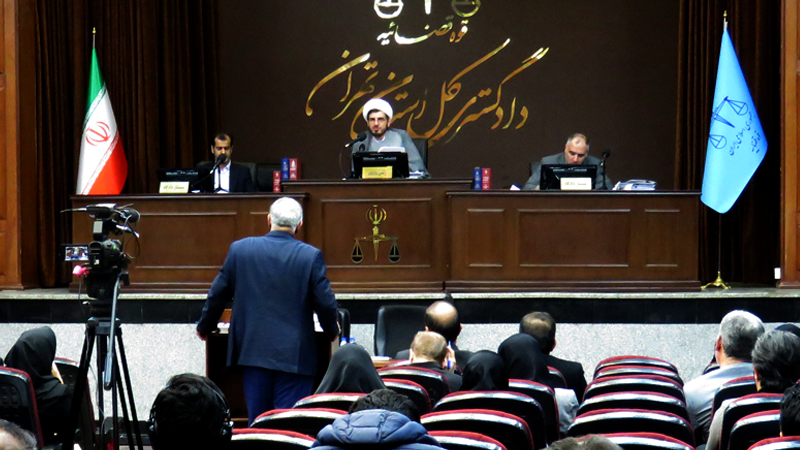
Every other Tuesday since last December has marked a significant event for the Iranian people: the court sessions addressing the charges against 104 members of the Mujahedin-e Khalq Organization, commonly known as the MEK, as well as the legal status of this organization.

Tuesday, July 9, 2024, saw the fifteenth session of this court. Although the primary aim of these proceedings is to address the charges against over 100 MEK members and the organization’s status as a terrorist entity, each session has become a deep dive into the pages of its violent history.

In the first two rows of red seats on the right side of the hall, new faces could be seen, unmistakably indicating that they, too, were families, survivors, or disabled victims of terrorism.

As Judge Dehghani declared the official commencement of the 15th session, the hall continued to fill with people.

Judge’s Remarks on Anti-Terrorism Conventions

The session began with a recitation of the Quran, followed by Judge Dehghani’s formal opening. He spoke for about an hour on various topics, emphasizing the absence of a permanent international criminal court with the jurisdiction to handle terrorist incidents, and stating that such cases fall under the purview of national governments.

He highlighted the existence of anti-terrorism conventions and the obligation of signatory countries to adhere to their provisions. Judge Dehqani Nia stated, “Since the commencement of this court, no member country of the anti-terrorism convention has the right to harbor terrorists; they must either prosecute the accused themselves or extradite them to Iran for trial.”

Judge Dehqani Nia referenced 13 global conventions and 3 regional ones, highlighting the international community’s efforts to combat the global threat of terrorism. He stressed the importance of host countries and MEK supporters adhering to their obligations under these conventions, urging them to pave the way for the prosecution of these terrorists. He called upon the prosecutor’s office and the Ministry of Foreign Affairs to take the necessary steps for the extradition of these criminals back to Iran.

trial of MEK members

trial of MEK members

Crimes from Ground to Sky

Terrorists recognize no boundaries in their actions, and the MEK’s crimes are a testament to this harsh reality. Their range of terrorist activities is extensive, impacting every segment of society and age group. The MEK’s attacks have targeted schools, universities, markets, and residential complexes, turning religious and political events into bloodbaths. Their atrocities extend from the ground to the skies.

During the fifteenth session of the court, Judge Dehqani Nia highlighted the MEK’s hijackings as part of their extensive list of crimes. The MEK’s embrace of terrorism is so profound that they seize every opportunity to commit acts of terror. As Moradi, the plaintiffs’ attorney, noted in his defense, the MEK disrupted Iranians abroad who intended to participate in elections by organizing gatherings to create obstacles.

Moradi also represented the plaintiffs in filing complaints against those Iranians abroad who, knowingly or unknowingly, supported the MEK by being present at locations associated with the Islamic Republic. He requested the court to address these complaints according to the law. The judge confirmed that the court would handle these complaints upon their receipt.

Monitors Narrating the Crimes

The latest court session focused on the oral testimonies regarding the MEK’s brutal attack on the office of the Islamic Republic Party. In previous sessions, the courtroom monitors have served as a stark window into the worst aspects of the MEK’s crimes, violence, and inhumane actions, providing a precise view of the related evidence. The brutality of some videos was so intense that viewers were forewarned before their display.

Request for Seizure of MEK Assets in Iran

At the fifteenth session, Moradi, the plaintiffs’ lawyer, called for the identification and seizure of MEK assets within Iran. Initially, the judge agreed to the criminal provision request in line with the criminal procedure code to secure the plaintiffs’ financial claims. However, following an objection from one of the defense attorneys regarding insufficient evidence for asset seizure, the judge stated that the court would make a decision after further review.

Recognizing Everyone’s Rights

The trial of the MEK’s crimes once again underscored that in Iran’s judicial system, the right to a fair trial is non-negotiable. This right extends even to members of a group responsible for the bloodshed of thousands of Iranians. This was evident during the fifteenth session through the defense attorneys’ objections to the statements made by experts and other lawyers.

Hostility Towards the Society

The MEK’s terrorist act of bombing the office of the Islamic Republic Party was the focal point of the fifteenth session. Mohammad Taghi Zardoust, an eyewitness, took the stand to recount his experience of the incident. He discussed the identity of the perpetrator responsible for the explosion and the investigations that connected him to the MEK. The attack on the office of the Islamic Republic Party highlights their undeniable enmity towards all people. Subsequently, the children of the martyrs of the office bombing provided their accounts of the crime.

Unraveling the Mystery of the Office Bombing

The puzzle of the office bombing’s perpetrator was pieced together with testimonies from other witnesses and the plaintiffs’ lawyer. Mohammad Reza Kolahi Samadi, who orchestrated the bombing, fled to Iraq after the attack and began working at Radio Mojahed. Masoud Rajavi, the then-leader of the MEK, introduced Kolahi to the group members as Engineer Mohammad Reza Kolahi Samadi.

Kolahi later went into hiding for a period, but his criminal activities did not cease after fleeing to another country, indicating that the bombing in Iran was not the end of his story. In the early 1980s, under an assumed name, he obtained asylum in the Netherlands. Kolahi’s efforts to remain hidden were so meticulous that even his wife was unaware of his true identity for many years. Dutch media reported that in December 2015, Kolahi was targeted and killed in Almere. According to reports, Kolahi, who had turned to drug and arms trafficking in the Netherlands, became the head of one of the largest drug cartels in the country. Ultimately, a dispute with his partners led to his demise.

No Safe Haven for Terrorists

The judge’s declaration, “There should be no safe haven for terrorists,” reflects the impassioned pleas of families, survivors, and disabled victims of terrorism. This sentiment lies at the heart of their appeal. Mohammad Javad Eslami, son of martyr Eslami from the Islamic Republic Party, articulated that his demands from the court exceed conventional expectations and echo the judge’s stance. He stressed the imperative for prosecuting the MEK’s international supporters to eradicate any safe haven facilitating their malevolent endeavors.

Conclusion of 15th Session: Former MEK Member Testimony

The fifteenth court session concluded with testimony from Ebrahim Khodabandeh, a former head of the MEK’s International Relations Department who had defected from the organization. During his testimony, Khodabandeh exposed the MEK’s contradictory and unclear positions. Initially, he recalled how the organization prominently featured “Death to America” slogans in its publications and espoused anti-imperialist rhetoric in the charter of the “National Council of Resistance.” However, just a year later, in 1983, they removed the “Death to America” slogan and revised their charter. Masoud Rajavi and other members convened meetings where they declared that their main adversary was the Shah, who was backed by the U.S. Given that the Islamic Republic, one of the few independent nations globally, was in direct opposition to the U.S., they concluded there was no longer a reason to oppose America and instead considered themselves aligned.

Khodabandeh’s testimony marked the conclusion of the fifteenth court session. The next session, scheduled for two weeks later on a Tuesday, will delve into another chapter of the MEK’s terrorist activities.

July 23, 2024 0 comments
FacebookTwitterPinterestWhatsappTelegramSkypeEmail
May Day, Child Labor in the MEK
Missions of Nejat Society

What vacation meant as a child of Mujahed

Atefeh Sebdani, a child of Mujahedin-e Khalq (MEK, Cult of Rajavi) wrote about the traumatic memoirs of the so-called trips in her childhood in a foster family.
Atefeh and her siblings together with hundreds of MEK children had been separated from their Mujahed parents in Iraq and had been smuggled to Sweden. The MEK agents had delivered five of them, Atefeh, her two biological brothers and two other children, to a couple who were sympathizers of the group and they themselves had one child.
Right now, Atefeh Sebdani is on vacation with her family in Greece. From there, she has published two posts on her Facebook account and explained what “vacation” meant in her childhood in a foster family who received Swedish social funds for five foster children!
Atefeh and her siblings were left home alone by their foster parents but sometimes they were taken to trips by the MEK or as Atefeh says by “the cult”. However, the trips were not like vacations. They were taken by bus to any location that the MEK was supposed to hold a rally. The children were expected to make the rally look crowded. They had to beat on drums, wave flags and chant slogans of the Cult of Rajavi. Atefeh has previously written about those exhausting missions for MEK Children in European cities 15498.
Now, read her new posts on her Facebook account from Greece:

MEK Children left home alone by their foster parents

July 18th, 2024 :
When I was a child, my siblings and I had to stay at home while our foster parents and their biological son went away on vacations.
It was the Dominican Republic, the USA, London, Rome, Mallorca…
I often thought that at some point someone should see this. Especially since my foster parents not too rarely went with others or visited others. That we were never allowed to come along. That we were left alone at home. Sometimes for two weeks.
When someone asked why we weren’t there, they said we didn’t want to. And they were satisfied with that answer.
That five children did not want to go with them for a week to Mallis to sunbathe and swim. Rather be left alone in a rainy Sweden. Cook for themselves when the leftovers and snacks in the pantry run out. Fall asleep by themselves in the large villa. Keep an eye on each other in case something happens. In a time without mobile phones and no contact with our guardians.
When our foster parents then came home, they handed out the souvenirs they had mercifully bought for us.
– Thank you, thank you, what a nice necklace, we said gratefully.
While they were telling the stories from their trip, about the old man in a square who made that particular necklace by hand. It was a fun experience for them to see his work, we understood. Like everything else they experienced that they remembered so well and laughed about sometimes.
If we were lucky, we got to see some photos too. But only if we were lucky.

MEK demonstrations filled out by Children

July 19th, 2024:
You were shocked by what I wrote about my foster parents in the previous post.
Although sometimes we got to go on trips too.
It was the trips we were put on a bus to various European locations. There were cities that many in the People’s Mujahedin sect did not find so exciting to go to for demonstrations. But even these demonstrations needed to be filled out. Then it was perfect to bring us along.
We usually went so we would prefer not to sleep over somewhere. If it was night, we could take a nap on the bus. On some occasions it became difficult to get the logistics for the bus driver and then we were checked into a Formula 1 hotel. Entire families in one room with only a double bed was nothing strange. Lying down and sleeping on a floor wasn’t either. We solved most of it. Our purpose, the fight in the name of the sect, was the most important. And we foster children, who were never otherwise allowed to go anywhere, were happy to be included.
When the demonstration was over, they collected us at the buses to go back home. What we had seen from our stay was a square engulfed in the cult’s flags and effigies of the leaders.
We came home and talked about our trips abroad. Many were the cities we had to cut down.
The foster parents are satisfied. Because of course we had to travel with us.

July 22, 2024 0 comments
FacebookTwitterPinterestWhatsappTelegramSkypeEmail
Bob Menendez
Mujahedin Khalq Organization's Propaganda System

Bob Menendez, MEK paid advocate found guilty of corruption

The American senator Bob Menendez, the ardent supporter of the formerly designated terrorist organization Mujahedin-e Khalq, was found guilty of bribery and corruption.

Top United States Senator Bob Menendez has been found guilty of all 16 criminal counts he faced in a widely watched corruption trial in New York, including bribery and acting as an unregistered foreign agent.

A Manhattan federal court jury delivered its verdict on Tuesday after deliberating for more than 12 hours over three days, reported Aljazeera.

Prosecutors had accused Menendez, a New Jersey lawmaker and an influential figure in the Democratic Party, of taking part in overlapping bribery schemes in which he and his wife accepted bribes from three businessmen who wanted Menendez’s help.

According to the reports, in exchange for hundreds of thousands of dollars in cash, gold bars, and car and mortgage payments, Menendez helped steer billions of dollars in US aid to Egypt, where one of the businessmen, Wael Hana, had ties to government officials, according to prosecutors.

Menendez also was accused of seeking to influence criminal probes involving two other businessmen, Fred Daibes and Jose Uribe.

In March 2024, 15444 Eli Clifton of The Intercept reported that the smaller contributions to Menendez Legal Defense Fund, might appear to come from a smattering of individual donors. An analysis of the donor rolls by Responsible Statecraft and The Intercept, however, shows that about 15 percent of the people who gave to Menendez — including Moeinimanesh and Afshari — are linked to an Iranian exile group called the Mojahedin e-Khalq, or MEK.

Menendez and the MEK have a relationship going back a decade. Shortly after the group was removed from a State Department list of “foreign terror organizations,” Menendez advocated for the MEK following an attack on its members by the Iraqi government.

Menendez’s elevation of the group as a viable alternative to the Islamic Republic continued since then. The senator met with its leader, Maryam Rajavi, last May and heaped praise on the National Council of Resistance of Iran, a so-called political wing indistinguishable from the MEK, at a 2022 Capitol Hill event organized by the Organization of Iranian American Communities, a group allied with the MEK.

The intercept found out that in total, MEK-affiliated individuals made up approximately 5 percent of the total funds raised, over $20,000, by the end of January. (Seven other donors, the National Council of Resistance of Iran, the OIAC, and Menendez’s office did not respond to requests of the Intercept for comment.)

July 21, 2024 0 comments
FacebookTwitterPinterestWhatsappTelegramSkypeEmail
Svenska Dagbladet (SvD), a Swedish daily newspaper on Documentary children of Camp Ashraf
The cult of Rajavi

Swedish newspaper: Children of Camp Ashraf, a must watch

Svenska Dagbladet (SvD), a Swedish daily newspaper described the documentary “Children of Camp Ashraf” as a must watch that no body should miss.

“The Children of Camp Ashraf, a must watch, nobody Should miss this summer’s most powerful documentary”, writes Erika Hallhagen, the journalist of SvD of the Swedish daily newspaper.

Erika Hallhagen, critic and writer at SvD’s cultural service wrote about the films she recommends the readers to watch in the summer idyll. Sara Moien’s documentary, Children of Camp Ashraf was highly recommended by the Swedish journalist. “It bears repeating – the worst affected by war and military escalation are the children,” she wrote.

Sara Moien’s documentary was first played in two Swedish Film Festivals, Goteborg and Tempo, this year. It was also aired by the Swedish national TV channel, SVT. The film is now available on SVT Play.
“No one should miss the SVT Play film,” Erika Hallhagen stated.

Svenska Dagbladet is a daily newspaper in Sweden. It is published in Stockholm and is published throughout the country. Its circulation is the third highest among quality newspapers after Dagens Nyheter and Göteborgs-Posten. The newspaper describes itself as independent and liberal-conservative.

July 20, 2024 0 comments
FacebookTwitterPinterestWhatsappTelegramSkypeEmail
Newer Posts
Older Posts

Recent Posts

  • A Criterion for Proving the Violent Nature of the MEK

    December 31, 2025
  • Rebranding, too Difficult for the MEK

    December 27, 2025
  • The black box of the torture camps of the MEK

    December 24, 2025
  • Pregnancy was taboo in the MEK

    December 22, 2025
  • MEPs who lack awareness about the MEK’s nature

    December 20, 2025
  • Facebook
  • Twitter
  • Instagram
  • Youtube

© 2003 - 2025 NEJAT Society . All Rights Reserved. NejatNGO.org


Back To Top
Nejat Society
  • Home
  • Articles
  • Media
    • Cartoons
    • NewsPics
    • Photo Gallery
    • Videos
  • Publications
    • Books
    • Nejat NewsLetter
    • Pars Brief
  • About Us
  • Contact us
  • Editions
    • عربي
    • فارسی
    • Shqip