Nejat Society
  • Home
  • Articles
  • Media
    • Cartoons
    • NewsPics
    • Photo Gallery
    • Videos
  • Publications
    • Books
    • Nejat NewsLetter
    • Pars Brief
  • About Us
  • Contact us
  • Editions
    • عربي
    • فارسی
    • Shqip
Nejat Society
Nejat Society
  • Home
  • Articles
  • Media
    • Cartoons
    • NewsPics
    • Photo Gallery
    • Videos
  • Publications
    • Books
    • Nejat NewsLetter
    • Pars Brief
  • About Us
  • Contact us
  • Editions
    • عربي
    • فارسی
    • Shqip
© 2003 - 2024 NEJAT Society. nejatngo.org
Nejat Society Albania’s Action in Support of Families of MEK Members in Iran
Former members of the MEK

Nejat Society Albania’s Action in Support of Families of MEK Members in Iran

On Friday, July 19, 2024, the Nejat Society Albania took an action in support of the families of members of the Mujahedin-e Khalq (MEK), who want to contact their loved ones after decades.

In this campaign that was held in the National Park of Tirana, a number of Iranian and Albanian members of Nejat Society Albania distributed explanatory flyers among the passers-by. They were welcomed by the people in the national park.

This action was carried out in support of the families of Nejat Society in Iran and in order to expose the violation of the most basic human rights in the MEK’s camp in Manez, Durres province, North of Tirana.

While taking the papers, the people asked for more explanations about the MEK and their presence in Albania, their internal relations and the inhuman treatment they have against their own members and their families. In response, the members of Nejat Society Albania provided them with detailed information.

Those who read the flyers and heard the explanations, expressed their sympathy for the families and expressed regret for the suffering they have endured during these years.
All the people emphasized on the demand that the Albanian government should intervene in this matter and put an end to the miserable conditions and to aid the people inside the closed and remote Manez camp so that they can choose for their own fate.

The video and full report of the action will be broadcast soon by Nejat Society Albania.

July 20, 2024 0 comments
FacebookTwitterPinterestWhatsappTelegramSkypeEmail
Aldo Solullari
The cult of Rajavi

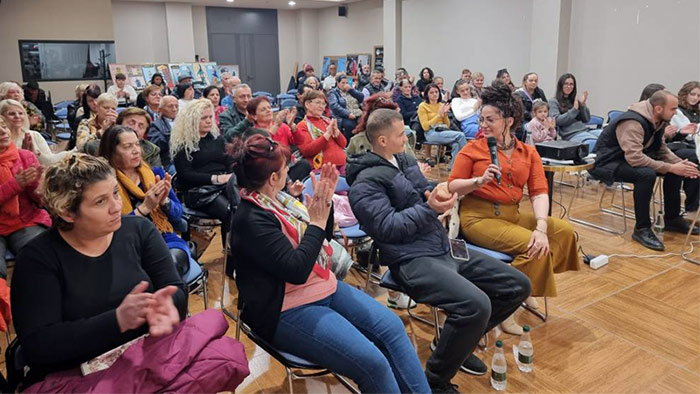
Virtual conference of Nejat Society Albania on the occasion of World Youth Skills Day

Aldo Solullari, Media manager of Nejat Society Albania heldo a virtual conference on the occasion of World Youth Skills Day. World Youth Skills Day, observed annually on July 15th, recognizes the potential of young people as catalysts for change and contributors to a prosperous and sustainable future for all.
The media manager of Nejat society dedicated the conference to members who lost their youth in the Mojahedin-e Khalq organization (MKO/ MEK/ PMOI/ Cult of Rajavi).
Sollulari said:

In 2014, the United Nations General Assembly declared 15 July as World Youth Skills Day, to celebrate the strategic importance of equipping young people with skills for employment, decent work and entrepreneurship.
According to the United Nations, the theme for World Youth Skills Day 2024, “Youth Skills for Peace and Development,” underscores the crucial role young people play in peacebuilding and conflict resolution.

The world today is facing many challenges, many of which affect young people. Violent conflicts disrupt education and stability and reinforce a negatively polarized online environment, and persistent economic inequality limits opportunity.
In this regard, Nejat Society Albania takes into account the obstacle and gap that the MEK has created against the integration and highlighting of the complex professional and academic skills of its members.

The MEK has violated many human rights laws, including the involvement of many minors in the struggle while they had no political information and were deceived into fighting for the benefit of the organization’s leadership. They were physically taken hostage at the age of 16, and some today have a biological age of nearly 60, but without social integration, as a person with human rights to integrate professional skills, the right to employment, the right to have family, the right to inherit and also the lack of communication with their families in the modern age. This makes their stay in that camp in Manz exhausting.

Today, in this virtual conference, we will introduce you to the obstacles to the integration of Mujahedin who had the right to enjoy their youth and participate in all civil issues as worthy citizens. Today, on this important day, their mothers mourn to see and hear the voices of their children who were locked in a dark cave as an investigational cage.
On World Youth Skills Day, let’s recognize the potential of young people as agents of peace and integration.

Parents should beware of a threat similar to Mujahedin-e Khalq.

July 17, 2024 0 comments
FacebookTwitterPinterestWhatsappTelegramSkypeEmail
MEK court in Tehran
Iran

No member state of anti-terrorism conventions has the right to host the MEK

Judge Dehghani asked the signatory countries of universal anti-terrorism conventions to punish the Mujahedin-e Khalq (MEK) for its crimes or return them to Iran.

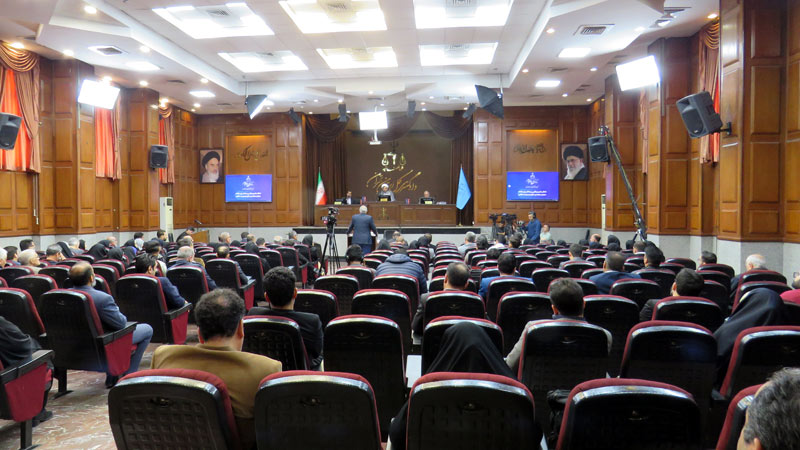
The fifteenth session of the court hearing for the trial of the MEK was held on July 9th,2024. In this meeting, Judge Dehghani emphasized that there is no permanent international criminal court with the jurisdiction to deal with cases of terrorist incidents, and said that dealing with cases related to terrorist incidents is the responsibility of the governments.

He further reminded the audience of the existence of anti-terrorism conventions and the need for the signatory countries to commit to its provisions and said: Since the beginning of this court, no member country of the anti-terrorism conventions has had the right to host terrorists. They should either prosecute the accused themselves or return them to Iran.

Judge Dehghani also mentioned 13 international conventions and three regional conventions as a result of the international community’s efforts to deal with the issue of global terrorism, and emphasized the need for various host and supporting countries of the MEK to pay attention to their obligations within the framework of the signed conventions. He asked for punishment of these terrorists.

Judge Dehghani asked the prosecutor’s office and the Ministry of Foreign Affairs to take the necessary measures to return the MEK criminals to the country.

July 17, 2024 0 comments
FacebookTwitterPinterestWhatsappTelegramSkypeEmail
Ebrahim Khodabandeh
Missions of Nejat Society

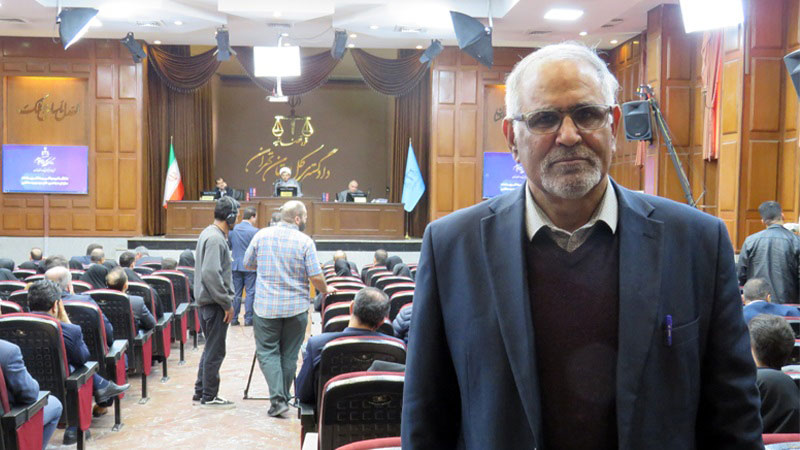
Ebrahim Khodabandeh, Nejat Society CEO in the MEK’s 15th trial court

Ebrahim Khodabandeh, Nejat Society CEO attended the MEK’s 15th trial court in Tehran.
The 15th session of the trial court of 104 Mujahedin-e Khalq (MEK) members and the group as a legal entity was held on July 9th, 2024. Ebrahim Khodabandeh who is a former responsible with the MEK’s international relations showed up as an informed source in the court.

Ebrahim Khodabande stated in the court: “I accomplished diplomatic missions for the organization in more than 20 countries. We used to hold meetings with Masoud Rajavi in Iraq and Paris. When the explosion of the building of the Islamic Republic Party took place, the organization did claim the responsibility for the bombing. Later, we realized that the reason was not international considerations, but the organization’s internal environment.”

He continued: The organization did not announce who did the attack, even the members of the organization were confused. A year later, in 1961, Massoud Rajavi held a meeting in Paris, where a number of members and supporters of the organization were present, and in that meeting, he clearly announced, ‘we collapsed the ceiling on Beheshti and the members of the Islamic Republic Party, and in this way, we ruined the regime’s future’. Rajavi used to say that Imam Khomeini is the present of the Islamic Republic, but Shahid Beheshti is the future of the Islamic Republic, and in thus he supposed that he had ruined the future of the regime.”

The former agent of MEK international relations stated: “The MEK published the slogan “Death to America” in its publications. The constitution of the MEK’s National Council of Resistance, was first based on fighting against imperialism and helping anti-imperialist movements. One year later, in 1982 the slogan of death to America was removed and the statutes of the National Council of Resistance were changed. Masoud Rajavi held meetings with other members of the group and announced, ‘The reason was that we were confronting America and the enemy We were, because our main conflict was with the Shah and America supported the Shah, and now that the Islamic Republic is one of the few independent countries in the world and has been in complete conflict with America, so we have no reason to be enemies with America and confront it. We are aligned.’”

Nejat Society CEO told the court: “In October 1997, the US State Department listed the MEK as foreign terrorist organization. At that time in Baghdad, Masoud Rajavi held a meeting in Camp Ashraf and said ‘when we did the bombing of June 27th, America did not list us as terrorist, but now that we have not taken up arms for 10 years, it has done so’.”

Ebrahim Khodabandeh further said: “Massoud Rajavi announced in one of the meetings, ‘After the victory of the Islamic Revolution, everyone sought to form a party, but we sought to collect weapons and our infiltrators were everywhere and we influenced wherever we could. Like the impact on Bani Sadr and wherever we could not, we removed people; Like the bombing of June 27th, the explosion of the Islamic Republic Party building.”

He stated: “Kolahi Samadi [the MEK agent who detonated the bomb in the office of Islamic Republic party] came to Iraq after the explosion of the Islamic Republic Party and Masoud Rajavi introduced him to everyone, but after a while there was no news of him and we did not find out where Kolahi went.”

July 13, 2024 0 comments
FacebookTwitterPinterestWhatsappTelegramSkypeEmail
Bijar Rahimi
Missions of Nejat Society

The story of Bijar Rahimi

For Bijar Rahimi, 21 years of captivity in a destructive cult means losing the best time of his life. His youth was lost like many other youths who fell into the trap of the Mujahedin-e Khalq (MEK). He was recruited by fraudulent tactics of the MEK while he was seeking a good job, with the dream of a better life and prosperity. He spent 21 years of his life behind the mental and physical bars of the Cult of Rajavi.

Bijar Rahimi was recruited by the MEK shortly before the coalition forces’ invasion to Iraq. In a letter he wrote to the International Red Cross after leaving the MEK, he described his past as follows: “I left Iran 22 years ago with the promise and deception of the MEK to go to Europe to find a better job and improve life through Pakistan border but I was taken to Camp Ashraf in Diyala province, Iraq. I joined the organization one month before the invasion by the coalition forces in 2003. After the fall of Saddam Hussein in Iraq and the disarmament of the MEK by the United States, I was told that it was not possible to go to Europe. Then I and many other people who came with the same promise were faced with this trick that if we returned to Iran, we would be imprisoned, tortured and executed. Under the pressure of meetings and brainwashing techniques, despite our inner desire, we were forced to stay in the organization.”

Both Bijar and his brother Sarfaraz were caught in the trick of MEK recruiters. Sarfaraz managed to leave the group after the relocation of the group in Albania, but Bijar remained under the mental pressure of the destructive Cult of Rajavi. “The leaders of the Cult of Rajavi deceived me and forced me to stay in the organization by brainwashing and taking an oath, and they wasted 21 years of my life without any salary or savings, without the right to call and communicate with my family, without having a family, and with illness and mental and physical problems.”

Even since he was in Iraq, Bijar wanted to leave the MEK. In his testimonies, he states that in 2016, when he was living in Camp Liberty in Iraq, his asylum case was successfully submitted by Norway through the United Nations High Commissioner for Refugees. But the officials of the MEK dissuaded him from becoming a refugee to Norway and forced him to stay in the organization.

Leaving the MEK thanks to the power of the media

While Bijar was trapped in the MEK’s camp in Manz village in the north of Tirana, his brother, Sarfraz Rahimi, married an Albanian girl named Erisa Edrisi and had a family. Unlike many members of the MEK, whose families are trying to visit them from Iran, Sarfaraz lived a few kilometers away from Bijar in the city of Tirana. His efforts to meet Bijar had been faced with obstacles from the leaders of the MEK. He and his wife wanted their son Ermolindo to meet his uncle Bijar, and this double motivation led them to cooperate with Nejat Society in Iran and to establish Nejat Society Albania.

Since the early days of her marriage with Sarfaraz, Erisa Rahimi was in contact with members of the MEK who were friends of her husband. She, who is the head of Nejat society Albania today, said in his recent interview with News 24 of Albania about her motivation to cooperate with Nejat Society: “Because I was a Persian translator for Iranians, I got to know their pain and suffering inside the MEK so I made a promise to myself, to help them. As a translator, I was with them to go to the doctor and get a residence permit and rent a house, etc. I was very happy when Nejat Society Albania was formed with the help of the Nejat Society Iran because I could better support people in the society. The important task of our association is to help families inside Iran to free their children from the captivity of the MEK.”

The humanitarian and cultural activities of Nejat Society Albania to support MEK defectors, helping to integrate them into the Albanian society and enlightening about the nature of the Cult of Rajavi and its threats to the Albanian society, made Erisa and Sarfraz as activists of the society, to be noticed by the Albanian media. The result of several media appearances of the brother and his wife in the Albanian media was that Bijar became aware of his brother’s health and freedom, despite the lies that his commanders had told him.
In an interview with Bijar, Sarfaraz and Erisa by Euronews Albania, in March 2024, Bijar described the story of his escape from the MEK as follows: “I am fortunate that with the help of Euronews after the attack of the Albanian police on Ashraf 3, I saw Sarfraz and in this way, I got hope and was able to escape. I am very happy now that in addition to being here in Albania, I can contact my other family members in Iran whenever I want, as well as my friends in Europe and anywhere in the world.”

Bijar’s story motivates both media activists and Nejat Society

Aldo Sollulari, a journalist who became acquainted with the Nejat Society Albania and its activities through his career, is today the media manager of the Society and works there along with several other Albanian citizens. In a recent interview with the Albanian News 24, when his couleague asked about the most impressive story of MEK defectors in Albania, he mentioned the story of Bijar and Sarfraz Rahimi. After the Albanian police entered Camp Ashraf 3, Bijar saw the interview that Aldo Solulari had conducted with Sarfaraz and Erisa on News 24. The Interview made Bijar realize that the MEK’s propaganda about his brother was a lie and that his brother is outside the organization, not so far away waiting to see him.
Bijar got a visa (an exit permit by MEK commanders) to leave Camp Manz under the pretext of shopping, and soon after leaving, he submited himself to the Albanian police. He was reunited with his brother’s family with the legal protection of the Albanian police and today enjoys the individual freedoms of a free citizen.

Bijar’s story has some similarities with the stories of some other former members of the MEK. There are other people who, using the negligence of the commanders of the MEK and the opportunity to access the Internet and the media, got the spark in their minds to leave the cult. The most recent example was reported in the Le Monde newspaper’s interview with Mohammadreza Torabi, a former child soldier. In this interview, he admits that the first doubts about Massoud Rajavi’s ideology arose in his mind when he got access to the Internet in Tirana and came across an article on Nejat Society’s website, written by Alireza Mirasgari, about the deliberate murder of his father under the torture of MEK interrogators.

Humanitarian mission of Nejat Society

Thus, we see that the activities of Nejat Society, both in Iran and in Albania, can be effective in destroying the mental bars around the Cult of rajavi, in case of proper media coverage. Media reflection is not only useful in enlightening the public opinion, but it is a narrow but possible way to penetrate the minds of the members trapped behind the mental and physical bars of the cult.

Regardless of any political or religious bias, the mission of the Nejat Society is humanitarian and its goal is to facilitate the communication of families with their loved ones imprisoned in the personality cult of Masoud and Maryam Rajavi. For the activists of the Nejat Society, the release of each person from the destructive cult of Rajavi brings lots of pleasant feelings of success and happiness.

July 10, 2024 0 comments
FacebookTwitterPinterestWhatsappTelegramSkypeEmail
Iranian court holds 15th trial session in MKO terrorism case
Iran

Iranian court holds 15th trial session in MKO terrorism case

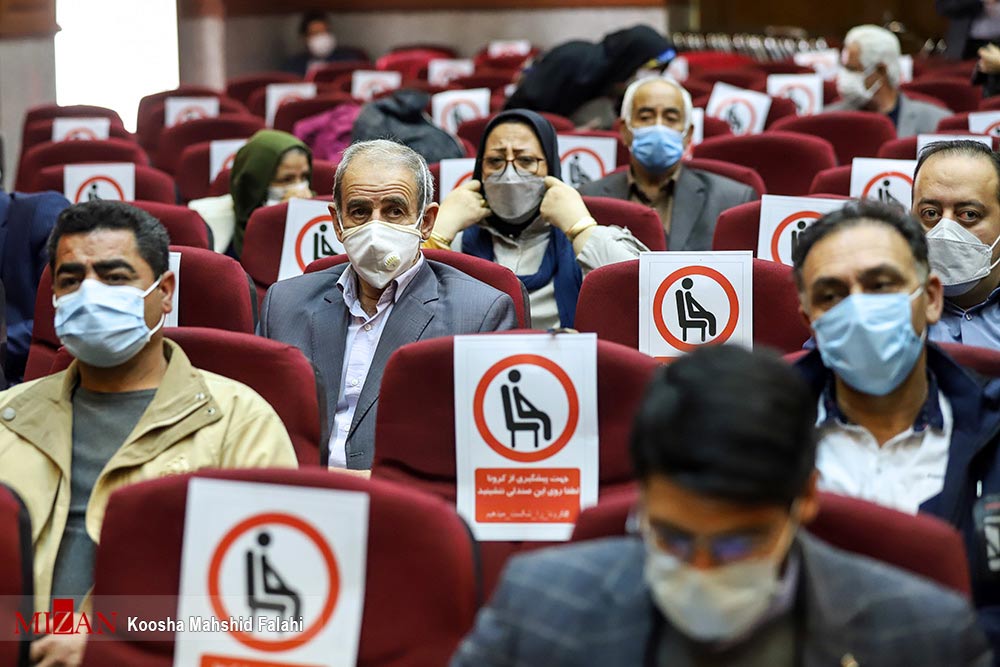
The 15th trial session of the hearing on crimes of members of the Mujahedin-e Khalq Organization (MKO) terrorist group is held in Tehran.

The new round was held at the 11th branch of the criminal court of Tehran province on Tuesday in a case that tries 104 natural persons as well as one legal entity in absentia.

Judge Dehqani, who presided over the session, said judicial notices have already been sent out to all defendants of the case under the Islamic penal code of Iran, stressing that the defendants have neither hired a lawyer nor filed a defense with the court.

He added that anti-terrorism conventions stipulate that prosecution and punishment of those accused of acts of terror fall within the jurisdiction of criminal courts, noting that the conventions are based on the principle of extradition and punishment of the accused.

The states are, therefore, obligated to try those accused of terrorist activities or hand them over to the country which has placed an extradition order, Judge Dehghani pointed out.

He went on to describe the Iranian nation as the biggest victim of terrorism, noting that governments should commit themselves to dealing with terrorism cases as there is no permanent international criminal court with jurisdiction over such cases.

Dealing with acts of terror incorporates principles that do not allow parties to anti-terrorism conventions to host terrorists or issue visas for them.

Judge Dehqani also advised the defendants to return to the country, defend themselves against criminal charges and possibly absolve themselves of liability before it’s too late.

Iran’s top human rights official says the MKO and other terrorist groups suffered another blow by the release of Hamid Nouri, a former judiciary official, from illegal detention in Sweden.

Under the principle of citizenship, countries can prosecute their nationals who have committed crimes outside their territory. Almost all European states have admitted this principle. Terrorism is an international crime and even if it is done with a political motive, it is not considered a political crime and is subject to extradition, he stated.

Accordingly, if a country refuses to extradite those accused of terrorist activities, a red notice will be issued. Therefore, this Iranian criminal court warns the statesmen of those countries hosting terrorists that countries that are members of anti-terrorism conventions are not allowed to offer terrorists refuge, Judge Dehqani stated.

The MKO has carried out numerous terrorist attacks against Iranian civilians and government officials since the victory of the Islamic Revolution in 1979. Out of the nearly 17,000 Iranians killed in terrorist attacks over the past four decades, about 12,000 have fallen victim to the MKO’s acts of terror.

The European Union, Canada, the United States and Japan had previously listed the MKO as a “terrorist organization.”

In 2012, the group was taken off the US list of terrorist organizations. The EU followed suit, removing the group from its list of terrorist organizations.

July 9, 2024 0 comments
FacebookTwitterPinterestWhatsappTelegramSkypeEmail
Torture and destroying bodies, known as ‘the Engineering Project’
Mujahedin Khalq Organization as a terrorist group

Torture Redefined: The Horrific Engineering Operation

On June 26th, the world comes together to observe the International Day in Support of the Victims of Torture, a day dedicated to recognizing the suffering endured by victims of torture and reaffirming our commitment to eradicating such heinous acts. This day is particularly poignant as we delve into the harrowing events surrounding the “Engineering Operation,” a brutal and calculated act orchestrated by the Mujahedin-e Khalq (MEK) terrorist group. The MEK is an Iranian terrorist cult which, according to valid international documents, has resorted to torture both against its own members and ordinary people opposing it. The atrocities committed during this operation serve as a stark reminder of the enduring need to support victims and bring perpetrators to justice.

On August 13, 1982, no one could have imagined that the arrest of a car thief would unveil a horrific crime, later known as the “Engineering Operation”. Since then, it has been regarded as one of the most barbaric crimes in contemporary Iranian history, perpetrated by members of the MEK. Decades before the birth of ISIS, the MEK perpetrated acts far more savage.

The story began when an individual named Khosrow Zandi, a member of the MEK, was caught by the public while stealing a car intended for use in a terrorist operation. He was handed over to law enforcement. At first, it seemed like a typical car theft, but during interrogation, Zandi revealed one of the most brutal operations by the MEK. He led the officers to an area in northwest Tehran, known as Bagh Feiz, where they had buried alive three bodies.

This operation, which started on final days of July and lasted till mid-August, resulted in the deaths of three members of the Committee, a shoemaker, a teacher, and an engineer who supported the organization. The fundamental question remains: Why did the MEK commit such atrocities?

Ali Akbar Rastgoo, a former member of the MEK, wrote about the “Engineering Operation” in his memoir Mujahedin-e Khalq in the Mirror of History. He explained: “Following severe blows in early 1982 and the exposure of many of their safe houses, the organization ordered the abduction and torture of any suspicious individuals seen around these safe houses to extract information. This new initiative was named the ‘Engineering Operation’ by the organization.”

Khosrow Zandi, the car thief who was arrested, provided crucial information to the prosecution, leading to the discovery of those involved in the crime. His information revealed a house on Bahar Street in Tehran, which was the main site of the operation and the primary torture chamber. Among those arrested in this house was Mehran Asdaghi (alias Bahram), who for several months tried to downplay his role by providing false information to interrogators. However, with the confessions of other detainees, it became clear that Asdaghi was, in fact, the chief military commander of the MEK in Tehran and one of the main torturers.

Asdaghi, who was arrested in August 1982, only fully confessed in 1984 after tens of hours of interrogation and the accumulation of undeniable evidence. His statements became the primary documentation of the MEK’s incredible and horrific crimes during the “Engineering Operation.”

The bodies discovered in the Bagh Feiz area belonged to Mohsen Mirjalili and Taleb Taheri (Committee members), and Abbas Effatravesh (shoemaker). The bodies of Shahrokh Tahmasbi (Committee member), Habib Rousta (a supporter of the organization), and Khosrow Riahi Nazari (a teacher) were found in places like Sohrevardi Street and Abbasabad Hills.

The main safe house used for the “Engineering Operation” belonged to a high-ranking MEK official named Hossein Abrishamchi and was allocated to the special operations unit (terror and torture operations). This house, located in a quiet alley on Bahar Street in Tehran, had two floors, three rooms, a hall, a kitchen, a bathroom, a yard, and a basement.

The relatively large bathroom was soundproofed with several layers of thick plastic sheets to prevent the screams and cries of the tortured individuals from being heard outside. The tools found in this house included ropes of various sizes and materials, cables of different sizes for whipping, masks, handcuffs, short lead pipes, chains, locks, portable gas stoves and skewers, and cyanide.

Mustafa Madanpisheh and another MEK member, known by the alias Jafar, were assigned by the organization to abduct Abbas Effatravesh from his shop. The organization falsely identified him and his wife as informants for the security forces, a complete fabrication. On August 8, 1982, MEK members, disguised as the Committee officers, went to his shop, handcuffed and blindfolded him in their car, and transported him to the torture chamber on Bahar Street.

According to confessions by Mehran Asdaghi, it became clear within the first hours of torture that Abbas knew nothing and had been abducted without reason. Despite this, since the organization’s leadership had ordered his torture and extraction of a confession, the unfortunate shoemaker was subjected to severe torture for several days. Masoud Ghorbani (alias Taghi), the chief torturer of the organization, reportedly told Asdaghi about Effatravesh, “We couldn’t get any information, but we took revenge.”

As part of the “Engineering Operation”, the MEK ensured that no trace of their actions would be exposed. Hence, anyone captured, whether they provided information or not, was killed. Asdaghi recounted the torture of Abbas Effatravesh: “We tied the shoemaker to a chair along with two Committee members, blindfolded them, and knocked them unconscious with lead pipes. Then, we injected them with cyanide, which caused them to make gurgling sounds from their throats. While they were still alive and dying, we bound their bodies with ropes to fit them into the car’s trunk. We placed them in the trunk and at 9 PM, handed the car with the bodies over to Khosrow Zandi, who, along with Jafar Hadian, took them for burial.”

Taleb Taheri (16 years old) and Mohsen Mirjalili (25 years old) were two Committee members who became victims of the MEK’s “Engineering Operation”. They were subjected to the most brutal forms of torture and were ultimately killed.

In August 1982, Taleb and Mohsen were identified by the MEK near the house of the special operations unit (responsible for terror and torture operations) located on Karun Street in Tehran. Hossein Abrishamchi and Mohammad Mehdi Katiraei were present in this house. When Taleb and Mohsen were spotted around the same area for two or three consecutive days, the MEK decided to track and identify them. Disguised as Committee members, the MEK abducted them and took them to the torture house on Bahar Street, which had been prepared in advance.

The torturers in this house were Javad Mohammadi, Mustafa Madanpisheh, and Shahram Roshan Tabar. The primary objective of torturing Taleb and Mohsen was to determine whether the security forces had discovered or infiltrated the special operations house on Karun Street. They were immediately tied to chairs, which were then laid on the ground, and then, the beating with thick, multi-layered cables began.

Asdaghi recounts this story: “That same day, Masoud Ghorbani informed me that Rahmat (Hossein Abrishamchi) had ordered their abduction and that the responsibility for their interrogation lay with him (Masoud). He instructed me to help prepare the interrogation questions to understand how the safe houses were being compromised. Thus, I took a leading role in this process, acting as someone who carried out the central leadership’s directives. To instill fear, we wore masks. I did the same and entered the bathroom. I saw a 16- or 17-year-old boy in the corner of the bathroom, his hands and feet chained. His name was Taleb Taheri. His legs were bruised and swollen. His body and the soles of his feet were blistered. Then I went to another room to see another person named Mohsen Mirjalili. He was around 24 or 25 years old, sitting in the corner of the room with his hands and feet chained. His body, like Taleb’s, had been severely tortured with cables”.

Taleb and Mohsen were whipped so severely that their feet blistered. The MEK would then whip the blisters until they burst. The torturers would dress their feet to prepare them for the next round of torture. Ghorbani and Asdaghi repeatedly asked them the same questions, and they continuously denied any knowledge. Since the organization’s leadership insisted that the two must have information, their torture continued relentlessly. In his interrogation notes, Asdaghi quoted Madanpisheh: “We tortured them a lot yesterday to find out if they were monitoring the house, but they denied it. Apparently, they were not monitoring the house”.

The MEK poured boiling water over the blisters on the bodies of these Committee members, causing their skin to crack and the blisters to burst. Throughout the torture, Taleb and Mohsen repeatedly lost and regained consciousness. Mehran Asdaghi recounts the brutality: “I poured hot water over their heads and faces, causing blisters. Blood was flowing from every part of their bodies. Taher (Javad Mohammadi) would drag a knife tip across their bodies, leaving no part unscathed.”

When these horrific tortures failed to yield results, Masoud Ghorbani (Taghi) instructed Asdaghi to bring an iron. Ghorbani heated the iron and pressed it against Mohsen Mirjalili’s back. Asdaghi describes the scene: “Mohsen’s mouth opened in a bizarre way from the pain, and he lost consciousness. The smell of burning flesh filled the air. I was terrified. Masoud was also scared, but he tried to appear composed”.

Javad Mohammadi repeatedly slashed Taleb’s arm with a knife until blood spurted out on the third cut. Taleb’s body convulsed in pain. When Taleb attempted to speak, Javad punched him in the mouth, then struck his jaw and mouth with a lead rod, breaking his teeth. Javad continued to beat other parts of Taleb’s body with the rod. Asdaghi continues: “Mohsen regained consciousness, and Masoud instructed me to bring boiling water. I brought it, and Masoud said, ‘Pour it on his legs.’ I wanted to pour it all at once, but Masoud gestured to pour it slowly for more pain. I did as he said, causing all the blisters on Mohsen’s legs to burst in a gruesome way, with the skin peeling off. Mohsen fainted, and when he woke up, he scratched at his trousers. Masoud poured boiling water on Mohsen’s hands, causing them to swell, wrinkle, and look cooked.”

In another corner of the room, Javad Mohammadi sliced Taleb’s scalp with a knife, causing him to pass out. When Taleb regained consciousness and tried to speak, the malicious torturer cut off his ear, then sliced off his nose. Asdaghi recalls: “A lot of blood gushed from Taleb’s head and face, covering him in blood, and he fainted again. While Taleb was unconscious, Javad pressed the knife against his eye, causing blood to spurt from it.”

In the meantime, the beating of Mohsen Mirjalili with cables continued. Mohsen’s body was so weakened that when Asdaghi was whipping him, Masoud Ghorbani held his head, tearing out a handful of Mohsen’s hair.

In another corner of the room, Javad Mohammadi continued torturing the frail and broken body of young Taleb. Taleb, unconscious and with blood dried on various parts of his face, was still being tortured on the chair, while Javad used pliers to pull out his teeth. Blood poured from Taleb’s mouth, which had a foul odor.

Javad Mohammadi (Taher), despite the semi-conscious state of Taleb, demanded information from him. Naturally, even if Taleb had wanted to speak, he was in no condition to do so. Taher, seemingly intoxicated with violence and sadism, resorted to a horrific act. He brought a portable stove and a metal skewer, heating the skewer until it was red-hot, and pressed it against Taleb’s thigh. The third time, he pressed it against Taleb’s sensitive areas through his trousers, causing the young boy’s body to go into shock. According to the Revolutionary Court documents, the torturers were not satisfied with this and committed further unspeakable acts that are too shameful to describe.

Asdaghi recounts the rest of the events: “They regained consciousness a few more times by the afternoon… In the afternoon, due to panic, Mustafa Madanpisheh accidentally fired a shot when Mohsen Mirjalili moved, forcing us to evacuate the house.”

The torturers then used lead rods to knock Taleb and Mohsen unconscious and injected them with cyanide. With their bodies half-burned, skin torn, and flesh shredded, they were still breathing and dying. They were wrapped in blankets, tied with ropes, and placed in the trunk of a car.

At 9 PM, we handed over the car to Khosrow Zandi and Mohammad Jafar Hadian in Nezamabad Street to take the bodies for burial in the surrounding deserts. When the torture incident was revealed, the MEK did not anticipate the severe backlash it would face. The massive turnout for the funeral processions and the discontent among the organization’s members were unexpected. The leaders instructed us to say nothing about the incident to the members, and if anyone asked, we were to claim it was the regime’s doing.

In addition to those previously mentioned, another victim of the MEK’s “Engineering Operation” was Habib Rousta, a 28-year-old engineer and board member of Persi-Gas Company. Rousta was a supporter of the organization, providing financial aid and using his home to hide members. Despite his loyalty, the MEK became suspicious of him after the numerous blows they suffered in late 1981 and early 1982. Habib Rousta was abducted by the organization despite the baseless nature of their suspicions. He was brutally tortured for several days in the Bahar Street torture house by Javad Mohammadi, Mehran Asdaghi, and Masoud Ghorbani, ultimately dying from the severe injuries.

by Habilian (Iranian Families of Terror Victims)
Written by Tehran Times – Created: Jun 26, 2024
https://www.habilian.ir/en/202406264939/perspectives/torture-redefined-the-horrific-engineering-operation.html

July 7, 2024 0 comments
FacebookTwitterPinterestWhatsappTelegramSkypeEmail
Amir Yaghmai is on his knee near the grave of his friend, Ehsan
The cult of Rajavi

MEK child soldier committed suicide due to mental pressures

Out of a thousand children of the parents who were members of the Mujahedin-e Khalq (MEK), each of them suffered a different fate. The documentary “Children of Camp Ashraf” depicts the adventures of four of these children who were smuggled to Sweden and now they are Swedish citizens. However, in this documentary there are references to the lives of some other children: child soldiers who were victims of Massoud Rajavi’s destructive cult. Ehsan Shakeri was a child soldier of the Cult of Rajavi who was not left free by the MEK even after he had departed Camp Ashraf, Iraq.

Sara Moien’s documentary, Children of Camp Ashraf, narrates the story of Atefeh Sebdani, Amir Yaghmai, Hanif Bali and Parwin Hosseinnia. In a scene of the film, Amir Yaghmai is on his knee near the grave of his friend, Ehsan.

Who was Ehsan?

Ehsan Shakeri was living in Sweden together with his mother and daughter when the recruiters of the Mujahedin khalq deceived him to join the MEK’s so-called National Liberation Army, in Iraq. He became a member of the MEK’s militia force –better said, child soldiers but shortly after, he came to know that the repressive ruling of the Rajavis over the MEK is not tolerable. He criticized the group and he was labeled as mercenary of the Iranian government. The labeling was continued by the MEK propaganda until Ehsan killed himself.

The young emotional Ehsan could not bear the military life in the MEK where he had to receive military trainings, he had to attend self-criticism sessions and he had to forget family life. He had missed his mother and sister. Thus, he began questioning the commanders and eventually he became the problematic element for his commander, Zhila Deihim.
“Ehsan asked to leave the MEK and go back to Sweden several times but in response he was punished by Zhila Deihim,” former member of the MEK Reza Gooran writes in his memories about his involvement in the MEK. “Zhila jailed Ehsan in solitary confinement in Street 400 of camp Ashraf, beating him and insulting him”. Reza Gooran was in the same unit with Ehsan after they both left Camp Ashraf and joined the American temporary camp for MEK’s defectors (TIPF), in 2004.

Ehsan was good in English, so the American forces employed him as their interpreter. However, Zhila Deihim did not leave Ehsan alone, in TIPT. She used to come there to visit Ehsan asking him to spy on the other defectors who resided there. Therefore, Ehsan was called spy by his peers and consequently the Americans fired him just because the MEK commander wanted him to work as their mercenary.

Actually, Ehsan was not a spy but Zhila Deihim wanted him to be. Ehsan just wanted to get back to his family. Reza Gooran tried to support him in TIPF but both of them were under pressure, previously in the MEK and now in TIPF. “Ehsan was like my younger brother, I really loved him,” Reza says.

Amir Yaghmai, former child soldier who had left the MEK too and was in TIPF at the time, confirms Reza Gooran’s account in the Club House room, attended by former members and former child soldiers of the MEK. He says, “I was in TIPF with Ehsan and Reza. Reza was so supportive to Ehsan. The American forces had jailed Ehsan in solitary confinement for one month. Then he was released and he went to Iran inevitably and from there he immigrated to Sweden. The MEK labeled him as a mercenary of the Iranian government publishing several announcements to accuse him of being the agent of the Iranian intelligence in its websites.”

Ehsan Shakeri was announced as the agent of the Islamic republic by the MEK just because he had gone to Iran and had stayed there for a short time before moving to Sweden. Based on the MEK rhetoric, returning to Iran equals with working with Iranian government which is the enemy of the group.

“In 2009, –I do not mean that it was just because of the MEK but—he was under severe mental pressure and finally, as what Reza said, we heard that Ehsan hanged himself by the neck in the jungles of Sweden,” Amir Yaghmai says. “He was a child of ours (Mujahedin); his father had been killed. His mother and sister live in Sweden. The MEK shot him by calling him “mercenary! Mercenary! mercenary! I was the only witness there. I saw what he endured. If I were in his shoes at the time, I might have gone to Iran too. Once he came to Sweden trying to build a new life, the MEK constantly published announcements against him.”

Ehsan was never a mercenary, neither for Iran nor for the MEK. He could not manage to endure such accusations. He committed suicide after enduring too much mental pressure.

By Mazda Parsi

July 6, 2024 0 comments
FacebookTwitterPinterestWhatsappTelegramSkypeEmail
Maryam Rajavi
Mujahedin Khalq Organization's Propaganda System

Huge costs, numerous speakers and almost no news coverage

The annual meeting of the Mujahedin-e Khalq (MEK) was held on Sunday, July 9th. This year’s Rajavi rally was held in Berlin. Maryam Rajavi, the leader of the organization, was unable to attend the ceremony due to a legal ban on leaving France. She addressed the gathering via video conference, but a list of 35 former Western officials spoke at the ceremony.
Western officials from Canada and the United States to France, Italy, Britain and Estonia attended the gathering, which was called “Free Iran Summit 2024”. Naturally, these people did not mention in their speeches how much money they had been paid for speaking in support of the MEK, but according to the reports of the Western media in the past years, former officials are paid high five-digit fees for five-minute speeches in MEK rallies.

For example, John Bolton, the former security advisor of US, had received at least 180,000 dollars in speaking fees from the political platform of the MEK, the so-called National Council of Resistance until May 2019. Add the costs of first-class flights to Berlin and stay in luxurious hotels to the speaking fees. Then, Multiply the average amount by at least 36. This is only one part of the expenses of the annual meeting of the MEK.

Among the other exorbitant expenses for holding the gathering of the Cult of Rajavi, one can mention demonstrators from all over Europe, renting non-Iranian participants, transporting them, preparing vests, hats, flags and brochures for them and giving them food and drinks. Yes, so far, no Iranian opposition has managed to cover such expenses for a one-day gathering. But what does the MEK gain by paying these costs?

Despite the large number of cameras and monitors in the gathering on July 9, the news coverage of the event was almost nothing. Even the Iran International TV channel, which sometimes covered the gathering of the group in previous years, ignored the event this year. In the English language media, the situation is even worse. In a simple search on Google, almost all of the sites publishing the news of the rally in English belong to or are affiliated with the MEK.

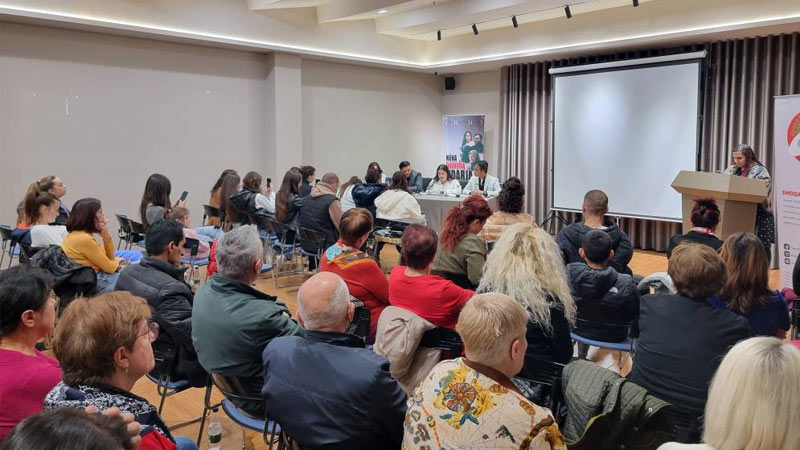
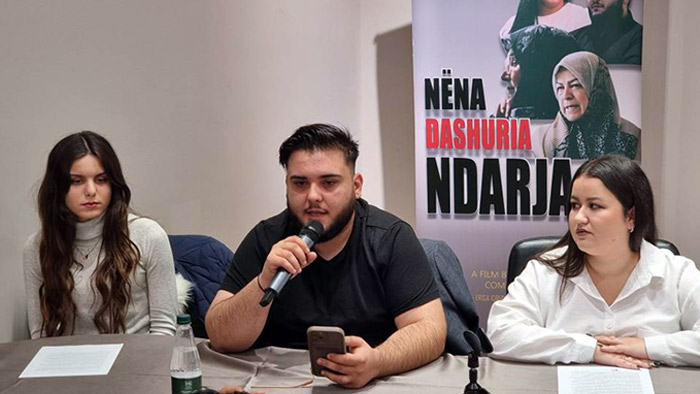
large investments of the MEK on the dollars they were paid by Saddam Hussein in the 1980s and thousands of brainwashed organizational forces have not brought good profits to the group. Meanwhile, last week, a small group of former members of the MEK and Albanian citizens who are members of Nejat Society Albania managed to attract the attention of a large number of Albanian people and media by holding a simple meeting with the lowest expenses in Tirana. They succeeded to get enough attention in their own scale.

After this year’s gathering, social media users did not care about the use of anti-Mujahideen hashtags and somehow preferred to ignore the group and its leaders. Ignoring the MEK is the best way to face this destructive cult and the best way to prove that it is not popular.

The gatherings of the MEK with their contradictory slogans are part of the Rajavis’ propaganda, which has been neglected by Iranians inside and outside the country for years. Consciously ignoring the MEK indicates that the Iranian audience is always several steps ahead of the propaganda machine of the group.

By Mazda Parsi

July 3, 2024 0 comments
FacebookTwitterPinterestWhatsappTelegramSkypeEmail
Iranian judiciary's notice to MEK members
Iran

Host Government Complicit in Forcible Detention of MEK Members

Judge Dehghani Nia, the presiding judge in the trial of 104 members of the Mujahedin-e Khalq (MEK) terrorist group, stated that many members of the group are being held forcibly in the MEK’s camp, which could implicate the host governments in detaining individuals illegally.

The judge addressed European and Albanian judicial authorities, saying that if the court trying MEK members receives complaints from the families of these members, the court will deal with these complaints according to the law. Many of these individuals are being held there against their will.

The judge went further, stating that although this specific accusation is not formally part of the charges, it will still be considered under Article 341 of the Criminal Procedure Code. Essentially, if the allegation is true, it implicates the governments housing these MEK members in imprisoning individuals who do not wish to be there. This is a serious accusation that holds these countries accountable.

Judge Dehghani Nia also extended an invitation for broader participation. He announced that the court will release a contact number specifically for complaints. This hotline is available to anyone, including Iranians living abroad, who wish to file a complaint against the MEK, the governments hosting them, or the defendants in this case. Individuals can use this number and other methods to contact Branch 11 of the Tehran Province Criminal Court 1.

Finally, he issued a warning to the host countries of the MKO group, stating, “These governments are hereby notified that if we receive a complaint regarding their actions, the court will initiate proceedings and take legal action against them in accordance with the regulations.”

July 3, 2024 0 comments
FacebookTwitterPinterestWhatsappTelegramSkypeEmail
Newer Posts
Older Posts

Recent Posts

  • A Criterion for Proving the Violent Nature of the MEK

    December 31, 2025
  • Rebranding, too Difficult for the MEK

    December 27, 2025
  • The black box of the torture camps of the MEK

    December 24, 2025
  • Pregnancy was taboo in the MEK

    December 22, 2025
  • MEPs who lack awareness about the MEK’s nature

    December 20, 2025
  • Facebook
  • Twitter
  • Instagram
  • Youtube

© 2003 - 2025 NEJAT Society . All Rights Reserved. NejatNGO.org


Back To Top
Nejat Society
  • Home
  • Articles
  • Media
    • Cartoons
    • NewsPics
    • Photo Gallery
    • Videos
  • Publications
    • Books
    • Nejat NewsLetter
    • Pars Brief
  • About Us
  • Contact us
  • Editions
    • عربي
    • فارسی
    • Shqip